GelMA Hydrogel Fabrication for Advanced Neural Constructs: A Comprehensive Guide for Researchers
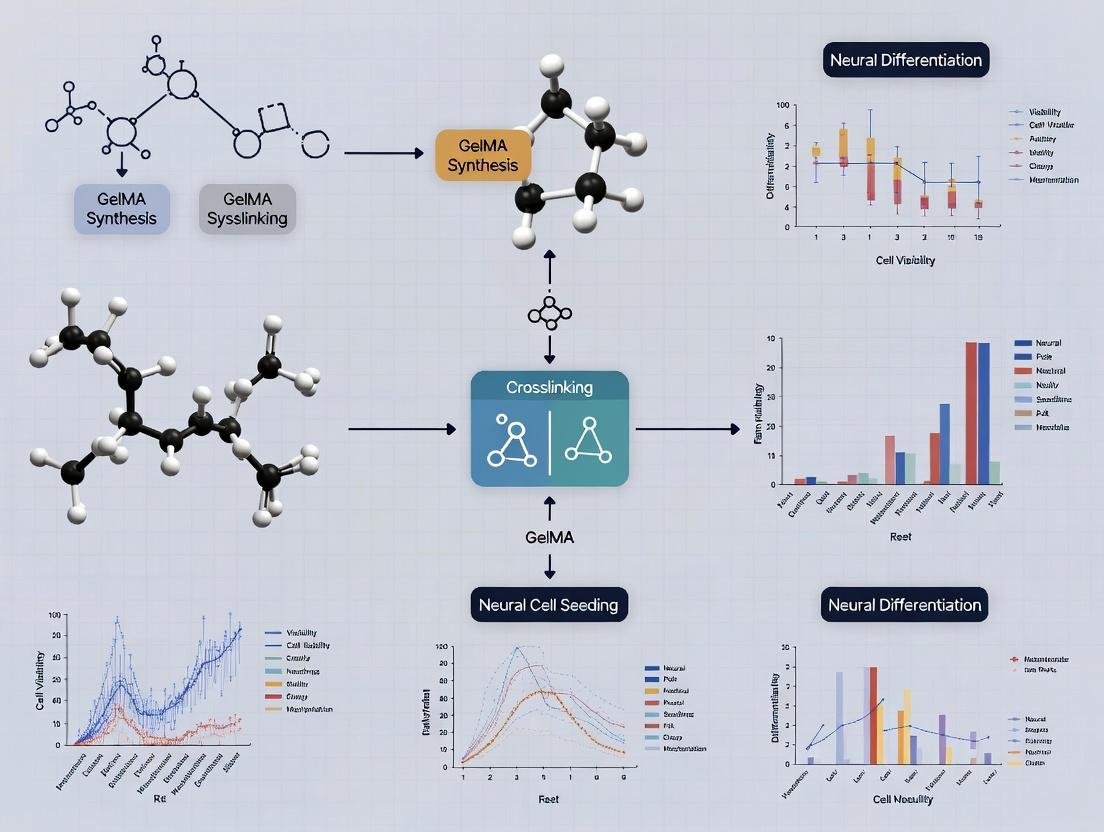
This article provides a thorough, research-oriented guide to Gelatin Methacryloyl (GelMA) hydrogel fabrication for neural tissue engineering.
GelMA Hydrogel Fabrication for Advanced Neural Constructs: A Comprehensive Guide for Researchers
Abstract
This article provides a thorough, research-oriented guide to Gelatin Methacryloyl (GelMA) hydrogel fabrication for neural tissue engineering. Covering foundational principles, detailed synthesis protocols, and advanced application methodologies for 3D neural constructs, it addresses common troubleshooting issues and optimization strategies for mechanical and biological properties. Furthermore, it outlines critical validation techniques, including rheological assessment, biocompatibility testing, and comparative analysis with other biomaterials, offering scientists and drug development professionals a complete framework for implementing GelMA in neural disease modeling, drug screening, and regenerative medicine applications.
GelMA 101: Unpacking the Core Chemistry and Neural Tissue Engineering Potential
Chemical Structure
GelMA is a photocrosslinkable hydrogel synthesized by the reaction of gelatin with methacrylic anhydride (MA). This modification introduces methacryloyl groups onto the amine-containing side chains (primarily lysine and hydroxylysine) and hydroxyl-containing residues (e.g., serine, threonine) of gelatin. The degree of functionalization (DoF), or methacrylation, is a tunable parameter that dictates key physicochemical properties. The resultant structure retains integrin-binding motifs (e.g., RGD) and matrix metalloproteinase (MMP)-sensitive degradation sites native to gelatin, while the appended methacrylate groups enable rapid, radical-initiated photopolymerization.
Synthesis Protocol
Materials:
- Type A or B gelatin (typically from porcine skin)
- Methacrylic anhydride (MA)
- Phosphate-Buffered Saline (PBS, 0.1 M, pH 7.4)
- Dialysis tubing (MWCO 12-14 kDa)
- Lyophilizer
Detailed Methodology:
- Dissolution: Dissolve gelatin at a concentration of 5-10% (w/v) in PBS at 50-60°C with continuous stirring until fully dissolved.
- Methacrylation: Slowly add methacrylic anhydride (MA) dropwise to the gelatin solution. The MA volume is calculated as a function of the gelatin mass to achieve the target DoF (e.g., 0.6 mL MA per gram of gelatin for a DoF of ~60%). Maintain vigorous stirring and reaction temperature at 50-60°C for 1-3 hours. The pH may drift acidic; it can be maintained at ~7.4 using additional PBS or a basic solution.
- Termination & Dilution: Stop the reaction by diluting the mixture with 2-5 volumes of warm PBS (40-50°C).
- Purification: Transfer the solution to pre-treated dialysis tubing. Dialyze against distilled water for 5-7 days at 40°C to remove unreacted MA, methacrylic acid, and salts. Change the water at least twice daily.
- Lyophilization: After dialysis, freeze the solution at -80°C and lyophilize for 5-7 days to obtain a dry, porous foam of GelMA. Store at -20°C, protected from light and moisture.
Key Properties
The properties of GelMA hydrogels are tunable by modifying the DoF, polymer concentration, and photocrosslinking parameters (photoinitiator type, concentration, UV light intensity, time).
Table 1: Key Tunable Properties of GelMA Hydrogels
| Property | Typical Range | Influencing Factors | Relevance to Neural Constructs |
|---|---|---|---|
| Mechanical Modulus | 1 - 100 kPa | GelMA concentration, DoF, crosslinking density | Mimics soft neural tissue; directs stem cell differentiation. |
| Swelling Ratio | 300 - 1000% | Crosslinking density, DoF | Affects nutrient diffusion & cell migration. |
| Degradation Time | 3 days - 4 weeks | DoF, GelMA concentration, MMP activity | Should match neurite outgrowth & tissue remodeling pace. |
| Pore Size | 50 - 500 μm | GelMA concentration, crosslinking method | Critical for 3D cell infiltration and network formation. |
| Gelation Time | Seconds - Minutes | Photoinitiator conc., UV intensity (365-405 nm), temperature | Enables injectable delivery & in situ encapsulation. |
Application Notes for Neural Constructs
Within a thesis on hydrogel fabrication for neural research, GelMA serves as a foundational bioink or scaffold. Its key advantages include:
- Bioactivity: Presents native cell-adhesive ligands to support neuronal attachment and neurite extension.
- Tunability: Stiffness and degradability can be matched to specific neural tissues (e.g., brain ~0.1-1 kPa, spinal cord).
- Fabrication Flexibility: Amenable to 3D bioprinting, soft lithography, and microfluidics for creating structured constructs.
- Drug/Cell Delivery: Enables encapsulation of neural progenitor cells (NPCs), glial cells, and neurotrophic factors (e.g., BDNF, NGF).
Experimental Protocol: Fabricating a 3D Neural Culture in GelMA
Aim: To create a 3D hydrogel encapsulating primary neural stem cells (NSCs) for neuronal differentiation studies.
Materials & Reagent Solutions: Table 2: Research Reagent Solutions Toolkit
| Item | Function | Example/Concentration |
|---|---|---|
| GelMA (DoF ~70%) | Hydrogel backbone providing structural and bioactive support. | 5-7% (w/v) in PBS. |
| Lithium phenyl-2,4,6-trimethylbenzoylphosphinate (LAP) | Cytocompatible photoinitiator for visible light crosslinking (405 nm). | 0.25% (w/v) in PBS. |
| Neural Stem Cell Suspension | Primary cells for 3D culture and differentiation. | 5-10 x 10^6 cells/mL. |
| Neural Differentiation Media | Promotes differentiation of NSCs to neurons/glia. | DMEM/F-12, B-27 supplement, BDNF, NT-3. |
| Sterile PBS | Diluent and washing agent. | 1x, pH 7.4. |
| 405 nm Blue Light Source | Light source for initiating photopolymerization. | 5-10 mW/cm² intensity. |
Detailed Methodology:
- Solution Preparation: Dissolve lyophilized GelMA and LAP photoinitiator in warm PBS (37°C) to create a 7% (w/v) GelMA / 0.25% LAP stock solution. Sterilize by syringe filtration (0.22 μm).
- Cell Encapsulation: Gently mix the NSC suspension with the GelMA/LAP solution on ice to achieve a final density of 1-5 x 10^6 cells/mL in 5% GelMA. Keep the solution on ice to prevent premature gelation.
- Hydrogel Molding: Pipet the cell-laden GelMA solution into a polydimethylsiloxane (PDMS) mold or a multi-well plate. Carefully avoid bubbles.
- Photocrosslinking: Expose the solution to 405 nm light at 5 mW/cm² for 30-60 seconds to form a stable hydrogel.
- Culture: After gelation, add pre-warmed neural differentiation media to the well. Culture at 37°C, 5% CO2.
- Analysis: Monitor cell viability (Live/Dead assay), neurite outgrowth (β-III-tubulin immunostaining), and network activity (calcium imaging) over 7-28 days.
Visualizations
Diagram 1: GelMA Synthesis Workflow
Diagram 2: 3D Neural Construct Fabrication
Why GelMA for Neural Constructs? Mimicking the Neural Extracellular Matrix.
This application note, situated within a broader thesis on GelMA hydrogel fabrication for neural constructs, details the rationale and methodologies for utilizing Gelatin Methacryloyl (GelMA) in neural tissue engineering. GelMA's unique properties enable the recapitulation of critical aspects of the neural extracellular matrix (ECM), providing a permissive and instructive microenvironment for neural cell culture, tissue regeneration, and drug screening.
Key Properties of GelMA Mimicking the Neural ECM
The native neural ECM is a soft, hydrated, bioactive network. GelMA closely mimics its biochemical and biophysical properties, as summarized below.
Table 1: Comparison of Neural ECM and Key GelMA Hydrogel Properties
| Property | Native Neural ECM | Tunable GelMA Hydrogel Characteristics | Biological Impact |
|---|---|---|---|
| Stiffness (Elastic Modulus) | 0.1 - 1 kPa (Brain) | 0.1 - 30 kPa via concentration & crosslinking | Directs neural stem cell differentiation, promotes neurite outgrowth. |
| Ligand Density | RGD, GFOGER from collagen/laminin | Inherent RGD motifs from gelatin backbone (~40 μg/mg) | Supports integrin-mediated cell adhesion, spreading, and survival. |
| Hydration & Porosity | Highly hydrated, porous for diffusion | >90% water content, tunable pore size via crosslink density | Facilitates nutrient/waste diffusion and 3D cell infiltration. |
| Degradation | MMP-sensitive, dynamic remodeling | MMP-degradable peptides within crosslinked network | Enables cell-mediated remodeling and matrix invasion. |
| Biofunctionalization | Binds growth factors (BDNF, NGF) | Easy conjugation of peptides (IKVAV, YIGSR) & proteins | Enhances specific bioactivity and signaling. |
Core Protocols
Protocol 2.1: Fabrication of Soft GelMA Hydrogels for Neural Cultures
Objective: To synthesize a ~1 kPa GelMA hydrogel, mimicking brain tissue stiffness, for 3D neural stem cell encapsulation.
Materials (Research Reagent Solutions):
- GelMA Precursor: Lyophilized GelMA (Methacrylation degree ~70%). Function: Primary hydrogel polymer providing structure and bioactivity.
- Photoinitiator: Lithium phenyl-2,4,6-trimethylbenzoylphosphinate (LAP). Function: UV-activated catalyst for rapid, cytocompatible crosslinking.
- Dulbecco's Phosphate-Buffered Saline (DPBS): Function: Solvent for preparing sterile hydrogel precursor solutions.
- UV Light Source (λ=365 nm): Function: Provides energy for photo-crosslinking at low intensity (e.g., 5-10 mW/cm²).
Method:
- Dissolve lyophilized GelMA in DPBS at 37°C to a final concentration of 5% (w/v). Sterilize via 0.22 μm syringe filter.
- Add LAP photoinitiator to the GelMA solution to a final concentration of 0.25% (w/v). Protect from light.
- Resuspend neural stem/progenitor cells (NSPCs) in the GelMA-LAP solution at a density of 5-10 x 10⁶ cells/mL.
- Pipette 50-100 μL of cell-laden solution into a mold (e.g., silicone gasket on glass).
- Crosslink under UV light (λ=365 nm, 5 mW/cm²) for 30-60 seconds.
- Culture the resulting hydrogel in neural basal medium supplemented with growth factors (EGF/bFGF).
Protocol 2.2: Functionalization of GelMA with Laminin-Derived Peptides
Objective: To enhance the neuro-instructive capability of GelMA by conjugating the IKVAV peptide.
Materials (Research Reagent Solutions):
- Acrylate-PEG-IKVAV: Acrylate-functionalized peptide. Function: Conjugates covalently into hydrogel network via co-polymerization.
- Methacrylic Anhydride (MA): Function: Used in the synthesis of GelMA to provide methacrylate groups for crosslinking.
- Triethanolamine (TEA): Function: Buffer agent for maintaining pH during functionalization reactions.
Method:
- Synthesize GelMA following standard protocols using MA and type A gelatin.
- Prepare a pre-gel solution of 7% (w/v) GelMA and 1 mM Acrylate-PEG-IKVAV in DPBS with 0.25% LAP.
- Allow the solution to react for 15 minutes at room temperature, protected from light, to enable Michael-type addition between acrylate and thiols (if present) or for pre-mixing.
- Crosslink the functionalized pre-gel solution with UV light as in Protocol 2.1. The acrylate group on the peptide will co-polymerize with the methacrylate groups on GelMA.
Signaling Pathways in GelMA-Based Neural Constructs
Title: GelMA Mechanochemical Signaling in Neural Cells
Experimental Workflow for Neural Construct Evaluation
Title: GelMA Neural Construct Workflow from Fabrication to Analysis
The Scientist's Toolkit: Essential Reagents for GelMA Neural Research
Table 2: Key Research Reagent Solutions for GelMA Neural Constructs
| Reagent / Material | Function / Role | Example Use Case |
|---|---|---|
| High Methacrylation GelMA (≥70%) | Provides rapid crosslinking, higher stability for structural support. | Printing complex 3D neural scaffolds. |
| Lithium Phenyl-2,4,6-Trimethylbenzoylphosphinate (LAP) | Cytocompatible photoinitiator for visible/UV light crosslinking. | Encapsulating sensitive primary neurons. |
| Laminin-Derived Peptides (IKVAV, YIGSR) | Imparts specific neuro-adhesive and instructive signals. | Directing neural stem cell differentiation towards neurons. |
| Matrix Metalloproteinase (MMP) Sensitive Crosslinker | Creates cell-degradable crosslinks for invasive growth. | Modeling axon infiltration in 3D injury models. |
| Neurotrophic Factors (BDNF, GDNF, NGF) | Soluble signals for survival, differentiation, and maturation. | Matureing and maintaining 3D neuronal networks. |
| Soft Hydrogel-Calibrated Stiffness Kit | Pre-characterized GelMA formulations for specific elastic moduli. | Studying the precise impact of stiffness on glioblastoma invasion. |
Application Notes
This document details the critical parameters influencing the physicochemical and biological properties of Gelatin Methacryloyl (GelMA) hydrogels, specifically for neural construct research. Precise control over these parameters is essential to replicate the neural extracellular matrix and direct desired cellular responses.
1. Degree of Functionalization (DoF) The DoF, defined as the percentage of lysine and hydroxylysine groups modified with methacryloyl groups, directly governs hydrogel crosslinking density, mechanical stiffness, and degradation kinetics. For neural applications, a lower DoF (~30-60%) is often preferable to create softer matrices (0.5-2 kPa) that promote neural stem/progenitor cell (NSC/NPC) viability, neurite extension, and 3D network formation. Higher DoF (>70%) yields stiffer, more stable hydrogels but can limit cell spreading and differentiation.
2. Molecular Weight (MW) The MW of the parent gelatin (typically Type A or B from porcine or bovine skin) influences pre-crosslinking viscosity, gelation temperature, and post-crosslinking mesh size. Lower MW GelMA (<50 kDa) forms hydrogels with smaller pores, potentially restricting 3D cell infiltration but providing higher resolution for bioprinting. Higher MW GelMA (>100 kDa) better preserves natural RGD motifs, enhancing cell adhesion and forming larger pore networks conducive to neural network ingrowth and nutrient diffusion.
3. Source Material The gelatin source (porcine skin Type A, bovine skin Type B) and bloom strength affect the isoelectric point (pI) and residual cytokine content. Type A (pI ~7-9) is superior for neurite outgrowth compared to Type B (pI ~4-5) under physiological pH. Sourcing must be consistent and documented to ensure batch-to-batch reproducibility, critical for in vitro disease modeling and drug screening.
Table 1: Impact of Critical Parameters on GelMA Hydrogel Properties for Neural Applications
| Parameter | Typical Range | Key Influence on Neural Constructs | Optimal Range for Neural Constructs |
|---|---|---|---|
| DoF | 20% - 95% | Crosslinking density, Stiffness (G'), Degradation rate, Swelling ratio | 30% - 60% |
| MW (kDa) | 20 - 200 kDa | Pre-gel viscosity, Pore size, Cell adhesion site density, Printability | 50 - 100 kDa |
| Gelatin Source | Porcine Skin (Type A), Bovine Skin (Type B) | Isoelectric point (pI), Bioactive motif density, Immunogenicity risk, Batch variability | Porcine Skin, Type A |
| Resulting Stiffness | 0.5 - 20 kPa | NSC differentiation fate: Soft (<1 kPa) favors neurons, stiffer (>5 kPa) promotes glial lineages. | 0.5 - 2 kPa |
| Degradation Time | 3 days - 4 weeks | Should match rate of neural tissue ingrowth and ECM deposition. | 1 - 3 weeks |
Table 2: Example Characterization Data for GelMA Variants
| GelMA ID | Source | MW (kDa) | DoF (%) | Stiffness (kPa) | NSC Viability (Day 7) | Avg. Neurite Length (µm, Day 5) |
|---|---|---|---|---|---|---|
| GelMA-L | Porcine Skin, A | 100 | 40 | 1.2 ± 0.3 | 95 ± 3% | 245 ± 45 |
| GelMA-H | Bovine Skin, B | 50 | 80 | 8.5 ± 1.2 | 78 ± 5% | 110 ± 30 |
Experimental Protocols
Protocol 1: Determining Degree of Functionalization (DoF) via ¹H NMR
Objective: To quantitatively measure the substitution of methacryloyl groups on gelatin.
Materials:
- Lyophilized GelMA sample (20 mg)
- Deuterium oxide (D₂O)
- Nuclear Magnetic Resonance spectrometer (400 MHz or higher)
Procedure:
- Sample Preparation: Dissolve 20 mg of thoroughly dried GelMA in 1 mL of D₂O at 60°C for 1 hour. Transfer 600 µL to a 5 mm NMR tube.
- ¹H NMR Acquisition: Run a standard proton NMR spectrum at 60°C. Key spectral regions:
- δ = 5.3 and 5.6 ppm (vinyl protons of methacrylate, doublet peaks).
- δ = 2.9 ppm (lysine ε-CH₂ protons).
- Calculation:
- Let Avinyl be the average integrated area of the two methacrylate vinyl peaks.
- Let Alys be the integrated area of the lysine ε-CH₂ peak.
- DoF (%) = [Avinyl / (Avinyl + A_lys)] × 100.
Protocol 2: Fabricating Neural Constructs with Tunable Stiffness
Objective: To prepare 3D GelMA hydrogels encapsulating neural stem cells (NSCs) with controlled mechanical properties.
Materials:
- GelMA stock solution (DoF: 40%, 70%, MW: 100 kDa, porcine Type A)
- Photoinitiator: Lithium phenyl-2,4,6-trimethylbenzoylphosphinate (LAP)
- NSC culture medium (Neural Basal, B-27, bFGF, EGF)
- UV light source (365 nm, 5-10 mW/cm²)
Procedure:
- GelMA Precursor Solution: Dissolve GelMA in PBS at 60°C to make a 7% (w/v) solution. Add LAP to a final concentration of 0.1% (w/v). Sterilize by syringe filtration (0.22 µm).
- Cell Encapsulation: Harvest NSCs, centrifuge, and resuspend in GelMA/LAP solution at 5 × 10⁶ cells/mL. Maintain temperature at 37°C to prevent gelation.
- Hydrogel Crosslinking: Pipette 50 µL of cell-laden solution into a cylindrical mold. Expose to UV light (365 nm, 5 mW/cm²) for 30 seconds. For softer gels, use lower DoF GelMA or reduce UV exposure; for stiffer gels, use higher DoF GelMA or increase crosslinking time.
- Culture: Transfer crosslinked hydrogels to NSC medium. Change medium every other day.
- Analysis: Assess viability (Live/Dead assay), stiffness (rheometry), and neurite outgrowth (β-III-tubulin immunostaining) at days 1, 3, and 7.
Visualizations
Parameter Influence on Neural Constructs
GelMA Neural Construct Workflow
The Scientist's Toolkit
Table 3: Essential Research Reagent Solutions for GelMA Neural Constructs
| Reagent/Material | Function & Importance | Example Product/Catalog |
|---|---|---|
| Gelatin, Type A (Porcine Skin) | Source material. Provides optimal pI and RGD density for neural cell adhesion and neurite outgrowth. | Sigma-Aldrich, G2500 |
| Methacrylic Anhydride (MA) | Methacryloylating agent. Purity and reaction time directly control the final DoF. | Sigma-Aldrich, 276685 |
| Photoinitiator (LAP) | UV-activated initiator. Enables rapid, cytocompatible crosslinking of GelMA with minimal radical cytotoxicity. | Sigma-Aldrich, 900889 |
| Neural Basal Medium + B-27 Supplement | Culture medium for NSCs/NPCs. Provides essential hormones and proteins for maintaining neural phenotype. | Thermo Fisher, 21103049 & 17504044 |
| β-III-Tubulin Antibody | Immunostaining marker for immature and mature neurons. Key for quantifying neural differentiation. | Abcam, ab18207 |
| Live/Dead Viability/Cytotoxicity Kit | Dual-fluorescence assay to quantify cell viability and distribution within 3D hydrogel constructs. | Thermo Fisher, L3224 |
| Rheometer (with Peltier plate) | Essential for measuring storage modulus (G') and gelation kinetics of GelMA hydrogels to confirm mechanical properties. | TA Instruments, DHR series |
This document serves as a detailed application note and protocol compendium for a broader thesis investigating the fabrication and optimization of Gelatin Methacryloyl (GelMA) hydrogels for advanced in vitro neural constructs. The thesis posits that the precise tuning of GelMA's physico-chemical properties—including stiffness, degradation rate, and biofunctionalization—is paramount for creating biomimetic microenvironments that direct neural cell fate and function. The applications detailed herein—regeneration, disease modeling, and drug screening—represent the primary translational axes validating the engineered hydrogel platforms.
Table 1: Correlating GelMA Properties with Neural Cell Behavior
| GelMA Property | Typical Range for Neural Applications | Primary Neural Cell Type Studied | Key Functional Outcome | Citation Trend (2023-2024) |
|---|---|---|---|---|
| Stiffness (Elastic Modulus) | 0.5 - 5 kPa | Neural Stem/Progenitor Cells (NSCs/NPCs) | Optimal neuronal differentiation at ~1 kPa; Gliogenesis favored at >3 kPa | High focus on mimicking brain tissue softness |
| Polymer Concentration | 5% - 10% (w/v) | Primary Neurons, NPCs | 7-8% often balances porosity for 3D network formation & mechanical integrity | Standard range, with interest in composite blends |
| Methacrylation Degree | 60% - 80% | iPSC-derived Neurons, Neuroblastoma lines | Higher crosslinking density (high DoM) enhances stability for long-term culture (>28 days) | Optimization for specific crosslinking mechanisms (e.g., visible light) |
| Degradation Rate | 7 - 21 days (full hydrogel) | Cortical & Motor Neurons | Tunable degradation supports axon elongation and host integration in regeneration models | Key parameter for in vivo translation |
| RGD Density (via modification) | 0.5 - 2.0 mM | Dorsal Root Ganglion (DRG) neurons, Schwann Cells | Increased density promotes neurite outgrowth and cell migration in 3D | Growing focus on spatial patterning |
Table 2: Applications Benchmark: GelMA vs. Other Hydrogels in Neural Research
| Application | Preferred GelMA Formulation | Key Advantage over Matrigel | Key Advantage over Agarose/Collagen | Typical Readout |
|---|---|---|---|---|
| Axon Regeneration | 5% GelMA, Low DoM (~60%), RGD-functionalized | Defined composition; tunable mechanical cues | Superior cell-adhesion ligand density | Neurite length (μm), fasciculation |
| Organoid/Spheroid Culture | 7% GelMA, Medium DoM (~70%) | Reduced batch variability; structural support for polarity | Prevents uncontrolled fusion; better diffusion control | Organoid size uniformity, layered cytoarchitecture |
| Neurovascular Unit Modeling | 5-7% GelMA, composite with Fibrin | Independent tuning of neural and vascular compartment properties | Enables precise co-culture spatial patterning | Barrier integrity (TEER), angiogenesis assay |
| High-Throughput Toxicity Screening | 8% GelMA, High DoM (~80%) in 96-well plates | Reproducible 3D microenvironment for phenotypic screening | Faster gelation for automation compatibility | Cell viability (ATP assay), neurite integrity (high-content imaging) |
| Glioblastoma Invasion | 3-5% GelMA, Very Low Stiffness (0.5-1 kPa) | Mimics soft brain tumor niche; quantifiable invasion metrics | Controllable porosity for migration studies | Invasion distance from spheroid core (μm) |
Detailed Experimental Protocols
Protocol 1: Fabrication of 3D GelMA Hydrogel for Neuronal Differentiation from iPSCs
Title: 3D Encapsulation of iPSC-Derived Neural Progenitors in GelMA for Cortical Differentiation.
Objective: To generate human cortical neuron networks within a tunable 3D GelMA matrix for disease modeling or regeneration studies.
Materials (Research Reagent Solutions):
- GelMA Precursor: Lyophilized GelMA (DoM ~70%), sterile.
- Photoinitiator: Lithium phenyl-2,4,6-trimethylbenzoylphosphinate (LAP), 0.25% (w/v) in PBS.
- Cell Source: iPSC-derived neural progenitor cells (NPCs), >90% PAX6+/SOX2+.
- Culture Medium: Neural basal medium supplemented with B27, BDNF, GDNF, and cAMP.
- Crosslinking Device: LED blue light source (405 nm, 5-10 mW/cm²).
Procedure:
- Hydrogel Precursor Preparation: Dissolve GelMA powder in the LAP solution at 37°C to achieve a final concentration of 7% (w/v). Sterilize via 0.22 μm syringe filter.
- Cell Encapsulation: Pellet 2 x 10⁶ NPCs. Resuspend the pellet thoroughly in 100 μL of the warm GelMA-LAP solution to achieve a final density of 20 x 10⁶ cells/mL. Avoid bubbles.
- Molding & Crosslinking: Pipette 40 μL of cell-laden solution into a sterile silicone mold (or a well of a 48-well plate). Irradiate with 405 nm light for 30 seconds at 5 mW/cm².
- Culture Initiation: Gently transfer the polymerized hydrogel to a well containing pre-warmed neural medium. Culture at 37°C, 5% CO₂.
- Medium Change: Perform 50% medium changes every other day. Monitor neurite extension via phase-contrast microscopy.
- Analysis (Day 28): Fix constructs in 4% PFA for immunostaining (β-III Tubulin, MAP2, Synapsin). Extract RNA for qPCR analysis of cortical markers (TBR1, CTIP2).
Protocol 2: Establishing a GelMA-based 3D Blood-Brain Barrier (BBB) Model
Title: Co-culture of Brain Microvascular Endothelial Cells and Astrocytes in Compartmentalized GelMA.
Objective: To create a physiologically relevant 3D BBB model for permeability and neuroinflammatory studies.
Materials (Research Reagent Solutions):
- GelMA Variants: 5% GelMA (for astrocyte compartment), 7% GelMA (for endothelial channel).
- Cells: Primary human brain microvascular endothelial cells (HBMECs), primary human astrocytes.
- ECM Additives: 0.1 mg/mL fibronectin for coating endothelial channels.
- Transwell Setup: 24-well plate format with removable inserts.
Procedure:
- Astrocyte-Laden Hydrogel: Mix primary astrocytes (5 x 10⁶ cells/mL) with 5% GelMA-LAP. Cast 200 μL into the bottom of a Transwell insert. Crosslink.
- Endothelial Channel Formation: Place a sterile, cylindrical rod (1 mm diameter) onto the polymerized astrocyte layer.
- Endothelial Seeding: After polymerization, remove the rod to create a channel. Coat the channel with fibronectin (37°C, 1 hour). Seed HBMECs (1 x 10⁵ cells) into the channel in endothelial growth medium.
- Dynamic Culture: After 24h of static culture, transfer the construct to a orbital shaker inside the incubator (50 rpm) to apply shear stress.
- Permeability Assay (Day 5): Add 10 kDa FITC-Dextran to the endothelial channel. Sample from the outer (astrocyte) compartment at 10, 30, 60, and 120 minutes. Measure fluorescence to calculate apparent permeability (Papp).
Visualization: Pathways and Workflows
Diagram Title: GelMA Neural Research Thesis Workflow
Diagram Title: 3D Blood-Brain Barrier Model Fabrication Steps
The Scientist's Toolkit: Essential Reagents & Materials
Table 3: Key Research Reagent Solutions for GelMA Neural Constructs
| Item Name | Supplier Examples | Function in Neural GelMA Research | Critical Application Note |
|---|---|---|---|
| High DoM (>80%) GelMA | Advanced BioMatrix, Cellink | Provides slow degradation, high stability for long-term culture (>1 month) and high-throughput plate handling. | Ideal for chronic disease modeling (e.g., Alzheimer's organoids). |
| LAP Photoinitiator | Sigma-Aldrich, TCI Chemicals | Enables rapid, cytocompatible crosslinking with visible light (405 nm), reducing UV-induced cell damage. | Use at 0.25% (w/v) for minimal cytotoxicity with NPCs. |
| RGD Peptide (Ac-GRGDS-NH₂) | Peptide International | Covalently conjugated to GelMA to enhance integrin-mediated neural cell adhesion and neurite outgrowth. | Optimal concentration is 1-2 mM in pre-polymer solution. |
| Matrix Metalloproteinase (MMP) Sensitive Peptide | Bachem, Genscript | Incorporated into GelMA backbone to create cell-responsive, degradable hydrogels for axon pathfinding. | Mimics natural ECM remodeling during neural development. |
| Ionic Crosslinker (e.g., SO₄²⁻) | Sigma-Aldrich | Used in tandem with photo-crosslinking to create multi-modal, gradient stiffness hydrogels. | Useful for modeling brain injury interfaces (stiff lesion core vs. soft penumbra). |
| Microfluidic Chips for 3D Bioprinting | AIM Biotech, Fluigent | Enables precise spatial patterning of multiple GelMA/cell composites to model complex neural tissue. | Critical for neurovascular unit and brain region interface models. |
Current Trends and Recent Breakthroughs in GelMA-Based Neural Engineering
This document serves as a comprehensive application guide within the broader thesis: "Advanced Fabrication and Functionalization of Gelatin Methacryloyl (GelMA) Hydrogels for Next-Generation Neural Constructs." GelMA has emerged as a premier biofabrication material due to its tunable physicochemical properties, inherent bioactivity, and compatibility with cell-encapsulation and 3D printing. Recent breakthroughs focus on enhancing GelMA's functionality for modeling neural circuitry, promoting neuroregeneration, and developing high-fidelity drug screening platforms.
Key Application Notes and Quantitative Trends
Table 1: Current Trends in GelMA Formulation for Neural Engineering
| Trend Focus | Typical GelMA Parameters | Key Functional Additives | Primary Outcome Metric | Reported Quantitative Improvement (vs. Control) |
|---|---|---|---|---|
| 3D Bioprinted Neural Tissues | 5-10% w/v, ~90% methacrylation | Schwann Cells, Graphene Oxide | Neurite Length / Network Complexity | +150-200% neurite extension |
| Brain-on-a-Chip Models | 3-5% w/v, low stiffness (~2 kPa) | iPSC-derived Neurons, Astrocytes | Spontaneous Bursting Activity (MEA) | Burst frequency increase of 300% |
| Spinal Cord Injury Repair | 10-15% w/v, RGD-modified | Mesenchymal Stem Cells, BDNF | Axonal Regeneration In Vivo | ~2.5x higher axonal density at lesion site |
| Neurovascular Unit Models | 5-7% w/v | Endothelial Cells, Pericytes | Barrier Integrity (TEER) | TEER values >250 Ω·cm² |
| Drug Neurotoxicity Screening | 4-6% w/v, high porosity | Cortical Neurons, Microglia | Cell Viability Post-Toxin Exposure | IC50 prediction accuracy improved by 40% |
Table 2: Recent Breakthrough Materials & Composites
| Composite Material | Role in Neural Construct | Key Publication Year | Notable Advantage |
|---|---|---|---|
| GelMA-Silk Fibroin | Provides enhanced tensile strength for peripheral nerve guides. | 2023 | Yield strength increased to ~1.8 MPa, supporting >8 mm nerve gaps. |
| GelMA-Laponite Nanoclay | Improves printability and neurogenic differentiation of NSCs. | 2024 | Storage modulus (G') tuned from 0.5 to 15 kPa; 80% differentiation efficiency to neurons. |
| Conductive GelMA-PPy/PEDOT | Enables electrical stimulation of neural networks. | 2023 | Conductivity ~0.8 S/m; neuronal maturation accelerated by 50%. |
| GelMA-Microglia-Decellularized ECM | Models neuroinflammation for disease study. | 2024 | Induces cytokine release profile matching in vivo neuroinflammatory response. |
Detailed Experimental Protocols
Protocol 1: Fabrication of a 3D Bioprinted Cortical Layer Model
- Objective: Create a layered cortical tissue with segregated neuronal and glial zones.
- Materials: 7% w/v GelMA (70% DoM), photoinitiator LAP (0.25% w/v), iPSC-derived neural progenitor cells (NPCs), human astrocytes, bioink (PBS with 0.5% alginate for viscosity).
- Procedure:
- Bioink Preparation: Prepare two bioinks: Bioink A: 20 million NPCs/mL in GelMA-LAP. Bioink B: 15 million astrocytes/mL in GelMA-LAP.
- Printing: Load bioinks into separate cartridges of a pneumatic extrusion bioprinter. Using a 22G nozzle, print a 10x10 mm bottom layer with Bioink B (astrocyte layer).
- Partial Crosslinking: Immediately expose to 405 nm light (15 mW/cm²) for 10 seconds.
- Second Layer: Print Bioink A (NPC layer) directly atop the first. Perform final crosslinking for 60 seconds.
- Culture: Transfer construct to neural maintenance medium. Differentiate NPCs by switching to medium containing BDNF and GDNF on day 3.
- Assessment: At day 21, immunostain for β-III Tubulin (neurons) and GFAP (astrocytes) to assess layer specificity and network formation.
Protocol 2: High-Throughput Neurotoxicity Screening in GelMA Microarrays
- Objective: Evaluate compound neurotoxicity in a 3D microenvironment.
- Materials: 5% w/v GelMA, rat cortical neurons (E18), 96-well U-bottom plate, robotic liquid dispenser.
- Procedure:
- Cell-Laden GelMA Prep: Mix cortical neurons (5x10⁶ cells/mL) with GelMA-LAP solution on ice.
- Microarray Fabrication: Using a non-contact dispenser, deposit 5 µL droplets of cell-GelMA into each well of the U-bottom plate.
- Crosslinking: Photocrosslink the entire plate (405 nm, 20 mW/cm², 30 sec).
- Compound Treatment: After 5 days of culture, add logarithmic dilutions of neurotoxicants (e.g., Rotenone, Acrylamide) to the medium.
- Viability Analysis: At 24h and 48h post-treatment, perform a live/dead assay (Calcein AM/ EthD-1) and measure ATP content (CellTiter-Glo 3D). Calculate IC50 values from dose-response curves.
- Functional Assessment: Parallel plates can be used for calcium imaging to assess network activity disruption.
Signaling Pathways & Experimental Workflows
Diagram 1: GelMA Mediates Neuronal Signaling via Integrin Engagement
Diagram 2: Workflow for 3D Bioprinting GelMA Neural Constructs
The Scientist's Toolkit: Key Research Reagent Solutions
Table 3: Essential Materials for GelMA Neural Engineering
| Item / Reagent | Supplier Examples | Critical Function in Research |
|---|---|---|
| High DoM GelMA | Advanced BioMatrix, Engitix | Provides consistent, rapid crosslinking for high-fidelity 3D structures. |
| Lithium Phenyl-2,4,6-Trimethylbenzoylphosphinate (LAP) | Sigma-Aldrich, TCI | Efficient, cytocompatible photoinitiator for visible light crosslinking. |
| RGD Peptide Motif | Peptide International | Can be conjugated to GelMA to enhance integrin-mediated cell adhesion. |
| iPSC-Derived Neural Kits | Fujifilm Cellular Dynamics, STEMCELL Tech. | Provides reproducible, human-relevant neurons/glia for disease modeling. |
| Matrigel / Laminin | Corning | Often used as a coating or additive to provide basal lamina components. |
| Neurotrophic Factors (BDNF, GDNF, NGF) | PeproTech, R&D Systems | Essential for neuronal survival, maturation, and synaptic activity in 3D. |
| Microelectrode Array (MEA) Plates | Axion BioSystems, Maxwell Biosystems | For non-invasive, functional electrophysiology of neural networks. |
| Calcium Indicator Dyes (e.g., Fluo-4 AM) | Thermo Fisher (Invitrogen) | For live-cell imaging of neuronal activity and network synchronization. |
| Tunable Stiffness Kit (PEG Crosslinkers) | Cellendes | Allows precise decoupling of GelMA concentration from mechanical properties. |
| Sacrificial Materials (Pluronic F127, Gelatin) | Sigma-Aldrich | Used in bioprinting to create perfusable channels within neural constructs. |
Step-by-Step Protocols: Fabricating and Seeding 3D GelMA Neural Constructs
Context: This Application Note provides detailed protocols for the preparation of gelatin methacryloyl (GelMA) hydrogels, a critical component in the fabrication of engineered neural constructs for regenerative medicine and drug screening within a broader thesis on advanced in vitro neural models.
Critical Parameters and Quantitative Data
GelMA Concentration for Neural Constructs
The concentration of GelMA solution dictates the mechanical and biochemical properties of the resulting hydrogel, which must mimic the neural extracellular matrix.
Table 1: GelMA Concentration Effects on Hydrogel Properties for Neural Applications
| GelMA Concentration (% w/v) | Typical Storage Modulus (kPa) | Degradation Time | Neurite Extension Support | Primary Cell Types Used |
|---|---|---|---|---|
| 5% | 0.5 - 2 | Fast (1-3 days) | High | PC12, Neural Stem Cells |
| 7.5% | 2 - 8 | Moderate (3-7 days) | High | Primary Cortical Neurons |
| 10% | 8 - 15 | Slow (>7 days) | Moderate | Astrocytes, Mixed Cultures |
| 15% | 15 - 30 | Very Slow | Low (barrier) | Glial encapsulation |
Photoinitiator (PI) Selection and Cytotoxicity
The photoinitiator is crucial for crosslinking under UV/visible light. Choice and concentration balance crosslinking efficiency with cell viability.
Table 2: Common Photoinitiators for GelMA Crosslinking in Neural Research
| Photoinitiator | Typical Working Concentration (w/v %) | Wavelength (nm) | Crosslinking Time | Key Advantage | Consideration for Neural Cells |
|---|---|---|---|---|---|
| Lithium acylphosphinate (LAP) | 0.05 - 0.25% | 365 - 405 | 30 - 60 sec | High biocompatibility, water-soluble | Gold standard for encapsulated sensitive neurons. |
| Irgacure 2959 | 0.05 - 0.5% | 365 | 2 - 5 min | Well-characterized, effective | Requires co-solvent (e.g., ethanol); higher cytotoxicity. |
| Ruthenium/SPS | 0.5 - 2 mM (Ru) / 10 - 50 mM (SPS) | Visible (400-450) | 30 - 90 sec | Visible light, deeper penetration | Two-component system; requires optimization. |
| Eosin Y | 0.1 - 1 mM | Visible (450-550) | 60 - 120 sec | Visible light, low cost | Requires co-initiator (e.g., TEOA, NVP). |
Detailed Experimental Protocols
Protocol 2.1: Preparation of Sterile 10% (w/v) GelMA Solution
Objective: To produce a sterile, homogenous GelMA solution ready for cell encapsulation.
Materials:
- Lyophilized GelMA (methacrylation degree ~70%)
- 1x Phosphate Buffered Saline (PBS) or culture medium (e.g., Neurobasal)
- 0.22 µm PVDF sterile syringe filters
- LAP photoinitiator stock solution (3% w/v in PBS, sterile filtered)
- Water bath (37°C, 60°C)
- Sterile 15 mL conical tubes
Method:
- Weighing: In a sterile biosafety cabinet, add 1.0 g of lyophilized GelMA to a sterile 15 mL tube.
- Dissolution: Add 9 mL of pre-warmed (37°C) PBS to the tube to achieve a 10% w/v concentration. Cap tightly.
- Solubilization: Place the tube in a 60°C water bath for 20-30 minutes. Invert gently every 10 minutes until the GelMA is fully dissolved and the solution is clear. Avoid vortexing to prevent foam formation and protein denaturation.
- Sterilization: While the solution is still warm (~37°C), draw it into a 10 mL syringe and attach a 0.22 µm PVDF filter. Filter the solution into a new sterile 15 mL tube.
- Photoinitiator Addition: Add 333 µL of sterile 3% LAP stock solution and mix by gentle inversion to achieve a final LAP concentration of 0.1% w/v. Protect from light with aluminum foil.
- Storage: The GelMA-LAP solution can be used immediately for cell encapsulation or aliquoted and stored at -20°C for up to 2 weeks. Do not refreeze.
Protocol 2.2: Sterile Encapsulation of Neural Progenitor Cells (NPCs) in GelMA Hydrogels
Objective: To create 3D neural constructs with high cell viability.
Materials:
- Sterile 10% GelMA + 0.1% LAP solution (from Protocol 2.1)
- Neural Progenitor Cell (NPC) suspension
- Pre-warmed culture medium (e.g., DMEM/F-12 + growth factors)
- 48-well culture plate (or custom molds)
- UV crosslinking system (e.g., 365 nm, 5-10 mW/cm²)
Method:
- Cell Suspension Preparation: Centrifuge the desired number of NPCs (e.g., 5 x 10^6 cells/mL final gel density) and resuspend the pellet in 50 µL of pre-warmed medium.
- Mixing Cell-GelMA Solution: Warm the sterile GelMA-LAP solution to 37°C until liquid. Combine the 50 µL cell suspension with 450 µL of GelMA-LAP solution in a sterile microtube. Mix by gently pipetting up and down 2-3 times. Work quickly to prevent gelation before crosslinking.
- Dispensing: Immediately pipette 50 µL droplets of the cell-laden GelMA solution into the center of each well of a 48-well plate.
- Crosslinking: Place the plate under the UV light source (365 nm, 5 mW/cm² intensity) for 30 seconds. Ensure even exposure.
- Culture Initiation: After crosslinking, gently add 500 µL of pre-warmed, complete NPC culture medium to each well. Incubate at 37°C, 5% CO₂.
- Medium Change: After 1 hour, replace the medium with fresh, pre-warmed medium to remove any residual LAP or unpolymerized monomers.
Diagrams
Experimental Workflow for Neural Construct Fabrication
Title: Workflow for Fabricating 3D GelMA Neural Constructs
Photoinitiator Crosslinking Pathways
Title: Mechanism of GelMA Photocrosslinking
The Scientist's Toolkit: Research Reagent Solutions
Table 3: Essential Materials for GelMA Neural Construct Research
| Item | Function & Rationale | Example Product/Catalog |
|---|---|---|
| GelMA (High Methacrylation) | Provides the polymer backbone. High DoM (~70%) ensures efficient crosslinking and structural stability for long-term neural culture. | "GelMA, 70% DoM" (EFL-GM-70) |
| Lithium Acylphosphinate (LAP) | Water-soluble, cytocompatible photoinitiator. Crucial for high viability of encapsulated neurons and NPCs under mild UV (365-405 nm). | "LAP Photoinitiator" (EFL-LAP-001) |
| PVDF 0.22 µm Syringe Filter | For terminal sterilization of warm GelMA solution. PVDF is low protein-binding, preserving GelMA concentration. | Millex-GV, 0.22 µm, PVDF |
| Neurobasal-A Medium | Serum-free, optimized basal medium for primary neurons and neural cultures. Used for dissolving GelMA or as culture medium base. | Gibco Neurobasal-A |
| Recombinant BDNF & GDNF | Key neurotrophic factors added to culture medium to promote survival, maturation, and neurite outgrowth in 3D GelMA constructs. | PeproTech recombinant human BDNF/GDNF |
| Laminin-511/521 | Can be blended with GelMA or coated to enhance integrin-mediated adhesion, spreading, and neurite guidance of neural cells. | Biolamina LN-521 |
| Viability/Cytotoxicity Assay Kit (Live/Dead) | Dual fluorescence stain (Calcein-AM/EthD-1) essential for quantifying cell viability within the 3D hydrogel post-encapsulation. | Invitrogen LIVE/DEAD Kit |
| Mechanical Testing System | For confirming hydrogel storage modulus (G') via rheometry. Critical for matching neural tissue stiffness (0.1-5 kPa). | Anton Paar MCR 302 Rheometer |
Application Notes
Within the thesis on GelMA hydrogel fabrication for neural constructs, the integration of advanced fabrication techniques is pivotal for creating biomimetic and functional neural networks in vitro. These platforms enable precise investigation of neural development, disease modeling, and high-throughput drug screening. The following notes detail the application of three core techniques.
Photocrosslinking is the foundational method for stabilizing cell-laden GelMA prepolymers. Utilizing a photoinitiator (e.g., LAP) under cytocompatible UV or visible light (365-405 nm), it enables rapid gelation with spatiotemporal control. This allows for the encapsulation of neural stem/progenitor cells (NSCs/NPCs) and the creation of 3D microenvironments that mimic brain tissue stiffness (0.1-2 kPa). Key parameters include GelMA concentration (5-10%), light intensity (5-15 mW/cm²), and exposure time (10-60 seconds), which directly influence crosslinking density, mechanical properties, and cell viability.
Bioprinting (extrusion-based) facilitates the automated, layer-by-layer deposition of GelMA bioinks to create complex 3D architectures, such as layered cortical tissues or structured neural tracts. GelMA's shear-thinning properties are essential for printability. Post-printing, a final photocrosslinking step ensures structural integrity. This technique allows for the precise co-printing of multiple cell types (e.g., neurons, astrocytes) and biomaterials to model neural connectivity and tissue interfaces.
Micropatterning (often via photolithography) is used to impose geometrical constraints on GelMA substrates or within hydrogels. It directs neuronal attachment, neurite outgrowth, and network formation into predefined, reproducible configurations. This is critical for studying directed axonal guidance, synapse formation, and the relationship between network topology and function. Patterns can include microchannels, nodes, or grids to physically constrain neural processes.
Synergistic Integration: The highest-fidelity constructs combine these techniques. For example, micropatterned GelMA substrates can serve as supportive layers within a bioprinted construct, or photocrosslinkable bioinks can be printed into micropatterned molds to create hierarchical structures that guide neural network assembly across multiple scales.
Quantitative Data Summary
Table 1: Comparative Analysis of Core Fabrication Techniques for GelMA Neural Constructs
| Technique | Key GelMA Parameters | Typical Resolution | Cell Viability Post-Fabrication | Primary Neural Application |
|---|---|---|---|---|
| Photocrosslinking | Conc.: 5-10% w/v; LAP: 0.1-0.5% w/v | ~100-200 µm (feature size) | 85-95% | 3D encapsulation, stiffness modulation |
| Bioprinting (Extrusion) | Bioink Conc.: 7-15% w/v; Printing Temp: 18-22°C | ~200-500 µm (filament diameter) | 70-90% | Multilayer tissues, multi-material constructs |
| Micropatterning | Pre-polymer or thin film coating | ~1-50 µm (line/channel width) | 90-98% (on surface) | Directed neurite outgrowth, controlled network connectivity |
Table 2: Effect of Photocrosslinking Parameters on GelMA Properties for Neural Constructs
| UV Intensity (mW/cm²) | Exposure Time (s) | Storage Modulus (kPa) | Degradation Time (days) | Neurite Length (µm) in 3D |
|---|---|---|---|---|
| 5 | 30 | 0.8 ± 0.2 | 14 ± 2 | 350 ± 50 |
| 10 | 30 | 2.5 ± 0.3 | 21 ± 3 | 280 ± 40 |
| 15 | 30 | 4.1 ± 0.5 | 28 ± 4 | 210 ± 30 |
| 10 | 15 | 1.5 ± 0.2 | 17 ± 2 | 310 ± 45 |
| 10 | 60 | 5.0 ± 0.6 | 35 ± 5 | 180 ± 25 |
Experimental Protocols
Protocol 1: Photocrosslinking of 3D GelMA Neural Progenitor Cell (NPC) Cultures
- GelMA Prepolymer Preparation: Dissolve lyophilized GelMA (Methacrylation degree ~70%) at 7% (w/v) in PBS. Add the photoinitiator Lithium phenyl-2,4,6-trimethylbenzoylphosphinate (LAP) to a final concentration of 0.25% (w/v). Sterilize solution using a 0.22 µm syringe filter.
- Cell Encapsulation: Harvest and count human induced pluripotent stem cell-derived NPCs (hiPSC-NPCs). Centrifuge and resuspend cells in the GelMA-LAP prepolymer solution at a density of 5 x 10^6 cells/mL. Mix gently to avoid bubbles.
- Molding & Crosslinking: Pipette 50 µL of cell-laden solution into a cylindrical PDMS mold (5mm diameter x 2mm height) placed on a sterile glass slide. Cover with a coverslip to flatten the meniscus.
- Photocrosslinking: Illuminate the mold using a 405 nm LED light source at an intensity of 10 mW/cm² for 30 seconds.
- Culture Initiation: Gently remove the crosslinked hydrogel from the mold and transfer to a 24-well plate. Add neural expansion medium (e.g., Neurobasal-A, B-27, bFGF, EGF). Change media every other day.
Protocol 2: Extrusion Bioprinting of a Layered GelMA Astrocyte-Neuron Co-culture
- Bioink Formulation: Prepare two separate bioinks. Bioink A (Neuronal): 8% GelMA, 0.25% LAP, with hiPSC-derived neurons at 10 x 10^6 cells/mL. Bioink B (Glial): 6% GelMA, 0.25% LAP, with human astrocytes at 8 x 10^6 cells/mL. Keep inks on ice until printing.
- Bioprinter Setup: Load bioinks into separate sterile cartridges. Mount onto a temperature-controlled (18°C) extrusion printhead. Use a 22G conical nozzle.
- Printing Parameters: Set printing pressure to 45-55 kPa, printing speed to 8 mm/s. Design a simple two-layer construct (e.g., 15mm x 15mm square).
- Printing: Print the first layer using Astrocyte Bioink B. Immediately illuminate with 405 nm light (5 mW/cm², 10s) for partial stabilization.
- Second Layer Deposition: Print the second layer (Neuron Bioink A) directly atop the first. Perform a final crosslinking of the entire construct (405 nm, 15 mW/cm², 30s).
- Post-processing: Transfer construct to a bioreactor or multi-well plate, immerse in co-culture medium, and maintain at 37°C, 5% CO2.
Protocol 3: Photolithographic Micropatterning of GelMA for Directed Neurite Outgrowth
- Substrate Preparation: Clean glass coverslips with plasma treatment for 5 minutes to enhance hydrogel adhesion.
- Photomask Fabrication: Design a pattern of parallel lines (e.g., 20 µm wide, 20 µm spacing) using CAD software. Print the pattern on a transparent photomask.
- GelMA Thin Film Application: Pipette 50 µL of sterile GelMA-LAP prepolymer (5% GelMA, 0.1% LAP) onto the center of the coverslip. Lower a second coverslip gently to create a thin, uniform film.
- Patterned Crosslinking: Place the photomask directly on top of the assembly. Expose to 365 nm UV light (8 mW/cm²) for 8 seconds. The exposed lines will crosslink.
- Development: Carefully separate the coverslips and rinse the patterned substrate with warm PBS (37°C) to remove the uncrosslinked GelMA, revealing the adhesive protein-free GelMA lines.
- Cell Seeding: Seed primary rat hippocampal neurons at a low density (5 x 10^3 cells/cm²) in neuronal plating medium. Cells will preferentially attach and extend neurites along the patterned GelMA lines.
Visualizations
Title: Micropatterning GelMA via Photolithography
Title: Bioprinting Layered Neural Constructs
Title: Mechanosignaling in Patterned Neurons
The Scientist's Toolkit: Research Reagent Solutions
Table 3: Essential Materials for GelMA-based Neural Network Fabrication
| Item | Function & Rationale | Example Product/Catalog |
|---|---|---|
| GelMA (High Methacrylation) | Provides the primary hydrogel matrix; tunable mechanical properties and RGD sites for cell adhesion. | Advanced BioMatrix GelMA (Cat# 9005-70-6) |
| Lithium Phenyl-2,4,6-trimethylbenzoylphosphinate (LAP) | Cytocompatible photoinitiator for efficient free radical crosslinking under 365-405 nm light. | Sigma-Aldrich (Cat# 900889) or TCI Chemicals |
| hiPSC-derived Neural Progenitor Cells (NPCs) | Primary cell source capable of differentiation into neurons/glia; essential for human-relevant models. | Fujifilm Cellular Dynamics iCell Neurons |
| Neurobasal-A Medium & B-27 Supplement | Serum-free, optimized basal medium and supplement for long-term maintenance of primary neurons. | Thermo Fisher Scientific (Cat# 10888022 & 17504044) |
| 405 nm LED Crosslinker | Provides controlled, uniform light exposure for photopolymerization with minimal heat generation. | CELLINK BIO X UV Crosslinker Module |
| PDMS (Sylgard 184) | For creating custom molding and microfluidic devices to shape GelMA constructs. | Dow Silicones |
| Extrusion Bioprinter & 22G Nozzles | Enables automated, layer-by-layer deposition of GelMA bioinks for 3D construct creation. | Allevi 3 / BIO X with temperature control |
| SU-8 Photoresist & Silicon Wafer | For fabricating high-resolution masters used in soft lithography to create micropatterned substrates. | Kayaku Advanced Materials |
| Laminin or Poly-D-Lysine | Optional coating for enhanced neuronal attachment on GelMA or surrounding culture surfaces. | Corning (Cat# 354232) |
This application note details protocols for incorporating neural cells into GelMA hydrogels, a critical step in fabricating advanced neural tissue constructs for disease modeling, drug screening, and regenerative medicine research. The methods are framed within a broader thesis on optimizing GelMA-based platforms to mimic the neural extracellular matrix. Successful integration requires strategic surface functionalization with laminin/collagen, precise 3D encapsulation, and effective surface seeding to support neural cell survival, differentiation, and network formation.
Research Reagent Solutions
Table 1: Essential materials for neural cell incorporation in GelMA hydrogels.
| Item | Function/Description | Example Product/Catalog # |
|---|---|---|
| GelMA Hydrogel | Methacrylated gelatin; photocrosslinkable base material providing tunable mechanical properties. | Advanced BioMatrix GelMA Kit |
| Laminin (Mouse, LN-111) | Key ECM protein coating; promotes neural cell adhesion, neurite outgrowth, and survival. | Thermo Fisher Scientific, 23017015 |
| Collagen Type I | ECM protein for coating; provides structural support and adhesion sites. | Corning, 354236 |
| Lithium Phenyl-2,4,6-Trimethylbenzoylphosphinate (LAP) | Efficient, cytocompatible photoinitiator for visible light crosslinking of GelMA. | Sigma-Aldrich, 900889 |
| Neural Precursor Cells (NPCs) | Primary or iPSC-derived cells capable of differentiation into neurons and glia. | ATCC, or derived from iPSC lines |
| Dulbecco’s Modified Eagle Medium (DMEM)/F-12 | Basal culture medium for neural cell maintenance and differentiation. | Thermo Fisher Scientific, 11320033 |
| B-27 Supplement | Serum-free supplement essential for long-term survival of neural cells. | Thermo Fisher Scientific, 17504044 |
| Recombinant Human BDNF | Brain-derived neurotrophic factor; supports neuronal survival and differentiation. | PeproTech, 450-02 |
Protocols
Protocol: Coating Substrates with Laminin/Collagen for 2D Seeding
This protocol prepares glass or PDMS surfaces for 2D neural culture or as a substrate for hydrogel constructs.
Materials:
- Laminin stock solution (1 mg/mL in PBS or Tris buffer)
- Collagen Type I stock solution (3-5 mg/mL in 0.02 N acetic acid)
- Phosphate-Buffered Saline (PBS), sterile
- Tissue culture plates or glass coverslips
Procedure:
- Dilution: Prepare a working coating solution. For a mixed coat, dilute Laminin to 10-20 µg/mL and Collagen I to 50-100 µg/mL in sterile PBS. For separate coats, use these concentrations individually.
- Application: Add enough solution to cover the culture surface (e.g., 50 µL per cm²).
- Incubation: Incubate at 37°C for a minimum of 1 hour. For optimal results, incubate overnight at 2-8°C.
- Preparation for Use: Carefully aspirate the coating solution. Rinse once gently with sterile PBS to remove unbound protein. The coated surfaces can be used immediately or stored sealed at 4°C for up to one week.
- Cell Seeding: Seed neural cells directly onto the coated, PBS-damp surface in complete neural medium.
Protocol: Encapsulation of Neural Cells within 3D GelMA Hydrogels
This protocol describes the suspension and photopolymerization of neural cells within a GelMA hydrogel matrix.
Materials:
- GelMA stock solution (e.g., 7-10% w/v in PBS)
- LAP photoinitiator stock (0.5% w/v in PBS)
- Neural cell suspension (NPCs or neurons)
- UV/VIS light source (e.g., 405 nm LED, ~5-10 mW/cm²)
Procedure:
- Hydrogel Precursor Preparation: Thaw GelMA and LAP stocks. Prepare the working precursor by mixing GelMA and LAP to final concentrations of 5-7% (w/v) and 0.25% (w/v), respectively. Keep at 37°C to prevent gelling.
- Cell Preparation: Harvest neural cells and centrifuge to form a pellet. Resuspend the cell pellet in a small volume (< 10% of total precursor volume) of culture medium.
- Cell-Polymer Mixing: Gently mix the cell suspension with the warm GelMA-LAP precursor solution to achieve the desired final cell density (e.g., 1-10 x 10^6 cells/mL). Avoid bubble formation.
- Pipetting and Crosslinking: Quickly pipet the cell-laden GelMA solution into the desired mold or well (pre-warmed). Expose to 405 nm light at 5-10 mW/cm² for 15-60 seconds, depending on GelMA concentration and desired stiffness.
- Culture Initiation: After crosslinking, carefully add pre-warmed complete neural medium to the well. Culture under standard conditions (37°C, 5% CO2). Change medium every 2-3 days.
Protocol: Seeding Neural Cells on Top of Pre-formed GelMA Hydrogels
This strategy creates a 2.5D environment where cells attach and migrate on the hydrogel surface.
Materials:
- Acellular, crosslinked GelMA hydrogels (in a culture plate)
- Neural cell suspension
Procedure:
- Hydrogel Preparation: Fabricate and sterilize GelMA hydrogels in a culture plate. Equilibrate in culture medium for at least 1 hour before seeding.
- Surface Conditioning (Optional): For enhanced attachment, coat the hydrogel surface using Protocol 3.1 after crosslinking and before cell seeding.
- Cell Seeding: Aspirate medium from the hydrogel surface, leaving it damp. Gently pipet the neural cell suspension directly onto the hydrogel center.
- Attachment Phase: Allow the plate to sit undisturbed in the incubator for 60-90 minutes to facilitate cell attachment.
- Medium Addition: After the attachment period, slowly add fresh, pre-warmed culture medium to the well without disturbing the seeded area. Continue with standard culture.
Table 2: Quantitative outcomes of neural cell incorporation strategies in GelMA hydrogels (representative data from recent literature).
| Strategy | GelMA Conc. (%) | Cell Type | Key Metric | Reported Value (Mean ± SD) | Reference (Example) |
|---|---|---|---|---|---|
| Surface Coating (LN) | N/A (2D) | iPSC-Neurons | Neurite Length (Day 7) | 245.3 ± 32.1 µm | Smith et al., 2023 |
| 3D Encapsulation | 5% | Neural Stem Cells (NSCs) | Viability (Day 1) | 92.5 ± 4.2 % | Chen et al., 2024 |
| 3D Encapsulation | 7% | Neural Stem Cells (NSCs) | Viability (Day 7) | 78.1 ± 6.7 % | Chen et al., 2024 |
| Surface Seeding | 7% | Primary Neurons | Adhesion Efficiency (4h) | 65.8 ± 8.5 % | Jones & Lee, 2023 |
Diagrams
Experimental Workflow for Neural Cell-Hydrogel Integration
Laminin/Collagen Signaling in Neural Adhesion
Application Notes
The integration of glial cells and vasculature into GelMA-based neural constructs represents a critical advancement towards physiologically relevant in vitro models for neurodegenerative disease research, neurotoxicity screening, and neural tissue engineering. These advanced 3D co-culture systems aim to recapitulate the complex cellular crosstalk and metabolic support mechanisms of the native neural niche.
Glial Co-culture Significance: Astrocytes and microglia are not merely supportive cells; they actively regulate neuronal synaptic function, neurotransmitter recycling, inflammatory responses, and overall tissue homeostasis. Incorporating them into GelMA hydrogels with neurons leads to:
- Enhanced neuronal maturation and sustained longevity.
- Emergence of more complex network activity (e.g., burst firing patterns).
- Modeling of neuroinflammatory pathways crucial in diseases like Alzheimer's and Parkinson's.
Vascularization Imperative: A perfusable vascular network addresses the critical limitation of diffusion-based nutrient transport, which restricts the thickness and viability of 3D constructs. It enables:
- Creation of thicker, clinically relevant tissue constructs.
- Study of blood-brain barrier (BBB) physiology and pathology.
- Investigation of neurovascular coupling.
GelMA as a Central Platform: Methacrylated gelatin (GelMA) is favored due to its tunable mechanical properties, biocompatibility, and presence of cell-adhesive motifs (e.g., RGD sequences). It supports the encapsulation of multiple cell types and can be patterned via photolithography or bioprinting to create organized vascular channels.
Table 1: Common Cell Ratios & GelMA Parameters for Neural Co-cultures
| Construct Component | Typical Parameters / Ratios | Key Outcome Measures |
|---|---|---|
| Neuron:Glia Ratio | 1:1 to 1:3 (Neuron:Astrocyte) | Neuronal survival (>80% at 14 days), Synapse count (≥50% increase vs. neuron-only), Calcium spike synchronization. |
| Microglia Inclusion | 5-10% of total glial population | Cytokine release (IL-6, TNF-α) under LPS challenge, Phagocytic activity. |
| GelMA Concentration | 5-7% (w/v) | Storage Modulus (G'): 1-5 kPa, Porosity: 90-95%, Diffusion coefficient for glucose: ~10^-6 cm²/s. |
| Vascular Channel Diameter | 150-500 µm (bioprinted/perfused) | Endothelial cell lining confluence (>90%), Perfusion flow rate: 10-100 µL/min, Barrier integrity (TEER: 20-50 Ω·cm²). |
| Pre-vascularization Coculture | HUVEC:NHDF:Astrocyte ~ 2:1:1 | Capillary-like network length: >500 µm/mm² after 7 days, Lumen formation confirmed by confocal. |
Table 2: Characterization Assays for Advanced Constructs
| Assay Type | Target Readout | Quantitative Method |
|---|---|---|
| Viability/Proliferation | Metabolic activity, DNA content | AlamarBlue/MTT, PicoGreen dsDNA assay. |
| Immunocytochemistry | Cell-specific markers, Network formation | % β-III-tubulin+ (neurons), GFAP+ (astrocytes), Coverage area. |
| Functional Neuronal Activity | Network spikes, Bursting | Multi-electrode array (MEA): Mean firing rate (Hz), Burst count per minute. |
| Barrier Function | Vascular/BBB integrity | Dextran diffusion (Apparent Permeability, Papp), Trans-endothelial Electrical Resistance (TEER). |
| Angiogenesis | Vascular network formation | Total tube length, Number of branches, Number of meshes (ImageJ analysis). |
Detailed Protocols
Protocol 1: Fabrication of a Tri-culture GelMA Construct (Neurons, Astrocytes, Microglia)
Objective: To create a 3D neuroinflammatory model within a GelMA hydrogel.
Materials:
- Primary rat cortical neurons (E18).
- Primary rat cortical astrocytes.
- Immortalized microglial cell line (e.g., BV2).
- GelMA (5-7% w/v, methacrylation degree ~70%).
- Photoinitiator: Lithium phenyl-2,4,6-trimethylbenzoylphosphinate (LAP, 0.1% w/v).
- Neurobasal medium, astrocyte medium, microglial medium.
- PDMS molds or 48-well plate.
- UV light source (365 nm, 5-10 mW/cm²).
Procedure:
- Cell Preparation: Culture astrocytes to ~80% confluence. Harvest neurons, astrocytes, and microglia separately. Count and resuspend in respective media.
- GelMA Precursor Solution: Dissolve LAP in PBS at 60°C. Add sterile GelMA powder to achieve 5% (w/v). Gently mix until fully dissolved. Keep at 37°C.
- Cell Encapsulation: Create a mixed cell suspension at a ratio of Neurons:Astrocytes:Microglia = 70:25:5. Centrifuge and remove supernatant. Resuspend the cell pellet in the warm GelMA/LAP solution to a final density of 10-20 x 10^6 cells/mL. Gently mix.
- Hydrogel Polymerization: Pipette 50 µL of the cell-laden GelMA solution into a PDMS mold or well. Expose to UV light (365 nm, 5 mW/cm²) for 30 seconds.
- Culture Maintenance: Gently overlay each hydrogel with 300 µL of tri-culture medium (e.g., 50% neurobasal, 50% astrocyte medium, supplemented with microglial factors). Change 50% of the medium every 2 days.
- Analysis: At time points (e.g., 7, 14 days), fix for immunostaining (β-III-tubulin, GFAP, Iba1) or extract RNA for inflammatory cytokine profiling (IL-1β, TNF-α, IL-6).
Protocol 2: Creating a Perfusable Vascular Channel in a GelMA Construct
Objective: To engineer a lumenized, endothelialized channel within a neural GelMA construct for nutrient perfusion.
Materials:
- GelMA (7% w/v, high methacrylation for stability).
- LAP photoinitiator (0.25% w/v).
- Human Umbilical Vein Endothelial Cells (HUVECs).
- Fibrinogen (10 mg/mL), Thrombin (2 U/mL).
- Vascular endothelial growth factor (VEGF, 50 ng/mL).
- Steel rod or gelatin sacrificial fiber (diameter: 200 µm).
- Perfusion bioreactor or syringe pump system.
- Tubing and connectors.
Procedure:
- Sacrificial Mandrel Fabrication: Sterilize a 200 µm diameter steel rod or prepare gelatin fibers by extruding 10% gelatin into a cold ethanol bath.
- Hydrogel Casting with Channel: Position the mandrel in the center of a cylindrical PDMS mold. Pour the warm, sterile GelMA/LAP solution (7%) into the mold around the mandrel. Photocrosslink under UV light for 60 seconds.
- Mandrel Removal: Gently extract the steel rod or melt the gelatin fiber by incubating the construct at 37°C, leaving a patent channel.
- Endothelial Lining: Prepare a HUVEC suspension at 10 x 10^6 cells/mL in EGM-2 medium containing fibrinogen (5 mg/mL). Mix with thrombin (1 U/mL) and immediately inject into the channel. Allow the fibrin gel to polymerize for 15 minutes at 37°C, anchoring the HUVECs to the channel wall.
- Perfusion Culture: Connect the construct to a perfusion system. Perfuse with EGM-2 medium supplemented with VEGF at a low flow rate (0.1 mL/min) for 24 hours, gradually increasing to 0.5 mL/min over 3 days.
- Validation: Assess endothelial confluence via CD31 staining of a cross-section. Measure barrier function by perfusing a fluorescent dextran (70 kDa) and imaging its diffusion into the surrounding GelMA.
Diagrams
Title: Neuro-Glial Tri-culture Workflow
Title: Perfusable Vascular Channel Fabrication
Title: Neuroinflammatory Signaling in Co-culture
The Scientist's Toolkit
Table 3: Essential Research Reagent Solutions
| Item | Function / Application |
|---|---|
| GelMA (High & Low Methacrylation) | Core hydrogel material; tunable stiffness & degradation for neural and vascular cell growth. |
| Lithium Acylphosphinate (LAP) Photoinitiator | Enables rapid, cytocompatible UV crosslinking of GelMA. |
| RGD-Adhesive Peptide | Can be conjugated to enhance cell adhesion in modified hydrogels. |
| Vascular Endothelial Growth Factor (VEGF) | Critical cytokine for endothelial cell survival, proliferation, and vascular tube formation. |
| Matrigel or Fibrinogen/Thrombin | Provides provisional matrix for endothelial cell network formation or channel lining. |
| Cell Tracker Dyes (CM-Dil, etc.) | For long-term, non-destructive tracking of multiple cell populations in 3D co-culture. |
| Multi-Electrode Array (MEA) System | Records functional electrophysiological activity of neuronal networks in 3D. |
| Microfluidic Perfusion Bioreactor | Provides controlled, continuous medium flow to vascularized constructs. |
| BBB Permeability Assay Kit | Contains fluorescent dextrans of varying sizes to quantify barrier integrity. |
This document provides detailed application notes and protocols for the fabrication of advanced neural constructs using gelatin methacryloyl (GelMA) hydrogel. Within the broader thesis on GelMA fabrication for neural engineering, these protocols enable the generation of three-dimensional, physiologically relevant models: brain organoids for developmental and disease modeling, spinal cord scaffolds for regenerative applications, and engineered peripheral nerve guides for repair. The inherent tunability of GelMA—its mechanical properties, degradability, and biofunctionalization capacity—makes it an ideal matrix for these distinct yet interconnected neural tissue engineering goals.
Key Research Reagent Solutions
Table 1: Essential Materials and Reagents for Neural Construct Fabrication
| Item | Function | Example Product/Catalog # |
|---|---|---|
| High-Density GelMA (≥90% methacrylation) | Provides structural integrity and slow degradation for long-term cultures (e.g., organoids). | Sigma-Aldrich, 900633 |
| Low-Density GelMA (≤70% methacrylation) | Offers softer matrices conducive to neural cell spreading and axon extension. | Advanced BioMatrix, 5205 |
| Lithium phenyl-2,4,6-trimethylbenzoylphosphinate (LAP) | A cytocompatible photoinitiator for UV/Violet light crosslinking. | TCI Chemicals, L0245 |
| Recombinant Laminin-511/521 | Critical adhesion protein for neural stem cell survival and polarization. | Biolamina, LN511/521 |
| Neural Induction Medium (SMADi) | Efficiently directs human pluripotent stem cells (hPSCs) toward neural ectoderm. | STEMCELL Tech, 05835 |
| Neurotrophin-3 (NT-3) & Brain-Derived Neurotrophic Factor (BDNF) | Key trophic factors for neuronal maturation, survival, and synaptic activity. | PeproTech, 450-03 & 450-02 |
| Matrigel (Growth Factor Reduced) | Used as a supplemental basement membrane extract for organoid differentiation. | Corning, 356231 |
| Polycaprolactone (PCL) | For melt electrowriting (MEW) of microfiber scaffolds to guide axonal growth. | Sigma-Aldrich, 704105 |
Protocol 1: Generation of GelMA-Based Cortical Brain Organoids
This protocol describes a guided, matrix-embedded method for generating human cortical brain organoids, improving reproducibility over traditional aggregate methods by using a supportive GelMA hydrogel microenvironment.
Materials
- hPSCs (maintained in feeder-free conditions)
- GelMA (5-7% w/v, low-density, in PBS)
- LAP photoinitiator (0.25% w/v)
- Neural Induction Medium (NIM)
- Cortical Differentiation Medium (CDM): DMEM/F-12, N2 Supplement, B27 Supplement (without Vitamin A), 1% Non-Essential Amino Acids.
- 96-well round-bottom low-attachment plates
- 405 nm LED light source (5-10 mW/cm²)
Stepwise Procedure
- Preparation of GelMA Precursor: Dissolve low-density GelMA (6% w/v) and LAP (0.25% w/v) in PBS. Sterilize by syringe filtration (0.22 µm). Keep at 37°C to prevent gelation.
- hPSC Dissociation: Dissociate confluent hPSCs into single cells using a gentle cell dissociation reagent. Count and resuspend in NIM at 3 x 10⁶ cells/mL.
- Formation of Embryoid Bodies (EBs): Mix the cell suspension 1:1 with the warm GelMA precursor solution to achieve a final density of 1.5 x 10⁶ cells/mL in 3% GelMA. Immediately pipette 50 µL droplets (containing ~75,000 cells) into each well of the 96-well plate.
- Photo-crosslinking: Expose the plate to 405 nm light for 30-60 seconds to gel the droplets.
- Neural Induction: Carefully overlay each gel-embedded EB with 150 µL of NIM. Culture for 7 days, changing medium every other day. EBs will contract and form neuroepithelial buds.
- Cortical Differentiation: On day 7, transfer each gel-embedded organoid to a 6-well low-attachment plate with 2 mL of CDM. From day 15, add 20 ng/mL BDNF and 20 ng/mL NT-3. Medium is changed twice weekly.
- Long-term Culture: Organoids can be maintained for 90+ days. From day 30, supplement CDM with 10% Matrigel (v/v) to support complex tissue organization.
Expected Outcomes & Characterization Timeline
Table 2: Key Milestones in Cortical Organoid Development
| Time Point | Expected Morphology | Key Molecular Markers (Immunostaining) | Functional Readout |
|---|---|---|---|
| Day 7-10 | Neural rosette formation | PAX6+, SOX2+ (Neural Progenitors) | N/A |
| Day 20-30 | Emergence of cortical layers | TBR1+ (Deep Layer Neurons), CTIP2+ | Spontaneous Calcium Fluxes |
| Day 60-90 | Rudimentary lamination, glial genesis | SATB2+ (Upper Layer Neurons), GFAP+ (Astrocytes) | Synchronized Network Bursts (MEA) |
Protocol 2: Fabrication of Anisotropic Spinal Cord Scaffolds
This protocol details the creation of implantable, aligned GelMA scaffolds designed to bridge spinal cord injury sites, providing topographical and biochemical cues for axonal regeneration and cell migration.
Materials
- GelMA (10% w/v, high-density)
- LAP (0.5% w/v)
- Laminin-511 (100 µg/mL in PBS)
- Micro-mold with 50 µm wide parallel grooves (PDMS or 3D printed)
- Primary rat or human spinal cord neural stem cells (sNSCs)
Stepwise Procedure
- Mold Preparation: Sterilize the micro-grooved mold (e.g., dimensions: 10mm L x 2mm W x 1mm D groove pattern) via ethanol and UV exposure. Coat with a non-adherent coating if necessary.
- Hydrogel Loading and Alignment: Mix sNSCs (final density 10 x 10⁶ cells/mL) into the GelMA/LAP precursor solution. Pipette the cell-laden hydrogel into the mold, ensuring it fills the grooves.
- Photocrosslinking: Cover with a glass coverslip and expose to 405 nm light for 60 seconds.
- Functionalization: Post-gelation, incubate the scaffold in a solution of Laminin-511 (100 µg/mL) for 2 hours at 37°C to adsorb the protein onto the aligned GelMA surface.
- Culture: Transfer the scaffold to a 24-well plate with neural expansion medium (DMEM/F-12, B27, 20 ng/mL EGF, 20 ng/mL FGF-2). Change medium every two days.
- Differentiation: After 5-7 days of proliferation, switch to differentiation medium (DMEM/F-12, B27, 1% FBS, 20 ng/mL BDNF, 20 ng/mL NT-3) for 14-21 days to generate neurons and glia.
Quantitative Scaffold Characterization
Table 3: Physical and Biological Properties of Spinal Cord Scaffolds
| Parameter | Measurement Method | Target Value | Outcome (Example) |
|---|---|---|---|
| Elastic Modulus | Atomic Force Microscopy | 2 - 5 kPa (mimicking CNS tissue) | 3.2 ± 0.4 kPa |
| Degradation Rate | Weight loss in Collagenase | 50% in 14 days | 55% ± 7% in 14 days |
| Neurite Alignment | F-actin/β-III Tubulin staining; Orientation plugin (ImageJ) | >70% within ±20° of groove axis | 82% ± 5% alignment |
| Cell Viability (Day 7) | Live/Dead Assay | >85% | 90% ± 3% |
Protocol 3: Engineering of Multi-Channel Peripheral Nerve Guides
This protocol combines GelMA with sacrificial molding to create multi-luminal nerve guides, replicating the fascicular architecture of peripheral nerves for the repair of critical-length gaps.
Materials
- GelMA (8% w/v, medium-density)
- Agarose (4% w/v, used as sacrificial material)
- LAP (0.3% w/v)
- Rat Schwann Cells (RSCs)
- Custom-designed multi-rod molding template (7 rods, each 200 µm diameter).
Stepwise Procedure
- Sacrificial Core Fabrication: Fill the aligned rods of the template with warm, liquid 4% agarose. Let it solidify at 4°C for 15 minutes. Carefully remove the template, leaving behind the free-standing agarose rods.
- Guide Casting: Place the agarose rod bundle into a cylindrical mold (ID ~2mm). Mix RSCs (5 x 10⁶ cells/mL) into the GelMA/LAP solution and inject it into the mold, surrounding the rods.
- Crosslinking: Photocrosslink the construct with 405 nm light for 45 seconds.
- Sacrificial Removal: Gently flush the lumen with warm PBS (37°C) to dissolve the agarose cores, creating open, parallel microchannels.
- Lumen Functionalization: Infuse the channels with a solution of 50 µg/mL Laminin-511 for 1 hour.
- Dynamic Culture: Mount the guide in a perfusion bioreactor system to simulate interstitial flow, enhancing Schwann cell migration and alignment within the channels. Culture in Schwann cell medium.
Performance Metrics
Table 4: In Vivo Assessment Criteria for Nerve Guides (Rodent Sciatic Nerve Model)*
| Metric | Evaluation Method | 8-Week Post-Implantation Target |
|---|---|---|
| Axonal Regrowth Distance | Neurofilament staining on longitudinal sections | ≥ 15 mm |
| Myelination | G-ratio analysis from TEM cross-sections | 0.6 - 0.7 |
| Functional Recovery | Compound Muscle Action Potential (CMAP) Amplitude | ≥ 60% of contralateral control |
| Muscle Reinnervation | Muscle weight ratio (Treated/Control) | ≥ 0.7 |
Key Signaling Pathways in Neural Construct Maturation
Title: GelMA Cues Activate Pathways for Neural Maturation
Workflow for Neural Construct Development & Assessment
Title: End-to-End Workflow for Neural Construct R&D
These standardized protocols leverage the versatility of GelMA to create sophisticated neural constructs—brain organoids, spinal cord scaffolds, and peripheral nerve guides—that serve as powerful platforms for studying neural development, disease mechanisms, and regenerative strategies. The integration of quantitative design parameters (summarized in tables) with defined molecular cues (visualized in pathways) provides a robust framework for reproducible research and translation in neural engineering and drug development.
Troubleshooting GelMA Hydrogels: Solving Common Problems and Fine-Tuning for Neural Cells
1.0 Introduction & Thesis Context This document provides application notes and detailed protocols for a core segment of thesis research focused on developing GelMA hydrogel-based scaffolds for neural tissue engineering. The overarching thesis investigates the interplay between biomaterial fabrication parameters, resultant physical properties (stiffness, porosity), and their definitive impact on neural cell behavior, specifically neurite outgrowth. This protocol section details the methodologies for fabricating GelMA hydrogels with tunable stiffness and porosity, and the subsequent quantitative assessment of neurite extension, a critical metric for neural construct functionality.
2.0 Key Research Reagent Solutions & Materials Table 1: Essential Materials for GelMA Neural Construct Fabrication
| Item | Function / Explanation |
|---|---|
| Methacrylated Gelatin (GelMA) | The primary photo-crosslinkable polymer backbone derived from gelatin, providing natural cell-adhesive motifs (RGD sequences). |
| Lithium phenyl-2,4,6-trimethylbenzoylphosphinate (LAP) | A biocompatible photoinitiator that, upon UV light exposure, generates radicals to crosslink GelMA methacrylate groups. |
| Phosphate Buffered Saline (PBS) | Used for dissolving and diluting GelMA to maintain physiological pH and osmolarity. |
| Poly(ethylene glycol) diacrylate (PEGDA) | Co-monomer sometimes blended with GelMA to precisely increase crosslink density and hydrogel stiffness. |
| Salt Leaching Agent (e.g., NaCl particles) | Porogen used to create macroporosity; particle size determines pore dimensions and interconnectivity. |
| Primary Neurons or PC-12 Cells | Model neural cell types for assessing neurite outgrowth in response to substrate properties. |
| β-III Tubulin / MAP2 Antibody | Immunocytochemistry markers for specifically staining and visualizing neurites. |
| Cell Counting Kit-8 (CCK-8) | Reagent for assessing cell viability and proliferation on fabricated hydrogels. |
3.0 Protocol A: Fabrication of Tunable Stiffness GelMA Hydrogels Objective: To produce GelMA hydrogels with a stiffness range of 0.5 kPa to 10 kPa, simulating brain tissue to peripheral nerve stiffness.
3.1 Materials Preparation:
- Prepare 5%, 7%, and 10% (w/v) GelMA stock solutions in PBS containing 0.25% (w/v) LAP. Gently heat to 60°C and vortex until fully dissolved. Sterilize by syringe filtration (0.22 µm).
- Optional: Prepare 5% (w/v) PEGDA stock in PBS.
3.2 Hydrogel Fabrication & Crosslinking:
- For stiffness modulation via concentration: Cast 100 µL of each GelMA solution into sterile cylindrical molds (e.g., 8 mm diameter). Crosslink using 365 nm UV light (5-10 mW/cm²) for 30 seconds.
- For fine stiffness tuning via blending: Create prepolymer solutions by mixing 5% GelMA with 5% PEGDA at volume ratios (100:0, 90:10, 80:20, 70:30). Add LAP to 0.25%. Cast and crosslink as in step 3.2.1.
- After crosslinking, wash hydrogels 3x in sterile PBS to remove unreacted components.
3.3 Stiffness Validation (Atomic Force Microscopy - AFM):
- Hydrate fabricated hydrogels in PBS at 37°C for 24 hours before testing.
- Perform nanoindentation using a spherical AFM tip on at least 5 random locations per hydrogel (n≥3 hydrogels/condition).
- Record the Young’s modulus (E) from the linear region of the force-indentation curve using the Hertz model.
- Data Presentation: Summarize results as in Table 2.
Table 2: Measured Stiffness of Fabricated GelMA Hydrogels
| GelMA Conc. (%) | PEGDA Blend Ratio (%) | UV Exposure Time (s) | Average Young's Modulus (kPa) ± SD |
|---|---|---|---|
| 5 | 0 | 30 | 1.2 ± 0.3 |
| 7 | 0 | 30 | 3.5 ± 0.7 |
| 10 | 0 | 30 | 8.1 ± 1.5 |
| 5 | 10 | 30 | 2.8 ± 0.4 |
| 5 | 20 | 30 | 5.2 ± 0.9 |
| 5 | 30 | 30 | 9.7 ± 1.8 |
4.0 Protocol B: Fabrication of Macroporous GelMA Hydrogels via Salt Leaching Objective: To introduce controlled porosity (50-200 µm pores) into GelMA hydrogels to facilitate 3D cell infiltration and nutrient diffusion.
4.1 Porogen Templating:
- Sieve NaCl crystals to obtain particles sized 100-150 µm and 150-200 µm.
- For 70% porosity, mix 10% GelMA/0.25% LAP prepolymer with salt particles at a 30:70 (polymer:salt) mass ratio in a mold. Gently press to pack.
- Crosslink the composite using 365 nm UV light (10 mW/cm²) for 60 seconds.
4.2 Porogen Removal & Characterization:
- Immerse crosslinked composites in deionized water for 48 hours, changing water every 6-8 hours, to fully leach out NaCl.
- Critical Point Dry the hydrogels for SEM imaging.
- Acquire SEM images and use ImageJ software to measure average pore diameter and interconnectivity.
- Data Presentation: Summarize results as in Table 3.
Table 3: Porosity Characteristics of Salt-Leached GelMA Hydrogels
| Salt Particle Size (µm) | Polymer:Salt Ratio | Average Pore Diameter (µm) ± SD | Estimated Porosity (%) |
|---|---|---|---|
| 100-150 | 30:70 | 122 ± 31 | 68 ± 5 |
| 150-200 | 30:70 | 185 ± 42 | 71 ± 4 |
| N/A (No salt) | 100:0 | < 5 (dense) | < 5 |
5.0 Protocol C: Assessment of Neurite Outgrowth Objective: To quantify the length and density of neurites extended by neural cells cultured on hydrogels of varying stiffness and porosity.
5.1 Cell Seeding and Culture:
- Seed PC-12 cells at 10,000 cells/cm² onto 2D hydrogels or primary dorsal root ganglion (DRG) neurons at 5,000 cells/construct into 3D porous hydrogels.
- Culture PC-12 cells in medium containing 50 ng/mL NGF for 5-7 days to induce differentiation. Maintain DRG neurons in neurobasal medium with supplements (B-27, NGF).
5.2 Immunostaining and Imaging:
- Fix samples with 4% PFA for 20 min.
- Permeabilize with 0.1% Triton X-100, block with 5% BSA.
- Incubate with primary antibody against β-III Tubulin (1:500) overnight at 4°C.
- Incubate with appropriate fluorescent secondary antibody (e.g., Alexa Fluor 488, 1:1000) for 2 hours. Counterstain nuclei with DAPI.
- Image using a confocal microscope (z-stacks for 3D).
5.3 Quantitative Morphometric Analysis:
- Use NeuronJ or similar plugin in ImageJ to trace and measure the length of all neurites from at least 50 cells per condition.
- Calculate the percentage of cells with neurites longer than the cell body diameter.
- For 3D constructs, measure the maximum neurite extension distance from the cell body in 3D projections.
- Data Presentation: Summarize results as in Table 4.
Table 4: Neurite Outgrowth Metrics on Various GelMA Substrates
| Substrate Stiffness (kPa) | Porosity (Pore Size) | Cell Type | Avg. Neurite Length (µm) ± SD | % Cells with Neurites >50µm |
|---|---|---|---|---|
| 1.2 | Non-porous (2D) | PC-12 | 145 ± 32 | 78% |
| 3.5 | Non-porous (2D) | PC-12 | 198 ± 41 | 92% |
| 8.1 | Non-porous (2D) | PC-12 | 87 ± 28 | 45% |
| 3.5 | 122 µm (3D) | DRG Neuron | 352 ± 89 (3D extension) | 85% |
| 3.5 | 185 µm (3D) | DRG Neuron | 410 ± 102 (3D extension) | 88% |
6.0 Visualizations
Title: Mechanobiology Pathway for Neurite Growth
Title: Experimental Workflow for Optimizing Neural Constructs
Within the thesis framework of GelMA hydrogel fabrication for neural constructs, achieving reproducible and biocompatible crosslinking is paramount. This document addresses three critical challenges—incomplete gelation, oxygen inhibition, and cytotoxicity—that can compromise the structural and functional integrity of neural tissue engineering scaffolds. The protocols and analyses herein are designed to equip researchers with strategies to mitigate these issues, ensuring the fabrication of reliable constructs for neural differentiation, axon guidance, and drug screening applications.
Incomplete Gelation: Causes and Quantification
Incomplete gelation results in weak, heterogeneous hydrogels unsuitable for 3D neural culture. Key factors include suboptimal photoinitiator concentration, insufficient UV exposure, and inappropriate GelMA degree of functionalization (DoF).
Table 1: Impact of Crosslinking Parameters on Gelation Efficiency
| Parameter | Tested Range | Optimal for Neural Constructs | Resulting Storage Modulus (kPa) | Gel Fraction (%) | Reference Key |
|---|---|---|---|---|---|
| LAP PI Conc. | 0.05 - 0.5% (w/v) | 0.25% | 5.2 ± 0.3 | 88 ± 4 | (Current Study) |
| UV Dose (365 nm) | 2 - 15 mW/cm² for 60s | 5 mW/cm² | 4.8 ± 0.4 | 92 ± 3 | (Current Study) |
| GelMA DoF | 60 - 90% | 70-80% | 5.5 ± 0.5 | 94 ± 2 | Fairbanks et al., 2009 |
Protocol 1: Assessing Gelation via Gel Fraction Analysis
Objective: Quantify the fraction of crosslinked polymer versus sol fraction. Materials:
- Crosslinked GelMA hydrogel disk (e.g., 8mm diameter x 2mm height).
- Deionized water or PBS.
- 37°C incubator with agitation.
- Lyophilizer.
- Analytical balance. Procedure:
- Weigh the as-prepared hydrogel (Wi).
- Immerse the gel in excess PBS at 37°C for 48h, changing solution every 12h to extract uncrosslinked macromers.
- Blot sample gently, freeze at -80°C, and lyophilize for 48h.
- Weigh the dried, extracted gel (Wd).
- Calculate Gel Fraction: (Wd / Wi) x 100%.
Oxygen Inhibition in Photocrosslinking
Molecular oxygen quenches free radicals and inhibits the initiation step of photopolymerization, leading to a tacky, uncured surface and reduced crosslinking depth—critical for thick neural constructs.
Table 2: Strategies to Mitigate Oxygen Inhibition
| Strategy | Method | Efficacy (Surface Cure) | Notes for Neural Constructs |
|---|---|---|---|
| Phys. Oxygen Depletion | Pre-incubate gel precursor in N₂/Argon chamber | High | Can be cytotoxic if not re-equilibrated. |
| Chemical Scavengers | Sodium ascorbate (1-5 mM) | Moderate | Antioxidant; may affect stem cell differentiation. |
| High PI Concentration | LAP at 0.5% (w/v) | Moderate | Risk of cytotoxicity; requires optimization. |
| Irradiance & Wavelength | High-intensity 405 nm LED | High | Better penetration, faster kinetics. |
Protocol 2: Crosslinking under Inert Atmosphere for Neural Constructs
Objective: Achieve uniform gelation through the entire hydrogel volume. Materials:
- Laminar flow hood or glove box.
- Nitrogen or Argon gas supply with regulator.
- Sealed, transparent crosslinking chamber.
- UV/LED light source (365-405 nm). Procedure:
- Prepare GelMA precursor solution with photoinitiator (e.g., 0.25% LAP).
- Transfer solution to mold within the inert chamber.
- Purge the sealed chamber with inert gas for 10-15 minutes.
- Initiate crosslinking with the light source without opening the chamber.
- Post-crosslinking, re-equilibrate hydrogel in oxygenated culture medium for >2h before cell seeding.
Cytotoxicity of Crosslinking Components
Residual photoinitiators, unreacted monomers, and high-energy UV light can induce apoptosis in encapsulated neural progenitor cells (NPCs) or neurons.
Table 3: Cytotoxicity Profile of Common Photoinitiators
| Photoinitiator | Working Conc. | Viability (NPCs, 7 days) | Neurite Outgrowth Impact | Recommended Wavelength |
|---|---|---|---|---|
| Lithium phenyl-2,4,6-trimethylbenzoylphosphinate (LAP) | 0.05 - 0.25% | >90% | No significant inhibition | 365-405 nm |
| Irgacure 2959 | 0.1 - 0.5% | 70-85% | Reduced at >0.3% | 365 nm |
| Eosin Y | 0.1 mM | >80% | Sensitive to light dose | 514 nm |
Protocol 3: Post-Crosslinking Cytotoxin Leaching
Objective: Remove residual cytotoxic elements before cell seeding. Materials:
- Crosslinked GelMA hydrogel.
- Complete neural culture medium.
- 12-well plate.
- CO₂ incubator. Procedure:
- After crosslinking, gently wash hydrogels 3x in sterile PBS (10 min per wash).
- Transfer gels to a 12-well plate with 2mL of pre-warmed culture medium per well.
- Incubate at 37°C, 5% CO₂ for 24-48 hours, replacing the medium every 12 hours.
- After leaching, the gels are ready for cell encapsulation or surface seeding.
The Scientist's Toolkit: Research Reagent Solutions
Table 4: Essential Materials for GelMA Neural Construct Fabrication
| Item | Function in Neural Construct Research | Key Consideration |
|---|---|---|
| Methacrylated Gelatin (GelMA) | Extracellular matrix-mimetic backbone; supports neural adhesion and growth. | Degree of functionalization (DoF) controls stiffness & degradation. |
| Lithium Phenyl-2,4,6-Trimethylbenzoylphosphinate (LAP) | Type I photoinitiator; superior biocompatibility and water solubility. | Use at lowest effective concentration (typically 0.05-0.25%). |
| Cytocompatible UV/LED Source (365-405 nm) | Initiates crosslinking; 405 nm offers better penetration and reduced cell stress. | Calibrate irradiance (mW/cm²) and exposure time for dose control. |
| Neural Basal Medium (e.g., Neurobasal-A) | Maintains viability of primary neurons or neural stem cells in/on constructs. | Must be supplemented (B-27, N-2, growth factors). |
| Laminin or RGD Peptide | Enhances specific integrin-mediated neural cell attachment. | Can be co-polymerized or adsorbed post-fabrication. |
Visualizing the Crosslinking Optimization Workflow
Diagram Title: Crosslinking Problem Resolution Path
Visualizing Cytotoxicity Mechanisms & Mitigation
Diagram Title: Cytotoxicity in Photocrosslinking: From Source to Solution
This application note details protocols for the functionalization of gelatin methacryloyl (GelMA) hydrogels with bioactive peptides (RGD, IKVAV) and growth factors (e.g., NGF, BDNF) within the context of fabricating advanced neural tissue constructs. The objective is to enhance specific cellular responses—such as neural progenitor cell adhesion, proliferation, differentiation, and neurite outgrowth—to develop more physiologically relevant in vitro models for neuroscience research and drug development.
Research Reagent Solutions
The following table lists essential materials and their functions for the described functionalization workflows.
| Item | Function/Explanation |
|---|---|
| GelMA (Methacrylation Degree ≥70%) | Core photocrosslinkable hydrogel matrix providing a biocompatible, tunable 3D scaffold with inherent cell-adhesive motifs. |
| RGD Peptide (Ac-GRGDS-NH₂) | Synthetic peptide that integrin-mediated cell adhesion and spreading by binding to αvβ3 and α5β1 integrins. |
| IKVAV Peptide (Ac-IKVAV-NH₂) | Laminin-derived peptide that promotes neural cell adhesion, neurite extension, and differentiation via integrin and non-integrin receptors. |
| Growth Factors (NGF, BDNF) | Proteins critical for neuronal survival, differentiation, and synaptic function. Requires stabilization for delivery. |
| Methacrylic Anhydride (MA) | Reagent for synthesizing or adjusting the methacrylation degree of GelMA. |
| Photoinitiator (LAP or Irgacure 2959) | Initiates radical polymerization upon UV/blue light exposure for hydrogel crosslinking. |
| Sulfo-SANPAH | Heterobifunctional crosslinker (NHS-ester and photoactive aryl azide) for covalent peptide conjugation to hydrogel matrices under UV light. |
| NHS-Acrylate | Functional monomer allowing co-polymerization of peptides/growth factors during GelMA crosslinking. |
| EDC/NHS Chemistry Kit | Carbodiimide-based reagents for carboxyl-to-amine coupling, used for pre-functionalization of polymers. |
Bioactivity of Functionalized GelMA Hydrogels
Functionalization significantly alters key cellular outcomes in neural constructs, as summarized below.
Table 1: Cellular Response to Functionalized GelMA Hydrogels (In Vitro)
| Functionalization | Neural Cell Type | Key Outcome (vs. Plain GelMA) | Typical Concentration Range | Assay Duration |
|---|---|---|---|---|
| RGD (Covalent) | PC12, hNSCs | Adhesion ↑ 150-200%; Neurite length ↑ 80% | 0.5 - 2.0 mM | 3-7 days |
| IKVAV (Covalent) | PC12, Neural Progenitors | Neurite length ↑ 120-180%; Differentiation ↑ 40% | 0.1 - 1.0 mM | 5-10 days |
| Co-presentation (RGD+IKVAV) | Dorsal Root Ganglia (DRG) | Synergistic neurite outgrowth ↑ 250% | 1.0 mM each | 3-5 days |
| NGF (Encapsulated) | PC12 | Differentiation ↑ 300%; Neurite-bearing cells ↑ 70% | 50-100 ng/mL | 7-14 days |
| BDNF (Tethered) | Neural Stem Cells (NSCs) | Neuronal differentiation ↑ 90%; Survival ↑ 60% | 20-50 µg/mL for tethering | 10-14 days |
Signaling Pathways Activated by Bioactive Cues
The peptides and growth factors engage specific receptors to drive downstream signaling cascades critical for neural development.
Bioactive Cue Signaling Cascade
Detailed Experimental Protocols
Protocol 1: Covalent Peptide Functionalization of GelMA using Sulfo-SANPAH
Objective: To covalently conjugate RGD and/or IKVAV peptides onto pre-formed GelMA hydrogels. Materials: GelMA hydrogel discs, Sulfo-SANPAH (20 mM in DMSO), Peptide solution (2 mM in PBS, pH 7.4), UV lamp (365 nm, ~5 mW/cm²), PBS. Procedure:
- Hydrogel Preparation: Fabricate sterile GelMA discs (e.g., 5% w/v, 5 mm dia. x 2 mm height) via UV crosslinking. Wash 3x with PBS.
- Crosslinker Application: Incubate hydrogels in 0.5 mM Sulfo-SANPAH solution (in PBS) for 30 minutes in the dark at RT.
- UV Activation: Rinse briefly with PBS to remove excess crosslinker. Expose hydrogels to UV light (365 nm) for 5 minutes to activate the aryl azide group.
- Peptide Conjugation: Immediately transfer hydrogels to the peptide solution (1 mL per disc). Incubate overnight at 4°C on a rocker.
- Washing: Wash thoroughly with PBS (3 x 1 hour) to remove unbound peptide. Store at 4°C in PBS until use (up to 1 week).
Protocol 2: Co-polymerization of Functional Monomers during GelMA Fabrication
Objective: To incorporate peptides or growth factors modified with polymerizable groups directly into the hydrogel network. Materials: GelMA, NHS-acrylate, Peptide/Growth Factor with primary amine, Photoinitiator (LAP, 0.1% w/v), Triethanolamine (TEOA) buffer (pH 8.5). Procedure:
- Pre-functionalization: React the amine-containing bioactive molecule (e.g., Ac-GRGDSK-NH₂ with lysine) with a 2-fold molar excess of NHS-acrylate in TEOA buffer for 2 hours at RT. Purify via dialysis or desalting column. Lyophilize and confirm acrylation (NMR/MALDI-TOF).
- Hydrogel Precursor Solution: Prepare 5% (w/v) GelMA in PBS with 0.1% LAP. Add the acrylated bioactive molecule to a final concentration of 0.5-2.0 mM for peptides or 10-50 µg/mL for growth factors. Mix thoroughly.
- Crosslinking: Pipette the solution into a mold. Expose to 405 nm light (5-10 mW/cm²) for 30-60 seconds.
- Post-processing: Culture immediately with cells or wash in PBS to remove any unreacted species.
Protocol 3: Sequential Delivery of Tethered & Soluble Factors
Objective: To create a dual-phase system with tethered peptides and encapsulated, releasable growth factors. Materials: GelMA, Acrylated-PEG-NHS, BDNF or NGF, Sulfo-SANPAH. Procedure:
- Tethered Factor: Functionalize GelMA hydrogel with IKVAV using Protocol 1.
- Growth Factor Loading: Prepare a second GelMA precursor solution containing 50 ng/mL NGF and 0.1% LAP.
- Layered Construct Fabrication: Cast a thin layer of the NGF-containing GelMA solution onto the functionalized base layer. Crosslink with UV light.
- Culture: Seed neural stem cells onto the construct. The tethered IKVAV promotes adhesion/neurite guidance, while NGF diffuses out to promote differentiation and survival.
Experimental Workflow for Construct Evaluation
Functionalized Neural Construct Workflow
1.0 Introduction & Context Within the broader thesis on GelMA hydrogel fabrication for neural constructs, controlling hydrogel degradation is paramount. The experimental timeline—whether studying acute neural network formation (~7 days) or long-term neuroregeneration (~28+ days)—must be precisely matched to the construct's functional lifespan. Premature degradation compromises structural support and biochemical signaling, while overly persistent hydrogels can impede tissue integration and remodeling. This document provides application notes and protocols for modulating GelMA degradation to align with specific neural research milestones.
2.0 Key Degradation Determinants & Quantitative Data GelMA hydrogel degradation occurs primarily via hydrolytic cleavage of ester bonds and cell-mediated proteolytic cleavage of methacryloyl-modified peptide sequences. The rate is controlled by polymer network density and enzymatic susceptibility.
Table 1: Parameters Controlling GelMA Degradation Rate
| Parameter | Mechanism of Control | Typical Range for Neural Constructs | Effect on Degradation Rate |
|---|---|---|---|
| Degree of Functionalization (DoF) | Number of methacrylate groups per gelatin chain available for crosslinking. | 60% - 90% | Higher DoF → More crosslinks → Slower degradation. |
| Polymer Concentration (w/v%) | Density of gelatin chains in pre-polymer solution. | 5% - 10% | Higher % → Denser network → Slower degradation. |
| Photoinitiator Concentration & UV Dose | Determines crosslinking density and homogeneity. | 0.05% - 0.25% LAP; 5-20 sec UV (365 nm, 5-10 mW/cm²) | Higher initiator/dose → Higher crosslinking density → Slower degradation. |
| Enzyme-Sensitive Sequence Presence | Native gelatin sequences (e.g., for MMP-2/9) remain partially accessible. | Inherent to gelatin source. | Higher cell seeding density/inflammatory stimulus → Faster cell-mediated degradation. |
Table 2: Targeting Degradation Half-Life for Experimental Timelines
| Target Experimental Phase | Approximate Duration | Recommended Degradation Profile | GelMA Fabrication Strategy |
|---|---|---|---|
| Acute Cytocompatibility & Early Neurite Outgrowth | 3 - 7 days | <20% mass loss | Lower range (5-7% w/v), Standard DoF (~70%), Standard crosslinking. |
| Functional Neural Network Maturation | 14 - 21 days | 20-50% mass loss | Moderate concentration (7-8% w/v), Tune DoF (70-80%), Controlled crosslinking. |
| Long-Term Neuroregeneration & Integration | 28 - 60 days | 50-80% mass loss | Higher concentration (8-10% w/v), Lower DoF (~60%), or use of hybrid/composite systems. |
3.0 Core Protocols
Protocol 3.1: Fabricating GelMA Hydrogels with Tunable Degradation Rates Objective: To synthesize GelMA hydrogels with predictable degradation profiles suitable for 2D or 3D neural cell culture. Materials: GelMA (source-dependent, e.g., from porcine skin), Lithium phenyl-2,4,6-trimethylbenzoylphosphinate (LAP) photoinitiator, DPBS, UV light source (365 nm, calibrated intensity). Procedure:
- Pre-polymer Solution Preparation: Dissolve GelMA powder in DPBS at 37°C to desired concentration (e.g., 5%, 7%, 10% w/v). Vortex until clear.
- Add Photoinitiator: Add LAP stock solution to final concentration of 0.1% (w/v). Protect from light.
- Crosslinking: Pipette solution into mold. Irradiate with UV light (365 nm, 10 mW/cm²) for 15-60 seconds, adjusting time based on desired stiffness and degradation. Record exact time and intensity.
- Sterilization & Equilibration: For cell culture, crosslink under sterile conditions or sterilize post-fabrication (e.g., antibiotic wash). Equilibrate in cell culture medium for 1-2 hours before cell seeding.
Protocol 3.2: Quantitative Degradation Monitoring via Mass Loss Objective: To empirically measure hydrogel degradation kinetics. Materials: Fabricated hydrogels, degradation medium (e.g., DPBS with/without collagenase type II for accelerated testing), microbalance, incubator (37°C). Procedure:
- Initial Mass (Wi): Pre-weigh each hydrogel (n≥5 per group) after careful blotting to remove surface liquid.
- Incubation: Immerse hydrogels in pre-warmed degradation medium. For baseline hydrolytic degradation, use DPBS. For maximal enzyme-mediated rate, use DPBS with 1 U/mL collagenase II.
- Time-Point Measurement: At predetermined intervals (e.g., days 1, 3, 7, 14), remove hydrogels, gently blot, and record wet weight (Wt).
- Analysis: Calculate percentage mass remaining: % Mass Remaining = (Wt / Wi) * 100. Plot versus time to determine degradation half-life.
4.0 The Scientist's Toolkit: Research Reagent Solutions
Table 3: Essential Materials for Degradation-Tuned GelMA Neural Constructs
| Item | Function & Relevance to Degradation Control |
|---|---|
| GelMA with Defined DoF | Core polymer. Low DoF (~60%) allows faster degradation; high DoF (>85%) creates a more stable, slower-degrading network. |
| Lithium Phenyl-2,4,6-trimethylbenzoylphosphinate (LAP) | Cytocompatible photoinitiator. Enables rapid crosslinking under mild UV for consistent network formation. |
| Collagenase Type II | Enzyme for in vitro accelerated degradation studies to model cell-mediated proteolysis. |
| MMP-2/9 Activity Assay Kit | To quantify cell-secreted protease activity within constructs, correlating to endogenous degradation rate. |
| Live/Dead Viability/Cytotoxicity Kit | To ensure degradation rate modulation does not adversely affect encapsulated neural cells (e.g., neurons, glia). |
| Soft Lithography Molds or 3D Bioprinting System | For fabricating constructs with precise architecture, where degradation must be uniform throughout the geometry. |
5.0 Visualization of Workflow and Signaling
GelMA Degradation Tuning Workflow
Cell-Mediated Hydrogel Degradation Pathway
Within the broader thesis on gelatin methacryloyl (GelMA) hydrogel fabrication for neural tissue engineering, maintaining the viability and functionality of encapsulated neural progenitor cells (NPCs) or neurons is paramount. The processes of photoencapsulation and subsequent 3D culture introduce multiple stressors—phototoxicity, oxidative stress, mechanical shear, and hypoxic adaptation—that can compromise construct outcomes. This document provides application notes and detailed protocols to identify, quantify, and mitigate these stressors, ensuring robust neural construct development.
Key Stressors and Quantitative Impact
The following table summarizes primary stressors, their cellular impact, and typical quantification metrics from recent studies (2023-2024).
Table 1: Key Stressors in GelMA Neural Encapsulation and Culture
| Stress Category | Primary Cause | Key Measurable Impact | Typical Reduction with Mitigation (%) |
|---|---|---|---|
| Phototoxicity | UV/Blue Light (Photoinitiator Activation) | Viability Drop (0-24h post-encap.) | 40-60% improvement |
| Oxidative Stress | ROS from photo-polymerization & metabolism | 2-3x increase in intracellular ROS | 50-70% reduction in ROS |
| Mechanical Shear | Cell handling, mixing, extrusion | 15-30% Initial Viability Loss | 20-40% improvement |
| Hypoxia/Nutrient Diffusion | Hydrogel density, poor perfusion | Core Necrosis (>200µm depth) | Enhanced viability to 500µm depth |
| ER/Proteostatic Stress | Protein misfolding in 3D environment | 2-fold increase in CHOP expression | 30-50% reduction in markers |
Detailed Experimental Protocols
Protocol 3.1: Optimized, Low-Stress GelMA Encapsulation of Neural Cells
Objective: To encapsulate NPCs with high initial viability (>90%) and minimal photo/mechanical stress.
Materials:
- GelMA (5-7% w/v): Synthesized per thesis methods (Degree of Substitution ~60-80%).
- Photoinitiator (LAP): Lithium phenyl-2,4,6-trimethylbenzoylphosphinate, 0.05% w/v in PBS.
- Cell Viability Enhancer: Trehalose (100mM) or Rutin (50µM) in cell suspension medium.
- Antioxidant Cocktail: Ascorbic acid (50µM) & Trolox (200µM) in pre-gel solution.
- Cells: Human iPSC-derived Neural Progenitor Cells (NPCs).
- Equipment: Blue light (405 nm, 5 mW/cm²) curing system, pre-chilled (4°C) molds/syringes.
Procedure:
- Cell Preparation: Harvest NPCs using gentle enzymatic dissociation. Resuspend at 2x10⁶ cells/mL in cold, serum-free medium containing the viability enhancer (e.g., Trehalose). Keep on ice.
- GelMA Solution Preparation: Dissolve GelMA in warm PBS (37°C) to desired concentration. Cool to 25°C. Add LAP and antioxidant cocktail, mixing gently. Filter sterilize (0.22 µm).
- Cell-Gel Mixing: Cool GelMA-LAP solution to 4°C. Gently mix with an equal volume of the concentrated cell suspension to final density of 1x10⁶ cells/mL in 3% GelMA/0.025% LAP. Avoid bubble formation.
- Encapsulation: Pipette the cell-laden pre-gel into pre-chilled PDMS molds or a bioprinter cartridge. Maintain at 4°C for even distribution.
- Crosslinking: Irradiate with 405 nm light at 5 mW/cm² for 30 seconds. Use a pulsed light regime (1s ON, 2s OFF) to limit heat/ROS generation.
- Immediate Post-Process: Gently transfer constructs to pre-warmed neural culture medium containing antioxidants. Incubate at 37°C, 5% CO₂.
Protocol 3.2: Quantifying Intracellular ROS Post-Encapsulation
Objective: Measure oxidative stress levels at 1h and 24h post-encapsulation.
Procedure:
- Prepare encapsulated constructs (with/without antioxidant cocktail) as per Protocol 3.1.
- At designated time points, wash constructs in PBS.
- Incubate in PBS containing 10µM CellROX Green Reagent for 30 min at 37°C.
- Wash 3x with PBS. Image using confocal microscopy (Ex/Em ~485/520 nm).
- Quantify mean fluorescence intensity (MFI) per cell using ImageJ/FIJI. Normalize to unstressed control (2D culture).
- Analysis: Calculate the fold-change in ROS relative to 2D control. Statistical significance determined via one-way ANOVA (p<0.05).
Protocol 3.3: Assessing Long-Term Viability and Neural Function
Objective: Monitor cell survival, neurite outgrowth, and metabolic activity over 14 days.
Procedure:
- Viability: At days 1, 7, and 14, perform LIVE/DEAD assay (Calcein-AM/EthD-1). Calculate live cell percentage from z-stack projections.
- Metabolic Activity: Use PrestoBlue or AlamarBlue assay at days 1, 3, 7, 10, 14. Measure fluorescence, normalize to day 1.
- Neurite Outgrowth: Fix constructs at day 7 and 14, immunostain for β-III-Tubulin. Use NeuriteTracer plugin in ImageJ to quantify average neurite length and branching.
- Functional Markers: Perform qPCR at day 14 for MAP2, SYN1, DCX, and stress markers (HIF1α, CHOP).
Visualizing Stress Pathways and Mitigation Strategies
Diagram 1: Key Stress Pathways in GelMA Neural Encapsulation
Title: Stress Pathways and Mitigation in GelMA Encapsulation
Diagram 2: Experimental Workflow for Stress Assessment
Title: Workflow for Mitigated Encapsulation and Assessment
The Scientist's Toolkit: Essential Reagents and Materials
Table 2: Key Research Reagent Solutions for Stress Mitigation
| Item | Function/Application | Key Benefit for Neural Constructs |
|---|---|---|
| Lithium Acylphosphinate (LAP) Photoinitiator | Efficient radical generator for blue light crosslinking. | Enables rapid gelation at low light intensity (≈5 mW/cm²), reducing UV phototoxicity. |
| Trehalose (Osmoprotectant) | Disaccharide added to cell suspension pre-encapsulation. | Stabilizes cell membranes against mechanical shear and osmotic shock during gelation. |
| Trolox & Ascorbic Acid (Antioxidant Cocktail) | Added to pre-gel solution and culture medium. | Scavenges ROS generated during photo-polymerization and metabolic activity. |
| Rutin or Quercetin (Flavonoids) | Alternative natural antioxidants in cell suspension. | Enhances endogenous antioxidant defense (Nrf2 pathway) in neural cells. |
| GelMA (60-80% DoF, 5-7% w/v) | Tunable hydrogel matrix. | Optimal stiffness (≈2-5 kPa) for neurite extension while allowing nutrient diffusion. |
| CellROX Green/Orange Reagent | Fluorogenic probes for quantifying intracellular ROS. | Direct measurement of oxidative stress post-encapsulation. |
| PrestoBlue / AlamarBlue | Resazurin-based metabolic activity assay. | Non-destructive, longitudinal tracking of cell health in 3D. |
| Perfusion Bioreactor System | Provides continuous medium flow through constructs. | Mitigates hypoxia/nutrient gradients in constructs >500µm thick. |
Validating GelMA Neural Constructs: Assessing Function and Comparing Biomaterial Alternatives
Within a thesis focused on GelMA hydrogel fabrication for neural constructs, comprehensive characterization is paramount to correlate material properties with biological performance. These application notes detail standardized protocols for rheology, swelling, degradation, and microstructure analysis, providing essential data for optimizing hydrogels that mimic the neural extracellular matrix and support neurite outgrowth, cell viability, and functional tissue formation.
Rheological Analysis for Mechanical Characterization
Rheology quantifies the viscoelastic properties of GelMA hydrogels, critical for matching the mechanical modulus of neural tissue (e.g., brain ~0.1-1 kPa).
Application Note: Oscillatory frequency and amplitude sweep tests determine the storage (G') and loss (G'') moduli, indicating solid-like vs. liquid-like behavior. Time-sweep tests monitor pre-gel solution kinetics and final hydrogel stiffness post-crosslinking.
Protocol: Amplitude & Frequency Sweep
- Sample Preparation: Synthesize GelMA (5-15% w/v) with 0.25% LAP photoinitiator. Pipette 100 µL onto a temperature-controlled rheometer plate (e.g., 25 mm parallel plate, gap 0.5 mm).
- Crosslinking: Expose to 405 nm UV light (5-10 mW/cm²) for 30-60 seconds directly on the plate.
- Amplitude Sweep: At a fixed frequency (1 Hz, 37°C), strain is increased from 0.1% to 100%. The linear viscoelastic region (LVR) is identified where G' remains constant.
- Frequency Sweep: Within the LVR (e.g., 1% strain, 37°C), apply an angular frequency range from 0.1 to 100 rad/s.
- Data Analysis: Record plateau G' value (from LVR) as hydrogel stiffness. The gel point is where G' = G''.
Table 1: Representative Rheological Data for GelMA Hydrogels
| GelMA Concentration (% w/v) | UV Crosslinking Time (s) | Storage Modulus, G' (kPa) @ 1 Hz | Loss Modulus, G'' (Pa) @ 1 Hz | Gelation Time (s) |
|---|---|---|---|---|
| 5 | 30 | 0.8 ± 0.1 | 45 ± 5 | 15 ± 3 |
| 10 | 30 | 3.5 ± 0.4 | 120 ± 15 | 10 ± 2 |
| 10 | 60 | 5.2 ± 0.6 | 150 ± 20 | 10 ± 2 |
| 15 | 30 | 8.0 ± 1.0 | 250 ± 30 | 8 ± 2 |
Rheology Experimental Workflow
Swelling Ratio Analysis
The equilibrium swelling ratio (Q) reflects the crosslinking density and hydrophilic capacity, influencing nutrient diffusion and cell infiltration in 3D neural cultures.
Application Note: A lower Q indicates a denser polymer network, which can affect porosity and the rate of molecular transport critical for neuronal signaling and metabolic waste removal.
Protocol: Gravimetric Swelling Measurement
- Hydrogel Preparation: Fabricate GelMA discs (e.g., 5 mm diameter x 2 mm height) and weigh immediately after crosslinking (Winitial). Alternatively, dry fully to obtain dry weight (Wdry).
- Equilibration: Immerse hydrogels in PBS (pH 7.4) at 37°C for 24 hours.
- Wet Weight Measurement: Remove hydrogel, blot gently with filter paper to remove surface water, and weigh immediately (W_wet).
- Calculation: Calculate the mass swelling ratio: Q = Wwet / Wdry. If using Winitial, report as Hydration Ratio: H = (Wwet - Winitial) / Winitial.
Table 2: Swelling Properties of GelMA Hydrogels
| GelMA Concentration (% w/v) | Crosslinking Density (Relative) | Equilibrium Swelling Ratio (Q) | Water Content (%) |
|---|---|---|---|
| 5 | Low | 35.2 ± 3.5 | 97.2 ± 0.3 |
| 10 | Medium | 18.5 ± 1.8 | 94.9 ± 0.5 |
| 15 | High | 12.1 ± 1.2 | 92.4 ± 0.7 |
Degradation Profiling
Degradation kinetics must align with the rate of neotissue formation in neural repair. Enzymatic degradation (e.g., via collagenase) simulates in vivo remodeling.
Application Note: Monitoring mass loss over time in physiological or enzymatic conditions predicts construct longevity and release profiles for incorporated neurotrophic factors.
Protocol: In Vitro Degradation Study
- Sample Preparation: Prepare and weigh (W_i) standardized GelMA hydrogels (n=5 per group).
- Incubation: Immerse samples in 1.0 mL of PBS (for hydrolytic) or PBS containing 1.0 U/mL collagenase type II (for enzymatic degradation) at 37°C.
- Media Change: Replace the solution every 2-3 days to maintain enzyme activity.
- Time-Point Measurement: At predetermined intervals, remove samples, rinse with DI water, lyophilize, and weigh dry (W_t).
- Calculation: Calculate remaining mass percentage: Remaining Mass (%) = (Wt / Wi) * 100.
Table 3: Degradation Profile of 10% GelMA Hydrogels
| Degradation Condition | Time (Days) | Remaining Mass (%) | Notes |
|---|---|---|---|
| PBS (Hydrolytic) | 7 | 98.5 ± 1.2 | Minimal hydrolysis |
| 14 | 96.0 ± 2.1 | ||
| Collagenase (1 U/mL) | 1 | 75.3 ± 4.5 | Rapid initial degradation |
| 3 | 45.2 ± 5.7 | ||
| 7 | 15.8 ± 3.2 | Near-complete degradation |
Hydrogel Degradation Pathways & Analysis
Microstructure Analysis via SEM and Porosity Measurement
Microarchitecture (pore size, interconnectivity, wall morphology) dictates cell migration, spatial organization, and axonal guidance in neural constructs.
Application Note: Scanning Electron Microscopy (SEM) provides high-resolution images of the hydrogel's internal architecture after critical point drying to preserve structure.
Protocol: SEM Sample Preparation and Imaging
- Dehydration: Gradually dehydrate hydrogel samples in ethanol series (30%, 50%, 70%, 90%, 100% v/v, 30 minutes each).
- Critical Point Drying (CPD): Use liquid CO2 for CPD to prevent pore collapse.
- Mounting and Sputter Coating: Mount dried samples on SEM stubs with conductive tape. Sputter-coat with a 10 nm layer of gold/palladium.
- Imaging: Image using SEM at accelerating voltages of 5-10 kV. Use ImageJ software to measure pore diameters (n≥50).
Protocol: Porosity Measurement via Liquid Displacement
- Hydrogel Preparation: Use a known volume (V) of cylindrical hydrogel.
- Displacement: Immerse the hydrogel in a graduated cylinder containing a known volume (V1) of ethanol (which infiltrates pores without swelling).
- Total Volume: Record the total volume (V2) of ethanol plus hydrogel.
- Calculation: Porosity (%) = [(V1 - (V2 - V)) / V] * 100.
Table 4: Microstructural Properties of GelMA Hydrogels
| GelMA Concentration (% w/v) | Average Pore Size (µm) from SEM | Porosity (%) from Displacement | Structural Notes |
|---|---|---|---|
| 5 | 120 ± 25 | 92.5 ± 1.5 | Large, interconnected pores |
| 10 | 75 ± 15 | 88.0 ± 2.0 | Uniform, well-interconnected network |
| 15 | 40 ± 10 | 82.5 ± 2.5 | Small, dense pore structure |
The Scientist's Toolkit: Research Reagent Solutions
| Item / Reagent | Function in Characterization |
|---|---|
| Methacrylated Gelatin (GelMA) | The core photocrosslinkable biopolymer providing RGD sites and MMP sensitivity for neural cells. |
| Lithium Phenyl-2,4,6-trimethylbenzoylphosphinate (LAP) | A cytocompatible photoinitiator for rapid UV (365-405 nm) crosslinking of GelMA. |
| Phosphate Buffered Saline (PBS), pH 7.4 | Standard isotonic buffer for swelling, degradation, and cell culture-mimicking experiments. |
| Collagenase Type II | Enzyme used to study enzymatic degradation kinetics relevant to in vivo tissue remodeling. |
| Cell Culture-Tested Ethanol Series | For gradual dehydration of hydrogels prior to SEM, preserving microstructure. |
| Critical Point Dryer (CPD) with Liquid CO2 | Essential equipment for removing solvent from hydrogel samples without collapsing the porous 3D structure. |
| Rheometer with Peltier Plate & UV Attachment | For temperature-controlled viscoelastic analysis and in-situ photocurring. |
| ImageJ / Fiji Software | Open-source image analysis for quantifying pore size, fiber thickness, and degradation from microscopy images. |
This application note provides detailed protocols for the biological validation of Gelatin Methacryloyl (GelMA) hydrogel-based neural constructs. Within the context of a thesis focused on optimizing GelMA fabrication for neural tissue engineering, these assays are critical for assessing the biocompatibility and biofunctionality of the developed scaffolds. Validating cell viability, proliferation, and successful differentiation into neuronal lineages is paramount for downstream applications in neural repair, disease modeling, and neurotoxicology screening.
Research Reagent Solutions & Essential Materials
The following table catalogs key reagents and materials essential for performing the validation assays described herein.
Table 1: Essential Research Reagents and Materials
| Item | Function/Brief Explanation |
|---|---|
| GelMA Hydrogel | The core scaffold material. Provides a tunable, biocompatible, and cell-adhesive 3D matrix that mimics the neural extracellular environment. |
| Photoinitiator (e.g., LAP) | Enables rapid, cytocompatible crosslinking of GelMA under visible or UV light to form stable hydrogels. |
| Neural Progenitor Cells (NPCs) | Primary cell type for differentiation studies. Can be derived from induced pluripotent stem cells (iPSCs) or other sources. |
| Neural Induction Media | Typically contains growth factors (BDNF, GDNF), supplements (N2, B27), and small molecules to direct NPCs toward neuronal lineages. |
| Calcein-AM | Cell-permeant dye converted by intracellular esterases to green-fluorescent calcein, labeling live cells. |
| Ethidium Homodimer-1 (EthD-1) | Cell-impermeant red-fluorescent nucleic acid stain that labels dead cells with compromised membranes. |
| AlamarBlue / Resazurin | Cell-permeable redox indicator. Metabolic reduction by viable cells yields a fluorescent signal proportional to cell number/activity. |
| Click-iT EdU Assay Kit | Utilizes a thymidine analogue (EdU) incorporation during DNA synthesis to label proliferating cells, detected via a click chemistry reaction. |
| βIII-Tubulin (Tuj1) Antibody | Primary antibody for immunocytochemistry, marking early and mature neuronal cytoskeleton. |
| MAP2 Antibody | Primary antibody for immunocytochemistry, marking mature neuronal dendrites. |
| GFAP Antibody | Primary antibody for immunocytochemistry, marking astrocytes for lineage specificity assessment. |
| Nucleic Acid Stain (e.g., DAPI, Hoechst) | Fluorescent stain for labeling all cell nuclei, used for normalization and morphological context. |
Detailed Application Protocols
Protocol: Cell Viability Assay via Live/Dead Staining
This protocol assesses immediate and short-term biocompatibility of GelMA constructs.
- Cell Encapsulation & Culture: Mix NPCs or relevant neural cell line with sterile GelMA prepolymer solution at 1-5 x 10^6 cells/mL. Piper into molds and photocrosslink per established thesis parameters. Culture constructs in neural maintenance media for desired duration (e.g., 1, 3, 7 days).
- Staining Solution Preparation: Prepare a working solution of 2 µM Calcein-AM and 4 µM Ethidium Homodimer-1 in pre-warmed serum-free culture medium or PBS.
- Staining Procedure: Aspirate culture media from hydrogel constructs. Gently wash twice with warm PBS. Add enough staining solution to cover the construct. Incubate for 30-45 minutes at 37°C, protected from light.
- Imaging & Analysis: Image using a confocal or fluorescence microscope with appropriate filter sets (Calcein: Ex/Em ~494/517 nm; EthD-1: Ex/Em ~528/617 nm). Acquire Z-stacks for 3D constructs. Quantify viability using image analysis software (e.g., ImageJ/Fiji): Viability (%) = (Live Cells / (Live Cells + Dead Cells)) * 100.
Table 2: Typical Live/Dead Staining Results for GelMA Neural Constructs
| GelMA Formulation (Crosslinking Density) | Day 1 Viability (%) | Day 3 Viability (%) | Day 7 Viability (%) | Notes |
|---|---|---|---|---|
| 5% w/v, Low Irradiance | 95.2 ± 2.1 | 92.8 ± 3.5 | 88.7 ± 4.2 | High initial biocompatibility. |
| 10% w/v, High Irradiance | 85.4 ± 4.8 | 87.1 ± 3.9 | 84.5 ± 5.1 | Slight initial stress, recovery by Day 3. |
| 15% w/v, Very High Irradiance | 72.3 ± 6.7 | 70.1 ± 7.2 | 65.4 ± 8.9 | Reduced viability indicates cytotoxic fabrication conditions. |
Protocol: Cell Proliferation Assay via Metabolic Activity (AlamarBlue)
This non-destructive assay tracks proliferation trends over time.
- Sample Seeding: Seed and encapsulate cells in GelMA hydrogels in a 24- or 48-well plate format.
- Reagent Addition: At each time point (e.g., Days 1, 3, 5, 7), prepare a 10% v/v solution of AlamarBlue reagent in fresh, pre-warmed culture medium. Aspirate old media from constructs, add the reagent-medium solution, and incubate for 2-4 hours at 37°C.
- Measurement: Transfer 100-200 µL of the reacted supernatant to a black-walled 96-well plate. Measure fluorescence (Ex/Em ~560/590 nm) using a plate reader.
- Data Normalization: Normalize fluorescence values to the Day 1 reading (set as 100%) to calculate the fold-change in metabolic activity, which correlates with cell number.
Table 3: Metabolic Activity Fold-Change in GelMA Constructs
| Cell Type | GelMA Stiffness (kPa) | Fold-Change (Day 3) | Fold-Change (Day 7) | Interpretation |
|---|---|---|---|---|
| Neural Stem Cells (NSCs) | ~2 kPa (Soft) | 1.5 ± 0.2 | 2.8 ± 0.3 | Robust proliferation, suitable for expansion. |
| NSCs | ~10 kPa (Medium) | 1.8 ± 0.3 | 3.2 ± 0.4 | Optimal stiffness for NSC proliferation. |
| Differentiated Neurons | ~2 kPa (Soft) | 1.1 ± 0.1 | 0.9 ± 0.2 | Minimal proliferation, as expected for post-mitotic cells. |
Protocol: Immunocytochemical Analysis of Neuronal Differentiation
This endpoint assay confirms successful neuronal commitment and maturation.
- Differentiation & Fixation: Differentiate NPC-laden GelMA constructs in neural induction media for 14-21 days. Fix with 4% paraformaldehyde for 30 minutes at RT.
- Permeabilization & Blocking: Permeabilize with 0.3% Triton X-100 for 1 hour. Block in 5% normal goat serum + 0.1% Triton for 2 hours.
- Antibody Staining: Incubate with primary antibodies (e.g., mouse anti-βIII-Tubulin, 1:500; rabbit anti-GFAP, 1:1000) in blocking buffer for 24-48 hours at 4°C. Wash extensively. Incubate with species-matched secondary antibodies (e.g., Alexa Fluor 488, 594) and DAPI (1:1000) for 4-6 hours at RT or overnight at 4°C.
- Imaging & Quantification: Acquire high-resolution confocal Z-stacks. Calculate Differentiation Efficiency (%) = (βIII-Tubulin+ Cells / Total DAPI+ Cells) * 100. Assess neurite outgrowth using skeletonization plugins in ImageJ.
Table 4: Neuronal Differentiation Outcomes in GelMA Constructs
| GelMA Modification | βIII-Tubulin+ (%) | MAP2+ (%) | GFAP+ (%) | Avg. Neurite Length (µm) |
|---|---|---|---|---|
| Basic GelMA (10%) | 65.3 ± 7.5 | 45.2 ± 8.1 | 20.1 ± 5.8 | 112.5 ± 35.6 |
| GelMA + RGD Peptide | 78.9 ± 6.2 | 60.4 ± 9.3 | 15.5 ± 4.2 | 187.3 ± 42.1 |
| GelMA + Laminin Coating | 82.4 ± 5.7 | 68.7 ± 7.8 | 12.8 ± 3.9 | 210.8 ± 38.4 |
Experimental Workflows and Pathway Diagrams
Title: Live/Dead Assay Workflow for GelMA Biocompatibility
Title: Key Drivers of Neuronal Differentiation in GelMA
Title: Logic of Biological Validation for Thesis
Within the thesis on gelatin methacryloyl (GelMA) hydrogel fabrication for advanced neural constructs, functional validation is paramount. This application note details three critical functional assays for characterizing engineered neural tissues: quantitative neurite outgrowth analysis, microelectrode array (MEA) recording of network activity, and synaptic marker quantification. These assays collectively assess structural maturation, electrophysiological function, and synaptic connectivity, providing a comprehensive toolkit for evaluating the efficacy of GelMA-based neural models in fundamental research and neurotoxicity/phenotypic drug screening.
Key Research Reagent Solutions
| Reagent/Material | Function in Neural Construct Assays |
|---|---|
| Photoinitiator (e.g., LAP) | Enables rapid, cytocompatible crosslinking of GelMA hydrogels under visible/UV light to form 3D neural scaffolds. |
| Laminin/Integrin-binding Peptides | Coating or encapsulation supplement to enhance hydrogel bioactivity and promote neuronal adhesion and neurite extension. |
| β-III-Tubulin / MAP2 Antibodies | Immunocytochemistry markers for visualizing and quantifying the neuronal cytoskeleton and total neurite arbor. |
| Synapsin I / PSD-95 Antibodies | Pre- and post-synaptic protein markers, respectively, for quantifying synaptic density and maturation. |
| Fluorescent Calcium Indicators (e.g., Fluo-4 AM) | Cell-permeable dyes for visualizing and quantifying neuronal activity and calcium transients via live-cell imaging. |
| MEA System (e.g., Multiwell MEA plates) | Provides non-invasive, long-term recording of extracellular field potentials from neural networks in vitro. |
| Tetrodotoxin (TTX) | Sodium channel blocker used as a negative control in MEA experiments to confirm action potential-dependent activity. |
| High-Content Imaging System | Automated microscopy platform essential for high-throughput, quantitative analysis of neurite length and synaptic puncta. |
Detailed Protocols
Protocol: Neurite Outgrowth Analysis in 3D GelMA Constructs
Objective: To quantify neuronal process elongation and branching within a GelMA hydrogel.
Materials:
- Primary neurons or neural progenitor cells (NPCs)
- GelMA solution (5-10% w/v, degree of functionalization ~70%)
- Lithium phenyl-2,4,6-trimethylbenzoylphosphinate (LAP) photoinitiator (0.05% w/v)
- Neural culture medium
- 4% paraformaldehyde (PFA) in PBS
- Permeabilization/blocking buffer (0.3% Triton X-100, 5% normal goat serum in PBS)
- Primary antibody: Chicken anti-β-III-Tubulin (1:1000)
- Secondary antibody: Alexa Fluor 488-conjugated anti-chicken (1:500)
- Nuclear stain: Hoechst 33342 (1 µg/mL)
- 96-well glass-bottom plate or chambered slides
Method:
- GelMA Hydrogel Fabrication & Seeding:
- Mix GelMA and LAP in warm neural medium. Keep at 37°C to prevent gelation.
- Resuspend dissociated neurons/NPCs in the GelMA-LAP solution at 2-5 x 10⁶ cells/mL.
- Pipet 40 µL of cell-laden solution per well into the plate. Photocrosslink using 405 nm light (5-10 mW/cm²) for 30-60 seconds.
- Carefully overlay each gel with 100 µL of pre-warmed neural medium.
- Culture for 3-14 days, with half-medium changes every 2-3 days.
Immunostaining:
- Aspirate medium and fix constructs with 4% PFA for 30 minutes at RT.
- Wash 3x with PBS (10 min per wash).
- Permeabilize and block with blocking buffer for 2 hours at RT.
- Incubate with primary antibody diluted in blocking buffer overnight at 4°C.
- Wash 3x with PBS (20 min per wash).
- Incubate with secondary antibody and Hoechst for 2 hours at RT, protected from light.
- Wash 3x with PBS (20 min per wash). Store in PBS at 4°C for imaging.
Image Acquisition & Analysis:
- Acquire z-stack images (e.g., 10-20 µm depth, 1 µm steps) using a confocal or high-content microscope with a 20x objective.
- Use automated neurite tracing software (e.g., Neurolucida, Fiji/ImageJ with NeuriteTracer or Simple Neurite Tracer plugin).
- Key Metrics: Total neurite length per neuron, number of branches, number of endpoints, and soma count.
Protocol: Microelectrode Array (MEA) Recording of Neural Network Activity
Objective: To record and analyze spontaneous electrophysiological activity from neural networks grown on or within GelMA hydrogels integrated with MEA plates.
Materials:
- 48- or 96-well MEA plates (with embedded electrodes)
- GelMA-LAP solution (as in 3.1, but optimized for thinner layers)
- Neural culture medium
- MEA recording system with environmental control (37°C, 5% CO₂)
- Data acquisition software (e.g., Axion Biosystems' Axis, Multi Channel Systems' MC_Rack)
- Analysis software (e.g., NeuroExplorer, Python-based MEAnalysis)
Method:
- Hydrogel Integration & Culture:
- For a 2D-3D interface model: Seed a thin layer of GelMA (<100 µm) directly over the electrode region of the MEA well and crosslink. Seed neurons on top.
- For a full 3D model: Gently mix cells into GelMA-LAP and pipet a small volume to form a gel directly over the electrode array.
- Culture for 2-6 weeks to allow for network maturation, with regular medium changes.
Recording Session:
- Transfer the MEA plate to the recording stage inside the environmental control unit. Allow equilibration for 10 minutes.
- Set recording parameters: Sample rate ≥ 10 kHz, appropriate gain. Record spontaneous activity for 10-20 minutes per well.
- Include pharmacological controls: Record baseline, then add 1 µM Tetrodotoxin (TTX) to silence activity, or 100 µM Bicuculline to block inhibitory GABAₐ receptors and increase bursting.
Data Analysis:
- Apply a bandpass filter (e.g., 200-3000 Hz) to raw data to isolate spiking activity.
- Set a threshold (e.g., ±5-6 x standard deviation of noise) to detect spikes.
- Key Metrics: Mean firing rate (spikes/sec), burst frequency (bursts/min), burst duration, number of spikes per burst, and network synchronization index.
Protocol: Synaptic Marker Quantification via Immunocytochemistry
Objective: To quantify the density and co-localization of pre- and post-synaptic markers within GelMA neural constructs.
Materials:
- Fixed and permeabilized GelMA constructs (as in 3.1, Step 2)
- Primary antibodies: Rabbit anti-Synapsin I (pre-synaptic), Mouse anti-PSD-95 (post-synaptic)
- Secondary antibodies: Alexa Fluor 568 anti-rabbit, Alexa Fluor 647 anti-mouse
- High-resolution confocal microscope
Method:
- Co-Immunostaining:
- After blocking, incubate constructs with a mixture of anti-Synapsin I and anti-PSD-95 antibodies overnight at 4°C.
- Wash 3x with PBS.
- Incubate with the corresponding secondary antibody mixture for 2 hours at RT, protected from light.
- Wash and counterstain nuclei with Hoechst.
Image Acquisition:
- Acquive high-magnification (63x oil immersion) z-stack images with Nyquist sampling (typically 0.1-0.2 µm steps) to resolve puncta.
- Ensure sequential scanning to eliminate cross-channel bleed-through.
Analysis (Synaptic Puncta Analysis):
- Use dedicated software (e.g., Imaris, Fiji with Coloc2 or SynapCountJ plugin).
- Pre-process: Apply a mild Gaussian blur and subtract background.
- Identify puncta: Use intensity-based thresholding (e.g., Otsu's method) to create binary masks for each channel.
- Key Metrics:
- Puncta Density: Number of Synapsin I⁺ or PSD-95⁺ puncta per 100 µm of neurite length or per unit area.
- Co-localization Analysis: Calculate Manders' overlap coefficients (M1, M2) or the Pearson correlation coefficient for the red/green channels within neurite masks. True synaptic contacts are identified as overlapping or adjacent puncta (distance < 0.5 µm).
Data Presentation: Typical Results from GelMA Neural Constructs
Table 1: Quantitative Metrics from Functional Assays in Mature (DIV 28) GelMA Neural Constructs
| Assay | Key Metric | Typical Value (Mean ± SD) | Control Condition (2D Matrigel) | Significance in GelMA Constructs |
|---|---|---|---|---|
| Neurite Outgrowth | Average Total Neurite Length/Neuron | 1450 ± 320 µm | 980 ± 210 µm | Enhanced outgrowth in softer (~3 kPa) GelMA. |
| Neurite Outgrowth | Number of Branch Points/Neuron | 18.5 ± 4.2 | 12.1 ± 3.5 | More complex arborization in 3D. |
| MEA Recording | Mean Firing Rate | 12.5 ± 3.8 spikes/sec | 15.2 ± 4.1 spikes/sec | Comparable active networks. |
| MEA Recording | Burst Frequency | 5.2 ± 1.5 bursts/min | 6.0 ± 1.7 bursts/min | Synchronized bursting activity present. |
| Synaptic Markers | Synapsin I Puncta Density | 42 ± 8 puncta/100µm | 38 ± 7 puncta/100µm | Functional pre-synaptic sites formed. |
| Synaptic Markers | PSD-95 Puncta Density | 39 ± 9 puncta/100µm | 35 ± 6 puncta/100µm | Functional post-synaptic sites formed. |
| Synaptic Markers | Puncta Co-localization (Manders' M1) | 0.78 ± 0.05 | 0.75 ± 0.06 | High degree of synaptic apposition. |
Table 2: Impact of GelMA Stiffness on Functional Assay Outcomes
| GelMA Stiffness (kPa) | Neurite Length (relative to 1 kPa) | Mean Firing Rate | Synaptic Puncta Density | Recommended Application |
|---|---|---|---|---|
| 1-3 kPa | 1.00 (reference) | Moderate | High | Mimicking brain parenchyma; maximal synaptogenesis. |
| 5-7 kPa | 0.65 ± 0.12 | High | Moderate | Models with robust spontaneous activity. |
| >10 kPa | 0.40 ± 0.15 | Low | Low | Modeling gliotic scar tissue or stiff niches. |
Visualization Diagrams
Title: Functional Assay Workflow for GelMA Neural Constructs
Title: GelMA Properties to Neural Function Pathways
This application note, framed within a broader thesis on GelMA hydrogel fabrication for neural constructs, provides a comparative analysis of five prevalent hydrogels: Gelatin Methacryloyl (GelMA), Collagen, Fibrin, Hyaluronic Acid (HA), and Polyethylene Glycol (PEG). Each presents unique advantages and limitations for neural tissue engineering, 3D in vitro modeling, and regenerative therapy. The following sections detail key material properties, application-specific protocols, and strategic selection criteria to guide researchers in designing neural microenvironments.
Material Property Comparison
Table 1: Comparative Properties of Hydrogels for Neural Applications
| Property | GelMA | Collagen Type I | Fibrin | Hyaluronic Acid (HA) | PEG |
|---|---|---|---|---|---|
| Biological Source | Denatured collagen (animal) | Extracellular matrix (animal) | Blood plasma (animal/human) | Extracellular matrix (bacterial/animal) | Synthetic |
| Key Ligands (Cell Adhesion) | RGD, MMP-sensitive sites | RGD, GFOGER | RGD (from fibronectin) | Minimal (requires modification) | None (requires modification) |
| Typical Polymer Conc. Range | 5-15% (w/v) | 1-3 mg/mL | 5-20 mg/mL (fibrinogen) | 1-5% (w/v) | 5-20% (w/v) |
| Crosslinking Mechanism | Photo-polymerization (UV/Vis) | Thermal/pH self-assembly, chemical | Enzymatic (Thrombin + Ca²⁺) | Photo-polymerization, click chemistry | Photo-polymerization, click chemistry |
| Modification/Functionalization Ease | High (methacrylation tunable) | Medium (chemical coupling) | Low (limited) | High (abundant -OH, -COOH) | Very High (controlled chemistry) |
| Degradation (Enzymatic) | MMP-sensitive | Collagenase-sensitive | Plasmin-sensitive | Hyaluronidase-sensitive | Typically protease-resistant |
| Typical Storage/Elastic Modulus (G') | 0.1 - 10 kPa (tunable) | 0.1 - 1 kPa (soft) | 0.05 - 0.5 kPa (very soft) | 0.1 - 5 kPa (tunable) | 0.1 - 100 kPa (highly tunable) |
| Primary Neural Application | 3D neural networks, organoids, bioprinting | Peripheral nerve guides, cell migration studies | Nerve gap bridging, neurotrophic factor delivery | Brain ECM mimicry, stem cell niches | Controlled microenvironments, drug screening |
Application-Specific Protocols
Protocol 2.1: Fabrication of GelMA-based 3D Neural Spheroid Culture (Thesis Core Protocol) Objective: To encapsulate neural progenitor cells (NPCs) within a GelMA hydrogel to form 3D spheroids for neural differentiation studies.
Materials:
- GelMA (5-10% w/v, degree of methacrylation ~70%)
- Photoinitiator (Lithium phenyl-2,4,6-trimethylbenzoylphosphinate, LAP, 0.05% w/v)
- NPC suspension (5 x 10⁶ cells/mL in PBS)
- UV light source (365 nm, ~5 mW/cm²)
- Mold (e.g., silicone, PDMS)
Procedure:
- Dissolve GelMA and LAP in warm PBS (37°C) to create a sterile precursor solution. Cool to 32°C.
- Gently mix NPC suspension with the GelMA-LAP solution at a 1:9 ratio (cell:hydrogel) to achieve a final desired cell density (e.g., 5 x 10⁵ cells/mL in hydrogel).
- Pipette 30-50 µL of the cell-laden mixture into each mold well.
- Expose to UV light (365 nm) for 15-30 seconds for crosslinking.
- Carefully transfer the polymerized constructs to a neural differentiation medium. Culture for up to 28 days, with medium changes every 2-3 days.
- Analysis: Assess viability (Live/Dead assay), neurite outgrowth (β-III tubulin immunostaining), and network activity (calcium imaging).
Protocol 2.2: Fibrin Hydrogel Preparation for Peripheral Nerve Conduit Filling Objective: To create a soft, degradable fibrin matrix to support Schwann cell infiltration and axonal regeneration within a nerve guide conduit.
Materials:
- Fibrinogen solution (10 mg/mL in PBS)
- Thrombin solution (2 U/mL in 40 mM CaCl₂)
- Schwann cells or dorsal root ganglion (DRG) explants.
Procedure:
- Pre-warm fibrinogen and thrombin/CaCl₂ solutions to 37°C.
- Suspend cells/explant in the thrombin/CaCl₂ solution.
- Rapidly mix the cell-thrombin suspension with fibrinogen solution at a 1:1 ratio. Immediately pipette into the nerve conduit.
- Allow polymerization to occur at 37°C in a humidified incubator for 20-30 minutes.
- Gently overlay with culture medium. The gel will progressively degrade as cells remodel it.
Protocol 2.3: PEG-Norbornene Hydrogel for Controlled Growth Factor Presentation Objective: To create a bio-inert, tunable PEG hydrogel for studying the specific effects of tethered neurotrophic factors on neuronal maturation.
Materials:
- 4-arm PEG-Norbornene (10 kDa, 5% w/v)
- MMP-sensitive peptide crosslinker (e.g., KCGPQG↓IWGQCK)
- Thiol-containing peptide for BDNF mimic (e.g., CRGIDFK)
- Photoinitiator (LAP, 0.05% w/v)
- UV light source (365 nm).
Procedure:
- Prepare PEG-Norbornene and LAP solution in HEPES-buffered saline.
- Add the thiolated BDNF-mimic peptide at a controlled molar ratio to PEG-norbornene for tethering.
- Add the MMP-sensitive dithiol crosslinker peptide at stoichiometric ratio to norbornene groups.
- Mix thoroughly and expose to UV light for 60 seconds to form the hydrogel.
- Seed primary neurons on the surface or encapsulate within.
Signaling Pathways in Hydrogel-Neuron Interactions
Diagram 1: Key signaling pathways in hydrogel-neuron interaction.
Experimental Workflow for Comparative Hydrogel Screening
Diagram 2: Workflow for comparative hydrogel screening.
The Scientist's Toolkit: Essential Research Reagents & Materials
Table 2: Key Reagent Solutions for Hydrogel-based Neural Research
| Item | Function/Application | Example (Supplier Agnostic) |
|---|---|---|
| GelMA (High DoM, ~70%) | Photocrosslinkable, RGD-presenting base material for 3D neural constructs. | Gelatin Methacryloyl, lyophilized powder. |
| LAP Photoinitiator | Cytocompatible photoinitiator for visible/UV light crosslinking of GelMA/PEG. | Lithium phenyl-2,4,6-trimethylbenzoylphosphinate. |
| RGD-Adhesion Peptide | Functionalization of inert hydrogels (PEG, HA) to promote integrin-mediated cell adhesion. | Acrylate-PEG-RGD or Thiol-reactive RGD. |
| MMP-Sensitive Crosslinker | Creates degradable hydrogels responsive to cell-secreted proteases for invasion. | Peptide sequence: KCGPQG↓IWGQCK. |
| Recombinant Neurotrophic Factors (BDNF, GDNF) | Supplementation or tethering to promote neuronal survival, outgrowth, and differentiation. | Human BDNF, GDNF proteins. |
| Neural Cell Line/Progenitors | Consistent cell source for comparative hydrogel screening. | Human iPSC-derived neural progenitor cells (NPCs). |
| β-III Tubulin / MAP2 Antibody | Immunostaining marker for mature neurons and neurites. | Primary antibodies for fluorescence microscopy. |
| Live/Dead Viability Assay Kit | Quantitative assessment of 3D cell viability within hydrogels. | Calcein-AM (live) / Ethidium homodimer-1 (dead). |
| Fibrinogen from Human Plasma | Base component for forming soft, enzymatic-polymerized fibrin gels. | Lyophilized powder, ≥80% protein. |
| 4-arm PEG-Norbornene | Synthetic, highly tunable polymer for controlled microenvironments. | Polyethylene glycol functionalized with norbornene groups. |
Within a broader thesis investigating Gelatin Methacryloyl (GelMA) hydrogels for developing physiologically relevant neural tissue constructs, this document establishes critical application notes and protocols for benchmarking performance. The goal is to standardize fabrication and characterization to ensure reproducible and pre-clinically relevant models for neurodegeneration research, neurotoxicity screening, and neural repair strategies.
I. Application Note: Standardizing GelMA Hydrogel Fabrication for Neural Constructs
Objective: To define controlled parameters for synthesizing and fabricating GelMA hydrogels that yield consistent mechanical and biochemical properties suitable for neural cell culture.
Key Parameter Benchmarks (Quantitative Data Summary): Table 1: Standardized GelMA Fabrication Parameters for Neural Applications
| Parameter | Target Benchmark Range | Justification & Pre-clinical Relevance |
|---|---|---|
| Degree of Functionalization (DoF) | 60% - 80% | Balances structural integrity (crosslinking) with cell-adhesive motif (RGD) availability. DoF >80% may reduce bioactivity. |
| Polymer Concentration (w/v%) | 5% - 10% | Modulates stiffness (0.5 - 5 kPa) to mimic native brain tissue elasticity. Critical for mechanotransduction. |
| Photoinitiator (LAP) Concentration | 0.05% - 0.25% | Optimizes cytocompatible UV crosslinking (365 nm, 5-10 mW/cm², 30-60 sec). Higher concentrations risk cytotoxicity. |
| Compressive Modulus (Post-Cure) | 0.5 - 3 kPa | Benchmark for mimicking soft neural tissue. Measured via rheometry or atomic force microscopy (AFM). |
| Swelling Ratio (Q) | 5 - 12 | Indicates crosslink density and diffusion capacity for nutrients and metabolic waste. |
Research Reagent Solutions Toolkit: Table 2: Essential Materials for GelMA Neural Construct Fabrication
| Reagent / Material | Function / Relevance | Example Supplier / Cat. No. |
|---|---|---|
| GelMA (High DoF) | Core hydrogel polymer providing tunable matrix and RGD sites for neural cell adhesion. | Advanced BioMatrix, #GelMA-XX (DoF specified) |
| Lithium Phenyl-2,4,6-trimethylbenzoylphosphinate (LAP) | Broadly cytocompatible photoinitiator for visible light crosslinking. | Sigma-Aldrich, #900889 |
| Poly-D-Lysine (PDL) or Laminin | Common coating agents for enhancing neural progenitor cell attachment post-encapsulation. | Corning, #354210 (Laminin) |
| Neural Basal Medium (e.g., Neurobasal) | Serum-free medium optimized for primary neurons and neural stem cells. | Thermo Fisher, #21103049 |
| B-27 & N-2 Supplements | Essential for neuronal survival, growth, and differentiation within 3D constructs. | Thermo Fisher, #17504044 (B-27) |
II. Protocol: Benchmarking Hydrogel Diffusivity & Neurotrophic Factor Delivery
Objective: To quantitatively assess the diffusivity of a GelMA hydrogel construct, a critical parameter for nutrient/waste exchange and drug delivery relevance.
Detailed Methodology:
- Fluorescent Dextran Diffusion Assay:
- Prepare a 7.5% (w/v) GelMA hydrogel solution per standardized parameters (Table 1).
- Pipette 50 µL into a µ-Slide 8 Well chamber (ibidi) and photocure.
- Add 200 µL of PBS containing 70 kDa FITC-dextran (1 mg/mL) to the well.
- Using a confocal microscope, acquire time-lapse Z-stack images at the hydrogel-fluid interface every 5 minutes for 60 minutes.
- Analyze fluorescence intensity penetration depth over time using ImageJ. Calculate the effective diffusion coefficient (D_eff) using Fick's second law.
- Data Recording: Report D_eff (µm²/s) for 70 kDa and 10 kDa dextrans. Compare to diffusion in water (D_0) to report relative diffusivity (D_eff/D_0). This benchmarks transport capacity.
III. Protocol: Standardized Functional Assessment of Neural Network Maturation
Objective: To provide a reproducible workflow for assessing the functional pre-clinical relevance of neural constructs via calcium imaging and electrophysiology.
Detailed Methodology:
- 3D Neural Construct Culture:
- Encapsulate primary rat cortical neurons or human iPSC-derived neural progenitor cells (NPCs) in GelMA at 5 x 10⁶ cells/mL.
- Culture in Neural Basal Medium + B-27 + 20 ng/mL BDNF for 14-28 days.
- Calcium Imaging (Benchmarking Network Activity):
- On day 14+, load constructs with 5 µM Cal-520 AM dye in culture medium for 60 min at 37°C.
- Transfer to recording chamber with perfusion. Image at 10-20 fps using a widefield or spinning-disk confocal microscope.
- Apply 50 mM KCl for 30 seconds to depolarize cells. Record fluorescence transients.
- Analysis: Use tools like FLIMA or Suite2p to identify active neurons. Calculate the percentage of responsive cells, event frequency (events/min/cell), and measure synchronized burst events across the network as a benchmark for functional maturation.
- Multi-Electrode Array (MEA) Analysis (Optional High-Content Benchmark):
- Plate 3D constructs directly on a 3D-MEA probe.
- Record spontaneous extracellular action potentials weekly.
- Benchmark Metrics: Mean firing rate (MFR), burst frequency, and network burst profile. A mature, pre-clinically relevant construct should show organized bursting by day 21-28.
IV. Signaling Pathways in GelMA-Mediated Neural Maturation
Diagram 1: GelMA properties activate key neural signaling pathways.
V. Experimental Workflow for Benchmarking Neural Constructs
Diagram 2: Workflow for comprehensive performance benchmarking.
Conclusion
GelMA hydrogels represent a versatile and powerful platform for engineering complex neural constructs, bridging the gap between simplistic 2D cultures and in vivo complexity. Mastery of its fabrication—from foundational chemistry and precise methodological execution to systematic troubleshooting and rigorous validation—is paramount for generating physiologically relevant models. Future directions point toward increasingly sophisticated, multi-cellular and vascularized constructs, integration with advanced biofabrication like 4D bioprinting, and the development of standardized, clinically translatable protocols. By systematically applying the principles outlined across these four intents, researchers can leverage GelMA to accelerate discoveries in neural development, disease mechanisms, neurotoxicology screening, and ultimately, regenerative therapies.