A Step-by-Step Protocol for CRISPR-Cas9 Delivery Using Non-Viral Lipid Nanoparticles (LNPs): From Formulation to Functional Validation
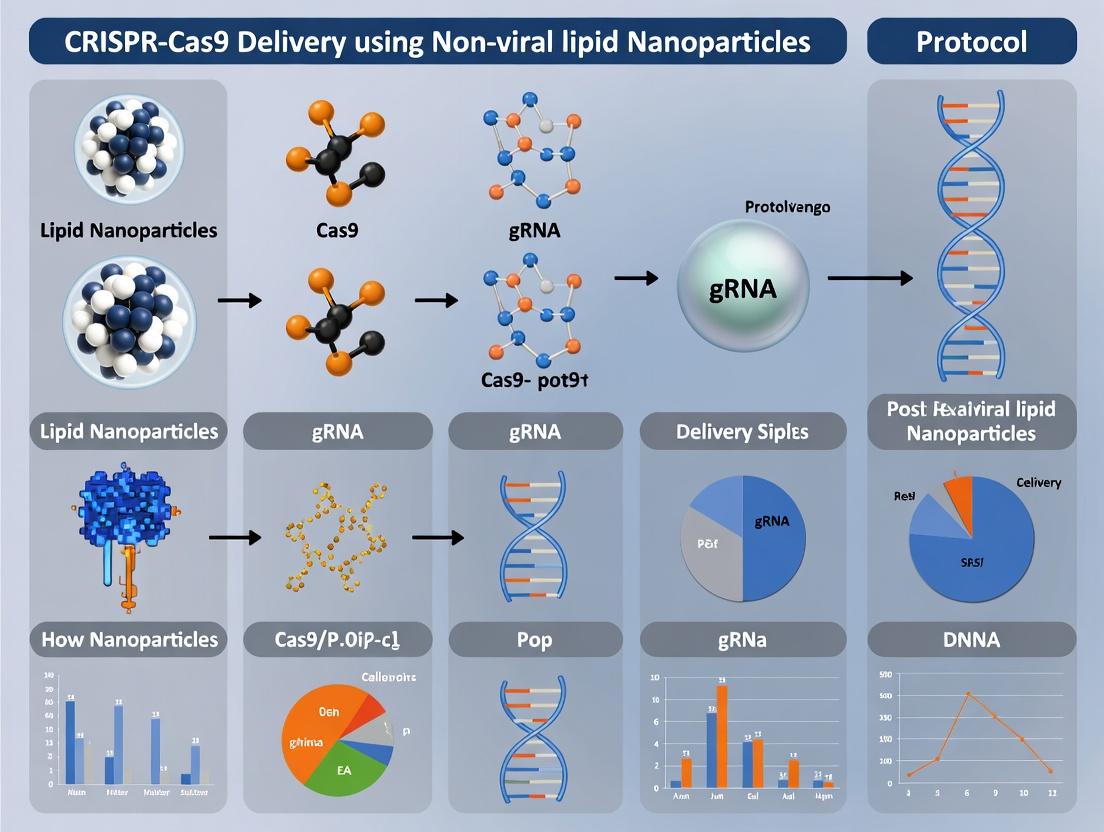
This comprehensive guide details a contemporary, optimized protocol for the delivery of CRISPR-Cas9 ribonucleoproteins (RNPs) or mRNA using non-viral lipid nanoparticles (LNPs).
A Step-by-Step Protocol for CRISPR-Cas9 Delivery Using Non-Viral Lipid Nanoparticles (LNPs): From Formulation to Functional Validation
Abstract
This comprehensive guide details a contemporary, optimized protocol for the delivery of CRISPR-Cas9 ribonucleoproteins (RNPs) or mRNA using non-viral lipid nanoparticles (LNPs). Targeted at researchers and drug development professionals, it provides foundational knowledge on LNP composition and mechanisms, a detailed methodological workflow for preparation and transfection, systematic troubleshooting for common issues like low efficiency and cytotoxicity, and rigorous validation techniques to assess editing outcomes and compare LNP performance against alternative delivery systems. The protocol emphasizes critical parameters for achieving high editing efficiency with minimal off-target effects in diverse cell types.
Why Lipid Nanoparticles? The Foundation of Non-Viral CRISPR Delivery
Application Notes
The effective delivery of CRISPR-Cas9 ribonucleoprotein (RNP) or nucleic acids into target cells remains the primary bottleneck for therapeutic gene editing. Non-viral lipid nanoparticles (LNPs) have emerged as a leading platform due to their safety profile, scalability, and capacity to protect cargo. This note details the key challenges, design considerations, and performance metrics for LNP-based CRISPR delivery.
Key Cellular Barriers & LNP Design Solutions
| Cellular Barrier | LNP Design/Formulation Strategy | Measurable Outcome |
|---|---|---|
| Serum Stability & Opsonization | PEGylated lipids (e.g., DMG-PEG2000), Dense PEG corona. | Increased circulation half-life (>4h in mice). Reduced macrophage uptake. |
| Cellular Uptake | Ionizable cationic lipids (e.g., DLin-MC3-DMA, ALC-0315). Positive surface charge at acidic pH. | >80% cellular uptake in hepatocytes in vivo. |
| Endosomal Escape | Ionizable lipids with pKa ~6.4. "Proton sponge" or membrane disruption. | Endosomal escape efficiency typically 1-5%. Critical rate-limiting step. |
| Cargo Release & RNP Stability | Biodegradable lipids, Helper lipids (DOPE). Adjustable LNP disassembly kinetics. | >90% cargo release within 6h post-escape. Maintained RNP activity. |
| Off-Target Delivery | Active targeting ligands (e.g., GalNAc for hepatocytes). | 10-100x increased specificity for target cell type. |
Quantitative Performance of Recent LNP Formulations (2023-2024)
Table 1: In Vivo Gene Editing Efficiency of Select CRISPR-LNP Systems
| LNP Formulation Core (Ionizable Lipid) | Cargo Type | Target Organ/Tissue | Editing Efficiency (% indels) | Key Metric (e.g., LD50) | Reference Year |
|---|---|---|---|---|---|
| ALC-0315 : DSPC : Cholesterol : ALC-0159 | Cas9 mRNA + sgRNA | Mouse Liver (Ttr gene) | ~63% | Single dose, 1 mg/kg mRNA | 2023 (Nat. Commun.) |
| SM-102 : DSPC : Cholesterol : DMG-PEG | Cas9 RNP | Mouse Lung (airway epithelial cells) | ~55% | Intratracheal instillation | 2023 (PNAS) |
| C12-200 : DOPE : Cholesterol : PEG | Cas12a RNP | Mouse Spleen & Liver | ~40% (spleen) | Selective lymphoid system delivery | 2024 (Sci. Adv.) |
| Custom biodegradable lipid | Base Editor mRNA + sgRNA | Mouse Brain (glia) | ~42% | Intravenous, BBB-penetrating | 2024 (Cell) |
Protocols
Protocol 1: Formulation of CRISPR-Cas9 RNP Loaded LNPs via Microfluidic Mixing
Objective: To prepare sterile, uniform LNPs encapsulating pre-assembled Cas9 protein:sgRNA complexes.
Research Reagent Solutions:
| Item | Function | Example Product/Catalog # |
|---|---|---|
| Ionizable Cationic Lipid | pH-dependent charge; enables endosomal escape. | DLin-MC3-DMA, SM-102, ALC-0315 |
| Helper Lipid (Phospholipid) | Stabilizes LNP bilayer structure. | DSPC (1,2-distearoyl-sn-glycero-3-phosphocholine) |
| Cholesterol | Modulates membrane fluidity and stability. | Pharmaceutical grade cholesterol |
| PEGylated Lipid | Stabilizes LNP, prevents aggregation, controls pharmacokinetics. | DMG-PEG2000, ALC-0159 |
| Acidic Buffer (Aqueous Phase) | Provides low pH for ionizable lipid protonation. | Sodium Acetate Buffer, pH 4.0 |
| Cas9 Nuclease, S. pyogenes | Genome editing enzyme. | Recombinant, HPLC-purified protein |
| sgRNA | Target-specific guide RNA. | Chemically modified, HPLC-purified |
| Microfluidic Device | Enables rapid, reproducible mixing for uniform LNP formation. | NanoAssemblr Ignite, or PDMS-based chips |
Procedure:
- Lipid Stock Preparation: Dissolve lipids in ethanol at defined molar ratios (e.g., Ionizable lipid: DSPC: Cholesterol: PEG-lipid = 50:10:38.5:1.5). Final total lipid concentration typically 10-12 mM in ethanol. Warm to 37°C.
- Aqueous Phase Preparation: Pre-assemble Cas9 RNP by incubating Cas9 protein with sgRNA at a 1:1.2 molar ratio in Sodium Acetate Buffer (pH 4.0) for 10 min at 25°C. Final RNP concentration should be tailored to the desired N:P (nitrogen from lipid to phosphate from RNA) ratio (typically 3-6).
- Microfluidic Mixing: Using a syringe pump or commercial instrument, mix the aqueous and ethanol phases at a fixed total flow rate (e.g., 12 mL/min) with a flow rate ratio (aqueous:ethanol) of 3:1. Collect the effluent in a vial.
- Buffer Exchange & Dialysis: Immediately dilute the formed LNP suspension with at least an equal volume of 1x PBS (pH 7.4). Dialyze against >1000 volumes of 1x PBS for 4-18 hours at 4°C using a 10-20kD MWCO dialysis membrane to remove ethanol and establish neutral pH.
- Sterilization & Concentration: Filter the dialyzed LNP through a 0.22 µm sterile syringe filter. Concentrate using Amicon Ultra centrifugal filters (100kD MWCO) if needed.
- Characterization: Measure particle size and PDI by DLS, zeta potential by electrophoretic light scattering, and RNP encapsulation efficiency using a Ribogreen assay.
Protocol 2: In Vitro Assessment of LNP-Mediated Gene Editing
Objective: To quantify editing efficiency and cellular toxicity of CRISPR-LNPs in a target cell line.
Procedure:
- Cell Seeding: Seed HEK293T or other target cells in a 24-well plate at 70,000 cells/well in complete growth medium. Incubate for 18-24h to reach ~70% confluency.
- LNP Dosing: Dilute the CRISPR-LNP stock in serum-free medium. Replace cell medium with the LNP-containing medium. A typical dose range is 10-200 nM final RNP concentration per well. Include untreated and vehicle (empty LNP) controls.
- Transfection: Incubate cells with LNPs for 4-6h, then replace with fresh complete medium.
- Harvest & Analysis (72h post-transfection):
- Genomic DNA Extraction: Use a commercial kit to extract gDNA from cell pellets.
- Editing Efficiency (T7E1 or ICE Assay): PCR-amplify the target genomic locus. For T7E1, denature and reanneal PCR products, digest with T7 Endonuclease I, and analyze fragment sizes by gel electrophoresis. Indel % = 100 * (1 - sqrt(1 - (b+c)/(a+b+c))), where a is undigested PCR product band intensity.
- Cell Viability (MTT Assay): At 48h, add MTT reagent, incubate 4h, solubilize formazan crystals, and measure absorbance at 570 nm. Viability = (Abssample/Abscontrol) * 100%.
Diagrams
Diagram 1: LNP-Mediated CRISPR Delivery Pathway
Diagram 2: Microfluidic LNP Formulation Workflow
Within the context of CRISPR-Cas9 delivery, Lipid Nanoparticles (LNPs) have emerged as the leading non-viral platform for systemic delivery of nucleic acid payloads. The modern LNP is a multi-component system, where each lipid class performs a specific, critical function to enable efficient encapsulation, circulation, cellular uptake, and endosomal escape of the cargo. This document details the anatomy, formulation principles, and protocols for generating CRISPR-Cas9 mRNA/sgRNA-loaded LNPs for research applications.
Core Components & Functions
Ionizable (Cationic) Lipid
The most critical component, responsible for complexing with negatively charged nucleic acids and enabling endosomal escape. At low pH (e.g., in the endosome), the amine head group becomes protonated, leading to a fusogenic hexagonal phase structure that disrupts the endosomal membrane and releases the payload into the cytosol.
Polyethylene Glycol (PEG)-Lipid
A surface-active lipid that modulates particle size, improves colloidal stability by preventing aggregation, reduces nonspecific protein adsorption, and influences pharmacokinetics. The PEG chain length and lipid anchor stability are key design parameters.
Cholesterol
A structural lipid that integrates into the LNP bilayer, enhancing membrane integrity, stability, and fluidity. It contributes to the fusogenic properties necessary for endosomal escape and can modulate cellular uptake.
Helper (Structural) Phospholipid
Typically a zwitterionic phospholipid like DSPC (1,2-distearoyl-sn-glycero-3-phosphocholine). Provides structural support to the LNP bilayer, contributes to membrane fusogenicity, and aids in the phase transition during endosomal escape.
Table 1: Typical Molar Ratios of LNP Components for mRNA Delivery
| Component | Example Compound | Typical Molar % Range | Primary Function |
|---|---|---|---|
| Ionizable Lipid | DLin-MC3-DMA, SM-102, ALC-0315 | 35-50% | Nucleic acid complexation, endosomal escape |
| Helper Phospholipid | DSPC | 10-20% | Bilayer structure, fusogenicity |
| Cholesterol | Plant-derived or synthetic | 35-45% | Membrane integrity, stability, fluidity |
| PEG-Lipid | DMG-PEG2000, DSG-PEG2000 | 1.0-2.5% | Size control, stability, pharmacokinetics |
Table 2: Key Characterization Parameters for CRISPR-Cas9 LNPs
| Parameter | Target Range | Analytical Method | Significance |
|---|---|---|---|
| Particle Size (Z-avg) | 70-120 nm | Dynamic Light Scattering (DLS) | Impacts circulation half-life, biodistribution, and cellular uptake. |
| Polydispersity Index (PDI) | < 0.20 | DLS | Indicates homogeneity of the particle population. |
| Encapsulation Efficiency | > 90% | Ribogreen Assay | Percentage of nucleic acid cargo protected within the LNP. Critical for potency and safety. |
| Zeta Potential | Slightly negative to neutral (-5 to +5 mV) in pH 7.4 buffer | Electrophoretic Light Scattering | Surface charge affecting stability, protein opsonization, and cellular interactions. |
| mRNA Integrity | > 95% intact | Capillary Gel Electrophoresis (e.g., Fragment Analyzer) | Ensures functional cargo is delivered. |
Experimental Protocols
Protocol 1: Microfluidic Formulation of CRISPR-Cas9 mRNA LNPs
This protocol describes the rapid mixing of lipids in ethanol with mRNA in aqueous buffer using a microfluidic device to produce homogeneous, high-encapsulation-efficiency LNPs.
Materials:
- Lipid Stock Solutions: Ionizable lipid (e.g., SM-102, 50 mM in ethanol), DSPC (20 mM in ethanol), Cholesterol (50 mM in ethanol), PEG-lipid (e.g., DMG-PEG2000, 20 mM in ethanol).
- Aqueous Buffer: mRNA (CRISPR-Cas9 mRNA + sgRNA) diluted in 50 mM citrate buffer, pH 4.0. Final mRNA concentration typically 0.1-0.2 mg/mL.
- Equipment: Syringe pumps, microfluidic mixer (e.g., NanoAssemblr Ignite or Precision Nanosystems microfluidic chip), tubing, collection vial.
- Dialysis/UF Equipment: Slide-A-Lyzer cassettes (MWCO 20kDa) or Tangential Flow Filtration (TFF) system.
Procedure:
- Prepare the organic phase: Mix ionizable lipid, DSPC, cholesterol, and PEG-lipid from stock solutions in a glass vial according to the desired molar ratio (e.g., 50:10:38.5:1.5). Adjust final total lipid concentration to ~12.5 mM in pure ethanol.
- Prepare the aqueous phase: Dilute the CRISPR-Cas9 mRNA (+ sgRNA) in 50 mM citrate buffer (pH 4.0) to a target concentration of 0.15 mg/mL. Keep on ice.
- Microfluidic Mixing: Load the organic and aqueous phases into separate syringes. Mount syringes on syringe pumps. Connect syringes to a microfluidic mixer using appropriate tubing.
- Set a Total Flow Rate (TFR) of 12 mL/min and a Flow Rate Ratio (FRR, aqueous:organic) of 3:1. This yields an aqueous flow rate of 9 mL/min and an organic flow rate of 3 mL/min.
- Initiate mixing, collecting the effluent (milky suspension) in a glass vial placed on a stir plate with gentle stirring.
- Buffer Exchange and Purification:
- Immediately transfer the crude LNP suspension to a dialysis cassette or TFF system.
- Dialyze/TFF against a >1000x volume of 1x PBS (pH 7.4) for a minimum of 18 hours at 4°C to remove ethanol and exchange the buffer.
- Sterile Filtration: After dialysis, pass the LNP formulation through a sterile 0.22 µm PES syringe filter into a sterile vial.
- Characterization: Analyze particle size, PDI, zeta potential, encapsulation efficiency, and mRNA integrity as per Table 2.
Protocol 2: Encapsulation Efficiency (EE%) Determination via RiboGreen Assay
A fluorescence-based assay to quantify both total and free (unencapsulated) RNA, allowing calculation of EE%.
Procedure:
- Prepare a 1:200 dilution of the LNP sample in 1x TE buffer. This is the "Total RNA" sample.
- Prepare a second 1:200 dilution of the LNP sample in 1x TE buffer containing 2% Triton X-100. The detergent disrupts LNPs, releasing all RNA. This is the "Total RNA (+ detergent)" sample.
- Prepare RNA standard curve dilutions in 1x TE buffer (e.g., 1000 ng/mL to 1.95 ng/mL) from a known stock.
- In a black 96-well plate, add 50 µL of each sample or standard to designated wells, in duplicate.
- Add 50 µL of the Quant-iT RiboGreen reagent (diluted 1:500 in 1x TE buffer) to each well. Protect from light and incubate at room temperature for 5 minutes.
- Measure fluorescence (excitation ~480 nm, emission ~520 nm).
- Calculation:
- Determine RNA concentrations from the standard curve.
- % Encapsulation = [1 - (RNA concentration in "Total RNA" sample / RNA concentration in "Total RNA (+ detergent)" sample)] x 100.
The Scientist's Toolkit: Research Reagent Solutions
Table 3: Essential Materials for LNP Formulation & Characterization
| Item/Category | Example Product/Brand | Function in LNP Research |
|---|---|---|
| Ionizable Lipids | SM-102, ALC-0315 (MedChemExpress); DLin-MC3-DMA (Avanti) | Core functional lipid for nucleic acid complexation and endosomal escape. |
| PEG-Lipids | DMG-PEG2000, DSG-PEG2000 (NOF America) | Stabilizes particles, controls size, and modulates biodistribution. |
| Phospholipids & Cholesterol | DSPC, DOPE, Cholesterol (Avanti Polar Lipids) | Provide bilayer structure and enhance fusogenic properties. |
| Microfluidic Mixer | NanoAssemblr Ignite (Precision NanoSystems); Microfluidic Chips (Dolomite) | Enables reproducible, scalable production of homogeneous LNPs. |
| Nucleic Acid Quantitation | Quant-iT RiboGreen Assay (Thermo Fisher) | Fluorescent assay for determining RNA encapsulation efficiency. |
| Particle Characterization | Zetasizer Ultra (Malvern Panalytical) | Integrated system for DLS (size/PDI) and ELS (zeta potential) analysis. |
| mRNA Integrity Analysis | Fragment Analyzer (Agilent) | Capillary gel electrophoresis for precise assessment of mRNA quality pre- and post-encapsulation. |
| Buffer Exchange/Purification | Slide-A-Lyzer Dialysis Cassettes (Thermo Fisher); KrosFlo TFF System (Repligen) | Removes organic solvent and unencapsulated materials, exchanges buffer. |
Visualizations
LNP Formulation by Microfluidics Workflow
Ionizable Lipid Mediated Endosomal Escape
This Application Note details the mechanistic principles and practical protocols for utilizing lipid nanoparticles (LNPs) to deliver CRISPR-Cas9 ribonucleoprotein (RNP) complexes or mRNA/sgRNA payloads. Framed within ongoing research into non-viral CRISPR delivery, this document provides a step-by-step guide for formulation, characterization, and functional testing, supported by current quantitative data and visualization tools for researchers and drug development professionals.
LNPs designed for CRISPR delivery are typically composed of four core lipid components: an ionizable cationic lipid, a phospholipid, cholesterol, and a PEG-lipid. The mechanism involves: (1) Packaging: Electrostatic complexation of negatively charged CRISPR payloads (e.g., mRNA, RNP) with ionizable lipids at low pH. (2) Protection: Formation of a stable, bilayer-enclosed particle that shields nucleic acids and proteins from enzymatic degradation and immune recognition. (3) Release: Following cellular uptake via endocytosis, the ionizable lipids become protonated in the acidic endosome, disrupting the endosomal membrane and facilitating cytosolic payload release.
Table 1: Typical LNP Formulation Components and Ratios for CRISPR Delivery
| Lipid Component | Function | Molar Ratio (%) | Key Property |
|---|---|---|---|
| Ionizable Cationic Lipid (e.g., DLin-MC3-DMA) | Complexes/packages payload, enables endosomal escape | 35-50 | pKa ~6.5-6.8 |
| Phospholipid (e.g., DSPC) | Structural, supports bilayer integrity | 10-15 | High Tm (>55°C) |
| Cholesterol | Modulates fluidity and stability | 38-43 | Membrane fusion |
| PEG-lipid (e.g., DMG-PEG2000) | Controls particle size, reduces opsonization | 1.5-2.5 | Provides steric barrier |
Table 2: Critical LNP Characterization Parameters (Target Ranges)
| Parameter | Target Range | Analytical Method |
|---|---|---|
| Particle Size (Hydrodynamic Diameter) | 70-120 nm | Dynamic Light Scattering (DLS) |
| Polydispersity Index (PDI) | < 0.2 | DLS |
| Zeta Potential (in neutral pH buffer) | -5 to +5 mV | Electrophoretic Light Scattering |
| Payload Encapsulation Efficiency (EE%) | > 90% for mRNA; > 80% for RNP | Ribogreen/Protein Assay |
| pKa (of LNP surface) | 6.0 - 6.8 | TNS Fluorescence Assay |
Detailed Experimental Protocols
Protocol 3.1: Microfluidic Formulation of CRISPR-LNPs
Objective: Reproducible preparation of LNPs encapsulating Cas9 mRNA/sgRNA or RNP. Reagents: Ionizable lipid, DSPC, Cholesterol, PEG-lipid (see Table 1). Ethanol. Payload in 10 mM citrate buffer, pH 4.0. 1x PBS, pH 7.4. Equipment: Microfluidic mixer (e.g., NanoAssemblr). Syringe pump. Vials. Procedure:
- Prepare the lipid phase by dissolving all lipid components in ethanol to a total concentration of 10-12 mM.
- Prepare the aqueous phase containing the CRISPR payload (e.g., 100 µg/mL Cas9 mRNA + sgRNA) in citrate buffer (pH 4.0).
- Load phases into separate syringes. Set total flow rate (TFR) to 12-15 mL/min and flow rate ratio (aqueous:organic) to 3:1.
- Initiate mixing. Collect the effluent in a vial containing 1x PBS (dilution factor ~4) to raise pH and initiate particle stabilization.
- Dialyze against 1x PBS, pH 7.4, for 2 hours to remove ethanol and perform buffer exchange.
- Filter through a 0.22 µm sterile filter. Store at 4°C.
Protocol 3.2: Determination of Encapsulation Efficiency
Objective: Quantify the percentage of CRISPR payload successfully incorporated into LNPs. Procedure for mRNA:
- Prepare two 20 µL aliquots of purified LNP in duplicate.
- To the Total sample, add 80 µL of 1% Triton X-100 in PBS.
- To the Free sample, add 80 µL of PBS.
- Incubate for 10 min. Add 100 µL of Quant-iT RiboGreen reagent (diluted 1:200 in TE buffer) to each.
- Measure fluorescence (ex: 485 nm, em: 535 nm). Calculate EE% using a standard curve.
- Calculation: EE% = [1 - (Free RNA Fluorescence / Total RNA Fluorescence)] x 100.
Procedure for RNP:
- Use a similar differential detergent lysis method.
- Quantify free protein in the supernatant after ultracentrifugation using a fluorometric protein assay (e.g., Qubit).
Protocol 3.3: In Vitro Functional Gene Editing Assay
Objective: Assess CRISPR-mediated knockout efficiency in cultured cells. Cell Line: HEK293T cells stably expressing GFP. Procedure:
- Seed cells in a 24-well plate at 1x10^5 cells/well.
- After 24h, treat cells with LNPs targeting GFP (e.g., containing anti-GFP sgRNA/Cas9). Include untreated and mock-LNP controls.
- 72 hours post-treatment, harvest cells and analyze GFP fluorescence via flow cytometry.
- Editing Efficiency = (% GFP-negative cells in treated sample) - (% in untreated control).
Visualizing Key Mechanisms and Workflows
Title: LNP Packaging and Cellular Delivery Pathway for CRISPR
Title: LNP Formulation and Testing Workflow
The Scientist's Toolkit: Research Reagent Solutions
Table 3: Essential Materials for LNP-CRISPR Research
| Item | Function & Specification | Example Vendor/Cat. No.* |
|---|---|---|
| Ionizable Cationic Lipid (DLin-MC3-DMA) | Key functional lipid for payload complexation & endosomal escape; >98% purity | MedChemExpress, HY-108726 |
| DSPC (1,2-distearoyl-sn-glycero-3-phosphocholine) | Structural phospholipid providing bilayer stability | Avanti Polar Lipids, 850365P |
| Cholesterol | Modulates membrane rigidity and promotes fusion | Sigma-Aldrich, C8667 |
| DMG-PEG2000 (PEG-lipid) | Controls particle size, improves colloidal stability | Avanti Polar Lipids, 880151P |
| NanoAssemblr Microfluidic Mixer | Enables reproducible, scalable LNP formulation | Precision NanoSystems, NTS-2000 |
| Quant-iT RiboGreen RNA Assay Kit | Quantifies free vs. total RNA for encapsulation efficiency | Thermo Fisher, R11490 |
| TNS (2-(p-Toluidino)naphthalene-6-sulfonic acid) | Fluorescent probe for determining LNP apparent pKa | Sigma-Aldrich, T4928 |
| ZetaPALS Zeta Potential Analyzer | Measures surface charge and particle size | Brookhaven Instruments |
*Vendor and catalog numbers are examples for research planning and may require verification for current availability.
Critical Considerations and Troubleshooting
- Payload Integrity: For RNP delivery, maintain mild acidic conditions (pH ~4.0-5.0) during formulation to preserve protein activity while ensuring lipid complexation.
- Size Control: Adjust PEG-lipid percentage and total flow rate during microfluidic mixing to fine-tune particle diameter. Higher PEG% generally yields smaller particles.
- In Vivo Translation: Consider incorporating targeted PEG-lipids or alternative functional lipids to improve tissue-specific delivery and reduce hepatic clearance.
Within the broader research on non-viral Lipid Nanoparticle (LNP) delivery of CRISPR-Cas9, a critical decision point is the selection of the payload format. The two primary options involve delivering pre-assembled Cas9 protein complexed with guide RNA (sgRNA) as a Ribonucleoprotein (RNP) or co-delivering Cas9-encoding mRNA and sgRNA. This application note provides a detailed comparative analysis, protocols, and considerations for researchers developing LNP-based gene editing therapeutics.
Comparative Analysis: RNP vs. mRNA/sgRNA Payloads
Table 1: Key Characteristics and Performance Metrics
| Parameter | Cas9/sgRNA RNP | Cas9 mRNA + sgRNA |
|---|---|---|
| Onset of Editing | Rapid (hours). Editing occurs upon cytosolic delivery. | Delayed (12-48 hours). Requires translation. |
| Editing Duration | Transient (days). Rapid degradation limits exposure. | Extended (days). Sustained Cas9 expression. |
| Immunogenicity Risk | Lower. Reduced innate immune sensing vs. exogenous RNA. | Higher. mRNA can trigger TLR/RIG-I pathways. |
| Payload Size/Complexity | Large, charged protein/RNA complex (~160 kDa Cas9). | Smaller, separate nucleic acid components. |
| LNP Formulation Challenge | High. Requires efficient protein encapsulation/stable complex. | Moderate. Standard nucleic acid encapsulation. |
| Off-target Effect Potential | Potentially lower due to short activity window. | Potentially higher due to prolonged Cas9 presence. |
| Manufacturing | Complex. Requires recombinant protein production & assembly. | Simplified. Relies on in vitro transcription (IVT). |
| In Vivo Editing Efficiency (Typical Range) | 5-30% (highly cell-type dependent) | 20-60% in hepatocytes; can be higher |
Table 2: Recent In Vivo LNP Delivery Outcomes (Selected Studies)
| Payload | Target Tissue/Cell | LNP Formulation | Key Result | Reference |
|---|---|---|---|---|
| spCas9 RNP | T cells (ex vivo) | Commercial cationic lipid | >90% knockout in primary human T cells. | 2023, Nature Protoc |
| saCas9 mRNA + sgRNA | Mouse liver | ALC-0315/CLinDMA-based | ~60% editing of Pcsk9; stable reduction. | 2023, J Control Release |
| spCas9 RNP | Mouse brain (glia) | Ionizable lipid, PEG-free | ~30% editing in astrocytes; minimal immunogenicity. | 2024, Sci Adv |
| Cas12a mRNA + crRNA | Mouse liver | Novel biodegradable lipid | >50% insertion; comparable to Cas9 mRNA. | 2024, Cell Rep |
Detailed Experimental Protocols
Protocol 1: Formulation of LNPs for Cas9 mRNA and sgRNA Co-delivery
This protocol details the microfluidic mixing of ionizable lipid-based LNPs.
Materials:
- Ethanol Phase: Ionizable lipid (e.g., DLin-MC3-DMA, ALC-0315), DSPC, Cholesterol, DMG-PEG-2000 dissolved in ethanol.
- Aqueous Phase: Cas9 mRNA and sgRNA in citrate buffer (pH 4.0).
- Microfluidic mixer (e.g., NanoAssemblr), PD-10 desalting columns, 0.22 µm sterile filters.
Procedure:
- Prepare the lipid mixture in ethanol at a molar ratio (e.g., 50:10:38.5:1.5 - Ionizable lipid:DSPC:Chol:DMG-PEG).
- Dissolve Cas9 mRNA and sgRNA at a 1:2 mass ratio in 10 mM citrate buffer (pH 4.0).
- Set the total flow rate (TFR) on the microfluidic mixer to 12 mL/min and a flow rate ratio (aqueous:ethanol) of 3:1.
- Simultaneously pump the aqueous RNA solution and the ethanol lipid solution into the mixer chamber.
- Collect the formed LNP suspension in a vessel.
- Dialyze against 1x PBS (pH 7.4) for 2 hours or use PD-10 columns for buffer exchange.
- Filter sterilize using a 0.22 µm PES filter.
- Characterize particle size (DLS ~80-100 nm), PDI (<0.2), and RNA encapsulation efficiency (Ribogreen assay).
Protocol 2: Formulation of LNPs for Cas9/sgRNA RNP Encapsulation
This protocol adapts LNPs for protein-RNP encapsulation using charge-mediated complexation.
Materials:
- Lipid Stock: Cationic/ionizable lipid (e.g., DODAP, C12-200), helper lipids, PEG-lipid in ethanol.
- RNP Complex: Recombinant Cas9 protein complexed with chemically modified sgRNA (pre-incubated 10 min at RT).
- Dialysis cassettes (MWCO 100kDa), Hepes buffer (pH 7.4).
Procedure:
- Pre-complex Cas9 protein with sgRNA at a 1:1.2 molar ratio in a low-salt buffer to form the RNP.
- Prepare the lipid mixture in ethanol. Include a cationic lipid (e.g., 20 mol% DODAP) to facilitate RNP complexation.
- Use a modified microfluidic or rapid mixing protocol:
- Option A (Two-step): First, form empty LNPs in citrate buffer (pH 4.0). Then, incubate LNPs with RNP in a low-pH buffer to allow cationic lipid-mediated loading.
- Option B (Direct): Mix the RNP in a mildly acidic buffer (pH 5.5) with the lipid ethanol phase directly at a high TFR (e.g., 15 mL/min, 3:1 ratio).
- Immediately after mixing, raise the pH to 7.4 using 1M Hepes buffer.
- Dialyze extensively against PBS (pH 7.4) overnight to remove ethanol and unencapsulated RNP.
- Purify via size exclusion chromatography (e.g., Sepharose CL-4B) to isolate loaded LNPs.
- Characterize size, PDI, and RNP encapsulation (SDS-PAGE/fluorescence assay).
Protocol 3: In Vitro Potency and Specificity Assessment
A standard protocol to evaluate editing efficiency and off-target effects.
Materials:
- Target cells (e.g., HEK293, HepG2), LNP formulations, genomic DNA extraction kit, T7 Endonuclease I or ICE analysis software, next-generation sequencing (NGS) library prep kit.
Procedure:
- Transfection: Seed cells in a 24-well plate. Treat with LNPs at various doses (e.g., 0.1-1 µg nucleic acid or RNP equivalent per well). Include untreated controls.
- Harvest: 72 hours post-transfection, harvest cells and extract genomic DNA.
- On-target Analysis:
- Amplify the target genomic locus by PCR.
- For T7E1 assay: Denature and reanneal PCR products, digest with T7 Endonuclease I, and analyze fragments via gel electrophoresis. Calculate indel percentage.
- For NGS: Prepare amplicon libraries and sequence. Use CRISPResso2 or similar tool for analysis.
- Off-target Analysis:
- Identify top predicted off-target sites using tools like Cas-OFFinder.
- Amplify these loci from treated and control samples and subject to NGS.
- Calculate the frequency of indels at each off-target site. Compare to on-target efficiency.
Visualizations
LNP-RNP Cellular Delivery Pathway
LNP-mRNA/sgRNA Delivery & Expression
Payload Selection Decision Guide
The Scientist's Toolkit: Research Reagent Solutions
| Reagent/Material | Function & Application | Key Considerations |
|---|---|---|
| Ionizable Lipids (e.g., ALC-0315, SM-102) | Core LNP component for nucleic acid encapsulation and endosomal escape. | Critical for in vivo potency. Optimize pKa (~6.5) for endosomal disruption. |
| Cationic Lipids (e.g., DODAP, DOTAP) | Facilitates complexation/loading of negatively charged RNP or enhances mRNA binding. | Used in RNP LNPs. Can increase cytotoxicity; optimize molar ratio. |
| Chemically Modified sgRNA | Enhances stability, reduces immunogenicity, improves RNP assembly efficiency. | Use 2'-O-methyl, phosphorothioate bonds. Critical for both payload formats. |
| Modified Nucleotides (e.g., Ψ, 5mC) | Incorporated into mRNA to reduce innate immune recognition (e.g., TLR activation). | Essential for high-dose in vivo mRNA delivery. |
| Recombinant Hi-Fi Cas9 Protein | For RNP assembly. High purity and activity are crucial for specific editing. | Consider engineered variants (e.g., SpCas9-HF1) for reduced off-targets. |
| In Vitro Transcription (IVT) Kits | For high-yield production of Cas9 mRNA and sgRNA. | Include capping (CleanCap) and poly(A) tailing for mRNA. |
| Microfluidic Mixers (NanoAssemblr) | Enables reproducible, scalable LNP formulation with controlled size. | Standard for nucleic acid LNPs; may need adjustment for RNP encapsulation. |
| Ribogreen Assay Kit | Quantifies encapsulated nucleic acid payload and encapsulation efficiency. | Use with/without detergent to measure total vs. free RNA. |
| T7 Endonuclease I (T7E1) | Rapid, accessible method for initial assessment of indel formation at target locus. | Less quantitative than NGS. Prone to false positives/negatives. |
| NGS-based Off-target Analysis Kits | Comprehensive, unbiased profiling of editing fidelity (e.g., GUIDE-seq, CIRCLE-seq). | Critical for pre-clinical safety assessment. Higher cost and complexity. |
Within the context of CRISPR-Cas9 delivery for therapeutic gene editing, non-viral lipid nanoparticles (LNPs) present a compelling alternative to established viral vector platforms. This application note details the comparative advantages of LNPs, supported by recent data, and provides foundational protocols for their formulation and testing in preclinical research.
Comparative Analysis: LNP vs. Viral Vector Platforms
Table 1: Quantitative Comparison of Delivery Platforms for CRISPR-Cas9
| Parameter | Non-Viral LNP | Adenoviral Vector (AVV) | Adeno-Associated Virus (AAV) | Lentiviral Vector (LV) |
|---|---|---|---|---|
| Typical Packaging Capacity | > 10 kb (flexible) | ~8-10 kb | < 4.7 kb | ~8-10 kb |
| Immunogenicity Risk | Low to Moderate (lipid-dependent) | Very High | Moderate (pre-existing immunity) | Moderate |
| Insertional Mutagenesis Risk | None | Low | Very Low | Yes (random integration) |
| Manufacturing Scalability | High (chemical synthesis) | Moderate | Challenging (cell culture) | Challenging (cell culture) |
| Titer / Yield | High (mg/mL range) | Very High | Low to Moderate | Moderate |
| Production Timeline | Days to Weeks | Months | Months | Months |
| Cost of Goods (Preclinical) | Low | High | Very High | High |
| Payload Flexibility | High (mRNA, sgRNA, RNP, combo) | Moderate | Limited by small size | Moderate |
| Transient Expression | Yes (days) | Yes (weeks) | Prolonged (years possible) | Stable (integration) |
Detailed Experimental Protocols
Protocol 1: Microfluidic Formulation of CRISPR-Cas9 mRNA/sgRNA LNPs
Objective: To reproducibly formulate ionizable cationic LNPs encapsulating Cas9 mRNA and sgRNA. Materials: Ionizable lipid (e.g., DLin-MC3-DMA), DSPC, Cholesterol, DMG-PEG-2000, Cas9 mRNA, sgRNA, Ethanol, Sodium Acetate Buffer (pH 4.0), Microfluidic device (e.g., NanoAssemblr). Procedure:
- Lipid Stock Preparation: Dissolve ionizable lipid, DSPC, cholesterol, and DMG-PEG-2000 in ethanol at a molar ratio (e.g., 50:10:38.5:1.5) to a total lipid concentration of 12.5 mM.
- Aqueous Phase Preparation: Combine Cas9 mRNA and sgRNA at a molar ratio (e.g., 1:1.2) in sodium acetate buffer (pH 4.0) to a final concentration of 0.2 mg/mL total RNA.
- Microfluidic Mixing: Set total flow rate (TFR) to 12 mL/min and flow rate ratio (FRR, aqueous:ethanol) to 3:1. Simultaneously pump the aqueous and ethanol phases into the microfluidic device.
- Buffer Exchange & Dialysis: Immediately dilute the formed LNP suspension in 1x PBS (pH 7.4) to reduce ethanol concentration. Dialyze against 1x PBS for 2 hours at 4°C using a 100 kDa MWCO membrane.
- Concentration & Sterilization: Concentrate LNPs using centrifugal filters (100 kDa MWCO). Sterilize by filtration through a 0.22 µm PES membrane. Store at 4°C.
Protocol 2: In Vitro Potency Assessment via Next-Generation Sequencing (NGS)
Objective: To quantify CRISPR-Cas9-mediated indel formation in target cells. Materials: HEK293 cells stably expressing target locus, formulated LNPs, genomic DNA extraction kit, PCR primers flanking target site, NGS library prep kit. Procedure:
- Cell Transfection: Seed cells in a 24-well plate. Treat with LNP formulations at varying doses (e.g., 1-100 ng mRNA/well). Include untreated and mock controls.
- Genomic DNA Harvest: At 72 hours post-transfection, extract genomic DNA using a commercial kit.
- Amplicon Generation: Perform PCR (≤ 25 cycles) using high-fidelity polymerase to amplify a ~300-400 bp region surrounding the target site.
- NGS Library Preparation: Attach dual-index barcodes via a second limited-cycle PCR. Pool, clean, and quantify libraries.
- Sequencing & Analysis: Run on an Illumina MiSeq. Analyze reads using CRISPR-specific tools (e.g., CRISPResso2) to calculate percentage of indels.
Visualizing LNP Delivery and Mechanism
Title: LNP Delivery Pathway for CRISPR-Cas9 Gene Editing
Title: LNP Formulation Optimization Workflow
The Scientist's Toolkit: Research Reagent Solutions
Table 2: Essential Materials for CRISPR-LNP Research
| Item / Reagent | Function & Rationale |
|---|---|
| Ionizable Cationic Lipid (e.g., DLin-MC3-DMA, SM-102) | Core component; protonates in acidic endosome to enable membrane disruption and payload release. Critical for efficiency. |
| PEGylated Lipid (e.g., DMG-PEG2000) | Stabilizes LNP surface, modulates size, reduces clearance. Impacts pharmacokinetics and tropism. |
| Microfluidic Mixer (e.g., NanoAssemblr) | Enables reproducible, scalable, and rapid mixing for consistent, monodisperse LNP formation. |
| In Vitro Transcription Kit (mRNA) | For high-yield production of Cas9 mRNA with modified nucleotides (e.g., Ψ, 5mC) to reduce immunogenicity. |
| CRISPR-Cas9 Ribonucleoprotein (RNP) | Pre-complexed Cas9 protein and sgRNA; an alternative payload for rapid, transient activity with reduced off-target risk. |
| NGS-Based Editing Analysis Tool (e.g., CRISPResso2) | Precisely quantifies genome editing outcomes (indels, HDR) from deep sequencing data. Gold standard for potency. |
| hEPO Receptor Knock-in Cell Line | Reporter cell model to assess tissue-specific LNP delivery and protein expression in vivo. |
| Anti-PEG Antibody Assay | Detects anti-drug antibodies against PEG components, critical for assessing immunogenicity risk. |
Hands-On Protocol: Formulating, Assembling, and Transfecting CRISPR-LNPs
Within a broader thesis on CRISPR-Cas9 delivery via non-viral lipid nanoparticles (LNPs), meticulous material preparation is the foundational step determining the reproducibility, efficiency, and safety of the entire protocol. This application note details the preparation and characterization of critical reagents, focusing on ionizable lipids, stock solutions, and buffer systems essential for formulating stable, transfection-competent LNPs. The quality of starting materials directly correlates with the potency of the final CRISPR-Cas9 ribonucleoprotein (RNP) or mRNA delivery vehicle.
Critical Reagents: Lipid Components
Ionizable cationic lipids are the key functional component of CRISPR-LNPs, enabling nucleic acid encapsulation and endosomal escape. Co-lipids (phospholipids, cholesterol, and PEG-lipids) confer structural integrity and stability.
Table 1: Key Lipid Components for CRISPR-LNP Formulation
| Lipid Category | Example Compounds (Current Benchmarks) | Typical Stock Concentration | Solvent | Storage & Stability | Primary Function in LNP |
|---|---|---|---|---|---|
| Ionizable Lipid | DLin-MC3-DMA (Onpattro), SM-102 (Spikevax), ALC-0315 (Comirnaty) | 50 mM | Ethanol | -20°C, desiccated, 6 months | Entrap nucleic acid; protonate in endosome to enable escape. |
| Phospholipid Helper | DSPC (1,2-distearoyl-sn-glycero-3-phosphocholine) | 25 mM | Ethanol | -20°C, 12 months | Provides structural integrity to the LNP bilayer. |
| Cholesterol | BioXpress Cholesterol | 100 mM | Ethanol | Room temp, desiccated, 12 months | Modulates membrane fluidity and stability. |
| PEG-lipid (PEGylated) | DMG-PEG2000, ALC-0159 | 25 mM | Ethanol | -20°C, desiccated, 6 months | Controls particle size, prevents aggregation, and modulates pharmacokinetics. |
Preparation of Lipid Stocks
Protocol 2.1: Preparation of Master Lipid Stocks in Ethanol
- Weighing: Accurately weigh each lipid component using a calibrated microbalance in a controlled, low-humidity environment.
- Dissolution: Transfer the weighed lipid to a clean glass vial. Add pure, anhydrous ethanol (≥99.8%) to achieve the target molar concentration (see Table 1). Use glass syringes for volume measurement.
- Solubilization: Vortex the mixture for 30-60 seconds. If necessary, briefly warm in a water bath at 40-50°C (not above 55°C) for 5 minutes with intermittent vortexing until the solution is clear.
- Aliquoting: Aseptically aliquot the master stock into sterile, inert polypropylene cryovials (e.g., 100 µL aliquots) to minimize freeze-thaw cycles.
- Storage: Immediately store aliquots at -20°C in a desiccator. Record the date of preparation and concentration.
Quality Control: Verify concentration by reverse-phase HPLC or NMR for critical GMP-grade preparations. For research-grade, consistency in preparation is key.
Aqueous Buffer Systems
The aqueous phase contains the CRISPR payload (Cas9 mRNA/sgRNA or RNP) and its buffer, which critically impacts encapsulation efficiency and payload stability.
Table 2: Critical Buffer Components and Parameters
| Buffer Component/Parameter | Specification | Function/Rationale |
|---|---|---|
| Payload Diluent (for mRNA) | 10 mM Tris-HCl, 1 mM EDTA, pH 7.4 (Nuclease-free TE buffer) | Maintains RNA integrity, prevents degradation. |
| Payload Diluent (for RNP) | 20 mM HEPES, 150 mM KCl, pH 7.5 | Maintains Cas9 protein activity and complex stability. |
| Acidified Citrate Buffer (For mRNA LNPs) | 50 mM Citric Acid, pH 3.0-4.0 (adjusted with NaOH) | Protonates ionizable lipid during mixing, driving encapsulation. |
| Saline Buffer for Dilution (TNM) | 50 mM Tris, 100 mM NaCl, pH 7.4 | Used for post-formulation dilution and dialysis. |
| Osmolality | 280-320 mOsm/kg | Must be isotonic for in vivo applications. |
| Nuclease Status | Nuclease-free (DEPC-treated/autoclaved) water and materials | Prevents nucleic acid degradation. |
Protocol 3.1: Preparation of 50 mM Citrate Buffer (pH 4.0)
- Dissolve 961 mg of citric acid monohydrate in 80 mL of nuclease-free water.
- Adjust the pH to 4.0 by slowly adding 4M NaOH solution (nuclease-free) while stirring and monitoring with a calibrated pH meter.
- Bring the final volume to 100 mL with nuclease-free water.
- Filter sterilize using a 0.22 µm PES membrane filter into a sterile container.
- Store at 4°C for up to 4 weeks.
The CRISPR Payload
Cas9 mRNA: Use in vitro transcribed (IVT) or synthetic mRNA with 5' cap (e.g., CleanCap) and poly-A tail, modified nucleosides (e.g., N1-methylpseudouridine) to reduce immunogenicity. Resuspend in nuclease-free TE buffer, aliquot, and store at -80°C. sgRNA: Chemically synthesized, HPLC-purified. Resuspend in nuclease-free TE buffer, aliquot, and store at -80°C. Cas9 RNP: Complex purified Cas9 protein with sgRNA at a molar ratio of 1:1.2 (protein:sgRNA) in HEPES-KCl buffer, incubate at room temp for 10 min before use.
The Scientist's Toolkit: Research Reagent Solutions
Table 3: Essential Materials for LNP Material Preparation
| Item | Product Example (Vendor) | Function in Preparation |
|---|---|---|
| Ionizable Lipid | SM-102 (Cayman Chemical) | Core functional lipid for encapsulation and delivery. |
| Cholesterol | BioUltra Cholesterol (Sigma) | Stabilizes LNP structure. |
| Precision Balance | Mettler Toledo MX5 | Accurate µg-mg range weighing of lipids. |
| Anhydrous Ethanol | 200 Proof (Decon Labs) | Solvent for lipid stocks; must be water-free. |
| Nuclease-free Water | UltraPure (Invitrogen) | Prevents payload degradation in buffers. |
| pH Meter | SevenExcellence (Mettler Toledo) | Accurate pH adjustment of critical buffers. |
| 0.22 µm PES Syringe Filter | Millex-GP (Millipore) | Sterile filtration of buffers. |
| Cryogenic Vials | Nunc (Thermo Fisher) | Inert, leak-proof storage of lipid aliquots. |
Experimental Workflow Visualization
Diagram 1: LNP Material Preparation Workflow
Diagram 2: Component-Function Relationship in LNP Delivery
Within the development of non-viral lipid nanoparticle (LNP) delivery systems for CRISPR-Cas9, payload preparation is a critical determinant of editing efficiency. This step involves either the formation of Cas9 ribonucleoprotein (RNP) complexes or the in vitro transcription (IVT) and purification of Cas9 mRNA and sgRNA for co-encapsulation. RNP delivery offers rapid editing and reduced off-target risks, while mRNA delivery enables sustained protein expression. This protocol details methodologies for both approaches, optimized for subsequent LNP encapsulation.
Research Reagent Solutions & Essential Materials
| Item | Function |
|---|---|
| Recombinant S. pyogenes Cas9 Nuclease | Core editing protein. High-purity, endotoxin-free grade is essential for cellular viability and RNP complex formation. |
| Chemically Modified Synthetic sgRNA (2'-O-Methyl, phosphorothioate) | Enhances nuclease stability, reduces immunogenicity, and improves RNP complex stability compared to unmodified RNA. |
| Cas9 mRNA (Pseudouridine, 5-methoxyuridine modified) | Modified nucleosides in IVT reactions decrease innate immune recognition and increase translational efficiency. |
| CleanCap Reagent (for co-transcriptional capping) | Enables one-step IVT to produce Cap-1 structure mRNA, superior to enzymatic capping, for enhanced translation. |
| RNase Inhibitor | Critical for all RNA handling steps to prevent degradation of sgRNA or mRNA. |
| Nuclease-Free Duplex Buffer (e.g., IDT) | Optimized ionic buffer for efficient annealing of sgRNA to target DNA or complexing with Cas9 protein. |
| SP6 or T7 RNA Polymerase Kit | High-yield IVT kit for mRNA or sgRNA synthesis. Includes necessary buffers and nucleotides. |
| DNase I (RNase-free) | Degrades DNA template post-IVT reaction. |
| Polymerase Chain Reaction (PCR) Purification Kit | For purification of DNA template for IVT. |
| RNA Cleanup Kit (e.g., silica-membrane based) | For purification of IVT-synthesized RNA, removing proteins, free NTPs, and short abortive transcripts. |
| Gel Filtration Columns or Spin Concentrators | For buffer exchange of RNP complexes into LNP formulation buffer (e.g., citrate, acetate pH 4-5). |
Protocols
Protocol A: Complexing Cas9 RNP for LNP Encapsulation
This protocol describes the formation of a functional Cas9:sgRNA ribonucleoprotein complex.
Materials:
- Recombinant Cas9 protein (100 µM stock in storage buffer)
- Chemically modified sgRNA (100 µM stock in nuclease-free TE buffer)
- Nuclease-Free Duplex Buffer (IDT, 30 mM HEPES, 100 mM potassium acetate, pH 7.5)
- RNase-Free Microcentrifuge Tubes
- Thermonixer or water bath
Method:
- sgRNA Reconstitution: Centrifuge the sgRNA tube briefly. Resuspend lyophilized sgRNA in nuclease-free duplex buffer to a final stock concentration of 100 µM.
- Complex Calculation: Determine the required final amount of RNP complex for your LNP formulation. A typical molar ratio of Cas9:sgRNA is 1:1.2 (protein:RNA) to ensure complete protein saturation.
- Complexing Reaction: In a nuclease-free tube, combine the following on ice:
- Cas9 protein to a final concentration of 20 µM.
- sgRNA to a final concentration of 24 µM.
- Nuclease-Free Duplex Buffer to the desired final volume.
- Example: For 10 µL of 20 µM RNP complex, mix 2 µL of 100 µM Cas9, 2.4 µL of 100 µM sgRNA, and 5.6 µL of Duplex Buffer.
- Incubation: Mix gently by pipetting. Incubate the mixture at room temperature (25°C) for 10 minutes to allow RNP complex formation.
- Buffer Exchange (Critical Step): The RNP must be in an acidic, low-ionic-strength buffer (e.g., 50 mM sodium citrate, pH 4.0) for efficient LNP encapsulation via ionizable lipids. Use a pre-equilibrated size-exclusion spin column (e.g., Zeba) or dialysis to exchange the complex into the target formulation buffer. Perform this step immediately before LNP formation.
- Quality Control: Analyze complex formation via electrophoretic mobility shift assay (EMSA) on a 1% agarose gel. The RNP complex will show a clear mobility shift compared to free sgRNA.
Protocol B: Preparing Cas9 mRNA and sgRNA for Co-Encapsulation
This protocol covers IVT and purification of Cas9 mRNA and sgRNA.
Part 1: DNA Template Preparation
- Template Design: For Cas9 mRNA, ensure the coding sequence is flanked by a 5' untranslated region (UTR; e.g., T7 promoter) and a 3' UTR/poly(A) tail sequence (≥100 bases). For sgRNA, template includes the T7 promoter directly upstream of the 20-nt guide sequence and scaffold.
- Template Generation: Amplify the template via PCR using high-fidelity DNA polymerase. Include the promoter sequence in the forward primer.
- Purification: Purify the PCR product using a PCR cleanup kit. Elute in nuclease-free water. Verify concentration and purity (A260/A280 ~1.8-2.0) via spectrophotometry.
Part 2: In Vitro Transcription (IVT) and Capping Materials: T7 HiScribe Kit (NEB), CleanCap AG (3' OMe) reagent, NTPs, DNase I.
Method for Cas9 mRNA (Co-transcriptional Capping):
- Reaction Setup: Assemble the following at room temperature to prevent NTP precipitation:
- Nuclease-free water: to 20 µL final volume
- 2x NTP/ARCA/CleanCap buffer: 10 µL
- Linear DNA template (from Part 1): 1 µg
- T7 RNA Polymerase Mix: 2 µL
- Mix gently and centrifuge briefly.
- Incubation: Incubate at 37°C for 2 hours.
- DNase Treatment: Add 2 µL of DNase I (RNase-free) directly to the reaction. Mix gently and incubate at 37°C for 15 minutes to digest the DNA template.
Method for sgRNA (Traditional IVT with 5' Triphosphate):
- Setup: Assemble as above but using standard NTPs and without capping reagent. Use T7 or SP6 polymerase as appropriate.
- Incubation & DNase: Proceed as in steps 2-3 above.
Part 3: RNA Purification
- Cleanup: Purify the IVT reaction using an RNA cleanup kit (e.g., RNA Clean & Concentrator). Elute in nuclease-free water or a low-salt buffer.
- Quantification & QC: Measure RNA concentration (ng/µL). Assess integrity via agarose gel electrophoresis (mRNA should appear as a single, intense band; sgRNA as a lower molecular weight band). Check purity via A260/A280 (~2.0) and A260/A230 (>2.0) ratios.
- Storage: Aliquot and store at -80°C. Avoid repeated freeze-thaw cycles.
Table 1: Comparison of RNP vs. mRNA Payload Characteristics
| Parameter | Cas9 RNP Complex | Cas9 mRNA + sgRNA |
|---|---|---|
| Onset of Action | Immediate (minutes-hours) | Delayed (hours, requires translation) |
| Editing Kinetics | Fast, transient (days) | Slower onset, can be sustained |
| Off-target Risk | Generally lower | Potentially higher due to prolonged Cas9 expression |
| Immunogenicity | Lower (protein) | Higher (mRNA can activate TLRs, mitigated by modifications) |
| Stability for LNP Formulation | Moderate; sensitive to buffer conditions and proteolysis | High; RNA is stable in acidic encapsulation buffer |
| Typical Encapsulation Efficiency in LNPs | 50-80% (highly formulation-dependent) | 70-95% (standard for nucleic acid LNPs) |
| Key Quality Control Assay | EMSA (complex integrity), Activity Gel | Agarose Gel (integrity), HPLC (purity), In vitro translation |
Table 2: Recommended Buffer Conditions for LNP Encapsulation
| Payload Type | Optimal Buffer for Encapsulation | pH | Purpose |
|---|---|---|---|
| Cas9 RNP | 50 mM Sodium Citrate, 50 mM NaCl | 4.0 | Maintains RNP solubility/complex integrity while enabling ionizable lipid protonation. |
| Cas9 mRNA/sgRNA | 10 mM Tris, 1 mM EDTA, 50 mM Sodium Acetate | 4.0-5.0 | Stabilizes RNA, maintains acidic pH for encapsulation, low salt minimizes aggregation. |
Visualizations
Diagram Title: CRISPR Payload Preparation Workflow
Diagram Title: Cas9 RNP Complex Structure
This application note details the critical optimization of flow rate ratios (FRR) during microfluidic mixing for the synthesis of lipid nanoparticles (LNPs) for CRISPR-Cas9 ribonucleoprotein (RNP) delivery. Within the broader thesis on non-viral delivery protocols, this step directly dictates LNP physicochemical characteristics—primarily particle size and polydispersity index (PDI)—which are paramount for cellular uptake, endosomal escape, and ultimately, gene editing efficiency. Precise control over the FRR governs the lipid self-assembly process, enabling reproducible production of LNPs with narrow size distributions suitable for in vivo applications.
Key Parameters & Quantitative Data
The optimization involves two inlet streams: an aqueous phase containing the CRISPR-Cas9 RNP payload (Stream A) and an alcoholic phase containing dissolved lipids (ionizable lipid, phospholipid, cholesterol, PEG-lipid) (Stream B). The Total Flow Rate (TFR) and the Flow Rate Ratio (FRR = aqueous:alcoholic) are the primary levers.
Table 1: Impact of Flow Rate Ratio (FRR) on LNP Characteristics (Fixed TFR = 12 mL/min)
| Aqueous:Alcoholic FRR (AQ:ALC) | Average Particle Size (nm) | Polydispersity Index (PDI) | Encapsulation Efficiency (%) | Expected Cellular Uptake Trend |
|---|---|---|---|---|
| 3:1 | 85 ± 4 | 0.12 ± 0.03 | ~78% | High |
| 4:1 | 95 ± 3 | 0.08 ± 0.02 | ~85% | Very High (Optimal) |
| 5:1 | 110 ± 6 | 0.15 ± 0.04 | ~82% | Moderate |
| 2:1 | 65 ± 8 | 0.22 ± 0.05 | ~65% | Low (Potential Aggregation) |
Table 2: Effect of Total Flow Rate (TFR) at Optimal FRR (4:1)
| Total Flow Rate (TFR) (mL/min) | Mixing Efficiency (Reynolds Number) | Particle Size (nm) | PDI | Notes |
|---|---|---|---|---|
| 4 | Low (~10) | 105 ± 10 | 0.18 | Inefficient mixing, high PDI |
| 12 | Optimal (~30) | 95 ± 3 | 0.08 | Turbulent mixing, reproducible |
| 20 | Very High (~50) | 88 ± 5 | 0.10 | High shear, potential RNP denaturation |
Detailed Experimental Protocol: FRR Optimization for LNP Synthesis
Objective: To synthesize CRISPR-Cas9 LNP formulations by systematically varying the Flow Rate Ratio (FRR) and Total Flow Rate (TFR) using a staggered herringbone micromixer (SHM) or comparable device, and to characterize the resulting particles.
Materials & Equipment:
- Microfluidic mixer (e.g., Dolomite Microfluidic Teslasmixer, Precision NanoSystems NanoAssemblr).
- Syringe pumps (2x, high precision).
- Lipid stock solution in ethanol (ionizable lipid, DOPE, cholesterol, DMG-PEG 2000).
- Aqueous buffer (25 mM sodium acetate, pH 4.0) containing purified CRISPR-Cas9 RNP.
- PBS, pH 7.4 (for dialysis/buffer exchange).
- Dynamic Light Scattering (DLS) instrument.
- Analytical HPLC or fluorescence-based encapsulation assay.
Procedure:
Preparation:
- Prepare the alcoholic phase by dissolving lipids in ethanol to a final concentration as per your formulation (e.g., total lipid ~10-20 mM). Filter through a 0.2 µm PTFE filter.
- Prepare the aqueous phase by diluting CRISPR-Cas9 RNP in 25 mM sodium acetate buffer (pH 4.0). Keep on ice.
- Load the aqueous phase into one syringe and the alcoholic phase into a second syringe. Secure syringes on their respective pumps.
Microfluidic Mixing (Systematic Variation):
- Set the microfluidic device (e.g., SHM chip) and connect tubing. Pre-cool the collection vial.
- For TFR Series (at fixed FRR 4:1): Set the aqueous and alcoholic pumps to achieve a 4:1 ratio at different TFRs (e.g., 4, 8, 12, 16 mL/min). Initiate pumps simultaneously, collect the turbid LNP solution in a vial.
- For FRR Series (at optimal TFR, e.g., 12 mL/min): Adjust pump rates to achieve the desired FRRs (e.g., 2:1, 3:1, 4:1, 5:1 AQ:ALC). Collect each formulation separately.
Post-Processing:
- Immediately dilute the collected LNPs with 1x PBS (pH 7.4) to reduce ethanol concentration <10%.
- Dialyze against a large volume of PBS (pH 7.4) for 2 hours at 4°C using a 10-20kDa MWCO membrane to remove ethanol and exchange buffer.
- Filter the final formulation through a 0.2 µm sterile filter.
Characterization:
- Size and PDI: Dilute 10 µL of LNPs in 1 mL of PBS. Measure particle hydrodynamic diameter and PDI by DLS.
- Encapsulation Efficiency: Treat an aliquot of LNPs with 1% Triton X-100 to release RNP. Use an HPLC assay for sgRNA quantification or a fluorescence-based dye (e.g., RiboGreen) to compare encapsulated vs. total RNA. Calculate EE% = (Encapsulated/Total) x 100.
Visualizing the Optimization Logic & Workflow
Title: Workflow for Optimizing Microfluidic Mixing Parameters
The Scientist's Toolkit: Key Reagents & Materials
Table 3: Essential Research Reagent Solutions for Microfluidic LNP Formation
| Item | Function in Experiment | Key Considerations |
|---|---|---|
| Ionizable Cationic Lipid (e.g., DLin-MC3-DMA, SM-102) | Structural & functional lipid; encapsulates RNP via charge interaction at low pH. | pKa dictates endosomal escape efficiency. Critical for activity. |
| Helper Phospholipid (e.g., DOPE, DSPC) | Promotes fusogenic behavior for endosomal escape. Stabilizes LNP bilayer. | DOPE often preferred for fusogenicity. Ratio to ionizable lipid is key. |
| Cholesterol | Modulates membrane fluidity and stability. Enhances circulation half-life. | Essential component for in vivo stability. Typically 30-40 mol%. |
| PEG-lipid (e.g., DMG-PEG2000) | Provides steric stabilization, prevents aggregation, controls particle size. | Molar percentage inversely related to cellular uptake; optimize (0.5-2%). |
| Acidified Aqueous Buffer (e.g., 25 mM Sodium Acetate, pH 4.0) | Provides protonated state for ionizable lipid, enabling RNP complexation. | pH is critical for efficient encapsulation during rapid mixing. |
| Staggered Herringbone Micromixer (SHM) Chip | Induces chaotic advection for rapid, uniform mixing of solvent and aqueous streams. | Superior to T-junction for consistent, scalable LNP production. |
| Precision Syringe Pumps | Deliver aqueous and lipid phases at precisely controlled rates and ratios. | Accuracy and pulsation-free flow are mandatory for reproducibility. |
| Dialysis Cassette (10-20 kDa MWCO) | Removes organic solvent and exchanges external buffer to physiological pH. | Buffer exchange quits lipid self-assembly and stabilizes final LNPs. |
In the development of lipid nanoparticle (LNP) formulations for CRISPR-Cas9 delivery, the final step of buffer exchange and purification is critical. It removes organic solvents, unencapsulated nucleic acids, and excess lipids, while transferring the nanoparticles into a biocompatible storage buffer (e.g., PBS, citrate buffer) suitable for in vitro or in vivo applications. Two primary methods are employed: Tangential Flow Filtration (TFF) and Dialysis. The choice impacts final particle size, polydispersity, nucleic acid encapsulation efficiency, and biological activity.
Comparative Analysis: TFF vs. Dialysis
The following table summarizes the key operational and performance characteristics of both methods within the context of LNP-CRISPR purification.
Table 1: Quantitative Comparison of TFF and Dialysis for LNP-CRISPR Purification
| Parameter | Tangential Flow Filtration (TFF) | Dialysis (Static) |
|---|---|---|
| Principle | Tangential flow across a membrane; retentate recirculated, permeate removed. | Passive diffusion across a semi-permeable membrane driven by concentration gradient. |
| Processing Time | 30 min - 2 hours (for typical 10-50 mL volumes) | 4 - 24 hours (often overnight) |
| Sample Volume | Highly scalable (10 mL to 100s of L); handles small volumes efficiently. | Typically 0.1 mL to 10 mL (with standard dialysis cartridges/tubing). |
| Buffer Consumption | Moderate (3-10 diavolumes). | High (Large external buffer volume, typically 200-1000x sample volume). |
| Final Concentration | Yes, inherent to the process. Can concentrate to target volume. | No, sample is diluted. Requires a subsequent concentration step (e.g., centrifugal concentrator). |
| Shear Stress | Moderate to High (requires optimization of cross-flow rate to prevent LNP damage). | Negligible. |
| Encapsulation Efficiency (EE) Retention | High (>95% possible with optimized membrane and parameters). | High, but risk of dilution and osmotic stress affecting stability. |
| Process Control & Automation | High. Transmembrane pressure (TMP) and flux can be monitored and controlled. | Low. Passive process. |
| Equipment Cost | High (requires pump, pressure sensors, holder). | Very Low (dialysis tubing, clips, beaker). |
| Optimal Use Case | Process development and GMP manufacturing for clinical batches. | Small-scale research, early-stage formulation screening, low-shear sensitivity. |
Detailed Experimental Protocols
Protocol 3.1: Buffer Exchange and Concentration via Tangential Flow Filtration (TFF)
Objective: To exchange the LNP-CRISPR formulation into a final storage buffer (e.g., 1x PBS, pH 7.4) and concentrate to a target concentration, while maximizing encapsulation efficiency recovery.
Research Reagent Solutions & Materials:
- TFF System: Peristaltic or diaphragm pump, pressure gauges (inlet and outlet), reservoir, tubing.
- TFF Cassette/Module: 100 kDa MWCO (Molecular Weight Cut-Off) PES (Polyethersulfone) or mPES (modified PES) cassette. Note: A 100 kDa MWCO retains LNPs (typically > 30 nm) while allowing small molecules (salts, ethanol) to pass.
- Final Storage Buffer: 1x Phosphate-Buffered Saline (PBS), pH 7.4, sterile filtered (0.22 µm).
- Sample: Crude LNP-CRISPR formulation in ethanol/aqueous buffer (post-mixing step).
- Equipment: Clamp stand, conductivity/pH meter (optional), graduated cylinders.
Methodology:
- System Preparation: Flush the new TFF cassette and all lines with DI water, followed by 500 mL of final storage buffer (PBS). Ensure no air bubbles are trapped in the cassette.
- Initial Concentration: Recirculate the crude LNP sample (~50 mL) from the reservoir through the system. Set the pump to achieve a target cross-flow rate (start with 30 mL/min for a 10 cm² cassette). Gradually close the retentate valve to increase the system's backpressure. Maintain a stable Transmembrane Pressure (TMP = (Pin + Pout)/2) below 15 psi (≈ 1 bar) to minimize shear-induced aggregation.
- Diafiltration (Buffer Exchange): Once the sample is concentrated to ~10 mL (5x concentration), begin continuous diafiltration. Add fresh PBS buffer to the reservoir at the same rate as the permeate is generated. Continue until 7-10 "diavolumes" (total buffer volume exchanged = diavolumes x retentate volume) have passed. Monitor filtrate conductivity; it should match that of the PBS by the end.
- Final Concentration: Stop buffer addition and continue recirculation until the retentate reaches the desired final volume (e.g., 5 mL).
- Sample Recovery: Gently flush the retentate line with 1-2 mL of PBS to recover the maximal amount of concentrated LNPs from the system. Pool with the main retentate.
- Analysis: Immediately analyze the final product for particle size (DLS), PDI, concentration (via UV-Vis or Ribogreen assay for encapsulated guide RNA/sgRNA), and encapsulation efficiency.
Protocol 3.2: Buffer Exchange via Dialysis
Objective: To remove ethanol and exchange buffers for small-volume LNP-CRISPR formulations with minimal equipment.
Research Reagent Solutions & Materials:
- Dialysis Device: Spectra/Por 7 MWCO 100 kDa dialysis tubing or pre-assembled dialysis cassettes (e.g., Slide-A-Lyzer).
- Dialysis Buffer: 1x PBS, pH 7.4 (2-4 L, pre-chilled to 4°C).
- Sample: Crude LNP-CRISPR formulation (1-3 mL).
- Equipment: Large beaker (2-4 L), magnetic stirrer, stir bar, clips.
Methodology:
- Membrane Preparation: If using dialysis tubing, cut to length, boil in 10 mM EDTA solution, rinse thoroughly with DI water, and then with dialysis buffer.
- Loading: Close one end of the tubing with a clip. Pipette the LNP sample into the tubing, leaving ~50% empty volume for swelling. Secure the top clip, ensuring no leaks.
- Dialysis: Immerse the sealed dialysis device in a large volume of PBS (≥500x sample volume) in a beaker. Stir gently at 4°C. Change the external buffer completely at 1 hour, 3 hours, and then leave overnight (16-18 hours total).
- Sample Recovery: Carefully remove the dialysis device. Wipe the outside dry. Open one clip and quantitatively recover the dialyzed LNP suspension with a pipette.
- Post-Dialysis Concentration (if required): Transfer the dialyzed sample (now in PBS but diluted) to a centrifugal concentrator (e.g., 100 kDa MWCO Amicon Ultra) and centrifuge per manufacturer's instructions to achieve the desired final volume and concentration.
- Analysis: Proceed with characterization as in Protocol 3.1, Step 6.
Visualization
Decision Path for LNP Purification Method Selection
TFF System Schematic for LNP Processing
The Scientist's Toolkit: Key Reagent Solutions
Table 2: Essential Materials for LNP-CRISPR Buffer Exchange & Purification
| Item | Function & Role in Protocol | Key Considerations for CRISPR-LNPs |
|---|---|---|
| TFF Cassette (100 kDa MWCO, PES/mPES) | The core filtration unit. Retains LNPs while allowing impurities (ethanol, salts, unencapsulated nucleic acids) to pass through. | Low protein/nucleic acid binding is critical to maximize recovery of encapsulated CRISPR payload. mPES often offers better recovery than standard PES. |
| Diafiltration Buffer (e.g., 1x PBS) | The final storage buffer. Replaces the formulation buffer via diafiltration or dialysis. | Must be isotonic, biocompatible, and chemically stable. PBS is standard; citrate buffers may enhance long-term storage stability for some LNPs. |
| Spectra/Por 7 Dialysis Tubing (100 kDa MWCO) | Semi-permeable membrane for passive dialysis. Allows buffer exchange by diffusion. | Ensure MWCO is appropriate (≤100 kDa). Proper preparation (boiling in EDTA) removes contaminants and prevents leaks. |
| Centrifugal Concentrator (e.g., Amicon Ultra, 100 kDa MWCO) | Used post-dialysis to concentrate the sample to the target volume and concentration. | Choose a membrane compatible with LNPs (regenerated cellulose). Minimize vortexing during pipetting to prevent shear-induced aggregation. |
| Conductivity/pH Meter | Monitors the buffer exchange process during TFF diafiltration. Conductivity of permeate/retentate approaches that of fresh buffer upon completion. | Ensures complete removal of ethanol and exchange into the final buffer, critical for in vivo applications. |
| Sterile Syringe Filters (0.22 µm PES) | For sterile filtration of buffers prior to use. | Essential for preparing injectable-grade final formulations. Do not filter the final LNP product, as it may disrupt particles. |
In the development of lipid nanoparticles (LNPs) for CRISPR-Cas9 delivery, comprehensive physicochemical and functional characterization is critical. This step ensures the LNPs meet prerequisites for cellular uptake, stability, and endosomal escape. Dynamic Light Scattering (DLS) determines hydrodynamic size and polydispersity index (PDI), indicating uniformity. Zeta potential measures surface charge, predicting colloidal stability and interactions with biological membranes. Encapsulation efficiency quantifies the successful loading of CRISPR-Cas9 ribonucleoprotein (RNP) or mRNA, directly impacting therapeutic efficacy. This protocol details standardized methods for these analyses.
Key Parameters & Significance
Table 1: Target Characterization Parameters for CRISPR-Cas9 LNPs
| Parameter | Method | Target Range for LNPs | Significance for Delivery |
|---|---|---|---|
| Hydrodynamic Diameter | Dynamic Light Scattering (DLS) | 70 - 150 nm | Optimizes cellular uptake via endocytosis; affects biodistribution. |
| Polydispersity Index (PDI) | DLS | < 0.2 | Indicates a monodisperse, uniform population essential for reproducible behavior. |
| Zeta Potential | Electrophoretic Light Scattering | Slightly negative to mildly positive (+5 to -10 mV) | Influences colloidal stability (avoid aggregation) and initial cell membrane interaction. |
| Encapsulation Efficiency (EE) | Fluorescence-based or Ribogreen assay | > 85% | Measures % of CRISPR payload encapsulated; critical for dose and minimizing off-target effects. |
Detailed Experimental Protocols
Protocol 3.1: Measuring Size and PDI by Dynamic Light Scattering (DLS)
Objective: Determine the intensity-based hydrodynamic diameter and size distribution of CRISPR-Cas9 LNPs. Reagents/Materials: Purified LNP formulation, phosphate-buffered saline (PBS, 1x, pH 7.4), disposable sizing cuvettes. Instrument: Zetasizer Nano ZS or equivalent.
Procedure:
- Sample Preparation: Dilute the purified LNP sample in 1x PBS to achieve a final concentration where the instrument's intensity reading is within the optimal range (typically 50-200 µg/mL total lipid). Filter PBS through a 0.2 µm membrane.
- Instrument Setup: Power on the instrument and software. Set temperature to 25°C. Allow a 2-minute equilibration time.
- Measurement: a. Load 1 mL of filtered PBS into a disposable cuvette as a blank. Perform a measurement to ensure the cuvette and solvent are clean. b. Load the diluted LNP sample into a new cuvette, ensuring no air bubbles. c. In the software, select the "Size Measurement" protocol. Set material refractive index to 1.45, dispersant (PBS) refractive index to 1.33, viscosity to 0.8872 cP. Set measurement angle to 173° (backscatter). d. Run the measurement in triplicate (minimum 10-15 sub-runs per measurement).
- Data Analysis: Record the Z-average diameter (nm) and the Polydispersity Index (PDI). The software provides a size distribution by intensity. Report mean ± standard deviation of triplicate measurements.
Protocol 3.2: Measuring Zeta Potential by Electrophoretic Light Scattering
Objective: Determine the surface charge (zeta potential) of CRISPR-Cas9 LNPs. Reagents/Materials: Purified LNP formulation, 1 mM KCl or 10 mM NaCl (low ionic strength buffer), folded capillary zeta cell. Instrument: Zetasizer Nano ZS or equivalent with MPT-2 autotitrator (optional).
Procedure:
- Sample Preparation: Dilute LNPs in 1 mM KCl (or 10 mM NaCl) to a final lipid concentration of ~50 µg/mL. Low ionic strength is critical for an accurate measurement.
- Cell Loading: a. Rinse the folded capillary cell thoroughly with filtered deionized water, then with the low ionic strength buffer. b. Using a syringe, load the diluted LNP sample into the cell, ensuring no air bubbles are trapped.
- Measurement: a. Insert the cell into the instrument. Set temperature to 25°C. b. In software, select "Zeta Potential Measurement." Set dispersant (KCl) dielectric constant to 78.5, viscosity as above. Use the Smoluchowski model. c. Perform at least 10-15 runs per measurement. Repeat in triplicate with fresh samples.
- Data Analysis: Record the average zeta potential (mV) and electrophoretic mobility. Report mean ± standard deviation. A potential between +5 and -10 mV is often targeted for stable, non-aggregating LNPs with low non-specific binding.
Protocol 3.3: Measuring Encapsulation Efficiency (RNP or mRNA)
Objective: Quantify the percentage of CRISPR-Cas9 payload encapsulated within the LNPs. Principle: A fluorescent dye (e.g., Ribogreen for RNA) binds to free, unencapsulated payload. The fluorescence of free payload is measured before and after disruption of LNPs with detergent. The difference gives the encapsulated fraction.
Reagents/Materials: LNP formulation, Quant-iT RiboGreen RNA Assay Kit or equivalent, Tris-EDTA (TE) buffer (pH 7.5), 1% (v/v) Triton X-100, black 96-well plate.
Procedure (for mRNA-loaded LNPs):
- Prepare Standards: Dilute the stock mRNA to create a standard curve (e.g., 0, 50, 100, 250, 500 ng/mL) in TE buffer.
- Prepare Samples: a. Free Payload (Unencapsulated): Dilute the LNP sample 1:100 in TE buffer. Centrifuge at 15,000 x g for 10 min to pellet LNPs. Carefully collect the supernatant containing free mRNA. b. Total Payload: Dilute an equivalent aliquot of the same LNP sample 1:100 in TE buffer containing 1% Triton X-100. Vortex thoroughly to lyse all LNPs.
- Fluorescence Assay: a. Prepare the RiboGreen dye per manufacturer's instructions. b. In a black 96-well plate, add 50 µL of each standard, free payload sample, and total payload sample to designated wells, in triplicate. c. Add 50 µL of diluted RiboGreen dye to each well. Incubate in the dark for 5-10 min. d. Measure fluorescence (excitation ~480 nm, emission ~520 nm).
- Calculations: a. Generate a standard curve from the mRNA standards. b. Calculate the concentration of free mRNA [mRNA]free and total mRNA [mRNA]total from the curve. c. Encapsulation Efficiency (%) = ( ([mRNA]total - [mRNA]free) / [mRNA]total ) × 100.
The Scientist's Toolkit: Research Reagent Solutions
Table 2: Essential Materials for LNP Characterization
| Item | Function & Relevance | Example Product/Catalog |
|---|---|---|
| Zetasizer Nano ZS | Integrated instrument for DLS and zeta potential measurements. Industry standard for nanoparticle characterization. | Malvern Panalytical Zetasizer Nano ZS |
| Quant-iT RiboGreen Assay | Ultra-sensitive fluorescent nucleic acid stain for quantitating encapsulated vs. free RNA/DNA payloads. | Thermo Fisher Scientific, R11490 |
| Disposable Size Cuvettes | High-quality, low-volume cuvettes for DLS measurements, minimizing sample waste and contamination. | Malvern, DTS0012 |
| Folded Capillary Zeta Cell | Specialized cell for accurate zeta potential measurements via electrophoretic light scattering. | Malvern, DTS1070 |
| Triton X-100 Detergent | Non-ionic surfactant used to disrupt lipid bilayers and release encapsulated payload for EE determination. | Sigma-Aldrich, T8787 |
| Nuclease-free Buffers (PBS, TE) | Essential for handling RNA-based CRISPR payloads (e.g., mRNA, sgRNA) to prevent degradation. | Thermo Fisher Scientific, AM9624, AM9849 |
Visualization of Workflows
Title: LNP Characterization Workflow
Title: Encapsulation Efficiency Assay Principle
This protocol details the critical steps for in vitro transfection following the formulation of CRISPR-Cas9-loaded lipid nanoparticles (LNPs). The efficacy of non-viral delivery systems for gene editing is highly dependent on precise cell culture handling, accurate nanoparticle dosing, and optimized incubation conditions. This step directly influences transfection efficiency, cell viability, and the subsequent phenotypic readout of CRISPR-Cas9-mediated knockout or knock-in.
Table 1: Standardized Cell Seeding Parameters for Common Cell Lines
| Cell Line | Recommended Seeding Density (cells/well in 96-well plate) | Seeding Medium | Adherence Time Pre-Transfection | Recommended Confluence at Transfection |
|---|---|---|---|---|
| HEK293T | 1.5 x 10⁴ - 2.5 x 10⁴ | DMEM + 10% FBS | 18-24 hours | 70-80% |
| HeLa | 1.0 x 10⁴ - 1.8 x x10⁴ | DMEM + 10% FBS | 18-24 hours | 60-70% |
| U2OS | 1.2 x 10⁴ - 2.0 x 10⁴ | McCoy's 5A + 10% FBS | 20-24 hours | 70-75% |
| HepG2 | 2.0 x 10⁴ - 3.0 x 10⁴ | MEM + 10% FBS | 20-24 hours | 80-90% |
| Primary Fibroblasts | 2.5 x 10⁴ - 4.0 x 10⁴ | DMEM + 15% FBS | 24-48 hours | 90-95% |
Table 2: LNP Dosing & Incubation Parameters
| Parameter | Typical Range | Optimal Starting Point | Key Considerations |
|---|---|---|---|
| LNP Dose (sgRNA/Cas9 RNP) | 10 - 200 nM (final well conc.) | 50 nM | Dose-response required for each LNP formulation. |
| Incubation Time | 4 - 48 hours | 24 hours | Longer incubation increases transfection but may impact viability. |
| Serum Condition | 0% - 10% FBS | 5% FBS | Serum can inhibit transfection but is needed for sensitive cells. |
| Medium Volume (96-well) | 100 - 200 µL | 100 µL | Affects LNP concentration and gas exchange. |
| Temperature | 37°C | 37°C | Must be maintained with 5% CO₂. |
| Post-Transfection Medium Change | 4-6 hours or 24 hours | 6 hours | Removes excess LNPs, reduces cytotoxicity. |
Detailed Experimental Protocol
Protocol 3.1: Cell Seeding for Transfection
Objective: To prepare adherent cells at optimal confluence for LNP-mediated transfection.
Materials:
- Cultured cells in log-phase growth.
- Appropriate complete growth medium (see Table 1).
- 0.25% Trypsin-EDTA or suitable detachment reagent.
- Hemocytometer or automated cell counter.
- Multichannel pipettes.
- Sterile, tissue-culture treated multiwell plates (e.g., 96-well).
Method:
- Cell Detachment: Aspirate growth medium from culture flask. Wash cells gently with 1x DPBS. Add enough trypsin-EDTA to cover the monolayer and incubate at 37°C until cells detach (typically 3-5 minutes).
- Neutralization & Counting: Neutralize trypsin with ≥2 volumes of complete medium. Transfer cell suspension to a conical tube and centrifuge at 200 x g for 5 minutes. Resuspend pellet in fresh complete medium. Perform a viable cell count using trypan blue exclusion.
- Dilution & Seeding: Dilute cell suspension to the desired density (from Table 1) in pre-warmed complete medium. Using a multichannel pipette, seed the calculated volume into each well of a 96-well plate to achieve the final recommended seeding density. Gently rock plate side-to-side and front-to-back for even distribution.
- Incubation: Place the seeded plate in a humidified 37°C incubator with 5% CO₂ for the recommended adherence time (18-24 hours for most lines). Ensure cells are evenly distributed and have reached the recommended confluence (e.g., 70-80%) at the time of transfection.
Protocol 3.2: LNP Dosing & Transfection Incubation
Objective: To deliver CRISPR-Cas9 LNPs to cells under controlled conditions.
Materials:
- Prepared LNP formulation containing Cas9 mRNA/sgRNA or RNP.
- Opti-MEM I Reduced Serum Medium or plain basal medium.
- Complete growth medium (with serum).
- Sterile, low-protein-binding microcentrifuge tubes and tips.
Method:
- LNP Dilution: Thaw LNPs on ice if frozen. Gently vortex for 5-10 seconds. Prepare serial dilutions of the LNP stock in Opti-MEM or basal medium to create a 2X dosing solution. The final volume added per well will be equal to the existing medium volume (e.g., add 100 µL of 2X LNP solution to 100 µL of medium in well for a 1X final dose). Perform dilutions in low-binding tubes.
- Medium Exchange (Optional but Recommended): Prior to dosing, carefully aspirate the seeding medium from each well and replace with 100 µL of fresh, pre-warmed complete medium containing the desired final serum concentration (e.g., 5% FBS). This step replenishes nutrients.
- Dosing: Add the calculated volume of the 2X LNP dilution drop-wise to the side of each well. Gently swirl the plate to ensure mixing. For a 96-well plate with 100 µL medium/well, add 100 µL of the 2X LNP solution.
- Incubation: Return the plate to the 37°C, 5% CO₂ incubator. Incubate for the predetermined optimal time (e.g., 24 hours).
- Post-Transfection Medium Change: After the incubation period (e.g., at 6 or 24 hours), carefully aspirate the LNP-containing medium from each well. Gently wash cells once with 1x DPBS. Replace with 100-200 µL of fresh, pre-warmed complete growth medium. Return plate to the incubator until the assay timepoint (e.g., 48-72h post-transfection for genomic cleavage analysis).
Diagrams
Diagram Title: In Vitro Transfection Workflow for CRISPR LNPs
The Scientist's Toolkit
Table 3: Essential Research Reagent Solutions
| Item | Function & Role in Protocol | Key Considerations |
|---|---|---|
| Opti-MEM I Reduced Serum Medium | Serum-free medium used for diluting LNPs prior to dosing. Minimizes interactions between serum proteins and LNPs, enhancing transfection efficiency. | Preferred over full-serum media for dilution steps. |
| Tissue-Culture Treated Multiwell Plates | Provide sterile, treated polystyrene surface for optimal cell adherence and growth. Essential for consistent seeding density. | Black-walled, clear-bottom plates are ideal for combined imaging/viability assays. |
| Low-Protein-Binding Microcentrifuge Tubes & Tips | Used for handling and diluting LNP formulations. Minimizes nanoparticle adhesion to plastic surfaces, ensuring accurate dosing. | Critical for maintaining LNP concentration and integrity. |
| Trypan Blue Solution (0.4%) | Vital dye used in cell counting to distinguish viable (clear) from non-viable (blue) cells. Ensures accurate seeding density. | Counting should be performed immediately after mixing dye with cell suspension. |
| DPBS (Dulbecco's Phosphate-Buffered Saline), 1x | Used for washing cells prior to trypsinization and post-transfection. Provides an isotonic, biocompatible wash buffer. | Must be calcium- and magnesium-free for use before trypsin. |
| Complete Growth Medium with FBS | Provides nutrients, growth factors, and hormones for cell health. Serum percentage is adjusted during transfection to balance viability and efficiency. | Batch-test FBS for optimal cell growth and transfection performance. |
Troubleshooting Guide: Solving Low Efficiency, Toxicity, and Stability Issues
Within the broader research thesis on optimizing non-viral lipid nanoparticle (LNP) delivery for CRISPR-Cas9, a critical bottleneck is low editing efficiency in vivo. This inefficiency stems from suboptimal LNP formulation parameters, specifically the N:P ratio (cationic lipid to nucleic acid charge balance), the molecular structure of ionizable lipids, and the payload loading efficiency of the ribonucleoprotein (RNP) complex. This application note details experimental protocols and data to systematically address these interrelated factors.
Table 1: Impact of N:P Ratio on LNP-CRISPR Formulation Properties
| N:P Ratio | Particle Size (nm) | PDI | Zeta Potential (mV) | Encapsulation Efficiency (%) | In Vitro Editing (%) | Hepatocyte Tropism In Vivo (RLU/g) |
|---|---|---|---|---|---|---|
| 3 | 85 ± 5 | 0.12 | -2.5 ± 0.8 | 65 ± 4 | 15 ± 3 | 1.2 x 10⁵ |
| 6 | 95 ± 7 | 0.10 | 1.0 ± 0.5 | 92 ± 3 | 48 ± 5 | 8.7 x 10⁶ |
| 10 | 110 ± 10 | 0.15 | 3.8 ± 1.2 | 95 ± 2 | 52 ± 4 | 1.1 x 10⁷ |
| 15 | 135 ± 15 | 0.18 | 6.5 ± 1.5 | 96 ± 1 | 45 ± 6 | 3.4 x 10⁶ |
Data synthesized from recent literature (2023-2024). PDI: Polydispersity Index; RLU: Relative Light Units.
Table 2: Influence of Ionizable Lipid Tail Structure on Performance
| Lipid Code | Tail Structure (Carbon:Double Bonds) | pKa | LNP Efficacy Metric | Serum Stability (t½, hours) | Endosomal Escape Score (Fluorescence) | In Vivo Editing at 1 mg/kg (%) |
|---|---|---|---|---|---|---|
| MC3 | C18:2 (Linoleyl) | 6.44 | Baseline (1x) | 4.5 | 100 ± 10 | 3.2 ± 0.8 |
| A9 | C18:1 (Oleyl) | 6.15 | 1.8x | 6.1 | 185 ± 15 | 5.8 ± 1.2 |
| C12-200 | C12:0 + Disulfide | 6.20 | 2.5x | 8.8 | 220 ± 20 | 7.1 ± 1.5 |
| 5A2-SC8 | Branched, C18:0/C16:0 | 5.80 | 3.1x | 10.2 | 310 ± 25 | 9.4 ± 2.1 |
Endosomal escape measured via calcein release assay. Editing measured in murine hepatocytes (Ttr locus).
Table 3: Payload Loading: mRNA vs. RNP Complex
| Payload Type | Standard Loading Method | Typical Loading Efficiency | Key Challenge | Optimized Method (2024) | Resulting Efficiency |
|---|---|---|---|---|---|
| Cas9/sgRNA mRNA | Aqueous Phase Mixing | >95% | Immunogenicity, Translation Delay | N/A | >95% |
| Pre-assembled RNP | Passive Encapsulation | 10-30% | Low Efficiency, Complex Disassembly | Ionizable Lipid-Assisted Complexation | 65-80% |
| CRISPR/Cas9 Plasmid | Ethanol Dilution | 85-90% | Large Size, Nuclear Entry Barrier | N/A | 85-90% |
Experimental Protocols
Protocol 1: Microfluidic Formulation of LNP-CRISPR at Variable N:P Ratios
Objective: To reproducibly formulate LNPs encapsulating Cas9 mRNA/sgRNA or RNP with precise control over the N:P ratio.
Materials:
- Ionizable Lipid (e.g., 5A2-SC8), DSPC, Cholesterol, DMG-PEG2000 in ethanol.
- Payload: Cas9 mRNA + sgRNA or pre-complexed RNP in citrate buffer (pH 4.0).
- Precision Microfluidic Mixer (e.g., NanoAssemblr).
- Dialysis cassettes (MWCO 10kDa), PBS.
Procedure:
- Prepare Lipid Stock: Combine ionizable lipid, DSPC, cholesterol, and PEG-lipid at molar ratios (e.g., 50:10:38.5:1.5) in pure ethanol to 10 mM total lipid.
- Prepare Aqueous Phase: Dilute CRISPR payload in 25 mM citrate buffer (pH 4.0). For RNP, maintain a 1:2 molar ratio of Cas9:sgRNA.
- Set N:P Ratio: Calculate required volumes based on ionizable lipid nitrogen moles and payload phosphate moles. N:P of 6 is often optimal.
- Microfluidic Mixing: Using the instrument, set total flow rate (TFR) to 12 mL/min and flow rate ratio (FRR, aqueous:organic) to 3:1. Inject phases simultaneously to form LNPs.
- Dialysis/Buffer Exchange: Immediately dilute formed LNP in PBS (pH 7.4). Dialyze against PBS for 2 hours, then overnight at 4°C to remove ethanol and adjust pH.
- Characterization: Measure size (DLS), encapsulation (RiboGreen assay for nucleic acid), and concentration.
Protocol 2: Assessing Endosomal Escape Efficiency
Objective: Quantify the endosomal escape capability of LNPs with different lipid structures.
Materials:
- HeLa or HepG2 cells.
- Calcein AM or a fluorescently labeled, pH-sensitive dye (e.g., pHrodo).
- Confocal microscope or plate reader.
- Optimized LNPs from Protocol 1.
Procedure:
- Seed cells in a 96-well plate at 20,000 cells/well 24 hours pre-treatment.
- Treat cells with LNPs loaded with a non-functional, fluorescent reporter (e.g., Cy5-labeled siRNA) at a standardized lipid concentration.
- Co-localization Assay (Microscopy): At 2, 4, 6, and 24 hours post-transfection, fix cells and stain for early/late endosome markers (e.g., EEA1, LAMP1). Image via confocal microscopy.
- Quantitative Escape Assay (Plate Reader): Use a membrane-impermeable, self-quenching dye (like calcein) encapsulated in LNPs. Upon endosomal escape and dilution into the cytosol, fluorescence dequenches. Measure fluorescence intensity over time.
- Analysis: Calculate the fluorescence increase relative to a negative control (e.g., LNPs with non-ionizable lipid). Express as "Endosomal Escape Score."
Protocol 3: Ionizable Lipid-Assisted RNP Complexation & Loading
Objective: To significantly improve the loading efficiency of pre-assembled Cas9 RNP into LNPs.
Materials:
- Purified Cas9 protein, chemically modified sgRNA.
- Ionizable lipid (e.g., C12-200) stock in acetonitrile.
- Hepes Buffered Saline (HBS), pH 7.4.
Procedure:
- Pre-complex RNP: Mix Cas9 protein and sgRNA at a 1:1.2 molar ratio in HBS. Incubate 10 min at RT.
- Ionizable Lipid Pre-Complexation: Dilute ionizable lipid in acetonitrile. Add a calculated volume directly to the RNP solution while vortexing. Molar ratio of lipid to RNP is critical (typically 20:1). A turbid complex will form instantly.
- LNP Formation: Use this pre-complexed mixture as the "aqueous phase" in Protocol 1, Step 2. Proceed with microfluidic mixing (N:P calculation must account for this pre-added lipid).
- Purification: Use size exclusion chromatography (SEC, e.g., Sepharose CL-4B column) instead of dialysis to separate free RNP from loaded LNPs.
- Validation: Run SDS-PAGE and RNA gel to confirm co-encapsulation of protein and RNA. Use a fluorescence polarization assay for quantitative loading efficiency.
Visualization of Key Concepts
Diagram 1: Interrelated Factors in LNP-CRISPR Optimization (86 chars)
Diagram 2: LNP Formulation via Microfluidics (57 chars)
Diagram 3: Endosomal Escape Pathway for LNP-CRISPR (68 chars)
The Scientist's Toolkit: Research Reagent Solutions
Table 4: Essential Materials for LNP-CRISPR Optimization Research
| Item/Category | Specific Example(s) | Function & Rationale |
|---|---|---|
| Ionizable Lipids | SM-102, ALC-0315, 5A2-SC8, C12-200 | Core cationic lipid for nucleic acid complexation. Protonates in acidic endosome, enabling membrane disruption and payload release. Structure dictates pKa, efficiency, and toxicity. |
| Helper Lipids | DSPC, DOPE, Cholesterol | Provide structural integrity to LNP bilayer. DOPE may promote fusogenic behavior. Cholesterol enhances stability and in vivo circulation. |
| PEGylated Lipids | DMG-PEG2000, DSG-PEG2000 | Shield LNP surface, prevent aggregation, and modulate pharmacokinetics. Critical for achieving in vivo stability and reducing immune clearance. |
| Microfluidic Device | NanoAssemblr Ignite, Spark; Microfluidic chips | Enables rapid, reproducible, and scalable LNP formation via controlled mixing of aqueous and organic streams. Essential for reproducible N:P ratio studies. |
| Encapsulation Assay | Quant-iT RiboGreen RNA Assay; SYBR Gold | Fluorescent nucleic acid stain used before/after detergent lysis to quantify percentage of payload encapsulated within LNPs. |
| In Vitro Editing Reporter | HEK293-GFP reporter cell line (e.g., EMX1-GFP); T7 Endonuclease I (T7E1) assay | Provides a rapid, quantitative readout of Cas9-induced indel formation. GFP restoration is a common, easy-to-score system. |
| sgRNA Modification Kits | CleanCap sgRNA, 5' end chemical modifications (e.g., 2'-O-methyl) | Enhances sgRNA stability, reduces immunogenicity, and can improve RNP complex stability and activity. |
| Size Exclusion Media | Sepharose CL-4B, Sephacryl S-500 HR | For gentle purification of RNP-loaded LNPs away from free protein/RNA, preserving complex integrity better than ultracentrifugation. |
Within the broader thesis investigating CRISPR-Cas9 delivery via non-viral lipid nanoparticles (LNPs), a primary barrier to clinical translation is high cytotoxicity, often manifested as acute inflammatory responses and hepatotoxicity. This cytotoxicity is predominantly attributed to two factors: (1) the inherent membrane-disruptive properties of ionizable cationic lipids necessary for endosomal escape, and (2) rapid clearance and opsonization of particles by the mononuclear phagocyte system (MPS). This application note details a dual-parameter optimization strategy—PEGylation and ionizable lipid content adjustment—to mitigate cytotoxicity while maintaining high delivery efficacy, a critical step in developing safe in vivo CRISPR-Cas9 therapies.
Data Presentation and Analysis
Table 1: Impact of PEGylation Density on LNP Properties and Cytotoxicity
| PEG-DSPE (%) (Mol:Mol) | Particle Size (nm) | PDI | Encapsulation Efficiency (%) | Cell Viability (HeLa, 48h) | In Vivo Circulation Half-life (Mouse) |
|---|---|---|---|---|---|
| 0.5 | 85 ± 3 | 0.08 | 95 ± 2 | 78 ± 5% | ~1.5 h |
| 1.5 | 88 ± 4 | 0.09 | 93 ± 3 | 89 ± 4% | ~4.0 h |
| 3.0 | 95 ± 5 | 0.12 | 85 ± 5 | 94 ± 3% | ~8.0 h |
| 5.0 | 110 ± 8 | 0.15 | 75 ± 6 | 96 ± 2% | >12 h |
Interpretation: Increasing PEG-lipid molar ratio from 0.5% to 1.5-3.0% significantly improves cell viability and circulation time. However, >3.0% PEG can hinder endosomal escape, reducing functional delivery (not shown) and encapsulation efficiency.
Table 2: Effect of Ionizable Lipid (IL) to Helper Lipid Ratio on Performance
| Ionizable Lipid: DOPE:Chol (Molar Ratio) | N:P Ratio | Endosomal Escape (Luciferase Assay, RLU) | Cell Viability (Hepatocytes, 48h) | CRISPR Editing Efficiency (%) in vitro |
|---|---|---|---|---|
| 50:40:10 | 6 | 1.00 ± 0.15 (Reference) | 65 ± 7% | 45 ± 6 |
| 35:55:10 | 4 | 0.75 ± 0.10 | 82 ± 5% | 38 ± 5 |
| 25:65:10 | 3 | 0.45 ± 0.08 | 95 ± 3% | 22 ± 4 |
| 50:25:25 (High Chol) | 6 | 0.90 ± 0.12 | 88 ± 4% | 42 ± 5 |
Interpretation: Reducing ionizable lipid content relative to the fusogenic helper lipid DOPE lowers cytotoxicity but at the expense of endosomal escape and editing efficiency. Increasing cholesterol can stabilize the LNP and partially offset the viability penalty of high IL content.
Experimental Protocols
Protocol 3.1: Formulation of LNPs with Variable PEGylation Density
Objective: To synthesize CRISPR-Cas9 mRNA/sgRNA LNPs with precise control over PEG-lipid incorporation.
Materials: Ionizable lipid (e.g., DLin-MC3-DMA), DSPC, Cholesterol, PEG2000-DMG (or DSPE-PEG2000), CRISPR-Cas9 mRNA, sgRNA, Sodium Acetate Buffer (25 mM, pH 4.0), 1X PBS (pH 7.4), Microfluidic device (e.g., NanoAssemblr Ignite), PD-10 Desalting Columns.
Procedure:
- Prepare Lipid Mixture: Dissolve ionizable lipid, DSPC, cholesterol, and PEG-lipid in ethanol at a total lipid concentration of 12-15 mM. Maintain a constant molar ratio of ionizable lipid:DSPC:Cholesterol (e.g., 50:10:38.5) while varying PEG-lipid from 0.5 to 5 mol%.
- Prepare Aqueous Phase: Dilute CRISPR-Cas9 mRNA and sgRNA in 25 mM sodium acetate buffer (pH 4.0) to a final concentration of 0.1 mg/mL.
- Microfluidic Mixing: Using a NanoAssemblr device, mix the aqueous and ethanol phases at a 3:1 flow rate ratio (aqueous:ethanol) with a total combined flow rate of 12 mL/min. Collect the LNP suspension in a PBS (pH 7.4) collection vial to facilitate rapid dilution and buffering.
- Buffer Exchange and Purification: Pass the crude LNP suspension through a pre-equilibrated PD-10 desalting column using PBS (pH 7.4) as the eluent to remove residual ethanol and exchange the buffer. Filter sterilize using a 0.22 µm PES syringe filter.
- Characterization: Measure particle size and PDI via dynamic light scattering (DLS). Determine encapsulation efficiency using a Ribogreen assay.
Protocol 3.2:In VitroCytotoxicity Assessment (MTS/PrestoBlue Assay)
Objective: To quantitatively assess the impact of LNP formulations on cell viability.
Materials: HeLa or HEK293T cells, 96-well cell culture plate, Complete growth medium (DMEM + 10% FBS), LNP formulations, MTS or PrestoBlue Cell Viability Reagent, Microplate reader.
Procedure:
- Seed cells in a 96-well plate at a density of 10,000 cells per well in 100 µL of complete medium. Incubate for 24 h (37°C, 5% CO2).
- Dilute LNP formulations in serum-free medium to achieve a range of doses (e.g., 0.1, 0.5, 1.0, 2.0 µg mRNA/well). Aspirate medium from cells and add 100 µL of LNP-containing medium per well. Include untreated cells and medium-only controls.
- Incubate for 24 or 48 hours.
- Add 20 µL of MTS reagent directly to each well. Incubate for 1-4 hours at 37°C.
- Measure the absorbance at 490 nm using a microplate reader.
- Calculation: % Cell Viability = (Abssample - Absblank) / (Absuntreatedcontrol - Abs_blank) * 100%.
Visualization of Mechanisms and Workflow
Diagram 1: LNP Cytotoxicity Mitigation Strategy
Diagram 2: LNP Formulation Optimization Workflow
The Scientist's Toolkit: Research Reagent Solutions
| Item / Reagent | Function / Role in Cytotoxicity Mitigation |
|---|---|
| PEG2000-DMG | A short-chain PEG-lipid conferring a "stealth" layer, reducing MPS uptake and protein opsonization. Its rapid dissociation in vivo helps balance circulation time with endosomal escape. |
| DLin-MC3-DMA | A clinically validated ionizable cationic lipid. Its pKa (~6.4) enables positive charge in acidic endosomes for membrane disruption. Content must be optimized to balance escape efficiency with toxicity. |
| DOPE (Helper Lipid) | A fusogenic phospholipid that promotes hexagonal phase formation, enhancing endosomal escape. Increasing its ratio relative to ionizable lipid can reduce cytotoxicity. |
| Cholesterol | Stabilizes the LNP bilayer, modulates fluidity, and can influence intracellular trafficking. Higher cholesterol content (up to 40 mol%) can improve particle stability and reduce toxicity. |
| NanoAssemblr Technology | Microfluidic platform enabling reproducible, scalable, and rapid mixing for producing homogeneous LNPs with precisely controlled composition—critical for systematic PEG/IL optimization. |
| Ribogreen Assay Kit | Fluorometric quantification of encapsulated vs. free nucleic acids. Essential for ensuring high encapsulation (>80%), as free RNA can contribute to cytotoxicity and inflammatory responses. |
| MTS/PrestoBlue Assay | Colorimetric/fluorometric cell viability assays used for high-throughput screening of LNP formulations to quantify reduction in cytotoxicity post-optimization. |
Effective CRISPR-Cas9 delivery via non-viral Lipid Nanoparticles (LNPs) is a cornerstone of modern therapeutic development. A critical, persistent challenge within this research, as identified in our broader thesis on LNP protocol optimization, is poor particle stability. Instability leads to aggregation, cargo degradation, reduced transfection efficiency, and compromised in vivo performance. This application note details targeted strategies to address stability through rigorous optimization of storage conditions, lyophilization protocols, and buffer composition, providing actionable protocols for researchers and drug development professionals.
Table 1: Impact of Storage Temperature on LNP-CRISPR Stability (Size & PDI) Over 30 Days
| Storage Condition | Initial Size (nm) | Size at Day 30 (nm) | Initial PDI | PDI at Day 30 | % Encapsulated mRNA Remaining |
|---|---|---|---|---|---|
| 4°C (Liquid) | 85.2 ± 3.1 | 102.5 ± 8.7 | 0.08 | 0.21 | 78% ± 5% |
| -20°C (Liquid) | 84.9 ± 2.8 | 91.3 ± 5.2 | 0.07 | 0.15 | 92% ± 4% |
| -80°C (Liquid) | 85.5 ± 3.3 | 86.1 ± 3.9 | 0.08 | 0.09 | 98% ± 2% |
| Lyophilized (4°C) | 85.0 ± 3.0 | 86.5 ± 3.5* | 0.08 | 0.10* | 97% ± 3% |
*After reconstitution.
Table 2: Effect of Buffer Components on LNP Stability (Size Increase after 7 days at 4°C)
| Buffer System (pH 7.4) | Key Additive(s) | Initial Size (nm) | Size at Day 7 (nm) | % Size Increase | Rationale |
|---|---|---|---|---|---|
| 10 mM Tris-HCl | None | 84.8 ± 2.9 | 135.4 ± 12.1 | 59.7% | Baseline, lacks stabilizers. |
| 10 mM Tris + 5% Sucrose | 5% w/v Sucrose | 85.1 ± 3.2 | 87.3 ± 4.1 | 2.6% | Cryo-/Lyoprotectant. |
| 10 mM Citrate | None | 86.2 ± 3.5 | 120.5 ± 10.3 | 39.8% | Low ionic strength beneficial. |
| 10 mM Histidine | 1% Trehalose | 84.5 ± 2.7 | 85.9 ± 3.8 | 1.7% | Good buffering capacity + protectant. |
| PBS | 150 mM NaCl | 87.5 ± 4.1 | 210.5 ± 25.6 | 140.6% | High ionic strength induces aggregation. |
Experimental Protocols
Protocol 3.1: Formulation of CRISPR-LNPs for Stability Studies Objective: Prepare stable, reproducible LNP formulations encapsulating Cas9 mRNA and sgRNA. Materials: Ionizable lipid (e.g., DLin-MC3-DMA), DSPC, Cholesterol, DMG-PEG2000, Cas9 mRNA, sgRNA, Ethanol, 10 mM Citrate Buffer (pH 4.0). Procedure:
- Prepare lipid stock in ethanol: Combine ionizable lipid, DSPC, cholesterol, and PEG-lipid at a molar ratio of 50:10:38.5:1.5.
- Prepare aqueous phase: Dilute Cas9 mRNA and sgRNA in 10 mM citrate buffer (pH 4.0) to a final total RNA concentration.
- Using a microfluidic mixer (or T-junction), mix the ethanol phase and aqueous phase at a 3:1 flow rate ratio (total flow rate 12 mL/min) to form particles.
- Immediately dialyze (or use TFF) against 1X PBS or optimization buffer (see Protocol 3.3) for 2 hours, then against the final storage buffer overnight at 4°C.
- Filter through a 0.22 μm sterile filter. Characterize particle size, PDI, and encapsulation efficiency (using Ribogreen assay).
Protocol 3.2: Lyophilization of CRISPR-LNPs Objective: Achieve long-term stability of LNPs in a dry state. Materials: LNP formulation, Lyoprotectant (e.g., Sucrose/Trehalose), Lyophilizer, Vials. Procedure:
- Formulation for Lyophilization: Add a lyoprotectant (e.g., sucrose) to the dialyzed LNP formulation to achieve a 5-10% (w/v) final concentration. Ensure protectant is fully dissolved.
- Sample Preparation: Aliquot 1 mL of the LNP-lyoprotectant solution into sterile lyophilization vials.
- Freezing: Place vials on a pre-cooled shelf (-50°C) and hold for 2 hours to ensure complete solidification.
- Primary Drying: Initiate vacuum (≤ 0.1 mBar). Ramp shelf temperature to -30°C over 2 hours and hold for 24-48 hours to remove ice via sublimation.
- Secondary Drying: Gradually increase shelf temperature to +25°C over 5 hours and hold for 10 hours to remove bound water.
- Sealing: Seal vials under inert gas (Argon/Nitrogen) atmosphere.
- Reconstitution: Add nuclease-free water to the original volume and gently vortex for 30 seconds.
Protocol 3.3: High-Throughput Buffer Screening for Stability Objective: Identify optimal buffer compositions to minimize particle aggregation. Materials: LNP stock, 96-well plate, Biocompatible buffers (e.g., Tris, Histidine, Citrate), Excipients (Sucrose, Trehalose, Polysorbate 80), Plate reader (for DLS or turbidity). Procedure:
- Buffer Preparation: Prepare a matrix of buffers in a 96-well plate. Vary buffer species (10 mM each), pH (6.5-7.8), and excipients (0-10% sugars, 0.01% surfactants).
- LNP Dilution: Dilute a concentrated LNP stock 1:20 into each buffer condition in triplicate.
- Incubation: Seal the plate and incubate at 4°C and 25°C.
- Monitoring: Measure hydrodynamic diameter and PDI via dynamic light scattering (DLS) at time points: 0, 1, 3, 7, 14 days.
- Analysis: Identify conditions maintaining size within 110% of initial and PDI < 0.2. Confirm with long-term stability studies and functional assays.
Visualization: Pathways & Workflows
Title: LNP Stability Optimization Strategy
Title: LNP Storage & Lyophilization Workflow
The Scientist's Toolkit: Research Reagent Solutions
Table 3: Essential Materials for LNP Stability Research
| Item | Function in Stability Studies |
|---|---|
| Ionizable Lipid (e.g., DLin-MC3-DMA) | The primary, pH-responsive structural lipid enabling RNA encapsulation and endosomal escape. Key determinant of stability and efficacy. |
| DMG-PEG2000 | Polyethylene glycol-lipid conjugate that provides a hydrophilic stealth layer, preventing aggregation during storage and in vivo. |
| Sucrose/Trehalose | Lyoprotectants and cryoprotectants. Form a stable amorphous glass matrix during drying/freezing, protecting particle integrity and preventing fusion. |
| 10 mM Histidine Buffer (pH 7.4) | A low-ionic-strength buffer with good chemical stability, minimizing acid/base catalyzed degradation and particle aggregation. |
| Ribogreen Assay Kit | Fluorescence-based quantitation of encapsulated vs. free RNA. Critical for measuring encapsulation efficiency (EE%) stability over time. |
| Dynamic Light Scattering (DLS) Instrument | For routine, non-destructive measurement of hydrodynamic diameter, polydispersity index (PDI), and zeta potential—key stability indicators. |
| Microfluidic Mixer (e.g., NanoAssemblr) | Enables reproducible, scalable production of monodisperse LNPs with low PDI, a prerequisite for meaningful stability studies. |
| Lyophilizer (Freeze Dryer) | Equipment for removing water from frozen LNP samples under vacuum, enabling long-term storage as a stable powder. |
The efficacy of CRISPR-Cas9 non-viral delivery via Lipid Nanoparticles (LNPs) is critically dependent on the cellular target. Primary cells, which are more physiologically relevant but often harder to transfect, present distinct biological and biophysical barriers compared to immortalized cell lines. This application note details the key differences in LNP formulation parameters required for optimal delivery and gene editing outcomes in these two cell types, framed within a broader research thesis on optimizing non-viral CRISPR delivery protocols.
Key Biological & Biophysical Differences: Primary vs. Immortalized Cells
Table 1: Comparative Characteristics Influencing LNP Uptake and Processing
| Characteristic | Immortalized Cell Lines (e.g., HEK293, HeLa) | Primary Cells (e.g., PBMCs, HUVECs, Hepatocytes) |
|---|---|---|
| Proliferation Rate | High, continuous division. | Low to non-dividing (quiescent). |
| Membrane Composition | Often more homogeneous, less complex. | Highly heterogeneous, rich in specialized lipids/proteins. |
| Endocytic Activity | Generally high and consistent. | Variable, often lower, pathway-specific. |
| Intracellular Environment | Reduced lysosomal activity; may lack some innate immune sensors. | Fully active lysosomal degradation; intact innate immune response (e.g., cGAS-STING). |
| Transfection Resilience | High tolerance to cytotoxicity from carriers. | Highly sensitive to carrier-induced toxicity. |
| Key Barrier for LNPs | Nuclear envelope in dividing cells (exploit mitosis). | Cell entry, endosomal escape, and nuclear import in non-dividing cells. |
Quantitative Data on LNP Performance Variability
Table 2: LNP Formulation Parameters and Observed Outcomes by Cell Type
| LNP Parameter | Typical Optimal Range (Immortalized Cells) | Typical Optimal Range (Primary Cells) | Measured Impact (Example Data) |
|---|---|---|---|
| Ionizable Lipid:DLin-MC3-DMA (mol%) | 35-50% | 40-60% | Primary T-cells: >50% mol% increased editing from 15% to 45%. |
| PEG-lipid (C14-PEG2000, mol%) | 1.5-2.5% | 0.5-1.5% | HEK293: 2% PEG optimal. HUVECs: 1% PEG doubled uptake vs. 2%. |
| N:P Ratio (RNA Phosphate to Lipid Amino) | 3:1 to 6:1 | 6:1 to 10:1 | HeLa: Max editing at N:P 6. Primary Hepatocytes: Max editing at N:P 8. |
| Particle Size (nm, by DLS) | 70-100 nm | 60-80 nm | PBMCs: 65 nm LNPs showed 3x higher uptake than 100 nm. |
| Surface Charge (Zeta Potential, mV) | Slightly negative to neutral (-5 to 0) | Slightly positive to neutral (0 to +5) | Neurons: +3 mV yielded 50% higher protein expression than -4 mV. |
| Editing Efficiency (Representative) | Often 70-90% (easily transfected lines) | Typically 20-60%, highly donor/variable | HEK293: 85% indels. Donor-Derived Macrophages: 10-40% indels. |
Detailed Experimental Protocols
Protocol 4.1: Tailored LNP Formulation via Microfluidic Mixing
Aim: To prepare LNPs optimized for primary or immortalized cells. Reagents: Ionizable lipid (DLin-MC3-DMA or custom), DSPC, Cholesterol, DMG-PEG2000, Ethanol, 10 mM Citrate buffer (pH 4.0), CRISPR-Cas9 mRNA/sgRNA (or RNP). Procedure:
- Prepare Lipid Stock: Dissolve lipids in ethanol at a master mix ratio. For immortalized cells: 50:10:38.5:1.5 (Ionizable:DSPC:Chol:PEG). For primary cells: 55:10:34.5:0.5.
- Prepare Aqueous Phase: Dilute CRISPR payload in citrate buffer to pH 4.0. For RNP, use a stabilizing buffer.
- Microfluidic Mixing: Use a staggered herringbone mixer or commercial device (e.g., NanoAssemblr).
- Set total flow rate (TFR) to 12 mL/min and flow rate ratio (FRR, Aq:Eth) to 3:1 for 80 nm particles.
- Buffer Exchange & Characterization: Immediately dilute formed LNPs in 1x PBS (pH 7.4). Concentrate using centrifugal filters (100kDa MWCO). Measure size (DLS), charge (Zeta potential), and RNA encapsulation (RiboGreen assay).
Protocol 4.2: Evaluating Cell-Type Specific Transfection and Editing
Aim: To assess LNP performance and CRISPR editing in parallel cultures. Reagents: Target cells (primary and immortalized), optimized LNPs, appropriate cell media, viability dye (e.g., Annexin V/PI), lysis buffer for genomics. Procedure:
- Cell Seeding: Seed immortalized cells at 60% confluence. Plate primary cells at recommended density (e.g., 0.5-1x10^6/mL for lymphocytes).
- LNP Dosing: Treat cells with LNPs normalized to equal mRNA dose (e.g., 100 ng/well in 24-plate). Include a fluorescently-labeled LNP batch for uptake studies.
- Uptake & Viability (24h post-transfection):
- Analyze cellular uptake via flow cytometry (fluorescent signal).
- Assess viability using Annexin V/PI staining.
- Editing Efficiency Analysis (72-96h post-transfection):
- Harvest genomic DNA.
- Perform T7 Endonuclease I assay or next-generation sequencing (NGS) of the target locus to quantify indel percentage.
- Functional Assay (if applicable): e.g., FACS for surface protein knockout, reporter assay.
Visualized Workflows & Pathways
Title: LNP Optimization Workflow for Cell Types
Title: Key Intracellular Barriers to LNP-CRISPR Delivery
The Scientist's Toolkit: Research Reagent Solutions
Table 3: Essential Materials for LNP-CRISPR Cell-Type Studies
| Reagent/Material | Function & Role | Example Product/Note |
|---|---|---|
| Ionizable Cationic Lipids | Core component for RNA encapsulation and endosomal escape via proton sponge effect. Critical for tuning. | DLin-MC3-DMA (FDA-approved), SM-102, ALC-0315. Custom libraries for screening. |
| PEGylated Lipids (PEG-lipids) | Stabilize LNP, control size, and reduce non-specific uptake. Lower % often benefits primary cells. | DMG-PEG2000, DSG-PEG2000, C14-PEG2000. Adjust chain length and molar %. |
| Microfluidic Mixer | Enables reproducible, scalable LNP formulation with precise control over size and PDI. | NanoAssemblr (Precision NanoSystems), Staggered Herringbone Micromixer (chip-based). |
| Dynamic Light Scattering (DLS) / Zetasizer | Measures LNP hydrodynamic diameter, polydispersity index (PDI), and zeta potential. | Malvern Panalytical Zetasizer. Essential for QC. |
| RiboGreen Assay Kit | Quantifies percent encapsulation efficiency of RNA payload within LNPs. | Quant-iT RiboGreen RNA Assay (Thermo Fisher). |
| Primary Cell Specific Media & Supplements | Maintains cell viability, phenotype, and prevents differentiation during experiment. | e.g., ImmunoCult (for T-cells), specialized endothelial growth media. |
| Next-Generation Sequencing (NGS) Library Prep Kit for CRISPR Edits | Gold-standard for quantitative, unbiased measurement of on-target editing efficiency and HDR. | Illumina CRISPR Amplicon sequencing, IDT xGen NGS solutions. |
Application Notes
The therapeutic efficacy and safety of CRISPR-Cas9 systems delivered via lipid nanoparticles (LNPs) are fundamentally limited by off-target distribution. Incorporating targeting ligands into the LNP formulation enables active, receptor-mediated uptake by specific cell populations, enhancing delivery precision and reducing required doses and systemic toxicity. This protocol details the conjugation of targeting ligands (e.g., antibodies, peptides, aptamers) to PEG-lipids and their subsequent incorporation into CRISPR-LNP formulations for tissue-specific delivery.
Table 1: Common Targeting Ligands for LNP Functionalization
| Ligand Type | Target Receptor | Primary Tissue/Cell Specificity | Typical Conjugation Efficiency (%) | Reference LNP Size Post-Conjugation (nm) | PDI |
|---|---|---|---|---|---|
| cRGD Peptide | αvβ3 Integrin | Tumor Vasculature, Endothelial | 85-95 | 95 ± 12 | 0.08-0.12 |
| Anti-CD3 scFv | CD3 | T-Lymphocytes | 70-85 | 105 ± 18 | 0.10-0.15 |
| ApoE-derived Peptide | LDL Receptor | Hepatocytes | >90 | 90 ± 10 | 0.07-0.11 |
| Transferrin | Transferrin Receptor | Highly Proliferative Cells, Blood-Brain Barrier | 80-90 | 100 ± 15 | 0.09-0.13 |
| GalNAc (N-Acetylgalactosamine) | ASGPR | Hepatocytes | >95 | 85 ± 8 | 0.06-0.09 |
| Anti-PD-1 Fab | PD-1 | Exhausted T-Cells | 75-88 | 110 ± 20 | 0.12-0.16 |
Table 2: In Vivo Performance of Targeted vs. Non-Targeted CRISPR-LNPs
| Formulation | Target Organ/Cell | Dose (mg/kg) | Editing Efficiency In Vivo (%) | Off-Target Organ Editing Reduction (vs. Non-Targeted) | Primary Citation (Year) |
|---|---|---|---|---|---|
| GalNAc-LNP (Cas9 mRNA/sgRNA) | Hepatocytes | 0.5 | 65% | >90% (Spleen, Lung) | Cheng et al., 2023 |
| cRGD-LNP (Cas9 RNP) | Tumor Endothelium | 0.75 | 40% (in tumor) | ~70% (Liver) | Zhu et al., 2024 |
| ApoE-peptide LNP (Base Editor) | Hepatocytes | 0.3 | 78% | >85% (Spleen) | Roth et al., 2023 |
| Anti-CD3 LNP (Cas9 mRNA) | Splenic T-Cells | 1.0 | 52% (in T-cells) | ~60% (Liver) | Smith et al., 2023 |
| Non-Targeted (Standard) LNP | Liver (Primarily) | 0.5 | 45% | Baseline | - |
Experimental Protocols
Protocol 1: Conjugation of Targeting Ligands to PEG-DSPE
Objective: To covalently link a thiol-terminated or amine-terminated targeting ligand (e.g., peptide, Fab fragment) to maleimide- or NHS ester-functionalized PEG-DSPE for subsequent LNP incorporation.
Materials:
- DSPE-PEG(2000)-Maleimide or DSPE-PEG(2000)-NHS
- Purified targeting ligand with free thiol (-SH) or primary amine (-NH2)
- Reaction Buffer: PBS (pH 7.4, for maleimide) or 0.1M Sodium Borate (pH 8.5, for NHS)
- Zeba Spin Desalting Columns (7K MWCO)
- Nitrogen gas stream
- Lyophilizer
Procedure:
- Dissolve 2 µmol of DSPE-PEG-Maleimide in 1 mL of degassed PBS (pH 7.4).
- Dissolve the targeting ligand (2.2 µmol, 1.1x molar excess) in the same buffer. For thiol-containing ligands, pre-treat with a mild reducing agent (e.g., TCEP) and desalt to remove excess reductant.
- Slowly add the ligand solution to the lipid solution with gentle vortexing.
- React under an inert nitrogen atmosphere at 4°C for 12-16 hours, protected from light.
- Purify the conjugate (DSPE-PEG-Ligand) from unreacted ligand using a Zeba column pre-equilibrated with Milli-Q water.
- Lyophilize the purified product and store at -80°C under argon.
Protocol 2: Formulation of Ligand-Targeted CRISPR-Cas9 LNPs by Microfluidic Mixing
Objective: To prepare targeted LNPs encapsulating CRISPR-Cas9 payloads (mRNA + sgRNA or RNP) using a precise microfluidic process.
Materials:
- Lipid Stock Solutions: Ionizable lipid (e.g., DLin-MC3-DMA), DSPC, Cholesterol, Ligand-conjugated DSPE-PEG (from Protocol 1), and Plain DSPE-PEG (for molar ratio control).
- Aqueous Phase: CRISPR-Cas9 payload in sodium acetate buffer (pH 4.0).
- Organic Phase: Ethanol, anhydrous.
- Equipment: NanoAssemblr Ignite or equivalent microfluidic mixer.
- Dialysis Cassettes (10K MWCO) and PBS (pH 7.4).
Procedure:
- Prepare the lipid mixture in ethanol at a molar ratio of 50:10:38.5:1.5:x (Ionizable Lipid:DSPC:Cholesterol:Plain DSPE-PEG:Ligand-DSPE-PEG).
xis typically 0.2-0.5 mol% for active targeting. Total lipid concentration: 10-12 mM. - Prepare the aqueous phase containing Cas9 mRNA (e.g., 0.1 mg/mL) and sgRNA at a 1:2 mass ratio in 25 mM sodium acetate buffer.
- Set up the microfluidic mixer with a total flow rate (TFR) of 12 mL/min and a flow rate ratio (FRR, aqueous:organic) of 3:1.
- Load the aqueous and organic phases into separate syringes and initiate the mixing process. Collect the formed LNP suspension in a vial.
- Immediately dilute the crude LNP suspension with an equal volume of 1x PBS (pH 7.4).
- Dialyze against 1 L of PBS (pH 7.4) for 4 hours at 4°C, with one buffer change after 2 hours.
- Concentrate if necessary using Amicon Ultra centrifugal filters (100K MWCO). Filter sterilize (0.22 µm) and characterize for size, PDI, encapsulation efficiency (using Ribogreen assay), and ligand surface density (using ELISA or fluorescence).
Table 3: Standardized Formulation Parameters for Targeted CRISPR-LNPs
| Parameter | Specification | Rationale |
|---|---|---|
| Ligand-PEG Density | 0.2 - 0.5 mol% of total lipid | Balances targeting efficacy with LNP stability; prevents PEG crowding. |
| N/P Ratio | 3:1 - 6:1 (positive charge from ionizable lipid : negative charge from nucleic acid) | Optimizes encapsulation and endosomal escape. |
| Total Lipid:Payload Ratio | 20:1 - 30:1 (w/w) | Ensures sufficient cargo load and particle integrity. |
| Dialysis Buffer | 1x PBS, pH 7.4 | Stabilizes LNPs in physiological conditions. |
| Final Concentration | 0.1 - 0.5 mg/mL Cas9 mRNA equivalent | Suitable for in vitro and in vivo administration. |
Visualizations
Title: Ligand to PEG-Lipid Conjugation Workflow
Title: Targeted CRISPR-LNP Microfluidic Formulation
Title: Receptor-Mediated Targeted LNP Delivery Pathway
The Scientist's Toolkit
Table 4: Key Research Reagent Solutions for Targeted CRISPR-LNP Development
| Item / Reagent | Function / Application | Key Consideration |
|---|---|---|
| Ionizable Cationic Lipid (e.g., DLin-MC3-DMA, SM-102) | Core structural lipid; encapsulates nucleic acid, enables endosomal escape via protonation at low pH. | pKa should be ~6-7 for optimal in vivo performance. |
| Functionalized PEG-Lipid (e.g., DSPE-PEG(2000)-Maleimide) | Provides a reactive handle for ligand conjugation; also stabilizes LNP and reduces non-specific uptake. | PEG length (2000-5000 Da) impacts circulation time and ligand accessibility. |
| Targeting Ligand (e.g., cRGD peptide, GalNAc, scFv) | Confers specificity by binding to receptors on target cell surface. | Must have a reactive group (-SH, -NH2) for conjugation; affinity impacts internalization. |
| Microfluidic Mixer (e.g., NanoAssemblr) | Enables rapid, reproducible, and scalable mixing of aqueous and organic phases to form homogeneous LNPs. | Critical parameters: TFR (Total Flow Rate) and FRR (Flow Rate Ratio). |
| Zeba Spin Desalting Columns | Rapidly purifies ligand-PEG conjugates from unreacted small molecules while maintaining biological activity. | Choose MWCO appropriate for ligand size (typically 7K). |
| RiboGreen Assay Kit | Quantifies encapsulated nucleic acid payload by fluorescent measurement after LNP disruption. | Requires a detergent (e.g., Triton X-100) to disrupt LNPs for accurate total payload measurement. |
| Anti-Ligand or Anti-Tag ELISA Kit | Measures surface density of conjugated ligands on purified LNPs. | Requires a specific antibody against the ligand or an engineered tag (e.g., His-tag). |
Validation and Benchmarking: Ensuring Efficacy and Comparing Delivery Platforms
In the context of optimizing CRISPR-Cas9 non-viral lipid nanoparticle (LNP) delivery, robust and quantitative validation of genome editing efficiency is paramount. Following LNP-mediated delivery of Cas9 mRNA and single-guide RNA (sgRNA) to target cells, a multi-modal assessment strategy is required. This protocol outlines three gold-standard validation methods: the T7 Endonuclease I (T7E1) assay for initial efficiency screening, Tracking of Indels by Decomposition (TIDE) for quantitative profiling, and Next-Generation Sequencing (NGS) for comprehensive, unbiased analysis of on-target and potential off-target edits. Each method offers a balance of throughput, cost, and resolution, guiding the iterative refinement of LNP formulations.
Summary of Quantitative Method Performance
| Method | Throughput | Sensitivity | Quantitative Output | Key Advantage | Primary Limitation |
|---|---|---|---|---|---|
| T7E1 Assay | Medium-High | ~1-5% indel frequency | Semi-quantitative (gel band intensity) | Low cost, rapid, no specialized equipment | Low sensitivity, indirect measurement, prone to artifacts. |
| TIDE Analysis | High | ~1-5% indel frequency | Quantitative (% of each indel) | Rapid, precise quantification from Sanger data, deconvolutes mixtures. | Relies on Sanger sequencing quality; limited detection of complex or large edits. |
| Next-Generation Sequencing (NGS) | Low-Medium (per sample) | <0.1% indel frequency | Highly Quantitative (% of every sequence variant) | Unbiased, detects all variants, enables off-target screening. | Higher cost, complex data analysis, longer turnaround time. |
Detailed Protocols
Protocol 1: T7 Endonuclease I (T7E1) Mismatch Cleavage Assay
Objective: Rapid detection of indel-induced heteroduplex DNA following CRISPR-Cas9 editing in cells treated with LNP formulations.
Research Reagent Solutions:
| Item | Function |
|---|---|
| Genomic DNA Extraction Kit (e.g., DNeasy Blood & Tissue) | Isolate high-quality genomic DNA from edited cell pools. |
| PCR Reagents (High-Fidelity Polymerase, primers flanking target) | Amplify the target genomic locus (~500-800bp). |
| T7 Endonuclease I | Recognizes and cleaves mismatched bases in heteroduplex DNA. |
| Agarose Gel Electrophoresis System | Visualize and semi-quantify cleaved PCR products. |
| Gel Imaging & Densitometry Software | Quantify band intensities to estimate indel percentage. |
Method:
- Genomic DNA Isolation: Harvest cells 72-96 hours post-LNP transfection. Isolate genomic DNA using a commercial kit, eluting in nuclease-free water. Quantify DNA concentration.
- PCR Amplification: Perform PCR using 50-100 ng gDNA and primers ~150-200bp upstream/downstream of the cut site. Use a high-fidelity polymerase to minimize PCR errors. Purify the PCR product using a PCR clean-up kit.
- Heteroduplex Formation: Dilute purified PCR product to ~50 ng/µL. Denature and reanneal in a thermocycler: 95°C for 5 min, ramp down to 85°C at -2°C/sec, then to 25°C at -0.3°C/sec. This forms heteroduplexes between wild-type and indel-containing strands.
- T7E1 Digestion: Assemble a 20 µL reaction: 8 µL reannealed PCR product (~200ng), 2 µL NEBuffer 2, 0.5 µL T7E1 enzyme (NEB #M0302L). Incubate at 37°C for 30 minutes.
- Analysis: Run digested products on a 2-2.5% agarose gel. Cleavage yields two smaller fragments. Estimate indel frequency using the formula: % indel = 100 * (1 - sqrt(1 - (b+c)/(a+b+c))), where a is integrated intensity of the uncut band, and b & c are the cleavage bands.
Protocol 2: TIDE (Tracking of Indels by Decomposition) Analysis
Objective: Accurate quantification of the spectrum and frequency of indels from Sanger sequencing data.
Research Reagent Solutions:
| Item | Function |
|---|---|
| Sanger Sequencing Service & Primers | Generate high-quality sequence traces of the PCR-amplified target locus. |
| TIDE Web Tool (tide.nki.nl) | Algorithmically decomposes sequencing trace data to quantify indels. |
| PCR & Purification Reagents | As in Protocol 1, step 2. |
Method:
- Sample Preparation: Generate PCR products from edited and control (untransfected) cell pools as described in Protocol 1, steps 1-2.
- Sanger Sequencing: Submit purified PCR products for Sanger sequencing using one of the PCR primers. Ensure high-quality chromatograms.
- TIDE Analysis:
- Access the TIDE web tool.
- Upload the control (wild-type) and test (edited) sequence trace files (.ab1).
- Define the target sequence and the CRISPR cut site location.
- Set the analysis window (typically 10bp upstream to 30bp downstream of cut site).
- Set the "Decomposition window size" (default 15) and "Maximum indel size" (e.g., 30).
- Execute analysis. TIDE outputs the overall indel efficiency, a breakdown of significant indel sequences, their frequencies, and a p-value for the fit.
Protocol 3: Next-Generation Sequencing (NGS) for CRISPR Editing Analysis
Objective: Comprehensive, base-pair resolution analysis of all insertion/deletion mutations and precise determination of editing rates.
Research Reagent Solutions:
| Item | Function |
|---|---|
| Two-Step PCR Reagents | 1st PCR: Amplify target locus from gDNA. 2nd PCR: Add Illumina sequencing adapters and sample barcodes. |
| NGS Library Quantification Kit (qPCR-based) | Accurately quantify the final library concentration for pooling. |
| Illumina Sequencing Platform (e.g., MiSeq) | Perform high-throughput sequencing of the amplicon library. |
| CRISPR NGS Analysis Pipeline (e.g., CRISPResso2, Geneious) | Align sequences, identify variants, and quantify indel percentages relative to the reference. |
Method:
- Initial Amplicon PCR: Design primers with overhangs to add sequencing adapters later. Amplify the target locus from gDNA (as in Protocol 1). Purify products.
- Indexing (Barcoding) PCR: Perform a limited-cycle PCR to add unique dual indices (i7 and i5) and full Illumina adapters to each sample's amplicon. Purify the final library.
- Library QC & Pooling: Quantify libraries via fluorometry and qPCR. Normalize and pool equimolar amounts.
- Sequencing: Run the pool on an Illumina MiSeq or similar, using a 2x250 or 2x300 kit for paired-end reads to cover the amplicon.
- Bioinformatic Analysis:
- Demultiplex reads by sample barcodes.
- Align reads to the reference amplicon sequence using a tool like CRISPResso2.
- Set the expected cut site and guide RNA sequence as parameters.
- The pipeline reports: total reads, % aligned, % of reads with indels, detailed distribution of all indel sizes and sequences, and allele-specific frequencies.
Visualizations
Workflow for CRISPR-LNP Validation
T7E1 Assay Principle
The therapeutic application of CRISPR-Cas9 hinges on precise editing. A core component of a broader thesis on non-viral LNP delivery protocols is the rigorous, unbiased assessment of off-target activity. LNP formulations can influence editing profiles by affecting Cas9/sgRNA pharmacokinetics and cellular uptake. Two primary, high-sensitivity methods for genome-wide off-target detection are GUIDE-seq and CIRCLE-seq. This application note details their principles, adapted protocols for LNP-delivered editors, and comparative analysis to guide selection.
Comparative Analysis: GUIDE-seq vs. CIRCLE-seq
Table 1: Core Methodological Comparison
| Feature | GUIDE-seq (Genome-wide Unbiased Detection of DSBs Enabled by Sequencing) | CIRCLE-seq (Circularization for In vitro Reporting of Cleavage Effects by Sequencing) |
|---|---|---|
| Principle | In vivo capture of double-strand breaks (DSBs) via integration of a synthetic double-stranded oligodeoxynucleotide (dsODN) tag. | In vitro high-throughput sequencing of a circularized genomic DNA library treated with Cas9 RNP. |
| Sample Input | Genomic DNA from edited cells or tissues. | Purified genomic DNA (any source, including edited cells or synthetic). |
| Editing Context | Requires actual delivery of Cas9/sgRNA into live cells (e.g., via LNP). Performed post-editing. | Cell-free. Assesses biochemical cleavage potential of a specific RNP on naked DNA. |
| Key Detection Metric | Integration events of the dsODN tag at DSB sites. | Breaks in circularized DNA fragments linearized for sequencing. |
| Sensitivity | High (detects off-target sites with ~0.1% or less INDEL frequency). | Extremely High (detects sites with >0.01% cleavage in vitro). |
| Primary Output | List of in vivo off-target sites with biological relevance (considers chromatin, etc.). | List of in vitro susceptible genomic loci, representing maximal potential off-target landscape. |
| Throughput | Moderate (requires cell culture/animal editing). | High (amenable to screening multiple sgRNAs from a single DNA source). |
Table 2: Quantitative Performance Data from Key Studies
| Parameter | Typical GUIDE-seq Performance | Typical CIRCLE-seq Performance | Notes for LNP Delivery |
|---|---|---|---|
| Time to Result | 10-14 days (includes cell editing, culture, and library prep). | 5-7 days (primary library prep from gDNA). | LNP transfection time (~48-72h) adds to GUIDE-seq timeline. |
| Input gDNA | ~2-5 µg from edited cell pool. | 5 µg (human) for initial circular library. | LNP editing efficiency impacts GUIDE-seq tag capture. |
| Detected Sites/Guide | Varies; often 0-20+ off-targets. | Often 10-100+ potential off-targets. | CIRCLE-seq may overestimate biologically relevant sites. |
| Validation Rate | High (>80% of sites validate by targeted sequencing). | Moderate to Low (requires in vivo validation). | GUIDE-seq hits are directly from the LNP-edited cellular environment. |
Detailed Experimental Protocols
Protocol A: GUIDE-seq for LNP-Delivered CRISPR-Cas9
Application: For profiling off-target effects after LNP-mediated delivery of Cas9 mRNA and sgRNA. Key Reagents: GUIDE-seq dsODN (TTATCTATACCTATACTTTGTCTTTTGGAGAGTGCTCTGTCGTCGGTGTC), LNP formulation (Cas9 mRNA + sgRNA), NGS library prep kit.
Procedure:
- LNP Transfection & ODN Tag Delivery: Co-transfect cells (e.g., HEK293T at 70% confluency in 6-well plate) with your LNP formulation (e.g., 200 ng sgRNA + corresponding Cas9 mRNA ratio) and 100 pmol of GUIDE-seq dsODN using a standard transfection reagent 24 hours post-seeding.
- Genomic DNA Extraction: Harvest cells 72 hours post-transfection. Extract genomic DNA using a silica-column-based kit. Quantity and assess purity (A260/280 ~1.8).
- DsODN Integration Enrichment (Sonication & Capture):
- Sonicate 2 µg gDNA to ~300 bp fragments.
- Repair ends, add 'A' tails, and ligate Illumina sequencing adapters.
- Perform a first-round PCR (12 cycles) with one primer specific to the ligated adapter and one primer specific to the integrated dsODN tag.
- Sequencing Library Amplification: Use 2 µL of the first PCR product as template for a second, indexing PCR (18 cycles) with standard Illumina index primers.
- Sequencing & Analysis: Purify library, quantify, and sequence on an Illumina platform (2x150 bp). Analyze using the GUIDE-seq analysis software (e.g., from the Joung Lab) aligned to the reference genome.
Protocol B: CIRCLE-seq for LNP-Delivered CRISPR-Cas9 sgRNA Validation
Application: For in vitro comprehensive profiling of a sgRNA's cleavage potential, independent of LNP delivery efficiency. Key Reagents: Circligase ssDNA ligase, Cas9 Nuclease ( recombinant), in vitro transcribed sgRNA, Φ29 DNA polymerase.
Procedure:
- Genomic DNA Library Preparation:
- Extract gDNA from unedited cells (or use commercial human gDNA). Fragment 5 µg gDNA by sonication to ~300 bp.
- Repair ends, and ligate a stem-loop adapter (blunt, double-stranded) to both ends of all fragments.
- Circulate the adapter-ligated DNA using Circligase ssDNA ligase (60°C, 1 hour).
- Digest remaining linear DNA with a combination of Plasmid-Safe ATP-dependent DNase and Exonuclease III.
- In vitro Cleavage Reaction:
- Incubate 200 ng of purified circular DNA library with 100 nM recombinant Cas9 complexed with 120 nM of the target sgRNA (formed as RNP at 25°C for 10 min) in 1x NEBuffer r3.1 at 37°C for 2 hours.
- Linearization & Adapter Addition:
- Heat-inactivate Cas9 (65°C, 15 min). The cleavage event linearizes circular fragments.
- Repair ends of the linearized products and ligate a second Illumina-compatible sequencing adapter.
- Library Amplification & Sequencing:
- Amplify the library by PCR (16-18 cycles) using primers complementary to the two distinct adapters.
- Purify, quantify, and sequence (2x150 bp). Analyze using the CIRCLE-seq analysis pipeline to map cleavage sites.
Visualizations
Title: Decision Workflow for Method Selection
Title: GUIDE-seq Experimental Workflow
Title: CIRCLE-seq Experimental Workflow
The Scientist's Toolkit: Research Reagent Solutions
Table 3: Essential Materials for Off-Target Profiling
| Reagent/Material | Function | Example Supplier/Cat. No. Consideration |
|---|---|---|
| LNP Formulation Kit | For encapsulation and delivery of Cas9 mRNA and sgRNA. Critical independent variable. | Precilio LNP Kit, or custom formulation reagents (ionizable lipid, DSPC, cholesterol, PEG-lipid). |
| GUIDE-seq dsODN | Double-stranded tag that integrates into Cas9-induced DSBs in vivo. Sequence must be orthogonal to host genome. | Custom synthesized, HPLC-purified. |
| Recombinant Cas9 Nuclease | For in vitro cleavage in CIRCLE-seq. High purity and activity essential. | IDT, Thermo Fisher, NEB. |
| T4 DNA Polymerase / PNK | For end-repair of sheared gDNA in library prep for both methods. | NEB, Thermo Fisher. |
| Circligase ssDNA Ligase | Enzymatically circularizes adapter-ligated DNA for CIRCLE-seq. | Lucigen. |
| Plasmid-Safe ATP-Dependent DNase | Digests residual linear DNA in CIRCLE-seq, enriching circular library. | Lucigen. |
| Illumina-Compatible Adapters & Index Primers | For preparing sequencing libraries compatible with Illumina platforms. | IDT for Illumina, NEB Next. |
| High-Fidelity PCR Master Mix | For accurate, low-bias amplification of sequencing libraries. | Q5 (NEB), KAPA HiFi. |
| Bioinformatics Pipeline Software | For aligning sequences and identifying off-target sites from raw data. | GUIDE-seq: (Joung Lab), CIRCLE-seq: (Tsai Lab or custom). |
Within the broader research thesis focused on optimizing CRISPR-Cas9 ribonucleoprotein (RNP) delivery via novel non-viral lipid nanoparticles (LNPs), functional assays for phenotypic correction are the critical endpoint. Successful delivery and genomic editing by LNP-CRISPR must be validated by measuring the restoration of normal cellular function. This document details application notes and protocols for key assays that quantify protein restoration in disease-relevant models, moving beyond mere quantification of editing efficiency to confirm therapeutic relevance.
Table 1: Comparison of Functional Assays for Phenotypic Correction
| Assay Type | Target Readout | Disease Model Example | Typical Timeframe Post-Treatment | Key Advantage | Key Limitation |
|---|---|---|---|---|---|
| Flow Cytometry | Protein expression level & population distribution | Cystic Fibrosis (CFTR function), Duchenne Muscular Dystrophy (Dystrophin) | 7-14 days | High-throughput, single-cell resolution, multiplexing | Requires cell suspension; indirect functional measure |
| Immunofluorescence Microscopy | Protein localization & semi-quantitative expression | Huntington's disease (mHTT aggregation), Cardiomyopathy (Titin restoration) | 5-10 days | Spatial context, co-localization, subcellular detail | Lower throughput, semi-quantitative without advanced analysis |
| ELISA / MSD | Absolute quantitative protein concentration | Hemophilia (Factor IX), Metabolic disorders (enzyme levels) | 3-7 days (secreted), 7-14 days (lysate) | Highly quantitative, scalable, high sensitivity | Lacks cellular resolution, requires protein-specific antibodies |
| Western Blot | Protein size & relative expression level | Spinal Muscular Atrophy (SMN protein), Transthyretin Amyloidosis | 7-14 days | Confirms correct protein size, standard technique | Low throughput, semi-quantitative, normalization challenges |
| Functional Rescue Assay | Direct physiological output (e.g., ion transport, contraction) | Cystic Fibrosis (Forskolin-induced swelling), Cardiomyopathy (Calcium transients) | 10-21 days | Measures true phenotypic correction, high clinical relevance | Often complex, low-throughput, model-dependent |
Detailed Experimental Protocols
Protocol 1: High-Throughput Flow Cytometry for Intracellular Protein Restoration
- Application: Quantifying dystrophin-positive myotubes following CRISPR-Cas9 LNP treatment in DMD patient-derived iPSC cardiomyocytes.
- Materials: Fixed/permeabilized cells, primary antibody (e.g., anti-dystrophin, clone MANDYS8), fluorescent secondary antibody, flow cytometry buffer (PBS + 1% BSA), flow cytometer.
- Method:
- Cell Preparation: At 14 days post-LNP-CRISPR treatment, dissociate 2D myotube cultures or harvest 3D engineered muscle tissues using collagenase/dispase. Fix cells with 4% PFA for 15 min, permeabilize with 90% ice-cold methanol for 30 min on ice.
- Staining: Wash cells 2x with flow buffer. Incubate with primary antibody (1:100 dilution) for 1 hour at room temperature. Wash 3x. Incubate with fluorophore-conjugated secondary antibody (1:500) for 45 min in the dark.
- Analysis: Wash 3x, resuspend in flow buffer. Acquire data on a flow cytometer (collect >10,000 events per sample). Use isotype control-treated cells to set negative gate. Analyze the percentage of dystrophin-positive cells and mean fluorescence intensity (MFI).
- Data Interpretation: Successful editing results in a shift in the population toward higher fluorescence. Report both % positive cells and fold-change in MFI relative to untreated disease control.
Protocol 2: Forskolin-Induced Swelling (FIS) Assay for CFTR Functional Correction
- Application: Measuring recovery of anion channel function in cystic fibrosis patient-derived bronchial epithelial cells (e.g., CuFi- cells) after LNP-CRISPR delivery targeting CFTR mutations.
- Materials: Differentiated airway epithelial cells on transwell inserts, PBS, forskolin (adenylyl cyclase agonist), InCell Analyzer or equivalent live-cell imager.
- Method:
- Cell Culture: Differentiate CF patient bronchial epithelial cells at air-liquid interface (ALI) for 4-6 weeks post-CRISPR treatment to form fully ciliated, polarized epithelia.
- Assay Setup: Pre-equilibrate cells in PBS for 15 min. Acquire a baseline image of each insert bottom using a 10x objective, focusing on the cell monolayer.
- Stimulation: Add forskolin (final 10 µM) to the apical and basolateral compartments to globally elevate cAMP and activate corrected CFTR channels.
- Image Acquisition: Take time-lapse images every 2 minutes for 30-60 minutes. The activation of CFTR causes anion efflux, water influx, and consequent cell swelling.
- Quantification: Use image analysis software (e.g., ImageJ) to measure the cross-sectional area of 50-100 individual cells per condition over time.
- Data Interpretation: Calculate the percentage increase in cell area post-forskolin relative to baseline. Wild-type cells show ~15-25% swelling. Corrected CF cells will show a dose-dependent recovery of swelling response. Normalize data to a wild-type isogenic control (100% function).
Diagrams and Workflows
Title: Workflow from LNP Delivery to Phenotypic Assay
Title: Forskolin-Induced Swelling Assay Protocol
The Scientist's Toolkit: Research Reagent Solutions
Table 2: Essential Materials for Functional Correction Assays
| Item | Function & Application | Example Product/Catalog |
|---|---|---|
| CRISPR-Cas9 RNP Complex | The active editing machinery; complexed with sgRNA and delivered via LNPs. | Alt-R S.p. Cas9 Nuclease V3 + Alt-R CRISPR-Cas9 sgRNA. |
| Ionizable Lipid Nanoparticles (LNPs) | Non-viral delivery vector for RNP; critical for in vivo or hard-to-transfect cell delivery. | Custom formulations (e.g., SM-102, ALC-0315) or commercial kits (e.g., LipoJet). |
| Validated Primary Antibodies | For detection of restored protein via flow cytometry, IF, or Western blot. | Anti-Dystrophin (Abcam, ab15277), Anti-CFTR (UNC, 570), Anti-SMN (BD Biosciences, 610646). |
| High-Content Live-Cell Imager | For kinetic functional assays (e.g., FIS, calcium imaging). | Molecular Devices ImageXpress Micro, Sartorius Incucyte. |
| Flow Cytometer with HTS Capability | For quantifying protein restoration across many LNP formulation conditions. | BD Fortessa, Beckman CytoFLEX S. |
| Disease-Relevant Cell Model | Biologically relevant context for measuring phenotypic correction. | Patient-derived iPSCs (e.g., from CDI), primary cells, or engineered lines (e.g., CuFi- for CF). |
| Differentiation & 3D Culture Kits | To generate mature cell types (cardiomyocytes, neurons, epithelia) for robust assays. | STEMdiff Cardiomyocyte Kit, Corning Matrigel for organoids, ALI culture media. |
| cAMP Agonist (Forskolin) | Key reagent for CFTR functional assay; activates corrected channel. | Sigma-Aldrich F3917. |
| Fluorogenic or Luminescent Substrate | For enzymatic activity restoration assays (e.g., for lysosomal storage diseases). | 4-Methylumbelliferyl α-D-glucopyranoside (for GAA in Pompe disease). |
Within the broader thesis on optimizing non-viral CRISPR-Cas9 delivery, Lipid Nanoparticles (LNPs) present a promising, clinically validated alternative to established physical (electroporation) and biological (viral vector) methods. This application note provides a detailed, data-driven comparison of these technologies, focusing on efficiency, safety, and practical application in therapeutic gene editing.
Table 1: Core Technology Comparison
| Parameter | Lipid Nanoparticles (LNPs) | Electroporation | AAV Vectors | Lentiviral Vectors |
|---|---|---|---|---|
| Primary Mechanism | Endocytosis & endosomal escape | Transient membrane pores | Receptor-mediated entry & nuclear import | Receptor-mediated entry & nuclear import |
| Typical In Vitro Efficiency | 70-95% (hepatocytes) | 70-90% (immune cells) | >90% (dividing & non-dividing) | >90% (dividing & non-dividing) |
| Typical In Vivo Efficiency | High in liver (~50% hepatocytes); variable in other tissues | Limited to ex vivo use | High in targetable tissues (e.g., retina, CNS, liver) | High in ex vivo & systemic (pseudotyping) |
| Cargo Capacity | ~10 kb (mRNA + gRNA) | Limited by cell viability (plasmid, RNP) | <4.7 kb | ~8 kb |
| Immune Response Risk | Moderate (PEG, ionizable lipids) | Low (ex vivo) | High (pre-existing/capsid immunity) | Moderate (viral proteins) |
| Genomic Integration | No (transient expression) | No (transient or non-integrating plasmid) | Rare (<0.1% wild-type) | Yes (random integration) |
| Manufacturing & Cost | Scalable, defined chemistry | Simple, low cost for ex vivo | Complex, high cost, scalable | Complex, moderate cost, scalable for ex vivo |
| Key Applications | In vivo systemic delivery (e.g., liver), mRNA vaccines | Ex vivo cell therapy (T cells, HSPCs) | In vivo gene therapy for non-dividing cells | Ex vivo gene therapy, stable cell line generation |
Table 2: CRISPR-Cas9 Delivery Performance Metrics (Recent Data)
| Delivery Method | Edit Rate (HEK293T in vitro) | Cell Viability Post-Delivery | Off-Target Effect Incidence | Duration of Cas9 Expression |
|---|---|---|---|---|
| LNP (Cas9 mRNA/gRNA) | 85% ± 5% | 80% ± 10% | Comparable to baseline | Transient (days) |
| Electroporation (RNP) | 92% ± 4% | 65% ± 15% | Lowest | Transient (hours) |
| AAV (Plasmid) | >95% | >90% | Moderate (prolonged expression) | Long-term (weeks-months) |
| Lentivirus (Integrating) | >95% | >90% | High (random integration risk) | Permanent |
Detailed Experimental Protocols
Protocol 3.1: LNP Formulation for CRISPR-Cas9 mRNA/gRNA Delivery Objective: Prepare ionizable cationic LNPs encapsulating Cas9 mRNA and sgRNA. Materials: See "Scientist's Toolkit" (Table 3). Procedure:
- Lipid Stock Preparation: Dissolve ionizable lipid (e.g., DLin-MC3-DMA), DSPC, cholesterol, and PEG-lipid in ethanol at molar ratio 50:10:38.5:1.5. Total lipid concentration 10 mM.
- Aqueous Phase Preparation: Dilute Cas9 mRNA and sgRNA in 50 mM citrate buffer (pH 4.0) to 0.2 mg/mL total RNA.
- Microfluidic Mixing: Using a staggered herringbone mixer or T-junction device, mix the aqueous and ethanol phases at a 3:1 flow rate ratio (aqueous:ethanol). Total flow rate 12 mL/min.
- Buffer Exchange & Dialysis: Immediately dilute the formed LNP suspension in 1X PBS (pH 7.4). Dialyze against 1X PBS for 4 hours at 4°C using a 10kDa MWCO membrane to remove ethanol and adjust pH.
- Concentration & Sterilization: Concentrate LNPs using Amicon Ultra centrifugal filters (100kDa MWCO). Sterilize by passing through a 0.22 µm PES filter.
- Characterization: Measure particle size (Z-average, DLS), PDI, and zeta potential. Quantify RNA encapsulation efficiency using RiboGreen assay.
Protocol 3.2: Electroporation of CRISPR-Cas9 RNP into Primary T Cells Objective: Achieve high-efficiency knockout in primary human T cells. Materials: See "Scientist's Toolkit" (Table 3). Procedure:
- RNP Complex Formation: Incubate 10 µg of recombinant high-fidelity Cas9 protein with 5 µg of chemically synthesized sgRNA (molar ratio ~1:2) in sterile duplex buffer for 10 min at room temperature.
- T Cell Preparation: Isolate CD3+ T cells from PBMCs. Activate with CD3/CD28 beads for 48 hours. Wash and resuspend at 1x10^8 cells/mL in electroporation buffer (P3 Primary Cell Solution).
- Electroporation: Mix 10 µL of RNP complex with 100 µL of cell suspension in a 100 µL nucleofection cuvette. Use a 4D-Nucleofector with program EO-115 (for activated T cells). Immediately add 500 µL of pre-warmed, antibiotic-free culture medium post-pulse.
- Post-Transfection Culture: Transfer cells to a 24-well plate with IL-2 (100 U/mL). Assess editing efficiency at 72h via T7E1 assay or NGS.
Protocol 3.3: AAV Production for CRISPR-Cas9 Delivery Objective: Produce high-titer, serotype-specific AAV vectors encoding SaCas9 or smaller Cas9 variants. Materials: See "Scientist's Toolkit" (Table 3). Procedure:
- Triple Transfection: Seed HEK293T cells in 10-layer CellSTACKs. At 70% confluency, co-transfect with polyethylenimine (PEI) using three plasmids: AAV Rep/Cap (serotype, e.g., AAV9), AAV vector plasmid (with ITRs flanking expression cassette), and Adenovirus helper plasmid.
- Harvest & Lysis: Collect cells 72h post-transfection. Pellet and resuspend in lysis buffer (150 mM NaCl, 50 mM Tris, pH 8.5). Perform freeze-thaw cycles.
- Purification: Treat lysate with Benzonase. Clarify by centrifugation. Purify virus via iodixanol gradient ultracentrifugation. Desalt and concentrate using Amicon Ultra centrifugal filters (100kDa MWCO).
- Titration: Quantify genome titer (vg/mL) via ddPCR using primers/probe against the transgene.
Visualizations
Title: LNP-Mediated CRISPR Delivery Pathway
Title: CRISPR Delivery Method Selection Algorithm
The Scientist's Toolkit
Table 3: Essential Research Reagent Solutions
| Item | Function & Application | Example Vendor/Product |
|---|---|---|
| Ionizable Cationic Lipid | Core LNP component; enables mRNA encapsulation and endosomal escape. | DLin-MC3-DMA, SM-102, ALC-0315 |
| Microfluidic Mixer | Enables reproducible, scalable LNP formulation via rapid mixing. | Dolomite Microfluidics, Precision NanoSystems NxGen |
| Nucleofector System | Electroporation device optimized for high efficiency in hard-to-transfect cells. | Lonza 4D-Nucleofector |
| Recombinant Cas9 Protein | High-purity Cas9 for RNP assembly in electroporation protocols. | IDT Alt-R S.p. Cas9, Thermo Fisher TrueCut Cas9 |
| AAV Serotype Plasmid | Provides viral capsid proteins determining tissue tropism. | Addgene (e.g., pAAV2/9), Vigene Biosciences |
| ITR-containing Vector Plasmid | AAV genome plasmid containing inverted terminal repeats for packaging. | Custom synthesis or subcloning required. |
| PEG-lipid (DMG-PEG2000) | LNP component for stability and pharmacokinetic modulation. | Avanti Polar Lipids |
| RiboGreen Assay Kit | Fluorescent quantification of RNA encapsulation efficiency in LNPs. | Thermo Fisher Scientific |
| IL-2 Cytokine | Supports T-cell growth and survival post-electroporation. | PeproTech |
| ddPCR Supermix | Absolute quantification of AAV viral genome titer. | Bio-Rad |
Within the broader thesis on CRISPR-Cas9 delivery using non-viral lipid nanoparticles (LNPs), evaluating immunogenicity is a critical step. LNPs, while efficient delivery vehicles, can trigger innate immune responses characterized by cytokine release. This application note details protocols for profiling cytokine responses to individual LNP components (ionizable lipids, PEG-lipids, phospholipids, cholesterol) and the CRISPR payloads (mRNA encoding Cas9, sgRNA, or RNP complexes). Understanding these profiles is essential for designing safer, clinically viable LNP formulations for gene editing.
Key Immunogenicity Pathways & Mechanisms
LNP components and nucleic acid payloads can be recognized by various Pattern Recognition Receptors (PRRs), leading to the activation of signaling cascades and subsequent cytokine production.
Diagram 1: PRR Signaling Pathways Triggered by LNP/CRISPR Components
(Title: Signaling Pathways for LNP/CRISPR Immunogenicity)
Core Experimental Protocol: In Vitro Cytokine Profiling
Materials & Cell Culture
- Immune Cells: Primary human peripheral blood mononuclear cells (PBMCs) or cell lines (e.g., THP-1 monocytic cells, primary dendritic cells).
- LNP Formulations: LNPs encapsulating CRISPR payloads (mRNA, RNP) and control LNPs (empty, containing individual lipid components).
- Culture Medium: RPMI-1640 supplemented with 10% FBS, 1% penicillin-streptomycin.
- Stimulation Plate: 96-well flat-bottom tissue culture plate.
Protocol: Cell Stimulation & Supernatant Collection
- Cell Seeding: Differentiate THP-1 cells with PMA (e.g., 100 nM for 48h) or isolate PBMCs via density gradient centrifugation. Seed cells at 2x10^5 cells/well in 200 µL complete medium.
- LNP Treatment: Prepare serial dilutions of LNPs (e.g., based on RNA or total lipid concentration from 0.1 µg/mL to 10 µg/mL). Add LNP solutions directly to cells. Include controls: medium only, positive control (e.g., LPS at 100 ng/mL for TLR4, R848 at 1 µg/mL for TLR7/8), and blank LNP (no payload).
- Incubation: Incubate cells at 37°C, 5% CO2 for 6h (early cytokines like TNF-α, IL-6) and 24h (broad panel, including IL-1β, IFNs).
- Supernatant Harvest: Centrifuge plate at 300 x g for 5 min. Carefully collect 150 µL of supernatant from each well without disturbing the cell pellet. Store at -80°C until analysis.
Protocol: Cytokine Quantification (Multiplex Immunoassay)
- Assay Choice: Use a validated multiplex bead-based immunoassay (e.g., Luminex, LEGENDplex) capable of detecting a panel of 10-15 human cytokines.
- Procedure: Thaw supernatants on ice. Follow manufacturer's protocol. Briefly:
- Add assay buffer, standards, controls, and samples to a pre-coated plate or bead mixture.
- Add detection antibody cocktail. Incubate with shaking.
- Add Streptavidin-PE. Wash.
- Resuspend beads in reading buffer.
- Data Acquisition: Run plate on a multiplex array reader. Analyze using standard curve software to determine cytokine concentration (pg/mL) for each sample.
Representative Data & Analysis
Table 1: Cytokine Profile of PBMCs Treated with Different LNP Formulations (24h)
| LNP Formulation (1 µg/mL total lipid) | IL-6 (pg/mL) | TNF-α (pg/mL) | IL-1β (pg/mL) | IFN-α (pg/mL) | IL-10 (pg/mL) |
|---|---|---|---|---|---|
| Medium Control | 15 ± 5 | 10 ± 3 | <5 | <2 | 8 ± 2 |
| LPS (100 ng/mL) Control | 2250 ± 310 | 1850 ± 270 | 480 ± 90 | 120 ± 25 | 150 ± 30 |
| Empty LNP (SM-102, ALC-0315) | 180 ± 25 | 95 ± 15 | <5 | 15 ± 5 | 45 ± 10 |
| LNP with N1-methyl-pseudouridine mRNA | 220 ± 40 | 110 ± 20 | 20 ± 8 | 220 ± 45 | 60 ± 12 |
| LNP with unmodified mRNA | 1850 ± 300 | 950 ± 180 | 150 ± 35 | 1850 ± 320 | 120 ± 25 |
| LNP with Cas9 RNP | 250 ± 50 | 130 ± 25 | 85 ± 20 | 40 ± 10 | 70 ± 15 |
Table 2: Impact of Individual Lipid Components on Cytokine Release (THP-1, 24h)
| Component Tested (at molar ratio in LNP) | IL-6 Fold Change vs. Control | Primary PRR Pathway Implicated |
|---|---|---|
| Ionizable Lipid (e.g., ALC-0315) | 12.5x | TLR4 / Endosomal Stress |
| PEG-Lipid (PEG-DMG) | 1.8x | Potential Anti-PEG antibodies / Complement |
| Phospholipid (DSPC) | 1.2x | Minimal |
| Cholesterol | 1.1x | Minimal |
| Combined Complete LNP (Empty) | 15.3x | Synergistic / Multiple |
Advanced Protocol: Intracellular Signaling Pathway Analysis
To mechanistically link cytokine output to specific pathways (e.g., MyD88/TRIF-dependent), detailed signaling node analysis is required.
Diagram 2: Experimental Workflow for Pathway Analysis
(Title: Workflow for Signaling Pathway Analysis)
Detailed Steps:
- Inhibition: Pre-treat cells for 1h with a TLR4 inhibitor (TAK242, 1 µM) or transfert with siRNA targeting MyD88 or TRIF 48h prior.
- Stimulation & Lysis: Stimulate with LNPs as in Section 3.2, but harvest cells at specified short time points using RIPA lysis buffer with protease/phosphatase inhibitors.
- Western Blot: Resolve 20 µg protein by SDS-PAGE, transfer to PVDF membrane, and probe with antibodies against phospho-NF-κB p65, phospho-IRF3, and total protein loading controls (e.g., β-actin).
The Scientist's Toolkit: Key Research Reagent Solutions
| Item / Reagent | Function / Role in Immunogenicity Assessment |
|---|---|
| Ionizable Lipids (e.g., ALC-0315, SM-102) | Core LNP component enabling encapsulation and endosomal escape; primary immunogenicity driver via potential TLR4 activation. |
| PEGylated Lipids (e.g., PEG-DMG, PEG-DSPE) | Provides steric stabilization; can induce anti-PEG antibodies and accelerate blood clearance (ABC phenomenon). |
| N1-methylpseudouridine (m1Ψ) | Modified nucleoside for mRNA; reduces recognition by TLR7/8, lowering IFN-α response. |
| TLR4 Inhibitor (TAK242/Resatorvid) | Small molecule inhibitor of TLR4 signaling; used to confirm pathway-specific cytokine induction by ionizable lipids. |
| TLR7/8 Agonist (R848) | Positive control for endosomal TLR activation by RNA; benchmark for CRISPR mRNA immunogenicity. |
| NLRP3 Inflammasome Inhibitor (MCC950) | Selective inhibitor to assess contribution of inflammasome activation (IL-1β release) by LNPs or CRISPR RNP. |
| Luminex LEGENDplex Human Inflammation Panel 13-plex | Bead-based multiplex assay for simultaneous quantification of key pro- and anti-inflammatory cytokines from supernatants. |
| Phospho-NF-κB p65 (Ser536) Antibody | Essential for Western Blot to detect activation of the canonical NF-κB pathway downstream of TLR/cytokine receptor engagement. |
| THP-1 Human Monocytic Cell Line | Standardized in vitro model for innate immune response screening; can be differentiated to macrophage-like state. |
| Primary Human PBMCs | Gold standard for human-relevant immunogenicity profiling, containing natural heterogeneity of immune cell types. |
Conclusion
This protocol establishes lipid nanoparticles as a robust, versatile, and clinically relevant platform for non-viral CRISPR-Cas9 delivery. By integrating foundational design principles with a detailed, optimized methodology, systematic troubleshooting, and rigorous validation, researchers can reliably achieve high-precision genome editing. The future of LNP-based CRISPR therapeutics lies in further refining lipid chemistry for enhanced organ tropism, developing repeat-dosing regimens, and advancing towards in vivo and ex vivo clinical applications. This framework provides a critical roadmap for translating CRISPR technology from bench to bedside, accelerating the development of next-generation genetic medicines.