A Sustainable Blueprint: Integrating Eco-Design Principles Across Biomimetic Drug Development Phases
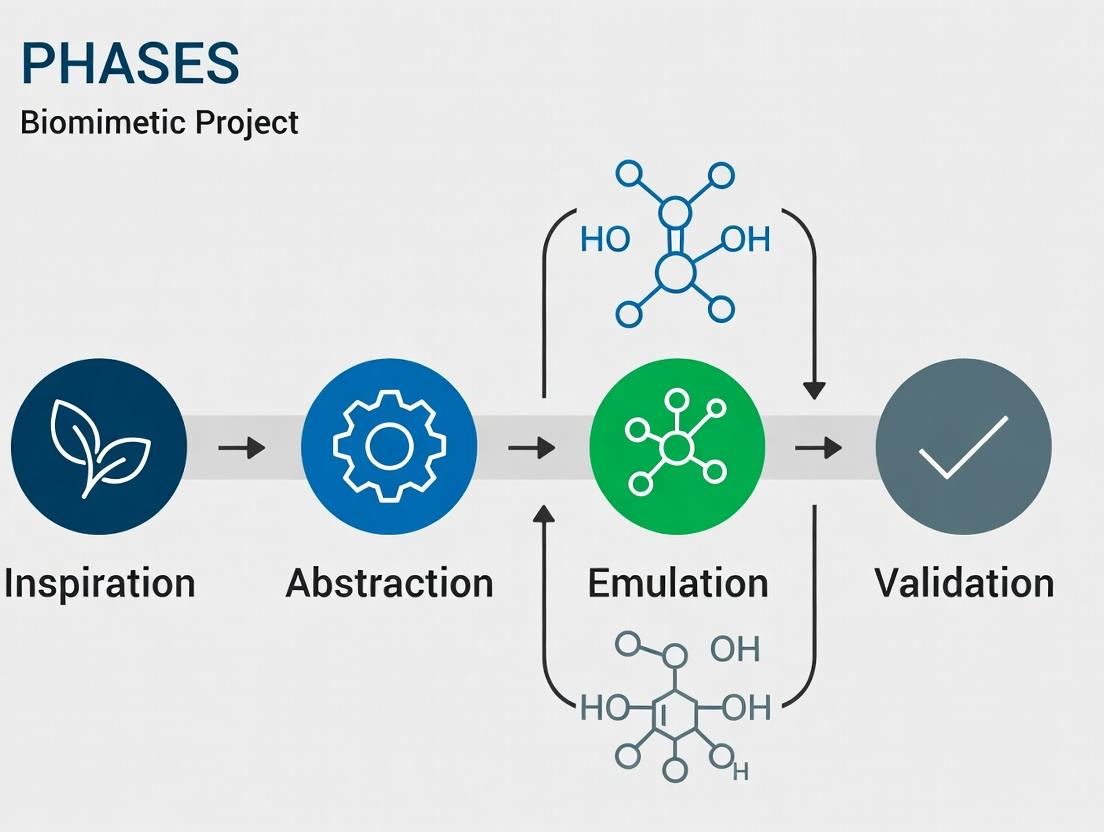
This article provides a comprehensive framework for embedding sustainability into the lifecycle of biomimetic biomedical projects.
A Sustainable Blueprint: Integrating Eco-Design Principles Across Biomimetic Drug Development Phases
Abstract
This article provides a comprehensive framework for embedding sustainability into the lifecycle of biomimetic biomedical projects. Tailored for researchers, scientists, and drug development professionals, it explores the foundational principles of sustainable biomimicry, details actionable methodologies for greener synthesis and testing, addresses common challenges in material sourcing and scalability, and establishes validation metrics to compare environmental impact. The guide synthesizes current best practices to help teams reduce ecological footprint while advancing innovative, nature-inspired therapies.
The Green Imperative: Defining Sustainability for Biomimetic Research & Discovery
Application Notes: Integrating Principles into Biomimetic Design Phases
The alignment of biomimicry (seeking sustainable solutions by emulating nature's time-tested patterns) with Green Chemistry (designing chemical products to reduce hazardous substance use) creates a robust framework for sustainable innovation. This synergy is critical across all biomimetic project phases, from scoping to implementation.
Table 1: Quantitative Alignment of Biomimicry's Life's Principles with Green Chemistry Principles
| Biomimicry Ethos (Life's Principle) | Corresponding Green Chemistry Principle(s) | Key Quantitative Metric(s) |
|---|---|---|
| Resource Efficiency & Adaptation | #2 (Atom Economy), #7 (Use of Renewable Feedstocks) | Atom Economy >80%; Renewable Carbon Index >50% |
| Benign Chemistry & Breakdown | #3 (Less Hazardous Synthesis), #10 (Design for Degradation) | Process Mass Intensity (PMI) <10; Degradation Half-life (T1/2) <60 days in environment |
| Energy Optimization | #6 (Design for Energy Efficiency), #9 (Catalysis) | Cumulative Energy Demand (CED) reduction >40%; Use of biocatalysts with TOF >1000 s⁻¹ |
| Multi-functional Integration | #8 (Reduce Derivatives), #1 (Prevent Waste) | Reduction of protecting group steps by >50%; E-factor <5 for pharmaceutical intermediates |
Key Application: Drug Development & Catalyst Design Recent advances focus on mimicking enzymatic cascades for sustainable synthesis. For example, the development of biomimetic metalloenzyme catalysts for C-H activation reactions directly applies Life's Principle of "Benign Chemistry" and Green Chemistry's Principle of Catalysis (#9), achieving high turnover numbers (TON >10,000) while reducing solvent waste by 70% compared to traditional Pd-catalyzed cross-couplings.
Experimental Protocols
Protocol 1: Assessing Biomimetic Synthesis Pathways for Atom Economy
Title: Life Cycle-Inspired Atom Economy Calculation for a Biomimetic Cascade Reaction.
Objective: To quantitatively evaluate a proposed biomimetic synthetic route against Green Chemistry Principle #2 (Atom Economy) by calculating the effective atom utilization, including solvents and catalysts.
Materials:
- Proposed reaction scheme (e.g., biomimetic oxidative cyclization)
- Molecular weights of all reactants, reagents, catalysts, and solvents.
- Stoichiometry table.
Methodology:
- Define the System Boundary: Include all mass inputs for the desired reaction step (substrates, stoichiometric reagents, catalysts, solvents).
- Identify Desired Product: Clearly designate the target molecule of the synthetic step.
- Calculate Traditional Atom Economy (AE):
- AE (%) = (Molecular Weight of Desired Product / Σ Molecular Weights of All Stoichiometric Reactants) x 100.
- Record in Table.
- Calculate Process Mass Intensity (PMI)-Informed "Effective Atom Economy":
- PMI = Total Mass in Process (kg) / Mass of Product (kg).
- Effective AE (%) ≈ (1 / PMI) x 100. This provides a more holistic view of resource efficiency.
- Benchmarking: Compare calculated AE and PMI against industry benchmarks for similar transformations (e.g., pharmaceutical intermediate synthesis: Target AE >80%, PMI <10).
Protocol 2: Screening for Biodegradability of Biomimetic Polymers
Title: High-Throughput Enzymatic & Environmental Degradation Assay.
Objective: To experimentally verify that a polymer designed to mimic natural polymers (e.g., a polyhydroxyalkanoate analog) aligns with Green Chemistry Principle #10 (Design for Degradation).
Materials:
- Test polymer (film or particle).
- Control polymers (PET, cellulose).
- Buffered enzyme solutions (e.g., esterases, lipases, proteases relevant to mimicry target).
- Simulated environmental media (compost, seawater simulant, pH-buffered solutions).
- HT microplate shaker/incubator.
- Gel Permeation Chromatography (GPC) or Total Organic Carbon (TOC) analyzer.
Methodology:
- Sample Preparation: Prepare uniform polymer films (100 ± 10 µm thick) or weighed particles (10.0 mg). Place in 96-well deep-well plates.
- Enzymatic Degradation: Add 1 mL of selected buffered enzyme solution to test wells. Controls: buffer only (abiotic control), buffer with heat-inactivated enzyme.
- Environmental Degradation: Add 1 mL of selected environmental media to separate test wells.
- Incubation: Incubate plates at relevant temperature (e.g., 30°C for compost, 25°C for aquatic) with constant shaking (150 rpm) for up to 60 days.
- Sampling & Analysis: At predetermined intervals (0, 7, 14, 30, 60 days):
- Centrifuge plates. Analyze supernatant for TOC release.
- Retrieve solid polymer, wash, dry, and analyze by GPC for molecular weight (Mn, Mw) changes.
- Data Analysis: Calculate degradation rate and half-life (T1/2). Target: T1/2 < 60 days in at least one environmentally relevant condition.
Visualization: Pathways and Workflows
Title: Biomimetic Design Phase-Green Chemistry Integration Workflow
Title: Biomimetic Cascade Reaction for Green Synthesis
The Scientist's Toolkit: Research Reagent Solutions
Table 2: Essential Materials for Aligned Biomimetic-Green Chemistry Research
| Item/Reagent | Function & Rationale | Example/Supplier (Current) |
|---|---|---|
| Engineered Biocatalysts | Mimic enzyme efficiency & specificity. Enable reactions under mild, aqueous conditions (GC #6, #9). | Immobilized transaminases or PET-hydrolyzing enzymes (Codexis, Prozomix). |
| Renewable Solvents | Replace petrochemical solvents. Aligns with Life's "Benign Chemistry" and GC #5, #7. | Cyrene (dihydrolevoglucosenone), 2-MeTHF, limonene-based solvents (Circa Group, Sigma-Aldrich). |
| Non-Toxic Metal Catalysts | Replace rare/heavy metals (Pd, Pt) with abundant, less toxic alternatives (Fe, Cu, Co) mimicking metalloenzymes. | Iron-based N-ligand complexes for C-N coupling, Cobalt-polypyridyl photocatalysts. |
| Life Cycle Assessment (LCA) Software | Quantitatively assess environmental impacts across all project phases to validate alignment. | OpenLCA, SimaPro, or Sphera LCA databases with biobased material flows. |
| High-Throughput Degradation Assay Kits | Screen material libraries for biodegradability (GC #10) using standardized enzymatic or microbial mixes. | Environmental Degradation Array plates (e.g., from Zerova Technologies). |
Application Notes
Life Cycle Thinking (LCT) integrated at the project conception phase represents a paradigm shift in biomimetic research for drug development. It necessitates a proactive assessment of environmental impacts across all subsequent stages—from raw material acquisition through synthesis, formulation, clinical trials, to eventual product end-of-life. Within the thesis framework of sustainability in biomimetic project phases, this scoping is not a downstream compliance task but a foundational design constraint that guides molecular and process choices, aligning innovation with planetary boundaries.
The application of LCT at conception involves two parallel streams: 1) Predictive Impact Scoping and 2) Benign-by-Design Principle Integration. Predictive scoping uses tools like Simplified Life Cycle Assessment (SLCA) and data from green chemistry metrics to model potential impacts of proposed biomimetic synthesis routes. Benign-by-Design mandates the selection of starting materials, reagents, and pathways that minimize hazard, energy demand, and waste generation from the outset, often drawing inspiration from nature's efficient, aqueous, and low-temperature processes.
Table 1: Comparative Environmental Impact Scoping of Two Hypothetical Early-Stage Biomimetic Synthesis Routes
| Metric | Route A (Traditional Peptide Coupling) | Route B (Enzyme-Biomimetic Catalysis) | Preferred Direction & Rationale |
|---|---|---|---|
| Process Mass Intensity (PMI) | Estimated PMI: 1,200 kg/kg API | Estimated PMI: 350 kg/kg API | Lower is better. Route B drastically reduces solvent and reagent mass per unit product. |
| Global Warming Potential (GWP) | ~250 kg CO₂-eq/kg intermediate | ~85 kg CO₂-eq/kg intermediate | Lower is better. Route B's lower energy and solvent use reduces carbon footprint. |
| Green Chemistry Principle Score | 3/12 (Use of hazardous solvents, poor atom economy) | 9/12 (Catalytic, safer solvents, renewable feedstock) | Higher is better. Route B aligns with more principles, indicating inherent sustainability. |
| Critical Material Use | High (Palladium catalysts, anhydrous solvents) | Low (Immobilized enzyme, aqueous buffer) | Lower is better. Route B reduces supply risk and environmental mining impact. |
| Estimated Wastewater Load (COD) | High (Organic solvent contamination) | Moderate (Biodegradable components) | Lower is better. Route B simplifies wastewater treatment burdens. |
Protocols
Protocol 1: Simplified Life Cycle Assessment (SLCA) for Biomimetic Molecule Conception
Objective: To perform a rapid, semi-quantitative screening of the potential environmental impacts of a proposed biomimetic synthesis pathway during the project conception phase.
Materials & Methods:
- System Boundary Definition: Define the "cradle-to-gate" scope for the target biomimetic intermediate (e.g., from raw material extraction to purified gram-scale sample for initial bioassay).
- Inventory Scoping: For each proposed synthetic step, list:
- All reagents, catalysts, and solvents (with estimated masses).
- Primary energy inputs (e.g., heating, cooling, lyophilization).
- Major waste outputs (type and estimated mass).
- Impact Factor Assignment: Use a pre-defined lookup table (derived from databases like Ecoinvent or the USDA LCA Digital Commons) to assign impact scores (Low=1, Medium=2, High=3) for key categories (GWP, PMI, Water Use, Toxicity) to each inventoried item and process.
- Aggregation & Hotspot Analysis: Sum scores for each impact category across all steps. Identify steps contributing >20% to any high-impact category as "hotspots" for redesign.
- Iterative Re-design: Use the hotspot analysis to propose alternative, benign-by-design steps (e.g., switching to a biocatalyst, using a green solvent) and re-run the SLCA.
Protocol 2: Benign-by-Design Solvent and Reagent Selection Protocol
Objective: To systematically select solvents and key reagents that minimize environmental and human health hazards at the earliest stage of biomimetic route design.
Materials & Methods:
- Identify Functional Requirement: Determine the required function (e.g., polar aprotic solvent for SN2 reaction, oxidizing agent for alcohol activation).
- Consult Selection Guides: Cross-reference against established guides:
- ACS GCI Pharmaceutical Solvent Selection Guide: Categorize solvents as Preferred (e.g., water, ethanol), Usable (e.g., ethyl acetate), or Undesirable (e.g., DMF, DCM).
- CHEM21 Selection Guide of Classical and Less Classical Solvents: Use based on comprehensive LCA and safety data.
- EPA's Safer Chemical Ingredients List (SCIL): For functional additives.
- Apply First-Pass Hazard Filter: Eliminate any option with high ratings for:
- Mutagenicity, Carcinogenicity, Reproductive Toxicity (GHS H340, H350, H360).
- High Acute Aquatic Toxicity (GHS H400).
- Very high Persistence and Bioaccumulation (PBT/vPvB).
- Life Cycle Contextualization: For remaining options, consider upstream impacts (e.g., biobased vs. petrochemical origin, synthesis complexity).
- Decision Documentation: Create a justification table for the selected material, referencing the guides and filters applied.
Visualizations
Title: LCT Integration Workflow at Project Conception
Title: Impact Scoping Across a Biomimetic Product Life Cycle
The Scientist's Toolkit: Research Reagent Solutions for Sustainable Conception
| Item / Solution | Function in LCT at Conception | Rationale for Sustainability |
|---|---|---|
| ACS GCI Pharmaceutical Roundtable Solvent Selection Guide | Decision support tool for choosing solvents with lower environmental, health, and safety (EHS) impacts during route scoping. | Directs research away from hazardous, persistent solvents (e.g., DCM, DMF) towards safer, often biobased alternatives (e.g., Cyrene, 2-MeTHF). |
| Enzymatic Catalysis Kits (e.g., immobilized lipases, PALs) | Provides ready-to-use, biomimetic catalysts for exploring synthetic steps under mild, aqueous conditions. | Enables high atom economy, reduces energy demand, and avoids heavy metal catalysts, aligning with benign-by-design. |
| Life Cycle Inventory (LCI) Databases (e.g., Ecoinvent, USDA LCA Commons) | Provides secondary data on energy, material, and emission profiles of chemicals and unit processes for SLCA. | Allows quantitative impact estimation without primary data, making early-stage scoping feasible and data-driven. |
| Green Chemistry Metrics Calculator Software | Automates calculation of PMI, Atom Economy, E-factor, and Process Cost during virtual route design. | Enables rapid, quantitative comparison of proposed routes, embedding sustainability metrics into the design process. |
| Safer Chemical Ingredients List (SCIL) - EPA | Database of chemicals verified for reduced human and environmental hazard profiles. | Guides the selection of functional excipients, buffers, and additives that minimize toxicity burdens from day one. |
Application Notes
The pursuit of bio-inspiration—leveraging biological templates and raw materials for technological and pharmaceutical innovation—must be integrated with rigorous ethical and sustainable sourcing frameworks. Within the broader thesis on sustainability across biomimetic project phases, the initial acquisition phase is critical. Unsustainable harvesting of biological samples threatens biodiversity, ecosystem stability, and indigenous knowledge rights, ultimately undermining the long-term viability of the biomimetics field itself. These notes outline protocols and considerations for establishing ethical and ecologically sound sourcing practices.
Ethics of Specimen Collection & Access and Benefit-Sharing (ABS)
Adherence to international frameworks, particularly the Nagoya Protocol under the Convention on Biological Diversity (CBD), is non-negotiable. Prior Informed Consent (PIC) and Mutually Agreed Terms (MAT) must be established with source countries and local communities. This includes equitable sharing of monetary and non-monetary benefits (e.g., research collaboration, capacity building) arising from the utilization of genetic resources and associated traditional knowledge.
Sustainability Metrics for Wild Harvesting
For any wild-sourced organism, a population viability analysis (PVA) must precede collection. Key metrics to establish sustainable offtake rates include intrinsic growth rate, carrying capacity, and current population size. Collection must target non-lethal samples (e.g., shed skin, secreted compounds, non-destructive tissue biopsies) where possible.
Table 1: Sustainability Metrics for Model Bio-Inspired Organisms
| Organism (Example) | Bio-Inspired Application | Key Sustainability Metric | Sustainable Collection Threshold (Wild) | Recommended Alternative |
|---|---|---|---|---|
| Horseshoe Crab (Limulidae) | Limulus Amebocyte Lysate (LAL) for endotoxin testing | Population breeding pair density (individuals/km²) | <0.5% of annual adult population; Mandatory 30% post-bleeding mortality rate cap | Recombinant Factor C (rFC) assay |
| Polar Bear (Ursus maritimus) | Hair structure for fiber optics & insulation | Minimum viable population (MVP) in collection region | Zero-take from wild populations; historic specimens or synthetic replication only | 3D-printed structural biomimetics |
| Mantis Shrimp (Stomatopoda) | Dactyl club for impact-resistant materials | Fecundity (eggs per brood) & local habitat health | Micro-sampling of club molt; <5 individuals/km² per annum | Lab-based aquaculture colonies |
| Yew Tree (Taxus spp.) | Paclitaxel (anti-cancer drug) | Bark regeneration rate & tree age class distribution | Strip harvesting prohibited; sourcing only from cultivated plantations | Plant cell fermentation & semi-synthesis |
The most sustainable strategy is to shift from wild harvest to cultivated biological systems or bio-inspired synthetic pathways. This includes cell culture, controlled aquaculture, aeroponics/hydroponics for plants, and fermentation-based production of target compounds.
Experimental Protocols
Protocol 1: Non-Lethal Mucus Collection from Amphibian Skin for Bioactive Peptide Discovery
Objective: To ethically source amphibian-derived bioactive peptides without harming the specimen, in compliance with ABS agreements. Materials: Sterile gloves, lint-free sterile swabs, sterile distilled water (50mL), sterile 15mL conical tubes, 0.1% trifluoroacetic acid (TFA) in water (v/v), liquid nitrogen, -80°C freezer, permits (IACUC, CITES, Nagoya PIC/MAT).
- Animal Handling: Minimize stress. Wear powder-free gloves moistened with sterile water. Restrain animal gently for <2 minutes.
- Mucus Collection: Lightly moisten a sterile swab with sterile water. Gently roll swab along the dorsal skin surface 10 times. Avoid eyes and nostrils.
- Peptide Elution: Place swab in a 15mL tube containing 5mL of 0.1% TFA. Vortex for 60 seconds. Incubate on ice for 30 minutes.
- Sample Processing: Remove swab, squeezing liquid against tube wall. Centrifuge eluate at 4°C, 10,000 x g for 15 min. Collect supernatant.
- Storage: Flash-freeze supernatant in liquid nitrogen. Store at -80°C for downstream peptidomics analysis.
- Animal Release: Release the animal at the precise point of capture. Monitor for distress.
Protocol 2: Establishing an In Vitro Coral Microfragment Culture for Biomineralization Studies
Objective: To sustainably source coral-derived structural templates for biomimetic material science via aquaculture. Materials: Donor coral colony (with permit), diamond-band wafering saw, sterile seawater, aquarium epoxy, larval rearing tanks with flow-through seawater, LED grow lights, water quality test kits.
- Microfragmentation: Using a sterile wafering saw, cut a <1 cm² fragment from the edge of a donor coral colony. Minimize tissue damage.
- Acclimation: Place fragment in a flow-through tank with parameters matching the source environment (temp, pH, salinity). Allow to heal for 7 days.
- Mounting: Attach healed fragment to a sterile ceramic plug using a dab of aquarium epoxy.
- Culture Growth: Place plug in a dedicated growth tank. Maintain optimal water quality (Ca²⁺: 380-420 mg/L, Alkalinity: 6-8 dKH). Illuminate with spectrum-tuned LEDs (PAR: 150-250 μmol photons m⁻² s⁻¹).
- Propagation: Once fragment grows to ~4 cm² (6-12 months), it can be sub-fragmented again, creating an exponential, sustainable supply.
- Template Harvesting: For biomimetic studies, harvest skeleton portions using a sterile coring tool, leaving living tissue intact to regrow.
Diagram: Sustainable Bio-Sourcing Workflow
Diagram Title: Sustainable Bio-Sourcing Decision Workflow
The Scientist's Toolkit: Research Reagent Solutions
Table 2: Essential Reagents & Materials for Ethical Bio-Sourcing Research
| Item | Function & Rationale |
|---|---|
| Recombinant Factor C (rFC) Assay Kit | Replaces horseshoe crab blood-derived LAL for endotoxin testing, eliminating the need for wild capture and bleeding. |
| Synthetic Oligonucleotide Pools (Gene Fragments) | For direct synthesis of genes encoding target bioactive proteins/peptides, bypassing the need to isolate DNA from rare or threatened organisms. |
| Cell Culture Media for Marine Invertebrates (e.g., Mollusc, Coral) | Enables establishment of in vitro cell lines or primary cultures, providing a renewable source of cellular templates and metabolites. |
| Non-Invasive Sampling Kits (Sterile swabs, Biopsy Punches <2mm) | Allows collection of DNA, RNA, mucus, or micro-tissue samples with minimal harm to the source organism. |
| Portable DNA Barcoding Sequencer (MinION) | Enables real-time, in-field species identification and population genetics analysis to inform sustainable collection quotas. |
| CITES & Nagoya Protocol Documentation Toolkit | Standardized templates for permits, Prior Informed Consent (PIC) forms, and Benefit-Sharing Agreements to ensure legal compliance. |
| Life Cycle Assessment (LCA) Software | To quantitatively compare the environmental impact of wild harvest vs. cultivated vs. synthetic sourcing pathways. |
Quantifying the environmental impact of biomimetic R&D requires assessing energy consumption, material waste, and solvent use across key laboratory activities. The following tables consolidate current benchmark data.
Table 1: Energy Consumption Benchmarks for Common R&D Equipment
| Equipment/Process | Average Power Consumption (kWh/cycle or hour) | Estimated Annual CO2e (kg)* | Primary Use in Biomimetics |
|---|---|---|---|
| -80°C Ultra-Low Freezer | 15-25 kWh/day | 3,000 - 5,000 | Biomolecule/ tissue storage |
| LC-MS/MS System | 3-5 kWh/hour (operational) | 1,500 - 2,500 | Proteomics, metabolomics |
| Laboratory Fume Hood | 3.5 kWh/hour (per hood at full flow) | 4,000+ | Solvent handling, chemical synthesis |
| Cell Culture Incubator | 0.8-1.5 kWh/hour | 800 - 1,500 | In vitro biomimetic models |
| Automated Peptide Synthesizer | 0.5-1 kWh/run | 50 - 200 | Peptide-based biomimetics |
*Based on U.S. national average grid emission factor (~0.386 kg CO2e/kWh). Values are annualized estimates for continuous or typical use.
Table 2: Common Solvent Waste Volumes in Biomimetic Synthesis & Screening
| Research Phase | Primary Solvents Used | Estimated Waste per Lab per Year (Liters) | Green Chemistry Alternative (Status) |
|---|---|---|---|
| Peptide Synthesis | DMF, DCM, Acetonitrile | 500 - 1,500 | 2-MethylTHF (emerging), Cyrene (assessment) |
| Lipid & Membrane Mimetics | Chloroform, Methanol, Hexane | 300 - 800 | Bio-derived ethanol, limonene (early-stage) |
| Polymer & Hydrogel Fabrication | THF, DMSO, DMF | 1,000 - 2,000 | Supercritical CO2 (specialized), water-based systems |
| Natural Product Extraction | Methanol, Dichloromethane, Petroleum Ether | 400 - 1,200 | Pressurized hot water extraction (scaling) |
Application Notes & Protocols for Footprint Assessment
Protocol AN-01: Life Cycle Inventory (LCI) for a Biomimetic Peptide Synthesis Campaign
Objective: To quantify the material and energy inputs and outputs for the synthesis and purification of a novel cell-adhesive peptide (e.g., RGD derivative).
Materials & Reagents:
- Automated Solid-Phase Peptide Synthesizer (SPPS).
- Fmoc-protected amino acids.
- Solvents: DMF (for coupling/washing), DCM (for deprotection), Piperazine (for deprotection), Acetonitrile (HPLC grade, for purification).
- Resin: Rink Amide MBHA resin.
- Reagents: HBTU, DIPEA.
- Preparative HPLC System.
- Lyophilizer.
Procedure:
- Pre-Synthesis Metering: Record initial readings from the laboratory's electricity sub-meter and solvent inventory.
- Synthesis: Perform SPPS per standard protocol for target 20-mer peptide. Log:
- Exact volumes of DMF, DCM, and piperazine used.
- Masses of all amino acids, resin, and coupling reagents.
- Total active synthesis time and idle time of the synthesizer and fume hood.
- Cleavage & Deprotection: Use standard TFA-based cleavage cocktail. Record volume of TFA and scavengers. Incubate for 3 hours.
- Purification: Purify crude peptide via preparative reverse-phase HPLC. Record:
- Volume of acetonitrile and water used.
- Total run time for all purification cycles.
- Electricity consumption of HPLC and chiller.
- Lyophilization: Lyophilize pure fractions for 48 hours. Record lyophilizer run time and cycle details.
- Post-Process Metering: Record final solvent inventory and electricity meter readings. Collect all chemical waste in appropriately labeled containers for weighing/volumetric assessment.
- Data Calculation: Calculate total consumption of each solvent, reagent, and kWh of energy. Translate into mass-based inventory using known densities and molecular weights.
Thesis Context: This protocol generates the foundational inventory data required to perform a Life Cycle Assessment (LCA) in subsequent project phases, moving from a linear "make-dispose" model to a circular "assess-optimize" model for biomimetic molecules.
Protocol AN-02: Comparative Carbon Footprint of 2D vs. 3D Biomimetic Cell Culture
Objective: To measure the relative greenhouse gas emissions from maintaining a standard cancer cell line in conventional 2D monolayers versus a biomimetic 3D spheroid model over one month.
Materials & Reagents:
- Cell line: e.g., HepG2.
- Standard cell culture media (DMEM + FBS + Pen/Strep).
- Materials for 2D: Tissue culture-treated flasks (T-75).
- Materials for 3D: Low-attachment U-bottom 96-well plates or hydrogel-based scaffold kit.
- Incubator (37°C, 5% CO2).
- Laminar flow biosafety cabinet.
- CO2 sensor/data logger (for incubator exhaust assessment, optional).
Procedure:
- Experimental Setup: Seed HepG2 cells in two parallel setups:
- 2D Control: 10 T-75 flasks, seeded at standard density.
- 3D Test: 10 low-attachment 96-well plates, seeding spheroids per manufacturer's protocol.
- Culture Maintenance: Culture cells for 30 days with standard medium changes (every 2-3 days for 2D, every 4-5 days for 3D based on optimized protocols). Record for each medium change event:
- Volume of media used.
- Time the biosafety cabinet and incubator doors are open.
- Number of disposable plastic items used (flasks, plates, pipette tips, serological pipettes, gloves).
- Equipment Monitoring: Use plug-in energy meters to log the precise energy consumption of the incubator dedicated to this experiment over the 30-day period.
- End-Point Analysis: At day 30, perform cell viability assay on all samples to confirm model health.
- Footprint Calculation: Using pre-calculated emission factors for plastics production, media components, and lab energy, compute the total kg CO2e for each model system. Normalize data per million viable cells.
Thesis Context: This direct comparison provides critical data for justifying the adoption of higher-fidelity, often less resource-intensive, 3D biomimetic models based on both scientific and environmental merits.
The Scientist's Toolkit: Research Reagent Solutions
| Item/Category | Function in Biomimetic R&D | Sustainability Consideration |
|---|---|---|
| Cyrene (Dihydrolevoglucosenone) | A bio-based solvent derived from cellulose. Potential alternative to DMF, NMP in polymer and nanomaterial synthesis. | Renewable feedstock, reduced toxicity, but requires performance validation for specific biomimetic chemistries. |
| Recombinant Spider Silk Proteins | Biomimetic structural material for scaffolds, drug delivery. Avoids energy-intensive harvesting from spiders. | Produced via fermentation in engineered microbes (e.g., E. coli), offering a scalable and potentially lower-land-use alternative. |
| Plant-Based Hydrogelators (e.g., Gelatin-methacryloyl from fish, Alginate) | Used for 3D cell cultures and tissue engineering. Sourced from renewable biomass. | Biodegradable and often derived from food industry waste streams, promoting circularity. |
| Continuous Flow Microreactors | For chemical synthesis of biomimetic motifs (e.g., peptidomimetics). | Drastically reduces solvent use (up to 90%) and energy vs. batch reactors, enhances safety. |
| Life Cycle Assessment (LCA) Software (e.g., openLCA, SimaPro) | To model and quantify the environmental impacts of research materials and processes. | Enables data-driven decisions to minimize footprint at the earliest design stages (Green by Design). |
Visualizations
Title: Biomimetic R&D Sustainability Assessment Cycle
Title: Key Environmental Hotspots in Biomimetic R&D Workflow
From Bench to Blueprint: Sustainable Methods for Biomimetic Design and Synthesis
Green Solvents and Reaction Media for Biomimetic Polymer and Nanoparticle Synthesis
Application Notes: Green Solvents in Biomimetic Synthesis
The imperative for sustainable practices in chemical synthesis extends directly to the field of biomimetic materials. The choice of solvent influences polymer morphology, nanoparticle stability, and ultimately, the biocompatibility and efficacy of the final product. Utilizing green solvents aligns with a broader thesis on sustainability by reducing environmental toxicity, enhancing energy efficiency, and improving safety across all project phases—from initial synthesis to final purification.
Key Green Solvent Classes and Applications:
- Supercritical Carbon Dioxide (scCO₂): An inert, non-toxic, and tunable medium. Its low viscosity and high diffusivity facilitate the formation of highly porous polymer scaffolds and enable the precipitation of nanoparticles with narrow size distributions. It leaves no solvent residue, ideal for biomedical applications.
- Ionic Liquids (ILs): Salts with low melting points, offering negligible vapor pressure, high thermal stability, and designer properties. They are excellent media for enzymatic polymerizations (e.g., polyesters) and for stabilizing metal nanoparticles via electrostatic interactions.
- Deep Eutectic Solvents (DES): Formed from a hydrogen bond donor and acceptor, they are often biodegradable, low-cost, and biocompatible. DES based on choline chloride and urea or natural acids are effective for synthesizing molecularly imprinted polymers (MIPs) and extracting natural polymers like chitosan for subsequent nanoparticle formation.
- Water and Aqueous Solutions: The ultimate green solvent. Used in the synthesis of hydrogels, vesicles, and as a continuous phase for miniemulsion polymerization to create polymeric nanocapsules. Reaction conditions often mimic physiological environments.
- Plant-Derived Solvents (e.g., Cyrene, limonene): Bio-based, renewable alternatives to dipolar aprotic solvents like DMF or NMP. Cyrene (dihydrolevoglucosenone) is effective in polycondensation reactions and for exfoliating 2D materials for composite nanoparticle synthesis.
Quantitative Comparison of Green Solvent Properties: Table 1: Key Properties of Featured Green Solvents
| Solvent | Boiling Point (°C) | Vapor Pressure | Viscosity (cP) | Green Metrics (E-factor*) | Primary Biomimetic Application |
|---|---|---|---|---|---|
| scCO₂ | 31.1 (Critical Point) | Tunable | 0.05-0.1 (near crit.) | ~0 (if recycled) | Porous polymer foam synthesis; RESS nanoparticle precipitation |
| Ionic Liquid ([BMIM][BF₄]) | >400 | Negligible | 233 (20°C) | 2-5 (depends on recycling) | Enzymatic polymerization; metal NP synthesis & stabilization |
| DES (ChCl:Urea) | Decomposes | Low | 750 (30°C) | <2 | Molecularly imprinted polymer synthesis; biopolymer processing |
| Water | 100 | 23.8 mmHg (25°C) | 0.89 | <1 | Miniemulsion polymerization; hydrogel formation; self-assembly |
| Cyrene | 207 | 0.56 mmHg (25°C) | 2.8 | <3 (Renewable feed) | Step-growth polymerizations; graphene dispersion for composites |
*E-factor = kg waste / kg product. Estimates based on literature for benchmark reactions.
Detailed Experimental Protocols
Protocol 2.1: Synthesis of Poly(D,L-lactide) Nanoparticles via Emulsion-Evaporation in Ethyl Lactate
Objective: To prepare biodegradable polymeric nanoparticles using ethyl lactate, a green solvent derived from fermentable sugars, as an alternative to dichloromethane.
Research Reagent Solutions: Table 2: Key Reagents and Materials
| Item | Function/Specification |
|---|---|
| Poly(D,L-lactide) (PLA), MW 10-20 kDa | Biodegradable polymer core material. |
| Ethyl Lactate (≥98%) | Green, biodegradable organic solvent for polymer dissolution. |
| Polyvinyl Alcohol (PVA), MW 31-50 kDa | Aqueous surfactant/stabilizer for emulsion formation. |
| Deionized Water | Aqueous continuous phase. |
| Probe Sonicator | For creating a fine oil-in-water emulsion. |
| Rotary Evaporator | For gentle removal of ethyl lactate. |
Methodology:
- Dissolve 100 mg of PLA in 5 mL of ethyl lactate under magnetic stirring to form the organic phase (O).
- Prepare the aqueous phase (A) by dissolving 250 mg of PVA in 50 mL of deionized water.
- Add the organic phase dropwise into the aqueous phase under vigorous stirring (800 rpm) to form a coarse emulsion.
- Immediately emulsify the mixture using a probe sonicator (70% amplitude, 2 minutes, pulse cycle 5 sec on/2 sec off) while keeping the sample in an ice bath to prevent overheating.
- Transfer the fine emulsion to a round-bottom flask and remove the ethyl lactate by rotary evaporation at 40°C under reduced pressure (200 mbar, gradually reducing to 50 mbar over 45 minutes).
- Concentrate the resulting nanoparticle suspension by ultrafiltration (100 kDa MWCO) and wash three times with deionized water to remove excess PVA.
- Characterize the nanoparticles by Dynamic Light Scattering (DLS) for size and PDI, and by SEM for morphology. Lyophilize for storage if needed.
Protocol 2.2: Enzymatic Synthesis of Polyesters in [BMIM][PF₆] Ionic Liquid
Objective: To perform a lipase-catalyzed ring-opening polymerization of ε-caprolactone in a non-aqueous ionic liquid medium, enhancing enzyme stability and product purity.
Research Reagent Solutions: Table 3: Key Reagents and Materials
| Item | Function/Specification |
|---|---|
| ε-Caprolactone (monomer) | Cyclic ester monomer for ring-opening polymerization. |
| 1-Butyl-3-methylimidazolium hexafluorophosphate ([BMIM][PF₆]) | Hydrophobic ionic liquid reaction medium. |
| Candida antarctica Lipase B (CALB), immobilized (Novozym 435) | Biocatalyst for green polymerization. |
| Molecular Sieves (3Å) | To maintain anhydrous conditions. |
| Methanol (HPLC grade) | To precipitate and terminate the reaction. |
Methodology:
- Dry the ionic liquid [BMIM][PF₆] under high vacuum (60°C, 24 h) and store over 3Å molecular sieves.
- In a flame-dried Schlenk flask, add 1.0 g (8.77 mmol) of ε-caprolactone and 5 mL of dried [BMIM][PF₆].
- Add 100 mg of immobilized CALB (Novozym 435) to the mixture.
- Purge the flask with dry nitrogen and stir the reaction mixture at 60°C for 72 hours under a nitrogen atmosphere.
- Terminate the reaction by adding 20 mL of cold methanol, causing the polymer to precipitate.
- Filter the mixture to recover both the enzyme (which can be reused) and the crude polymer.
- Redissolve the polymer in a minimal amount of acetone and reprecipitate in methanol to remove any residual ionic liquid. Dry the pure poly(ε-caprolactone) under vacuum at 40°C.
- Analyze by GPC for molecular weight and dispersity (Ð).
Visualizations: Workflows and Relationships
Title: Green Solvent Role in Sustainable Biomimetic Synthesis
Title: PLA Nanoparticle Synthesis in Ethyl Lactate Workflow
Title: Enzymatic Polymerization Pathway in Ionic Liquid
Within the broader thesis on embedding sustainability across biomimetic project phases—from conceptual design to material synthesis and device fabrication—this document focuses on the synthesis and assembly phase. Energy-efficient fabrication via ambient processes and self-assembly directly addresses the thesis's core aim of reducing the environmental footprint of biomimetic research, particularly in biomedical and drug development applications. These methods minimize energy input, eliminate the need for high-vacuum or high-temperature apparatus, and leverage intrinsic molecular interactions, mirroring nature's efficient manufacturing principles.
Application Notes & Protocols
Application Note: Room-Temperature Synthesis of Porous Coordination Polymers (PCPs) for Drug Encapsulation
Background: Metal-organic frameworks (MOFs) and PCPs are typically synthesized solvothermally at elevated temperatures and pressures. Recent advances enable their formation at ambient conditions, drastically reducing energy consumption while creating biocompatible carriers for controlled drug release.
Key Data from Recent Literature (2023-2024): Table 1: Comparison of Conventional vs. Ambient Synthesis of Model PCPs/ZIF-8
| Parameter | Conventional Solvothermal (120°C) | Ambient Aqueous Synthesis (25°C) | Notes |
|---|---|---|---|
| Synthesis Duration | 12-24 hours | 45-90 minutes | Drastic reduction in process time. |
| Energy Consumption (per gram) | ~850 kJ | ~25 kJ | Estimated based on heating apparatus. |
| BET Surface Area (m²/g) | 1300-1600 | 1100-1400 | Slight reduction, still highly effective. |
| Drug Loading Capacity (Ibuprofen wt%) | ~22% | ~18% | Comparable efficacy for model drug. |
| Crystalline Size (nm) | 80-150 | 50-100 | Ambient process yields smaller, more uniform particles. |
| Water Used in Process (L/g) | 0.5 | 0.1 | Significant reduction in solvent use. |
Protocol: Ambient, Aqueous-Phase Synthesis of Zeolitic Imidazolate Framework-8 (ZIF-8) Nanoparticles
- Objective: To synthesize ZIF-8 nanoparticles at room temperature for potential use as a drug carrier.
- Materials: See Scientist's Toolkit (Section 4).
- Procedure:
- Prepare two separate aqueous solutions in ultra-pure water (18.2 MΩ·cm): a. Solution A (Metal Source): 0.07 M Zinc nitrate hexahydrate (29.7 mg in 2 mL water). b. Solution B (Linker): 0.28 M 2-Methylimidazole (46 mg in 2 mL water).
- Rapidly pour Solution B into Solution A under moderate magnetic stirring (500 rpm) at room temperature (25°C).
- Allow the reaction to proceed for 60 minutes. The solution will turn milky white.
- Terminate the reaction by centrifuging the dispersion at 12,000 rpm for 15 minutes.
- Discard the supernatant and wash the white pellet with methanol (3 x 5 mL) to remove unreacted precursors.
- Dry the product under ambient air or a gentle nitrogen stream for 24 hours. Characterize via XRD, DLS, and SEM.
Application Note: Solvent-Free, Mechanochemical Self-Assembly of Pharmaceutical Cocrystals
Background: Cocrystals improve the physicochemical properties (solubility, stability) of active pharmaceutical ingredients (APIs). Traditional liquid-assisted grinding uses organic solvents. Solvent-free mechanochemistry uses minimal energy input via ball milling to drive molecular self-assembly.
Key Data from Recent Literature (2023-2024): Table 2: Solvent-Free vs. Solution-Based Cocrystal Formation
| Parameter | Solution Evaporation (Traditional) | Solvent-Free Liquid-Assisted Grinding (LAG) | Notes |
|---|---|---|---|
| Process Time | 24-72 hours (evaporation) | 30-60 minutes (milling) | Milling is orders of magnitude faster. |
| Typical Solvent Volume (mL/g API) | 50-200 | 0.05-0.2 (catalytic) | Near elimination of solvent waste. |
| Yield | 70-85% | >95% | Mechanochemistry often gives quantitative yields. |
| Energy Consumption (kJ/g) | ~300 (for solvent heating/removal) | ~50 (milling energy) | Direct energy input is lower. |
| Polymorphic Control | Moderate | High | Milling can selectively access metastable forms. |
Protocol: Solvent-Free Cocrystallization of Caffeine and Maleic Acid via Ball Milling
- Objective: To fabricate a model pharmaceutical cocrystal using a solvent-free, ambient-temperature mechanochemical process.
- Materials: See Scientist's Toolkit (Section 4).
- Procedure:
- Precisely weigh stoichiometric (1:1 molar ratio) amounts of caffeine (50 mg) and maleic acid (42 mg).
- Transfer the physical mixture to a stainless-steel or zirconia ball-milling jar (5-10 mL volume).
- Add a single grinding ball (diameter 7 mm, material matching the jar). Optional: Add 1-2 drops of an innocuous solvent (e.g., ethanol) as a "liquid catalyst" (LAG method) to enhance kinetics.
- Secure the jar in a vibrational ball mill (e.g., Retsch MM 400).
- Mill the mixture at a frequency of 25 Hz for 30 minutes at ambient temperature.
- Carefully open the jar and collect the solid product. Characterize the cocrystal formation using Powder X-Ray Diffraction (PXRD) and Differential Scanning Calorimetry (DSC).
Visualizations (Diagrams)
The Scientist's Toolkit: Key Research Reagent Solutions
Table 3: Essential Materials for Featured Ambient & Self-Assembly Protocols
| Item | Function / Relevance | Example (Supplier) |
|---|---|---|
| Zinc Nitrate Hexahydrate | Metal ion precursor for bio-compatible PCPs (e.g., ZIF-8). Provides the structural "nodes". | Sigma-Aldrich (228737) |
| 2-Methylimidazole | Organic linker molecule for ZIF-8. Forms coordination bonds with zinc, creating the porous framework. | TCI Chemicals (M0435) |
| Caffeine (Anhydrous) | Model Active Pharmaceutical Ingredient (API) with poor solubility; used in cocrystal studies. | Alfa Aesar (A10430) |
| Maleic Acid | Cocrystal former (coformer). Forms robust hydrogen bonds with APIs like caffeine to modify properties. | Sigma-Aldrich (M0375) |
| Methanol (HPLC Grade) | Washing solvent for PCPs. Effectively removes unreacted precursors without degrading the framework. | Fisher Chemical (M/4000/17) |
| Zirconia Milling Jars & Balls | Wear-resistant equipment for solvent-free mechanochemistry. Prevents contamination during grinding. | Retsch (05.368.0067) |
| Vibrational Ball Mill | Provides controlled mechanical energy for solvent-free synthesis and cocrystallization. | Retsch MM 400 |
| Regenerated Cellulose Dialysis Membranes | For purifying self-assembled nanostructures (e.g., peptides, polymers) under ambient aqueous conditions. | Spectrum Labs (132676) |
| Polydimethylsiloxane (PDMS) | Elastomer for fabricating microfluidic chips used in studying flow-induced self-assembly processes. | Dow Sylgard 184 |
| Silicon Wafer (Test Grade) | Substrate for studying and characterizing thin films formed by ambient layer-by-layer self-assembly. | UniversityWafer (Test Grade, P-type) |
Within the broader thesis addressing sustainability across biomimetic project phases—from computational design to synthesis and scale-up—the principles of Green Chemistry are paramount. Mimetic chemistry, which seeks to replicate or harness biological processes and structures (e.g., enzyme mimics, peptide/protein mimetics, supramolecular hosts), presents unique challenges and opportunities for waste minimization. This document provides Application Notes and Protocols focused on maximizing Atom Economy and managing byproducts in mimetic synthesis, framing these technical strategies as critical components of sustainable biomimetic research and development.
Application Notes: Core Strategies and Quantitative Analysis
Atom Economy in Common Mimetic Coupling Reactions
Atom economy (AE) is calculated as: (Molecular Weight of Desired Product / Σ Molecular Weights of All Reactants) × 100%. Higher AE indicates less inherent waste.
Table 1: Atom Economy Comparison of Coupling Reagents for Peptide Mimetic Synthesis
| Coupling Method/Reagent | Example Reaction | Typical Atom Economy | Key Byproducts | Notes for Mimetic Chemistry |
|---|---|---|---|---|
| Carbodiimide (e.g., DCC) | Carboxylic acid + Amine → Amide | ~40-60% | Dicyclohexylurea (DCU) | DCU is solid waste, difficult to remove. Poor for complex mimetics with sensitive functional groups. |
| Phosphonium Salts (e.g., PyBOP) | Carboxylic acid + Amine → Amide | ~30-50% | HOPO, Hexafluorophosphate salts | AE lowered by high MW of reagent. Byproducts are generally innocuous but require purification. |
| Uronium Salts (e.g., HATU) | Carboxylic acid + Amine → Amide | ~30-45% | HOA, Tetramethylurea | Gold standard for difficult couplings of sterically hindered mimetics. Low AE but high yield. |
| Green Alternative: EDC with OxymaPure | Carboxylic acid + Amine → Amide | ~65-80% | Soluble Urea (in water) | Oxyma suppresses racemization. Byproducts are water-soluble, enabling aqueous work-up. Recommended for sustainable projects. |
| Direct Amidation (Catalytic) | Carboxylic acid + Amine → Amide | ~85-95% | H₂O | Emerging boronic/transition metal catalysis. High AE ideal but substrate scope for complex mimetics can be limited. |
Byproduct Management in Dynamic Combinatorial Chemistry (DCC)
DCC is a biomimetic approach for discovering receptors or ligands. Managing reversible reactions and minimizing waste from non-productive exchanges is key.
Table 2: Byproduct Profiles in Dynamic Combinatorial Libraries (DCLs)
| Reversible Chemistry | Typical Building Blocks | Equilibrium Byproducts | Management Strategy | Sustainability Impact |
|---|---|---|---|---|
| Disulfide Exchange | Thiol-containing mimetics | Mixed disulfides, Oxidized species | Use inert atmosphere (N₂ glovebox); Add redox buffers (e.g., GSH/GSSG). | Minimal waste if biologically relevant environment is mimicked. |
| Iminoboronate Ester | Salicylhydroxamates & Amines | Boronic acid, Amine hydrolysis products | Buffer control (pH 8.5); Use biocompatible conditions. | Enables screening in aqueous buffers, reducing organic solvent waste. |
| Hydrazone Exchange | Hydrazides & Aldehydes | Hydrazone isomers, Hydrolyzed aldehydes | Use aniline as nucleophilic catalyst to speed equilibration. | Reduces reaction time and energy consumption. |
Experimental Protocols
Protocol 3.1: Sustainable Solid-Phase Synthesis of a Peptidomimetic Using High Atom Economy Coupling
Aim: To synthesize a β-turn mimetic sequence (e.g., Ac-FRGD-OH) on resin using the green coupling agent EDC/OxymaPure.
Materials (Scientist's Toolkit):
| Reagent/Material | Function & Sustainability Rationale |
|---|---|
| Rink Amide MBHA Resin | Solid support. Enables use of excess reagents for drive to completion, which are removed by filtration, simplifying purification. |
| Fmoc-Protected Amino Acids (Fmoc-R, Fmoc-F, Fmoc-G, Fmoc-D) | Building blocks. Fmoc strategy uses mild base (piperidine) for deprotection, avoiding harsh acidic conditions. |
| EDC Hydrochloride | Carbodiimide coupling agent. Chosen over DCC because its urea byproduct is water-soluble. |
| OxymaPure | Non-toxic, anti-racemization additive. Replaces toxic HOBt/HDCb. Significantly improves atom economy of the coupling step. |
| Anhydrous DMF | Solvent. Primary waste stream. Note for sustainability: Systems for DMF recovery and recycling should be employed at scale. |
| Piperidine (20% in DMF) | Fmoc deprotection reagent. Can be recovered and distilled for reuse. |
| Cleavage Cocktail (TFA/TIPS/H₂O 95:2.5:2.5) | Final product release from resin. TFA is corrosive but can be recovered via waste stream neutralization and distillation. |
Procedure:
- Resin Swelling: Place Rink Amide resin (0.1 mmol) in a solid-phase reaction vessel. Swell with dry DMF (3 mL) for 30 min.
- Fmoc Deprotection: Drain DMF. Treat with 20% piperidine/DMF (3 mL, 2 x 5 min). Drain and wash resin with DMF (5 x 3 mL).
- Coupling Cycle (High Atom Economy): a. Prepare coupling solution: Dissolve Fmoc-AA (4 equiv, 0.4 mmol), EDC·HCl (4 equiv), and OxymaPure (4 equiv) in minimal DMF (2 mL total). b. Add solution to resin. Bubble N₂ gently for 60 minutes at room temperature. c. Drain and wash resin with DMF (3 x 3 mL).
- Repeat steps 2 and 3 for each amino acid in the sequence.
- Final Deprotection & Cleavage: After final Fmoc removal, wash resin with DCM (3 x 3 mL) and dry. Treat with cleavage cocktail (5 mL) for 3 hours with gentle agitation.
- Precipitation & Waste Isolation: Filter the TFA solution into cold diethyl ether (50 mL) to precipitate the crude peptidomimetic. Centrifuge and collect pellet. The ethereal supernatant contains soluble byproducts (e.g., ionized protecting groups, soluble urea from EDC). This waste stream should be collected for proper solvent recovery.
- Purification: Purify the crude product via preparative HPLC using a water/acetonitrile gradient. Implement an HPLC system with solvent recycling.
Protocol 3.2: Byproduct-Tolerant Dynamic Combinatorial Library Screening for Enzyme Inhibitor Discovery
Aim: To identify a potent inhibitor from an iminoboronate-based DCL targeting a protease, while managing hydrolytic byproducts.
Materials (Scientist's Toolkit):
| Reagent/Material | Function & Sustainability Rationale |
|---|---|
| Salicylhydroxamate Scaffolds (2-3 varieties) | Core components forming reversible bonds with amines. Derived from bio-inspired siderophore chemistry. |
| Amine Fragment Library (e.g., 20 diverse amines) | Complementary building blocks. Use stock solutions in buffer to minimize organic solvent. |
| HEPES Buffer (100 mM, pH 8.5) | Aqueous reaction medium. High water content aligns with Green Chemistry principles. |
| Target Enzyme Solution | Biological template for "fishing" the best binder from the DCL. |
| Quenching Solution (100 mM Ammonium Acetate, pH 4.0) | Rapidly stops dynamic exchange by protonation, freezing the library composition for analysis. |
| Analytical HPLC-MS System | For analyzing library distribution. Enables minimal sample consumption. |
Procedure:
- Library Formation: In a 1.5 mL low-binding Eppendorf tube, combine each salicylhydroxamate scaffold (50 µM final) and each amine fragment (100 µM final) in HEPES buffer (1 mL total volume). Incubate at 25°C for 24 hours to reach equilibrium. Control: Prepare identical library without target.
- Template Addition: To the experimental tube, add the target enzyme (100 nM final concentration). Incubate for an additional 48 hours.
- Quenching: Add quenching solution (100 µL) to both control and experimental libraries. Mix immediately.
- Analysis: Inject samples directly onto HPLC-MS. Use a C18 column with a gradient of water/acetonitrile (both with 0.1% formic acid).
- Data Interpretation: Compare MS chromatograms of the templated vs. untemplated library. Identify iminoboronate species whose peak intensity is enhanced in the presence of the target. These are the hit structures. The primary "waste" is aqueous buffer containing low concentrations of building blocks and enzyme, which is biologically benign.
Visualizations
Diagram Title: Sustainability Strategy Integration in Biomimetic Workflow
Diagram Title: High Atom Economy Coupling with EDC/Oxyma
Digital Twins and In Silico Modeling to Reduce Physical Prototyping and Animal Testing
The adoption of Digital Twins (DTs) and in silico modeling represents a paradigm shift toward sustainable biomimetic project lifecycles. Within the thesis of sustainable biomimetic research, these technologies directly address the "Design" and "Testing" phases, aiming to minimize resource-intensive physical prototyping and ethically contentious animal testing. By creating high-fidelity, dynamic computational counterparts of biological systems, devices, or processes, researchers can explore design spaces, predict outcomes, and optimize performance virtually. This reduces material waste, energy consumption, and animal use, aligning with the core principles of sustainability and Replacement, Reduction, and Refinement (3Rs) in research.
Key Application Notes
Application Note AN-01: Cardiac Electrophysiology Digital Twin for Proarrhythmic Risk Assessment
This note details the use of a human-based in silico cardiac digital twin to assess drug-induced torsades de pointes (TdP) risk, aiming to replace the ICH S7B guideline's in vivo QT assay.
- Objective: To predict the effect of a novel compound on cardiac action potential duration (APD) and arrhythmic risk.
- Digital Twin Components: A multiscale model integrating:
- Ion Channel Models: O'Hara-Rudy human ventricular myocyte model.
- Pharmacodynamics: Drug block dynamics for hERG, Nav1.5, Cav1.2 channels.
- Population Variability: A virtual population (n=100+) incorporating variability in ion channel expression and physiology.
- Output Metrics: Simulated pseudo-ECG, APD90, and arrhythmia classification.
- Sustainability Impact: Directly replaces animal use in mandatory safety pharmacology studies, reduces compound synthesis for testing.
Application Note AN-02: Biomechanical Digital Twin of a Biomimetic Knee Implant
This protocol outlines the development of a biomechanical DT for optimizing a cartilage-mimicking polymer implant, reducing physical prototype iterations.
- Objective: To predict wear, stress distribution, and kinematic performance of an implant design under physiological loading conditions.
- Digital Twin Components:
- 3D Geometry: Patient-specific bone anatomy from CT scans.
- Material Models: Non-linear, viscoelastic properties of the biomimetic polymer and natural cartilage.
- Boundary Conditions: Gait cycle forces and motions from public datasets.
- Output Metrics: Polyethylene wear rate (mm³/million cycles), contact pressure (MPa), range of motion.
- Sustainability Impact: Drastically reduces material waste from physical prototyping (machining, 3D printing) and associated energy costs.
Application Note AN-03:In SilicoPharmacokinetic-Pharmacodynamic (PK-PD) Twin for Lead Optimization
This note describes a PK-PD digital twin used to simulate drug concentration-time profiles and target engagement in a virtual human population.
- Objective: To prioritize lead compounds with the highest predicted efficacy and lowest toxicity risk before in vivo studies.
- Digital Twin Components:
- PBPK Model: Whole-body physiologically based pharmacokinetic model.
- PD Model: Target receptor occupancy or pathway inhibition model.
- Disease Progression Model: Tumor growth or biomarker progression model.
- Output Metrics: Predicted Cmax, AUC, trough levels, target engagement %, disease endpoint.
- Sustainability Impact: Reduces animal testing by filtering out low-probability candidates, minimizes chemical waste from synthesis of non-viable leads.
Table 1: Impact Assessment of Digital Twin Adoption in Research & Development
| Application Area | Reduction in Physical Prototypes | Reduction in Animal Use | Reported Time/Cost Savings | Key Validation Study |
|---|---|---|---|---|
| Cardiac Safety (Proarrhythmia) | Not Applicable (N/A) | ~90% replacement of in vivo QT studies | 40-50% reduction in early safety screening cost | Comprehensive In Vitro Proarrhythmia Assay (CiPA) initiative |
| Orthopedic Implant Design | 50-70% fewer design iterations | N/A | 30% shorter design cycle time; 25% lower development cost | As-reviewed in J. Biomech. Eng., 2023 |
| Oncology PK/PD | N/A | 30-40% reduction in murine xenograft studies | Lead optimization phase shortened by ~6 months | Case studies in CPT: Pharmacometrics & Syst. Pharmacol., 2024 |
| Pulmonary Drug Delivery | 60% fewer inhaler device prototypes | N/A | ~€500k saved per device program | European IMI Project (BioMA) findings, 2022 |
Table 2: Comparison of Key In Silico Modeling Platforms
| Platform / Software | Primary Application | Key Strength | Open Source | Typical Workflow Integration |
|---|---|---|---|---|
| OpenCOR | Cardiac electrophysiology, systems biology | Robust cellML/SBML support, scripting | Yes | Ion channel data → Cell model → Population simulation |
| Simcyp Simulator | PBPK/PD, DDI prediction | Extensive virtual population library | No (Commercial) | In vitro ADME data → PBPK model → Clinical trial simulation |
| ANSYS Mechanical/Fluent | Biomechanics, fluid dynamics | High-fidelity FEA/CFD, multiphysics | No (Commercial) | 3D CAD → Mesh → Material props → Simulation → Analysis |
| Biosym (Materials Cloud) | Molecular modeling, material properties | Atomic-scale biomimetic material design | Partially | Molecular dynamics → Property prediction → Macroscopic model |
Detailed Experimental Protocols
Protocol PRO-01: Building and Validating a Cardiac Myocyte Digital Twin
Aim: To construct and validate a virtual human ventricular myocyte for proarrhythmic risk prediction. Materials: See "Scientist's Toolkit" Section 6. Methodology:
- Model Selection/Construction:
- Select a base mathematical model (e.g., O'Hara-Rudy) in a suitable environment (OpenCOR, MATLAB).
- Code the system of ordinary differential equations representing ion currents, concentrations, and membrane potential.
- Parameterization with In Vitro Data:
- Input experimentally derived half-maximal inhibitory concentration (IC50) and Hill coefficient values for compound block of hERG, Nav1.5, and Cav1.2 currents.
- Implement drug binding kinetics (e.g., guarded receptor model).
- Virtual Population Generation:
- Define distributions for key model parameters (e.g., conductance densities) based on experimental variability.
- Use Latin Hypercube Sampling to generate 500+ parameter sets, each representing a unique virtual myocyte.
- Simulation Execution:
- For each virtual myocyte and each drug concentration, simulate a pacing protocol (e.g., 1 Hz for 500 beats).
- Record the final action potential and calculate APD90.
- Risk Prediction & Classification:
- Calculate mean APD90 change across the population.
- Apply a machine learning classifier (trained on known drugs) to the simulated outputs (APD, Ca2+ transients) to categorize risk as High, Intermediate, or Low.
- Validation:
- Benchmark predictions against clinical TdP incidence data from a panel of reference compounds (e.g., dofetilide-High, verapamil-Low).
Protocol PRO-02:In SilicoPK/PD Simulation for Lead Optimization
Aim: To simulate human pharmacokinetics and target engagement for a novel kinase inhibitor. Materials: See "Scientist's Toolkit" Section 6. Methodology:
- PBPK Model Development:
- In a platform like Simcyp or PK-Sim, input the compound's physicochemical properties (logP, pKa), in vitro clearance data (human microsomes/hepatocytes), and plasma protein binding.
- Select the "Physiology" of the virtual population (e.g., Healthy Volunteers, Cancer Patients).
- PD Model Linking:
- Develop an Emax model where effect is a function of plasma or tissue concentration.
- Alternatively, link a biomarker turnover model (e.g., phosphorylated target protein) to the driving drug concentration.
- Virtual Clinical Trial Simulation:
- Define trial design: number of subjects (e.g., n=100), dosing regimen (e.g., 100 mg BID), and duration.
- Run the simulation to generate concentration-time profiles and target inhibition-time profiles for each virtual subject.
- Endpoint Analysis:
- Calculate population statistics for PK parameters (Cmax, AUC0-24, trough).
- Determine the percentage of the population achieving >90% target engagement at trough.
- Simulate different doses to establish a PK/PD-driven recommended phase II dose.
Diagrams and Visualizations
Diagram 1: Cardiac Safety Digital Twin Workflow
Diagram 2: PBPK-PD Digital Twin Structure
The Scientist's Toolkit: Essential Research Reagent Solutions
Table 3: Key Reagents & Materials for Featured Protocols
| Item / Solution | Supplier Examples | Function in Digital Twin Workflow |
|---|---|---|
| Human iPSC-Derived Cardiomyocytes | Fujifilm Cellular Dynamics, Ncardia | Provide in vitro ion channel data (IC50) for model parameterization; used for model validation. |
| hERG, Nav1.5, Cav1.2 Assay Kits | Eurofins DiscoverX, Charles River | Generate high-throughput in vitro screening data on compound-channel interaction for model input. |
| Human Liver Microsomes / Hepatocytes | Corning, BioIVT | Measure intrinsic metabolic clearance and metabolite identification for PBPK model parameterization. |
| Biomimetic Polymer (e.g., PVA Hydrogel) | Sigma-Aldrich, Advanced Biomatrix | Physical material for validating in silico biomechanical properties (stress-strain, wear). |
| High-Performance Computing (HPC) Cloud Credits | AWS, Google Cloud, Microsoft Azure | Provide necessary computational power for population-scale simulations and complex multiphysics models. |
| Modeling & Simulation Software Licenses | ANSYS, SIMULIA, Certara Simcyp, Schrödinger | Core platforms for building, running, and analyzing digital twins. Open-source alternatives: OpenCOR, COPASI. |
Navigating the Trade-offs: Solving Scalability and Performance Hurdles in Sustainable Biomimetics
Application Notes
Rationale for Material Selection in Sustainable Biomimetic Systems
Material selection in sustainable biomimetic projects (e.g., drug delivery vectors, tissue scaffolds) requires a multi-parameter optimization. The core challenge is achieving a functional lifetime sufficient for the application (e.g., weeks for tissue regeneration, hours/days for systemic drug delivery) while ensuring complete, non-toxic degradation within a biologically relevant timeframe. Recent data (2023-2024) highlights the performance trade-offs between common material classes.
Quantitative Comparison of Material Classes
The following table summarizes key properties of prominent biodegradable polymer classes, synthesized from recent comparative studies.
Table 1: Functional vs. Degradation Properties of Selected Biodegradable Polymers
| Polymer Class | Example Polymers | Typical Degradation Time (in vivo) | Tensile Strength (MPa) Range | Key Functional Stability Challenge | Optimal Application Phase |
|---|---|---|---|---|---|
| Aliphatic Polyesters | PLGA, PLA, PCL | 3 months (PLGA 50:50) to >24 months (PCL) | 10-60 (PLA) | Hydrolytic erosion can compromise load-bearing; acidic degradation products. | Drug delivery (particulates), short-term scaffolds. |
| Polyanhydrides | CPP:SA, FATM | 1 day to 6 months | 1-50 | Rapid surface erosion can lead to premature payload release. | Controlled release implants for localized therapy. |
| Poly(amino acids) | Polylysine, Polyglutamate | Weeks to months | 5-100 | Potential immunogenicity; enzymatic degradation can be unpredictable. | Cell-interactive coatings, peptide-drug conjugates. |
| Hydrogels (Natural) | Alginate, Chitosan, Collagen | Days to weeks (tunable) | 0.001-1 (Compressive Modulus) | Swelling/degradation alters mesh size, affecting diffusion kinetics. | 3D cell culture, soft tissue fillers, wound dressings. |
| Hydrogels (Synthetic) | PEG-based, PVA | Weeks to months (tunable) | 0.1-10 | Stability often requires degradable cross-linkers (e.g., MMP-sensitive peptides). | Injectable depots, biofabricated constructs. |
Key Signaling Pathways in Material-Cell Degradation Feedback
Material degradation products can actively influence cellular behavior, creating a feedback loop that must be anticipated in design. A critical pathway involves the response to acidic degradation products (e.g., from PLGA).
The Scientist's Toolkit: Research Reagent Solutions
Table 2: Essential Reagents for Evaluating Biodegradability & Stability
| Item | Function & Rationale |
|---|---|
| Phosphate Buffered Saline (PBS), pH 7.4 | Standard medium for in vitro hydrolytic degradation studies, simulating physiological ionic strength. |
| Recombinant Enzyme Solutions (e.g., Lysozyme, MMP-1, Collagenase) | To study enzymatic degradation pathways relevant to the in vivo environment (inflammatory response, tissue remodeling). |
| Size Exclusion Chromatography (SEC/GPC) Standards | For precise monitoring of polymer molecular weight decline over time, the primary indicator of bulk degradation. |
| Fluorescent Tags (e.g., FITC, Nile Red) | For covalent conjugation or encapsulation to visually track material erosion and payload release profiles via fluorescence microscopy/spectroscopy. |
| Metabolic Assay Kits (e.g., MTT, AlamarBlue) | To quantify cellular viability and metabolic activity in response to degradation products (cytocompatibility testing). |
| ELISA Kits for Cytokines (IL-1β, TNF-α, IL-10) | To quantify pro- and anti-inflammatory immune responses elicited by the degrading material. |
| Rheometer with Temperature Control | To measure viscoelastic properties (G', G'') over time in simulated body conditions, critical for hydrogel stability assessment. |
Experimental Protocols
Protocol 1:In VitroHydrolytic Degradation and Stability Profiling
Objective: To quantitatively monitor the mass loss, molecular weight change, and functional property decay of a biodegradable material under simulated physiological conditions.
Materials:
- Test material films/scaffolds/particulates (pre-weighed,
M_initial). - Sterile PBS, pH 7.4.
- Sodium azide (0.02% w/v).
- Orbital shaking incubator (37°C).
- Freeze dryer.
- Analytical balance (0.01 mg precision).
- Size Exclusion Chromatography (SEC) system.
- Mechanical tester (e.g., tensile/compression).
Procedure:
- Sample Preparation: Prepare uniform samples (n≥5). Record dry mass (
M_initial). For polymers, determine initial molecular weight (MW_initial) via SEC. - Immersion: Place each sample in a vial with 10-20 mL PBS (+ 0.02% sodium azide to prevent microbial growth). Seal tightly.
- Incubation: Place vials in an orbital shaking incubator at 37°C, 60 rpm.
- Time-Point Sampling: At predetermined intervals (e.g., days 1, 3, 7, 14, 28...), remove sample sets (n=3-5 per time point).
- Analysis:
a. Mass Loss: Rinse samples with DI water, lyophilize to constant weight. Record dry mass (
M_time). Calculate mass remaining:(M_time / M_initial) * 100%. b. Molecular Weight: Dissolve a portion of the dried polymer in appropriate SEC solvent. Analyze to determineMW_time. PlotMW_time/MW_initialvs. time. c. Functional Stability: Perform mechanical testing (e.g., tensile strength for films, compressive modulus for hydrogels) on wet samples at each time point. - Buffer Monitoring: Replace the PBS solution at each sampling point to maintain sink conditions and pH.
Protocol 2: Co-culture Model for Assessing Degradation-Mediated Immune Response
Objective: To evaluate the impact of material degradation on immune cell activation and its subsequent effect on target parenchymal cells (e.g., fibroblasts, osteoblasts).
Materials:
- THP-1 human monocyte cell line (or primary macrophages).
- Target cell line (e.g., NIH/3T3 fibroblasts, MC3T3-E1 osteoblasts).
- Transwell co-culture plate (0.4 μm pore).
- Material degradation supernatant (from Protocol 1, sterile-filtered).
- PMA (for THP-1 differentiation).
- ELISA kits for human IL-1β, TNF-α; mouse TGF-β1.
Procedure:
- Macrophage Differentiation: Seed THP-1 monocytes in the lower chamber. Differentiate into macrophages using 100 nM PMA for 48 hours. Replace with fresh media.
- Target Cell Seeding: Seed target cells (e.g., fibroblasts) in the upper Transwell insert.
- Degradation Challenge: Replace the medium in the lower chamber (macrophages) with a 50:50 mix of fresh culture medium and sterile-filtered material degradation supernatant. Control groups receive fresh medium only or supernatant from a non-degrading material.
- Co-culture Incubation: Incubate the co-culture system for 24-72 hours.
- Analysis: a. Immune Response: Collect medium from the lower chamber. Analyze for human inflammatory cytokines (IL-1β, TNF-α) via ELISA. b. Target Cell Response: Collect medium from the upper chamber or lyse target cells. Analyze for species-specific factors (e.g., mouse TGF-β1 for fibroblasts) indicating pro-fibrotic or regenerative activity. c. Viability: Perform metabolic assays (e.g., MTT) on both cell types separately.
Scaling Up Green Syntheses Without Compromising Yield or Purity
The pursuit of sustainable drug development necessitates the integration of green chemistry principles across all biomimetic project phases—from discovery and synthesis to scale-up and production. A critical bottleneck emerges during the transition from milligram-scale biomimetic route discovery to gram or kilogram-scale synthesis, where traditional scale-up often leads to diminished yield, compromised purity, and increased environmental impact. This application note addresses this gap by providing validated protocols for scaling green syntheses, ensuring that the efficiency and selectivity of bench-scale biomimetic reactions are preserved at larger volumes, thereby aligning synthetic methodology with the overarching thesis of sustainability in biomimetic research.
Key Challenges in Scaling Green Syntheses
Live search analysis identifies primary challenges: inefficient heat/mass transfer in larger reactors, increased solvent waste, difficulty in maintaining precise control over reaction parameters (e.g., microwave, ultrasound), and the decomposition of sensitive intermediates. The following data synthesizes recent case studies comparing bench and pilot-scale performances.
Table 1: Comparative Performance of Scalable Green Synthesis Techniques
| Synthesis Target | Green Technique | Bench Scale (Yield/Purity) | Pilot Scale (Yield/Purity) | Key Scaling Adaptation |
|---|---|---|---|---|
| Active Pharmaceutical Ingredient (API) Intermediate | Mechanochemistry (Ball Milling) | 95% / >99% | 92% / 98.5% | Optimized milling ball size & frequency; Continuous feeding system. |
| Chiral Catalyst | Flow Chemistry with ScCO₂ | 88% / 99% ee | 90% / 98.5% ee | Precise back-pressure regulation & optimized residence time. |
| Polymer Support | Microwave-Assisted Synthesis | 90% / 95% | 85% / 94% | Segmented flow reactor with controlled pulsed microwave irradiation. |
| Nanoparticle Formulation | Sonochemistry | Near-Quant. / PDI: 0.1 | 95% / PDI: 0.15 | Horn-type transducer with controlled power delivery & cooling. |
Detailed Experimental Protocols
Protocol 1: Scalable Continuous Flow Synthesis for a Knoevenagel Condensation
This protocol demonstrates a solvent-free scale-up using a fixed-bed reactor.
Reagents & Materials: Ethyl cyanoacetate, Benzaldehyde, Aminopropylated silica gel (Fixed-bed catalyst), In-line IR spectrometer, HPLC for analysis. Procedure:
- System Setup: Pack a stainless-steel column (ID 2 cm, L 30 cm) with aminopropylated silica gel (mesh 200-400). Connect to an HPLC pump and a back-pressure regulator (10 bar).
- Feed Preparation: Mix ethyl cyanoacetate and benzaldehyde (1:1 molar ratio) neat. Heat to 50°C to ensure homogeneity.
- Reaction Execution: Pump the reagent mixture through the fixed-bed column at a flow rate of 0.5 mL/min. Maintain column temperature at 70°C using a column heater.
- In-line Monitoring: Use an in-line IR flow cell to monitor the disappearance of the carbonyl peak (~1700 cm⁻¹).
- Product Collection & Analysis: Collect the output stream. The product condenses as it cools. Wash with cold ethanol, filter, and dry. Analyze purity by HPLC and yield by gravimetric analysis.
Protocol 2: Scale-up of Mechanochemical Suzuki-Miyaura Coupling
Protocol for translating a solvent-less bench ball-milling reaction to a kilogram-scale twin-screw extrusion process.
Reagents & Materials: Aryl halide, Arylboronic acid, Pd/C (heterogeneous catalyst, 2 mol%), K₂CO₃ base, Twin-screw extruder (TSE), Milling jars & balls (for small-scale optimization). Procedure:
- Bench-Scale Optimization: In a 50 mL milling jar, combine all solid reagents (1:1.2:2 molar ratio of halide:boronic acid:base) with Pd/C. Use a ball-to-powder mass ratio of 30:1. Mill at 30 Hz for 60 min. Determine optimal parameters (yield >95% by HPLC).
- Pre-mixing for TSE: Pre-blend all solid reagents uniformly using a tumble blender for 30 minutes.
- Twin-Screw Extrusion: Feed the pre-mixed powder into the TSE hopper. Configure the screw elements for high shear mixing. Set barrel temperature zones to 80°C. Control feed rate to achieve a residence time of ~5 minutes.
- Work-up: Collect the extruded solid. Wash with water to remove inorganic salts, followed by a minimal volume of ethyl acetate to recover the product. Filter and concentrate. Recrystallize if necessary.
Visualization of Workflows & Pathways
Diagram 1: Biomimetic Scale-Up Workflow
Diagram 2: Key Parameters in Scale-Up
The Scientist's Toolkit: Essential Research Reagent Solutions
Table 2: Key Materials for Green Synthesis Scale-Up
| Item/Reagent | Function in Scale-Up |
|---|---|
| Immobilized Enzyme / Catalyst | Enables heterogeneous catalysis; easily separated and reused in flow or batch systems. |
| ScCO₂ Equipment | Provides tunable, solvent-free reaction medium; critical for extraction and chromatography post-reaction. |
| Polymer-Supported Reagents | Simplifies work-up via filtration; minimizes purification steps at large scale. |
| In-line Analytical Probe (IR, UV) | Allows real-time reaction monitoring for precise endpoint determination, crucial for consistency. |
| Twin-Screw Extruder (TSE) | Translates mechanochemistry from ball mills to continuous, kilogram-scale production. |
| Continuous Flow Reactor Kit | Modular system for optimizing parameters (temp, pressure, residence time) on small scale before pilot. |
| Biodegradable / Renewable Solvents (e.g., Cyrene, 2-MeTHF) | Reduces environmental impact while maintaining performance during isolation and purification. |
Managing Supply Chain Sustainability for Rare or Complex Biological Templates
The integration of sustainability into the supply chain for rare biological templates (e.g., extremophile enzymes, venom peptides, marine sponge compounds) is a critical sub-phase within the broader "Resource Sourcing and Validation" stage of biomimetic project lifecycles. This phase directly impacts the ethical, environmental, and economic viability of downstream applications in drug discovery and material science.
A live search reveals current challenges and initiatives focused on sustainable sourcing of rare biologicals.
Table 1: Key Challenges & Impacts in Sourcing Rare Biological Templates
| Challenge Category | Specific Issue | Typical Impact on Project Timeline | Estimated Cost Premium |
|---|---|---|---|
| Geographic & Regulatory | Access to biodiversity in protected areas | +3 to 8 months for permits | 20-40% increase |
| Ecological | Low natural abundance of template organism | Limits bulk extraction; necessitates cultivation | 50-200% increase |
| Technical | Complex purification from heterogeneous samples | +2 to 6 months for protocol development | 15-35% increase |
| Ethical & Legal | Compliance with Nagoya Protocol & CITES | +4 to 12 months for ABS agreements | 25-50% increase |
Table 2: Sustainable Sourcing Solutions & Efficacy Metrics
| Solution Strategy | Description | Success Rate (Reported) | Time to Implement | Primary Benefit |
|---|---|---|---|---|
| In-situ Cultivation | On-site aquaculture or bioreactor setup for source organisms. | 60-70% | 6-18 months | Reduces wild collection by >80% |
| Heterologous Expression | Recombinant production in lab-host systems (e.g., E. coli, yeast). | 40-80% (template-dependent) | 3-9 months | Eliminates wild collection |
| Solid-Phase Synthesis | Chemical synthesis for peptides < 50 amino acids. | >95% | 1-3 months | Supply chain independence |
| Cryo-Banking | Establishment of viable template libraries for long-term use. | 90%+ | Immediate after collection | Enables >1000 future assays |
Application Notes & Detailed Protocols
Application Note 1: Implementing a Sustainable Sourcing Framework
- Objective: To establish a decision-tree protocol for selecting the most sustainable sourcing method for a novel bioactive peptide from a rare cone snail species (Conus aurantius).
- Background: C. aurantius is endangered, with a low population density. The target peptide (Au1a) is a potent neurological modulator.
Protocol 1.1: Sustainable Source Identification & Validation
I. Materials (The Scientist's Toolkit)
| Research Reagent / Material | Function & Sustainability Rationale |
|---|---|
| Non-invasive mucus swab kit | Enables collection of DNA/peptides without harming the organism. |
| Portable nanopore sequencer (MinION) | For field-based genetic validation, reducing sample transport. |
| Synthetic gene fragment (codon-optimized) | For heterologous expression; eliminates need for more biological material. |
| CRISPR-Cas9 based yeast engineering kit | To engineer Pichia pastoris for efficient expression of disulfide-rich peptides. |
| Life Cycle Assessment (LCA) software (e.g., OpenLCA) | To quantitatively compare environmental impacts of sourcing options. |
II. Methodology
- Field Sampling & Ethics:
- Under relevant ABS agreements, collect a minimal biological sample (≤5 individuals) using non-invasive swabs.
- Immediately release organisms. Preserve samples in RNAlater at 4°C.
- Template Sequence Acquisition:
- Perform RNA extraction and cDNA library construction.
- Use transcriptomic sequencing (Illumina NovaSeq) to identify the target peptide gene sequence.
- Sustainable Production Pathway Decision Matrix:
- If peptide length < 50 aa and contains only proteinogenic amino acids: Proceed to Solid-Phase Peptide Synthesis (SPPS).
- If peptide length > 50 aa or has complex PTMs: Evaluate heterologous expression.
- Clone gene into Pichia pastoris expression vector pPICZα.
- Use high-density fermentation in bioreactors with defined chemical media.
- Sustainability Audit:
- Use LCA software to compare the carbon footprint and energy use of the recombinant process against a hypothetical wild-harvesting scenario.
Protocol 1.2: Establishing a Cryo-Banked Security Stock
I. Materials
- Cryogenic vials
- Programmable rate-controlled freezer
- Liquid nitrogen storage Dewar
- Viability assay kits (MTT, ATP-based)
- Dimethyl sulfoxide (DMSO) or other cryoprotectant
II. Methodology
- Cell Line/Strain Preservation:
- For engineered expression strains, grow to mid-log phase.
- Mix 0.5 mL culture with 0.5 mL sterile 20% (v/v) glycerol solution in cryovial.
- Place vials in a rate-controlled freezer, cooling at -1°C/min to -50°C, then transfer to liquid nitrogen (-196°C) storage.
- Primary Tissue Preservation (if applicable):
- For irreplaceable source tissue, mince into <1 mm³ pieces.
- Incubate in cryoprotectant solution (e.g., 10% DMSO in FBS) for 30 min on ice.
- Follow controlled freezing protocol and store in liquid nitrogen.
- Viability Verification (Post-Thaw):
- Rapidly thaw vial in a 37°C water bath for 2 minutes.
- Plate cells/tissue fragments in appropriate growth medium.
- Quantify viability after 24 hours using an ATP-based luminescence assay. Aim for >70% recovery.
Visualization of Workflows & Pathways
Diagram 1: Sustainable Sourcing Decision Workflow (100 chars)
Diagram 2: Recombinant Pathway for Rare Protein (86 chars)
Within the framework of a thesis on integrating sustainability across biomimetic project phases, this document establishes protocols for the quantitative cost-benefit analysis (CBA) of sustainable alternatives in early-stage research. For researchers and drug development professionals, justifying upfront investment in green chemistry, renewable feedstocks, or energy-efficient processes requires a data-driven approach that captures both direct financial and indirect strategic benefits. Traditional CBA often underestimates the value of sustainability by focusing on short-term direct costs. This protocol expands the analysis to include "avoided costs" (e.g., waste disposal, regulatory fees), "risk mitigation" (e.g., supply chain resilience), and "non-monetary benefits" (e.g., accelerated regulatory pathways, IP opportunities) that are critical in biomimetic research, where long development horizons benefit from foundational sustainability.
Table 1: Comparative Analysis of Solvent Alternatives in Early-Stage Synthesis
| Metric | Traditional Solvent (DCM) | Sustainable Alternative (Cyrene) | Data Source & Year |
|---|---|---|---|
| Cost per Liter | $50-100 | $200-400 | Supplier Catalogs, 2024 |
| Waste Disposal Cost/L | $20-50 | $5-10 | Waste Manag., 2023 |
| Process Efficiency Yield | Baseline (95%) | Comparable (93-96%) | Green Chem., 2024 |
| Energy for Recycling (kWh/L) | 15 | 8 | ACS Sust. Chem. Eng., 2024 |
| EHS Risk Index (Scale 1-10) | 8 (Toxic, CMR suspect) | 3 (Biodegradable, low tox) | GHS/EPA Data |
| 5-yr Total Cost of Ownership | $525,000 | $385,000 | Calculated |
Table 2: Strategic Benefit Valuation for Sustainable Biomimetic Platforms
| Benefit Category | Qualitative Description | Quantification Method | Example Value (NPV over 10 yrs) |
|---|---|---|---|
| Regulatory Acceleration | Priority review, reduced safety data | Probability-weighted time savings | $2-5M (in accelerated revenue) |
| IP & Collaboration Premium | Novel process patents, partnership value | Comparative licensing fee analysis | $1-3M |
| Supply Chain Resilience | Reduced volatility from bio-based feedstocks | Historical price volatility cost avoidance | $0.5-1.5M |
| Talent Attraction & Retention | Alignment with ESG goals of top researchers | Reduced recruitment/training costs | $0.2-0.7M |
Experimental Protocols
Protocol 3.1: Life Cycle Costing (LCC) for Research Reagents
Objective: To calculate the total cost of ownership (TCO) for a key reagent over a defined project phase, incorporating hidden sustainability costs. Materials: Financial records, EHS data, inventory logs. Procedure:
- Define Scope: Select a high-volume reagent (e.g., solvent, catalyst, growth medium). Set analysis period (e.g., 5-year discovery phase).
- Catalog Direct Costs: Record purchase price (P), annual volume (V), and inflation/discount rate (r).
- Quantify Indirect Costs:
- Waste Management: Calculate disposal cost per liter/kg (C_w). Include labor for handling hazardous waste.
- Energy & Utilities: Measure energy (kWh) required for fume hood operation, refrigeration, or recycling/distillation.
- Regulatory & Safety: Estimate time/cost for compliance reporting, training, and personal protective equipment (PPE).
- Risk Premium: Assign a probabilistic cost for potential spills, exposures, or future regulatory restrictions.
- Calculate TCO: Use formula: TCO = Σt [(Pt * Vt) + Cw + Cenergy + Cregulatory + C_risk] / (1+r)^t
- Compare Alternatives: Repeat for a sustainable alternative. Perform sensitivity analysis on key variables (e.g., bio-feedstock price volatility).
Protocol 3.2: Monte Carlo Simulation for Strategic Benefit Valuation
Objective: To model the net present value (NPV) of investing in a sustainable platform technology, incorporating uncertainty in non-monetary benefits. Materials: Project timeline, historical R&D data, simulation software (e.g., @RISK, Python with NumPy). Procedure:
- Identify Benefit Streams: List all potential strategic benefits (e.g., from Table 2). Define a monetization metric for each (e.g., "Regulatory Acceleration" = 6 months earlier launch * projected peak sales/month).
- Define Probability Distributions: For each benefit, assign a probability distribution (e.g., Triangular distribution: min, most likely, max values) based on historical data, expert interviews, or literature.
- Model Cash Flows: Build a discounted cash flow model. Input upfront investment cost for the sustainable alternative and baseline cost. Add probabilistic benefit streams as positive cash inflows in relevant years.
- Run Simulation: Execute 10,000+ iterations using Monte Carlo simulation.
- Analyze Output: Determine the probability distribution of the investment's NPV. Calculate the probability of a positive NPV. Identify which benefit variables are the highest-impact drivers (tornado analysis).
Visualizations
Diagram Title: Sustainable Investment CBA Workflow
Diagram Title: Strategic Benefit Streams from Sustainable Investment
The Scientist's Toolkit: Research Reagent Solutions
Table 3: Essential Materials for Sustainable Biomimetic Research
| Item (Example) | Function & Sustainable Rationale | Key Supplier(s) |
|---|---|---|
| Cyrene (Dihydrolevoglucosenone) | A bio-based, dipolar aprotic solvent alternative to DMF, NMP, or DCM. Non-toxic, biodegradable, and derived from cellulosic waste. | Circa Group, Sigma-Aldrich |
| Enzymatic Catalysis Kits | Kit containing immobilized enzymes (e.g., lipases, oxidoreductases) for stereoselective synthesis, reducing heavy metal catalyst use and harsh conditions. | Codexis, Novozymes, Takara Bio |
| Plant-Based Cell Culture Media | Serum-free, chemically defined media using plant-derived hydrolysates, reducing ethical concerns and batch variability vs. fetal bovine serum. | Thermo Fisher (Gibco), Merck |
| Recyclable Solid Supports (SPPS) | Polystyrene-based resins with cleavable linkers designed for efficient recovery and reuse in solid-phase peptide synthesis. | Aapptec, CEM Corporation |
| Continuous Flow Microreactor | Enables rapid, efficient reactions with minimal reagent use, enhanced heat transfer, and inherent safety for hazardous intermediates. | Vapourtec, Chemtrix, Corning |
| AI-Guided Molecule Design Software | Platform (e.g., for de novo design) prioritizing synthetic accessibility, minimal steps, and use of benign starting materials. | Schrödinger, PostEra, BENCHSci |
Measuring Impact: Frameworks for Validating and Comparing Sustainable Biomimetic Solutions
Key Performance Indicators (KPIs) for Environmental Sustainability in Biomimetic Projects
Application Notes: Defining and Applying Sustainability KPIs
Environmental sustainability in biomimetic projects requires quantifiable metrics to track performance across the project lifecycle. The following KPIs are derived from current industry and academic frameworks, adapted specifically for biomimetic R&D in drug development.
Table 1: Core Environmental Sustainability KPIs for Biomimetic Projects
| KPI Category | Specific KPI | Unit of Measure | Target Benchmark (Example) | Relevance to Biomimetic Phase |
|---|---|---|---|---|
| Resource Efficiency | Solvent Intensity Index | L solvent / kg product (or per assay) | Reduction of 30% vs. conventional method | Design, Synthesis/Production |
| Renewable Feedstock Ratio | % mass from bio-based sources | >50% for non-critical components | Sourcing, Synthesis | |
| Process Mass Intensity (PMI) | Total mass in / mass product out | Align with ACS Green Chemistry Institute guidelines | Synthesis/Production | |
| Energy & Carbon | Specific Energy Consumption | kWh / unit output (e.g., per mg API) | Minimize; use renewable energy | All phases |
| Carbon Footprint (Scope 1 & 2) | kg CO₂-eq / functional unit | Project-specific reduction target | All phases | |
| Energy Source Renewability | % energy from renewables | 100% for laboratory operations | All phases | |
| Waste & Circularity | E-Factor (Environmental Factor) | kg waste / kg product | <10 for research, <5 for pilot | Synthesis/Production |
| Hazardous Waste Ratio | % total waste classified as hazardous | Minimize; aim for <5% | All phases | |
| Material Reusability/Recyclability | % materials recycled in-process | >70% for solvents, catalysts | Synthesis/Production | |
| Toxicity & Safety | Process Safety Index | Composite score (e.g., 1-5) | High score (low hazard) | Design, Synthesis |
| Aquatic Toxicity Potential (ATP) | Comparative score | Lower than benchmark process | Design, Evaluation | |
| Biodiversity Impact | Bio-inspired Design Efficacy | Qualitative score (e.g., 1-5) | High integration of benign mechanisms | Conceptual Design |
Protocol 1.1: Calculating Process Mass Intensity (PMI) for a Biomimetic Synthesis Objective: To quantify the total mass of materials used relative to the mass of the target product, providing a holistic measure of resource efficiency. Materials: Mass balance data for all inputs (reagents, solvents, catalysts, water) and the mass of purified product. Procedure:
- Define System Boundaries: For the specific biomimetic reaction or unit operation, list all material inputs (m₁, m₂,... mₙ) in kilograms.
- Weigh Product Output: Accurately measure the mass of the target product (m_product) in kilograms after purification.
- Calculate PMI: PMI = (Σ minputs) / mproduct. The result is a dimensionless number representing total mass used per mass of product.
- Breakdown Analysis: Calculate contributions from water, solvents, and reagents to identify key improvement areas. Reporting: Report PMI alongside reaction yield and purity. Compare against industry benchmarks for similar transformations.
Experimental Protocols for KPI Assessment
Protocol 2.1: Life Cycle Assessment (LCA) Screening for Biomimetic Material Sourcing Objective: To perform a streamlined LCA comparing a bio-inspired material to its conventional counterpart. Materials: LCA software (e.g., openLCA, SimaPro), databases (Ecoinvent, USDA), inventory data for material production. Procedure:
- Goal & Scope: Define the functional unit (e.g., 1 kg of functional polymer for drug delivery). Set system boundaries from cradle-to-gate.
- Inventory Analysis (LCI): For the biomimetic material, gather data on land use, water consumption, fertilizer/pesticide application (if biomass-derived), harvesting, and processing energy. For the conventional material, gather data on fossil feedstock extraction and processing.
- Impact Assessment (LCIA): Calculate impacts for categories: Global Warming Potential (GWP), Water Scarcity, and Land Use.
- Interpretation: Compare results in a tabular form. A positive sustainability outcome is indicated by lower GWP and resource use for the biomimetic option. Table 2: Example LCA Screening Results for Two Material Options
| Impact Category | Unit | Conventional Polymer (Fossil-based) | Biomimetic Polymer (Bio-derived) | % Change |
|---|---|---|---|---|
| Global Warming Potential (GWP) | kg CO₂-eq / kg | 5.2 | 3.1 | -40% |
| Water Consumption | m³ / kg | 0.8 | 1.5 | +88% |
| Non-Renewable Energy Use | MJ / kg | 85 | 45 | -47% |
Protocol 2.2: Assessing Renewable Feedstock Ratio (RFR) Objective: To determine the proportion of renewable carbon in a final product or key intermediate. Materials: Material inventory, supplier certificates of composition, ¹⁴C radiocarbon dating for precise analysis (if required). Procedure:
- Material Listing: List all carbon-containing constituents of the product/formulation and their masses.
- Sourcing Verification: Obtain documentation from suppliers on the biological or fossil origin of each carbon-containing component.
- Mass Calculation: Calculate the total mass of carbon from biogenic sources (Mbio). Calculate the total mass of all carbon (Mtotal).
- RFR Calculation: RFR (%) = (Mbio / Mtotal) * 100. Reporting: Declare RFR with supporting documentation. For high-precision claims (e.g., >95%), consider ASTM D6866 radiocarbon testing.
The Scientist's Toolkit: Research Reagent Solutions
Table 3: Essential Materials for Sustainable Biomimetic Research
| Item | Function & Relevance to Sustainability KPIs |
|---|---|
| Cytochrome P450 Enzyme Kits | Biomimetic oxidation catalysts. Reduce need for heavy metal catalysts and harsh oxidants, improving Process Safety Index and reducing hazardous waste. |
| Polymer-Stabilized Metal Nanoclusters | Bio-inspired, highly active catalysts. Enable lower catalyst loading (improving PMI) and often operate under milder conditions (improving Energy Consumption KPI). |
| Deep Eutectic Solvents (DES) | Often bio-based, low-toxicity solvents. Directly improve Solvent Intensity Index, Renewable Feedstock Ratio, and reduce Aquatic Toxicity Potential. |
| Enzymatic Recycling Systems (e.g., NADPH/NADP⁺) | Mimic metabolic cycles to regenerate cofactors. Reduces waste and raw material input per cycle, improving E-Factor and PMI. |
| Life Cycle Inventory (LCI) Databases | Provide background environmental data for materials and energy. Essential for accurate Carbon Footprint and LCA-based KPI calculation. |
| Solid-Supported Reagents & Scavengers | Enable cleaner reactions and easier purification. Reduce solvent use in purification (Solvent Intensity) and can often be regenerated (Material Reusability). |
Visualizations
Title: KPI Mapping Across Biomimetic Project Phases
Title: LCA Workflow for Deriving Carbon & Resource KPIs
This Application Note provides a structured comparison of the Life Cycle Assessment (LCA) for traditional chemical synthesis routes versus sustainable biomimetic routes for pharmaceutical intermediates. It is framed within a broader thesis on integrating sustainability metrics into the early project phases of biomimetic research, enabling researchers to make data-driven decisions that minimize environmental impact from the outset.
Data Presentation: Comparative LCA Impact Categories
Table 1: Mid-Point Impact Comparison for Synthesis of Compound X (per kg product)
| Impact Category | Traditional Synthesis | Biomimetic Route | Units | Notes |
|---|---|---|---|---|
| Global Warming Potential | 120 | 45 | kg CO₂ eq | ~62% reduction |
| Water Consumption | 850 | 150 | L | ~82% reduction |
| Fossil Resource Scarcity | 18.5 | 3.2 | kg oil eq | ~83% reduction |
| Land Use | 2.1 | 5.8 | m²a crop eq | Increase due to biomass feedstock |
| Fine Particulate Matter Formation | 0.15 | 0.04 | kg PM2.5 eq | ~73% reduction |
Table 2: Key Inventory Data (Cradle-to-Gate)
| Inventory Flow | Traditional Route | Biomimetic Route |
|---|---|---|
| Solvents (VOC) | 22 kg (dichloromethane, DMF) | 5 kg (water, ethanol) |
| Catalysts | 0.8 kg (Pd-based) | 0.01 kg (engineered enzyme) |
| Energy Input | 150 MJ (fossil-based) | 65 MJ (grid + renewable) |
| Renewable Feedstock | 0 kg | 8 kg (plant-derived precursor) |
| Waste Generated | 55 kg (hazardous) | 12 kg (mostly biodegradable) |
Experimental Protocols
Protocol 1: LCA Goal & Scope Definition for Biomimetic Projects Objective: To define the system boundaries and functional unit for comparative LCA in biomimetic drug development.
- Define Functional Unit: 1 kg of >98% pure target pharmaceutical intermediate.
- Set System Boundaries: Cradle-to-gate (raw material extraction to purified intermediate at factory gate). Include enzyme/biocatalyst production. Exclude clinical use and disposal.
- Allocation Procedures: For multi-output biorefinery feedstocks, use allocation by economic value.
- Impact Categories: Select ReCiPe 2016 (H) Midpoint categories, prioritizing Global Warming, Water Use, and Fossil Resource Scarcity.
- Data Quality Requirements: Primary data for core reaction steps (yield, energy); secondary database data (e.g., Ecoinvent) for background processes.
Protocol 2: Primary Data Collection for Biocatalytic Reaction Step Objective: To gather life cycle inventory data for the key enzymatic transformation.
- Reaction Setup: In a 2L bioreactor, mix aqueous buffer (1.5L), 100g of substrate, and 1g of immobilized engineered enzyme.
- Process Monitoring: Maintain pH 7.0 and 30°C. Monitor conversion via HPLC every 30 minutes until >99% completion.
- Input Quantification: Precisely record total electricity consumption of the reactor (kWh), exact mass of deionized water used (kg), and mass of all chemicals (buffer salts, substrate).
- Output Quantification: Measure mass of product after extraction and purification. Quantify all waste streams: aqueous phase (kg), solid support waste (kg), and any solvent losses (kg).
- Catalyst Lifetime: Repeat cycles (up to 10) with the same enzyme batch to determine total product mass per catalyst mass.
Protocol 3: Assessing Feedstock Sustainability Objective: To evaluate the land and water impact of biomass-derived precursors.
- Feedstock Tracing: Identify the plant source and geographic region of cultivation for the biomimetic precursor.
- Yield Data Collection: Obtain agricultural yield data (kg crop/hectare/year) from supplier or agricultural databases.
- Land Use Calculation: Calculate direct land use (m² year per kg precursor) based on yield and extraction efficiency.
- Water Footprint Assessment: Use regional water footprint databases (e.g., WaterStat) to attribute blue and green water consumption to the precursor mass.
Mandatory Visualizations
Title: LCA Workflow for Route Comparison
Title: Simplified Input-Output System Boundaries
The Scientist's Toolkit: Research Reagent Solutions
Table 3: Essential Materials for LCA & Biomimetic Synthesis
| Item/Category | Function/Description | Example Product/Source |
|---|---|---|
| Immobilized Enzyme Kits | Reusable biocatalysts for key transformations; reduce E-factor. | Immobilized CALB Lipase (e.g., Novozym 435) |
| Green Solvent Screening Sets | Pre-formulated solvent mixtures for optimizing sustainable reaction media. | CHEM21 Green Solvent Selection Guide Kits |
| Life Cycle Inventory Databases | Source of secondary data for energy, materials, and upstream processes. | Ecoinvent, AGRIBALYSE databases |
| LCA Software (Academic) | Tools for modeling, inventory analysis, and impact assessment. | OpenLCA, SimaPro (Academic License) |
| Biomass-Derived Building Blocks | Sustainable, chiral precursors for biomimetic synthesis. | Shikimic acid from botanical sources, levulinic acid from cellulose |
| Process Mass Intensity Calculators | Standardized tools to calculate PMI during reaction development. | ACS GCI Pharmaceutical Roundtable PMI Tool |
Regulatory and Compliance Considerations for Green Biomimetic Products
Within the broader thesis on integrating sustainability across biomimetic project phases—from concept to commercialization—regulatory and compliance planning is not a terminal step but a parallel, iterative process. For green biomimetic products (e.g., drug delivery vesicles mimicking exosomes, anti-fouling surfaces based on shark skin, or catalytic enzymes derived from extremophiles), the convergence of novel biological mimicry, bio-based materials, and sustainable manufacturing principles creates a unique regulatory landscape. These products sit at the intersection of biotechnology, advanced materials, and green chemistry, necessitating navigation through multiple, sometimes overlapping, regulatory frameworks. This document provides application notes and protocols to guide researchers in embedding regulatory foresight into early R&D, thereby de-risking the development pathway and aligning with sustainability goals.
Current Regulatory Landscape: Data Synthesis
Based on a review of current guidelines from the FDA (U.S.), EMA (EU), EPA, and OECD, key regulatory triggers for biomimetic products are determined by the primary mode of action (PMOA) and the environmental footprint of the production process.
Table 1: Regulatory Pathways by Product Category
| Green Biomimetic Product Category | Primary Regulator (U.S.) | Key Guidance/Regulation | Sustainability Consideration in Review | Typical Review Timeline (Months) |
|---|---|---|---|---|
| Therapeutic (e.g., drug-loaded biomimetic nanoparticles) | FDA (CBER/CDER) | 21 CFR Parts 210, 211; ICH Q7 (GMP); Biologics License Application (BLA) or New Drug Application (NDA) | Assessment of bio-based sourcing, waste from production, and end-of-life (for degradability). Life Cycle Assessment (LCA) data can support risk-benefit profile. | 10-18 (Priority) |
| Medical Device (e.g., biomimetic bone scaffold) | FDA (CDRH) | 21 CFR Part 860; ISO 13485; Premarket Notification [510(k)] or Premarket Approval (PMA) | Material sourcing (renewable vs. synthetic), energy use in manufacturing, and biocompatibility of green materials (ISO 10993). | 6-12 (510k) |
| Combination Product (e.g., scaffold with controlled drug release) | FDA (OCP) | 21 CFR Part 4; Application based on PMOA | Cross-disciplinary review. Green chemistry principles in manufacturing are evaluated for safety and quality. | 12-24+ |
| Biocatalyst / Industrial Enzyme (e.g., biomimetic enzyme for synthesis) | EPA / FDA (if for food contact) | Toxic Substances Control Act (TSCA); FDA GRAS Notifications | Focus on environmental release, persistence, and toxicity of the enzyme and its production organisms. Green Chemistry principles are central. | 6-18 |
| Cosmetic / Cosmecutical (e.g., biomimetic peptide serum) | FDA (CDER - Voluntary) | FD&C Act, Sec. 601-604; FTC for marketing claims; EU Cosmetics Regulation 1223/2009 | "Natural" and "green" claims require substantiation. Sustainable sourcing of biomimetic ingredients is a market differentiator but must be proven. | N/A (No pre-market approval) |
Table 2: Key Quantitative Compliance Hurdles for Preclinical Development
| Compliance Area | Typical Requirement | Relevant Test Protocol (see Section 4) | Green Biomimetic Specific Challenge |
|---|---|---|---|
| Biocompatibility / Toxicology | ISO 10993-1:2018 Battery (e.g., Cytotoxicity, Sensitization, Systemic Toxicity) | Protocol 4.1 | Ensuring green solvents or bio-based materials do not introduce novel leachables or immunogenic profiles. |
| Environmental Risk Assessment (ERA) | OECD Guidelines 201, 211, 471 (for GMOs or released organisms) | Protocol 4.2 | Assessing impact of engineered biomimetic organisms or materials if released into ecosystems. |
| Good Laboratory Practice (GLP) | 21 CFR Part 58 (FDA) | N/A (Quality System) | Applying GLP to bio-inspired synthesis protocols that may be less standardized than chemical synthesis. |
| Life Cycle Assessment (LCA) | ISO 14040/14044 | Protocol 4.3 | Quantifying sustainability benefit (e.g., carbon footprint reduction) versus traditional synthetic counterpart. |
Pathway Visualization: Regulatory Decision Logic
Diagram 1: Regulatory Pathway Decision Logic for Biomimetic Products
Experimental Protocols for Compliance-Generating Data
Protocol 4.1: Enhanced In Vitro Biocompatibility Screening for Green Biomimetic Materials
Objective: To assess cytotoxicity and inflammatory response potential of novel green biomimetic materials, using standardized methods adapted for complex biological mimics.
Materials & Reagents: (See "Scientist's Toolkit" Table 3). Workflow:
- Material Extract Preparation: Sterilize the biomimetic material (e.g., nanoparticle suspension, polymer film). Prepare extracts per ISO 10993-12 using both polar (culture medium with serum) and non-polar (vegetable oil-based) solvents to simulate biological fluid interaction. Incubate at 37°C for 72h.
- Cell Culture: Maintain L929 murine fibroblast cells (for cytotoxicity) and THP-1 human monocyte cells (for immunogenicity) in recommended media.
- Cytotoxicity Assay (ISO 10993-5): Seed L929 cells in 96-well plates. At ~80% confluency, replace media with serial dilutions of material extracts (100%, 50%, 10%). Include negative (HDPE) and positive (latex) controls. Incubate for 24h. Measure cell viability using MTT assay: add 10 µL MTT reagent (5 mg/mL), incubate 4h, solubilize with 100 µL DMSO, read absorbance at 570 nm. Calculate relative viability (% of negative control).
- Immunogenicity Screening: Differentiate THP-1 cells with PMA (100 ng/mL, 48h) into adherent macrophages. Treat with material extracts (non-cytotoxic concentrations) for 24h. Collect supernatant and analyze for pro-inflammatory cytokines (IL-1β, TNF-α) via ELISA.
- Data Analysis: Cytotoxicity is negative if viability is >70% of control. Immunogenicity data is reported as fold-change versus untreated cells. Any significant cytokine release triggers further in vivo analysis.
Diagram 2: Biocompatibility Screening Workflow for Green Materials
Protocol 4.2: Environmental Risk Assessment (ERA) for Biomimetic Organisms/Enzymes
Objective: To evaluate the potential ecological impact of a biomimetic product involving a genetically modified organism (GMO) or a novel biocatalyst intended for environmental release or disposal.
Materials & Reagents: Test organism (e.g., recombinant E. coli producing biomimetic adhesive), wild-type control, selected environmental model organisms (Daphnia magna, Arabidopsis thaliana), standard OECD test media. Workflow:
- Persistence/Biodegradation (OECD 301): Inoculate minimal salt medium containing the biomimetic product (e.g., purified enzyme or non-viable GMO) as sole carbon source. Monitor CO₂ evolution (for ultimate biodegradation) or oxygen consumption (for ready biodegradability) over 28 days. Compare to a reference compound (sodium acetate).
- Aquatic Toxicity (OECD 202): Conduct Daphnia magna acute immobilization test. Expose young daphnids (<24h old) to a concentration range of the biomimetic product in OECD reconstituted water for 48h. Record immobile organisms. Calculate EC₅₀.
- Terrestrial Plant Toxicity (OECD 208): Use Arabidopsis thaliana. Sow seeds on agar plates containing a concentration gradient of the biomimetic product. Incubate under controlled light/temperature for 14 days. Measure inhibition of seed germination and effects on early plant growth (root/shoot length).
- Horizontal Gene Transfer (HGT) Potential (if GMO): Use filter mating assays with relevant recipient bacteria. Assess transfer frequency of engineered genes under simulated environmental conditions.
- Risk Characterization: Integrate data to define Predicted Environmental Concentration (PEC) vs. Predicted No-Effect Concentration (PNEC). A PEC/PNEC ratio <1 indicates low risk.
Protocol 4.3: Comparative Life Cycle Assessment (LCA) for Sustainability Claim Substantiation
Objective: To quantitatively compare the environmental footprint of the green biomimetic product with a conventional benchmark, supporting regulatory and marketing claims.
Workflow (ISO 14040/14044 Framework):
- Goal & Scope: Define functional unit (e.g., "1 gram of active drug delivered") and system boundaries (cradle-to-gate or cradle-to-grave). Select benchmark (conventional synthetic product).
- Life Cycle Inventory (LCI): Collect data on all inputs (bio-based feedstock, water, energy from renewable/grid) and outputs (emissions, waste) for each phase: Raw Material Acquisition, Biomimetic Synthesis (e.g., fermentation, cell-free expression), Purification, Formulation, Packaging, Distribution, Use, End-of-Life.
- Life Cycle Impact Assessment (LCIA): Calculate impacts using software (e.g., SimaPro, GaBi) for key categories: Global Warming Potential (GWP), Abiotic Resource Depletion, Water Consumption, Land Use Change (critical for bio-based feedstocks).
- Interpretation: Generate a comparative impact profile. A significant reduction (e.g., >20% in GWP) substantiates a "greener" claim. Sensitivity analysis should test key assumptions (e.g., source of bio-feedstock).
The Scientist's Toolkit: Research Reagent Solutions
Table 3: Essential Materials for Compliance-Focused Biomimetic Research
| Item | Supplier Examples | Function in Compliance Protocols |
|---|---|---|
| L929 Mouse Fibroblast Cell Line | ATCC (CCL-1) | Standardized cell line for ISO 10993-5 cytotoxicity testing of materials and extracts. |
| THP-1 Human Monocyte Cell Line | ATCC (TIB-202) | Model for screening immunogenic potential (inflammatory cytokine release) of biomimetic products. |
| ISO 10993-12 Compliant Extraction Solvents | MilliporeSigma (e.g., DMSO, culture medium with serum) | Polar and non-polar vehicles for preparing testable extracts from solid or complex biomimetic materials. |
| Daphnia magna Test Kit | MicroBioTests Inc. | Ready-to-use test kits for standardized aquatic toxicity assessment (OECD 202). |
| OECD Reconstituted Water | Prepared per OECD 203 formula or commercial sources | Standardized hard water for ensuring reproducibility in aquatic toxicity tests. |
| Life Cycle Inventory (LCI) Database | Ecoinvent, GaBi Database, USLCI | Comprehensive background data on energy, material, and process impacts for conducting LCA. |
| GLP-Compliant Electronic Lab Notebook (ELN) | LabArchive, SciNote, Benchling | Ensures data integrity, traceability, and compliance with 21 CFR Part 11 for audit-ready records. |
| Genetically Modified Organism (GMO) Detection Kit | Eurofins, LGC Group | For monitoring GMO presence in environmental samples during ERA testing for containment. |
| Endotoxin Detection Kit (LAL) | Lonza, Associates of Cape Cod | Critical for testing biomimetic therapeutics or implants, as endotoxins cause pyrogenic reactions. |
Application Note 1: Biomimetic Peptide Design for Targeted Drug Delivery
Thesis Context: This application note details a biomimetic approach to the "Design" phase, focusing on peptide therapeutics that mimic natural ligands to enhance specificity and reduce off-target toxicity, directly contributing to sustainable drug development by minimizing resource-intensive late-stage failures.
Success Story: Targeting PD-1/PD-L1 Interaction Industry leaders (e.g., Bristol-Myers Squibb, Merck) and academic labs have pioneered immune checkpoint inhibitors. A recent biomimetic success involves engineered peptide inhibitors that mimic the PD-1 receptor's native interaction surface with PD-L1. These peptides offer potential advantages over monoclonal antibodies, including lower production costs, better tissue penetration, and reduced immunogenicity.
Quantitative Data Summary:
Table 1: Comparative Efficacy of Anti-PD-1/PD-L1 Agents
| Agent Type | Example | IC50 for PD-1/PD-L1 Disruption (nM) | Tumor Growth Inhibition (Mouse Model) | Reported Production Carbon Footprint (Relative) |
|---|---|---|---|---|
| Monoclonal Antibody | Pembrolizumab | ~0.2 | 85% | 1.0 (Baseline) |
| Biomimetic Peptide (Cyclic) | NP-12 (Research Compound) | 5.1 | 78% | ~0.3 |
| Biomimetic Peptide (Stapled) | SP-100 (Research Compound) | 0.9 | 82% | ~0.4 |
Experimental Protocol: Surface Plasmon Resonance (SPR) for Binding Affinity Measurement
Objective: To determine the binding kinetics (Ka, Kd, KD) of a biomimetic peptide to immobilized human PD-L1.
Materials:
- Biacore T200 SPR instrument (Cytiva)
- Series S Sensor Chip CM5
- Recombinant human PD-L1 protein (ACROBiosystems, Cat# PD1-H5257)
- Biomimetic peptide (10 mM stock in DMSO)
- HBS-EP+ running buffer (10 mM HEPES, 150 mM NaCl, 3 mM EDTA, 0.05% v/v Surfactant P20, pH 7.4)
- Amine coupling kit (1-ethyl-3-(3-dimethylaminopropyl)carbodiimide (EDC), N-hydroxysuccinimide (NHS), ethanolamine)
Procedure:
- Chip Preparation: Dock a new CM5 chip. Prime the system with HBS-EP+ buffer.
- Ligand Immobilization: a. Activate the dextran matrix on flow cells 2, 3, and 4 with a 7-minute injection of a 1:1 mixture of NHS and EDC. b. Dilute PD-L1 protein to 20 µg/mL in 10 mM sodium acetate buffer (pH 4.5). Inject over flow cells 2, 3, and 4 for 7 minutes to achieve ~5000 RU of immobilization. c. Block unreacted NHS esters with a 7-minute injection of 1 M ethanolamine-HCl (pH 8.5). d. Use flow cell 1 as a reference surface, activated and blocked without protein.
- Kinetic Analysis: a. Prepare a dilution series of the biomimetic peptide (e.g., 0.5, 1.25, 2.5, 5, 12.5 nM) in HBS-EP+ buffer. b. Inject each concentration over all four flow cells at a flow rate of 30 µL/min for 120 seconds (association), followed by a 600-second dissociation phase in buffer. c. Regenerate the surface with a 30-second pulse of 10 mM glycine-HCl (pH 2.0).
- Data Processing: Subtract the reference flow cell (Fc1) response. Fit the resulting sensorgrams to a 1:1 binding model using the Biacore Evaluation Software.
The Scientist's Toolkit: Key Reagent Solutions
| Item | Function | Example Product/Supplier |
|---|---|---|
| Recombinant Human Target Protein | Provides the purified biological target for in vitro binding and activity assays. | Sino Biological, ACROBiosystems |
| Stapled Peptide Synthesis Kit | Enables the chemical synthesis of α-helical, protease-resistant biomimetic peptides. | Piper Biosciences Stapled Peptide Kit |
| SPR Sensor Chip | Gold surface with a carboxymethylated dextran matrix for covalent immobilization of proteins. | Cytiva Series S Sensor Chip CM5 |
| Cell-based Reporter Assay Kit | Quantifies functional disruption of a protein-protein interaction (e.g., PD-1/PD-L1) in a live-cell format. | Promega PD-1/PD-L1 Blockade Bio-Assay Kit |
Biomimetic Peptide Blocks Immune Checkpoint
Application Note 2: Enzymatic Cascade Mimicry for Sustainable API Synthesis
Thesis Context: This note highlights biomimicry in the "Processing/Manufacturing" phase, where engineered enzymatic cascades replicate biosynthetic pathways, dramatically reducing waste, energy use, and hazardous reagents compared to traditional chemical synthesis.
Success Story: Biocatalytic Synthesis of Sitagliptin A landmark collaboration between Codexis and Merck led to the engineered transaminase enzyme (ATA-117) for the synthesis of Sitagliptin, a diabetes drug. This biomimetic process replaced a metal-catalyzed high-pressure hydrogenation step, increasing yield, enantioselectivity, and overall process sustainability.
Quantitative Data Summary:
Table 2: Comparative Analysis of Sitagliptin Synthesis Routes
| Process Parameter | Traditional Chemical Route | Biocatalytic (Biomimetic) Route | Improvement |
|---|---|---|---|
| Overall Yield | 65% | 92% | +27% |
| Enantiomeric Excess (ee) | 97% | >99.9% | Enhanced purity |
| Step Count | 8 | 3 (including biocatalytic step) | -5 steps |
| Solvent Waste | 100 (Baseline) | 15 | -85% |
| Catalyst Used | Rhodium-based | Engineered Transaminase (ATA-117) | Non-toxic, biodegradable |
Experimental Protocol: Screening for Improved Transaminase Activity
Objective: To screen a library of engineered transaminase variants for improved activity and stability under process conditions.
Materials:
- Plasmid library of ATA-117 variants in E. coli BL21(DE3)
- LB-Agar plates with kanamycin (50 µg/mL)
- Deep-well 96-well plates
- Terrific Broth (TB) media
- Isopropyl β-d-1-thiogalactopyranoside (IPTG)
- Substrate solution: Pro-sitagliptin ketone (50 mM in DMSO)
- Co-factor solution: Pyridoxal phosphate (PLP, 1 mM)
- L-alanine (500 mM, amino donor)
- Lactate dehydrogenase (LDH) / NADH coupling assay components
- Microplate reader with UV-Vis capability
Procedure:
- Expression of Variants: a. Transform variant plasmids into expression host. Pick single colonies into deep-well plates containing 1 mL TB with kanamycin. b. Incubate at 37°C, 800 rpm for 6 hours. Induce with 0.2 mM IPTG and continue incubation at 25°C for 18 hours.
- Whole-Cell Biocatalyst Preparation: Centrifuge plates at 4000 x g for 10 minutes. Resuspend cell pellets in 500 µL of 100 mM Tris-HCl buffer (pH 7.5) containing 1 mM PLP.
- Activity Screening Assay: a. In a clear 96-well assay plate, mix: 80 µL cell suspension, 10 µL pro-sitagliptin ketone substrate, 10 µL L-alanine. b. Incubate at 30°C with shaking for 1 hour. c. Stop reaction by adding 100 µL of 100 mM HCl. d. Centrifuge and transfer supernatant to a new plate. Analyze conversion by UPLC-MS or via a coupled enzymatic assay measuring pyruvate production (using LDH/NADH, monitoring absorbance at 340 nm).
- Data Analysis: Calculate initial reaction rates. Normalize to cell density (OD600). Select top variants for scale-up and stability testing.
The Scientist's Toolkit: Key Reagent Solutions
| Item | Function | Example Product/Supplier |
|---|---|---|
| Pyridoxal Phosphate (PLP) | Essential co-factor for transaminase enzyme activity. | Sigma-Aldrich, P9255 |
| Lactate Dehydrogenase (LDH) / NADH Kit | Enables coupled spectrophotometric assay to monitor transamination reaction kinetics. | Sigma-Aldrich MAK310 |
| Pro-Sitagliptin Ketone Substrate | Key chiral precursor for the synthesis of the API Sitagliptin. | Custom synthesis (e.g., Dalton Pharma) |
| Enzyme Engineering Kit (SDM) | Facilitates site-directed mutagenesis to create enzyme variant libraries. | NEB Q5 Site-Directed Mutagenesis Kit |
Biocatalytic Transamination Reaction Flow
Conclusion
Integrating sustainability into biomimetic project phases is not a peripheral concern but a core driver of truly innovative and responsible biomedical research. As demonstrated, this requires a shift in mindset from the exploratory phase, adoption of green methodologies, proactive troubleshooting of scalability issues, and rigorous validation through comparative life-cycle analysis. The future of biomimetic drug development hinges on its ability to not only mimic nature's forms and functions but also its efficient, circular, and sustainable systems. Researchers are urged to adopt the frameworks and metrics discussed to accelerate the transition towards therapies that heal both patients and the planet, positioning their work at the forefront of the global green bioeconomy.