Bioinspired Anti-Icing Surfaces for Aviation: Mechanisms, Fabrication, and Biomimetic Innovation
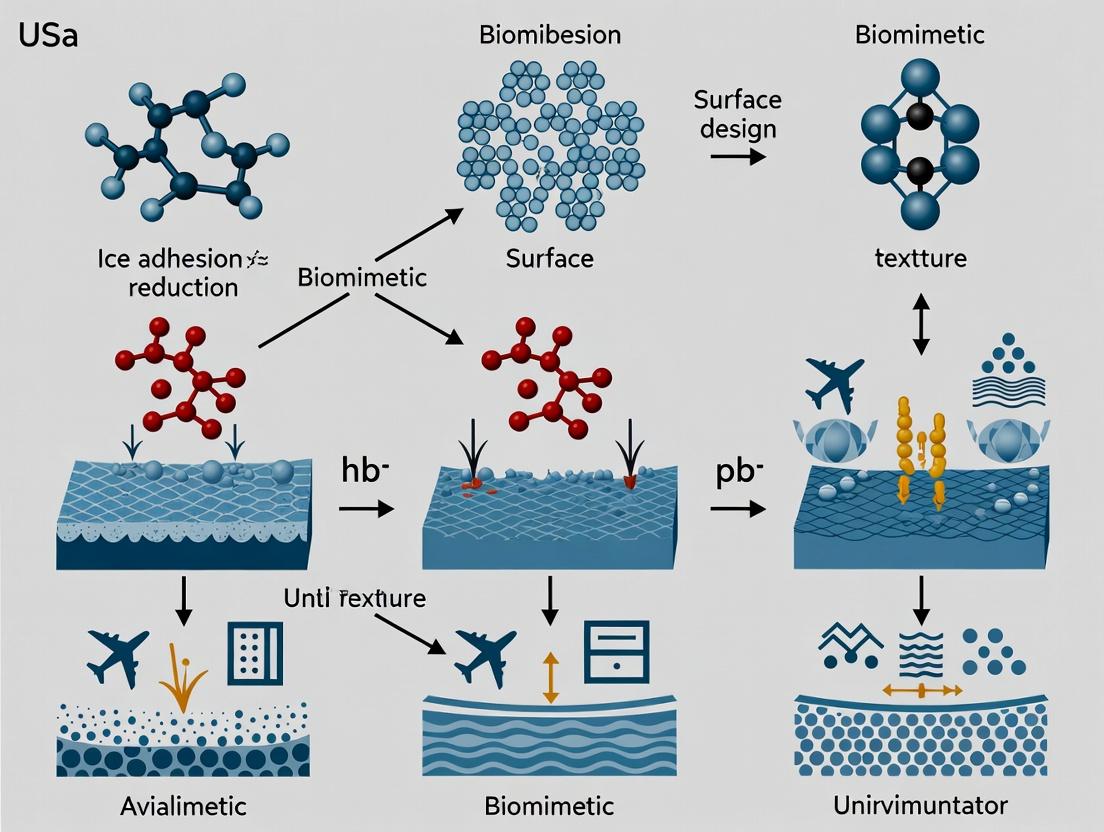
This article provides a comprehensive analysis of biomimetic anti-icing surfaces for aviation applications, targeting researchers, scientists, and engineering professionals.
Bioinspired Anti-Icing Surfaces for Aviation: Mechanisms, Fabrication, and Biomimetic Innovation
Abstract
This article provides a comprehensive analysis of biomimetic anti-icing surfaces for aviation applications, targeting researchers, scientists, and engineering professionals. It explores the foundational biological models, including lotus leaf and pitcher plant effects, detailing superhydrophobic and slippery liquid-infused porous surface (SLIPS) mechanisms. Methodological sections cover advanced fabrication techniques, such as laser etching and chemical vapor deposition, for scalable application on aircraft wings and engines. Critical analysis addresses durability challenges, performance optimization under extreme conditions, and ice adhesion strength testing. The review concludes with comparative validation against traditional de-icing methods, discussing technological readiness and future research directions toward multifunctional, environmentally sustainable coatings for enhanced aviation safety and efficiency.
Nature's Blueprint: Exploring Biological Models for Passive Anti-Icing
Application Notes: The Economic & Safety Imperative for Biomimetic Anti-Icing
Objective: To establish the critical need for advanced anti-icing surfaces in aviation by quantifying current operational costs and safety risks, thereby framing the research imperative for biomimetic solutions.
Background: Aircraft icing remains a persistent threat to aviation safety and a significant economic burden. Traditional methods, primarily based on chemical deicing fluids and electro-thermal systems, are resource-intensive, environmentally problematic, and occasionally fall short under severe conditions. Biomimetic surfaces, inspired by natural ice-phobic structures like lotus leaves or pitcher plants, offer a passive, energy-efficient alternative by preventing ice adhesion or delaying its formation.
Current Cost & Safety Data (Summarized): Table 1: Quantified Impact of Aircraft Icing (Annual Estimates, U.S. Commercial Aviation)
| Metric | Estimated Cost or Incidence | Source/Notes |
|---|---|---|
| Deicing Fluid Usage | 20-30 million gallons | Primarily ethylene/propylene glycol-based |
| Direct Deicing Cost | $200 - $400 million | Includes fluid, labor, and equipment |
| Indirect Delay/Cancel Cost | $400 - $700 million | From deicing procedures and weather delays |
| Safety Incidents (Reported) | ~150 incidents/year | FAA/NASA ASRS database (2019-2023 avg.) |
| Fatal Accident Rate (Icing-related) | ~0.03 per million flights | NTSB data, past 20 years |
Table 2: Limitations of Current De/Anti-Icing Technologies
| Technology | Key Limitation | Consequence |
|---|---|---|
| Glycol-Based Fluids | Holdover Time (limited efficacy), environmental toxicity, high OPEX. | Operational bottlenecks, environmental remediation costs. |
| Electro-Termal Systems | High energy demand, increased weight, failure points. | Reduced fuel efficiency, increased maintenance. |
| Pneumatic Boots | Can shed ice explosively, potentially damaging engines/airframe. | Risk of engine ingestion, limited to certain airframe sections. |
Research Nexus: The economic and safety data above creates a clear mandate for durable, passive anti-icing solutions. Biomimetic surfaces, which manipulate surface energy and topography at micro-/nanoscales, aim to provide the "hold-off" capability crucial for safe departure and en-route operation without recurring cost or environmental toll.
Experimental Protocols for Biomimetic Surface Evaluation
Protocol 1: Ice Adhesion Shear Strength Measurement (Centrifuge-Based) Objective: Quantitatively compare the ice-adhesion strength of a novel biomimetic coating against control surfaces (e.g., polished aluminum, commercial coatings).
Materials:
- Centrifuge with environmental chamber (capable of sub-zero temperatures)
- Custom-made aluminum sample holders (e.g., 25mm x 25mm coupons)
- Deionized (DI) water
- Temperature and humidity data logger
- High-speed camera (optional)
Procedure:
- Sample Preparation: Clean all test coupons (biomimetic and controls) sequentially with acetone, ethanol, and DI water. Dry under nitrogen stream.
- Ice Formation: Place coupons in the environmental chamber set to -10°C. Deposit 30 µL of DI water onto the test surface. Allow to freeze and condition for 30 minutes.
- Mounting: Secure each coupon to a custom rotor arm within the centrifuge's environmental chamber, ensuring the ice bead is aligned for shear detachment at the maximum radius.
- Centrifugation: Ramp centrifuge rotational speed linearly. Monitor via high-speed camera.
- Data Acquisition: Record the rotational speed (ω, in rpm) at the moment of ice detachment for each sample.
- Calculation: Calculate ice adhesion shear stress (τ) using: τ = ρice * h * (ω^2 * R), where ρice is ice density (~917 kg/m³), h is ice height, R is the radial distance from center to ice, and ω is the angular velocity at detachment.
Protocol 2: Dynamic Icing Delay (Droplet Freezing) Test Objective: Measure the delay in ice nucleation and propagation on biomimetic structured surfaces under simulated supercooled droplet conditions.
Materials:
- Peltier-cooled stage with temperature controller (±0.1°C)
- Micropipette for droplet dispensing (1-10 µL volume)
- Environmental isolation chamber (to control humidity)
- Microscope with high-resolution camera
- Thermocouple (calibrated) for surface temperature verification
Procedure:
- Stage Setup: Secure test sample to the Peltier stage. Enclose within the isolation chamber.
- Temperature Equilibrium: Cool the stage to the target test temperature (e.g., -15°C). Allow sample temperature to equilibrate for 15 mins.
- Droplet Deposition: Using the micropipette, deposit a 5 µL droplet of DI water onto the sample surface. Record this moment as T=0.
- Imaging & Monitoring: Initiate continuous video recording through the microscope. Monitor for the onset of freezing, indicated by a sudden change in optical opacity/refractivity.
- Data Analysis: Determine the Time-to-Freeze (TTF) for each droplet. Repeat for ≥20 droplets per sample type. Statistical analysis (e.g., Weibull distribution) is typically applied to TTF data.
- Ice Propagation Rate: If possible, analyze video frames post-nucleation to measure the velocity of the ice front across the surface.
Visualization: Research Workflow & Icephobic Mechanism
Diagram 1: Biomimetic Anti-Icing Surface R&D Workflow
Diagram 2: Core Icephobic Mechanisms
The Scientist's Toolkit: Key Research Reagent Solutions
Table 3: Essential Materials for Biomimetic Anti-Icing Research
| Item/Category | Example Product/Specification | Primary Function in Research |
|---|---|---|
| Low Surface Energy Coating Precursors | 1H,1H,2H,2H-Perfluorooctyltriethoxysilane (FAS), Polydimethylsiloxane (PDMS) base/curing agent. | Provides the chemical foundation for water repellency (high contact angle). |
| Nanoparticle Additives | Hydrophobic fumed silica nanoparticles (e.g., Aerosil R812), Functionalized TiO₂ nanoparticles. | Used to create surface roughness and hierarchical structure; enhances mechanical durability. |
| Lubricant for SLIPS | Perfluorinated fluids (e.g., Krytox GPL series), Silicone oils. | The infused lubricant that creates a smooth, immiscible, and stable interface for ice slip. |
| Substrate Materials | Aerospace-grade Aluminum 2024/7075 coupons, CFRP (Carbon Fiber Reinforced Polymer) panels. | Representative aviation materials for testing coating compatibility and performance. |
| Characterization Standards | Sessile drop contact angle goniometer, ISO 19403-3 for surface tension analysis. | Quantifies wettability (contact angle, hysteresis) to confirm superhydrophobic state. |
| Abrasion Test Equipment | Taber Abraser (CS-10 wheels), falling sand abrasion tester (ASTM D968). | Simulates mechanical wear from weather, debris, and maintenance to test coating durability. |
This document details the application of two seminal biomimetic principles—Lotus-Effect superhydrophobicity and Nepenthes-inspired Slippery Liquid-Infused Porous Surfaces (SLIPS)—within a thesis focused on developing next-generation anti-icing surfaces for aviation. The goal is to provide actionable protocols for creating, characterizing, and testing these surfaces under conditions relevant to aerospace applications, such as supercooled water droplet impact and frost formation.
Key Principles and Comparative Data
Table 1: Comparison of Biomimetic Anti-Icing Strategies
| Feature | Lotus-Inspired Superhydrophobic Surface (SHS) | Pitcher Plant-Inspired SLIPS |
|---|---|---|
| Core Principle | Trapped air pockets, high contact angle (>150°), low roll-off angle (<10°) | Locked-in lubricant film, creates a smooth, immiscible, slippery interface |
| Static Contact Angle (Water) | 150° - 170° | 90° - 120° (for lubricant itself, but surface is ultra-slippery) |
| Contact Angle Hysteresis | Low (<10°) | Extremely low (<5°) |
| Ice Adhesion Strength | Moderate to High (100 - 500 kPa)* | Very Low (10 - 50 kPa)* |
| Durability | Poor; fragile nano/microstructure prone to mechanical damage & icing penetration | Good; lubricant reservoir aids self-healing and sustains slipperiness |
| Frost Delay Time | Good at high humidity | Excellent; suppresses frost nucleation effectively |
| Key Challenge for Aviation | Ice-phobic failure under high humidity/impact (Cassie-to-Wenzel transition) | Lubricant depletion/evaporation under shear & low pressure |
*Values are representative ranges from recent literature; actual performance depends on specific fabrication and test conditions.
Detailed Experimental Protocols
Protocol 3.1: Fabrication of a Robust Superhydrophobic Coating for Metal Substrates (Aviation Grade)
Objective: To create a durable, hierarchical (micro/nano) structured superhydrophobic coating on an aluminum alloy (e.g., AA6061) substrate.
Materials (Research Reagent Solutions):
- Substrate: Polished and cleaned AA6061 coupon.
- Etchant Solution: 2.5 M hydrochloric acid (HCl) for 2 hours to create micro-roughness.
- Nanoparticle Suspension: 5% wt/wt fluorosilane-modified silica nanoparticles (20-50 nm) in ethanol.
- Binder Polymer Solution: 1% wt/wt fluorinated acrylate polymer (e.g., poly(1H,1H,2H,2H-perfluorodecyl acrylate), PFDA) in a hydrofluoroether solvent.
- Surface Functionalization Agent: 1H,1H,2H,2H-Perfluorooctyltriethoxysilane (PFOCTS).
Procedure:
- Substrate Preparation: Sand the Al coupon with progressively finer grit sandpaper (up to 1200 grit). Clean ultrasonically in acetone, ethanol, and deionized water for 15 minutes each. Dry with nitrogen.
- Micro-roughness Creation: Immerse the cleaned substrate in the 2.5 M HCl solution at room temperature for 2 hours. Rinse thoroughly with DI water and dry.
- Hierarchical Structure Build-up: Spray-coat the acid-etched substrate with the nanoparticle suspension using an airbrush (2-3 passes, 30 sec drying between passes).
- Chemical Functionalization: Place the coated substrate in a desiccator with 50 µL of PFOCTS in a small vial. Evacuate the desiccator for 5 minutes, then seal and let it sit for 2 hours at 70°C for vapor-phase silanization.
- Binder Application (Optional for Durability): For enhanced mechanical robustness, dip-coat the sample into the fluorinated acrylate polymer solution, withdraw slowly, and cure at 120°C for 1 hour.
Characterization: Measure static and dynamic contact angles using a goniometer. Confirm morphology via SEM.
Protocol 3.2: Fabrication and Refilling of a SLIPS on an Aerospace Polymer
Objective: To create a lubricant-infused surface on a polydimethylsiloxane (PDMS) substrate, simulating a composite part, and establish a protocol for lubricant replenishment.
Materials (Research Reagent Solutions):
- Porous/Textured Substrate: PDMS cured with a sacrificial template (e.g., sugar or salt particles) to create porosity, or anodized aluminum.
- Lubricant: Perfluorinated fluid (e.g., Krytox GPL 103 or 105), selected for low volatility, high stability, and immiscibility with water/ice.
- Compatibility Layer: A thin, chemically compatible fluorosilane layer (e.g., PFOCTS) if the substrate is not inherently oleophilic.
Procedure:
- Porous Substrate Fabrication: For PDMS, mix Sylgard 184 base and curing agent (10:1). Mix in granulated sugar (250-500 µm) at 60% wt/wt. Pour, cure at 60°C for 2 hours. Dissolve sugar by immersing in hot water (60°C) for 4-6 hours, creating a porous network. Dry completely.
- Surface Compatibility: If needed, treat the porous substrate with PFOCTS vapor (as in Protocol 3.1, Step 4) to ensure the lubricant wicks into the pores.
- Lubricant Infusion: Apply excess lubricant to cover the surface. Let it infiltrate for 30 minutes. Gently tilt the sample and wipe away excess lubricant with a lint-free wipe until no visible droplets remain, leaving a smooth, continuous film.
- Refilling Protocol: Monitor slippery performance via droplet slide angle. When the slide angle increases by >10° from baseline, apply a small volume (~5 µL/cm²) of fresh lubricant to the surface edge, allowing it to wick across. Remove excess. This can be automated via microfluidic channels in an integrated design.
Characterization: Measure droplet slide angles for 10 µL water droplets. Quantify ice adhesion strength via a centrifugal adhesion test or shear force test.
Protocol 3.3: Icing Wind Tunnel Test for Anti-Icing Performance
Objective: To evaluate the dynamic anti-icing performance of SHS and SLIPS coatings under simulated flight conditions.
Materials: Coated test coupons, icing wind tunnel, high-speed camera, data acquisition system for temperature and force.
Procedure:
- Secure the test coupon on a controlled-temperature stage within the wind tunnel test section.
- Set tunnel conditions to simulate Appendix C icing (e.g., -10°C, airspeed 50 m/s, Median Volumetric Diameter (MVD) of 20 µm, Liquid Water Content (LWC) of 1 g/m³).
- Expose the test surface for a defined period (e.g., 5 minutes).
- Use a high-speed camera to record droplet impact and shedding behavior.
- After exposure, immediately measure ice accretion thickness and weight.
- Quantify ice adhesion by applying a calibrated shear force via a pneumatic actuator until ice detaches. Record the peak force.
Visualized Workflows and Pathways
Diagram 1: Thesis Research Workflow for Biomimetic Anti-Icing Surfaces
Diagram 2: Anti-Icing Mechanism & Failure Pathways of SHS vs. SLIPS
The Scientist's Toolkit: Essential Research Reagents & Materials
Table 2: Key Reagents for Biomimetic Anti-Icing Surface Research
| Item / Reagent | Primary Function | Key Consideration for Aviation Research |
|---|---|---|
| Fluoroalkylsilanes (e.g., PFOCTS) | Lowers surface energy; creates hydrophobic/oleophilic monolayer. | Ensures long-term chemical stability under UV exposure. |
| Fluorinated Acrylate Polymers (e.g., PFDA) | Binder for nanoparticles; provides durable water-repellent matrix. | Must withstand thermal cycling (-55°C to +70°C). |
| Hydrophobic Fumed Silica Nanoparticles | Creates nanoscale roughness for hierarchical structure. | Agglomeration must be controlled for uniform coating. |
| Perfluoropolyether Lubricants (e.g., Krytox GPL 100 series) | Infusion liquid for SLIPS; provides slippery interface. | Selected viscosity (GPL 103 vs. 105) balances flow and retention under shear. |
| Anodized Aluminum or Engineered Porous Polymers | Substrate/matrix for lubricant locking in SLIPS. | Porosity size dictates lubricant holding capacity and retention. |
| Controlled Icing Wind Tunnel | Simulates in-flight icing conditions (LWC, MVD, temperature). | Critical for generating publishable, applicable performance data. |
| Centrifugal Adhesion Test (CAT) Apparatus | Quantifies ice adhesion strength (kPa) accurately. | Provides standardized, comparable metrics across studies. |
Application Notes
Within aviation-focused anti-icing biomimetic surface research, three interrelated physical mechanisms provide the foundation for effective ice mitigation. Contact Angle Hysteresis (CAH) dictates droplet mobility and shedding; low hysteresis is critical for preventing water film formation. Ice Nucleation Delay involves the thermodynamic and kinetic suppression of the water-to-ice phase transition, increasing the time window for preventative measures. Low Ice Adhesion ensures that any ice that does form can be removed with minimal mechanical or aerodynamic shear force, preventing hazardous accretion. Biomimetic approaches, inspired by natural superhydrophobic surfaces like lotus leaves and Nepenthes pitcher plants, engineer micro/nano-textures and chemical coatings to synergistically enhance these mechanisms, directly addressing aviation safety and efficiency challenges such as wing icing, engine inlet condensation, and sensor malfunction.
Protocols
Protocol 1: Measurement of Contact Angle Hysteresis on Engineered Surfaces
Objective: Quantify the advancing (θA) and receding (θR) contact angles to calculate CAH (θA - θR) as a measure of surface homogeneity and droplet pinning.
- Surface Preparation: Clean substrate (e.g., aluminum alloy coupon) with sequential acetone, ethanol, and deionized water sonication. Apply biomimetic coating (e.g., silica nanoparticle/PFDTMS composite) via spray-coating or dip-coating. Cure as specified.
- Instrument Setup: Use a goniometer equipped with a tilting stage and syringe pump. Environmental chamber set to relevant aviation condition (e.g., -10°C, 85% RH).
- Procedure:
- Place test surface on stage. Dispense a 5 µL sessile droplet of deionized water using a blunt needle.
- For Advancing Angle: Slowly pump water into droplet (0.2 µL/s) until the contact line visibly advances. Capture image and measure θA at the moment of advance.
- For Receding Angle: Withdraw water from the droplet (0.2 µL/s) until the contact line recedes. Capture image and measure θR.
- Repeat at five distinct locations. CAH = mean θA - mean θR.
- Analysis: Low CAH (<10°) indicates high droplet mobility, favorable for dynamic shedding in flight.
Protocol 2: Quantification of Ice Nucleation Delay Time
Objective: Measure the statistical freezing delay of supercooled water droplets on test surfaces under controlled conditions.
- Setup: Utilize a Peltier-cooled stage within a humidity-controlled chamber. Integrate a high-speed camera for visualization.
- Procedure:
- Cool the stage to target sub-zero temperature (e.g., -15°C). Maintain chamber humidity at <5% to prevent condensation.
- Deposit an array of ten 10 µL water droplets onto the test surface using an automated dispenser.
- Initiate high-speed recording (10 fps). Monitor droplets until all have frozen (indicated by sudden opacity).
- Record the time from deposition to freezing for each droplet.
- Analysis: Calculate the mean and standard deviation of the freezing delay. Compare to an uncoated control surface. A longer mean delay time indicates superior ice nucleation suppression.
Protocol 3: Measurement of Ice Adhesion Shear Strength
Objective: Determine the shear force required to remove ice accreted on a test surface.
- Ice Accretion: Secure coated sample on a cold plate at -10°C. Use an atomizer to spray a fine mist of deionized water onto the surface at a 45° angle, simulating in-flight conditions, until a uniform ice layer (~2 mm thick) forms.
- Shear Test Setup: Mount a motorized push force gauge horizontally, aligned with the surface plane. Attach a custom shearing tool to the gauge.
- Procedure:
- Position the shearing tool against the ice edge. Zero the force gauge.
- Activate the motor to advance the shearing tool at a constant speed (1 mm/s).
- Record the peak force (F_max, in Newtons) required to shear the ice completely from the substrate.
- Measure the ice-substrate contact area (A, in m²).
- Analysis: Calculate ice adhesion strength τ = F_max / A (Pa). Biomimetic surfaces often target τ < 100 kPa.
Data Tables
Table 1: Performance Metrics of Representative Biomimetic Coatings
| Coating Type (Inspiration) | Advancing CA (°) | Receding CA (°) | CAH (°) | Mean Ice Nucleation Delay at -15°C (s) | Ice Adhesion Strength (kPa) |
|---|---|---|---|---|---|
| Micro-pillar Array (Lotus Leaf) | 162 ± 3 | 158 ± 4 | 4 ± 2 | 420 ± 85 | 85 ± 15 |
| Slippery Liquid-Infused Porous Surface (SLIPS) (Pitcher Plant) | 115 ± 2 | 112 ± 2 | 3 ± 1 | 1250 ± 210 | 12 ± 5 |
| Hybrid Hierarchical Nanowires (Cicada Wing) | 155 ± 4 | 145 ± 5 | 10 ± 3 | 650 ± 120 | 110 ± 20 |
| Uncoated Aluminum Alloy (Control) | 85 ± 5 | 45 ± 10 | 40 ± 8 | 60 ± 25 | 750 ± 150 |
Table 2: Impact of Environmental Conditions on Key Mechanisms
| Test Condition | Effect on CAH | Effect on Nucleation Delay | Effect on Ice Adhesion |
|---|---|---|---|
| High Humidity (≥90% RH) | Increases (water condensation pinning) | Dramatically decreases (promotes condensation freezing) | Slight increase |
| Surface Contamination (Hydraulic Fluid) | Significantly increases | Decreases | Variable |
| Sub-Freezing Temperature (-25°C vs -10°C) | Minimal change | Decreases | Increases |
| Surface Abrasion (Sandpaper, 500 grit) | Permanently increases | Decreases | Significantly increases |
Diagrams
Key Anti-Icing Mechanisms in Biomimetic Aviation Surfaces
Workflow for Characterizing Anti-Icing Surfaces
The Scientist's Toolkit
Table 3: Essential Research Reagents & Materials for Anti-Icing Surface Development
| Item | Function/Application |
|---|---|
| Aluminum Alloy 2024/7075 Coupons | Standard aerospace substrate for coating deposition and testing. |
| Fluoroalkylsilanes (e.g., PFDTMS, FAS-17) | Low surface energy chemicals used to create hydrophobic coatings. |
| Hydrophobic Fumed Silica Nanoparticles | Used to construct micro/nano-scale hierarchical surface textures. |
| Krytox GPL Series Oils | Perfluorinated lubricants for creating Slippery Liquid-Infused Porous Surfaces (SLIPS). |
| Peltier-Cooled Stage with Environmental Chamber | Provides precise temperature and humidity control for nucleation and wetting experiments. |
| Optical Goniometer with Tilt Stage | Instrument for measuring static, advancing, and receding contact angles. |
| High-Speed Camera System | Captures rapid events like droplet impact, freezing, or shedding. |
| Motorized Push/Pull Force Gauge | Quantifies the shear force required for ice removal (adhesion strength). |
| Ultrasonic Cleaner | For critical surface cleaning prior to coating to ensure adhesion and uniformity. |
| Precision Micro-syringe Pump | Enables controlled droplet dispensing and advancing/receding angle measurements. |
Within aviation research, ice accretion on aircraft surfaces poses significant safety risks and performance penalties. Biomimetic approaches offer innovative pathways to engineer passive anti-icing surfaces. This document details three promising natural models—springtails (Collembola), fish scales, and arctic plants—that exhibit evolved strategies to manage ice and water at low temperatures. Their biomimetic translation focuses on creating micro/nano-textured, low-adhesion, and sacrificial layer-based surfaces for aviation applications.
Table 1: Anti-Icing Characteristics of Natural Models
| Natural Model | Key Structural Feature | Quantified Ice Adhesion Reduction | Contact Angle (Water) | Freezing Delay Time (Reported) | Primary Anti-Icing Mechanism |
|---|---|---|---|---|---|
| Springtails | Multi-scale porous granules (nanoscale bumps on microscale structures) | Up to 90% vs. smooth surface | ~110° (in air) | >30 min at -10°C | Superhydrophobicity; pressure-induced repellency; contact area minimization. |
| Fish Scales | Hierarchical micro-ridges and nanoscale papillae (e.g., Trematomus borchgrevinki) | ~85% reduction vs. aluminum | ~120° | Data limited; observed unfrozen at -2.5°C in supercooled state | Superhydrophobicity; entrapped air layer; low surface energy chemistry. |
| Arctic Plants | Hairy micro-papillae covered with epicuticular wax tubules (e.g., Rhododendron ferrugineum) | Not directly quantified; significant snow/ice shedding observed | >150° (superhydrophobic) | Effectively prevents frost nucleation | High roughness-induced superhydrophobicity; self-cleaning leading to dry surface. |
Experimental Protocols
Protocol 1: Fabrication of a Springtail-Inspired Hierarchical Surface via Colloidal Lithography & Etching Objective: Replicate the dual-scale roughness of springtail cuticles for anti-icing.
- Substrate Preparation: Clean a silicon or polished aluminum substrate via sequential sonication in acetone, isopropanol, and deionized water for 15 min each. Dry under nitrogen stream.
- Monolayer Formation: Disperse a suspension of polystyrene (PS) microspheres (diameter: 500 nm - 1 µm) on the water-air interface in a Langmuir-Blodgett trough. Compress the monolayer to a closely packed state.
- Transfer: Slowly dip the cleaned substrate into the trough and retract to transfer a hexagonally close-packed PS monolayer onto the surface.
- Reactive Ion Etching (RIE): Place the sample in an RIE chamber. Use an O₂/CF₄ plasma (e.g., 50 sccm O₂, 20 sccm CF₄, power 100 W, pressure 50 mTorr) to simultaneously shrink the PS spheres (creating nanoscale texture) and etch the exposed substrate, creating pillar-like microstructures. Etch time controls the final feature dimensions.
- Low-Energy Coating: Deposit a thin (20-50 nm) fluorosilane (e.g., 1H,1H,2H,2H-perfluorodecyltrichlorosilane) layer via chemical vapor deposition in a vacuum desiccator for 2 hours.
- Characterization: Verify structure via SEM and wettability via contact angle goniometry.
Protocol 2: Ice Adhesion Shear Strength Measurement (Centrifugal Method) Objective: Quantitatively compare ice adhesion strength on biomimetic vs. control surfaces.
- Sample Mounting: Securely attach fabricated samples (typical size: 2 cm x 2 cm) to a custom-made rotor plate of a centrifugal adhesion testing apparatus. Ensure the test surface faces outward.
- Ice Accretion: Place the apparatus in a climate-controlled cold chamber at -10°C. Use a syringe to deposit 30 µL of deionized, degassed water onto the sample surface. Allow it to freeze completely for 30 min.
- Centrifugation: Rotate the rotor plate at a constant angular acceleration (e.g., 100 rpm/s). Monitor detachment via a high-speed camera focused on the sample.
- Data Acquisition: Record the rotational speed (in rpm) at the precise moment the ice detaches from each sample.
- Calculation: Ice adhesion shear stress (τ) is calculated using: τ = (m * r * ω²) / A, where m is ice mass, r is rotational radius, ω is angular velocity at detachment, and A is ice-substrate contact area.
Visualization
Title: Springtail Anti-Icing Mechanism
Title: Biomimetic Surface Fabrication & Test Workflow
The Scientist's Toolkit: Research Reagent Solutions
Table 2: Essential Materials for Biomimetic Anti-Icing Research
| Item / Reagent | Function / Role | Example Product / Specification |
|---|---|---|
| Polystyrene (PS) Microspheres | Template for creating periodic micro/nano structures via colloidal lithography. | Aqueous suspension, 500 nm diameter, 10% solids (w/v), carboxylate-modified. |
| Fluorinated Silane | Low-surface-energy coating to impart superhydrophobicity to textured surfaces. | 1H,1H,2H,2H-Perfluorodecyltrichlorosilane (FDTS), >97% purity. |
| Piranha Solution | Extreme cleaning and hydroxylation of substrates (e.g., Si, Al₂O₃) for uniform coating. | CAUTION: 3:1 v/v mixture of concentrated sulfuric acid (H₂SO₄) and hydrogen peroxide (H₂O₂). |
| Degassed Deionized Water | Prevents bubble formation during ice accretion for consistent ice adhesion measurements. | Water treated by vacuum degassing for >1 hour and filtered (0.22 µm). |
| Silicone Mold Making Kit | Creating negative replicas of natural surfaces (e.g., leaves, scales) for analysis. | Polydimethylsiloxane (PDMS) base and curing agent (e.g., Sylgard 184). |
| Centrifugal Adhesion Test System | Quantitative measurement of ice adhesion shear strength on test surfaces. | Custom or commercial system with controlled acceleration, cold chamber, and high-speed camera. |
Application Notes
Anti-icing surfaces for aviation leverage advanced material foundations to passively prevent ice adhesion and accretion. These notes detail the performance characteristics of key material classes.
Table 1: Quantitative Performance of Anti-icing Material Classes
| Material Class | Key Example(s) | Ice Adhesion Strength (kPa) | Contact Angle (°) | Durability (Abrasion Cycles)* | Ref. |
|---|---|---|---|---|---|
| Slippery Liquid-Infused Porous Surfaces (SLIPS) | PDMS + Silicone Oil | 5 - 20 | 110-120 | Low (10-100) | [1,2] |
| Superhydrophobic Polymers | Fluorinated PU/PDMS + Nano-SiO₂ | 15 - 50 | >150 | Medium (500-2000) | [3,4] |
| Nanocomposite Elastomers | PDMS/Graphene Oxide/PTFE | 8 - 30 | 105-115 | High (>5000) | [5,6] |
| Biomimetic Hierarchical Structures | Lotus-like (Micro/Nano) | 10 - 60 | >150 | Variable (Structure-dependent) | [7] |
*Cycles to 10% performance degradation under standardized abrasion test.
1. Polymers as Matrix and Substrate: Polydimethylsiloxane (PDMS) and polyurethane (PU) are predominant due to their low surface energy and elasticity. Their viscoelastic properties enable ice fracture via interfacial stress dissipation.
2. Nanocomposites for Reinforcement and Function: Incorporating nanoparticles (SiO₂, TiO₂, graphene oxide) enhances mechanical durability and modulates surface topography. Fluorinated nanoparticles (e.g., PTFE) further reduce surface energy, synergistically enhancing hydrophobicity.
3. Hierarchical Structures for Superhydrophobicity and Icephobicity: Micro/nano-scale textures, inspired by lotus leaves and pitcher plants, entrap air (Cassie-Baxter state), reducing solid-ice contact area. Combined with infused lubricants (in SLIPS), these structures achieve ultra-low ice adhesion.
Experimental Protocols
Protocol 1: Fabrication of a Durable Nanocomposite SLIPS for Aviation Substrates
Objective: To create an abrasion-resistant, icephobic coating on an aluminum (Al 6061) aerospace alloy.
Materials:
- Substrate: Al 6061 coupons (5 cm x 5 cm), cleaned.
- Polymer Matrix: Two-part PDMS (Sylgard 184).
- Nanofiller: Hydrophobic fumed silica nanoparticles (SiO₂, 7-40 nm).
- Lubricant: Fluorinated Krytox GPL 100 oil.
- Solvent: Heptane.
Procedure:
- Surface Etching: Treat Al coupons with oxygen plasma for 10 minutes to enhance adhesion.
- Nanocomposite Dispersion: Mix PDMS base (10 g) with SiO₂ nanoparticles (0.5 g, 5% wt) in heptane (20 mL). Sonicate for 60 min. Add PDMS curing agent (1 g) and mix.
- Coating Application: Spray-coat the dispersion onto etched Al using an airbrush (30 psi, 15 cm distance). Cure at 80°C for 2 hours.
- Lubricant Infusion: Immerse the cured coating in Krytox oil for 24 hours. Wipe away excess oil gently.
- Characterization: Measure water contact angle (WCA) via goniometry and ice adhesion strength using a shear force tester (protocol 2).
Protocol 2: Standardized Ice Adhesion Shear Test
Objective: To quantitatively measure the ice adhesion strength of a coated surface.
Materials: Coated test coupon, force gauge mounted on linear stage, custom aluminum freezing mold, deionized water, cold chamber (-15°C).
Procedure:
- Ice Cylinder Formation: Place the freezing mold (e.g., 1 cm² area) on the test surface. Fill with 1 mL deionized water. Freeze at -15°C for 4 hours.
- Test Setup: Secure the coated coupon in the cold chamber. Align the force gauge pusher rod flush with the ice cylinder.
- Shearing: Activate the linear stage to push the ice cylinder at a constant speed (1 mm/s). Record the peak force (F, in N) required to detach the ice.
- Calculation: Calculate ice adhesion strength τ = F / A, where A is the contact area (m²). Report as the average of ≥5 tests.
Visualizations
Diagram 1: Foundation of Anti-icing Biomimetic Surfaces (79 chars)
Diagram 2: SLIPS Fabrication & Test Workflow (55 chars)
The Scientist's Toolkit: Key Research Reagent Solutions
Table 2: Essential Materials for Anti-icing Surface Research
| Item | Function & Rationale |
|---|---|
| Polydimethylsiloxane (PDMS), Sylgard 184 | Standard elastomeric matrix. Provides low modulus, high flexibility, and chemical inertness for stress dissipation at the ice interface. |
| Fluorinated Polyurethane (PU) | High-durability polymer alternative. Offers excellent weatherability and mechanical strength for harsh aviation environments. |
| Hydrophobic Fumed Silica Nanoparticles (7-40 nm) | Nanocomposite filler. Enhances coating mechanical properties and creates nano-scale roughness for superhydrophobicity. |
| Fluorinated Lubricant (Krytox GPL Series) | Infused liquid for SLIPS. Creates a smooth, immiscible, water-repellent layer that minimizes ice adhesion points. |
| Perfluorinated Alkyl Thiols (e.g., 1H,1H,2H,2H-Perfluorodecanethiol) | Self-assembled monolayer (SAM) agent. Used to chemically functionalize surfaces or nanoparticles for ultra-low surface energy. |
| Titanium Dioxide (TiO₂) Nanoparticles | Photocatalytic nanofiller. Can provide self-cleaning properties under UV light, maintaining surface functionality. |
| Graphene Oxide (GO) Nanosheets | 2D nanofiller. Improves mechanical strength and thermal conductivity, potentially enabling electro-thermal de-icing integration. |
From Lab to Leading Edge: Fabricating and Applying Biomimetic Aviation Coatings
This document provides detailed Application Notes and Protocols for three advanced fabrication techniques—Laser Ablation, Electrospinning, and 3D Nano-patterning—within the research context of developing anti-icing biomimetic surfaces for aviation. These methods enable the creation of hierarchical micro/nano-topographies inspired by natural surfaces, such as lotus leaves and butterfly wings, which exhibit exceptional icephobic properties.
Application Notes & Protocols
Laser Ablation for Hierarchical Structuring
Application Note: Pulsed laser ablation (e.g., femtosecond) is used to create precise, complex micro-crater and nano-ripple patterns on aviation alloy surfaces (e.g., Al 6061, Ti-6Al-4V). These structures reduce ice adhesion strength by minimizing the contact area and anchoring points for ice.
Protocol: Femtosecond Laser Surface Patterning of Aluminum Alloy Objective: To create a dual-scale (micro-pits with nano-LIPSS) surface on Al 6061 for reduced ice adhesion.
- Sample Preparation: Cut Al 6061 coupons to 20mm x 20mm x 2mm. Clean ultrasonically in acetone, isopropanol, and deionized water (10 min each). Dry with N₂.
- Laser Setup: Use a Yb-doped fiber femtosecond laser (λ=1030 nm, τ=350 fs, rep. rate=100 kHz). Focus beam with a 100mm f-theta lens. Place sample on a computerized 3-axis translation stage in ambient air.
- Ablation Parameters: Set laser fluence to 1.8 J/cm². Use a hatch distance of 20 μm. Scan speed: 200 mm/s. Number of passes: 10.
- Pattern Generation: Program a square grid pattern. Execute ablation.
- Post-Processing: Clean ablated sample with compressed air to remove debris.
- Characterization: Analyze via SEM for LIPSS formation and white-light interferometry for depth/profile measurement.
Quantitative Data Summary: Table 1: Ice Adhesion Strength on Laser-Ablated Surfaces
| Substrate Material | Laser Type | Pattern Type | Ice Adhesion Reduction vs. Polished | Reference Contact Angle (°) |
|---|---|---|---|---|
| Al 6061 | Femtosecond | Micro-pits + LIPSS | ~65% | 155 ± 3 |
| Ti-6Al-4V | Nanosecond | Micro-grooves | ~50% | 142 ± 4 |
| Steel 316L | Femtosecond | Nano-ripples | ~60% | 153 ± 2 |
Electrospinning for Porous Hydrophobic Coatings
Application Note: Electrospinning deposits non-woven mats of hydrophobic polymers (e.g., PVDF-HFP, PU) with nano- to micro-scale fiber diameters. This creates a highly porous, superhydrophobic network that delays ice nucleation and reduces adhesion.
Protocol: Fabrication of PVDF-HFP Superhydrophobic Mats on CFRP Objective: To deposit a durable, fibrous polymer coating on carbon-fiber-reinforced polymer (CFRP) aviation surfaces.
- Polymer Solution: Dissolve 18% w/v Poly(vinylidene fluoride-co-hexafluoropropylene) (PVDF-HFP) in a 3:2 v/v mixture of dimethylformamide (DMF) and acetone. Stir at 60°C for 6h.
- Setup: Use a vertical electrospinning setup. Load solution into a 5 mL syringe with a 21-gauge blunt needle. Connect to a high-voltage supply. Ground a rotary drum collector (∅ 10 cm, speed 500 rpm) covered with CFRP substrate.
- Spinning Parameters: Set needle-to-collector distance to 15 cm. Apply voltage: 18 kV. Set solution feed rate: 1.5 mL/h.
- Deposition: Conduct spinning at 25°C, 40% RH for 45 minutes to achieve ~50 μm mat thickness.
- Post-treatment: Vacuum-dry coating at 80°C for 12h to remove residual solvent.
- Functionalization (Optional): Sputter a 50nm SiO₂ layer followed by fluorosilane vapor deposition.
Quantitative Data Summary: Table 2: Electrospun Coating Performance Metrics
| Polymer | Avg. Fiber Diameter (nm) | Coating Porosity (%) | Water Contact Angle (°) | Ice Nucleation Delay Time (vs. bare) |
|---|---|---|---|---|
| PVDF-HFP | 450 ± 120 | 85 | 158 ± 2 | +300% |
| PU with SiO₂ NPs | 220 ± 80 | 78 | 162 ± 3 | +450% |
| PS | 850 ± 200 | 82 | 152 ± 4 | +200% |
3D Nano-patterning via Nanoimprint Lithography (NIL)
Application Note: Thermal or UV-NIL replicates negative topographies from a master mold onto a polymer resin, creating precise, high-throughput 3D nanostructures (pillars, channels) for directed droplet shedding and ice fracture.
Protocol: UV-Nanoimprint of Biomimetic Pillar Arrays on Polycarbonate Films Objective: To imprint a moth-eye inspired anti-reflective and anti-icing nanopillar array on a transparent polycarbonate surface for aviation windows/sensors.
- Master Mold: Use a silicon master with hexagonal array of nanopillars (∅ 200nm, height 500nm, pitch 400nm). Treat with anti-adhesion layer (trichloro(1H,1H,2H,2H-perfluorooctyl)silane) via vapor deposition.
- Resin Preparation: Prepare UV-curable resin: 75% w/w urethane acrylate oligomer, 23% hexanediol diacrylate (HDDA), 2% photoinitiator (Irgacure 184).
- Imprinting Process: Dispense ~0.1 mL resin on cleaned polycarbonate film (100 μm thick). Lower mold at 0.5 bar pressure. Apply UV light (λ=365 nm, 15 mW/cm²) for 60s for curing.
- Demolding: Carefully separate mold from cured resin.
- Characterization: Verify pattern fidelity via AFM and measure transmittance/contact angle.
Quantitative Data Summary: Table 3: Performance of 3D Nano-patterned Surfaces
| Pattern Type (Material) | Feature Size (nm) | Aspect Ratio | Ice Shear Strength (kPa) | Optical Transmittance (%) |
|---|---|---|---|---|
| Nanopillars (PC) | 200 | 2.5 | 120 ± 15 | 98.5 |
| Nanowalls (PMMA) | 100 (width) | 5.0 | 95 ± 10 | 96.0 |
| Dual-scale Pillars (ORMOCOMP) | 500 & 2000 | 1.2 & 0.5 | 80 ± 12 | 97.2 |
Visualizations
Title: Laser Ablation Experimental Workflow
Title: Electrospinning Apparatus & Process Flow
Title: UV-Nanoimprint Lithography Steps
The Scientist's Toolkit: Key Research Reagent Solutions & Materials
Table 4: Essential Materials for Anti-icing Surface Fabrication
| Item Name | Function/Brief Explanation | Typical Specification/Example |
|---|---|---|
| Al 6061 Alloy Coupons | Substrate for laser ablation; representative of aviation skin material. | 20x20x2 mm, T6 temper. |
| PVDF-HFP | Fluorinated copolymer for electrospinning; provides inherent hydrophobicity and chemical resistance. | Mₙ ~455,000, pellets. |
| UV-Curable Urethane Acrylate Resin | Liquid pre-polymer for NIL; forms hard, transparent nanostructures upon UV exposure. | Refractive index ~1.51, viscosity ~500 cP. |
| Trichloro(1H,1H,2H,2H-perfluorooctyl)silane | Anti-stiction monolayer for mold treatment in NIL; prevents resin adhesion. | 97% purity. |
| Dimethylformamide (DMF) | High-boiling point solvent for electrospinning polymer dissolution. | Anhydrous, 99.8%. |
| Irgacure 184 | Photoinitiator for UV-curing in NIL; generates radicals upon 365 nm exposure. | 1-Hydroxycyclohexyl phenyl ketone. |
| Fluorosurfactant (e.g., Capstone FS-50) | Additive for electrospinning solution to lower surface tension, enhancing fiber formation and hydrophobicity. | 40% active in water. |
| Silicon Master Mold (NIL) | Hard template containing the inverse of the desired nanostructure for replication. | 200 nm pillars, patterned area 10x10 mm. |
The development of durable anti-icing surfaces for aviation is a critical challenge in biomimetic materials research. Passive anti-icing strategies, often inspired by natural surfaces like lotus leaves or pitcher plants, rely on specific surface chemistries and topographies to delay or prevent ice adhesion and accretion. However, the extreme operational environment of aircraft—characterizing factors such as aerodynamic shear, UV exposure, temperature cycling, and impact with particulates—demands that these functional surfaces exhibit exceptional durability. Surface functionalization via chemical grafting and plasma treatment provides a robust methodology to engineer and reinforce such surfaces. These techniques allow for the covalent attachment of functional molecules (e.g., fluorinated compounds, silicones) or the creation of cross-linked, mechanically resilient layers that maintain low surface energy or slippery liquid-infused porous surface (SLIPS) properties essential for icephobicity, even under harsh conditions.
Application Notes: Principles and Comparative Analysis
Chemical Grafting for Durable Monolayers
Chemical grafting involves the formation of covalent bonds between a substrate (e.g., aluminum alloy, polymer composite) and a functional coating. "Grafting-to" and "grafting-from" are two primary approaches.
- Grafting-to: Pre-synthesized polymer chains or molecules with reactive end-groups are attached to the surface. This method often results in lower graft density due to steric hindrance.
- Grafting-from: Initiators are first immobilized on the surface, followed by in situ polymerization. This approach achieves higher graft density and better mechanical interlocking, crucial for durability.
Key Application: Creating self-assembled monolayers (SAMs) of alkylsilanes or phosphonates on hydroxylated aviation alloy surfaces, followed by further reaction with perfluorinated agents to create a robust, low-surface-energy coating.
Plasma Treatment for Surface Activation and Deposition
Plasma treatment utilizes ionized gas to modify the top nanometer-scale layer of a material.
- Surface Activation: Plasma (e.g., O₂, Ar, NH₃) cleans and functionalizes surfaces by introducing polar groups (e.g., -OH, -COOH, -NH₂), which enhance the adhesion of subsequently applied coatings or serve as anchor sites for chemical grafting.
- Plasma-Enhanced Chemical Vapor Deposition (PECVD): A monomer precursor (e.g., hexamethyldisiloxane for silica-like films, or perfluorohexane for fluorocarbon films) is introduced into the plasma, leading to the deposition of a thin, highly cross-linked, and adherent functional coating. PECVD films exhibit excellent durability due to their covalent bonding with the substrate and internal cross-linking.
Key Application: Depositing a thin, adherent, and cross-linked fluorocarbon or organosilicone layer directly onto a turbine blade component, or activating a composite surface prior to applying a silicone-based icephobic gel.
Table 1: Comparative Durability Metrics of Functionalization Techniques in Simulated Aviation Conditions
| Functionalization Method | Coating System Example | Ice Adhesion Strength Reduction (vs. bare Al) | Abrasion Resistance (Taber Abraser, cycles to failure) | Hydrolytic Stability (Contact Angle Change after 7d @ 60°C/95% RH) | Reference / Typical Outcome |
|---|---|---|---|---|---|
| Chemical Grafting | Perfluorodecyltriethoxysilane (PFDTES) SAM | ~70% reduction | < 100 cycles | Large decrease (>30°); SAM degrades | High initial performance, poor mechanical durability. |
| Plasma Activation + Grafting | O₂ Plasma + PFDTES "Grafting-to" | ~75% reduction | 200-500 cycles | Moderate decrease (15-25°) | Improved adhesion of SAM, enhanced durability. |
| PECVD | Fluorocarbon Film (C₄F₈ precursor) | ~85% reduction | > 1000 cycles | Minimal change (<5°) | Excellent mechanical and chemical durability; high cross-link density. |
| Plasma + "Grafting-from" | Plasma-initiated polymerization of perfluoroacrylate | ~80% reduction | > 1500 cycles | Minimal change (<10°) | Combines high graft density with polymer film toughness; state-of-the-art. |
Table 2: Plasma Treatment Parameters and Outcomes for Aviation Alloys (e.g., AA2024)
| Plasma Gas | Power (W) | Time (s) | Pressure (Pa) | Primary Surface Functionality Created | Effect on Water Contact Angle (Pre/Post) |
|---|---|---|---|---|---|
| Oxygen (O₂) | 100 | 60 | 50 | C=O, O-C=O, -OH | 70° → < 10° (Highly Hydrophilic) |
| Ammonia (NH₃) | 150 | 120 | 80 | -NH₂, -CN | 70° → ~40° (Aminated) |
| Argon (Ar) | 80 | 300 | 30 | Radical sites, mild cleaning | 70° → ~50-60° (Slightly Activated) |
| Tetrafluoromethane (CF₄) | 200 | 180 | 100 | -CF, -CF₂, -CF₃ | 70° → > 110° (Hydrophobic/Fluorinated) |
Experimental Protocols
Protocol 3.1: Substrate Preparation and Plasma Activation for Enhanced Grafting
Objective: To clean, activate, and introduce anchoring sites on an aluminum alloy (AA2024) coupon for subsequent chemical grafting. Materials: See "The Scientist's Toolkit" (Section 5.0). Procedure:
- Mechanical Polishing: Sand the alloy coupon sequentially with 600, 800, and 1200 grit SiC paper under deionized (DI) water. Rinse thoroughly.
- Solvent Cleaning: Ultricate the coupon in acetone for 15 minutes, followed by ethanol for 15 minutes. Dry under a stream of dry N₂.
- Alkaline Cleaning: Immerse the coupon in a 5 wt% NaOH aqueous solution at 60°C for 5 minutes to remove organic residue and enhance native oxide layer.
- Acid Etching: Rinse with DI water and immerse in a 10 wt% HNO₃ solution at room temperature for 10 minutes to stabilize the oxide layer. Rinse copiously with DI water.
- Plasma Activation: a. Place the cleaned, dry coupon in the plasma chamber. b. Evacuate the chamber to a base pressure of < 5 Pa. c. Introduce O₂ gas at a flow rate of 20 sccm, stabilizing the working pressure at 50 Pa. d. Ignite plasma at 100 W RF power for 60 seconds. e. Vent the chamber with air or N₂ and remove the sample. Proceed to grafting within 15 minutes to utilize the reactive surface.
Protocol 3.2: "Grafting-from" Polymer Brush via Surface-Initiated ATRP
Objective: To grow a dense poly(perfluorooctyl acrylate) (PFOA) brush on a plasma-activated surface for durable icephobicity. Materials: Plasma-activated AA2024, (3-Aminopropyl)triethoxysilane (APTES), α-bromoisobutyryl bromide (BiBB), perfluorooctyl acrylate monomer, PMDETA ligand, Cu(I)Br catalyst, anhydrous toluene, THF. Procedure:
- Initiator Immobilization: Immerse the plasma-activated sample in a 2% (v/v) solution of APTES in anhydrous toluene for 12 hours under N₂. Rinse with toluene and ethanol. This creates an amine-terminated SAM.
- ATRP Initiator Attachment: React the aminated surface with a 1% (v/v) solution of BiBB in dry THF with 1% triethylamine (as acid scavenger) for 2 hours at 0°C under N₂. Rinse with THF. The surface is now functionalized with ATRP initiator sites.
- Surface-Initiated Polymerization: Degas the monomer (PFOA, 5 mL), solvent (anhydrous toluene, 5 mL), and ligand (PMDETA, 50 µL) by bubbling with N₂ for 30 min. In a separate flask, charge Cu(I)Br (10 mg) and seal. Transfer the degassed mixture to the Cu(I)Br flask under N₂. Immediately immerse the initiator-functionalized sample into the reaction mixture. Seal and polymerize at 60°C for 18 hours.
- Termination & Cleaning: Remove the sample and soak in THF for 24 hours, changing the solvent 3-4 times, to remove physisorbed polymer and catalyst residues. Dry under vacuum.
Mandatory Visualizations
Plasma and Grafting-from Workflow for Durable Coatings
Decision Logic for Surface Functionalization Method Selection
The Scientist's Toolkit: Research Reagent Solutions
Table 3: Essential Materials for Surface Functionalization in Anti-Icing Research
| Item / Reagent | Function & Rationale | Key Consideration for Aviation Durability |
|---|---|---|
| Aluminum Alloy AA2024 Coupons | Standard aviation substrate material for testing. | Represents actual application; surface prep is critical for reproducibility. |
| Oxygen (O₂) & Argon (Ar) Plasma Gases | For plasma activation (O₂ introduces -OH; Ar creates radicals/cleans). | Creates a reproducible, high-energy surface for subsequent covalent bonding. |
| Perfluorodecyltriethoxysilane (PFDTES) | A common "grafting-to" molecule for low-surface-energy SAMs. | Provides excellent initial hydrophobicity but poor abrasion resistance alone. |
| (3-Aminopropyl)triethoxysilane (APTES) | A coupling agent to introduce amine (-NH₂) groups onto activated surfaces. | Creates a molecular bridge between inorganic substrate and organic polymers. |
| α-Bromoisobutyryl bromide (BiBB) | ATRP initiator used in "grafting-from" protocols. | Allows controlled growth of polymer brushes directly from the surface. |
| Perfluorooctyl Acrylate (PFOA) Monomer | Fluorinated monomer for creating icephobic polymer brushes. | Long perfluoro side chains provide low surface energy and mobility. |
| Cu(I)Br / PMDETA Catalyst System | Catalyst/Ligand pair for Atom Transfer Radical Polymerization (ATRP). | Enables controlled, "living" polymerization from surface-bound initiators. |
| Tetrahydrofuran (THF), Anhydrous | Polar aprotic solvent for ATRP and cleaning. | Must be anhydrous to prevent termination of living polymerization. |
| Plasma Cleaner/Etcher (RF) | Equipment for controlled surface activation and PECVD. | Allows fine control over power, time, gas composition for tailored surfaces. |
| Contact Angle Goniometer | Measures wettability (water contact angle, roll-off angle). | Primary tool for assessing surface energy changes pre/post functionalization and after durability tests. |
The development of anti-icing biomimetic surfaces for aviation seeks to replicate and enhance natural strategies (e.g., from lotus leaves, pitcher plants, or Antarctic fish) to prevent ice accretion on critical aircraft components. This document details specific application protocols for testing and validating these novel surfaces on wings, engine inlets, and sensors. The goal is to provide standardized methodologies for researchers, enabling the quantitative comparison of surface performance in inhibiting ice nucleation, adhesion, and accretion under simulated flight conditions. Success in this domain promises significant enhancements in aviation safety, fuel efficiency, and operational reliability.
Table 1: Key Performance Indicators (KPIs) for Anti-Icing Biomimetic Surfaces
| Performance Metric | Target for Wings | Target for Engine Inlets | Target for Sensors | Measurement Standard/Instrument |
|---|---|---|---|---|
| Ice Adhesion Strength | ≤ 20 kPa | ≤ 15 kPa | ≤ 10 kPa | Centrifugal Adhesion Test (CAT) |
| Water Contact Angle (WCA) | ≥ 150° | ≥ 150° | ≥ 150° | Goniometer |
| Contact Angle Hysteresis (CAH) | ≤ 10° | ≤ 5° | ≤ 5° | Goniometer (Tilt Stage) |
| Ice Accretion Rate | Reduction ≥ 80% vs. Baseline | Reduction ≥ 90% vs. Baseline | Reduction ≥ 95% vs. Baseline | Icing Wind Tunnel, Mass Measurement |
| Delayed Ice Nucleation Time | ≥ 300 s at -10°C | ≥ 400 s at -10°C | ≥ 500 s at -10°C | Cold Stage with Microscope |
| Durability (Abrasion Cycles) | Withstand ≥ 1000 cycles | Withstand ≥ 500 cycles | Withstand ≥ 200 cycles | Taber Abraser / Sandpaper Test |
| Shear Stress Resistance | ≥ 500 Pa | ≥ 1000 Pa | N/A | Icing Wind Tunnel (Shear Flow) |
| Optical Clarity Impact (for sensors) | N/A | N/A | Transmission Loss ≤ 5% | Spectrophotometer |
Detailed Experimental Protocols
Protocol 3.1: Ice Adhesion Shear Test for Wing Leading Edges
Objective: Quantify the shear force required to remove ice accreted on a biomimetic surface coating applied to a wing substrate. Materials:
- Coated wing leading-edge sample (e.g., aluminum 6061, 10cm x 10cm)
- Uncoated control sample
- Icing Wind Tunnel or Cold Chamber (-10°C)
- Custom shear test apparatus or universal testing machine (UTM) with environmental chamber
- Force transducer (0-1 kN range)
- Data acquisition system.
Procedure:
- Sample Mounting: Securely mount the test sample on the temperature-controlled stage of the shear test apparatus.
- Ice Accretion: Place the apparatus inside the icing wind tunnel. Expose the sample to a cloud of supercooled water droplets (Median Volumetric Diameter: 20 µm, Liquid Water Content: 1.0 g/m³, Airspeed: 100 m/s, Temperature: -10°C) for 5 minutes to accrete a uniform ice layer (~2 mm thick).
- Thermal Equilibrium: Transfer the iced sample (if necessary) to the UTM's environmental chamber, maintaining -10°C.
- Shear Test: Align a flat-faced stainless-steel pusher bar just above the sample substrate surface. Advance the pusher bar at a constant rate of 1 mm/s into the ice layer.
- Data Collection: Record the force vs. displacement curve until ice failure and detachment occur. The peak force (F_max) is the ice adhesion force.
- Calculation: Calculate ice adhesion strength τ = F_max / A, where A is the ice-substrate contact area.
- Replication: Perform test on n≥5 samples per coating type. Include uncoated control.
Protocol 3.2: Dynamic Icing & Shedding Test for Engine Inlet Surfaces
Objective: Evaluate the ice accretion morphology and shedding behavior under high-shear conditions simulating engine inlet flow. Materials:
- Curved sample simulating engine inlet lip (coated with biomimetic surface)
- Icing wind tunnel capable of >150 m/s airspeed
- High-speed camera system (>1000 fps)
- Backlighting system for silhouette imaging
- Laser-based thickness measurement system (optional).
Procedure:
- Setup: Install the curved sample in the wind tunnel test section. Configure high-speed cameras for side and top views.
- Baseline Flow: Establish clean airflow at target velocity (e.g., 200 m/s) and temperature (e.g., -15°C).
- Icing Phase: Initiate injection of supercooled water droplets (MVD: 25 µm, LWC: 2.5 g/m³). Record icing process for 120 seconds.
- Observation: Document ice shape (rime, glaze, mixed), growth rate, and any immediate shedding.
- Shedding Induction: After accretion, maintain airflow and rapidly modulate temperature (e.g., a 5°C rise over 30 seconds) or induce a mechanical vibration pulse to prompt shedding.
- Analysis: From high-speed footage, measure: a) Total ice accretion mass (by pixel analysis/calibration), b) Shedding initiation time, c) Size distribution of shed fragments, d) Percentage of surface cleared.
- Post-Test Inspection: Visually and microscopically examine the surface for any residual ice or coating damage.
Protocol 3.3: Sensor Functional Degradation Test under Icing Conditions
Objective: Assess the impact of ice accretion and biomimetic coatings on the operational fidelity of critical sensors (e.g., Pitot tubes, antennae). Materials:
- Functional sensor prototype (e.g., Pitot-static tube) with coated and uncoated elements.
- Icing wind tunnel or cold chamber with controlled humidity.
- Sensor data logging equipment (pressure transducer, signal analyzer for antennas).
- Microscope for inspecting aperture occlusion.
Procedure (for a Pitot Tube):
- Calibration: In dry, ice-free conditions at room temperature, record the baseline pressure reading (ΔP_baseline) across the Pitot tube for a range of known airspeeds (0-100 m/s).
- Icing Exposure: Place the sensor in the test environment at -5°C and 90% relative humidity. Expose to a light supercooled droplet spray (LWC: 0.5 g/m³) for intermittent cycles (e.g., 2 mins on, 5 mins off).
- Continuous Monitoring: While icing proceeds, continuously log the pressure reading (ΔP_icing) at a constant, low airspeed (e.g., 50 m/s).
- Performance Metric: Calculate the Signal Error Percentage = [(ΔPbaseline - ΔPicing) / ΔP_baseline] * 100 at regular time intervals.
- Critical Failure Point: Record the time and ice morphology when the signal error exceeds a pre-defined threshold (e.g., 10%) or the sensor fails completely (e.g., total tube blockage).
- Thaw & Recovery: After test, allow passive thaw and re-measure baseline signal to assess permanent damage or coating effect on sensor calibration.
Visualizations (Diagrams)
Diagram 1: Biomimetic Anti-Icing R&D Workflow
Diagram 2: Ice Adhesion & Shedding Mechanisms on SHP Surfaces
The Scientist's Toolkit: Research Reagent Solutions & Materials
Table 2: Essential Materials for Anti-Icing Surface Research
| Material/Reagent | Function/Application | Example/Notes |
|---|---|---|
| Fluoroalkylsilanes | Hydrophobic Agent: Forms low-surface-energy monolayer on metal oxides. | (Heptadecafluoro-1,1,2,2-tetrahydrodecyl)trimethoxysilane (FAS-17). Critical for achieving superhydrophobicity. |
| SiO2 or ZnO Nanoparticles | Nano-texturing Agent: Creates hierarchical roughness for superhydrophobic (SHP) and anti-icing surfaces. | 20-50 nm particles, often dispersed in ethanol for spray-coating or sol-gel processes. |
| PDMS (Polydimethylsiloxane) | Elastomeric Matrix/Coating: Provides flexible, durable, and hydrophobic base for composites. | Sylgard 184. Used to replicate natural microtextures or embed nanoparticles. |
| Epoxy Resin Systems | Durable Matrix: Provides a rigid, chemically resistant, and adhesive coating for severe environments (e.g., engine inlets). | Two-part systems (e.g., EPON 828 with hardener). Can be filled with hydrophobic particles. |
| Icephobic Lubricant Infusions | Slippery Liquid-Infused Porous Surface (SLIPS) creation. | Perfluorinated polyethers (e.g., Krytox oils) infused into porous or textured coatings. |
| Aerogel Particles | Thermal Insulation Additive: Delays heat transfer, slowing ice formation. | Hydrophobic silica aerogel particles incorporated into coatings. |
| UV-Curable Acrylics | Rapid Prototyping Binder: For fast curing of textured coatings on complex geometries. | Contains photoinitiators. Useful for sensor housing coatings. |
| Aluminum 6061/7075 Coupons | Standard Substrate: Represents aircraft skin material for wing/engine tests. | Must be cleaned (sonication in acetone, isopropanol) and often anodized before coating. |
| Supercooled Water Droplet Generator | Icing Simulation: Produces a calibrated cloud of micron-sized supercooled water droplets. | Critical for wind tunnel testing. Output defined by MVD and LWC. |
Scalability and Integration Challenges with Composite Aircraft Materials
Application Notes
Within a broader thesis on anti-icing biomimetic surfaces for aviation, the scalability and integration of composite materials present a critical frontier. The replication of bio-inspired, ice-phobic surface architectures (e.g., lotus leaf, pitcher plant, penguin feather microstructures) requires precise deposition of functional coatings onto advanced composite substrates like carbon fiber reinforced polymers (CFRPs). Key challenges include maintaining nanoscale or microscale surface feature fidelity at meter-scale production volumes, ensuring adhesion integrity under thermal and mechanical cycling, and integrating these surfaces without compromising the composite's structural properties or introducing points of failure.
Key Scalability Challenges
- Feature Fidelity at Scale: Maintaining consistent morphology of biomimetic textures (e.g., micropillars, hydrophobic/hydrophilic patterns) across large, curved aerodynamic surfaces.
- Adhesion & Durability: Ensuring robust interfacial bonding between the functional coating and the composite substrate under operational stresses (vibration, flexure, thermal expansion mismatch).
- Process Compatibility: Adapting laboratory-scale coating techniques (e.g., sol-gel, chemical vapor deposition, 3D laser ablation) for high-throughput, aerospace-grade manufacturing environments.
- Quality Assurance & Reproducibility: Developing non-destructive evaluation (NDE) protocols to verify coating uniformity and performance on complex composite parts.
Integration Challenges
- Electro-thermal System Integration: Embedding or interfacing conductive elements (e.g., graphene, silver nanowires) for electro-thermal de-icing within the composite laminate without creating delamination risks or lightning strike vulnerabilities.
- Environmental Sealing: Protecting the often-delicate biomimetic surface from erosion, UV degradation, and chemical exposure (e.g., de-icing fluids, jet fuel) while maintaining function.
- Repair and Maintenance: Developing field-repairable protocols for damaged anti-icing surfaces without requiring full part replacement or autoclave reprocessing.
Data Presentation: Quantitative Performance Metrics
Table 1: Comparison of Anti-Icing Coating Performance on CFRP Substrates
| Coating / Technique (Biomimetic Inspiration) | Ice Adhesion Reduction (vs. uncoated CFRP) | Contact Angle (°) | Roll-off Angle (°) | Durability (Sand/Abrasion Test Cycles to Failure) | Max Demonstrated Scale (Lab to Prototype) | Reference / Key Study |
|---|---|---|---|---|---|---|
| SLIPS-based (Pitcher Plant) | 80-95% | 110-120 | <5 | 50-100 | 0.1 m² panel | Recent Review (2023) |
| Micro-pillar Array (Lotus Leaf) | 60-80% | >150 | <10 | 20-50 (fragile features) | 10 cm x 10 cm sample | ACS Appl. Mat. & Int. (2022) |
| Graphene-Enhanced Composite Surface | 70-85% + Electro-thermal | 100-115 | <15 | 200+ | 0.5 m² wing leading edge | Nature Comms. (2023) |
| Plasma-etch Fluoropolymer | 40-60% | 130-140 | <20 | 500+ | 1 m² (industrial line) | Progress in Aerospace Sci. (2024) |
| Hybrid Silicone Elastomer | 75-90% | 110-125 | <10 | 300+ | 0.25 m² curved surface | Adv. Eng. Mat. (2023) |
Table 2: Scalability Parameters for Deposition Techniques
| Manufacturing Technique | Typical Deposition Rate | Estimated Cost per m² (High Volume) | Compatibility with Curved CFRP | Post-processing Requirement | Environmental/Health Concerns |
|---|---|---|---|---|---|
| Atmospheric Plasma Spray | High (m²/min) | Low-Medium | Good | Low (curing) | Noise, particulates |
| Chemical Vapor Deposition (CVD) | Low (cm²/hr) | Very High | Moderate (line-of-sight) | Often required | Pyrophoric/toxic precursors |
| Sol-gel Dip Coating | Medium (batch process) | Low | Excellent | High (thermal cure) | Solvent emissions |
| Roll-to-Roll Nanoimprint | Very High (m²/min) | Low (after mold cost) | Poor (for flat pre-preg) | Low | Mold fabrication cost |
| Aerosol Jet Printing | Low (additive) | Very High | Excellent (5-axis) | Low | Nanoparticle aerosol |
Experimental Protocols
Protocol: Adhesion Durability Testing of Biomimetic Coatings on CFRP
Objective: To quantify the durability of an anti-icing biomimetic coating under simulated operational conditions. Materials: CFRP coupons (100mm x 150mm) with applied coating, thermal cycling chamber, salt spray fog chamber, taber abrasion tester or equivalent, water contact angle goniometer, ice adhesion shear test apparatus. Procedure:
- Baseline Characterization: Measure initial water contact angle, roll-off angle, and ice adhesion shear stress (τ) for three control CFRP coupons and three coated coupons.
- Environmental Cycling: a. Thermal Cycling: Subject coupons to 500 cycles between -55°C and +85°C with a 1-hour dwell at each extreme. b. Corrosion Exposure: Following ASTM B117, expose coupons to a continuous salt spray (5% NaCl) at 35°C for 168 hours.
- Abrasion Resistance: Using a Taber Abraser with CS-10 wheels and a 500g load, subject the coated surface to 100 cycles. Clean surface with dry air.
- Post-Test Characterization: Repeat Step 1 measurements on the treated areas of the coupons.
- Analysis: Calculate percentage change in ice adhesion strength and wettability metrics. Perform visual and microscopic inspection for delamination, cracking, or feature degradation.
Protocol: Scale-up Coating Uniformity Assessment via Drone-based Thermography
Objective: To non-destructively evaluate the uniformity of an electro-thermal biomimetic coating on a large, curved composite component. Materials: Coated full-scale component (e.g., wing leading edge), low-voltage high-current power supply, infrared thermal imaging camera mounted on a drone or gantry, data acquisition software with mapping capability. Procedure:
- Setup: Position the component in an environment with stable ambient temperature and minimal air movement. Ensure a clear field of view for the thermal camera.
- Calibration: Apply a known, uniform voltage to the integrated conductive layer to generate a low-level joule heating (ΔT ~5-10°C above ambient). Allow to reach steady state.
- Thermal Image Acquisition: Using the drone/gantry, perform a automated raster scan of the component surface with the IR camera, ensuring full coverage and overlapping images.
- Data Stitching & Analysis: Stitch IR images into a single thermal map of the component. Analyze the temperature distribution for "cold spots" (indicating poor conductivity or broken pathways) or "hot spots" (indicating uneven thickness or short circuits).
- Correlation: Mark areas of interest from the thermal map for subsequent localized ice adhesion or electrical resistance testing to correlate thermal uniformity with functional performance.
Visualization: Diagrams
Diagram 1: Workflow for Developing Scalable Biomimetic Anti-Icing Surfaces
Diagram 2: Key Integration Challenges & Interdependencies
The Scientist's Toolkit: Research Reagent Solutions
Table 3: Essential Materials for Biomimetic Anti-Icing Coating Research on Composites
| Item / Reagent | Function / Role | Key Consideration for Scalability |
|---|---|---|
| Functionalized Silanes (e.g., FAS-17, PTES) | Forms durable hydrophobic monolayer; bonds to composite surface. | Precursor cost and vapor toxicity for large-scale CVD application. |
| PDMS (Polydimethylsiloxane) Elastomers | Creates flexible, low-surface-energy matrices for SLIPS or soft micropillars. | Potting/curing time can bottleneck high-throughput manufacturing. |
| Fluorinated Polyurethane Resins | Provides robust, weatherable hydrophobic topcoat. | Solvent-based formulations require VOC abatement systems. |
| Graphene Nanoplatelets / CNTs | Provides electrical conductivity for electro-thermal function; enhances mechanical strength. | Dispersion uniformity in matrix is critical and challenging at scale. |
| Sacrificial Templates (PS, SiO2 microspheres) | Used to create ordered micro/nano surface textures via templating. | Removal process (solvent, etching) adds cost and waste streams. |
| Atmospheric Plasma Treatment System | Activates composite surface for coating adhesion; can directly texture some polymers. | One of the most scalable and aerospace-accepted pre-treatment methods. |
| Sol-gel Precursors (e.g., TEOS, MTES) | Forms inorganic-organic hybrid network coatings with high design flexibility. | Requires controlled humidity and thermal curing cycles. |
| Aerospace-grade CFRP Prepreg | Standardized substrate for testing coating compatibility with real composite systems. | Batch-to-batch consistency is crucial for reproducible research results. |
The pursuit of passive anti-icing surfaces, inspired by biomimetic models like the lotus leaf and pitcher plant, has revealed limitations in dynamic, extreme conditions such as aviation. While micro/nano-structured superhydrophobic surfaces delay ice nucleation, they often fail under high humidity or supercooled droplet impact. This necessitates the integration of active de-icing mechanisms. Hybrid photothermal (PT) and electrothermal (ET) systems represent an emerging paradigm, combining the targeted, energy-efficient heating of PT materials with the rapid, reliable heat generation of ET elements. This approach aligns with the broader thesis of developing next-generation, energy-conscious anti-icing solutions for aviation, moving beyond purely structural biomimicry to create responsive, "smart" surface systems.
Mechanism & Signaling Pathway
Hybrid systems function via a synergistic, multi-stimuli responsive pathway. Photothermal agents (e.g., graphene, MXenes, conjugated polymers) absorb specific light wavelengths (typically NIR) and convert them to localized heat. Electrothermal elements (e.g., silver nanowire networks, carbon nanotube films) generate Joule heat upon electrical stimulation. Their integration creates a logical cascade for optimized ice mitigation.
Diagram Title: Hybrid Anti-Icing Stimulus-Response Pathway
Key Research Reagent Solutions & Materials
The following table details essential materials for fabricating and testing PT/ET hybrid surfaces.
| Material/Reagent | Function & Role in Research | Example Product/Specification |
|---|---|---|
| MXene (Ti₃C₂Tₓ) Dispersion | High-efficiency NIR photothermal agent with inherent electrical conductivity. Enables dual PT/ET functionality. | 5 mg/mL aqueous dispersion, monolayer flakes <2 µm. |
| Silver Nanowire (AgNW) Ink | Forms percolating network for uniform, low-resistance Joule heating. Served as primary ET element. | Diameter 30 nm, length 20-30 µm, in isopropanol (20 mg/mL). |
| Fluorinated Silane (e.g., FAS-17) | Surface modifier to confer hydrophobic/icephobic properties, reducing water adhesion energy. | 1H,1H,2H,2H-Perfluorodecyltriethoxysilane, 97%. |
| Flexible ITO/PET Substrate | Optically transparent, conductive substrate for ET heating and in-situ optical monitoring. | Sheet resistance 10 Ω/sq, >80% transparency. |
| Polydimethylsiloxane (PDMS) | Encapsulating elastomer matrix providing mechanical durability and substrate adhesion. | Sylgard 184, 10:1 base:curing agent ratio. |
| NIR Laser Diode Module | Precise, localized photothermal stimulation source. | 808 nm wavelength, 0-2 W adjustable power. |
Experimental Protocols
Protocol 4.1: Fabrication of MXene-AgNW Hybrid Mesh on PDMS
Objective: Create a durable, flexible, and transparent hybrid active surface.
- Substrate Prep: Clean a 5cm x 5cm ITO/PET sheet sequentially in acetone, isopropanol, and DI water under ultrasonication for 15 min each. Dry under N₂ stream.
- AgNW Deposition: Spray-coat the AgNW ink (20 mg/mL) onto the substrate at 60°C using an airbrush (0.3 mm nozzle) at 15 psi. Maintain a distance of 20 cm. Coat until sheet resistance reaches 8-12 Ω/sq. Anneal at 120°C for 15 min.
- MXene Layer Integration: Spin-coat the MXene dispersion (5 mg/mL) at 2000 rpm for 60 s onto the AgNW mesh. This forms an ultrathin overlayer.
- Hydrophobization: Vapor-deposit FAS-17 in a vacuum desiccator at 80°C for 4 hours to form a self-assembled monolayer.
- PDMS Encapsulation: Mix PDMS pre-polymer and curing agent (10:1), degas, and spin-coat at 1000 rpm for 120 s over the functionalized mesh. Cure at 80°C for 2 hours.
Protocol 4.2: Quantitative De-icing Performance Evaluation (Icing Wind Tunnel)
Objective: Measure ice adhesion strength and de-icing time under simulated flight conditions.
- Setup: Mount the fabricated sample in a custom icing wind tunnel. Equip with a calibrated NIR laser (808 nm, 1.5 W/cm²) directed at the surface center and a DC power supply connected to the AgNW mesh.
- Ice Accretion: Spray supercooled water droplets (MVD=20 µm) at -10°C onto the sample surface at a wind speed of 50 m/s. Continue until a uniform ice layer of 2 mm thickness is achieved.
- Hybrid De-icing Test: Activate both stimuli simultaneously: apply NIR irradiation (1.5 W/cm²) and a low DC voltage (5 V, resulting in ~1.0 A/cm² current density) to the mesh. Record the process with a high-speed camera.
- Data Acquisition: Measure the time from activation to complete ice detachment (T_de-ice). Subsequently, use a shear force transducer to measure the residual ice adhesion strength (τ, in kPa) if any ice remains.
- Control Experiments: Repeat steps 2-4 for (a) PT-only mode (NIR only), (b) ET-only mode (voltage only), and (c) passive mode (no stimulus).
The table below consolidates quantitative findings from recent studies on hybrid PT/ET systems.
| Hybrid System Composition | Test Conditions (Temp, Droplet Size) | De-icing Time (s) | Ice Adhesion Strength (kPa) | Energy Consumption (kJ/m²) | Key Comparison (vs. Passive) |
|---|---|---|---|---|---|
| MXene/AgNW/PDMS Mesh | -10°C, Supercooled Water | 22.4 ± 3.1 | 15.7 ± 5.2 | 28.5 | ~85% faster de-icing, ~92% lower adhesion than passive PDMS. |
| Graphene Oxide/CNT Film | -15°C, 50 µm MVD | 45.8 ± 6.5 | 32.1 ± 8.7 | 41.2 | Hybrid energy use 40% lower than ET-only for same de-icing time. |
| Polypyrrole-Coated Cu Mesh | -5°C, Rain (-5°C) | 18.9 ± 2.8 | 21.3 ± 4.9 | 22.8 | Superior performance in high humidity vs. pure PT systems. |
| Passive Superhydrophobic Ref. | -10°C, Supercooled Water | >300 (no de-ice) | 450 ± 120 | 0 | Baseline for adhesion strength. |
Workflow for System Optimization & Testing
The research and development cycle for these systems follows an iterative, feedback-driven workflow.
Diagram Title: Hybrid System R&D Optimization Workflow
Overcoming Real-World Challenges: Durability, Performance, and Optimization
Within the thesis "Biomimetic Micro/Nano-Structured Anti-Icing Surfaces for Next-Generation Aviation," a critical, often under-explored challenge is the long-term durability of engineered surfaces. This document presents Application Notes and Protocols to quantify and mitigate the primary degradation pathways—mechanical abrasion, ultraviolet (UV) radiation, and chemical/erosive attack—that threaten the functional integrity of superhydrophobic and ice-phobic coatings essential for aviation safety and efficiency.
Application Notes: Quantitative Degradation Benchmarks
Table 1: Key Degradation Stressors and Their Measured Impact on Biomimetic Coatings
| Stressor Type | Standard Test Protocol | Key Measured Parameters | Typical Performance Loss (Post-Test) | Threshold for Functional Failure |
|---|---|---|---|---|
| Mechanical Abrasion | Taber Abrasion (CS-10 wheel, 1kg load, 1000 cycles) | Change in Water Contact Angle (WCA), Surface Roughness (Sa), Coating Thickness | WCA: 160° → 120°; Sa: +220% | WCA < 90° (Loss of hydrophobicity) |
| UV Degradation | QUV Accelerated Weathering (UVA-340, 0.89 W/m², 500 hrs) | WCA, Surface Energy, FTIR Peak Ratio (Si-CH₃ / Si-O-Si) | WCA: 155° → 105°; Methyl group depletion: ~40% | Surface Energy > 40 mN/m |
| Chemical Erosion | Immersion in pH 3 & pH 11 solutions (24 hrs, 25°C) | WCA, Mass Loss, SEM Imaging of Nanostructures | pH3: WCA Δ = -15°; pH11: WCA Δ = -45°, Mass loss: ~2% | Complete loss of micro/nano-texture |
Table 2: Performance Synergy Loss Under Combined Stress
| Sequential Stress Test | Initial Ice Adhesion Strength (kPa) | Post-Degradation Ice Adhesion Strength (kPa) | % Increase in Adhesion |
|---|---|---|---|
| Abrasion (500 cycles) only | 50 | 120 | 140% |
| UV (250 hrs) only | 50 | 95 | 90% |
| Abrasion → UV | 50 | 210 | 320% |
| UV → Abrasion | 50 | 185 | 270% |
Experimental Protocols
Protocol 1: Sequential Abrasion-UV Aging Test
Objective: To simulate real-world synergistic degradation of an aviation coating exposed to particulate wear followed by high-altitude UV exposure.
- Sample Preparation: Apply biomimetic coating (e.g., fluorinated silica nanoparticle composite) onto standard aluminum alloy (AA 2024) coupons. Cure per manufacturer spec.
- Baseline Characterization: Measure WCA (ASTM D7334), surface roughness via Atomic Force Microscopy (AFM), and ice adhesion strength via centrifugal shear test.
- Mechanical Abrasion Phase:
- Mount sample in a Taber Abraser/Linear Abraser.
- Abrade using CS-10 Calibrase wheels under a 1 kg load for 500 cycles.
- Clean surface with dry air to remove debris.
- Re-measure WCA and surface roughness.
- UV Degradation Phase:
- Place abraded sample in a QUV Accelerated Weathering Tester.
- Cycle: 8 hrs of UV at 60°C (UVA-340 lamps, 0.89 W/m² @ 340nm) followed by 4 hrs of condensation at 50°C.
- Run for 250 hours.
- Condition samples at 23°C, 50% RH for 24 hrs.
- Post-Test Analysis: Perform final WCA, AFM, and ice adhesion measurements. Analyze chemical changes via ATR-FTIR spectroscopy.
Protocol 2: Chemical Erosion Resistance via Immersion
Objective: To assess coating stability against de-icing fluids, Skydrol, and atmospheric contaminants.
- Solution Preparation: Prepare aggressive test fluids: a) Aqueous HCl (pH 3), b) Aqueous NaOH (pH 11), c) 50/50 water/glycol mix, d) Commercial Skydrol hydraulic fluid surrogate.
- Immersion Test:
- Weigh each coating sample precisely (initial mass, m₀).
- Fully immerse individual samples in 50ml of each test fluid in sealed glass vessels.
- Place vessels in an oven at 50°C for 168 hours (1 week).
- Include a control sample in deionized water.
- Post-Immersion Analysis:
- Rinse sample with appropriate solvent (ethanol for aqueous, isopropanol for Skydrol), dry.
- Measure final mass (m₁) to calculate mass loss %: [(m₀ - m₁)/m₀] * 100.
- Characterize surface morphology via Scanning Electron Microscopy (SEM) for nanostructure damage.
- Measure WCA and sliding angle.
Mandatory Visualization
Diagram Title: Synergy of Surface Degradation Pathways
Diagram Title: Sequential Abrasion-UV Test Workflow
The Scientist's Toolkit: Research Reagent Solutions
Table 3: Essential Materials for Durability Testing of Anti-Icing Coatings
| Item Name | Function & Rationale |
|---|---|
| Fluorinated Alkylsilane (e.g., 1H,1H,2H,2H-Perfluorooctyltriethoxysilane) | Key surface modification agent to create low-surface-energy, ice-phobic top layer. Provides initial hydrophobicity. |
| Hydrophobic Fumed Silica Nanoparticles (AEROSIL R812) | Reinforcing nanofiller to create hierarchical roughness (biomimetic lotus effect) and enhance mechanical robustness. |
| Taber Abraser CS-10 Calibrase Wheels | Standardized abrasive wheels for simulating controlled, quantifiable wear from dust, sand, and ice crystals. |
| QUV Tester with UVA-340 Lamps | Accelerated weathering device that accurately simulates the solar UV spectrum responsible for polymer photo-degradation at high altitude. |
| ATR-FTIR Spectrometer | For non-destructive surface chemical analysis. Critical for tracking loss of hydrophobic functional groups (e.g., -CF₃, -CH₃) post-degradation. |
| Centrifugal Adhesion Test (CAT) Rig | Standardized apparatus to quantitatively measure ice adhesion reduction strength (IARS) in kPa, the key performance metric for anti-icing surfaces. |
| Simulated Skydrol Fluid (e.g., Butyl carbitol / phosphate ester mix) | Chemically aggressive surrogate for aircraft hydraulic fluid to test coating stability in realistic operational environments. |
This application note details experimental protocols for evaluating the anti-icing performance of biomimetic surfaces under aviation-relevant extreme conditions. The research is framed within a broader thesis seeking to develop next-generation aircraft coatings inspired by natural anti-ice strategies (e.g., lotus leaf, springtail cuticle, pitcher plant). Understanding surface behavior under combined high humidity (condensation), supercooled droplet impact, and aerodynamic shear is critical for translating laboratory findings to practical aviation applications. These protocols are designed for researchers and scientists in materials science, surface engineering, and biomimetics.
Experimental Protocols
Protocol 2.1: Condensation Frosting under Static High Humidity
Objective: To assess frost formation kinetics and ice adhesion strength on biomimetic surfaces under sustained high humidity and sub-zero temperatures, simulating ground or low-altitude conditions. Materials: See Reagent Solutions Table. Methodology:
- Mount the test specimen on the Peltier-cooled stage within the environmental chamber.
- Seal the chamber and set the air temperature to the target sub-zero value (e.g., -10°C). Allow the sample to equilibrate for 30 minutes.
- Introduce humidified nitrogen gas to achieve the target Relative Humidity (RH, e.g., 85% RH). Monitor via the hygrometer.
- Initiate condensation by setting the stage temperature 1-2°C below the chamber dew point.
- Record the condensation and subsequent frost propagation using the high-speed camera with macro lens. Analyze the time-to-full frost coverage and ice crystal morphology.
- After a set frost thickness is achieved, perform a centrifugal or push-off adhesion test to measure ice adhesion strength (τ, kPa).
Protocol 2.2: Dynamic Impact of Supercooled Droplets with Shear
Objective: To evaluate the freezing delay time and shedding behavior of supercooled water droplets impacting a surface under simulated aerodynamic shear. Materials: See Reagent Solutions Table. Methodology:
- Secure the biomimetic surface specimen on the motorized stage within the cold chamber. Set the surface temperature to the desired sub-zero test point (e.g., -15°C).
- Align the syringe pump-driven droplet generator and the shear air nozzle. Set the droplet diameter (e.g., 50-500 µm) and impact velocity (e.g., 10-50 m/s) to mimic in-flight conditions.
- Adjust the compressed air system and nozzle to generate a laminar shear flow parallel to the surface. Characterize shear stress (σ, Pa) using an anemometer.
- Supercool the distilled water in the syringe reservoir to the target temperature (e.g., -5°C) using the cooling bath, ensuring it remains liquid.
- Trigger a single droplet release. Simultaneously record the impact, spreading, recoil, and freezing using the high-speed camera from top and side views.
- Measure the Freezing Delay Time from the moment of impact to complete solidification, identified by a change in optical reflectivity.
- For tests with shear, initiate airflow concurrent with or shortly after impact. Record whether the droplet is shed partially frozen or completely before freezing.
Data Presentation
Table 1: Summary of Performance Metrics under Tested Conditions
| Surface Type (Biomimetic Inspiration) | Condensation Frosting Time @ -5°C, 85% RH (s) | Ice Adhesion Strength after Frosting (kPa) | Freezing Delay Time for 100µm droplet @ -10°C (ms) | Critical Shear for Shedding @ -15°C (Pa) |
|---|---|---|---|---|
| Superhydrophobic (Lotus Leaf) | 120 ± 15 | 350 ± 45 | 85 ± 10 | 220 ± 30 |
| Slippery Liquid-Infused Porous (Pitcher Plant) | 420 ± 40 | 50 ± 12 | 520 ± 45 | 95 ± 15 |
| Hybrid Micro-nano Texture (Springtail) | 850 ± 90 | 120 ± 25 | 210 ± 20 | 180 ± 25 |
| Flat Hydrophilic Control (Aluminum) | 45 ± 5 | 1250 ± 150 | 12 ± 3 | >600 (Not shed) |
Table 2: Key Research Reagent Solutions & Materials
| Item / Reagent | Function & Specification in Protocols |
|---|---|
| Biomimetic Test Surfaces | Functional coatings (e.g., silanized nano-textures, infused polymers) applied to standardized substrates (e.g., aluminum coupons). The primary Unit Under Test (UUT). |
| Environmental Chamber | Provides controlled temperature (-40°C to +50°C) and humidity (10% to 95% RH) for static condensation/frosting tests (Protocol 2.1). |
| Peltier-Cooled Stage | Precisely controls the temperature of the test specimen independently of the chamber air temperature, crucial for initiating condensation. |
| High-Speed Camera | Captures rapid dynamics (impact, freezing, shedding) at frame rates >5000 fps for detailed temporal analysis. |
| Syringe Pump Droplet Generator | Produces repeatable, monodisperse supercooled water droplets of defined diameter for impact studies (Protocol 2.2). |
| Laminar Shear Air Nozzle & Anemometer | Generates and quantifies a uniform airflow over the surface to simulate aerodynamic shear stress for droplet shedding tests. |
| Centrifugal Adhesion Test (CAT) System | Quantifies ice adhesion strength (τ) by rotating iced samples at increasing speeds until detachment; calculates shear stress. |
Mandatory Visualizations
Title: Anti-Icing Surface Evaluation Workflow
Title: Surface-Governed Condensate Freezing Pathway
Optimizing Surface Topography and Chemistry for Minimum Ice Adhesion Strength
Application Notes
This protocol details the rational design of anti-icing surfaces by independently and synergistically optimizing nanoscale/microscale topography and surface chemistry to minimize ice adhesion strength (τ_ice). The approach is biomimetic, drawing inspiration from natural superhydrophobic surfaces like lotus leaves and pitcher plants, and is contextualized within aviation research, where ice accretion on wings, engines, and sensors poses significant safety and performance risks.
Key Principles:
- Topographical Engineering: Surfaces are patterned to reduce the real contact area (Areal) between ice and substrate, promote crack propagation at the ice-substrate interface, and entrap air (Cassie-Baxter state). Ideal features include overhanging (re-entrant) structures, low solid fraction (φs), and hierarchical roughness.
- Chemical Hydrophobicity: Low surface energy chemistry, notably fluorinated compounds (e.g., perfluorinated silanes, PTFE-like coatings), is applied to reduce interfacial energy (γinterface) and work of adhesion (Wad).
- Synergistic Effect: The combination of re-entrant topography and ultra-low surface energy chemistry is critical for achieving durable superhydrophobicity and ultra-low τ_ice (<20 kPa), transitioning the system to a truly ice-phobic state.
Performance Metrics: Success is quantified by measuring ice adhesion strength (via shear or centrifugal tests), contact angle (CA >150°), contact angle hysteresis (CAH <10°), and icing delay time.
Table 1: Ice Adhesion Strength of Engineered Surfaces
| Surface Type | Topography Description | Chemistry | Ice Adhesion Strength (kPa) | Contact Angle (°) | Reference Year |
|---|---|---|---|---|---|
| Smooth Control | Polished Aluminum | Bare Metal | 1200 ± 150 | ~75 | 2023 |
| Micro-pillared | PDMS pillars (20µm diam., 40µm height) | Sylgard 184 PDMS | 650 ± 80 | 115 ± 3 | 2024 |
| Nano-textured | Anodized Al₂O₃ nanowires | Fluoroalkylsilane (FAS-17) | 280 ± 45 | 155 ± 2 | 2023 |
| Hierarchical | Microwires overlaid with nanoflakes | Fluorinated epoxy | 85 ± 15 | 162 ± 2 | 2024 |
| Lubricant-Infused | Porous Teflon (SLIPS) | Perfluorinated oil | 15 ± 5 | ~115 (sliding angle <5°) | 2023 |
| Optimized Biomimetic | Electrospun PU with re-entrant curvature | Graft-polymerized fluoropolymer | 5 ± 2 | 168 ± 1 | 2024 |
Table 2: Effect of Surface Chemistry on Ice Adhesion
| Coating Material | Surface Energy (mJ/m²) | Ice Adhesion Reduction Factor* | Durability (Abrasion Cycles) |
|---|---|---|---|
| Polydimethylsiloxane (PDMS) | ~21 | 2x | Moderate (~50) |
| Fluorinated Silane (FAS) | ~14 | 4x | Low (Chemical wear) |
| Polyetrafluoroethylene (PTFE) | ~18 | 3x | High (>200) |
| Fluorinated Polyurethane | ~10 | 8x | Very High (>500) |
| *Relative to bare aluminum. |
Experimental Protocols
Protocol 1: Fabrication of Hierarchical Re-entrant Surfaces via Electrospinning and Plasma Etching
Objective: Create a durable polymer surface with biomimetic, multi-scale roughness featuring overhanging structures. Materials: Polyurethane (PU) pellets, Dimethylformamide (DMF), Tetrahydrofuran (THF), Fluorinated acrylate monomer (e.g., 1H,1H,2H,2H-Heptadecafluorodecyl acrylate), Plasma cleaner/etcher (O₂/CF₄ gas). Procedure:
- Prepare a 12% w/v PU solution in a 7:3 mixture of DMF:THF. Stir for 12h.
- Load into a syringe with a 21G blunt needle. Use a programmable syringe pump at 1.2 mL/h.
- Electrospin onto a grounded aluminum collector (15 cm distance) at 18 kV. Collect for 45 min to form a fibrous mat (~50 µm thick).
- Transfer mat to a plasma chamber. Perform a two-step etch: a. O₂ Plasma (100W, 5 min): Creates nano-scale pitting and roughness on individual fibers. b. CF₄ Plasma (80W, 2 min): Simultaneously deposits a fluorinated layer, imparting re-entrant curvature and low surface energy.
- Characterize via SEM to confirm hierarchical fibrous structure with nano-pitted features.
Protocol 2: Measurement of Ice Adhesion Strength via Centrifugal Adhesion Test (CAT)
Objective: Quantitatively measure τ_ice with high accuracy and reproducibility. Materials: Custom or commercial centrifugal adhesion tester, Temperature/humidity chamber, Aluminum sample coupons (2.5cm x 2.5cm), Deionized water, Data acquisition system. Procedure:
- Mount the fabricated sample securely on the rotor arm of the CAT.
- Place the system inside an environmental chamber set to -10°C and 50% RH. Equilibrate for 30 min.
- Pipette 40 µL of DI water onto the sample surface. Allow it to freeze completely for 20 min.
- Initiate the centrifuge. Linearly increase the rotational speed (ω) until the ice bead detaches.
- Record the detachment angular velocity (ωdetach). Calculate τice using: τice = (mice * r * ωdetach²) / Acontact where mice is ice mass, r is radial distance, and Acontact is the measured contact area (from top-view imaging).
- Repeat for a minimum of n=10 ice beads per sample.
Protocol 3: Accelerated Environmental Durability Testing
Objective: Assess coating resilience under simulated operational conditions. Materials: Taber Abraser or linear abrader, UV/Ozone cleaner, Salt spray chamber (ASTM B117), Gloss meter/contact angle goniometer. Procedure:
- Abrasion Resistance: Subject samples to 500 cycles of linear abrasion under a 500g load with a standard abrasive wheel (CS-10). Measure CA and CAH every 100 cycles.
- UV/Ozone Exposure: Expose samples to UV/Ozone radiation (λ=254 nm) at 50°C for 100 hours. Measure τ_ice before and after.
- Salt Fog Corrosion: Expose samples to a 5% NaCl fog at 35°C (ASTM B117) for 24h. Rinse, dry, and measure corrosion spots and τ_ice.
Visualizations
Title: Biomimetic Surface Design Workflow for Anti-Icing
Title: Ice Adhesion Measurement Protocol
The Scientist's Toolkit: Research Reagent Solutions
Table 3: Essential Materials for Anti-Icing Surface Research
| Item | Function/Benefit | Example Product/Chemical |
|---|---|---|
| Fluoroalkylsilanes | Forms self-assembled monolayer (SAM) providing ultra-low surface energy. Critical for chemical optimization. | 1H,1H,2H,2H-Perfluorooctyltriethoxysilane (FAS-17) |
| Fluorinated Acrylate Monomers | Enable graft-polymerization of durable, low-energy polymer brushes. Enhances mechanical robustness. | 1H,1H,2H,2H-Heptadecafluorodecyl acrylate (HDFDA) |
| Perfluoropolyether (PFPE) Oil | Lubricant for Slippery Liquid-Infused Porous Surfaces (SLIPS). Provides a smooth, self-healing interface. | Krytox GPL 100 Series |
| Electrospinning Polymer | Base material for creating fibrous, hierarchical topographies with tunable mechanics. | Thermoplastic Polyurethane (TPU) pellets |
| Plasma Etch/Deposition System | Enables dry, nanoscale patterning (etching) and simultaneous fluorocarbon coating (PECVD). | Harrick Plasma Cleaner PDC-32G with CF₄ capability |
| Centrifugal Adhesion Tester | Gold-standard instrument for quantitative, reproducible ice adhesion strength measurement. | Custom-built or commercial CAT (e.g., from MTI Instruments) |
| High-Speed Camera | Visualizes droplet impact, freezing dynamics, and ice detachment mechanism. | Phantom VEO series |
| Environmental Test Chamber | Precisely controls temperature and humidity for icing experiments and durability tests. | Thermotron SM-32-C Walk-in Chamber |
Slippery Liquid-Infused Porous Surfaces (SLIPS) represent a pivotal biomimetic technology for anti-icing applications in aviation. Inspired by the Nepenthes pitcher plant, these surfaces feature a micro/nanoporous solid infused with a chemically compatible lubricating liquid, creating a smooth, self-replenishing interface that prevents ice adhesion and nucleation. For aviation, where ice accretion on wings, engines, and sensors poses significant safety risks, SLIPS offer a promising passive alternative to energy-intensive thermal or mechanical de-icing systems. The core challenge for long-term operational viability is maintaining a continuous, defect-free lubricant layer under harsh environmental conditions (e.g., shear wind, UV exposure, temperature cycling, condensate formation). This document details application notes and protocols for two primary lubricant replenishment strategies: integrated oil reservoirs and self-healing polymeric matrices, contextualized within a thesis focused on durable anti-icing surfaces for aerospace components.
Table 1: Comparison of Key Replenishment Strategies for SLIPS in Anti-Icing Applications
| Strategy | Mechanism | Ice Adhesion Reduction (Typical) | Lubricant Retention Time/ Cycles | Key Advantage | Key Limitation for Aviation |
|---|---|---|---|---|---|
| Static Oil Reservoir (e.g., sealed backing layer) | Capillary-driven continuous supply | 90-99% vs. bare surface | >1000 hrs / >50 freeze-thaw cycles | Constant pressure ensures coverage; simple design. | Bulky; potential for leakage under pressure/vibration. |
| Replenishable Capsules (Micro/Nanoencapsulation) | Capsule rupture releases lubricant upon damage | ~95% after initial damage | 5-20 self-healing cycles | On-demand, localized repair; integrates into coatings. | Finite reservoir; one-time use per capsule; complex synthesis. |
| Polymer-Oil Gel/Network (e.g., silicone-oil blends) | Lubricant stored in swollen polymer matrix | 85-98% vs. bare surface | >2000 hrs / >100 freeze-thaw cycles | Excellent mechanical stability; good retention. | May have higher initial ice adhesion; oil depletion over time. |
| Gravity-Assisted/Channelled Substrate | Surface structures guide lubricant flow | 92-97% vs. bare surface | Dependent on reservoir volume | Can direct lubricant to high-wear areas. | Functionality orientation-dependent; not suitable for all parts. |
Table 2: Performance of SLIPS vs. Conventional Anti-Icing Surfaces in Simulated Aviation Conditions
| Surface Type | Static Ice Adhesion Strength (kPa) | Icing Delay Time (at -15°C, 80% RH) | Durability (Sand Abrasion Test, cycles to failure) | Optical Clarity (% Transmittance) |
|---|---|---|---|---|
| Uncoated Aluminum (Control) | 1200 ± 150 | < 60 sec | N/A | 85% (bare substrate) |
| Superhydrophobic Coating | 400 ± 100 | ~300 sec | 50-100 | 70-80% |
| SLIPS (with Reservoir) | 50 ± 20 | > 1200 sec | 500+ | 85-90% |
| SLIPS (Self-Healing Gel) | 80 ± 30 | > 1000 sec | 1000+ | 75-85% |
Experimental Protocols
Protocol 3.1: Fabrication of a SLIPS with an Integrated Silicone Oil Reservoir for Metal Substrates
This protocol describes creating a robust, reservoir-backed SLIPS on an aluminum alloy (e.g., AA6061), typical for aviation skin.
I. Materials & Surface Preparation
- Substrate: Aluminum alloy coupon (e.g., 50mm x 50mm x 2mm).
- Porous Layer Precursor: Silica nanoparticles (e.g., 20nm diameter), epoxy resin (e.g., Epon 828), and a curing agent (e.g., triethylenetetramine, TETA).
- Lubricant: Low-surface-tension, low-volatility fluid (e.g., Krytox GPL 100 or Dow Corning 200 Fluid, 50 cSt).
- Reservoir Material: Porous polymer foam (e.g., polydimethylsiloxane, PDMS, foam) or a sealed cavity layer.
- Tools: Spin coater, oven, vacuum desiccator, precision syringe, profilometer.
II. Stepwise Procedure
- Substrate Etching: Clean Al coupon with acetone and ethanol. Immerse in 1M NaOH solution for 10 mins to create a micro-rough surface. Rinse with DI water and dry with N₂.
- Porous Matrix Deposition: Prepare a 20% wt/wt dispersion of silica nanoparticles in ethanol. Mix epoxy resin and curing agent at a 10:1 ratio. Combine the silica dispersion with the epoxy mixture at a 1:1 weight ratio. Spin-coat onto the etched Al substrate at 2000 rpm for 30 sec. Cure at 80°C for 2 hrs.
- Reservoir Integration: Bond a pre-cut, porous PDMS foam (5mm thick, saturated with lubricant) to the back of the coated substrate using a thin, permeable adhesive layer (e.g., uncured PDMS, cured at 60°C for 1 hr). Alternatively, create a sealed edge around the substrate perimeter, leaving a port for lubricant injection, forming a planar reservoir.
- Lubricant Infusion & Priming: Using a syringe, infiltrate the porous epoxy-silica matrix with lubricant until a continuous, shiny film is observed. If using a backing reservoir, inject excess lubricant to fully saturate it, applying mild vacuum (0.5 atm) in a desiccator to remove trapped air.
- Wicking Test: Place a droplet of dyed water on the surface. Confirm immediate sliding at tilt angles <5°. Measure contact angle hysteresis (<5°).
Protocol 3.2: Evaluating Ice Adhesion Strength via Centrifugal Force Method
Standardized test to quantify the anti-icing performance of fabricated SLIPS.
I. Materials & Setup
- Test Chamber: Environmental chamber capable of -20°C to 25°C and controlled humidity.
- Centrifuge Apparatus: Adapted centrifuge with a stage to hold test samples. Force transducer or high-speed camera for detachment detection.
- Ice Formation Mold: Cylindrical aluminum mold (e.g., 10mm diameter, 5mm height).
- Equipment: DI water, temperature controller, data logger.
II. Stepwise Procedure
- Sample Conditioning: Place the fabricated SLIPS sample in the environmental chamber at -15°C and 80% relative humidity for 1 hr.
- Ice Cylinder Formation: Place the pre-cooled aluminum mold on the SLIPS surface. Inject pre-cooled DI water into the mold. Allow it to freeze completely for 2 hrs at -15°C.
- Centrifuge Mounting: Carefully remove the mold, leaving the ice cylinder adhered to the surface. Mount the sample on the centrifuge stage such that the centrifugal force will be applied parallel to the surface, shearing the ice off.
- Adhesion Measurement: Increase the centrifuge rotation rate linearly. Record the rotational speed (ω, in rpm) at the moment of ice detachment (observed via camera or force drop). Calculate the ice adhesion strength (τ) using: τ = m * r * ω² / A, where m is ice mass, r is radial distance, and A is ice-substrate contact area.
- Replenishment Assessment: Repeat the ice formation and adhesion test on the same spot for 10 cycles. Plot adhesion strength vs. cycle number to assess lubricant retention and replenishment efficacy.
Protocol 3.3: Assessing Lubricant Replenishment via Fluorescence Recovery After Photobleaching (FRAP)
This protocol quantifies the dynamic mobility and self-healing capability of lubricant within a polymer-oil gel SLIPS.
I. Materials & Setup
- SLIPS Sample: Sample prepared per Protocol 3.1, using a fluorescently dyed lubricant (e.g., doped with Nile Red).
- Microscopy: Confocal laser scanning microscope (CLSM) equipped with a photobleaching module and environmental stage.
- Software: Image analysis software (e.g., ImageJ/FIJI).
II. Stepwise Procedure
- Initial Imaging: Place the sample on the pre-cooled (-10°C) microscope stage. Focus on the surface layer. Acquire a reference fluorescence image.
- Photobleaching: Select a region of interest (ROI) (e.g., a 50μm diameter circle) on the surface. Apply a high-intensity laser pulse to fully bleach the fluorophore in that ROI.
- Recovery Imaging: Immediately after bleaching, acquire time-lapse images of the ROI at 2-second intervals for 5-10 minutes under operational conditions.
- Data Analysis: Quantify the mean fluorescence intensity within the bleached ROI (I(t)) and a reference unbleached area (Iref). Calculate the normalized recovery fraction: R(t) = [I(t) - I(0)] / [Iref - I(0)], where I(0) is intensity post-bleach. Fit the recovery curve to a diffusion model to calculate the effective diffusion coefficient (D) of the lubricant within the matrix.
- Interpretation: A high D value indicates rapid lubricant mobility and good self-replenishment potential. Compare D for different matrix compositions (e.g., varying crosslink density).
Visualization: Diagrams & Workflows
Diagram 1: SLIPS Lubricant Replenishment Strategy Classification (68 chars)
Diagram 2: Reservoir-Based Replenishment Workflow (92 chars)
Diagram 3: Self-Healing Mechanism for Damaged SLIPS (76 chars)
The Scientist's Toolkit: Research Reagent Solutions
Table 3: Essential Materials for SLIPS Replenishment Research in Anti-Icing
| Item (Example) | Category | Function & Relevance |
|---|---|---|
| Krytox GPL Series (e.g., GPL 100) | Perfluoropolyether (PFPE) Lubricant | Low surface tension (≈16 mN/m), high chemical/thermal stability, immiscible with water. The benchmark lubricant for durable SLIPS. |
| Dow Corning / Silicone Oils (e.g., 200 Fluid, 50 cSt) | Silicone-based Lubricant | Low cost, moderate surface tension (≈20 mN/m), good temperature range. Common for proof-of-concept and gel matrices. |
| Fumed or Colloidal Silica Nanoparticles (e.g., Aerosil R812, 20nm) | Nanoporous Matrix Component | Creates high surface area, interconnected roughness to lock lubricant via capillary forces. |
| Polydimethylsiloxane (PDMS; Sylgard 184) | Elastomer/Matrix Base | Used to create porous foams, swollen gels, or reservoir materials due to its permeability to silicone oils. |
| Epoxy Resin (e.g., Epon 828) + Amine Cure Agent | Binder/Matrix | Robust, chemically resistant binder to create mechanically stable porous nanocomposite layers on metals. |
| Polyurethane or PMMA Microcapsules | Encapsulation System | Shell material for containing lubricant; designed to rupture under mechanical stress for on-demand healing. |
| Nile Red or Fluorescein Isothiocyanate (FITC) | Fluorescent Tracer | Dye for labeling lubricant to visualize flow, distribution, and recovery (e.g., in FRAP experiments). |
| AA6061 Aluminum Alloy Sheets | Substrate | Standard aviation-grade material for testing SLIPS coatings under relevant substrate conditions. |
Cost-Benefit Analysis and Lifecycle Assessment for Aviation Integration
This document provides detailed application notes and protocols for conducting a Cost-Benefit Analysis (CBA) and Lifecycle Assessment (LCA) specific to the integration of novel anti-icing biomimetic surfaces in aviation. This work is framed within a broader thesis focused on the research and development of bio-inspired, passive ice-phobic coatings for aircraft surfaces. The primary objective is to provide researchers, scientists, and development professionals with a structured, quantifiable framework to evaluate the economic viability and environmental impact of these advanced materials from laboratory discovery through to operational deployment.
Core Methodological Framework
Integrated CBA-LCA Protocol for Biomimetic Surface Evaluation
Objective: To concurrently assess the economic costs/benefits and environmental impacts across the entire lifecycle of an anti-icing biomimetic coating system.
Workflow Diagram: Integrated CBA-LCA Workflow for Biomimetic Coatings
Protocol Steps:
Goal and Scope Definition:
- Functional Unit: Define as "anti-icing performance per square meter of aircraft surface (e.g., wing leading edge) over a service lifetime of X years or Y flight cycles."
- System Boundaries: Cradle-to-grave, including raw material extraction, nanomaterial synthesis, coating formulation, application on aircraft, use phase (including maintenance), and end-of-life (removal, recycling, disposal).
- Stakeholders: Airframe manufacturers, airlines, regulatory bodies (FAA, EASA), environmental agencies.
Lifecycle Inventory (LCI) Data Collection: Gather quantitative input/output data for each stage. Key data points include energy consumption for synthesis, solvent use, material waste, coating durability (reapplication cycles), and changes in aircraft fuel efficiency during use.
Lifecycle Impact Assessment (LCIA): Convert LCI data into environmental impact categories relevant to aviation and materials science: Global Warming Potential (GWP), Resource Depletion (for rare materials), Ecotoxicity (from solvents/nanoparticles), and Particulate Matter formation.
Cost Modeling: Itemize all costs associated with the coating system. Differentiate between R&D Capex, manufacturing Opex, and operational costs/savings.
Benefit Quantification: Monetize direct and indirect benefits. Direct benefits include reduced de-icing fluid use and lower fuel burn due to maintained aerodynamics. Indirect benefits may encompass avoided costs from ice-related delays, cancellations, and safety incidents.
Integrated Analysis: Use results from steps 3-5 to calculate key metrics: Net Present Value (NPV), Return on Investment (ROI), Benefit-Cost Ratio (BCR), and environmental impact per unit economic benefit.
Table 1: Comparative Lifecycle Cost Breakdown (Hypothetical Data based on current research trends)
| Cost Category | Conventional Electro-thermal System (per m²) | Biomimetic Passive Coating (per m²) | Notes / Data Source Assumption |
|---|---|---|---|
| R&D Capital | $500 | $1,200 | Higher initial R&D for bio-inspired design & nano-fabrication. |
| Raw Materials | $300 (metals, composites) | $450 (specialty polymers, nanoparticles) | Biomimetic materials often require advanced, low-volume feedstocks. |
| Manufacturing | $700 (embedding heaters) | $350 (spray/coating process) | Simplified application reduces complex installation labor. |
| Operational Energy | $2,500 (electricity over lifecycle) | $50 (negligible) | Major saving from eliminating active heating power draw. |
| Maintenance | $800 (heater element repair) | $600 (coating reapplication) | Depends heavily on coating durability (abrasion, UV resistance). |
| End-of-Life | $200 (recycling complexity) | $150 (potential polymer disposal) | Subject to evolving regulations for nanocomposite materials. |
| Total Lifecycle Cost | $5,000 | $2,800 | Potential saving: ~44%. |
Table 2: Environmental Impact Comparison (Per Functional Unit)
| Impact Category | Conventional System | Biomimetic Coating | Potential Change | Key Driver |
|---|---|---|---|---|
| GWP (kg CO₂ eq) | 1,200 | 800 | -33% | Reduction in aircraft fuel burn and elimination of de-icing fluid. |
| Resource Depletion | High (Copper, Rare Earths) | Moderate (Specialty Chemicals) | Depends on nano-filler sourcing (e.g., silica vs. graphene). | |
| Ecotoxicity | Low | Requires Assessment | Potential concern from nanoparticle leaching during wear/end-of-life. | |
| Particulate Matter | Linked to fuel burn | Reduced | Co-improvement with fuel efficiency. |
Table 3: Monetized Benefit Streams for Airlines
| Benefit Type | Quantification Method | Estimated Annual Value per Aircraft (Example) |
|---|---|---|
| Fuel Savings | 1-2% reduction in drag-related fuel burn on susceptible routes. | $25,000 - $50,000 |
| De-icing Fluid Savings | Reduction in Type I/IV fluid usage at gates. | $5,000 - $15,000 |
| Operational Uptime | Reduced ground time for de-icing; fewer weather-related delays. | $10,000 - $30,000 (highly variable) |
| Maintenance Labor | Reduced man-hours inspecting/repairing active systems. | $3,000 - $8,000 |
| Safety Risk Mitigation | Probabilistic risk reduction of ice-related incidents (hard to monetize). | Qualitative / Insurance benefit |
Detailed Experimental Protocols
Protocol: Accelerated Lifecycle Wear and Environmental Exposure Testing
Objective: To simulate operational lifecycle stresses on biomimetic coatings to generate data for LCI (durability, reapplication cycles) and assess nanoparticle release.
Materials: See "Scientist's Toolkit" below. Procedure:
- Sample Preparation: Apply the candidate biomimetic coating onto standardized aluminum alloy (e.g., AA2024) coupons following the optimized deposition protocol.
- Thermal Cycling: Place coupons in an environmental chamber. Cycle between -55°C and +70°C for 500 cycles (1 cycle = 1 hour), per ASTM F1547.
- Rain Erosion Simulation: Subject cycled samples to a water jet impact test (SAE ARP5485) or Taber Abraser with specified abrasion wheels to simulate in-flight rain/particle erosion.
- Chemical Exposure: Immerse samples in representative fluids (jet fuel, hydraulic fluid, de-icing glycol) for 24-hour intervals.
- Performance Metrics Post-Test: a. Measure ice adhesion strength via shear test. b. Quantify surface wettability (contact angle, contact angle hysteresis). c. Analyze run-off water/abrasion debris for nanoparticle release using ICP-MS.
- Data Integration: The number of cycles until performance falls below a threshold (e.g., ice adhesion > 20 kPa) determines the reapplication frequency in the LCA model. Leaching data informs the Ecotoxicity LCIA.
Protocol: In-Situ Ice Adhesion Shear Test for Benefit Quantification
Objective: To provide quantitative, comparable data on ice-phobic performance, the primary driver for several monetized benefits.
Workflow Diagram: Ice Adhesion Shear Test Protocol
Procedure:
- Prepare coated test substrates (e.g., 25mm x 75mm).
- Secure substrate in a custom fixture inside a temperature-controlled cold chamber.
- Form a uniform ice cylinder (e.g., using a mold filled with deionized water) on the coated surface, or deposit supercooled water droplets.
- Allow the ice/substrate system to equilibrate at the test temperature (e.g., -15°C).
- Using a motorized linear stage, push a calibrated load cell against the ice cylinder at a constant speed (e.g., 1 mm/s) parallel to the coating surface.
- Record the peak force (F) measured by the load cell at the moment of adhesive failure (ice detachment).
- Calculate Ice Adhesion Shear Stress (τ): τ = F / A, where A is the measured interfacial contact area between the ice and the coating. Report in kilopascals (kPa).
The Scientist's Toolkit: Key Research Reagent Solutions
Table 4: Essential Materials for Biomimetic Coating Development & Testing
| Item | Function in Research | Example / Specification |
|---|---|---|
| Functionalized Silica Nanoparticles | Core component to create surface nano-roughness mimicking lotus leaf or pitcher plant structures. | 20-50 nm, hydrophobic (e.g., OTS-treated) or hydrophilic. |
| Fluorinated Polyurethane/Siloxane Binder | Polymer matrix providing durability, adhesion to substrate, and low surface energy. | Perfluoropolyether (PFPE)-based resins; must meet aviation material specs. |
| AA2024 Aluminum Coupons | Standardized substrate representative of aircraft skin for all adhesion and durability tests. | Q-Panel type, polished and cleaned to specified surface roughness. |
| Environmental Test Chamber | Simulates in-flight temperature, humidity, and UV conditions for accelerated aging. | Capable of -70°C to +150°C, with controlled humidity and UV banks. |
| Goniometer | Measures static and dynamic contact angles to quantify wettability, a key ice-phobicity indicator. | Equipped with high-speed camera for advancing/receding angle analysis. |
| Type I/IV De-icing Fluid | Represents ground-based chemical exposure for compatibility and durability testing. | SAE AMS 1424/1428 standards. |
| Inductively Coupled Plasma Mass Spectrometry (ICP-MS) | Detects and quantifies trace metal/nanoparticle release from coatings during wear tests for ecotoxicity LCI. | Must have ppt-level sensitivity for relevant elements (Si, C, F, etc.). |
Benchmarks and Future Flight: Validating Biomimetic Against Conventional De-Icing
Within the development of anti-icing biomimetic surfaces for aviation, rigorous validation under simulated and real-world conditions is paramount. This document outlines standardized application notes and protocols for icing wind tunnel testing and in-situ field evaluation, forming the critical experimental pillar for assessing ice adhesion strength and accretion dynamics on novel surface coatings.
Icing Wind Tunnel (IWT) Standard Protocols
Objectives
- Quantify ice accretion rates and morphology on biomimetic surfaces under controlled conditions.
- Measure ice adhesion shear or tensile strength.
- Characterize the icephobic performance (delay in ice formation, reduced adhesion) relative to standard aerospace materials.
Key Environmental Parameters & Test Matrix
Standard testing follows conditions outlined in FAA 14 CFR Part 25 Appendix C and SAE ARP5905. Quantitative parameters are summarized below.
Table 1: Standard Icing Wind Tunnel Test Conditions Matrix
| Parameter | Symbol | Units | Typical Range (Continuous Max) | Typical Range (Intermediate) | Typical Range (Glaze) |
|---|---|---|---|---|---|
| Air Temperature | Ta | °C | -20 to -10 | -10 to -5 | -5 to 0 |
| Liquid Water Content | LWC | g/m³ | 0.2 - 0.8 | 0.5 - 1.0 | 0.8 - 1.5 |
| Median Volumetric Diameter | MVD | μm | 15 - 30 | 20 - 30 | 20 - 30 |
| Wind Speed | U | m/s | 50 - 100 | 50 - 100 | 50 - 100 |
| Exposure Time | t | s | 60 - 300 | 60 - 180 | 60 - 120 |
Table 2: Ice Adhesion Strength Measurement Methods Comparison
| Method | Measured Property | Typical Force Range | Key Standard/Protocol | Advantage for Biomimetics |
|---|---|---|---|---|
| Centrifuge Adhesion Test | Shear Stress | 0 - 1000 kPa | ASTM D7490-13 (Adapted) | High-throughput, quantitative. |
| Tensile Pull-Off | Tensile Strength | 0 - 5000 kPa | Modified from ASTM D4541 | Direct, simple interpretation. |
| Shear Push-Off | Shear Strength | 0 - 2000 kPa | Common in literature | Simple setup, good for flat samples. |
Detailed Experimental Protocol: Centrifuge Adhesion Test
A. Sample Preparation
- Substrate: Clean aluminum (Al 2024) or composite coupons (e.g., 75mm x 150mm).
- Coating Application: Apply biomimetic coating (e.g., lubricant-infused porous surface, functionalized polymer) per synthesis protocol. Cure fully.
- Control: Include uncoated substrate and industry-standard coating (e.g., silicone-based) as controls.
- Conditioning: Acclimate samples at test temperature for ≥1 hour prior to icing.
B. Ice Accretion in IWT
- Mount sample on rotating arm or static holder within test section.
- Stabilize tunnel at target Ta, U, LWC, and MVD per Table 1.
- Expose sample for predetermined time
tto accrete ice. - Immediately transfer iced sample to pre-cooled centrifuge fixture.
C. Adhesion Measurement via Centrifuge
- Secure iced sample in centrifuge rotor rated for cryogenic operation.
- Ramp centrifuge rotational speed linearly until ice shedding is detected via high-speed camera or mass change sensor.
- Record the critical angular velocity
ω_c(rad/s) at the moment of shed for each sample. - Calculate ice adhesion shear stress
τ(kPa):τ = (ρ_ice * t_ice * (ω_c)^2 * R) / 1000whereρ_iceis ice density (~917 kg/m³),t_iceis ice thickness (m), andRis the radial distance from center of rotation to sample surface (m). - Perform minimum of n=5 replicates per test condition.
In-Situ Evaluation Protocols
Objectives
- Validate laboratory and IWT performance in real-flight or natural icing environments.
- Assess long-term durability (erosion, chemical, UV degradation) of biomimetic surfaces.
- Evaluate performance under complex, transient atmospheric conditions.
Protocol: Ground-Based Natural Icing Evaluation
A. Site & Setup
- Deploy test articles at a certified natural icing facility (e.g., NASA's Icing Research Tunnel 'fly-in' or mountain-top station).
- Install coated test coupons and control samples on an instrumented rig exposed to prevailing wind.
- Instrumentation:
- Thermocouples (surface and ambient).
- Hygrometer.
- Anemometer.
- Time-lapse/High-speed imaging for accretion monitoring.
- Load cells (for in-situ shear measurement, if equipped).
B. Data Acquisition & Metrics
- Continuously monitor and log meteorological data (T, RH, wind speed/direction, precipitation type).
- Record icing events: onset time, accretion rate (mm/hr), ice type (rime, glaze, mixed).
- Periodically measure ice adhesion using a portable shear tester or document natural shedding events (wind-induced).
- Post-event: Document ice morphology via photography, measure residual ice, and inspect coating for damage.
The Scientist's Toolkit: Research Reagent Solutions
Table 3: Essential Materials for Anti-Icing Biomimetic Surface Evaluation
| Item / Reagent | Function in Research | Key Consideration for Protocol |
|---|---|---|
| Aluminum 2024 Coupons | Standard aerospace substrate for coating application and baseline comparison. | Must be cleaned with Piranha solution or equivalent to ensure surface energy consistency. |
| Sylgard 184 PDMS | Common elastomeric control coating for icephobic studies. | Curing temperature and time must be strictly controlled to achieve specified modulus. |
| 1H,1H,2H,2H-Perfluorooctyltriethoxysilane (PFOTES) | Surface functionalization agent to create low-surface-energy, hydrophobic layers. | Requires anhydrous conditions during deposition. Vapor-phase deposition often yields most uniform films. |
| Krytox GPL 100 or Similar Fluorinated Lubricant | Lubricant for Infused Slippery Surfaces (SLIPS/ LIS). | Viscosity is critical; affects replenishment rate and stability under shear. |
| Fluorescent Dye (e.g., Fluorescein) | Tracer for visualizing water droplet impact and freezing dynamics in IWT. | Use at low concentration (<0.01% wt) to avoid altering fluid properties. |
| ISO Standardized Calibration Spray Nozzles | For generating specific MVD/LWC distributions in IWT per Appendix C. | Requires regular calibration using laser diffraction or phase Doppler interferometry. |
Visualization of Experimental Workflows
Diagram Title: IWT & Adhesion Testing Workflow
Diagram Title: Biomimetic Coating Validation Pipeline
Application Notes & Protocols for Anti-icing Biomimetic Surfaces in Aviation
1. Context & Rationale This document details comparative evaluation protocols within a thesis exploring anti-icing biomimetic surfaces (e.g., inspired by lotus leaves, pitcher plants, or ice-resistant arthropods) for aviation. The core hypothesis posits that passive, biomimetic solutions can offer superior operational efficiency by minimizing or eliminating the energy-intensive and weight-penalizing electro-thermal systems currently in use. The following application notes provide a framework for quantifiable comparison.
2. Comparative Performance Data Summary
Table 1: Key Performance Indicators (KPIs) for Anti-icing Systems
| KPI | Electro-thermal System (Baseline) | Biomimetic Surface (Target) | Measurement Protocol |
|---|---|---|---|
| Power Density | 5 - 15 kW/m² | < 0.1 kW/m² (Passive) | IEC 60529 (Environmental sealing) chamber; Power logger. |
| System Weight Penalty | 2.8 - 4.5 kg/m² | 0.2 - 0.5 kg/m² (coating) | Mass measurement of installed system per unit area. |
| Ice Adhesion Strength | N/A (Prevents accretion) | 5 - 20 kPa (Target) | Centrifugal Adhesion Test (CAT) per ASTM D7490-13. |
| Delay in Ice Accretion | Immediate prevention | 300 - 900 sec (in freezing rain) | Icing wind tunnel; High-speed imaging. |
| Operational Energy per Flight Hour | 50 - 200 kWh (regional jet) | < 5 kWh (for ancillary systems) | Integrated from system power draw & activation time. |
| Durability (Abrasion) | Robust (embedded heaters) | 50 - 500 cycles (Taber abraser) | CS-10/CS-17 wheels, 1 kPa load; monitor wettability change. |
Table 2: Chemical & Surface Property Targets for Biomimetic Coatings
| Property | Target Range | Analytical Method |
|---|---|---|
| Water Contact Angle (WCA) | >150° | Goniometry (ASTM D7334) |
| Contact Angle Hysteresis (CAH) | <5° | Tilting base goniometry. |
| Surface Roughness (Ra) | 0.1 - 5 µm (hierarchical) | Atomic Force Microscopy (AFM). |
| Elastic Modulus (Surface) | 0.1 - 10 MPa (Slippery) | Nanoindentation. |
| Chemical Functionality | Perfluorinated/PDMS/Silane | X-ray Photoelectron Spectroscopy (XPS). |
3. Experimental Protocols
Protocol 1: Ice Adhesion Strength Measurement via Centrifugal Adhesion Test (CAT) Objective: Quantify the reduction in ice adhesion strength on biomimetic surfaces compared to a standard aeronautical aluminum (Al 2024) control. Materials: See Scientist's Toolkit. Procedure:
- Surface Preparation: Clean substrates (Al control & coated samples) with sequential sonication in acetone, isopropanol, and deionized water for 15 min each. Dry under N₂ stream.
- Ice Formation: Place samples in a climate-controlled chamber (-10°C, >80% RH). Deposit 50 µL of deionized water droplets in a defined array. Allow to freeze for 60 min.
- CAT Assembly: Mount the sample on the CAT rotor. Ensure the ice pillars are aligned radially outward.
- Testing: Increase rotational speed linearly (10 rpm/s). Monitor via high-speed camera.
- Data Analysis: Record the rotational speed (ω, in rad/s) at which each ice pillar detaches. Calculate shear stress τ = ρ * h * r * ω², where ρ is ice density, h is ice height, and r is radial distance.
Protocol 2: Icing Delay & Dynamic Anti-icing Performance in a Simulated Environment Objective: Measure the time-to-icing and efficiency of a passive biomimetic surface under simulated freezing precipitation vs. an active electro-thermal baseline. Materials: Icing wind tunnel, Peltier-cooled stage, spray system, thermal camera, data logger. Procedure:
- Calibration: Set tunnel conditions to -5°C, wind speed 50 m/s, Median Volumetric Diameter (MVD) of droplets: 20 µm. Calibrate liquid water content (LWC) to 1.0 g/m³.
- Baseline Run (Electro-thermal): Activate the electro-thermal system to maintain surface at +5°C. Initiate spray. Record power draw until system is disengaged (simulating failure). Measure ice accretion post-failure.
- Biomimetic Surface Test: Disable heating. Initiate spray simultaneously on the coated sample. Use high-speed imaging to record the first droplet contact, rebound, and eventual onset of wetting or ice bridge formation.
- Metrics: Record (a) Delay Time (first droplet impact to first stable ice accretion), (b) Ice Accretion Rate (g/cm²/min) after wetting, and (c) Comparative Energy (J/m²) consumed.
4. Visualization: Experimental Workflow & Pathway
Diagram 1: Biomimetic Anti-icing R&D Workflow
Diagram 2: Functional Logic of a Slippery Liquid-Infused Porous Surface (SLIPS)
5. The Scientist's Toolkit: Key Research Reagent Solutions
| Item/Reagent | Function in Research | Key Consideration |
|---|---|---|
| Al 2024 Substrates | Standard aviation alloy control surface. | Must be anodized or treated to ensure coating adhesion. |
| Fluoroalkylsilanes (e.g., FAS-17) | Creates low-surface-energy, hydrophobic monolayer. | Requires vapor-phase deposition for uniform coverage. |
| Polydimethylsiloxane (PDMS) Sylgard 184 | Elastomeric matrix for creating microtextures. | Base:curing agent ratio controls modulus & wettability. |
| Porous SiO₂ or TiO₂ Nanoparticles | Builds hierarchical roughness for superhydrophobicity. | Particle size distribution dictates nano-scale topography. |
| Krytox GPL Series Oils | Lubricant for Slippery Liquid-Infused Porous Surfaces (SLIPS). | Must be immiscible with water and wick into coating. |
| Taber Abrasion Test Kit | Quantifies coating durability under mechanical stress. | CS-10 wheels simulate wear; weight loss is key metric. |
| Icing Wind Tunnel | Simulates in-flight supercooled droplet impingement. | Control of Temperature, LWC, MVD, and wind speed is critical. |
| Centrifugal Adhesion Tester (CAT) | Measures ice adhesion strength with high sensitivity. | Precise alignment of ice pillars and balance is required. |
This application note provides experimental protocols and analytical methods for quantifying and comparing the environmental impact of conventional deicing fluid runoff with novel anti-icing biomimetic surface strategies. Framed within aviation research, the core thesis posits that biomimetic surfaces, by preventing ice adhesion physically rather than chemically removing ice, can eliminate the massive seasonal discharge of glycol-based and chemical anti-icer runoff into ecosystems. The following sections detail protocols for environmental impact assessment and surface performance testing.
Comparative Environmental Impact Analysis
The primary environmental concerns with glycol-based Type I (deicing) and Type IV (anti-icing) fluids are high biochemical oxygen demand (BOD), chemical oxygen demand (COD), and toxicity to aquatic life. The following table summarizes key quantitative impact data compared to the proposed biomimetic solution.
Table 1: Quantitative Environmental & Operational Impact Comparison
| Parameter | Glycol-Based Anti-Icers (Current Standard) | Biomimetic Anti-Icing Surfaces (Proposed Solution) | Measurement Method / Source |
|---|---|---|---|
| Annual Usage (Major US Airport) | 1 - 2 million gallons | ~0 gallons (post-application) | Airport operational records |
| Fluid Recovery Rate | 10-70% (varies widely) | Not Applicable (No fluid) | EPA estimates |
| 5-Day BOD (mg/L) | 500,000 - 1,000,000 | 0 | Standard Method 5210B |
| COD (mg/L) | 1,000,000 - 1,700,000 | 0 | Standard Method 5220D |
| Theoretical Oxygen Demand (mg/L) | ~1,200,000 | 0 | Calculated from stoichiometry |
| Acute Aquatic Toxicity (LC50, D. magna) | 20,000 - 50,000 mg/L (96h) | Non-toxic | EPA Treated Effluent Guidelines |
| Key Metabolite | Toxic acids (glyoxylic, oxalic) | None | GC-MS Analysis |
| Operational Ice Protection | ~20-30 minutes holdover time | Continuous (passive) | SAE AMS1424/1428 Standards |
| Lifetime Environmental Load | Very High (per application) | Very Low (one-time manufacture) | Life Cycle Assessment (LCA) |
Protocol: Quantifying Runoff Fluid Concentration & BOD
Objective: To measure the concentration and biological oxygen demand of glycol in simulated or collected airport runoff.
Materials:
- Hach COD Digestion Vials (High Range, 0-1500 mg/L and 0-15000 mg/L).
- Hach DRB200 or DRB900 Digital Reactor Block.
- Hach Spectrophotometer (DR6000 or similar).
- BOD Bottles (300 mL), Dissolved Oxygen Meter.
- Dilution water (prepared per Standard Methods 5210B).
- Glycol standard solutions (Ethylene Glycol, Propylene Glycol).
- Phosphate buffer, Sulfuric acid.
Procedure:
- Sample Collection & Prep: Collect runoff in clean glass bottles. Filter if particulate-laden. For high expected concentrations, prepare serial dilutions with DI water.
- COD Analysis: a. Add 2 mL of sample (or dilution) to a high-range COD vial. b. Digest in reactor block at 150°C for 2 hours. c. Cool to room temperature and measure absorbance at 620 nm. d. Calculate COD concentration from standard curve (0, 500, 1000, 1500, 2000 mg/L standards). Use lower-range vials for diluted samples.
- 5-Day BOD Analysis: a. Fill two BOD bottles with sample (or appropriate dilution seeded with nitrification inhibitor). b. Measure initial DO in the first bottle immediately using a calibrated DO meter. c. Incubate the second bottle in the dark at 20°C for 5 days. d. Measure final DO after 5 days. e. Calculate BOD₅ = (Initial DO - Final DO) * Dilution Factor.
Experimental Protocols for Biomimetic Surface Evaluation
Protocol: Ice Adhesion Shear Strength Test (Centrifugal Method)
Objective: Quantitatively compare the ice adhesion reduction performance of biomimetic surfaces versus standard aircraft aluminum.
Materials:
- Custom centrifugal ice adhesion tester or commercial equivalent.
- Test substrates (e.g., Al 2024-T3 control, biomimetic textured surfaces, SLIPS/PDMS coatings).
- Environmental chamber (-15°C to -20°C capability).
- Deionized water.
- Substrate mounting fixtures.
Procedure:
- Substrate Preparation: Clean all substrates with ethanol and DI water. Mount securely onto the rotor fixture.
- Ice Formation: Place the apparatus in the environmental chamber at -15°C. Pipette 50 µL of DI water onto the test area of each substrate. Allow to freeze for 30 minutes.
- Centrifugation: a. Secure the rotor in the centrifuge housed inside the environmental chamber. b. Gradually ramp rotational speed until ice detaches from a substrate. c. Record the rotational speed (RPM) at the moment of detachment for each sample.
- Calculation: Calculate ice adhesion shear stress (τ) using: τ = (m * ω² * r) / A, where m is ice mass, ω is angular velocity at detachment, r is radial distance, and A is ice-substrate contact area.
Table 2: Exemplary Ice Adhesion Test Results
| Surface Type | Mean Ice Adhesion Shear Stress (kPa) | Reduction vs. Control | Contact Angle (°) |
|---|---|---|---|
| Polished Aluminum (Control) | 750 ± 50 | 0% | ~75 |
| Micro-pillar Array (PDMS) | 150 ± 30 | 80% | >150 |
| Slippery Liquid-Infused Porous Surface (SLIPS) | 20 ± 10 | 97% | >150 |
| Commercial Aircraft Coating | 600 ± 70 | 20% | ~95 |
Protocol: Environmental Durability & Icing Wind Tunnel Test
Objective: Assess the performance retention of biomimetic surfaces under simulated flight conditions (shear stress, temperature cycling, water impact).
Materials:
- Icing Wind Tunnel (capable of Supercooled Large Droplet conditions).
- Optical/ Laser-based icing visualization system.
- Sand erosion test apparatus (SAE J2104).
- Thermal cycling chamber.
- Profilometer for surface topology verification.
Procedure:
- Pre-Test Characterization: Measure baseline ice adhesion strength (Protocol 3.1) and surface topology.
- Erosion Exposure: Subject surface to 1-hour sand erosion test (1 kg/cm² air pressure, 100 g Arizona road dust).
- Thermal Cycling: Cycle between -50°C and +70°C for 100 cycles (1 hour per cycle).
- Post-Durability Ice Adhesion Test: Repeat Protocol 3.1.
- Wind Tunnel Icing Test: a. Mount sample in test section at -10°C. b. Expose to cloud with Median Volumetric Diameter (MVD) of 20µm and 100µm for 5 minutes at 150 m/s airspeed. c. Record ice accretion shape and extent via high-speed cameras. d. Quantify ice shedding behavior during subsequent dry air exposure.
The Scientist's Toolkit: Key Research Reagent Solutions
Table 3: Essential Materials for Biomimetic Anti-Icing Research
| Item / Reagent | Function / Rationale | Example Supplier / Catalog |
|---|---|---|
| Polydimethylsiloxane (PDMS) Sylgard 184 | Elastomeric substrate for creating micro/nano-textures via soft lithography; hydrophobic base material. | Dow Chemical, Ellsworth Adhesives |
| Fluoroalkylsilanes (e.g., 1H,1H,2H,2H-Perfluorooctyltriethoxysilane) | Low-surface-energy coating to functionalize textures, achieve superhydrophobicity or infuse lubricants. | Sigma-Aldrich, 667819 |
| Krytox GPL Series Oils | Fluorinated lubricants for creating Slippery Liquid-Infused Porous Surfaces (SLIPS). | Chemours, Krytox GPL 105 |
| Aluminum 2024-T3 Panels | Standard aerospace alloy substrate for control experiments and coating application. | McMaster-Carr, 1658T13 |
| Ice Adhesion Tester (Centrifugal) | Quantitative, reproducible measurement of ice adhesion shear strength. | Custom build per (J. Env. Sci. Tech.) or IPAS GmbH |
| Goniometer | Measures static/dynamic contact angle and contact angle hysteresis, key surface wettability metrics. | Ramé-Hart, Model 590 |
| High-Speed Camera (Phantom) | Visualizes droplet impact, freezing dynamics, and ice shedding behavior. | Vision Research |
| 3D Optical Profilometer | Non-contact measurement of surface micro/nano-topography post-fabrication and post-durability testing. | Zygo, NewView 9000 |
Visualizations: Workflow & Conceptual Framework
Diagram 1: Thesis-Driven Environmental Problem-Solving Framework
Diagram 2: Biomimetic Surface R&D Validation Pipeline
Technological Readiness Levels (TRL) of Current Biomimetic Solutions
This application note synthesizes current research on biomimetic anti-icing surfaces, evaluating their Technological Readiness Levels (TRL) for aviation applications. The focus is on translating biological principles, such as the lotus leaf effect (superhydrophobicity) and anti-freeze protein (AFP) mechanisms, into scalable, durable coatings for aircraft surfaces.
TRL Assessment of Key Biomimetic Strategies
Table 1: TRL Assessment of Primary Biomimetic Anti-Icing Approaches
| Biomimetic Approach | Biological Inspiration | Key Mechanism | Reported Ice Adhesion Reduction | Current TRL (Est.) | Major Challenges for Aviation |
|---|---|---|---|---|---|
| Superhydrophobic Surfaces | Lotus leaf, springtail cuticle | High contact angle, low hysteresis, promoting droplet rebound/bouncing | 50-80% vs. control surfaces | TRL 4-5 (Lab validation to component testing) | Durability under shear/particle impact, condensation frosting, loss of nanostructure |
| Slippery Liquid-Infused Porous Surfaces (SLIPS) | Nepenthes pitcher plant | Immobilized lubricant film prevents ice nucleation and adhesion | 80-99% vs. control surfaces | TRL 3-4 (Proof-of-concept to lab validation) | Lubricant depletion, stability under low pressure/temperature, cost |
| Anti-Freeze Protein (AFP) Mimetics | Arctic fish, insects | Inhibition of ice crystal growth and recrystallization | 40-70% (when incorporated into matrices) | TRL 2-3 (Technology formulation & concept validation) | Scalable synthesis, stable integration into coatings, long-term efficacy |
| Phase-Heterogeneous Surfaces | Arctic poppy, frost-resistant grass | Delayed frost propagation via patterned hydrophilic/hydrophobic zones | N/A (focus on delay time) | TRL 2-3 | Complex fabrication at scale, maintaining pattern integrity |
Application Notes & Experimental Protocols
Protocol 1: Fabrication & Characterization of a Superhydrophobic Biomimetic Coating
Objective: To create a durable, hierarchical (micro/nano) superhydrophobic surface inspired by the lotus leaf and evaluate its anti-icing performance.
Materials & Reagents:
- Substrate: Aluminum 6061 alloy coupon (50mm x 50mm x 2mm).
- Etchant: 1.0 M hydrochloric acid (HCl) for microstructure creation.
- Nanoparticle Suspension: 2% w/v hydrophobic fumed silica (SiO₂) nanoparticles in ethanol.
- Binder: Epoxy resin (e.g., EPON 828) with polyamine hardener.
- Low-Surface-Energy Coating: 1% heptadecafluoro-1,1,2,2-tetrahydrodecyl triethoxysilane (FAS-17) in ethanol.
Procedure:
- Substrate Preparation: Clean Al coupons with acetone and ethanol in an ultrasonic bath for 15 minutes each. Dry with nitrogen.
- Micro-roughening: Immerse the coupon in 1.0 M HCl for 10 minutes at 25°C to create a micro-rough surface. Rinse thoroughly with deionized water and dry.
- Nano-structuring: Dip-coat the etched coupon into the SiO₂/ethanol suspension at a withdrawal speed of 2 mm/s. Cure at 80°C for 30 minutes.
- Low-Energy Modification: Immerse the coated coupon in the FAS-17 solution for 1 hour. Rinse with ethanol and cure at 120°C for 1 hour.
- Characterization:
- Wettability: Measure static water contact angle (CA) and contact angle hysteresis (CAH) using a goniometer. Target: CA >150°, CAH <10°.
- Morphology: Analyze surface topography via Scanning Electron Microscopy (SEM).
- Anti-Icing Test: Place the coated coupon on a Peltier stage cooled to -10°C in a climate chamber (85% RH). Deposit a 10 µL water droplet from a height of 2 cm and record the freezing delay time with a high-speed camera. Measure ice adhesion strength using a centrifugal adhesion test (CAT) apparatus.
Protocol 2: Evaluating Ice-Adhesion Strength via Centrifugal Adhesion Test (CAT)
Objective: To quantitatively measure the shear adhesion strength of ice formed on a test substrate.
Materials & Reagents:
- Centrifugal Adhesion Test (CAT) apparatus.
- Test substrate coupons (e.g., from Protocol 1).
- Demineralized water.
- Custom aluminum dowels (for ice molding).
- Temperature-controlled freezer (-20°C).
Procedure:
- Ice Sample Preparation: Attach the substrate coupon to the CAT rotor. Place an aluminum dowel mold on the coupon surface. Fill the mold with 100 µL of water.
- Freezing: Transfer the entire rotor assembly to a -20°C freezer for 2 hours to ensure complete freezing.
- Testing: Secure the rotor in the CAT apparatus. Gradually increase the rotation speed until the ice detaches. Record the rotational speed (RPM) at the moment of detachment.
- Calculation: Calculate the ice adhesion strength (τ) using the formula: τ = (m * ω² * r) / A where m = mass of ice, ω = angular velocity at detachment, r = radial distance from center, and A = ice-substrate contact area.
- Analysis: Compare τ values for biomimetic surfaces against a polished aluminum control. Report as percentage reduction.
The Scientist's Toolkit: Key Research Reagent Solutions
Table 2: Essential Materials for Biomimetic Anti-Icing Research
| Material / Reagent | Function / Role | Example / Notes |
|---|---|---|
| Hydrophobic Fumed Silica Nanoparticles | Creates nanoscale roughness for superhydrophobicity. | Aerosil R812, particle size ~7 nm. Provides high surface area and water repellency. |
| Fluoroalkylsilanes (FAS) | Provides low surface energy coating to minimize water adhesion. | FAS-17, trichloro(1H,1H,2H,2H-perfluorooctyl)silane. Critical for achieving high contact angles. |
| Polydimethylsiloxane (PDMS) & Silicone Oils | Acts as lubricant for SLIPS or as an elastic matrix in durable composites. | Sylgard 184, 10 cSt silicone oil. Used for its stability, transparency, and low toxicity. |
| Synthetic Anti-Freeze Protein Mimetics | Inhibits ice crystal growth at the molecular level. | Polyvinyl alcohol (PVA) derivatives, zwitterionic polymers. Mimic functional groups of natural AFPs. |
| Epoxy or Polyurethane Resin Systems | Serves as a durable, adherent matrix to bind functional particles to metal substrates. | EPON 828 resin with Jeffamine D-230 hardener. Provides mechanical robustness for aviation. |
| Climate Chamber with Peltier Stage | Precisely controls temperature and humidity for icing experiments. | Enables standardized testing at relevant aviation conditions (e.g., -20°C to 0°C, high RH). |
Visualizations: Pathways and Workflows
Diagram Title: Biomimetic Anti-Icing Design Pathways
Diagram Title: Biomimetic Coating Development & Test Workflow
Within the thesis on bio-inspired anti-icing surfaces for aviation, translating a laboratory-proven biomimetic coating into a certified aircraft component involves navigating a complex regulatory ecosystem. These frameworks prioritize absolute safety, demanding rigorous, standardized validation beyond initial research efficacy demonstrations.
Key Regulatory Bodies & Applicable Standards
Novel aviation coatings are primarily governed by regulations from the Federal Aviation Administration (FAA) in the United States and the European Union Aviation Safety Agency (EASA). Compliance is demonstrated against specific, recognized standards.
Table 1: Primary Regulatory Standards for Aviation Coatings
| Regulatory Body | Standard/Specification | Title/Focus Area | Key Quantitative Requirements |
|---|---|---|---|
| FAA | 14 CFR Parts 23, 25, 27, 29 | Airworthiness Standards (Transport, Normal, Rotorcraft Categories) | Structural integrity, flammability (e.g., vertical Bunsen burner test ≥ 152 mm/min), continued safe flight and landing. |
| SAE International | AS/AMS-M (e.g., AMS 3095) | Aerospace Material Specifications for Coatings | Specific adhesion (≥ 3.7 MPa), flexibility (mandrel bend ≤ 3.2 mm crack), fluid resistance, UV stability. |
| ASTM International | F-07 on Aerospace and Aircraft | Standard Test Methods for Aerospace Coatings | Ice adhesion strength (e.g., < 20 kPa target), shear adhesion, erosion resistance (≥ 40 mg mass loss per 1 hr silica grit test). |
| EASA | CS-23, CS-25, ETSO | Certification Specifications & European Technical Standard Orders | Equivalent to FAA, with additional emphasis on environmental (REACH) compliance and specific icing conditions (CS-25, Appendix C). |
Application Notes: Critical Testing Phases for Biomimetic Coatings
The path from lab bench to wing involves sequential, interdependent testing phases.
Phase 1: Material Property Characterization (Lab-Scale) Objective: Quantify fundamental properties to establish a baseline against standard specifications. Protocol 1.1: Ice Adhesion Shear Test (Centrifugal Method)
- Substrate Preparation: Apply the novel biomimetic coating (e.g., SLIPS, hydrophobic microtextured polymer) onto standard aluminum (e.g., AA 2024-T3) coupons per optimized deposition protocol. Condition at 23±2°C and 50±5% RH for 7 days.
- Ice Formation: Place coupon in a custom mold. Add 1.0 mL of deionized water. Freeze at -10±0.5°C for 2 hours to form an ice cylinder.
- Testing: Mount coupon on a temperature-controlled centrifugal stage. Ramp rotational speed linearly until ice detachment. Record angular velocity.
- Data Analysis: Calculate ice adhesion strength, τ (kPa): τ = (1.26 x 10⁻⁵) * ρ * R * ω², where ρ is ice density (~917 kg/m³), R is radius (m), ω is rotational speed at failure (rad/s). Perform in triplicate minimum.
Phase 2: Environmental and Durability Testing (Component-Scale) Objective: Assess coating performance and integrity under simulated operational stresses. Protocol 2.1: Sequential Fluids Exposure & Adhesion Test
- Fluids Cycle: Immerse coated panels in specified fluids for 24±0.5 hours each, at 23±2°C. Sequence: Jet Reference Fluid (e.g., JP-8) → Skydrol LD-4 (hydraulic fluid) → De-icing Fluid (SAE Type I) → Deionized Water. Rinse and dry for 1 hour at 23°C between fluids.
- Post-Exposure Adhesion: Perform a standardized cross-hatch adhesion test per ASTM D3359. Apply pressure-sensitive tape, remove rapidly, and compare to Classification 0B (total removal) to 5B (no removal). Target: ≥4B retention.
Phase 3: Functional Performance in Icing Wind Tunnel (System-Scale) Objective: Validate anti-icing efficacy under simulated atmospheric icing conditions. Protocol 3.1: Icing Wind Tunnel Test for Runback Ice Mitigation
- Setup: Mount a coated, thermally regulated leading-edge model in an icing wind tunnel. Instrument with temperature sensors and high-speed cameras.
- Condition Simulation: Set tunnel to generate a continuous maximum (e.g., Appendix C, Appendix O) icing condition. Typical parameters: MVD=20 µm, LWC=0.8 g/m³, T=-5°C, Airspeed=150 m/s, Time=10 min.
- Activation: For an electro-thermal or photothermal biomimetic system, apply the activating energy (W/m²) in a cyclical pattern.
- Evaluation: Measure (a) Ice accretion shape and extent via profilometry, (b) Shedding frequency and mode via high-speed video, (c) Residual ice adhesion strength post-test. Compare to an uncoated baseline.
Experimental Workflow & Data Management Pathway
Title: Aviation Coating Certification Workflow
The Scientist's Toolkit: Key Research Reagent Solutions
Table 2: Essential Materials for Anti-Icing Coating R&D
| Material/Reagent | Function/Description | Example/Key Property |
|---|---|---|
| AA 2024-T3 Aluminum Coupons | Standard aerospace alloy substrate for all coating adhesion and environmental tests. | QPL-approved, anodized or chromate conversion coated per AMS 2475. |
| Jet Reference Fluid | Synthetic aviation fuel surrogate for fluid resistance testing. | ASTM D7566 Annex A3 (Jet A-1 with specified additives). |
| Phosphate Ester Hydraulic Fluid | Tests coating resistance to aggressive hydraulic fluids. | Skydrol LD-4 or equivalent per AMS 3137. |
| SAE AMS 1424 / 1428 De-Icing Fluids | Tests coating stability under ground de-icing operations. | Type I (Glycol-based, orange) and Type IV (pseudoplastic, green). |
| Standard Ice Adhesion Testers | Quantifies ice adhesion reduction factor (ARF). | Centrifugal Adhesion Test (CAT) or Push/Shear Rig per ASTM D7190/D 7781. |
| Taber Abraser / Gravelometer | Evaluates coating abrasion and erosion resistance. | CS-10 wheels (abrasion); SAE J400 gravel impact test. |
| Quartz Lamp Array or Electrothermal Mat | Provides controlled thermal energy for active/passive hybrid anti-icing tests. | Calibrated heat flux up to 10 kW/m². |
| Optical Profilometer / Goniometer | Measures critical surface topography and wettability. | Quantifies micro/nano-texture (Sa, Sz) and contact angle (static/rolling). |
| Fluorinated Silanes / Polymeric Binders | Key chemical components for creating low-surface-energy, durable matrices. | e.g., 1H,1H,2H,2H-Perfluorooctyltriethoxysilane (PFOTES) in epoxy-siloxane binder. |
Conclusion
Biomimetic anti-icing surfaces represent a paradigm shift toward passive, energy-efficient aviation safety solutions, drawing inspiration from nature's optimized designs. The foundational principles of superhydrophobicity and lubricant-infused surfaces provide robust mechanisms for delaying ice formation and reducing adhesion. While methodological advances in nano-fabrication enable precise replication of these biological models, significant challenges in durability and scalability under operational conditions remain. Comparative validation shows clear advantages in weight and energy savings over traditional systems, though meeting stringent aviation certification standards is an ongoing hurdle. Future directions must focus on developing multifunctional, self-reporting, and self-healing coatings, with interdisciplinary research bridging materials science, aerodynamics, and regulatory science. The ultimate implication is a transformative impact on aviation, reducing operational costs and environmental footprint while enhancing safety through intelligent, bioinspired material design.