Bypassing the Lysosomal Trap: Strategies for Efficient Endosomal Escape in Nanoparticle Drug Delivery
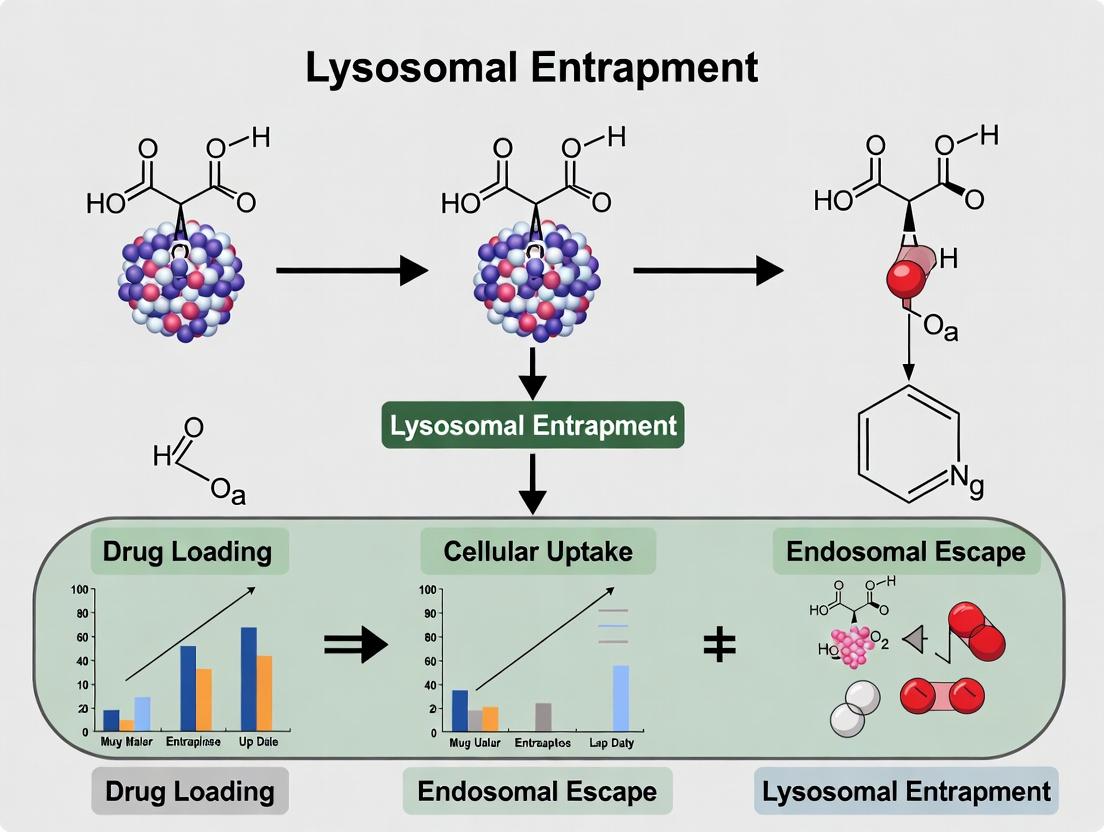
Lysosomal entrapment is a critical barrier limiting the therapeutic efficacy of nanoparticle-mediated drug delivery.
Bypassing the Lysosomal Trap: Strategies for Efficient Endosomal Escape in Nanoparticle Drug Delivery
Abstract
Lysosomal entrapment is a critical barrier limiting the therapeutic efficacy of nanoparticle-mediated drug delivery. This article provides a comprehensive guide for researchers and drug development professionals. It explores the fundamental mechanisms of endocytosis and lysosomal degradation, reviews current and emerging strategies to engineer nanoparticles for efficient endosomal escape, discusses methods to evaluate and optimize escape efficiency, and compares the performance of different material classes and strategies. The goal is to equip scientists with the knowledge to design next-generation nanocarriers that successfully bypass this key biological hurdle and achieve effective cytosolic drug delivery.
The Lysosomal Labyrinth: Understanding the Biology and Impact of Nanoparticle Entrapment
Technical Support Center: Troubleshooting Lysosomal Escape in Nanoparticle Drug Delivery
Welcome to the Nanodelivery Lysosomal Escape Technical Support Hub. This resource is designed to assist researchers in diagnosing and overcoming the critical barrier of lysosomal entrapment, which severely limits the cytosolic bioavailability of therapeutic cargo (e.g., nucleic acids, proteins, small molecules) delivered by nanoparticles.
Frequently Asked Questions (FAQs)
Q1: Our siRNA-loaded lipid nanoparticles (LNPs) show excellent cellular uptake but negligible gene knockdown. What's the primary suspect? A: Lysosomal entrapment is the most likely culprit. While uptake is efficient, the nanoparticles are being trafficked to the acidic lysosomal compartment where the siRNA is degraded before it can reach the cytosol and engage the RNA-induced silencing complex (RISC). Check colocalization with lysotracker dyes.
Q2: How can I experimentally confirm if my nanoparticles are trapped in lysosomes? A: Perform a quantitative colocalization assay using confocal microscopy. Co-stain cells with a lysosomal marker (e.g., LysoTracker, LAMP1 antibody) and a fluorescent label on your nanoparticle. Colocalization coefficients (Pearson's > 0.7) typically indicate significant entrapment.
Q3: What are the most promising strategies to engineer "lysosome-escaping" nanoparticles? A: Current strategies focus on endosomal disruption mechanisms:
- Proton-Sponge Effect: Use polymers with high buffering capacity (e.g., PEI, PBAEs) to cause osmotic swelling and rupture.
- Fusogenic Lipids: Incorporate pH-sensitive, cone-shaped lipids (e.g., DOPE) that promote membrane fusion at low pH.
- Surface Charge Reversal: Design particles with charge that switches from anionic to cationic in lysosomes.
- Membrane-Disruptive Peptides: Conjugate peptides that undergo conformational change in acidic pH to puncture the lysosomal membrane.
Q4: We observe high cytotoxicity after modifying our particles for lysosomal escape. How can we mitigate this? A: Cytotoxicity often arises from non-specific membrane disruption. To mitigate:
- Titrate the "escape" functionality: Reduce the density of fusogenic lipids or peptides.
- Use biodegradable linkers: Ensure disruptive elements are cleaved after escape.
- Implement masking strategies: Use PEG shells or other stealth coatings that shed only in the acidic environment.
Troubleshooting Guides
Issue: Low Cytosolic Delivery Efficiency
- Step 1: Verify Uptake. Quantify total cellular fluorescence (flow cytometry) to ensure the issue isn't simply poor internalization.
- Step 2: Map Intracellular Trafficking. Perform time-course colocalization studies with markers for early endosomes (EEA1), late endosomes (Rab7), and lysosomes (LAMP1/LysoTracker). See workflow below.
- Step 3: Test Escape Functionality. Use a reporter assay (e.g., Gal8-EGFP recruitment assay for endosome damage, or a cytosolic delivery fluorophore like Cytosolic Delivery Bright Green).
- Step 4: Iterate Design. Based on the trafficking map, choose an escape strategy timed to the dominant compartment of entrapment.
Issue: Inconsistent Escape Performance Across Cell Lines
- Cause: Variability in endocytic pathways, lysosomal pH, or protease activity between cell types.
- Solution:
- Characterize the endocytic mechanism in each line using pharmacological inhibitors (e.g., chlorpromazine for clathrin, amiloride for macropinocytosis).
- Measure lysosomal pH using rationetric pH probes.
- Adjust nanoparticle surface chemistry (ligands, charge) to steer entry into a more favorable pathway for your escape mechanism.
Table 1: Efficacy of Common Lysosomal Escape Strategies
| Strategy | Example Materials | Typical Escape Efficiency (% Cytosolic Release) | Common Cytotoxicity Concerns |
|---|---|---|---|
| Proton-Sponge Polymers | Polyethylenimine (PEI), Poly(amidoamine) | 15-35% | High, especially with high MW polymers |
| Fusogenic Lipids | DOPE, pH-sensitive cationic lipids (e.g., DLin-MC3-DMA) | 20-50% | Low to Moderate (highly structure-dependent) |
| Charge-Reversal NPs | Polymers with cis-aconityl or β-carboxylic amide linkages | 25-45% | Generally Low |
| Disruptive Peptides | GALA, HA2, melittin-derived peptides | 30-60% | High without controlled conjugation/masking |
Table Note: Efficiency is highly dependent on nanoparticle core, cell line, and cargo. Values represent typical ranges from recent literature.
Table 2: Standard Colocalization Analysis Outcomes & Interpretation
| Colocalization Result (with Lysotracker) | Pearson's Coefficient (Typical) | Mandel's Overlap (Typical) | Likely Interpretation |
|---|---|---|---|
| Strong Punctate Overlap | > 0.7 | > 0.8 | Significant Lysosomal Entrapment |
| Partial/Moderate Overlap | 0.4 - 0.7 | 0.5 - 0.8 | Mixed Trafficking; Some Escape |
| Low Overlap/Distinct Signals | < 0.4 | < 0.5 | Successful Avoidance or Escape |
Experimental Protocols
Protocol 1: Quantitative Confocal Microscopy for Lysosomal Colocalization
- Objective: Quantify the degree of nanoparticle colocalization with lysosomes.
- Materials: Cultured cells, fluorescent nanoparticles, LysoTracker Deep Red (100 nM), Hoechst 33342 (nuclear stain), confocal microscope, image analysis software (e.g., ImageJ/Fiji with Coloc2 or JACoP plugin).
- Method:
- Seed cells on glass-bottom dishes 24h prior.
- Incubate with nanoparticles for desired time (e.g., 4-6h).
- Replace medium with fresh medium containing LysoTracker and Hoechst. Incubate 30 min.
- Wash 3x with warm PBS. Image in live-cell compatible medium.
- Analysis: Use software to calculate Pearson's Correlation Coefficient (PCC) and Mandel's Overlap Coefficient (MOC) for the nanoparticle and LysoTracker channels on a per-cell basis (threshold applied). Analyze ≥ 30 cells per condition.
Protocol 2: Gal8-EGFP Recruitment Assay for Endolysosomal Damage
- Objective: Detect disruption of the endolysosomal membrane as an indicator of escape activity.
- Materials: Gal8-EGFP expressing cell line (or transiently transfected), nanoparticles, confocal microscope.
- Method:
- Seed Gal8-EGFP reporter cells.
- Treat cells with nanoparticles. Gal8 protein binds to exposed glycans upon endosome damage.
- At timepoints (e.g., 1, 2, 4h), image EGFP fluorescence. Untreated cells show diffuse cytosolic signal.
- Analysis: Quantify the number of bright Gal8-EGFP puncta per cell. An increase directly correlates with endolysosomal membrane disruption.
Visualizations
Diagram Title: Nanoparticle Intracellular Trafficking and Escape Points
Diagram Title: Primary Lysosomal Escape Mechanisms
The Scientist's Toolkit: Essential Research Reagents
Table 3: Key Reagents for Studying Lysosomal Entrapment
| Reagent | Category | Primary Function in Research |
|---|---|---|
| LysoTracker Dyes (e.g., Deep Red, Green) | Fluorescent Probe | Live-cell staining of acidic organelles (lysosomes). |
| LAMP1 Antibody | Immunofluorescence Marker | Specific immunostaining of lysosomal membrane protein. |
| Chloroquine / Bafilomycin A1 | Pharmacological Inhibitor | Raises lysosomal pH; used as control to inhibit acidification and block certain degradation pathways. |
| Gal8-EGFP Reporter Cell Line | Functional Assay System | Detects endolysosomal membrane damage via Galectin-8 recruitment. |
| PEI (Polyethylenimine), 25kDa | Proton-Sponge Control | A gold-standard polymer known for its buffering capacity; positive control for escape experiments. |
| DOPE (1,2-dioleoyl-sn-glycero-3-phosphoethanolamine) | Lipid | pH-sensitive, fusogenic lipid commonly blended with cationic lipids to promote escape. |
| Cytosolic Delivery Bright Green | Fluorescent Reporter Dye | Cell-permeant peptide conjugate that fluoresces only upon cleavage by cytosolic proteases, confirming cytosolic delivery. |
| Endocytic Pathway Inhibitors (Chlorpromazine, Amiloride, etc.) | Pharmacological Toolkit | To determine the primary uptake pathway, which influences subsequent trafficking. |
Technical Support Center
Welcome to the technical support center for investigating cellular uptake pathways. This resource is designed within the context of a research thesis aimed at overcoming lysosomal entrapment, a major bottleneck for nanoparticle (NP)-mediated drug delivery. The following guides address common experimental pitfalls.
Troubleshooting Guide: Uptake Pathway Inhibition & Validation
Issue 1: Inconclusive or Off-Target Effects from Pharmacological Inhibitors
- Problem: Your inhibitor experiment shows reduced fluorescence (e.g., from labeled NPs), but you suspect cytotoxicity or non-specific effects are causing the result.
- Solution: Always implement the following controls.
- Viability Check: Perform a concurrent cell viability assay (e.g., MTT, ATP-based) at the exact inhibitor concentration and exposure time used in your uptake experiment.
- Inhibitor Cocktail Toxicity: Test the combined toxicity when using multiple inhibitors.
- Positive Control Ligands: Use established positive controls for each pathway (see Table 1).
- Validation: Correlate with a second method (e.g., genetic knockdown/knockout).
Issue 2: Inconsistent Results in siRNA/Knockdown Experiments
- Problem: Uptake is not sufficiently inhibited after siRNA treatment against a key endocytic protein (e.g., CLTC for clathrin).
- Solution:
- Verify Knockdown Efficiency: Always measure protein knockdown via western blot from the same experiment used for uptake quantification. Do not rely on literature efficiency alone.
- Optimize Transfection: Use a fluorescently-labeled non-targeting siRNA to confirm >95% transfection efficiency in your cell line.
- Timing: Align the peak of protein knockdown (usually 48-72h post-transfection) with your uptake assay.
Issue 3: Distinguishing Macropinocytosis from Other Pathways
- Problem: It is challenging to confirm macropinocytic uptake definitively.
- Solution: Employ a multi-pronged validation strategy.
- Pharmacological: Use EIPA (5-(N-ethyl-N-isopropyl)amiloride) at 50-100 µM.
- Morphological: Use dextran (70 kDa, TMR-labeled) as a co-tracker; its large size and lack of specific receptor targeting make it a canonical macropinocytosis probe.
- Biochemical: Test Na⁺/H⁺ exchanger dependence (EIPA's mechanism) and actin dependence (using Cytochalasin D).
Issue 4: Quantifying Co-localization for Lysosomal Entrapment
- Problem: High Pearson's Coefficient with lysosomal markers (e.g., LAMP1) confirms entrapment, but the value is skewed by a few bright pixels.
- Solution:
- Use Manders' Colocalization Coefficients (M1 & M2) in addition to Pearson's. These measure the fraction of NP fluorescence that overlaps with the lysosome marker, which is more biologically relevant for trafficking studies.
- Perform line profile analysis across vesicles in merged images to visually confirm signal overlap.
- Use lysosomotropic agents (e.g., Bafilomycin A1) as a functional control. If NP signal increases (due to prevented lysosomal degradation), it confirms lysosomal localization.
FAQs: Addressing Specific Experimental Challenges
Q1: Which combination of inhibitors is most effective for a comprehensive uptake mechanism screen? A: A standard initial screen should target the major pathways in parallel, with careful attention to solvent and toxicity controls (see Table 2).
Q2: How long should I pre-treat cells with inhibitors before adding nanoparticles? A: Pre-treatment times are inhibitor-specific and critical for efficacy.
- Chlorpromazine: 30 min - 1 hr.
- Dynasore: 30 min.
- Genistein / Methyl-β-cyclodextrin (MβCD): 30 min - 1 hr.
- EIPA: 15 - 30 min.
- Cytochalasin D / Latrunculin A: 15 - 30 min.
- Always use serum-free media during inhibitor pre-treatment and uptake assays to avoid interference.
Q3: My nanoparticles aggregate in physiological buffer, affecting uptake. How can I mitigate this? A:
- Characterize: First, measure hydrodynamic diameter and PDI by DLS in complete cell culture medium at 37°C over 24 hours.
- Stabilize: Use sterile filtration (0.22 µm) or sonication (water bath, 5-10 min) immediately before adding to cells.
- Additive: Include low-concentration (0.05-0.1% w/v) human serum albumin (HSA) or poloxamer (e.g., F68) in the NP dispersion buffer to sterically stabilize particles.
Q4: What is the best method to track nanoparticles from uptake to lysosomal delivery over time? A: Implement a pulse-chase experiment with live-cell imaging.
- Pulse: Incubate cells with fluorescent NPs for a short, defined period (e.g., 15-60 min).
- Chase: Replace medium with NP-free, pre-warmed medium.
- Image: Acquire time-lapse images at defined intervals (e.g., every 5-10 min for 2-4 hours) using a confocal microscope with environmental control.
- Label: Use a live-cell lysotracker dye (added during the chase phase according to manufacturer protocol) to visualize lysosome dynamics relative to NP cargo.
Data Presentation
Table 1: Common Pharmacological Inhibitors for Uptake Pathways
| Pathway | Target | Common Inhibitor | Typical Working Concentration | Key Consideration / Control |
|---|---|---|---|---|
| Clathrin-Mediated Endocytosis (CME) | Clathrin assembly | Chlorpromazine HCl | 5-20 µg/mL | Alters plasma membrane fluidity; check viability. |
| CME | Dynamin GTPase | Dynasore | 40-80 µM | Can inhibit mitochondrial dynamin; use limited exposure. |
| Caveolae-Mediated Endocytosis | Tyrosine kinases | Genistein | 100-200 µM | Solubilize in DMSO; final [DMSO] < 0.5%. |
| Caveolae / Lipid Rafts | Cholesterol depletion | Methyl-β-cyclodextrin (MβCD) | 2-10 mM | Drastically alters membrane properties; use short treatment (<1 hr). |
| Macropinocytosis | Na⁺/H⁺ exchanger | EIPA | 50-100 µM | Canonical macropinocytosis inhibitor; also affects other pH-dependent processes. |
| Actin-Dependent (All pathways) | Actin polymerization | Cytochalasin D | 1-5 µM | Broad-spectrum; disrupts most endocytic mechanisms. |
Table 2: Standardized Experimental Conditions for Initial Uptake Screening
| Parameter | Condition 1 (CME) | Condition 2 (Caveolae) | Condition 3 (Macropinocytosis) | Control Condition |
|---|---|---|---|---|
| Inhibitor | Dynasore (80 µM) | Genistein (200 µM) | EIPA (75 µM) | DMSO (0.5% v/v) |
| Pre-treatment Time | 30 min | 30 min | 20 min | 30 min |
| Serum during Treatment | Serum-free | Serum-free | Serum-free | Serum-free |
| Assay Temperature | 37°C & 4°C | 37°C | 37°C | 37°C |
| Positive Control Probe | Transferrin (Alexa Fluor 488) | Cholera Toxin B Subunit (AF555) | Dextran (70 kDa, TMR) | All probes |
| Mandatory Validation | Viability assay, 4°C uptake baseline | Cholesterol repletion control | Co-localization with dextran | Solvent vehicle control |
Experimental Protocols
Protocol 1: Validating Uptake Pathway with Inhibitors & Flow Cytometry Objective: To quantify the contribution of a specific pathway to the cellular uptake of fluorescent nanoparticles. Materials: Adherent cells, fluorescent NPs, pharmacological inhibitors, flow cytometry buffer (PBS + 1% BSA + 0.1% NaN₃), trypsin/EDTA. Steps:
- Seed cells in a 24-well plate to reach 70-80% confluency at assay time.
- Prepare inhibitor solutions in pre-warmed, serum-free medium.
- Aspirate cell medium and add inhibitor/vehicle solutions. Incubate at 37°C, 5% CO₂ for the specified pre-treatment time.
- Add fluorescent NPs directly to the inhibitor-containing medium. Incubate for the desired uptake period (e.g., 2 hours).
- Stop Uptake & Wash: Place plate on ice. Aspirate medium and wash cells 3x with ice-cold PBS.
- Harvest: Add trypsin/EDTA (without phenol red) to detach cells. Neutralize with complete medium. Transfer cells to FACS tubes.
- Wash & Analyze: Pellet cells (300 x g, 5 min), resuspend in ice-cold flow cytometry buffer, and keep on ice. Analyze fluorescence intensity via flow cytometry (≥10,000 events per sample). Use untreated cells and cells at 4°C for baseline subtraction.
Protocol 2: Co-localization Analysis via Confocal Microscopy Objective: To visualize and quantify the localization of NPs with endocytic and lysosomal markers. Materials: Cells on glass-bottom dishes, fluorescent NPs, fluorescent markers (e.g., Transferrin-AF488, Dextran-TMR, LysoTracker Deep Red), fixation/permeabilization buffer, primary & fluorescent secondary antibodies (e.g., anti-LAMP1), mounting medium with DAPI. Steps:
- Pulse-Chase: Incubate cells with NPs in complete medium for the "pulse" duration (e.g., 30 min). Replace with NP-free medium for the "chase" period (e.g., 2, 4, 24 hours).
- Live-Cell Staining (Optional): For lysotracker, add dye to chase medium for final 30 min.
- Fix & Permeabilize: Wash with PBS, fix with 4% PFA for 15 min, wash, permeabilize with 0.1% Triton X-100 for 10 min.
- Immunostaining: Block with 5% BSA for 1 hr. Incubate with primary antibody (e.g., anti-LAMP1, 1:200) overnight at 4°C. Wash, incubate with secondary antibody (e.g., AF647, 1:500) for 1 hr at RT. Wash.
- Image: Acquire z-stack images using a confocal microscope with sequential scanning to avoid bleed-through.
- Analyze: Use ImageJ/Fiji with coloc2 or JaCoP plugins to calculate Pearson's and Manders' coefficients from thresholded images.
Visualizations
Diagram 1: Key Endocytic Pathways to Lysosome
Diagram 2: Experimental Workflow for Uptake & Trafficking
The Scientist's Toolkit: Essential Research Reagents
| Item / Reagent | Primary Function in Uptake Studies | Key Consideration for Lysosomal Entrapment Thesis |
|---|---|---|
| Dynasore | Dynamin inhibitor; blocks CME and caveolae scission. | Useful for determining if uptake is dynamin-dependent, a characteristic of many lysosome-destined pathways. |
| EIPA (Amiloride analog) | Inhibits Na⁺/H⁺ exchange; canonical macropinocytosis blocker. | Macropinocytosis often leads to lysosomal delivery; inhibiting it can test alternative, non-degradative routes. |
| LysoTracker Dyes (e.g., Deep Red) | Live-cell, acidotropic probes for labeling acidic organelles (lysosomes). | Critical for live-cell co-localization studies to track NP arrival in lysosomes in real time. |
| LAMP1 Antibody | Gold-standard marker for lysosomal membrane via immunofluorescence. | Used for fixed-cell confirmation of lysosomal co-localization with high specificity. |
| Bafilomycin A1 | V-ATPase inhibitor; neutralizes lysosomal pH and blocks degradation. | Functional assay: if NP signal increases after treatment, it confirms lysosomal localization and degradation. |
| Chloroquine | Lysosomotropic agent that raises lysosomal pH. | Used to study "lysosomal escape"; if NP efficacy (e.g., drug action) increases, it suggests entrapment is limiting. |
| Fluorescent Dextran (70 kDa, TMR-labeled) | Fluid-phase marker for macropinocytosis. | Serves as a positive control for lysosomal trafficking via bulk uptake. |
| Transferrin, Alexa Fluor Conjugate | Ligand for transferrin receptor; marker for CME. | Positive control for a well-characterized CME-to-lysosome pathway. |
Technical Support Center: Troubleshooting Guide for Lysosomal Pathway & Nanoparticle Research
Frequently Asked Questions (FAQs)
Q1: My fluorescently tagged nanoparticles show strong co-localization with LAMP1/LAMP2 markers. Does this definitively prove lysosomal entrapment and failure of escape?
A: Not definitively. Co-localization with late endosomal/lysosomal markers indicates localization to the acidic compartment, but it does not distinguish between active lysosomal degradation and temporary residence in a late endosome. To confirm entrapment and degradation, you must perform a functional assay:
- Protocol: Lysosomal Degradation Assay using DQ-BSA. Co-incubate cells with your nanoparticles and DQ-Red BSA (10 µg/mL). This substrate fluoresces only upon proteolytic cleavage. High red fluorescence in the same vesicles as your nanoparticles confirms an active, degradative lysosomal environment.
Q2: I am designing nanoparticles to promote endosomal escape. How can I best quantify and compare escape efficiency between formulations in vitro?
A: A robust method is the Cytosolic Delivery Assay using β-lactamase.
- Protocol: Use cells expressing a cytosolic CCF4-AM substrate (e.g., GeneBLAzer technology). CCF4 is FRET-based and emits green light. If your nanoparticle successfully delivers cytosolic β-lactamase, the enzyme cleaves CCF4, disrupting FRET and shifting emission to blue. Quantify the blue/green fluorescence ratio via flow cytometry or high-content imaging. Higher ratios indicate greater endosomal escape efficiency.
Q3: My drug-loaded nanoparticles lose efficacy over time in cell culture, but the drug alone is stable. Is this due to lysosomal degradation?
A: Very likely. This is a classic symptom of lysosomal entrapment where the carrier degrades before releasing its cargo.
- Troubleshooting Steps:
- Measure Lysosomal pH: Use a pH-sensitive reporter (e.g., LysoSensor Yellow/Blue) to confirm vesicles are at pH 4.5-5.0.
- Test with Inhibitors: Pre-treat cells with Bafilomycin A1 (20 nM, 1 hour), a V-ATPase inhibitor that neutralizes lysosomal pH and inhibits degradation. If nanoparticle efficacy is restored, it confirms the loss was due to acidic degradation.
- Direct Drug Stability Test: Incubate the drug-loaded nanoparticle in simulated lysosomal fluid (pH 4.5, with cathepsin B) and measure drug recovery by HPLC over 24 hours.
Q4: What are the best positive and negative controls for studying endosomal escape mechanisms?
A:
- Positive Control for Escape: Polyethylenimine (PEI, 25kDa) or Lipofectamine LTX. These are known to facilitate the "proton sponge" effect and disrupt endosomes.
- Negative Control for Entrapment: Inert polystyrene nanoparticles (e.g., 100nm carboxylated PS beads) or nanoparticles coated with only PEG. These typically follow the full pathway to lysosomes without escape.
- Control Experiment: Treat cells with chloroquine (50 µM) or ammonium chloride (20 mM) for 1 hour prior to and during nanoparticle incubation. These lysosomotropic agents raise endo-lysosomal pH and can artificially enhance the escape of some formulations, serving as a benchmark.
Table 1: Key Milestones & Durations in the Endosomal-Lysosomal Pathway
| Compartment | Typical pH | Key Marker Proteins | Approximate Time from Uptake | Primary Function |
|---|---|---|---|---|
| Early Endosome | 6.0 - 6.5 | EEA1, Rab5, Transferrin Receptor | 2 - 5 minutes | Sorting: recycle or degrade. |
| Late Endosome / MVBs | 5.0 - 6.0 | Rab7, CD63, LBPA | 10 - 20 minutes | Cargo processing, ILV formation. |
| Lysosome | 4.5 - 5.0 | LAMP1, LAMP2, Cathepsin D | >30 minutes | Macromolecular degradation. |
Table 2: Common Strategies to Overcome Lysosomal Entrapment & Their Efficacy
| Strategy | Mechanism of Action | Reported Increase in Cytosolic Delivery* (Range) | Key Limitations |
|---|---|---|---|
| Proton Sponge Effect (e.g., PEI) | Buffers low pH, causes osmotic swelling & rupture. | 2 - 8 fold | High cytotoxicity; limited to polycations. |
| Fusogenic Peptides (e.g., GALA, INF7) | pH-dependent conformational change, membrane disruption. | 3 - 10 fold | Can be immunogenic; stability issues. |
| Surface Charge Reversal | Coating shifts from anionic at pH 7.4 to cationic at low pH. | 2 - 5 fold | Complex synthesis; potential off-target interactions. |
| Photo/Ultrasound Disruption | External trigger creates physical pores in endosome. | 5 - 15 fold | Requires precise targeting; specialized equipment. |
| Chemical Endosomolytics (e.g., Chloroquine) | Raises lumenal pH, inhibits maturation, weakens membrane. | 2 - 6 fold | Non-specific; toxic at high doses. |
*Compared to non-enhancing controls, varies widely by cell type and readout.
Experimental Protocols
Protocol 1: Co-localization Analysis of Nanoparticles with Endo-Lysosomal Markers Objective: Quantify nanoparticle progression through the pathway. Materials: Fixed cells, primary antibodies (EEA1, Rab7, LAMP1), fluorescent secondary antibodies, DAPI, mounting medium. Steps:
- Incubate cells with nanoparticles for desired timepoints (e.g., 15min, 1h, 4h, 24h).
- Wash, fix with 4% PFA for 15 min, permeabilize with 0.1% Triton X-100.
- Block with 5% BSA for 1 hour.
- Incubate with primary antibody (1:200 in 1% BSA) overnight at 4°C.
- Wash 3x, incubate with fluorescent secondary antibody (1:500) and DAPI for 1 hour.
- Image using a confocal microscope with consistent settings. Use ImageJ or similar software with a plugin (e.g., JaCoP) to calculate Manders' or Pearson's co-localization coefficients for ≥30 cells per group.
Protocol 2: Assessing Lysosomal Integrity Post-Nanoparticle Treatment Objective: Determine if nanoparticles cause lysosomal membrane permeabilization (LMP), a toxic side effect. Materials: LysoTracker Red DND-99, propidium iodide (PI) or Galectin-3-GFP plasmid. Steps:
- Plate cells 24h prior. Transfect with Galectin-3-GFP if using that method.
- Treat cells with nanoparticles at relevant concentrations.
- For LysoTracker/PI: 30 min before the endpoint, add LysoTracker Red (50 nM) and PI (1 µg/mL). Wash and image live. Diffuse PI staining in LysoTracker-positive cells indicates LMP.
- For Galectin-3: Image GFP puncta (intact lysosomes) vs. diffuse cytosolic GFP (LMP). Quantify the percentage of cells with Galectin-3 puncta.
Pathway and Workflow Diagrams
Title: Nanoparticle Trafficking and Escape Opportunities
Title: Experimental Workflow to Test Lysosomal Escape
The Scientist's Toolkit: Key Research Reagents
Table 3: Essential Reagents for Studying Lysosomal Entrapment & Escape
| Reagent / Tool | Function / Target | Example Use Case |
|---|---|---|
| LysoTracker Dyes (e.g., Red DND-99) | Fluorescent weak bases that accumulate in acidic compartments. | Live-cell staining to label all acidic endosomes and lysosomes. |
| LAMP1 / LAMP2 Antibodies | Lysosome-Associated Membrane Proteins. | Immunofluorescence marker for late endosomes/lysosomes. |
| Bafilomycin A1 | Specific inhibitor of V-type H+-ATPase (proton pump). | Neutralizes endo-lysosomal pH to inhibit maturation & degradation. |
| Chloroquine Diphosphate | Lysosomotropic agent that raises luminal pH. | Positive control for enhancing endosomal escape of certain agents. |
| DQ-BSA | Heavily labeled BSA that fluoresces upon proteolysis. | To specifically visualize and quantify active degradative lysosomes. |
| CCF4-AM / β-lactamase | FRET-based substrate for β-lactamase enzyme. | Quantitative reporter assay for cytosolic (endosomal escape) delivery. |
| Galectin-3-GFP | Cytosolic protein that binds exposed glycans on damaged vesicles. | Sensitive reporter for Lysosomal Membrane Permeabilization (LMP). |
| Recombinant Cathepsin B | Key lysosomal protease. | In vitro testing of nanoparticle stability under degradative conditions. |
Technical Support Center
Troubleshooting Guide: Diagnosing and Mitigating Lysosomal Entrapment
FAQ 1: How can I confirm that my nanoparticle drug delivery system is suffering from lysosomal entrapment?
- Answer: Lysosomal entrapment is a primary cause of reduced drug efficacy. To confirm, you can perform co-localization studies.
- Protocol: Incubate your nanoparticle formulation with target cells (e.g., HeLa, MCF-7) for a predetermined time (e.g., 4-24h). Fix, permeabilize, and stain with:
- Primary Antibody: Anti-LAMP1 (Lysosomal-Associated Membrane Protein 1) or use a fluorescent dye like LysoTracker.
- Fluorescent Nanoparticle/Drug Label: Ensure your nanoparticle or payload (e.g., doxorubicin) is tagged with a spectrally distinct fluorophore (e.g., Cy5, FITC).
- Analysis: Use confocal microscopy and calculate Pearson's or Manders' co-localization coefficients. A coefficient >0.7 indicates significant entrapment. Quantify fluorescence intensity of the drug in lysosomal vs. cytosolic regions.
- Protocol: Incubate your nanoparticle formulation with target cells (e.g., HeLa, MCF-7) for a predetermined time (e.g., 4-24h). Fix, permeabilize, and stain with:
FAQ 2: My therapeutic payload is a siRNA. How do I determine if it is being degraded in lysosomes?
- Answer: siRNA integrity post-cellular uptake can be assessed via gel electrophoresis.
- Protocol:
- Treat cells with siRNA-loaded nanoparticles.
- After incubation (e.g., 12-48h), lyse cells and isolate total RNA.
- Run the RNA on a non-denaturing agarose gel (e.g., 2-4%).
- Stain with an RNA-specific dye (e.g., SYBR Gold).
- Expected Result: If siRNA is degraded, you will observe a smeared band or complete loss of the distinct siRNA band compared to the pristine control. Intact siRNA will show a clear, sharp band.
- Protocol:
FAQ 3: What experimental evidence can demonstrate drug inactivation due to the acidic lysosomal pH?
- Answer: Perform an in vitro drug stability assay mimicking lysosomal conditions.
- Protocol:
- Prepare a buffer simulating lysosomal pH (pH 4.5-5.0) and cytosolic pH (pH 7.4).
- Incubate your free drug or drug-loaded nanoparticles in both buffers at 37°C.
- Sample at various time points (0, 1, 2, 4, 8, 24h).
- Analyze drug concentration and integrity using HPLC or LC-MS.
- Data Presentation: The data clearly shows faster degradation at acidic pH.
- Protocol:
Table 1: Simulated Drug Stability in Lysosomal vs. Cytosolic pH Conditions
| Drug/Compound | Buffer pH | Half-life (t1/2) | % Intact Drug at 24h | Analytical Method |
|---|---|---|---|---|
| Doxorubicin | 7.4 | >48 h | 98% | HPLC-Fluorescence |
| Doxorubicin | 4.5 | 12.5 h | 35% | HPLC-Fluorescence |
| Camptothecin (lactone form) | 7.4 | 8.3 h | 15% | LC-MS |
| Camptothecin (lactone form) | 4.5 | 0.5 h | <1% | LC-MS |
| Model siRNA | 7.4 | >72 h | >95% | Gel Electrophoresis |
| Model siRNA | 4.5 with RNase A | <0.1 h | 0% | Gel Electrophoresis |
FAQ 4: How do I quantitatively measure the reduction in bioavailability caused by entrapment?
- Answer: Compare the cytotoxic or therapeutic potency of free drug vs. nanoparticle-encapsulated drug. A right-ward shift in IC50 indicates reduced bioavailability.
- Protocol: Perform a standard cell viability assay (e.g., MTT, CellTiter-Glo).
- Treat cells with a dose range of free drug and an equivalent dose range of drug loaded in nanoparticles.
- Incubate for 48-72 hours.
- Measure cell viability and calculate IC50 values.
- Interpretation: The ratio of IC50(NP) / IC50(Free) is the "Potency Loss Factor," directly correlating to reduced bioavailability. A factor >1 indicates entrapment/sequestration.
- Protocol: Perform a standard cell viability assay (e.g., MTT, CellTiter-Glo).
Table 2: Impact of Lysosomal Entrapment on Drug Bioavailability (Potency)
| Cell Line | Drug | IC50 (Free Drug, nM) | IC50 (NP-Delivered Drug, nM) | Potency Loss Factor (IC50 NP / IC50 Free) |
|---|---|---|---|---|
| MCF-7 (Breast Cancer) | Doxorubicin | 125 nM | 850 nM | 6.8 |
| PC-3 (Prostate Cancer) | Paclitaxel | 8.5 nM | 102 nM | 12.0 |
| HeLa (Cervical Cancer) | siRNA (GFP Knockdown) | 20 nM (Lipo. Transfect.) | 150 nM | 7.5 |
Experimental Protocol: Assessing Endosomal Escape Efficiency Title: Quantifying Nanoparticle Endosomal Escape via Fluorescence Quenching/Dequenching Assay. Methodology:
- Labeling: Load nanoparticles with a high concentration of a pH-sensitive fluorophore (e.g., Calcein, FITC-dextran) that is self-quenched.
- Cell Treatment: Incubate labeled nanoparticles with cells for 2-4 hours. Remove media and wash.
- Quenching Control: Add an external quencher (e.g., Trypan Blue 0.4%) to the medium. This quenches only extracellular and endosomal fluorescence (still accessible via the endosomal lumen), but not cytosolic fluorescence.
- Imaging & Analysis: Immediately image using a plate reader or microscope. Calculate the percentage of protected (cytosolic) fluorescence:
% Escape = (Fluorescence with Quencher / Fluorescence without Quencher) * 100.
The Scientist's Toolkit: Key Research Reagent Solutions
| Reagent/Material | Function & Rationale |
|---|---|
| LysoTracker Dyes (e.g., Deep Red) | Cell-permeant fluorescent probes that accumulate in acidic organelles. Vital for live-cell imaging of lysosomes. |
| LAMP1 Antibody | Gold-standard marker for late endosomes/lysosomes for fixed-cell immunofluorescence co-localization studies. |
| Chloroquine / Bafilomycin A1 | Lysosomotropic agents that raise lysosomal pH. Used as positive controls to inhibit acidification and demonstrate pH-dependent drug inactivation. |
| pH-Sensitive Fluorophores (e.g., CypHer5E, pHrodo) | Dyes that increase fluorescence upon acidification. Useful for tracking nanoparticle uptake and endosomal localization. |
| PEGylated Phospholipids (e.g., DSPE-PEG2000) | Common coating material to create "stealth" nanoparticles, which can alter protein corona and downstream trafficking, potentially affecting entrapment. |
| Endosomolytic Polymers (e.g., PEI, PPAA) | Polymers with protonable groups that disrupt the endosomal membrane via the "proton sponge" effect or membrane destabilization, promoting escape. |
| SYBR Gold Nucleic Acid Gel Stain | Highly sensitive dye for visualizing intact vs. degraded siRNA or oligonucleotides in gel assays. |
Diagram: Lysosomal Entrapment Consequences Pathway
Diagram: Experimental Workflow for Entrapment Analysis
Technical Support Center: Troubleshooting Lysosomal Entrapment
Troubleshooting Guides & FAQs
Q1: Our nanoparticles show poor endosomal escape despite optimizing size. What could be the issue? A: Size is critical, but surface charge is often the dominant factor for endosomal escape. Positively charged surfaces (cationic polymers like PEI) promote the "proton sponge" effect, leading to osmotic swelling and endosomal rupture. If your neutral or anionic nanoparticles are trapped, consider:
- Verify Surface Charge (Zeta Potential): Ensure your measurement pH matches the endosomal pH (~5.5). A charge switchable polymer may be needed.
- Check Material Composition: Incorporate cationic lipids (e.g., DOTAP) or pH-sensitive polymers (e.g., PBAE) into your formulation. See Protocol 1 for a standard zeta potential measurement.
Q2: How do I accurately determine if my nanoparticles are trapped in lysosomes versus other organelles? A: Co-localization studies using specific dyes are essential.
- Issue: Faint or non-specific staining.
- Solution:
- Use LysoTracker Deep Red for live-cell imaging of acidic organelles.
- Fix cells and immunostain for LAMP-1, a definitive lysosomal marker.
- Use analysis software (e.g., ImageJ) to calculate Manders' or Pearson's co-localization coefficients. A coefficient >0.7 indicates significant lysosomal entrapment. Refer to Protocol 2 for the detailed workflow.
Q3: We are using PEGylated nanoparticles to avoid clearance, but our drug efficacy is still low. Could PEG cause entrapment? A: Yes. While PEG prolongs circulation, it can also create a steric barrier that inhibits nanoparticle interaction with the endosomal membrane, a step necessary for escape. This is known as the "PEG dilemma."
- Troubleshooting Steps:
- Shorten PEG Chain Length: Reduce from 5kDa to 2kDa or 1kDa.
- Use Cleavable PEG: Incorporate PEG linked via pH-sensitive (e.g., vinyl ether) or enzyme-sensitive bonds that shed inside the endosome.
- Optimize PEG Density: A lower surface density (e.g., 10% vs. 50%) may improve escape.
Q4: Our in vitro results show excellent escape, but in vivo drug delivery fails. What factors should we re-evaluate? A: This discrepancy often arises from the protein corona.
- Problem: Serum proteins adsorb onto nanoparticles in vivo, dramatically altering their surface charge and identity.
- Solutions:
- Pre-incubate nanoparticles with 10-50% FBS for 1 hour before in vitro assays to simulate corona formation.
- Re-measure hydrodynamic size and zeta potential post-incubation. A shift towards negative charge is common and can promote lysosomal trafficking.
- Consider "corona engineering" by pre-coating with specific proteins (e.g., albumin) to steer fate.
Experimental Protocols
Protocol 1: Dynamic Light Scattering (DLS) & Zeta Potential Measurement for Nanoparticle Characterization
- Objective: Determine hydrodynamic diameter (size) and surface charge (zeta potential) of nanoparticles.
- Materials: Purified nanoparticle suspension, suitable cuvette (disposable for size, folded capillary for zeta), DLS/Zeta potential analyzer.
- Method:
- Dilute nanoparticle sample in the same buffer used for dialysis/filtration (e.g., 1xPBS, 1mM KCl) to a concentration that yields an ideal scattering intensity.
- Filter the diluted sample through a 0.45 or 0.22 µm syringe filter into a clean vial.
- For size: Load into a disposable sizing cuvette, insert into instrument, and run measurement at 25°C with appropriate material refractive index settings. Perform minimum 3 runs.
- For zeta potential: Load into a folded capillary cell. Measure at 25°C, with a minimum of 12 runs. Set the measurement pH to 7.4 (physiological) and 5.5 (endosomal) for comparison.
- Data Analysis: Report Z-Average size (d.nm) and PDI for polydispersity. Report zeta potential as mean ± standard deviation (mV).
Protocol 2: Confocal Microscopy for Lysosomal Co-localization Analysis
- Objective: Quantify the degree of nanoparticle co-localization with lysosomes.
- Materials: Cells grown on glass-bottom dishes, nanoparticle sample, LysoTracker Deep Red, Hoechst 33342, paraformaldehyde (4%), anti-LAMP1 primary antibody, fluorescent secondary antibody, blocking buffer (5% BSA in PBS), confocal microscope.
- Method:
- Treat cells with nanoparticles for desired time (e.g., 4-6 hours).
- Live-cell staining: Incubate with LysoTracker Deep Red (50-75 nM) and Hoechst 33342 (5 µg/mL) for 30 min at 37°C.
- OR Fix and immunostain: Wash cells, fix with 4% PFA for 15 min, permeabilize with 0.1% Triton X-100, block for 1 hour. Incubate with anti-LAMP1 antibody overnight at 4°C, then with fluorescent secondary antibody for 1 hour at room temp. Counterstain nuclei with Hoechst.
- Image using a confocal microscope with appropriate laser lines and sequential scanning to avoid bleed-through.
- Export images and analyze using ImageJ with the "JACoP" plugin or similar. Calculate Manders' overlap coefficients (M1 and M2).
Table 1: Impact of Nanoparticle Properties on Lysosomal Trafficking and Escape
| Property | Optimal Range for Escape | Typical Trap-Prone Range | Key Mechanism & Rationale |
|---|---|---|---|
| Hydrodynamic Size | 20 - 50 nm | >100 nm | Smaller size facilitates clathrin-mediated endocytosis and potential escape before late endosome maturation. Large particles often trafficked to lysosomes. |
| Surface Charge (Zeta Potential) | Slightly Positive (+5 to +15 mV) at pH 5.5 | Neutral or Negative (< -10 mV) at pH 5.5 | Cationic charge promotes proton sponge effect (buffering) and interaction with anionic endosomal membrane, leading to rupture. |
| Material Composition | pH-sensitive polymers (PBAE), cationic lipids (DOTAP), cell-penetrating peptides (TAT). | Non-degradable polymers (PS), Dense PEG shells. | Functional materials respond to endosomal low pH or redox conditions, causing structural destabilization and release. Inert materials follow default lysosomal pathway. |
Table 2: Common Characterization Techniques & Target Metrics
| Technique | Measures | Target Metric for Escape | Notes for Troubleshooting |
|---|---|---|---|
| Dynamic Light Scattering (DLS) | Hydrodynamic diameter, PDI | Size: 20-100 nm, PDI < 0.2 | High PDI (>0.3) indicates aggregation, which severely compromises performance and uptake uniformity. |
| Zeta Potential Analyzer | Surface charge in solution | Shift towards positive charge at endosomal pH (5.5) | Always measure in relevant buffer. A highly positive charge (>+30 mV) may indicate cytotoxicity. |
| Confocal Microscopy | Subcellular localization | Low co-localization coefficient with LAMP-1/LysoTracker | Use quantitative analysis (Pearson's R). Qualitative images alone are insufficient. |
Visualizations
Title: Nanoparticle Intracellular Trafficking & Escape Pathways
Title: Systematic Workflow to Diagnose Lysosomal Entrapment
The Scientist's Toolkit: Research Reagent Solutions
| Reagent / Material | Primary Function in Entrapment Studies | Key Consideration |
|---|---|---|
| Polyethylenimine (PEI), branched | Model cationic polymer for "proton sponge" effect. Induces endosomal rupture. | High molecular weight PEI (25kDa) is effective but cytotoxic. Use low MW or conjugate for delivery. |
| DOTAP (Cationic Lipid) | Component of lipid nanoparticles (LNPs) to impart positive charge, facilitating escape. | Often used with helper lipids (DOPE) to promote membrane fusion/destabilization. |
| LysoTracker Dyes | Fluorescent probes that accumulate in acidic organelles (late endosomes/lysosomes). | Use Deep Red for better photostability and to avoid overlap with common GFP/FITC channels. |
| LAMP-1 Antibody | Gold-standard marker for immunostaining of lysosomal membranes. | Provides definitive identification vs. early/late endosomes. Essential for quantitative co-localization. |
| Poly(D,L-lactide-co-glycolide) (PLGA) | Biodegradable, FDA-approved polymer for NPs. Hydrolyzes in aqueous environments. | Inherently follows endolysosomal pathway. Requires surface functionalization (peptides, cations) for escape. |
| pH-sensitive polymer (e.g., PBAE) | Polymer that undergoes structural change or degradation at low endosomal pH. | Enables controlled, pH-triggered disassembly and content release. Library screening optimizes efficiency. |
| Bafilomycin A1 | V-ATPase inhibitor that neutralizes endolysosomal pH. | Control experiment: If NP escape is inhibited by Bafilomycin, it confirms a pH-dependent escape mechanism. |
Engineered Escape: Proven and Novel Strategies for Lysosomal Bypass
FAQs & Troubleshooting Guide
Q1: In my transfection experiment using PEI/DNA polyplexes, I observe high cytotoxicity but low transfection efficiency. What could be the cause and how can I fix it?
A: This is a common issue often related to an excessive polymer-to-DNA ratio (N/P ratio) or high molecular weight PEI. The high positive charge density can disrupt cell membranes excessively.
- Troubleshooting Steps:
- Optimize the N/P Ratio: Systematically test a range of N/P ratios (e.g., 5:1 to 15:1). Use the table below as a starting guide.
- Consider Polymer Form: Switch to lower molecular weight PEI (e.g., 10 kDa instead of 25 kDa) or use linear PEI instead of branched, as they are often less cytotoxic.
- Implement a Post-Transfection Media Change: Replace the transfection media with fresh growth media 4-6 hours after adding polyplexes to limit prolonged exposure.
- Verify pH of Buffers: Ensure the pH of your polyplex formation buffer (often HEPES or saline) is correct. Deviations can affect polyplex size and stability.
Q2: How do I accurately measure and control the N/P ratio for PEI polyplex formation?
A: The N/P ratio is the molar ratio of polymer nitrogen (N) to DNA phosphate (P). Accurate calculation is crucial.
- Protocol: Calculating and Preparing PEI/DNA Polyplexes at a Specific N/P Ratio
- Determine the concentration of DNA in µg/µL and its base pair length. The average molecular weight per base pair is ~660 g/mol.
- Calculate the micromoles of phosphate (P) in your DNA aliquot: µmol P = (mass of DNA in µg) / (330 µg/µmol). The constant 330 comes from the average molecular weight of a nucleotide phosphate (330 g/mol).
- For PEI, determine its nitrogen content. Branched PEI (e.g., Sigma 408727) has a nitrogen concentration of ~23 mmol/g for the 25 kDa form.
- Calculate the required mass of PEI solution: Volume PEI (µL) = (µmol P * N/P ratio) / (PEI Nitrogen Concentration in mmol/g * PEI solution concentration in g/L).
- Formation Protocol: Dilute the calculated amount of DNA in an appropriate volume of opti-MEM or serum-free buffer (e.g., 150 mM NaCl). In a separate tube, dilute the calculated amount of PEI in the same volume of the same buffer. Add the PEI solution dropwise to the DNA solution while vortexing. Incubate at room temperature for 15-30 minutes before use.
Q3: My polyplexes appear to aggregate or precipitate. How can I improve colloidal stability?
A: Aggregation is typically due to insufficient electrostatic stabilization, often in media with high salt or serum content.
- Troubleshooting Steps:
- Form Polyplexes in Low-Ionic-Strength Buffers: Use deionized water or 5% glucose instead of saline for initial formation. Perform a buffer exchange post-formation if needed.
- Introduce Steric Stabilization: Conjugate polyethylene glycol (PEG) to a portion of the PEI (PEGylation). This creates a hydrophilic shell that prevents aggregation and protein opsonization.
- Characterize Size and Zeta Potential: Use dynamic light scattering (DLS) to monitor polyplex hydrodynamic diameter and zeta potential. Stable polyplexes should have a positive zeta potential (+10 to +30 mV) and a consistent, sub-200 nm size in their delivery buffer.
Q4: How can I experimentally confirm the "Proton Sponge Effect" is functioning in my system?
A: Direct confirmation requires measuring lysosomal pH buffering and rupture. Here is a key experiment.
- Protocol: Lysosomal pH Buffering Capacity Assay using Acridine Orange
- Plate cells (e.g., HeLa) in a 24-well plate.
- Treat cells with PEI polyplexes (without cargo) or chloroquine (positive control) in serum-free media. Untreated cells serve as a negative control.
- After 2-4 hours, incubate cells with 5 µg/mL Acridine Orange (AO) in complete media for 15 minutes.
- Wash cells gently with PBS. Immediately image using fluorescence microscopy.
- Expected Outcome: In control cells, AO accumulates in acidic lysosomes and emits intense red fluorescence. Cells where PEI buffers the lysosome will show a decrease in red fluorescence and an increase in diffuse green cytoplasmic fluorescence, indicating lysosomal permeabilization and AO release.
Data Presentation
Table 1: Influence of PEI Properties on Transfection and Cytotoxicity
| PEI Type (Molecular Weight) | Typical Optimal N/P Ratio | Transfection Efficiency | Relative Cytotoxicity | Key Application Note |
|---|---|---|---|---|
| Branched PEI (25 kDa) | 8:1 - 10:1 | High | High | Standard for in vitro work; requires optimization. |
| Linear PEI (25 kDa) | 5:1 - 8:1 | High | Moderate | Often more efficient and less toxic than branched. |
| Branched PEI (10 kDa) | 10:1 - 15:1 | Moderate | Low | Useful for sensitive cell lines; may require higher N/P. |
| PEI-PEG Conjugate | Varies by PEG% | Moderate-High | Low | Improved stability and reduced toxicity for in vivo. |
Table 2: Troubleshooting Common Polyplex Issues
| Problem | Potential Cause | Recommended Solution |
|---|---|---|
| Low Transfection Efficiency | Polyplexes too large, unstable, or not endocytosed. | Form polyplexes in low-ionic buffer; check size via DLS; add a targeting ligand. |
| High Cytotoxicity | Excessive positive charge, high MW polymer. | Lower N/P ratio; use lower MW PEI; change media after 4-6h. |
| Polyplex Aggregation | High salt during formation, lack of steric stabilization. | Use 5% glucose as formation buffer; consider PEGylation. |
| Inconsistent Results | Variability in polymer stock, inaccurate N/P calculation. | Aliquot and standardize PEI stock concentration; recalculate N/P fundamentals. |
Experimental Protocols
Protocol: Formulating Stable PEI-siRNA Polyplexes for Gene Silencing
- Materials: Linear PEI (MW 40,000), siRNA (target and scramble control), Nuclease-Free Water, 5% Glucose solution, Opti-MEM.
- Preparation: Dilute 3 µg of siRNA in 50 µL of 5% glucose (Tube A). Dilute the required amount of PEI (for N/P ratio of 6) in 50 µL of 5% glucose (Tube B).
- Complexation: Rapidly mix the contents of Tube B into Tube A by pipetting. Vortex immediately for 10 seconds.
- Incubation: Allow the mixture to incubate at room temperature for 30 minutes to form stable polyplexes.
- Delivery: Add the 100 µL polyplex solution dropwise to cells in 1 mL of Opti-MEM. Incubate for 4-6 hours before replacing with complete growth media.
- Analysis: Assess gene knockdown via qPCR or Western blot 48-72 hours post-transfection.
The Scientist's Toolkit: Key Research Reagent Solutions
| Item | Function/Explanation |
|---|---|
| Branched Polyethylenimine (PEI), 25 kDa | The classic "proton sponge" polymer. High charge density facilitates complexation and endosomal buffering/rupture. |
| Linear Polyethylenimine (PEI), 40 kDa | Often shows higher transfection efficiency and lower cytotoxicity than branched PEI in many cell lines. |
| Polyethylene Glycol (PEG)-PEI Conjugates | PEG chains grafted onto PEI improve solubility, reduce non-specific interactions, and enhance in vivo circulation time. |
| Chloroquine Diphosphate | Small molecule lysosomotropic agent used as a positive control for endosomal disruption. |
| Acridine Orange (AO) | Metachromatic dye used to visualize lysosomal integrity and pH; accumulation in acidic compartments shifts fluorescence from green to red. |
| LysoTracker Dyes | Fluorescent probes (e.g., LysoTracker Red) that specifically accumulate in acidic organelles, useful for imaging lysosomes. |
| HEPES-Buffered Saline | Common isotonic buffer for polyplex formation, maintains stable pH during complexation. |
| 5% Glucose Solution | Low-ionic-strength vehicle for polyplex formation, helps prevent aggregation during complex assembly. |
Mechanism & Workflow Visualizations
Mechanism of the Proton Sponge Effect for Endosomal Escape
Workflow for Optimizing PEI-Based Transfection Experiments
Technical Support Center
Troubleshooting Guides & FAQs
Q1: My GALA or INF7 peptide is not inducing efficient endosomal/lysosomal escape. What could be wrong? A: Inefficient escape is common. First, verify the peptide-to-nanoparticle ratio (often 20-50 peptides per particle is optimal). Check the pH of the buffering system; these peptides require a precise pH drop (typically to ~pH 5.5-6.0) to undergo the conformational change to an amphipathic α-helix. Ensure your endocytic trafficking is not altered. Run a control using a fluorophore-quencher assay (e.g., Dio/DPX) to confirm membrane disruption activity independently of your cargo.
Q2: My photosensitizer (e.g., Verteporfin, Rose Bengal) mediated photochemical internalization (PCI) is causing excessive cytotoxicity. A: This indicates off-target membrane damage. Optimize three key parameters, which should be titrated in a matrix:
- Photosensitizer Concentration: Start with a low nM range (e.g., 1-50 nM).
- Light Dose (J/cm²): Use low fluence rates (e.g., 0.5-2 J/cm²).
- Incubation-to-Irradiation Interval: This is critical for lysosomal localization. Typically, a 4-18 hour incubation allows for endo-lysosomal accumulation. Perform a time-course experiment to find the window where lysosomal localization is maximal but photosensitizer redistribution to other membranes is minimal.
Q3: The endosomolytic polymer (e.g., PEI, PBAE) I am using is aggregating with my nanoparticle formulation. A: Polycationic polymers can cause non-specific aggregation. Consider:
- Order of Addition: Add the polymer to the pre-formed nanoparticles last, with gentle vortexing.
- Buffer Ionic Strength: Use a low-ionic-strength buffer (e.g., 10 mM HEPES) during formulation to minimize salt-bridge induced aggregation.
- Alternative Chemistry: Switch to a charge-shifting or pH-responsive polymer that is neutral or anionic at physiological pH (e.g., PMPC-PDPA) and only becomes cationic in the endosome, reducing serum interaction and aggregation.
Q4: How do I quantitatively compare the endosomal escape efficiency of different agents? A: Use a standardized, quantitative assay. The "Split Luciferase Endosomal Escape Assay" is highly recommended. See the detailed protocol below.
Q5: My controls suggest significant lysosomal entrapment despite using a disruption agent. What are the next steps? A: This is the core challenge. You may need a combinatorial approach.
- Co-formulation: Covalently conjugate or physically co-encapsulate a peptide (e.g., GALA) with a photosensitizer for a light-triggered, spatially precise double-disruption mechanism.
- Sequential Activation: Use a polymer that disrupts at early endosome pH (~6.5) followed by a peptide activated at late endosome/lysosome pH (~5.0-5.5).
- Check Trafficking: Use lysosomal inhibitors (e.g., Bafilomycin A1) to confirm the escape is pH-dependent. If escape improves with inhibition, your agent may be degrading before activation.
Experimental Protocol: Split Luciferase Endosomal Escape Assay
Purpose: To quantitatively measure the cytosolic delivery efficiency of membrane disruption agents.
Principle: A large protein, Gaussian Luciferase (GLuc), is split into two inactive fragments. One fragment (the large fragment, GLuc(1)) is delivered inside nanoparticles. The other (the small complementing fragment, SNAP-GLuc(2)) is expressed in the cytoplasm of the target cells. Only when the nanoparticle contents (GLuc(1)) escape the endosome and enter the cytoplasm will the fragments complement and generate luminescent signal.
Materials:
- Stable cell line expressing cytoplasmic SNAP-GLuc(2) (e.g., HeLa SNAP-GLuc(2)).
- Nanoparticles loaded with GLuc(1) fragment and your membrane disruption agent.
- Control nanoparticles without disruption agent.
- Lysis buffer (1% Triton X-100) for total uptake control.
- Native Glow Luciferase Assay Kit.
- Luminometer.
Procedure:
- Seed Cells: Plate cells in a 24-well plate at 70% confluency and incubate for 24h.
- Treat Cells: Add nanoparticle formulations (test and controls) in serum-free medium. Incubate for 4h at 37°C.
- Wash & Read Escape: Aspirate medium, wash cells 3x with PBS. Add 200 µL of pre-warmed, serum-containing medium to each well. Incubate for 1h to allow complementation. Transfer 50 µL of medium to a opaque-walled plate, add 50 µL luciferase assay reagent, and measure luminescence immediately (Escape Signal).
- Measure Total Uptake: For parallel wells, after 4h incubation, aspirate, wash 3x with PBS, and lyse cells with 200 µL lysis buffer. Measure luminescence of the lysate (Total Uptake Signal).
- Calculation: Normalize the Escape Signal of test samples to the Total Uptake Signal of the same sample and to the signal from control nanoparticles (set to 1% or 0% escape). This yields the Relative Escape Efficiency (%).
Table 1: Comparison of Membrane Disruption Agent Efficiencies & Parameters
| Agent Class | Example | Typical Working Concentration | Key Activation Trigger | Reported Escape Efficiency* | Major Cytotoxicity Concern |
|---|---|---|---|---|---|
| pH-Sensitive Peptide | GALA | 10-100 µM (in formulation) | pH ~6.0 (Helix formation) | 15-30% (Split Luciferase) | Hemolysis at high conc. |
| pH-Sensitive Peptide | INF7 (HA2 derived) | 5-50 µM (in formulation) | pH ~5.5 (Fusion pore) | 20-40% (Split GFP) | Serum protein inhibition |
| Cationic Polymer | PEI (25 kDa) | N/P ratio 5-10 | Proton Sponge Effect (pH <6.5) | 10-25% (Gal8 assay) | High intrinsic toxicity |
| pH-Responsive Polymer | PMPC-PDPA | 10-50 mg/mL (polymer) | pH ~6.2 (Micelle de-stabilization) | 25-50% (Content release) | Low transfection efficiency alone |
| Photosensitizer | Verteporfin (PCI) | 10-100 nM + Light (1-5 J/cm²) | Light (~690 nm) & ROS | 30-60% (Cytosolic delivery) | Off-target photodamage |
*Efficiency values are highly dependent on cell type, assay, and formulation. Values represent ranges from recent literature (2023-2024).
Visualizations
DOT Diagram 1: Pathways for Lysosomal Escape of Nanoparticles
DOT Diagram 2: Split Luciferase Escape Assay Workflow
The Scientist's Toolkit: Research Reagent Solutions
Table 2: Essential Reagents for Studying Membrane Disruption
| Reagent | Function & Rationale | Key Considerations |
|---|---|---|
| Bafilomycin A1 | V-ATPase inhibitor. Raises endo-lysosomal pH, used to confirm pH-dependent escape mechanisms. | Use at 50-100 nM. Highly toxic with prolonged (>4h) exposure. |
| Dextran, Alexa Fluor conjugates | Fluid-phase endocytosis markers and probes for endosomal integrity (quenched until release). | Use 10,000 MW for lysosomal trafficking. Useful for co-localization studies. |
| LysoTracker Dyes (e.g., Deep Red) | Stains acidic organelles. Visualize lysosomal mass and integrity post-treatment. | Signal lost upon membrane rupture/neutralization. Best for live-cell imaging. |
| Galectin-8 (Gal8) assay | Cytosolic galectin-8 binds exposed endosomal glycans upon damage, recruiting fluorescent tag (e.g., Gal8-mCherry). | Sensitive, qualitative/quantitative (imaging/flow) measure of endomembrane damage. |
| Dio/DPX Assay Kit | (Dio = lipophilic dye, DPX = quencher). Fluorescence dequenching upon membrane disruption. | In vitro lipid vesicle assay to test agent activity independent of cellular uptake. |
| CellTiter-Glo / LDH Kit | Measure viability (ATP) or membrane integrity (LDH release) to balance escape efficiency with cytotoxicity. | Critical for determining therapeutic index of any disruptor formulation. |
Technical Support Center
Troubleshooting Guides & FAQs
Q1: My pH-responsive nanoparticle shows premature payload release at physiological pH (7.4). What could be the cause? A: Premature release often stems from linker instability or suboptimal material packing. First, verify the pKa of your cleavable bond (e.g., hydrazone, acetal, β-thiopropionate). Use the calibration table below to check buffer conditions. Ensure your nanoparticle purification protocol (e.g., dialysis, tangential flow filtration) thoroughly removes unencapsulated payload, which can confound release assays.
Q2: I observe insufficient payload release in the late endosome/lysosome pH range (4.5-5.5). How can I improve cleavage kinetics? A: This is a common challenge related to lysosomal entrapment. Consider switching to a linker with a higher hydrolysis rate at lower pH. For instance, replace a standard hydrazone with a cis-aconityl or a double-ester linker. Confirm that your material allows sufficient water penetration to the cleavable bonds. Perform a buffer capacity assay to ensure your nanoparticles effectively buffer the endosome and do not delay acidification.
Q3: How do I accurately measure and calibrate pH within in vitro cellular compartments to validate release? A: Use a combination of fluorescent pH sensors (e.g., LysoSensor, pHrodo dyes) and ratiometric measurements. Co-localize signal with lysosomal markers (e.g., LAMP1). The following protocol provides a standardized method.
Protocol 1: Calibration of Intracellular Compartment pH for Release Validation
- Seed cells in a glass-bottom dish.
- Incubate with pH-responsive nanoparticles (50 µg/mL) for 4 hours.
- Replace medium with fresh medium containing 100 nM LysoTracker Deep Red (90 min).
- Wash cells 3x with PBS.
- Image using confocal microscopy (ex/em for your payload and LysoTracker).
- For ratiometric pH calibration, treat separate cells with pre-mixed buffers (pH 4.0-7.0) containing 10 µM nigericin and 10 µM monensin (K+/H+ ionophores) for 10 min. Image the pH-sensor channel.
- Generate a standard curve of fluorescence ratio vs. pH.
Q4: My material aggregates at endosomal pH, potentially trapping the payload. How can I design for better disassembly? A: Aggregation indicates insufficient hydrophilicity switch upon protonation. Incorporate more ionizable groups (e.g., tertiary amines) into your polymer or lipid backbone. Alternatively, use a charge-conversional material (e.g., citraconyl amide) that becomes cationic at low pH, promoting endosomal escape via the proton sponge effect and reducing lysosomal entrapment.
Q5: What are the best analytical methods to quantify linker cleavage and payload release kinetics in vitro? A: Use complementary techniques:
- Dialysis or Floatation: Separate released from encapsulated payload at various time points in buffers at pH 7.4, 6.5, 5.0. Quantify via HPLC/UV-Vis.
- FRET-based Assay: If payload is fluorescent, use a FRET pair where the nanoparticle matrix is labeled with a quencher. Cleavage increases fluorescence.
- NMR Spectroscopy: Use
¹H NMRto directly observe the disappearance of linker protons in deuterated buffers at different pHs.
Table 1: Hydrolysis Half-Lives of Common pH-Cleavable Linkers
| Linker Type | Chemical Structure | Typical pH for Cleavage (t₁/₂ < 1 hr) | Approximate Half-life at pH 5.0 | Approximate Half-life at pH 7.4 |
|---|---|---|---|---|
| Hydrazone | R₁R₂C=N-NR₃R₄ | 4.5 - 6.0 | 10 - 60 minutes | 20 - 100 hours |
| Acetal | RCH(OR')₂ | 4.0 - 5.5 | 5 - 30 minutes | >48 hours |
| Vinyl Ether | R-O-CH=CH₂ | 4.5 - 5.5 | 2 - 15 minutes | 10 - 50 hours |
| β-Thiopropionate | R-S-CH₂CH₂-C(=O)- | 5.0 - 6.0 (intramolecular) | 30 - 120 minutes | >72 hours |
| cis-Aconityl | HOOC-CH=C(COOH)-CH₂-C(=O)- | 4.0 - 5.0 | <10 minutes | >48 hours |
Table 2: Characterization of pH-Responsive Materials
| Material Class | Example | Responsive Motif | Trigger pH | Key Advantage for Lysosomal Escape |
|---|---|---|---|---|
| Ionizable Lipids | DLin-MC3-DMA | Tertiary amine | ~6.5 (endosomal) | Promotes membrane disruption |
| Charge-Conversional Polymers | PAH-Cit | Citraconic amide | 5.0-6.0 | Switches anionic to cationic charge |
| PEG-Shedding Polymers | PEG-b-PASP(DET-Aco) | cis-Aconityl | <5.5 | Removes PEG shield for membrane interaction |
| Porphyrin-based MOFs | PCN-222 | Zn-Tetracarboxy-porphyrin | 5.0-6.0 | Intrinsic imaging & ROS generation |
The Scientist's Toolkit: Research Reagent Solutions
Table 3: Essential Reagents for pH-Responsive Release Experiments
| Item | Function & Application |
|---|---|
| LysoSensor Yellow/Blue DND-160 | Ratiometric, long-wavelength pH indicator for acidic organelles. |
| pHrodo Red / Green Dextran | Fluorescent dye whose intensity increases sharply in acidic pH; used for tracking phagocytosis and endosomal maturation. |
| Bafilomycin A1 | V-ATPase inhibitor; used as a control to alkalinize endo/lysosomes and inhibit pH-dependent cleavage. |
| Chloroquine | Lysosomotropic agent that neutralizes acidic compartments; control for proton-sponge effect studies. |
| Nigericin & Monensin (K+/H+ Ionophores) | Used in high-K+ buffers to clamp intracellular pH for calibration curves. |
| HEPES & MES Buffers | For precise extracellular pH control during pulse-chase experiments. |
| Citrate-Phosphate Buffers (McIlvaine's) | Provides stable buffering across a wide pH range (2.6 to 7.8) for in vitro release studies. |
| Dialysis Membranes (MWCO 3.5-14 kDa) | For separating released small molecule payloads from nanoparticles during kinetic studies. |
Experimental Protocol
Protocol 2: Standard In Vitro Payload Release Kinetics Assay Objective: Quantify pH-dependent release from nanoparticles.
- Prepare Release Media: 30 mL each of PBS (pH 7.4), acetate buffer (pH 5.5), and acetate buffer (pH 5.0), all with 0.1% w/v Tween 80 to maintain sink conditions.
- Load Nanoparticles: Place 1.0 mL of nanoparticle suspension (1 mg/mL in PBS) into a pre-wetted dialysis tube (MWCO appropriate for payload).
- Dialyze: Immerse the dialysis bag in 30 mL of the respective release medium at 37°C with gentle stirring (100 rpm). Protect from light if payload is light-sensitive.
- Sample: At predetermined time points (e.g., 0.5, 1, 2, 4, 8, 12, 24, 48 h), remove 1 mL of the external medium and replace with 1 mL of fresh pre-warmed medium.
- Quantify: Analyze the sampled medium for payload concentration using a pre-validated HPLC or fluorescence method. Calculate cumulative release.
Visualizations
Mechanisms to Overcome Lysosomal Entrapment
pH-Responsive NP Release Validation Workflow
Technical Support Center
Troubleshooting Guides & FAQs
Q1: My fusogenic liposome formulation shows low encapsulation efficiency for my siRNA payload. What could be the cause and how can I improve it? A: Low encapsulation efficiency (EE%) in fusogenic liposomes is often due to suboptimal lipid composition or hydration conditions. The cationic lipid DOPE is crucial for membrane fusion but can compromise stability. Ensure a balanced molar ratio. Use the ethanol injection or thin-film hydration method with a controlled pH (e.g., citrate buffer, pH 4.0) during hydration to enhance siRNA retention. Post-formation, implement a dialysis or tangential flow filtration step to remove unencapsulated siRNA effectively. Monitor EE% using a Ribogreen assay.
Q2: I observe high cytotoxicity in my target cells when using ionizable lipid nanoparticles (LNPs). How can I mitigate this? A: High cytotoxicity often stems from the cationic charge of ionizable lipids at low endosomal pH or from poorly biodegradable lipid structures. Troubleshoot by: 1) Adjusting the ionizable lipid to helper lipid ratio. Reduce the ionizable lipid (e.g., DLin-MC3-DMA) percentage and increase the structurally neutral phospholipid (DSPC) or cholesterol. 2) Evaluate next-generation biodegradable ionizable lipids (e.g., those with ester linkages). 3) Perform a comprehensive cell viability assay (e.g., MTT, CellTiter-Glo) across a range of N/P (nitrogen-to-phosphate) ratios to identify the optimal, less toxic formulation window.
Q3: My LNPs exhibit poor shelf-life stability and aggregate within one week of storage at 4°C. What stabilizers or conditions should I use? A: Aggregation indicates physical instability. Implement these steps:
- Cryoprotectants: Add a cryoprotectant (e.g., 10% w/v sucrose or trehalose) before freezing. This forms a stable glassy matrix during lyophilization.
- Buffer Exchange: Store LNPs in a histidine or Tris-based buffer (pH ~7.4) with sufficient ionic strength to prevent fusion.
- Sterile Filtration: If particle size is <200 nm, use a 0.22 µm polyethersulfone (PES) membrane for sterile filtration to remove potential nucleation sites for aggregation.
- Storage: For long-term stability, store as lyophilized powder at -20°C or below. Reconstitute with sterile water or buffer just before use.
Q4: I am getting inconsistent endosomal escape efficiency across different cell lines with my fusogenic liposomes. How can I standardize this assay? A: Inconsistent escape is common due to cell line-dependent variation in endocytic pathways and lysosomal activity.
- Standardize Internalization: First, normalize cellular uptake using flow cytometry with a fluorescent lipid tag (e.g., Dil).
- Use a Quantitative Endosomal Escape Assay: Implement a Galectin-8 (Gal8) recruitment assay or a split-GFP endosomal escape assay. These provide quantifiable, image-based data.
- Control Endosomal pH: Use pharmacological inhibitors (e.g., Bafilomycin A1 to inhibit v-ATPase) as a negative control. If escape is pH-dependent, inhibition should abolish activity, confirming the mechanism.
- Protocol - Gal8 Assay: Seed cells on imaging plates. Transfect cells with a Gal8-mCherry construct 24h prior. Treat with LNPs. After 2-4h, fix cells and image. Co-localization of Gal8 puncta with fluorescently labeled LNPs indicates endosomal disruption.
Q5: During the microfluidic mixing preparation of LNPs, how do I troubleshoot the formation of particles with a polydispersity index (PDI) > 0.2? A: High PDI (>0.2) indicates a heterogeneous particle population. Key parameters to optimize in microfluidic mixing are:
- Flow Rate Ratio (FRR): Increase the aqueous-to-organic phase flow rate ratio (e.g., from 3:1 to 5:1) to accelerate mixing and nucleation.
- Total Flow Rate (TFR): Increase the TFR (e.g., from 12 mL/min to 18 mL/min) to achieve faster turbulent mixing.
- Buffer Composition: Ensure the aqueous phase (e.g., siRNA in citrate buffer) and the organic phase (lipids in ethanol) are at the same temperature (e.g., room temp) before mixing.
- Post-Formulation Processing: Immediately after mixing, dialyze or buffer-exchange to remove ethanol, which can destabilize particles. Filter through a 0.45 µm syringe filter if large aggregates are visible.
Table 1: Comparison of Key Formulation Parameters & Outcomes
| Parameter | Fusogenic Liposomes (siRNA) | Ionizable LNPs (mRNA) |
|---|---|---|
| Typical Size Range | 80 - 150 nm | 70 - 120 nm |
| PDI Target | < 0.15 | < 0.10 |
| Encapsulation Efficiency | 70 - 90% | > 95% |
| Key Functional Lipid | DOPE (neutral, fusogenic) | DLin-MC3-DMA (ionizable) |
| N/P Ratio | 2:1 - 6:1 (N from cationic lipid) | 3:1 - 10:1 (N from ionizable lipid) |
| Optimal Storage | Lyophilized with 10% trehalose, -80°C | Lyophilized with 10% sucrose, -80°C |
Table 2: Troubleshooting Common Experimental Issues
| Problem | Possible Cause | Solution |
|---|---|---|
| Low Gene Knockdown (siRNA) | Lysosomal degradation, poor escape | Incorporate endosomolytic polymer (e.g., PLL) or optimize fusogenic lipid ratio. |
| High Hemolytic Activity | Excessive cationic charge at physiological pH | Reduce cationic lipid %, include PEG-lipid for shielding, perform hemolysis assay. |
| Rapid Clearance In Vivo | Opsonization and RES uptake | Increase PEG-lipid content (1-5 mol%), optimize PEG chain length (C14 vs. C18). |
| mRNA Delivery Inefficiency | mRNA degradation, incomplete translation | Ensure mRNA is cap-1 modified and poly(A)-tailed. Verify endosomal escape via co-delivery of endosomolytic agent. |
The Scientist's Toolkit: Research Reagent Solutions
Table 3: Essential Materials for LNP Research
| Reagent / Material | Function & Rationale |
|---|---|
| DLin-MC3-DMA | Industry-standard, FDA-approved ionizable lipid for in vivo mRNA delivery. Protonates in endosome to enable escape. |
| DOPE (1,2-dioleoyl-sn-glycero-3-phosphoethanolamine) | Fusogenic helper lipid that adopts a hexagonal (HII) phase at low pH, destabilizing the endosomal membrane. |
| DSPC (1,2-distearoyl-sn-glycero-3-phosphocholine) | Saturated phospholipid that provides structural integrity and bilayer stability to the nanoparticle. |
| Cholesterol | Modulates membrane fluidity and integrity, and enhances cellular uptake and stability in vivo. |
| DMG-PEG 2000 | PEG-lipid (PEG conjugated to dimyristoyl glycerol) used for surface shielding to reduce opsonization and improve circulation time. Typically incorporated at 1-2 mol%. |
| Microfluidic Mixer (e.g., NanoAssemblr, iLiNP) | Enables reproducible, scalable, and rapid mixing of lipid-ethanol and aqueous phases to form uniform LNPs via self-assembly. |
| Ribogreen Assay Kit | Fluorometric assay for quantifying encapsulated nucleic acid (siRNA/mRNA) by measuring fluorescence before and after addition of a disrupting detergent. |
| Bafilomycin A1 | V-ATPase inhibitor used as a critical control experiment to inhibit endosomal acidification, thereby confirming pH-dependent endosomal escape mechanisms. |
Experimental Protocols
Protocol 1: Microfluidic Preparation of siRNA-LNPs Objective: Formulate uniform, siRNA-encapsulating LNPs for gene silencing studies.
- Lipid Stock Prep: Dissolve ionizable lipid (e.g., DLin-MC3-DMA), DSPC, Cholesterol, and PEG-lipid (e.g., DMG-PEG2000) in ethanol at a molar ratio of 50:10:38.5:1.5. Final total lipid concentration: 10-12.5 mM.
- Aqueous Phase Prep: Dissolve siRNA in citrate buffer (10 mM, pH 4.0) to a concentration of 0.1-0.2 mg/mL.
- Microfluidic Mixing: Use a staggered herringbone mixer chip. Set the aqueous phase (siRNA) flow rate to 15 mL/min and the organic phase (lipids) flow rate to 5 mL/min (Total Flow Rate = 20 mL/min, FRR = 3:1). Collect the effluent in a vial.
- Buffer Exchange & Dialysis: Immediately dilute the formed LNPs 1:1 with PBS (pH 7.4). Transfer to a dialysis cassette (MWCO 3.5-10 kDa) and dialyze against 2L PBS for 4 hours, with one buffer change.
- Characterization: Measure particle size and PDI via DLS. Determine siRNA encapsulation efficiency using the Ribogreen assay.
Protocol 2: Assessing Endosomal Escape via Galectin-8 Recruitment Assay Objective: Visually quantify endosomal membrane disruption by lipid nanoparticles.
- Cell Preparation: Seed HeLa or HEK293T cells in an 8-well chambered coverslip at 70% confluency.
- Transfection: After 24h, transfect cells with a plasmid encoding Galectin-8-mCherry using a standard transfection reagent.
- LNP Treatment: 24h post-transfection, treat cells with fluorescently labeled (e.g., Cy5-lipid) LNPs. Include a positive control (e.g., Lipofectamine 2000) and a negative control (PBS).
- Inhibition Control: Pre-treat a set of cells with 100 nM Bafilomycin A1 for 1 hour before LNP addition.
- Fixation & Imaging: Incubate for 2-4 hours. Wash cells with PBS, fix with 4% PFA for 15 min, and mount with DAPI-containing medium.
- Analysis: Image using a confocal microscope. Quantify the number of Gal8-mCherry puncta that co-localize with Cy5-LNP signal per cell using image analysis software (e.g., ImageJ, CellProfiler).
Visualizations
Fusogenic LNP Endosomal Escape Pathway
LNP Formulation by Microfluidic Mixing
Technical Support Center: Troubleshooting & FAQs
This support center addresses common experimental issues within the context of advanced strategies to overcome lysosomal entrapment in nanoparticle-mediated drug delivery. The questions are framed by challenges reported in recent literature.
FAQs & Troubleshooting Guides
Q1: Our porphyrin-based MOF (PMOF) shows inconsistent drug loading efficiency between batches. What are the critical parameters to control? A: Inconsistent loading often stems from variations in MOF crystallinity and pore accessibility. Ensure strict control of:
- Solvent Removal: Activate the MOF (remove solvent from pores) thoroughly before loading. Use a supercritical CO₂ dryer if available for better pore preservation.
- Synthesis Temperature: Maintain the solvothermal synthesis temperature within a ±2°C range. Crystallinity directly correlates with pore uniformity.
- Drug Solubility: Use a drug solvent that does not cause MOF decomposition. Pre-dissolve the drug in a minimal amount of solvent before adding to the MOF suspension.
- Quantitative Data from Recent Studies:
| Parameter | Optimal Range | Impact on Loading Efficiency | Reference Year |
|---|---|---|---|
| Activation Temperature | 80-120°C (under vacuum) | <80°C: Incomplete solvent removal; >120°C: Potential framework collapse | 2023 |
| Solvothermal Synthesis Time | 18-24 hours | Shorter: Poor crystallinity; Longer: No significant gain, particle aggregation | 2024 |
| Drug Incubation Time (Post-MOF) | 48-72 hours | <48h: Incomplete diffusion into pores; >72h: Risk of premature release | 2023 |
Protocol: Standardized Drug Loading into PMOFs
- Synthesize PMOF via solvothermal method (e.g., 100°C, 20h).
- Centrifuge and wash particles 3x with ethanol.
- Activate pores by heating at 100°C under vacuum (10⁻³ bar) for 12h.
- Incubate 10 mg activated PMOF with 5 mL of drug solution (2 mg/mL in anhydrous DMSO) under gentle agitation (200 rpm) for 60h at 25°C.
- Centrifuge at 15,000g for 20 min, collect pellet, and wash 2x with PBS to remove surface-adsorbed drug.
- Lyophilize the drug-loaded PMOF for storage.
Q2: The gas-generating nanoparticles (e.g., CaCO₃-based) we produce have poor dispersity and aggregate immediately in cell culture media. How can we improve colloidal stability? A: Aggregation is a common issue due to high ionic strength and protein adsorption. Solutions include:
- Surface PEGylation: Coat nanoparticles with polyethylene glycol (PEG) after drug loading but before the final wash. Use a PEG-silane or PEG-carboxylic acid suitable for your nanoparticle core material.
- Use of Steric Stabilizers: Incorporate a low percentage (e.g., 5% w/w) of a stabilizer like Poloxamer 407 or polysorbate 80 during the nanoparticle precipitation step.
- Buffer Exchange: Do not resuspend lyophilized particles directly in complete media. First, disperse in a low-ionic-strength buffer (e.g., 5% w/v sucrose solution), sonicate briefly (30s, 20% amplitude), then add this suspension dropwise to media under vortexing.
Q3: During Photochemical Internalization (PCI) experiments, we observe excessive non-specific cytotoxicity even in control cells without nanoparticles upon light irradiation. What could be wrong? A: This indicates photosensitizer (PS) carry-over or light dose miscalibration.
- Check PS Purity & Removal: Ensure your PS (e.g., TPPS₂a, AlPcS₂a) is of high grade and thoroughly removed from cell culture wells after incubation. Perform at least 3 rigorous washes with serum-free medium before adding the nanoparticle formulation.
- Calibrate Light Source: Use a dedicated power meter to calibrate your laser/lamp. Non-specific death is often due to excessive fluence (J/cm²).
- Include Critical Controls: Always include: 1) Cells + PS + Light, 2) Cells + Nanoparticles (no PS) + Light, 3) Cells + Light only.
Protocol: Standard PCI Light Dose Calibration & Treatment
- Light Calibration: Measure the power output (W) of your light source at the sample plane using a photometer. Calculate the time required to deliver the desired fluence (e.g., 1 J/cm²) using: Time (s) = [Fluence (J/cm²) * Area (cm²)] / Power (W).
- Cell Preparation: Seed cells in a 96-well plate 24h prior.
- PS Sensitization: Incubate cells with the free photosensitizer (e.g., 0.5 µg/mL TPPS₂a) in serum-free medium for 18h.
- Washing: Aspirate PS solution. Wash cells 3x with pre-warmed, serum-free medium.
- Nanoparticle Application: Add the therapeutic nanoparticle formulation (e.g., PMOF-drug) in complete medium. Incubate for 4h.
- Irradiation: Replace medium with fresh, phenol-red-free medium. Illuminate cells at the calibrated parameters (e.g., 652 nm, 1 J/cm²).
- Post-Irradiation: Replace with fresh complete medium and return to incubator for 48h before viability assay.
Q4: How can we quantitatively confirm lysosomal escape of our nanoparticles post-PCI or gas generation? A: Use a combination of fluorescent probes and high-resolution microscopy.
- Co-localization Analysis: Label nanoparticles with a dye (e.g., Cy5). Stain lysosomes with LysoTracker Green. Pre-PCI, expect high Pearson's colocalization coefficient (>0.8). Post-PCI, a significant decrease (<0.3) indicates escape.
- Galectin-9 Recruitment Assay: Transfect cells with GFP-Galectin-9. Rupture of the lysosomal membrane post-PCI or gas generation exposes glycans, recruiting GFP-Galectin-9 to the damage site, visible as fluorescent puncta. This is a direct proof of membrane disruption.
The Scientist's Toolkit: Key Research Reagent Solutions
| Item | Function in Context of Lysosomal Escape Research |
|---|---|
| TPPS₂a (meso-tetraphenylporphine disulfonate) | Standard photosensitizer for PCI; absorbs at ~652 nm, generates singlet oxygen upon light exposure to disrupt lysosomal membranes. |
| LysoTracker Green DND-26 | A fluorescent weak base that accumulates in acidic organelles (lysosomes). Essential for co-localization studies to track nanoparticle localization pre- and post-trigger. |
| Chloroquine Diphosphate | Positive control for lysosomal disruption. A lysosomotropic agent that neutralizes lysosomal pH and causes membrane permeabilization. |
| Bafilomycin A1 | Negative control for lysosomal function. A V-ATPase inhibitor that prevents lysosomal acidification, halting the maturation and function of the pathway. |
| Galectin-9-GFP Plasmid | Reporter for lysosomal membrane damage. GFP-tagged galectin-3 or -9 translocates to exposed luminal glycans upon membrane rupture. |
| Ammonium Chloride (NH₄Cl) | Used to buffer lysosomal pH. Can be used to test if the therapeutic effect of a system is pH-dependent (e.g., proton sponge effect). |
| Poloxamer 407 (Pluronic F127) | A non-ionic surfactant used to stabilize gas-generating and other nanoparticles, preventing aggregation in biological fluids. |
| PEG-SH (Thiolated Polyethylene Glycol) | Used for surface functionalization of metal-based or sulfide nanoparticles to improve stability, reduce opsonization, and increase circulation time. |
Visualizations
Diagram 1: PCI Mechanism for Lysosomal Escape
Diagram 2: Workflow for Evaluating Lysosomal Escape
Assessing and Enhancing Escape Efficiency: Tools, Metrics, and Design Rules
Technical Support Center
Troubleshooting Guides & FAQs
Colocalization Microscopy
- Q: My colocalization coefficient (e.g., Pearson’s R) is consistently low or negative, even when images look co-localized. What could be wrong?
- A: This is often due to poor signal-to-noise ratio, incorrect background subtraction, or channel misalignment. Ensure you: 1) Acquire images with minimal bleed-through using appropriate filter sets. 2) Perform a control with singly-labeled samples to check for cross-talk. 3) Use deconvolution software to remove out-of-focus light. 4) Apply consistent thresholding to remove background pixels before calculation. 5) Verify chromatic aberration correction and channel registration.
- Q: How do I choose between Manders’ Overlap Coefficients (M1/M2) and Pearson’s Correlation Coefficient (PCC)?
- A: Use PCC for assessing the correlation of intensity patterns between two channels, which is sensitive to cytosolic or distributed signals. Use Manders’ coefficients when you need to know the fraction of one marker that overlaps with another, which is crucial for determining if a nanoparticle (Channel A) is inside a lysosome (Channel B). See Table 1.
Galectin-8 Recruitment Assay
- Q: My Galectin-8 reporter (e.g., GFP-Gal8) shows diffuse cytosolic signal with no clear puncta upon nanoparticle treatment. What should I check?
- A: First, validate your positive control. Treat cells with L-leucyl-L-leucine methyl ester (LLOMe), a known lysosomotropic agent, to induce Galectin-8 puncta. If this fails, check: 1) Transfection efficiency and expression level of your reporter. 2) Cell health; excessive toxicity can cause aberrant signals. 3) Incubation time; puncta may take 30 mins to 2 hours to form post-treatment. 4) Ensure you are using a Galectin-8 construct with an intact carbohydrate recognition domain (CRD).
- Q: How can I quantitatively distinguish Galectin-8 recruitment due to lysosomal damage from background vesicular staining?
- A: Perform co-staining with a late endosome/lysosome marker (e.g., LAMP1). Calculate the Manders’ overlap coefficient (M1) of Galectin-8 with LAMP1. A significant increase in M1 post-nanoparticle treatment compared to untreated control indicates lysosome-specific recruitment. Automated particle analysis (size and intensity threshold) of Galectin-8 puncta per cell is another robust metric.
Fluorescence Quenching/Dequenching
- Q: I observe no dequenching signal after nanoparticle lysosomal escape. What are the potential causes?
- A: 1) Inefficient Quenching: The dye payload per particle may be too low for efficient self-quenching. Use a higher dye:nanoparticle ratio during synthesis. 2) No Escape: The nanoparticle may be trapped without membrane disruption. Validate with a complementary assay (e.g., Galectin-8). 3) Photobleaching: The fluorophore may have bleached during imaging. Reduce illumination intensity and use an oxygen-scavenging system. 4) Wrong pH: Ensure the lysosomal pH is adequately low for quenching; use bafilomycin A1 as a negative control (inhibits acidification, prevents quenching).
- Q: How do I calibrate the dequenching signal to estimate the percentage of escaped payload?
- A: Perform in vitro calibration curves. Measure the fluorescence of the fully quenched nanoparticle stock and compare it to the fluorescence of the same nanoparticle sample after lysing with 0.1% Triton X-100 and neutralizing pH (fully dequenched). The difference represents 100% dequenching. The signal from cellular experiments can then be expressed as a percentage of this maximum.
Data Presentation
Table 1: Comparison of Colocalization Analysis Metrics
| Metric | Best For | Range | Interpretation | Key Consideration |
|---|---|---|---|---|
| Pearson’s Correlation Coefficient (PCC) | Intensity correlation across entire image. | -1 to +1 | +1: Perfect correlation. 0: No correlation. -1: Inverse correlation. | Sensitive to background and noise. Requires linear relationship. |
| Manders’ Overlap Coefficient M1 | Fraction of Marker A overlapping Marker B. | 0 to 1 | M1=0.8: 80% of Marker A overlaps with Marker B. | Threshold-dependent. Ideal for vesicular co-localization (e.g., NP in lysosome). |
| Manders’ Overlap Coefficient M2 | Fraction of Marker B overlapping Marker A. | 0 to 1 | M2=0.3: 30% of Marker B overlaps with Marker A. | Threshold-dependent. Answers "What fraction of lysosomes contain nanoparticles?" |
Table 2: Typical Experimental Outcomes for Lysosomal Entrapment vs. Escape
| Assay | Result Indicating Lysosomal Entrapment | Result Indicating Lysosomal Escape |
|---|---|---|
| Colocalization (NP vs. LAMP1) | High Manders’ coefficient (M1 > 0.7) sustained over time. | Decreasing Manders’ coefficient over time (e.g., from 0.8 to 0.3). |
| Galectin-8 Recruitment | Significant increase in Galectin-8/LAMP1 puncta vs. control. | No or minimal Galectin-8 recruitment, similar to untreated cells. |
| Fluorescence Dequenching | Low dequenched signal; high signal only after lysosomal lysis. | Rapid increase in dequenched signal in cytosol prior to lysis. |
Experimental Protocols
Protocol 1: Quantitative Colocalization Analysis for Nanoparticle Uptake
- Cell Preparation: Seed cells on glass-bottom dishes. Treat with fluorescently-labeled nanoparticles for desired time.
- Staining: Fix, permeabilize, and immunostain for LAMP1 (or other organelle marker) with a spectrally distinct fluorophore.
- Imaging: Acquire high-resolution Z-stacks using a confocal microscope with sequential scanning to avoid bleed-through.
- Pre-processing: Deconvolve images. Apply identical background subtraction and threshold to all images in the set.
- Analysis: Use software (e.g., ImageJ/Fiji with JaCoP plugin) to calculate Pearson’s R and Manders’ coefficients for the region of interest (e.g., per cell).
Protocol 2: Galectin-8 Recruitment Assay for Lysosomal Damage
- Transfection: Transfect cells with a GFP- or mCherry-tagged Galectin-8 construct 24-48 hours before experiment.
- Treatment: Treat cells with nanoparticles, 50µM LLOMe (positive control), or vehicle (negative control).
- Fixation & Staining: Fix cells at relevant time points (e.g., 1h, 4h). Stain for LAMP1 via immunofluorescence.
- Imaging & Quantification: Acquire images. Quantify either: a) The number of Galectin-8 puncta per cell, or b) The Manders’ coefficient (M1) for Galectin-8 signal overlapping with LAMP1 signal.
Protocol 3: Fluorescence Quenching/Dequenching Assay for Payload Release
- Nanoparticle Preparation: Load nanoparticles with a high density of pH-sensitive fluorophore (e.g., FITC, CypHer5E) that quenches at low pH.
- Live-Cell Imaging: Incubate particles with cells. Mount dish on a temperature-controlled confocal microscope.
- Acquisition: Record time-lapse images in the relevant channel. After establishing a baseline, add 100 nM Bafilomycin A1 to inhibit lysosomal V-ATPase and neutralize pH (causing maximal dequenching of trapped particles) as a control.
- Analysis: Measure mean fluorescence intensity in the cytosolic region (excluding vesicles) over time. Normalize to the post-bafilomycin maximum (100% dequenching).
Mandatory Visualization
Diagram Title: Assay Workflow for Nanoparticle Fate Analysis
Diagram Title: Galectin-8 Lysosomal Damage Signaling
The Scientist's Toolkit: Research Reagent Solutions
| Reagent/Material | Function & Application | Example Product/Catalog |
|---|---|---|
| pH-sensitive Fluorophore (e.g., FITC, CypHer5E) | Loaded into nanoparticles; quenches in low pH lysosome, dequenches upon escape/neutralization. | Thermo Fisher Scientific, C2000; GE Healthcare, CyTRAK Orange. |
| Galectin-8 Reporter Construct | Fluorescent protein-tagged Galectin-8 for live or fixed imaging of lysosomal damage. | Addgene, #73356 (mCherry-Galectin-8). |
| LAMP1 Antibody | Specific marker for late endosomes and lysosomes for co-localization studies. | Abcam, ab25630; DSHB, H4A3. |
| Lysosomotropic Agent (LLOMe) | Positive control for inducing lysosomal membrane permeabilization and Galectin-8 recruitment. | Sigma-Aldrich, L7393. |
| V-ATPase Inhibitor (Bafilomycin A1) | Inhibits lysosomal acidification; negative control for quenching assays, blocks autophagic flux. | Cayman Chemical, 11038. |
| Image Analysis Software with Colocalization Modules | For calculating Pearson’s and Manders’ coefficients and quantifying puncta. | ImageJ/Fiji (JaCoP, ComDet), Bitplane Imaris, Zeiss ZEN. |
| Glass-bottom Culture Dishes | Optimal for high-resolution, live-cell microscopy. | MatTek, P35G-1.5-14-C. |
Technical Support Center
Troubleshooting Guide & FAQs
Q1: Our designed endosomolytic polymer is effectively triggering endosomal escape, as confirmed by fluorescence imaging, but we are observing high cytotoxicity in our in vitro cell viability assays. What are the primary factors we should investigate?
A1: High cytotoxicity concurrent with successful escape suggests an imbalance in the membrane-disruptive mechanism. Focus on these parameters:
- Concentration/Dose: Titrate your agent. Escape activity and cytotoxicity are often dose-dependent. Identify the minimal effective concentration for escape.
- pH Threshold: Determine the exact pH at which your agent becomes active. A threshold that is too high (e.g., pH 6.5) may cause activity at the plasma membrane (pH 7.4), leading to non-specific lysis.
- Kinetics of Activity: A "burst" or prolonged disruptive activity can prevent endosomal membrane repair, escalating damage. Consider agents with more transient activity.
- Cell Type Variation: Always test cytotoxicity in the specific cell line relevant to your therapy, as membrane composition and repair capacity vary.
Q2: When evaluating endosomal escape using a cytosolic delivery assay (e.g., galectin-8 recruitment, split-GFP protein complementation), we see weak signal. However, control experiments suggest our agent should be disruptive. What could be the issue?
A2: Weak signal despite presumed activity often points to lysosomal entrapment and degradation prior to escape.
- Investigate Trafficking: Use co-localization studies with Lysotracker or LAMP1 immunostaining. High co-localization indicates your nanoparticle is being efficiently delivered to lysosomes before it can escape from earlier endosomes.
- Modify Surface Chemistry: Incorporate PEGylation or use stealth coatings to delay opsonization and lysosomal trafficking. Consider stimuli-responsive sheddable coatings that expose the disruptive agent only in the endosome.
- Trigger Timing: Optimize the agent to activate at the pH of early endosomes (pH ~6.0-6.5) rather than late endosomes/lysosomes (pH ~4.5-5.0) to pre-empt degradation.
Q3: How can we quantitatively differentiate between cell death caused by endosomal membrane disruption versus other pathways like apoptosis or oxidative stress?
A3: Implement specific inhibitory assays and markers.
- Inhibit Endosomal Damage Pathways: Use inhibitors like EIPA (to block the Na+/H+ exchanger and affect endosomal acidification) or bafilomycin A1 (a V-ATPase inhibitor). A reduction in cytotoxicity with these inhibitors implicates endolysosomal membrane damage.
- Monitor Damage Markers: Track galectin-3 (binds to exposed endosomal glycans) or measure cytosolic cathepsin B release. These are direct markers of endolysosomal membrane rupture.
- Compare with Apoptosis/Necroptosis Inhibitors: Use Z-VAD-FMK (pan-caspase inhibitor) or Necrostatin-1. If cytotoxicity remains high despite these, it strengthens the case for primary membrane-lytic death.
Q4: What are the best practices for in vitro screening of membrane-disruptive agents to balance escape efficiency and safety?
A4: Adopt a tiered, quantitative screening workflow.
- Primary High-Throughput Screen: Use a cell viability assay (e.g., MTT, PrestoBlue) across a wide concentration range to establish lethal concentrations (LC50).
- Secondary Escape Efficiency Screen: At sub-cytotoxic concentrations (e.g., IC80 for viability), quantify endosomal escape. Use a calibrated assay like split-GFP or a cytosolic delivery assay for a small molecule (e.g., tobramycin-polyamine).
- Therapeutic Index Calculation: For each agent, calculate a Local Therapeutic Index (LTI) within your experimental system: LTI = LC50 / EC50 (escape). Prioritize agents with the highest LTI.
Key Experimental Protocols
Protocol 1: Quantifying Endosomal Escape Efficiency via Split-GFP Protein Complementation
Objective: To quantitatively measure the cytosolic delivery efficacy of a membrane-disruptive agent.
Materials:
- Cells stably expressing GFP1-10 fragment
- Nanoparticle conjugated with GFP11 tag
- Flow cytometer or fluorescence plate reader
Methodology:
- Seed cells in a 24-well plate and culture until 70-80% confluent.
- Treat cells with GFP11-tagged nanoparticles at various sub-cytotoxic concentrations. Include a positive control (e.g., a known disruptive peptide) and a negative control (non-disruptive nanoparticles).
- Incubate for 4-6 hours to allow for cellular uptake and potential escape.
- Replace medium with fresh, nanoparticle-free medium and incubate for an additional 18-24 hours to allow for GFP refolding and maturation.
- Wash cells, trypsinize, and resuspend in PBS for flow cytometry analysis.
- Quantify the geometric mean fluorescence intensity (MFI) of the GFP-positive population. Escape efficiency (%) can be calculated as:
[(MFI_sample - MFI_negative control) / (MFI_positive control - MFI_negative control)] * 100.
Protocol 2: Assessing Endolysosomal Membrane Damage via Galectin-3 Puncta Formation Assay
Objective: To visually confirm and quantify endolysosomal membrane disruption.
Materials:
- Cells transfected with Galectin-3-mCherry
- Confocal microscope
- Image analysis software (e.g., ImageJ/Fiji)
Methodology:
- Seed cells on glass-bottom imaging dishes.
- Transiently transfect cells with a Galectin-3-mCherry construct 24 hours prior to experiment.
- Treat cells with the membrane-disruptive agent for a defined period (typically 1-4 hours).
- Fix cells with 4% PFA, stain nuclei with DAPI, and mount.
- Image using a confocal microscope. Galectin-3 recruitment to damaged endosomes appears as bright, discrete puncta in the cytoplasm.
- Quantify by counting the number of Galectin-3 puncta per cell or measuring the puncta area fraction per cell.
Research Reagent Solutions Toolkit
| Reagent/Category | Example Product/Code | Primary Function in Research |
|---|---|---|
| Endosomolytic Agents | GALA peptide, H5WYG peptide, PBAE polymers | pH-sensitive polymers or peptides that undergo conformational change in acidic endosomes, disrupting the membrane. |
| Endocytosis Inhibitors | Chlorpromazine (Clathrin), Dynasore (Dynamin), EIPA (Macropinocytosis) | Chemically inhibit specific uptake pathways to determine the primary route of nanoparticle internalization. |
| Endolysosomal pH Modulators | Bafilomycin A1, Chloroquine, NH4Cl | Raise endosomal pH by inhibiting the V-ATPase or acting as a weak base. Used to probe pH-dependent activity of disruptive agents. |
| Membrane Damage Reporters | Galectin-3-GFP/mCherry, anti-LAMP1 antibody, Dextran-TMR (leakage assay) | Visualize and quantify the rupture of endolysosomal membranes. |
| Cytosolic Delivery Reporters | Split-GFP systems, β-lactamase reporter assay, Saporin-based cytotoxicity assay | Quantify the functional delivery of a cargo to the cytosol. |
| Cell Viability Assays | MTT, PrestoBlue, LDH Release Cytotoxicity Assay | Measure metabolic activity (MTT, PrestoBlue) or plasma membrane integrity (LDH) to assess safety/toxicity. |
| LysoTracker & Lysosomal Dyes | LysoTracker Deep Red, DAMP, Magic Red Cathepsin B substrate | Label and track acidic compartments (lysosomes) to study nanoparticle trafficking and lysosomal integrity. |
Table 1: Comparative Cytotoxicity (LC50) and Escape Efficiency (EC50) of Model Membrane-Disruptive Agents
| Agent Class | Example | LC50 (μM)* | EC50 for Escape (μM)* | Calculated LTI (LC50/EC50) | Proposed Primary Mechanism |
|---|---|---|---|---|---|
| Cationic Polymer | Polyethylenimine (PEI, 25kDa) | 12.5 ± 2.1 | 4.8 ± 0.9 | 2.6 | Proton Sponge & Membrane Destabilization |
| pH-Sensitive Peptide | GALA | 45.3 ± 5.7 | 15.2 ± 3.1 | 3.0 | pH-Triggered Helix Formation/Pore |
| Lipid Nanoparticle | DLin-MC3-DMA (MC3) | >100 | 0.8 ± 0.2 | >125 | Ionizable Lipid Fusion/Destabilization |
| PBAE Polymer | PBAE 447 | 28.9 ± 4.5 | 3.3 ± 0.7 | 8.8 | pH-Triggered Swelling/Destabilization |
*Hypothetical data for illustrative comparison. LC50 & EC50 values are cell-type and assay dependent.
Table 2: Tiered Screening Outcomes for Novel Endosomolytic Polymer Library
| Polymer ID | Tier 1: Viability (LC50, μg/mL) | Tier 2: Escape Efficiency (% of Positive Control) at LC20 | Tier 3: Galectin-3 Puncta (Puncta/Cell) | Tier 4: Local Therapeutic Index (LTI) | Advancement Decision |
|---|---|---|---|---|---|
| NP-101 | 8.2 | 15% | 2.1 | 1.5 | Reject (Poor Escape) |
| NP-102 | 5.5 | 85% | 25.7 | 1.1 | Reject (High Toxicity) |
| NP-103 | 25.1 | 65% | 12.3 | 4.8 | Advance |
| NP-104 | 50.0 | 40% | 5.5 | 2.2 | Hold (Moderate Escape) |
Visualizations
Title: Nanoparticle Escape Pathways vs. Lysosomal Damage Triggers
Title: Screening Workflow for Balancing Escape and Safety
Troubleshooting Guides & FAQs
FAQ 1: My endosomal escape data is inconsistent. How can I systematically improve it?
- Answer: Inconsistent escape often stems from suboptimal pKa tuning. The polymer's pKa should be between 5.0 and 6.5 to buffer the endosomal pH drop and induce the "proton sponge" effect. First, verify your polymer's apparent pKa via acid-base titration. If escape is low, consider increasing the percentage of ionizable amines (e.g., in your PBAE or PEI). See Table 1 for target values and the protocol below.
FAQ 2: My nanoparticles are aggregating in physiological buffer. Is this a hydrophobicity issue?
- Answer: Very likely. Excessive hydrophobic content destabilizes nanoparticles in saline media. To resolve this, increase the hydrophilic fraction of your block copolymer (e.g., PEG length or weight percentage) or introduce hydrophilic surface charges. A balance is key, as too much hydrophilicity can hinder cellular uptake. Use Dynamic Light Scattering (DLS) in PBS or serum to monitor stability over time.
FAQ 3: How do I choose between a linear, branched, or dendritic polymer architecture for my delivery system?
- Answer: The architecture controls payload density, degradation, and interaction with biomembranes.
- Linear: Predictable degradation, easier synthesis, but lower cargo capacity.
- Branched (e.g., PEI): High charge density promotes endosomal escape but can increase cytotoxicity.
- Dendritic (e.g., PAMAM): Monodisperse, multifunctional surface, but complex synthesis. For lysosomal escape, branched and dendritic architectures often perform better due to high buffering capacity. If cytotoxicity is a concern, use a biodegradable cross-linked or linear variant.
FAQ 4: My fluorescence-based lysosomal colocalization assay shows high overlap, but my therapeutic efficacy is poor. What's wrong?
- Answer: High colocalization with lysosomes (e.g., with Lamp1 markers) confirms entrapment, not escape. Your nanoparticles are being degraded. This indicates that your pKa tuning or hydrophobic disruption mechanisms are failing. Re-evaluate the pKa and consider incorporating pH-sensitive linkers or fusogenic lipids/peptides to destabilize the lysosomal membrane. Refer to the Endosomal Escape Workflow diagram.
Data Tables
Table 1: Target Property Ranges for Avoiding Lysosomal Entrapment
| Material Property | Optimal Range for Escape | Analytical Method |
|---|---|---|
| Apparent pKa | 5.0 - 6.5 | Potentiometric Titration |
| Hydrophobic Ratio | 40-60% (Block Copolymers) | NMR, Calculation from Monomer Feed |
| PEGylation Density | 2-5 wt% (Stealth) | 1H-NMR, SEC-MALLS |
| Net Surface Charge (Zeta Potential) | Slightly Positive to Neutral (+5 to -5 mV) in pH 7.4 | DLS/Zeta Potential Analyzer |
| Particle Size | 50-150 nm | Dynamic Light Scattering (DLS) |
Table 2: Common Polymer Classes and Their Tunable Parameters
| Polymer Class | pKa Tuning Method | Hydrophobicity Control | Architecture Impact |
|---|---|---|---|
| Poly(β-amino ester)s (PBAEs) | Vary amine monomer chain length | Adjust diacrylate monomer | Linear, can be end-capped |
| Polyethylenimine (PEI) | Degree of branching, Acetylation | N/A (hydrophilic) | Linear (LPEI) or Branched (BPEI) |
| PLGA-PEG | N/A (non-ionizable) | PLA:GA ratio, PEG block length | Di-block, Tri-block, Micelle |
| Dendrimers (PAMAM) | Surface functionalization (NH2 vs. COOH) | Core modification, Surface group | Dendritic, Monodisperse |
Experimental Protocols
Protocol 1: Potentiometric Titration for Apparent pKa Determination
- Materials: Purified polymer (50 mg), 0.1 M HCl, 0.1 M NaOH, degassed DI water, pH meter, magnetic stirrer.
- Dissolve polymer in 30 mL of 0.1 M HCl solution. Stir until fully dissolved.
- Titrate the solution with 0.1 M NaOH using an automated titrator or adding 20 μL increments manually.
- Record pH after each addition, allowing equilibrium (stable pH reading).
- Plot pH vs. volume of NaOH. The apparent pKa is the pH at the half-equivalence point of the titration curve.
Protocol 2: Formulating pH-Sensitive Nanoparticles via Nanoprecipitation
- Materials: Polymer (e.g., PBAE), drug/RNA payload, acetone, PBS, magnetic stirrer.
- Dissolve 10 mg polymer and 1 mg payload in 2 mL acetone (organic phase).
- Rapidly inject the organic phase into 8 mL of vigorously stirred PBS (aqueous phase) using a syringe pump (rate: 1 mL/min).
- Stir the mixture for 3-4 hours at room temperature to evaporate acetone.
- Concentrate the nanoparticle suspension using centrifugal filters (e.g., 100 kDa MWCO). Characterize size and zeta potential via DLS.
Diagrams
Diagram 1: Lysosomal Entrapment vs. Escape Pathways
Diagram 2: pKa & Hydrophobicity Tuning Workflow
The Scientist's Toolkit
Research Reagent Solutions for Lysosomal Escape Studies
| Reagent/Material | Function & Rationale |
|---|---|
| Chloroquine | Positive Control. A lysosomotropic agent that alkalinizes lysosomes, inhibiting degradation and mimicking escape. |
| LysoTracker Dyes (e.g., Red DND-99) | Fluorescent probes that accumulate in acidic organelles. Used to label lysosomes for colocalization studies. |
| Anti-LAMP1 Antibody | Specific marker for lysosomal membranes. Used in immunofluorescence to confirm lysosomal entrapment. |
| Poly(β-amino ester) Libraries | A class of easily synthesized, biodegradable polymers with highly tunable pKa via amine monomer selection. |
| Bafilomycin A1 | Inhibitor of the V-ATPase proton pump. Used to block endosomal acidification, proving proton sponge mechanism. |
| Dioleoylphosphatidylethanolamine (DOPE) | A fusogenic lipid that promotes membrane fusion/destabilization at low pH, aiding endosomal escape. |
| Hoechst 33342 | Cell-permeant nuclear stain. Used to identify cell nuclei in fluorescence microscopy colocalization assays. |
| Sodium Hydroxide (0.1M) & HCl (0.1M) | For performing potentiometric titrations to determine the apparent pKa of ionizable polymers. |
Technical Support Center
Troubleshooting Guide & FAQs
FAQ 1: Why are my nanoparticles not showing cell-specific uptake despite surface ligand conjugation?
- Problem: Low selectivity for target cells.
- Possible Causes & Solutions:
- Cause A: Low ligand density or improper orientation.
- Solution: Optimize conjugation chemistry (e.g., use heterobifunctional PEG spacers). Perform quantitative analysis (e.g., NMR, fluorescence assay) to measure ligand density.
- Cause B: Protein corona formation masking the targeting ligand.
- Solution: Pre-coat with dysopsonins (e.g., albumin) or use hydrophilic polymer brushes (e.g., PEG, zwitterions) to reduce non-specific protein adsorption.
- Cause C: Target receptor downregulation or saturation.
- Solution: Characterize receptor expression on your cell model via flow cytometry. Reduce nanoparticle dose or pre-treat cells to modulate receptor levels.
- Cause A: Low ligand density or improper orientation.
FAQ 2: My nanoparticles are successfully internalized but the cargo shows no biological activity. How can I diagnose lysosomal entrapment?
- Problem: Cargo degradation or sequestration in lysosomes.
- Diagnostic Steps:
- Co-localization Studies: Fix cells and stain with LysoTracker or antibodies against LAMP-1/LAMP-2. Image using confocal microscopy and calculate Pearson's correlation coefficient between nanoparticle fluorescence and lysosomal marker.
- Lysosomal Disruption Control: Treat cells with chloroquine or bafilomycin A1. If cargo activity is rescued, it confirms lysosomal entrapment as the primary barrier.
- Endocytic Pathway Mapping: Use chemical inhibitors (e.g., chlorpromazine for clathrin-mediated endocytosis, genistein for caveolae-mediated) or dominant-negative mutants to identify the uptake route, which dictates subsequent trafficking.
FAQ 3: How can I enhance endosomal escape to mitigate lysosomal entrapment?
- Problem: Inefficient cargo release into the cytosol.
- Experimental Strategies:
- pH-Responsive Materials: Incorporate polymers (e.g., poly(histidine)), peptides (e.g., GALA, INF-7), or lipids (e.g., DOPE) that undergo conformational change or membrane destabilization at endosomal pH (5.5-6.5).
- Membrane Fusion/Augmentation: Use fusogenic lipids or cell-penetrating peptides (CPPs) derived from viral sequences.
- Osmotic Disruption: Employ polymers like poly(propylacrylic acid) (PPAA) that swell at endosomal pH, disrupting the membrane.
Table 1: Impact of Ligand Density on Cellular Uptake and Trafficking Outcomes
| Nanoparticle Platform | Ligand (Target Receptor) | Ligand Density (molecules/particle) | Cellular Uptake Increase (vs. non-targeted) | Lysosomal Co-localization (% ± SD) | Cytosolic Release Efficacy |
|---|---|---|---|---|---|
| PLGA-PEG | Folic Acid (Folate Receptor) | ~30 | 5x | 85% ± 4 | Low |
| Lipid Nanoparticle | cRGD (αvβ3 Integrin) | ~50 | 12x | 78% ± 6 | Low |
| SiO2-PEG | Anti-HER2 scFv (HER2) | ~15 | 8x | 90% ± 3 | Low |
| PLGA-PEI | TAT peptide (Heparan Sulfate) | ~100 | 25x (non-specific) | 65% ± 8 | Moderate |
Table 2: Efficacy of Endosomal Escape Modifications in Reducing Lysosomal Entrapment
| Escape Mechanism | Material/Agent | Working pH | Lysosomal Co-localization Reduction | Cytosolic Delivery Improvement | Reported Cytotoxicity |
|---|---|---|---|---|---|
| Proton Sponge | Polyethylenimine (PEI, 25kDa) | <6.5 | ~35% | High | High |
| Membrane Fusion | DOPE/CHEMS lipid mix | 5.5-6.5 | ~50% | High | Low |
| Pore Formation | GALA peptide | ~6.0 | ~40% | Moderate | Low |
| Swelling/Disruption | Poly(propylacrylic acid) (PPAA) | 6.5-6.0 | ~45% | Moderate | Moderate |
Detailed Experimental Protocols
Protocol 1: Quantifying Ligand Density on Nanoparticles via Fluorescence
- Labeling: Conjugate a known percentage of fluorescently-labeled ligand (e.g., FITC-ligand) mixed with unlabeled ligand during nanoparticle synthesis.
- Purification: Purify nanoparticles via size-exclusion chromatography or dialysis to remove unreacted dyes.
- Measurement: Measure fluorescence intensity (λex/λem for FITC: 495/519 nm) using a plate reader.
- Calculation: Compare to a standard curve of free fluorescent ligand. Calculate total ligand density based on the known mixing ratio and total nanoparticle concentration (measured via ICP-MS, ELISA, or other quantification methods).
Protocol 2: Co-localization Analysis for Lysosomal Entrapment
- Cell Seeding: Seed cells (e.g., HeLa, MCF-7) on glass-bottom dishes at 60% confluence.
- Nanoparticle Treatment: Incubate with fluorescently-labeled nanoparticles (50-100 nM particle concentration) for 4 hours.
- Staining: Replace media with fresh media containing 50 nM LysoTracker Deep Red. Incubate for 30-60 minutes.
- Washing & Imaging: Wash cells 3x with PBS. Image immediately using a confocal microscope with a 63x oil objective. Use separate laser lines for nanoparticle and LysoTracker signals to avoid bleed-through.
- Analysis: Use software (e.g., ImageJ with JaCoP plugin, or Imaris) to calculate Manders' or Pearson's correlation coefficient for 20-30 individual cells.
Protocol 3: Assessing Endosomal Escape via Saporin Cytotoxicity Assay
- Cargo Loading: Load nanoparticles with the ribosome-inactivating protein saporin as a model cytotoxic cargo that must reach the cytosol to be active.
- Dose-Response: Treat target cells with a range of concentrations of saporin-loaded nanoparticles, free saporin (positive control), and blank nanoparticles (negative control) for 48 hours.
- Viability Assay: Perform a cell viability assay (e.g., MTT, CellTiter-Glo).
- Interpretation: If nanoparticles show significantly lower IC50 than free saporin (which cannot enter cells efficiently), it indicates poor endosomal escape. An IC50 approaching free saporin's in vitro cytosolic activity indicates successful escape. Compare targeted vs. non-targeted and escape-enhanced formulations.
Diagrams
Diagram 1: Targeted Nanoparticle Uptake & Lysosomal Entrapment Pathway
Diagram 2: Strategies to Overcome Lysosomal Entrapment
The Scientist's Toolkit: Research Reagent Solutions
| Category | Reagent/Kit | Function & Application |
|---|---|---|
| Targeting Ligands | Folate-PEG-NHS ester; cRGDfK peptide; Anti-EGFR affibody | Conjugation to nanoparticle surface for receptor-specific cellular uptake. |
| Stealth Coatings | mPEG-thiol (for Au NPs); DSPE-PEG(2000)-COOH; Poly(carboxybetaine) | Provides "stealth" properties, reduces opsonization, and offers conjugation sites. |
| Endosomal Escape | Poly(histidine) (pHis); GALA peptide; DOPE lipid; Chloroquine diphosphate | Facilitates nanoparticle/cargo release from endosomes into the cytosol. |
| Intracellular Tracking | LysoTracker Deep Red; Anti-LAMP1 Antibody; pHrodo dyes; CellLight reagents (BacMam) | Labels specific organelles (lysosomes, endosomes) for trafficking and co-localization studies. |
| Uptake/Pathway Inhibitors | Chlorpromazine HCl (CME inhibitor); Genistein (caveolae inhibitor); Dynasore (dynamin inhibitor) | Pharmacological tools to map the primary endocytic pathway involved in uptake. |
| Quantification | MicroBCA Protein Assay Kit; Fluorescence standards (e.g., FITC); Nanoparticle Tracking Analysis (NTA) | Measures ligand density, nanoparticle concentration, and size distribution. |
Technical Support Center: Troubleshooting Lysosomal Entrapment in Nanoparticle Research
Frequently Asked Questions (FAQs)
Q1: Our in vitro nanoparticle formulation shows excellent drug release and cell killing in 2D cancer cell lines, but it fails to show efficacy in mouse xenograft models. What are the key in vitro assay conditions we might have overlooked?
A: This common translational failure often stems from non-physiological in vitro conditions. Key overlooked factors include:
- Serum Concentration: Standard culture uses 10% FBS, which does not replicate the protein corona formed in full blood plasma. This corona critically alters nanoparticle surface properties and cellular uptake.
- Cell Model Relevance: Immortalized 2D monolayers lack the complex extracellular matrix (ECM) and 3D architecture that acts as a diffusion barrier in tumors.
- Assay Timeframe: Short-term cytotoxicity assays (24-48 hours) may not capture the long-term lysosomal entrapment and drug degradation that nullifies efficacy in vivo.
- Incubation Medium: The use of Opti-MEM or other serum-free media during nanoparticle incubation eliminates protein corona effects, creating an artificial uptake profile.
Recommended Protocol Adjustment: Implement a "pre-incubation in 100% human plasma" step for 1 hour at 37°C prior to in vitro dosing. Follow with efficacy testing in 3D spheroid or organoid models over 5-7 days. Monitor lysosomal pH and drug integrity via fluorescence probes (e.g., LysoTracker, pHrodo).
Q2: How can we experimentally distinguish between nanoparticles that are trapped in lysosomes versus those that have successfully escaped?
A: Use a combination of co-localization and functional assays.
- Quantitative Co-localization: Use confocal microscopy with dyes like LysoTracker (for lysosomes) and a fluorescent tag on your nanoparticle (e.g., Cy5). Calculate Pearson's or Manders' co-localization coefficients over a time course (e.g., 1, 4, 24 hours). True escape will show a decrease in coefficient over time.
- pH-Sensitive Reporting: Load nanoparticles with a pH-sensitive dye (e.g., SNARF-1, pHrodo) that fluoresces only in acidic environments. Persistent high fluorescence indicates lysosomal entrapment.
- Functional Escape Assay: Use a reporter payload, such as GFP-encoding mRNA or a photoactivated dye (e.g., caged fluorescein). Successful endosomal/lysosomal escape will result in cytosolic GFP expression or diffuse cytosolic fluorescence upon photoactivation.
Detailed Co-localization Protocol:
- Plate cells in glass-bottom dishes.
- Treat with fluorescently labeled nanoparticles (50 µg/mL) for 4 hours.
- Replace medium and incubate for desired chase period (0, 12, 24 h).
- Thirty minutes before imaging, add LysoTracker Deep Red (50 nM).
- Image using a confocal microscope with sequential scanning to avoid bleed-through.
- Analyze using ImageJ with JACoP plugin or similar software to calculate co-localization metrics.
Q3: Our data shows high nanoparticle uptake in vitro but low tissue accumulation in vivo. What are the primary physiological barriers we failed to model?
A: The in vitro uptake assay primarily measures cellular internalization efficiency, ignoring critical systemic and tissue-level in vivo barriers summarized below:
Table 1: Physiological Barriers Not Modeled in Standard 2D Uptake Assays
| Barrier | In Vitro Model Gap | Consequence for Nanoparticles | Experimental Mitigation Strategy |
|---|---|---|---|
| Systemic Clearance | No immune system, no liver/spleen filtration. | Rapid clearance by Mononuclear Phagocyte System (MPS). | Perform serum protein binding studies; test uptake in primary macrophage co-cultures. |
| Endothelial Transcytosis | Simple monolayer without endothelial cells. | Inability to extravasate from vasculature to target tissue. | Use transwell models with endothelial cell barriers (e.g., HUVEC). |
| Tumor Microenvironment | No dense ECM, normoxic conditions. | Poor penetration (<3-5 cell diameters) into tumor mass. | Use 3D spheroids or tumor ECM-mimetic hydrogels (Matrigel, collagen). |
| Interstitial Pressure | Static media conditions. | Convective forces push nanoparticles away from target site. | Difficult to model; consider microfluidic tumor-on-a-chip devices with flow. |
Q4: Which cell model is most predictive for avoiding lysosomal entrapment: primary cells, immortalized cell lines, or stem cell-derived cells?
A: Predictive ranking is: Primary cells > Stem cell-derived > Immortalized lines. Immortalized lines (e.g., HeLa, HEK293) often have altered metabolism, gene expression, and lysosomal function (e.g., raised lysosomal pH). Primary cells or patient-derived cells maintain more native physiological pathways. For critical validation, use primary human macrophages (key for MPS clearance prediction) and patient-derived organoids (for tissue-specific targeting and trafficking). Always corroborate data across at least two distinct, physiologically relevant models.
The Scientist's Toolkit: Key Reagents for Lysosomal Escape Studies
Table 2: Essential Research Reagents for Investigating Lysosomal Entrapment
| Reagent / Material | Function / Purpose | Example Product / Note |
|---|---|---|
| LysoTracker Probes | Fluorescent dyes that accumulate in acidic organelles. Label functional lysosomes for co-localization studies. | LysoTracker Red DND-99, LysoTracker Deep Red. Use at 50-75 nM. |
| pH-Sensitive Dyes (Ratiometric) | Quantify intra-particle or intra-organelle pH to confirm lysosomal localization and degradation. | SNARF-1, pHrodo Red. Calibrate using pH buffers with ionophores. |
| Chloroquine / Bafilomycin A1 | Positive control for lysosomal disruption. Raises lysosomal pH and inhibits the V-ATPase, respectively. | Use to demonstrate enhanced efficacy if entrapment is a bottleneck. |
| 3D Cell Culture Matrix | Mimics the in vivo extracellular matrix barrier for nanoparticle penetration studies. | Cultrex BME, Corning Matrigel, Collagen I. |
| Primary Human Cells | Provide physiologically accurate endocytic and lysosomal machinery. | Hepatocytes (for liver clearance), Macrophages (for MPS uptake). |
| Transwell Permeable Supports | Models endothelial or epithelial barriers for transcytosis assays. | Corning Transwell polycarbonate membranes (0.4-3.0 µm pores). |
Experimental Workflow for Assessing Lysosomal Entrapment
Title: Workflow for Lysosomal Entrapment Risk Assessment
Key Signaling Pathways in Lysosomal Biogenesis & Nanoparticle Processing
Title: Nanoparticle Trafficking & Lysosomal Fate Pathway
Benchmarking Success: Comparative Analysis of Strategies and Therapeutic Outcomes
Troubleshooting Guide & FAQs
FAQ 1: My nanoparticles show high cellular uptake but minimal therapeutic efficacy. Could lysosomal entrapment be the issue? Answer: Yes, this is a classic symptom of lysosomal entrapment. Nanoparticles are internalized via endocytosis but fail to escape the endo-lysosomal pathway, leading to cargo degradation. To diagnose:
- Perform a co-localization assay using Lysotracker Red (or similar) and a fluorescent tag on your nanoparticle.
- Quantify the Manders' overlap coefficient. A coefficient >0.8 typically indicates significant lysosomal trapping.
- Compare your results against the baseline efficacy data in Table 1.
FAQ 2: I am using a polymer with protonatable amines (e.g., PEI), but I observe high cytotoxicity and no improvement in endosomal escape. What should I troubleshoot? Answer: This often relates to the polymer's proton sponge efficacy and its charge density.
- Check the N/P ratio: An excessively high N/P ratio (>15) can cause membrane disruption and cytotoxicity. Titrate between N/P 5-10.
- Measure buffering capacity: Use an acid-base titration (pH 4.5-7.4) to confirm the polymer's buffering capability. A poor profile indicates insufficient proton sponge effect.
- Consider molecular weight: Very high MW PEI (>25kDa) is more cytotoxic. Switch to lower MW (e.g., 10kDa) or use a degradable polymer like poly(β-amino ester).
FAQ 3: My fusogenic GALA peptide is not enhancing escape for my lipid nanoparticle (LNP) formulation. What experimental parameters should I verify? Answer: Peptide-mediated escape is highly dependent on correct orientation and density.
- Confirm conjugation/insertion efficiency: Use a fluorescence quenching assay or HPLC to verify the peptide is properly associated with the nanoparticle surface.
- Check peptide-to-lipid ratio: A ratio between 1:50 and 1:200 (peptide:lipid) is typically effective. Outside this range, activity drops.
- Validate pH-sensitive conformation change: Use circular dichroism (CD) spectroscopy at pH 7.4 and pH 5.5. The GALA peptide should show a clear shift from random coil to α-helical structure at the lower pH.
FAQ 4: How do I quantitatively compare the endosomal escape efficiency between different nanoparticle platforms in a head-to-head study? Answer: Use a standardized, quantitative assay. We recommend the "Dye Quenching/Dequenching" assay.
- Protocol: Load nanoparticles with a self-quenching concentration of calcein (or similar dye). After cellular uptake, successful endosomal escape releases the dye into the cytosol, where it dilutes and fluoresces.
- Measurement: Analyze via flow cytometry or fluorescence microscopy. Calculate the percentage of cells with high cytosolic fluorescence. See the Experimental Workflow diagram and Table 1 for comparison benchmarks.
Experimental Protocols
Protocol 1: Quantifying Lysosomal Co-localization
- Seed cells in an 8-well chamber slide.
- Treat cells with fluorescently-labeled nanoparticles for 4 hours.
- Stain lysosomes: Replace media with 50 nM LysoTracker Red DND-99 in pre-warmed media. Incubate 30 min.
- Wash 3x with PBS.
- Fix cells with 4% PFA for 15 min.
- Mount and image using a confocal microscope with appropriate filters.
- Analyze using ImageJ (JACoP plugin) or similar software to calculate Manders' or Pearson's coefficients.
Protocol 2: Dye Quenching/Dequenching Assay for Escape Efficiency
- Prepare calcein-loaded nanoparticles: Hydrate your polymer/lipid film (or use peptide-complexation) with a 60 mM calcein solution in PBS (pH 7.4). This high concentration causes self-quenching.
- Remove unencapsulated dye: Purify nanoparticles using size-exclusion chromatography (Sephadex G-50) or dialysis.
- Treat cells with loaded nanoparticles for 2-4 hours.
- Wash thoroughly with PBS++ and add fresh media.
- Incubate overnight (16-20 hours) to allow for escape and dye dequenching.
- Analyze: Measure fluorescence intensity via flow cytometry (FL1 channel). Use cells treated with free, dilute calcein (positive control) and empty nanoparticles (negative control) to set gates.
Table 1: Comparative Efficacy of Escape Mechanisms
| Mechanism | Example Agent | Typical Escape Efficiency* | Cytotoxicity (CC50) | Key Limiting Factor |
|---|---|---|---|---|
| Polymer-Based | Polyethylenimine (PEI, 25kDa) | ~35% ± 12% | 10-50 µg/mL | High cytotoxicity at effective doses |
| Polymer-Based | Poly(β-amino ester) | ~28% ± 9% | >100 µg/mL | Sensitivity to serum, batch variability |
| Lipid-Based | DOPE/DLin-MC3-DMA (ionizable) | ~22% ± 7% | >100 µg/mL | Dependent on LNP fusogenicity & pKa |
| Peptide-Based | GALA peptide | ~40% ± 15% | >200 µM | Serum degradation, scale-up cost |
| Peptide-Based | HA2 (Influenza derived) | ~32% ± 10% | >150 µM | Immunogenicity potential |
*Efficiency measured as % of cells showing cytosolic dequenched calcein signal vs. total transfected cells. Data synthesized from current literature.
Visualizations
Diagram Title: Lysosomal Colocalization Assay Workflow
Diagram Title: Endosomal Escape Pathways for NPs
The Scientist's Toolkit: Research Reagent Solutions
| Item | Function & Rationale |
|---|---|
| LysoTracker Red DND-99 | Fluorescent dye that accumulates in acidic organelles (lysosomes). Essential for visualizing the endo-lysosomal pathway and performing co-localization studies. |
| High-Concentration Calcein | Self-quenching fluorescent dye. Used in the dequenching assay to quantitatively measure endosomal escape efficiency based on cytosolic fluorescence recovery. |
| Chloroquine | Lysosomotropic agent that raises lysosomal pH. Serves as a positive control for escape enhancement in initial validation experiments. |
| Poly(β-amino ester) (PBAE) | A degradable, protonatable polymer with lower cytotoxicity than PEI. A key benchmark reagent for polymer-based escape studies. |
| DOPE (1,2-dioleoyl-sn-glycero-3-phosphoethanolamine) | A helper phospholipid with fusogenic properties. Critical component in lipid-based systems to promote endosomal membrane fusion. |
| GALA Peptide | A well-characterized pH-sensitive peptide (sequence: WEAALAEALAEALAEHLAEALAEALEALAA). Serves as the gold-standard reagent for designing peptide-based escape mechanisms. |
| Bafilomycin A1 | V-ATPase inhibitor that prevents endosomal acidification. Used as a negative control to confirm pH-dependent escape mechanisms. |
Technical Support Center
FAQs & Troubleshooting
Q1: My LNP-formulated siRNA shows poor gene silencing efficiency in vitro despite high encapsulation. What could be the cause? A: This is frequently due to lysosomal entrapment preventing endosomal escape. Verify the ionizable lipid's pKa (optimal range 6.2-6.5) using the TNS assay. Ensure the N/P ratio is optimized (typically 3-6 for siRNA). Co-encapsulation of endosomolytic agents like chloroquine can serve as a diagnostic control.
Q2: How can I differentiate between cellular uptake failure and lysosomal degradation of my protein-loaded nanoparticles? A: Perform a co-localization assay. Label nanoparticles with DiO (green) and stain lysosomes with LysoTracker Red. Analyze via confocal microscopy and quantify Pearson's correlation coefficient over a time course (1, 4, 8, 24 hours). High co-localization indicates entrapment. Compare to total cellular uptake measured by flow cytometry.
Q3: My mRNA translation efficiency drops significantly when scaling up nanoparticle formulation. What should I check? A: This often points to inconsistent buffer exchange leading to aggregation and altered biodistribution. Check the particle size (target 80-150 nm) and PDI (<0.2) via dynamic light scattering after scale-up. Ensure the total lipid to mRNA ratio is constant and that the formulation pH is tightly controlled.
Q4: What strategies can I use to improve the endosomal escape of small molecule-loaded polymeric nanoparticles? A: Incorporate pH-sensitive polymeric components (e.g., poly(histidine), acetalated cyclodextrin) that destabilize at lysosomal pH (~4.5-5.0). Alternatively, conjugate surface ligands (e.g., cell-penetrating peptides) that promote proton sponge effect or membrane fusion. A bilayer fusion assay using FRET-labeled liposomes can test escape potential.
Q5: How do I determine if my therapeutic protein is being degraded in the lysosome after nanoparticle delivery? A: Use a dual-labeling approach. Label the protein with a pH-insensitive fluorophore (e.g., Alexa Fluor 647) and encapsulate in particles tagged with a pH-sensitive dye (e.g., pHrodo). Discrepancy in signal (loss of protein fluorescence while particle signal remains in acidic organelles) indicates degradation. Run a Western blot on cell lysates for protein fragments.
Key Experimental Protocols
Protocol 1: TNS Assay for Determining Apparent pKa of Ionizable Lipids Objective: Measure the apparent pKa of an ionizable lipid within a lipid nanoparticle formulation.
- Prepare LNP suspensions in a series of citrate-phosphate buffers (pH range 3.0 to 10.5).
- Add a 2 μM final concentration of TNS (2-(p-Toluidino)-6-naphthalenesulfonic acid) to each sample.
- Incubate in the dark for 5 minutes.
- Measure fluorescence (excitation 321 nm, emission 445 nm) using a plate reader.
- Plot fluorescence intensity vs. pH. The apparent pKa is the pH at 50% of maximal fluorescence. This indicates the pH at which the lipid becomes protonated, critical for endosomal escape.
Protocol 2: Quantifying Lysosomal Co-localization via Confocal Microscopy Objective: Calculate the degree of nanoparticle entrapment within lysosomes.
- Seed cells on glass-bottom dishes. Treat with fluorescently labeled nanoparticles.
- At time points (e.g., 2h, 6h, 12h), incubate with 50 nM LysoTracker Deep Red for 30 min.
- Wash, fix with 4% PFA, and mount.
- Acquire z-stack images using a confocal microscope with appropriate filters.
- Use ImageJ (Coloc 2 plugin) or similar software to calculate Manders' overlap coefficients (M1 & M2) for the nanoparticle channel overlapping with the lysosome channel. Values >0.5 indicate significant entrapment.
Protocol 3: FRET-Based Endosomal Disruption Assay Objective: Assess the endosomolytic activity of nanoparticle formulations.
- Prepare donor (NBD-PE) and acceptor (Rhodamine-PE) labeled liposomes mimicking endosomal membranes.
- Mix nanoparticles with labeled liposomes in a pH 7.4 buffer, measure initial FRET (excitation 460 nm, emission 590 nm).
- Acidity the solution to pH 5.5 using acetic acid to mimic lysosomal conditions.
- Monitor the decrease in acceptor (Rhodamine) emission over 10 minutes.
- Calculate % FRET decrease. A sharp decrease indicates membrane fusion/disruption and high endosomolytic potential.
| Payload Type | Common Lysosomal Escape Enhancer | Typical Encapsulation Efficiency Target | Key Stability Indicator | Optimal In Vitro Assay for Escape |
|---|---|---|---|---|
| siRNA | Ionizable lipid (e.g., DLin-MC3-DMA) | >95% | Integrity on gel electrophoresis (RiboGreen assay) | Luciferase knockdown in HeLa cells |
| mRNA | Ionizable lipid, PEG-lipid | >90% | In vitro translation assay | EGFP expression assay by flow cytometry |
| Protein | pH-sensitive polymer (e.g., PBAE) | >80% | SDS-PAGE for integrity | Activity assay (e.g., enzymatic) post-delivery |
| Small Molecule | Endosomolytic peptide (e.g., GALA) | >98% | HPLC quantification | Cytotoxicity assay vs. free drug control |
| Troubleshooting Table: Symptom and Solution |
|---|
| Symptom: Low biological activity despite high uptake. Likely Cause: Lysosomal degradation. Solution: Reformulate with pKa-tuned lipids or add endosomolytic polymer. |
| Symptom: High cytotoxicity. Likely Cause: Carrier aggregation or premature payload release. Solution: Optimize PEG-lipid % (1-5 mol%), reduce amine lipid content. |
| Symptom: Poor batch-to-batch reproducibility. Likely Cause: Inconsistent mixing during nanoprecipitation. Solution: Standardize total flow rate (TRF) and flow rate ratio (FRR) in microfluidic mixer. |
| Symptom: Rapid clearance in vivo. Likely Cause: Protein corona formation or insufficient PEGylation. Solution: Modify surface with stealth coatings (e.g., PEG, CD47 mimetics). |
The Scientist's Toolkit: Research Reagent Solutions
| Reagent/Material | Function/Application |
|---|---|
| DLin-MC3-DMA (Ionizable Lipid) | Enables siRNA/mRNA encapsulation and protonation-driven endosomal escape. Gold standard for LNPs. |
| Poly(beta-amino ester) (PBAE) | Biodegradable, cationic polymer for nucleic acid/protein delivery. Tunable for pH-sensitive release. |
| Chloroquine Diposphate | Lysosomotropic agent used as a positive control to inhibit lysosomal degradation in experiments. |
| TNS (2-(p-Toluidino)-6-naphthalenesulfonic acid) | Anionic fluorescent probe used to determine the apparent pKa of ionizable lipid membranes. |
| pHrodo Red/Green | pH-sensitive dyes that fluoresce intensely in acidic environments (lysosomes). Used for uptake/ trafficking studies. |
| LysoTracker Dyes | Cell-permeant fluorescent probes that selectively accumulate in acidic organelles for live-cell imaging. |
| RiboGreen/Quant-iT Assay Kits | Fluorescent nucleic acid stains for accurately quantifying encapsulation efficiency of siRNA/mRNA. |
| Microfluidic Mixer (NanoAssemblr, etc.) | Device for reproducible, scalable manufacturing of nanoparticles with controlled size and PDI. |
| Heparin Displacement Assay | Method to assess payload release kinetics by using heparin to competitively displace nucleic acids from carriers. |
Diagrams
Diagram 1: LNP Endosomal Escape & Lysosomal Entrapment Pathways
Diagram 2: Workflow for Diagnosing Lysosomal Entrapment
Diagram 3: Key Properties for Payload-Specific Nanocarrier Design
Troubleshooting Guides & FAQs
Q1: My nanoparticles show excellent cellular uptake via flow cytometry, but I observe no gene knockdown in my siRNA delivery experiment. What are the primary causes? A: High uptake without efficacy strongly indicates a failure in endosomal escape and functional cytosolic delivery. The cargo is likely trapped in endo-lysosomal compartments and degraded.
- Troubleshooting Steps:
- Confirm Lysosomal Entrapment: Perform a co-localization study using LysoTracker (for live cells) or immunostaining for LAMP1/LAMP2 (fixed cells). A high Pearson's coefficient (>0.8) confirms entrapment.
- Validate siRNA Integrity: Re-isolve siRNA from treated cells using a suitable kit and run on a gel. Degraded siRNA indicates lysosomal degradation.
- Check Endosomal Escape Agent: If using a polymer or peptide (e.g., HA2, GALA), verify its incorporation efficiency and activity via a hemolysis assay at pH 5.5-6.0.
- Optimize Nanoparticle Formulation: Increase the molar ratio of ionizable/charged lipids or endosomolytic components. Refer to Table 1 for benchmark data.
Q2: When testing protein delivery (e.g., Cre recombinase), how do I distinguish between true cytosolic activity and artifacts from protein released during endosomal processing? A: This is a critical challenge. Artifacts can arise from protein activity in late endosomes or after lysosomal membrane permeabilization.
- Troubleshooting Steps:
- Employ a Dual-Reporter System: Use a reporter cell line (e.g., RFP-LacO/LacI-GFP) where cytosolic Cre action causes a distinct, quantifiable signal (RFP to nucleus translocation). Compare with a lysosomal activity control.
- Incorporate a Galectin-8 (Gal8) Recruitment Assay: Gal8 binds to exposed glycans on damaged endosomes. Use Gal8-mCherry reporter cells. A rapid, punctate signal post-delivery confirms endosomal rupture and true cytosolic access, correlating with functional protein activity.
- Use a Cytosolic Redox-Activated Protein Sensor: Deliver a protein fused to a quenching domain cleaved by cytosolic glutathione. Signal (e.g., fluorescence dequenching) occurs only upon cytosolic entry.
Q3: My therapeutic nanoparticle shows promising in vitro efficacy, but the effect is diminished or absent in vivo. What should I investigate? A: The disconnect often lies in physiological barriers not present in vitro.
- Troubleshooting Steps:
- Assess Target Tissue Accumulation & PK/PD: Use fluorescent or radiolabeled nanoparticles to quantify biodistribution. High liver/spleen accumulation and low target tissue levels indicate a clearance issue.
- Evaluate Tumor/ Tissue Penetration: Perform histology on harvested tissue. Use markers for blood vessels (CD31) and nanoparticle fluorescence. Lack of deep tissue penetration is a common issue.
- Re-Evaluate Endosomal Escape in Complex Milieu: The intracellular environment (e.g., protein corona, different cell types) can inhibit escape. Isolate primary cells from the target tissue and repeat the Gal8 or functional assay ex vivo.
- Monitor Biomarkers of Therapeutic Effect: For gene knockdown, measure target mRNA directly from the tissue via qPCR, not just downstream phenotype.
Experimental Protocols
Protocol 1: Galectin-8 (Gal8) Recruitment Assay for Visualizing Endosomal Disruption
- Purpose: To directly visualize and quantify endosomal membrane damage, a prerequisite for cytosolic delivery.
- Materials: Gal8-mCherry expressing reporter cell line (e.g., HeLa Gal8-mCherry), nanoparticles, live-cell imaging setup.
- Method:
- Seed reporter cells in an imaging-compatible µ-Slide 8-well chamber.
- At ~70% confluency, treat cells with nanoparticles.
- Immediately place slide in a live-cell imaging microscope with environmental control (37°C, 5% CO₂).
- Acquire mCherry fluorescence images every 5-10 minutes for 2-4 hours.
- Analysis: Quantify the number of Gal8-mCherry puncta per cell over time using image analysis software (e.g., ImageJ). A significant increase post-treatment indicates endosomal damage.
Protocol 2: Dual-Luciferase siRNA Knockdown Validation Assay
- Purpose: To quantitatively and specifically measure siRNA-mediated gene knockdown, confirming functional cytosolic delivery.
- Materials: Dual-Luciferase Reporter Assay System, cells transfected with a firefly luciferase target gene construct and a constitutive Renilla luciferase control.
- Method:
- Seed cells in a 96-well plate.
- Treat cells with siRNA-loaded nanoparticles targeting the firefly luciferase mRNA. Include non-targeting siRNA and untreated controls.
- After 48-72 hours, lyse cells per the assay kit's protocol.
- Measure firefly luciferase luminescence, then quench and measure Renilla luminescence using a plate reader.
- Analysis: Normalize firefly luminescence to Renilla for each well. Calculate % knockdown relative to non-targeting siRNA control. See Table 2 for expected benchmarks.
Data Presentation
Table 1: Benchmark Data for Nanoparticle Performance
| Parameter | Inefficient Delivery | Efficient Cytosolic Delivery | Measurement Method |
|---|---|---|---|
| LysoTracker Co-localization | >80% Pearson's Coefficient | <40% Pearson's Coefficient | Confocal Microscopy |
| Gal8 Puncta Formation | <5 puncta/cell (at 1h) | >20 puncta/cell (at 1h) | Live-Cell Imaging |
| siRNA Knockdown (mRNA) | <30% knockdown | >70% knockdown | qRT-PCR |
| Functional Protein Delivery | <10% activity of positive control | >50% activity of positive control | Reporter Assay (e.g., Cre) |
Table 2: Expected Outcomes for Dual-Luciferase Knockdown Assay
| Sample | Normalized Firefly Luminescence (Mean ± SD) | % Knockdown | Interpretation |
|---|---|---|---|
| Untreated Control | 1.00 ± 0.15 | 0% | Baseline |
| Non-targeting siRNA NPs | 0.95 ± 0.10 | 5% | Negligible off-target effect |
| Lipofectamine 2000 (positive control) | 0.25 ± 0.05 | 75% | Gold standard benchmark |
| Test Nanoparticle (Optimal) | 0.30 ± 0.08 | 70% | Successful cytosolic delivery |
| Test Nanoparticle (Suboptimal) | 0.80 ± 0.12 | 20% | Poor endosomal escape |
Mandatory Visualizations
Title: Pathways for Nanoparticle Intracellular Trafficking
Title: Galectin-8 Assay for Endosomal Damage
The Scientist's Toolkit: Research Reagent Solutions
| Reagent / Material | Function / Role in Validation | Key Consideration |
|---|---|---|
| LysoTracker Dyes (e.g., Deep Red) | Stains acidic compartments (lysosomes, late endosomes). Used for co-localization studies to assess entrapment. | Use at low concentration (<75 nM) to avoid toxicity; imaging must be performed quickly. |
| Anti-LAMP1/LAMP2 Antibodies | Immunostaining marker for lysosomal membranes. More specific than LysoTracker for fixed-cell analysis. | Choose antibodies validated for immunofluorescence (IF). |
| Galectin-8-mCherry Reporter Cell Line | Gold-standard live-cell reporter for endosomal membrane damage. Puncta formation is a direct proxy for escape. | Requires stable cell line generation or transient transfection prior to experiment. |
| Dual-Luciferase Reporter Assay System | Quantitative, normalized measurement of siRNA-mediated knockdown or protein delivery efficacy (if luciferase is the target). | Renilla luciferase serves as an essential internal control for cell viability and transfection efficiency. |
| Ionizable Cationic Lipids (e.g., DLin-MC3-DMA, SM-102) | Key lipid nanoparticle component that becomes protonated in endosomes, enabling membrane disruption and escape. | The pKa should be ~6.5 for optimal endosomal escape. Critical for siRNA/mRNA delivery. |
| Endosomolytic Peptides (e.g., HA2, GALA, ppTG21) | Peptides that undergo conformational change at low pH, disrupting the endosomal membrane to facilitate escape. | Can be conjugated to nanoparticles or co-administered. Optimization of density/ratio is required. |
| Hemolysis Assay (RBC-based) | In vitro test for the membrane-disruption activity of escape agents at endosomal pH (5.5-6.5). | Uses sheep or human red blood cells. A positive result predicts, but does not guarantee, cellular endosomal escape. |
Technical Support Center: Troubleshooting Nanoparticle Delivery & Lysosomal Entrapment
Welcome, Researchers. This support center provides targeted guidance for common experimental challenges in nanoparticle-mediated drug delivery, framed within the critical thesis of overcoming lysosomal entrapment to enhance therapeutic efficacy.
FAQs & Troubleshooting Guides
Q1: During in vitro cytotoxicity testing of our anticancer nanoparticle (NP) formulation, we observe high cell viability despite confirmed cellular uptake. Is lysosomal entrapment a likely cause? A: Yes, this is a classic symptom. Nanoparticles trapped in lysosomes are degraded or sequestered, preventing the drug (e.g., chemotherapeutic) from reaching its cytosolic or nuclear target. Troubleshooting Steps:
- Confirm Co-localization: Perform a co-localization assay using LysoTracker (for lysosomes) and a fluorescent tag on your NP. Calculate Pearson's coefficient.
- Test Endosomal Escape Enhancers: Utilize chloroquine (a lysosomotropic agent) as a control. If cytotoxicity significantly increases with chloroquine pre-treatment, it confirms entrapment.
- Modify Surface Chemistry: Implement strategies like surface conjugation of pH-responsive polymers (e.g., PBAE) or cell-penetrating peptides (e.g., TAT) designed to disrupt the lysosomal membrane at low pH.
Q2: Our lipid nanoparticle (LNP) system for mRNA gene therapy shows excellent transfection in hepatocytes but poor efficacy in target muscle cells. Could differential lysosomal processing be involved? A: Absolutely. Cell-type-specific differences in endosomal maturation pathways and lysosomal pH can drastically alter LNP fate. Troubleshooting Steps:
- Characterize the Endosomal Pathway: Use early (EEA1) and late (Rab7) endosomal markers in your target cell line versus hepatocytes in a time-course study. Slower maturation may benefit some LNP designs.
- Optimize Ionizable Lipid pKa: The pKa of the ionizable lipid is critical for endosomal escape. For muscle cells, you may need to re-optimize the lipid formulation to achieve a pKa (~6.2-6.5) that promotes timely protonation and membrane disruption in the target cell's endosomal environment.
- Incorporate Targeting Ligands: Conjugate muscle-specific targeting ligands (e.g., peptide derivatives) to promote receptor-mediated uptake via potentially favorable pathways.
Q3: For antimicrobial peptide (AMP) delivery, our polymeric NPs reduce AMP toxicity in vitro but also completely abolish its antibacterial effect. How can we design for lysosomal escape in phagocytic cells? A: This indicates the AMP is not being released intracellularly to kill phagocytosed bacteria. The goal is for the NP to escape the phagolysosome. Troubleshooting Steps:
- Employ "Proton Sponge" Polymers: Use polymers like polyethylenimine (PEI) or charge-reversible materials in your NP core. Their buffering capacity induces osmotic swelling and rupture of the phagolysosome.
- Use Pathogen-Responsive Linkers: Design your NP to release the AMP via triggers specific to the infection microenvironment (e.g., certain bacterial enzymes or a lower pH).
- Test in Relevant Infection Models: Move from basic viability assays to an intracellular infection model (e.g., macrophages infected with S. aureus). Measure bacterial colony-forming units (CFUs) after NP treatment.
Table 1: Efficacy of Different Endosomal Escape Mechanisms in Selected Case Studies
| Therapeutic Area | Nanoparticle Type | Escape Strategy | Reported Escape Efficiency* | Key Outcome Metric |
|---|---|---|---|---|
| Oncology (Breast Ca.) | pH-sensitive polymeric micelle | PBAE coating, membrane destabilization at pH ~6.0 | ~45% colocalization reduction | 3.5x increase in doxorubicin cytotoxicity (IC50 reduction) vs. non-pH-sensitive control |
| Gene Therapy (Rare Disease) | Ionizable Lipid NP (LNP) | Protonation & non-bilayer structure formation | ~60-70% (inferred from protein expression) | 100-fold increase in therapeutic protein expression in target tissue vs. standard LPX |
| Antimicrobial Delivery (TB) | PEI-coated mesoporous silica NP | Proton sponge effect | ~50% colocalization reduction | 2-log reduction in intracellular M. tuberculosis CFUs in macrophages |
Escape efficiency is commonly measured by reduction in lysosomal colocalization or functional readouts like gene expression. Methods vary.
Experimental Protocols
Protocol 1: Quantitative Analysis of Lysosomal Co-localization Purpose: To determine the percentage of nanoparticles trapped in lysosomes over time. Materials: Fluorescently labeled NPs, cells seeded on glass-bottom dishes, LysoTracker Deep Red, live-cell imaging medium, confocal microscope. Method:
- Treat cells with NPs (e.g., 50 µg/mL) for the desired pulse time (e.g., 2h).
- Replace medium with fresh medium containing LysoTracker (50 nM) and incubate for 30 min.
- Wash 3x with live-cell imaging medium.
- Acquire Z-stack images using appropriate channels (e.g., 488 nm for NP, 647 nm for LysoTracker) at defined time points (e.g., 2h, 6h, 12h post-pulse).
- Use image analysis software (e.g., ImageJ/Fiji with Coloc2 plugin) to calculate Manders' or Pearson's correlation coefficient for ≥30 cells per condition.
Protocol 2: Functional Validation of Escape via Chloroquine Rescue Assay Purpose: To confirm that lysosomal entrapment is the primary barrier to therapeutic activity. Materials: NP formulation, free drug/API, chloroquine diphosphate, cell viability assay kit (e.g., MTT, CellTiter-Glo). Method:
- Seed cells in 96-well plates.
- Pre-treat one set of wells with chloroquine (e.g., 100 µM) for 1 hour. Leave another set untreated.
- Add a dose range of your NP formulation and the free drug to both pre-treated and untreated wells. Include controls.
- Incubate for the desired treatment period (e.g., 48-72h).
- Perform viability assay. A significant leftward shift (increased potency) of the NP dose-response curve in chloroquine-treated cells indicates rescue from lysosomal entrapment.
Visualizations
Title: Lysosomal Entrapment vs. Escape Pathway
Title: Troubleshooting Lysosomal Entrapment Workflow
The Scientist's Toolkit: Key Research Reagent Solutions
Table 2: Essential Reagents for Studying Lysosomal Entrapment
| Reagent / Material | Function / Application | Key Consideration |
|---|---|---|
| LysoTracker Probes (e.g., Deep Red, Green) | Fluorescent dyes that accumulate in acidic compartments for live-cell imaging of lysosomes. | Choose a fluorophore distinct from your NP label. Use working concentrations that don't alter lysosomal pH. |
| Chloroquine Diphosphate | Lysosomotropic agent used as a positive control to inhibit lysosomal acidification and promote escape. | Use at typical concentrations of 50-200 µM. Can be toxic in long-term incubations. |
| Bafilomycin A1 | V-ATPase inhibitor that specifically blocks endosomal acidification. A more specific control than chloroquine. | More expensive. Use at low nM concentrations (e.g., 50-100 nM). |
| pH-Responsive Polymers (e.g., PBAE, PHis, DMAEMA) | Core or coating materials that undergo conformational change or gain charge at endosomal pH, promoting membrane disruption. | Requires careful polymer synthesis and characterization (pKa, MW). |
| Ionizable Cationic Lipids (e.g., DLin-MC3-DMA, SM-102) | Critical LNP component with pKa tuned for neutral circulation but protonation in endosome, facilitating escape. | Formulation optimization (lipid ratios, PEGylation) is crucial for function. |
| Cell-Penetrating Peptides (e.g., TAT, Penetratin) | Conjugated to NP surface to potentially enhance endosomal escape via various proposed mechanisms. | Can increase non-specific uptake and toxicity; attachment chemistry matters. |
| Fluorescent Dextrans (pH-sensitive) | Used as cargo or co-loaded to visualize endosomal rupture via fluorescence dequenching or signal shift. | Provides a direct, quantitative visual readout of escape events in single cells. |
Troubleshooting Guides & FAQs
Q1: Our polymeric nanoparticles consistently aggregate in biological buffer (PBS, pH 7.4), compromising stability. What are the primary causes and solutions?
A: Aggregation in physiological buffers is often due to insufficient steric or electrostatic stabilization. Key factors are:
- Cause: Inadequate PEGylation density or PEG chain length. A minimum of 5 mol% PEG-DSPE is often required for effective steric hindrance.
- Solution: Optimize PEGylation. Use longer PEG chains (e.g., PEG2000 vs. PEG550). Introduce a charged lipid (e.g., DOTAP for positive, DOPG for negative charge) to enhance electrostatic repulsion, but be mindful of increased immunogenicity.
- Protocol (PEG Density Optimization):
- Prepare nanoparticles via nanoprecipitation or thin-film hydration with varying molar percentages of PEG-lipid (1%, 5%, 10%, 15%).
- Purify via size-exclusion chromatography.
- Dilute in PBS and measure hydrodynamic diameter (Z-average) and polydispersity index (PDI) by dynamic light scattering (DLS) immediately (T=0) and after 24h at 37°C.
- The formulation with minimal size increase and PDI <0.2 after 24h indicates optimal stability.
Q2: During scale-up from bench (100 mg) to pilot (10 g) batch production, we observe a significant increase in nanoparticle polydispersity (PDI > 0.3). How can this be mitigated?
A: This indicates a loss of control over mixing kinetics during scaling.
- Cause: Inefficient mixing during nanoprecipitation or lipid hydration leads to heterogeneous nucleation and growth.
- Solution: Implement controlled micromixing. Use a multi-inlet vortex mixer (MIVM) or confined impinging jet mixer. Maintain consistent total flow rate (TFR) and Reynolds number (Re) from small to large scale.
- Protocol (Scale-up with MIVM):
- Parameters: Fix the organic:aqueous phase ratio and polymer concentration from your successful bench-scale batch.
- Scaling: Scale the TFR proportionally to the desired batch volume while maintaining the same mixing time (typically milliseconds).
- Monitoring: Collect samples at different time points during the process. Analyze by DLS for diameter and PDI. Use batch centrifugation to assess yield.
Q3: Our lead nanoparticle formulation shows high efficacy in vitro, but in vivo efficacy is lost, accompanied by elevated inflammatory cytokines (e.g., IL-6, TNF-α). Is this due to lysosomal entrapment or immunogenicity?
A: This could be either or both. A differential diagnosis is required.
- Diagnosis Protocol:
- In Vitro Lysosomal Co-localization: Treat cells with fluorescently labeled nanoparticles and stain lysosomes (LysoTracker). Perform confocal microscopy and quantify Pearson's correlation coefficient over time (>0.8 indicates strong entrapment).
- In Vitro Drug Release in Lysosomal pH: Use a dialysis method at pH 7.4 vs. pH 4.5-5.0. Measure drug release spectrophotometrically. <20% release at pH 5.0 after 24h suggests problematic entrapment.
- In Vivo Immunogenicity Test: Administer empty nanoparticles (no drug) to mice. Collect plasma at 2h and 24h. Run a multiplex ELISA for IFN-γ, IL-6, TNF-α, and complement factor C3a. A significant increase points to immune activation.
Q4: How can we experimentally distinguish between nanoparticle degradation in the lysosome and drug precipitation due to the acidic pH?
A: This requires a direct assessment of the nanoparticle structure and the drug state.
- Protocol (Differentiating Fate in Lysosomes):
- Cell Treatment: Expose cells to nanoparticles loaded with a hydrophobic drug (e.g., Paclitaxel) and a fluorescent, pH-insensitive nanoparticle matrix label (e.g., Cy5-labeled polymer).
- Sample Preparation: After 4h and 24h, lyse cells and isolate the lysosomal fraction via density gradient centrifugation.
- Analysis: (A) Analyze the lysosomal fraction by DLS. Loss of nanoparticle size signature indicates degradation. (B) Use fluorescence microscopy (FRET) if dual-labeled; loss of FRET signal indicates degradation. (C) Use HPLC to measure the ratio of free drug vs. nanoparticle-associated drug in the lysosomal fraction. High free drug suggests successful release; high associated drug with no nanoparticles suggests precipitation.
Table 1: Impact of PEGylation on Nanoparticle Stability in Serum
| PEG Density (mol%) | Z-Avg Diameter (nm, 0h) | PDI (0h) | Z-Avg Diameter (nm, 24h in serum) | PDI (24h) | Observed Opsonization |
|---|---|---|---|---|---|
| 0% | 105 | 0.12 | 450 | 0.45 | High |
| 3% | 110 | 0.13 | 210 | 0.28 | Moderate |
| 7% | 115 | 0.11 | 125 | 0.18 | Low |
| 15% | 130 | 0.15 | 135 | 0.20 | Very Low |
Table 2: Clinical Readiness Assessment of Common Nano-Formulations
| Formulation Type | Typical EE% | Scalability Challenge | Reported Immunogenic Incidence | Key Stability Limitation (Storage) | Clinical Phase (Example) |
|---|---|---|---|---|---|
| Liposomal Doxorubicin | >95% | Low (Robust) | Low (PLS possible) | Oxidation of lipids | Approved (Doxil) |
| Polymeric NP (PLGA) | 50-80% | Medium (Solvent Removal) | Medium (Complement activation) | Hydrolytic degradation (Acidic pH) | Phase III (BIND-014) |
| Lipid Nanoparticle (LNP) | 70-90% | High (mRNA instability) | High (Reactogenicity) | Cold chain required (mRNA) | Approved (COVID-19 Vaccines) |
| Micelle | 5-20% | High (CMC dependence) | Low | Dissociation upon dilution | Phase II (Genexol-PM) |
Experimental Protocols
Protocol 1: Assessing Lysosomal Escape Efficiency via Fluorescence Quenching Objective: Quantify the percentage of nanoparticles that successfully release their cargo into the cytosol versus those trapped in lysosomes.
- Formulation: Prepare nanoparticles loaded with a self-quenching fluorescent dye (e.g., Calcein at high concentration).
- Cell Treatment: Seed HeLa or primary cells in a 96-well plate. Treat with calcein-loaded NPs for 4 hours.
- Quench Control: Add an external quencher (Trypan Blue) to the medium to quench any fluorescence from extracellular or membrane-bound nanoparticles.
- Lysosomal Inhibition: Include wells pre-treated with Bafilomycin A1 (100 nM, 1h) to inhibit lysosomal acidification and prevent quenching of the calcein signal inside intact lysosomes.
- Measurement: Read fluorescence intensity (Ex/Em ~495/515 nm) using a plate reader.
- Calculation: % Escape = [(Fsample - Fbafilomycin) / (Ftritonlysed - F_background)] * 100, where Triton X-100 lyses all cells for total signal.
Protocol 2: In Vitro Immunogenicity Screening (Complement Activation) Objective: Measure nanoparticle-induced activation of the complement cascade via C3a production.
- Sample Preparation: Dilute nanoparticles in human serum (or appropriate animal serum) to a series of particle concentrations. Use Zymosan (1 mg/mL) as a positive control and PBS as a negative control.
- Incubation: Incubate samples at 37°C for 1 hour.
- Reaction Stop: Add 10 mM EDTA to each sample to chelate calcium and stop complement activation.
- Measurement: Use a commercial human C3a ELISA kit. Follow manufacturer instructions to measure C3a concentration in each sample.
- Analysis: Express data as fold-increase in C3a concentration relative to the PBS-negative control. A >2-fold increase is considered significant complement activation.
Diagrams
Nanoparticle Intracellular Trafficking and Escape
Stability Factors and Their Trade-offs
The Scientist's Toolkit: Research Reagent Solutions
| Item | Function in Lysosomal Entrapment Research |
|---|---|
| LysoTracker Red DND-99 | Fluorescent dye that accumulates in acidic organelles (like lysosomes) for live-cell imaging and co-localization studies. |
| Bafilomycin A1 | A specific V-ATPase inhibitor that neutralizes lysosomal pH, used to inhibit lysosomal acidification and prove pH-dependent escape mechanisms. |
| Chloroquine | A lysosomotropic agent that raises lysosomal pH and causes lysosomal membrane permeabilization, used as an escape-enhancing control. |
| Dextran, Texas Red (70kDa) | A high molecular weight, fluorescent fluid-phase marker for tracking endocytosis and endosomal/lysosomal compartments. |
| Poly-L-lysine grafted with PEG | A functional copolymer used to create "proton sponge" nanoparticles; its buffering capacity in endosomes is hypothesized to promote osmotic rupture and escape. |
| Dioleoylphosphatidylethanolamine (DOPE) | A cone-shaped "fusogenic" lipid that promotes membrane fusion or destabilization at low pH, incorporated into nanoparticles to enhance endosomal escape. |
| C3a ELISA Kit | For quantitative measurement of complement C3a activation fragment in serum, a key marker for nanoparticle immunogenicity. |
| PEG-DSPE (2000) | Polyethylene glycol-distearoylphosphatidylethanolamine. The gold-standard PEG-lipid for providing steric stability ("stealth" property) and reducing protein opsonization. |
Conclusion
Lysosomal entrapment is no longer an insurmountable barrier but a defined engineering challenge in nanomedicine. A deep understanding of cellular trafficking (Intent 1) informs the rational design of escape-capable nanoparticles (Intent 2). Success requires iterative optimization using appropriate biological assays (Intent 3) and rigorous comparative validation of functional outcomes (Intent 4). The future lies in multifunctional, stimulus-responsive designs that precisely navigate the cellular interior. Advancements in this area are pivotal for unlocking the full potential of biologics and precision medicines, moving beyond simple drug encapsulation to intelligent intracellular delivery systems. Future research must focus on improving the predictability of in vivo performance and addressing long-term safety to accelerate clinical translation.