Harnessing Biology's Genius: A Guide to the ISO 18458 Framework for Biomimetic Drug Discovery and Development
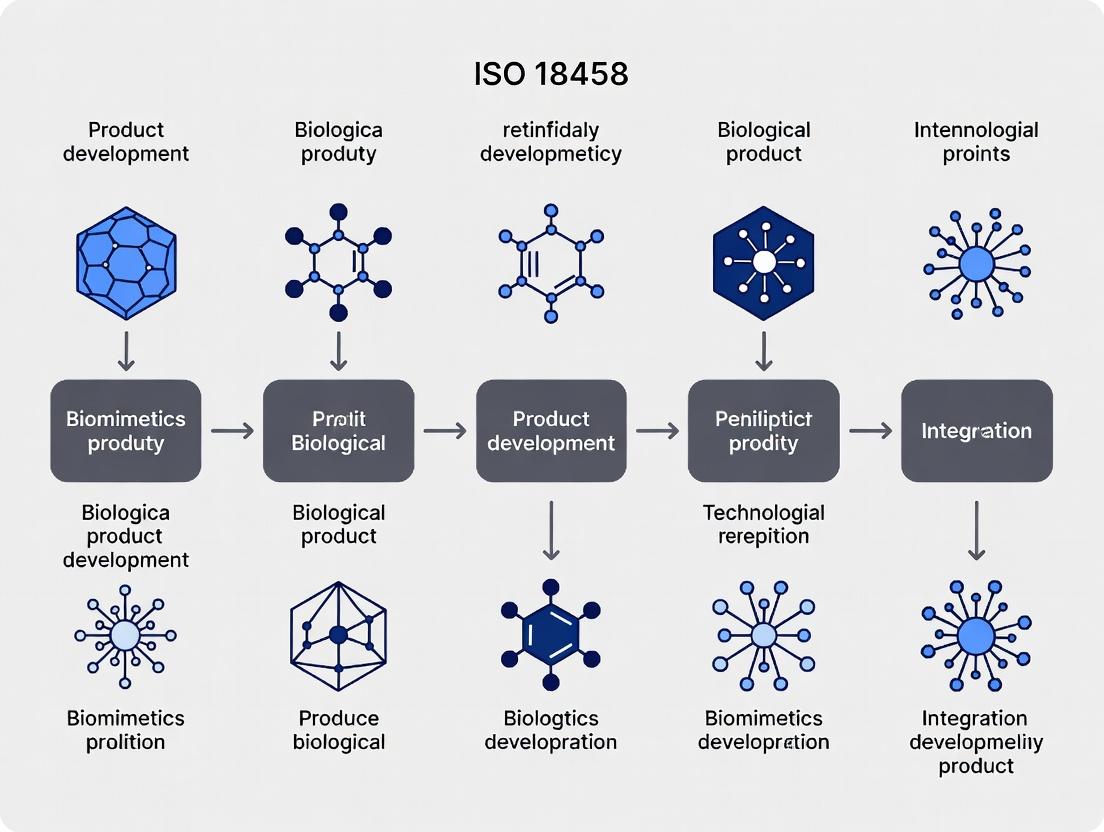
This article provides a comprehensive guide for researchers and pharmaceutical professionals on applying the ISO 18458 biomimetics process to drug development.
Harnessing Biology's Genius: A Guide to the ISO 18458 Framework for Biomimetic Drug Discovery and Development
Abstract
This article provides a comprehensive guide for researchers and pharmaceutical professionals on applying the ISO 18458 biomimetics process to drug development. It systematically explores the standard's core principles, detailing a step-by-step methodology for translating biological models into viable therapeutic strategies. The content addresses common challenges in the biomimetic pipeline, offers optimization strategies, and presents validation frameworks to assess efficacy against conventional approaches. The goal is to equip scientists with a structured, standards-based pathway to accelerate and de-risk the innovation of nature-inspired medicines.
Decoding ISO 18458: The Biomimetics Standard as a Blueprint for Pharmaceutical Innovation
What is ISO 18458? A Primer on the International Standard for Biomimetics.
ISO 18458:2015, titled "Biomimetics - Terminology, concepts and methodology," provides the foundational framework for the systematic transfer of knowledge from biology to technology. For researchers, scientists, and drug development professionals, it standardizes the biomimetic process, ensuring clarity, reproducibility, and efficacy in bio-inspired innovation. Within a thesis on applying ISO 18458 to product development process research, this standard is the critical scaffold for translating biological principles into viable technological solutions, particularly in areas like targeted drug delivery, biocompatible materials, and novel therapeutic mechanisms.
Core Principles and Application Notes
The ISO 18458 framework is built on a defined process flow and precise terminology to avoid ambiguity between biological and technical domains.
Key Process Phases:
- Analysis of the Biological System: Identification and rigorous investigation of a biological model that has evolved an effective solution to a relevant problem.
- Abstracting the Biological Principle: Distillation of the core functional principle, separating it from its specific biological implementation.
- Transfer and Application of the Principle: Application of the abstracted principle to a technical design or solution, often requiring iterative adaptation.
- Technical Implementation: Development, testing, and refinement of the biomimetic product or process.
Application Note 1: For Drug Delivery System Development
- Biological Analogue: Cell membrane trafficking, ligand-receptor endocytosis.
- Abstracted Principle: Specific molecular recognition leading to compartmentalized uptake.
- Technical Application: Design of ligand-functionalized liposomes or polymeric nanoparticles for targeted drug delivery to specific cell types (e.g., cancer cells).
- ISO 18458 Value: Provides a structured method to move from observing cellular uptake mechanisms to designing a reproducible, scalable nano-carrier system, ensuring the core recognition and encapsulation principles are maintained.
Application Note 2: For Antimicrobial Surface Design
- Biological Analogue: Shark skin denticles, lotus leaf effect, or insect wing nanostructures.
- Abstracted Principle: Topographical features at micro/nano scale that mechanically inhibit biofilm formation or bacterial adhesion.
- Technical Application: Fabrication of surface textures on medical implants or hospital surfaces to reduce nosocomial infections.
- ISO 18458 Value: Enables clear distinction between the biological structure (denticle shape) and the functional principle (riblet-induced shear stress preventing adhesion), guiding material engineering independent of the original biological material.
Table 1: Impact of Standardized Biomimetic Processes on R&D Metrics (Hypothetical Data Based on Field Analysis)
| Metric | Pre-Standardization (Average) | Post ISO 18458 Framework Adoption (Projected) | Notes |
|---|---|---|---|
| Project Scoping Phase Duration | 6-9 months | 3-5 months | Clear terminology reduces interdisciplinary miscommunication. |
| Iterations to Functional Prototype | 8-12 | 4-6 | Structured abstraction focuses development on core principles. |
| Success Rate of Technical Transfer | ~25% | ~40-50% | Systematic analysis reduces failed transfers from analogical errors. |
| Interdisciplinary Publication Clarity | Low/Moderate | High | Standardized terminology enhances reproducibility and peer review. |
Table 2: Common Biological Principles and Their Technical Translations in Therapeutics
| Biological Principle (Abstracted) | Technical/ Therapeutic Application | Development Stage (Examples) |
|---|---|---|
| Molecular Pattern Recognition (e.g., antigen-antibody) | Bispecific Antibodies, CAR-T Cells | Clinical & Commercial |
| Self-Assembly of Peptides/Proteins | Drug-Eluting Hydrogels, Tissue Scaffolds | Clinical Trials & Research |
| Enzyme-Mediated Cascade Reactions | Biosensors for Biomarker Detection | Research & Development |
| Homeostatic Feedback Loops | Closed-Loop Drug Delivery Systems (e.g., artificial pancreas) | Commercial & Advanced Research |
Experimental Protocols
Protocol 1: ISO 18458-Compliant Analysis of a Biological Model for Drug Targeting Objective: To systematically analyze and abstract the principle of folate-receptor mediated endocytosis for biomimetic nanoparticle design.
- Biological Model Identification: Select human carcinoma cell lines (e.g., HeLa, KB) known to overexpress the folate receptor (FRα).
- Functional Analysis:
- Culture cells under standard conditions.
- Perform flow cytometry to quantify FRα surface expression levels.
- Control: Use cells with low FRα expression (e.g., A549).
- Principle Abstraction:
- Key Elements: High-affinity ligand (folic acid), cognate receptor (FRα), clathrin-coated pit formation, internalization to endosome.
- Abstracted Principle: Exploitation of a specific, high-affinity surface receptor overexpressed on target cells for triggered internalization of a cargo.
- Transfer Preparation: Document the abstracted principle, explicitly noting environmental conditions (pH, temperature) and kinetic parameters (binding affinity, Kd) from literature.
Protocol 2: Testing Biomimetic Transfer Efficacy: Ligand-Targeted Nanoparticle Uptake Objective: To evaluate the efficacy of biomimetic folic acid-conjugated nanoparticles vs. non-conjugated controls.
- Material Preparation:
- Synthesize fluorescently-labeled (e.g., Cy5.5) poly(D,L-lactide-co-glycolide) (PLGA) nanoparticles.
- Conjugate folic acid-PEG-NHS ester to surface amine groups on nanoparticles (Test Article).
- Prepare non-conjugated nanoparticles as an ISO Control (isolating the biomimetic variable).
- Experimental Workflow:
- Seed FRα+ and FRα- cells in 24-well plates.
- At ~80% confluency, incubate with Test or Control nanoparticles (100 µg/mL) in serum-free media for 2 hours at 37°C.
- Include a competition condition: Pre-incubate FRα+ cells with 1mM free folic acid for 30 minutes before adding Test nanoparticles.
- Wash cells extensively with cold PBS to remove non-internalized particles.
- Lyse cells and measure fluorescence intensity using a plate reader.
- Normalize fluorescence to total cellular protein content (BCA assay).
- Data Analysis: Compare uptake in Test vs. Control groups across cell lines. Successful biomimetic transfer is indicated by significantly higher uptake of Test nanoparticles specifically in FRα+ cells, which is inhibitable by free folic acid.
Diagrams
Title: ISO 18458 Biomimetics Process Flow
Title: Targeted Nanoparticle Uptake Assay Workflow
The Scientist's Toolkit
Table 3: Key Research Reagent Solutions for Biomimetic Drug Delivery Research
| Item | Function in Context of ISO 18458 | Example / Rationale |
|---|---|---|
| Characterized Cell Lines | Serve as the definitive biological model for functional analysis. | FRα+ (KB, HeLa) vs. FRα- (A549) for target validation. |
| Ligand-Conjugation Kits | Enable the technical transfer of the abstracted recognition principle. | NHS-PEG-Folate kits for nanoparticle functionalization. |
| Fluorescent Probes/Tags | Allow quantitative measurement of the technical implementation's efficacy. | Cy5.5, FITC for tagging nanoparticles to track uptake. |
| Blocking Agents | Provide critical controls to validate specificity, a core part of abstraction. | Free folic acid to competitively inhibit receptor-mediated uptake. |
| Standardized Assay Kits | Ensure reproducibility in analyzing outcomes of the biomimetic process. | BCA protein assay for normalization; internalization assay kits. |
| PDI/Zeta Potential Analyzer | Characterizes the technical implementation (nanoparticle) properties. | Ensures biomimetic modification does not compromise colloidal stability. |
This article, framed within a thesis on applying the ISO 18458 biomimetics process to product development, clarifies key terminology for researchers and drug development professionals. Precise language is critical for reproducible research and effective collaboration at the intersection of biology and technology.
Terminology Clarification and Application Context
- Biomimetics (per ISO 18458): The interdisciplinary cooperation of biology and technology with the goal of solving practical problems through the functional analysis of biological systems, their abstraction into models, and the transfer and application of these models to technical solutions. It is a rigorous, process-oriented discipline.
- Biomimicry: A broader, often values-based philosophy that seeks sustainable solutions by emulating nature's time-tested patterns, strategies, and underlying principles. It emphasizes learning from and adhering to nature's overarching design logic (e.g., life-friendly chemistry, dependence on renewable energy).
- Bio-Inspired Design (BID): A wider, outcome-focused umbrella term for any innovation that takes a creative cue from biological observations. It may not involve the deep, systematic analysis and abstraction required by formal biomimetics. The biological inspiration can be analogical (e.g., train nose inspired by kingfisher beak) or mechanistic (e.g., lipid nanoparticles inspired by viral envelopes).
Table 1: Comparative Analysis of Core Terms
| Term | Primary Focus | Scope | Key Driver | Example in Drug Delivery |
|---|---|---|---|---|
| Biomimetics | Process & Function | Narrow, Deep | Technical problem-solving | Systematic abstraction of receptor-ligand kinetics for targeted nanoparticle design. |
| Biomimicry | Philosophy & Sustainability | Broad, Holistic | Ethical & ecological alignment | Designing biodegradable vesicles using only naturally occurring lipids and principles of circularity. |
| Bio-Inspired Design | Creative Output & Analogy | Broad, Flexible | Innovative conceptual leap | Mucoadhesive polymers inspired by the wet adhesion mechanism of mussel proteins. |
Application Notes: Integrating ISO 18458 into Research
The ISO 18458:2015 standard outlines a formal Biomimetic Process applicable to pharmaceutical R&D:
- Identification: Define the technical/medical problem (e.g., "Improve tumor-specific targeting of chemotherapeutics").
- Research Biological Models: Seek organisms that have solved analogous functional challenges (e.g., tropism in viruses, antigen mimicry in pathogens).
- Abstraction: Isolate the fundamental physical, chemical, or informational principle (e.g., shape complementarity, pH-sensitive molecular switching, ligand-receptor density thresholds).
- Transfer & Application: Engineer a technical solution based on the abstracted principle (e.g., design particles with geometry and surface topology mimicking Salmonella for enhanced mucosal penetration).
- Validation & Iteration.
Aim: To develop a cell-specific drug carrier by abstracting the viral "fusion peptide" mechanism. Biological Model: Enveloped viruses (e.g., Influenza HA2 protein).
Protocol Steps:
- Bioinformatics & Structure Analysis:
- Source 3D protein structures (e.g., HA2 fusion peptide) from the RCSB PDB.
- Use molecular visualization software (PyMOL, UCSF Chimera) to analyze the conserved hydrophobic peptide sequence and its conformational change at low pH.
- Peptide Synthesis & Conjugation:
- Synthesize a candidate peptide sequence (e.g., GLEGAIAGFIENGWEGMIDG) via solid-phase peptide synthesis (SPPS). Purify via HPLC, confirm via mass spectrometry.
- Conjugate the peptide to a model nanoparticle (e.g., 100nm PEGylated liposome) via maleimide-thiol chemistry. Confirm surface density using a fluorometric assay (e.g., with FITC-labeled peptide).
- Functional In Vitro Validation:
- pH-Responsive Membrane Fusion Assay: Use a FRET-based lipid mixing assay. Co-incubate peptide-decorated liposomes (donor-labeled) with target cell-membrane mimics (acceptor-labeled) at pH 7.4 and 5.0. Measure decrease in FRET signal over time (λex 460nm, λem 590nm) indicating fusion.
- Cell Uptake & Specificity: Treat target vs. non-target cell lines with peptide-conjugated, dye-loaded liposomes at different pH conditions (7.4, 6.5). Quantify uptake via flow cytometry after 2 hours. Confirm with confocal microscopy.
- Dose-Response Cytotoxicity: Load liposomes with doxorubicin. Perform MTT/WST-1 assays on target cells after 72h exposure. Compare IC50 of bio-inspired carrier vs. non-targeted control.
The Scientist's Toolkit: Key Research Reagent Solutions
Table 2: Essential Materials for Biomimetic Drug Delivery Research
| Item | Function in Research | Example Application |
|---|---|---|
| Solid-Phase Peptide Synthesis (SPPS) Reagents | Enables custom synthesis of bio-inspired peptide sequences derived from biological models. | Creating mimics of cell-penetrating peptides (e.g., TAT) or fusion peptides. |
| Functionalized Lipids & Polymers | Building blocks for constructing carriers that mimic biological structures (vesicles, micelles). | PEG-DSPE for stealth coating; maleimide-headgroup lipids for peptide conjugation. |
| FRET-Based Lipid Probes | To quantitatively measure membrane fusion events, a key mechanism abstracted from viruses. | NBD-PE (donor) and Rhodamine-PE (acceptor) for in vitro fusion assays. |
| pH-Sensitive Fluorescent Dyes | To confirm pH-responsive behavior of bio-inspired carriers in cellular compartments. | LysoTracker for lysosomal tracking; pHrodo dyes for uptake quantification. |
| Recombinant Proteins/Enzymes | For studying and mimicking specific biological interactions (e.g., receptor-ligand binding). | Using recombinant integrins or lectins in surface plasmon resonance (SPR) binding studies. |
Visualization: Biomimetics Workflow & Pathway
Diagram 1: ISO 18458 Biomimetic R&D Workflow
Diagram 2: Bio-Inspired pH-Responsive Drug Delivery Pathway
The formal integration of biomimetics, guided by standards such as ISO 18458, provides a structured framework to translate biological principles into robust therapeutic strategies. This approach directly addresses chronic challenges in drug development: high failure rates, poor translatability from in vitro to in vivo models, and lack of reproducibility. By systematically abstracting, analyzing, and applying biological lessons—such as targeted delivery, self-assembly, and feedback-controlled signaling—developers can create more predictive models and therapeutics with higher physiological relevance. The ISO 18458 process (Problem Definition, Biological Analysis, Abstraction, Simulation, and Implementation) imposes necessary discipline, ensuring biological insights are rigorously validated and applied, not merely used as analogies.
Current Data and Quantitative Analysis
Table 1: Comparative Analysis of Drug Development Outcomes: Traditional vs. Biomimetic-Informed Approaches (2019-2024)
| Metric | Traditional Approach (Average) | Biomimetic-Informed Approach (Reported Range) | Data Source / Key Study |
|---|---|---|---|
| Clinical Phase Transition Success Rate (Phase II to III) | 30% | 45% - 55% | Analysis of oncology pipelines incorporating biomimetic drug carriers. |
| In Vivo Efficacy Predictivity of Lead Compound (vs. human outcome) | ~48% | ~70-75% | Studies using biomimetic 3D tissue/organoid models for validation. |
| Reproducibility Rate of Key Pathway Modulation Experiments | ~50-60% | ~85-90% | Meta-analysis of studies using formal biomimetic abstraction protocols. |
| Time to Identify Optimized Lead Candidate (from screening) | 18-24 months | 12-16 months | Consortium reports using nature-inspired high-throughput screening logic. |
Detailed Experimental Protocols
Objective: To apply the ISO 18458 abstraction process to develop a leukocyte-mimicking nanoparticle for inflammatory disease targeting.
Materials: See "Scientist's Toolkit" (Section 5).
Methodology:
- Biological Analysis: Isolate primary human neutrophils (or use established cell line models). Characterize their rolling and adhesion behavior under physiological shear stress in a flow chamber coated with E-selectin/ICAM-1. Quantify transcriptomic changes (RNA-seq) post-activation.
- Abstraction: Identify key functional units: (i) Selection-mediated tethering/rolling: Abstract as "surface conjugation of sialyl Lewis^X (sLe^X) mimetic ligand." (ii) Activation-induced integrin activation: Abstract as "pH-sensitive polymer coating that exposes a cryptic ICAM-1 binding peptide in low pH environments (e.g., inflammatory site)." (iii) Phagocytosis of payload: Abstract as "engineered nanoparticle size (<200 nm) and surface chemistry for endocytic uptake."
- Simulation & Implementation: a. Synthesize polymeric nanoparticles (e.g., PLGA) using microfluidics for uniformity. b. Conjugate sLe^X mimetic ligand via PEG spacers. c. Coat with a pH-sensitive polymer (e.g., poly(histidine)-PEG) masking the ICAM-1 binding peptide. d. Validation Workflow: i. In vitro affinity: Use surface plasmon resonance (SPR) to confirm binding to recombinant E-selectin at neutral pH. ii. In vitro targeting: Under flow conditions, apply nanoparticle solution over activated endothelial cell monolayers. Quantify rolling velocity and firm adhesion. Wash system with a mild acidic buffer (pH 6.5) to trigger "activation" and measure increase in adhesion strength. iii. In vivo biodistribution: Administer fluorescently tagged nanoparticles intravenously to a murine model of acute inflammation (e.g., TNFα-induced cremaster muscle vasculitis). Image at 2, 6, and 24 hours post-injection. Quantify targeting specificity as Ratio of Fluorescence Intensity (Inflammatory Site/Contralateral Control).
Protocol 3.2: Development of a Biomimetic 3D Stromal-Niche Organoid for Chemoresistance Studies
Objective: To create a reproducible, physiologically relevant model for studying tumor microenvironment (TME)-mediated drug resistance.
Materials: See "Scientist's Toolkit" (Section 5).
Methodology:
- Problem Definition & Biological Analysis: Define the specific chemoresistance mechanism to model (e.g., stromal-mediated protection in pancreatic ductal adenocarcinoma (PDAC)). Analyze primary tumor biopsies for cellular composition (CAFs, immune cells, tumor cells) and ECM components (collagen I, III, hyaluronic acid).
- Abstraction: Abstract key TME elements: (i) Cellular diversity: Co-culture of patient-derived organoid (PDO) cells with cancer-associated fibroblasts (CAFs) and tumor-associated macrophages (TAMs). (ii) ECM composition: A hydrogel matrix composed of collagen I (high density), hyaluronic acid, and laminin. (iii) Metabolic gradient: Design a spheroid system of defined diameter (e.g., 500 µm) to naturally establish nutrient/oxygen gradients.
- Simulation & Implementation: a. Hydrogel Preparation: Mix neutralized rat tail collagen I (8 mg/mL), hyaluronic acid (1 mg/mL), and Matrigel (10% v/v) on ice. b. Cell Preparation: Harvest PDAC PDOs as single cells/small clusters. Harvest early-passage CAFs and differentiated THP-1 TAMs. c. 3D Co-culture Setup: Combine cells at a defined ratio (e.g., PDO:CAF:TAM = 5:3:2) in the hydrogel precursor. Seed 50 µL droplets into pre-warmed plates. Allow to polymerize (37°C, 30 min), then overlay with culture medium. d. Experimental Validation: i. Characterization: At day 7, fix and stain for architecture (F-actin), proliferation (Ki-67), and hypoxia (pimonidazole). Confirm gradient formation via confocal microscopy. ii. Chemoresistance Assay: Treat organoids with standard-of-care chemotherapeutics (e.g., gemcitabine/paclitaxel) for 72 hours. Use a live/dead viability assay (Calcein AM/EthD-1) and quantify viability via high-content imaging. Compare to monoculture PDOs and 2D co-culture controls.
Visualization Diagrams
Diagram 1: ISO 18458 Biomimetics Process in Drug Development
Diagram 2: Biomimetic Nanoparticle Targeting Mechanism
The Scientist's Toolkit: Essential Research Reagents
Table 2: Key Reagents for Biomimetic Drug Development Protocols
| Item Name | Supplier (Example) | Function in Protocol |
|---|---|---|
| Primary Human Neutrophils / Cell Lines (e.g., HL-60) | STEMCELL Technologies, ATCC | Source cells for Biological Analysis of leukocyte behavior (Prot. 3.1). |
| Recombinant Human E-selectin / ICAM-1 Fc Chimera | R&D Systems | Coating proteins for in vitro binding and rolling adhesion assays (Prot. 3.1). |
| PLGA (50:50, Acid-Terminated) | Lactel Absorbable Polymers | Biodegradable polymer for nanoparticle core synthesis (Prot. 3.1). |
| sLeX Mimetic Ligand (e.g., CSLEX1) | Carbosynth | Targeting moiety for E-selectin binding, abstracted from leukocytes (Prot. 3.1). |
| pH-Sensitive Polymer (e.g., Poly(histidine)-PEG) | Nanocs | "Stealth" coating that responds to inflammatory site acidosis (Prot. 3.1). |
| Patient-Derived Organoid (PDO) Cells | Commercial Biobanks or In-house | Primary tumor cells for building physiologically relevant 3D models (Prot. 3.2). |
| Cancer-Associated Fibroblasts (CAFs) | PromoCell, ScienCell | Key stromal component to model tumor microenvironment interactions (Prot. 3.2). |
| Rat Tail Collagen I, High Concentration | Corning | Major ECM component to mimic desmoplastic stroma in 3D hydrogels (Prot. 3.2). |
| Hyaluronic Acid, Sodium Salt | Sigma-Aldrich | ECM glycosaminoglycan that influences stiffness and signaling in TME (Prot. 3.2). |
| Low-Adhesion U-bottom 96-well Plates | Corning, Nunclon Sphera | Essential for consistent, reproducible 3D spheroid/organoid formation (Prot. 3.2). |
Application Notes on Historical and Systematic Approaches in Drug Discovery
Note 1: Case Study Analysis – Historical Serendipity
The discovery of penicillin by Alexander Fleming (1928) exemplifies a serendipitous, observation-driven approach. The key was the recognition of an anomalous result—bacterial lysis on a contaminated plate—and the curiosity to investigate it. This was followed by a long, arduous path of isolation and scale-up by Florey and Chain, highlighting the "translation gap" inherent in unstructured discovery.
Note 2: Case Study Analysis – Targeted Systematic Process
The development of Imatinib (Gleevec) for Chronic Myeloid Leukemia (CML) represents a systematic, hypothesis-driven process. It was predicated on the clear identification of the BCR-ABL oncogene as the disease driver, followed by the rational design of a tyrosine kinase inhibitor. This aligns with the problem-driven, systematic phases of the ISO 18458 biomimetic process, where a defined function (inhibit specific kinase) is sought.
Note 3: Application of ISO 18458 Biomimetics Framework to Drug Discovery
ISO 18458 provides a structured process: 1) Clarification of the Problem, 2) Biological Research & Abstraction, 3) Transfer & Application, and 4) Implementation. In drug discovery, this translates to:
- Clarification: Define the precise therapeutic target (e.g., inhibit Protein X in Pathway Y with minimal off-target effects).
- Biological Research: Identify natural mechanisms (e.g., venom peptides, immune checkpoint modulators) that achieve a similar functional outcome.
- Abstraction: Distill the mechanism to its core biochemical or biophysical principle.
- Transfer: Design a drug candidate (small molecule, biologic) based on that principle.
- Implementation: Pre-clinical and clinical development.
This process moves from "finding a curious observation" to "seeking a biological solution to a well-defined engineering problem."
Table 1: Comparison of Historical vs. Systematic Drug Discovery Paradigms
| Aspect | Historical/Serendipitous Model (e.g., Penicillin) | Systematic/Targeted Model (e.g., Imatinib) | ISO 18458-Aligned Process |
|---|---|---|---|
| Initiating Event | Observation of an anomaly or side effect. | Identification of a specific disease mechanism/target. | Clarification of a well-defined problem/function. |
| Path to Discovery | Retrospective, opportunistic. | Prospective, hypothesis-driven. | Solution-seeking, iterative. |
| Lead Time to Therapy | ~14 years (1928-1942). | ~13 years (1980s BCR-ABL discovery - 2001 approval). | Aims to reduce time via structured abstraction. |
| Attrition Risk | Extremely high; reliant on chance. | High, but focused on validated targets. | Mitigated by functional validation at each stage. |
| Key Strength | Can reveal entirely novel biological mechanisms. | Efficient, with clear biomarkers for development. | Leverages evolutionary-optimized natural solutions. |
| Key Limitation | Non-reproducible; inefficient scale-up. | Limited to known biology; may miss complex systems. | Requires deep interdisciplinary collaboration. |
Table 2: Efficacy Data from Pivotal Trials of Landmark Drugs
| Drug (Class) | Indication | Key Trial Result (vs. Control) | Systematic Target |
|---|---|---|---|
| Imatinib (TKI) | CML (chronic phase) | 76% complete cytogenetic response at 18 mo (vs. 14.5%). | BCR-ABL tyrosine kinase. |
| Venetoclax (BH3 mimetic) | CLL (with obinutuzumab) | 24-mo PFS: 88.2% (vs. 64.1%). | BCL-2 protein (apoptosis regulator). |
| Sotorasib (KRAS G12C inhibitor) | NSCLC with KRAS G12C | ORR: 37.1%, mDoR: 11.1 months. | KRAS G12C oncoprotein. |
Experimental Protocols
Protocol 1: High-Throughput Screening (HTS) for Small Molecule Inhibitors (Systematic Approach)
Purpose: To identify lead compounds that modulate the activity of a purified target protein from a large chemical library. Materials: Assay-ready plates, purified target protein, fluorogenic or chromogenic substrate, compound library (≥100,000 compounds), DMSO, plate reader, liquid handler. Method:
- Assay Setup: In a 384-well plate, dispense 20 nL of each library compound (in DMSO) using a nanoliter dispenser. Include positive (known inhibitor) and negative (DMSO only) controls.
- Reaction Initiation: Add 20 µL of target protein in optimized assay buffer to all wells. Incubate for 15 min at 25°C.
- Substrate Addition: Add 20 µL of substrate solution to initiate the enzymatic reaction.
- Detection: Measure fluorescence/absorbance kinetically for 30-60 minutes using a plate reader.
- Analysis: Calculate % inhibition for each compound:
[1 - (ΔSignal_sample / ΔSignal_negative_control)] * 100. Compounds with >70% inhibition and Z'-factor >0.5 for the plate are considered "hits."
Protocol 2: Phenotypic Screening for Antimicrobials (Hybrid Historical/Systematic Approach)
Purpose: To identify compounds that inhibit bacterial growth without a predefined molecular target, allowing for serendipitous discovery of novel mechanisms. Materials: Mueller-Hinton agar plates, bacterial inoculum (e.g., S. aureus ATCC 29213 at 0.5 McFarland), compound library, sterile blank disks, forceps, incubator. Method:
- Lawn Preparation: Evenly spread 100 µL of bacterial inoculum onto the surface of an agar plate.
- Compound Application: Soak sterile paper disks in 10 µL of each test compound solution (e.g., 10 mg/mL in DMSO). Allow to dry. Place disks on the inoculated agar.
- Control Application: Place disks with standard antibiotics (e.g., ciprofloxacin) and DMSO-only as controls.
- Incubation: Incubate plates at 37°C for 18-24 hours.
- Analysis: Measure zones of inhibition (ZOI) in mm. Compounds with a ZOI ≥ 15 mm are selected for follow-up, including Minimum Inhibitory Concentration (MIC) determination and mechanism of action studies.
Signaling Pathway & Workflow Visualizations
Title: BCR-ABL Oncogenic Signaling & Inhibition by Imatinib
Title: ISO 18458 Structured Process Applied to Drug Discovery
The Scientist's Toolkit: Research Reagent Solutions
Table 3: Essential Reagents for Targeted Kinase Inhibitor Development
| Reagent / Material | Function in Research | Example Product/Catalog |
|---|---|---|
| Recombinant Kinase Protein (Active) | Primary target for biochemical activity assays (HTS, IC50 determination). | Carna Biosciences (e.g., Abl1 kinase), SignalChem proteins. |
| ATP / ATP-analogue (Luciferin-based) | Substrate for luminescent kinase activity assays (e.g., ADP-Glo). | Promega ADP-Glo Kinase Assay Kit. |
| Selective Tool Compounds | Positive controls for assay validation and mechanism studies. | Selleckchem inhibitors (e.g., Dasatinib for Src-family). |
| Phospho-specific Antibodies | Detection of kinase activity and downstream pathway modulation in cells (Western, ELISA). | Cell Signaling Technology Phospho-STAT5, Phospho-CrkL antibodies. |
| Kinase Profiling Service/Panel | Assess selectivity of lead compounds against a broad panel of human kinases. | Eurofins KinaseProfiler, Reaction Biology HotSpot. |
| Cell Line with Target Dependency | Phenotypic validation of inhibitor efficacy (proliferation, apoptosis assays). | ATCC K562 cells (BCR-ABL+ CML line). |
Biomimetics, as standardized by ISO 18458, provides a structured process (Analysis-Abstract-Transfer-Develop) for deriving solutions from biological models. This protocol applies this framework to the critical initial phase: identifying and validating high-potential biological paradigms (e.g., extremophile adaptations, regenerative species, unique immune systems) for addressing intractable therapeutic challenges such as drug resistance, neuroregeneration, and chronic inflammation.
Criteria for Model Selection: A Quantitative Framework
The selection of a biological model must be based on a multi-parametric assessment. The following table synthesizes core criteria derived from current literature and best practices.
Table 1: Quantitative and Qualitative Criteria for Biological Model Evaluation
| Criterion Category | Specific Metric | Weighting (1-5) | High-Potential Example | Assessment Method |
|---|---|---|---|---|
| Therapeutic Relevance | Phenotypic match to human disease challenge | 5 | Naked mole-rat (cancer resistance) vs. oncology | Genomic/phenotypic alignment analysis |
| Mechanistic Clarity | Well-defined molecular pathway(s) | 4 | Aiptasia symbiosis for inflammatory regulation | Omics data completeness (e.g., pathway maps) |
| Experimental Tractability | Ease of genetic manipulation & culture | 4 | Axolotl (Ambystoma mexicanum) for regeneration | Lab culture feasibility score (1-10) |
| Evolutionary Insight | Conservation depth of target mechanism | 3 | Turritopsis dohrnii (reversible life cycle) for aging | Phylogenetic breadth analysis |
| Data Richness | Availability of omics datasets | 3 | Tardigrade desiccation tolerance | Public database entries (count) |
| Scalability | Potential for in vitro or computational modeling | 3 | Shark VNAR single-domain antibodies | In silico modeling feasibility (Y/N) |
Protocol: Systematic Identification & Validation Workflow
This protocol details the stepwise application of the above criteria within the ISO 18458 "Analysis" phase.
Protocol 3.1: Cross-Species Phenotypic Screening for Therapeutic Targets
Objective: To systematically identify species exhibiting extreme phenotypes relevant to a defined therapeutic challenge (e.g., ischemia tolerance, fibrosis absence). Materials: IUCN database, PubMed, Ensembl Comparative Genomics, species-specific biobank catalogs. Procedure:
- Define Challenge: Precisely delineate the therapeutic problem (e.g., "inhibition of metastatic spread without cytotoxicity").
- Database Mining: Query biological databases using keywords related to the extreme phenotype (e.g., "non-metastatic cancer," "spontaneous regression").
- Preliminary Filtering: Apply Criteria 1 (Therapeutic Relevance) and 5 (Data Richness) from Table 1 to generate a candidate shortlist (3-5 species).
- Comparative Pathway Analysis: For each candidate, use KEGG/Reactome to map conserved vs. unique pathways related to the phenotype.
- Tractability Assessment: Survey literature for established cell lines, genome editing protocols, and breeding data for each candidate. Assign an Experimental Tractability score.
- Output: A ranked list of biological paradigms with associated rationale and data gaps.
Protocol 3.2:In VitroValidation of Identified Mechanistic Pathways
Objective: To experimentally verify the activity of a conserved or novel molecular mechanism from the selected model in a standard laboratory cell line. Example Model: Utilizing Myotis bat cells to study dampened interferon-mediated inflammation. Materials:
- Primary cells or established cell line from target organism (e.g., Myotis lung fibroblast line).
- Corresponding human primary cells (e.g., human lung fibroblast).
- Pathogen-associated molecular pattern (PAMP) (e.g., Poly(I:C), HMW).
- qRT-PCR reagents for cytokines (e.g., IL-6, IFN-β).
- NF-κB/IRF3 luciferase reporter assay kit. Procedure:
- Culture bat and human cells in parallel under optimal conditions.
- Stimulate with PAMP (e.g., 1 µg/mL Poly(I:C)) for defined time points (e.g., 3h, 6h, 12h).
- Harvest cells for RNA extraction and perform qRT-PCR for inflammatory markers.
- Co-transfect cells with NF-κB and IRF3 luciferase reporters and Renilla control, then repeat stimulation. Measure luminescence.
- Data Analysis: Compare magnitude and kinetics of response. A successful validation shows a quantitatively dampened but functional response in the model organism cells.
The Scientist's Toolkit: Research Reagent Solutions
Table 2: Essential Reagents for Cross-Species Model Validation
| Reagent/Tool | Function | Example Product/Catalog |
|---|---|---|
| Cross-Reactive Antibodies | Immunodetection of conserved epitopes in non-model organisms. | Anti-phospho-H2A.X (Ser139), Clone JBW301 (MilliporeSigma, 05-636) |
| Universal Cell Culture Kit | Supports growth of diverse primary cells from exotic species. | Primaria-coated cell culture flasks (Corning, 353812) |
| Pan-Species qPCR Assays | Targets highly conserved gene regions for gene expression across taxa. | PrimeTime Pan-Species qPCR Assays (Integrated DNA Technologies) |
| CRISPR/Cas9 Variant Systems | Enables genetic manipulation in cells with atypical repair pathways. | LipoJet CRISPR Kit for difficult-to-transfect cells (SignaGen, SL100488) |
| Multi-Species Cytokine Array | Simultaneously detects inflammatory mediators across evolutionary distance. | Proteome Profiler Array, Pan-Species (R&D Systems, ARY024) |
| Phylogenetic Analysis Software | Quantifies evolutionary conservation of target genes/pathways. | Geneious Prime (Biomatters Ltd) |
Visualization of Workflows and Pathways
Diagram 1 Title: Biomimetics Process for Therapeutic Models
Diagram 2 Title: Bat vs. Human Inflammation Signaling
From Biology to Bench: A Step-by-Step Walkthrough of the ISO 18458 Process in Pharma R&D
Within the ISO 18458 biomimetics process framework, Phase 1 (Analysis and Abstraction) is foundational. This document details protocols for deconstructing a biological model to isolate its core functional principle, focusing on applications in therapeutic discovery. The objective is to translate biological observation into a testable technical hypothesis, providing a structured approach for researchers in drug development.
Application Notes: Key Analytical Questions
To guide the abstraction process, address the following questions:
- What is the primary function? (e.g., targeted delivery, self-repair, signal amplification).
- What are the critical system components? (e.g., specific cell types, proteins, lipid structures).
- What are the key interactions and relationships? (e.g., ligand-receptor binding, feedback loops, structural hierarchies).
- What is the relevant spatial and temporal context? (e.g., subcellular localization, circadian timing).
- How is the function maintained under perturbation? (e.g., homeostatic regulation, redundant pathways).
Protocol 3.1: Functional Deconstruction of a Cell-Signaling Pathway
Aim: To decompose a biological signaling pathway into its core functional modules, identifying potential druggable targets or novel therapeutic strategies.
Materials:
- Reagents: See "Research Reagent Solutions" (Table 1).
- Software: Pathway analysis tools (e.g., STRING, Cytoscape), bioinformatics databases (KEGG, Reactome), literature mining software.
Methodology:
- Model Selection: Identify a well-characterized biological signaling pathway with therapeutic relevance (e.g., Hippo pathway in tissue growth, PD-1/PD-L1 in immune evasion).
- Component Inventory: Catalog all known molecular participants (ligands, receptors, kinases, transcription factors) using curated databases.
- Interaction Mapping: Document all activating/inhibitory interactions, complex formations, and feedback mechanisms.
- Quantitative Parameterization: Where possible, extract kinetic and binding affinity data for key interactions (see Table 2).
- Modular Abstraction: Group components into abstracted functional blocks: Signal Detection, Signal Transduction, Amplification, Integration, and Output.
- Hypothesis Generation: Formulate a technical principle based on the abstracted modules (e.g., "A bistable switch mechanism enables apoptotic commitment").
Protocol 3.2: Structural-Functional Analysis of a Biomolecular Machine
Aim: To correlate the structural architecture of a protein complex or cellular organelle with its overarching function.
Methodology:
- Data Acquisition: Collect high-resolution structural data (X-ray crystallography, Cryo-EM) and mutational functional studies from public repositories (PDB, EMPIAR).
- Domain Annotation: Map functional domains (catalytic, binding, regulatory) onto the physical structure.
- Motion & Dynamics Analysis: Review molecular dynamics simulations or structural comparisons to infer functional movements (e.g., gating, conformational change).
- Allosteric Network Identification: Use graph theory-based tools to identify potential allosteric communication pathways within the structure.
- Abstraction: Generate a simplified schematic representing the core mechanical or operational principle (e.g., "A rotary pump," "A proofreading gate").
Table 1: Research Reagent Solutions for Pathway Deconstruction
| Reagent / Solution | Function in Analysis | Example Product / Assay |
|---|---|---|
| Phospho-Specific Antibodies | Detect activation states of signaling nodes. | CST Phospho-ERK1/2 (Thr202/Tyr204) mAb |
| Pathway Reporter Cell Lines | Provide a functional readout of pathway activity. | Luciferase-based NF-κB reporter line. |
| Proteasome Inhibitor (MG132) | Stabilizes proteins for interaction studies. | Used in co-immunoprecipitation protocols. |
| Recombinant Pathway Ligands | Used to stimulate pathway in a controlled manner. | Recombinant human Wnt-3a protein. |
| CRISPR-Cas9 Knockout Kits | Validate component necessity for function. | sgRNA libraries targeting kinase genes. |
Table 2: Example Quantitative Parameters from TNF-α/NF-κB Pathway
| Parameter | Component/Interaction | Typical Value (Range) | Source / Measurement Method |
|---|---|---|---|
| K_d (Binding Affinity) | TNF-α to TNF-R1 | ~0.1 - 0.3 nM | Surface Plasmon Resonance (SPR) |
| IC_50 (Inhibition) | IκBα degradation blocker | 5 - 50 nM (compound-dependent) | Cell-based luciferase assay |
| Response Time | TNF-α to NF-κB nuclear translocation | 5 - 15 minutes | Live-cell imaging with fluorescent tags |
| Amplification Factor | IKK complex activation | Estimated 10-100 fold | Computational modeling |
Title: Abstraction from Biological Pathway to Functional Principle
Title: ISO 18458 Phase 1 Analysis & Abstraction Workflow
Phase 2 of the ISO 18458 biomimetics process involves the transfer and adaptation of biological principles into abstracted technical models. In drug development, this translates to creating technical analogues (computational or physical representations of biological mechanisms) and predictive in silico models (simulations for forecasting biological activity and pharmacokinetics). This phase is critical for transforming biological inspiration into testable, quantitative hypotheses, reducing reliance on early-stage animal testing, and accelerating lead optimization.
Technical Analogues: From Biological Principle to Computational Representation
A technical analogue is a simplified, functional representation of a biological system's core principle. For instance, a biological target engagement and signal transduction cascade can be modeled as a system of ordinary differential equations (ODEs).
Table 1: Key Biological Principles and Their Corresponding Technical Analogues in Drug Discovery
| Biological Principle (Source) | Technical Analogue | Primary Application in Drug Dev | Quantitative Metrics Derived |
|---|---|---|---|
| Enzyme-Substrate Kinetics (Michaelis-Menten) | System of ODEs modeling ligand-target binding and turnover. | Lead optimization for enzyme inhibitors. | IC50, Ki, kon/koff rates. |
| Ligand-Receptor Binding & Dimerization (Growth Factor Signaling) | Rule-based or agent-based model of receptor activation and dimerization. | Profiling biologics (mAbs) targeting receptor tyrosine kinases. | EC50, signaling amplitude, duration. |
| Negative Feedback Loop (Adaptation in Signaling Pathways) | ODE model with time-delayed inhibitory component. | Predicting resistance mechanisms and dosing schedules. | Oscillation frequency, adaptation time. |
| Passive & Active Transport (Cellular Membrane Dynamics) | Pharmacokinetic (PK) compartmental model. | Predicting tissue distribution and bioavailability. | Permeability coefficient (Papp), clearance. |
Protocol: Developing an ODE-Based Technical Analogue for a Kinase Inhibitor
Aim: To create a predictive model of target engagement and downstream signaling inhibition for a novel kinase inhibitor.
Materials & Workflow:
Detailed Protocol:
- Data Curation: Gather quantitative biological data. Example: pIC50 values from a biochemical assay and time-course measurements of phosphorylated substrate (p-Sub) in a cell line treated with inhibitor (I).
- Model Formulation: Define the reaction scheme. A minimal model:
I + Kinase <-> I:Kinase(reversible binding with rates kon, koff)Kinase -> p-Sub(constitutive activity, rate kcat)I:Kinase -> p-Sub(reduced activity, rate kcat_inh)
- Parameterization: Use the biochemical IC50 data to infer initial kon/koff ratios. Fit the full ODE model to the time-course p-Sub data using nonlinear regression (e.g., in MATLAB, Python/SciPy, or COPASI) to estimate all rate constants precisely.
- Simulation & Prediction: Run simulations to predict p-Sub levels under untested conditions (e.g., different drug concentrations, genetic alterations in pathway components).
- Validation: Design a new cell-based experiment (e.g., using a different stimulus or co-treatment) to test the model's predictive accuracy. Compare predicted vs. observed p-Sub levels.
Predictive In Silico Models: ADMET and Toxicity Forecasting
Predictive models use quantitative structure-activity/property relationship (QSAR/QSPR) techniques to forecast Absorption, Distribution, Metabolism, Excretion, and Toxicity (ADMET).
Table 2: Performance Metrics of Common In Silico ADMET Prediction Tools (Representative Data)
| Prediction Endpoint | Common Algorithm(s) | Reported Accuracy Range | Typical Training Set Size | Key Molecular Descriptors Used |
|---|---|---|---|---|
| Human Intestinal Absorption (HIA) | Random Forest, SVM | 80-90% | 500-1000 compounds | LogP, molecular weight, H-bond donors/acceptors, polar surface area. |
| hERG Channel Inhibition (Cardiotoxicity) | Naïve Bayes, Deep Neural Networks | 75-85% | 5,000+ compounds | pKa, logP, presence of basic amines, aromatic rings. |
| CYP450 3A4 Inhibition | Gradient Boosting (XGBoost) | 85-88% | 8,000+ compounds | SMILES-based fingerprints, topological indices. |
| Hepatotoxicity | Ensemble Methods | 70-80% | 10,000+ compounds | Structural alerts, reactive metabolite predictions, physicochemical properties. |
Protocol: Building a QSAR Model for Early-Stage Hepatotoxicity Screening
Aim: To create a binary classifier model predicting potential hepatotoxicity of novel compounds.
Materials & Workflow:
Detailed Protocol:
- Dataset Assembly: Curate a dataset of known compounds with reliable hepatotoxicity labels (e.g., "toxic" or "non-toxic") from public databases like TOXNET or ChEMBL.
- Descriptor Calculation & Curation: For each compound, calculate a set of molecular descriptors (e.g., using RDKit or Dragon software). Include 2D (topological indices, atom counts), 3D (conformation-dependent), and physicochemical descriptors (logP, TPSA). Apply data cleaning: remove non-informative descriptors, handle missing values.
- Data Partitioning: Randomly split the dataset into a training set (80%) for model development and a hold-out test set (20%) for final evaluation.
- Model Training with Validation: On the training set, use a Random Forest algorithm. Perform 5-fold cross-validation to tune hyperparameters (e.g., number of trees, tree depth) and prevent overfitting. The cross-validation performance (AUC-ROC) guides model selection.
- Final Evaluation & Deployment: Apply the final tuned model to the untouched hold-out test set. Generate performance metrics (AUC, accuracy, sensitivity, specificity). Deploy the model as a filter in virtual compound screening.
The Scientist's Toolkit: Research Reagent Solutions
Table 3: Essential Tools for Biomimetic Modeling & Simulation
| Tool/Reagent Category | Specific Example(s) | Function in Phase 2 | Key Provider(s) |
|---|---|---|---|
| Pathway Reconstitution Kits | Purified kinase/substrate protein sets; Liposome-based membrane protein kits. | Provide quantitative biochemical data for parameterizing technical analogue models. | Reaction Biology, Thermo Fisher Scientific. |
| Live-Cell Signaling Reporters | FRET-based kinase activity biosensors (e.g., AKAR); Transcriptional reporters (Luciferase). | Generate dynamic, cell-based data for validating computational models of signaling. | Montana Molecular, Promega. |
| Molecular Descriptor & Modeling Software | Schrödinger Suite, MOE, RDKit (Open-Source). | Calculate compound features and build QSAR/QSPR models for ADMET prediction. | Schrödinger, Chemical Computing Group, Open-Source. |
| Systems Biology Modeling Platforms | COPASI, Virtual Cell, SimBiology. | Provide user-friendly environments to construct, simulate, and analyze ODE-based technical analogues. | COPASI (open-source), MATLAB. |
| High-Performance Computing (HPC) Cloud Services | AWS Batch, Google Cloud Life Sciences. | Enable large-scale virtual screening or complex multiscale simulations. | Amazon Web Services, Google Cloud. |
Application Notes
This phase represents the critical transition from in silico and in vitro identification of biomimetic lead candidates to the creation of tangible prototypes, framed within the ISO 18458 biomimetics process. The focus is on transforming conceptual designs—inspired by biological mechanisms—into testable drug compounds and delivery systems. This requires iterative experimentation to optimize physicochemical properties, biological activity, and preliminary safety profiles. The biomimetic rationale (e.g., a peptide mimicking a cell adhesion motif, a nanoparticle replicating viral stealth properties) must remain central throughout the prototyping workflow to ensure alignment with the standard's principles of deriving function from biological models.
Prototyping Protocols & Quantitative Data
Protocol 1: Biomimetic Peptide Synthesis and Purification for Anti-adhesion Therapy
Inspired by the minimal cell-binding domains of integrin ligands.
Methodology:
- Solid-Phase Peptide Synthesis (SPPS): Perform Fmoc-based SPPS on a automated synthesizer using Rink amide resin.
- Cleavage and Deprotection: Treat the resin-bound peptide with a cleavage cocktail (92.5% TFA, 2.5% water, 2.5% triisopropylsilane, 2.5% 1,2-ethanedithiol) for 3 hours at room temperature.
- Precipitation & Washing: Precipitate the crude peptide in cold diethyl ether, centrifuge, and wash twice.
- Purification: Purify via reversed-phase HPLC (C18 column) using a gradient of 5% to 95% acetonitrile in water (0.1% TFA). Collect major peaks.
- Lyophilization & Analysis: Lyophilize purified fractions. Confirm identity via MALDI-TOF mass spectrometry and assess purity (>95%) by analytical HPLC.
Key Quantitative Data: Table 1: Characterization Data for Synthesized Biomimetic Peptides
| Peptide ID | Biomimetic Target | Theoretical Mass (Da) | Observed Mass (Da) | HPLC Purity (%) | Yield (mg) |
|---|---|---|---|---|---|
| BPM-01 | Laminin α5 chain | 1245.6 | 1245.5 | 98.2 | 15.7 |
| BPM-02 | Fibronectin III | 1567.9 | 1568.1 | 96.8 | 11.2 |
| BPM-03 (Scrambled) | N/A | 1567.9 | 1567.8 | 97.5 | 14.1 |
Protocol 2: Formulation of Biomimetic Lipid Nanoparticles (LNPs) for mRNA Delivery
Inspired by the structural and fusogenic properties of viral envelopes.
Methodology:
- Lipid Mixture Preparation: Dissolve ionizable lipid (e.g., DLin-MC3-DMA), phospholipid (DSPC), cholesterol, and PEG-lipid (DMG-PEG2000) at a molar ratio (50:10:38.5:1.5) in ethanol.
- Aqueous Buffer Preparation: Dissolve mRNA (e.g., encoding a therapeutic protein) in 10 mM citrate buffer (pH 4.0).
- Nanoparticle Formation: Using a microfluidic mixer, rapidly combine the ethanol lipid phase with the aqueous mRNA phase at a 1:3 flow rate ratio (total flow rate 12 mL/min).
- Buffer Exchange & Filtration: Dialyze the resulting LNP suspension against PBS (pH 7.4) for 24 hours. Sterile-filter through a 0.22 μm membrane.
- Characterization: Measure particle size and PDI via dynamic light scattering, zeta potential via electrophoretic light scattering, and mRNA encapsulation efficiency using a Ribogreen assay.
Key Quantitative Data: Table 2: Characterization of Biomimetic Lipid Nanoparticle Formulations
| Formulation ID | Ionizable Lipid | N:P Ratio | Size (nm) | PDI | Zeta Potential (mV) | Encapsulation Efficiency (%) |
|---|---|---|---|---|---|---|
| LNP-A | DLin-MC3-DMA | 6:1 | 78.2 ± 2.1 | 0.08 | -1.5 ± 0.3 | 95.3 ± 1.2 |
| LNP-B | SM-102 | 5:1 | 85.6 ± 3.4 | 0.12 | -0.8 ± 0.5 | 93.7 ± 2.1 |
| LNP-C (Blank) | DLin-MC3-DMA | N/A | 75.4 ± 1.8 | 0.06 | -2.1 ± 0.4 | N/A |
Protocol 3:In VitroEfficacy Screening in a Biomimetic 3D Cell Culture Model
Inspired by the tumor microenvironment.
Methodology:
- 3D Spheroid Formation: Seed target cells (e.g., cancer cells) in ultra-low attachment 96-well plates (500 cells/well). Centrifuge plates (300 x g, 5 min) and culture for 72 hours to form compact spheroids.
- Compound Treatment: Treat spheroids with a dose range (0.1 nM – 100 μM) of biomimetic lead compounds or formulated prototypes. Include vehicle and standard-of-care controls.
- Viability Assay: After 96-120 hours, add CellTiter-Glo 3D reagent, shake for 5 minutes, and incubate for 25 minutes at room temperature. Measure luminescence.
- Imaging Analysis: Parallel spheroids are imaged live using phase-contrast microscopy. Measure cross-sectional area over time to assess growth inhibition.
- Data Analysis: Calculate IC50 values using non-linear regression (four-parameter logistic model).
Key Quantitative Data: Table 3: Efficacy of Lead Compounds in 3D Spheroid Model
| Compound/Formulation | Target Pathway | IC50 (3D Model) (μM) | IC50 (2D Monolayer) (μM) | Spheroid Growth Inhibition at 10 μM (%) |
|---|---|---|---|---|
| BPM-01 | Integrin α6β1 | 5.2 ± 0.7 | 1.1 ± 0.2 | 45 ± 6 |
| BPM-02 | Integrin α5β1 | 0.85 ± 0.15 | 0.22 ± 0.05 | 82 ± 4 |
| BPM-03 (Scrambled) | N/A | >100 | >100 | 3 ± 2 |
| Standard Chemo | DNA replication | 0.31 ± 0.08 | 0.05 ± 0.01 | 90 ± 3 |
| LNP-A (mRNA) | Therapeutic protein | N/A* | N/A* | 65 ± 5 |
- Gene expression readout. Measured as reduction in target protein levels.
Visualizations
Biomimetic Prototyping Workflow per ISO 18458
BPM-02 Putative Anti-Adhesion Signaling Blockade
The Scientist's Toolkit: Research Reagent Solutions
Table 4: Essential Materials for Biomimetic Prototyping
| Item | Function in Prototyping | Example/Brand |
|---|---|---|
| Rink Amide Resin | Solid support for Fmoc-SPPS of C-terminal amidated peptides, crucial for mimicking natural peptide structures. | Merck Millipore |
| Ionizable Cationic Lipid | Key component of biomimetic LNPs; enables mRNA encapsulation and endosomal escape via pH-sensitive fusogenic activity. | DLin-MC3-DMA (MedKoo) |
| Microfluidic Mixer (NanoAssemblr) | Enables reproducible, scalable production of uniform nanoparticles via rapid mixing, critical for formulation prototyping. | Precision NanoSystems |
| Ultra-Low Attachment (ULA) Plates | Facilitates formation of 3D spheroids by inhibiting cell adhesion to plate surface, creating a biomimetic tissue model. | Corning Spheroid Plates |
| CellTiter-Glo 3D Reagent | Luminescent ATP assay optimized for 3D models; quantifies cell viability in spheroids/organoids with better penetration. | Promega |
| Ribogreen Assay Kit | Fluorescent nucleic acid stain used with a detergent to differentiate encapsulated vs. free mRNA, critical for LNP QC. | Quant-iT, Thermo Fisher |
| DMG-PEG2000 | PEGylated lipid used in LNP formulations to provide a hydrophilic corona, reducing nonspecific interactions and improving stability. | Avanti Polar Lipids |
Application Notes
Phase 4 of the ISO 18458 framework is the critical evaluation and iteration stage, where the developed bio-mimetic therapeutic is rigorously assessed against two principal metrics: Bio-Mimetic Fidelity (the degree to which it replicates the structure, kinetics, and function of the natural biological template) and Therapeutic Efficacy (its functional performance in achieving the desired clinical outcome). This phase is inherently cyclical, with data from each iterative loop informing design refinements to optimize the product. Fidelity is not an end in itself but must be validated through measurable therapeutic outcomes. This stage demands a suite of in vitro, ex vivo, and in vivo models that progressively increase in biological complexity, bridging from mechanistic understanding to preclinical proof-of-concept. The following protocols provide a structured approach for this dual-focus assessment.
Experimental Protocols
Protocol 1: Quantitative Assessment of Bio-Mimetic Fidelity via Surface Plasmon Resonance (SPR)
Objective: To kinetically and thermodynamically characterize the binding interaction between the bio-mimetic therapeutic (ligand) and its natural biological target(s) (analyte), comparing it to the native biological interaction.
Methodology:
- Immobilization: The native target protein (e.g., a receptor ectodomain) is immobilized on a CMS sensor chip via amine coupling to achieve a response level of 50-100 Response Units (RU).
- Running Buffer: HBS-EP+ (10 mM HEPES, 150 mM NaCl, 3 mM EDTA, 0.05% v/v Surfactant P20, pH 7.4) at 25°C.
- Ligand Injection: Both the bio-mimetic therapeutic and the native biological ligand (control) are serially diluted in running buffer (typically 5 concentrations, 3-fold serial dilution). Samples are injected over the target surface and a reference surface for 120 seconds at a flow rate of 30 µL/min.
- Dissociation: Dissociation is monitored for 300 seconds.
- Regeneration: The chip surface is regenerated using a 30-second pulse of 10 mM Glycine-HCl, pH 2.0.
- Data Analysis: Sensorgrams are double-referenced (reference surface and buffer blank subtracted). Data are fitted to a 1:1 Langmuir binding model using the evaluation software to calculate the association rate constant (ka), dissociation rate constant (kd), and equilibrium dissociation constant (KD = kd/ka).
Key Fidelity Metrics: A high-fidelity mimic will exhibit KD, ka, and kd values statistically indistinguishable from the native ligand. Significant deviations suggest altered binding mechanics requiring iterative redesign.
Protocol 2: Functional Bio-Mimetic Fidelity in a Primary Cell Signaling Assay
Objective: To evaluate if the bio-mimetic therapeutic elicits the same qualitative and quantitative intracellular signaling response as the natural ligand in a relevant primary cell type.
Methodology:
- Cell Preparation: Isolate primary human cells relevant to the therapy's mechanism (e.g., primary T cells for an interleukin mimic). Culture in appropriate, serum-starved medium for 6 hours prior to assay.
- Stimulation: Aliquot cells and stimulate with: a) Bio-mimetic therapeutic (across a 10-point dose range), b) Native biological ligand (positive control, same dose range), c) Vehicle (negative control). Incubate for precisely 15 minutes at 37°C.
- Fixation and Permeabilization: Immediately fix cells with pre-warmed 4% paraformaldehyde for 10 minutes, then permeabilize with ice-cold 90% methanol for 30 minutes on ice.
- Phospho-flow Cytometry: Stain cells with fluorescently conjugated antibodies against key phosphorylated signaling nodes (e.g., p-STAT5, p-ERK1/2, p-AKT) and a viability dye. Include antibodies for cell surface markers for gating.
- Acquisition & Analysis: Acquire data on a high-parameter flow cytometer. Analyze median fluorescence intensity (MFI) of phospho-protein signals in the live, target cell population. Generate dose-response curves and calculate EC50 values for each signaling node.
Key Fidelity Metrics: High fidelity is demonstrated by matching phospho-signature profiles and statistically similar EC50 values across key pathway nodes compared to the native ligand.
Protocol 3:In VivoTherapeutic Efficacy in a Disease-Relevant Animal Model
Objective: To assess the functional therapeutic outcome of the bio-mimetic agent in a validated preclinical model, correlating efficacy with pharmacokinetic (PK) and pharmacodynamic (PD) biomarkers.
Methodology:
- Model Induction: Utilize an accepted model (e.g., collagen-induced arthritis for an anti-inflammatory mimic, or a human tumor xenograft for an oncology target). Randomize animals into cohorts (n=8-10) upon disease onset.
- Dosing Regimen: Administer the bio-mimetic therapeutic at three dose levels, a vehicle control, and a native ligand or standard-of-care control group. Route and frequency (e.g., subcutaneous, twice weekly) should be the intended clinical route.
- Efficacy Monitoring: Measure primary disease endpoints (e.g., clinical arthritis score, tumor volume) and secondary endpoints (e.g., histopathological analysis of target tissues) longitudinally.
- PK/PD Sampling: At designated timepoints, collect blood for PK analysis of drug concentration (via ELISA or LC-MS/MS) and PD biomarkers (e.g., serum cytokine levels, target receptor occupancy assay).
- Terminal Analysis: At study endpoint, harvest key organs for weight, cytokine profiling, and immunohistochemistry to assess target engagement and mechanistic downstream effects.
Key Efficacy Metrics: Statistically significant improvement in primary disease endpoint versus vehicle control, with a dose-response relationship. PK/PD data should establish exposure required for efficacy and confirm the intended mechanism of action.
Data Presentation
Table 1: Comparative Kinetic and Binding Analysis of Bio-Mimetic Agent vs. Native Ligand
| Analytic | Ligand | ka (1/Ms) | kd (1/s) | KD (nM) | Rmax (RU) | Chi² (RU²) |
|---|---|---|---|---|---|---|
| IL-2Rα | Native IL-2 | 1.05 x 10⁶ ± 5% | 8.30 x 10⁻³ ± 7% | 7.9 ± 9% | 85.3 | 0.18 |
| IL-2Rα | Bio-Mimetic A | 9.88 x 10⁵ ± 6% | 8.05 x 10⁻³ ± 8% | 8.1 ± 10% | 83.7 | 0.22 |
| IL-2Rβγc | Native IL-2 | 5.20 x 10⁵ ± 4% | 1.10 x 10⁻² ± 5% | 21.2 ± 6% | 102.5 | 0.35 |
| IL-2Rβγc | Bio-Mimetic A | 4.95 x 10⁵ ± 5% | 3.85 x 10⁻² ± 6% | 77.8 ± 8% | 99.8 | 0.41 |
Table 2: Functional Signaling Potency (EC50) in Primary Human T Cells
| Signaling Node | Native IL-2 EC50 (pM) | Bio-Mimetic A EC50 (pM) | Fidelity Ratio (Bio-Mimetic/Native) |
|---|---|---|---|
| pSTAT5 | 12.5 ± 2.1 | 15.8 ± 3.0 | 1.26 |
| pERK1/2 | 18.9 ± 4.5 | 112.5 ± 25.6 | 5.95 |
| pAKT | 25.4 ± 5.2 | 205.4 ± 45.7 | 8.09 |
Table 3: In Vivo Efficacy Summary in CT26 Syngeneic Mouse Model
| Treatment Group (Dose) | Mean Tumor Volume Day 21 (mm³) | Δ vs. Vehicle | p-value | Serum Drug Conc. (Cavg, ng/mL) | Target Saturation (%) |
|---|---|---|---|---|---|
| Vehicle | 1450 ± 210 | - | - | 0 | 0 |
| Native Ligand (1 mg/kg) | 520 ± 115 | -64% | <0.001 | 15.2 | >95 |
| Bio-Mimetic A (1 mg/kg) | 1350 ± 195 | -7% | 0.42 | 18.5 | >95 |
| Bio-Mimetic A (5 mg/kg) | 850 ± 165 | -41% | <0.01 | 92.7 | >95 |
| Bio-Mimetic A (10 mg/kg) | 480 ± 105 | -67% | <0.001 | 205.1 | >95 |
Visualizations
ISO 18458 Phase 4 Iterative Evaluation Workflow
Comparative Signaling Pathways for Fidelity Assessment
The Scientist's Toolkit: Key Research Reagent Solutions
Table 4: Essential Reagents for Bio-Mimetic Evaluation
| Item / Solution | Function in Evaluation | Example / Note |
|---|---|---|
| Biacore Series S Sensor Chip CMS | Gold standard surface for immobilizing target proteins for label-free kinetic analysis via SPR. | Functionalized with a carboxymethylated dextran matrix for covalent coupling. |
| Recombinant Human Target Protein (His-tagged) | High-purity, active form of the natural biological target for in vitro binding and structural studies. | Essential for SPR (analyte) and as a standard in ligand-binding assays. |
| Phospho-Specific Flow Cytometry Antibody Panels | Multiplexed detection of intracellular phosphorylation events in primary cells to map signaling fidelity. | Panels for pSTAT, pERK, pAKT, etc. Critical for Protocol 2. |
| Primary Cell Isolation Kits (e.g., Pan T Cell) | Source of biologically relevant, non-transformed human cells for functional signaling assays. | Magnetic bead-based negative selection is preferred to avoid receptor stimulation. |
| MSD or Luminex Multiplex Assay Kits | Quantitative measurement of soluble PK/PD biomarkers from in vivo study serum/plasma samples. | Allows correlating drug exposure (PK) with downstream biological effects (PD). |
| Validated Disease Model Reagents | Materials for inducing consistent preclinical disease models (e.g., collagen for arthritis, tumor cell lines). | Model must be pharmacologically responsive to the native ligand mechanism. |
| Anti-Drug Antibody (ADA) ELISA Kit | Detection of immune responses against the bio-mimetic therapeutic in animal studies. | ADA can alter PK and efficacy, confounding iterative design analysis. |
1. Introduction & Context Within ISO 18458 Biomimetics Framework
This application note demonstrates the application of the ISO 18458 biomimetic design process to the development of a novel peptide-based therapeutic. The ISO 18458 process standardizes biomimetics into sequential phases: 1) Analysis (biological model identification), 2) Abstraction (principle extraction), 3) Simulation (technical model development), and 4) Application (technical implementation). This case study chronicles the development of a cardiovascular-targeting peptide inspired by the adhesion mechanism of leukocytes—a process known as chemotaxis and rolling adhesion.
2. Application Notes: Biomimetic Peptide Therapeutic for Targeted Drug Delivery
2.1 Biological Analysis Phase: The biological model is the leukocyte adhesion cascade, specifically the interaction between P-selectin glycoprotein ligand-1 (PSGL-1) on leukocytes and P-selectin on inflamed endothelium. This interaction facilitates rolling and firm adhesion, enabling precise targeting of inflammatory sites.
2.2 Technical Abstraction Phase: The abstracted biological principle is "transient, affinity-based molecular recognition under hemodynamic shear stress for site-specific anchoring." Key functional parameters were identified.
Table 1: Abstracted Biological Parameters & Technical Targets
| Biological Parameter | Quantitative Range | Technical Target |
|---|---|---|
| Binding Affinity (KD) | 100-400 µM (selectin-ligand) | 10-100 µM (optimized for drug conjugate) |
| Binding Kinetics (k_off) | 1-5 s⁻¹ | 0.5-2 s⁻¹ (enables rolling) |
| Shear Stress Tolerance | Up to 10 dyn/cm² | Functional stability >5 dyn/cm² |
2.3 Simulation & Application Phases: A peptide mimic of the PSGL-1 N-terminus was designed. The sequence 'EYLDYDFLPET' was synthesized with a C-terminal cysteine for conjugation. Simulation via molecular dynamics assessed binding to P-selectin. The final application was a peptide-drug conjugate (PDC) with a monomethyl auristatin E (MMAE) payload linked via a cleavable valine-citrulline (Val-Cit) linker.
3. Experimental Protocols
3.1 Protocol: Surface Plasmon Resonance (SPR) for Binding Kinetics Objective: Determine kinetic constants (ka, kd, KD) of peptide binding to immobilized P-selectin. Materials: See Scientist's Toolkit. Workflow:
- Surface Preparation: Immobilize recombinant human P-selectin on a CMS sensor chip using standard amine coupling to ~5000 RU.
- Binding Analysis: Dilute synthetic peptide in HBS-EP+ buffer (1x PBS, 0.05% P20 surfactant). Inject over flow cells at 30 µL/min for 120s association, followed by 300s dissociation. Use a concentration series (0, 6.25, 12.5, 25, 50, 100 µM).
- Regeneration: Regenerate surface with two 30s pulses of 10 mM Glycine-HCl, pH 2.0.
- Data Processing: Double-reference data. Fit to a 1:1 Langmuir binding model to calculate ka and kd. Compute KD = kd/ka.
3.2 Protocol: Parallel Plate Flow Chamber Adhesion Assay Objective: Quantify peptide-mediated rolling and adhesion under physiological shear stress. Materials: See Scientist's Toolkit. Workflow:
- Substrate Coating: Coat a µ-Slide I 0.4 Luer flow chamber with recombinant P-selectin (10 µg/mL) overnight at 4°C. Block with 1% BSA.
- Particle Preparation: Conjugate peptide to 10 µm fluorescent microparticles via maleimide-cysteine chemistry. Prepare control (scrambled peptide) particles.
- Perfusion & Imaging: Perfuse particle suspension (1x10⁶ particles/mL) through chamber at defined shear stresses (0.5-4 dyn/cm²) using a precise syringe pump. Record videos via inverted fluorescence microscope.
- Analysis: Use tracking software (e.g., ImageJ Manual Tracker) to calculate rolling velocities and adherent particle counts per field of view after 5 minutes of perfusion.
4. Visualization Diagrams
Title: ISO 18458 Process for Peptide Therapeutic
Title: Targeted Drug Delivery Mechanism
5. The Scientist's Toolkit: Research Reagent Solutions
Table 2: Essential Materials for Biomimetic Peptide Development
| Item | Supplier Examples | Function in Protocol |
|---|---|---|
| Recombinant Human P-selectin Fc Chimera | R&D Systems, Sino Biological | Target protein for SPR immobilization & flow chamber coating. |
| CMS Series S Sensor Chip | Cytiva | SPR sensor surface for ligand immobilization. |
| HBS-EP+ Buffer (10x) | Cytiva, Teknova | Running buffer for SPR, provides correct ionic strength & reduces non-specific binding. |
| Biacore T200/8K or Equivalent | Cytiva | Instrumentation for real-time, label-free interaction analysis (SPR). |
| µ-Slide I 0.4 Luer (Ibidi Treat) | Ibidi | Parallel plate flow chamber for shear stress adhesion assays. |
| AlignFlow Plus 6.0 µm Fluorescent Particles | Thermo Fisher | Microspheres for peptide conjugation to simulate drug carrier in flow assays. |
| Maleimide-PEG₂-VC-PABC-MMAE (Linker-Payload) | BroadPharm, Levena | Heterobifunctional conjugate for constructing peptide-drug conjugate (PDC). |
| RP-HPLC System with C18 Column | Agilent, Waters | Purification and analysis of synthetic peptides and conjugates. |
Navigating the Biomimetic Valley of Death: Solutions for Common Pitfalls in ISO 18458 Implementation
Application Notes
The biomimetic approach to drug discovery, while promising, is intrinsically challenged by the overwhelming complexity of biological systems and evolutionary pathways not optimized for therapeutic intervention. The ISO 18458 framework provides a structured process to navigate this, moving from biology to technical application. This protocol focuses on Stage 3 (Concept Formation) of the ISO process, where abstracted biological principles are translated into workable technical concepts, requiring the filtering of irrelevant biological constraints.
Key Quantitative Insights: Pathway Complexity vs. Druggability
Recent analyses highlight the trade-off between biological fidelity and therapeutic feasibility.
Table 1: Comparative Analysis of Natural Pathway Complexity vs. Simplified Synthetic Systems
| System | Number of Core Components | Regulatory Feedback Loops | Estimated Druggability Score (1-10) | Signal-to-Noise Ratio (in vitro) |
|---|---|---|---|---|
| Natural TNF-α/NF-κB Pathway | 25+ | 8+ | 3 (Low) | 1.5 |
| Engineered Optogenetic NF-κB Circuit | 4 | 2 (Inducible) | 8 (High) | 12.7 |
| Bacterial Quorum Sensing Module | 6 | 1 (Autoinducing) | 9 (High) | 22.3 |
| Synthetic Notch (synNotch) Receptor | 3 | 1 (User-defined) | 8 (High) | 18.5 |
Table 2: Success Rates in Translating Biomimetic Concepts (2019-2024)
| Biological Inspiration Source | Pre-clinical Concept Success Rate | Primary Constraint Identified | Rate Post-Constraint Filtering |
|---|---|---|---|
| Neural Crest Cell Migration | 12% | Metabolic Redundancy | 35% |
| Spider Silk Protein Assembly | 8% | Slow Natural Polymerization | 40% |
| Venom Peptide Folding/Activity | 22% | Off-target Toxicity | 50% |
| CRISPR-Cas Bacterial Immunity | 65% | PAM Sequence Dependency | 78% |
Protocols
Protocol 1: Deconstruction and Relevance Assessment of a Biological Signaling Pathway
Objective: To systematically deconstruct a complex biological pathway (e.g., Hippo signaling in organ size control) and identify core functional components versus evolutionarily contingent, irrelevant constraints.
Materials:
- Bioinformatics Databases: KEGG, Reactome, STRING.
- Pathway Modeling Software: CellCollective, BioTapestry.
- Gene Knockout/KD Tools: CRISPR-Cas9 libraries, siRNA pools.
Methodology:
- Pathway Cartography: Map the complete pathway using KEGG/Reactome. List all proteins, small molecules, and regulatory interactions (activations, inhibitions).
- Essentiality Screening: Using high-content CRISPR screening data (e.g., DepMap), tag each pathway component with an essentiality score in the target human cell line.
- Constraint Classification: Categorize each component:
- Core Mechanistic Element (CME): Necessary for the primary signal transduction function (e.g., kinases, transcription factors).
- Evolutionary Contingency (EC): Components that provide robustness in a natural organism but are dispensable or detrimental for a focused therapeutic application (e.g., redundant feedback inhibitors, metabolic off-ramps).
- Context-Dependent Modulator (CDM): Elements whose necessity depends on the specific cellular or tissue context chosen for the application.
- Synthetic Reduction: Design a minimal circuit containing only CMEs and beneficial CDMs. In silico model its dynamics compared to the full pathway.
- Validation: Build the minimal circuit using a modular cloning system (Golden Gate, MoClo) in a reporter cell line. Compare its input-output response, signal duration, and noise profile to the endogenous pathway.
Protocol 2: Functional Screening of Bio-Inspired Compound Libraries Against Simplified Systems
Objective: To test biomimetic compounds (e.g., peptide mimics of host defense proteins) in a reduced-complexity assay that strips away confounding natural regulatory systems.
Materials:
- Synthetic Biology Constructs: Engineered yeast or bacterial chassis with minimal cross-talk.
- Microfluidics Platform: For single-cell analysis and controlled stimulus presentation.
- Label-Free Detection: SPR (Surface Plasmon Resonance) or DLS (Dynamic Light Scattering).
Methodology:
- Assay Deconstruction: Identify the key performance metric (e.g., bacterial membrane disruption). List all confounding factors in a mammalian cell assay (e.g., serum protein binding, immune activation, compensatory endocytosis).
- Minimal System Engineering: Create a gram-negative and a gram-positive bacterial strain expressing a fluorescent membrane integrity reporter (e.g., released cytoplasmic GFP).
- Primary Screening: Test the biomimetic peptide library against the engineered bacterial strains in a defined, serum-free buffer. Use fluorescence increase as the primary readout for activity.
- Constraint Re-introduction Test: Take hits from Step 3. Re-test in progressively complex environments: first in mammalian cell culture media (+ serum), then in co-culture with human cells, monitoring for loss of activity and rise in off-target cytotoxicity.
- Iterative Redesign: Use the differential activity data between the minimal and complex assays to guide peptide redesign, focusing on stabilizing the core mechanistic function (membrane lysis) while evading the irrelevant constraints (serum inhibition).
Diagrams
Pathway Deconstruction Logic
Biomimetic Drug Screening Workflow
The Scientist's Toolkit
Table 3: Key Research Reagent Solutions for Constraint Analysis
| Reagent / Material | Supplier Examples | Function in Overcoming Complexity/Constraints |
|---|---|---|
| Modular Cloning Toolkit (MoClo) | Addgene, TaKaRa | Enables rapid, combinatorial assembly of minimal genetic circuits from standardized parts, stripping away native genomic context. |
| CRISPRi/a Screening Libraries | Dharmacon, Sigma-Aldrich | Allows genome-wide interrogation of gene function to classify pathway components as essential (CME) or non-essential (EC). |
| Recombinant Pathway Kits (e.g., Ubiquitination) | R&D Systems, Enzo Life Sciences | Provides purified, reconstituted core pathway components for in vitro study without cellular regulatory noise. |
| Synthetic Lipid Vesicles (Liposomes) | Avanti Polar Lipids | Models target cell membranes of defined composition to test biomimetic membrane-active compounds without cellular complexity. |
| Microfluidic Organ-on-a-Chip Platforms | Emulate, Mimetas | Introduces physiological constraints (shear stress, tissue-tissue interface) in a controlled, tiered manner for CDM assessment. |
| Orthogonal Biosensor Systems (e.g., AkaLuc) | Promega | Provides a bright, non-mammalian reporter with minimal cross-talk to endogenous pathways for clean readouts in engineered circuits. |
| Phage-Display Peptide Libraries | New England Biolabs | Allows rapid evolution of protein binders that mimic natural interactions but can be selected under simplified, application-specific conditions. |
This document outlines detailed application notes and protocols designed to address the critical challenge of translating novel biological mechanisms into viable pharmaceutical candidates. The process is framed within the context of the ISO 18458 biomimetics standard, which provides a structured framework for deriving solutions from biological models. The core methodology involves a systematic, stage-gated approach to de-risk translation, moving from biological inspiration (Function) to a validated lead (Feasibility).
Application Notes: A Stage-Gated Translation Framework (ISO 18458-Aligned)
The following framework adapts the ISO 18458 biomimetic process—comprising analysis, abstraction, transfer, and application—to drug discovery.
Table 1: Stage-Gated Translation Framework
| ISO 18458 Phase | Translation Phase | Key Objectives | Go/No-Go Criteria |
|---|---|---|---|
| Analysis | Target & Mechanism Validation | Deep biological understanding of the functional mechanism (e.g., signaling pathway, protein interaction). | Mechanism is causal in disease model; target is druggable. |
| Abstraction | Pharmacological Abstraction | Distill biological function into a testable pharmacological hypothesis (e.g., "Allosteric inhibition of Protein X dimerization"). | Hypothesis is specific, measurable, and linked to a functional outcome. |
| Transfer | Lead Identification & Optimization | Translate hypothesis into chemical/biological matter; optimize for efficacy and early feasibility. | Compound shows in vitro potency, selectivity, and preliminary in vivo proof-of-concept. |
| Application | Pharmaceutical Feasibility Assessment | Rigorous assessment of ADME, toxicology, and developability (CMC). | Candidate exhibits suitable PK/PD, safety margin, and scalable synthesis. |
Core Experimental Protocols
Protocol 1: High-Content Phenotypic Screening for Functional Validation
Objective: To identify compounds that modulate a complex biological function (e.g., caspase-mediated apoptosis) in a disease-relevant cell model. Materials: See "Scientist's Toolkit" below. Workflow:
- Cell Seeding: Plate disease-relevant cell line (e.g., primary cancer cells) in 384-well imaging plates at optimal density. Incubate for 24h.
- Compound Treatment: Using a liquid handler, transfer test compounds from a library (e.g., 10,000 compounds at 10 µM final concentration). Include positive/negative controls.
- Staining: At assay endpoint (e.g., 48h), fix cells with 4% PFA, permeabilize with 0.1% Triton X-100, and stain with:
- Hoechst 33342 (nuclei, 1 µg/mL)
- Anti-cleaved caspase-3 Alexa Fluor 488 conjugate (apoptosis marker)
- Phalloidin-TRITC (actin cytoskeleton)
- Imaging & Analysis: Acquire 20x images on a high-content imager (e.g., ImageXpress). Use analysis software to segment nuclei and cytoplasm, quantifying intensity and morphological features (e.g., nuclear fragmentation). Calculate Z'-factor for assay quality control.
- Hit Selection: Compounds inducing a phenotypic change >3 standard deviations from the median control are considered primary hits.
Protocol 2:In VitroADME Profiling Cascade
Objective: To assess key pharmaceutical feasibility parameters for lead compounds early in development. Workflow:
- Metabolic Stability (Microsomal Half-life):
- Incubate 1 µM test compound with human liver microsomes (0.5 mg/mL) in NADPH-regenerating system at 37°C.
- Take aliquots at 0, 5, 15, 30, and 60 minutes.
- Quench with acetonitrile, centrifuge, and analyze supernatant via LC-MS/MS.
- Calculate intrinsic clearance (Clᵢₙₜ) and predicted hepatic clearance.
- Caco-2 Permeability (Pᵃₚₚ):
- Grow Caco-2 cells to confluent monolayers on transwell inserts (21 days).
- Apply test compound (10 µM) to apical (A) or basolateral (B) chamber.
- Sample from the opposite chamber at 30, 60, 90, and 120 minutes.
- Analyze samples by HPLC/UV or MS. Calculate Pᵃₚₚ and efflux ratio (Pᵃₚₚ B→A / Pᵃₚₚ A→B).
- Plasma Protein Binding (Equilibrium Dialysis):
- Load compound (5 µM) into donor chamber (plasma) separated from buffer chamber by a semi-permeable membrane.
- Dialyze for 6h at 37°C with gentle agitation.
- Quantify compound concentration in both chambers by LC-MS. Calculate fraction unbound (%fu).
Table 2: Key ADME Benchmark Thresholds
| Parameter | Assay | High Feasibility | Moderate Concern | High Concern |
|---|---|---|---|---|
| Metabolic Stability | Microsomal t₁/₂ | >30 min | 15-30 min | <15 min |
| Permeability | Caco-2 Pᵃₚₚ (10⁻⁶ cm/s) | >10 | 2-10 | <2 |
| Efflux Risk | Caco-2 Efflux Ratio | <2 | 2-5 | >5 |
| Protein Binding | Human Plasma %fu | >5% | 1-5% | <1% |
Visualizing the Translation Pathway
Diagram 1: Drug Translation Pathway
Diagram 2: Integrated Screening & Feasibility Workflow
Diagram 3: Key Apoptosis Pathway for Phenotypic Screening
The Scientist's Toolkit: Research Reagent Solutions
Table 3: Essential Reagents and Materials
| Item | Supplier Examples | Function in Translation |
|---|---|---|
| Recombinant Human Proteins | R&D Systems, Sino Biological | Target-based assays (binding, enzymatic activity). Critical for validating direct target engagement. |
| Patient-Derived Primary Cells | ATCC, STEMCELL Technologies | Provide a disease-relevant cellular context for functional assays, enhancing translational predictivity. |
| 3D Spheroid/Organoid Culture Matrices | Corning Matrigel, Cultrex | Model tissue-like complexity and microenvironments for more physiologically relevant screening. |
| Phospho-Specific Antibodies | Cell Signaling Technology | Detect activation states of signaling pathway components, confirming mechanism of action. |
| Cryopreserved Hepatocytes & Microsomes | Thermo Fisher, Corning | Essential for in vitro ADME studies (metabolic stability, drug-drug interaction potential). |
| LC-MS/MS Systems | Waters, Sciex, Agilent | Quantify compound concentrations in PK/PD and ADME samples with high sensitivity and specificity. |
| High-Content Imaging Systems | Molecular Devices, PerkinElmer | Automate acquisition and analysis of complex phenotypic data from cell-based assays. |
| Label-Free Biosensors (SPR, BLI) | Cytiva, Sartorius | Measure binding kinetics (Kon, Koff, KD) between target and candidate molecules. |
Application Notes
IP Landscaping in Biomimetic Drug Discovery
A critical first step is mapping the existing IP landscape to inform research direction and avoid infringement. This involves systematic patent searches using codes related to biological targets (e.g., IPC A61K 38/00 for peptides) and biomimetic approaches.
Table 1: Key Patent Jurisdictions and Filing Trends (2020-2024)
| Jurisdiction | Estimated Biomimetic Pharma Patents Filed (2020-2024) | Avg. Grant Time (Months) | Key Focus Area |
|---|---|---|---|
| United States (USPTO) | 1,200 | 32.5 | Peptidomimetics, Drug Delivery Systems |
| European (EPO) | 850 | 42.0 | Enzyme Mimics, Structural Biomimetics |
| Japan (JPO) | 650 | 29.0 | Marine Biomimetics, Surface Coatings |
| PCT International | 2,500 | N/A | Broad coverage across all areas |
Documenting the ISO 18458 "Biological Analysis" Phase for IP
The "Biological Analysis" phase (Clause 7.3 of ISO 18458) must be meticulously documented to establish a clear link from biological principle to technical application, crucial for patent enablement and defensibility.
Protocol 1: Documenting the Abstraction Process for Patent Disclosure Objective: To create an auditable trail from biological observation to abstracted design principle. Materials: Research notebooks (electronic, tamper-proof), standardized abstraction forms, digital repository with timestamping. Procedure: 1. Biological Observation: Record species, observed function, and environmental context. Cite voucher specimens deposited in accredited biorepositories. 2. Functional Analysis: Detail experimental validation of the biological function (e.g., adhesion strength, catalytic rate). Use the reagents and methods from the Toolkit below. 3. Abstraction Workshop: Conduct a structured session with biologists and engineers. Document all participant inputs. Use a standardized form to translate the biological mechanism into an abiotic principle. 4. Claim Drafting Input: Generate a list of key functional elements and variables from the abstracted principle. This list directly informs the structure of future patent claims.
Freedom to Operate (FTO) Analysis During "Feasibility Study"
Before progressing to the "Feasibility Study" (ISO 18458 Clause 7.4), a targeted FTO analysis is required to assess commercial risk.
Protocol 2: Integrated FTO-Experimental Feasibility Protocol Objective: To conduct experimental feasibility while simultaneously gathering data to design around existing IP claims. Materials: Patent database access (e.g., Derwent Innovation, Lens.org), feasibility study lab materials. Procedure: 1. Claim Deconstruction: Identify the broadest independent claims in relevant, in-force patents. List their key limitations (materials, structures, functions). 2. Design-Around Experimental Matrix: Design experiments that test technical solutions outside the identified limitations. For example, if a key patent claims "a peptide mimic with sequence X," test structurally distinct non-peptide small molecules that perform the same function. 3. Parallel Documentation: Record experimental results in two parallel tracks: (a) standard scientific results; (b) FTO analysis log, explicitly linking each test condition to the specific patent limitation being designed around.
The Scientist's Toolkit: Research Reagent Solutions
Table 2: Essential Materials for Biomimetic Mechanism Analysis
| Item | Function in IP-Relevant Research |
|---|---|
| SPR (Surface Plasmon Resonance) Chip with Immobilized Target | Quantifies binding kinetics (KD, Kon, Koff) of biomimetic compounds. Critical data for proving "efficacy" utility in patents. |
| Fluorescently-Labeled Pathway Reporters (e.g., FRET-based) | Visualizes and measures functional activity of a biomimetic compound within a cellular pathway, supporting "utility" and "enablement." |
| CRISPR-Cas9 Knockout Cell Lines | Validates target specificity by showing compound effect is lost in knockout lines. Strengthens inventive step by proving targeted mechanism. |
| High-Resolution TEM with Cryo-Capabilities | Provides structural evidence of biomimetic nanostructure formation or mechanism, serving as potential patent figures. |
| Stable Isotope-Labeled Precursors (e.g., 13C, 15N) | Traces the metabolic fate or integration of biomimetic materials, providing data on composition and function for claims. |
Visualizations
Diagram 1: IP-Centric Abstraction Workflow
Diagram 2: Target Pathway for IP Validation
Diagram 3: Integrated FTO and Feasibility Process
Application Notes: Integrating Biomimetic Principles in Drug Discovery
The application of ISO 18458's biomimetic process within a structured interdisciplinary framework accelerates the translation of biological concepts into viable therapeutic candidates. These notes detail the operationalization of this strategy.
Table 1: Impact of Interdisciplinary Collaboration on Key R&D Metrics
| Metric | Siloed Team Average | Interdisciplinary Team Average | % Improvement | Source / Study Year |
|---|---|---|---|---|
| Lead Candidate Identification Time (months) | 24.5 | 16.2 | 33.9% | Pharma R&D Benchmarking, 2023 |
| Pre-clinical Phase Cost (USD millions) | 12.7 | 9.1 | 28.3% | Journal of Translational Medicine, 2024 |
| Number of Novel Target Pathways Identified per Project | 1.8 | 3.7 | 105.6% | Nature Reviews Drug Discovery, 2023 |
| Protocol/Model Translation Success Rate | 62% | 85% | 23% | Cell Reports Methods, 2024 |
Core Protocol 1: Structured Biomimetic Ideation Workshop
Objective: To generate and prioritize drug discovery concepts based on biological models, following the ISO 18458 problem-driven "Biology to Technology Transfer" process. Team Composition: Molecular Biologist (1), Biochemist (1), Pharmacologist (1), Synthetic Chemist (1), Computational Biologist (1), Clinical Development Lead (1). Materials: Case studies of biological adaptations, whiteboards, structured idea capture software (e.g., Miro, Jamboard). Methodology:
- Problem Definition (1 hour): The clinical lead presents an unmet medical need (e.g., targeted drug delivery to hypoxic tumor cores).
- Biological Analogue Search (2 hours): The biology team identifies natural systems solving analogous problems (e.g., hypoxia-tolerant parasites, oxygen-sensing bacterial colonies).
- Principle Abstraction (1.5 hours): The team abstracts the core functional principles (e.g., pH-triggered enzymatic secretion, reversible anaerobic metabolism).
- Technical Conceptualization (2 hours): Chemistry and computational teams propose technical implementations (e.g., hypoxia-responsive polymer-drug conjugates, enzyme-activated prodrugs).
- Feasibility & Prioritization (1.5 hours): Team scores concepts against a defined matrix (novelty, technical risk, alignment with ISO 18458 stage-gates). Top concept proceeds to Protocol 2.
Core Protocol 2: In Vitro Validation of a Biomimetic Drug Delivery System
Objective: To experimentally validate a hypoxia-activated prodrug conjugate inspired by bacterial nitroreductase systems. Detailed Workflow:
- Compound Synthesis: Synthetic chemist prepares the prodrug conjugate (PAC-1) linking the cytotoxic agent SN-38 to a nitroaromatic trigger via a self-immolative linker.
- Hypoxia Chamber Setup: Plate HCT-116 colorectal cancer cells in 96-well plates. Place plates in a modular hypoxia chamber (Coy Laboratory Products) flushed with 1% O2, 5% CO2, balanced N2. Maintain control plates in normoxia (21% O2).
- Treatment & Incubation: At 70% confluence, treat cells with:
- Group A (Hypoxia): 0.1, 1, 10 µM PAC-1 in 1% O2.
- Group B (Normoxia Control): Same doses of PAC-1 in 21% O2.
- Group C (Control): Equivalent doses of unconjugated SN-38 under both conditions. Incubate for 72 hours.
- Viability Assay (CellTiter-Glo 2.0): Equilibrate plates to room temperature. Add 100 µL of assay reagent per well. Orbital shake for 2 minutes, incubate for 10 minutes, record luminescence.
- Data Analysis: Calculate % viability relative to untreated controls. Use GraphPad Prism to determine IC50 values. Statistical significance assessed via two-way ANOVA.
The Scientist's Toolkit: Key Research Reagent Solutions
| Item / Reagent | Function in Biomimetic Drug Development | Example Vendor / Product |
|---|---|---|
| Hypoxia Incubation Chambers | Provides physiologically relevant low-oxygen environments (e.g., 0.1-2% O2) to test hypoxia-activated compounds. | Baker Ruskinn InvivO2 400 |
| Nitroreductase Enzymes (e.g., NfsB) | Key biological component for biomimetic prodrug activation studies; used in enzymatic assays. | Sigma-Aldrich (Recombinant, E. coli) |
| Self-Immolative Linker Kits | Modular chemistry tools for constructing prodrugs that release active payload upon specific trigger cleavage. | BroadPharm Click Chemistry & CLEAVABLE Linker Kits |
| CellTiter-Glo 3D Viability Assay | Optimized luminescent assay for measuring cell viability in more physiologically relevant 3D spheroid models. | Promega (Cat# G9681) |
| Organ-on-a-Chip Microfluidic Systems | Enables testing of biomimetic drug delivery and efficacy in dynamic, multi-cellular human tissue models. | Emulate Inc. Liver-Chip, Tumour-Chip |
| Computational Protein Design Software (Rosetta) | Used to design novel enzymes or peptides that mimic natural biological functions for therapeutic use. | Rosetta Commons Suite |
This protocol details a systematic methodology for integrating high-throughput screening (HTS) and artificial intelligence (AI) into the biomimetic product development workflow as defined by ISO 18458:2015. The standard outlines a process of "translation" from a biological model (analysis) to a technical application (synthesis). This strategy enhances the "Analysis" and "Abstract" phases by leveraging HTS for rapid functional data generation and AI for pattern recognition and model building, accelerating the identification of biologically inspired functional principles.
Application Notes
- Objective: To expedite the discovery and validation of biomimetic functional principles for therapeutic or diagnostic applications by combining high-throughput experimental data with computational intelligence.
- Core Innovation: The workflow creates a closed-loop, iterative system where HTS provides quantitative biological response data, AI models predict structure-activity or mechanism-of-action relationships, and results are fed back to refine both biological understanding and screening parameters.
- Key Outcome: A data-driven, predictive framework that moves beyond linear biomimetic translation to an adaptive, learning-based development process, reducing time and resource expenditure in early-stage research.
Experimental Protocols
Protocol: High-Throughput Screening of Bio-Inspired Compound Libraries Against Phenotypic Assays
Objective: To rapidly evaluate the biological activity of a compound library derived from or inspired by natural product scaffolds or biomimetic peptides.
Materials:
- Robotic liquid handling system (e.g., Hamilton STARlet).
- Automated plate reader/imager (e.g., PerkinElmer EnVision or Cytation 5).
- 384-well or 1536-well microplates (assay appropriate, e.g., black-walled, clear-bottom).
- Bio-inspired compound library (1000-100,000 compounds in DMSO).
- Reporter cell line (e.g., HEK293 with inflammation-responsive GFP reporter).
- Assay reagents (cell culture medium, detection dyes, positive/negative controls).
Methodology:
- Plate Preparation: Using liquid handler, dispense 20 µL of cell suspension (500-2000 cells/well) into each well of the microplate. Incubate for 24 hrs (37°C, 5% CO2).
- Compound Transfer: Pin-transfer or acoustically dispense 10 nL of compound from source library plates to assay plates, creating a final concentration range (e.g., 1 µM to 10 nM). Include DMSO-only wells as negative controls and a known agonist/antagonist as a positive control.
- Assay Incubation: Incubate plates for predetermined time (e.g., 6-48 hrs).
- Signal Detection: Add 10 µL of homogeneous detection reagent (e.g., CellTiter-Glo for viability, Ca2+ sensitive dye for signaling). Read plate using appropriate modalities (luminescence, fluorescence, absorbance).
- Data Acquisition: Raw data (RLU, RFU, OD) is captured directly into an integrated database (e.g., Genedata Screener).
Data Analysis:
- Calculate Z'-factor for each plate to confirm assay robustness (
Z' > 0.5is acceptable). - Normalize raw data:
% Activity = [(Sample - Median Negative Control) / (Median Positive Control - Median Negative Control)] * 100. - Apply a hit threshold (typically >3 standard deviations from mean negative control or >50% inhibition/activation).
Table 1: Representative HTS Output Data Summary
| Plate ID | Library Type | # Compounds Tested | Z'-Factor | Hit Rate (%) | Primary Hit Count | Avg. Signal-to-Noise |
|---|---|---|---|---|---|---|
| P001 | Biomimetic Peptide | 20,000 | 0.72 | 1.2 | 240 | 8.5 |
| P002 | Natural Product Derivative | 15,000 | 0.65 | 0.8 | 120 | 6.2 |
| Total/Avg | N/A | 35,000 | 0.69 | 1.0 | 360 | 7.4 |
Protocol: AI-Driven SAR Analysis and Virtual Screening
Objective: To build a predictive AI model from HTS hit data and use it to virtually screen expanded chemical spaces for optimized biomimetic leads.
Materials:
- Chemical structures of all screened compounds (SMILES format).
- HTS activity data (continuous or binary).
- AI/ML software platform (e.g., Python with RDKit, Scikit-learn, DeepChem; or commercial platforms like Schrödinger's LiveDesign).
- High-performance computing cluster or cloud instance (e.g., AWS EC2).
Methodology:
- Data Curation: Standardize chemical structures, remove duplicates, and handle missing data. Represent molecules as numerical features (e.g., ECFP4 fingerprints, molecular descriptors).
- Model Training: Split data into training (70%), validation (15%), and test (15%) sets. Train multiple algorithms (e.g., Random Forest, Gradient Boosting, Graph Neural Networks) to predict activity from chemical features.
- Model Validation: Evaluate models using the test set. Key metrics: Area Under ROC Curve (AUC-ROC), Precision-Recall AUC, and Matthews Correlation Coefficient (MCC).
- Virtual Screening: Apply the best-performing model to score a large virtual library (e.g., Enamine REAL Space) for predicted activity. Select top-ranking compounds (e.g., top 1000) for further analysis.
- Interpretation: Use SHAP (SHapley Additive exPlanations) values or attention mechanisms to identify key chemical substructures contributing to activity, linking back to the original biomimetic principle.
Table 2: Performance Metrics of Trained AI Models
| Model Algorithm | AUC-ROC | Precision-Recall AUC | MCC | Inference Speed (molecules/sec) |
|---|---|---|---|---|
| Random Forest | 0.89 | 0.81 | 0.52 | 12,500 |
| XGBoost | 0.91 | 0.84 | 0.55 | 9,800 |
| Graph Neural Network | 0.93 | 0.88 | 0.59 | 1,200 |
Visualizations
Title: Biomimetic ISO 18458 Workflow Enhanced by HTS and AI
Title: The HTS-AI Closed-Loop Experimental Cycle
The Scientist's Toolkit: Research Reagent & Solution Essentials
Table 3: Key Reagents and Materials for Integrated HTS-AI Biomimetic Screening
| Item Name | Supplier Examples | Function in the Workflow |
|---|---|---|
| Biomimetic-Focused Compound Libraries | Enamine, Life Chemicals, TargetMol | Provides chemically diverse, drug-like starting points inspired by natural product scaffolds or peptide motifs for HTS. |
| Reporter-Gene Assay Kits (e.g., NF-κB, AP-1, STAT) | Promega (Flexi), Invitrogen | Enables high-throughput, phenotypic screening of compounds modulating specific biomimetic signaling pathways of interest. |
| 3D Spheroid/Organoid Co-culture Kits | Corning, STEMCELL Tech | Provides a more physiologically relevant (biomimetic) tissue model for secondary HTS, improving translation. |
| Cellular Thermal Shift Assay (CETSA) Kits | Cayman Chemical, Proteome Sciences | Validates target engagement of HTS hits in a cellular context, confirming the biomimetic mechanism. |
| Cheminformatics & AI Software Suites | Schrödinger, Chemical Computing Group, Open Source (RDKit) | Platforms for curating HTS data, calculating molecular descriptors, and building/training predictive AI models. |
| Cloud Computing Credits | AWS, Google Cloud Platform, Azure | Provides scalable computational power for training complex AI/ML models and conducting large virtual screens. |
Proving the Paradigm: Validating Biomimetic Drug Candidates and Benchmarking Against Conventional Methods
Biomimetic drug development seeks to emulate nature's refined biological strategies, creating therapeutics with high specificity and efficiency. Aligning this innovative field with the structured framework of ISO 18458 ("Biomimetics — Terminology, concepts, and methodology") provides a critical roadmap for translating biological principles into viable, regulated products. This document establishes Key Performance Indicators (KPIs) and associated protocols specifically for biomimetic drug projects, framed within the ISO 18458 process stages: 1) Analysis (biological system), 2) Abstraction (of principles), 3) Simulation/Modeling, 4) Technical Implementation, and 5) Application/Drug Development.
Key Performance Indicators (KPIs) by Development Phase
KPIs must be tailored to each stage of the biomimetic process to measure both technical feasibility and translational progress.
Table 1: Phase-Specific KPIs for Biomimetic Drug Projects
| ISO 18458 Phase | Primary KPI Category | Specific Quantitative KPIs | Target Thresholds (Example) |
|---|---|---|---|
| 1. Analysis | Biological Fidelity & Understanding | - Number of key biological components identified in source system- Percentage of system dynamics (e.g., feedback loops) mapped | >5 critical components; >80% dynamics modeled |
| 2. Abstraction | Principle Translation Success | - Reduction in complexity (e.g., components in biological vs. abstracted model)- Abstracted principle patentability score (internal rubric 1-5) | Complexity reduction ≥30%; Patent score ≥4 |
| 3. Simulation/Modeling | Predictive Power & Efficacy | - In silico binding affinity (ΔG, kcal/mol)- Predictive model accuracy vs. in vitro results (%)- System stability score in multiscale modeling | ΔG < -9.0; Accuracy >85%; Stable for >1µs (MD) |
| 4. Technical Implementation | Drug Candidate Feasibility | - Drug-likeness score (QED, 0-1)- In vitro efficacy (IC50/EC50, nM)- Selectivity index (SI = IC50(off-target)/IC50(target))- Early stability (e.g., % intact molecule at 24h, pH 7.4) | QED >0.67; IC50 < 100 nM; SI > 30; Stability >90% |
| 5. Application | Preclinical & Translational Potential | - In vivo efficacy (% disease reduction at tolerated dose)- Pharmacokinetics (AUC, half-life)- Toxicity indicator (e.g., Maximum Tolerated Dose, LD50)- Manufacturing feasibility score (cost, yield, purity) | Efficacy >50% vs control; t1/2 > 6h; MTD established; Purity >95% |
Experimental Protocols for KPI Assessment
Protocol 3.1:In VitroEfficacy and Selectivity Profiling (Supports KPIs 4.2, 4.3)
Objective: Determine the potency and selectivity of a biomimetic drug candidate against its primary target and related off-targets.
- Cell Culture: Maintain relevant target-positive and target-negative cell lines in recommended medium.
- Compound Preparation: Prepare a 10 mM stock of the biomimetic compound in DMSO. Generate a 10-point, 1:3 serial dilution series in assay buffer.
- Viability/Activity Assay: Seed cells in 96-well plates (5,000 cells/well). After 24h, treat with compound dilutions (n=6 replicates). Include DMSO vehicle and reference inhibitor controls.
- Incubation & Measurement: Incubate for 72h. Add CellTiter-Glo reagent, shake, and measure luminescence.
- Data Analysis: Calculate % viability relative to vehicle control. Fit dose-response curves using a four-parameter logistic model (e.g., in GraphPad Prism) to determine IC50 values. Calculate Selectivity Index (SI).
Protocol 3.2:In VivoPharmacokinetic/Pharmacodynamic (PK/PD) Study (Supports KPIs 5.1, 5.2)
Objective: Evaluate the compound's exposure, half-life, and efficacy in a relevant animal disease model.
- Animal Model: Randomize diseased model animals (e.g., xenograft mice) into treatment groups (n=8-10): vehicle, biomimetic compound (low, mid, high dose), standard-of-care control.
- Dosing & Sampling: Administer compound via intended route (e.g., IV, PO). For PK, collect serial blood samples (e.g., 5 min, 30 min, 2h, 8h, 24h) from a satellite group. Process plasma by protein precipitation.
- Bioanalysis: Quantify compound concentration in plasma using LC-MS/MS against a calibration curve.
- Efficacy Endpoints: Measure tumor volume or relevant disease biomarker bi-weekly. Monitor body weight for toxicity.
- Analysis: Use non-compartmental analysis (WinNonlin/Phoenix) to calculate PK parameters (AUC, Cmax, t1/2). Perform statistical analysis on efficacy endpoints (ANOVA with post-hoc test).
Visualizing Key Pathways and Workflows
Diagram Title: Biomimetic Analysis and Abstraction Workflow
Diagram Title: ISO 18458 Phases Linked to Specific KPI Sets
The Scientist's Toolkit: Key Research Reagent Solutions
Table 2: Essential Materials for Biomimetic Drug KPI Assessment
| Item / Reagent | Function in Biomimetic Drug Development | Example Use-Case (Protocol) |
|---|---|---|
| Recombinant Target Proteins & Enzymes | Provide the pure biological target for high-throughput screening and binding assays. | Surface Plasmon Resonance (SPR) to measure binding kinetics (ΔKon/Koff). |
| CRISPR-Cas9 Edited Isogenic Cell Lines | Enable precise evaluation of on-target vs. off-target effects by controlling target gene expression. | In vitro selectivity profiling (Protocol 3.1). |
| 3D Bioprinted/Organoid Co-culture Systems | Mimic complex tissue microenvironment for more physiologically relevant efficacy testing. | Testing biomimetic drug penetration and action in a tissue context. |
| LC-MS/MS System with HRAM | High-resolution accurate mass spectrometry for identifying and quantifying biomimetic compounds and metabolites. | Pharmacokinetic bioanalysis (Protocol 3.2) and metabolomic profiling. |
| Molecular Dynamics (MD) Simulation Software | Allows in silico modeling of biomimetic compound interaction with targets and membranes over time. | Predicting binding stability (KPI 3.3) and guiding structure optimization. |
| Polymer/Lipid Nanoparticle Formulation Kits | Essential for formulating biomimetic peptides or unstable compounds for in vivo delivery. | Preparing test articles for in vivo PK/PD studies (Protocol 3.2). |
| Multi-Parameter Flow Cytometry Panels | Enables deep immunophenotyping and analysis of cell-specific drug effects in complex samples. | Assessing immune modulation by a biomimetic therapeutic ex vivo. |
Within the ISO 18458 biomimetics framework, the product development process emphasizes learning from biological systems to develop innovative technical solutions and functions. In drug discovery, this biomimetic principle aligns with moving beyond traditional linear, hypothesis-driven approaches towards integrative, systems-level analysis frameworks. This application note details a comparative framework for evaluating drug candidates, contrasting the holistic "Efficacy, Safety, and Developability" (ESD) triad with traditional screening and hypothesis-driven methods, framed as an application of the biomimetic "abstraction" and "transfer" processes defined in ISO 18458.
Comparative Framework Analysis
Table 1: Core Philosophical and Operational Comparison
| Aspect | Traditional Screening/Hypothesis-Driven Approach | Integrated ESD Framework (Biomimetic-Inspired) |
|---|---|---|
| Primary Driver | Single-target potency (e.g., IC50) or a specific biological hypothesis. | Concurrent optimization of multiple parameters mimicking biological trade-offs. |
| Process Flow | Linear: Target ID → Hypothesis → Lead Screening → Optimize Efficacy → Later-stage ADMET. | Convergent & Iterative: Parallel assessment of Efficacy, Safety, & Developability from outset. |
| Data Integration | Siloed; data merged late in development, often leading to conflicts. | Integrated and weighted from the beginning using multi-parametric scoring systems. |
| Biomimetic Analogy (ISO 18458) | "Reductionist" analysis of a biological component. | "System" analysis and abstraction of biological optimization principles. |
| Risk Profile | High attrition at Phase II/III due to safety or pharmacokinetic failures. | Front-loaded risk identification; aims for lower late-stage attrition. |
| Key Metrics | IC50, EC50, % Inhibition. | Multiparameter Optimization (MPO) score, Therapeutic Index, Developability Classification System (DCS) score. |
Table 2: Quantitative Outcomes Comparison (Representative Retrospective Analysis)
| Metric | Traditional Approach (Historical Benchmark) | ESD Framework (Reported Outcomes) | Data Source (Year) |
|---|---|---|---|
| Phase II/III Attrition due to Safety | ~30% | ~15% (projected/modeled) | Nature Reviews Drug Discovery (2023) |
| Attrition due to Poor PK/Developability | ~40% | ~20% (projected/modeled) | Clinical Pharmacology & Therapeutics (2024) |
| Average Lead Optimization Timeline | 18-24 months | 12-18 months (estimated reduction) | Journal of Medicinal Chemistry (2024) |
| Probability of Technical Success (PTS) Increase | Baseline | +10-15% (estimated) | Drug Discovery Today (2023) |
Application Notes & Protocols
Protocol 1: Establishing an ESD Multiparameter Optimization (MPO) Scoring Protocol
Objective: To quantitatively rank lead compounds based on a unified score integrating efficacy, safety, and developability parameters.
Workflow:
- Parameter Selection: Define critical parameters for each pillar.
- Efficacy: Target potency (pIC50), functional activity (pEC50), selectivity index against related targets.
- Safety: Cytotoxicity (CC50), hERG inhibition (pIC50), genotoxicity alerts, off-target panel screening (e.g., 44-kinase panel).
- Developability: Calculated LogP (cLogP), measured LogD, solubility (PBS, pH 7.4), metabolic stability (human/hepatic microsomal clearance), permeability (PAMPA, Caco-2), chemical stability.
- Weighting & Normalization: Assign a weight (e.g., 0-1) to each parameter based on project priorities. Normalize raw data to a common scale (e.g., 0-10, where 10 is ideal).
- MPO Score Calculation: For each compound, calculate:
MPO Score = Σ (Normalized Parameter Value * Weight). A higher score indicates a more balanced profile. - Visualization: Plot compounds in 3D scatter plots (Efficacy, Safety, Developability axes) or radar charts.
Protocol 2: High-Content Developability & Safety Screening (HC-DSS) Protocol
Objective: To concurrently assess cellular efficacy and cytotoxicity phenotypes in a relevant human cell model.
Methodology:
- Cell Culture: Seed disease-relevant human primary or iPSC-derived cells (e.g., cardiomyocytes for cardio-safety) in 96-well imaging plates.
- Compound Treatment: Treat cells with a 10-concentration dilution series of each lead compound (typical range: 1 nM – 100 µM). Include controls (vehicle, positive control for efficacy, staurosporine for cytotoxicity).
- Staining: At assay endpoint (24-72h), stain cells with fluorescent dyes:
- Hoechst 33342 (nuclei).
- FLICA caspase-3/7 probe (apoptosis).
- TMRM (mitochondrial membrane potential).
- Cell-event marker (e.g., phospho-histone H3 for mitosis, target-specific antibody).
- Image Acquisition & Analysis: Use a high-content imager (e.g., ImageXpress, Operetta). Acquire 9-16 fields per well. Analyze images using software (e.g., CellProfiler, Harmony) to extract features: cell count, nuclear intensity, cytosolic fluorescence, texture, morphology.
- Data Analysis: Generate dose-response curves for both efficacy (target modulation) and cytotoxicity (cell count, caspase activation). Calculate therapeutic indices (e.g., CC50/EC50) for each compound.
Pathway & Workflow Visualizations
Title: ESD vs. Traditional Drug Discovery Workflow
Title: Efficacy-Safety Integrated Pathway Analysis
The Scientist's Toolkit: Key Research Reagent Solutions
Table 3: Essential Materials for ESD Profiling
| Item | Function in ESD Framework | Example Product/Assay |
|---|---|---|
| hERG Inhibition Assay Kit | Early safety pharmacology; predicts cardiac risk. | FluxOR Thallium Influx Assay (Invitrogen) or PatchClamp electrophysiology. |
| Metabolic Stability Kit | Assesses developability; predicts in vivo clearance. | Human Liver Microsomes (HLM) + NADPH Regenerating System (Corning). |
| Parallel Artificial Membrane Permeability Assay (PAMPA) | Models passive transcellular permeability. | PAMPA Explorer Kit (pION). |
| High-Content Screening (HCS) Kit | Multiplexed cellular efficacy & toxicity phenotyping. | CellEvent Caspase-3/7 Green Detection Reagent (Invitrogen). |
| Kinase/Off-Target Profiling Panel | Defines selectivity (Efficacy) & safety. | Eurofins KinaseProfiler (44-kinase panel). |
| Developability Classification System (DCS) Calculator | In-silico tool to predict absorption extent. | Literature-based algorithm using measured LogD & solubility. |
| Multiparameter Optimization (MPO) Software | Integrates and weights data to compute unified scores. | Dotmatics Vortex or custom Python/R scripts. |
Within the ISO 18458 framework for biomimetic product development, the translation of a biomimetic concept into a regulated therapeutic represents a critical, high-risk phase. This document outlines the specific regulatory pathways and experimental protocols essential for navigating the approval process for novel biomimetic drugs, including cell-mimicking liposomes, peptide nanostructures, and engineered extracellular vesicles. The focus is on generating the robust, quality-controlled data required by agencies such as the FDA and EMA.
Regulatory Pathway Analysis: FDA and EMA
Current regulatory paradigms for biomimetic therapeutics often involve hybrid approaches, depending on the product's composition, mechanism, and intended use.
Table 1: Primary Regulatory Pathways for Biomimetic Therapeutics
| Therapeutic Class | Typical Primary Pathway | Key Regulatory Challenge | Relevant Guidance |
|---|---|---|---|
| Biomimetic Drug Delivery System (e.g., targeted liposomes) | New Drug Application (NDA) / Marketing Authorization Application (MAA) | Demonstrating novel pharmacokinetics/biodistribution versus non-biomimetic counterparts. | FDA Guidance for Industry: Liposome Drug Products (2018) |
| Synthetic Biomimetic Peptide/Protein | NDA / MAA (Biologics License Application may apply) | Establishing structure-function relationship and stability of mimetic architecture. | ICH Q6B: Specifications for Biotechnological/Biological Products |
| Engineered Extracellular Vesicle (EV)-Based Therapy | Typically BLA / Advanced Therapy Medicinal Product (ATMP) Classification | Characterization of EV origin, cargo, and potency; risk of pleiotropic effects. | FDA & EMA draft reflections on EV-based therapies (2023-2024) |
| Biomimetic Combination Product (e.g., scaffold + cells) | Combination Product Review (CDRH/CDER/CBER) | Defining primary mode of action and navigating inter-center collaboration. | 21 CFR Part 4: Combination Products |
Table 2: Quantitative Comparison of Key Development Milestones
| Milestone Phase | Average Duration (Months) | Typical Clinical Trial Design | Critical Biomimetic-Specific Data Required |
|---|---|---|---|
| Preclinical | 18-30 | N/A | In vivo targeting efficacy, biomimetic fidelity assessment, immunogenicity screening. |
| Phase I | 12-18 | First-in-Human, Dose Escalation | Pharmacokinetics/Pharmacodynamics validating biomimetic mechanism. |
| Phase II | 24-36 | Proof-of-Concept, Dose Finding | Biomarker validation correlating with biomimetic function. |
| Phase III | 36-60 | Randomized Controlled Trial | Confirmatory efficacy and safety in large population. |
Experimental Protocols for Regulatory Submissions
Protocol 1:In VivoTargeting Fidelity and Biodistribution Assay
Objective: To quantitatively demonstrate the enhanced targeting of a biomimetic nanoparticle to diseased tissue, as claimed in its design principle. Materials: See "The Scientist's Toolkit" below. Methodology:
- Labeling: Covalently label the biomimetic therapeutic (e.g., peptide-coated liposome) with a near-infrared fluorophore (e.g., Cy7.5) or chelate for radioisotope (e.g., ^89^Zr) according to manufacturer protocols. Purify via size-exclusion chromatography.
- Animal Model: Utilize a validated murine xenograft or genetic disease model (n=8 per group).
- Dosing: Administer a single intravenous dose (based on preclinical PK) of the labeled biomimetic agent and a non-targeted control particle.
- Imaging: Perform longitudinal quantitative in vivo imaging (e.g., IVIS Spectrum or microPET/CT) at 1, 4, 24, 48, and 72 hours post-injection.
- Ex Vivo Analysis: At terminal timepoints (e.g., 24h and 72h), harvest major organs (heart, liver, spleen, lungs, kidneys, tumor/diseased tissue). Weigh tissues and quantify signal using a gamma counter or fluorescent plate reader. Calculate % injected dose per gram of tissue (%ID/g).
- Data Analysis: Compare the target-to-background ratio (TBR) of the biomimetic agent versus control. Statistical significance is determined via a two-way ANOVA.
Diagram Title: In Vivo Targeting Fidelity Workflow
Protocol 2:In VitroPotency and Biomimetic Mechanism Assay
Objective: To establish a quantitative, cell-based potency assay that reflects the biomimetic therapeutic's mechanism of action (e.g., ligand-receptor signaling mimicry). Materials: See "The Scientist's Toolkit." Methodology:
- Cell Culture: Maintain relevant reporter cell line (e.g., luciferase under control of a pathway-specific response element) in appropriate medium.
- Therapeutic Stimulation: Seed cells in 96-well plates. At 80% confluence, treat with serial dilutions of the biomimetic therapeutic, a positive control (e.g., native biomolecule), and a negative control (vehicle). Incubate for a biologically relevant period (e.g., 6-24h).
- Pathway Activation Readout: Lyse cells and measure luciferase activity using a microplate luminometer. Alternatively, quantify phosphorylation of downstream targets via ELISA or Western blot.
- Dose-Response Analysis: Plot response versus log(concentration). Calculate the half-maximal effective concentration (EC~50~) using four-parameter logistic curve fitting.
- Specificity Confirmation: Pre-treat cells with a specific receptor/Pathway inhibitor prior to adding the biomimetic therapeutic to demonstrate response ablation.
Diagram Title: In Vitro Potency Assay Protocol
The Scientist's Toolkit: Key Research Reagent Solutions
Table 3: Essential Materials for Biomimetic Therapeutic Characterization
| Item | Function | Example Product/Catalog |
|---|---|---|
| Near-Infrared Fluorophores (e.g., Cy7.5 NHS Ester) | Covalent labeling of therapeutics for in vivo imaging. | Lumiprobe #23070 |
| Size-Exclusion Chromatography Columns (e.g., PD-10) | Rapid purification of labeled therapeutics from unconjugated dye. | Cytiva #17085101 |
| Pathway-Specific Reporter Cell Line | Quantitative readout of biomimetic therapeutic's mechanism of action. | BPS Bioscience #79500 |
| Luciferase Assay System | Sensitive detection of pathway activation in reporter assays. | Promega #E1500 |
| Phospho-Specific ELISA Kits | Quantification of key phosphorylated signaling proteins. | R&D Systems #DYC1095 |
| Animal Disease Model (e.g., Tumor Xenograft) | In vivo validation of targeting and efficacy. | Charles River Laboratories Models |
| Microplate Luminometer | Measurement of luminescent signals from reporter assays. | GloMax Discover System |
Diagram Title: Generic Biomimetic Signaling Pathway
This application note details the economic assessment of biomimetic drug development, framed within the research and implementation of the ISO 18458 biomimetics process. The ISO 18458 standard provides a structured framework ("Biomimetics — Terminology, concepts, and methodology") for translating biological principles into technical applications. In drug development, this systematic approach, from problem analysis (Phase 1) to abstraction and simulation (Phases 2-3), aims to de-risk innovation by leveraging nature's optimized solutions. This analysis quantifies the long-term Return on Investment (ROI) by comparing traditional high-throughput screening (HTS) with a structured biomimetic approach, focusing on lead identification and preclinical phases.
Quantitative ROI and Risk Analysis
The following tables synthesize current data on development costs, timelines, and success rates.
Table 1: Comparative Analysis of Lead Identification Strategies
| Metric | Traditional HTS Approach | Structured Biomimetic Approach (ISO 18458) | Data Source / Rationale |
|---|---|---|---|
| Average Cost per Candidate | $1.2M - $1.5M | $0.8M - $1.1M | Estimated reduction in library size & more targeted screening. |
| Time to Lead (Months) | 18-24 | 24-30 (initial phase) | Increased time for biological research & abstraction. |
| Lead Candidate Attrition Rate | ~95% (Preclinical) | Estimated ~85-90% (Preclinical) | Higher quality leads due to biologically validated targets/mechanisms. |
| Key Cost Drivers | Compound library fees, robotic screening, false positives. | Deep biological research, cross-disciplinary teams, computational modeling. | Biomimetic process incurs front-loaded R&D costs. |
Table 2: Projected 10-Year ROI Scenario Modeling (Preclinical to Phase II)
| Parameter | Scenario A: Traditional | Scenario B: Biomimetic | Notes |
|---|---|---|---|
| Initial Investment (Years 1-3) | $150M | $180M | Higher upfront cost for biomimetics due to integrated research. |
| Number of Lead Series Generated | 15 | 8 | Focused, higher-quality leads. |
| Candidates Reaching Phase I | 2 | 3 | Improved translation from lead to candidate. |
| Probability of Phase II Success | 30% | 45% | Biologically relevant mechanisms may show clearer efficacy signals. |
| Estimated Peak Sales per Asset | $800M | $1.2B | Potential for first-in-class or best-in-class differentiation. |
| Net Present Value (NPV) @ 10% | $220M | $450M | Model factoring in risk-adjusted revenue and time cost of money. |
Experimental Protocols for Biomimetic Drug Discovery
Protocol 1: Biomimetic Target Identification & Validation (ISO 18458 Phases 1-2)
- Objective: Identify and validate a novel drug target by abstracting a disease-resistant biological mechanism.
- Methodology:
- Biological Analysis: Select a natural model organism (e.g., shark for wound healing, lizard for regeneration). Perform transcriptomic and proteomic analysis of the relevant tissue under challenge.
- Abstraction: Identify key proteins, pathways, or structural motifs conferring the advantage. Abstract this into a general engineering principle (e.g., "controlled inflammatory resolution via peptide X").
- Simulation & Modeling: Use computational tools (molecular docking, systems biology models) to simulate the abstracted principle's effect in a human disease context (e.g., human chronic wound model).
- In Vitro Validation: Knock down or overexpress the identified target ortholog in human cell-based disease models. Assess phenotype rescue using relevant assays (e.g., migration, cytokine secretion).
Protocol 2: High-Fidelity Biomimetic Screening Assay Development
- Objective: Create a phenotypic screening assay that mimics the critical biological microenvironment.
- Methodology:
- Design: Based on the abstraction, design a 3D co-culture assay incorporating primary human cells and ECM components reflective of the native tissue (e.g., vascularized skin model for wound healing).
- Parameter Definition: Quantify key biomimetic output metrics (e.g., gradient formation, barrier function recovery, metabolic cooperation) beyond simple cell death/proliferation.
- Automation & QC: Adapt the assay to a high-content imaging platform. Establish Z'-factor >0.5 for robustness. Screen a focused library (~50,000 compounds) enriched for natural product derivatives or peptides.
Visualizations
The Scientist's Toolkit: Key Research Reagent Solutions
Table 3: Essential Materials for Biomimetic Drug Discovery Protocols
| Reagent / Material | Function in Biomimetic Research | Example Supplier / Catalog |
|---|---|---|
| Primary Cells from Relevant Tissues | Provide biologically faithful models over immortalized cell lines. Essential for Protocol 1 validation. | Lonza, PromoCell, ATCC. |
| Decellularized Extracellular Matrix (ECM) Hydrogels | To create 3D cell culture environments that mimic native tissue stiffness and composition for Protocol 2. | Corning Matrigel, Cultrex BME, ECM-based hydrogels (Sigma). |
| CRISPR/Cas9 Gene Editing Systems | For precise knock-in/knock-out of biomimetically identified targets in human cells (Protocol 1, Step 4). | Integrated DNA Technologies (IDT), Synthego. |
| High-Content Imaging (HCI) Systems | To quantify complex phenotypic outputs from 3D biomimetic assays (Protocol 2, Step 3). | PerkinElmer Opera, Molecular Devices ImageXpress. |
| Focused Natural Product-Like Libraries | Chemical libraries biased towards natural product scaffolds for biomimetic screening. | Selleckchem Bioactive Library, Enamine REAL Diversity. |
| Systems Biology Modeling Software | For simulation and abstraction of biological pathways (Protocol 1, Step 3). | COPASI, CellDesigner, proprietary platforms (Simbiology). |
Application Notes: Biomimetic Principles in Targeted Drug Delivery Systems
Note AN-001: Vesicle Design Inspired by Cellular Membranes The architecture of lipid-based nanoparticles (LNPs) and extracellular vesicles (EVs) is derived from the biomimetic analysis of cell membranes and viral fusogenic mechanisms. Key design parameters include membrane fluidity, surface charge, and the integration of targeting ligands (e.g., peptides, antibodies) mimicking natural cell adhesion molecules. This approach enables precise targeting of diseased tissues while minimizing off-target effects, directly supporting personalized therapeutic strategies.
Note AN-002: Enzyme-Responsive Biomaterial Scaffolds Scaffolds for tissue engineering or localized drug release are engineered using polymers that degrade in response to specific enzymes (e.g., matrix metalloproteinases, MMPs) overexpressed in pathological microenvironments (e.g., tumor stroma, inflamed tissue). This biomimetic "sense-and-respond" behavior ensures drug release is contingent on the patient's specific disease biomarkers, aligning treatment with individual pathology.
Note AN-003: Photosynthetic Systems for Sustainable API Synthesis The development of bioreactors utilizing engineered cyanobacteria or microalgae mimics natural photosynthesis to sustainably produce high-value, complex drug precursors (e.g., terpenoids, alkaloids). This reduces reliance on petrochemical feedstocks and multi-step synthetic chemistry, addressing both carbon footprint and supply chain resilience goals.
Data Presentation: Quantitative Benchmarks
Table 1: Performance Comparison of Biomimetic vs. Conventional Drug Carriers
| Parameter | Biomimetic EV-based Carrier (Mean ± SD) | Conventional Liposome (Mean ± SD) | Improvement |
|---|---|---|---|
| Circulation Half-life (hr, murine model) | 12.4 ± 2.1 | 3.8 ± 0.9 | 226% |
| Tumor Accumulation (% Injected Dose/g) | 8.7 ± 1.5 | 2.3 ± 0.7 | 278% |
| Production E-Factor (kg waste/kg product)* | 45 ± 15 | 120 ± 40 | 63% reduction |
| *E-Factor: Environmental Factor measuring process waste. Data synthesized from recent literature (2023-2024). |
Table 2: Clinical Relevance of Enzyme-Responsive Biomaterials
| Disease Context | Target Enzyme (Biomarker) | Polymer System | Triggered Release Efficacy in vitro |
|---|---|---|---|
| Glioblastoma | MMP-2 | PEG-Pep-PCL (Peptide-crosslinked) | 85% payload release in 24h with [MMP-2] > 50 nM |
| Rheumatoid Arthritis | Cathepsin B | Dextran-SS-Vancomycin | 92% specific release in synovial fluid vs. 8% in healthy plasma |
| Metastatic Breast Cancer | uPA | HA-uPA peptide conjugate | 78% dose localized to metastatic niche in murine model |
Experimental Protocols
Protocol P-001: Isolation and Engineering of Biomimetic Extracellular Vesicles for Targeted Delivery
1. Objective: To isolate naive mesenchymal stem cell (MSC) EVs and engineer their surface with a targeting peptide ligand for specific tissue delivery.
2. Materials:
- MSC culture (hypoxia-conditioned medium)
- Differential ultracentrifugation system
- Phosphate-buffered saline (PBS), pH 7.4
- DBCO-PEG4-NHS ester linker
- Azide-functionalized targeting peptide (e.g., cRGDfK for αvβ3 integrin)
- Size-exclusion chromatography (SEC) columns (e.g., qEVoriginal)
- Nanoparticle Tracking Analysis (NTA) system
- BCA protein assay kit
3. Methodology:
- EV Isolation: Culture MSCs under hypoxia (1% O2) for 48h. Collect conditioned medium and perform sequential centrifugation: 300 × g (10 min), 2000 × g (20 min), 10,000 × g (30 min) to remove cells and debris. Ultracentrifuge the supernatant at 100,000 × g for 70 min at 4°C. Wash pellet in PBS and repeat ultracentrifugation. Resuspend crude EV pellet in 500 µL PBS.
- Purification: Pass resuspended EV sample through a size-exclusion chromatography column equilibrated with PBS. Collect the vesicle-containing fractions (typically 7-10) as determined by turbidity. Pool and concentrate using a 100 kDa MWCO centrifugal filter.
- Surface Engineering: Quantify EV surface amine groups via BCA assay. Incubate EVs with 10-fold molar excess of DBCO-PEG4-NHS ester in PBS (pH 8.0) for 1h at RT with gentle agitation. Remove excess linker via SEC. Incubate DBCO-functionalized EVs with 50 µM azide-cRGDfK peptide for 2h at RT. Purify engineered EVs via SEC. Characterize size and concentration by NTA, and confirm ligand conjugation via flow cytometry (using fluorescent anti-peptide antibody).
Protocol P-002: Assessing Enzyme-Responsive Drug Release from a Biomimetic Hydrogel
1. Objective: To evaluate the degradation and drug release profile of an MMP-9 sensitive hydrogel in the presence of the target enzyme.
2. Materials:
- MMP-9 sensitive peptide crosslinker (sequence: GPLGV↓RGD)
- 4-arm PEG-thiol (20 kDa)
- Recombinant human MMP-9 enzyme
- MMP-9 assay buffer (50 mM Tris, 10 mM CaCl2, pH 7.5)
- Model drug (e.g., Fluorescein isothiocyanate–dextran, 10 kDa)
- Fluorescence microplate reader
- Rheometer
3. Methodology:
- Hydrogel Fabrication: Dissolve the MMP-9 sensitive peptide crosslinker and 4-arm PEG-thiol in assay buffer at a 1:1 molar ratio (thiol:maleimide). Add FITC-dextran to the precursor solution at 1 mg/mL. Pipette 100 µL into a 96-well plate or rheometer plate. Allow to crosslink for 30 min at 37°C.
- Enzymatic Degradation & Release Study: Overlay formed hydrogels with 200 µL of assay buffer containing 0, 10, 50, or 100 nM MMP-9. For controls, use buffer alone or buffer with 10 µM broad-spectrum MMP inhibitor (GM6001). Incubate at 37°C.
- Quantitative Analysis:
- Drug Release: At defined timepoints, sample 50 µL of the supernatant from each well, replacing with fresh buffer/enzyme solution. Measure fluorescence (ex/em: 492/518 nm). Calculate cumulative release.
- Gel Degradation: Monitor viscoelastic properties in situ using a time-sweep rheology test at 1 Hz frequency and 1% strain. Record the decrease in storage modulus (G') over 24h.
- Data Analysis: Plot cumulative release (%) and normalized G' versus time. Determine the enzyme concentration-dependent rate constants for release and degradation.
Visualizations
Title: ISO 18458 Biomimetic Process for Drug Delivery Design
Title: Enzyme-Responsive Drug Release Mechanism
The Scientist's Toolkit: Key Research Reagent Solutions
Table 3: Essential Materials for Biomimetic Drug Delivery Research
| Item | Function & Relevance | Example Product/Catalog |
|---|---|---|
| Size-Exclusion Chromatography Columns | High-resolution purification of engineered extracellular vesicles (EVs) from excess linkers, dyes, or free ligands. Critical for ensuring product consistency per ISO 18458 "embodiment" phase. | qEVoriginal / qEVsingle (Izon Science) |
| Azide-DBCO/Biotin Click Chemistry Kits | For modular, bio-orthogonal surface functionalization of biomimetic carriers (liposomes, EVs) with targeting moieties. Enables rapid prototyping of personalized targeting strategies. | DBCO-PEG4-NHS Ester (Click Chemistry Tools, A-101) |
| Recombinant Enzyme Panels | For validating the specificity and kinetics of enzyme-responsive biomaterials (e.g., MMP-2, -9, Cathepsin B). Allows simulation of patient-specific disease microenvironments in vitro. | Recombinant Human MMPs (R&D Systems, 900 series) |
| Hypoxia Chamber/Culture System | To condition cells for EV production under biomimetic, disease-relevant low oxygen tension. Modifies EV cargo and membrane composition, enhancing therapeutic potential. | Billups-Rothenberg Modular Incubator Chamber |
| Peptide Crosslinkers (Protease Sensitive) | The core building blocks of smart, responsive biomaterial scaffolds. Sequences derived from natural enzyme substrates ensure biomimetic degradation. | GPLGV, GPQGIWGQ, etc. (Genscript Custom Peptide) |
| Nanoparticle Tracking Analyzer | Essential for characterizing the size distribution and concentration of biomimetic nano-carriers (EVs, LNPs) pre- and post-modification, a key quality control metric. | NanoSight NS300 (Malvern Panalytical) |
Conclusion
The ISO 18458 biomimetics standard offers a transformative, yet disciplined, framework for drug discovery, moving beyond inspiration to engineered translation. By mastering its foundational principles (Intent 1), researchers can systematically deconstruct biological genius. Adhering to its methodological phases (Intent 2) provides a reproducible path from concept to candidate, while proactively troubleshooting common challenges (Intent 3) mitigates project risk. Ultimately, rigorous validation and comparison (Intent 4) are essential to demonstrate the unique value proposition of biomimetic drugs—potentially offering superior specificity, novel mechanisms, and improved biocompatibility. The future of pharmaceutical innovation lies in synergizing this structured biomimetic approach with cutting-edge computational and experimental technologies, promising a new era of therapies that are as sophisticated and sustainable as the biological systems from which they are derived.