Liposome Stability and Shelf-Life: 2024 Challenges and Solutions for Pharmaceutical Development
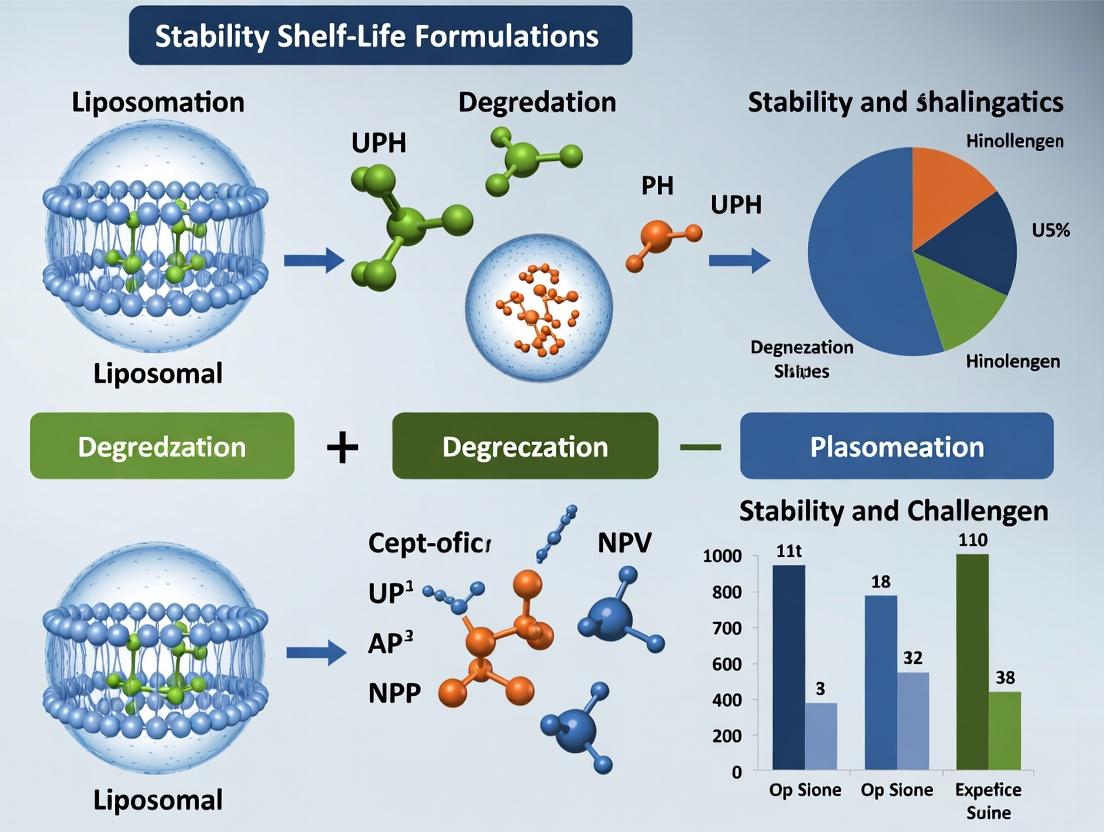
This comprehensive review addresses the critical stability and shelf-life challenges facing liposomal formulations in pharmaceutical development.
Liposome Stability and Shelf-Life: 2024 Challenges and Solutions for Pharmaceutical Development
Abstract
This comprehensive review addresses the critical stability and shelf-life challenges facing liposomal formulations in pharmaceutical development. It explores the fundamental mechanisms of liposome degradation, including oxidation, hydrolysis, aggregation, and drug leakage. We examine advanced formulation strategies, stabilization techniques, and robust analytical methodologies for characterization. The article provides actionable troubleshooting guidance and compares validation frameworks to ensure product efficacy and regulatory compliance, serving as a practical guide for researchers and drug development professionals.
Understanding the Science of Liposome Degradation: Key Mechanisms and Contributing Factors
Technical Support Center: Liposomal Formulation Troubleshooting
Troubleshooting Guides & FAQs
Q1: My liposomal formulation shows a rapid increase in particle size (aggregation/fusion) over 4 weeks at 4°C. What are the primary causes and solutions?
A: Aggregation is a common physical instability issue. Primary causes include insufficient surface charge (low zeta potential), inadequate steric stabilization, or phase transition of lipids at storage temperature.
- Immediate Action: Measure zeta potential. If |ζ| < ±20 mV, physical instability is likely.
- Solutions:
- Modify Lipid Composition: Increase molar percentage of charged lipids (e.g., DOTAP, DPPS) or incorporate PEGylated lipids (e.g., DSPE-PEG2000) at 5-10 mol% to enhance steric hindrance.
- Optimize Buffer: Ensure sufficient ionic strength (e.g., 10-50 mM HEPES or phosphate buffer) to shield charge without causing salt-induced aggregation. Avoid chloride ions if using cationic liposomes.
- Cyroprotectants: Add cryoprotectants like sucrose or trehalose (typically 5-10% w/v) to stabilize the lipid bilayer during storage.
Q2: How do I diagnose and mitigate chemical degradation (hydrolysis, oxidation) of phospholipids in my formulation?
A: Chemical integrity loss manifests as a decrease in encapsulation efficiency (EE%), increased peroxides, and lysolipid formation.
- Diagnosis Protocol:
- Thin-Layer Chromatography (TLC): Monitor for lysophosphatidylcholine and free fatty acid spots.
- UV/Vis for Oxidation: Test for conjugated dienes at 234 nm or use TBARS assay for malondialdehyde.
- Mitigation Strategies:
- Antioxidants: Incorporate α-tocopherol (0.1-0.5 mol%) or BHT into the lipid phase during preparation.
- Chelating Agents: Add EDTA (0.1 mM) to the aqueous buffer to chelate pro-oxidant metal ions.
- Inert Atmosphere & Packaging: Purge headspace with nitrogen or argon before vial sealing; use amber vials.
Q3: My liposome's encapsulated drug (a small molecule) is leaking >40% within 48 hours in serum-containing media. How can I improve retention?
A: This indicates compromised biological integrity (serum protein interaction) and/or bilayer permeability.
- Root Cause Analysis: Serum proteins (e.g., albumin, lipoproteins) can extract membrane components or the drug itself. High membrane fluidity exacerbates leakage.
- Improvement Protocol:
- Increase Membrane Rigidity: Use high-transition-temperature (Tm) phospholipids like DSPC (Tm ~55°C) instead of POPC.
- Cholesterol Modulation: Optimize cholesterol content to 30-50 mol% to tighten lipid packing and reduce permeability.
- Remote Loading: If applicable, employ pH-gradient or ammonium sulfate gradient methods to achieve higher internal drug concentration and more stable precipitation.
Q4: What is the standard protocol for accelerated stability testing of liposomal formulations?
A: Use ICH Q1A(R2) guidelines as a framework, adapting for liposome-specific parameters.
- Standard Protocol:
- Storage Conditions: 4°C (long-term), 25°C/60% RH (intermediate), 40°C/75% RH (accelerated). Sample at T=0, 1, 3, 6 months.
- Key Parameters to Measure:
- Physical: Particle Size (DLS), PDI, Zeta Potential, Visual Appearance (Tyndall effect).
- Chemical: Phospholipid Concentration (Bartlett assay), Drug Assay (HPLC), Oxidation Index.
- Performance: Encapsulation Efficiency (%EE), In Vitro Drug Release Profile.
- Analysis: Plot data vs. time. Significant change at accelerated conditions can predict shelf-life.
Table 1: Impact of Cholesterol Content on Liposome Stability (Mean ± SD, n=3)
| Cholesterol (mol%) | Size (nm) at t=0 | Size (nm) at t=30 days (4°C) | EE% Retention at t=30 days | Membrane Rigidity (Generalized) |
|---|---|---|---|---|
| 0 | 115 ± 3 | 245 ± 15 (Aggregated) | 52 ± 8% | Low |
| 20 | 118 ± 4 | 155 ± 10 | 75 ± 5% | Moderate |
| 40 | 122 ± 5 | 125 ± 6 | 92 ± 3% | High |
| 50 | 124 ± 6 | 129 ± 7 | 90 ± 4% | High |
Table 2: Effect of PEGylation on Serum Stability (Incubation in 50% FBS, 37°C)
| DSPE-PEG2000 (mol%) | Initial Size (nm) | Size after 24h (nm) | % Drug Retained after 24h |
|---|---|---|---|
| 0 | 120 ± 4 | 320 ± 25 | 28 ± 6 |
| 3 | 125 ± 5 | 180 ± 15 | 65 ± 7 |
| 5 | 130 ± 5 | 135 ± 8 | 88 ± 4 |
| 10 | 145 ± 8 | 150 ± 10 | 85 ± 5 |
Detailed Experimental Protocols
Protocol 1: Determination of Encapsulation Efficiency (EE%) via Mini-Column Centrifugation
- Materials: Sephadex G-50, 10 mL syringe, glass wool, centrifugation tubes.
- Method: a. Hydrate Sephadex in elution buffer (e.g., PBS) overnight. b. Pack a syringe barrel with glass wool, then fill with hydrated Sephadex to create a minicolumn. c. Place column in a centrifuge tube. Centrifuge at 1000 x g for 2 min to remove buffer. d. Apply 100 µL of liposome sample to the center of the dry gel bed. e. Centrifuge at 1000 x g for 2 min. The eluate contains purified liposomes. f. Lyse an aliquot of the eluate with 1% Triton X-100. g. Measure drug concentration in lysate (Ctotal) and in the original, untrapped solution (Cfree) via HPLC/UV. h. Calculation: EE% = [(Ctotal - Cfree) / C_total] x 100.
Protocol 2: Assessing Lipid Peroxidation via Thiobarbituric Acid Reactive Substances (TBARS) Assay
- Reagent Preparation: Prepare TBA reagent: 0.375% Thiobarbituric acid, 15% Trichloroacetic acid, 0.25N HCl.
- Procedure: a. Mix 0.5 mL of liposome suspension with 2 mL of TBA reagent in a glass tube. b. Heat mixture at 95°C for 45 minutes. c. Cool to room temperature, then centrifuge at 3000 rpm for 10 min. d. Measure absorbance of the supernatant at 532 nm. e. Generate a standard curve using malondialdehyde (MDA). Express results as nmol MDA per µmol phospholipid.
Visualizations
Title: The Stability Trilemma Root Cause Map
Title: Liposome Stability Testing & Optimization Workflow
The Scientist's Toolkit: Research Reagent Solutions
| Item | Function/Benefit | Typical Example/Concentration |
|---|---|---|
| High-Tm Phospholipids | Provides membrane rigidity; reduces permeability and fusion. | DSPC (1,2-distearoyl-sn-glycero-3-phosphocholine), Tm ~55°C. |
| Cholesterol | Modulates membrane fluidity and permeability; essential for stability. | Used at 30-50 mol% of total lipids. |
| PEGylated Lipids | Provides steric stabilization ("stealth" effect); reduces protein adsorption. | DSPE-PEG2000, typically at 3-10 mol%. |
| Charged Lipids | Provides electrostatic stabilization; influences cellular uptake. | Anionic: DPPS, DOPG. Cationic: DOTAP, DDAB. |
| Cryo-/Lyoprotectants | Protects liposome integrity during freeze-drying or low-temperature storage. | Sucrose or Trehalose, 5-10% (w/v) in aqueous buffer. |
| Antioxidants | Inhibits lipid peroxidation chain reactions. | α-Tocopherol (Vitamin E), 0.1-0.5 mol% in lipid phase. |
| Chelating Agents | Binds trace metal ions that catalyze oxidation. | EDTA, disodium salt, 0.01-0.1 mM in aqueous buffer. |
| Size Exclusion Media | For purifying liposomes from unencapsulated drug (desalting). | Sephadex G-50, Sepharose CL-4B. |
| Polycarbonate Membranes | For achieving narrow, homogeneous particle size distribution via extrusion. | Pore sizes: 100 nm, 200 nm. |
| Fluorescent Lipid Probes | For tracking membrane fusion, leakage, or cellular uptake. | NBD-PE, Rhodamine-PE, DiI, DiD. |
Troubleshooting Guides & FAQs
FAQ 1: How can I confirm that my liposome formulation is undergoing oxidation, and what are the immediate steps to mitigate it? Answer: Oxidation is indicated by an increase in conjugated dienes (UV absorbance at 234 nm), a rise in thiobarbituric acid reactive substances (TBARS), or a decrease in the concentration of encapsulated antioxidant-sensitive drugs. Immediate mitigation steps: 1) Immediately flush the preparation headspace with inert gas (N₂ or Argon). 2) Add metal chelators like EDTA (0.1 mM) to the buffer to sequester pro-oxidant metals. 3) For long-term storage, incorporate lipid-soluble antioxidants (e.g., α-tocopherol at 0.1-1 mol%) into the lipid bilayer and use amber vials or aluminum foil wrapping to protect from light.
FAQ 2: My liposome size is increasing over time. Is this aggregation or fusion, and how can I distinguish between them? Answer: An increase in mean hydrodynamic diameter (Dh) measured by Dynamic Light Scattering (DLS) can indicate either aggregation (clustering of vesicles) or fusion (merging of bilayers). To distinguish: Method A: Perform a dilution test. Gently dilute the sample. If the Dh returns to the original size, it's likely reversible aggregation. If the large particles persist, it suggests irreversible fusion or coalescence. Method B: Use a membrane-impermeable fluorescence quenching assay (e.g., with TI³⁺ or Co²⁺). Fusion leads to mixing of internal contents and a change in fluorescence signal, while aggregation does not.
FAQ 3: What is the most sensitive method to detect early-stage hydrolysis of phospholipids in my formulation? Answer: Liquid Chromatography-Mass Spectrometry (LC-MS) is the most sensitive and specific method. It can identify and quantify specific hydrolytic products like lysophospholipids and free fatty acids. A more accessible, common method is pH-Stat Titration. As hydrolysis releases fatty acids, the pH drops. The formulation is held at a constant pH by automatic titration with a mild base (e.g., NaOH). The volume of titrant used over time directly quantifies the rate of free fatty acid generation.
FAQ 4: My encapsulated hydrophilic drug is leaking rapidly at 4°C. Could this be hydrolysis-related? Answer: Possibly, but not directly. Hydrolysis of phospholipids compromises membrane integrity, creating defects that lead to increased permeability and drug leakage. However, rapid leakage at 4°C may also point to defects in the bilayer packing or phase separation caused by lipid composition or poor annealing during manufacture. Check for hydrolysis products via TLC or LC-MS. Also, verify your annealing protocol (temperature cycling above and below the phase transition temperature, Tm) was thorough.
FAQ 5: Are there standard thresholds for particle size increase or PDI that define a "failed" stability sample? Answer: There are no universal regulatory thresholds, as they depend on the intended use. However, common internal benchmarks in research are: 1) A mean diameter increase > 20% from initial value often indicates significant instability. 2) A Polydispersity Index (PDI) > 0.3 suggests a heterogeneous, potentially unstable population. For injectable formulations, criteria are stricter (e.g., PDI < 0.2 is often targeted). Always compare against your formulation's baseline.
Experimental Protocols
Protocol 1: Quantifying Lipid Oxidation via Thiobarbituric Acid Reactive Substances (TBARS) Assay Principle: Malondialdehyde (MDA), a secondary product of lipid peroxidation, reacts with thiobarbituric acid (TBA) to form a pink chromophore.
- Sample Prep: Mix 0.5 mL of liposome suspension with 1.0 mL of TBA reagent (0.375% TBA, 15% trichloroacetic acid, 0.25N HCl).
- Reaction: Heat the mixture at 95°C for 60 minutes in a water bath. Cool to room temperature.
- Measurement: Centrifuge at 3,000 rpm for 10 minutes to remove precipitate. Transfer the supernatant to a cuvette.
- Analysis: Measure absorbance at 532 nm against a blank (buffer + TBA reagent). Quantify MDA concentration using a standard curve prepared from 1,1,3,3-tetramethoxypropane. Express as nmol MDA per μmol phospholipid.
Protocol 2: Assessing Physical Stability via Dynamic Light Scattering (DLS) and Zeta Potential Principle: DLS measures hydrodynamic diameter and PDI; Zeta Potential indicates surface charge and colloidal stability.
- Sample Dilution: Dilute the liposome sample in the original filtered buffer (e.g., 10 mM HEPES, 150 mM NaCl, pH 7.4) to achieve a count rate of 200-500 kcps. Use the same buffer for all time points.
- Equilibration: Allow the sample in the cuvette to equilibrate to 25°C in the instrument for 120 seconds.
- DLS Measurement: Perform a minimum of 12 runs per measurement. Use software to calculate the intensity-weighted mean diameter (Z-average) and PDI from the correlation function.
- Zeta Potential Measurement: Transfer diluted sample to a dedicated folded capillary cell. Measure the electrophoretic mobility and convert to zeta potential using the Smoluchowski model. Report as the average of at least 5 measurements.
Protocol 3: Monitoring Hydrolysis by Thin-Layer Chromatography (TLC) Principle: Separation and visualization of lipid components to detect hydrolysis products (lysophospholipids, free fatty acids).
- Lipid Extraction: Extract lipids from 100 μL of liposome suspension using the Bligh & Dyer method (chloroform:methanol:water, 1:2:0.8, then 2:2:1.8).
- Spotting: Concentrate the chloroform (lower) phase under N₂ gas. Reconstitute in 50 μL chloroform. Spot 10-20 μL on a silica gel 60 TLC plate alongside standards (PC, LPC, FFA).
- Chromatography: Develop the plate in a sealed tank with a mobile phase of chloroform:methanol:acetic acid:water (65:25:10:4, v/v). Allow the solvent front to reach ~1 cm from the top.
- Visualization: Let the plate dry. Spray with 10% copper sulfate in 8% phosphoric acid solution. Char the plate on a hotplate (~160°C) until bands appear. Compare Rf values to standards to identify degradation products.
Table 1: Common Indicators and Analytical Methods for Primary Degradation Pathways
| Pathway | Key Indicators | Primary Analytical Method | Typical Acceptable Limit (Research Grade) |
|---|---|---|---|
| Oxidation | Conjugated dienes (A234), TBARS, loss of antioxidant | UV-Vis Spectroscopy, TBARS Assay, HPLC | MDA < 5 nmol/μmol PL; A234 increase < 20% |
| Hydrolysis | Lysophospholipid & free fatty acid formation, pH drop | TLC, LC-MS, pH-Stat Titration | LPC < 5% of total phospholipid |
| Aggregation/Fusion | Increase in mean diameter, PDI, visual precipitation | Dynamic Light Scattering, Microscopy | Size increase < 20%; PDI < 0.3 |
Table 2: Impact of Storage Conditions on Degradation Rates
| Condition | Oxidation Risk | Hydrolysis Risk | Aggregation Risk | Recommended For |
|---|---|---|---|---|
| 4°C, dark, N₂ blanket | Low | Very Low | Medium-High* | Short-term storage (weeks) |
| -20°C (no cryoprotectant) | Low | Low | Very High | Not recommended |
| -80°C with 5% Trehalose | Very Low | Low | Low | Long-term storage (>1 year) |
| Lyophilized, 4°C | Very Low | Very Low | Very Low | Long-term storage (years) |
*Risk depends on lipid charge and buffer ionic strength.
Diagrams
Degradation Pathway Analysis Workflow
Oxidative Degradation Cascade in Liposomes
The Scientist's Toolkit: Research Reagent Solutions
Table 3: Essential Materials for Stability Studies
| Item | Function / Role in Stability Research | Example Product/Catalog |
|---|---|---|
| Nitrogen/Argon Gas Canister | Creates an inert atmosphere during preparation and storage to prevent oxidation. | High-purity (≥99.99%) nitrogen gas. |
| Butylated Hydroxytoluene (BHT) / α-Tocopherol | Chain-breaking antioxidants added to the lipid phase to inhibit peroxidation. | Sigma-Aldrich, TCI Chemicals. |
| EDTA (Disodium Salt) | Metal chelator added to aqueous buffers to sequester iron/copper ions that catalyze oxidation. | Thermo Fisher Scientific. |
| Trehalose Dihydrate | Cryo- & lyo-protectant. Forms a glassy matrix to stabilize bilayer during freeze-drying/freezing. | Avantor, Ferro Pfanstiehl. |
| HEPES Buffer | Non-volatile, zwitterionic buffer providing stable pH (7.0-8.5) with minimal metal binding. | Gibco, Corning. |
| Sephadex G-50/G-75 | Gel filtration medium for removing unencapsulated drugs or external degradation markers. | Cytiva Life Sciences. |
| Polycarbonate Membranes (50-200 nm) | For extrusion to create homogeneous, stable liposomes with reduced aggregation propensity. | Whatman, Avanti Polar Lipids. |
| Amber Glass Vials | Provides protection from light-induced degradation (photo-oxidation). | Wheaton, Qorpak. |
| TLC Silica Gel 60 Plates | For monitoring lipid composition and detecting hydrolytic products (LPC, FFA). | Merck Millipore. |
| DLS/Zeta Potential Reference Latex | Standard particles for verifying instrument performance and calibration. | Malvern Panalytical. |
Troubleshooting Guides & FAQs
FAQ: Formulation Stability
Q1: Why are my liposomes aggregating or fusing immediately after preparation? A: This is often due to insufficient membrane rigidity and charge repulsion. The primary culprit is an incorrect phospholipid-to-cholesterol ratio. Cholesterol content below 30 mol% (for saturated phospholipids like DSPC) can lead to excessive membrane fluidity and fusion. Furthermore, the absence of a charged stabilizer (e.g., DSPG, DOPG for negative charge; DOTAP for positive charge) reduces electrostatic repulsion between particles, promoting aggregation.
Q2: My liposomes show high drug leakage during storage. How can I improve retention? A: Drug leakage indicates compromised membrane integrity. First, verify your cholesterol content. For gel-phase phospholipids (e.g., DSPC), increasing cholesterol to 40-50 mol% can optimally reduce permeability. Second, consider the drug's log P. For hydrophilic drugs, use a high-entrapment protocol (e.g., active loading for amphipathic drugs). For hydrophobic drugs, ensure the lipid bilayer is saturated and use antioxidants like α-tocopherol to prevent peroxidation of unsaturated lipids, which creates leaks.
Q3: What causes the formation of non-lamellar or irregular structures in my cryo-TEM images? A: This typically arises from phospholipid packing stress. Using a single, unsaturated phospholipid (e.g., POPC) with a low phase transition temperature (Tm) can lead to unstable bilayers, especially under temperature fluctuations or in the presence of certain drugs. Incorporating cholesterol (≥30 mol%) or a helper lipid like DOPE (for fusogenic formulations) must be done with care, as DOPE promotes hexagonal phase formation. Maintain a balanced ratio and consider using phospholipid mixtures (e.g., adding DSPC to POPC) to modulate packing.
Q4: How do I prevent hydrolysis and oxidation of my phospholipids during long-term storage? A: Degradation is a primary shelf-life challenge.
- Hydrolysis: Ensure the formulation buffer is at neutral pH (6.5-7.5), as extremes catalyze ester bond cleavage. Lyophilization with cryoprotectants (e.g., sucrose, trehalose at 1:10-50 sugar:lipid mass ratio) is the most effective long-term strategy.
- Oxidation: Use fully saturated phospholipids (e.g., HSPC, DPPC) when possible. For unsaturated lipids, add 0.1-0.3 mol% of the antioxidant α-tocopherol. Purge all solutions with inert gas (N₂ or Ar) before use and store finished liposomes under an inert atmosphere in opaque vials at 4°C.
Q5: My PEGylated liposomes still show rapid clearance in vivo. What might be wrong? A: This suggests poor PEG coating or instability. Ensure the PEG-lipid conjugate (e.g., DSPE-PEG2000) is at least 5-10 mol% of the total lipid. Verify the chemical stability of the PEG-lipid linker; some are prone to hydrolysis. Also, check that your extrusion/purification process isn't selectively removing PEG-lipids. Use a post-insertion method where PEG-lipids are incubated with pre-formed liposomes to ensure surface coverage.
Experimental Protocols
Protocol 1: Assessing Membrane Rigidity via Fluorescence Polarization Objective: Quantify the impact of cholesterol on phospholipid bilayer microviscosity. Materials: DPH fluorescent probe (1,6-diphenyl-1,3,5-hexatriene), liposomes with varying cholesterol (0-50 mol%), fluorescence spectrophotometer with polarizers. Method:
- Incorporate DPH probe at 0.5 mol% into the lipid film before hydration.
- Hydrate and size liposomes as per standard protocol.
- Dilute liposome suspension to an optical density <0.1 at 350 nm.
- Set excitation to 360 nm and emission to 430 nm.
- Measure fluorescence intensity with polarizers in vertical (Ivv) and vertical/horizontal (Ivh) orientations.
- Calculate anisotropy (r) = (Ivv - G * Ivh) / (Ivv + 2 * G * Ivh), where G is the instrument grating factor.
- Plot anisotropy vs. cholesterol mol%. Higher 'r' indicates higher membrane order.
Protocol 2: Active Loading of Amphipathic Drugs (Remote Loading) Objective: Achieve high entrapment efficiency (>90%) for drugs like doxorubicin. Materials: Ammonium sulfate, DSPC/Cholesterol/DSPG (55:40:5 molar ratio), drug solution, pH meter, dialysis tubing. Method:
- Prepare liposomes using a 250 mM ammonium sulfate solution (pH 5.4) as the hydration buffer.
- Size the liposomes to 100 nm via extrusion.
- Remove exterior ammonium sulfate via dialysis against saline or iso-osmotic sucrose.
- Create a transmembrane pH gradient (acidic interior).
- Incubate the drug solution (e.g., doxorubicin HCl, 10 mg/mL) with liposomes at 60°C (above Tm of DSPC) for 30-60 minutes. Drug, in its uncharged form, crosses the membrane and precipitates as sulfate salt inside.
- Remove unencapsulated drug via dialysis or size exclusion chromatography.
Protocol 3: Accelerated Stability Testing for Shelf-Life Prediction Objective: Estimate formulation stability over time under stressed conditions. Materials: Liposome samples, controlled temperature incubators (4°C, 25°C, 40°C), DLS for PDI, HPLC for drug assay. Method:
- Aliquot identical liposome formulations into sterile vials.
- Store aliquots at 4°C (refrigerated control), 25°C (room temperature), and 40°C (accelerated condition).
- At predetermined intervals (0, 1, 2, 4, 8, 12 weeks), sample vials from each condition.
- Analyze for:
- Physical Stability: Mean diameter and PDI via DLS. Aggregation is indicated by >20% size increase or PDI >0.3.
- Chemical Stability: Use HPLC to quantify remaining parent drug and phospholipid, tracking the appearance of degradation peaks.
- Leakage: Measure percent drug retained using a separation method (mini-column centrifugation, dialysis) followed by assay.
- Use the Arrhenius equation model (for chemical degradation) to extrapolate degradation rates at recommended storage temperature (e.g., 4°C).
Data Presentation
Table 1: Impact of Cholesterol Content on Liposome Properties (DSPC-based formulation)
| Cholesterol (mol%) | Phase Transition Temp (Tm) Shift | Anisotropy (DPH probe) | Drug Leakage (% over 30 days at 4°C) | PDI after 60 days |
|---|---|---|---|---|
| 0 | ~55°C (no shift) | 0.15 ± 0.02 | 45.2 ± 5.1 | 0.35 ± 0.08 |
| 20 | Broadening | 0.22 ± 0.03 | 22.8 ± 3.7 | 0.18 ± 0.04 |
| 33 | Abolished | 0.28 ± 0.01 | 8.5 ± 1.9 | 0.09 ± 0.02 |
| 50 | Abolished | 0.30 ± 0.01 | 5.1 ± 1.2 | 0.07 ± 0.01 |
Table 2: Functional Excipients and Their Roles in Stability
| Excipient (Example) | Typical Concentration | Primary Function | Mechanism of Action |
|---|---|---|---|
| Cholesterol | 30-50 mol% | Membrane stiffener, permeability reducer | Fills free volume between phospholipid chains, orders acyl chains, condenses bilayer |
| DSPE-PEG2000 | 5-10 mol% | Steric stabilizer ("Stealth" property), reduces opsonization | Creates a hydrophilic, steric barrier that impedes protein adsorption and aggregation |
| α-Tocopherol (Vitamin E) | 0.1-0.3 mol% | Antioxidant | Scavenges free radicals, chain-breaking antioxidant for unsaturated lipid peroxidation |
| Sucrose/Trehalose | 5-10% w/v (for lyo) | Cryoprotectant/Lyoprotectant | Forms a glassy matrix, replaces water to stabilize bilayer during freeze-drying |
| DSPG (Negatively Charged) | 5-20 mol% | Electrostatic stabilizer, prevents aggregation | Introduces negative surface charge, increases zeta potential, enhances repulsion |
| Histidine Sucrose Buffer | 10 mM Histidine, 9% Sucrose | Stabilizing buffer for long-term liquid storage | Provides optimal pH (∼6.5) and osmolarity, reduces hydrolysis |
Diagrams
Diagram 1: Cholesterol Modulates Membrane Fluidity & Stability
Diagram 2: Pathways of Liposome Stabilization Against Aggregation
Diagram 3: Experimental Workflow for Formulation Optimization
The Scientist's Toolkit: Research Reagent Solutions
| Item | Function/Benefit |
|---|---|
| HSPC (Hydrogenated Soy PC) | Fully saturated, high-phase transition (Tm ~53°C) phospholipid. Provides inherent oxidation resistance and forms rigid bilayers, ideal for stable, long-circulating liposomes. |
| Cholesterol (Pharmaceutical Grade) | The gold standard for modulating membrane fluidity and reducing permeability. Essential for preventing drug leakage and improving physical stability. |
| DSPE-PEG2000 (Ammonium Salt) | Polyethylene glycol-conjugated lipid for conferring "stealth" properties. Reduces clearance by the mononuclear phagocyte system (MPS), extending circulation half-life. |
| α-Tocopherol (Synthetic, >98%) | Lipid-soluble antioxidant. Protects unsaturated phospholipids from peroxidation chain reactions during preparation and storage, critical for shelf-life. |
| Ammonium Sulfate (for Active Loading) | Creates a transmembrane pH gradient for remote loading of weak base/acid drugs, enabling >90% encapsulation efficiency (e.g., for doxorubicin, vincristine). |
| Sucrose/Trehalose (Lyophilization Grade) | Cryo-/Lyoprotectant. Forms a stable amorphous glass during freeze-drying, preserving liposome integrity and preventing fusion/aggregation upon reconstitution. |
| Histidine-Sucrose Buffer (pH 6.5) | Optimized buffer system for liquid storage. Histidine provides buffering capacity at a pH that minimizes hydrolysis, while sucrose maintains osmolarity. |
| Precision Extruder with Polycarbonate Membranes (50-200 nm) | For achieving narrow, monodisperse size distributions. Essential for reproducible biodistribution and clearance profiles. |
| Mini-Extrusion Columns (Size Exclusion) | Rapid, low-dilution method for separating unencapsulated drug from liposomes post-formulation, crucial for accurate encapsulation efficiency calculation. |
Troubleshooting Guides & FAQs
Q1: During my liposome preparation, I observed significant aggregation and precipitation when adjusting the pH of the external buffer. What went wrong and how can I prevent it?
A: This is a common issue caused by a rapid pH change near the lipid's isoelectric point, neutralizing surface charge and reducing electrostatic repulsion. Solution: Always titrate pH slowly and with gentle mixing (e.g., on a magnetic stirrer). Use a buffer with adequate capacity for your target pH range. Pre-equilibrate all solutions to the same temperature before mixing to minimize thermal gradients that can exacerbate aggregation.
Q2: My liposomal formulation shows a drastic increase in size (by DLS) and a decrease in zeta potential after incubation at 37°C for 24 hours. What does this indicate?
A: This indicates physical instability likely due to lipid hydrolysis and/or membrane fusion. Elevated temperature accelerates the hydrolysis of ester bonds in phospholipids (like DSPC, DPPC), leading to fatty acid and lysolipid formation, which destabilizes the bilayer. Troubleshooting Steps: 1) Verify the purity and quality of your lipids via TLC or HPLC. 2) Incorporate cholesterol (up to 50 mol%) to enhance packing and reduce permeability. 3) Consider using PEGylated lipids to provide steric stabilization against fusion. 4) Ensure your storage buffer contains antioxidants like EDTA (0.1 mM) to chelate pro-oxidative metals.
Q3: The encapsulation efficiency (EE%) of my hydrophilic drug drops sharply when I increase the ionic strength of the hydration medium. Why does this happen and how can I mitigate it?
A: High ionic strength compresses the electrostatic double layer around liposomes. If the drug is charged, this reduces the driving force for active loading (e.g., ammonium sulfate gradient) and can cause drug leakage due to altered osmolarity. Mitigation Protocol: 1) Use an active loading method (remote loading) after liposome formation in a low-ionic-strength buffer. 2) If high ionic strength is biologically necessary, adjust osmolarity carefully with non-ionic agents like sucrose or sorbitol to match the internal liposome lumen and minimize osmotic shock. 3) Switch to a neutral or zwitterionic buffer system if drug charge is the primary factor.
Q4: I'm observing inconsistent shelf-life results for the same formulation across different batches. The only variable seems to be ambient lab temperature fluctuations. How critical is this?
A: Extremely critical. Lipid bilayer phase behavior is exquisitely sensitive to temperature. Fluctuations, especially around the phase transition temperature (Tm) of the main lipid, can cause repeated gel-to-liquid crystalline transitions, leading to drug leakage and aggregation. Action Plan: 1) Characterize the Tm of your lipid blend by DSC. 2) Store and conduct stability tests in a temperature-controlled incubator or stability chamber, not on a lab bench. 3) For long-term studies, use accelerated stability testing at controlled elevated temperatures (e.g., 4°C, 25°C, 40°C) and apply the Arrhenius equation for prediction, but validate with real-time data.
Q5: My anionic liposome formulation is stable at pH 7.4 but aggregates immediately in pH 6.5 buffer (simulating tumor microenvironment). How can I improve stability across this pH range?
A: This suggests your stabilizing negative charge (e.g., from DSPG, DOPS) is being protonated at lower pH, reducing zeta potential. Formulation Optimization: 1) Incorporate a pH-responsive stabilizer like PEG-lipid or a charge-reversal lipid that remains neutral/negative at pH 6.5. 2) Increase the molar percentage of cholesterol (up to 45%) to provide pH-independent physical stability. 3) Use a combination of ionic and non-ionic (e.g., DOPE) lipids to maintain bilayer integrity despite charge changes.
Table 1: Impact of Temperature on Liposome Stability (DPPC:Cholesterol 55:45)
| Storage Temp (°C) | Size Increase (nm/week) | PDI Change (/week) | Drug Leakage (%/week) | Recommended Max Duration |
|---|---|---|---|---|
| 4 (Refrigerated) | +2.1 ± 0.5 | +0.02 ± 0.01 | 0.8 ± 0.3 | 6 months |
| 25 (Room Temp) | +15.5 ± 3.2 | +0.08 ± 0.02 | 5.2 ± 1.1 | 2 weeks |
| 37 (Physiological) | +42.7 ± 8.9 | +0.15 ± 0.03 | 18.7 ± 3.5 | 72 hours |
| 50 (Accelerated) | >100 | >0.25 | >50 | 24 hours |
Table 2: Effect of pH and Ionic Strength on Zeta Potential & Size
| Formulation | pH 5.0 | pH 7.4 | pH 9.0 | +150mM NaCl (pH 7.4) |
|---|---|---|---|---|
| Anionic (DSPC:DSPG) | ZP (mV): -15 ± 3 Size (nm): 125 ± 5 | ZP (mV): -45 ± 5 Size (nm): 118 ± 4 | ZP (mV): -50 ± 4 Size (nm): 120 ± 5 | ZP (mV): -12 ± 2 Size (nm): 155 ± 12 |
| Cationic (DOTAP:DOPE) | ZP (mV): +35 ± 4 Size (nm): 110 ± 8 | ZP (mV): +25 ± 3 Size (nm): 105 ± 6 | ZP (mV): +10 ± 5 Size (nm): 130 ± 15 | ZP (mV): +5 ± 1 Size (nm): >500 (agg.) |
| Neutral (DPPC:Chol) | ZP (mV): -2 ± 1 Size (nm): 95 ± 3 | ZP (mV): -3 ± 1 Size (nm): 94 ± 2 | ZP (mV): -4 ± 1 Size (nm): 96 ± 3 | ZP (mV): -2 ± 1 Size (nm): 98 ± 4 |
Experimental Protocols
Protocol 1: Assessing Thermal Stability via Dynamic Light Scattering (DLS) and Zeta Potential Objective: To quantitatively evaluate the impact of temperature stress on liposome size, PDI, and surface charge.
- Sample Preparation: Prepare 1 mL aliquots of your liposome formulation (1-10 mg lipid/mL) in appropriate buffer.
- Incubation: Place aliquots in controlled temperature environments (e.g., 4°C, 25°C, 37°C, 50°C) for defined periods (0, 1, 3, 7 days).
- Equilibration: Before measurement, equilibrate each sample to 25°C for 15 minutes in the DLS instrument's sample chamber.
- DLS Measurement: Load sample into a clean, dust-free cuvette. Measure size and PDI using a minimum of 12 sub-runs. Perform triplicate measurements.
- Zeta Potential Measurement: Transfer sample to a zeta potential cell. Measure electrophoretic mobility and convert to zeta potential using the Smoluchowski model. Perform a minimum of 10 runs.
- Data Analysis: Plot mean diameter and zeta potential vs. time for each temperature. Use ANOVA to determine significance (p < 0.05).
Protocol 2: Determining pH- and Ionic Strength-Induced Leakage using a Fluorescence Dequenching Assay Objective: To monitor the integrity of the liposomal bilayer under varying pH and ionic strength conditions.
- Liposome Preparation: Prepare liposomes via thin-film hydration and extrusion, hydrating with a buffer containing a high concentration of a fluorescent dye (e.g., Calcein at 80 mM, which is self-quenched).
- Purification: Remove unencapsulated dye via size-exclusion chromatography (Sephadex G-50) using an isotonic, pH 7.4 buffer (e.g., HEPES with 100 mM NaCl).
- Stress Application: Dilute the purified liposome stock 1:100 into a series of stressor buffers with varying pH (5.0-8.0) and ionic strength (0-300 mM NaCl).
- Fluorescence Measurement: Immediately measure fluorescence intensity (FI) at λex/λem ~490/520 nm (Finitial). Add a detergent (e.g., Triton X-100, 0.1% v/v) to lyse all liposomes and measure total fluorescence (Ftotal).
- Calculation: Calculate percent leakage at time t: % Leakage = [(Ft - Finitial) / (Ftotal - Finitial)] * 100. Monitor over 60-180 minutes.
Visualizations
Title: Liposome Instability Pathways from Environmental Stressors
Title: Experimental Workflow for Stress Testing Liposomes
The Scientist's Toolkit: Key Research Reagent Solutions
| Reagent/Material | Function & Rationale |
|---|---|
| High-Purity Phospholipids (e.g., DSPC, DPPC, DOPC) | Primary bilayer components. High purity (>99%) is critical for reproducible phase transition temperatures and low chemical instability (hydrolysis/oxidation). |
| Cholesterol (Pharma Grade) | Membrane stabilizer. Modulates bilayer fluidity, increases packing density, and reduces permeability to ions and small molecules, enhancing shelf-life. |
| PEGylated Lipids (e.g., DSPE-PEG2000) | Steric stabilizer. Creates a hydrophilic corona that reduces liposome aggregation by steric repulsion, particularly under high ionic strength or variable pH. |
| HEPES, Tris, Citrate Buffers | pH Control. Provide buffering capacity across different ranges (pH 3-10). Choice affects lipid charge and stability. HEPES is common for physiological pH. |
| Calcein (Fluorescent Dye) | Encapsulation/leakage marker. Used at high concentration for self-quenching assays. Ideal for measuring membrane integrity under stress. |
| Sephadex G-50 / PD-10 Columns | Size-exclusion chromatography media. Essential for separating unencapsulated dyes/drugs from liposomes after preparation. |
| DynaLinks Zeta Potential Standards | Calibration standards for zeta potential instruments (e.g., -50 mV ± 5 mV). Ensures accuracy when measuring surface charge changes due to pH/ionic strength. |
| Ethylenediaminetetraacetic Acid (EDTA) | Chelating agent. Added to buffers (0.01-0.1 mM) to chelate trace metal ions that catalyze lipid peroxidation, improving chemical stability. |
| Trehalose or Sucrose | Cryo-/Lyoprotectant and osmotic agent. Protects liposomes during freeze-drying and can be used to adjust osmolarity without increasing ionic strength. |
Recent Research Insights into Membrane Permeability and Drug Leakage Kinetics
Technical Support Center: Troubleshooting Liposomal Stability Experiments
FAQs & Troubleshooting Guides
Q1: During our in vitro release studies, we observe rapid, non-sustained drug leakage from our liposomes, compromising the intended sustained release profile. What are the primary culprits and how can we diagnose them?
A1: This is a classic symptom of compromised membrane integrity or inappropriate core loading. Follow this diagnostic protocol:
Immediate Checks:
- Buffer Osmolarity & pH: Verify that the release medium (e.g., PBS) matches the internal liposome buffer in osmolarity (±10 mOsm/kg). A significant mismatch causes rapid osmotic shock. Use a micro-osmometer.
- Temperature Control: Ensure the release apparatus (e.g., dialysis cassette, Franz cell) is maintained at a stable 37°C ± 0.5°C. Fluctuations accelerate leakage.
Systematic Investigation:
Protocol A: Membrane Integrity Assessment via Carboxyfluorescein (CF) Assay.
- Principle: Self-quenched CF is encapsulated at high concentration. Leakage and dilution lead to de-quenching and a measurable fluorescence increase.
- Procedure:
- Prepare liposomes loaded with 100 mM CF in CF buffer (10 mM Tris, pH 7.4).
- Separate unencapsulated CF via size-exclusion chromatography (e.g., Sephadex G-50 column).
- Dilute purified liposomes 1:100 into your standard release medium (pre-warmed to 37°C).
- Immediately measure fluorescence (λex ~492 nm, λem ~517 nm) over 60 minutes.
- At 60 min, add 10% v/v Triton X-100 to lyse all liposomes for 100% leakage value.
- Interpretation: A rapid spike in fluorescence within the first 5-10 minutes indicates major membrane defects or poor sealing. A slow, sustained increase is ideal.
Protocol B: Lipid Composition Analysis via HPLC-ELSD.
- Principle: Quantifies the actual molar ratio of key lipid components (e.g., Cholesterol to Phospholipid) post-preparation, which critically dictates permeability.
- Procedure:
- Extract lipids from your final formulation using a Bligh & Dyer chloroform-methanol extraction.
- Analyze using a normal-phase HPLC column (e.g., silica) with an Evaporative Light Scattering Detector (ELSD).
- Compare peak areas against a standard curve for each pure lipid component (DSPC, Cholesterol, PEGylated lipid).
- Interpretation: A Cholesterol/Phospholipid ratio below 0.5:1 (mol/mol) often leads to high permeability. Recent data (2023-2024) suggests optimal stability for saturated lipids lies between 0.6:1 and 0.8:1.
Q2: Our stability studies show a significant increase in particle size and PDI over 4 weeks at 4°C, suggesting aggregation. How can we differentiate between aggregation due to membrane fusion versus drug crystallization-induced instability?
A2: Differentiation is key to applying the correct corrective formulation strategy.
Perform Asymmetric Flow Field-Flow Fractionation (AF4) with Multi-Angle Light Scattering (MALS):
- This separates species by hydrodynamic size without column shear forces. A primary peak with a consistent, larger radius of gyration (Rg) suggests fusion. A secondary, distinct peak with high light scattering intensity may indicate large, crystalline drug aggregates.
Conduct Cryo-Transmission Electron Microscopy (Cryo-TEM):
- The gold standard for visualization. Prepare vitrified samples from your stability time points.
- Fusion: Appears as multilamellar structures, onion-like vesicles, or large, unilamellar vesicles with a single, continuous bilayer.
- Drug Crystallization: Shows as electron-dense, needle-like or irregular crystalline structures either inside the liposome core or attached to the membrane.
Differential Scanning Calorimetry (DSC) Diagnostic:
- Run DSC on your degraded sample versus a fresh one.
- A shifted or broadened main lipid phase transition peak suggests changes in membrane packing (fusion).
- A new, sharp endothermic or exothermic peak at a temperature distinct from the lipid transition likely corresponds to drug crystal melting/recrystallization.
Q3: When developing remote loading (ammonium sulfate/pH gradient) for a novel weakly basic drug, the loading efficiency is consistently low (<30%). What are the most common points of failure in the gradient system?
A3: Low efficiency typically indicates a collapsed or insufficient ion gradient.
- Troubleshooting Steps:
- Validate the Internal Buffer: Post-extrusion/pre-loading, dialyze a liposome sample against the external buffer (e.g., saline). Measure the internal pH using a pH-sensitive fluorescent probe like 8-hydroxypyrene-1,3,6-trisulfonic acid (HPTS). A ΔpH of >2.5 units (e.g., internal pH ~4.0, external ~7.4) is required for efficient loading.
- Check Drug Solubility & pKa: The drug's pKa must be at least 2 units higher than the target internal pH for effective protonation and trapping. Confirm drug solubility in the external buffer; precipitation prevents uptake.
- Optimize Incubation Parameters: Recent protocols emphasize precise temperature control. For many saturated phospholipid systems (e.g., DSPC), incubation at 55-60°C for 20-30 minutes is optimal—hot enough to allow drug permeation but not so hot as to destroy the gradient. Use a thermomixer with precise control.
Table 1: Impact of Lipid Saturation and Cholesterol Content on Drug Leakage Half-life (t1/2) at 37°C in PBS.
| Phospholipid (Saturation) | Cholesterol:Phospholipid Ratio (mol/mol) | Leakage t1/2 of Doxorubicin (hours) | Key Insight |
|---|---|---|---|
| DOPC (Di-unsaturated) | 0.0:1 | 2.5 ± 0.3 | Highly permeable, unsuitable for sustained release. |
| DOPC (Di-unsaturated) | 0.4:1 | 8.1 ± 1.2 | Cholesterol significantly stabilizes fluid bilayers. |
| DSPC (Di-saturated) | 0.0:1 | 15.5 ± 2.0 | Saturated chains inherently reduce permeability. |
| DSPC (Di-saturated) | 0.5:1 (Common Ratio) | 120 ± 18 | Standard for many commercial formulations. |
| DSPC (Di-saturated) | 0.8:1 (Optimized) | 240 ± 36 | Recent finding (2024): Near-maximal packing density minimizes leakage. |
Table 2: Effect of PEGylation Density on Serum Protein Adsorption and Accelerated Leakage in 50% FBS.
| PEG2000-DSPE Mol % | "Mushroom" to "Brush" Transition | Protein Corona Thickness (nm, DLS) | % Leakage at 24h (vs. PBS control) |
|---|---|---|---|
| 0.5% | Mushroom | 8.2 ± 1.5 | 85% ± 6% |
| 3.0% | Transition Zone | 5.1 ± 0.9 | 45% ± 5% |
| 5.0% | Dense Brush | 2.0 ± 0.5 | <15% ± 3% |
| 10.0% | Dense Brush | 2.5 ± 0.6 | 18% ± 4% (Note: potential micelle formation) |
Experimental Protocol: Determining Activation Energy (Ea) of Leakage
Title: Kinetics-Based Stability Screening
Objective: To calculate the activation energy (Ea) of drug leakage, a key predictive parameter for shelf-life, using the Arrhenius equation.
Materials: Purified drug-loaded liposome formulation, dialysis cassettes (10 kDa MWCO), HPLC system with relevant drug detection, precision water baths.
Procedure:
- Sample Preparation: Aliquot identical volumes of your liposome formulation into dialysis cassettes.
- Incubation: Place each cassette into a large volume (e.g., 500x) of sink buffer (PBS, pH 7.4). Incubate separate batches at four controlled temperatures: 4°C, 25°C, 37°C, and 45°C.
- Sampling: At predetermined time points (e.g., 0, 2, 8, 24, 48, 96h), withdraw a small volume from the external sink buffer. Replace with fresh buffer.
- Analysis: Quantify the amount of leaked drug in each sample via HPLC.
- Calculation: a. Determine the first-order leakage rate constant (k) at each temperature from the slope of Ln(% Remaining) vs. time. b. Plot Ln(k) vs. 1/Temperature (K⁻¹) (Arrhenius plot). c. The slope of the linear fit is equal to -Ea/R, where R is the gas constant (8.314 J/mol·K).
Interpretation: A higher Ea indicates leakage is more sensitive to temperature change, suggesting poorer intrinsic stability at storage temperatures.
Visualizations
Diagram Title: Drug Leakage Pathway from Liposome Core
Diagram Title: Liposome Stability Issue Diagnostic Workflow
The Scientist's Toolkit: Key Research Reagent Solutions
Table 3: Essential Materials for Membrane Permeability & Leakage Studies
| Reagent / Material | Function & Rationale | Key Consideration for Stability |
|---|---|---|
| 1,2-distearoyl-sn-glycero-3-phosphocholine (DSPC) | Saturated phospholipid providing a high phase transition temperature (~55°C), forming a low-permeability "gel" state membrane at body/storage temperatures. | Primary building block for stable formulations. Must be stored under inert gas (N₂/Ar) at -20°C to prevent oxidation. |
| Cholesterol (Pharmaceutical Grade) | Modulates membrane fluidity and packing density. At optimal ratios (>0.5:1), it eliminates phase transitions, reduces permeability to small molecules, and inhibits fusion. | Source purity is critical. Use >99% purity. Pre-solubilize in organic solvent for reproducible film formation. |
| PEG2000-DSPE (mPEG-DSPE) | Polyethylene glycol conjugated lipid. Creates a steric hydration barrier ("PEG brush") at ~5 mol% to reduce opsonization and serum protein-induced leakage. | Recent Insight: High mol% (>10%) can destabilize bilayer, promoting micelle formation. Batch variability in PEG chain length must be monitored. |
| Carboxyfluorescein (CF) | Water-soluble, self-quenching fluorescent dye. The gold standard probe for rapid, sensitive measurement of membrane integrity and leakage kinetics. | Prepare fresh CF solution for each experiment. Purify encapsulated CF via gel filtration immediately before assay to remove all external dye. |
| Ammonium Sulfate, >99.5% | Used to create transmembrane pH gradients for active remote loading of weakly basic drugs, dramatically increasing encapsulation efficiency. | Use highest purity to avoid trace metals that catalyze lipid oxidation. Internal buffer pH must be verified post-preparation (e.g., with HPTS). |
| Sephadex G-50 / PD-10 Desalting Columns | For rapid separation of unencapsulated drugs/dyes from liposome suspensions during purification and assay setup. | Column equilibration buffer must match the final desired external buffer in osmolarity and pH to avoid inducing leakage during purification. |
| 8-Hydroxypyrene-1,3,6-Trisulfonic Acid (HPTS) | pH-sensitive fluorescent probe used to directly measure and validate the internal pH of liposomes, confirming active loading gradient integrity. | Requires a separate liposome batch prepared with encapsulated HPTS. Calibrate fluorescence ratio (λ_ex 405/450) with buffers of known pH. |
Advanced Formulation and Stabilization Strategies for Long-Lasting Liposomes
Troubleshooting Guides & FAQs
Q1: Why do my liposomes aggregate or fuse upon reconstitution after lyophilization? A: This is a classic sign of insufficient cryoprotection. The ice crystals formed during freezing can mechanically disrupt the liposomal bilayer. Ensure you are using an optimal type and concentration of cryoprotectant (typically 5-10% w/v disaccharides like trehalose or sucrose). The cryoprotectant must be present on both sides of the bilayer; include it in the hydration medium and during the lipid film formation if using passive loading.
Q2: How can I minimize residual moisture in my lyophilized cake, and why is it critical? A: High residual moisture (>2%) promotes chemical degradation (e.g., hydrolysis) and physical instability. To minimize it:
- Optimize Primary Drying: Ensure the shelf temperature remains below the collapse temperature (Tc) of your formulation. For sucrose-based systems, this is typically ~ -32°C to -35°C.
- Extend Secondary Drying: Use a stepped increase in shelf temperature (e.g., 0°C to 25°C over 10 hours) under deep vacuum (<100 mTorr).
- Use Proper Vials: Employ validated lyophilization vials and ensure stoppers allow for efficient moisture egress during drying.
Q3: My reconstituted liposomes have a significantly different particle size (Pdi) than pre-lyophilization. What went wrong? A: This indicates physical instability during the freeze-drying cycle. Potential causes and fixes:
- Freezing Rate Was Too Slow: Slow freezing leads to larger ice crystals, causing more damage. Implement a rapid freezing protocol (e.g., plunge into liquid nitrogen or a -80°C ethanol bath).
- Incomplete Vitrification: The cryoprotectant solution did not form an amorphous glass. Increase cryoprotectant concentration or use a combination (e.g., sucrose with a small amount of dextran).
- Collapse During Drying: The product temperature exceeded the Tc, causing structural collapse. Lower the shelf temperature during primary drying.
Q4: What is the best way to determine the optimal cryoprotectant-to-lipid ratio for my formulation? A: This requires a systematic experimental approach. Prepare identical liposome batches and add increasing molar ratios of cryoprotectant (e.g., trehalose) to lipid. Lyophilize and reconstitute. Measure key parameters like particle size, Pdi, and encapsulation efficiency (EE%). The optimal ratio is the minimum that preserves all three parameters post-reconstitution. See Table 1 for typical data trends.
Table 1: Effect of Trehalose-to-Lipid Molar Ratio on Post-Lyophilization Recovery
| Trehalose:Lipid (Molar Ratio) | Mean Size (nm) Post-Reconstitution | Polydispersity Index (Pdi) | % EE Retention |
|---|---|---|---|
| 0:1 (Control) | >400 (Aggregated) | >0.5 | <20% |
| 1:1 | 150 ± 12 | 0.18 ± 0.02 | 65% ± 5 |
| 3:1 | 125 ± 8 | 0.12 ± 0.01 | 88% ± 3 |
| 5:1 (Optimal) | 122 ± 5 | 0.10 ± 0.01 | 95% ± 2 |
| 10:1 | 120 ± 6 | 0.11 ± 0.01 | 94% ± 3 |
Detailed Experimental Protocols
Protocol: Determining Collapse Temperature (Tc) using Freeze-Dry Microscopy (FDM)
- Objective: To visually identify the temperature at which the freeze-dried matrix loses structural integrity, which dictates the maximum allowable product temperature during primary drying.
- Materials: Freeze-dry microscope, your liposome/cryoprotectant formulation, sample holder.
- Method:
- Place a small droplet (~2 µL) of the liposome suspension containing the cryoprotectant on the FDM stage.
- Rapidly freeze the sample to -50°C.
- Under vacuum, gradually increase the temperature at a controlled rate (e.g., 2°C/min).
- Continuously observe the sample structure. The Tc is the temperature at which the porous, dried structure begins to visibly collapse, melt, or shrink.
- Application: Set the primary drying shelf temperature 2-5°C below the measured Tc to ensure a pharmaceutically elegant cake and maximize stability.
Protocol: Systematic Screening of Cryoprotectants
- Objective: To identify the most effective cryoprotectant for a specific liposomal formulation.
- Materials: Liposomes (standardized batch), cryoprotectants (e.g., sucrose, trehalose, mannitol, sorbitol, hydroxyethyl starch), lyophilizer, DLS, EE assay kit.
- Method:
- Prepare Formulations: Aliquot the same liposome batch. Add each candidate cryoprotectant at a fixed molar ratio (e.g., 5:1 cryoprotectant:lipid). Include a no-cryoprotectant control.
- Lyophilize: Use a standardized cycle (e.g., rapid freezing, primary drying at -35°C for 24h, secondary drying at 25°C for 10h).
- Reconstitute & Analyze: Reconstitute with the original volume of water. Measure and record:
- Particle size and Pdi via Dynamic Light Scattering (DLS).
- Zeta potential.
- Encapsulation Efficiency (EE%) of a model drug (e.g., calcein).
- Compare: Rank cryoprotectants based on their ability to preserve original properties.
Visualizations
Diagram 1: Cryoprotectant Mechanism Action Map
Diagram 2: Lyophilization Process Optimization Workflow
The Scientist's Toolkit: Research Reagent Solutions
Table 2: Essential Materials for Freeze-Drying Liposomes
| Item | Function & Rationale |
|---|---|
| D-(+)-Trehalose Dihydrate | Non-reducing disaccharide; forms stable glass with high Tc, effectively replaces water molecules around phospholipid headgroups via H-bonding. Gold standard cryoprotectant. |
| Sucrose (Ultra-pure) | Common, cost-effective disaccharide cryoprotectant. Requires careful handling to avoid inversion to reducing sugars which can cause Maillard reactions. |
| Hydroxyethyl Starch (HES) | Bulking agent and cryoprotectant. Adds structural integrity to the lyophilized cake and can improve collapse temperature. Often used in combination with disaccharides. |
| D-Mannitol | Crystallizing bulking agent. Provides elegant cake structure but offers minimal cryoprotection for bilayers. Used primarily as a bulking agent with an amorphous cryoprotectant. |
| Chromatography-Grade Phospholipids (e.g., HSPC, DPPC, DSPC) | High-purity lipids with defined phase transition temperatures (Tm) are essential for forming consistent, stable bilayers that respond predictably to freeze-thaw stress. |
| Lyophilization Vials (Neutral Glass, 2R or 3R) | Specially treated vials with low leaching potential and optimal heat transfer properties. Tubing vials are standard for process development. |
| Lyophilization Stoppers (Lyophilization Formulation) | Butyl rubber stoppers designed to allow water vapor to escape during primary drying ("vented" position) and to seal completely under vacuum. |
| Forced Degradation Study Kits (e.g., for Phospholipid Hydrolysis, Oxidation) | Contain standardized reagents (buffers, oxidants) to proactively assess the chemical stability liabilities of your formulation under stress conditions relevant to lyophilization. |
Antioxidant Systems and Chelating Agents to Combat Peroxidation
Technical Support Center
Troubleshooting Guide & FAQs
Q1: My liposomal formulation shows increased thiobarbituric acid reactive substances (TBARS) after one month of storage at 4°C. What does this indicate and how can I resolve it?
A: An increase in TBARS indicates lipid peroxidation, even at low temperatures. This suggests the presence of trace transition metals (e.g., Fe²⁺, Cu⁺) catalyzing oxidation or insufficient antioxidant protection. Solution:
- Re-evaluate your chelator: Ensure EDTA or DTPA is included in your hydration/buffering medium at 0.1-1 mM. Verify the pH is maintained (e.g., 7.4 for EDTA efficacy).
- Implement a dual antioxidant system: Combine a chain-breaking antioxidant (like α-tocopherol at 0.1-1 mol% of lipids) with a chelator.
- Purify buffers: Use ultrapure water (18.2 MΩ·cm) and consider treating buffers with Chelex resin to remove metal contaminants.
Q2: The ascorbic acid in my antioxidant protocol is causing liposome aggregation and precipitation. Why?
A: Ascorbic acid (Vitamin C) can reduce pH at high concentrations, potentially destabilizing liposomes, especially those with charged lipids. Furthermore, in the presence of trace metals, it can act as a pro-oxidant by reducing Fe³⁺ to the more reactive Fe²⁺. Solution:
- Use a derivative: Switch to a lipid-soluble or stabilized form like ascorbyl palmitate or sodium ascorbate (with careful pH adjustment).
- Sequential addition: Add ascorbate after liposome formation and size exclusion, not during lipid film hydration.
- Always pair with a chelator: The pro-oxidant effect is minimized when a strong chelator like DTPA is present to sequester reduced metals.
Q3: My α-tocopherol is crystallizing out of the lipid film during hydration. How can I ensure it stays incorporated?
A: This is a common issue with high concentrations or improper solvent removal. Solution:
- Optimize the mol%: Do not exceed 2 mol% α-tocopherol relative to total phospholipid. The optimal range is typically 0.5-1 mol%.
- Improve film formation: Ensure complete mixing of α-tocopherol and lipids in organic solvent. Use a rotary evaporator with sufficient temperature (e.g., 40°C) and time (>1 hour) to create a completely homogeneous, thin film. Consider using a small amount of ethanol as a co-solvent with chloroform to improve solubility.
- Verify with HPLC: Post-formulation, extract lipids and run an HPLC assay to confirm α-tocopherol content.
Q4: The EDTA in my buffer is precipitating. What are the correct preparation steps?
A: EDTA has low solubility at acidic pH. Solution: Always dissolve EDTA by adding NaOH. For 0.5 M EDTA stock:
- Add ~18.6 g EDTA disodium salt to 80 mL water.
- Stir vigorously on a magnetic stirrer while adding NaOH pellets or concentrated solution (~2 g NaOH).
- Continue adjusting pH towards 8.0 until the EDTA dissolves completely.
- Bring final volume to 100 mL with water, check and adjust pH to 8.0. Filter sterilize.
Q5: How do I choose between EDTA and the stronger chelator DTPA for my formulation?
A: The choice depends on the specific stability challenge.
Table 1: Comparison of Common Chelating Agents for Liposomal Stability
| Chelator | Key Property | Ideal Use Case | Typical Conc. in Final Buffer | Note |
|---|---|---|---|---|
| EDTA (Ethylenediaminetetraacetic acid) | Broad-spectrum, hexadentate chelator. Binds most divalent cations (Ca²⁺, Mg²⁺, Fe²⁺). | General purpose prevention of metal-catalyzed oxidation. Compatible with most formulations. | 0.1 - 1.0 mM | Effectiveness is pH-dependent (optimal >pH 6). |
| DTPA (Diethylenetriaminepentaacetic acid) | Stronger, octadentate chelator. Higher affinity for Fe³⁺/Cu²⁺ than EDTA. | When trace metal contamination is suspected or proven to be high. For long-term (>12 month) stability studies. | 0.1 - 0.5 mM | May have slightly higher cytotoxicity in vitro. |
| Citric Acid / Citrate | Weak chelator, tridentate. Also acts as pH buffer. | Mild chelation needs, or when stronger chelators interfere with active loading (e.g., sulfate gradient). | 1 - 10 mM | Can be metabolized; less effective in aggressive oxidation scenarios. |
Detailed Experimental Protocols
Protocol 1: Assessing Peroxidation via Thiobarbituric Acid Reactive Substances (TBARS) Assay
Objective: Quantify malondialdehyde (MDA) as a primary secondary product of lipid peroxidation.
Materials:
- TBARS Reagent: 0.375% Thiobarbituric acid (TBA), 15% Trichloroacetic acid (TCA), 0.25 N HCl.
- MDA Standard (e.g., 1,1,3,3-Tetramethoxypropane).
- n-Butanol.
- Liposome sample (e.g., 100 µL of 10 mM phospholipid dispersion).
Method:
- Sample Preparation: Mix 100 µL of liposome sample with 500 µL of TBARS reagent in a glass screw-cap tube.
- Heat: Incubate the mixture at 95°C for 60 minutes in a heating block.
- Cool: Place tubes on ice for 10 minutes to stop the reaction.
- Extraction: Add 500 µL of n-butanol to each tube. Vortex vigorously for 30 seconds.
- Centrifuge: Centrifuge at 3000 x g for 10 minutes to separate phases.
- Measurement: Carefully transfer the upper (organic) layer to a cuvette. Measure fluorescence at Excitation: 532 nm, Emission: 553 nm. Use a standard curve of MDA (0-20 µM) for quantification.
- Calculation: Express results as nmol MDA per µmol of phospholipid (requires separate phosphate assay for lipid quantification).
Protocol 2: Incorporating α-Tocopherol and Chelators into Liposomes (Thin-Film Hydration)
Objective: Prepare liposomes with integrated antioxidant and metal chelation systems.
Materials: Hydrogenated soy phosphatidylcholine (HSPC), Cholesterol, α-Tocopherol, Chloroform, EDTA or DTPA stock solution (100 mM, pH 8.0), Hydration buffer (e.g., 10 mM HEPES, 150 mM NaCl, pH 7.4).
Method:
- Prepare Lipid Film: In a round-bottom flask, dissolve HSPC (55 µmol), Cholesterol (35 µmol), and α-Tocopherol (1 µmol, for 1 mol%) in 3 mL chloroform. Ensure complete dissolution.
- Remove Solvent: Use a rotary evaporator at 40°C for 45-60 minutes to form a thin, homogeneous film. Place under high vacuum for >2 hours to remove trace solvent.
- Prepare Hydration Buffer: Add EDTA or DTPA from stock to your hydration buffer to achieve the desired final concentration (e.g., 0.5 mM). Filter (0.22 µm).
- Hydrate: Add 5 mL of the chelator-containing buffer to the flask. Rotate at 60°C (above HSPC Tm) for 45 minutes to hydrate and spontaneously form multilamellar vesicles (MLVs).
- Size Reduction: Process MLVs through extrusion (e.g., 10 passes through 100 nm polycarbonate membranes at 60°C) or sonication to form small, unilamellar vesicles (SUVs).
- Purification: Use size-exclusion chromatography (Sephadex G-50) with the chelator-containing buffer to remove non-encapsulated materials and exchange the external medium.
Visualizations
Diagram 1: Peroxidation Inhibition Pathways in Liposomes
Diagram 2: Experimental Workflow for Stability Testing
The Scientist's Toolkit: Research Reagent Solutions
Table 2: Essential Materials for Antioxidant & Chelation Studies in Liposomes
| Reagent / Material | Function & Role in Combating Peroxidation | Key Consideration for Use |
|---|---|---|
| α-Tocopherol (Vitamin E) | Primary lipid-soluble, chain-breaking antioxidant. Donates a hydrogen atom to lipid peroxyl radicals (LOO•), terminating the propagation cycle. | Incorporate at 0.1-1 mol% of total lipid during film preparation. Higher levels can disrupt membrane. |
| Ascorbyl Palmitate | Lipid-soluble derivative of Vitamin C. Can regenerate oxidized α-tocopherol (synergistic effect) and act as a radical scavenger. | Use at 0.05-0.2 mol%. More stable in liposomes than aqueous ascorbate. |
| EDTA (Disodium salt) | Broad-spectrum chelating agent. Binds free Fe²⁺/Cu⁺ ions in solution, preventing metal-catalyzed initiation and LOOH decomposition. | Add to hydration/buffer medium (0.1-1 mM). Ensure pH >6 for efficacy. |
| DTPA | Stronger chelating agent than EDTA, with higher affinity for pro-oxidant metals. Used for challenging stability cases. | Use at 0.1-0.5 mM. May require evaluation of biological impact in vivo. |
| Butylated Hydroxytoluene (BHT) | Synthetic phenolic antioxidant. Effective radical scavenger often used in reference experiments or reagent preservation. | Typically used at 0.01-0.1 mol%. Not preferred for clinical formulations due to toxicity concerns. |
| Thiobarbituric Acid (TBA) | Key reagent in TBARS assay. Reacts with malondialdehyde (MDA) to form a pink fluorescent adduct for quantification of peroxidation. | Prepare fresh or store aliquots protected from light. Reaction is heat-sensitive; standardize incubation time/temp. |
| Chelex 100 Resin | Chelating ion-exchange resin. Used to purify buffers and water by removing trace metal contaminants before formulation. | Stir buffer with resin (e.g., 5 g/100 mL) for 1 hr, then filter. Do not use in buffers containing essential cations (e.g., Ca²⁺ in cell culture). |
| Fluorescent Probes (e.g., C11-BODIPY⁵⁸¹/⁵⁹¹) | Sensitive, direct measure of lipid peroxidation in membranes via fluorescence shift. Allows real-time monitoring. | Incorporate trace amounts into lipid film. Monitor fluorescence ratio over time under oxidative stress. |
Troubleshooting Guide & FAQ
Q1: My PEGylated liposomes are showing signs of aggregation upon storage, despite a high PEG-lipid molar percentage (e.g., 5-10%). What could be the cause and how can I troubleshoot this?
A: Aggregation in PEGylated liposomes can occur due to several factors. First, verify the phase transition temperature (Tm) of your core phospholipids. Storage at or below the Tm can cause membrane defects and PEG chain collapse, reducing steric stabilization. Solution: Store formulations well above the Tm of the main lipid component. Second, assess the integrity of the PEG-lipid conjugate. Hydrolysis of the ester bond linking PEG to the lipid anchor (e.g., in DSPE-PEG) can occur, especially at extreme pH. Protocol: Perform a TLC or HPLC assay on a stored sample to check for free PEG or lipid degradation products. Prevention: Use more stable PEG-lipid conjugates with ether bonds (e.g., DPPE-PEG) for long-term storage.
Q2: I am using charged lipids (e.g., DOTAP, DOPG) for electrostatic stabilization, but my formulation's ζ-potential is unstable and decreases over time. What is happening?
A: A declining ζ-potential often indicates charge shielding or neutralization. The most common cause is the adsorption of serum proteins or counter-ions from the dispersion buffer. Troubleshooting Steps:
- Measure ζ-potential in your actual storage buffer (e.g., sucrose, HEPES) vs. water. A low ionic strength buffer is essential for maintaining a stable electrostatic layer.
- Check for lipid degradation. Oxidizable lipids (e.g., those with unsaturated chains like DOPG) can lose charge if the headgroup is modified. Protocol: Use an assay for lipid peroxidation (e.g., Thiobarbituric Acid Reactive Substances (TBARS) assay).
- Ensure consistent sample preparation. Sonication or extrusion pH can affect charge. Protocol: Standardize preparation by always hydrating and extruding lipid films at a pH at least 2 units away from the pKa of the charged lipid.
Q3: How do I choose between increasing PEG density versus incorporating a charged lipid to improve the physical stability of my liposome formulation?
A: The choice depends on the primary destabilization mechanism and the intended application. See the quantitative comparison below.
Table 1: PEGylation vs. Charged Lipids for Stability
| Parameter | Steric Stabilization (PEGylation) | Electrostatic Stabilization (Charged Lipids) | ||
|---|---|---|---|---|
| Primary Mechanism | Creates a hydrated, neutral polymer brush that repels via volume exclusion. | Generates surface charge, causing repulsion via Coulombic forces. | ||
| Key Metric | PEG Density (e.g., 3-10 mol%) & PEG Chain Length (e.g., PEG2000, PEG5000). | ζ-Potential (e.g., | ±30 mV | for strong stabilization). |
| Optimal For | Preventing aggregation in high-salt or serum-containing environments. | Stabilizing in low-ionic strength buffers; also used for DNA/RNA binding. | ||
| Major Challenge | Potential for Accelerated Blood Clearance (ABC) phenomenon upon repeated injection. | Sensitivity to pH and ionic strength; can promote non-specific protein binding. | ||
| Typical Additive | DSPE-PEG2000 at 5 mol%. | 10-20 mol% DOTAP (positive) or DOPG (negative). | ||
| Impact on Shelf-Life | Can significantly extend shelf-life by inhibiting fusion and Ostwald ripening. | Extends shelf-life but may require strict buffer control; freeze-thaw stability can be variable. |
Q4: Can I combine PEGylation and charged lipids, and what are the critical considerations?
A: Yes, combining both strategies is common for creating "stealth" cationic/anionic liposomes. The critical consideration is charge masking. A high density of long PEG chains can bury surface charge, dramatically reducing the measured ζ-potential and electrostatic stabilization. Protocol for Optimization:
- Prepare a series of formulations with a fixed charged lipid content (e.g., 15 mol% DOTAP) and varying DSPE-PEG2000 (0-5 mol%).
- Measure the hydrodynamic diameter (by DLS) and ζ-potential for each batch in your desired buffer.
- Plot the data. You will typically see a sharp drop in |ζ-potential| as PEG density increases beyond ~2-3 mol%. The optimal formulation is the point just before significant charge masking occurs, while maintaining a low PDI from DLS.
Experimental Protocol: Formulation Stability Stress Test Objective: Evaluate the synergistic effect of PEGylation and electrostatic stabilization on liposome shelf-life under accelerated conditions. Method:
- Prepare 4 liposome batches via thin-film hydration & extrusion (100 nm filters):
- Batch A: Neutral lipid only (e.g., HSPC:Chol 55:45 mol%).
- Batch B: + 5 mol% DSPE-PEG2000.
- Batch C: + 15 mol% cationic lipid (e.g., DOTAP).
- Batch D: + 15 mol% DOTAP + 3 mol% DSPE-PEG2000.
- Dialyze all batches into identical, low-ionic strength sucrose buffer (e.g., 10% w/v, pH 7.4).
- Characterize each batch at Day 0: Size (Z-avg, PDI by DLS) and ζ-potential.
- Stress Testing: Aliquot each batch and subject to:
- Thermal Stress: Incubate at 4°C, 25°C, and 40°C for 4 weeks.
- Freeze-Thaw Stress: Perform 5 cycles of freezing in liquid N₂ and thawing at 40°C.
- Analyze: Measure size and ζ-potential after each stress. Aggregation is indicated by a >20% increase in Z-avg or PDI >0.25.
The Scientist's Toolkit: Research Reagent Solutions
| Item | Function & Rationale |
|---|---|
| DSPE-PEG2000 (1,2-distearoyl-sn-glycero-3-phosphoethanolamine-N-[amino(polyethylene glycol)-2000]) | The gold-standard PEG-lipid for steric stabilization. The saturated C18 tail (stearoyl) integrates well into rigid bilayers, and PEG2000 provides an optimal balance of stealth and pharmacokinetics. |
| Ionizable Cationic Lipid (e.g., DLin-MC3-DMA) | A key innovation for RNA delivery. Remains neutral at physiological pH (reducing toxicity) but gains positive charge in endosomal acidic pH, facilitating endosomal escape. Critical for LNPs. |
| Stearylamine or DOTAP (1,2-dioleoyl-3-trimethylammonium-propane) | Permanent cationic lipids for imparting a strong positive surface charge. Used for DNA complexation and electrostatic stabilization. DOTAP is more commonly used due to its ester-based, biodegradable structure. |
| Cholesterol | A universal membrane stabilizer. Increases packing density and mechanical strength of the bilayer, reducing permeability and improving resistance to serum destabilization. Often used at 30-50 mol%. |
| HSPC (Hydrogenated Soy Phosphatidylcholine) | A saturated, high-phase-transition-temperature (>50°C) phospholipid. Forms a rigid, less permeable bilayer at body temperature, enhancing drug retention and physical stability during storage. |
| ζ-Potential Analyzer/Nano Zetasizer | Essential instrument for measuring surface charge (ζ-potential), a direct indicator of electrostatic stabilization effectiveness and colloidal stability. |
Stability Optimization Pathway
PEGylated Liposome Characterization Workflow
Technical Support Center: Troubleshooting Liposomal Formulation Stability
FAQs & Troubleshooting Guides
Q1: Our liposomal formulations produced via microfluidics show high polydispersity (PDI > 0.2). What are the primary causes and solutions? A: High PDI often stems from unstable flow rates or improper lipid phase composition.
- Check & Calibrate Pumps: Ensure syringe pumps are calibrated. Use high-precision, pulse-free pumps.
- Optimize Flow Rate Ratio (FRR): Increase the aqueous-to-organic flow rate ratio (typically 3:1 to 5:1) for better mixing and smaller, more uniform vesicles.
- Adjust Lipid Concentration: Reduce total lipid concentration in the organic phase (e.g., ethanol, isopropanol) to prevent aggregation during mixing. Start with 1-10 mM.
- Verify Solvent Compatibility: Ensure lipids are fully dissolved and the solvent is miscible with your aqueous buffer (e.g., ethanol vs. phosphate buffer).
Q2: How can we improve the encapsulation efficiency (EE%) of hydrophilic drugs in liposomes during microfluidic production? A: Low EE% for hydrophilic drugs is common. Implement these protocol adjustments:
- Use an Active Loading Method (if applicable): For drugs like doxorubicin, implement a transmembrane pH gradient (inside acidic) post-formation.
- Optimize the Total Flow Rate (TFR): A slower TFR (e.g., 1-3 mL/min) increases mixing time and interaction between phases, potentially improving EE%.
- Consider a Double Emulsion Method: For extremely low EE%, use a (water-in-oil)-in-water (W/O/W) microfluidic approach to pre-encapsulate the drug in an inner aqueous core.
Q3: During scale-up to tangential flow filtration (TFF) for buffer exchange/diafiltration, we observe significant liposome loss and size increase. How do we mitigate this? A: This indicates shear stress and fusion/aggregation.
- Select Appropriate Membrane Pore Size: Use a membrane with a molecular weight cutoff (MWCO) or pore size 3-5x smaller than the liposome diameter (e.g., for 100 nm liposomes, use a 30-50 nm pore PES membrane).
- Control Transmembrane Pressure (TMP): Keep TMP low (< 15 psi) to minimize shear. Start with a low feed flow rate and gradually increase.
- Maintain Temperature: Perform TFF at a temperature above the lipid phase transition temperature (Tm) to ensure membrane fluidity and prevent fracture.
- Include Stabilizing Excipients: Add 5-10% (w/v) trehalose or sucrose to the final formulation buffer before TFF to protect membrane integrity.
Q4: Our lyophilized liposomal cakes show collapse or incomplete reconstitution. What critical parameters must be controlled? A: Cake collapse indicates a poor lyoprotectant strategy or sub-optimal freezing.
- Implement an Annealing Step: After freezing, hold the product at a temperature just below the collapse temperature (Tg') for 1-2 hours (e.g., -25°C to -30°C) to promote complete crystallization of the lyoprotectant.
- Optimize Cryoprotectant:Sugar Ratio: Use a combination of cryo-/lyoprotectants. A 1:1 to 2:1 mass ratio of sugar (sucrose/trehalose) to lipid is often effective.
- Perform Primary Drying Below Tg': Ensure primary drying shelf temperature remains at least 2-5°C below the Tg' of the formulation.
Q5: What analytical techniques are most critical for monitoring stability and shelf-life during process optimization? A: Implement this core analytical panel at each process step and during stability studies.
- Dynamic Light Scattering (DLS): For mean size, PDI, and zeta potential.
- Asymmetric Flow Field-Flow Fractionation (AF4): Coupled with MALS/DLS for high-resolution size distribution and aggregation detection.
- HPLC with Evaporative Light Scattering Detection (ELSD) or CAD: For quantifying lipid degradation products (e.g., lysolipids, oxidized species).
- Differential Scanning Calorimetry (DSC): To monitor phase transition behavior and confirm successful lyoprotection.
Table 1: Microfluidic Process Parameters vs. Liposome Characteristics
| Parameter | Typical Range | Effect on Size (nm) | Effect on PDI | Effect on EE% (Hydrophilic) |
|---|---|---|---|---|
| Total Flow Rate (TFR) | 1-12 mL/min | ↓ as TFR ↑ | ↓ (improves) as TFR ↑ | ↓ as TFR ↑ |
| Flow Rate Ratio (FRR, Aq:Org) | 1:1 to 10:1 | ↓ as FRR ↑ | ↓ (improves) as FRR ↑ | Variable, often ↑ then ↓ |
| Lipid Concentration | 1-20 mM in ethanol | ↑ as Conc. ↑ | ↑ (worsens) as Conc. ↑ | ↑ as Conc. ↑ |
| Channel Geometry (Mixing) | Herringbone, Staggered | More mixing = ↓ size | More mixing = ↓ PDI | More mixing = ↑ EE% |
Table 2: Stabilizing Excipients for Liposomal Shelf-Life
| Excipient | Typical Concentration | Primary Function | Key Stability Metric Improved | ||
|---|---|---|---|---|---|
| Cholesterol | 30-50 mol% (of lipid) | Modulates membrane fluidity & permeability | Reduces drug leakage, inhibits phase separation | ||
| Hydrogenated Soy PC (HSPC) | N/A (Primary Lipid) | High Tm (~52°C) for rigid, stable bilayer | Chemical & physical stability at 2-8°C | ||
| Sucrose/Trehalose | 5-10% (w/v) | Lyoprotectant; forms glassy matrix during drying | Prevents fusion during lyophilization & improves reconstitution | ||
| α-Tocopherol (Vitamin E) | 0.1-1 mol% (of lipid) | Antioxidant; incorporates into bilayer | Reduces lipid peroxidation; extends chemical shelf-life | ||
| DPPG or DSPE-PEG2000 | 5-10 mol% (of lipid) | Provides surface charge or steric hindrance | Prevents aggregation during storage (zeta potential > | ±30 | mV or PEG layer) |
Experimental Protocols
Protocol 1: Microfluidic Liposome Formation & Stability Screening Objective: Reproducibly produce monodisperse liposomes and assess initial stability.
- Preparation: Dissolve lipids (e.g., HSPC:Cholesterol:DSPE-PEG2000 at 55:40:5 molar ratio) in ethanol to 10 mM. Prepare phosphate buffer saline (PBS, pH 7.4) as aqueous phase.
- Microfluidic Setup: Connect syringes (lipid/ethanol + aqueous buffer) to a herringbone or staggered micromixer chip via PTFE tubing. Place in precision syringe pumps.
- Formation: Set Flow Rate Ratio (FRR) to 3:1 (Aq:Org) and Total Flow Rate (TFR) to 4 mL/min. Initiate flow, collect liposome suspension in a vessel.
- Solvent Removal: Immediately process through rotary evaporation or tangential flow filtration to remove ethanol.
- Analysis: Dilute sample in PBS. Measure particle size, PDI, and zeta potential via DLS. Filter through 0.45 µm syringe filter if needed for HPLC analysis of lipid composition.
Protocol 2: Accelerated Stability Study for Shelf-Life Prediction Objective: Stress-test formulations to predict long-term stability.
- Sample Preparation: Aliquot final liposomal formulation into sealed vials (N ≥ 3 per condition).
- Stress Conditions: Incubate samples at:
- 4°C (refrigerated control)
- 25°C / 60% relative humidity (RT)
- 40°C / 75% RH (accelerated)
- Subject to freeze-thaw cycles (-20°C to 25°C, 3 cycles).
- Time Points: Analyze aliquots at t=0, 1, 2, 4, 8, 12 weeks.
- Key Metrics: At each time point, measure particle size & PDI (DLS), zeta potential, visual appearance (turbidity, precipitation), and quantify intact drug/API via HPLC.
Diagrams
Liposome Manufacturing & Stability QC Pathway
Root Cause Analysis of Liposome Instability
The Scientist's Toolkit: Research Reagent Solutions
Table 3: Essential Materials for Liposomal Process Development
| Item | Function & Rationale |
|---|---|
| Precision Syringe Pumps (e.g., neMESYS) | Provides pulse-free, highly accurate flow rates essential for reproducible microfluidic mixing. |
| Polymeric Microfluidic Chips (e.g., Dolomite) | Herringbone or staggered designs create chaotic advection for efficient laminar flow mixing of phases. |
| Polyethersulfone (PES) TFF Cassettes (300-500 kDa MWCO) | For gentle concentration and buffer exchange post-formation; minimizes shear stress vs. sonication/extrusion. |
| Sucrose/Trehalose (Pharmaceutical Grade) | Lyoprotectant that forms an amorphous glassy state, immobilizing liposomes and preventing fusion during freeze-drying. |
| HSPC (Hydrogenated Soy Phosphatidylcholine) | Saturated phospholipid with high phase transition temperature (Tm), forming rigid, oxidation-resistant bilayers for enhanced shelf-life. |
| Cholesterol (Pharma Grade, >99%) | Fundamental membrane stabilizer. Modulates fluidity, reduces permeability, and inhibits phase separation of lipids. |
| DSPE-PEG2000 (Amine or Carboxyl terminated) | Provides steric stabilization (stealth properties) and prevents aggregation; functional groups allow for surface conjugation. |
| SP Sepharose Fast Flow Resin | Used for active drug loading via transmembrane pH gradient (remote loading) of cationic drugs like doxorubicin. |
Analytical Tools for Real-Time Stability Assessment and Quality Control
Technical Support Center: Troubleshooting & FAQs
This support center is designed to assist researchers in utilizing analytical tools for assessing liposomal stability, a critical component for addressing shelf-life challenges in formulation development.
FAQ 1: During dynamic light scattering (DLS) analysis of my liposome batch, I am obtaining a high Polydispersity Index (PDI) value (>0.3). What could be causing this broad size distribution?
Answer: A high PDI indicates a heterogeneous population of vesicles. Common causes and solutions include:
- Insufficient Extrusion/Homogenization: The formulation may not have been uniformly processed. Ensure extrusion membranes are intact and the process is performed above the lipid phase transition temperature (Tm).
- Aggregation/Agglomeration: Liposomes may be aggregating due to surface charge neutralization or storage conditions.
- Troubleshooting Protocol: 1) Dilute the sample in the original formulation buffer (e.g., 10 mM HEPES, 150 mM NaCl, pH 7.4) and measure immediately. 2) Check the zeta potential. If near neutral (±10 mV), consider formulation adjustments to increase electrostatic repulsion. 3) Filter samples through a 0.45 or 1.0 µm syringe filter (material compatible with lipids) prior to measurement to remove large aggregates, but note this may bias results.
- Presence of Multilamellar Vesicles (MLVs): The hydration step may have been ineffective. Implement more rigorous hydration with vortexing and/or rest cycles, followed by a guaranteed minimum number of extrusion passes (e.g., 21 passes through 100 nm membrane).
FAQ 2: My fluorescence-based leakage assay shows unexpectedly high signal in the negative control, suggesting rapid probe leakage. How can I validate my assay integrity?
Answer: High background signal compromises data. Follow this validation protocol:
- Reagent Check: Confirm the concentration and integrity of your quenching agent (e.g., CoCl₂ for calcein, dithionite for NBD-labeled lipids) and the purity of your fluorescence probe. Prepare fresh quenching solutions.
- Blank Subtraction: Ensure you have a proper blank containing buffer, probe, and quencher.
- Positive Control Validation: Run a parallel experiment using Triton X-100 (1% v/v final concentration) to fully disrupt the liposomes. The maximum fluorescence signal (Fmax) after Triton addition should be stable. If the negative control signal (Finitial) is >20% of F_max, the formulation or assay conditions are problematic.
- Experimental Protocol - Leakage Assay:
- Prepare liposomes with an encapsulated fluorescent dye (e.g., 70 mM calcein).
- Remove external dye using a Sephadex G-50 size exclusion column equilibrated with assay buffer.
- Dilute purified liposomes to a standard lipid concentration (e.g., 0.1 mM).
- Dispense 100 µL into a 96-well plate. Add 100 µL of buffer (for baseline), quenching agent (for negative control), or challenge solution (e.g., serum, low pH buffer).
- Measure fluorescence over time (λex/~490 nm, λem/~520 nm for calcein).
- Terminate experiment by adding 10 µL of 10% Triton X-100 to all wells to obtain F_max.
- Calculate % Leakage = [(Fsample - Finitial) / (Fmax - Finitial)] * 100.
FAQ 3: When performing nanoparticle tracking analysis (NTA), the particle concentration reported seems anomalously low compared to my phospholipid quantification. What are potential reasons?
Answer: NTA is sensitive to instrument settings and sample preparation.
- Camera Level & Threshold: Suboptimal settings can miss dim particles or misclassify noise. Use standardized protocol:
- Dilute sample in filtered buffer so that particle count is 20-100 particles per frame.
- Set camera to a fixed level (e.g., 14-16 for NanoSight systems).
- Adjust the detection threshold so that the software tracks known particles clearly, without tracking background noise. Use a monodisperse 100 nm polystyrene standard for calibration.
- Liposome Optical Properties: The refractive index (RI) of liposomes is lower than polystyrene. Ensure the software is set to the correct particle model ("Liposome" or custom RI ~1.39-1.48) for accurate size and concentration calculations.
- Sample Viscosity: If the formulation buffer differs significantly from water (e.g., high sucrose), update the viscosity setting in the software.
Data Presentation: Key Stability Indicating Attributes & Tools
Table 1: Core Analytical Tools for Real-Time Liposomal Stability Assessment
| Analytical Tool | Primary Metric | Target Range for Stable Liposomes | Frequency of Testing | Associated Stability Risk if Out of Range | |||||
|---|---|---|---|---|---|---|---|---|---|
| Dynamic Light Scattering (DLS) | Hydrodynamic Diameter (Z-avg), PDI | PDI < 0.2; ΔZ-avg < 5% from t0 | Weekly/Monthly | Aggregation, Fusion, Ostwald Ripening | |||||
| Zeta Potential Analyzer | Zeta Potential (ζ) | < -30 mV or > +30 mV (for electrostatic stability) | Δ | ζ | > 5 mV from t0 | Weekly/Monthly | Charge Neutralization, Increased Aggregation | ||
| Nanoparticle Tracking Analysis (NTA) | Particle Concentration, Size Distribution | Concentration decline < 20%; Mode size stable | Monthly | Precipitation, Degradation, Vesicle Disruption | |||||
| Fluorescence Leakage Assay | % Encapsulant Leakage | < 5% leakage over 24h (in storage buffer) | At critical timepoints (1, 3, 6 months) | Membrane Permeabilization, Fusion | |||||
| HPLC with ELSD/CAD | Phospholipid & Cholesterol Concentration | > 95% of initial concentration | Quarterly | Chemical Degradation (Hydrolysis, Oxidation) |
The Scientist's Toolkit: Research Reagent Solutions
Table 2: Essential Materials for Liposomal Stability Experiments
| Item | Function/Application | Key Consideration |
|---|---|---|
| Size Exclusion Chromatography Columns (e.g., Sephadex G-50) | Purification of liposomes from unencapsulated dyes/drugs post-hydration. | Pre-equilibrate with iso-osmotic buffer to prevent osmotic shock. |
| Polycarbonate Extrusion Membranes (50-200 nm) | Homogenization of liposomes to a uniform, defined size. | Use appropriate pore size (typically 100 nm for ~120 nm liposomes). Extrude above lipid Tm. |
| Fluorescent Probes (Calcein, 8-ANSA, NBD-PE) | Encapsulation efficiency and membrane integrity/leakage assays. | Match probe properties (self-quenching concentration, λex/λem) to instrument capabilities. |
| Phospholipid Assay Kits (e.g., Stewart Assay, Enzymatic Kits) | Quantitative determination of total phospholipid concentration. | Ensure compatibility with cholesterol and other formulation excipients. |
| Challenge Media (e.g., Fetal Bovine Serum - FBS) | In vitro simulation of biological environment for stability testing. | Use consistent serum source and lot; heat-inactivate if required by protocol. |
| In-line Degasser | For HPLC analysis of lipid components. | Prevents bubble formation in pumps and detectors, ensuring baseline stability. |
Experimental Workflows and Pathways
Diagram 1: Real-Time Stability Assessment Workflow
Diagram 2: Key Liposome Degradation Pathways
Solving Common Liposome Stability Issues: A Troubleshooting Guide
Diagnosing and Preventing Vesicle Aggregation and Fusion
Technical Support Center
Troubleshooting Guides & FAQs
Q1: My liposomal formulation shows a rapid increase in particle size over 24 hours, as measured by DLS. What is the most likely cause and how can I diagnose it? A: This is a classic sign of vesicle aggregation. Immediate diagnostic steps:
- Perform complementary sizing: Confirm DLS results with Nanoparticle Tracking Analysis (NTA) or cryo-TEM to distinguish between true aggregation (individual vesicles clustering) and fusion (merging of bilayers).
- Assess Zeta Potential: Measure the surface charge. A zeta potential绝对值 less than ±20 mV suggests insufficient electrostatic repulsion, making aggregation likely. See Table 1 for stability thresholds.
- Test with a chelator: Add 1-5 mM EDTA to your storage buffer. If size increase halts, aggregation was likely caused by cation bridging (e.g., Ca²⁺).
Q2: My calcein-loaded liposomes show a sudden increase in fluorescence signal during storage. What does this indicate? A: This indicates vesicle fusion or membrane destabilization, leading to leakage of the encapsulated calcein. The self-quenching effect is relieved upon dilution into the external medium. To confirm fusion:
- FRET Assay: Use a pair of fluorescent lipids (e.g., NBD-PE and Rho-PE) incorporated into the bilayer. An increase in donor (NBD) emission or a decrease in FRET efficiency indicates lipid mixing and fusion.
- Protocol - FRET-based Fusion Assay:
- Prepare liposomes with 0.6 mol% each of NBD-PE and Rho-PE.
- Excite at 470 nm, measure emission at 530 nm (NBD) and 590 nm (Rho).
- Calculate the FRET ratio (I590 / I530).
- A decrease in this ratio over time is diagnostic of fusion events separating the donor-acceptor pair.
Q3: What are the critical formulation parameters to prevent aggregation in cationic liposomes intended for long-term storage? A: The primary controls are surface charge, steric hindrance, and storage conditions.
- Incorporate a PEG-lipid (e.g., DSPE-PEG2000) at 5-10 mol% to create a steric barrier.
- Optimize lipid charge ratio: For cationic:anionic complexes, aim for a slight excess of positive charge, but avoid highly positive zeta potentials (> +35 mV) which can promote non-specific binding.
- Use an appropriate cryoprotectant (e.g., 10% w/v trehalose) if lyophilizing. See Table 2 for excipient recommendations.
Q4: How can I differentiate between fusion and lipid exchange? A: Use a content mixing assay alongside the lipid mixing (FRET) assay.
- Protocol - Content Mixing Assay (ANTS/DPX):
- Prepare Liposome A: Encapsulate 25 mM ANTS (fluorophore) and 90 mM DPX (quencher) in a buffer (e.g., 10 mM HEPES, pH 7.4).
- Prepare Liposome B: Encapsulate the same HEPES buffer only.
- Mix the two populations. Upon fusion, the internal contents mix, DPX diffuses and quenches ANTS fluorescence.
- Measure ANTS fluorescence (ex: 360 nm, em: 530 nm). A decrease in signal indicates content mixing and true fusion. Lipid exchange alone will not cause this change.
Data Presentation
Table 1: Zeta Potential Thresholds for Liposome Stability
| Zeta Potential Range (mV) | Predicted Colloidal Stability |
|---|---|
| 0 to ±5 | Highly unstable, rapid aggregation |
| ±10 to ±20 | Moderately stable, slow aggregation |
| ±20 to ±30 | Relatively stable |
| > ±30 | Excellent stability, strong repulsion |
Table 2: Common Excipients to Prevent Aggregation & Fusion
| Excipient | Typical Concentration | Primary Function |
|---|---|---|
| Sucrose/Trehalose | 5-10% (w/v) | Forms glassy matrix during lyophilization, separates vesicles, prevents fusion upon reconstitution. |
| Cholesterol | 30-50 mol% (of lipid) | Condenses bilayer, reduces membrane fluidity, inhibits fusion. |
| DSPE-PEG2000 | 2-10 mol% | Provides steric stabilization, prevents close approach and aggregation. |
| Histidine Buffer | 10-20 mM, pH ~6.5 | Common stable buffer for long-term storage. |
Experimental Protocol: Key Methodology
Protocol: Monitoring Aggregation Kinetics via Dynamic Light Scattering (DLS)
- Sample Preparation: Filter all buffers (0.22 µm) and dilute liposome sample to an appropriate scattering intensity (typically 0.1-1 mg/mL lipid).
- Measurement: Use a DLS instrument at a fixed angle (e.g., 173°). Equilibrate sample at desired storage temperature (e.g., 4°C, 25°C, 37°C) for 5 minutes prior.
- Data Collection: Perform 10-15 measurements per sample, each lasting 10-30 seconds. Report the Z-Average size (d.nm) and the Polydispersity Index (PDI).
- Stability Study: Place sample in stability chamber. Measure size and PDI at t=0, 1, 2, 7, 14, 30 days. A >20% increase in Z-Average or a PDI increase >0.1 is a significant indicator of aggregation.
The Scientist's Toolkit: Research Reagent Solutions
| Item | Function & Rationale |
|---|---|
| 1,2-Dioleoyl-sn-glycero-3-phosphocholine (DOPC) | A common, low-Tg phospholipid for forming fluid bilayers; useful in fusion studies due to high mobility. |
| 1,2-Dipalmitoylphosphatidylcholine (DPPC) | A high-Tg (41°C) saturated lipid used to create rigid, stable bilayers resistant to fusion. |
| Cholesterol | Modulates bilayer fluidity and mechanical strength; high concentrations (>30 mol%) inhibit spontaneous fusion. |
| DSPE-PEG2000 | Polyethylene glycol conjugated lipid; the gold standard for imparting steric stabilization (stealth effect). |
| NBD-PE / Rho-PE | Fluorescently labeled phospholipids used as donor-acceptor pair in FRET assays for lipid mixing. |
| ANTS / DPX | Water-soluble fluorescent probe (ANTS) and its quencher (DPX); used in encapsulated form for content mixing assays. |
| Trehalose, Dihydrate | Non-reducing disaccharide cryoprotectant; preserves liposome integrity during freezing/drying by vitrification. |
| Hepes Buffer | Biologically compatible, non-coordinating buffer preferred over phosphate buffers for metal-sensitive formulations. |
Mandatory Visualization
Title: Diagnostic Workflow for Vesicle Aggregation vs. Fusion
Title: Prevention Strategies for Vesicle Stability
Strategies to Minimize Drug Payload Leakage During Storage
Technical Support Center
Troubleshooting Guides & FAQs
Q1: Our liposomal doxorubicin formulation shows a significant increase in drug leakage after 3 months of storage at 4°C. What are the primary stability failure points to investigate?
A: The most common culprits are lipid oxidation, hydrolysis of ester bonds in phospholipids, and phase transition-induced membrane defects. First, measure the peroxidation index via a thiobarbituric acid reactive substances (TBARS) assay on stored samples. Second, analyze lipid composition by HPLC-ELSD to check for lysolipid formation from hydrolysis. Third, perform differential scanning calorimetry (DSC) to see if your storage temperature is near the phase transition temperature (Tm) of your main phospholipid, which maximizes permeability.
Q2: How can we experimentally differentiate between drug leakage caused by aggregate/vesicle fusion versus leakage from intact vesicles?
A: Utilize a combination of size and drug release analysis.
- Size Analysis: Use Dynamic Light Scattering (DLS) to monitor the particle size distribution (PSD) and the polydispersity index (PDI) over time. A significant shift in PSD or a growing sub-population of larger particles indicates aggregation/fusion.
- Separation & Assay: Use size-exclusion chromatography (SEC) or asymmetric flow field-flow fractionation (AF4) to separate vesicles by size. Assay the drug content in the fraction corresponding to the original vesicle size (intact vesicles) versus the aggregated fraction. Higher drug in the aggregated fraction suggests fusion/aggregation is a primary leakage pathway.
Q3: What is the most reliable in vitro method to quantify payload leakage during stability studies without disrupting the liposomes?
A: The gold standard is the Mini-Column Centrifugation method combined with a non-removed fluorescent marker.
- Protocol: Incubate liposomes with a fluorescent dye (e.g., Calcein at self-quenching concentrations, or Tb/DPA complex) inside. Separate non-encapsulated dye prior to storage. At each stability time point, pass a small aliquot (~100 µL) through a mini-size exclusion gel centrifugation column (e.g., Sephadex G-50) to instantly separate leaked dye from intact liposomes. Quantify fluorescence in the liposome-containing eluate. A decrease in signal correlates directly with payload leakage. This method is superior to dialysis for speed and avoids dilution artifacts.
Q4: We added 5% cholesterol to our DSPC-based liposome but still see leakage at room temperature. Should we increase the cholesterol ratio further?
A: For a DSPC (Tm ~55°C) bilayer stored below its Tm, 30-50 mol% cholesterol is typically optimal to achieve a liquid-ordered phase that maximizes packing and stability. 5% is insufficient. Increase cholesterol to 40 mol%. However, note the "Cholesterol Crystallization" risk at high concentrations (>50 mol%) during long-term storage, which can destabilize the membrane. Titrate between 30-50 mol% and test leakage stability.
Table 1: Effect of Lipid Composition & Storage Conditions on Doxorubicin Leakage (6 Months)
| Formulation | Storage Temp (°C) | Cholesterol (mol%) | Antioxidant | Initial EE (%) | Leakage (%) | Key Mechanism Addressed |
|---|---|---|---|---|---|---|
| DSPC:Chol (55:45) | 4 | 45 | None | 98.5 | 8.2 ± 1.5 | Membrane Packing |
| HSPC:Chol (55:45) | 25 | 45 | None | 97.8 | 15.7 ± 2.1 | Phase Transition |
| DSPC:Chol (60:40) | 4 | 40 | 0.1% α-Tocopherol | 99.1 | 5.1 ± 0.8 | Lipid Oxidation |
| DPPC:DSPG:Chol (50:5:45) | 4 | 45 | None | 96.5 | 22.4 ± 3.2 | Surface Charge Repulsion |
Table 2: Efficacy of Cryoprotectants in Preventing Leakage After Freeze-Thaw
| Cryoprotectant | Concentration (w/v) | Leakage After 3 Cycles (%) | Proposed Primary Action |
|---|---|---|---|
| None (Control) | - | 68.5 ± 5.2 | - |
| Sucrose | 10% | 12.3 ± 1.8 | Vitrification, Headgroup Hydration |
| Trehalose | 10% | 8.7 ± 1.2 | Vitrification, H-Bonding to Lipids |
| Sorbitol | 5% | 25.4 ± 3.1 | Osmotic Balancer |
Detailed Experimental Protocols
Protocol: Accelerated Stability Testing for Leakage Prediction Objective: To predict long-term leakage using elevated temperature stress. Methodology:
- Sample Preparation: Prepare identical liposome batches with high encapsulation efficiency (>95%). Purify via SEC.
- Stress Conditions: Aliquot samples and store at controlled temperatures (e.g., 4°C, 25°C, 40°C). Include a formulation buffer control for each.
- Sampling: At predetermined intervals (0, 1, 2, 4, 8, 12 weeks), withdraw triplicate samples.
- Leakage Quantification: Use the Mini-Column Centrifugation method (see FAQ A3). Calculate % Leakage =
[1 - (Ft/F0)] * 100, where Ft is fluorescence at time t, and F0 is at time zero. - Kinetic Modeling: Plot leakage % vs. time. Fit data to a zero-order or first-order kinetic model. Use the Arrhenius equation (
k = A * exp(-Ea/RT)) to calculate activation energy (Ea) for leakage and extrapolate degradation rates to recommended storage temperature (e.g., 2-8°C).
Protocol: Assessing Lipid Hydrolysis via HPLC-ELSD Objective: Quantify formation of lysolipids (hydrolysis products) that destabilize membranes. Methodology:
- Lipid Extraction: At each stability time point, extract lipids from liposome samples using the Bligh & Dyer method (chloroform:methanol:water mixture).
- HPLC-ELSD Conditions:
- Column: Normal-phase silica column (e.g., Waters Atlantis HILIC, 5 µm, 4.6 x 250 mm).
- Mobile Phase: Gradient of (A) Acetonitrile and (B) Acetonitrile:Water:Ammonium Acetate (50:50:0.2% w/v). Run from 100% A to 60% A over 20 min.
- ELSD Parameters: Evaporator tube temperature 80°C, nebulizer temperature 50°C, gas flow 1.8 SLM.
- Analysis: Identify peaks for intact phospholipid (e.g., DSPC) and its lysoproduct (e.g., Lyso-PC). Quantify using calibration curves. Report % hydrolysis.
Diagrams
Title: Root Causes of Drug Leakage During Liposome Storage
Title: Experimental Workflow for Quantifying Payload Leakage
The Scientist's Toolkit: Research Reagent Solutions
Table 3: Essential Materials for Leakage Stability Studies
| Item | Function & Rationale | Example/Specification |
|---|---|---|
| High-Tg Phospholipids | Form the main bilayer. High phase transition temperature (Tg) reduces membrane fluidity at storage temps, slowing leakage. | 1,2-Distearoyl-sn-glycero-3-phosphocholine (DSPC, Tg ~55°C); Hydrogenated Soy PC (HSPC). |
| Cholesterol | Membrane stabilizer. Incorporates into bilayer, condenses phospholipid packing, eliminates phase transitions, and reduces permeability. | Use pharmaceutical grade, >99% purity. Optimal at 40-50 mol% for saturated lipids. |
| Antioxidants | Inhibit lipid peroxidation chain reactions initiated by reactive oxygen species, preserving membrane integrity. | α-Tocopherol (Vitamin E, lipid-soluble); Ascorbic Acid (water-soluble); EDTA (chelates pro-oxidant metals). |
| Cryo-/Lyoprotectants | Protect liposomes during freeze-drying or cold storage by forming a glassy matrix, preventing fusion and membrane rupture from ice crystals. | Disaccharides (Sucrose, Trehalose) at 5-15% w/v in external buffer. |
| Size-Exclusion Gel | Critical for rapid separation of free/leaked drug from intact liposomes during leakage assays. | Sephadex G-50 (fine), pre-packed in syringe or mini-spin columns. |
| Fluorescent Leakage Probes | Encapsulated markers to monitor membrane integrity without invasive sampling. | Calcein (self-quenching at high conc.), TbCl3/ Dipicolinic Acid (DPA) complex (time-resolved fluorescence). |
| Chelating Agents | Remove trace divalent cations (Ca2+, Mg2+) that can promote aggregation and fusion. | Disodium EDTA, typically at 0.01-0.1 mM in formulation buffer. |
Managing Phase Transition and Gel-to-Liquid Crystalline Shifts
Troubleshooting Guides and FAQs
FAQ 1: My liposomal formulation exhibits rapid leakage post-synthesis. What could be causing this?
Answer: This is often a direct consequence of the liposomes being stored or processed at a temperature above the gel-to-liquid crystalline phase transition temperature (Tm) of the main phospholipid component. Above the Tm, the bilayer becomes more fluid and permeable. To resolve:
- Identify the Tm: Determine the Tm of your primary lipid (e.g., DPPC has a Tm of ~41°C). Refer to Table 1.
- Lower Process Temperature: Ensure all post-hydration steps (extrusion, sonication, dialysis) are performed at least 5-10°C below the Tm.
- Modify Lipid Composition: Incorporate a higher-Tm lipid (e.g., add DSPC, Tm ~55°C) to increase the formulation's stability temperature. Calculate the expected Tm of your mixture using established models.
FAQ 2: How do I accurately determine the Tm for my custom lipid mixture?
Answer: The most reliable method is Differential Scanning Calorimetry (DSC). A broad or multi-peaked thermogram indicates phase separation or non-ideal mixing.
Experimental Protocol: DSC for Tm Determination
- Sample Preparation: Prepare a concentrated liposome suspension (e.g., 5-10 mM lipid) in your desired buffer. Load 10-20 µL into a hermetically sealed DSC pan.
- Reference: Use an equal volume of buffer in an identical pan as a reference.
- Temperature Program: Equilibrate at 20°C. Scan from 20°C to 65°C at a slow rate (e.g., 1°C/min). Cool and perform a second heating scan to assess reversibility.
- Data Analysis: The Tm is identified as the peak maximum of the endothermic transition in the heating scan.
FAQ 3: My formulation aggregates upon temperature cycling (e.g., freeze-thaw). How can I prevent this?
Answer: Cycling through the phase transition temperature can induce aggregation due to membrane packing defects and increased fusion propensity.
- Solution 1: Add a Stabilizer: Incorporate 5-10 mol% of a steric stabilizer like PEGylated lipid (e.g., DSPE-PEG2000) to inhibit aggregation.
- Solution 2: Use Cryoprotectants: For freeze-thaw, include 5-10% (w/v) cryoprotectants like trehalose or sucrose in the dispersion medium. They vitrify and mechanically separate liposomes during ice formation.
- Solution 3: Avoid the Transition: If possible, store and handle the formulation exclusively in either the gel or liquid crystalline state, avoiding the Tm altogether.
FAQ 4: The phase transition profile of my commercial lipid batch differs from literature. Why?
Answer: Variations can arise from:
- Lipid Purity: Oxidized or lysolipid impurities lower and broaden Tm.
- Chain Length/Acylation: Different acyl chain lengths or the use of mono- vs. di-acylated lipids change Tm.
- Buffer Conditions: Ionic strength, pH, and the presence of divalent cations (e.g., Ca²⁺) can significantly shift Tm. See Table 2.
Data Tables
Table 1: Phase Transition Temperatures (Tm) of Common Phospholipids
| Phospholipid | Common Name | Approximate Tm (°C) | Key Property |
|---|---|---|---|
| DMPC | 1,2-dimyristoyl-sn-glycero-3-phosphocholine | 23°C | Low Tm, for fluid phases |
| DPPC | 1,2-dipalmitoyl-sn-glycero-3-phosphocholine | 41°C | Standard for gel-phase studies |
| DSPC | 1,2-distearoyl-sn-glycero-3-phosphocholine | 55°C | High Tm, for high stability |
| POPC | 1-palmitoyl-2-oleoyl-sn-glycero-3-phosphocholine | -2°C | Unsaturated, always fluid at RT |
| DOPC | 1,2-dioleoyl-sn-glycero-3-phosphocholine | -17°C | Unsaturated, high fluidity |
Table 2: Effect of Buffer Conditions on DPPC Liposome Tm
| Condition | Change Relative to Standard Buffer (pH 7.4, low salt) | Observed Effect on Tm |
|---|---|---|
| High Ionic Strength (e.g., 150 mM NaCl) | Minimal shift (±1°C) | May broaden transition |
| Low pH (pH 4.0) | Increase by 2-4°C | Protonation of headgroups |
| Presence of 10 mM Ca²⁺ | Increase by 5-15°C | Ionic bridging & dehydration |
| Cholesterol (30 mol%) | Broadens & suppresses transition peak | Smoothes phase transition |
Experimental Protocols
Protocol: Assessing Membrane Fluidity & Phase State via Fluorescence Anisotropy Objective: Quantify the rotational freedom of a fluorescent probe to determine if the membrane is in a gel (ordered, high anisotropy) or liquid crystalline (disordered, low anisotropy) state.
- Labeling: Incorporate a fluorescent membrane probe (e.g., DPH, TMA-DPH) at a molar ratio of 1:500 probe-to-lipid.
- Temperature Ramp: Place sample in a spectrofluorometer with a temperature-controlled cuvette holder.
- Measurement: With excitation/emission at 360/430 nm (for DPH), measure fluorescence anisotropy (r) while heating from 20°C to 60°C at 1°C/min.
- Analysis: Plot anisotropy vs. temperature. A sharp decrease in anisotropy indicates the phase transition midpoint.
Diagrams
Title: Workflow for Processing Liposomes via Phase Transition
Title: Impact of Storage Temperature Relative to Tm on Leakage
The Scientist's Toolkit: Research Reagent Solutions
| Item | Function & Rationale |
|---|---|
| High-Tm Phospholipids (e.g., DSPC) | Increases formulation Tm, enhancing physical stability at physiological temperatures. |
| PEGylated Lipids (e.g., DSPE-PEG2000) | Provides steric stabilization, preventing aggregation during phase transitions and freeze-thaw cycles. |
| Cryoprotectants (Trehalose) | Forms a glassy matrix during freezing, separating liposomes and preventing fusion/aggregation. |
| Fluorescent Probes (DPH, Laurdan) | Reports on membrane order and polarity, enabling quantification of phase state and Tm. |
| Differential Scanning Calorimeter (DSC) | Directly measures the heat flow associated with the gel-to-liquid crystalline phase transition. |
| Thermostated Extruder | Allows for size reduction (e.g., through membranes) at a controlled temperature below the Tm to maintain integrity. |
Container Closure Interactions and Selection of Primary Packaging
Technical Support Center
Troubleshooting Guide: Common Leachables & Sorption Issues
Issue 1: Unexpected Particle Size Increase & Aggregation in Liposomal Suspension
- Q: After 3-month accelerated stability (40°C/75%RH), our liposomal formulation in a pre-filled syringe shows a significant increase in particle size (from 120nm to >200nm) and visible aggregates. The control in a glass vial is stable. What is the cause?
- A: This is indicative of a leachables interaction. Tungsten, used in the manufacturing of syringe barrels (from tungsten pins), can leach into the formulation, especially under stress. Tungsten ions catalyze phospholipid oxidation and disrupt bilayer integrity, leading to fusion and aggregation.
- Diagnostic Test: Perform Inductively Coupled Plasma Mass Spectrometry (ICP-MS) on the stressed formulation to quantify tungsten levels. Compare against a control stored in glass.
- Solution: Switch to syringes certified as "tungsten-free" or "low-tungsten." Alternatively, consider a different primary container system (e.g., Type I glass vial with elastomeric stopper) if compatible with administration.
Issue 2: Loss of Potency and pH Shift in Buffer
- Q: Our liposomal drug product shows a 15% loss in encapsulated API potency and a 0.8-unit pH drop over 6 months at 25°C. No degradation is seen in the bulk solution. What's happening?
- A: This points to a sorption/absorption event. Acidic leachables (e.g., vulcanization accelerators from an elastomeric stopper) can migrate into the formulation, lowering the pH. Furthermore, the lipophilic API or excipients may be absorbing into the rubber matrix of the stopper.
- Diagnostic Test: (1) Measure pH of the formulation directly in contact with the stopper vs. a centrifuged sample. (2) Conduct a controlled extraction study on the stopper using GC-MS to identify migratable compounds. (3) Set up a mass balance study with spiked stoppers.
- Solution: Select a fluoropolymer-coated stopper (e.g., Teflon-coated) to create an inert barrier. Reformulate with a higher buffer capacity (within physiological limits) and confirm stopper compatibility via USP <381> and <1663> assessments.
Issue 3: Surface Morphology Changes in Lyophilized Liposome Cake
- Q: The lyophilized cake in our vial has changed from a uniform, porous structure to a shrunken, collapsed appearance with partial melt-back. The composition is identical to a stable development batch.
- A: This is a container-related heat transfer issue. The vial's glass composition (Type I vs. Type III) and bottom geometry critically influence heat transfer during lyophilization. Inconsistent heat flow leads to uncontrolled ice crystal formation and cake collapse.
- Diagnostic Test: Review the vial specifications (COC/CTE, bottom contour). Use thermal imaging during a lyo cycle to map temperature gradients across the vial batch.
- Solution: Standardize on vials with controlled hydrolytic resistance (Type I, 33 expansion borosilicate) and a standardized bottom contour for consistent heat transfer. Optimize the lyophilization cycle based on the specific vial.
Frequently Asked Questions (FAQs)
Q1: What are the key chemical attributes to specify when ordering vial stoppers for a liposomal product? A: Specify:
- Polymer Type: Bromobutyl vs. Chlorobutyl (generally more compatible).
- Coating: Fluoropolymer coating (e.g., FluroTec) to minimize interaction.
- Additives: Request low levels of vulcanizing agents, plasticizers, and antioxidants (e.g., zinc oxide, stearic acid, BHT).
- Functionality: Ensure appropriate puncture resistance and resealability for multi-dose products.
Q2: How do I screen for container closure interactions early in development with limited API? A: Use a matrixed forced degradation study with placebo liposomes (same lipid composition). Fill mini vials or small containers with different closure materials. Stress them at elevated temperatures (e.g., 40°C, 60°C) and high humidity. Analyze for:
- Particle size and PDI (DLS)
- Zeta potential
- pH shift
- Total organic carbon (TOC) as a marker for leachables
- Visual inspection This provides a rapid, API-sparing compatibility ranking.
Q3: Are cyclic olefin polymer (COP) vials universally better than glass for liposomes? A: Not universally. COP offers advantages: excellent clarity, low leachable risk, and neutral pH. However, its oxygen and water vapor transmission rates (OTR/WVTR) are higher than glass, which can be detrimental to oxidation-sensitive or hygroscopic lyophilized liposomes. Always benchmark against Type I glass under your specific storage conditions.
Q4: What is the single most critical test for closure integrity of a liposomal vial? A: For sterile products, a deterministic method like Helium Leak Testing (per ASTM F2391) is superior. Traditional dye ingress tests can be unreliable for detecting micro-leaks critical for sterility and preventing oxidation. Ensure testing covers the full shelf-life after shipping simulation.
Data Presentation: Key Container Properties
Table 1: Comparative Properties of Primary Container Materials
| Material | Type/Example | Key Advantages | Key Risks for Liposomes | Typical Use Case |
|---|---|---|---|---|
| Glass | Type I Borosilicate | Chemically inert, excellent barrier, transparent. | Alkali leaching (delamination) at high pH, siliconization oil interactions. | Lyophilized and liquid suspensions. |
| Polymer | Cyclic Olefin (COP/COC) | Low leachables, shatterproof, low protein adsorption. | Higher O2/H2O permeability, potential for static charge. | Liquid suspensions, diagnostic products. |
| Elastomer | Bromobutyl Rubber | Provides necessary seal, puncturable. | Absorption of lipophilic drugs, leaching of vulcanization residues. | Stopper for sealed vials/syringes. |
| Coating | Fluoropolymer (e.g., FluroTec) | Creates inert barrier, reduces adsorption/sticking. | Potential for coating defects or peeling over time. | Applied to elastomer stoppers. |
| Metal | Tungsten (pin), Stainless Steel | Structural integrity for syringe barrels. | Tungsten leaching catalyzes oxidation. | Syringe components, needle hubs. |
Table 2: Impact of Common Leachables on Liposomal Stability
| Leachable Source | Example Compound | Potential Impact on Liposomes | Analytical Detection Method |
|---|---|---|---|
| Elastomer Stopper | 2-Mercaptobenzothiazole (accelerator) | Induces phospholipid oxidation, alters zeta potential. | GC-MS, LC-MS |
| Syringe Barrel | Tungsten Oxide Particles | Catalyzes oxidation, causes particle aggregation. | ICP-MS, Micro-Flow Imaging |
| Glass Vial | Alkali ions (Na+, K+) | Raises pH, can destabilize bilayer, risk of glass delamination. | ICP-OES, pH measurement |
| Silicone Oil | Polydimethylsiloxane (PDMS) | Can cause liposome aggregation or fusion. | FTIR, Raman Microscopy |
Experimental Protocols
Protocol 1: Accelerated Compatibility Screening Study
- Preparation: Fill 2mL of placebo liposome formulation (targeting final product pH and excipient composition) into candidate containers (e.g., Type I glass vial with stopper A, COP vial, syringe system B). Prepare in triplicate.
- Stress Conditions: Incubate samples upright and inverted at: 5°C (control), 25°C/60%RH, 40°C/75%RH. Include a glass ampoule as a non-interacting control.
- Time Points: Pull samples at 1, 3, and 6 months.
- Analysis: At each time point, analyze for appearance, pH, particle size/PDI (DLS), zeta potential, and TOC. For inverted samples, analyze specifically for stopper-mediated effects.
Protocol 2: USP <1663> Guided Extraction Study for Elastomers
- Sample Prep: Cut elastomer stoppers into quarters. Wash and dry. Use a 0.5 g elastomer per 5 mL extraction medium ratio.
- Extraction Media: Use your liposomal formulation buffer as the primary media. Include simulated polar (Water for Injection) and non-polar (Ethanol/Water mixture) solvents as aggressive controls.
- Extraction Conditions: Heat at 70°C for 24 hours and 40°C for 72 hours. Also perform a reflux extraction for the most aggressive data.
- Analysis: Analyze cooled extracts via:
- Non-Volatile Residue (NVR): Evaporate and weigh.
- UV-Vis Spectroscopy: Scan from 220-400 nm.
- GC-MS: For volatile and semi-volatile organics.
- ICP-MS/OES: For elemental impurities.
Visualizations
Diagram 1: Leachable Interaction Pathways with Liposomes
Diagram 2: Container Closure Selection Workflow
The Scientist's Toolkit: Key Research Reagent Solutions
| Item / Reagent | Function in Container Studies | Key Consideration |
|---|---|---|
| Placebo Liposome Mix | Mimics final formulation's lipid/excipient profile without API for cost-effective, high-volume screening of containers. | Must match the surface charge, pH, and osmolality of the drug product. |
| Tungsten Standard for ICP-MS | Used to calibrate ICP-MS for quantitative detection of tungsten leachables from syringe systems. | Critical for low-level detection (ppb range). |
| Certified Reference Stoppers | Stoppers with known, controlled composition (high/low residual additives) used as positive/negative controls in studies. | Enables benchmarking against "best/worst" case scenarios. |
| Total Organic Carbon (TOC) Analyzer | Measures total organic carbon leached from containers into aqueous formulation as a non-specific sum parameter. | A sensitive early indicator of organic migration. |
| Forced Degradation Stress Chambers | Provide precise control of temperature and humidity (e.g., 40°C/75%RH) for accelerated stability studies. | Calibration and mapping are essential for reliable data. |
| Headspace Vials with PTFE Seals | Inert containers used for GC-MS analysis of volatile extractables from elastomers. | Prevents introduction of artifacts during analysis. |
Design of Accelerated Stability Studies and Predictive Modeling
Troubleshooting & FAQ Technical Support Center
Q1: During our accelerated stability study for a liposomal doxorubicin formulation, we observed a rapid increase in particle size (from 90 nm to >200 nm) at 40°C/75% RH within 2 weeks. What are the likely causes and corrective actions?
A: This indicates aggregation or fusion, commonly due to:
- Cause 1: Membrane Destabilization. Elevated temperature can exceed the phase transition temperature (Tm) of phospholipids, fluidizing the bilayer and promoting fusion.
- Cause 2: Inadequate Steric or Electrostatic Stabilization. PEG-lipid loss or degradation, or neutralization of surface charge, can reduce repulsive forces.
- Corrective Actions:
- Modify Formulation: Ensure storage temperature is well below the Tm of your lipid mixture. Incorporate higher-Tm lipids (e.g., DSPC, Tm ~55°C) or increase the molar percentage of cholesterol (up to 45-50 mol%) to enhance membrane rigidity.
- Optimize Stabilizers: Verify the integrity and molar ratio of PEGylated lipids (e.g., DSPE-PEG2000). Consider the use of charged lipids (e.g., DSPG) for electrostatic stabilization if pH compatible.
- Adjust Storage Conditions: If the formulation is intended for refrigerated storage, ensure the accelerated condition does not induce irrelevant stress (e.g., 40°C may be too aggressive). Include a 25°C/60% RH condition in your study matrix.
Q2: Our predictive model for drug shelf-life (t90), based on the Arrhenius equation from data at 25°C, 40°C, and 60°C, drastically overestimates stability when compared to real-time data at 5°C. Why did this happen?
A: This is a classic pitfall in predictive modeling for liposomes. The assumption of a single, consistent activation energy (Ea) across all temperatures is often invalid.
- Primary Reason: Phase Transition. The degradation mechanism (e.g., hydrolysis, oxidation) changes when the storage temperature crosses the lipid bilayer's Tm. Below Tm, the bilayer is in a rigid gel state; above Tm, it's in a fluid liquid-crystalline state. This alters the Ea.
- Solution: Develop a piecewise predictive model. Determine the Tm of your formulation via DSC. Perform kinetic analysis separately for data points above and below the Tm. Use two different Ea values in your Arrhenius extrapolation.
Q3: How do we determine the appropriate timepoints for sampling in an accelerated stability study for predictive modeling?
A: Sampling should capture the degradation profile adequately for kinetic analysis. Follow this protocol:
Protocol: Timepoint Selection for Accelerated Studies
- Define Critical Quality Attributes (CQAs): Identify parameters to monitor (e.g., Drug Retention, Size, PDI, pH, Phospholipid Hydrolysis).
- Perform a Short Pre-study: Expose samples to the highest stress condition (e.g., 60°C) and analyze daily for 1-2 weeks to estimate degradation rate.
- Set Sampling Schedule: Aim for a minimum of 5-6 timepoints per condition, spanning from <10% to >30% degradation of the key CQA. Example schedule for a 3-month accelerated study: 0, 2, 4, 8, 12 weeks.
- Include Real-Time Anchor Points: Always run a concurrent real-time stability study (e.g., 5°C or 25°C) with less frequent sampling (0, 3, 6, 9, 12, 18, 24 months) to validate predictions.
Q4: What are the key reagents and materials for conducting a robust accelerated stability study on liposomal formulations?
Table 1: Research Reagent Solutions Toolkit for Accelerated Stability Studies
| Item | Function & Rationale |
|---|---|
| DSPC (1,2-distearoyl-sn-glycero-3-phosphocholine) | High-Tm (~55°C) phospholipid providing rigid bilayer structure, improving physical stability against aggregation. |
| Cholesterol (Pharmaceutical Grade) | Modulates membrane fluidity and permeability, reduces phase transition enthalpy, and enhances formulation stability. |
| DSPE-PEG2000 (Lipid-PEG conjugate) | Provides steric stabilization (stealth properties), reduces aggregation by creating a hydration barrier. |
| ANTs/DPX Assay Kit | Fluorescent assay to monitor drug leakage/retention inside liposomes over time under stress. |
| 2-Thiobarbituric Acid (TBA) | Reagent to quantify lipid peroxidation (malondialdehyde content) as a marker for oxidative degradation. |
| Phospholipid Detection Kit (e.g., Bartlett Assay Reagents) | For quantifying total phospholipid content and tracking hydrolysis over time. |
| Stability Chambers (with controlled Temp/RH) | Essential for maintaining precise ICH-required conditions (e.g., 25°C/60%RH, 40°C/75%RH). |
| Inert Atmosphere (Argon/N2) Vials & Seals | For studies requiring protection from oxidation; vials are purged and sealed under inert gas. |
Table 2: Example Degradation Rate Constants (k) for a Model Liposomal Formulation
| Storage Condition | Degradation Metric | Rate Constant (k) [month⁻¹] | Estimated t90 (Months)* |
|---|---|---|---|
| 5°C (Real-Time) | Drug Retention | 0.015 | 70.1 |
| 25°C / 60% RH | Drug Retention | 0.085 | 12.4 |
| 40°C / 75% RH | Drug Retention | 0.410 | 2.6 |
| 25°C / 60% RH | Size Increase | 0.030 | 35.1 |
| 40°C / 75% RH | Size Increase | 0.280 | 3.8 |
*t90: Time for attribute to reach 90% of initial specification. Calculated as ln(0.9)/(-k).
Experimental Protocols
Protocol 1: Measuring Chemical Degradation via Phospholipid Hydrolysis
- Objective: Quantify the loss of intact phospholipid over time due to ester bond hydrolysis.
- Method:
- Extract Lipids: Mix 100 µL of liposome sample with 1 mL of a 2:1 chloroform:methanol mixture. Vortex and centrifuge.
- Evaporate: Transfer the organic (lower) phase to a new tube and evaporate under nitrogen.
- Digest: Add 0.5 mL of 70% perchloric acid to the dried lipid. Heat at 180°C for 60 minutes until clear.
- Develop Color: Add 3.5 mL of dH2O, 0.5 mL of 2.5% ammonium molybdate, and 0.5 mL of 10% ascorbic acid. Vortex.
- Read & Calculate: Incubate at 60°C for 10 min. Cool and measure absorbance at 820 nm. Compare to a phosphate standard curve (e.g., KH2PO4).
Protocol 2: Constructing an Arrhenius Model for Shelf-Life Prediction
- Objective: Predict degradation rate at label storage temperature (e.g., 5°C) using higher temperature data.
- Method:
- Conduct Studies: Measure degradation (e.g., % drug retained) over time at a minimum of three elevated temperatures (e.g., 25°C, 40°C, 60°C).
- Determine Rate Constants: For each temperature (T), fit degradation data to a kinetic model (e.g., zero or first order) to obtain the rate constant (k).
- Apply Arrhenius Equation: Plot ln(k) vs. 1/T (in Kelvin). Perform linear regression: ln(k) = ln(A) - (Ea/R)*(1/T).
- Extrapolate: Use the fitted regression line to solve for k at your desired storage temperature (e.g., 5°C or 278K).
- Calculate Shelf-Life: Apply the appropriate kinetic formula (e.g., for first order: t90 = ln(0.9)/(-k)).
Mandatory Visualizations
Diagram 1: Workflow for Predictive Stability Modeling of Liposomes
Diagram 2: Key Degradation Pathways in Liposomal Formulations
Benchmarking Liposome Stability: Validation Methods and Industry Standards
Technical Support Center
Troubleshooting Guides & FAQs
Q1: During formulation, my liposomes show a rapid increase in particle size and polydispersity index (PDI) within 24 hours of preparation. What could be the cause?
A: This indicates physical instability, likely due to aggregation or fusion. Common causes and solutions:
- Cause: Incomplete removal of organic solvent or residual ethanol from thin-film hydration or microfluidic mixing.
- Solution: Extend vacuum desiccation time (minimum 4 hours) and verify solvent removal via residual gas analysis. For microfluidics, ensure aqueous to organic flow rate ratio is optimized (typically >3:1).
- Cause: Insufficient surface charge (zeta potential) leading to diminished electrostatic repulsion.
- Solution: Incorporate or increase molar percentage of charged lipids (e.g., DSPG, DOTAP). For PEGylated liposomes, ensure a minimum of 3-5 mol% PEG-lipid. Target a zeta potential magnitude > |±30| mV for electrostatically stabilized systems.
- Cause: Phase transition temperature (Tm) of the lipid bilayer is near storage temperature.
- Solution: Formulate using high-Tm lipids (e.g., DSPC, Tm ~55°C) for room-temperature storage, or store samples consistently at 4°C.
Q2: My active pharmaceutical ingredient (API) encapsulation efficiency (EE%) drops significantly after downstream processing (e.g., tangential flow filtration, TFF) or during storage. How can I mitigate this?
A: Leakage is a critical shelf-life challenge. Focus on membrane integrity and gradient maintenance.
- Cause: Osmotic or mechanical stress during buffer exchange/concentration.
- Solution: For TFF, always use an isotonic diafiltration buffer matching the internal liposome osmolarity. Maintain a low trans-membrane pressure (<15 psi) and slow feed flow rate.
- Cause: For remote loading (ammonium sulfate, pH gradient), gradient collapse over time.
- Solution: Post-loading, add a gradient maintenance agent (e.g., 50-100 mM sucrose octasulfate) to the external buffer. Verify gradient integrity by monitoring external pH post-purification.
- Cause: Chemical degradation of lipids (hydrolysis, oxidation) compromising bilayer integrity.
- Solution: Always include 0.1-0.5 mol% antioxidant (e.g., α-tocopherol) in the lipid film. Use degassed buffers and store under inert atmosphere (N2 or Argon).
Q3: I observe particle aggregation and cargo leakage only upon freeze-thawing for long-term storage. What are the best cryoprotection strategies?
A: Freeze-thaw induces ice crystal formation and osmotic shock. The table below compares cryoprotectant efficacy.
Table 1: Cryoprotectant Performance for Liposomal Formulations (2024 Data)
| Cryoprotectant | Typical Concentration | Primary Mechanism | % Size Increase Post-Thaw (Mean) | % EE Loss Post-Thaw (Mean) |
|---|---|---|---|---|
| Sucrose | 5-10% (w/v) | Vitrification | 8.2% | 4.5% |
| Trehalose | 5-10% (w/v) | Water Replacement | 5.1% | 2.8% |
| Lyoprotectant S-45 (Novel Polymer) | 2% (w/v) | Surface Adsorption & Vitrification | 1.5% | 0.9% |
| HES (Hydroxyethyl Starch) | 3-5% (w/v) | Steric Crowding | 12.7% | 7.3% |
Recommended Protocol: Add sterile-filtered cryoprotectant (e.g., 10% w/v trehalose) to the purified liposome dispersion. Aliquot, freeze rapidly in a -80°C ethanol bath, and store at -80°C. Thaw rapidly in a 37°C water bath with gentle agitation.
Q4: How do I choose between passive (film hydration) and active (microfluidic) loading for my hydrophobic compound, and why is my EE% still low?
A: The choice depends on compound Log P and stability. See the workflow for decision-making.
Table 2: Loading Method Comparison for Hydrophobic APIs
| Parameter | Passive Loading (Thin-Film) | Active Loading (Microfluidic) |
|---|---|---|
| Ideal Log P of API | > 5 | 2 - 5 |
| Typical EE% Range | 60-85% | 70-95% |
| Key Stability Challenge | API crystallization post-loading | Shear stress during mixing |
| 2024 Optimization | Use of terpene enhancers (e.g., d-limonene, 0.5% v/v) in organic phase to improve lipid/API miscibility. | Precision temperature control (±0.5°C) of all inlet streams to maintain lipid in liquid-disordered phase during mixing. |
Experimental Protocol for Microfluidic Optimization:
- Setup: Use a staggered herringbone mixer (SHM) chip.
- Preparation: Dissolve lipids in ethanol/IPA (1:1). Dissolve API in organic phase or minimal DMSO (<5% of organic volume).
- Process: Set aqueous (buffer) and organic (lipid+API) flow rates. A typical Total Flow Rate (TFR) is 12 mL/min, with a Flow Rate Ratio (FRR, aqueous:organic) of 3:1.
- Collection: Collect effluent in a vial containing a large volume of hydration buffer (10x the effluent volume) under gentle stirring.
- Post-Processing: Immediately process through TFF to remove organic solvent and unencapsulated API.
Visualizations
Title: Decision Workflow for Hydrophobic API Loading Method
Title: Primary Degradation Pathways Leading to Liposomal Instability
The Scientist's Toolkit: Research Reagent Solutions
Table 3: Essential Materials for Liposome Stabilization Studies
| Item | Function & Rationale |
|---|---|
| DSPC (1,2-distearoyl-sn-glycero-3-phosphocholine) | High-Tm (~55°C) saturated phospholipid; forms rigid, leak-resistant bilayers for enhanced shelf-life. |
| Cholesterol (Pharmaceutical Grade) | Modulates membrane fluidity and permeability; critical for preventing phase segregation and improving mechanical stability (typically 30-45 mol%). |
| DMG-PEG2000 (1,2-dimyristoyl-sn-glycerol-methoxypolyethylene glycol) | Steric stabilization polymer. Prevents aggregation and opsonization. Shorter acyl chain (C14) allows for faster release kinetics if needed. |
| Ammonium Sulfate, 250 mM (for remote loading) | Creates a transmembrane pH gradient for active, high-efficiency loading of weakly basic drugs. |
| Trehalose, Lyophilization Grade | Cryo- & lyoprotectant. Forms a stable glassy matrix, protecting liposomes during freeze-drying and long-term storage. |
| α-Tocopherol (Vitamin E) | Chain-breaking antioxidant. Incorporated into the lipid bilayer (0.1-0.5 mol%) to inhibit lipid peroxidation. |
| Hepes Buffer, 20 mM, pH 6.5-7.4 | Standard formulation buffer with good buffering capacity in physiological range and minimal metal ion contamination. |
| Size Exclusion Chromatography (SEC) Columns, e.g., Sephadex G-50 | For rapid purification of non-PEGylated liposomes from unencapsulated material. |
| Polycarbonate Membranes (50 nm, 100 nm) | For post-hydration extrusion to achieve a monodisperse, defined particle size distribution. |
| TFF Cassette (100 kDa MWCO) | For scalable purification and buffer exchange of PEGylated or large liposomes, preserving the hydration layer. |
ICH Guidelines and Regulatory Requirements for Liposome Shelf-Life
Technical Support Center: Troubleshooting & FAQs
FAQ 1: Q: Our liposome formulation fails to meet the ICH Q1A(R2) stability testing shelf-life prediction. The degradation kinetics do not follow a clear model. What could be the issue, and how can we design a better protocol? A: This often indicates complex, multi-mechanism degradation. ICH Q1A(R2) and Q5C require real-time stability studies for definitive shelf-life assignment. For predictive studies, ensure your accelerated stability test (e.g., 40°C ±2°C/75% RH ±5%) protocol includes multi-point sampling and assays for specific degradation pathways.
- Protocol: Comprehensive Stability-Indicating Assay Workflow
- Sample Preparation: Fill liposomes into intended final container closure system (e.g., vials). Prepare triplicate sets for each time-temperature condition.
- Storage Conditions: Place samples in controlled stability chambers at Long-Term (e.g., 5°C ±3°C), Accelerated (e.g., 25°C ±2°C/60% RH ±5% or 40°C ±2°C/75% RH ±5%), and optionally, Intermediate conditions (per ICH bracketing).
- Sampling Timepoints: 0, 1, 3, 6, 9, 12, 18, 24, 36 months for long-term. 0, 1, 3, 6 months for accelerated.
- Analysis: At each interval, analyze samples for:
- Physical Stability: Mean particle size (DLS), PDI, Zeta potential, appearance, lamellarity (e.g., by SANS or NMR).
- Chemical Stability: Drug assay (HPLC), phospholipid hydrolysis (HPLC-ELSD/CAD), lipid peroxidation (TBARS assay), cholesterol oxidation (HPLC).
- Leakage/Encapsulation: Unentrapped drug quantification (mini-column centrifugation, dialysis, or resin separation).
- Data Modeling: Plot degradation of active and key excipients against time. Use statistical models (zero-order, first-order, Arrhenius) only if a clear relationship is established. ICH Q1E provides guidance on data evaluation.
FAQ 2: Q: We observe a significant increase in liposome particle size and PDI during storage, suggesting aggregation/fusion. Which ICH guidelines are relevant, and what formulation or storage adjustments can we test? A: ICH Q5C (Quality of Biotechnological Products: Stability Testing) and Q1A(R2) are paramount. Aggregation indicates physical instability. Key experiments to troubleshoot:
- Protocol: Screening for Physical Stabilizers & Optimal Storage Conditions
- Formulation Variables: Prepare identical liposome batches (e.g., via lipid film hydration & extrusion) with varying components:
- Batch A: Base formulation (Phospholipid:Cholesterol:Drug).
- Batch B: Base + 5% w/w PEGylated lipid (steric stabilization).
- Batch C: Base + cryoprotectant (e.g., 10% sucrose) for lyophilization.
- Stress Testing: Subject all batches to freeze-thaw cycles (e.g., -20°C to 25°C, 5 cycles) and thermal stress (e.g., 45°C for 48 hours).
- Analysis: Pre- and post-stress, measure size (DLS), zeta potential, and visually inspect for precipitation.
- Storage Adjustment: If liquid storage is unstable, develop a lyophilization protocol. ICH Q1A(R2) Annex 1 provides guidance for drug products stored in refrigerators or freezers.
- Formulation Variables: Prepare identical liposome batches (e.g., via lipid film hydration & extrusion) with varying components:
FAQ 3: Q: How do ICH requirements for "stability-indicating methods" apply to our analytical methods for lipid excipient degradation (e.g., hydrolysis, peroxidation)? A: ICH Q2(R1) (Validation of Analytical Procedures) and Q1A(R2) mandate that methods must accurately measure active ingredient and degradation products without interference. For lipids, this extends beyond the drug.
- Protocol: Validating a Stability-Indicating HPLC Method for Phospholipid Hydrolysis
- Forced Degradation: Stress liposome sample (e.g., at pH 3.0 and 9.0, 60°C for 24h) to generate lysophospholipid and fatty acid degradation products.
- Chromatographic Separation: Use a reversed-phase C8 or C18 column with ELSD/CAD detector. Mobile phase: Gradient of water (with 0.1% formic acid) and acetonitrile/isopropanol.
- Method Validation: Demonstrate:
- Specificity: Resolved peaks of intact phospholipid and its degradation products (no co-elution).
- Linearity & Range: Over concentrations 50-150% of expected level.
- Accuracy & Precision (Repeatability): Spiked recovery of degradation products at 80%, 100%, 120% levels.
- Application: Use this validated method on your real-time/accelerated stability samples to quantify chemical degradation.
Table 1: Summary of ICH Stability Testing Conditions for Shelf-Life Determination
| Study Type | Storage Condition (as per ICH Q1A(R2)) | Minimum Time Period Covered at Submission | Purpose & Trigger |
|---|---|---|---|
| Long-Term | 25°C ± 2°C / 60% RH ± 5% (or zone-specific) | 12 months | Primary data for shelf-life proposal. |
| Intermediate | 30°C ± 2°C / 65% RH ± 5% | 6 months | Required if "significant change" occurs at accelerated condition. |
| Accelerated | 40°C ± 2°C / 75% RH ± 5% | 6 months | Predicts stability, identifies degradation pathways. |
Table 2: Key Liposome Stability Parameters & Acceptance Criteria (Example)
| Quality Attribute | Analytical Method | Typical Acceptance Criteria | Relevant ICH Guideline |
|---|---|---|---|
| Drug Content/Assay | Stability-indicating HPLC/UPLC | 90.0% - 110.0% of label claim | Q1A(R2), Q2(R1) |
| Mean Particle Size | Dynamic Light Scattering (DLS) | ± 20% from initial mean size | Q1A(R2), Q5C |
| Polydispersity Index | DLS | < 0.2 (monodisperse) or < 0.3 (acceptable) | Q1A(R2), Q5C |
| Zeta Potential | Electrophoretic Light Scattering | ± 5 mV from initial value (context-dependent) | Q1A(R2) |
| Lipid Hydrolysis | HPLC-ELSD/CAD | < 10% increase in lysophospholipid | Q1A(R2), Q5C |
| Encapsulation Efficiency | Mini-column/Dialysis + Assay | > 80% of initial value | Q1A(R2), Q5C |
| pH | Potentiometry | Within ± 0.5 units of initial | Q1A(R2) |
| Visual Appearance | Visual inspection | No significant precipitation or discoloration | Q1A(R2) |
The Scientist's Toolkit: Research Reagent Solutions
Table 3: Essential Materials for Liposome Stability & Shelf-Life Studies
| Item / Reagent | Function / Role in Stability Studies | Key Consideration |
|---|---|---|
| High-Purity Phospholipids (e.g., HSPC, DPPC, DSPC) | Main structural component. High Tg lipids (like DSPC) enhance bilayer rigidity and shelf-life. | Purity (>99%) minimizes oxidation/hydrolysis triggers. Source is critical. |
| Cholesterol | Modulates membrane fluidity and permeability, enhancing physical and chemical stability. | Pharmaceutical grade. Acts as a stabilizer against aggregation and leakage. |
| PEGylated Lipids (e.g., DSPE-PEG2000) | Provides steric stabilization ("stealth" property), reduces opsonization and aggregation. | Critical for preventing particle size growth during storage. |
| Cryoprotectants (e.g., Sucrose, Trehalose) | Protects liposome integrity during lyophilization (freeze-drying) by forming a stable glassy matrix. | Prevents fusion and drug leakage during the lyophilization process and storage. |
| Antioxidants (e.g., α-Tocopherol, BHT) | Inhibits radical-chain oxidation of unsaturated lipids, a key chemical degradation pathway. | Must be compatible and not leach from the bilayer. |
| Chelating Agents (e.g., EDTA, DTPA) | Binds trace metal ions (Fe2+, Cu2+) that catalyze lipid peroxidation reactions. | Used in buffer systems to enhance chemical stability. |
| Stability-Indicating Assay Kits (e.g., TBARS for peroxidation) | Quantifies specific degradation products to understand failure mechanisms. | Validates methods per ICH Q2(R1). |
| Controlled Stability Chambers | Provides precise ICH-mandated conditions (Temp, RH) for real-time/accelerated studies. | Requires validated calibration and monitoring systems (GMP). |
Technical Support Center
Troubleshooting Guides & FAQs
Q1: My DLS measurement shows a high PDI (>0.3). What are the common causes and solutions? A: High PDI indicates a polydisperse sample. Common causes include:
- Aggregation/Agglomeration: Check buffer compatibility (ionic strength, pH). Consider filtering samples (0.22 µm) and buffers prior to measurement. Ensure sample is fully dispersed via brief sonication or vortexing before loading.
- Multiple Populations: Incomplete purification of empty liposomes from drug-loaded ones. Optimize separation techniques like size exclusion chromatography or dialysis.
- Contamination: Clean the cuvette thoroughly with filtered solvent. Ensure no dust or air bubbles are present in the measurement cell.
- Sample Concentration: Too high a concentration can cause multiple scattering. Dilute the sample until the count rate is within the instrument's optimal range.
Q2: The zeta potential of my liposomal batch has shifted dramatically from -50 mV to -20 mV after one month of storage. What does this signify? A: A significant shift in zeta potential (magnitude decrease) is a critical stability indicator. It often signals:
- Degradation of Lipid Components: Hydrolysis or oxidation of charged lipids (e.g., DSPG, DOPA) can neutralize surface charge. Always include antioxidants (e.g., α-tocopherol) and chelating agents (e.g., EDTA) in the formulation, and store under inert gas (N₂).
- Drug Leakage: Encapsulated cationic/ionic drugs leaching out can alter the surface charge. Re-measure encapsulation efficiency to confirm.
- Changes in Medium: pH drift of the storage buffer can protonate/deprotonate surface groups. Use buffered suspensions with adequate capacity (e.g., 10-50 mM HEPES, PBS).
Q3: My encapsulation efficiency (EE%) results are inconsistent between batches using the same mini-column centrifugation method. How can I improve reproducibility? A: Inconsistency often stems from the column separation step.
- Column Conditioning: Ensure each mini-column is pre-saturated with the same buffer and centrifuged at the same speed (e.g., 1500 x g) for the same time (e.g., 2 min) before use to create a consistent gel bed.
- Sample Loading Volume: Do not overload the column. Typically, use ≤100 µL of liposome suspension per column.
- Elution Consistency: Collect the eluate (containing purified liposomes) for exactly the same centrifugation time. Run a control with free dye/drug to validate that 100% of unencapsulated material is retained.
- Alternative Method: Consider switching to a more robust technique like dialysis (for larger volumes) or employing a direct assay (e.g., fluorescence dequenching) that doesn't require separation.
Q4: After freeze-drying and reconstitution, the mean size of my liposomes increases substantially. How can I prevent this? A: Size increase post-reconstitution indicates fusion and/or aggregation during the lyophilization stress.
- Use Cryo-/Lyoprotectants: Incorporate disaccharides (e.g., sucrose, trehalose) at a sugar:lipid mass ratio of ≥1:1 (often up to 5:1). They form a glassy matrix that separates liposomes and stabilizes the bilayer.
- Control Freezing Rate: Implement a slow, controlled freezing ramp (e.g., 1°C/min) before primary drying.
- Optimize Reconstitution: Always reconstitute with the original buffer (pre-warmed to the lipid phase transition temperature, Tc) and gently vortex or roll the vial—do not shake vigorously.
Table 1: Impact of Critical Formulation Parameters on Key Analytical Assays
| Parameter | Impact on Size & PDI | Impact on Zeta Potential | Impact on Encapsulation Efficiency | Recommended Range for Stability |
|---|---|---|---|---|
| Lipid Concentration | High conc. can lead to aggregation (↑ PDI). | Minimal direct impact. | Too low can reduce EE%; too high can cause viscosity issues. | 5-20 mM for hydration. |
| Charge Lipid % | Minimal impact if ≤20 mol%. | Directly proportional to magnitude. High charge (>±30 mV) improves electrostatic stability. | Can influence active loading efficiency for ionizable drugs. | 5-15 mol% of total lipid. |
| Sucrose (Cryoprotectant) | Maintains size after lyophilization if used at sufficient ratio. | No direct impact. | Protects against leakage during freeze-drying. | Sugar:Lipid mass ratio ≥ 2:1. |
| Storage pH | Can affect hydrolysis, leading to size growth. | Major impact on ionizable lipids/PEs. Must be away from lipid pKa. | Affects stability of pH-sensitive drugs (e.g., doxorubicin). | Typically 2 pH units above/below pKa of charged lipid. |
| Buffer Ionic Strength | High strength can screen charge, leading to aggregation. | Compresses double layer, reduces measured zeta potential magnitude. | Minimal direct impact. | Low to moderate (e.g., ≤ 50 mM NaCl). |
Table 2: Common Methods for Encapsulation Efficiency Determination
| Method | Principle | Pros | Cons | Typical Protocol Time |
|---|---|---|---|---|
| Mini-Column Centrifugation | Size exclusion separation of free drug. | Fast, works for small volumes. | Column consistency critical, may retain large liposomes. | ~30 min |
| Dialysis | Diffusion of free drug across membrane. | Simple, no special equipment. | Time-consuming, requires large volume difference, slow for large molecules. | 4-24 hours |
| Fluorescence Dequenching | Direct measurement of encapsulated fluorophore without separation. | No separation error, rapid, high-throughput. | Requires a quenched/self-quenching fluorescent probe (e.g., calcein). | ~5 min |
| 1H-NMR Spectroscopy | Chemical shift separation of encapsulated vs. free drug signals. | No separation, provides direct molecular evidence. | Expensive, low sensitivity, requires specialized expertise. | 30-60 min |
Experimental Protocols
Protocol 1: Dynamic Light Scattering (DLS) for Size and PDI Measurement
- Sample Preparation: Dilute liposome suspension in filtered (0.22 µm) appropriate buffer (e.g., 10 mM HEPES, pH 7.4) to achieve a count rate within the instrument's optimal range (e.g., 100-500 kcps for Malvern Zetasizer).
- Equipment Setup: Equilibrate the instrument at 25°C (or desired temperature) for at least 5 minutes. Use a disposable or clean, filtered-cuvette.
- Measurement: Load sample, avoiding bubbles. Set measurement angle to 173° (backscatter, NIBS) for optimal sensitivity. Run a minimum of 3-12 sequential measurements per sample.
- Data Analysis: Use instrument software to obtain the Z-average mean diameter (intensity-weighted) and the Polydispersity Index (PDI). Report as Mean ± S.D. of triplicate samples.
Protocol 2: Zeta Potential Measurement via Electrophoretic Light Scattering (ELS)
- Sample Preparation: Dilute liposomes 1:100 in 1 mM KCl or a low-conductivity buffer (≤ 1 mS/cm) to ensure proper field strength. Filter the diluent through a 0.22 µm filter.
- Cell Loading: Rinse the folded capillary cell (DTS1070) with filtered water and then with filtered diluent. Load the diluted sample, ensuring no bubbles are trapped.
- Instrument Settings: Set temperature to 25°C. Let the sample equilibrate for 2 minutes. Input the dispersant viscosity, refractive index, and dielectric constant.
- Measurement & Analysis: Run the measurement. The software will calculate the zeta potential (mV) using the Smoluchowski model. Perform a minimum of 3 runs per sample. Report as mean zeta potential ± S.D.
Protocol 3: Encapsulation Efficiency via Mini-Column Centrifugation
- Column Preparation: Hydrate Sephadex G-50 fine gel in elution buffer overnight. Pack 1 mL syringe barrels with glass wool and fill with hydrated gel. Centrifuge columns at 1500 x g for 2 minutes to remove storage buffer and create a consistent bed.
- Sample Application: Apply 100 µL of liposome suspension to the center of the compacted gel bed.
- Elution: Place the column into a clean microcentrifuge tube. Centrifuge at 1500 x g for 2 minutes. The eluate contains purified liposomes.
- Analysis: Lyse the eluted liposomes with 1% Triton X-100 (or suitable solvent). Quantify the drug concentration ([Drug]encapsulated) via HPLC, UV-Vis, or fluorescence. Compare to the total drug in an untreated sample ([Drug]total).
- Calculation: EE% = ([Drug]encapsulated / [Drug]total) x 100%.
Visualizations
Title: Analytical Workflow for Liposome Characterization
Title: Degradation Pathways Impacting Key Assays
The Scientist's Toolkit
Table 3: Essential Research Reagent Solutions for Liposome Characterization
| Item | Function & Rationale |
|---|---|
| HEPES Buffer (10-50 mM, pH 7.4) | A non-coordinating, biological buffer with good capacity. Maintains stable pH during measurements, minimizing zeta potential artifacts from pH drift. |
| Potassium Chloride (1 mM KCl Solution) | Standard low-ionic-strength diluent for zeta potential measurements. Minimizes double-layer compression for accurate electrophoretic mobility determination. |
| Sucrose or Trehalose (≥ 2:1 Sugar:Lipid) | Cryo-/lyoprotectant. Forms an amorphous glass during freeze-drying, preventing liposome fusion and drug leakage, thus preserving size and EE. |
| Sephadex G-50 (Fine) | Gel filtration medium for mini-columns. Separates free, unencapsulated drug from liposomes based on size for EE determination. |
| Triton X-100 (1-2% v/v Solution) | Non-ionic detergent. Completely lyses lipid bilayers to release encapsulated drug for total or post-separation quantification in EE assays. |
| α-Tocopherol (0.1-1 mol% of lipid) | Lipid-soluble antioxidant. Incorporated into the bilayer to inhibit peroxidation of unsaturated lipids, preserving size and surface chemistry. |
| Nanopore-Filtered Water (0.22 µm filtered) | Essential for all dilutions and buffer preparation. Removes dust and particulate contaminants that cause spurious scattering in DLS measurements. |
| Disposable Syringe Filters (0.22 µm, PES) | For sterilizing and clarifying buffers and samples immediately before analysis to remove aggregates and particulates. |
This technical support center provides guidance for researchers working on liposomal formulation stability, framed within the thesis of addressing shelf-life challenges. Insights are drawn from clinical and development experiences of approved products like Doxil (doxorubicin), Onpattro (patisiran), AmBisome (amphotericin B), and others. The FAQs and protocols focus on replicating critical quality attributes and troubleshooting common instability phenomena.
Troubleshooting Guides & FAQs
Q1: During extrusion for size reduction, my liposome dispersion becomes cloudy and the polydispersity index (PDI) increases. What could be the cause? A: This often indicates lipid aggregation or fusion due to thermal or mechanical stress.
- Primary Cause: Localized overheating during extrusion, leading to phase transition of phospholipids (e.g., from gel to liquid crystalline) and fusion.
- Solution:
- Temperature Control: Pre-equilibrate the entire extrusion system (syringes, holder, membranes) to a temperature at least 5-10°C above the highest phase transition temperature (Tm) of your lipid mixture. For example, HSPC (a key component of Doxil) has a Tm of ~52-55°C, requiring extrusion at ~60-65°C.
- Pressure Management: Use a pressurized extrusion system (e.g., Lipex extruder) or apply slow, steady manual pressure to avoid high shear forces.
- Membrane Priming: Ensure membranes are pre-wetted with buffer to prevent air-induced aggregation.
- Protocol Reference: Follow the high-temperature extrusion method used in Doxil manufacturing (see Experimental Protocol 1).
Q2: My remote-loaded liposomes (like the ammonium sulfate gradient for doxorubicin) show low encapsulation efficiency (<90%). How can I optimize this? A: Low efficiency points to a suboptimal or leaking transmembrane gradient.
- Primary Cause: Gradient dissipation due to membrane permeability, incorrect internal buffer pH, or an insufficient gradient strength.
- Solution:
- Verify Gradient Integrity: Measure the external pH after creating the gradient but before loading. A significant shift suggests leakage.
- Strengthen the Gradient: Increase the concentration of the internal precipitating agent (e.g., 250 mM vs. 300 mM ammonium sulfate). Ensure the external medium is iso-osmotic but devoid of the agent.
- Optimize Loading Conditions: Increase the drug-to-lipid ratio (typical for doxorubicin is ~0.2:1 w/w) and extend incubation time at the optimal temperature (60-65°C for HSPC systems). Monitor until no further drug uptake is observed.
- Add Stabilizing Agents: Incorporate cholesterol at high molar ratios (up to 45%, as in Doxil) to reduce membrane permeability and stabilize the gradient.
Q3: My siRNA-loaded liposomal nanoparticles (LNPs, like Onpattro) aggregate upon storage in buffer. What formulation parameters should I check? A: Aggregation in ionizable lipid LNPs is often related to surface charge (zeta potential) and storage conditions.
- Primary Cause: A zeta potential near neutral (±10 mV) reduces electrostatic repulsion, allowing particles to aggregate. Hydrolytic degradation of lipids can also promote fusion.
- Solution:
- Modulate Surface Charge: Ensure the ionizable lipid (e.g., DLin-MC3-DMA) is properly protonated during formulation to yield a slightly negative to neutral zeta potential in buffer. Include PEG-lipid (e.g., DMG-PEG2000) at the correct molar ratio (1.5-2.0%) to provide steric stabilization.
- Change Storage Buffer: Store in a sucrose-rich, cryoprotectant buffer (e.g., 10% sucrose, pH 7.4) instead of simple saline. This forms a glassy matrix, inhibiting particle motion.
- Storage Temperature: For short-term (<1 month), store at 4°C. For long-term stability, freeze at -80°C in single-use vials to avoid freeze-thaw cycles, mimicking Onpattro's storage condition (-25°C to -15°C).
Q4: I observe rapid drug leakage from my liposomes during in vitro release studies in serum. How can I improve bilayer stability? A: This mimics a critical shelf-life challenge. Leakage indicates bilayer defects or susceptibility to High-Density Lipoprotein (HDL)-mediated lipid scavenging.
- Primary Cause: Inadequate bilayer packing or oxidative degradation of unsaturated lipids.
- Solution:
- Optimize Lipid Composition: Increase cholesterol content (up to 50 mol%) to condense the bilayer and reduce permeability, as seen in AmBisome. Use fully saturated, high-Tm phospholipids (e.g., DSPC, HSPC).
- Add Antioxidants: Incorporate α-tocopherol (Vitamin E) into the lipid film (0.1-0.2 mol%) to prevent peroxidation.
- Include a Polymer Shield: Use a low molar percentage of PEG-conjugated lipids (e.g., DSPE-PEG2000 at 2-5 mol%) to create a steric barrier against serum components. Note that PEG can accelerate clearance upon repeated dosing (the "ABC phenomenon").
- Protocol Reference: Implement a serum stability assay (see Experimental Protocol 2).
Data Presentation: Stability Parameters of Approved Liposomal Drugs
Table 1: Key Stability-Linked Attributes of Commercial Liposomal Drugs
| Drug (Generic Name) | Liposome Type | Key Stabilizing Components | Mean Size (nm) / PDI | Shelf-Life & Storage Conditions | Primary Stability Challenge Addressed |
|---|---|---|---|---|---|
| Doxil (doxorubicin) | STEALTH, PEGylated | HSPC, Cholesterol, DSPE-PEG2000 | ~85-100 nm / <0.1 | 24 months, 2-8°C | Physical Aggregation; Mitigated by high Tm lipid (HSPC) & PEGylation. |
| Onpattro (patisiran) | Ionizable LNP | DLin-MC3-DMA, DSPC, Cholesterol, DMG-PEG2000 | ~80-100 nm / <0.1 | 24 months, -25°C to -15°C | Chemical Degradation (Hydrolysis) & Aggregation; Mitigated by frozen storage & PEG-lipid. |
| AmBisome (amphotericin B) | Conventional, Rigid | HSPC, Cholesterol, DSPG | ~45-80 nm / <0.2 | 24 months, 2-8°C | Drug Leakage; Mitigated by high cholesterol & drug intercalation in bilayer. |
| Vyxeos (daunorubicin/cytarabine) | Multilamellar, "C-PAC" | DSPC, DSPG, Cholesterol | ~100-150 nm / N/A | 24 months, 2-8°C | Drug Ratio Instability; Mitigated by coloading in a fixed ratio within same vesicle. |
Table 2: Common Accelerated Stability Testing Conditions for Liposomes
| Stress Condition | Typical Parameters | What it Assesses | Acceptance Criterion (Example) |
|---|---|---|---|
| Temperature | 4°C, 25°C, 40°C for 1-3 months. | Chemical degradation (hydrolysis, oxidation) & particle growth. | Size change < 10%; Drug leakage < 5%. |
| Freeze-Thaw | 3-5 cycles between -80°C/+25°C or -20°C/+4°C. | Physical stability to temperature cycling. | No visible aggregation; PDI change < 0.05. |
| Mechanical Stress | Vortexing, shaking, simulated shipping. | Susceptibility to shear-induced fusion/aggregation. | Size and PDI remain within initial specs. |
Experimental Protocols
Experimental Protocol 1: High-Temperature Extrusion for Monodisperse Liposomes (Doxil Method)
Objective: Produce uniform, stable liposomes (~100 nm) using the extrusion technique. Materials: Phospholipids (e.g., HSPC), cholesterol, PEG-lipid (e.g., DSPE-PEG2000), chloroform, hydration buffer (e.g., 250 mM ammonium sulfate, pH 5.5), rotary evaporator, nitrogen stream, water bath, thermobarrel extruder (e.g., Northern Lipids), polycarbonate membranes (100 nm, 80 nm). Procedure:
- Lipid Film Formation: Dissolve lipids in chloroform in a round-bottom flask. Remove solvent via rotary evaporation (≥50°C) to form a thin, dry film. Further dry under high vacuum overnight.
- Hydration: Hydrate the film with pre-warmed (60-65°C) ammonium sulfate buffer. Vortex and mechanically shake for 30-60 min above the lipid Tm to form large multilamellar vesicles (MLVs).
- Size Reduction: Perform 5-10 freeze-thaw cycles (liquid nitrogen/60°C water bath) to homogenize.
- Extrusion: Assemble the extruder with two stacked 100 nm membranes. Pre-heat the entire assembly in a 65°C oven. Pass the MLV dispersion through the membranes 21 times under pressurized nitrogen. Repeat with 80 nm membranes for 11 passes if a smaller size is needed.
- Purification: Cool the liposomes and pass through a Sephadex G-50 column equilibrated with iso-osmotic buffer (e.g., HEPES-buffered saline, pH 7.4) to remove external ammonium sulfate.
Experimental Protocol 2: Serum Stability and Drug Retention Assay
Objective: Quantify drug leakage from liposomes in physiologically relevant conditions. Materials: Purified drug-loaded liposomes, fetal bovine serum (FBS), release buffer (PBS, pH 7.4), dialysis tubing (MWCO 10-14 kDa) or spin columns, HPLC system for drug quantification. Procedure:
- Setup: Dilute the liposome formulation 1:10 in 50% FBS (v/v) in release buffer. Incubate at 37°C with gentle shaking.
- Sampling: At predetermined time points (0, 1, 2, 4, 8, 24, 48 h), withdraw an aliquot.
- Separation: Immediately separate released (free) drug from liposome-encapsulated drug using a size-exclusion spin column (centrifuge per manufacturer's instructions) or by mini-dialysis against cold buffer.
- Quantification: Lyse an aliquot of the liposome fraction (with 1% Triton X-100) to measure total remaining drug. Analyze free and total drug concentrations using a validated HPLC-UV method.
- Calculation: Calculate % drug retained = (Drug in liposome fraction at time T / Total drug at time 0) * 100.
Visualizations
Diagram Title: Doxil-like Liposome Preparation Workflow
Diagram Title: Primary Liposome Instability Pathways
The Scientist's Toolkit: Research Reagent Solutions
Table 3: Essential Materials for Liposome Stability Research
| Reagent / Material | Function in Stability Research | Example & Rationale |
|---|---|---|
| High-Tm Phospholipids | Forms a rigid, less permeable bilayer at physiological temperatures, reducing drug leakage. | HSPC (Tm ~53°C): Used in Doxil for long circulation. DSPC (Tm ~55°C): Used in Vyxeos & Onpattro for stability. |
| Cholesterol | Condenses phospholipid packing, broadens phase transition, and drastically reduces membrane permeability. | Standard component at 30-50 mol% in most therapeutic liposomes (e.g., 45% in AmBisome). |
| PEGylated Lipids | Provides steric stabilization, prevents aggregation, and reduces opsonization, enhancing shelf-life and circulation. | DSPE-PEG2000 (1-5 mol%): Stealth coating in Doxil. DMG-PEG2000 (~1.5 mol%): LNP component in Onpattro for particle stability. |
| Ionizable Cationic Lipids | Enables efficient encapsulation of nucleic acids (siRNA, mRNA) at low pH, forming stable LNPs at physiological pH. | DLin-MC3-DMA: Key lipid in Onpattro. Critical for encapsulation efficiency and in vivo stability. |
| Ammonium Sulfate | Creates a transmembrane gradient for active "remote" loading of weak base drugs (e.g., doxorubicin). | Used in Doxil manufacturing. The internal precipitating agent ensures high EE and stable retention. |
| Sucrose/Trehalose | Cryo-/lyro-protectant. Forms a glassy matrix, immobilizing particles and preventing fusion during freeze-drying or frozen storage. | 10% Sucrose: Used in Onpattro's frozen formulation to maintain particle integrity. |
| α-Tocopherol (Vit. E) | Antioxidant. Scavenges free radicals to prevent lipid peroxidation, a key chemical degradation pathway. | Added at 0.1-0.2 mol% to lipid compositions containing unsaturated lipids. |
| Size Exclusion Beads | For purification (removing unencapsulated drug, exchange of external buffer) and analyzing serum stability. | Sephadex G-50/75: Standard for small liposome purification. Sepharose CL-4B: For larger LNPs or aggregates. |
Technical Support Center: Troubleshooting & FAQs
Context: This support content is framed within our broader research thesis focused on overcoming stability and shelf-life challenges in next-generation liposomal formulations for advanced therapeutics.
Frequently Asked Questions
Q1: Our mRNA-loaded liposomes show significant payload leakage and reduced efficacy after 2 weeks of storage at 4°C. What are the primary causes? A: This is a classic stability challenge. Primary causes often include: 1) Oxidation of unsaturated phospholipids (e.g., DOPE), 2) Hydrolysis of ester bonds in phospholipids, especially at non-optimal pH, 3) Inadequate cryoprotectant for lyophilized formulations, and 4) Phase separation or changes in lamellarity. Implement lipid peroxidation assays (TBARS) and monitor pH. Consider switching to saturated, ionizable lipids (e.g., DLin-MC3-DMA) and adding antioxidants (α-tocopherol) to the lipid film.
Q2: We observe high polydispersity (PDI > 0.3) and aggregation when formulating CRISPR-Cas9 ribonucleoprotein (RNP) lipoplexes. How can we improve homogeneity? A: RNP complexes are large and charged, which challenges stable encapsulation. Ensure the N/P ratio (positive charge from cationic/ionizable lipids to negative charge from nucleic acid) is optimized—typically between 3 and 6 for RNPs. Use a microfluidic mixer for highly reproducible, rapid mixing of lipid and aqueous phases. Always filter buffers through 0.22 µm filters. Include a PEGylated lipid (e.g., DMG-PEG 2000) at 1.5-2.5 mol% to provide steric stabilization and reduce aggregation.
Q3: Our in vivo transfection efficiency with stable nucleic acid lipid particles (SNALPs) is low despite good in vitro results. What should we check? A: Focus on the "PEG dilemma." While PEG increases shelf-life and prevents aggregation, it can inhibit cellular uptake and endosomal escape. Use a cleavable PEG lipid (e.g., DOPE-PEG2000 with a disulfide bond) that sheds in the reducing tumor microenvironment. Also, verify the acid-dissociation constant (pKa) of your ionizable lipid—the optimal pKa for endosomal escape is 6.2-6.5. Check the integrity of your targeting ligand conjugation if used; improper conjugation can hinder receptor binding.
Q4: After lyophilization and reconstitution, our liposome size increases dramatically. What cryoprotectant protocol is recommended? A: This indicates inadequate cryoprotection. Sucrose or trehalose at a sugar:lipid mass ratio of 1:1 to 4:1 is standard. The key is to ensure the cryoprotectant forms an amorphous glass during freeze-drying.
Protocol: Lyophilization for Liposome Stability
- Pre-lyophilization: Dialyze the liposome formulation against a 10% (w/v) sucrose or trehalose solution overnight at 4°C.
- Freezing: Aliquot the suspension into glass vials. Use a slow, controlled freezing ramp (1°C/min down to -50°C) in a programmable freezer to prevent cracking.
- Primary Drying: Lyophilize at a shelf temperature of -40°C and a pressure of 0.1 mBar for 24-48 hours.
- Secondary Drying: Gradually increase shelf temperature to 25°C over 10 hours, holding at final temperature for 10 hours.
- Storage & Reconstitution: Store the cakes under inert gas (Argon). Reconstitute with sterile, nuclease-free water with gentle vortexing.
Table 1: Impact of Lipid Composition & Storage Conditions on Liposome Shelf-Life
| Formulation Type | Core Payload | Key Lipid Components | Storage Condition | Size (nm) / PDI (Day 0) | Size (nm) / PDI (Day 30) | % Payload Retention (Day 30) | Key Stability Indicator |
|---|---|---|---|---|---|---|---|
| LNPs | mRNA (eGFP) | DLin-MC3-DMA, Cholesterol, DSPC, DMG-PEG2000 | 4°C, liquid | 85 / 0.08 | 92 / 0.12 | 95% | Low PDI change, high retention |
| LNPs | mRNA (eGFP) | DLin-MC3-DMA, Cholesterol, DSPC, DMG-PEG2000 | 25°C, liquid | 85 / 0.08 | 150 / 0.35 | 60% | Aggregation, significant leakage |
| Cationic Lipoplexes | CRISPR RNP | DOTAP, DOPE, Cholesterol | 4°C, liquid | 220 / 0.25 | 450 / 0.45 | 40% | High aggregation, poor stability |
| Lyophilized SNALPs | siRNA | Ionizable Lipid, Cholesterol, DSPC, PEG-Lipid | -20°C, lyophilized | 100 / 0.05 | 105 / 0.07 | 98% | Optimal for long-term storage |
Table 2: Troubleshooting Guide: Common Problems & Solutions
| Problem | Possible Root Cause | Recommended Diagnostic Experiment | Solution |
|---|---|---|---|
| Rapid Payload Leakage | Lipid oxidation, membrane defects | TBARS Assay; ANS Fluorescence Probe for membrane defect | Use argon blanket; add antioxidant (0.1% α-tocopherol); optimize extrusion |
| Poor Encapsulation Efficiency (EE) | Inefficient mixing; incorrect charge ratio | Measure EE via RiboGreen assay for RNA; check N/P ratio | Optimize flow rate ratio in microfluidics (3:1 aq:organic); adjust N/P ratio |
| Low Transfection Efficiency | Poor endosomal escape; PEG shielding | Fluorescence-based endosomal escape assay (e.g., calcein quenching) | Optimize ionizable lipid pKa; use cleavable PEG; include fusogenic lipid (DOPE) |
| Aggregation upon Storage | Loss of steric stabilization, particle fusion | Dynamic Light Scattering (DLS) over time; TEM imaging | Increase PEG-lipid mol% (1-2.5%); ensure proper buffer osmolality; lyophilize |
Experimental Protocols
Protocol 1: Microfluidic Preparation of mRNA-LNPs Objective: Reproducibly formulate stable, homogeneous mRNA-loaded Lipid Nanoparticles (LNPs).
- Lipid Solution: Dissolve ionizable lipid, DSPC, cholesterol, and PEG-lipid in ethanol (e.g., 50 mM total lipid). Use a molar ratio of 50:10:38.5:1.5.
- Aqueous Solution: Dilute mRNA in citrate buffer (pH 4.0, e.g., 50 mM) to 0.1 mg/mL.
- Mixing: Use a staggered herringbone or Y-junction microfluidic chip. Set the total flow rate (TFR) to 12 mL/min with a Flow Rate Ratio (FRR, aqueous:ethanol) of 3:1.
- Dialyze: Collect effluent in a dialysis cassette. Dialyze against PBS (pH 7.4) for 2 hours at 4°C, then against fresh PBS overnight.
- Characterize: Measure size (PDI < 0.2 ideal), zeta potential, and encapsulation efficiency (RiboGreen assay).
Protocol 2: pKa Determination of Ionizable Lipids by TNS Assay Objective: Determine the acid dissociation constant, critical for endosomal escape.
- Prepare Liposomes: Formulate liposomes with the ionizable lipid, helper lipids, and 0.5 mol% of the fluorescent probe 2-(p-toluidinyl)naphthalene-6-sulfonate (TNS).
- Fluorescence Measurement: Dilute liposomes in a series of buffers with pH ranging from 3.0 to 11.0. Incubate for 5 min.
- Read: Measure fluorescence intensity (excitation 321 nm, emission 445 nm) for each pH sample.
- Analyze: Plot fluorescence intensity vs. pH. Fit data to the Henderson-Hasselbalch equation. The pKa is the pH at 50% of maximal fluorescence.
Visualization: Diagrams & Workflows
Title: Microfluidic LNP Formulation Workflow
Title: Root Cause Analysis of LNP Instability
The Scientist's Toolkit: Key Research Reagent Solutions
Table 3: Essential Materials for Stable Liposome Development
| Reagent / Material | Function in Formulation | Key Consideration for Stability |
|---|---|---|
| Ionizable/Cationic Lipids (e.g., DLin-MC3-DMA, DOTAP) | Bind and condense nucleic acids; enable endosomal escape via protonation. | pKa (~6.5) is critical for in vivo activity & shelf-life (stable at neutral pH). |
| Helper/Structural Lipids (e.g., DSPC, DOPE, Cholesterol) | Provide bilayer structure, fluidity, and fusogenicity. | Saturated lipids (DSPC) increase rigidity and shelf-life vs. unsaturated (DOPE). |
| PEGylated Lipids (e.g., DMG-PEG2000, DSPE-PEG2000) | Provide steric stabilization, reduce aggregation, increase circulation time. | High mol% (>5) can hinder uptake; use cleavable linkers (disulfide, vinyl ether). |
| Cryoprotectants (e.g., Trehalose, Sucrose) | Form amorphous glass during lyophilization, protecting liposome integrity. | Sugar:Lipid mass ratio (1:1 to 4:1) and controlled freezing ramp are critical. |
| Nuclease-Free Buffers & Water | Aqueous phase for payload and final dialysis. | Essential to prevent nucleic acid degradation; filter through 0.22 µm. |
| Microfluidic Mixer (e.g., NanoAssemblr, Precision Nano) | Enables reproducible, rapid mixing for homogeneous, small LNPs. | Key parameters: TFR and FRR determine size and PDI. |
| RiboGreen / PicoGreen Assay Kit | Quantifies free vs. encapsulated nucleic acid (Encapsulation Efficiency). | Must use detergent (Triton X-100) to measure total nucleic acid for EE calculation. |
Conclusion
Ensuring the stability and extended shelf-life of liposomal formulations is a multifaceted challenge requiring a deep understanding of degradation mechanisms, innovative formulation science, rigorous analytical validation, and adherence to regulatory standards. By integrating insights from foundational science with advanced stabilization methodologies and robust troubleshooting frameworks, researchers can develop clinically viable and commercially successful liposome-based therapeutics. Future directions point toward intelligent, stimuli-responsive formulations, advanced predictive stability models leveraging AI/ML, and novel excipients designed for next-generation nucleic acid and vaccine delivery, promising to expand the therapeutic potential of this versatile platform in precision medicine.