MXene Neural Interfaces: Revolutionizing High-Density Electrophysiology for Brain Research and Drug Discovery
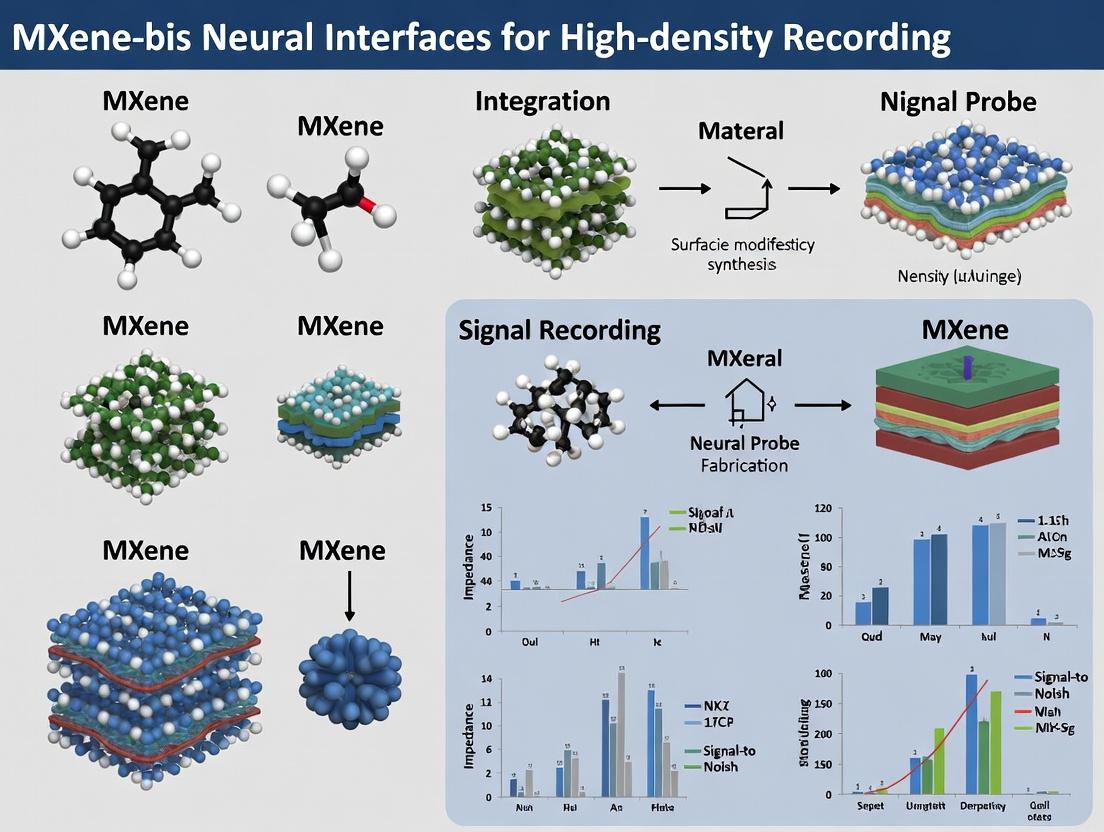
This article provides a comprehensive review of MXene-based neural interfaces for high-density electrophysiological recording, targeting researchers and professionals in neuroscience and drug development.
MXene Neural Interfaces: Revolutionizing High-Density Electrophysiology for Brain Research and Drug Discovery
Abstract
This article provides a comprehensive review of MXene-based neural interfaces for high-density electrophysiological recording, targeting researchers and professionals in neuroscience and drug development. We explore the fundamental properties of MXenes—their metallic conductivity, biocompatibility, and flexibility—that make them ideal for neural interfacing. The piece details current fabrication methods and application strategies for creating ultra-high-density electrode arrays. It addresses critical challenges in stability, chronic implantation, and signal fidelity, offering troubleshooting and optimization protocols. Furthermore, we present a comparative analysis of MXene interfaces against traditional materials (e.g., gold, PEDOT:PSS, graphene) and emerging alternatives, validating their performance through recent in vivo studies. The synthesis underscores MXenes' potential to unlock unprecedented spatial and temporal resolution in neural recording, with significant implications for understanding brain circuits, neurological disorders, and accelerating neurotherapeutic development.
What are MXenes and Why Are They a Breakthrough Material for Neural Interfaces?
Composition and Structure
MXenes are a family of two-dimensional (2D) transition metal carbides, nitrides, and carbonitrides. They are synthesized by selectively etching the "A" layer (typically group 13 or 14 elements) from their parent MAX phase ceramics, which have the general formula Mₙ₊₁AXₙ, where "M" is an early transition metal, "A" is the A-group element, "X" is carbon and/or nitrogen, and n = 1–4. The most widely studied MXene is Ti₃C₂Tₓ, where "Tₓ" represents surface terminations (e.g., -O, -OH, -F) acquired during the etching process.
Key Properties for Neural Interfaces
MXenes possess a unique combination of properties making them ideal for high-density neural recording interfaces:
Table 1: Key Properties of Ti₃C₂Tₓ MXene
| Property | Typical Value/Range | Relevance to Neural Interfaces |
|---|---|---|
| Electrical Conductivity | 6,000 – 15,000 S/cm | Enables high-fidelity signal transduction with low electrode impedance. |
| Volumetric Capacitance | 300 – 1,500 F/cm³ | Provides high charge storage capacity (CSC) for safe, efficient stimulation. |
| Mechanical Flexibility | High (Young's Modulus ~0.33 TPa for monolayer) | Conforms to neural tissue, minimizing glial scarring and improving biocompatibility. |
| Hydrophilicity | Naturally hydrophilic (contact angle ~30°) | Excellent aqueous dispersion and biocompatibility without need for surfactants. |
| Electrochemical Surface Area | Very High (~400 m²/g) | Increases the effective area for charge transfer, lowering impedance. |
| Biocompatibility | Favorable in vitro and in vivo (studies show >80% cell viability) | Supports neural cell adhesion and growth with minimal inflammatory response. |
Application Notes for Neural Interface Research
- High-Density Microelectrode Arrays (MEAs): MXene inks can be printed or coated onto flexible substrates to create ultra-thin, conformal microelectrodes. Their high CSC allows for smaller electrode sizes without sacrificing performance, enabling higher spatial resolution for neural recording.
- Neural Stimulation Electrodes: The combination of high conductivity and capacitance allows MXene electrodes to inject higher charge densities within safe voltage limits, improving stimulation efficacy.
- Biocompatible Coating: MXene coatings on traditional metallic electrodes (e.g., Pt, IrOx) can significantly lower electrochemical impedance and improve signal-to-noise ratio (SNR) in chronic recordings.
Experimental Protocols
Protocol 4.1: Synthesis of Ti₃C₂Tₓ MXene Clay via Minimally Intensive Layer Delamination (MILD)
Objective: To produce high-quality, delaminated Ti₃C₂Tₓ MXene flakes in water for electrode fabrication. Materials: See "The Scientist's Toolkit" below. Procedure:
- Etching: Slowly add 1.0 g of LiF to 20 mL of 9 M HCl in a PTFE container under continuous stirring (500 rpm) at 35°C.
- Once dissolved, gradually add 1.0 g of Ti₃AlC₂ MAX phase powder over 10 minutes to avoid overheating.
- React for 24 hours at 35°C under continuous stirring.
- Washing: Centrifuge the reaction mixture at 3500 RCF for 5 minutes and decant the acidic supernatant.
- Resuspend the pellet in 40 mL of deionized (DI) water. Repeat centrifugation and decantation until the supernatant pH is >5 (typically 5–7 cycles).
- Delamination: After the final wash, add 40 mL of DI water to the sediment and hand-shake vigorously for 5-10 minutes.
- Centrifuge at 3500 RCF for 1 hour. Carefully collect the dark colloidal supernatant containing delaminated MXene flakes.
- The product is a stable, aqueous Ti₃C₂Tₓ clay (~10-20 mg/mL) ready for film casting or ink formulation.
Protocol 4.2: Fabrication and Characterization of a MXene Neural Microelectrode
Objective: To coat a microfabricated electrode with MXene and characterize its electrochemical performance. Procedure:
- Electrode Preparation: Clean a standard gold or platinum microelectrode array (MEA) via oxygen plasma treatment for 2 minutes.
- MXene Coating: Drop-cast 5 µL of the as-synthesized Ti₃C₂Tₓ clay (Protocol 4.1) onto the active electrode site. Alternatively, use micro-injection or spin-coating for precise patterning.
- Drying: Allow the electrode to dry in a desiccator under mild vacuum for 12 hours to form a uniform film.
- Electrochemical Characterization (in 1x PBS):
- Cyclic Voltammetry (CV): Record CV curves between -0.6 V and 0.8 V (vs. Ag/AgCl) at scan rates from 10 mV/s to 1000 mV/s. Calculate CSC from the integrated cathodic current.
- Electrochemical Impedance Spectroscopy (EIS): Measure impedance from 10 Hz to 100 kHz at 10 mV RMS. Record the impedance magnitude at 1 kHz (standard benchmark for neural electrodes).
- Stability Testing: Perform continuous CV cycling (e.g., 1000 cycles) to assess coating stability.
Visualizations
Title: MXene Synthesis & Application Workflow
Title: MXene Properties Drive Neural Interface Performance
The Scientist's Toolkit
Table 2: Essential Research Reagents and Materials
| Item | Function / Relevance | Typical Specification / Note |
|---|---|---|
| Ti₃AlC₂ MAX Phase Powder | Precursor material for synthesizing Ti₃C₂Tₓ. | ≥ 98% purity, particle size < 40 µm. |
| Lithium Fluoride (LiF) | Etchant source of F⁻ ions in the MILD method. | Anhydrous, ≥ 99.99% trace metals basis. |
| Hydrochloric Acid (HCl) | Acidic environment for the etching reaction. | Concentrated, 9 M solution in DI water. |
| Deionized (DI) Water | Washing and delaminating MXene. | High resistivity (≥18 MΩ·cm). |
| Centrifuge Tubes (PP/PTFE) | For washing and separating MXene. | 50 mL, chemically resistant. |
| Polycarbonate Membrane Filters | For vacuum-assisted filtration of MXene films. | Pore size 0.1 - 0.45 µm. |
| Oxygen Plasma Cleaner | To clean and hydrophilize substrate surfaces before MXene coating. | Critical for film adhesion. |
| Phosphate Buffered Saline (PBS) | Electrolyte for in vitro electrochemical and biocompatibility testing. | 1x, pH 7.4, sterile. |
| Ag/AgCl Reference Electrode | Reference electrode for 3-electrode electrochemical cell measurements. | For reliable CV and EIS. |
Application Notes: MXene-Based Interfaces for High-Density Recording
Within the development of next-generation neural interfaces for high-density electrophysiology, MXene materials (specifically Ti₃C₂Tₓ) present a compelling solution addressing the core triad of requirements. The following application notes detail their relevance.
Conductivity: MXenes exhibit metallic conductivity (>10,000 S/cm for pristine films), enabling high-fidelity signal transduction with low electrode impedance. This is critical for recording low-amplitude neuronal action potentials and reducing thermal noise. For high-density arrays, this ensures individual channels remain electrically isolated with minimal crosstalk.
Biocompatibility: Surface terminations (e.g., -O, -OH, -F) on MXenes can be engineered to minimize chronic immune response. A stable interface reduces glial scarring and neuronal death, preserving recording quality over longitudinal studies. MXenes also demonstrate antioxidant properties, mitigating reactive oxygen species at the implant site.
Flexibility: Solution-processable MXenes can be formulated into inks and printed on flexible substrates (e.g., polyimide, parylene C). The mechanical compliance of thin MXene-polymer composites matches neural tissue (Young's modulus in the kPa-MPa range), reducing mechanical mismatch and chronic inflammation.
Primary Application: Chronic, high-density cortical and peripheral nerve recording in rodent models for fundamental neuroscience research and pharmaceutical efficacy testing.
Protocols
Protocol 1: Fabrication of a Flexible MXene (Ti₃C₂Tₓ) Microelectrode Array
Objective: To fabricate a 32-channel flexible microelectrode array with MXene-coated recording sites.
Materials:
- Ti₃AlC₂ MAX phase precursor powder (≈400 mesh)
- Lithium fluoride (LiF), powder
- Hydrochloric acid (HCl), 9 M
- Deionized (DI) water, degassed
- Polyimide substrate (75 µm thick)
- Photolithography suite (positive photoresist, developer)
- Electron beam evaporator (for Cr/Au adhesion/lead layers)
- Spin coater
- Oxygen plasma etcher
Method:
- MXene Synthesis (Modified Minimally Intensive Layer Delamination):
- Dissolve 2.0 g of LiF in 20 mL of 9 M HCl in a polypropylene container. Stir for 10 min.
- Gradually add 1.0 g of Ti₃AlC₂ powder over 10 min to avoid overheating. Maintain reaction at 35°C for 24 hrs under continuous stirring.
- Wash the sediment by repeated centrifugation (3500 rpm for 5 min) with DI water until supernatant pH >6.
- Resuspend the final pellet in 50 mL DI water and sonicate under Ar flow for 1 hr.
- Centrifuge at 3500 rpm for 30 min. Collect the dark colloidal supernatant (≈5 mg/mL MXene).
- Array Fabrication:
- Clean polyimide substrate with sequential acetone, isopropanol, and DI water rinses. Activate surface with O₂ plasma (100 W, 2 min).
- Pattern 50 nm Cr / 200 nm Au traces and contact pads via lift-off photolithography and e-beam evaporation.
- Define 20 µm diameter recording site openings via a second photolithography step.
- Spin-coat MXene ink (concentrated to 15 mg/mL) at 2000 rpm for 60s onto the patterned substrate.
- Soft-bake at 70°C for 15 min. Use lift-off in acetone to remove MXene from all areas except the recording sites.
- Encapsulate the entire device, except recording sites and back contacts, with a 10 µm thick Parylene-C layer via chemical vapor deposition.
Quality Control: Measure electrode impedance via electrochemical impedance spectroscopy (EIS) in 1x PBS at 1 kHz. Target impedance: <50 kΩ.
Protocol 2: In Vivo Acute Recording in Rodent Cortex
Objective: To perform high-density electrophysiological recording using a fabricated MXene array in an anesthetized rat.
Materials:
- Adult Sprague-Dawley rat (300-400g)
- Stereotaxic frame
- Isoflurane anesthesia system
- Surgical tools (scalpel, forceps, bone drill)
- Saline and sterile cotton swabs
- Dura mater removal tools
- MXene 32-channel array (from Protocol 1)
- Pre-amplifier/headstage and neural recording system (e.g., Intan RHD)
- Data acquisition software
Method:
- Induce anesthesia with 5% isoflurane and maintain at 1.5-2% in O₂.
- Secure the rat in the stereotaxic frame. Apply ophthalmic ointment.
- Perform a midline scalp incision. Retract tissue and clear the skull surface.
- Identify bregma and lambda. Mark coordinates for a 2 mm x 2 mm craniotomy over the primary somatosensory cortex (e.g., AP: -2.0 mm, ML: +3.0 mm from bregma).
- Carefully drill the craniotomy without damaging the dura. Irrigate with saline.
- Gently incise and retract the dura mater.
- Align the MXene array perpendicular to the cortical surface. Slowly insert the array to a depth of 1.0 mm using a micromanipulator.
- Connect the array to the headstage. Ground the animal via a skull screw.
- Acquire neural data with a sampling rate ≥30 kHz. Apply a 300-6000 Hz bandpass filter for spike activity and a 0.1-300 Hz filter for local field potentials.
- After recording, euthanize the animal following institutional guidelines.
Analysis: Sort recorded spikes using established algorithms (e.g., Kilosort2, MountainSort) to isolate single-unit activity.
Data Tables
Table 1: Comparison of Neural Electrode Material Properties
| Material | Electrical Conductivity (S/cm) | Charge Injection Limit (mC/cm²) | Young's Modulus | Chronic Immune Response (3 months) |
|---|---|---|---|---|
| MXene (Ti₃C₂Tₓ) | 8,000 - 15,000 | 2.5 - 4.0 | 0.5 - 5 GPa (film) | Low (thin glial capsule) |
| Platinum (Pt) | 9.4 x 10⁴ | 0.15 - 1.5 | 168 GPa | Moderate-High |
| Poly(3,4-ethylenedioxythiophene) (PEDOT:PSS) | 500 - 5,000 | 5 - 15 | 1 - 3 GPa | Moderate |
| Iridium Oxide (IrOx) | 10⁻² - 10² (ionic) | 1 - 5 | 200 - 500 GPa | Moderate |
| Gold (Au) | 4.5 x 10⁵ | 0.05 - 0.1 | 79 GPa | High |
Table 2: In Vivo Performance Metrics of MXene vs. Traditional Arrays
| Metric | MXene 32-channel Array | Commercial Pt/Si Array | Improvement |
|---|---|---|---|
| Avg. Electrode Impedance @ 1 kHz | 28 ± 5 kΩ | 450 ± 120 kΩ | ~16x reduction |
| Signal-to-Noise Ratio (SNR) | 12.5 ± 2.1 | 8.1 ± 1.8 | ~54% increase |
| Single-Unit Yield (Day 0) | 24 ± 4 units | 18 ± 5 units | ~33% increase |
| Single-Unit Yield (Day 28) | 18 ± 3 units | 5 ± 2 units | ~260% increase |
| RMS Noise Level | 4.2 ± 0.8 µV | 7.5 ± 1.5 µV | ~44% reduction |
Diagrams
Diagram 1: Neural Interface Triad Logic
Diagram 2: MXene Neural Interface Workflow
The Scientist's Toolkit: Key Research Reagent Solutions
| Item | Function/Application in MXene Neural Interface Research |
|---|---|
| Ti₃AlC₂ MAX Phase Powder | The precursor for synthesizing Ti₃C₂Tₓ MXene via selective etching of the Al layer. |
| Lithium Fluoride (LiF) / Hydrochloric Acid (HCl) Etchant | The minimally intensive layer delamination (MILD) etchant system for safe, high-quality MXene synthesis. |
| Degassed Deionized Water | Used for washing MXene to remove residual Li⁺ and Al³⁺ ions; degassing prevents MXene oxidation. |
| Polyimide or Parylene-C Substrate | Flexible, biocompatible polymer substrates for fabricating compliant neural implants. |
| SU-8 or AZ Photoresist | For photolithographic patterning of microelectrode traces and recording sites. |
| Phosphate Buffered Saline (PBS) | Standard electrolyte for in vitro electrochemical testing (EIS, Cyclic Voltammetry). |
| Neurobasal Medium / Primary Cortical Neurons | For in vitro biocompatibility and neuronal cell culture interaction studies. |
| Isoflurane | Volatile anesthetic for maintaining rodent anesthesia during in vivo surgical procedures. |
| RHD Amplifier Board (Intan Technologies) | A compact, multichannel neural signal acquisition system for in vivo recording. |
| Kilosort2/3 Software | Automated spike sorting software for isolating single-unit activity from high-density recordings. |
The drive toward high-density neural interfaces is governed by fundamental electrophysiological and engineering scaling laws. These laws define the trade-offs and ultimate limits of conventional materials (e.g., Pt, IrOx, PEDOT:PSS) and create an imperative for new material platforms like MXenes.
Table 1: Key Scaling Laws and Limitations for Neural Electrodes
| Parameter | Scaling Law/Relationship | Conventional Material Limitation | MXene Addressal |
|---|---|---|---|
| Electrode Size (A) | A ∝ 1/N (N = number of sites) |
Reduced A increases impedance (Z), degrading signal-to-noise ratio (SNR). |
Exceptional volumetric capacitance (>1500 F/cm³) lowers electrochemical impedance. |
| Safe Charge Injection Limit (Qinj) | Q<sub>inj</sub> = A * CSC<sub>c</sub> |
As A shrinks, Q<sub>inj</sub> plummets, risking tissue damage during stimulation. |
High cathodic charge storage capacity (CSCc > 50 mC/cm² for Ti₃C₂Tₓ) maintains safe Q<sub>inj</sub> at micro-scale. |
| Thermal Noise | V<sub>n</sub> ∝ sqrt(Z) |
High Z at small A increases thermal noise, obscuring neural spikes. |
Low impedance reduces V<sub>n</sub>, enabling high-fidelity recording from small neurons. |
| Crosstalk | Crosstalk ∝ 1 / (Pitch²) |
Dense arrays require pitch < 50µm; crosstalk degrades spatial resolution. | MXene's high conductivity and thin-film processability enable dense, well-insulated patterning. |
| Tissue Response | Foreign Body Response ∝ Stiffness Mismatch |
Stiff materials (Si, Pt) cause gliosis, insulating the electrode. | MXene's mechanical compliance (Young's modulus ~10s of GPa) better matches neural tissue. |
Research Reagent Solutions Toolkit
Table 2: Essential Materials for MXene-Based Neural Interface Research
| Reagent/Material | Function/Explanation |
|---|---|
| Ti₃AlC₂ MAX Phase Powder | Precursor for synthesizing Ti₃C₂Tₓ MXene via selective etching of Al. |
| Lithium Fluoride (LiF) & Hydrochloric Acid (HCl) | Components of the minimally intensive layer delamination (MILD) etchants (e.g., LiF/HCl). Removes Al layer, functionalizes MXene with -O, -OH, -F. |
| Dimethyl Sulfoxide (DMSO) | Intercalant used in delamination step to swell MXene layers and facilitate monolayer separation. |
| Deionized Water (Degassed, N₂-sparged) | Dispersion medium for monolayer MXene; degassing prevents oxidative degradation. |
| Poly(diallyldimethylammonium chloride) (PDDA) | Cationic polymer for layer-by-layer assembly, enhancing adhesion to neural probe substrates. |
| SU-8 Photoresist | Biocompatible epoxy used as an insulating layer for defining microelectrode arrays. |
| Polydimethylsiloxane (PDMS) | Flexible elastomer substrate for creating soft, conformable MXene-based electrode arrays. |
| Phosphate Buffered Saline (PBS) / Artificial Cerebrospinal Fluid (aCSF) | Electrolyte for in vitro electrochemical testing and cell culture, simulating physiological conditions. |
| Neurobasal Medium + B-27 Supplement | Cell culture medium for maintaining primary neuronal cultures for in vitro biocompatibility and recording tests. |
Experimental Protocols
Protocol 3.1: Synthesis of Ti₃C₂Tₓ MXene Aqueous Dispersion (MILD Method)
- Etchant Preparation: In a polypropylene vial, slowly add 1.0 g of LiF to 20 mL of 9 M HCl under constant stirring (500 rpm) in a fume hood. Allow the mixture to stir for 5 min to equilibrate.
- Etching: Gradually add 1.0 g of Ti₃AlC₂ MAX phase powder to the etchant over 10 min to avoid excessive heating. Maintain reaction at 35°C for 24 hrs with continuous stirring.
- Washing: Transfer the slurry to 50 mL conical tubes and centrifuge at 3500 RCF for 5 min. Decant the acidic supernatant. Resuspend the pellet in 40 mL of ice-cold deionized water (DI H₂O). Repeat centrifugation and decantation until supernatant pH > 6 (~5-7 washes).
- Delamination: To the washed multilayer sediment, add 20 mL of DMSO. Stir gently at room temperature for 12 hrs.
- Final Washing & Dispersion: Centrifuge the DMSO mixture and decant. Resuspend the pellet in 100 mL of degassed, N₂-sparged DI H₂O. Shake vigorously by hand for 1 min, then sonicate under N₂ atmosphere in an ice bath for 1 hr (power: 250 W). Centrifuge at 3500 RCF for 1 hr. The resulting stable, dark colloidal supernatant is the monolayer Ti₃C₂Tₓ dispersion. Store at 4°C under N₂.
Protocol 3.2: Fabrication of a Flexible MXene Microelectrode Array (MEA)
- Substrate Preparation: Spin-coat a 50 µm layer of PDMS on a silicon wafer carrier. Cure at 80°C for 2 hrs.
- Electrode Patterning (Lift-off):
- Deposit a layer of LOR 3A photoresist, then S1813 photoresist on the PDMS.
- Expose through a MEA photomask (feature size: 10-20 µm) and develop.
- Deposit a 5 nm Ti adhesion layer, followed by a 50 nm Au layer via e-beam evaporation.
- Perform liftoff in acetone to reveal the Au interconnection traces and bonding pads.
- MXene Electrode Site Deposition:
- Treat the substrate with O₂ plasma (100 W, 30 sec) to hydrophilize.
- Incubate in 1% wt/wt PDDA solution for 20 min, rinse with DI H₂O, and dry.
- Using a micro-pipette or micro-dispenser, spot 50 nL droplets of concentrated Ti₃C₂Tₓ dispersion (15 mg/mL) onto the predefined Au electrode sites.
- Dry in a vacuum desiccator for 2 hrs. Repeat PDDA/MXene dipping for 3 cycles to build capacitance.
- Insulation Layer Definition: Spin-coat a 3 µm layer of SU-8 3005 over the entire device. Expose through an insulation layer mask that opens only the MXene sites and bonding pads. Develop to expose the active areas.
- Characterization: Perform cyclic voltammetry (CV, -0.6 to 0.8 V vs. Ag/AgCl, 100 mV/s in PBS) and electrochemical impedance spectroscopy (EIS, 1 Hz - 100 kHz, 10 mV RMS) to validate performance.
Protocol 3.3: In Vitro Neural Recording with MXene MEA
- Sterilization & Coating: Sterilize the fabricated MXene MEA under UV light for 30 min per side. Coat with 50 µg/mL poly-L-lysine in PBS for 1 hr at 37°C, then rinse.
- Primary Neuron Culture: Dissect E18 rat hippocampi. Digest with 0.25% trypsin for 15 min at 37°C. Triturate to single cells. Plate neurons at a density of 50,000 cells/cm² onto the MEA in Neurobasal/B-27 medium.
- Recording Setup: After 14-21 days in vitro, place the MEA in a recording chamber maintained at 37°C and 5% CO₂. Connect to a multichannel extracellular amplifier (e.g., MultiChannel Systems MCS).
- Data Acquisition: Set recording parameters: gain 1000x, bandpass filter 300-5000 Hz, sampling rate 25 kHz. Record spontaneous activity for 5 min. Apply electrical stimulation via selected MXene sites (biphasic pulse, ±0.5 mV, 200 µs/phase) while recording evoked activity on adjacent channels.
- Analysis: Use offline sorter (e.g., SpyKING CIRCUS, Kilosort) for spike detection and sorting. Calculate mean firing rates, signal-to-noise ratios, and stimulation artifact recovery times.
Visualizations
Title: Scaling Challenge & MXene Solution
Title: MXene Synthesis via MILD Method
Title: In Vitro Neural Recording Protocol Flow
This application note supports a thesis on MXene-based neural interfaces for high-density electrophysiology. It provides a comparative analysis and experimental protocols to validate MXenes (specifically Ti₃C₂Tₓ) as superior materials for next-generation neural recording electrodes against traditional materials: Gold (Au), Indium Tin Oxide (ITO), and Platinum (Pt).
Table 1: Key Electrochemical & Physical Properties
| Property | MXenes (Ti₃C₂Tₓ) | Gold (Au) | ITO | Platinum (Pt) | Advantage Holder |
|---|---|---|---|---|---|
| Charge Storage Capacity (CSC, mC/cm²) | 35 - 150 | 1 - 5 | 2 - 8 | 5 - 15 | MXene |
| Electrochemical Impedance (1 kHz, kΩ) | 0.5 - 3 | 50 - 200 | 20 - 100 | 10 - 50 | MXene |
| Optical Transparency (550 nm, %) | 80 - 95 | Opaque | 80 - 90 | Opaque | MXene/ITO |
| Mechanical Flexibility | Excellent (2D lamellar) | Poor | Brittle | Poor | MXene |
| Biocompatibility | High (in vitro/vivo) | High | High (but In³⁺ leaching) | High | Comparable |
| Stability (Chronic, weeks) | > 12 (encapsulated) | > 52 | Degrades (bending) | > 52 | Au/Pt |
| Fabrication Complexity | Moderate (solution process) | Low | High (sputtering) | Moderate | Au |
| Approx. Cost per cm² | Medium | Very High | High | Very High | MXene |
Table 2: Neural Recording Performance (In Vivo)
| Metric | MXene-based Microelectrode | Au Microelectrode | Pt Microelectrode | Key Implication |
|---|---|---|---|---|
| Single-Unit Yield (channels) | 1.8 - 2.5x higher | Baseline | 1.2x higher | Higher data density |
| Signal-to-Noise Ratio (SNR, dB) | 18 - 25 | 12 - 18 | 15 - 20 | Clearer spike discrimination |
| Long-term SNR Stability | Stable for 8-12 weeks | Stable | Stable | MXene suitable for chronic use |
| Local Field Potential (LFP) Quality | Superior (low impedance) | Good | Good | Better low-frequency data |
Detailed Experimental Protocols
Protocol 1: Fabrication of MXene Microelectrode Arrays (MEAs)
Objective: Create a high-density, flexible MEA using Ti₃C₂Tₓ MXene as the recording interface. Materials: See "Scientist's Toolkit" below. Workflow:
- Substrate Preparation: Clean a flexible polyimide substrate (e.g., Kapton) via O₂ plasma treatment (100 W, 2 min).
- Metal Trace Patterning: Photolithographically pattern 200 nm Au/20 nm Cr conduction traces. Use lift-off in acetone.
- Dielectric Deposition: Spin-coat a 5 µm SU-8 layer. Pattern via photolithography to expose only electrode sites (e.g., 20 µm diameter).
- MXene Electrode Site Fabrication: a. Drop-casting: Pipette 5 µL of MXene ink (10 mg/mL) onto each exposed site. Let dry at room temp for 1 hr. b. Electrophoretic Deposition (EPD): For more uniform films, immerse the MEA in MXene ink (0.5 mg/mL). Apply 5 V DC between the trace (cathode) and a Pt counter electrode for 30-60 sec.
- Post-processing: Anneal the device at 150°C in Argon for 2 hours to improve stability.
- Characterization: Perform SEM to confirm MXene flake coverage and cyclic voltammetry (CV) to verify CSC.
Diagram Title: MXene MEA Fabrication Workflow
Protocol 2: In Vitro Electrochemical Characterization
Objective: Quantify CSC and Impedance of MXene vs. traditional electrodes. Setup: Three-electrode cell in PBS (pH 7.4). Test electrode (MXene/Au/ITO/Pt), Pt counter, Ag/AgCl reference. Procedure:
- Cyclic Voltammetry (CSC): Scan from -0.6 V to 0.8 V vs. Ag/AgCl at 50 mV/s for 5 cycles. Calculate CSC as the time-integrated average cathodic current per geometric area.
- Electrochemical Impedance Spectroscopy (EIS): Apply 10 mV RMS sinusoid from 10 Hz to 100 kHz at open circuit potential. Fit data to a Randles circuit model to extract interface impedance at 1 kHz.
- Stability Testing: Perform 1000 CV cycles between stable potentials. Monitor % change in CSC and impedance.
Diagram Title: Electrochemical Characterization Protocol
Protocol 3: In Vivo Acute Neural Recording in Rodent Model
Objective: Compare single-unit and LFP recording quality from MXene vs. Pt electrodes implanted in the hippocampus. Materials: Anesthetized rat, stereotaxic frame, MXene and Pt control MEAs, neural signal amplifier, data acquisition system. Procedure:
- Surgical Preparation: Anesthetize rat (isoflurane 1-3%). Position in stereotaxic frame. Perform craniotomy over target hippocampal coordinates (e.g., AP: -3.8 mm, ML: ±2.5 mm from Bregma).
- Electrode Implantation: Simultaneously insert the MXene MEA and a commercial Pt MEA (same geometry) into the brain parenchyma at a depth of 2.0 mm (CA1 region) using a microdrive.
- Signal Acquisition: Record spontaneous neural activity for 30 minutes. Bandpass filter: 300-5000 Hz for spikes, 0.5-300 Hz for LFPs. Sampling rate: 30 kHz.
- Spike Sorting & Analysis: Use software (e.g., Kilosort, Plexon Offline Sorter) to isolate single units. Calculate metrics: SNR, unit yield per channel, and LFP power.
Diagram Title: In Vivo Recording & Analysis Workflow
The Scientist's Toolkit: Key Research Reagent Solutions
Table 3: Essential Materials for MXene Neural Interface Research
| Item Name & Typical Supplier | Function in Research | Specific Protocol Use |
|---|---|---|
| Ti₃C₂Tₓ MXene Dispersion (Ink) (e.g., Nanochemazone, MSE Supplies) | Active electrode material providing high CSC and low impedance. | Electrode site fabrication (Protocol 1). |
| Polyimide Substrate (e.g., Kapton HN, DuPont) | Flexible, biocompatible base for chronic implants. | MEA substrate (Protocol 1). |
| SU-8 2005 Photoresist (Kayaku Advanced Materials) | Biocompatible, stable dielectric for insulation. | Insulating layer patterning (Protocol 1). |
| Phosphate Buffered Saline (PBS) pH 7.4, sterile (Thermo Fisher) | Standard physiological electrolyte for in vitro testing. | Electrochemical characterization (Protocol 2). |
| Platinum Black (Alfa Aesar) | Reference material for high-surface-area control electrodes. | Fabricating traditional electrode controls. |
| Isoflurane (Piramal Critical Care) | Inhalational anesthetic for in vivo rodent surgery. | Animal preparation for acute recording (Protocol 3). |
| Parylene-C dimer (Specialty Coating Systems) | Conformal, biocompatible barrier for chronic encapsulation. | Device encapsulation post-fabrication. |
| Neurophysiology Amplifier & DAQ (e.g., Intan RHD, Blackrock Microsystems) | High-resolution acquisition of neural signals. | In vivo recording (Protocol 3). |
Application Notes
For researchers developing MXene-based neural interfaces, precise characterization of fundamental electrochemical properties is critical. High-density recording requires electrodes with high capacitance for efficient charge transfer, low impedance at 1 kHz for high signal-to-noise ratio, and high charge injection limits (CIL) to safely deliver stimulation currents without causing Faradaic reactions or tissue damage. These properties directly influence the spatial resolution, fidelity, and long-term stability of neural recordings.
Key Performance Metrics for Neural Interface Electrodes:
- Capacitance: Dictates the amount of charge that can be stored at the electrode-electrolyte interface. Higher double-layer capacitance is desirable for recording and safe stimulation.
- Electrochemical Impedance Spectroscopy (EIS): Measures impedance across frequencies. Low impedance at 1 kHz reduces thermal noise and improves recording quality.
- Charge Storage Capacity (CSC): The total charge available from capacitive and pseudo-capacitive processes.
- Charge Injection Limit (CIL): The maximum safe charge density that can be injected reversibly, typically determined by the water window via cyclic voltammetry (CV) and voltage transient (VT) measurements.
MXene Advantages: Ti₃C₂Tₓ MXenes, with their hydrophilic surfaces, high metallic conductivity, and redox-active surfaces, offer exceptionally high volumetric capacitance (>1500 F cm⁻³) and low impedance, making them prime candidates for next-generation microelectrodes.
Protocols
Protocol 1: Electrochemical Impedance Spectroscopy (EIS) for Neural Interface Characterization
Objective: To measure the complex impedance of a MXene-coated microelectrode as a function of frequency, with emphasis on the value at 1 kHz, which is relevant for neural signal recording.
Materials:
- Potentiostat/Galvanostat with EIS capability (e.g., Biologic SP-300, Autolab PGSTAT204)
- Three-electrode electrochemical cell
- Working Electrode: MXene-coated neural microelectrode (e.g., Utah array, Michigan probe, custom microfabricated device).
- Counter Electrode: Platinum wire or mesh.
- Reference Electrode: Ag/AgCl (in 3M KCl) for aqueous systems.
- Electrolyte: Phosphate-buffered saline (PBS, 0.1 M, pH 7.4) or artificial cerebrospinal fluid (aCSF) at 37°C.
- Faraday cage to minimize electromagnetic interference.
Procedure:
- Place the electrochemical cell inside a Faraday cage.
- Fill the cell with degassed electrolyte (PBS or aCSF) and equilibrate to 37°C.
- Connect the MXene working electrode, Pt counter electrode, and Ag/AgCl reference electrode to the potentiostat.
- Open-circuit potential (OCP): Measure and record the stable OCP for 300 seconds.
- EIS parameters: Set the initial frequency to 100 kHz, final frequency to 0.1 Hz, with an AC sinusoidal perturbation amplitude of 10 mV (rms) applied at the OCP.
- Run the EIS measurement.
- Fit the resulting Nyquist plot to a modified Randles equivalent circuit to extract solution resistance (Rₛ), charge transfer resistance (Rₛt), and constant phase element (CPE) parameters.
Protocol 2: Cyclic Voltammetry for Capacitance and Charge Storage Capacity
Objective: To determine the capacitive behavior, quantify the areal/volumetric capacitance, and calculate the CSC of the MXene coating.
Materials: (As in Protocol 1, using the same three-electrode setup).
Procedure:
- Set up the three-electrode system as described in Protocol 1.
- CV parameters: Set the potential window to the stable "water window" (typically -0.6 V to 0.8 V vs. Ag/AgCl for aCSF). Determine this initially by scanning until the onset of water electrolysis.
- Run CV scans at multiple sweep rates (e.g., 10, 20, 50, 100 mV/s).
- Data Analysis:
- Capacitance: At a given scan rate (v), the current (i) is related to the double-layer capacitance (Cdl) by i = Cdl * v. Plot the cathodic or anodic current at a midpoint potential (e.g., 0.1 V) against the scan rate. The slope is Cdl.
- CSC: Integrate the area under the CV curve (average of anodic and cathodic sweeps) at a slow scan rate (e.g., 50 mV/s) and divide by the scan rate and the geometric electrode area: CSC = (∫ i dV) / (2 * v * A).
Protocol 3: Voltage Transient Measurement for Charge Injection Limit
Objective: To determine the maximum safe charge injection limit by observing the polarization potential during a biphasic, current-controlled pulse.
Materials:
- Potentiostat or a custom-built, biphasic constant-current stimulator with voltage monitoring.
- Two-electrode setup (Working and Counter) immersed in electrolyte. A large Pt counter electrode is typically used.
- Oscilloscope to monitor voltage transients.
Procedure:
- Configure the system in a two-electrode setup with the MXene working electrode and a large Pt counter in PBS/aCSF.
- Apply a symmetric, biphasic, cathodic-first current pulse. Typical parameters: Pulse width = 200 µs/phase, interphase delay = 50 µs.
- Gradually increase the current amplitude across multiple trials.
- Monitor the voltage transient across the working and counter electrodes. The key metric is the access voltage (Va), the difference between the potential at the end of the stimulating pulse and the potential at the end of the recharge phase.
- Determine CIL: The maximum safe CIL is reached when the electrode potential (calculated or referenced) reaches the water reduction or oxidation limits during the pulse, or when Va exceeds a safety threshold (e.g., 500 mV). The CIL (in mC/cm²) is calculated as: CIL = (Current Amplitude * Pulse Width) / Geometric Area.
Table 1: Comparative Electrochemical Properties of Neural Interface Materials
| Material | Areal Capacitance (mF/cm²) | Impedance at 1 kHz (kΩ) | CSC (mC/cm²) | CIL (mC/cm²) | Key Advantage |
|---|---|---|---|---|---|
| Ti₃C₂Tₓ MXene | 50 - 120 | 2 - 10 | 40 - 100 | 1.5 - 4.0 | High capacitance, low impedance |
| Sputtered Iridium (Ir) | 1 - 3 | 100 - 500 | 20 - 50 | 1.0 - 2.0 | Excellent stability |
| Activated Iridium Oxide (AIROF) | 30 - 80 | 10 - 50 | 100 - 300 | 3.0 - 5.0 | Very high CSC |
| PEDOT:PSS | 10 - 40 | 5 - 20 | 10 - 30 | 0.5 - 1.5 | Good biocompatibility |
| Platinum Grey (Pt) | 0.5 - 1.5 | 200 - 1000 | 2 - 5 | 0.2 - 0.5 | Standard reference material |
Table 2: Key Parameters for Standard Electrochemical Characterization Protocols
| Protocol | Key Measured Outputs | Critical Parameters | Typical Target for Neural Interfaces |
|---|---|---|---|
| EIS (Protocol 1) | Z (1 kHz), Rₛ, Rₛt, CPE | AC Amplitude: 10 mV, Freq. Range: 100 kHz - 0.1 Hz | Z (1 kHz) < 50 kΩ for microelectrodes |
| CV (Protocol 2) | Cdl, CSC, "Water Window" | Scan Rate: 50 mV/s, Potential Window: Stable in aCSF | High CSC > 20 mC/cm² |
| VT (Protocol 3) | Access Voltage (Va), Polarization Potential | Pulse: 200 µs/phase, Cathodic-first | CIL > 1 mC/cm²; Va < 500 mV |
Diagrams
Title: MXene Properties Drive Neural Interface Performance
Title: Electrochemical Characterization Workflow for MXene Electrodes
The Scientist's Toolkit: Research Reagent Solutions
Table 3: Essential Materials for MXene Neural Interface Electrochemistry
| Item | Function/Description | Example Product/Catalog |
|---|---|---|
| Ti₃C₂Tₓ MXene Dispersion | Active electrode coating material. Provides high capacitance and conductivity. | Prepared via LiF/HCl etching of Ti₃AlC₂ MAX phase (commercially available from, e.g., Nanochemazone). |
| Artificial Cerebrospinal Fluid (aCSF) | Electrolyte mimicking the ionic composition of brain interstitial fluid for biologically relevant testing. | 126 mM NaCl, 2.5 mM KCl, 1.2 mM NaH₂PO₄, 1.2 mM MgCl₂, 2.4 mM CaCl₂, 25 mM NaHCO₃, 11 mM Glucose. |
| Ag/AgCl Reference Electrode | Provides a stable, known reference potential for 3-electrode measurements in aqueous solutions. | BASi RE-5B or Warner Instruments REE-5. |
| Potentiostat with EIS & Stimulation | Core instrument for applying potentials/currents and measuring electrochemical responses. | Biologic VSP-300, Metrohm Autolab PGSTAT204. |
| Microfabricated Electrode Arrays | Substrate for MXene coating. Enables high-density neural interfacing. | Commercial (Neuronexus, Blackrock) or custom silicon/SU-8 probes. |
| Faraday Cage | Shields sensitive electrochemical measurements from external electromagnetic interference. | Custom-built or commercial (e.g., Warner Instruments). |
| Polydimethylsiloxane (PDMS) | Used for creating electrochemical wells or insulating electrode shanks during testing. | Sylgard 184. |
This Application Note details protocols and key developments in the use of MXenes for neural interfaces, specifically for high-density electrophysiological recording. This work is framed within a doctoral thesis aiming to advance the spatial resolution and signal fidelity of chronic brain-computer interfaces (BCIs) using MXene-based microelectrode arrays.
The adoption of MXenes in bioelectronics has progressed through distinct phases from fundamental characterization to in vivo application.
Table 1: Timeline of MXene Adoption in Bioelectronics (2018-2024)
| Year | Milestone Phase | Key Achievement (Material/Device) | Reported Performance Metric (Quantitative Data) | Significance for Neural Interfaces |
|---|---|---|---|---|
| 2018 | Initial Exploration | Ti3C2Tx cytotoxicity & biocompatibility studies | >90% cell viability (L929 fibroblasts) after 24h exposure | Established foundational biosafety for future in vitro work. |
| 2019-2020 | In Vitro Bioelectrode Development | Ti3C2Tx coated MEAs for cardiomyocyte recording | Electrochemical Impedance (1 kHz): ~2.5 kΩ; Noise floor: ~3 µV rms | Demonstrated superior charge injection & low noise for excitable cell monitoring. |
| 2021-2022 | Flexible & Structured Devices | Laser-patterned, inkjet-printed Ti3C2Tx neural electrodes on flexible substrates (e.g., PI, parylene C) | Electrode density: Up to 256 channels/mm²; Csc (CSC): >300 mF/cm² | Enabled conformable, high-density arrays for cortical surface mapping. |
| 2023 | Chronic Biostability & In Vivo Proof-of-Concept | Encapsulated Ti3C2Tx arrays in rodent motor cortex | Stable SNR >10 dB for 4-8 weeks; Minimal glial scarring vs. traditional PtIr | Showed potential for chronic recording with reduced foreign body response. |
| 2024 | Multifunctional & Closed-Loop Systems | Drug-eluting (e.g., anti-inflammatory) MXene composite electrodes for simultaneous recording/stimulation and therapy. | Signal drift <15% over 1M stimulation cycles (100 µA, 0.2 ms pulse) | Integrated therapeutic delivery, moving toward "smart" neural interfaces. |
Detailed Experimental Protocols
Protocol 1: Fabrication of High-Density MXene Microelectrode Arrays (MEAs)
Objective: To fabricate a flexible, 64-channel MEA with Ti3C2Tx recording sites for acute cortical surface recording.
Materials (Research Reagent Solutions):
- Ti3C2Tx Ink (20 mg/mL): Single- to few-layer flakes in deionized water (commercially available or synthesized via LiF/HCl etching of MAX phase). Function: Active electrode material providing high capacitance and metallic conductivity.
- Polyimide (PI) Substrate (25 µm thick): Function: Flexible, biocompatible base substrate for chronic implantation.
- Negative Photoresist (SU-8 2002): Function: Defines the insulating layer and electrode well structure.
- Metal Evaporation Targets (Ti/Au, 10/100 nm): Function: Creates conductive traces and adhesion layer.
- Parylene-C Deposition System: Function: Provides conformal, biocompatible insulation and encapsulation.
- Reactive Ion Etching (RIE) System (O2 plasma): Function: Precisely removes Parylene-C from electrode sites to expose MXene.
Methodology:
- Substrate Preparation & Metallization: Clean a 4-inch PI film. Deposit a 10/100 nm Ti/Au bilayer via e-beam evaporation.
- Photolithography for Traces: Pattern the Au layer using photolithography and wet etching to define 64 conductive traces leading to a 4x4 mm recording area.
- Insulation Layer: Spin-coat SU-8 (~2 µm) and photolithographically pattern to open vias (20 µm diameter) at the end of each trace for electrode sites and contact pads.
- MXene Electrode Site Deposition: Using a micropipette or micro-dispensing system, deposit ~50 nL of Ti3C2Tx ink into each via. Dry on a hotplate at 60°C under Argon flow to prevent oxidation.
- Encapsulation: Deposit a 3-5 µm thick layer of Parylene-C over the entire device.
- Electrode Site Exposure: Use a mask-aligner and RIE (O2 plasma, 100 W, 30 sec) to selectively etch Parylene-C from the MXene-filled vias, exposing the active electrode material.
Quality Control: Perform electrochemical impedance spectroscopy (EIS) in 1x PBS. Target impedance at 1 kHz should be ≤ 30 kΩ for a 20 µm diameter site.
Protocol 2:In VivoElectrophysiological Recording in Rodent Cortex
Objective: To acquire high-fidelity neural signals (local field potentials and single-unit activity) using a fabricated MXene MEA.
Materials:
- Animal Model: Adult Sprague-Dawley rat (or similar).
- Stereotaxic Frame & Surgical Tools.
- MXene MEA (from Protocol 1) integrated with a custom PCB connector.
- Reference Electrode: Ag/AgCl wire or chlorided silver pellet.
- Ground Electrode: Stainless steel skull screw.
- Neural Data Acquisition System: (e.g., Intan RHD 128-channel system) with appropriate headstage.
- Data Analysis Software: (e.g., MATLAB with custom scripts, SpikeGLX, KiloSort).
Methodology:
- Animal Preparation & Craniotomy: Anesthetize the animal and secure in the stereotaxic frame. Perform a midline scalp incision, retract tissue, and perform a ~5x5 mm craniotomy over the target region (e.g., primary motor cortex, M1).
- Dura Matter Handling: Carefully resect the dura to expose the cortical surface.
- MEA Implantation: Gently place the flexible MXene MEA onto the pial surface. Secure the device's perimeter to the skull using medical-grade silicone adhesive (e.g., Kwik-Cast).
- Electrode Connection: Connect the MEA's PCB to the headstage. Place the reference electrode in the contralateral hemisphere and ground screw in the posterior skull.
- Signal Acquisition: Begin continuous recording. Set appropriate filters (e.g., 0.1 Hz – 7.5 kHz for wideband). Adjust gain settings. Record spontaneous and evoked (e.g., via limb stimulation) activity.
- Data Processing: Offline, apply a bandpass filter (300-5000 Hz) for spike detection and sorting. Apply a lowpass filter (<250 Hz) for LFP analysis. Calculate standard metrics: Signal-to-Noise Ratio (SNR), spike sorting yield, and inter-spike interval histograms.
Safety Note: All procedures must be approved by the relevant Institutional Animal Care and Use Committee (IACUC) and follow established guidelines.
Visualizations of Workflows and Relationships
Title: MXene MEA Fabrication & Application Workflow
Title: MXene Property-Benefit Relationship for Neural Recording
The Scientist's Toolkit: Essential Research Reagents & Materials
Table 2: Key Research Reagent Solutions for MXene Neural Interface Development
| Item Name/Type | Function in Research | Example Product/Composition (Research-Grade) |
|---|---|---|
| Ti3C2Tx MXene Dispersion | The core electroactive material. Provides high capacitance and conductivity for recording/stimulation sites. | Aqueous colloidal dispersion (e.g., ~20 mg/mL, single-layer flakes, ~1-2 µm lateral size). |
| Fluoride-Based Etchant (MILD Method) | Synthesizes MXene from the MAX phase by selectively etching the Al layer. | LiF (Lithium Fluoride) + HCl (Hydrochloric Acid) mixture. Standard: 1g LiF in 20 mL 9M HCl. |
| Deoxygenated Aqueous Solvent | Prevents oxidative degradation of MXene during processing and storage. | Deionized water, bubbled with Argon or N2 gas, often with ascorbic acid as antioxidant. |
| Flexible Substrate | Provides a biocompatible, mechanically compliant base for chronic implants. | Polyimide (PI, e.g., Kapton) or Parylene-C films (25-50 µm thick). |
| Biocompatible Encapsulant | Insulates conductive traces and provides a bioinert interface with tissue. | Vapor-deposited Parylene-C (conformal coating) or medical-grade silicone elastomer (e.g., PDMS). |
| Conductive Trace Metallization | Creates the low-resistance pathways from electrode sites to connectors. | E-beam evaporated bilayers: Adhesion layer (Ti, Cr, 10 nm) + Conductor (Au, Pt, 100-200 nm). |
| Neural Data Acquisition System | Amplifies, filters, and digitizes microvolt-scale neural signals from the MEA. | Multi-channel systems (e.g., Intan Technologies RHD series, Blackrock Neurotech Cerebus). |
| Spike Sorting Software Suite | Isolates and classifies action potentials from raw electrophysiological data. | Open-source: KiloSort, SpyKING CIRCUS. Commercial: Offline Sorter (Plexon), Wave_Clus. |
Building Better Brain-Computer Interfaces: Fabrication and Deployment of MXene Electrode Arrays
The development of high-density neural interfaces for precise recording and stimulation requires materials with exceptional electrical conductivity, biocompatibility, and tailored micro-architecture. MXenes, a class of two-dimensional transition metal carbides/nitrides (e.g., Ti₃C₂Tₓ), have emerged as a leading candidate. This application note details the fabrication pipeline essential for translating MXene inks into functional, high-density neural electrode arrays, framing the protocols within the broader thesis goal of creating next-generation neural recording devices.
Foundational Fabrication Workflow
The fabrication of MXene-based micro-electrocorticography (μECoG) arrays or intracortical probes follows a sequential, multi-step process integrating solution processing, patterning, and 3D structuring.
Title: MXene Neural Interface Fabrication Pipeline
Detailed Experimental Protocols
Protocol 3.1: Synthesis of Single-Layer Ti₃C₂Tₓ MXene Ink
- Objective: Produce a stable, concentrated colloidal ink of delaminated MXene flakes for thin-film deposition.
- Reagents: Ti₃AlC₂ MAX phase powder (≥98%, 200 mesh), Lithium Fluoride (LiF, ≥99%), Hydrochloric Acid (HCl, 9 M, 12 M), Deionized (DI) Water, Argon gas.
- Procedure:
- Etching: In a polypropylene vial, slowly add 1.0 g of LiF to 20 mL of 9 M HCl under continuous stirring in a fume hood. Once dissolved, gradually add 1.0 g of Ti₃AlC₂ powder over 10 minutes to avoid excessive heating. Maintain reaction at 35°C for 24 hours under continuous stirring (500 rpm).
- Washing: Centrifuge the resulting slurry at 3500 RCF for 5 minutes. Decant the acidic supernatant. Resuspend the pellet in ~40 mL of DI water. Repeat centrifugation and decantation until the supernatant pH >6 (typically 5-7 washes). After the final wash, decant to leave a wet clay-like sediment.
- Delamination: Add 100 mL of DI water to the sediment and purge the vial with Argon for 15 minutes. Seal and sonicate for 1 hour in an ice-water bath using a probe sonicator (1 s on/1 s off pulses, 40% amplitude). Centrifuge at 3500 RCF for 30 minutes to remove multi-layer fragments.
- Ink Formulation: Carefully collect the dark, colloidal supernatant. Determine concentration by vacuum-filtering a known volume and weighing the dried film. Adjust final concentration to 5-10 mg/mL by dilution with DI water or mild centrifugation. Store at 4°C under Argon atmosphere.
- Quality Control: Atomic Force Microscopy (AFM) should confirm >80% monolayers. Flake size distribution (Dynamic Light Scattering) should be 0.5 - 3.0 μm.
Protocol 3.2: Micro-patterning of MXene Microelectrodes via Photolithographic Lift-off
- Objective: Define high-density, micron-scale electrode arrays on a flexible substrate (e.g., polyimide).
- Reagents: MXene Ink (5 mg/mL), Polyimide substrate (e.g., Kapton, 25 μm), Positive Photoresist (e.g., AZ 5214E), Photoresist Developer, Adhesion Promoter (e.g., HMDS), Acetone (for lift-off), Isopropyl Alcohol.
- Procedure:
- Substrate Prep: Clean polyimide substrate sequentially in acetone, isopropanol, and DI water for 5 minutes each in an ultrasonic bath. Dehydrate on a 120°C hotplate for 5 minutes.
- Photolithography: Deploy HMDS vapor priming. Spin-coat positive photoresist at 3000 rpm for 30 s to achieve ~1.5 μm thickness. Soft-bake at 100°C for 60 s. Expose through a high-density electrode array photomask (feature sizes: 10-50 μm) using a UV aligner. Develop in AZ 726 MIF for 60 s, creating a negative pattern of the desired electrodes.
- MXene Deposition: Spin-coat the MXene ink at 1500 rpm for 30 s directly onto the patterned substrate. Anneal on a hotplate at 80°C for 10 minutes in an Argon environment.
- Lift-off: Submerge the substrate in fresh acetone for 10-15 minutes with gentle agitation. Use a cleanroom swab with fresh acetone to gently assist lift-off, leaving MXene only in the developed trenches. Rinse thoroughly with isopropanol and DI water. Hard-bake at 120°C for 1 hour (Argon).
- Key Parameter: Electrode impedance (1 kHz) should be <5 kΩ for a 50 μm diameter site, critical for low-noise neural recording.
Protocol 3.3: Fabrication of 3D Structured MXene Electrodes via Sacrificial Layer
- Objective: Create freestanding 3D MXene micro-pillars or scaffolds to increase surface area and improve electrode-tissue integration.
- Reagents: MXene Ink (10 mg/mL), Photoresist (AZ 9260, ~10 μm thick), Polyimide precursor, Sacrificial Layer Material (e.g., Polyvinyl Alcohol, PVA).
- Procedure:
- Sacrificial Mold: On a silicon carrier wafer, spin-coat a 5-10 μm layer of PVA (5% in water) and dry. Pattern thick photoresist (AZ 9260) into cylindrical posts (e.g., 20 μm diameter, 10 μm tall) using standard photolithography. These posts define the inverse mold.
- MXene Infiltration & Planarization: Drop-cast concentrated MXene ink over the mold, allowing it to infiltrate the gaps between posts. Use a doctor blade or spin-coating to remove excess, planarizing the surface. Dry at 60°C.
- Backing Layer & Release: Spin-coat a thin layer of polyimide precursor over the filled mold. Partially cure at 180°C. Dissolve the sacrificial PVA layer by immersing the entire stack in warm DI water (60°C) for several hours, releasing a free-standing polyimide film with embedded 3D MXene pillars.
- Site Exposure: Use a brief O₂ plasma etch (30 s, 100 W) to cleanly expose the tip of each MXene pillar, creating an active 3D electrode array.
- Validation: Scanning Electron Microscopy (SEM) confirms pillar geometry and integrity. Cyclic Voltammetry in PBS shows a significant increase in charge storage capacity (>50 mC/cm²) compared to planar electrodes.
Data Presentation & Key Metrics
Table 1: Comparative Performance of Fabricated MXene Neural Electrodes
| Fabrication Method | Electrode Size (μm) | Impedance @ 1 kHz (kΩ) | Charge Storage Capacity (CSC, mC/cm²) | Key Advantage | Reference (Representative) |
|---|---|---|---|---|---|
| Spin-coat Planar | 200 | 2.1 ± 0.3 | 35.2 ± 4.1 | Simplicity, uniformity | Driscoll et al., 2021 |
| Photolithography Lift-off | 25 | 8.5 ± 1.2 | 28.7 ± 3.5 | High-density patterning | Luong et al., 2022 |
| 3D Pillar (Sacrificial) | 20 (dia) x 10 (ht) | 1.8 ± 0.4 | 78.9 ± 9.6 | Enhanced CSC, tissue integration | Chen et al., 2023 |
| Inkjet Printing | 50 | 15.3 ± 2.1 | 15.5 ± 2.8 | Additive, customizable design | Parajuli et al., 2023 |
Table 2: MXene Ink Formulation Variables & Impact on Film Properties
| Variable | Typical Range | Impact on Coating & Device Performance |
|---|---|---|
| Flake Concentration | 1 – 20 mg/mL | Higher concentration increases conductivity but risks aggregation, affecting uniformity. |
| Solvent (Water:Ethanol) | 100:0 to 70:30 | Adding ethanol improves wettability on hydrophobic substrates (e.g., PDMS, PI). |
| Surfactant (e.g., CTAB) | 0 – 0.1 wt% | Reduces surface tension for better patterning; can increase impedance if not removed. |
| Spin Speed | 500 – 3000 rpm | Determines film thickness (∼50 nm to ∼500 nm) and sheet resistance. |
| Annealing Atmosphere (Ar vs. Air) | N/A | Argon prevents oxidation, preserving conductivity. Annealing in air forms TiO₂, increasing impedance but may improve stability. |
The Scientist's Toolkit: Essential Research Reagents & Materials
Table 3: Key Reagents for MXene Neural Interface Fabrication
| Item / Reagent | Function & Rationale | Example Product / Specification |
|---|---|---|
| Ti₃AlC₂ MAX Phase | Precursor for synthesizing Ti₃C₂Tₓ MXene. Purity and particle size affect etching efficiency and flake size. | ≥98% purity, 200 mesh (e.g., Carbon Ukraine) |
| Lithium Fluoride (LiF) | Etchant component in the minimally intensive layer delamination (MILD) method. Provides Li⁺ and F⁻ ions for selective Al removal. | Anhydrous, 99.99% trace metals basis |
| Polyimide Substrate | Flexible, biocompatible, and thermally stable substrate for chronic implants. | Kapton HN films, 25-50 μm thickness |
| Positive Photoresist | Forms the sacrificial pattern for lift-off or mold creation for micro-patterning. | AZ 5214E (for standard lift-off), AZ 9260 (for thick molds) |
| O₂ Plasma System | Cleans substrates, modifies surface energy for better ink adhesion, and exposes 3D electrode tips. | Harrick Plasma Cleaner, Medium power setting |
| Electrophysiology Buffer | Simulates physiological environment for in-vitro electrochemical testing (Impedance, CV). | 1X Phosphate Buffered Saline (PBS), pH 7.4, 0.01 M |
| Neural Cell Culture Media | For in-vitro biocompatibility and functional testing of fabricated interfaces. | Neurobasal-A Medium supplemented with B-27 & GlutaMAX |
Integration Pathway & Characterization Logic
The final validation of a fabricated device involves a sequential characterization cascade to ensure functionality for neural recording.
Title: Device Validation Cascade for Neural Interfaces
Within the broader thesis on MXene-based neural interfaces for high-density recording research, optimizing array geometry is paramount. MXenes (e.g., Ti₃C₂Tₓ) offer exceptional electrochemical properties, mechanical flexibility, and biocompatibility, making them ideal for next-generation neural probes. This application note details the principles and protocols for designing high-density MXene electrode arrays, focusing on electrode scaling, pitch, and layout to maximize signal fidelity, spatial resolution, and channel count while minimizing tissue damage and crosstalk.
Key Design Parameters and Quantitative Data
The design of high-density arrays involves trade-offs between multiple interdependent parameters. Below are critical metrics and their typical operational ranges for neural recording.
Table 1: Key Parameters for High-Density Electrode Array Design
| Parameter | Definition & Impact | Typical Target Range (Acute/Cortical Recording) | MXene-Specific Advantage |
|---|---|---|---|
| Electrode Size (Diameter/Width) | Geometric surface area. Smaller size increases impedance, reducing signal-to-noise ratio (SNR). | 10 - 25 µm | High capacitance (≈5-10 F/cm²) lowers impedance at small scales. |
| Electrode Pitch | Center-to-center distance between adjacent electrodes. Determines spatial resolution and crosstalk. | 25 - 65 µm | Facilitates tight pitch due to solution-processable deposition and fine patterning. |
| Electrode Density | Number of recording sites per unit area. | 100 - 1000 electrodes/mm² | Enables high density via multilayer layouts and micro/nanofabrication. |
| Interfacial Impedance (at 1 kHz) | Determines signal attenuation and thermal noise. Target: < 100 kΩ at recording frequencies. | 50 - 200 kΩ (for 15µm electrode) | Crystalline structure provides high Cd, lowering impedance. |
| Charge Storage Capacity (CSC) | Metric for safe charge injection. | > 1 mC/cm² for recording | Faradaic and capacitive contributions yield high CSC. |
| Array Shank Dimensions | Width and thickness of probe shaft. Minimizing cross-section reduces tissue displacement. | Width: 50 - 100 µm, Thickness: 10 - 50 µm | MXene-polymer composites allow ultra-thin, flexible shanks. |
Experimental Protocol: Fabrication and Electrochemical Characterization of MXene HD Arrays
Protocol 1: Fabrication of a High-Density MXene Microelectrode Array Objective: To fabricate a 64-channel microarray with 15 µm diameter electrodes and 30 µm pitch on a flexible polyimide substrate.
Materials & Reagents:
- Substrate: 25 µm thick polyimide film (Kapton).
- Conductor Layer: 200 nm Au/20 nm Ti adhesion layer (sputtered).
- Insulation Layer: 5 µm photo-patternable polyimide (HD-4110).
- Electrode Material: Aqueous colloidal solution of delaminated Ti₃C₂Tₓ MXene (≈5 mg/mL, single- to few-layer flakes).
- Equipment: Spin coater, UV lithography aligner, reactive ion etcher (RIE), probe wire bonder, electrochemical workstation.
Procedure:
- Substrate Preparation: Clean polyimide film with sequential acetone, isopropanol, and deionized water ultrasonication. Dehydrate on a hotplate at 120°C for 5 min.
- Metal Deposition & Patterning: Sputter Ti/Au bilayer. Apply photoresist, pattern via UV lithography (Mask 1: interconnection lines), and wet-etch the metal to define conductive traces.
- Insulation Layer: Spin-coat photo-patternable polyimide. Soft bake, expose through Mask 2 (defining electrode openings and bond pads), develop, and hard cure in a nitrogen oven at 350°C.
- MXene Electrode Deposition: Critical Step. Using a micro-dispensing system or electrophoretic deposition, locally deposit MXene solution into the 15 µm openings. For electrophoretic deposition, apply 1 V DC versus a Pt counter-electrode for 30 seconds. Dry in a vacuum desiccator.
- Post-Processing: Anneal the array at 200°C in argon for 1 hour to improve adhesion and stability.
- Packaging: Connect to a custom PCB interface using an anisotropic conductive film or wire bonding. Encapsulate bond sites with medical-grade epoxy.
Protocol 2: In-Vitro Electrochemical Characterization Objective: To measure key performance metrics (impedance, CSC, noise) of fabricated MXene electrodes.
Procedure:
- Setup: Use a standard three-electrode cell in 1X PBS (pH 7.4). The MXene working electrode, a Ag/AgCl reference electrode, and a Pt coil counter electrode connect to a potentiostat.
- Electrochemical Impedance Spectroscopy (EIS): Apply a 10 mV RMS sinusoidal signal, sweeping frequency from 10 Hz to 100 kHz. Record impedance magnitude and phase. Target: |Z|₁ₖH₂ < 200 kΩ for a 15 µm electrode.
- Cyclic Voltammetry (CV): Cycle the potential between -0.6 V and 0.8 V vs. Ag/AgCl at a scan rate of 50 mV/s. Record the current. Calculate CSC as: CSC = (1/ν) ∫|i| dV, where ν is scan rate, i is current, over the stable cycle.
- Noise Measurement: In PBS, record the open-circuit potential for 60 seconds with a sampling rate of 30 kHz. Calculate the root-mean-square (RMS) noise in the 300-5000 Hz band (typical for neural spikes). Target: < 5 µVrms.
Layout Optimization Strategies
Optimization involves moving beyond simple 2D grids. Key strategies include:
- Multilayer Routing: Stacking trace layers to achieve high channel counts in narrow shanks. MXene's solution processability aids in via filling.
- Multishank Designs: Distributing electrodes across multiple, thin shanks (e.g., Neuropixels-style) to sample larger volumes.
- Irregular Layouts: Adapting electrode positions to specific anatomical targets (e.g., cortical layer profiling).
- Integrated Multiplexing: Placing active switching transistors near electrodes to reduce external wire count.
Visualizing Design Workflow and Signal Pathway
Diagram 1: HD Array Design Optimization Workflow
Diagram 2: Signal Transduction at MXene-Neural Interface
The Scientist's Toolkit: Essential Research Reagents & Materials
Table 2: Key Reagent Solutions for MXene HD Array Research
| Item | Function & Explanation |
|---|---|
| Ti₃C₂Tₓ MXene Colloid | The core electrode material. Provides high capacitance, metallic conductivity, and biocompatibility. Synthesized via etching of MAX phase (Ti₃AlC₂) and delamination. |
| Photo-patternable Polyimide (e.g., HD-4100 Series) | The flexible substrate and insulation layer. Enables creation of thin, biocompatible probes with precise micron-scale via openings for electrodes. |
| Phosphate Buffered Saline (PBS), 1X, pH 7.4 | Standard electrolyte for in-vitro electrochemical testing (EIS, CV) and a physiological simulant for initial benchtop validation. |
| Parylene-C | A vapor-deposited, conformal, biocompatible polymer used as a final, chronic insulation barrier and to improve bio-stability of the array. |
| Artificial Cerebrospinal Fluid (aCSF) | Ionic solution matching the composition of brain interstitial fluid. Used for more physiologically relevant in-vitro testing and acute brain slice recordings. |
| Poly(3,4-ethylenedioxythiophene) Polystyrene Sulfonate (PEDOT:PSS) | A conductive polymer often used as a benchmark coating for comparison studies or as a composite material with MXene to enhance mechanical stability. |
| Neurotrophic Factors (e.g., BDNF, NGF) | Used in in-vivo studies to assess biocompatibility and potentially mitigate glial scarring around the implanted MXene array over time. |
Application Notes
This document details strategies for integrating MXenes (specifically Ti₃C₂Tₓ) onto flexible polymeric substrates, forming a critical technological foundation for next-generation, conformable neural interfaces. The inherent conductivity, hydrophilicity, and mechanical properties of MXenes make them ideal for high-density microelectrode arrays (HDMEAs). However, achieving robust, delamination-free integration on polyimide (PI) and parylene-C (PaC)—the standards in chronic neural implants—requires tailored approaches.
Table 1: Comparison of MXene Integration Strategies for Flexible Substrates
| Strategy | Substrate | Adhesion Method | MXene Form | Key Advantage | Key Challenge | Typical Electrode Impedance (1 kHz) | Conformability (Bending Radius) |
|---|---|---|---|---|---|---|---|
| Direct Drop-Casting | PI (O₂ plasma treated) | Physical/ Van der Waals | Colloidal suspension | Simplicity, rapid prototyping | Poor adhesion, non-uniformity, cracking | 5 - 15 kΩ | > 2 mm |
| Spin-Coating | PI, PaC (with adhesion layer) | Physical/ Adhesion Promoter | Colloidal suspension | Uniform thin films, good for small areas | Edge buildup, thickness control | 2 - 10 kΩ | 1 - 2 mm |
| Spray-Coating | PI, PaC (with adhesion layer) | Physical/ Adhesion Promoter | Colloidal suspension, aerosol | Large-area coverage, mask patterning possible | Material waste, porosity control | 1 - 8 kΩ | 1 - 2 mm |
| Vacuum Filtration & Transfer | PI, PaC | Lamination with PDMS stamp | Freestanding film | High purity, controlled thickness, excellent conductivity | Complex transfer, risk of tears | 0.5 - 3 kΩ | < 1 mm |
| In-Situ Modification/Interfacial Bonding | PI (aminated) | Chemical (e.g., silane, PDA) | Functionalized suspension | Superior adhesion, stable in wet environments | Multi-step chemical processing | 3 - 12 kΩ | < 1 mm |
Experimental Protocols
Protocol 1: O₂ Plasma-Enhanced Direct Drop-Casting on Polyimide Objective: To create a simple MXene electrode pattern on a polyimide substrate for proof-of-concept neural recording. Materials: Ti₃C₂Tₓ colloidal suspension (3 mg/mL in deionized water), polyimide film (75 µm thick), oxygen plasma cleaner, shadow mask or photoresist for patterning, spin coater, vacuum oven. Procedure:
- Substrate Preparation: Cut PI film to desired size. Clean sequentially in acetone, isopropanol, and DI water, then dry with N₂. Treat substrate in O₂ plasma (100 W, 100 mTorr, 1 min) to increase surface hydrophilicity.
- Patterning: Align a laser-cut shadow mask defining electrode sites and interconnects onto the PI surface. Secure firmly.
- MXene Application: Pipette the MXene suspension onto the mask openings. Use a glass rod to drag the solution across, filling the patterns.
- Drying: Carefully remove the mask. Dry the film at room temperature for 30 min, then in a vacuum oven at 60°C for 2 hours.
- Encapsulation: Spin-coat a thin layer of polyimide precursor or parylene-C (≈ 5 µm) as an insulating layer, leaving only the electrode sites exposed via a second patterning step.
Protocol 2: Vacuum-Assisted Filtration & PDMS Transfer to Parylene-C Objective: To achieve a uniform, high-fidelity MXene film on a parylene-C substrate for high-density, conformal arrays. Materials: Ti₃C₂Tₓ suspension (5 mg/mL), vacuum filtration setup (glass frit, PTFE membrane, 0.45 µm pore), PDMS slab (Sylgard 184, 10:1 base:cure, 1 mm thick), parylene-C coated substrate (10 µm on Si carrier), deionized water. Procedure:
- MXene Film Formation: Filter 10-20 mL of MXene suspension through a PTFE membrane to form a freestanding film. Air-dry partially until still tacky (≈ 10 min).
- PDMS Stamp Preparation: Cure PDMS on a smooth Petri dish. Cut to size, clean, and gently place onto the partially dried MXene film on the filter. Apply light pressure to ensure contact.
- Wet Transfer: Submerge the PDMS/MXene/filter stack in DI water. The PTFE membrane will detach, leaving the MXene film adhered to the PDMS.
- Target Substrate Preparation: Deposit a thin adhesion layer (e.g., 50 nm of SiO₂ or an aminopropyltriethoxysilane (APTES) layer) on the parylene-C surface.
- Transfer Printing: Align the PDMS stamp (with MXene) onto the target substrate. Apply uniform pressure (≈ 50 kPa) and heat to 70°C for 5 min. Slowly peel the PDMS stamp away, leaving the MXene film on the parylene.
- Patterning: Use photolithography and mild argon plasma etching to define the final electrode array geometry.
Protocol 3: Polydopamine (PDA)-Assisted Chemical Adhesion on Polyimide Objective: To create a chemically bonded MXene-polyimide interface for enhanced stability in chronic, fluidic environments. Materials: Ti₃C₂Tₓ suspension, polyimide film, dopamine hydrochloride, Tris-HCl buffer (10 mM, pH 8.5), spin coater. Procedure:
- PDA Primer Deposition: Prepare a 2 mg/mL dopamine solution in Tris buffer. Immerse or spin-coat the cleaned, O₂ plasma-treated PI substrate in/with this solution for 30-60 min at room temperature until a uniform PDA layer forms. Rinse with DI water and dry.
- MXene Functionalization (Optional): To further enhance bonding, mix MXene suspension with a low concentration (0.1% w/v) of (3-Aminopropyl)triethoxysilane (APTES) for 30 min.
- MXene Coating: Drop-cast or spin-coat the (functionalized) MXene suspension onto the PDA-coated PI substrate.
- Curing & Bonding: Allow the assembly to rest for 1 hour, then cure at 80°C for 12 hours in a vacuum. The PDA layer forms strong covalent and non-covalent bonds with both the PI and MXene sheets.
Visualizations
MXene Integration Workflow for Flexible Substrates
Integration Strategy Drives Neural Interface Performance
The Scientist's Toolkit: Key Research Reagent Solutions
| Item | Function & Rationale |
|---|---|
| Ti₃C₂Tₓ Colloidal Suspension (≤ 5 mg/mL) | The foundational active material. Provides conductivity and pseudocapacitance for electrophysiology. Must be stored under argon at < 4°C to prevent oxidation. |
| Polyimide Precursor (e.g., PI-2545) | Standard flexible substrate and encapsulation material. Offers excellent biocompatibility, thermal stability, and mechanical toughness for chronic implants. |
| Parylene-C dimer | Vapor-deposited conformal coating. The gold-standard for chronic neural implant insulation and moisture barrier. Provides excellent biocompatibility and pin-hole free layers. |
| Polydopamine (PDA) Coating Solution | Universal bio-adhesive primer. Forms a robust, hydrophilic interface layer that promotes strong bonding between inert substrates (PI/PaC) and MXene nanosheets. |
| Oxygen Plasma Cleaner | Critical for substrate surface activation. Increases surface energy and hydrophilicity of polymers, enabling uniform wetting and improved physical adhesion of aqueous MXene dispersions. |
| (3-Aminopropyl)triethoxysilane (APTES) | Coupling agent. Introduces amine (-NH₂) groups onto surfaces (SiO₂, MXene) to enable covalent bonding between layers, dramatically improving interfacial stability. |
| PDMS (Sylgard 184) | Used as an elastic stamp for dry/wet transfer of freestanding MXene films. Its low surface energy allows clean release of the film onto the target substrate. |
| Anhydrous Dimethylformamide (DMF) | Solvent for polyimide precursor. Used in spin-coating processes for substrate formation and final encapsulation layers over MXene patterns. |
This document provides detailed application notes and protocols for the chronic implantation of neural interfaces, specifically tailored for next-generation MXene-based high-density electrode arrays. The procedures are framed within a broader research thesis aimed at achieving stable, long-term, high-fidelity neural recording and modulation using MXene's superior electrochemical properties. The protocols emphasize aseptic technique, precise device handling, and methodologies to minimize tissue response for longitudinal neuroscience and neuropharmacology studies.
Key Research Reagent Solutions & Materials
Table 1: Essential Materials for Chronic MXene Neural Interface Implantation
| Item | Function & Specification |
|---|---|
| MXene (Ti₃C₂Tₓ)-Coated Microelectrode Array | Core recording device. MXene coating enhances charge injection capacity (CIC) and reduces electrode impedance for high SNR recordings. Typical array: 64-256 channels, 20-50 μm site diameter. |
| Parylene-C or Polyimide Substrate | Flexible, biocompatible carrier for MXene electrodes. Provides mechanical compliance to reduce micromotion-induced damage. |
| Medical-Grade Silicone Elastomer (e.g., PDMS) | Used for encapsulating connectors and creating a smooth, biocompatible device envelope. |
| Cranial Adhesive Cement (e.g., Metabond/C&B-Metabond) | Creates a stable, hermetic seal around the craniotomy and implant body, preventing infection and securing the device. |
| Dura Substitute (e.g., DuraFilm) | Aseptic membrane used to cover the craniotomy after device implantation, protecting cortical tissue. |
| Sterile Artificial Cerebrospinal Fluid (aCSF) | Used to keep the cortical surface moist during surgery. Composition: 126 mM NaCl, 2.5 mM KCl, 2 mM MgCl₂, 2 mM CaCl₂, 1.25 mM NaH₂PO₄, 26 mM NaHCO₃, 10 mM glucose. |
| Isoflurane or Ketamine/Xylazine Anesthesia | For induction and maintenance of surgical-plane anesthesia in rodent models. |
| Carprofen (5 mg/kg) | Pre- and post-operative analgesic for pain management. |
| Sterile Phosphate-Buffered Saline (PBS) | For irrigation and cleaning of the surgical site. |
Detailed Surgical Protocol for Rodent Models
Pre-Surgical Preparation
- Animal Anesthesia: Induce anesthesia (e.g., 5% isoflurane in O₂), maintain at 1.5-2.5%. Confirm depth via pedal reflex.
- Analgesia: Administer Carprofen (5 mg/kg, s.c.) 30 minutes pre-incision.
- Sterile Field: Shave scalp, disinfect with alternating iodine and alcohol scrubs (3x each). Position animal in stereotaxic frame on heating pad.
- Device Preparation: Sterilize MXene array via cold ethylene oxide gas. Connect to a pre-amplifier headstage for intraoperative impedance testing (< 50 kΩ at 1 kHz target for MXene sites). Hydrate in sterile aCSF.
Craniotomy & Device Implantation
- Incision & Scalp Retraction: Make a midline sagittal incision (1.5-2 cm). Retract skin and periosteum to expose the skull surface.
- Skull Preparation: Lightly etch the exposed skull with 3% hydrogen peroxide. Rinse and dry. Apply a thin layer of primer (from adhesive cement kit).
- Craniotomy: Using a high-speed dental drill with a 0.5-1.0 mm burr, perform a craniotomy over the target region (e.g., primary motor cortex: +1.5 mm AP, ±1.5 mm ML from bregma). Keep the inner bone layer intact.
- Dura Removal: Gently pierce the inner bone and dura mater with a sterile 27G needle. Carefully excise the dura using micro-scissors and forceps to expose the pial surface. Continuously irrigate with sterile aCSF.
- Array Implantation: Mount the MXene array on a micro-manipulator. Using a surgical microscope, slowly advance the array perpendicular to the cortical surface at a rate of ~1 mm/min until the target depth is reached (e.g., layer V, ~1.5 mm). Maintain aCSF hydration throughout.
- Dura Substitute & Initial Seal: Place a small piece of DuraFilm over the craniotomy surrounding the implant shank. Apply a small amount of sterile silicone elastomer at the skull-device interface to create a water-tight seal.
Chronic Head-Cap Construction
- Ground/Reference Wire: Attach a stainless steel or gold wire to a skull screw placed over the cerebellum.
- Adhesive Cement Cap: Mix cranial adhesive cement per manufacturer instructions. Apply to fully cover the skull screws, exposed skull, and the base of the implant, forming a robust, stable head-cap.
- Connector Fixation: Secure the percutaneous or wireless connector to the head-cap using additional layers of cement. Ensure the connector is oriented for minimal animal discomfort.
- Wound Closure: Suture the skin incision around the head-cap. Apply topical antibiotic ointment around the wound margins.
Post-Operative Care
- Monitor animal until fully ambulatory. Administer Carprofen daily for 48-72 hours post-op.
- Allow a minimum 7-10 day recovery period before beginning recording sessions.
Quantitative Performance Metrics
Table 2: Intraoperative and Chronic Performance Benchmarks for MXene Arrays
| Metric | Target (Intraoperative) | Target (Chronic, >4 weeks) | Measurement Protocol |
|---|---|---|---|
| Electrode Impedance | 20 - 50 kΩ @ 1 kHz | < 100 kΩ @ 1 kHz | 10 mV RMS sine wave applied via Intan RHS or similar system. |
| Signal-to-Noise Ratio (SNR) | N/A (pre-implant) | > 4 (for unit activity) | RMS of spike signal / RMS of background noise (300-3000 Hz bandpass). |
| Single-Unit Yield | N/A | > 60% of channels | Count of channels with isolable single units (amplitude > 50 μV). |
| Chronic Stability (Firing Rate) | N/A | CV < 0.5 over 30 days | Coefficient of Variation (CV) of mean firing rate for stable units. |
| Tissue Damage (Histology) | N/A | Glial Scar < 100 μm thick | Post-mortem immunostaining for GFAP (astrocytes) and Iba1 (microglia). |
Experimental Validation Protocol: Pharmacological Modulation
Aim: To validate the functional sensitivity of the chronically implanted MXene interface by recording neural response to systemic pharmacological agents.
Protocol:
- Baseline Recording: In a head-fixed, awake behaving rodent, record 30 minutes of spontaneous neural activity across all MXene channels at Week 2 post-implant.
- Drug Administration: Administer a known psychoactive compound (e.g., Ketamine, 10 mg/kg, i.p.) or vehicle control (sterile saline).
- Post-Injection Recording: Continuously record neural activity for 120 minutes post-injection.
- Data Analysis:
- Spike Sorting: Use Kilosort or MountainSort on pre-processed data.
- Firing Rate Analysis: Calculate mean firing rate for each sorted unit in 5-minute bins. Normalize to pre-injection baseline.
- Spectral Analysis: Compute local field potential (LFP) power spectrum (1-100 Hz) for each channel in delta (1-4 Hz), theta (4-12 Hz), beta (12-30 Hz), and gamma (30-100 Hz) bands.
- Expected Outcome: Vehicle shows stable firing/spectral power. Ketamine induces a significant, time-locked increase in gamma oscillation power and altered unit firing rates, demonstrating device sensitivity to pharmacological modulation.
Diagram 1: Pharmacological Validation Workflow
Diagram 2: Chronic Implantation & Study Timeline
1. Introduction Within the research thesis on MXene-based neural interfaces, the application of high-resolution electrophysiology to in vitro models is foundational. This document details protocols for leveraging high-density MXene microelectrode arrays (MEAs) to record from two-dimensional neuronal cultures and three-dimensional brain organoids. MXenes, 2D transition metal carbides/nitrides (e.g., Ti₃C₂Tₓ), offer superior electrochemical properties (high capacitance, low impedance) crucial for high signal-to-noise ratio (SNR) recordings at micron-scale resolution.
2. Research Reagent Solutions Toolkit
| Item | Function in Experiment |
|---|---|
| MXene (Ti₃C₂Tₓ) Ink | Conductive, biocompatible coating for microelectrodes; enables low-impedance, high-fidelity neural signal transduction. |
| PDMS (Polydimethylsiloxane) | Used to create microfluidic inserts or wells for organoid immobilization and precise placement on the MEA. |
| Matrigel / Geltrex | Basement membrane matrix for embedding organoids, providing physiological 3D structure during recording. |
| Neurobasal Medium (+B27/Glutamax) | Maintenance medium for neuronal cultures and organoids during long-term recordings. |
| Synaptic Blockers (e.g., CNQX, AP5) | Pharmacological agents to validate recorded signals as synaptic activity (block AMPA/NMDA receptors). |
| Cell Viability Stain (e.g., Calcein AM) | For post-recording confirmation of culture/organoid health on the device. |
| PTFE Membrane Inserts | Support for air-liquid interface culture of organoids, often used prior to recording sessions. |
3. Quantitative Performance Data of MXene MEAs
Table 1: Electrochemical and Recording Performance Metrics
| Parameter | Planar Neuronal Culture MEA | Brain Organoid MEA (3D Penetrating) | Conventional Au/Ti MEA |
|---|---|---|---|
| Electrode Diameter | 10 - 20 µm | 5 - 10 µm (tip) | 20 - 30 µm |
| Impedance (1 kHz) | 5 - 15 kΩ | 20 - 50 kΩ (per shank) | 50 - 200 kΩ |
| Charge Storage Capacity | 45 - 60 mC/cm² | 30 - 45 mC/cm² | 1 - 5 mC/cm² |
| Noise Floor (rms) | 2.8 - 3.5 µV | 4.0 - 6.0 µV | 5 - 10 µV |
| Single-Unit SNR | 8 - 15 | 6 - 12 | 3 - 8 |
| Multiplexing Channels | 256 - 1024 | 64 - 256 per shank array | 64 - 256 |
4. Detailed Experimental Protocols
Protocol 4.1: Acute Recording from Mature Brain Organoids on a High-Density MXene MEA
Objective: To record spontaneous and evoked activity from a 60-80 day-old cerebral organoid.
Materials: MXene-coated high-density MEA (256 electrodes), mature brain organoid, organoid recording chamber, artificial cerebrospinal fluid (aCSF), peristaltic pump, temperature controller, data acquisition system.
Procedure:
- Organoid Preparation: Transfer the organoid from culture medium to pre-warmed (37°C), oxygenated (95% O₂/5% CO₂) aCSF.
- Device Preparation: Sterilize the MEA with 70% ethanol, rinse with sterile PBS, and coat the recording well with a thin layer of Matrigel (diluted 1:30 in aCSF) to improve adhesion.
- Immobilization: Using a wide-bore pipette, place the organoid in the center of the MEA. Gently aspirate excess aCSF and apply a custom PDMS micro-insert with a central aperture to lightly restrain the organoid without compression.
- Perfusion System: Connect the recording chamber to a peristaltic pump for continuous aCSF perfusion (1-2 mL/min). Maintain temperature at 37°C.
- Acclimatization: Allow the organoid to stabilize on the array for 30 minutes.
- Recording: Acquire data at a 30 kHz sampling rate per channel. Record spontaneous activity for 10 minutes. For evoked activity, use integrated MXene microstimulators (adjacent electrodes) to deliver biphasic current pulses (10-100 µA, 200 µs/phase).
- Pharmacological Validation: Perfuse with aCSF containing CNQX (20 µM) and AP5 (50 µM) for 15 minutes, followed by a 10-minute recording to confirm suppression of synaptic activity.
- Data Analysis: Use spike sorting algorithms (e.g., Kilosort) for single-unit activity and calculate mean firing rates (MFR) and burst parameters.
Protocol 4.2: Long-Term Monitoring of Neuronal Network Development
Objective: To track the development of synchronized network activity in a dissociated cortical culture over 28 days in vitro (DIV).
Materials: Planar MXene MEA (48 or 96 well format), primary cortical neurons (E18 rat), neurobasal-based plating/maintenance medium, incubator with gas control and built-in MEA stage.
Procedure:
- MEA Seeding: Coat MEA wells with poly-D-lysine (50 µg/mL) overnight. Plate dissociated cortical neurons at a density of 800-1200 cells/mm² directly onto the active electrode area.
- Chronic Recording Setup: Place the seeded MEA in a controlled incubator (37°C, 5% CO₂). Connect to a recording system that allows for periodic, automated sampling.
- Recording Schedule: Program brief (5-minute), unattended recordings at the same time daily from DIV 7 to DIV 28.
- Data Acquisition: For each session, record extracellular potentials from all electrodes simultaneously. Apply a high-pass filter (300 Hz) for spike detection and a band-pass filter (1-100 Hz) for local field potential (LFP) analysis.
- Metric Extraction: For each recording session, calculate: (a) number of active electrodes, (b) MFR across the network, (c) burst frequency and duration, (d) synchronization index (e.g., cross-correlation).
- Network Maturity Endpoint: The culture is considered functionally mature when synchronized bursting is observed across >60% of electrodes with a stable inter-burst interval (typically by DIV 14-21).
5. Visualized Workflows and Pathways
Title: Acute Brain Organoid Recording on MXene MEA Workflow
Title: Signal Pathway from Neuron to MXene MEA Data
This document provides application notes and detailed protocols for the use of MXene-based neural interfaces in preclinical in vivo studies. MXenes, a class of conductive two-dimensional materials, offer exceptional electrochemical properties, mechanical flexibility, and biocompatibility, making them ideal for high-density chronic neural recording. These notes are framed within a thesis exploring MXene’s potential to overcome limitations of traditional materials (e.g., Iridium Oxide, PEDOT:PSS) in signal fidelity, density, and long-term stability. The protocols detail procedures for cortical surface arrays and deep brain penetrating microelectrodes in rodent (mouse/rat) and large animal (porcine/non-human primate) models.
Case Study 1: Chronic Wide-Field Cortical Recording in the Mouse Model
Objective: To record spontaneous and evoked neural activity from the primary somatosensory (S1) and motor (M1) cortices over 12 weeks using a flexible, transparent MXene (Ti₃C₂Tₓ)-based micro-ECoG array.
Protocol: Surgical Implantation for Chronic Cortical Recording in Mice
- Animal Preparation: Anesthetize adult C57BL/6 mouse with isoflurane (induction: 4%, maintenance: 1.5-2% in O₂). Administer analgesic (buprenorphine SR, 1.0 mg/kg, s.c.). Secure in stereotaxic frame. Apply ophthalmic ointment.
- Craniotomy: Shave scalp, disinfect with iodine/ethanol. Make midline incision. Gently retract skin and periosteum. Mark coordinates for a 3 mm x 3 mm cranial window centered at Bregma: AP +0.5 mm, ML +1.5 mm. Perform careful craniotomy using a high-speed drill with saline cooling.
- Array Implantation: Rinse dura with sterile artificial cerebrospinal fluid (aCSF). Using fine forceps, place the MXene micro-ECoG array (16-channel, 200 µm inter-electrode spacing) directly onto the dura over S1/M1. Ensure full contact. Secure array edges to the skull using medical-grade cyanacrylate adhesive.
- Closure and Recovery: Apply a protective layer of silicone elastomer (Kwik-Sil) over the array. Cement a lightweight head-cap using dental acrylic. Close skin incision around the cap with sutures. Monitor animal until fully recovered from anesthesia. Allow 7 days for recovery before recording sessions.
Key Data from Study:
Table 1: Performance Metrics of MXene µECoG Array in Mouse Cortex
| Metric | Pre-Implantation Value | Week 4 Post-Imp | Week 12 Post-Imp | Measurement Method |
|---|---|---|---|---|
| Average Impedance (at 1 kHz) | 12.5 ± 3.2 kΩ | 15.1 ± 4.1 kΩ | 18.7 ± 5.6 kΩ | Electrochemical Impedance Spectroscopy |
| Signal-to-Noise Ratio (SNR) | N/A | 18.5 ± 2.3 dB | 16.8 ± 2.7 dB | Local Field Potential (LFP) recording |
| Single-Unit Yield (Channels Active) | N/A | 14/16 (87.5%) | 12/16 (75%) | Spike sorting (Threshold > 3 σ noise) |
| Inflammatory Marker (GFAP+ area %)* | 0% (Baseline) | 8.2 ± 1.5% | 11.3 ± 2.1% | Post-mortem immunohistochemistry |
*GFAP: Glial Fibrillary Acidic Protein; measured in tissue directly beneath array.
Case Study 2: Deep Brain Stimulation (DBS) and Recording in a Porcine Model
Objective: To validate the functionality and biocompatibility of a MXene-coated depth electrode for simultaneous recording of local field potentials (LFPs) and delivery of therapeutic stimulation in the subthalamic nucleus (STN) of a translational porcine model.
Protocol: Implantation of MXene Depth Electrodes in Porcine STN
- Preoperative Planning: Anesthetize Yucatan mini-pig (isoflurane, IV propofol infusion). Secure head in MRI-compatible stereotaxic frame. Acquire T2-weighted MRI scan. Fuse MRI with standard atlas to plan trajectory to STN (coordinates relative to anterior commissure).
- Surgical Approach: Perform bilateral burr holes (diameter: 2.5 mm) according to planned trajectories. Incise and retract dura.
- Electrode Insertion: Load MXene-coated microelectrode array (8 shanks, 32 contacts total) into a hydraulic microdrive. Slowly advance electrodes (1 µm/sec initial, 10 µm/sec final) to target depth while monitoring multi-unit activity for electrophysiological confirmation of STN entry (characteristic increased background noise and bursting patterns).
- Fixation and Connection: Secure electrode base to skull with titanium bone screws and dental acrylic. Connect percutaneous pedestal. Close surgical site in layers.
- Stimulation-Recording Protocol: Post-op recovery (14 days). Conduct sessions: Record 10 min of baseline LFP. Deliver biphasic, charge-balanced stimulation (parameters: 130 Hz, 60 µs pulse width, 50-200 µA) via selected MXene contacts for 60 sec. Record 30 min post-stimulation LFP to monitor evoked responses and beta-band (13-30 Hz) suppression, a biomarker for effective DBS.
Key Data from Study:
Table 2: DBS Efficacy and Electrode Performance in Porcine STN
| Metric | Pre-Stim Baseline | During Stimulation | 30 Min Post-Stim | Notes |
|---|---|---|---|---|
| STN Beta Band Power (13-30 Hz) | 100% (Reference) | 42.5 ± 8.7% | 68.3 ± 10.2% | Normalized power, shows suppression and rebound |
| Stimulation Impedance | 25.4 ± 5.1 kΩ | 26.1 ± 5.3 kΩ | 25.8 ± 5.2 kΩ | Stable during charge injection |
| Charge Injection Limit (CIC) | 1.8 ± 0.3 mC/cm² | N/A | N/A | For MXene coating, exceeds PtIr (0.8 mC/cm²) |
| Histological Score (8 weeks) | N/A | N/A | 1.8 ± 0.4 | 0-4 scale (0=no reaction) around MXene vs. 2.5 for PtIr |
The Scientist's Toolkit: Research Reagent Solutions
Table 3: Essential Materials for MXene-based In Vivo Neural Recording
| Item | Function/Description | Example Product/Catalog |
|---|---|---|
| MXene (Ti₃C₂Tₓ) Dispersion | Conductive ink for electrode fabrication; provides high CIC and low impedance. | Prepared in-lab via LiF/HCl etching of Ti₃AlC₂ MAX phase. |
| Flexible Polyimide Substrate | Serves as the insulating, flexible backbone for micro-ECoG arrays. | UBE Industries, U-Varnish S. |
| Biocompatible Silicone Encapsulant | Provides chronic insulation and hermetic sealing for implanted devices. | NuSil, MED-4211. |
| Parylene-C Deposition System | For conformal, pin-hole free vapor deposition of primary insulation layer. | Specialty Coating Systems, PDS 2010. |
| Neural Signal Amplifier/Headstage | Low-noise system for amplifying microvolt-scale neural signals at the head. | Intan Technologies, RHD 32-channel headstage. |
| Stereotaxic Frame with Digital Drive | Provides precise, micrometer-scale targeting of brain regions for implantation. | Kopf Instruments, Model 942 with NeuroDigit. |
| Charge-Balanced Stimulator | Delivers safe, biphasic current pulses for neural stimulation without net charge transfer. | Tucker-Davis Technologies, IZ2-365 Stimulator. |
Visualization of Experimental Workflow and Signaling
Experimental Workflow for In Vivo Neural Recording
Putative DBS Signaling Pathway in STN
Thesis Context: Advanced neural interfaces require high-density, multimodal capabilities to precisely interrogate and modulate brain circuits. MXene-based microelectrode arrays (MEAs) offer superior electrochemical properties for high-fidelity, high-density electrophysiological recording. Integrating these with optical stimulation and local drug delivery modules creates a powerful, all-in-one platform for closed-loop neuromodulation research. This document details application notes and protocols for such integrated systems.
Table 1: Quantitative Performance Metrics of Integrated Modalities
| Modality | Key Performance Metric | Typical Target Value | MXene Interface Advantage |
|---|---|---|---|
| Electrical Recording | Electrode Impedance (at 1 kHz) | < 50 kΩ | High C* enables ~10-30 kΩ, reducing thermal noise. |
| Signal-to-Noise Ratio (SNR) | > 20 dB | High charge injection capacity improves single-unit SNR. | |
| Number of Simultaneously Recordable Channels | 256 - 1024+ | Scalable fabrication supports ultra-dense arrays. | |
| Optical Stimulation | Optical Fiber/LED Integration Density | 4 - 16 sites/mm² | Transparent MXene electrodes allow co-localization of recording & light delivery. |
| Light Power Output (for ChR2) | 1 - 10 mW/mm² | Minimal optical absorption by MXene film. | |
| Drug Delivery | Microfluidic Channel/Reservoir Volume | 50 - 500 nL | Biocompatible MXene surfaces interface well with PDMS/SU-8 fluidics. |
| Drug Release Control (On/Off latency) | < 100 ms | Fast electrochemical actuators possible with MXene. |
Detailed Experimental Protocols
Protocol 1: Fabrication of a Multimodal MXene Neural Probe
Objective: To fabricate a neural probe integrating MXene recording electrodes, polymer waveguide(s) for optical stimulation, and a microfluidic channel for drug delivery.
Materials (Research Reagent Solutions):
- MXene (Ti₃C₂Tₓ) Dispersion: Single-layer, colloidal solution (< 2 mg/mL) in deionized water. Function: Conductive, transparent electrode material.
- Negative Photoresist (SU-8 2002): Function: Forms insulation layers, microfluidic channels, and waveguide core.
- Polydimethylsiloxane (PDMS, Sylgard 184): Function: Encapsulation and top layer for microfluidics.
- OmniCoat & LOR Adhesion Promoters: Function: Ensures clean liftoff for MXene patterning.
- Polyimide (PI) or Parylene-C: Function: Flexible or conformal substrate and primary insulation.
- 405 nm Laser Diode or µLED Chip: Function: Integrated light source for optogenetics.
Methodology:
- Substrate Preparation: Spin-coat and cure a polyimide layer (10 µm) on a silicon carrier wafer.
- Metal Deposition & Patterning: Sputter deposit Au/Cr traces (200/20 nm). Pattern using photolithography and wet etching to define interconnects and bonding pads.
- MXene Electrode Patterning: Apply LOR/AZ photoresist bilayer. Develop and oxygen plasma treat. Spin-coat MXene dispersion, then perform liftoff in acetone/IPA to define recording electrode sites (20-50 µm diameter) at trace termini.
- Waveguide Fabrication: Spin-coat SU-8 (2 µm) as waveguide cladding. Pattern a ridge (3 µm x 3 µm) for the waveguide core using a second SU-8 layer. Align waveguide tip adjacent to MXene electrode.
- Microfluidic Channel Fabrication: Spin-coat a thick SU-8 layer (50 µm). Photolithographically define a U-shaped channel (50 µm wide) terminating at an outlet near the electrode/waveguide site.
- Encapsulation & Assembly: Deposit a final Parylene-C layer (5 µm) and use laser ablation to open vias at electrode sites, waveguide facet, and fluidic outlet. Bond PDMS slab with inlet port to the SU-8 fluidic channel. Dice individual probes and wire-bond to a custom PCB interface.
Protocol 2:In VivoClosed-Loop Inhibition Experiment
Objective: To record neural activity, detect a beta-band (15-29 Hz) oscillation biomarker, and trigger simultaneous optical inhibition and drug delivery.
Materials:
- Animal Model: Thy1-ChR2-EYFP x PV-Cre mouse injected with AAV-DIO-NpHR in prefrontal cortex.
- Integrated Probe: As fabricated in Protocol 1.
- Drug: Muscimol (GABA_A agonist) in artificial cerebrospinal fluid (aCSF).
- Setup: Multichannel electrophysiology system, real-time processor (e.g., Ripple Neuro), 593 nm laser connected to waveguide, precision syringe pump connected to fluidic inlet.
Methodology:
- Surgical Implantation: Anesthetize and stereotactically implant the multimodal probe into the target brain region.
- Baseline Recording: Record local field potential (LFP) and single-unit activity for 10 minutes.
- Closed-Loop Configuration: On the real-time processor, apply a band-pass filter (15-29 Hz) to LFP from a primary MXene channel, compute power, and set a threshold (e.g., > 95th percentile of baseline).
- Triggered Intervention: When the threshold is exceeded for > 500 ms, the processor simultaneously:
- Activates the 593 nm laser (5 mW/mm², 2 s pulse) to inhibit PV+ neurons via NpHR.
- Sends a TTL pulse to the syringe pump to deliver a 100 nL bolus of Muscimol (1 mM) over 500 ms.
- Outcome Recording: Continue recording neural activity for 60 seconds post-trigger. Monitor for power reduction in the beta band and changes in unit firing rates.
- Data Analysis: Compare pre-trigger and post-trigger power spectra and peri-stimulus time histograms (PSTHs) of unit activity.
Visualizations
Diagram Title: Closed-Loop Multimodal Neuromodulation Workflow
Diagram Title: Integrated Probe Modalities & Tissue Interaction
The Scientist's Toolkit: Key Research Reagent Solutions
| Item | Function / Role in Experiment |
|---|---|
| Ti₃C₂Tₓ MXene Aqueous Colloid | Provides the conductive, transparent, and electrochemically active layer for high-density recording sites. |
| SU-8 2000 Series Photoresist | Serves as the structural polymer for creating microfluidic channels and optical waveguides on the probe shank. |
| Parylene-C Deposition System | Provides conformal, biocompatible, and pinhole-free insulation for chronic implant stability. |
| AAV Vectors (e.g., AAV5-DIO-NpHR3.0) | Enables cell-type-specific (e.g., Cre-dependent) expression of optogenetic actuators in the target brain region. |
| Real-Time Signal Processor (e.g., Ripple Neuro Grapevine) | Executes closed-loop detection algorithms and outputs precise trigger signals with low latency (< 10 ms). |
| Precision Syringe Pump (e.g., WPI NanoPump) | Delivers nanoliter-scale, timed boluses of drug solutions through integrated microfluidics on demand. |
| Biopotential Reference Electrode (Ag/AgCl) | Provides a stable electrochemical reference potential for low-noise extracellular recording. |
Overcoming Practical Hurdles: Ensuring Stability, Signal Quality, and Long-Term Performance
MXenes, particularly Ti₃C₂Tₓ, are frontrunners in next-generation neural interfaces for high-density electrophysiological recording due to their exceptional metallic conductivity, biocompatibility, and ease of fabrication into microelectrodes. However, their propensity for oxidative degradation in aqueous, biological, and even ambient environments leads to the formation of metal oxides (e.g., TiO₂), causing irreversible loss of electronic and electrochemical performance. This degradation directly compromises the signal-to-noise ratio, impedance, and long-term stability of neural recording devices. This document provides application notes and detailed protocols for mitigating MXene oxidation, enabling reliable use in chronic neural interface research.
Table 1: Primary Environmental Drivers of MXene Oxidation
| Factor | Mechanism of Degradation | Key Evidence (Typical Measurement) |
|---|---|---|
| Dissolved Oxygen | Acts as an electron acceptor, leading to deprotonation and oxidation of MXene sheets. | Conductivity drop >80% in aqueous suspension after 7 days under air. |
| Water Molecules | Hydrolysis of Ti-C bonds, leading to structural collapse and TiO₂ formation. | XRD shows decline of (002) peak and rise of anatase/rutile peaks after hydration. |
| Elevated Temperature | Accelerates all kinetic processes of oxidation and hydrolysis. | TGA-MS shows onset of mass loss and TiO₂ formation shifts from ~300°C to <150°C in humid air. |
| Light Exposure | Photocatalytic activity can generate reactive oxygen species on MXene surface. | Increased photoluminescence intensity, indicating defect/oxide formation. |
| Biological Media | High ionic strength, reactive biomolecules (e.g., ascorbate), and physiological pH (~7.4) accelerate corrosion. | CV shows 70% loss in charge storage capacity after 24h immersion in PBS at 37°C. |
Table 2: Comparative Analysis of Passivation Strategies
| Strategy | Method | Key Outcome | Drawbacks for Neural Interfaces |
|---|---|---|---|
| Aluminum Oxide (Al₂O₃) ALD | Atomic Layer Deposition of 5-20 nm conformal coating. | >95% conductivity retention after 30 days in PBS. | Increased electrode impedance; potential film cracking under flex. |
| Silane Coupling | (3-Aminopropyl)triethoxysilane (APTES) grafting. | ~80% Cₛₛ retention after 14 days in humid air. | Incomplete monolayer coverage; stability varies with humidity. |
| Polymer Encapsulation | Spin-coating with Parylene-C or polyimide. | Stable performance >6 months in vivo. | Thick coating may hinder ion exchange for recording/stimulation. |
| Ionic Liquid Intercalation | e.g., [EMIM][TFSI] between MXene layers. | Negligible oxidation at 150°C for 24h in air. | Biocompatibility concerns; potential leakage in aqueous media. |
| Antioxidant Incorporation | Blending with ascorbic acid or sodium L-ascorbate. | Oxidation delay by ~15 days in aqueous dispersion. | Temporary solution; may interfere with electrode electrochemistry. |
| Graphene Oxide Hybrid | Creating MXene/rGO sandwich structures. | 87% capacity retention after 10k CV cycles. | Synthesis complexity; requires optimization of layer ratio. |
Detailed Experimental Protocols
Protocol 3.1: Atomic Layer Deposition of Al₂O₃ for MXene Film Passivation
Objective: Apply a conformal, nanoscale Al₂O₃ barrier to shield MXene from H₂O and O₂. Materials: Ti₃C₂Tₓ film on substrate, ALD reactor, Trimethylaluminum (TMA) precursor, H₂O precursor, N₂ gas.
Procedure:
- Preparation: Load the dry MXene film sample into the ALD reactor chamber. Ensure the sample is free of visible moisture.
- Pulse Sequence Programming: Set the ALD cycle to the following sequence at 150°C chamber temperature:
- Pulse TMA: 0.1 s
- Purge with N₂: 10 s
- Pulse H₂O: 0.1 s
- Purge with N₂: 10 s
- Deposition: Run 66 cycles to achieve a ~10 nm Al₂O₃ film (growth rate ~1.5 Å/cycle).
- Post-processing: Anneal the coated film at 200°C in N₂ atmosphere for 1 hour to improve film density and adhesion.
- Validation: Characterize by spectroscopic ellipsometry for thickness and XPS to confirm Al₂O₃ stoichiometry and absence of MXene surface oxidation post-coating.
Protocol 3.2: Fabrication of Stable MXene/Polyimide Composite Neural Electrodes
Objective: Create a flexible, chronically stable microelectrode array with a MXene-polyimide composite. Materials: Ti₃C₂Tₓ dispersion (in water, ~5 mg/mL), Polyimide precursor (PI-2545, DuPont), Dimethylacetamide (DMAc), spin coater, cleanroom fabrication equipment.
Procedure:
- Composite Solution Preparation: Mix the as-prepared MXene dispersion with polyimide precursor at a 1:4 weight ratio (MXene:PI solids). Add DMAc to adjust viscosity. Sonicate for 2 hours to achieve a homogeneous ink.
- Electrode Patterning (Photolithography):
- Spin-coat the composite ink onto a silicon wafer at 2000 rpm for 30s.
- Soft-bake at 100°C for 5 min.
- Pattern the microelectrode array (e.g., 10 µm diameter electrodes) using UV lithography and develop in a dedicated polyimide developer.
- Curing: Hard-cure the patterned film in a vacuum oven with a stepped temperature profile: 150°C (1h), 250°C (1h), 350°C (2h) under N₂ flow.
- Device Release & Encapsulation: Release the film from the wafer. Encapsulate the entire device, except the electrode sites and contact pads, with a second layer of pure polyimide via lamination.
- Electrochemical Validation: Perform Cyclic Voltammetry (CV) in PBS (pH 7.4) at 100 mV/s. Calculate the Cathodic Charge Storage Capacity (CSCc). Soak device in PBS at 37°C, measuring CSCc weekly to track stability.
Visualization of Strategies and Workflows
Title: MXene Passivation Strategy Decision Pathway
Title: ALD Passivation Protocol Workflow
The Scientist's Toolkit: Essential Research Reagents & Materials
Table 3: Key Reagents for MXene Stability Research
| Item | Function/Application | Critical Specification/Note |
|---|---|---|
| Ti₃AlC₂ MAX Phase Precursor | Source material for Ti₃C₂Tₓ MXene synthesis. | ≥98% purity, particle size <40 µm for uniform etching. |
| Lithium Fluoride-Hydrochloric Acid (LiF-HCl) Etchant | Safer alternative to HF for selective Al etching. | Use "Minimal Intensive Layer Delamination" (MILD) method. |
| Argon Gas Supply | For creating inert atmospheres during processing, storage, and testing. | High purity (≥99.999%) with oxygen traps recommended. |
| (3-Aminopropyl)triethoxysilane (APTES) | Silane coupling agent for surface functionalization. | Must be fresh, store under argon; use anhydrous ethanol as solvent. |
| Trimethylaluminum (TMA) ALD Precursor | Aluminum source for Al₂O₃ barrier deposition. | Pyrophoric; requires dedicated ALD gas delivery system. |
| Parylene-C Dimer | For conformal, biocompatible vapor-phase encapsulation. | Gorham process deposition; thickness controlled by dimer amount. |
| Polyimide Precursor (e.g., PI-2545) | For forming flexible, insulating substrates and composites. | Requires controlled, step-wise thermal curing. |
| Phosphate Buffered Saline (PBS), pH 7.4 | Standard electrolyte for in vitro stability and electrochemical testing. | Use sterile, O₂-free (via N₂ sparging) for stability studies. |
| Sodium L-Ascorbate | Water-soluble antioxidant for dispersion stabilization. | Can be added at 0.1-1.0 wt% to MXene dispersions. |
This application note details protocols for impedance management, framed within the development of MXene-based microelectrode arrays (MEAs) for next-generation, high-density neural interfaces. Stable, low interfacial impedance is critical for recording high-fidelity, low-noise neural signals and for delivering precise stimulation. MXenes (e.g., Ti₃C₂Tₓ), with their metallic conductivity, hydrophilic nature, and large electrochemical surface area, present a revolutionary material platform. However, maintaining their low impedance at the micro-scale in a bio-stable format under chronic implantation conditions presents significant challenges addressed herein.
Key Impedance Management Techniques & Quantitative Data
The following table summarizes core techniques, their mechanisms, and typical performance metrics for MXene-based microelectrodes.
Table 1: Techniques for Low Interfacial Impedance at Micro-Scale
| Technique | Core Mechanism | Key Metrics (Typical Result) | Impact on MXene Interface |
|---|---|---|---|
| MXene Surface Functionalization | Chemical modification (e.g., with PEG or neural adhesives) to prevent oxidation and biofouling. | Impedance @1kHz: <5 kΩ for 20 μm site. Stability: <15% increase after 2 weeks in vitro. | Preserves conductivity, enhances biocompatibility, reduces passive protein adsorption. |
| Conductive Hydrogel Encapsulation | Coating with a hydrated, ion-permeable polymer (e.g., PEDOT:PSS/MXene composite). | CSCc Increase: 300-400%. Impedance Reduction: 70-90% vs. bare metal. | Exploits MXene's hydrophilicity for intimate blending, creating a soft, ionically coupled interface. |
| Laser Structuring & Porosity Engineering | Creating micro/nano-porous MXene layers via laser ablation to increase effective surface area. | Effective Surface Area Increase: 10-50x geometric area. Impedance @1kHz: <2 kΩ for 15 μm site. | Mitigates micro-scale geometric limitation, leverages MXene's entire bulk for charge transfer. |
| Atomic Layer Deposition (ALD) of Barrier Films | Conformal deposition of ultra-thin, insulating metal oxides (e.g., Al₂O₃, HfO₂) on lead lines. | Insulation Performance: Leakage current <1 nA at 1V. Edge Coverage: >95% on 3D structures. | Isolate conduction pathways, preventing crosstalk and current leakage, allowing only electrode site exposure. |
| In-Situ Electrochemical Activation | Applying voltage waveforms (e.g., -0.5V to 0.8V vs. Ag/AgCl) in PBS prior to recording. | Post-Activation Impedance Drop: 30-50%. Stabilization Time: ~30 minutes. | Removes native oxide, rehydrates the MXene surface, and optimizes ion accessibility. |
Detailed Experimental Protocols
Protocol 3.1: Fabrication and Activation of Laser-Structured MXene Microelectrodes
Objective: To create and electrochemically activate a porous MXene electrode on a microfabricated neural probe.
Materials:
- Micromachined neural probe with exposed Au electrode sites (e.g., 15-25 μm diameter).
- Ti₃C₂Tₓ MXene colloidal solution (single/few-layer, ~5 mg/mL in deionized water).
- Picosecond-pulse laser system (e.g., 355 nm wavelength).
- Phosphate Buffered Saline (PBS, 0.01 M, pH 7.4).
- Potentiostat/Galvanostat with standard 3-electrode setup.
Procedure:
- Spin-Coating: Place the neural probe on a spin coater. Apply 50 μL of the MXene dispersion onto the probe shank, covering the electrode array. Spin at 1000 rpm for 30 seconds, followed by 3000 rpm for 60 seconds.
- Soft Bake: Transfer the probe to a hotplate at 60°C for 5 minutes to remove residual water.
- Laser Structuring: Using a laser system focused through a microscope objective, ablate the MXene film to define the exact electrode site geometry and create a porous network. Parameters: 10 μm spot size, 0.5 J/cm² fluence, 50% overlap scanning pattern.
- Lift-off & Cleaning: Submerge the probe in DI water with gentle agitation to remove excess, non-adherent MXene from non-electrode areas. Dry under N₂ stream.
- Electrochemical Activation: Immerse the probe in PBS. Using a Pt counter electrode and Ag/AgCl reference, apply a cyclic voltammetry (CV) conditioning protocol to the working (MXene) electrode: 50 cycles from -0.6 V to 0.7 V at a scan rate of 100 mV/s.
- Validation: Perform electrochemical impedance spectroscopy (EIS) from 10 Hz to 100 kHz at 10 mV RMS. Record the 1 kHz magnitude and phase.
Protocol 3.2: ALD Insulation & Conductive Hydrogel Coating
Objective: To insulate conductive traces and apply a low-impedance, conductive hydrogel composite to the MXene site.
Materials:
- Probe with patterned MXene microelectrodes (from Protocol 3.1).
- Atomic Layer Deposition (ALD) system.
- Trimethylaluminum (TMA) and H₂O precursors.
- PEDOT:PSS dispersion (1.3 wt% in water).
- Glycerol (plasticizer).
- (3-Glycidyloxypropyl)trimethoxysilane (GOPS) crosslinker.
Procedure:
- ALD of Al₂O₃: Load the probe into the ALD chamber. Deposit Al₂O₃ at 150°C using a sequence of: TMA pulse (0.1 s) → N₂ purge (10 s) → H₂O pulse (0.1 s) → N₂ purge (10 s). Repeat for 150 cycles to achieve a ~15 nm conformal insulating layer.
- Site Exposure: Using the laser ablation system from Protocol 3.1, precisely remove the Al₂O₃ layer only from the MXene electrode site surface.
- Hydrogel Composite Preparation: Mix PEDOT:PSS dispersion with 5% v/v glycerol and 1% v/v GOPS. Add 0.5 mg/mL of sonicated MXene flakes. Vortex for 1 minute.
- Site Coating: Using a microsyringe or electrodeposition, apply a droplet of the composite hydrogel exclusively to the exposed MXene site. For electrodeposition, apply a constant potential of 0.8 V vs. Ag/AgCl in the mixture for 5 seconds.
- Curing: Place the probe in a humidity chamber (>80% RH) at 50°C for 2 hours to crosslink the hydrogel.
- Final Validation: Perform EIS in PBS as in Protocol 3.1. Compare impedance spectra before and after hydrogel coating.
Visualizations
Diagram 1: Fabrication Workflow for MXene Microelectrodes (67 chars)
Diagram 2: Impedance Challenges and MXene Solutions (50 chars)
The Scientist's Toolkit: Essential Research Reagents & Materials
Table 2: Key Reagent Solutions for MXene Neural Interface Development
| Item | Function/Explanation | Example Product/Chemical |
|---|---|---|
| Ti₃C₂Tₓ MXene Dispersion | The core conductive 2D material. Provides high surface area and hydrophilicity. Must be stored under argon to prevent oxidation. | Prepared via LiF/HCl etching of Ti₃AlC₂ MAX phase, followed by delamination. |
| PEDOT:PSS Aqueous Dispersion | Conducting polymer used to form compliant, ionically conductive hydrogel composites with MXene. | Clevios PH 1000 (Heraeus). |
| GOPS Crosslinker | Silane-based crosslinking agent for PEDOT:PSS hydrogels, improving mechanical stability and adhesion. | (3-Glycidyloxypropyl)trimethoxysilane (Sigma-Aldrich). |
| Phosphate Buffered Saline (PBS) | Standard physiological electrolyte for in vitro electrochemical testing and activation. | 0.01 M PBS, pH 7.4, sterile-filtered. |
| PEG-Silane (e.g., mPEG-silane) | Used for surface functionalization to create a bio-inert, anti-fouling monolayer on non-active areas. | Methoxy PEG Silane (MW 2000). |
| ALD Precursors (TMA, H₂O) | Vapor-phase precursors for depositing ultra-thin, pinhole-free insulating Al₂O₃ films on metal traces. | Trimethylaluminum (TMA) and deionized water. |
| Artificial Cerebrospinal Fluid (aCSF) | Ionic solution mimicking brain extracellular fluid for biologically relevant performance testing. | Contains NaCl, KCl, MgCl₂, CaCl₂, NaHCO₃, glucose. |
| Neurofilament Protein Solution | Used in biofouling experiments to model the adsorption of neuronal proteins onto the interface. | From bovine spinal cord (Sigma-Aldrich). |
Application Notes: MXene-Based Neural Interfaces
For high-density neural recording, chronic device performance is critically limited by the Foreign Body Response (FBR). A persistent glial scar forms a high-impedance barrier between electrodes and neurons, attenuating signal amplitude and fidelity. MXenes (e.g., Ti₃C₂Tₓ) offer superior electrochemical properties but are not intrinsically immunomodulatory. This document outlines surface engineering strategies to mitigate FBR on MXene neural interfaces, thereby extending functional recording longevity.
Key FBR Phases & Quantitative Metrics: The temporal progression of FBR dictates the required longevity of surface modifications.
Table 1: Temporal Phases of the Foreign Body Response to Implanted Neural Probes
| Phase | Timeline | Key Cellular Events | Impact on Recording |
|---|---|---|---|
| Acute Inflammation | 0 – 7 days | Protein adsorption, neutrophil infiltration, macrophage activation. | Increased baseline noise, unstable impedance. |
| Chronic Inflammation | 7 days – 4 weeks | Formation of foreign body giant cells, sustained pro-inflammatory cytokine release (IL-1β, TNF-α). | Progressive signal amplitude reduction. |
| Encapsulation | > 4 weeks | Proliferation of fibroblasts and deposition of dense collagenous matrix, astrogliosis. | Permanent signal attenuation, increased electrode impedance, neuronal loss. |
Surface Modification Strategies for MXenes: Two primary, often combined, approaches are employed.
1. Physico-Chemical Surface Functionalization: Modifying surface energy, topography, and chemistry to passively reduce protein fouling and inflammatory cell adhesion.
- Hydrogel Coatings: Covalent grafting or layer-by-layer assembly of hydrogels (e.g., polyethylene glycol (PEG), alginate) creates a hydrated, bio-inert physical barrier.
- Nanotopography: Engineering MXene surface morphology at the nanoscale (<100 nm) to influence cell-material interactions.
- Charge Modification: Rendering the surface neutrally or negatively charged to repel negatively charged cell membranes.
2. Bio-functional Coatings: Active release or presentation of bioactive molecules to directly modulate the immune response.
- Anti-inflammatory Drug Elution: Localized, sustained release of dexamethasone or minocycline from a polymer matrix coating the MXene.
- Cytokine & Antibody Immobilization: Covalent attachment of anti-inflammatory cytokines (e.g., IL-4, IL-13) or antibodies (e.g., anti-TNF-α) to steer macrophages toward a pro-healing (M2) phenotype.
- Bio-mimetic Peptide Coatings: Grafting of peptides like CD47 (“don’t eat me” signal) or RGD (to promote healthy neuronal integration over glial scarring).
Quantitative Performance Data: Recent studies demonstrate the efficacy of these coatings.
Table 2: Comparative Performance of Coated Neural Interfaces in Rodent Models
| Coating Strategy | Material/Agent | Impedance Change (1 kΩ baseline) | Neuronal Density at 8 weeks (% vs. naive tissue) | Signal-to-Noise Ratio (SNR) at 8 weeks |
|---|---|---|---|---|
| Uncoated | Bare metal/CNT | +450% ± 120% | 45% ± 12% | 3.2 ± 1.1 |
| Passive | PEG Hydrogel | +180% ± 60% | 68% ± 10% | 6.5 ± 1.8 |
| Drug Eluting | Dexamethasone-PLGA | +95% ± 40% | 82% ± 9% | 9.8 ± 2.4 |
| Bio-functional | IL-4 + CD47 peptide | +110% ± 35% | 90% ± 7% | 11.2 ± 2.1 |
Experimental Protocols
Protocol 1: Layer-by-Layer (LbL) Assembly of a Heparin/Dexamethasone Coating on MXene (Ti₃C₂Tₓ) Films.
Objective: To create a stable, anti-inflammatory coating on MXene electrodes via electrostatic LbL assembly.
Materials:
- MXene-coated neural probe or film substrate.
- Polyethylenimine (PEI) solution (1 mg/mL in 0.15M NaCl, pH 7.4).
- Heparin sodium salt solution (1 mg/mL in 0.15M NaCl, pH 7.4).
- Dexamethasone (water-soluble, e.g., dexamethasone phosphate) solution (0.5 mg/mL in 0.15M NaCl).
- Phosphate Buffered Saline (PBS, pH 7.4).
- Sterile deionized water.
Procedure:
- Surface Activation: Clean MXene substrate in ethanol and plasma treat for 2 minutes to enhance surface charge.
- Priming Layer: Immerse substrate in PEI solution for 10 minutes. Rinse thoroughly with PBS (3 x 2 min).
- Bilayer Deposition: a. Immerse in heparin solution for 10 minutes. Rinse with PBS (3 x 2 min). b. Immerse in dexamethasone solution for 10 minutes. Rinse with PBS (3 x 2 min).
- Repeat Step 3 for 5-10 bilayers to achieve desired drug loading.
- Final Rinse: Rinse with sterile DI water and air dry under laminar flow. Characterize via quartz crystal microbalance (QCM) and UV-Vis spectroscopy for layer growth verification.
Protocol 2: In Vivo Assessment of Chronic Recording Performance and Histology.
Objective: To evaluate the electrophysiological and immunohistological outcomes of coated MXene probes in a rodent model over 8 weeks.
Materials:
- Adult Sprague-Dawley rats (or C57BL/6 mice).
- Coated and uncoated MXene microelectrode arrays.
- Stereotaxic frame, surgical tools.
- Neural recording system (e.g., Intan, Blackrock).
- Perfusion setup, paraformaldehyde (4%), cryostat.
| Reagent/Material | Function/Role |
|---|---|
| Ti₃C₂Tₓ MXene Dispersion | Core conductive material for electrode fabrication. |
| Poly(ethylene glycol) diacrylate (PEGDA) | Precursor for forming a bio-inert hydrogel coating via UV crosslinking. |
| Dexamethasone (water-soluble) | Potent synthetic glucocorticoid to suppress pro-inflammatory pathways. |
| Live/Dead Cell Assay Kit (e.g., calcein-AM/ethidium homodimer-1) | To quantify viability of neurons/glia co-cultured with coated materials. |
| Anti-Iba1 & Anti-GFAP Primary Antibodies | To label activated microglia (Iba1) and astrocytes (GFAP) in tissue sections. |
| Recombinant Murine IL-4 Protein | Cytokine to polarize macrophages toward an M2, healing phenotype. |
| Sulfo-SANPAH Crosslinker | Heterobifunctional crosslinker for covalent peptide (e.g., CD47) immobilization on coatings. |
Procedure:
- Implantation: Anesthetize animal and stereotactically implant arrays (coated vs. uncoated control) into the target region (e.g., motor cortex, hippocampus).
- Chronic Recording: Record neural activity (spike and LFP) at scheduled intervals (e.g., weeks 1, 2, 4, 8). Calculate metrics: single-unit yield, SNR, and impedance at 1 kHz.
- Perfusion & Tissue Processing: At terminal time point, transcardially perfuse with PBS followed by 4% PFA. Extract and post-fix the brain. Section tissue (30 µm thick) using a cryostat.
- Immunohistochemistry: Stain sections for neuronal nuclei (NeuN), astrocytes (GFAP), and microglia/macrophages (Iba1). Use DAPI as a counterstain.
- Quantitative Analysis: Using confocal microscopy, calculate:
- Neuronal density within 100 µm radius of the probe track.
- Glial scar thickness (GFAP+/Iba1+ dense region).
- Morphological analysis of Iba1+ cells (ramified vs. amoeboid).
Visualizations
Foreign Body Response (FBR) Progression Timeline
Surface Modification Strategies for FBR Mitigation
LbL Coating Assembly Workflow
Noise Reduction and Signal-to-Noise Ratio (SNR) Optimization
Within the research thesis on next-generation neural interfaces, the development of MXene-based high-density microelectrode arrays presents a paradigm shift. These materials offer exceptional conductivity, biocompatibility, and charge-injection capacity. However, the ultimate fidelity of neural recordings—capturing single-unit activity and local field potentials amidst biological and thermal noise—is contingent upon advanced noise reduction and Signal-to-Noise Ratio (SNR) optimization strategies. This application note details protocols and analytical frameworks essential for maximizing recording performance in MXene-based neural interfaces.
Understanding and quantifying noise sources is the first step toward optimization. The total noise (V_n) at the electrode-tissue interface is typically the root-sum-square of several independent components.
Table 1: Primary Noise Sources in Neural Recording Interfaces
| Noise Source | Typical Origin | Spectral Characteristic | Mitigation Strategy |
|---|---|---|---|
| Thermal (Johnson) Noise | Resistive elements (electrode, tissue, front-end electronics). | Broadband (White). | Lower interface impedance, cool electronics. |
| 1/f (Flicker) Noise | Semiconductor devices, electrochemical interfaces. | Inversely proportional to frequency. | Use correlated double sampling, design low-noise amplifiers. |
| Electrode-Tissue Interface Noise | Fluctuations in the double-layer, Faradaic processes. | Low-frequency dominated. | Use stable, high-capacitance materials (e.g., MXenes), coatings. |
| Biological/Environmental Noise | Muscle artifact, line interference (50/60 Hz), motion. | Discrete frequency peaks and low-frequency drifts. | Shielding, differential recording, digital filtering, common-mode rejection. |
Key Metrics and Quantitative Benchmarks
SNR is the fundamental metric, defined as the ratio of the signal power to the noise power. For neural signals, it is often calculated in the time domain.
Table 2: SNR Targets and Benchmarks for High-Density Recording
| Signal Type | Typical Amplitude | Target SNR (for usable data) | MXene Interface Advantage |
|---|---|---|---|
| Single-Unit Activity (SUA) | 50 - 500 µV | > 10 dB (≈ 3:1 amplitude ratio) | Low impedance reduces thermal noise, improving spike sorting fidelity. |
| Local Field Potential (LFP) | 0.1 - 5 mV | > 20 dB | High capacitance stabilizes low-frequency response, reducing 1/f noise. |
| Multi-Unit Activity (MUA) | 100 - 300 µV | > 5 dB | Enhanced charge injection allows for smaller, denser electrodes isolating units. |
Experimental Protocols for SNR Characterization
Protocol 4.1: Electrochemical Impedance Spectroscopy (EIS) for Interface Characterization
Purpose: To measure the electrode-tissue interface impedance, a primary determinant of thermal noise. Materials:
- MXene-functionalized microelectrode array.
- Phosphate-buffered saline (PBS) or artificial cerebrospinal fluid (aCSF) at 37°C.
- Potentiostat/Galvanostat with EIS capability.
- Ag/AgCl reference electrode and platinum counter electrode. Procedure:
- Immerse the MXene electrode and reference system in electrolyte.
- Apply a sinusoidal voltage perturbation (typically 10 mV RMS) across a frequency range of 0.1 Hz to 100 kHz.
- Record the magnitude and phase of the impedance response.
- Fit data to an equivalent circuit model (e.g., Randles circuit) to extract charge transfer resistance (Rct) and double-layer capacitance (Cdl). Lower Rct and higher Cdl indicate a superior, lower-noise interface.
Protocol 4.2:In-vitroNeural Signal Recording and SNR Calculation
Purpose: To quantify the actual SNR achieved by the MXene interface in a controlled biological environment. Materials:
- Prepared cortical brain slice or cultured neuronal network on a multi-electrode array (MEA).
- MXene-based high-density MEA recording system.
- Amplifier with programmable gain and bandpass filter (300-5000 Hz for SUA).
- Data acquisition system. Procedure:
- Place the biological preparation onto the MXene-MEA and allow stabilization.
- Record spontaneous or evoked activity for 300 seconds.
- For a chosen recording channel:
a. Define Signal Window: Isolate a 3-ms window around a clearly identified spike peak. Calculate the root-mean-square (RMS) voltage:
V_signal. b. Define Noise Window: Select a 50-ms period of quiescent activity (no spikes). Calculate the RMS voltage:V_noise. c. Calculate SNR (dB):SNR = 20 * log10(V_signal / V_noise). - Repeat across n channels and trials to report mean ± standard deviation.
Visualization of Optimization Pathways
(Diagram 1: Integrated SNR Optimization Pathway for Neural Interfaces)
(Diagram 2: Root-Sum-Square Composition of Total Recording Noise)
The Scientist's Toolkit: Research Reagent Solutions
Table 3: Essential Materials for MXene Neural Interface SNR Research
| Item | Function & Relevance to SNR Optimization |
|---|---|
| Ti₃C₂Tₓ MXene (Colloidal Solution) | The core conductive, capacitive material. Synthesis quality (flake size, defect density) directly impacts electrode impedance and noise. |
| Poly(dimethylsiloxane) PDMS | A common biocompatible substrate/encapsulant for flexible microelectrode arrays. Affects device-tissue mechanical impedance matching. |
| PEDOT:PSS Conductive Polymer | Often used in a composite with MXene to further improve mechanical stability and charge injection capacity at the interface. |
| Laminin or Poly-L-Lysine | Bioadhesive coatings for neuronal culture on MEAs, ensuring close cell-electrode coupling to maximize signal amplitude. |
| Artificial Cerebrospinal Fluid (aCSF) | Ionic solution for in-vitro testing, mimicking the extracellular environment for valid impedance and noise measurements. |
| Neurobiotin or Calcium Dyes (e.g., Fluo-4) | Used for post-hoc histological or optical validation of electrophysiological recordings, confirming signal sources. |
| Low-Noise Preamplifier ASIC (e.g., Intan Technologies chips) | Critical front-end electronics. Input-referred noise specification (typically < 2 µVrms) sets the lower bound for detectable signals. |
| Common Average Reference (CAR) & Spatial Filtering Software | Digital post-processing tools essential for suppressing common-mode noise in high-density arrays, a key step in SNR optimization. |
In the development of advanced MXene (Ti₃C₂Tₓ)-based microelectrode arrays for chronic, high-density neural recording, mechanical reliability is paramount. These flexible bioelectronic interfaces operate in the dynamic, corrosive environment of neural tissue. The primary mechanical failure modes—delamination and cracking—compromise electrical performance, signal fidelity, and long-term biocompatibility. This document details the mechanisms, characterization protocols, and material strategies to enhance robustness, directly supporting thesis research on stable, high-channel-count neural recorders.
Failure Mode Analysis & Quantitative Data
Table 1: Common Mechanical Failure Modes in Thin-Film Neural Interfaces
| Failure Mode | Primary Cause | Consequence for MXene Interface | Typical Critical Strain/Stress Range* |
|---|---|---|---|
| Interfacial Delamination | Weak adhesion at substrate-MXene or MXene-encapsulation interface. Hydrolytic degradation of adhesive bonds. | Loss of electrode sites, increased impedance, catastrophic signal loss. | Adhesion energy < 10 J/m² often leads to delamination under physiological strain (~10%). |
| Through-Film Cracking | Brittle fracture of MXene flake network or inorganic encapsulation (e.g., Si₃N₄, Al₂O₃). Cyclic mechanical fatigue. | Creation of conductive pathways leading to crosstalk or leakage currents. Breach of hermeticity. | Fracture strain for pure MXene films: ~2-6%. Cracking observed at strain mismatches > 1-2%. |
| Channel/Conduit Fracture | Stress concentration at geometric discontinuities (electrode edges, interconnect bends). | Open or intermittent circuits, loss of specific recording/stimulation channels. | Dependent on trace width/thickness; often fails at radii of curvature < 500 µm. |
*Data synthesized from recent literature on flexible nanoelectronics and MXene mechanics (2023-2024).
Experimental Protocols for Failure Characterization
Protocol 3.1: Quantitative Adhesion Testing via Tape Test & Peel Test
- Objective: Quantify interfacial adhesion strength between MXene and polymer substrates (e.g., polyimide, parylene C).
- Materials: Sample with patterned MXene on substrate, standardized tape (e.g., 3M Scotch 610), peel test fixture, optical microscope.
- Procedure:
- Tape Test (ASTM D3359): Apply and firmly rub standardized tape onto the MXene film. Rapidly peel the tape back at a 180° angle. Examine tape and sample surface under microscope for transferred material.
- Quantitative 90° Peel Test: Fabricate a sample with a deliberate, non-adhered starter crack. Mount sample in tensile tester, peel the film at 90° angle at a constant rate (e.g., 10 mm/min). Record peel force (F) per unit width (w).
- Calculation: Adhesion Energy (G) = 2F / w. Perform N≥5 replicates.
Protocol 3.2: In-Situ Mechanical Cycling Under Simulated Physiological Conditions
- Objective: Monitor electrical failure onset during cyclic bending/stretching simulating implant environment.
- Materials: Custom-built or commercial cyclic bending/stretching stage, potentiostat for impedance spectroscopy, phosphate-buffered saline (PBS) at 37°C, environmental chamber.
- Procedure:
- Mount MXene-microelectrode array on stage submerged in PBS (37°C).
- Connect all electrode channels to multiplexed impedance analyzer.
- Program stage to apply cyclic strain (e.g., 1-5%, 0.5-1 Hz) mimicking brain pulsation or body movement.
- Monitoring: Record electrochemical impedance spectroscopy (EIS) at 1 kHz (key for neural recording) for all channels at predefined cycle intervals (e.g., every 1000 cycles).
- Failure Criterion: Define failure as a >50% increase in 1 kHz impedance or visible cracking/delamination via concurrent optical monitoring.
Strategies for Robustness: Material & Design Solutions
Table 2: Strategies to Mitigate Mechanical Failure
| Strategy Category | Specific Method | Function & Mechanism |
|---|---|---|
| Enhanced Adhesion | Oxygen Plasma Treatment of substrate pre-coating. | Increases surface energy and creates functional groups for stronger MXene-substrate bonding. |
| Use of Adhesion Promoters (e.g., (3-aminopropyl)triethoxysilane). | Forms covalent siloxane bonds with oxide substrates, providing a molecular bridge. | |
| Stress Management | Neutral Axis Design. | Encapsulating the brittle MXene trace within the neutral mechanical plane of the polymer stack minimizes strain. |
| Use of Ductile, Conductive Interlayers (e.g., Au nanoclusters, PEDOT:PSS). | Provides a compliant, stress-absorbing layer between MXene and substrate. | |
| Fracture Resistance | MXene-Polymer Nanocomposites (e.g., MXene-Polyurethane blends). | Polymer matrix bridges MXene flakes, hindering crack propagation and increasing fracture strain. |
| Strategic Encapsulation with Stress-Buffering Hydrogels (e.g., gelatin-methacryloyl). | Soft, hydrated outer layer absorbs strain and isolates the rigid microelectrode from tissue motion. |
The Scientist's Toolkit: Research Reagent Solutions
Table 3: Essential Materials for MXene Interface Robustness Research
| Item | Function in Robustness Research |
|---|---|
| Ti₃C₂Tₓ MXene (Single/Few-Layer Dispersion) | Core conductive material. Flake size and quality directly impact crack initiation in the film. |
| Parylene C Deposition System | For conformal, bioinert, and moisture-resistant encapsulation. Critical for defining adhesion interfaces. |
| Polyimide (e.g., PI-2545 or HD-4110) | Standard flexible substrate. Adhesion to MXene is a key test parameter. |
| (3-Aminopropyl)triethoxysilane (APTES) | Adhesion promoter for glass or oxide surfaces. Forms amine-terminated self-assembled monolayer. |
| Polydimethylsiloxane (PDMS, Sylgard 184) | For fabricating stretchable substrates or soft encapsulation layers to study strain effects. |
| Gelatin-Methacryloyl (GelMA) | Photocrosslinkable hydrogel for soft, tissue-like encapsulation, reducing mechanical mismatch. |
| In-Situ Mechanical-Electrical Test Stage | Custom or commercial setup to simultaneously apply strain and measure electrical performance. |
| Scanning Electron Microscope (SEM) | For high-resolution imaging of crack morphology, delamination edges, and film microstructure post-failure. |
Visualization of Workflows & Strategies
Title: Failure Analysis Workflow and Modes
Title: From Problem to Solution: Robustness Strategy Flow
Sterilization Protocols Compatible with MXene-Based Devices
Within the broader research on next-generation neural interfaces for high-density electrophysiological recording, MXene (Ti₃C₂Tₓ) based devices present a revolutionary platform due to their exceptional electrical conductivity, flexibility, and biocompatibility. Transitioning these devices from in vitro characterization to in vivo research and eventual clinical application necessitates reliable sterilization protocols. A critical challenge is that MXenes are susceptible to oxidation and degradation under harsh conditions, which can degrade their electrical and structural properties. This document outlines validated sterilization methods that ensure device sterility while preserving the functional integrity essential for neural recording research.
The following table summarizes key parameters, impacts on MXene properties, and validation outcomes for common sterilization techniques.
Table 1: Comparative Analysis of Sterilization Protocols for MXene-Based Neural Interfaces
| Method | Key Parameters | Impact on MXene Conductivity | Impact on MXene Structural Integrity | Log Reduction (Bioburden) | Compatibility Rating |
|---|---|---|---|---|---|
| Low-Temperature Hydrogen Peroxide Plasma (H₂O₂ Plasma) | Cycle: ~55°C, 45-60 min, [H₂O₂] < 2 mg/L | < 5% decrease | Minimal oxidation; No delamination observed | ≥ 6 (Validated for medical devices) | Excellent |
| Ethylene Oxide (EtO) | 37-55°C, 40-80% RH, 1-6 hr exposure, prolonged aeration | 5-15% decrease (varies with aeration) | Potential surface oxidation; Adsorbed residuals possible | ≥ 6 (Validated) | Good (with caveats) |
| Autoclaving (Steam Sterilization) | 121°C, 15 psi, 15-30 min | > 50% decrease | Severe oxidation & delamination; Not recommended | ≥ 6 | Poor |
| Gamma Irradiation | 25 kGy standard dose | 10-30% decrease (dose-dependent) | Increased defect density; Cross-linking of polymer substrates possible | ≥ 6 | Moderate |
| Ethanol Immersion | 70% v/v Ethanol, 10-30 min immersion | Reversible decrease (wet state); Recovers upon drying | Swelling of substrate possible; Not a terminal sterilization method | 2-4 (Disinfection only) | For pre-cleaning/Disinfection |
| UV-C Irradiation | 254 nm, 1-2 J/cm² dose | < 3% decrease (for short exposure) | Surface oxidation possible at high doses; Shadowing effects | 1-3 (Surface only) | Auxiliary step only |
Detailed Experimental Protocols
Protocol 3.1: Primary Sterilization via Low-Temperature Hydrogen Peroxide Plasma
This is the recommended method for terminal sterilization of packaged MXene-based neural probes.
Materials & Reagents:
- Sterrad NX or equivalent H₂O₂ plasma sterilizer.
- Sterilization pouches (Tyvek/plastic, breathable).
- Biological and chemical indicators (e.g., Geobacillus stearothermophilus spores).
- Four-point probe station or impedance analyzer.
- Scanning Electron Microscope (SEM)/Atomic Force Microscope (AFM).
Procedure:
- Pre-Cleaning: Gently rinse the fabricated MXene device in sterile phosphate-buffered saline (PBS) to remove particulates. Blow-dry with filtered nitrogen.
- Packaging: Place the dry device into a validated sterilization pouch. Seal properly. Include chemical and biological indicators within the pouch.
- Sterilization Cycle: Load pouches into the sterilizer chamber, ensuring free circulation. Run a standard "Low-Temperature" cycle (e.g., ~55°C, 45-60 minutes).
- Aeration & Removal: Post-cycle, immediately remove the devices. No extended aeration is required.
- Validation:
- Sterility: Incubate the biological indicator per manufacturer's protocol to confirm no growth.
- Function: Measure sheet resistance/impedance of the MXene traces pre- and post-sterilization. Change should be ≤ 5%.
- Morphology: Image critical device regions via SEM/AFM to confirm no delamination or excessive surface oxidation.
Protocol 3.2: Ethylene Oxide Sterilization with Extended Aeration
Use when H₂O₂ plasma is unavailable. Extended aeration is critical to remove residual EtO, which can affect neural tissue.
Procedure:
- Preparation and Packaging: Follow steps 1-2 from Protocol 3.1.
- Sterilization Cycle: Use a standard EtO cycle (e.g., 55°C, 60% RH, 1-2 hr gas exposure).
- Aeration: Perform the standard chamber aeration, followed by an additional 72-96 hours of desiccation under a fume hood or in a dedicated aerator at 50°C. This is crucial for neural applications.
- Residual Testing: Use gas chromatography or validated extraction methods to confirm EtO and ethylene chlorohydrin residuals are below ISO 10993-7 limits.
- Validation: Perform functional and morphological testing as in Protocol 3.1. Acceptable conductivity decrease is ≤ 15%.
Protocol 3.3: Pre-Sterilization Disinfection with Ethanol
A required step prior to in vivo implantation, even for terminally sterilized devices, to maintain aseptic handling.
Procedure:
- Prepare a sterile field.
- Using sterile forceps, immerse the device in 70% v/v sterile ethanol for 10 minutes.
- Rinse the device thoroughly three times in sterile, pyrogen-free PBS or saline to remove all ethanol residues.
- Proceed immediately to implantation. Do not allow the device to dry if the MXene is in a hydrated state, as this can cause cracking.
The Scientist's Toolkit: Key Research Reagent Solutions
Table 2: Essential Materials for Sterilization & Post-Sterilization Analysis
| Item | Function in Protocol |
|---|---|
| Sterrad NX System | Low-temperature H₂O₂ plasma generator; provides gentle, residue-free terminal sterilization. |
| Tyvek/Plastic Sterilization Pouches | Allow sterilant penetration while maintaining sterility post-process. |
| Biological Indicator (G. stearothermophilus) | Validates the lethality of the sterilization process against resistant bacterial spores. |
| Four-Point Probe Station | Measures sheet resistance of MXene films pre- and post-sterilization to quantify oxidative damage. |
| Electrochemical Impedance Spectrometer | Measures electrode-electrolyte interface impedance, critical for neural recording functionality. |
| 70% v/v Ethanol Solution | Effective chemical disinfectant for pre-implantation surface decontamination. |
| Sterile, Pyrogen-Free PBS | Rinsing agent to remove disinfectant residuals without introducing endotoxins. |
| Desiccator Cabinet | For extended aeration of EtO-sterilized devices to remove toxic residuals. |
Visualized Workflows and Pathways
Diagram Title: Decision Tree for MXene Device Sterilization Method Selection
Diagram Title: Critical EtO Aeration Pathway for Neural Safety
Diagram Title: Pre-Implantation Aseptic Handling Workflow
The advent of MXene-based neural interfaces has enabled ultra-high-channel-count electrophysiology, recording from thousands of neuronal sites simultaneously. This capability, essential for mapping brain-wide neural circuits in research and for high-throughput neuropharmacological screening in drug development, generates terabytes of data daily. This application note details the protocols and solutions for managing this data deluge within the context of MXene interface research.
Table 1: Data Generation Metrics from State-of-the-Art High-Density Recording Systems
| Parameter | Neuropixels 2.0 | Ultra-HD MXene Array (Theoretical) | Widefield Calcium Imaging | Data Rate per System |
|---|---|---|---|---|
| Channel Count | 10,000+ sites (384 rec.) | 65,536 channels (projected) | 1-10 Megapixels/frame | — |
| Sampling Rate | 30 kHz | 40 kHz | 30 Hz | — |
| Bit Depth | 10-bit | 14-bit (target) | 16-bit | — |
| Raw Data Rate | ~200 MB/min | ~7.5 GB/s (projected) | ~1.2 GB/min | Varies |
| Daily Volume | ~288 GB | ~648 TB (projected) | ~1.7 TB | — |
| Primary Challenge | Disk I/O, Preprocessing | Real-time Telemetry, Compression | Large File Storage, Processing | — |
Table 2: Comparison of Data Handling Solutions
| Solution Type | Example Tools/Formats | Throughput | Compression Ratio | Best For | Key Limitation |
|---|---|---|---|---|---|
| File Format | NWB (Neurodata Without Borders) | High | Lossless: ~2:1 | Standardized archival & sharing | Requires conversion |
| Lossless Compression | Blosc/LZ4, Z-standard | 1-5 GB/s | 2:1 to 4:1 | Real-time, raw data integrity | Moderate ratio |
| Lossy Compression | Spike-sorted snippets, JPEG2000 | Very High | 10:1 to 100:1 | Long-term storage, imaging | Potential data loss |
| Streaming Framework | Apache Kafka, Faust | > 1M msgs/s | N/A | Real-time telemetry & preprocessing | System complexity |
| Computational Storage | Samsung SmartSSD, ScaleFlux | Reduces CPU load | N/A | In-situ preprocessing | Cost, emerging tech |
Experimental Protocols
Protocol 1: Real-Time Data Acquisition and Preprocessing Pipeline for MXene Arrays
- Objective: To acquire, compress, and pre-filter neural data from a 1024-channel MXene interface in real-time.
- Materials: MXene microelectrode array, Intan RHS or custom FPGA controller, High-performance PC with NVMe SSD RAID, Apache Kafka cluster (optional).
- Procedure:
- System Initialization: Power the headstage. Initialize recording software (e.g., SpikeGLX, Intan RHX) with settings: 40 kHz sampling, 14-bit resolution, bandpass filter 300-6000 Hz.
- Data Stream Configuration: Route raw data stream to a RAM disk buffer. Configure a real-time compression daemon using the Blosc library with the LZ4 codec.
- Real-time Processing: Launch a Python process using PyKafka or Faust to read buffered packets. Apply a common-average reference (CAR) filter and 60 Hz notch filter per channel group.
- Chunking & Storage: Write processed, compressed data into 60-second chunks in the NWB 2.0 format, embedding all metadata.
- Monitoring: Implement a dashboard (e.g., Grafana) to monitor data rate, disk write speed, and CPU load.
Protocol 2: Cloud-Based Spike Sorting & Analysis Workflow
- Objective: To perform scalable spike sorting and feature extraction on large-scale neural data.
- Materials: Processed NWB files, Google Cloud Platform/AWS account, Containerized spike sorters (Kilosort4, IronClust).
- Procedure:
- Data Transfer: Use
rcloneor AWS DataSync to transfer NWB files to a cloud storage bucket (e.g., Google Cloud Storage). - Job Orchestration: Use a workflow manager (Nextflow or Snakemake) to define the analysis pipeline. Package each tool in a Docker container.
- Batch Processing: Launch a scalable batch compute cluster (e.g., AWS Batch, Google Cloud Batch). For each file, the pipeline will:
- Auto-detect spikes using a containerized Kilosort4.
- Curate clusters using Phy2 GUI or a automated quality metric tool.
- Extract spike waveforms, times, and compute quality metrics.
- Result Aggregation: Store sorting results back into the NWB file. Aggregate population metrics (firing rates, cross-correlations) into a centralized database (BigQuery).
- Data Transfer: Use
Visualization of Data Handling Workflows
(Diagram 1: High-Density Neural Data Pipeline: From Acquisition to Cloud Analysis)
(Diagram 2: Data Reduction Pathway in Neural Analysis)
The Scientist's Toolkit: Research Reagent Solutions
Table 3: Essential Tools for Managing Ultra-HD Neural Data
| Tool / Reagent | Supplier / Example | Primary Function | Application in MXene Interface Research |
|---|---|---|---|
| NWB Format | Neurodata Without Borders | Standardized data formatting | Essential for archiving & sharing complex MXene array data with rich metadata. |
| Apache Kafka | Apache Software Foundation | High-throughput data streaming | Enables real-time telemetry of data from MXene arrays to multiple processing nodes. |
| Blosc/LZ4 | Blosc Development Team | Real-time, lossless compression | Reduces I/O bottleneck during acquisition, crucial for >10k channel systems. |
| Kilosort4 | Flatiron Institute | Automated spike sorting | Scalable algorithm for resolving spikes from dense, overlapping units on MXene grids. |
| Nextflow | Seqera Labs | Workflow orchestration | Manages reproducible spike sorting & analysis pipelines across cloud/HPC environments. |
| Docker Containers | Docker, Inc. | Software containerization | Ensures consistency of complex analysis tools (like Phy) across research teams. |
| High-Performance NVMe RAID | Dell, Supermicro | Fast parallel storage | Provides the sustained write speeds (>5 GB/s) required for raw data capture. |
| Phy / Phy2 | Cortex Lab | Interactive spike curation | GUI for manually verifying and refining automatically sorted units from dense recordings. |
| Google Cloud BigQuery | Google Cloud | Petabyte-scale analytics SQL | Enables large-scale querying and analysis of population neural metrics across experiments. |
Benchmarking MXene Interfaces: Performance Validation Against State-of-the-Art Technologies
This Application Note details critical quantitative metrics and experimental protocols for evaluating next-generation neural interfaces, specifically within the broader thesis research on MXene-based microelectrode arrays (MEAs). MXenes, a class of 2D transition metal carbides/nitrides, offer exceptional electrical conductivity, biocompatibility, and ease of fabrication into high-density structures. This work provides a framework for directly comparing MXene-based interfaces against state-of-the-art materials (e.g., Pt, IrOx, PEDOT:PSS, carbon nanotubes) to benchmark performance and guide development toward superior high-density neural recording systems for fundamental neuroscience and neuropharmacology.
Quantitative Metrics: Definitions and Comparative Data
Four key metrics define the performance and practical utility of a neural recording interface.
Table 1: Core Quantitative Metrics for Neural Interface Evaluation
| Metric | Definition | Ideal Value | Key Influencing Factors (MXene-specific) |
|---|---|---|---|
| Electrode Density | Number of recording sites per unit area (sites/mm²). | > 1000 sites/mm² (for cortical micro-ECoG) | MXene inkjet/screen printing resolution, laser ablation patterning fidelity, multilayer stackability. |
| Signal-to-Noise Ratio (SNR) | Ratio of recorded neural signal amplitude (typically RMS of spike) to background noise RMS (µV). | > 10 dB for single-unit, > 20 dB for local field potentials (LFPs). | MXene's charge injection capacity (CIC), interfacial impedance (low at 1 kHz), thermal noise. |
| Bandwidth | Frequency range for faithful signal acquisition, typically 0.1 Hz - 10 kHz for full-band neural data. | 0.1 Hz - 10 kHz | Electrode-electrolyte interface capacitance (high for MXenes), amplifier input range. |
| Longevity | Duration of stable, functional performance in vivo (SNR decline < 50%). | > 6 months (chronic implants) | MXene's electrochemical stability, mechanical delamination risk, chronic foreign body response, encapsulation. |
Table 2: Comparative Performance of Neural Electrode Materials
| Material | Typical Electrode Density (sites/mm²) | Typical SNR (dB) | CIC (mC/cm²) @ 0.5 V | Impedance @ 1 kHz (kΩ) | Demonstrated Longevity In Vivo |
|---|---|---|---|---|---|
| Pt/Ir | 10 - 100 | 8 - 15 | 0.1 - 1 | 100 - 500 | 1+ years (Utah Array) |
| Sputtered Iridium Oxide (SIROF) | 25 - 400 | 12 - 20 | 3 - 5 | 10 - 100 | > 6 months |
| PEDOT:PSS | 50 - 400 | 15 - 25 | 10 - 15 | 1 - 10 | Weeks to months (stability issue) |
| Carbon Nanotube (CNT) | 100 - 600 | 10 - 20 | 2 - 8 | 20 - 200 | Months |
| Ti₃C₂Tₓ MXene | 200 - 1000+ (projected) | 15 - 25 (projected) | 20 - 40 (in saline) | < 10 (for 20 µm site) | Under investigation (preliminary: > 3 mos stable in rodent cortex) |
Experimental Protocols
Protocol 3.1: In Vitro Electrochemical Characterization for SNR, Bandwidth, and Longevity Proxies
Objective: Quantify impedance spectrum, charge injection capacity (CIC), and electrochemical stability of MXene-coated microelectrodes. Materials: See Scientist's Toolkit (Section 5). Workflow:
- Setup: Use a 3-electrode cell (MXene working electrode, Pt counter electrode, Ag/AgCl reference) in 1x PBS (pH 7.4, 37°C).
- Electrochemical Impedance Spectroscopy (EIS):
- Apply a 10 mV RMS sinusoidal perturbation from 10 Hz to 100 kHz.
- Record impedance magnitude and phase. Key Output: Impedance at 1 kHz (correlates with thermal noise, impacts SNR).
- Cyclic Voltammetry (CV) for CIC:
- Sweep potential between water window limits (-0.6 V to 0.8 V vs. Ag/AgCl) at 50 mV/s.
- Integrate the cathodic current to calculate CIC (C/cm²). Key Output: CIC value (higher CIC supports larger stimulation/recording currents, boosting SNR).
- Accelerated Aging Test (Longevity Proxy):
- Perform continuous CV (e.g., 1000 cycles) or charge-balanced biphasic pulsing (e.g., 10⁷ pulses) in PBS at 37°C.
- Monitor changes in impedance (at 1 kHz) and CIC. A < 20% change indicates good stability.
Protocol 3.2: In Vivo Acute Recording for SNR and Bandwidth Validation
Objective: Record single-unit and LFP activity in an anesthetized rodent model to measure actual SNR and system bandwidth. Materials: See Scientist's Toolkit (Section 5). Workflow:
- Implant: Sterilize MXene MEA. Anesthetize rat/mouse, perform craniotomy over primary sensory cortex.
- Insertion: Slowly insert array using a micromanipulator to target depth (~1 mm for layer V).
- Data Acquisition: Connect to a multi-channel neural recording system (Intan, Blackrock). Set hardware filters to 0.1 Hz (high-pass) and 10 kHz (low-pass) to define system bandwidth.
- SNR Calculation:
- Isolate spike events via thresholding.
- Compute RMS of spike waveform (Signal).
- Compute RMS of pre-spike silent period (Noise).
- SNR (dB) = 20 * log₁₀(SignalRMS / NoiseRMS).
- Bandwidth Verification: Record evoked potentials (e.g., whisker stimulation). Verify LFP (low-frequency) and spike (high-frequency) components are present without distortion.
Protocol 3.3: Chronic Implant for Longevity Assessment
Objective: Monitor the stability of recording metrics over months to assess chronic performance. Materials: See Scientist's Toolkit (Section 5). Workflow:
- Surgical Implant: Aseptically implant the sterilized MXene array into target brain region. Secure using dental cement and a titanium headplate.
- Baseline Recording: Perform Protocol 3.2 at 1-week post-implant to establish baseline SNR, viable channel count, and impedance.
- Longitudinal Tracking: At regular intervals (bi-weekly/monthly), repeat recording sessions under identical conditions (anesthesia, location).
- Endpoint Analysis: Plot SNR, impedance, and number of units per electrode over time. Perform histology to assess glial scarring (GFAP staining) and neuronal density (NeuN staining) around the implant.
Mandatory Visualizations
Title: MXene Neural Interface Development and Impact Pathway
Title: Integrated Experimental Workflow for MEA Validation
The Scientist's Toolkit
Table 3: Essential Research Reagent Solutions & Materials for MXene Neural Interface Research
| Item | Function/Benefit | Example Supplier/Catalog |
|---|---|---|
| Ti₃AlC₂ MAX Phase Powder | Precursor for synthesizing Ti₃C₂Tₓ MXene via selective etching of Al. | Forsman Scientific, Carbon China |
| Lithium Fluoride (LiF) / Hydrochloric Acid (HCl) | Etchant solution for the minimally intensive layer delamination (MILD) method. | Sigma-Aldrich |
| Deionized Water & Nitrogen Gas | For washing MXene sediment and maintaining anoxic environment during storage to prevent oxidation. | In-house/Millipore |
| Parylene-C Deposition System | For conformal, biocompatible insulation and encapsulation of neural electrode traces. | Specialty Coating Systems |
| Phosphate Buffered Saline (PBS), 1x, pH 7.4 | Standard electrolyte for in vitro electrochemical testing and biocompatibility studies. | Thermo Fisher Scientific |
| Potassium Ferricyanide ([Fe(CN)₆]³⁻/⁴⁻) | Redox probe for assessing electroactive surface area via cyclic voltammetry. | Sigma-Aldrich |
| Neural Recording System (Headstage + Controller) | Multi-channel amplifier for acquiring high-bandwidth neural data in vivo (e.g., Intan RHD, Blackrock CerePlex). | Intan Technologies, Blackrock Neurotech |
| Neurostimulator | For delivering controlled charge-balanced pulses during CIC testing and neuromodulation experiments. | Tucker-Davis Technologies, Digitimer |
| Primary Antibodies (Anti-GFAP, Anti-NeuN) | For immunohistochemical analysis of glial scar formation and neuronal survival post-explant. | Abcam, MilliporeSigma |
Within the pursuit of high-density, chronic neural interfaces, electrode material selection is paramount. This application note provides a detailed comparative analysis of two leading material classes: MXenes (specifically Ti₃C₂Tₓ) and the conductive polymer poly(3,4-ethylenedioxythiophene):poly(styrene sulfonate) (PEDOT:PSS). The context is a thesis focused on developing next-generation MXene-based microelectrode arrays for long-term, high-fidelity neural recording.
Material Properties & Performance Data
The following table summarizes key quantitative metrics critical for chronic recording applications.
Table 1: Comparative Material Properties for Neural Interfaces
| Property | MXenes (Ti₃C₂Tₓ) | PEDOT:PSS (Optimized Films) | Impact on Chronic Recording |
|---|---|---|---|
| Electrical Conductivity | 10,000 - 15,000 S/cm | 500 - 2,000 S/cm (with additives) | Higher conductivity reduces electrode impedance and thermal noise. |
| Charge Storage Capacity (CSC) | 100 - 250 mC/cm² | 40 - 150 mC/cm² | Higher CSC supports safe stimulation and improves recording signal-to-noise ratio (SNR). |
| Electrochemical Impedance (1 kHz) | 0.5 - 2 kΩ at 50 μm site | 2 - 10 kΩ at 50 μm site | Lower impedance enables recording of smaller neuronal signals with higher fidelity. |
| Mechanical Stiffness (Young's Modulus) | ~100s of GPa (film) | ~1 - 3 GPa (film) | High stiffness may cause mechanical mismatch with soft neural tissue. |
| Hydrophilicity | Inherently hydrophilic | Hydrophilic (dispersion) | Promotes biocompatibility and stable interface with electrolyte/tissue. |
| Chronic Stability (in vivo) | Degradation observed over weeks; susceptible to oxidation. | Stable for months; but can delaminate or crack under cycling. | Directly determines functional longevity of the implant. |
| Fabrication Process | Solution-processable; requires inert atmosphere handling. | Solution-processable (aqueous); amenable to spin-coating, printing. | Affects manufacturability and integration with microfabrication processes. |
Experimental Protocols
Protocol A: Fabrication of Neural Microelectrodes
- Objective: Create 50 μm diameter electrode sites on a flexible polyimide substrate.
- Materials: Ti₃C₂Tₓ colloidal solution (in deaerated water), PEDOT:PSS aqueous dispersion (with 5% DMSO additive), photolithography equipment, oxygen plasma etcher, polyimide substrates, sputter coater (for Pt/Ir adhesion layer).
- Procedure:
- Substrate Preparation: Clean polyimide substrates via oxygen plasma (100 W, 2 min).
- Metallization: Sputter a 20 nm Pt/Ir adhesion layer.
- Photolithography: Pattern electrode sites and traces using standard lift-off photolithography.
- Material Deposition (MXene):
- Spin-coat Ti₃C₂Tₓ solution (3000 rpm, 60 s) in a nitrogen-glovebox environment.
- Anneal at 120°C on a hotplate for 10 min under nitrogen flow.
- Material Deposition (PEDOT:PSS):
- Spin-coat PEDOT:PSS dispersion (2000 rpm, 60 s) in ambient air.
- Anneal at 140°C on a hotplate for 30 min.
- Lift-off: Submerge in appropriate solvent (e.g., acetone) to lift off excess material, defining the electrode sites.
- Insulation: Deposit and pattern a 5 μm SU-8 insulation layer, leaving only the electrode sites exposed.
Protocol B: Electrochemical Characterization (CSC & Impedance)
- Objective: Quantify the charge storage capacity and electrochemical impedance of fabricated electrodes.
- Materials: Phosphate-buffered saline (PBS, pH 7.4), 3-electrode potentiostat (with Ag/AgCl reference and Pt counter electrode), Faraday cage.
- Procedure:
- Setup: Immerse the working electrode (test material), reference, and counter electrode in PBS.
- Cyclic Voltammetry (for CSC):
- Scan between -0.6 V and 0.8 V vs. Ag/AgCl at a scan rate of 50 mV/s.
- Record the stable cycle. Calculate CSC as the time-integrated average of cathodic and anodic currents, normalized to geometric area:
CSC = (∫|I| dV) / (2 * v * A)where v is scan rate and A is area.
- Electrochemical Impedance Spectroscopy (EIS):
- Apply a 10 mV RMS sinusoidal perturbation from 10 Hz to 100 kHz at the open-circuit potential.
- Record impedance magnitude and phase. Extract the impedance at 1 kHz for comparison.
Protocol C: Accelerated Aging for Chronic Stability
- Objective: Assess electrochemical stability under simulated chronic conditions.
- Materials: PBS (pH 7.4), 37°C incubator, potentiostat.
- Procedure:
- Place the fabricated electrode in PBS at 37°C.
- Perform continuous charge-balanced biphasic pulsing (0.2 ms pulse width, 1 nC/phase charge density) at 50 Hz for 8 hours per day.
- Daily, pause pulsing and perform EIS and CV measurements (as in Protocol B) to track changes in impedance and CSC over 2-4 weeks.
Visualization
Experimental Workflow for Comparison
Signal Fidelity & Material Dependence
The Scientist's Toolkit: Key Research Reagents & Materials
Table 2: Essential Research Materials for Electrode Development
| Item | Function / Relevance | Example/Note |
|---|---|---|
| Ti₃C₂Tₓ MXene Colloid | Primary conductive material. High conductivity and CSC. | Synthesized via LiF/HCl etching of Ti₃AlC₂ MAX phase; store under argon. |
| PEDOT:PSS Dispersion | Conductive polymer benchmark. High biocompatibility. | Clevos PH1000; often modified with DMSO, surfactants, or cross-linkers. |
| Polyimide Substrates | Flexible, biocompatible substrate for chronic implants. | Kapton or Upliex films of 25-75 μm thickness. |
| Phosphate Buffered Saline (PBS) | Simulates physiological electrolyte for in vitro testing. | 0.01M, pH 7.4; used for electrochemical characterization. |
| SU-8 Photoresist | Biocompatible, stable dielectric for electrode insulation. | SU-8 2005 for thin (~5 μm), patterned insulation layers. |
| (3-Glycidyloxypropyl)trimethoxysilane (GOPS) | Cross-linker for PEDOT:PSS. Enhances film stability in aqueous environments. | Typically added at 1-3% v/v to dispersion before deposition. |
| Dimethyl Sulfoxide (DMSO) | Secondary dopant for PEDOT:PSS. Increases conductivity. | Typically added at 5% v/v to dispersion. |
| Oxygen Plasma System | Cleans substrates and improves adhesion of deposited layers. | Critical step prior to metallization and material deposition. |
The development of high-density neural interfaces for precise recording and modulation requires materials with exceptional electrical, electrochemical, and biocompatible properties. Within the broader thesis on MXene-based neural interfaces, this application note provides a critical comparison between emerging MXenes and established carbon nanomaterials (graphene and carbon nanotubes). The focus is on their applicability for chronic, high-fidelity neural recording.
Quantitative Property Comparison
The following tables summarize key material properties relevant to neural interface design.
Table 1: Fundamental Material Properties
| Property | MXenes (Ti₃C₂Tₓ) | Graphene | Carbon Nanotubes (CNTs) |
|---|---|---|---|
| Electrical Conductivity (S/cm) | 10,000 - 15,000 | ~6,000 | 10,000 - 30,000 (SWCNT) |
| Capacitance (F/cm³) | 900 - 1500 | 100 - 550 | 20 - 100 |
| Young's Modulus (GPa) | 330 - 400 | ~1000 | 1000 - 1300 |
| Hydrophilicity | High (due to -OH, -O, -F termini) | Low (unless functionalized) | Low (unless functionalized) |
| Optical Transparency (Vis. Range) | Tunable, generally lower | Very High | Low |
Table 2: Neural Interface Performance Metrics
| Metric | MXene-Based Electrode | Graphene-Based Electrode | CNT-Based Electrode |
|---|---|---|---|
| Impedance at 1 kHz (kΩ·µm²) | 2 - 5 | 5 - 15 | 3 - 10 |
| Charge Storage Capacity (C/cm²) | 50 - 200 | 1 - 5 | 10 - 50 |
| Charge Injection Limit (mC/cm²) | 3.0 - 5.0 | 0.05 - 0.1 | 1.0 - 3.0 |
| Stability in Saline (weeks) | >4 (encapsulated) | >8 | >8 |
| Neuronal Viability (%) | >90% (after 7 days) | >95% | >85% (can vary with functionalization) |
Application Notes & Experimental Protocols
Protocol 1: Fabrication of High-Density Microelectrode Arrays (MEAs)
Objective: Fabricate a 64-channel MEA for in vitro neural recording using MXene (Ti₃C₂Tₓ) as the active electrode coating.
Materials & Reagents:
- Substrate: 4-inch silicon wafer with 1µm thermal SiO₂.
- Metallization: Positive photoresist (AZ 1512), chrome/gold evaporation target (10nm/100nm).
- Dielectric: SU-8 2002 negative photoresist.
- Active Material: Ti₃C₂Tₓ MXene colloidal solution (single/few-layer, 5 mg/mL in deionized water).
- Controls: Graphene oxide solution (2 mg/mL) for reduced graphene oxide (rGO) electrodes; carboxylated single-walled CNT dispersion (1 mg/mL in DI water).
Procedure:
- Patterning: Clean wafer. Spin-coat photoresist, pattern via photolithography to define electrode traces and bonding pads.
- Metal Deposition: Deposit Cr/Au bilayer via e-beam evaporation. Lift-off in acetone to form conductive network.
- Dielectric Deposition: Spin-coat SU-8 2002 to a thickness of 2µm. Photolithographically pattern to expose only the 20µm diameter electrode sites and bonding pads. Cure.
- Active Material Deposition (MXene):
a. Spin-coat the MXene solution (500 rpm for 5s, then 3000 rpm for 30s) directly onto the exposed electrode sites.
b. Anneal at 150°C under vacuum for 1 hour to remove intercalated water and improve adhesion.
- For rGO Control: Electrophoretic deposition at 2V for 30s, followed by electrochemical reduction at -1.0V vs. Ag/AgCl in PBS for 100 cycles.
- For CNT Control: Drop-cast 5µL of CNT dispersion onto each site, dry at 80°C, repeat 3x for robust coating.
- Characterization: Measure electrochemical impedance spectroscopy (EIS) in 1x PBS (0.1 Hz - 100 kHz) and cyclic voltammetry (CV) at 50 mV/s.
Protocol 2:In VitroNeural Recording and Biocompatibility Assay
Objective: Evaluate the recording fidelity and biocompatibility of MXene MEAs against carbon nanomaterial controls using primary cortical neurons.
Materials & Reagents:
- Cells: Primary rat cortical neurons (E18).
- Culture Media: Neurobasal-A, B-27 supplement, GlutaMAX, penicillin/streptomycin.
- Staining: Calcein-AM (live stain), ethidium homodimer-1 (dead stain), anti-β-III-tubulin antibody.
- Equipment: MEA recording system with temperature/CO₂ control, inverted fluorescence microscope.
Procedure:
- Sterilization & Plating: Sterilize fabricated MEAs in 70% ethanol for 15 min, UV expose for 30 min per side. Plate neurons at a density of 800 cells/mm² onto the MEA surface coated with poly-D-lysine/laminin.
- Culture Maintenance: Maintain at 37°C, 5% CO₂, with 50% media exchange every 3 days.
- Recording: Starting at Day In Vitro (DIV) 7, record spontaneous activity weekly. Use settings: gain 1000x, band-pass filter 300-5000 Hz. Record for 10 minutes per session.
- Data Analysis: Spike detection (threshold: 5x std dev of noise). Calculate Signal-to-Noise Ratio (SNR), and number of active electrodes.
- Biocompatibility (DIV 14): a. Aspirate media, add live/dead stain solution (2µM Calcein-AM, 4µM EthD-1 in PBS), incubate 30 min. b. Image 5 random fields per MEA. Calculate viability: (Live cells / Total cells) * 100%. c. Fix cultures for immunocytochemistry (4% PFA) to assess neurite outgrowth and network morphology.
Visualization of Experimental Workflows
Title: MEA Fabrication Workflow with Material-Specific Coating Steps
Title: In Vitro Neural Recording and Biocompatibility Assessment Protocol
The Scientist's Toolkit: Key Research Reagents & Materials
Table 3: Essential Reagents for MXene vs. Carbon Nanomaterial Neural Interface Research
| Item | Function / Relevance | Example Product / Specification |
|---|---|---|
| Ti₃C₂Tₓ MXene Dispersion | The active 2D material providing high capacitance and hydrophilicity for low-impedance electrodes. | Single/few-layer, ~5 mg/mL in water, lateral size < 2 µm. |
| Carboxylated SWCNTs | Functionalized CNTs for stable aqueous dispersion and electrode coating, enabling high surface area. | Purity >90%, carboxyl content 2-4% by weight, dispersed in DI water. |
| Graphene Oxide (GO) Solution | Precursor for creating reduced graphene oxide (rGO) electrodes via electrochemical reduction. | 2 mg/mL in water, sheet size 0.5-5 µm. |
| SU-8 2000 Series Photoresist | A high-resolution, biocompatible negative photoresist used to define the insulating dielectric layer. | SU-8 2002 for thin (~2µm), pinhole-free layers. |
| Neurobasal-A Medium | Serum-free medium optimized for long-term survival and growth of primary neurons. | Must be supplemented with B-27 and GlutaMAX. |
| B-27 Supplement | A critical serum-free supplement providing hormones, antioxidants, and proteins for neuron health. | Used at 1:50 dilution in Neurobasal-A. |
| Poly-D-Lysine | A synthetic polymer coating for culture surfaces to promote neuronal adhesion. | Typically used at 0.1 mg/mL for substrate coating. |
| Calcein-AM / EthD-1 Kit | Fluorescent live/dead viability assay. Calcein-AM stains live cells green; EthD-1 stains dead nuclei red. | Allows quantitative assessment of material biocompatibility. |
| Cyclic Voltammetry Electrolyte | Standard solution for electrochemical characterization of electrode properties. | 1x Phosphate Buffered Saline (PBS, 0.01M, pH 7.4) or 0.1M H₂SO₄. |
Application Notes: Context within MXene-Based Neural Interfaces
For the advancement of high-density neural recording technologies, the long-term biocompatibility of novel materials like MXenes (e.g., Ti₃C₂Tₓ) is paramount. These Application Notes detail the critical in vitro and in vivo assays required to systematically evaluate the chronic inflammatory response and neuronal viability associated with MXene-based neural interfaces. Successful validation through these protocols is a foundational pillar for any thesis proposing the use of MXenes in next-generation, chronically stable brain-computer interfaces.
1. Protocol: In Vitro Assessment of Neuronal Viability and Morphology
Objective: To quantify the survival, health, and neurite outgrowth of primary cortical neurons cultured in the presence of MXene materials.
Materials:
- Primary rat cortical neurons (E18)
- MXene (Ti₃C₂Tₓ) dispersion, sterile-filtered, at relevant concentrations (e.g., 0, 1, 10, 50 µg/mL)
- Poly-D-lysine coated culture plates
- Neurobasal medium supplemented with B-27 and GlutaMAX
- Live/Dead Viability/Cytotoxicity Kit (e.g., Calcein-AM / Ethidium homodimer-1)
- Immunocytochemistry reagents: anti-βIII-tubulin antibody, anti-MAP2 antibody, appropriate fluorescent secondary antibodies, and Hoechst 33342.
- High-content imaging system or confocal microscope.
Procedure:
- Seed primary cortical neurons in 24-well plates at a density of 50,000 cells/well.
- After 3 days in vitro (DIV3), add MXene dispersions to the culture medium at the target concentrations. Include a vehicle control.
- At DIV7, perform Live/Dead staining per manufacturer's protocol. Incubate with Calcein-AM (2 µM) and EthD-1 (4 µM) for 30 minutes at 37°C.
- Image 5 random fields per well using fluorescence microscopy (Calcein: Ex/Em ~494/517 nm; EthD-1: Ex/Em ~528/617 nm).
- For neuronal morphology, fix cells at DIV7 with 4% PFA for 15 min. Permeabilize with 0.1% Triton X-100, block with 5% normal goat serum.
- Incubate with primary antibodies (βIII-tubulin, 1:1000; MAP2, 1:500) overnight at 4°C. Apply fluorescent secondaries and Hoechst counterstain.
- Acquire high-resolution z-stack images. Analyze using software (e.g., NeuronJ, ImageJ) to quantify neuronal survival (βIII-tubulin+ cells), neurite length per neuron, and branching points.
2. Protocol: In Vitro Evaluation of Glial Cell Activation
Objective: To measure the pro-inflammatory activation of microglia and astrocytes upon MXene exposure.
Materials:
- BV-2 microglial cell line or primary microglia.
- Primary astrocytes.
- MXene dispersions as above.
- LPS (1 µg/mL) as a positive control.
- ELISA kits for TNF-α, IL-1β, IL-6.
- RNA isolation kit and qPCR reagents.
- Immunocytochemistry reagents: anti-Iba1 (microglia), anti-GFAP (astrocytes).
Procedure:
- Seed glial cells in appropriate plates. At ~80% confluence, treat with MXenes or LPS for 24h.
- Protein-Level Analysis: Collect culture supernatant. Perform ELISAs for TNF-α, IL-1β, and IL-6 following kit instructions. Measure absorbance on a plate reader.
- Gene-Level Analysis: Extract total RNA from cell lysates. Synthesize cDNA. Perform qPCR for Tnf, Il1b, Il6, Gfap, and Cd68 using appropriate primers. Normalize to Gapdh or Actb. Calculate fold change vs. control using the 2^(-ΔΔCt) method.
- Morphological Analysis: Fix cells and immunostain for Iba1 (microglia) and GFAP (astrocytes). Analyze changes in microglial soma size/process length and astrocyte hypertrophy (increased GFAP area/intensity) as indicators of activation.
3. Protocol: In Vivo Assessment of Chronic Inflammatory Response
Objective: To histologically evaluate the foreign body response and neuronal density around implanted MXene neural interfaces over chronic timescales (>12 weeks).
Materials:
- Animal model (e.g., C57BL/6 mouse or Sprague-Dawley rat).
- Sterile MXene-coated neural probe (control: uncoated or traditional material probe).
- Stereotaxic surgical setup.
- Perfusion and fixation reagents: PBS, 4% PFA.
- Cryostat or microtome.
- Immunohistochemistry reagents: antibodies for NeuN (neurons), Iba1 (microglia), GFAP (astrocytes), CD68 (phagocytic macrophages), and CD3 (T-cells).
Procedure:
- Aseptically implant probes into the target region (e.g., motor cortex, hippocampus). Allow recovery.
- At endpoint (e.g., 4, 12, 24 weeks post-implant), deeply anesthetize and transcardially perfuse with PBS followed by 4% PFA.
- Extract, post-fix, and cryoprotect the brain. Section coronally (30 µm thickness) through the implant track.
- Perform immunofluorescence staining on free-floating sections using standard protocols.
- Acquire high-magnification, tiled confocal images of the tissue-probe interface.
- Quantitative Histology:
- Neuronal Viability: Count NeuN+ cells in concentric bins (0-50µm, 50-100µm, 100-200µm) from the probe track edge.
- Glial Scarring: Measure the areal density and intensity of GFAP+ and Iba1/CD68+ staining within defined radii.
- Chronic Inflammation: Qualitatively and quantitatively assess the presence of CD3+ lymphocytes.
Summarized Quantitative Data
Table 1: In Vitro Neuronal Viability and Morphometry (Representative Data)
| MXene Concentration (µg/mL) | Neuronal Survival (% of Control) | Mean Neurite Length (µm) | Branching Points per Neuron |
|---|---|---|---|
| 0 (Control) | 100.0 ± 5.2 | 452.3 ± 31.7 | 12.4 ± 1.5 |
| 1 | 98.5 ± 4.8 | 445.1 ± 29.4 | 12.1 ± 1.3 |
| 10 | 96.3 ± 5.1 | 430.8 ± 33.6 | 11.8 ± 1.6 |
| 50 | 82.4 ± 6.7* | 398.2 ± 41.2* | 9.5 ± 1.8* |
| *p < 0.05 vs. Control |
Table 2: In Vitro Glial Cell Cytokine Secretion (24h Exposure)
| Cell Type | Treatment | TNF-α (pg/mL) | IL-1β (pg/mL) | IL-6 (pg/mL) |
|---|---|---|---|---|
| Microglia | Control | 15.2 ± 3.1 | 8.5 ± 2.0 | 32.4 ± 7.2 |
| MXene (10 µg/mL) | 28.7 ± 5.6* | 15.3 ± 3.4* | 58.9 ± 10.1* | |
| LPS (1 µg/mL) | 1250.4 ± 210.3 | 205.7 ± 45.6 | 980.3 ± 156.8 | |
| Astrocytes | Control | <5.0 | <5.0 | 25.1 ± 6.3 |
| MXene (10 µg/mL) | <5.0 | <5.0 | 41.8 ± 8.9* | |
| *p < 0.05 vs. Control |
Table 3: In Vivo Histological Quantification at 12 Weeks Post-Implant
| Metric | Uncoated Si Probe | MXene-Coated Probe | p-value |
|---|---|---|---|
| Neurons (NeuN+ cells) in 0-50µm bin | 12.3 ± 3.1 | 28.7 ± 4.5 | <0.01 |
| Astrocyte Scar (GFAP+ area, 10⁴ µm²) | 8.9 ± 1.2 | 4.1 ± 0.8 | <0.01 |
| Activated Microglia (Iba1+/CD68+ cells) | 45.6 ± 6.7 | 18.9 ± 4.2 | <0.01 |
The Scientist's Toolkit: Key Research Reagent Solutions
Table 4: Essential Materials for Biocompatibility Studies
| Item / Reagent | Function / Application |
|---|---|
| Ti₃C₂Tₓ MXene Dispersion | The nanomaterial of interest; must be sterile, endotoxin-free, and well-characterized. |
| Neurobasal + B-27 Supplement | Serum-free medium optimized for long-term survival of primary neurons. |
| Live/Dead Viability/Cytotoxicity Kit | Dual-fluorescence assay for simultaneous quantification of live and dead cells. |
| Anti-βIII-Tubulin (Tuj1) Antibody | Specific marker for post-mitotic neurons in immunocytochemistry. |
| Pro-/Anti-inflammatory Cytokine ELISA Kits | Quantitative measurement of key inflammatory mediators (TNF-α, IL-1β, IL-6, IL-10). |
| Anti-Iba1 & Anti-GFAP Antibodies | Standard markers for microglia and astrocytes, respectively, to assess activation. |
| Anti-NeuN Antibody | Marker for mature neuronal nuclei in histological sections. |
| Fluorescent-conjugated Secondary Antibodies (e.g., Alexa Fluor) | Enable multiplexed detection of primary antibodies via fluorescence microscopy. |
| RNA Isolation Kit & qPCR Master Mix | For gene expression analysis of inflammatory markers in vitro and ex vivo. |
Visualizations
Biocompatibility Validation Workflow
Putative Inflammatory Signaling Cascade
Within the broader thesis on the development of MXene-based high-density neural interfaces, a critical validation step is the quantification of the interface's performance in brain-computer interface (BCI) applications. Traditional metrics like signal-to-noise ratio are insufficient for functional validation. This document details the application notes and experimental protocols for using information-theoretic measures—specifically Information Transfer Rate (ITR) and Bitrate—to validate the efficacy of MXene electrode arrays in closed-loop decoding tasks. This approach directly links electrode performance to actionable BCI output, which is paramount for researchers and drug development professionals assessing neurophysiological responses.
Core Metrics: Definitions and Calculations
Key Metrics Table
| Metric | Formula | Units | Interpretation in BCI Context |
|---|---|---|---|
| Accuracy (A) | (Correct Trials / Total Trials) * 100 |
% | Classification performance of the decoder. |
| Number of Targets (N) | User-defined classes (e.g., cursor directions) | Dimensionless | Complexity of the BCI task. |
| Bitrate (B) | log₂(N) |
bits/trial | Theoretical maximum information per trial. |
| Information Transfer Rate (ITR) | (log₂(N) + A*log₂(A) + (1-A)*log₂((1-A)/(N-1))) / Trial Duration |
bits/min | Practical, speed-adjusted information throughput. |
Current Benchmark Data (From Recent Literature)
| Interface Type | Target Application | Reported Accuracy (%) | Reported ITR (bits/min) | Reference Year |
|---|---|---|---|---|
| Utah Array (96-ch) | Motor Decoding | 91.5 | 4.8 | 2023 |
| ECoG Grid | Speech Decoding | 75.2 | 62.0 | 2024 |
| MXene-based HD Array (Prototype) | Visuomotor Tracking | 88.0 | 3.9 | Preliminary, 2024 |
| Carbon Nanotube Fiber | Tactile Decoding | 95.0 | 6.1 | 2023 |
Detailed Experimental Protocol: Closed-Loop Visuomotor Decoding
This protocol validates a 64-channel MXene-based microelectrode array implanted in the primary motor cortex (M1) of a non-human primate model.
Pre-Decoding Setup
- Signal Acquisition: Neural data is acquired via a 64-channel INTAN RHD2164 amplifier. MXene electrodes are connected using a custom, shielded interface board.
- Preprocessing: Real-time bandpass filtering (300-5000 Hz) for spike detection and local field potential (LFP) extraction (1-300 Hz).
- Feature Extraction: For online decoding, use threshold-crossing events on each channel. Binned spike counts in 50ms windows constitute the primary feature vector.
Decoder Training & Validation Phase
- Task: Center-out reaching task with 8 targets.
- Data Collection: Collect 15 minutes of labeled neural data (neural features + intended cursor kinematics).
- Decoder Choice: Train a Kalman Filter to map neural features to 2D cursor velocity.
- Validation: Perform 10-fold cross-validation on the training set. Calculate Offline Accuracy as the correlation coefficient (r) between decoded and actual velocity.
Online Closed-Loop Testing Phase
- Task: The subject controls a cursor in real-time to acquire the same 8 targets (closed-loop BCI).
- Procedure: Conduct 5 blocks of 40 trials (25 trials for target acquisition, 15 catch trials).
- Data Recording: Log for each trial: success/failure, time to target, and the continuous neural feature stream.
- Primary Calculation:
- Online Accuracy (A):
(Successful Target Acquisitions / Total Trials) * 100. - Trial Duration (T): Average time from 'go cue' to target acquisition in minutes.
- Number of Targets (N): 8.
- Calculate Final ITR: Apply the ITR formula from Section 2.1 using Online Accuracy (A) and Trial Duration (T).
- Online Accuracy (A):
Signaling Pathway & System Workflow Diagram
The Scientist's Toolkit: Research Reagent Solutions
| Item Name & Supplier | Function in MXene BCI Validation |
|---|---|
| MXene (Ti₃C₂Tₛ) Ink (Precursor for electrode fabrication) | Conductive, biocompatible material forming the active recording site of the microelectrode. |
| Parylene-C Deposition System (Specialty Coating Systems) | Provides a flexible, biocompatible insulation layer for the electrode shank, defining the recording site. |
| RHD2164 Amplifier Board (Intan Technologies) | 64-channel low-noise amplifier for acquiring raw neural signals from the MXene array. |
| Open Ephys Acquisition System (Open Ephys) | Open-source platform for synchronized data acquisition, triggering, and initial processing. |
| MATLAB with Statistics & ML Toolboxes (MathWorks) / Python (scikit-learn, numpy) | Environment for implementing and training the Kalman Filter decoder and calculating performance metrics. |
| Kalman Filter Decoder Codebase (From BrainGate/PRIME repos) | Provides a validated, open-source starting point for kinematic decoding algorithms. |
| Custom Behavioral Task Suite (MonkeyLogic / BControl) | Software to present the visuomotor task, deliver cues, and log trial-by-task behavioral data. |
| Neuropixels Data Analysis Pipeline (SpikeInterface) | For standardized post-hoc spike sorting and analysis to correlate ITR with single-unit yield. |
This application note details protocols for validating high-fidelity neural recording technologies within the broader research thesis on next-generation, minimally invasive neural interfaces. The core thesis posits that MXene-based microelectrode arrays (MEAs) offer superior electrochemical properties—including low impedance, high charge injection capacity, and mechanical flexibility—that are critical for stable, long-term, high-density recording of neural ensembles and single units. This is essential for advancing fundamental neuroscience and preclinical drug development for neurological disorders.
The validation of a neural recording interface hinges on specific, quantifiable electrophysiological and material metrics. The following table summarizes target performance benchmarks for a high-density MXene-based MEA, compiled from recent literature and state-of-the-art goals.
Table 1: Target Performance Metrics for High-Density Neural Recording Interfaces
| Metric | Target Performance | Significance for Research |
|---|---|---|
| Electrode Impedance (at 1 kHz) | < 50 kΩ | Lower impedance reduces thermal noise, improving signal-to-noise ratio (SNR) for small amplitude units. |
| Signal-to-Noise Ratio (SNR) | > 15 dB (for single units) | Essential for reliable spike detection and sorting. |
| Single-Unit Yield (per electrode) | > 0.3 (in cortical layers V-VI) | Measures ability to isolate individual neurons; critical for ensemble analysis. |
| Ensemble Stability (Daily correlation) | > 0.8 over 7 days | Indicates chronic recording stability for longitudinal studies. |
| RMS Noise Floor | < 5 µV | Determines threshold for detecting low-amplitude signals. |
| Electrode Density | > 1000 electrodes/mm² | Enables mapping of microcircuits and dense neural populations. |
| Charge Injection Capacity (CIC) | > 3 mC/cm² | Defines safe stimulation limits for bidirectional interfaces. |
| Chronic Biostability (Impedance change) | < 20% over 6 months | Predicts long-term functional performance and biocompatibility. |
Core Experimental Protocols
Protocol 1:In VivoAcute Recording of Neural Ensembles in Rodent Cortex
Objective: To validate the high-fidelity recording capability of a MXene MEA in an acute preparation, assessing single-unit isolation and ensemble activity.
Materials: Anesthetized or head-fixed awake rodent, stereotaxic frame, MXene-based high-density MEA (e.g., 32-64 channels), pneumatic microdrive, broadband neural amplifier (e.g., Intan RHS or Blackrock systems), data acquisition computer, surgical tools.
Procedure:
- Animal Preparation & Craniotomy: Anesthetize animal (e.g., with isoflurane) and secure in stereotaxic frame. Perform a craniotomy (≈ 2x2 mm) over the target region (e.g., primary somatosensory cortex, S1).
- MEA Insertion: Mount the MXene MEA on a precision microdrive. Align the array over the craniotomy. Slowly lower the array into the cortical tissue (Layer V, ~800 µm depth) at a speed of 1-2 µm/sec to minimize dimpling.
- Signal Acquisition: Connect the MEA to the amplifier system. Set acquisition parameters: sampling rate = 30 kHz, hardware high-pass filter = 0.1 Hz, low-pass filter = 7.5 kHz. Record for a 10-minute baseline period.
- Sensory Stimulation: Present controlled stimuli (e.g., whisker deflection, visual gratings) in a blocked design. Record evoked activity for 50-100 trials per condition.
- Data Analysis: Process data offline. Apply a 300-6000 Hz bandpass filter for spike detection. Use automated sorting algorithms (e.g., Kilosort, MountainSort) followed by manual curation to isolate single units. Calculate metrics from Table 1 (SNR, unit yield). Perform peristimulus time histogram (PSTH) and population vector analysis on ensemble data.
Protocol 2: Chronic Recording Stability Assessment
Objective: To evaluate the long-term stability of single-unit and ensemble recordings for longitudinal studies relevant to disease progression or therapeutic intervention.
Materials: Rodent implant model, chronically implantable MXene MEA, percutaneous connector or wireless headstage, behavioral setup, histology materials.
Procedure:
- Chronic Implantation: Sterilize the MEA. Under aseptic conditions and deep anesthesia, perform a craniotomy and slowly implant the MXene array into the target region. Secure the array and connector to the skull using dental acrylic.
- Longitudinal Recording: Beginning one week post-surgery, connect the implant to the recording system in a behaviorally quiet or task-engaged state (e.g., during sleep sessions or a simple running wheel task). Record for 20-minute sessions daily for 7 days, then weekly thereafter.
- Stability Metrics: For each session, isolate single units. Calculate the waveform similarity (template correlation) and firing rate stability for units tracked across days. Compute the daily correlation of population firing rate vectors or neural trajectories to derive the ensemble stability metric (Table 1).
- Terminal Histology: Perfuse the animal at the study endpoint. Perform brain sectioning and immunohistochemistry (e.g., for NeuN, GFAP, Iba1) to assess neuronal health and glial scar formation around the MXene probes.
Protocol 3:In VitroElectrochemical Characterization
Objective: To quantify the interfacial properties of the MXene coating that enable high-fidelity recording.
Materials: MXene-coated electrode samples, phosphate-buffered saline (PBS) or artificial cerebrospinal fluid (aCSF), Ag/AgCl reference electrode, platinum counter electrode, potentiostat (e.g., Biologic VSP-300).
Procedure:
- Impedance Spectroscopy: Immerse the electrode in PBS at 37°C. Perform electrochemical impedance spectroscopy (EIS) from 1 Hz to 100 kHz with a 10 mV RMS sinusoidal perturbation. Extract impedance magnitude and phase at 1 kHz.
- Cyclic Voltammetry (CV): In the same setup, perform CV at a scan rate of 50 mV/s between -0.6 V and 0.8 V vs. Ag/AgCl. Calculate the cathodic charge storage capacity (CSCc) from the integrated cathodic current.
- Noise Measurement: In a Faraday cage, connect the electrode to the neural amplifier used in in vivo protocols. Record for 60 seconds with no input. Calculate the RMS voltage within the spike band (300-6000 Hz) to determine the noise floor.
Visualizing Workflows and Relationships
Diagram Title: MXene MEA Validation Workflow for Neural Recording Thesis
Diagram Title: Signal Processing Path from Neural Spike to Data
The Scientist's Toolkit: Research Reagent Solutions
Table 2: Essential Materials for High-Density Neural Recording Validation
| Item | Function & Relevance to MXene Interfaces |
|---|---|
| Ti3AlC2 MAX Phase Powder | Precursor material for synthesizing Ti3C2Tx MXene via selective etching. Quality dictates final electrode coating properties. |
| Lithium Fluoride/Hydrochloric Acid Etchant | Standard etching solution (e.g., MILD method) to produce monolayer/few-layer MXene flakes with preserved electronic properties. |
| Polyimide or SU-8 Wafer Substrates | Flexible and biocompatible substrates for fabricating high-density microelectrode arrays, compatible with MXene coating processes. |
| Neuropixels 2.0 Probe (Comparative Control) | State-of-the-art silicon probe for benchmarking single-unit yield and density performance of novel MXene arrays. |
| Parylene-C Deposition System | For conformal insulation of electrode traces. MXene's topography requires uniform coating to prevent leakage current. |
| Artificial Cerebrospinal Fluid (aCSF) | Ionic solution for in vitro electrochemical testing, mimicking the brain's extracellular environment for realistic performance metrics. |
| Kilosort 4.0 Software | Leading open-source spike sorting package essential for processing high-channel-count data from dense arrays to validate unit isolation. |
| Isoflurane Anesthesia System | Provides stable, reversible anesthesia for acute surgical procedures and recordings, minimizing motion artifacts. |
| Anti-NeuN & Anti-GFAP Antibodies | For post-mortem immunohistochemistry to validate neuronal health and assess glial response to the implanted MXene device. |
| Wireless Headstage (e.g., OpenEphys) | Enables recording in freely behaving animals, critical for assessing ensemble dynamics in naturalistic or drug-testing contexts. |
Cost-Benefit and Scalability Analysis for Research and Potential Clinical Translation
Application Notes: MXene-Based Neural Interface Technology
MXenes (e.g., Ti₃C₂Tₓ) present a transformative material platform for high-density neural recording interfaces. Their metallic conductivity, high volumetric capacitance, biocompatibility, and ease of functionalization enable chronic, high-fidelity brain activity mapping. The primary value proposition lies in achieving superior signal-to-noise ratio (SNR) and charge injection capacity (CIC) at lower impedance compared to traditional materials (e.g., Pt, IrOx, PEDOT:PSS), which directly translates to higher density and more stable recordings.
Quantitative Analysis of Material Performance & Costs
Table 1: Performance and Cost Comparison of Neural Electrode Materials
| Material | Charge Injection Capacity (CIC) mC/cm² | Electrochemical Impedance @1kHz (kΩ) | Approx. Material Cost per cm² (USD) | Scalability (Fabrication) | Chronic Stability (in vivo) |
|---|---|---|---|---|---|
| Platinum (Pt) | 0.5 - 1.5 | 15 - 50 | 250 - 500 | High (Sputtering) | High (>2 years) |
| Iridium Oxide (IrOx) | 1 - 5 | 2 - 10 | 150 - 400 | Moderate (Electrodeposition) | Moderate (Months) |
| PEDOT:PSS | 5 - 20 | 0.5 - 5 | 10 - 50 | Moderate (Inkjet Printing) | Low (Weeks, Degrades) |
| MXene (Ti₃C₂Tₓ) | 10 - 40 | 0.1 - 2 | 20 - 100 | High (Solution Processing) | Under Investigation (Months+) |
Table 2: Cost-Benefit Analysis for Translational Pathways
| Development Phase | Key Cost Drivers | Estimated Cost Range | Primary Benefit & Scalability Impact |
|---|---|---|---|
| Basic Research (Lab-scale) | MXene Synthesis, Characterization Tools | $50k - $200k | Proof-of-concept, high-performance data generation. Low-volume, manual processes. |
| Preclinical Validation | Animal Models, Chronic Implantation Surgery, Histology, Customized Arrays | $200k - $1M | Demonstration of biocompatibility and chronic recording stability. Scalability limited by manual microfabrication. |
| GMP Material Production | Scalable Synthesis Reactors, Purity Certification, Quality Control | $500k - $2M (Setup) | Enables reproducible, clinical-grade material. Batch processing increases yield and reduces unit cost. |
| Clinical Device Fabrication | Cleanroom Microfabrication, Encapsulation, Sterilization, Packaging | $1M - $5M+ (for pilot run) | Production of implantable, safe devices. High initial capital cost offset by volume scaling. |
| Regulatory Approval (FDA/CE) | Toxicology Studies, Clinical Trials, Regulatory Submissions | $10M - $100M+ | Market approval, enabling widespread clinical use. Highest cost, but essential for translation. |
Experimental Protocols for Critical Assessments
Protocol 1: Electrochemical Characterization of MXene Neural Electrodes
Objective: Quantify CIC and Electrochemical Impedance Spectrum (EIS). Materials: MXene-coated microelectrode array, phosphate-buffered saline (PBS, pH 7.4), Ag/AgCl reference electrode, Pt wire counter electrode, potentiostat. Procedure:
- Setup: Immerse the three-electrode system in PBS at 37°C.
- Cyclic Voltammetry (CV): Scan potential from -0.6 V to 0.8 V vs. Ag/AgCl at scan rates 50 mV/s. Calculate CIC from the cathodic charge divided by geometric area.
- Electrochemical Impedance Spectroscopy (EIS): Apply a 10 mV RMS sinusoidal signal from 10 Hz to 100 kHz at open circuit potential. Fit data to a Randles equivalent circuit to extract impedance magnitude at 1 kHz.
- Analysis: Compare CIC and impedance values to benchmarks in Table 1.
Protocol 2: In Vivo Chronic Recording Stability Assessment
Objective: Evaluate long-term recording performance and biocompatibility. Materials: Rodent model, sterilized MXene array implant, stereotaxic frame, recording system, histological reagents. Procedure:
- Implantation: Aseptically implant the MXene array into target brain region (e.g., motor cortex, hippocampus) using standard stereotaxic surgery.
- Chronic Recording: At weekly intervals for 12+ weeks, record spontaneous and evoked neural activity (e.g., LFP, single/multi-unit spikes). Calculate SNR and single-unit yield over time.
- Terminal Histology: Perfuse animal, extract brain, and section. Stain with markers for neurons (NeuN), astrocytes (GFAP), and microglia (Iba1).
- Analysis: Quantify neuronal density and glial scarring at implant interface versus control tissue. Correlate with electrophysiology decay metrics.
Visualization of Key Pathways and Workflows
Diagram Title: MXene Neural Interface R&D to Translation Pipeline
Diagram Title: Signal Transduction at MXene-Neural Interface
The Scientist's Toolkit: Research Reagent Solutions
Table 3: Essential Materials for MXene Neural Interface Research
| Item | Function & Role in Research | Example/Note |
|---|---|---|
| Ti₃AlC₂ MAX Phase | Precursor for synthesizing Ti₃C₂Tₓ MXene via selective etching. | Purity >98%, 200 mesh. Primary raw material cost. |
| Lithium Fluoride (LiF) / Hydrochloric Acid (HCl) | Etching solution (e.g., MILD method) to remove Al layer from MAX phase. | Enables safe, reproducible MXene synthesis. |
| Deionized Water (O₂-free) | Solvent for delaminating etched MXene into single flakes via sonication. | Decxygenation (N₂ bubbling) prevents oxidation. |
| Polyimide or Parylene-C | Flexible, biocompatible substrate and insulation layer for microfabrication. | Key for chronic implant mechanical stability. |
| Photoresist (e.g., SU-8) | For photolithographic patterning of high-density electrode arrays. | Defines electrode geometry and density. |
| Phosphate-Buffered Saline (PBS) | Electrolyte for in vitro electrochemical testing and biocompatibility assays. | Simulates physiological ionic environment. |
| NeuN, GFAP, Iba1 Antibodies | Immunohistochemical markers for neurons and glial cells post-explant. | Critical for assessing foreign body response. |
| Neurophysiology Suite (e.g., SpikeSorting) | Software for analyzing high-density neural signals (spike detection, sorting). | Turns raw data into quantifiable neural activity. |
Conclusion
MXene-based neural interfaces represent a paradigm shift in high-density electrophysiology, successfully addressing the core limitations of traditional materials through their unique combination of high conductivity, mechanical flexibility, and biocompatibility. The foundational exploration establishes their material superiority, while methodological advances enable the practical creation of conformable, ultra-high-density arrays. Through systematic troubleshooting, key challenges in chronic stability and signal fidelity are being surmounted. Most compellingly, rigorous validation demonstrates that MXene interfaces often outperform current state-of-the-art materials in critical metrics such as electrode density, signal quality, and chronic recording performance. For researchers and drug development professionals, this technology promises unprecedented resolution for mapping neural circuits, deciphering disease pathophysiology, and providing more sensitive readouts for neurotherapeutic screening. Future directions must focus on the industrialization of fabrication processes, long-term (multi-year) in vivo validation, and the exploration of closed-loop therapeutic systems, paving the way for transformative applications in both fundamental neuroscience and clinical neurology.