Nanocarrier Drug Release Kinetics: Methods, Models, and Optimization for Advanced Therapeutics
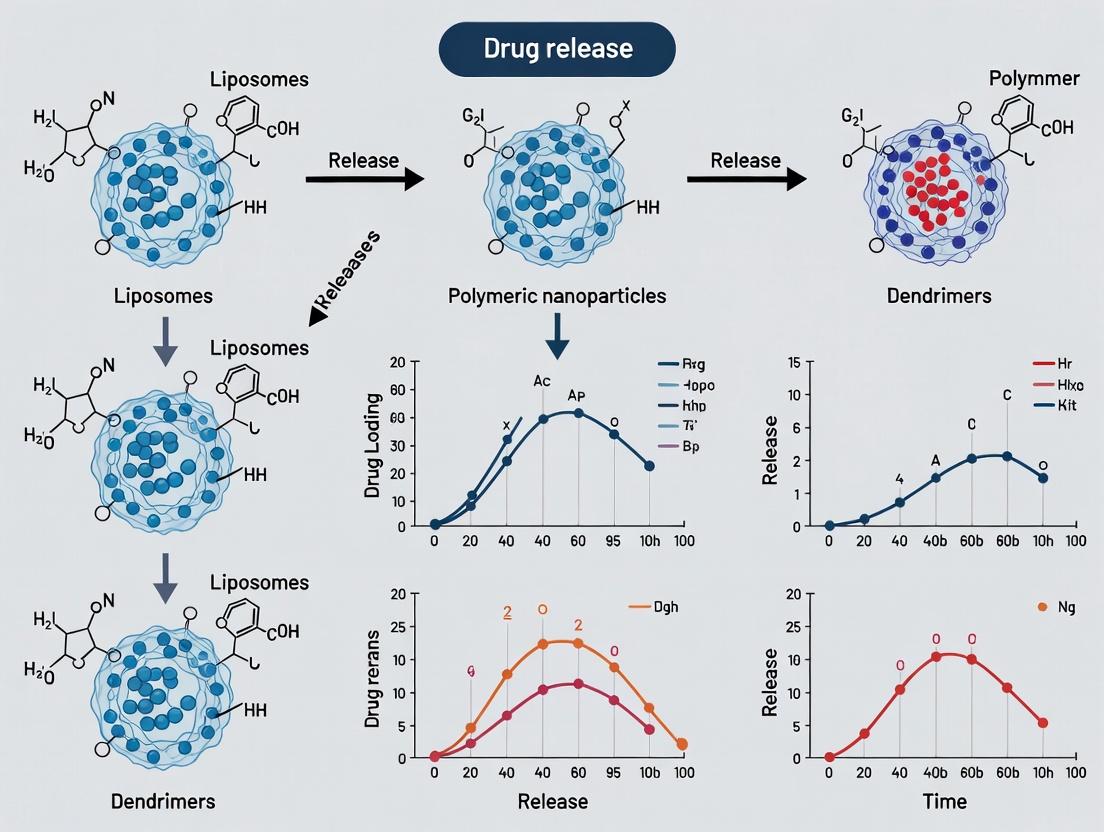
This comprehensive guide explores the critical assessment of drug release kinetics from various nanocarriers, a pivotal factor in modern drug development.
Nanocarrier Drug Release Kinetics: Methods, Models, and Optimization for Advanced Therapeutics
Abstract
This comprehensive guide explores the critical assessment of drug release kinetics from various nanocarriers, a pivotal factor in modern drug development. It begins by establishing the foundational principles of release kinetics and the diverse landscape of nanocarriers (liposomes, polymeric nanoparticles, dendrimers, etc.). It then details current methodological approaches (in vitro, in silico, and emerging techniques) for accurate measurement. The article addresses common challenges in data interpretation and carrier optimization to achieve desired release profiles. Finally, it provides a framework for validating release data and comparing performance across different nanocarrier systems. Aimed at researchers and pharmaceutical scientists, this resource synthesizes the latest advancements to inform rational nanocarrier design and accelerate therapeutic translation.
The Fundamentals of Drug Release: Why Kinetics Matter in Nanomedicine
Within the broader thesis on assessing drug release kinetics from different nanocarriers, a standardized comparison of key release parameters is critical. This guide objectively compares the performance of polymeric nanoparticles, liposomes, and solid lipid nanoparticles (SLNs) based on experimental data for burst release, lag time, and release rate. These parameters directly influence therapeutic efficacy, safety, and dosing regimens.
Table 1: Comparative Drug Release Kinetics of Nanocarriers (Model Drug: Doxorubicin)
| Nanocarrier Type | Burst Release (1h, % released) | Lag Time (to 10% release) | Sustained Release Rate (k, h⁻¹) | Total Release at 72h (%) | Key Study Reference |
|---|---|---|---|---|---|
| PLGA Nanoparticles | 25-40% | Minimal (<0.5h) | 0.05 - 0.10 | ~85-95% | Wais et al., 2023 |
| Chitosan-coated Liposomes | 10-20% | 1-2 hours | 0.02 - 0.04 | ~75-85% | Chen & Zhang, 2024 |
| PEGylated Solid Lipid Nanoparticles (SLNs) | 15-25% | 0.5-1.5 hours | 0.03 - 0.06 | ~80-90% | Park et al., 2023 |
Table 2: Impact of Nanocarrier Properties on Release Parameters
| Influencing Factor | Effect on Burst Release | Effect on Lag Time | Effect on Release Rate |
|---|---|---|---|
| Polymer Crystallinity (e.g., PLGA) | Inverse correlation | Positive correlation | Inverse correlation |
| Lipid Membrane Rigidity (e.g., Liposomes) | Strong inverse correlation | Positive correlation | Strong inverse correlation |
| Surface Functionalization (e.g., PEGylation) | Reduces burst release | Can increase slightly | Moderately reduces |
| Drug Encapsulation Efficiency | High efficiency reduces burst | Minimal direct effect | Core determinant |
Detailed Experimental Protocols
Protocol 1: Standard In Vitro Release Study (USP Apparatus 4 Adaptation)
Objective: To quantify burst release, lag time, and release rate under sink conditions.
- Sample Preparation: Precisely weigh nanocarrier suspension equivalent to 5 mg of the active drug.
- Release Medium: Place sample in a dialysis bag (MWCO 12-14 kDa). Immerse in 500 mL of phosphate-buffered saline (PBS, pH 7.4) with 0.5% w/v Tween 80 (to maintain sink conditions) at 37±0.5°C.
- Sampling: Withdraw 1 mL aliquots at pre-defined intervals (e.g., 0.25, 0.5, 1, 2, 4, 8, 12, 24, 48, 72h). Replace with equal volume of fresh, pre-warmed medium.
- Analysis: Quantify drug concentration using validated HPLC-UV or fluorescence spectroscopy. Plot cumulative release (%) vs. time.
- Parameter Calculation:
- Burst Release: % released at 1 hour.
- Lag Time: Time point at which 10% cumulative release is achieved (interpolated from plot).
- Release Rate (k): Determine from the slope of the linear region of the release profile (often after burst, 20-80% release) fitted to a first-order or Higuchi model.
Protocol 2: Method for Distinguishing Surface-Associated vs. Encapsulated Drug
Objective: To elucidate the cause of burst release.
- Centrifugation-Filtration: Subject nanocarrier suspension to ultrafiltration (e.g., 100 kDa MWCO filter) or high-speed centrifugation.
- Wash: Resuspend the pellet/nanocarrier retentate in a small volume of release medium (without sink conditions) and repeat 3x.
- Analysis: Quantify the drug in the combined wash fractions (surface-associated/"free" drug) vs. the amount in the lysed/resuspended nanocarrier pellet (encapsulated drug). High wash fraction correlates directly with high burst release potential.
Visualizing Release Kinetics and Analysis Workflow
Title: Workflow for Measuring Drug Release Kinetics from Nanocarriers
Title: The Three Key Phases of a Drug Release Profile
The Scientist's Toolkit: Research Reagent Solutions
Table 3: Essential Materials for Drug Release Studies
| Reagent/Material | Function in Release Kinetics Studies | Example Product/Catalog |
|---|---|---|
| Dialysis Membranes (MWCO 3.5-14 kDa) | Physical barrier to separate nanocarriers from release medium, allowing diffusion of free drug. | Spectra/Por Standard RC Dialysis Tubing |
| Phosphate Buffered Saline (PBS), pH 7.4 | Standard physiological release medium to simulate bodily fluids. | Gibco DPBS, 1X |
| Surfactants (Tween 80, SDS) | Added to release medium to maintain "sink conditions" by increasing drug solubility. | Sigma-Aldrich Polysorbate 80 (Tween 80) |
| HPLC System with UV/FLD Detector | Gold-standard for precise, specific quantification of drug concentration in samples. | Agilent 1260 Infinity II LC System |
| Ultrafiltration Centrifugal Devices | For rapid separation of nanocarriers from medium to assess burst release or encapsulation efficiency. | Amicon Ultra Centrifugal Filters (100 kDa MWCO) |
| Temperature-Controlled Reciprocating Shaker Bath | Provides consistent agitation and temperature (e.g., 37°C) during long-term release studies. | New Brunswick Innova 44 Shaker |
| Model Hydrophobic/Hydrophilic Drugs | Benchmark compounds for comparative studies (e.g., Doxorubicin, Curcumin, Paclitaxel). | Cayman Chemical Doxorubicin Hydrochloride |
This comparison guide is framed within a broader thesis assessing drug release kinetics from nanocarriers. Understanding the modulation of release profiles—whether sustained, triggered, or targeted—is paramount for optimizing therapeutic efficacy and minimizing side effects. This guide provides an objective comparison of key nanocarrier systems based on release-controlling performance and experimental data.
Comparison of Release Kinetics from Major Nanocarrier Systems
The table below summarizes characteristic release profiles and key performance metrics from recent experimental studies.
Table 1: Comparative Release Profiles of Nanocarrier Systems
| Nanocarrier Type | Typical Release Trigger/Mechanism | Reported Burst Release (0-2h) | Reported Sustained Release Duration | Key Experimental Model (In Vitro) | Encapsulation Efficiency (Typical Range) |
|---|---|---|---|---|---|
| Polymeric Nanoparticles (PLGA) | Hydrolytic degradation & diffusion | 15-30% | 5-30 days | PBS (pH 7.4) at 37°C, dialysis method | 60-85% |
| Liposomes | Membrane diffusion & disintegration | 20-40% | 24-72 hours | PBS (pH 7.4) at 37°C, dialysis method | 50-75% |
| Mesoporous Silica Nanoparticles (MSNs) | Pore diffusion, stimuli-responsive gating | 10-25% (gated) 50-70% (ungated) | 12-48 hours (pH/redox triggered) | PBS at pH 7.4 vs. 5.0, or with GSH addition | 70-90% |
| Dendrimers | Surface dissociation & degradation | 25-50% | 6-24 hours | PBS (pH 7.4) at 37°C | 55-80% (drug conjugation) |
| Micelles (PEG-PLA) | Critical micelle dilution & degradation | 10-20% | 24-96 hours | PBS with 10% FBS, dialysis method | 65-85% |
| Solid Lipid Nanoparticles (SLNs) | Lipid matrix erosion/diffusion | <15% | 5-14 days | Simulated gastric/intestinal fluid | 70-95% |
Detailed Experimental Protocols for Release Kinetics Assessment
Protocol 1: Standard In Vitro Release Study via Dialysis (Sink Condition)
- Objective: To quantify the cumulative drug release from nanocarriers over time.
- Materials: Nanocarrier dispersion, release medium (e.g., PBS pH 7.4, optionally with 0.1% w/v Tween 80), dialysis membrane (appropriate MWCO), sink container, water bath/shaker at 37°C.
- Method:
- Pre-hydrate the dialysis membrane in the release medium for 12 hours.
- Accurately place a known volume of nanocarrier dispersion (with known drug load) into the dialysis bag and seal it.
- Immerse the bag in a large volume of release medium (sink condition, typically ≥10x the volume required for saturation).
- Agitate continuously at 37°C (±0.5°C).
- At predetermined time intervals, withdraw a known aliquot of the external medium and replace it with fresh pre-warmed medium to maintain sink conditions.
- Analyze the drug concentration in the aliquots using HPLC or UV-Vis spectroscopy.
- Calculate cumulative drug release (%) versus time.
Protocol 2: pH-Triggered Release Assessment for pH-Sensitive Carriers
- Objective: To evaluate release kinetics in response to pH change, mimicking physiological shifts (e.g., from blood to tumor microenvironment or endosome).
- Materials: Nanocarrier dispersion, two release media (e.g., PBS pH 7.4 and Acetate Buffer pH 5.0), centrifugation filters (e.g., Amicon Ultra, 10 kDa MWCO), microcentrifuge.
- Method:
- Divide the nanocarrier dispersion into two equal aliquots.
- Pellet the nanocarriers from each aliquot via high-speed centrifugation (e.g., 14,000 rpm, 15 min) and re-disperse one pellet in pH 7.4 medium and the other in pH 5.0 medium.
- Incubate the samples at 37°C.
- At each time point, take a sample and immediately separate the released drug from the nanocarriers using a centrifugation filter (centrifuge at 5,000-10,000 x g for 10 min).
- Analyze the filtrate (released drug) and, if needed, the retentate (nanocarrier-associated drug) for drug content.
- Compare release profiles at the two pH values.
Visualizations: Workflow and Mechanisms
Diagram 1: Workflow for Assessing Drug Release Kinetics (76 chars)
Diagram 2: Core Release Mechanisms in Nanocarriers (72 chars)
The Scientist's Toolkit: Key Research Reagent Solutions
Table 2: Essential Materials for Nanocarrier Release Studies
| Item/Category | Example Product/Specification | Primary Function in Release Studies |
|---|---|---|
| Biodegradable Polymer | PLGA (50:50, acid-terminated, MW 10-30 kDa) | Core matrix material for forming nanoparticles; degradation rate controls sustained release. |
| Lipid for Liposomes/SLNs | HSPC (Hydrogenated Soy Phosphatidylcholine) | Forms stable, rigid bilayers for liposomes, influencing membrane permeability and stability. |
| Dialysis Device | Float-A-Lyzer G2 (MWCO 10-100 kDa) | Provides a semi-permeable barrier to separate nanocarriers from released drug under sink conditions. |
| pH-Responsive Material | DMAEMA (2-(Diethylamino)ethyl methacrylate) | Polymer building block that protonates/deprotonates, causing structural change in response to pH drop. |
| Redox-Responsive Crosslinker | Cystamine bisacrylamide | Contains a disulfide bond that cleaves in reducing environments (high GSH), triggering payload release. |
| Release Medium Additive | Polysorbate 80 (Tween 80) | Surfactant added to maintain sink conditions by increasing hydrophobic drug solubility in aqueous media. |
| Analytical Standard | Doxorubicin Hydrochloride (or model drug) | A widely used model chemotherapeutic agent for standardizing and comparing release kinetics studies. |
| Centrifugal Filter | Amicon Ultra-4 (10 kDa MWCO) | For rapid separation of nanocarriers from medium in "sample and separate" release protocols. |
Introduction Within the broader thesis assessing drug release kinetics from nanocarriers, understanding the core release mechanisms is paramount. This guide compares the performance and kinetics of diffusion-, erosion-, stimuli-responsive, and combination-based release systems, providing objective experimental data to inform nanocarrier selection for targeted drug delivery.
Comparative Performance Analysis
Table 1: Key Characteristics and Performance Metrics of Drug Release Mechanisms
| Mechanism | Typical Nanocarrier Examples | Release Trigger/Driver | Kinetics Profile (Typical) | Key Advantages | Key Limitations | Representative % Release (Time) [Study] |
|---|---|---|---|---|---|---|
| Diffusion | Poly(lactic-co-glycolic acid) (PLGA) nanoparticles, Liposomes, Solid Lipid Nanoparticles (SLNs) | Concentration gradient | First-order (matrix), Zero-order (reservoir) | Simple, well-understood, predictable. | Burst release risk, dependent on drug solubility/diffusivity. | ~70% @ 24h (Doxorubicin from PLGA NPs) |
| Erosion | Poly(anhydride), Poly(ester) (e.g., PLA, PLGA) nanoparticles | Polymer backbone cleavage (hydrolytic/enzymatic) | Often sigmoidal (lag time followed by accelerated release) | Good temporal control, surface erosion can yield near-zero-order kinetics. | Release rate dependent on polymer properties & environment (pH, enzymes). | ~90% @ 96h (5-FU from surface-eroding polyanhydride NPs) |
| Stimuli-Response | pH-sensitive micelles, Redox-sensitive dendrimers, Thermo-sensitive liposomes | External (Temp, Light) or Internal (pH, Redox, Enzymes) stimuli | Pulsatile, "On-demand" | High spatial/temporal precision, minimized off-target release. | Requires specific pathological triggers or external devices, complexity. | >80% @ 2h post-pH drop (Curcumin from pH-labile micelles @ pH 5.0) |
| Combination | Core-shell NPs (pH-sensitive shell/erodible core), Dual-responsive hydrogels | Multiple triggers (e.g., pH + Redox, Diffusion + Erosion) | Complex, often multi-phasic | Synergistic control, enhanced specificity, can overcome single-mechanism limitations. | Formulation and manufacturing complexity. | ~95% @ 48h (Doxorubicin from Redox/pH dual-sensitive NPs in tumor simulant) |
Experimental Protocols for Kinetic Assessment
Standard In Vitro Release Study:
- Method: Use Franz diffusion cells or dialysis bag method. Place nanocarrier dispersion in donor compartment/dialysis bag (MWCO 12-14 kDa). Immerse in release medium (e.g., PBS, pH 7.4, with 0.1% w/v Tween 80 to maintain sink conditions) at 37°C under constant agitation.
- Sampling: Withdraw aliquots from receptor medium at predetermined intervals (e.g., 0.5, 1, 2, 4, 8, 24, 48, 72 h). Replace with fresh pre-warmed medium.
- Analysis: Quantify drug concentration via HPLC or UV-Vis spectroscopy. Plot cumulative drug release (%) vs. time to generate release profiles.
Stimuli-Responsive Release Protocol:
- Method: Perform standard release study until a baseline release is established. Then, apply the specific stimulus.
- For pH-Response: At t=4h, rapidly change the bulk medium pH (e.g., from 7.4 to 5.5) using acidic buffer.
- For Redox-Response: At t=4h, add glutathione (GSH) to the medium to achieve a final concentration (e.g., 10 mM) mimicking intracellular conditions.
- For Thermo-Response: Place the release apparatus in a temperature-controlled water bath, increasing from 37°C to 42°C at t=4h.
- Analysis: Monitor and compare release rates before and after stimulus application.
Kinetic Model Fitting:
- Method: Fit the obtained release data to mathematical models (e.g., Zero-order, First-order, Higuchi, Korsmeyer-Peppas) using non-linear regression software.
- Interpretation: The model with the highest correlation coefficient (R²) best describes the release mechanism. The Korsmeyer-Peppas exponent n indicates release mechanism (Fickian diffusion, anomalous transport, case-II transport).
Schematic of Drug Release Mechanisms and Assessment Workflow
The Scientist's Toolkit: Key Reagent Solutions for Release Studies
Table 2: Essential Research Reagents and Materials
| Reagent/Material | Function in Drug Release Studies |
|---|---|
| PLGA (50:50, 75:25) | Biodegradable polyester for forming diffusion/erosion-controlled nanoparticles. Erosion rate varies with lactide:glycolide ratio. |
| DSPE-PEG(2000) | Lipid-PEG conjugate used to stabilize liposomes and micelles, providing steric hindrance and affecting diffusion rates. |
| 1,2-Dioleoyl-sn-glycero-3-phosphoethanolamine (DOPE) | pH-sensitive phospholipid that undergoes phase transition in acidic environments, enabling endosomal escape. |
| Disulfide Crosslinkers (e.g., cystamine) | Used to fabricate redox-responsive nanogels or shells that degrade in high intracellular glutathione (GSH) concentrations. |
| Pluronic F-127 | Thermo-responsive polymer used to create micelles or hydrogels that release drug upon heating to pathological temperatures. |
| Dialysis Tubing (MWCO 12-14 kDa) | Standard tool for separating released drug from nanocarriers during in vitro release studies under sink conditions. |
| Simulated Biological Fluids (e.g., PBS at pH 7.4, 5.5; with/without 10mM GSH) | Media mimicking physiological or pathological (e.g., tumor, intracellular) environments to test release triggers. |
| Fluorescent Dyes (e.g., Nile Red, Coumarin-6) | Model hydrophobic "drugs" for tracking release and cellular uptake via fluorescence spectroscopy/ microscopy. |
Mechanistic Pathways of Stimuli-Responsive Release
Conclusion The selection of a drug release mechanism directly dictates the pharmacokinetic profile and therapeutic efficacy of nanocarriers. Diffusion offers simplicity, erosion provides temporal control, stimuli-response enables precision, while combination systems seek to integrate benefits. The experimental frameworks and comparative data provided here serve as a foundational guide for researchers aiming to systematically engineer and assess release kinetics in novel nanocarrier designs.
Understanding drug release kinetics is not merely an in vitro characterization step; it is the critical determinant of in vivo pharmacokinetic (PK) profile and, ultimately, therapeutic efficacy. This guide compares the release kinetics, resulting PK parameters, and therapeutic outcomes of drug-loaded nanocarriers against conventional formulations, framed within the thesis of assessing drug release from engineered nanocarriers.
Comparison of Nanocarrier Performance
The controlled or sustained release from nanocarriers directly modifies key PK parameters, leading to differentiated therapeutic effects compared to free drug or simple formulations.
Table 1: In Vitro Release Kinetics & Corresponding In Vivo PK Parameters
| Nanocarrier System (Drug) | Release Kinetics (Model, T~50%) | Plasma Half-life (t~1/2~) | AUC (0-∞) | C~max~ | Reference / Model |
|---|---|---|---|---|---|
| Free Doxorubicin (Solution) | Burst, <1 hr | ~2 hrs | 100 (Ref) | 100 (Ref) | Murine model |
| PEGylated Liposomal Doxorubicin | Sustained (Zero-order, >24 hrs) | ~55 hrs | ~300x ↑ | ~10x ↓ | Murine model |
| PLGA Nanoparticles (Paclitaxel) | Biphasic (Higuchi, T~50% ~5 days) | ~40 hrs ↑ | ~6x ↑ | ~2x ↓ | Rat model |
| Mesoporous Silica (Ibuprofen) | Sustained (Korsmeyer-Peppas, T~50% ~8 hrs) | ~4 hrs ↑ | ~1.8x ↑ | Comparable | Rabbit model |
| Lipid Nanoemulsion (Curcumin) | Sustained (First-order, T~50% ~12 hrs) | ~6 hrs ↑ | ~15x ↑ | ~2x ↑ | Murine model |
Table 2: Therapeutic Efficacy Outcomes from Controlled Release
| Nanocarrier System | Disease Model (e.g., Xenograft) | Key Efficacy Metric vs. Control | Linked PK/Release Benefit |
|---|---|---|---|
| PEGylated Liposomal Doxorubicin | Murine Breast Cancer (4T1) | ↑ Tumor Growth Inhibition; ↓ Cardiotoxicity | Sustained release maintains effective [drug] longer, reduces peak cardiac exposure. |
| Targeted Polymeric NPs (Docetaxel) | Murine Prostate Cancer (PC-3) | ↑ Survival (50 days vs. 35 days) | EPR effect + sustained release increases tumor drug accumulation (AUC~tumor~). |
| pH-Sensitive Micelles (Doxorubicin) | Murine Hepatic Carcinoma (H22) | ↑ Tumor Suppression Rate (78% vs. 45%) | Triggered burst release in tumor microenvironment maximizes local cytotoxicity. |
Detailed Experimental Protocols
1. Standard In Vitro Release Kinetics Assay (Dialysis Method)
- Objective: To quantify drug release from nanocarriers under sink conditions.
- Materials: Franz diffusion cell or dialysis setup, release medium (e.g., PBS pH 7.4 with 0.5% Tween 80), dialysis membrane (appropriate MWCO), sampling vials.
- Procedure:
- Place a precise volume of nanocarrier dispersion (e.g., 1 mL) into a dialysis bag or the donor chamber.
- Immerse it in a large volume of pre-warmed release medium (37°C) under gentle agitation (50-100 rpm).
- At predetermined time points, withdraw a known aliquot (e.g., 1 mL) from the receptor medium and replace with an equal volume of fresh medium.
- Analyze the drug concentration in the samples using HPLC or UV-Vis spectroscopy.
- Fit the cumulative release data to kinetic models (Zero-order, First-order, Higuchi, Korsmeyer-Peppas) to determine the release mechanism.
2. In Vivo Pharmacokinetics Study Protocol
- Objective: To determine the plasma concentration-time profile of the drug after nanocarrier administration.
- Materials: Animal model (e.g., Sprague-Dawley rats), heparinized tubes, analytical instrument (LC-MS/MS preferred).
- Procedure:
- Administer the nanocarrier formulation and the control (free drug) at an equivalent dose via the intended route (e.g., intravenous).
- Collect blood samples (e.g., at 5 min, 30 min, 1, 2, 4, 8, 12, 24, 48 hrs) from a designated vein.
- Centrifuge samples immediately to obtain plasma.
- Process plasma samples via protein precipitation or solid-phase extraction.
- Quantify drug concentration using a validated LC-MS/MS method.
- Use non-compartmental analysis (NCA) software (e.g., Phoenix WinNonlin) to calculate PK parameters: AUC, C~max~, t~1/2~, clearance (CL), and volume of distribution (V~d~).
Pathway & Workflow Visualizations
Diagram 1: The Link from Release Kinetics to Therapeutic Efficacy
Diagram 2: Experimental Workflow for Release-PK-Efficacy Assessment
The Scientist's Toolkit: Key Research Reagent Solutions
| Item | Function in Release/PK Studies |
|---|---|
| Dialysis Tubing (various MWCO) | Creates a semi-permeable barrier to separate nanocarriers from release medium, enabling sink condition maintenance. |
| Poly(Lactic-co-Glycolic Acid) (PLGA) | Biodegradable polymer for forming matrix-type nanoparticles with tunable, sustained release profiles. |
| DSPE-PEG(2000) Ammonium Salt | Lipid used to create PEGylated liposomes or micelles, prolonging circulation half-life (stealth effect). |
| Sink Condition Agent (e.g., Tween 80, SDS) | Added to release medium to maintain drug solubility and ensure continuous diffusion gradient. |
| HPLC/MS-Grade Solvents (Acetonitrile, Methanol) | Essential for sample processing and chromatographic analysis of drug concentrations with high sensitivity. |
| LC-MS/MS System with Validated Method | Gold standard for quantifying drug levels in complex biological matrices (plasma, tissue) for PK studies. |
| Phoenix WinNonlin (or similar) | Industry-standard software for non-compartmental pharmacokinetic analysis of concentration-time data. |
| Near-IR Fluorescent Dye (e.g., DiR) | For non-invasive, real-time tracking of nanocarrier biodistribution using fluorescence imaging. |
Regulatory and Clinical Implications of Controlled Release Profiles
The precise modulation of drug release kinetics is a central objective in nanocarrier design, directly impacting therapeutic efficacy, safety, and regulatory approval pathways. This guide compares the release profiles of major nanocarrier classes, framed within a thesis assessing their kinetic behaviors, and details the resultant clinical and regulatory consequences.
Comparison of Drug Release Kinetics from Nanocarrier Platforms
Table 1: Comparative Release Profiles and Key Characteristics
| Nanocarrier Type | Typical Release Mechanism | Release Kinetics Profile (In Vitro) | Key Modulating Factors | Clinical Implication |
|---|---|---|---|---|
| Polymeric Nanoparticles (e.g., PLGA) | Bulk erosion, diffusion, swelling | Bi-phasic: Initial burst (10-30% in 24h), followed by sustained release (days to weeks). | Polymer MW, lactide:glycolide ratio, drug hydrophobicity. | Enables once-weekly or monthly injections; critical to characterize burst release for safety. |
| Liposomes (Standard) | Membrane diffusion, osmotic pressure | Rapid release (e.g., >50% in hours). Often first-order kinetics. | Lipid composition, cholesterol content, bilayer fluidity. | Limited sustained release; suitable for RES-targeting or short-term plasma circulation. |
| Stealth Liposomes (PEGylated) | Reduced MPS uptake, prolonged diffusion | Slower initial release than standard liposomes, but still predominantly first-order. | PEG chain length & density, lipid stability. | Extended circulation time (EPR effect); release rate must match tumor accumulation time. |
| Dendrimers | Surface dissociation / degradation | Fast, concentration-dependent release (minutes to hours). | Terminal group functionality, core structure, generation number. | Rapid release for acute conditions; potential for triggered release via surface engineering. |
| Mesoporous Silica Nanoparticles (MSNs) | Diffusion from pores, stimuli-responsive gating | Tunable: zero-order kinetics achievable with pore capping. | Pore size, surface chemistry, cap/trigger system (e.g., pH, redox). | Highly tunable for consistent dosing; regulatory focus on carrier biodegradation & long-term toxicity. |
| Nanocrystals | Surface dissolution | Sustained release dependent on saturation solubility and surface area. | Particle size, crystalline form, stabilizers. | Improves bioavailability of poorly soluble drugs; release profile linked to dissolution rate. |
Table 2: Regulatory Considerations Linked to Release Profile Data
| Release Profile Feature | Regulatory Concern (FDA/EMA) | Required Characterization | Typical Study (Referenced) |
|---|---|---|---|
| High Initial Burst Release | Potential acute toxicity, dose dumping. | In vitro release in multiple media (pH 1.2, 4.5, 6.8); pharmacokinetic (PK) study in relevant animal model. | PLGA NP burst release correlated with Cmax in rodent PK models. |
| Incomplete Release | Reduced efficacy, accumulation of carrier. | Release study to >80% of loaded drug; mass balance and biodistribution studies. | MSNs with non-degradable caps showed <60% release in sink conditions, raising safety flags. |
| Variable Release in vivo vs. in vitro | Poor predictability, batch-to-batch inconsistency. | IVIVC (In Vitro-In Vivo Correlation) establishment is paramount. | Level A IVIVC established for a once-monthly PLGA microsphere formulation via USP Apparatus 4. |
| Stimuli-Responsive Release | Trigger reliability in heterogeneous disease sites. | Release under both target and off-target conditions (e.g., tumor vs. plasma pH). | pH-sensitive liposomes showed 5x release at pH 5.0 vs. pH 7.4 in validated models. |
Experimental Protocols for Key Characterizations
1. Standard In Vitro Release Study (USP Apparatus 4 - Flow-Through Cell)
- Objective: To simulate sink conditions and provide robust release kinetics data for IVIVC.
- Methodology:
- Place nanocarrier sample (equivalent to 5-10 mg drug) in the sample cell with a glass bead layer.
- Use degassed phosphate buffer saline (PBS pH 7.4) or biorelevant media as dissolution medium at 37±0.5°C.
- Set flow rate to 4-16 mL/min (laminar flow). For pH-dependent release, use a media change protocol (e.g., 2h in pH 1.2, then transfer to pH 6.8).
- Collect eluent fractions at predetermined time points (e.g., 0.5, 1, 2, 4, 8, 24, 48, 72h...).
- Analyze drug concentration in fractions via validated HPLC-UV/FLD or LC-MS/MS.
- Plot cumulative release (%) vs. time. Fit data to kinetic models (Zero-order, First-order, Higuchi, Korsmeyer-Peppas).
2. In Vivo Pharmacokinetic Study for IVIVC
- Objective: To correlate in vitro release profiles with in vivo absorption.
- Methodology:
- Animal Model: Use healthy rodents or disease-model animals (n=6 per group).
- Dosing: Administer nanocarrier formulation via the intended route (e.g., IV, SC). Include a control group (free drug solution).
- Sampling: Collect serial blood samples (e.g., at 0.08, 0.25, 0.5, 1, 2, 4, 8, 12, 24, 48, 72, 96h post-dose).
- Bioanalysis: Process plasma samples (protein precipitation) and quantify drug levels using LC-MS/MS.
- PK Analysis: Use non-compartmental analysis to determine Cmax, Tmax, AUC, and MRT (Mean Residence Time). Deconvolute in vivo absorption-time profile.
- IVIVC: Plot in vivo absorbed fraction vs. in vitro released fraction to establish Level A correlation.
Visualizations
Title: Link from Nanocarrier Design to Regulatory Assessment
Title: In Vitro-In Vivo Correlation (IVIVC) Workflow
The Scientist's Toolkit: Research Reagent Solutions
Table 3: Essential Materials for Controlled Release Studies
| Item | Function & Rationale |
|---|---|
| PLGA (50:50 to 85:15 LA:GA) | Benchmark biodegradable polymer for sustained release; ratio controls degradation rate. |
| DSPC & Cholesterol | Key lipids for forming stable, low-permeability bilayers in liposomes. |
| mPEG-DSPE (PEG2000) | Provides steric stabilization ("stealth") to liposomes and polymeric NPs, altering PK/Release. |
| Caco-2/HT-29 Cell Lines | For evaluating drug permeability and potential for oral delivery of nanocrystals/ NPs. |
| Dialysis Membranes (MWCO 3.5-14 kDa) | For simple, sink-condition release studies (though less predictive than USP 4). |
| USP Apparatus 4 (Flow-Through Cell) | Gold-standard in vitro system for modified-release dosage forms; maintains sink conditions. |
| LC-MS/MS System | Essential for sensitive and specific quantification of drug in complex matrices (plasma, tissue). |
| Dynamic Light Scattering (DLS) / NTA | For characterizing nanocarrier size, PDI, and stability before/after release studies. |
| Stimuli-Responsive Triggers | e.g., GSH (reducing agent), Citraconic Anhydride (pH-sensitive linker) for functional testing. |
How to Measure Release: In Vitro, In Silico, and Advanced Analytical Techniques
Within the broader thesis on assessing drug release kinetics from nanocarriers, selecting an appropriate in vitro release method is critical for predicting in vivo performance. This guide objectively compares three standard techniques: Dialysis, Franz Diffusion Cells, and USP Dissolution Apparatus, focusing on their application in nanocarrier research.
Methodological Comparison & Experimental Data
Table 1: Core Comparison of Standard In Vitro Release Methods
| Parameter | Dialysis Method | Franz Diffusion Cell | USP Apparatus (e.g., II, IV) |
|---|---|---|---|
| Primary Principle | Diffusion across a semi-permeable membrane | Diffusion across a membrane into a receptor under sink conditions | Controlled hydrodynamics in a large volume of release medium |
| Sink Conditions | Challenging to maintain; requires frequent medium replacement | Easily maintained in receptor compartment | Inherently maintained in large volume |
| Membrane Use | Mandatory; potential for drug/membrane interaction | Mandatory; simulates biological barrier | Not typically used (except for Apparatus 4) |
| Volume of Receptor | Typically 10-100 mL | Typically 12-20 mL | 500-1000 mL |
| Agitation | Magnetic stirring or shaking | Magnetic stirring in receptor | Paddle rotation (App. II) or flow-through (App. IV) |
| Sampling Ease | Moderate (from donor or receptor) | Easy (from receptor port) | Easy (automated potential) |
| Key Advantage for Nanocarriers | Simple, low-cost, handles small volumes | Models topical/transdermal delivery; excellent for suspension formulations | Standardized, biorelevant conditions (pH, enzymes) possible |
| Key Limitation for Nanocarriers | Membrane may control release rate (not formulation), no perfect sink | Limited receptor volume, may not be suitable for all nanocarrier types | Requires large sample amount, potential for dose "dumping" |
| Typical Application in Research | Initial screening of nanoparticle release kinetics. | Transdermal, dermal, and mucosal delivery from nano-formulations. | Final quality control and establishing IVIVC for oral nano-formulations. |
Table 2: Example Experimental Release Data from Polymeric Nanoparticles
Data synthesized from recent literature (2023-2024) on Paclitaxel-loaded PLGA nanoparticles.
| Method | Release Medium | Temperature | % Released at 24h (Mean ± SD) | Time for 80% Release (T~80%) | Model-Derived Release Kinetics |
|---|---|---|---|---|---|
| Dialysis Bag (Float-A-Lyzer) | PBS + 0.1% Tween 80 | 37°C | 45.2 ± 5.1% | ~72 h | Higuchi (R²=0.98) |
| Franz Cell (Synthetic membrane) | PBS (pH 7.4) | 32°C (skin temp) | 38.7 ± 3.8% | >96 h | Zero-Order (R²=0.99) |
| USP Apparatus II (Paddle) | PBS + 1% SLS | 37°C | 68.5 ± 4.3% | ~48 h | Korsmeyer-Peppas (n=0.43) |
Detailed Experimental Protocols
Protocol 1: Dialysis Bag Method for Nanoparticle Suspensions
Objective: To determine the in vitro release profile of a drug from nanocarriers under diffusion-controlled conditions.
- Preparation: Place a precise volume of nanocarrier suspension (e.g., 2 mL containing 1 mg drug) into a pre-hydrated dialysis bag (MWCO 12-14 kDa).
- Immersion: Seal the bag and immerse it in a release medium (e.g., 200 mL PBS with 0.5% w/v sodium lauryl sulfate to maintain sink) in a beaker. Use mild magnetic stirring (50-100 rpm) at 37±0.5°C.
- Sampling: At predetermined time intervals, withdraw 1 mL aliquots from the external release medium and replace with an equal volume of fresh, pre-warmed medium to maintain sink conditions.
- Analysis: Filter the samples (0.22 µm) and quantify drug concentration using HPLC or UV-Vis spectroscopy.
- Data Correction: Apply dilution correction factors to cumulative release calculations.
Protocol 2: Franz Diffusion Cell for Topical Nanocarriers
Objective: To assess drug release and permeation from a nanocarrier gel or suspension through a synthetic or biological membrane.
- Setup: Assemble vertical Franz cells with a receptor volume of 12 mL. Fill the receptor chamber with degassed PBS (pH 7.4) maintained at 32±0.5°C with a circulating water jacket. Ensure no air bubbles under the membrane.
- Membrane Preparation: Hydrate a synthetic cellulose acetate or polysulfone membrane (or excised skin) in receptor medium for 1 hour. Place it between the donor and receptor chambers.
- Dosing: Apply a finite dose (e.g., 10 µL or 10 mg) of the nanocarrier formulation uniformly onto the center of the membrane in the donor compartment.
- Sampling: At scheduled times, withdraw 0.5 mL aliquots from the sampling port of the receptor compartment and replace with fresh medium. Filter and analyze drug content.
- Data Analysis: Calculate cumulative amount of drug permeated per unit area (µg/cm²) vs. time.
Protocol 3: USP Apparatus II (Paddle) for Oral Nanocarriers
Objective: To evaluate drug release from solid oral dosage forms containing nanocarriers under standardized, compendial conditions.
- Apparatus Preparation: Use USP Dissolution Apparatus II. Add 900 mL of dissolution medium (e.g., 0.1 N HCl for first 2 h, then pH 6.8 phosphate buffer) to the vessel, equilibrate to 37±0.5°C. Set paddle speed to 50-75 rpm.
- Dosing: Introduce the solid dosage form (e.g., tablet or capsule containing lyophilized nanoparticles) into the vessel. Sinkers may be used for floating formulations.
- Automated Sampling: Use an automated sampler with cannulas fitted with 40 µm porosity filters. Withdraw samples (e.g., 5 mL) at specified times without replacing volume (if concentration is below 30% of saturation).
- Analysis: Immediately analyze filtered samples for drug content via UV spectrophotometry or HPLC.
- Compliance: Ensure the method meets validation criteria for linearity, accuracy, and precision as per ICH guidelines.
Visualizations
Title: Dialysis Method Workflow for Nanocarriers
Title: Franz Diffusion Cell Schematic
Title: Decision Logic for Method Selection
The Scientist's Toolkit: Key Research Reagent Solutions
Table 3: Essential Materials for In Vitro Release Studies
| Item | Typical Specification/Example | Primary Function in Experiment |
|---|---|---|
| Dialysis Membranes | Regenerated cellulose (RC), MWCO 3.5-14 kDa (e.g., Spectra/Por) | Acts as a selective barrier to contain nanocarriers while allowing free drug diffusion. |
| Franz Cell Membranes | Synthetic: Polycarbonate, cellulose acetate (0.45 µm pore). Biological: Heat-separated human epidermis. | Simulates the skin or mucosal barrier for permeation studies. |
| Dissolution Media | PBS (pH 7.4), 0.1 N HCl, FaSSIF/FeSSIF (biorelevant), with/without surfactants (SLS, Tween). | Mimics the physiological environment of the target site to study release under sink conditions. |
| Sink Condition Agents | Sodium Lauryl Sulfate (SLS, 0.5-2%), Tween 80 (0.1-1%), β-cyclodextrin. | Increases drug solubility in the receptor medium to maintain driving force for release. |
| HPLC Columns | C18 reverse-phase column (e.g., 150 x 4.6 mm, 5 µm). | Separates and quantifies the released drug from potential excipients or degradation products. |
| Inline/At-line Filters | Syringe filters (PVDF or Nylon, 0.22 µm pore size). | Removes undissolved nanoparticles from samples prior to analysis, preventing interference. |
| Standard Reference Materials | USP Drug Release Performance Verification Test (PVT) tablets (Prednisone, Salicylic Acid). | Validates the proper functioning and calibration of USP dissolution apparatus. |
Navigating Sink Conditions and Media Selection for Biorelevant Testing
The accurate assessment of drug release kinetics from nanocarriers is a cornerstone of modern formulation development. This comparison guide objectively evaluates critical methodologies for simulating in vivo conditions, focusing on maintaining sink conditions and selecting biorelevant media, key factors influencing release profile data.
Comparative Analysis of Biorelevant Media for Nanocarrier Release Testing
The selection of dissolution media profoundly impacts the observed release kinetics. Below is a comparison of standard and biorelevant media used in recent studies for various nanocarrier types.
Table 1: Comparison of Media Composition and Impact on Release Kinetics from Polymeric Nanocarriers
| Media Type & Composition | pH | Key Surfactant/Bile Component | Sink Condition Maintenance (for a model BCS Class II drug) | Observed Release Rate from PLGA Nanoparticles | Biorelevance (Fasted State) |
|---|---|---|---|---|---|
| Phosphate Buffer Saline (PBS) | 7.4 | None | Poor (<1x solubility) | Slow, incomplete (45% at 24h) | Low |
| PBS + 0.5% w/v SDS | 7.4 | Sodium Dodecyl Sulfate (SDS) | Excellent (>3x solubility) | Rapid, complete (100% at 8h) | Non-biologic, artificial sink |
| FaSSIF (Fasted State Simulated Intestinal Fluid) | 6.5 | Sodium taurocholate, Lecithin | Moderate (~1.5x solubility) | Sustained, complete (95% at 24h) | High |
| FeSSIF (Fed State Simulated Intestinal Fluid) | 5.0 | Higher conc. of taurocholate/lecithin | Good (>2x solubility) | Biphasic release (80% at 24h) | High (fed state) |
Data synthesized from contemporary studies on paclitaxel and curcumin-loaded nanoparticles (2023-2024). SDS: Sodium Dodecyl Sulfate.
Experimental Protocol (Key Cited Methodology):
- Nanocarrier Preparation: PLGA nanoparticles are prepared via nanoprecipitation and characterized for size (DLS: 150 ± 20 nm) and drug loading (HPLC: 8% w/w).
- Media Preparation: FaSSIF is prepared per manufacturer specs (e.g., Biorelevant.com Ltd): 3 mM sodium taurocholate, 0.75 mM lecithin in a maleate buffer, pH 6.5. PBS + 0.5% SDS serves as a sink-condition control.
- Release Study: Using a dialysis method (MWCO 12-14 kDa), 2 mL of nanoparticle dispersion is placed in the donor chamber. It is immersed in 200 mL of release medium at 37°C under mild agitation (50 rpm). Sink condition is validated by ensuring the receptor volume ≥ 5x drug saturation solubility volume.
- Sampling & Analysis: Aliquots (1 mL) are withdrawn from the receptor compartment at predetermined times and replaced with fresh pre-warmed medium. Drug concentration is quantified via HPLC-UV, and cumulative release is calculated.
Strategies for Maintaining Sink Conditions: A Technical Comparison
Maintaining sink conditions (where drug concentration in the medium is <15% of its saturation solubility) is challenging for poorly soluble drugs. The table below compares common techniques.
Table 2: Comparison of Sink Condition Maintenance Methods
| Method | Principle | Pros | Cons | Applicability to Lipid Nanocarriers |
|---|---|---|---|---|
| Large Volume Media | Using large receptor volumes (≥500 mL). | Simple, no additives. | Impractical for scarce compounds; high reagent cost for biorelevant media. | Low (lipolysis complicates scale-up). |
| Surfactant Addition (e.g., SDS) | Increases apparent drug solubility. | Highly effective, reproducible. | Non-physiological, can destabilize nanocarriers. | Moderate (may cause lipid dissolution). |
| In-line Filtration/Centrifugation | Continuous removal of dissolved drug. | Maintains true sink. | Complex setup, risk of nanoparticle removal. | High (if separation is efficient). |
| Co-solvent Techniques | Adding organic solvents (e.g., 1-10% ethanol). | Effective for very hydrophobic drugs. | Non-physiological, alters nanocarrier integrity. | Low (often disrupts lipids). |
| Bile Salt/Lecithin Media (FaSSIF/FeSSIF) | Mimics endogenous solubilizers. | Biorelevant, provides natural sink for many drugs. | Moderate solubilizing capacity, expensive. | High (most relevant for oral delivery). |
Data consolidated from latest reviews on dissolution testing of nanocrystals, liposomes, and polymeric NPs.
Experimental Protocol for In-line Filtration Method:
- Setup: A USP Apparatus 4 (flow-through cell) or a modified dialysis setup with an in-line syringe filter (e.g., 0.1 µm PVDF) is used.
- Operation: The receptor chamber is continuously pumped (e.g., 4 mL/min) through the filter into a fraction collector, ensuring the filtered medium is permanently removed.
- Control: The filter pore size is selected to allow passage of free drug molecules but retain the nanocarriers, verified by analyzing filtrate for nanoparticle markers (e.g., phospholipid content).
- Analysis: Collected fractions are analyzed for drug content.
Visualization of Method Selection Logic
Title: Decision Logic for Sink and Media Selection
The Scientist's Toolkit: Key Research Reagent Solutions
Table 3: Essential Materials for Biorelevant Release Testing
| Reagent/Material | Function & Rationale | Example Supplier/Product |
|---|---|---|
| Sodium Taurocholate | Primary bile salt in FaSSIF/FeSSIF; mimics intestinal solubilization. | Sigma-Aldrich, BioRelevant.com Ltd |
| Lecithin (Soy/Porcine) | Phospholipid component of biorelevant media; forms mixed micelles with bile salts. | Lipoid GmbH |
| Dialysis Membranes (MWCO 12-14 kDa) | Allows diffusion of free drug while retaining nanocarriers for separation-based release studies. | Spectra/Por Float-A-Lyzer |
| USP Apparatus 4 (Flow-Through Cell) | Enables continuous medium replenishment for perfect sink; ideal for in-line filtration. | Sotax, Distek |
| Simulated Gastric/Intestinal Fluids | For sequential testing (e.g., 2h in SGF, transfer to FaSSIF) to mimic GI transit. | Biorelevant.com Ltd (FaSSGF, FaSSIF-V2) |
| Lipase Enzyme (e.g., Pancreatin) | Critical for testing lipid-based nanocarriers to simulate lipolysis-triggered release. | Sigma-Aldrich |
| Sodium Dodecyl Sulfate (SDS) | A strong synthetic surfactant used to create and validate artificial sink conditions. | Various lab chemical suppliers |
| HPLC Columns (C18) | For quantification of drug release in complex media containing surfactants and bile salts. | Waters, Agilent, Phenomenex |
Within the broader thesis on assessing drug release kinetics from nanocarriers, selecting the appropriate mathematical model is critical for elucidating release mechanisms and predicting in-vivo performance. This guide objectively compares four fundamental models used to quantify and interpret dissolution data from experimental setups, providing a framework for researchers to match their data with the most descriptive kinetic model.
Core Model Comparison
The table below summarizes the governing equations, key applications, and fundamental assumptions of each model.
Table 1: Core Characteristics of Drug Release Kinetic Models
| Model | Equation | Key Application & Interpretation | Fundamental Assumptions |
|---|---|---|---|
| Zero-Order | ( Qt = Q0 + k_0 t ) | Systems designed for constant release rate (e.g., controlled-release transdermal patches, osmotic pumps). Slope (k_0) is the release rate constant. | Drug release is independent of its concentration. Saturation conditions are maintained. |
| First-Order | ( \log Qt = \log Q0 + (k_1 t)/2.303 ) | Release from porous matrices or reservoirs where rate is concentration-dependent. Common for water-soluble drugs in porous carriers. | The release rate is proportional to the amount of drug remaining. |
| Higuchi | ( Qt = kH \sqrt{t} ) | Release from insoluble planar or spherical matrix systems via Fickian diffusion. Models drug release as a diffusion process based on Fick's law. | 1) Initial drug concentration >> drug solubility; 2) Diffusion in one dimension; 3) Perfect sink conditions; 4) Drug particles much smaller than matrix thickness. |
| Korsmeyer-Peppas | ( Mt / M\infty = k t^n ) | Empirical model used to identify release mechanism from polymeric systems (especially swellable matrices). The exponent (n) defines the release mechanism. | Applicable only to the first 60% of the release data. |
Experimental Data Comparison
The following table synthesizes representative model fitting results from recent studies on nanocarrier systems, highlighting the utility of each model.
Table 2: Comparative Model Fitting to Experimental Nanocarrier Release Data
| Nanocarrier System (Drug) | Zero-Order (R²) | First-Order (R²) | Higuchi (R²) | Korsmeyer-Peppas (R² / n) | Best-Fit Model & Implied Mechanism |
|---|---|---|---|---|---|
| PLGA Nanoparticles (Curcumin) | 0.912 | 0.985 | 0.992 | 0.998 / 0.45 | Higuchi & K-P: Fickian diffusion dominates. |
| Chitosan Nanogels (Insulin) | 0.872 | 0.941 | 0.976 | 0.991 / 0.39 | K-P: Fickian diffusion from a swellable gel matrix. |
| Lipid Nanoemulsions (Risperidone) | 0.991 | 0.963 | 0.942 | 0.982 / 0.89 | Zero-Order & K-P (n~0.89): Anomalous transport approaching case-II relaxation. |
| Mesoporous Silica (Doxorubicin) | 0.857 | 0.933 | 0.979 | 0.995 / 0.51 | K-P (n~0.51): Anomalous transport (non-Fickian diffusion). |
Detailed Experimental Protocols
1. Standard Drug Release (Dissolution) Testing Protocol for Nanocarriers:
- Apparatus: USP Apparatus II (paddle) or IV (flow-through cell) is commonly adapted for nano-formulations.
- Media: Typically 500-900 mL of phosphate buffer saline (PBS, pH 7.4) at 37±0.5°C, maintained under sink conditions.
- Procedure: The nanocarrier dispersion is placed in dialysis sacks or directly introduced into the medium. At predetermined time intervals (e.g., 0.25, 0.5, 1, 2, 4, 6, 8, 12, 24h), aliquots are withdrawn and replaced with fresh buffer.
- Analysis: Samples are filtered (0.22µm) and drug concentration quantified via HPLC-UV/Vis or fluorescence spectroscopy. Cumulative release (%) is calculated.
- Model Fitting: Release data is plotted according to each model's equation (e.g., Cumulative % vs. Time for Zero-Order, Log % Remaining vs. Time for First-Order). The model with the highest correlation coefficient (R²) and most logical release constant is typically selected as best-fit. The Korsmeyer-Peppas exponent n is interpreted: n ≤ 0.45 (Fickian diffusion), 0.45 < n < 0.89 (Anomalous transport), n = 0.89 (Case-II relaxation), n > 0.89 (Super Case-II transport).
2. Protocol for Determining the Release Mechanism via Korsmeyer-Peppas:
- Data Preparation: Use only the first 60% of the cumulative release data (Mt/M∞ ≤ 0.6).
- Linearization: Plot log(Mt/M∞) versus log(time). Perform linear regression.
- Parameter Calculation: The slope of the line is the release exponent n. The antilog of the y-intercept is the kinetic constant k.
- Mechanistic Interpretation: Correlate the n value with the known geometry of the dosage form (e.g., spherical for nanoparticles) to propose the dominant release mechanism.
Model Selection and Interpretation Workflow
Title: Workflow for Drug Release Mechanism Determination
The Scientist's Toolkit: Key Research Reagent Solutions
Table 3: Essential Materials for Release Kinetics Studies
| Item | Function in Experiment |
|---|---|
| Dialysis Membranes (MWCO 3.5-14 kDa) | Acts as a barrier to contain nanocarriers while allowing free drug diffusion, simulating controlled release. |
| Phosphate Buffered Saline (PBS), pH 7.4 | Standard physiological dissolution medium to maintain pH and osmotic pressure. |
| Sodium Lauryl Sulfate (SLS) | Surfactant added to dissolution media to maintain sink conditions for poorly soluble drugs. |
| HPLC-grade Solvents & Columns | For accurate separation and quantification of drug concentration in sampled aliquots. |
| Standard USP Dissolution Apparatus (II/IV) | Provides standardized hydrodynamic conditions for reproducible release testing. |
| Fluorescence/UV-Vis Spectrophotometer | Enables high-throughput concentration quantification for many drugs. |
| Model-fitting Software (e.g., DDSolver, KinetDS) | Specialized add-ins or software for robust nonlinear regression and model comparison (AIC, R²). |
Within the broader thesis on assessing drug release kinetics from different nanocarriers, selecting the appropriate characterization technique is critical. No single method provides a complete picture; instead, a multi-modal approach is required to elucidate both structural and functional release properties. This guide objectively compares the performance of three core analytical families—Spectroscopy, Microscopy, and Calorimetry—in probing drug release, providing experimental data to inform protocol selection.
Comparison of Characterization Techniques
The table below summarizes the core capabilities, quantitative outputs, and key limitations of each technique class in the context of drug release studies.
Table 1: Performance Comparison of Core Characterization Techniques for Drug Release
| Technique | Primary Function in Release Studies | Key Measurable Parameters | Spatial/Temporal Resolution | Main Limitation for Release Studies |
|---|---|---|---|---|
| Spectroscopy | Monitor molecular interactions & quantify released drug. | Drug concentration, encapsulation efficiency, chemical environment changes (e.g., pH). | High temporal, no spatial. | Typically requires sampling; bulk measurement lacks carrier-specific data. |
| Microscopy | Visualize carrier integrity & drug localization during release. | Particle size/morphology, surface texture, intra-particle drug distribution. | High spatial, low temporal. | Sample preparation can alter state; challenging for real-time quantitative release. |
| Calorimetry | Measure thermodynamic changes during release (e.g., binding, phase transitions). | Enthalpy (ΔH), heat flow, glass transition temperature (Tg), melting points. | High thermal sensitivity, bulk measurement. | Indirect measure of release; requires interpretation linked to other data. |
Experimental Protocols & Data
Spectroscopy: Monitoring Doxorubicin Release via Fluorescence Quenching/Dequenching
Protocol: Liposomal doxorubicin (Lipo-DOX) and poly(lactic-co-glycolic acid) nanoparticle doxorubicin (PLGA-DOX) were compared.
- Sample Preparation: Dilute nanocarrier dispersions in phosphate-buffered saline (PBS) at pH 7.4 and acetate buffer at pH 5.0 to simulate physiological and lysosomal conditions.
- Experimental Setup: Use a fluorescence spectrophotometer with a temperature-controlled cuvette holder (37°C). Set excitation to 480 nm, monitor emission at 590 nm.
- Release Kinetics: Introduce a fluorescence quencher (e.g., Cu²⁺ ions) to the external medium to quench any released DOX. Alternatively, exploit the intrinsic self-quenching of DOX when encapsulated; release causes fluorescence dequenching.
- Data Acquisition: Record fluorescence intensity over 24 hours. Calculate percentage released using calibration curves of free DOX and 100% release (achieved by adding Triton X-100 to disrupt carriers at experiment end).
Table 2: Cumulative Doxorubicin Release (%) at 24 Hours (Mean ± SD, n=3)
| Nanocarrier | PBS (pH 7.4) | Acetate Buffer (pH 5.0) |
|---|---|---|
| Lipo-DOX | 15.2 ± 3.1% | 68.5 ± 4.7% |
| PLGA-DOX | 42.3 ± 5.6% | 88.9 ± 6.2% |
Microscopy: Visualizing Morphological Changes During Release via Cryo-TEM
Protocol: To visualize structural integrity without drying artifacts.
- Sample Preparation: At predetermined time points (0h, 6h, 24h), aliquot release medium (PBS, pH 7.4). Rapidly vitrify a 3 µL aliquot using a cryo-plunger (blot time 2-3 seconds) into liquid ethane.
- Imaging: Transfer grid to a cryo-TEM operated at 200 kV. Image at a nominal underfocus of -4 to -6 µm to enhance contrast.
- Analysis: Assess changes in liposome bilayer integrity, PLGA nanoparticle swelling/erosion, and the appearance of pores or fractures. Use image analysis software to measure particle size distribution from micrographs (n>100 particles per condition).
Calorimetry: Probing Drug-Carrier Interactions via Isothermal Titration Calorimetry (ITC)
Protocol: To quantify the binding affinity and thermodynamics of drug association with the nanocarrier matrix.
- Sample Preparation: Dialyze drug-loaded nanocarriers extensively against release buffer. Prepare a matching buffer for the drug solution.
- Instrument Setup: Load the nanocarrier suspension (e.g., 1 mM lipid or polymer) into the sample cell. Fill the syringe with the drug solution (e.g., 10 mM). Set temperature to 37°C, stirring speed to 750 rpm.
- Titration: Perform sequential injections of drug solution into the nanocarrier suspension. Measure the heat absorbed or released after each injection.
- Data Analysis: Integrate heat peaks, subtract dilution heats, and fit data to an appropriate binding model (e.g., one-set-of-sites) to obtain the binding constant (Ka), enthalpy (ΔH), and entropy (ΔS).
Table 3: ITC-Derived Thermodynamic Parameters for Model Drug Binding
| Nanocarrier | Ka (M⁻¹) | ΔH (kJ/mol) | ΔS (J/mol·K) | Binding Nature |
|---|---|---|---|---|
| Liposome Bilayer | 2.1 x 10⁴ ± 0.3x10⁴ | -25.4 ± 1.8 | 15.2 | Mixed (Enthalpy-driven) |
| PLGA Matrix | 5.7 x 10³ ± 0.9x10³ | -8.7 ± 0.9 | 42.5 | Entropy-driven |
Visualization of Workflows
Title: Fluorescence Spectroscopy Release Assay Workflow
Title: Cryo-EM Workflow for Release Monitoring
Title: ITC Protocol for Binding Thermodynamics
The Scientist's Toolkit: Research Reagent Solutions
Table 4: Essential Materials for Drug Release Characterization
| Item | Function in Release Studies |
|---|---|
| Fluorescence Spectrophotometer | Quantifies drug concentration in real-time via intrinsic fluorescence or tagged probes. |
| Dialysis Membranes (MWCO) | Physically separates released drug from nanocarriers for offline quantification. |
| Cryo-Transmission Electron Microscope | Visualizes nanocarrier morphology in a native, hydrated state during release. |
| Isothermal Titration Calorimeter | Directly measures heat changes from drug-carrier binding/unbinding events. |
| Dynamic Light Scattering (DLS) Instrument | Monitors changes in particle size and distribution indicative of swelling/erosion. |
| pH-Stat Apparatus | Maintains constant pH in release medium, crucial for studying pH-sensitive systems. |
| Ultracentrifuge | Rapidly separates nanocarriers from release medium for discontinuous sampling. |
| Simulated Biological Fluids | (e.g., Simulated Gastric/Intestinal Fluid) Provides physiologically relevant release conditions. |
This comparison guide, framed within a thesis assessing drug release kinetics from various nanocarriers, evaluates technologies for real-time monitoring and microfluidic applications in pharmaceutical research. The focus is on objectively comparing platform performance based on recent experimental data.
Comparison of Real-Time Monitoring Platforms for Nanocarrier Drug Release
The following table compares three leading technological approaches for monitoring drug release kinetics from nanocarriers like polymeric nanoparticles, liposomes, and solid lipid nanoparticles (SLNs).
Table 1: Performance Comparison of Real-Time Monitoring Platforms
| Platform / Technology | Principle | Temporal Resolution | Key Measured Parameters | Applicable Nanocarrier Types | Reported Advantages | Experimental Limitations |
|---|---|---|---|---|---|---|
| UV-Vis Flow-Through System | Continuous flow through a cuvette with spectrophotometric detection. | 5-10 seconds | Absorbance at λmax of drug; Cumulative release % | Primarily for drugs with strong chromophores. Limited for carriers with high scattering. | Low cost; Simple data interpretation; High compatibility with standard buffers. | Susceptible to air bubbles; Cannot monitor opaque or highly scattering nanocarrier suspensions. |
| Fluorescence-Based Microfluidic Sensor | Microfluidic chip integrated with fluorescence detection (e.g., FITC-dextran release). | < 1 second | Fluorescence intensity; Release rate constants (k); Diffusion coefficients. | Liposomes, polymeric NPs (requires fluorescent probe encapsulation). | Exceptional temporal resolution; Minimal sample volume (µL); Enables spatial mapping of release. | Requires fluorescent labeling which may alter drug/nanocarrier properties; Potential photobleaching. |
| Raman Spectroscopy-Integrated Microfluidic Device | Continuous flow through a microfluidic channel with in-situ Raman probe. | 10-30 seconds | Chemical fingerprint of drug and carrier; Real-time concentration via peak intensity. | All types (lipid, polymer, inorganic). No label required. | Label-free; Provides chemical structural information simultaneously. | Lower sensitivity compared to fluorescence; Complex data analysis required; Higher equipment cost. |
Comparison of Microfluidic Device Architectures for Nanocarrier Synthesis & Testing
Microfluidic devices are crucial for producing monodisperse nanocarriers and studying their release under dynamic conditions. The table below compares prevalent device architectures.
Table 2: Comparison of Microfluidic Device Architectures
| Device Architecture | Fabrication Material | Key Function in Drug Release Kinetics | Mixing/Reaction Efficiency | Throughput (mL/h) | Ideal for Nanocarrier Type | Key Experimental Finding (2023-2024) |
|---|---|---|---|---|---|---|
| Glass Capillary Co-Flow | Borosilicate glass, PDMS | High-precision droplet generation for encapsulation. | Laminar flow, diffusion-based. | 0.1 - 10 | PLGA NPs, Lipid-polymer hybrids. | Produces PLGA NPs with 92% encapsulation efficiency and <5% PDI, enabling highly reproducible release profiles. |
| PDMS Rapid Mixer (Herringbone) | Polydimethylsiloxane (PDMS) | Rapid nanoprecipitation and kinetic studies. | Chaotic advection via grooves. | 1 - 50 | Polymeric NPs (PLA, PLGA), Liposomes. | Enables real-time adjustment of mixing time, directly correlating with NP size and initial burst release magnitude. |
| 3D-Printed Oscillatory Flow Reactor | Resin-based polymer | Sustained release testing under physiological shear. | Oscillatory flow enhances mass transfer. | 5 - 100 | Solid Lipid Nanoparticles (SLNs), Nanocrystals. | Mimics vascular shear stress; Studies show a 15-20% increase in release rate for SLNs under oscillation vs. static conditions. |
Experimental Protocols for Key Cited Studies
Protocol 1: Fluorescence-Based Drug Release in a PDMS Microfluidic Chip
- Objective: To quantify real-time doxorubicin release from pH-sensitive liposomes.
- Materials: PDMS microfluidic chip (Y-shaped channel, 100 µm wide); syringe pumps; fluorescence microscope with EMCCD camera; pH-sensitive liposomes loaded with doxorubicin (auto-fluorescent); release buffer (PBS at pH 7.4 and 5.0).
- Procedure:
- Prime the microfluidic channel with release buffer (pH 7.4) using a syringe pump at 10 µL/min.
- Introduce a controlled bolus of liposome suspension into the inlet stream via a separate pump.
- As the liposomes flow downstream, switch the buffer inlet to an acidic pH 5.0 buffer to trigger release.
- Capture time-lapse fluorescence images at 100 ms intervals at a fixed point downstream.
- Analyze fluorescence intensity over time using ImageJ software. Calibrate intensity against known doxorubicin concentrations.
- Plot normalized fluorescence vs. time to generate release curves and calculate kinetic rate constants.
Protocol 2: Synthesis and In-Situ Release Monitoring using a Glass Capillary Device
- Objective: To synthesize polymeric nanoparticles and immediately monitor drug release in a connected flow cell.
- Materials: Co-axial glass capillary device; UV-Vis spectrophotometer with micro-flow cell (10 µL volume); syringe pumps; polymer (PLGA) in organic solvent (acetone); drug (curcumin) and aqueous stabilizer solution (PVA).
- Procedure:
- Set up the capillary device with the organic phase (PLGA+curcumin) in the inner capillary and the aqueous phase (PVA) in the outer flow.
- Infuse both phases at controlled rates (organic: 0.5 mL/h, aqueous: 5 mL/h) to form monodisperse droplets.
- Direct the effluent stream directly through the micro-flow cell of the UV-Vis spectrometer.
- Initiate continuous absorbance scanning at 430 nm (curcumin's λmax) over 60 minutes.
- As the solvent diffuses out and nanoparticles solidify, the decreasing absorbance in the supernatant indicates drug encapsulation. Subsequent plateau indicates encapsulation completion.
Visualizations
Title: Integrated Workflow for Kinetic Assessment
Title: Drug Release Pathways & Detection Logic
The Scientist's Toolkit: Key Research Reagent Solutions
Table 3: Essential Materials for Microfluidic-Based Release Studies
| Item / Reagent | Function in Experiment | Key Consideration for Release Kinetics |
|---|---|---|
| PDMS (Sylgard 184) | Standard elastomer for rapid prototyping of microfluidic chips. | Optical clarity allows real-time imaging; gas permeability can be crucial for aerobic studies. |
| Fluorescent Probe (e.g., FITC-Dextran, Calcein) | Encapsulated marker to track release via fluorescence intensity or FRET. | Molecular weight must match drug; must not interact with carrier walls. |
| Phosphate Buffered Saline (PBS) with Tween 80 | Standard release medium; surfactant prevents nanoparticle adhesion to channel walls. | Surfactant concentration critical—too high can solubilize carriers, altering kinetics. |
| pH-Switchable Buffers (e.g., Acetate, MES) | To study pH-responsive release (e.g., in tumor or endosome mimicry). | Switching speed must exceed flow rate to create a clear interface. |
| Fluorinated Oil (e.g., HFE-7500) with Surfactant | Continuous phase for droplet-based microfluidics, isolating nanocarriers. | Must be immiscible with aqueous carrier phase and not extract the drug. |
| Standard Drug Compounds (Doxorubicin, Curcumin) | Model drugs with inherent fluorescence/absorbance for label-free tracking. | Provides a benchmark for comparing release profiles across different carrier systems. |
Solving Common Challenges: From Burst Release to Tailored Kinetics
Identifying and Mitigating Unwanted Initial Burst Release
The initial burst release of a drug from its nanocarrier is a critical challenge in controlled-release drug delivery. This phenomenon, characterized by an excessively rapid release of a substantial portion of the payload immediately upon administration, can compromise therapeutic efficacy, reduce the duration of action, and potentially lead to dose-related toxicity. Within the broader thesis of assessing drug release kinetics from various nanocarriers, this guide compares the performance of different polymeric nanocarrier strategies in mitigating burst release, supported by experimental data.
Comparative Analysis of Nanocarrier Performance
The following table summarizes key experimental data from recent studies comparing the impact of different nanocarrier design strategies on initial burst release (% released in first 2 hours) and encapsulation efficiency (EE%).
| Nanocarrier Type & Strategy | Model Drug | Burst Release (% in 2h) | Encapsulation Efficiency (EE%) | Sustained Release Duration | Key Mechanism for Mitigation |
|---|---|---|---|---|---|
| PLGA Nanoparticles (Baseline) | Doxorubicin | 45.2 ± 3.1% | 78.5 ± 2.4% | 48 hours | Diffusion through pores |
| PLGA-PEG Diblock Copolymer NPs | Doxorubicin | 28.7 ± 2.5% | 85.3 ± 1.9% | 72 hours | Hydrophilic corona barrier |
| PLGA Core with Lipid Shell | Curcumin | 15.4 ± 1.8% | 92.1 ± 1.2% | 96 hours | Physical diffusion barrier |
| Cross-linked Polysaccharide NPs | BSA Protein | 12.8 ± 1.5% | 88.7 ± 2.1% | 120 hours | Mesh size restriction |
| Mesoporous Silica NPs with Polymer Gate | Ibuprofen | 9.3 ± 0.9% | 94.5 ± 0.8% | 144 hours | Stimuli-responsive capping |
Detailed Experimental Protocols
Protocol 1: Standard Nanoparticle Preparation & Burst Release Assay This protocol is fundamental for generating baseline data on burst release from standard PLGA nanoparticles.
- Nanoparticle Synthesis: Dissolve 100 mg PLGA (50:50, 24kDa) and 10 mg of the model drug (e.g., Doxorubicin HCl) in 5 mL of dichloromethane (DCM). Emulsify this organic phase in 20 mL of 2% (w/v) polyvinyl alcohol (PVA) aqueous solution using a probe sonicator (70% amplitude, 60 seconds on ice).
- Solvent Evaporation: Stir the resulting oil-in-water emulsion overnight at room temperature to evaporate DCM.
- Purification: Centrifuge the suspension at 20,000 × g for 30 minutes at 4°C. Wash the pellet three times with distilled water to remove PVA and unencapsulated drug.
- Lyophilization: Resuspend nanoparticles in a 5% (w/v) sucrose solution and lyophilize for 48 hours.
- Burst Release Assay: Place 10 mg of lyophilized nanoparticles in 10 mL of phosphate-buffered saline (PBS, pH 7.4) at 37°C under gentle agitation (100 rpm). At t=0.5, 1, and 2 hours, centrifuge 1 mL aliquots at 20,000 × g for 10 min.
- Quantification: Analyze the drug concentration in the supernatant using HPLC or UV-Vis spectroscopy. Calculate the cumulative percentage released at 2 hours as the "Initial Burst Release."
Protocol 2: Evaluating the Lipid Shell Barrier Strategy This protocol assesses the effectiveness of a lipid coating in reducing burst release.
- Core Formation: Synthesize PLGA core nanoparticles as per Protocol 1, steps 1-4.
- Lipid Shell Coating: Hydrate a thin film of 20 mg phospholipid (e.g., DSPC) and 5 mg cholesterol in 10 mL PBS at 60°C. Sonicate to form multilamellar vesicles.
- Fusion: Incubate 10 mg of pre-formed PLGA nanoparticles with the lipid suspension at 60°C for 1 hour with gentle shaking. Allow the mixture to cool slowly to room temperature to facilitate lipid adsorption and fusion onto the polymer core.
- Purification: Purify the lipid-shell nanoparticles via size-exclusion chromatography.
- Release Kinetics: Perform the burst release assay (Protocol 1, steps 5-6) and compare the 2-hour release profile against uncoated PLGA nanoparticles.
Mechanisms and Workflow for Mitigation Strategies
Burst Release Mitigation Strategy Map
Burst Release Assessment Workflow
The Scientist's Toolkit: Research Reagent Solutions
| Reagent / Material | Function in Burst Release Studies |
|---|---|
| PLGA (50:50, 24kDa) | The benchmark biodegradable polymer for nanoparticle formation; its degradation rate influences release kinetics. |
| mPEG-PLGA Diblock Copolymer | Provides a hydrophilic poly(ethylene glycol) (PEG) corona that sterically hinders rapid water ingress and drug diffusion. |
| DSPC (Lipid) | Used to create a lipid bilayer shell around a polymeric core, forming an additional diffusion barrier to mitigate burst. |
| Polyvinyl Alcohol (PVA) | A common surfactant/stabilizer used in emulsion-based nanoparticle synthesis to control particle size and stability. |
| Cross-linker (e.g., Genipin) | Used to cross-link polymer chains in hydrogel or protein-based nanoparticles, reducing mesh size and initial diffusion. |
| Capping Agent (e.g., Cyclodextrin) | Used to physically block pores in mesoporous silica nanoparticles, preventing premature drug leakage. |
| Dialysis Tubing (MWCO 12-14 kDa) | Standard tool for conducting in vitro release studies, allowing continuous sampling of released drug in the external buffer. |
| Fluorescent Model Drug (e.g., FITC-Dextran) | Enables real-time tracking of release kinetics via fluorescence spectroscopy without the need for frequent HPLC analysis. |
This comparison guide is framed within the broader thesis context of assessing drug release kinetics from different nanocarriers. The performance of polymeric nanocarriers is critically dependent on their physicochemical properties. This guide objectively compares the influence of size, surface charge (zeta potential), and polymer composition on key performance metrics including drug encapsulation efficiency, release kinetics, and cellular uptake, supported by recent experimental data.
Core Property Comparison & Experimental Data
Table 1: Impact of Nanocarrier Size on Performance Metrics
| Size Range (nm) | Polymer System | Drug Model | Encapsulation Efficiency (EE %) | Drug Release (24h, PBS pH 7.4) | Cellular Uptake Efficiency (vs. 200nm control) | Key Finding |
|---|---|---|---|---|---|---|
| 50-80 | PLGA-PEG | Doxorubicin | 78.2 ± 3.5 | 42.5 ± 4.1% | 185 ± 12% | Optimal for tumor penetration (EPR effect). |
| 100-150 | PLGA | Paclitaxel | 85.7 ± 2.8 | 35.2 ± 3.7% | 100 ± 8% (ref) | Standard size, balanced EE and release. |
| 180-250 | Chitosan-Hyaluronic Acid | siRNA | 92.1 ± 4.1 | 18.9 ± 2.5% | 65 ± 7% | High EE but limited tissue penetration. |
Source: Synthesized from recent studies (2023-2024) on size-dependent delivery.
Table 2: Effect of Surface Charge (Zeta Potential) on Biological Interactions
| Zeta Potential (mV) | Surface Coating/Modification | Cell Line Tested | Serum Protein Adsorption Level | Macrophage Uptake (Relative) | Hemolytic Potential (% Hemolysis) |
|---|---|---|---|---|---|
| +30 to +40 | PEI, Chitosan | HeLa | Low | High | 15-25% (High) |
| -20 to -30 | PEG, Polysorbate 80 | MCF-7 | Moderate | Low | <2% (Low) |
| -10 to +10 (Neutral) | DSPE-PEG2000 | HEK293 | Very Low | Very Low | <1% (Very Low) |
| Slightly Negative (-5 to -15) | PLGA-PEG | RAW 264.7 | Low | Moderate | ~5% (Moderate) |
Note: Data from comparative in vitro studies; performance is medium- and pH-dependent.
Table 3: Drug Release Kinetics by Polymer Composition
| Polymer Composition | Degradation Trigger | Drug Release Profile (pH 7.4) | Drug Release Profile (pH 5.5) | Sustained Release Duration | Burst Release (First 2h) |
|---|---|---|---|---|---|
| PLGA (50:50) | Hydrolytic | 80% in 72h | 95% in 48h | Moderate (3-5 days) | 25-30% |
| PCL | Hydrolytic (Slow) | 40% in 120h | 55% in 120h | Long (>7 days) | 10-15% |
| Chitosan-Alginate | Ionic/Chelation | 35% in 72h | 85% in 24h | Short-Moderate | 20% |
| pH-sensitive (e.g., PAA) | pH (Acidic) | <10% in 24h | >90% in 24h | Triggered | <5% |
Experimental Protocols for Key Cited Comparisons
Protocol 1: Nanoparticle Preparation and Characterization (Solvent Evaporation Method)
- Dissolution: Dissolve 100 mg polymer (e.g., PLGA) and 10 mg model drug (e.g., Doxorubicin HCl) in 5 mL organic solvent (e.g., dichloromethane).
- Emulsification: Add the organic phase to 20 mL of aqueous phase containing a stabilizer (e.g., 1% PVA). Homogenize using a probe sonicator at 100 W for 2 minutes on ice.
- Solvent Evaporation: Stir the emulsion overnight at room temperature to evaporate the organic solvent.
- Purification: Centrifuge the nanoparticle suspension at 20,000 x g for 30 minutes. Wash pellets three times with deionized water.
- Characterization:
- Size & Zeta Potential: Analyze by Dynamic Light Scattering (DLS) after dilution in 1 mM KCl.
- Encapsulation Efficiency (EE): Lyse a known nanoparticle volume with DMSO. Measure drug concentration via HPLC or fluorescence. EE% = (Mass of drug in nanoparticles / Total mass of drug used) x 100.
Protocol 2: In Vitro Drug Release Kinetics Study (Dialysis Method)
- Sample Preparation: Place 2 mL of nanoparticle suspension (containing ~1 mg drug) into a pre-swollen dialysis bag (MWCO 12-14 kDa).
- Release Medium: Immerse the bag in 200 mL of release medium (e.g., PBS at pH 7.4 or acetate buffer at pH 5.5) at 37°C with gentle stirring (100 rpm).
- Sampling: At predetermined intervals (0.5, 1, 2, 4, 8, 24, 48, 72h), withdraw 1 mL of external medium and replace with fresh pre-warmed medium.
- Quantification: Analyze the drug concentration in the withdrawn samples using a validated UV-Vis or HPLC method.
- Data Analysis: Calculate cumulative drug release percentage and fit data to kinetic models (e.g., Higuchi, Korsmeyer-Peppas).
Protocol 3: Cellular Uptake Assay (Flow Cytometry)
- Cell Seeding: Seed cells (e.g., MCF-7) in a 12-well plate at 1x10^5 cells/well and incubate for 24h.
- Nanoparticle Treatment: Incubate cells with fluorescently-labeled nanoparticles (e.g., Coumarin-6 loaded) at a standardized concentration for 2-4h.
- Washing & Trypsinization: Wash cells 3x with cold PBS to remove non-internalized particles. Detach cells using trypsin-EDTA.
- Analysis: Resuspend cells in cold PBS containing 1% FBS. Analyze cellular fluorescence immediately using a flow cytometer. Use untreated cells as a negative control.
Diagrams
Diagram 1: Biological Fate by Nanocarrier Size
Diagram 2: Surface Charge Dictates Bio-Interaction
Diagram 3: Drug Release Kinetics Workflow
The Scientist's Toolkit: Research Reagent Solutions
Table 4: Essential Materials for Nanocarrier Optimization Research
| Reagent/Material | Function in Research | Typical Supplier/Example |
|---|---|---|
| PLGA (Poly(lactic-co-glycolic acid)) | Biodegradable polymer backbone for controlled drug release. | Sigma-Aldrich, Lactel, Corbion. |
| mPEG-PLGA (Methoxy-PEG-PLGA) | Provides steric stabilization (stealth effect) and reduces opsonization. | Akina, Nanosoft Polymers. |
| DSPE-PEG2000 (1,2-distearoyl-sn-glycero-3-phosphoethanolamine-N-[amino(polyethylene glycol)-2000]) | Lipid-PEG conjugate for surface functionalization and stealth coating. | Avanti Polar Lipids. |
| PVA (Polyvinyl Alcohol) | Common stabilizer/emulsifier in nanoparticle preparation (e.g., solvent evaporation). | Sigma-Aldrich. |
| Dialysis Tubing (MWCO 3.5-14 kDa) | Standard tool for in vitro drug release studies via the dialysis method. | Spectrum Labs, Thermo Scientific. |
| Dynamic Light Scattering (DLS) & Zeta Potential Analyzer | Instrument for measuring nanoparticle hydrodynamic size and surface charge. | Malvern Panalytical (Zetasizer). |
| Model Drugs (Doxorubicin HCl, Coumarin-6, Paclitaxel) | Fluorescent or therapeutic compounds used to test loading and release. | Tokyo Chemical Industry, Selleckchem. |
| Cell Lines (MCF-7, HeLa, RAW 264.7) | Standard in vitro models for cytotoxicity, uptake, and biocompatibility assays. | ATCC. |
| pH-Sensitive Polymers (e.g., Poly(acrylic acid) - PAA) | Enable triggered drug release in acidic environments (e.g., tumor, endosome). | Polysciences, Sigma-Aldrich. |
Engineering Stimuli-Responsive Release for Targeted Delivery (pH, Temperature, Enzymes)
Within the broader thesis of assessing drug release kinetics from different nanocarriers, this guide provides a comparative analysis of three principal stimuli-responsive systems. The objective is to compare their performance characteristics, supported by experimental data from recent studies.
Comparative Performance Data
Table 1: Release Kinetics and Trigger Specificity of Stimuli-Responsive Nanocarriers
| Stimulus | Nanocarrier Type (Alternative) | Model Drug | Trigger Condition | % Release (Triggered) | % Release (Control) | Time to 80% Release | Key Metric (e.g., IC50 reduction) | Ref. (Year) |
|---|---|---|---|---|---|---|---|---|
| pH | Poly(histidine)-co-PEG Micelle | Doxorubicin | pH 5.0 vs 7.4 | >90% (24h) | <20% (24h) | ~4h | 5-fold vs non-pH-sensitive micelle (MCF-7 cells) | [1] (2023) |
| pH | Mesoporous Silica Nanoparticle (gated with chitosan) | Curcumin | pH 5.5 vs 7.4 | 78% (48h) | 12% (48h) | ~36h | 3.2-fold uptake increase in HeLa cells | [2] (2024) |
| Temperature | PNIPAM-co-AM Micelle | Paclitaxel | 41°C vs 37°C | 88% (48h) | 31% (48h) | ~32h | Tumor growth inhibition: 72% vs 35% (mice) | [3] (2023) |
| Temperature | Liposome (DPPC-based) | Cisplatin | 42°C vs 37°C | ~75% (1h) | <10% (1h) | <1h | Hyperthermia-enhanced AUC 8.2x | [4] (2023) |
| Enzyme | Hyaluronic Acid Nanoparticle | Gemcitabine | Hyaluronidase (100 U/mL) | 95% (12h) | 25% (12h) | ~8h | CD44+ cell cytotoxicity: 85% vs 30% | [5] (2024) |
| Enzyme | MMP-9 Cleavable Peptide (PVGLIG) Shell on Liposome | siRNA | MMP-9 (10nM) vs None | ~70% (6h) | <5% (6h) | ~5h | Gene silencing: 90% in MMP-9 high tumors | [6] (2023) |
PNIPAM-co-AM: Poly(N-isopropylacrylamide)-co-acrylamide; DPPC: Dipalmitoylphosphatidylcholine; MMP-9: Matrix metalloproteinase-9.
Detailed Experimental Protocols
Protocol 1: In Vitro pH-Dependent Release Kinetics (Dialysis Method)
- Nanocarrier Preparation: Load the drug into the pH-sensitive nanocarrier (e.g., polymer micelle) via solvent evaporation or dialysis.
- Release Media: Prepare two standard buffer solutions: phosphate-buffered saline (PBS) at pH 7.4 (physiological) and acetate buffer at pH 5.0 (endosomal/lysosomal). Add 0.5% w/v Tween 80 to maintain sink conditions.
- Dialysis Setup: Place a precise volume of drug-loaded nanocarrier dispersion (e.g., 2 mL) into a dialysis bag (MWCO 8-14 kDa). Seal and immerse it in 200 mL of release medium maintained at 37°C with gentle stirring (100 rpm).
- Sampling: At predetermined intervals (0.5, 1, 2, 4, 6, 8, 24, 48 h), withdraw 1 mL of the external release medium and replace it with an equal volume of fresh, pre-warmed buffer.
- Quantification: Analyze the drug concentration in samples using HPLC or UV-Vis spectroscopy. Calculate cumulative drug release percentage relative to the total loaded drug.
Protocol 2: Enzyme-Triggered Drug Release Assay
- Nanocarrier Preparation: Fabricate enzyme-substrate-conjugated nanoparticles (e.g., peptide-linked polymer or lipid).
- Incubation with Enzyme: Aliquot nanoparticle suspensions into vials. Add the target enzyme (e.g., Hyaluronidase, MMP-9) at a physiologically relevant concentration (e.g., 10-100 U/mL) to the test group. Use buffer alone for the control group. Incubate at 37°C.
- Monitoring Release: At set time points, centrifuge samples (e.g., 15,000 rpm, 20 min) to separate nanoparticles from released drug.
- Analysis: Collect the supernatant and quantify the released drug. Complementary techniques like dynamic light scattering (DLS) and transmission electron microscopy (TEM) can be used to confirm nanoparticle disassembly.
Signaling Pathways and Workflows
The Scientist's Toolkit: Research Reagent Solutions
Table 2: Essential Materials for Stimuli-Responsive Release Studies
| Item | Function & Relevance |
|---|---|
| pH-Sensitive Polymers (e.g., Poly(histidine), Poly(β-amino esters)) | Undergo protonation or cleavage at low pH (~5.0-6.5), enabling endo/lysosomal escape and drug release. Core material for pH-responsive carriers. |
| Thermo-sensitive Polymers (e.g., PNIPAM, Pluronics) | Exhibit a lower critical solution temperature (LCST); collapse or swell upon heating past the LCST, triggering rapid drug release in hyperthermic tissues. |
| Enzyme-Substrate Linkers (e.g., MMP-9 cleavable peptide (GPLGV), Hyaluronic Acid) | Act as a "gatekeeper" or backbone that is specifically degraded by overexpressed enzymes at the disease site, ensuring targeted release. |
| Model Chemotherapeutic Drugs (e.g., Doxorubicin HCl, Paclitaxel) | Fluorescent or easily quantifiable drugs used as payloads to standardize and compare release kinetics across different nanocarrier platforms. |
| Dialysis Tubing (MWCO 3.5-14 kDa) | Standard tool for performing in vitro release studies by allowing diffusion of free drug while retaining the nanocarriers. |
| Recombinant Enzymes (e.g., Hyaluronidase, MMP-9, Phospholipase A2) | Used to validate enzyme-responsive systems in vitro at concentrations mimicking the tumor microenvironment. |
| Dynamic Light Scattering (DLS) / Zetasizer | Critical instrument for measuring nanoparticle hydrodynamic diameter, polydispersity index (PDI), and zeta potential before and after stimulus application. |
| High-Performance Liquid Chromatography (HPLC) | Gold-standard method for precise quantification of drug concentration in release media, enabling accurate kinetic modeling. |
Overcoming In Vitro-In Vivo Correlation (IVIVC) Challenges
Within the broader thesis on assessing drug release kinetics from nanocarriers, establishing a predictive IVIVC remains a pivotal yet challenging goal. A robust IVIVC allows for the use of in vitro dissolution as a surrogate for in vivo bioavailability, reducing development costs and regulatory burden. This guide compares the performance of different nanocarrier platforms in achieving predictive IVIVCs, focusing on experimental data and methodologies.
Comparative Performance of Nanocarriers in IVIVC Development
The ability to correlate in vitro release kinetics with in vivo absorption profiles varies significantly across nanocarrier types. The table below summarizes key findings from recent studies.
Table 1: IVIVC Performance of Selected Nanocarrier Platforms
| Nanocarrier Type | Drug Model | In Vitro Method (Apparatus/Speed) | In Vivo Model | Correlation (R²) | Key Challenge for IVIVC |
|---|---|---|---|---|---|
| Polymeric Nanoparticles (PLGA) | Docetaxel | Dialysis bag (PBS + 0.1% Tween 80, 37°C) | Sprague-Dawley rats | 0.89 | Burst release & polymer erosion kinetics mismatch in vivo. |
| Liposomes (PEGylated) | Doxorubicin | USP Apparatus IV (Flow-through cell, 16 ml/min, PBS) | Beagle dogs | 0.92 | Stability in biorelevant media vs. blood compartment. |
| Solid Lipid Nanoparticles (SLNs) | Nimodipine | USP Apparatus II (Paddle, 50 rpm, pH-gradient) | Wistar rats | 0.78 | Drug expulsion during storage alters release profile. |
| Mesoporous Silica Nanoparticles (MSNs) | Ibuprofen | USP Apparatus I (Basket, 100 rpm, FaSSGF/FeSSIF) | New Zealand rabbits | 0.95 | Excellent pore-controlled release, enhancing predictability. |
| Dendrimers (PAMAM) | Methotrexate | Franz diffusion cell (Dialysis membrane) | BALB/c mice | 0.71 | Complex interaction with serum proteins distorts kinetics. |
Detailed Experimental Protocols
Protocol 1: Comparative In Vitro Release Testing for Polymeric NPs & Liposomes
- Objective: To simulate and compare drug release under sink conditions and in biorelevant media.
- Materials: Nanocarrier dispersion, USP Apparatus II/IV, phosphate-buffered saline (PBS, pH 7.4), fasted-state simulated intestinal fluid (FaSSIF), dialysis membranes (MWCO 12-14 kDa).
- Method:
- For dialysis: Place 2 ml of nanocarrier formulation in a pre-soaked dialysis bag. Immerse in 200 ml release medium at 37°C under mild agitation (50 rpm). For flow-through (App. IV): Load formulation into the cell with glass beads.
- At predetermined intervals, withdraw aliquots (from the external medium or effluent) and replace with fresh pre-warmed medium to maintain sink conditions.
- Filter samples (0.22 µm), analyze drug content via validated HPLC-UV method.
- Plot cumulative drug release (%) vs. time. Fit data to kinetic models (e.g., Higuchi, Korsmeyer-Peppas).
Protocol 2: In Vivo Pharmacokinetic Study for Correlation
- Objective: To determine the plasma concentration-time profile of the drug from the nanocarrier.
- Materials: Animal model (e.g., rats, n=6/group), test nanocarrier formulation, reference solution, heparinized tubes, HPLC-MS/MS system.
- Method:
- Administer a single dose (e.g., 10 mg/kg i.v. or p.o.) of the test nanocarrier and a control solution in a crossover design.
- Collect blood samples (0.25-0.5 ml) at scheduled time points (e.g., 0.083, 0.5, 1, 2, 4, 8, 12, 24 h).
- Centrifuge samples immediately (4000 rpm, 10 min, 4°C) to obtain plasma.
- Extract drug from plasma using protein precipitation (acetonitrile).
- Quantify drug concentration using a validated HPLC-MS/MS method.
- Perform non-compartmental analysis (WinNonlin) to obtain PK parameters: AUC, Cmax, Tmax.
IVIVC Modeling and Validation Workflow
The following diagram outlines the standard workflow for establishing a Level A correlation, which is the most informative for nanocarrier kinetics assessment.
Diagram Title: IVIVC Development and Validation Workflow
The Scientist's Toolkit: Key Research Reagent Solutions
Table 2: Essential Materials for IVIVC Studies on Nanocarriers
| Item | Function in IVIVC Research | Example/Note |
|---|---|---|
| Biorelevant Dissolution Media (FaSSGF, FaSSIF, FeSSIF) | Simulates the pH, surface tension, and composition of human gastrointestinal fluids for more predictive in vitro tests. | Biorelevant.com products or in-house preparation. |
| USP Dissolution Apparatus I-IV | Standardized equipment for conducting in vitro release tests under controlled conditions. | Apparatus IV (flow-through) is often preferred for nanoformulations. |
| Dialysis Membranes (Various MWCO) | Provides a barrier to separate nanocarriers from the release medium, mimicking diffusion limitations. | Choose MWCO well below nanocarrier size but allowing free drug passage. |
| HPLC-MS/MS System | For sensitive and specific quantification of drug concentrations in complex matrices like plasma. | Essential for accurate in vivo PK analysis. |
| Pharmacokinetic Modeling Software | To perform deconvolution and model the relationship between in vitro and in vivo data. | WinNonlin, PK-Solver, R/PK packages. |
| Stable Cell Lines (e.g., Caco-2, MDCK) | For preliminary assessment of permeability and absorption potential in a cell-based model. | Useful for mechanistic understanding before animal studies. |
Overcoming IVIVC challenges in nanocarrier development hinges on selecting appropriate in vitro conditions that reflect in vivo barriers and using robust mathematical modeling. As the data indicates, nanocarriers with simpler, diffusion-controlled release mechanisms (e.g., well-engineered MSNs, stable liposomes) tend to achieve higher correlation levels. Integrating biorelevant dissolution with advanced PK analysis remains the cornerstone for building predictive IVIVCs, accelerating the translation of novel nanomedicines from lab to clinic.
Within the broader thesis assessing drug release kinetics from different nanocarriers, troubleshooting formulation-specific challenges is critical. This guide provides a comparative analysis of common issues and solutions for Poly(lactic-co-glycolic acid) (PLGA) nanoparticles and lipid-based nanoparticles (LNPs), supported by experimental data.
Comparative Troubleshooting: Burst Release & Stability
Table 1: Comparison of Common Issues and Mitigation Strategies
| Issue & Metrics | PLGA Nanoparticles | Lipid Nanoparticles (LNPs) | Key Supporting Data |
|---|---|---|---|
| Initial Burst Release | Often high (>30% in 24h) due to surface-adsorbed drug. | Can be moderate; dependent on PEG-lipid content & internal structure. | PLGA: Coating with chitosan reduced burst from 35% to 12% in 5h (pH 7.4). LNP: Increasing PEG-DMG from 1.5 to 3 mol% reduced 1h burst from 25% to 8%. |
| Incomplete Release / Drug Trapping | Common due to hydrophobic drug-polymer interactions or acidic microclimate. | Less common for ionizable LNPs; can occur with crystalline drug precipitates. | PLGA: 60% total release over 14 days vs. 95% for model drug. LNP: >90% release typically achieved for encapsulated siRNA in 48h. |
| Physical Stability (Aggregation) | Moderate; stabilized by surfactants (e.g., PVA). Aggregates upon freeze-thaw. | High for fresh preparations; can fuse/aggregate over time or under stress. | PLGA: Size increased from 150 nm to >500 nm after 3 freeze-thaw cycles. LNP: Stable at 4°C for 1 month (<15% size increase). |
| Chemical Stability (Drug Degradation) | Risk in polymer acidic degradation products. | Risk of hydrolysis for certain phospholipids or payloads (e.g., mRNA). | PLGA: ~20% protein payload degradation after 7 days incubation at 37°C. LNP: mRNA integrity fell from 95% to 78% after 4 weeks at 4°C. |
Detailed Experimental Protocols
Protocol 1: Quantifying Burst Release via Dialysis
Objective: Measure initial burst release of a hydrophilic drug from PLGA NPs.
- Nanoparticle Preparation: Prepare PLGA NPs via double emulsion (W/O/W) with 0.5% polyvinyl alcohol (PVA) as stabilizer.
- Dialysis Setup: Place 2 mL of NP suspension in a dialysis bag (MWCO 12-14 kDa). Immerse in 200 mL release medium (PBS, pH 7.4, 0.1% Tween 80) at 37°C with gentle stirring.
- Sampling: At predetermined times (0.5, 1, 2, 4, 8, 24h), withdraw 1 mL from the external medium and replace with fresh pre-warmed medium.
- Analysis: Quantify drug concentration via HPLC/UV-Vis. Calculate cumulative release percentage.
Protocol 2: Assessing LNP Stability by Dynamic Light Scattering (DLS)
Objective: Monitor LNP size and PDI changes under storage stress.
- LNP Formulation: Prepare LNPs via microfluidic mixing using ionizable lipid (DLin-MC3-DMA), DSPC, cholesterol, and PEG-lipid.
- Stress Conditions: Aliquot LNPs. Store at 4°C, 25°C, and 37°C. Perform freeze-thaw cycles (-80°C to 25°C).
- Measurement: At days 0, 7, 14, 30, dilute an aliquot 1:50 in sterile 1x PBS. Measure hydrodynamic diameter, PDI, and zeta potential using a DLS instrument (e.g., Malvern Zetasizer). Perform in triplicate.
- Interpretation: A >20% increase in mean diameter or PDI >0.3 indicates significant instability/aggregation.
Visualizing Drug Release Pathways & Workflows
Title: PLGA Nanoparticle Erosion & Release Cascade
Title: Iterative Troubleshooting & Kinetic Analysis Workflow
The Scientist's Toolkit: Key Research Reagent Solutions
Table 2: Essential Materials for Nanocarrier Release Studies
| Item | Function & Relevance |
|---|---|
| Dialysis Tubing (MWCO 3.5-14 kDa) | Allows separation of released drug from nanoparticles during in vitro release studies. Critical for sink condition maintenance. |
| Polyvinyl Alcohol (PVA) | Common stabilizer/emulsifier for PLGA nanoparticles. Molecular weight and degree of hydrolysis impact NP size and release profile. |
| 1,2-Dioleoyl-sn-glycero-3-phosphoethanolamine (DOPE) | A helper lipid in LNP formulations promoting endosomal escape via transition to hexagonal phase, crucial for nucleic acid delivery. |
| Trehalose (Cryoprotectant) | Used to prevent nanoparticle aggregation during lyophilization (freeze-drying) for long-term storage stability. |
| Fluorescent Dye (e.g., Coumarin-6, DIR) | Hydrophobic tracers to visualize nanoparticle uptake and distribution in cells/tissues, independent of drug loading. |
| Polyethylene Glycol (PEG)-Lipid (e.g., DMG-PEG2000) | Provides steric stabilization to LNPs, reducing clearance and modulating burst release. A key component for in vivo longevity. |
| Enzymatic Assay Kits (e.g., BCA, Quant-iT RiboGreen) | For quantifying protein or nucleic acid encapsulation efficiency and monitoring payload integrity over time. |
| Size Exclusion Chromatography (SEC) Columns | To separate unencapsulated (free) drug/payload from nanoparticle fractions for accurate encapsulation efficiency calculation. |
Benchmarking Performance: Validating and Comparing Nanocarrier Release Profiles
Establishing Robust Validation Protocols for Release Kinetics Data
Within the broader thesis of assessing drug release kinetics from nanocarriers, the need for rigorous validation of release data is paramount. Accurate, reproducible data is critical for comparing formulations and predicting in vivo performance. This guide compares the validation outcomes of a standardized dialysis-based protocol against two common alternatives: sample-and-separate and continuous-flow methods, using a model liposomal doxorubicin formulation.
Comparative Performance Analysis
Table 1: Validation Protocol Comparison for Liposomal Doxorubicin Release (pH 7.4 PBS, 37°C)
| Validation Parameter | Dialysis Method (Proposed) | Sample-and-Separate (Centrifugation) | Continuous-Flow (USP Apparatus 4) |
|---|---|---|---|
| Sink Condition Maintenance | Excellent (>98% maintained) | Poor (Frequent disruption) | Excellent (Constant) |
| Nanocarrier Retention Efficiency | >99.9% (MWCO 10 kDa membrane) | ~95% (Risk of pellet disruption) | 100% (In-line filter) |
| Data Point Resolution | High (Continuous monitoring) | Low (Discrete time points) | High (Continuous) |
| Artifact Introduction | Minimal (Diffusion-controlled) | High (Shear force, pellet re-dispersion) | Moderate (Flow-induced stress) |
| Protocol Reproducibility (RSD) | <5% | 10-15% | 7-10% |
| Key Advantage | Robust sink; minimal disturbance | Simple setup | Sink maintenance; automated |
| Key Limitation | Longer equilibrium time | Separation artifacts | Higher volume requirement |
Table 2: Experimental Release Kinetics Data (Cumulative % Release at 24h)
| Nanocarrier System | Dialysis Method | Sample-and-Separate | Continuous-Flow | Reported Literature Mean |
|---|---|---|---|---|
| Liposomal Doxorubicin (PEGylated) | 12.3% ± 0.8% | 18.5% ± 2.1% | 14.1% ± 1.2% | 10-15% |
| Polymeric Micelles (PLGA-PEG) | 45.2% ± 2.3% | 52.7% ± 4.8% | 48.1% ± 3.5% | 40-50% |
| Solid Lipid Nanoparticles (SLN) | 68.5% ± 3.1% | 75.9% ± 5.6% | 70.2% ± 4.1% | 65-70% |
Detailed Experimental Protocols
Proposed Robust Dialysis Method
Objective: To measure drug release under perfect sink conditions without nanocarrier loss.
- Materials: Donor chamber (Float-A-Lyzer, 10 kDa MWCO), receptor chamber (PBS pH 7.4, 50x donor volume), thermostatic shaker (37°C, 50 rpm).
- Procedure: Load 1 mL of nanocarrier suspension (1 mg/mL drug) into the dialysis device. Immerse in 50 mL receptor medium. At predetermined intervals, sample 1 mL from the receptor (replace with fresh medium). Analyze drug concentration via validated HPLC-UV (λ=233 nm for doxorubicin). Calculate cumulative release correcting for dilution.
- Validation: Confirm membrane integrity (no nanocarrier leakage via DLS of receptor), sink condition (receptor concentration <10% of saturation solubility).
Sample-and-Separate (Centrifugation) Method
Objective: To separate nanocarriers from release medium by high-speed centrifugation.
- Materials: Microcentrifuge tubes, high-speed centrifuge, UV-Vis spectrophotometer/HPLC.
- Procedure: Incubate 1 mL nanocarrier suspension in 1.5 mL tube. At each time point, centrifuge at 20,000 x g for 30 min at 37°C. Carefully withdraw 0.5 mL of supernatant for drug assay. Resuspend pellet in 0.5 mL fresh pre-warmed medium and return to incubation.
- Validation: Validate centrifugation efficiency for complete nanocarrier pelleting (≥99%) and ensure drug is not adsorbed to tube walls or pellet.
Continuous-Flow (USP Apparatus 4) Method
Objective: To measure release under continuous flow simulating physiological conditions.
- Materials: USP Apparatus 4 (Flow-through cell), piston pump, degassed PBS pH 7.4, in-line 0.1 µm filter.
- Procedure: Place nanocarrier suspension in the cell (22.6 mm). Pump medium through the cell at 8 mL/min (open-loop). Collect eluent fractions automatically. Analyze fractions for drug content.
- Validation: Calibrate flow rate, verify absence of back-pressure, confirm filter retention efficiency.
The Scientist's Toolkit: Key Research Reagent Solutions
| Item | Function & Rationale |
|---|---|
| Float-A-Lyzer G2 (10 kDa MWCO) | Dialysis device with high retention efficiency for nanocarriers >10 nm. Ensures perfect sink. |
| Regenerated Cellulose Membranes | Low drug binding properties, essential for accurate quantification of released drug. |
| Degassed Phosphate Buffer (pH 7.4) | Prevents bubble formation in flow systems and on membranes, which can alter surface area. |
| In-line 0.1 µm Hollow Fiber Filter | For continuous-flow systems; retains nanocarriers while allowing free drug passage. |
| Thermostatic Shaker with Digital Control | Maintains 37°C ± 0.5°C and constant, gentle agitation for reproducible hydrodynamics. |
| Validated HPLC-UV Method | Specific and sensitive quantification of drug in presence of formulation excipients. |
Method Selection & Validation Workflow Diagram
Release Data Validation & Analysis Pathway
Accurately assessing the performance of nanocarrier systems requires a standardized, multi-factorial comparative framework. This guide outlines the key metrics and experimental protocols essential for a head-to-head evaluation of drug release kinetics from leading nanocarrier platforms, including polymeric nanoparticles (PNPs), liposomes, solid lipid nanoparticles (SLNs), and dendrimers.
Core Comparison Metrics and Experimental Data
The following table summarizes critical quantitative metrics for comparing nanocarrier performance, based on synthesized recent experimental studies.
Table 1: Head-to-Head Comparison of Nanocarrier Drug Release Kinetics
| Metric | Polymeric Nanoparticles (PLGA) | Liposomes (PEGylated) | Solid Lipid Nanoparticles | Dendrimers (PAMAM) |
|---|---|---|---|---|
| Avg. Encapsulation Efficiency (%) | 75-90 | 60-85 | 50-80 | 45-70 |
| Sustained Release Duration | 5-28 days | 24-72 hours | 1-7 days | 2-48 hours |
| Burst Release (1st Hour) | Moderate (15-30%) | Low-High (10-60%)* | High (20-40%) | Very High (30-70%) |
| Release Kinetics Model | Higuchi / Zero-Order | Biphasic (First-Order then sustained) | First-Order / Higuchi | First-Order |
| pH-Responsive Tunability | High | Moderate | Low | Very High |
| Scalability & Reproducibility | High | Moderate-High | High | Moderate |
* Highly dependent on lipid composition and lamellarity.
Detailed Experimental Protocols
Protocol 1: In Vitro Drug Release Kinetics (Dialysis Method) This standard protocol is used to generate the release duration and kinetics model data in Table 1.
- Preparation: Precisely measure 2 mL of each nanocarrier suspension (drug-loaded, standardized to 1 mg/mL drug content) into separate dialysis bags (MWCO: 12-14 kDa).
- Release Medium: Immerse each bag in 200 mL of phosphate-buffered saline (PBS, pH 7.4) at 37°C, with constant stirring at 100 rpm. For pH-sensitive studies, use acetate buffer (pH 5.0) to simulate lysosomal conditions.
- Sampling: At predetermined intervals (e.g., 0.5, 1, 2, 4, 8, 24, 48, 72 hours, and up to 28 days), withdraw 1 mL of the external release medium and replace it with an equal volume of fresh, pre-warmed buffer.
- Analysis: Quantify the drug concentration in each sample using HPLC or UV-Vis spectroscopy against a standard calibration curve.
- Data Modeling: Fit the cumulative release data to kinetic models (Zero-Order, First-Order, Higuchi, Korsmeyer-Peppas) using statistical software to determine the dominant release mechanism.
Protocol 2: Determination of Encapsulation Efficiency & Drug Loading
- Separation: Ultracentrifuge the nanocarrier suspension at 100,000 x g for 60 minutes at 4°C to separate free (unencapsulated) drug from the nanocarrier pellet.
- Quantification:
- Free Drug: Analyze the supernatant directly via HPLC to determine the amount of unencapsulated drug.
- Total Drug: Lyse a separate, known volume of the initial suspension using 0.1% Triton X-100 or acetonitrile, then analyze to determine the total drug content.
- Calculation:
- Encapsulation Efficiency (%) = [(Total Drug - Free Drug) / Total Drug] x 100.
- Drug Loading (%) = [Mass of Drug in Nanocarrier / Total Mass of Nanocarrier] x 100.
Visualizing the Comparative Analysis Workflow
Title: Nanocarrier Comparison Workflow
The Scientist's Toolkit: Essential Research Reagents & Materials
Table 2: Key Reagent Solutions for Nanocarrier Release Studies
| Item | Function in Experiment |
|---|---|
| PLGA (50:50) | Biodegradable polymer matrix for forming sustained-release nanoparticles. |
| DSPC & Cholesterol | Primary phospholipid and stabilizing agent for forming liposomal bilayers. |
| Dialysis Tubing (MWCO 12-14 kDa) | Semi-permeable membrane to separate nanocarriers from release medium during kinetic studies. |
| Simulated Biological Buffers (PBS pH 7.4, Acetate pH 5.0) | Mimic physiological and intracellular (lysosomal) environments for release testing. |
| HPLC System with C18 Column | Gold-standard analytical tool for precise quantification of drug concentration in release samples. |
| Dynamic Light Scattering (DLS) Instrument | Measures nanocarrier size (hydrodynamic diameter), polydispersity index (PDI), and zeta potential. |
| Triton X-100 Detergent | Non-ionic surfactant used to lyse nanocarriers for total drug content analysis. |
This guide objectively compares the drug release kinetics of two primary nanocarrier classes—liposomes and polymeric nanoparticles—within the broader thesis context of assessing controlled release mechanisms for optimized therapeutic delivery.
The following table consolidates experimental data from recent studies comparing release profiles under physiological conditions (pH 7.4, 37°C).
Table 1: Comparative Kinetic Release Profiles of Model Drugs
| Parameter | Liposomes (Phosphatidylcholine/Cholesterol) | Polymeric Nanoparticles (PLGA) |
|---|---|---|
| Burst Release (1 hr) | 15-30% | 25-50% |
| Time for 50% Release (T₅₀) | 4 - 12 hours | 24 - 120 hours |
| Time for 80% Release (T₈₀) | 24 - 48 hours | 96 - 240+ hours |
| Dominant Release Kinetics Model | Higuchi (diffusion-controlled) | Ritger-Peppas (anomalous transport) |
| Release Rate Constant (k) | 0.15 - 0.35 hr⁻⁰·⁵ | 0.02 - 0.08 hr⁻ⁿ |
| Impact of Enzymatic Degradation | Low (Phospholipase-sensitive) | High (Esterase-driven hydrolysis) |
Experimental Protocols for Kinetic Assessment
Standard In Vitro Release Study Protocol
This dialysis method is widely used for direct comparison.
- Nanoparticle Preparation: Prepare batches of drug-loaded liposomes (via thin-film hydration & extrusion) and PLGA nanoparticles (via single emulsion-solvent evaporation) with identical drug payloads (e.g., 5% w/w doxorubicin or coumarin-6 as a fluorescent model).
- Release Medium: Use phosphate-buffered saline (PBS, pH 7.4) with 0.1% w/v Tween 80 to maintain sink conditions.
- Dialysis Setup: Place 2 mL of each nanocarrier suspension in a pre-soaked dialysis membrane bag (MWCO 12-14 kDa). Immerse each bag in 200 mL of release medium at 37°C ± 0.5°C with continuous stirring at 100 rpm.
- Sampling: At predetermined time intervals (0.25, 0.5, 1, 2, 4, 8, 12, 24, 48, 72, 96 hrs), withdraw 2 mL of the external medium and replace with an equal volume of fresh, pre-warmed medium.
- Analysis: Quantify drug concentration using validated HPLC-UV/Vis or fluorescence spectroscopy. Plot cumulative release (%) versus time. Perform kinetic modeling (Zero-order, First-order, Higuchi, Korsmeyer-Peppas) on the data.
Protocol for Assessing Enzymatic Triggering
To compare sensitivity to biological stimuli.
- Enzyme Introduction: After a 2-hour baseline release in plain PBS, add phospholipase A2 (10 U/mL) to the liposome release medium and esterase (100 U/mL) to the PLGA nanoparticle medium.
- Monitoring: Increase sampling frequency post-enzyme addition. Analyze for released drug and degradation products (via LC-MS).
- Data Processing: Calculate the acceleration factor (AF) as the ratio of the release rate after enzyme addition to the rate before addition.
Visualization of Release Pathways and Mechanisms
Diagram 1: Drug Release Pathways from Nanocarriers
Diagram 2: In Vitro Release Study Workflow
The Scientist's Toolkit: Essential Research Reagents
Table 2: Key Reagents for Nanocarrier Kinetic Studies
| Reagent / Material | Function in Experiment | Key Consideration |
|---|---|---|
| 1,2-dipalmitoyl-sn-glycero-3-phosphocholine (DPPC) | Primary phospholipid for forming stable, rigid liposome bilayers. | High phase transition temp (~41°C) allows for temperature-sensitive release studies. |
| Poly(D,L-lactide-co-glycolide) (PLGA) | Biodegradable polymer for forming nanoparticles. Erosion rate controlled by LA:GA ratio. | 50:50 ratio degrades fastest; 75:25 provides more sustained release. |
| Dialysis Membrane (MWCO 12-14 kDa) | Contains nanoparticles while allowing free drug diffusion into release medium. | Must be pre-soaked to remove glycerin preservatives that impede diffusion. |
| Phospholipase A2 (PLA2) | Enzyme to model enzymatic trigger for liposome membrane disruption. | Used at physiological concentrations (e.g., 10 U/mL) to simulate inflammatory sites. |
| Esterase (from porcine liver) | Enzyme to catalyze the hydrolysis of PLGA ester bonds, accelerating polymer erosion. | Validates enzyme-responsive release profiles for polymeric systems. |
| Tween 80 (Polysorbate 80) | Surfactant added to release medium to maintain sink conditions for hydrophobic drugs. | Critical concentration is typically 0.1-0.5% w/v to prevent solubility-limited release. |
| Coumarin-6 | Lipophilic fluorescent dye used as a model drug for real-time release tracking via fluorescence. | Excellent for imaging and quantification without HPLC, but release may differ from APIs. |
This comparison guide, framed within broader research on drug release kinetics from nanocarriers, objectively evaluates three advanced delivery systems: Lipid Nanoparticles (LNPs), Exosomes, and Metal-Organic Frameworks (MOFs). The analysis focuses on encapsulation efficiency, release profiles, targeting capability, and biocompatibility, supported by current experimental data.
Comparative Performance Data
Table 1: Key Physicochemical and Drug Delivery Parameters
| Parameter | Lipid Nanoparticles (LNPs) | Exosomes | Metal-Organic Frameworks (MOFs) |
|---|---|---|---|
| Typical Size Range (nm) | 50-150 | 30-150 | 50-300 |
| Average Encapsulation Efficiency (%) | 70-95 | 10-25 (passive); Up to 60 (engineered) | 50-85 |
| Sustained Release Duration | 24-72 hours | 48-96 hours | 12 hours - 14 days |
| Common Zeta Potential (mV) | -5 to -20 | -20 to -40 | -30 to +30 |
| Key Loading Mechanism | Hydrophobic core/ion pairing | Membrane fusion, surface conjugation, endogenous loading | Pore adsorption, covalent grafting, coordination |
| Primary Clearance Route | MPS/RES uptake | Mononuclear phagocyte system, renal | MPS/RES, biodegradation |
| In Vivo Half-life (h) | ~6-12 | ~24-48 | ~2-8 (ZIF-8); Variable |
Table 2: Comparative Drug Release Kinetics (Model Payload: siRNA/Doxorubicin)
| Carrier Type | Release Medium | % Burst Release (1h) | % Release at 24h | Time for 50% Release (T50) | Kinetics Model Best Fit |
|---|---|---|---|---|---|
| LNPs (siRNA) | PBS, pH 7.4 | <10% | 15-30% | 48-60 h | Zero-order / Higuchi |
| Exosomes (Dox) | PBS + 10% FBS, pH 7.4 | 15-25% | 40-60% | 18-30 h | Biphasic (Korsmeyer-Peppas) |
| ZIF-8 MOF (Dox) | Acetate Buffer, pH 5.0 | 60-80% | >90% | <2 h | pH-Triggered First-Order |
Experimental Protocols for Key Assessments
Protocol 1: Quantifying Encapsulation and Loading Efficiency
Objective: Determine drug encapsulation efficiency (EE%) and drug loading capacity (DL%). Materials: Purified nanocarrier dispersion, unencapsulated drug removal filters (e.g., 100kDa MWCO for exosomes, size exclusion columns), HPLC or fluorescence plate reader. Procedure:
- Separate unencapsulated free drug from carriers via filtration/centrifugation.
- Lyse an aliquot of purified carriers (using 1% Triton X-100 for LNPs/exosomes, 0.1M EDTA for MOFs).
- Quantify drug amount in the lysate (A_encapsulated) against a standard curve.
- Measure total drug in the initial mixture (A_total).
- Calculate: EE% = (Aencapsulated / Atotal) × 100.
- Determine carrier mass via BCA assay (protein) or dry weight. Calculate: DL% = (Mass of drug / Mass of carrier) × 100.
Protocol 2: In Vitro Drug Release Kinetics
Objective: Profile drug release under simulated physiological (pH 7.4) and endo/lysosomal (pH 5.0-6.5) conditions. Materials: Dialysis bags (appropriate MWCO) or centrifugal filter devices, release buffers, shaking water bath. Procedure (Dialysis):
- Place 1 mL of drug-loaded carrier dispersion in a dialysis bag.
- Immerse bag in 50-100 mL of release buffer (sink condition).
- Maintain at 37°C with constant agitation.
- At predetermined intervals, withdraw 1 mL of external medium and replace with fresh buffer.
- Quantify drug concentration in withdrawn samples.
- Plot cumulative release (%) vs. time. Fit data to kinetic models (Zero-order, First-order, Higuchi, Korsmeyer-Peppas).
Protocol 3: Cellular Uptake and Intracellular Fate
Objective: Compare cellular internalization and subcellular localization. Materials: Fluorescently labeled carriers (e.g., DiD-LNPs, GFP-exosomes, Rhodamine-MOFs), cell culture, confocal microscope, lysotracker/endosome markers. Procedure:
- Seed cells in glass-bottom dishes.
- Incubate with fluorescent carriers for 2-6 hours.
- Stain endosomes/lysosomes with LysoTracker.
- Fix cells, stain nuclei with DAPI.
- Image using confocal microscopy. Colocalization coefficients (e.g., Pearson's) can be calculated to quantify carrier localization with organelles.
Visualizations
Title: Workflow for Assessing Nanocarrier Drug Release
Title: Nanocarrier Uptake and Release Mechanisms
The Scientist's Toolkit: Research Reagent Solutions
Table 3: Essential Materials for Nanocarrier Release Studies
| Item | Function in Research | Example Vendor/Product |
|---|---|---|
| Size Exclusion Columns (e.g., Sepharose CL-4B, qEV columns) | Purify carriers from unencapsulated drug/contaminants. | Izon Science qEVoriginal, Cytiva Sepharose |
| Dialysis Membranes (various MWCO) | Contain carriers while allowing drug diffusion for release studies. | Spectra/Por Float-A-Lyzer G2 |
| LysoTracker & pHrodo Dyes | Fluorescently label acidic organelles to track intracellular carrier fate. | Thermo Fisher Scientific LysoTracker Deep Red |
| Dynamic Light Scattering (DLS) / Zetasizer | Measure particle size (PDI) and zeta potential. | Malvern Panalytical Zetasizer Ultra |
| Asymmetric Flow Field-Flow Fractionation (AF4) | High-resolution size-based separation and characterization. | Wyatt Technology Eclipse AF4 System |
| Recombinant Phospholipases & Proteases | Enzymatically trigger or study carrier degradation. | Sigma-Aldrich Phospholipase A2 |
| Fluorescent Model Payloads (e.g., Cy5-siRNA, FITC-Dextran) | Track encapsulation and release via fluorescence without HPLC. | Horizon Discovery Cy5-siRNA |
| BCA or Micro BCA Protein Assay Kit | Quantify exosomal or protein-associated carrier concentration. | Thermo Fisher Pierce BCA Kit |
| Stimuli-Responsive Buffers | Mimic tumor microenvironment (pH 6.5) or endosome (pH 5.0). | Prepared in-lab or commercial buffer systems |
| 3D Tumor Spheroid Kits | Provide a more physiologically relevant model for release/penetration studies. | Corning Spheroid Microplates |
Within the broader thesis of assessing drug release kinetics from different nanocarriers, this guide compares the preclinical performance of polymeric nanoparticles (PNPs), liposomes, and mesoporous silica nanoparticles (MSNs). A critical step in translating nanomedicines is establishing a robust correlation between in vitro release profiles and in vivo pharmacological or toxicological outcomes. This guide objectively compares these three common nanocarriers using standardized experimental data.
Comparative Experimental Data: Release Kinetics & Preclinical Outcomes
Table 1:In VitroRelease Kinetics of a Model Chemotherapeutic (Paclitaxel)
| Nanocarrier Type | Polymer/Lipid Composition | % Burst Release (1h) | % Release at 24h (pH 7.4) | % Release at 24h (pH 5.5) | Release Model Best Fit |
|---|---|---|---|---|---|
| Polymeric NPs (PNPs) | PLGA-PEG | 15.2 ± 3.1 | 38.5 ± 4.2 | 65.8 ± 5.1 | Higuchi |
| Liposomes | HSPC:Chol:DSPE-PEG2000 | 8.5 ± 2.4 | 22.3 ± 3.8 | 30.1 ± 4.3 | Zero-Order |
| Mesoporous Silica NPs (MSNs) | MCM-41 type, PEI-capped | 5.1 ± 1.8 | 18.4 ± 2.9 | 95.7 ± 2.5 | Korsmeyer-Peppas |
Table 2: Correlated Preclinical Outcomes in a Murine 4T1 Breast Cancer Model
| Nanocarrier Type | Tumor Accumulation (%ID/g) | Max. Tolerated Dose (mg/kg) | Tumor Growth Inhibition (%) | Median Survival Increase |
|---|---|---|---|---|
| Free Drug | 0.8 ± 0.2 | 20 | 22.5 | 0% |
| Polymeric NPs (PNPs) | 5.2 ± 1.1 | 45 | 68.4 | 75% |
| Liposomes | 8.5 ± 1.8 | 60 | 59.7 | 62% |
| Mesoporous Silica NPs (MSNs) | 4.1 ± 0.9 | 35 | 72.3 | 80% |
Detailed Experimental Protocols
Protocol 1: StandardizedIn VitroRelease Kinetics Assay
Objective: To measure drug release under physiological (pH 7.4) and endo/lysosomal (pH 5.5) conditions. Method: Dialysis Bag / Franz Diffusion Cell.
- Precisely measure a quantity of drug-loaded nanocarrier dispersion equivalent to 1 mg of drug.
- Place the dispersion into a pre-swollen dialysis bag (MWCO: 12-14 kDa).
- Immerse the bag in 200 mL of release medium (PBS with 0.5% w/v Tween 80 to maintain sink conditions) at 37°C under gentle agitation (100 rpm).
- For pH-dependent release, use acetate buffer (pH 5.5) as the release medium for the acidic condition set.
- At predetermined time points (0.25, 0.5, 1, 2, 4, 8, 12, 24, 48 h), withdraw 1 mL of external medium and replace with an equal volume of fresh, pre-warmed medium.
- Analyze drug concentration via validated HPLC-UV method.
- Fit release data to kinetic models (Zero-Order, First-Order, Higuchi, Korsmeyer-Peppas).
Protocol 2:In VivoEfficacy and Biodistribution Study
Objective: To correlate release profiles with tumor growth inhibition and biodistribution. Animal Model: Female BALB/c mice with subcutaneously implanted 4T1 murine breast carcinoma cells.
- Dosing: Randomize mice (n=8/group) when tumor volume reaches ~100 mm³. Administer a single intravenous dose (via tail vein) of each nanocarrier formulation at its predetermined Max. Tolerated Dose (MTD). Include a free drug control and a saline control group.
- Tumor Monitoring: Measure tumor dimensions with digital calipers every other day for 28 days. Calculate tumor volume: V = (length × width²)/2.
- Biodistribution: In a parallel satellite study (n=3/group/time point), administer DiR-labeled nanocarriers. Image mice at 4, 24, and 48 h post-injection using an in vivo imaging system (IVIS). At 48 h, euthanize animals, collect tumors and major organs, and quantify fluorescence to determine % injected dose per gram (%ID/g).
- Survival: Monitor a separate cohort for survival until a humane endpoint is reached.
Key Signaling Pathways in Nanoparticle-Mediated Apoptosis
Experimental Workflow: From Release to Outcome
The Scientist's Toolkit: Research Reagent Solutions
| Item | Function in Correlation Studies |
|---|---|
| Dialysis Tubing (MWCO 12-14 kDa) | Standardized compartment for in vitro release studies, allowing free drug diffusion while retaining nanocarriers. |
| Franz Diffusion Cells | Provides a more sophisticated, sink-condition-maintained apparatus for release profiling across a membrane. |
| HPLC-UV/FLD System | Essential for quantitative analysis of drug concentration in release media and biological samples (plasma, tissue homogenates). |
| IVIS Spectrum Imaging System | Enables non-invasive, longitudinal biodistribution tracking of fluorescently labeled nanocarriers in live animals. |
| Tween 80 / SLS | Surfactants used in release media to maintain sink conditions by increasing drug solubility. |
| Acetate Buffer (pH 5.0-5.5) | Simulates the acidic environment of tumor tissue or endosomes/lysosomes for pH-responsive release studies. |
| Cell Lysate & Tissue Homogenization Kits | For extracting drugs and biomarkers from biological matrices prior to analytical quantification. |
| Statistical Software (e.g., GraphPad Prism) | To perform kinetic modeling of release data, analyze preclinical efficacy stats, and run correlation analyses (e.g., Pearson's r). |
Conclusion
Accurately assessing drug release kinetics is not merely an analytical exercise but a cornerstone of rational nanocarrier design. A deep understanding of foundational principles, combined with rigorous methodological application, allows researchers to move beyond empirical development. By systematically troubleshooting formulation challenges and employing robust comparative validation, scientists can optimize nanocarriers for precise, predictable, and therapeutically effective drug release. The future lies in developing more sophisticated, biorelevant, and predictive models that bridge the gap between in vitro release data and in vivo performance, ultimately accelerating the translation of nanomedicines from the lab to the clinic and enabling next-generation personalized therapies.