Nanoparticle Complement Activation: Mechanisms, Mitigation Strategies, and Clinical Translation Challenges
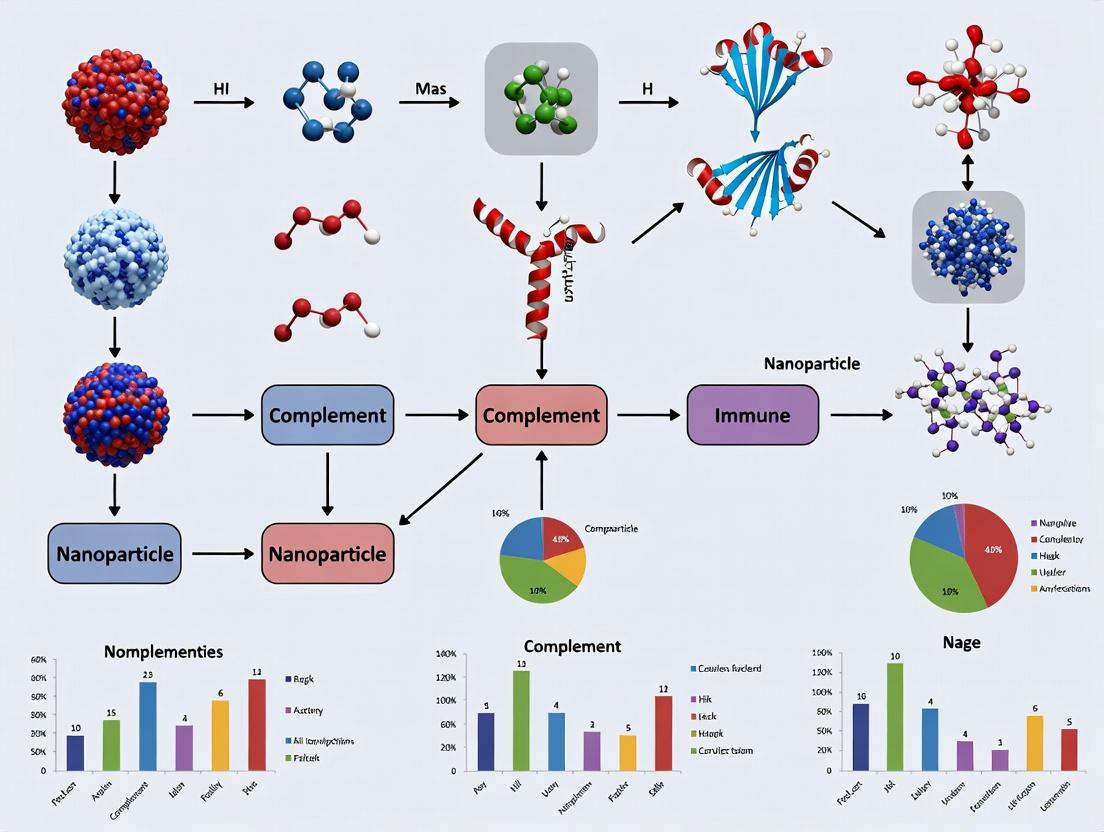
This article provides a comprehensive analysis of nanoparticle-induced complement activation (NICA), a critical barrier in nanomedicine development.
Nanoparticle Complement Activation: Mechanisms, Mitigation Strategies, and Clinical Translation Challenges
Abstract
This article provides a comprehensive analysis of nanoparticle-induced complement activation (NICA), a critical barrier in nanomedicine development. It explores the fundamental mechanisms driving this immunogenic response, reviews established and emerging methodologies for its characterization and mitigation, presents troubleshooting and optimization strategies for formulation, and critically evaluates validation assays and comparative safety profiles of different nanocarriers. Targeted at researchers and drug development professionals, this review synthesizes current knowledge to guide the rational design of safer, more effective nanoparticle therapeutics.
Understanding the Storm: Foundational Mechanisms of Nanoparticle-Induced Complement Activation
Troubleshooting & FAQ Center
Q1: Our nanoparticle (NP) formulation consistently shows high complement activation (C3a/C5a generation) in human serum assays. What are the primary physicochemical properties to investigate?
A: The primary drivers are surface charge, hydrophobicity, and specific chemical motifs. Positively charged NPs (e.g., cationic lipids/polymers) strongly activate via the classical and/or lectin pathways. High hydrophobicity promotes alternative pathway amplification. Surface -OH and -NH2 groups can bind lectin pathway proteins (e.g., MBL). Quantify these properties (zeta potential, contact angle) and correlate with C3a levels. Recent data (2023-2024) indicates that even "stealth" PEGylated NPs can activate complement if PEG density is suboptimal (< 10 PEG/nm²) or if the PEG chain conformation is compromised.
Q2: We observe significant batch-to-batch variability in complement activation results using pooled normal human serum (NHS). What could be the source?
A: Key variables in NHS sourcing and handling:
- Donor Pool Variability: Genetic polymorphisms in complement proteins (e.g., Factor H, C4) affect activity. Ensure supplier uses a large, consistent donor pool (>50 individuals).
- Handling Protocol: Serum must be snap-frozen immediately after clotting and never repeatedly freeze-thawed. Thaw rapidly at 37°C and keep on ice.
- Complement Potency: Always titrate complement activity (e.g., via CH50 or Wieslab assay) for critical studies. Use a commercial complement standard as a control.
- Presence of Aggregates: NP aggregates can cause false-positive activation. Always characterize NP size distribution (by DLS/NTA) in the assay buffer immediately before adding serum.
Experimental Protocol: Standardized In Vitro Complement Activation Assay
- NP Preparation: Dilute NPs in isotonic Veronal Buffer Saline (VBS++, pH 7.4, with 0.15mM Ca²⁺ and 1mM Mg²⁺). Pass through a size-exclusion spin column to remove aggregates if necessary.
- Serum Incubation: Incubate NPs (at intended in vivo concentration) with 10% (v/v) freshly thawed NHS in VBS++ for 30-60 minutes at 37°C. Include controls: NHS alone (background), NHS with Zymosan (positive control), NPs in heat-inactivated NHS (negative control).
- Reaction Stop: Place tubes on ice and add 10mM EDTA to chelate cations and stop complement activation.
- Anaphylatoxin Measurement: Centrifuge at 4°C, collect supernatant. Quantify C3a, C5a, or sC5b-9 using validated ELISA kits. Report data as fold-increase over NHS background.
Q3: What are the best in vitro models to predict in vivo complement activation-related adverse effects (e.g., CARPA)?
A: No single model is perfect; a tiered approach is recommended:
| Model | Primary Readout | Predicts For | Limitations |
|---|---|---|---|
| Human NHS Assay | C3a, C5a, sC5b-9 (ELISA) | General activation potential | Lacks cellular components, does not predict magnitude of in vivo response. |
| Whole Blood Models | Leukocyte activation (CD11b), platelet markers (P-selectin), anaphylatoxins. | Cellular interaction (leukocytes, platelets). | Short ex-vivo lifetime, donor variability. |
| Endothelial Cell Co-culture | Surface marker expression (E-selectin, ICAM-1), cytokine release. | Endothelial activation, a key event in CARPA. | Complexity, requires serum sourcing. |
| PBMC-Based Assay | Cytokine release (IL-1β, IL-6, TNF-α). | Monocyte/macrophage engagement. | Standardization challenges. |
Experimental Protocol: Human Whole Blood Cytokine Release Assay
- Blood Collection: Draw fresh human blood into heparin or lepirudin tubes (avoid EDTA, which inhibits complement).
- Incubation: Dilute NPs 1:10 in whole blood. Incubate in polypropylene tubes with gentle rotation for 2-4 hours at 37°C.
- Termination & Analysis: Centrifuge, collect plasma. Analyze for anaphylatoxins (C3a, C5a) and pro-inflammatory cytokines (e.g., IL-1β, IL-6, TNF-α) via multiplex assay.
- Cell Analysis: Lyse red blood cells in the pellet, stain for leukocyte activation markers (CD11b on granulocytes, CD54 on monocytes), and analyze by flow cytometry.
Q4: How can we distinguish which complement pathway (Classical, Lectin, Alternative) is being activated by our nanoparticles?
A: Use pathway-specific blocking reagents or serum conditions:
| Condition | Target Pathway | Method | Interpretation |
|---|---|---|---|
| Mg-EGTA Serum | Alternative | Chelates Ca²⁺ (inhibits CP/LP), leaves Mg²⁺ for AP. | Activation persists = AP involvement. |
| C1q-Depleted Serum | Classical | Remove key CP initiator. | Reduced activation = CP involvement. |
| Mannan Inhibition | Lectin | Saturate MBL binding sites. | Reduced activation = LP involvement. |
| Factor B Depletion | Alternative | Remove AP-specific zymogen. | Reduced activation = AP amplification. |
Diagram 1: Nanoparticle Complement Activation Pathways
Q5: What are the current strategies to engineer "complement-silent" nanoparticles for drug delivery?
A: Strategies focus on mimicking endogenous "self" surfaces:
- Dense Polymer Brushes: High-density grafting of PEG or other hydrophilic polymers (e.g., polysarcosine, PVP) creates a steric and hydration barrier.
- Surface Zwitterions: Coatings with phosphorylcholine or sulfobetaine mimic the outer leaflet of cell membranes, resisting protein adsorption.
- "Self" Markers: Conjugation of "Don't eat me" signals like CD47 mimetic peptides or overexpression of regulatory proteins (e.g., synthetic Factor H domains).
- Pre-Coating with Regulators: Incubating NPs with recombinant Factor H or soluble Complement Receptor 1 (sCR1) before administration.
Diagram 2: 'Complement-Silent' Nano-Engineering Strategies
The Scientist's Toolkit: Research Reagent Solutions
| Reagent / Material | Function & Application | Key Considerations |
|---|---|---|
| Pooled Normal Human Serum (NHS) | Gold-standard fluid phase complement source for in vitro activation assays. | Verify donor pool size, absence of preservatives, consistent freezing protocol. Aliquot to avoid freeze-thaw cycles. |
| Pathway-Specific Sera (e.g., C1q-Depleted, Factor B-Depleted) | Diagnostic tool to determine the initiating complement pathway. | Use in parallel with intact NHS. Confirm depletion efficiency via supplier data. |
| Veronal Buffer Saline (VBS++) | Isotonic buffer with optimal Ca²⁺/Mg²⁺ for maintaining complement activity. | Prefer commercially prepared buffers to ensure consistency in divalent cation concentration. |
| Human Anaphylatoxin ELISA Kits (C3a, C5a, sC5b-9) | Quantification of complement activation products. | Choose kits that detect stable desArg forms (C3a-desArg, C5a-desArg). Establish standard curves in your assay buffer. |
| Wieslab Complement Pathway Screening Kit | Functional, colorimetric assay for activity of all three pathways. | Useful for titrating serum activity and high-throughput screening of NP libraries. |
| Zymosan A | Potent activator of the alternative pathway; essential positive control. | Prepare a standardized stock suspension (e.g., 10 mg/mL in PBS) and use at a final concentration of 0.5-1 mg/mL in serum. |
| Size-Exclusion Spin Columns | For rapid removal of NP aggregates from suspension prior to serum addition. | Critical step. Use columns with an appropriate molecular weight cutoff that retains your NPs while passing monomeric proteins/aggregates. |
Welcome to the Technical Support Center for Nanoparticle-Induced Complement Activation Research. This resource is designed to assist researchers in troubleshooting common experimental challenges, framed within the thesis context of elucidating and mitigating nanomaterial-driven complement system activation.
Troubleshooting Guides & FAQs
Q1: Our nanoparticle (NP) formulation shows high batch-to-batch variability in hemolytic assay (CH50) results. What are the potential causes and solutions?
A: Inconsistent complement activation in hemolytic assays often stems from NP physicochemical heterogeneity or serum handling.
- Check: NP characterization (DLS, zeta potential) for each batch. Aggregation can drastically alter surface presentation.
- Solution: Implement strict, standardized NP synthesis and purification protocols. Use fresh or properly aliquoted/stored complement serum (avoid freeze-thaw cycles >3). Include a positive control (e.g., zymosan) with each assay plate.
- Protocol - Standardized CH50 Assay:
- Serum Source: Pooled Normal Human Serum (NHS) is standard. Keep on ice, aliquot, and store at -80°C.
- NP Incubation: Serially dilute NHS in gelatin-veronal buffer (GVB++). Incubate with a fixed NP concentration (e.g., 100 µg/mL) for 30 min at 37°C.
- Hemolytic Reaction: Add antibody-sensitized sheep erythrocytes (EA) to the NP-NHS mixture. Incubate 60 min at 37°C.
- Quantification: Centrifuge, measure hemoglobin release in supernatant at 412 nm. Calculate % lysis relative to water-lysed cells.
- Data Analysis: Plot % lysis vs. serum concentration. The CH50 unit is the serum dilution causing 50% lysis.
Q2: How can we definitively identify which complement pathway (Classical, Lectin, Alternative) is being triggered by our nanomaterials?
A: Use pathway-specific functional depletion or inhibition assays. Relying on a single method (e.g., C1q binding) is insufficient due to crosstalk.
- Solution:
- Classical Pathway: Use C1q-depleted serum. Activation is abolished if initiation is C1q-dependent.
- Lectin Pathway: Use Mannose-Binding Lectin (MBL)-depleted serum or add competitive inhibitors (e.g., high mannose, EDTA with Mg²⁺ restoration).
- Alternative Pathway: Use Mg²⁺-EGTA buffer (chelates Ca²⁺, blocks Classical/Lectin) in serum. Persistent activation confirms Alternative Pathway involvement.
- Protocol - Pathway-Specific Depletion Assay (ELISA for C3a/C5a):
- Sample Prep: Incubate NPs (50 µg/mL) for 1h at 37°C with: a) NHS, b) C1q-depleted serum, c) MBL-depleted serum, d) NHS in Mg²⁺-EGTA buffer.
- Stop Reaction: Add EDTA (10mM final) to halt complement activation.
- Detection: Use commercial human C3a or C5a ELISA kits per manufacturer's instructions. Measure generated anaphylatoxins.
- Interpretation: Compare anaphylatoxin levels across conditions to pinpoint initiating pathway(s).
Q3: We observe significant complement activation in buffer but minimal effect in full cell culture media. Why does this happen and how should we interpret it?
A: This is common. Cell culture media contains proteins (e.g., fetal bovine serum) that form a "corona" on NPs, masking surface motifs that trigger complement.
- Solution: Pre-coat NPs in 100% FBS or human plasma for 1 hour before adding to complement assays. This mimics the in vivo "corona" state. Report both "bare NP" and "corona-coated NP" activation profiles, as both are biologically relevant.
Q4: What are the best practices for characterizing NP surface properties relevant to complement activation?
A: Consistent correlation requires multi-modal characterization.
- Essential Metrics:
- Hydrodynamic Size & PDI: Via Dynamic Light Scattering (DLS) in physiological buffer.
- Surface Charge: Zeta potential in low-ionic-strength buffer.
- Surface Chemistry: X-ray Photoelectron Spectroscopy (XPS) for elemental composition.
- Hydrophobicity: Hydrophobic Interaction Chromatography or dye-binding assays (e.g., Rose Bengal).
Data Presentation: Key Activation Triggers by Nanomaterial Properties
Table 1: Correlation of Nanomaterial Physicochemical Properties with Complement Pathway Initiation
| Nanomaterial Type | Surface Charge (Zeta Potential) | Key Surface Chemistry | Dominant Pathway Triggered | Reported C3 Depletion (%) | Reference Model |
|---|---|---|---|---|---|
| Polyester (PLGA) NP | Negative (-20 to -30 mV) | Carboxyl terminus | Alternative | 60-80% | In vitro, NHS |
| Liposome (Plain) | Near Neutral (~ -5 mV) | Phosphocholine headgroups | Classical (IgM-mediated) | 40-70% | In vitro, Rat Serum |
| PEGylated Gold NP | Negative (-10 to -15 mV) | Thiol-PEG-COOH | Lectin (Low) | 10-20% | In vitro, NHS |
| Polymeric Micelle | Positive (+25 to +35 mV) | Cationic polymer (e.g., chitosan) | Classical/Lectin | 70-90% | In vitro, Human Plasma |
| Silica NP | Highly Negative (< -30 mV) | Silanol groups | Alternative/ Lectin | 50-85% | In vivo, Mouse Model |
The Scientist's Toolkit: Research Reagent Solutions
Table 2: Essential Reagents for Complement Activation Studies
| Reagent / Material | Function & Application | Key Consideration |
|---|---|---|
| Pooled Normal Human Serum (NHS) | Gold-standard complement source for in vitro assays. | Ensure donor pool size >20; avoid repeated freeze-thaw. |
| Pathway-Specific Depleted Sera (C1q-, MBL-, Factor B-) | Determines initiating pathway via functional loss. | Verify depletion efficiency and re-constitute properly. |
| Mg²⁺-EGTA Chelating Buffer | Selectively inhibits Classical & Lectin pathways, allowing Alternative pathway function. | Critical for confirming Alternative Pathway activation. |
| Human C3a & C5a ELISA Kits | Quantifies terminal pathway activation via anaphylatoxin generation. | More sensitive than hemolytic assays for low-level activation. |
| Gelatin-Veronal Buffer (GVB++) | Isotonic, Ca²⁺/Mg²⁺-containing buffer for maintaining complement activity. | Prevents serum dilution-induced ionic strength changes. |
| Antibody-Sensitized Sheep RBCs (EA) | Target cells for hemolytic assays (CH50, AP50). | Purchase ready-sensitized or standardize sensitization in-lab. |
| Hydrophobic Interaction Columns | Quantifies relative NP surface hydrophobicity, a key trigger. | Compare elution profiles of different NP batches. |
Visualization: Complement Activation Pathways by Nanomaterials
Diagram Title: Three Complement Initiation Pathways by Nanomaterial Surface Properties
Diagram Title: Troubleshooting Workflow for Pathway Identification
Technical Support & Troubleshooting Center
Frequently Asked Questions (FAQs)
Q1: My nanoparticle (NP) formulation shows inconsistent complement activation (CH50, SC5b-9) results between batches. What could be the cause? A: Inconsistent protein corona formation is the most likely culprit. Variability in synthesis (e.g., surface ligand density, residual solvent, size polydispersity) leads to differential adsorption of opsonins like C3, IgG, or C-reactive protein. Standardize your NP purification and storage protocols. Always characterize the hydrodynamic diameter and zeta potential pre- and post-incubation with plasma/serum to confirm corona consistency.
Q2: During in vivo experiments, my PEGylated NPs are still triggering significant C3 cleavage, contrary to expectations. How is this possible? A: This is known as the "PEG dilemma." While PEG reduces opsonization, it can itself activate the alternative pathway via the "tick-over" mechanism. Furthermore, anti-PEG IgM antibodies, prevalent in some populations, can bind and initiate the classical pathway. Consider testing for anti-PEG antibodies in your model system and explore alternative stealth coatings like zwitterions.
Q3: What is the best method to characterize the "biological identity" (the specific protein corona composition) relevant to complement activation? A: A combination of techniques is required:
- LC-MS/MS: For qualitative and quantitative proteomic analysis of the hard corona.
- SDS-PAGE/Western Blot: For quick confirmation of key opsonins (e.g., C3, C1q, IgG, Albumin).
- SPR or QCM-D: To analyze binding kinetics and affinities of specific complement proteins to your NP surface. Always use relevant biological fluid (e.g., human serum vs. fetal bovine serum) and standardize the incubation protocol (time, temperature, NP:serum ratio).
Q4: How can I determine which complement pathway (Classical, Lectin, Alternative) is being primarily activated by my NP? A: You must use pathway-specific functional assays and inhibitors. See the experimental protocol below (Protocol 2) for a detailed methodology.
Q5: My negative control (bare, non-functionalized NPs) is not activating complement as expected based on literature. Why? A: Check the physicochemical properties. Very small (<10 nm) or highly anionic surfaces can sometimes inhibit complement. Also, verify the integrity of your serum complement (use fresh or properly thawed aliquots). Run a positive control (e.g., zymosan for alternative pathway, aggregated IgG for classical) simultaneously.
Troubleshooting Guides
Issue: High Background in SC5b-9 (Terminal Complement Complex, TCC) ELISA.
- Check 1: Ensure the blocking buffer is optimized (e.g., 5% BSA in PBS) and that your washing steps are stringent to avoid non-specific adsorption of serum proteins to the plate.
- Check 2: The NP-serum incubation time may be too long, causing excessive activation that saturates the assay. Perform a time-course experiment (10-60 min).
- Check 3: Nanoparticles may be directly interfering with the ELISA detection system. Include a control where NPs are added to the ELISA well without serum to test for interference.
Issue: Poor Correlation Between In Vitro Complement Activation and Observed In Vivo Hypersensitivity Reactions (HSRs).
- Step 1: Confirm your in vitro model uses serum from a species with complement system analogous to your in vivo model (e.g., human vs. primate vs. pig). Rodent complement systems differ significantly.
- Step 2: The "biological identity" forms differently in static (test tube) vs. dynamic (blood flow) conditions. Consider using a microfluidic chamber to simulate shear stress during corona formation.
- Step 3: In vivo, other systems (coagulation, platelets) cross-talk with complement. Investigate biomarkers like C5a anaphylatoxin and platelet activation (PF4) in addition to TCC.
Experimental Protocols
Protocol 1: Standardized Formation and Characterization of the Protein Corona for Complement Studies.
- Incubation: Incubate purified nanoparticles (100 µg/mL) with 50% normal human serum (NHS) in PBS (with Mg2+ and Ca2+) at 37°C for 60 minutes under gentle rotation.
- Hard Corona Isolation: Centrifuge the NP-corona complex at 100,000 x g for 45 min at 4°C. Carefully remove the supernatant. Gently wash the pellet with cold PBS (pH 7.4) and repeat centrifugation.
- Protein Elution & Analysis: Resuspend the pellet in 1X Laemmli buffer, heat at 95°C for 10 min, and run on a 4-20% gradient SDS-PAGE gel. For proteomics, elute proteins using a 2% SDS solution followed by filter-aided sample preparation (FASP).
- Validation: Perform a Western blot for key proteins (C3, C1q, IgG, Apolipoproteins) to confirm LC-MS/MS results.
Protocol 2: Pathway-Specific Complement Activation Assay.
- Prepare Pathway-Specific Sera:
- Classical Pathway Blocked: Treat NHS with 10 mM EGTA + 2.5 mM MgCl2 (chelates Ca2+, sparing Mg2+).
- Lectin Pathway Blocked: Use Mannan (1 mg/mL) or anti-MBL antibodies to inhibit MBL.
- Alternative Pathway Enhanced: Use PBS-EGTA-Mg2+ buffer (Mg2+ only) with 5% NHS.
- Incubation: Incubate NPs (200 µg/mL) with each treated serum (5% final conc.) for 30 min at 37°C.
- Termination & Quantification: Stop reaction by adding ice-cold PBS-EDTA. Measure pathway-specific markers via ELISA: C4d (Classical/Lectin), Bb (Alternative), and SC5b-9 (Terminal, common).
- Data Interpretation: Compare marker levels across conditions to identify the dominant activation route.
Table 1: Common Opsonins in the Nanoparticle Corona and Their Impact on Complement Pathways.
| Opsonin Protein | Typical Corona Abundance | Primary Complement Pathway Triggered | Key Recognition Molecule | Effect on NP Clearance |
|---|---|---|---|---|
| C3 (and its fragments) | High (in activators) | Alternative (via tick-over) | Factor B, Factor H | Rapid (Liver/Spleen) |
| C1q | Variable | Classical | IgG/IgM immune complexes | Rapid (Liver) |
| Immunoglobulin G (IgG) | Variable | Classical | Fcγ receptors, C1q | Accelerated |
| Mannose-Binding Lectin (MBL) | Low | Lectin | Carbohydrate patterns (e.g., on PEG?) | Accelerated |
| Apolipoproteins (ApoE, ApoA-I) | Very High (in stealth NPs) | Inhibitory (regulatory) | LRP1 receptors on hepatocytes | Altered Pharmacokinetics |
| Fibrinogen | High | Alternative / Classical | Integrins, Possibly C1q | Rapid (RES) |
| Albumin | Very High | Generally Inhibitory | N/A | Delays Clearance |
Table 2: Comparison of Key Assays for Quantifying Nanoparticle-Induced Complement Activation.
| Assay | Target Readout | Pathway Specificity | Sensitivity | Key Advantage | Key Limitation |
|---|---|---|---|---|---|
| CH50 / AH50 | Hemolytic Lysis | Classical+ / Alternative+ | Moderate | Functional, integrated activity | Low sensitivity, complex protocol |
| ELISA (SC5b-9, C5a, Bb, C4d) | Specific Protein Fragment | High (with right marker) | High (pg/mL) | Quantitative, high-throughput | Measures potential, not always function |
| Western Blot | Protein Size/Identity | Medium | Medium | Confirms protein identity in corona | Semi-quantitative, low throughput |
| SPR / QCM-D | Binding Kinetics (ka, kd) | Low (needs purified protein) | High | Real-time, label-free kinetics | Requires isolated system, not complex serum |
The Scientist's Toolkit: Research Reagent Solutions
| Item | Function in Corona/Complement Research | Example Product/Catalog |
|---|---|---|
| Normal Human Serum (NHS) | Gold-standard complement source for in vitro activation studies. Must be fresh or properly frozen. | Complement Technology, Inc. (#NHS) |
| Pathway-Specific Sera (C1q-, Factor B-Depleted, etc.) | To identify the specific complement initiation pathway triggered by NPs. | CompTech (#A300, #A330) |
| Human Complement ELISAs (SC5b-9, C5a, Bb, C4d) | Quantify activation products with high sensitivity and specificity. | Quidel Corporation, Hycult Biotech |
| PEG-Specific Antibodies (Anti-PEG IgM/IgG) | Detect anti-PEG antibodies that can cause unexpected complement activation. | Academia Biotech, Epitope Diagnostics |
| Proteomics Grade Trypsin | For digesting corona proteins prior to LC-MS/MS analysis. | Promega (#V5280) |
| Size Exclusion Columns (e.g., Sepharose CL-4B) | For gentle separation of NP-corona complexes from unbound serum proteins. | Cytiva (#17015001) |
| Microfluidic Shear Device (e.g., µ-Slide I 0.4 Luer) | To simulate hemodynamic shear during corona formation for more "in vivo-like" identity. | ibidi (#80176) |
| Dynamic Light Scattering (DLS) / Zeta Potential Analyzer | Essential for characterizing NP size, aggregation, and surface charge before/after corona formation. | Malvern Panalytical Zetasizer |
Visualizations
Diagram 1: Complement Activation Pathways by NP Corona Opsonins
Diagram 2: Experimental Workflow for Corona & Complement Analysis
Troubleshooting Guide & FAQs
Q1: During in vitro hemolysis assays, my anionic nanoparticles show unexpectedly high complement activation and membrane attack complex (MAC) formation, contradicting literature suggesting anionic surfaces are less activating. What could be the cause?
A: This is a common issue often traced to hydrophobic domains on the nanoparticle surface. Despite an overall negative charge, patches of hydrophobicity are potent activators of the alternative pathway. Perform a hydrophobicity assay (e.g., hydrophobic interaction chromatography or two-phase partitioning) alongside your hemolysis assay. Consider modifying synthesis to ensure complete ligand coverage or introduce a hydrophilic PEG spacer.
Q2: My PEGylated nanoparticles are still triggering C3 opsonization. How can I troubleshoot PEG's failure to confer "stealth" properties?
A: PEG failure often relates to surface density and conformation. A low grafting density ("mushroom" regime) leaves gaps for protein adsorption. Verify your PEG surface density (chains/nm²) using quantitative NMR or colorimetric assays. Target a high density for the "brush" conformation. Also, check PEG chain length; for nanoparticles >100 nm, longer PEG chains (e.g., 5 kDa) are typically required for effective shielding.
Q3: When testing nanoparticle size effects, my results for complement activation (C3a generation) are inconsistent across different batches. What experimental variable should I control most rigorously?
A: Surface curvature is critically dependent on precise and monodisperse size control. Batch-to-batch inconsistencies often stem from polydispersity. Implement rigorous purification (e.g., differential centrifugation, size-exclusion chromatography) and use dynamic light scattering (DLS) to report the polydispersity index (PDI) for every batch. Only use batches with PDI < 0.1 for definitive size studies. Aggregation during storage or in serum can also alter effective size.
Q4: I suspect my amine-modified (cationic) nanoparticles are activating the lectin pathway. What specific experiment can I perform to confirm this?
A: To confirm lectin pathway involvement, perform a pathway-specific inhibition ELISA. Coat your nanoparticles in a microplate, incubate with normal human serum (NHS) pre-treated with:
- EGTA-Mg²+ (chelates Ca²+, blocks classical/lectin, leaves alternative active).
- Mannose/EDTA or anti-MBL antibody (specifically blocks lectin pathway).
- Positive control inhibitor (e.g., compstatin for alternative pathway). Measure downstream markers like C4d (classical/lectin) or Bb (alternative). A significant reduction in C4d deposition only with lectin-specific inhibitors confirms involvement.
Detailed Experimental Protocols
Protocol 1: Quantitative Assessment of Complement Activation via SC5b-9 ELISA Purpose: To measure terminal complement complex (TCC) formation as a definitive marker of complete pathway activation. Materials: Human serum (pooled, normal), nanoparticle samples, SC5b-9 ELISA kit (commercially available), phosphate-buffered saline (PBS), microplate reader. Steps:
- Incubation: Dilute nanoparticles in PBS to desired concentrations. Mix 10 µL of nanoparticle suspension with 90 µL of human serum. Include controls: serum only (negative), zymosan-activated serum (positive).
- Reaction: Incubate at 37°C for 30 minutes with gentle agitation.
- Termination: Add 200 µL of EDTA (20 mM) to stop complement activation.
- Detection: Centrifuge at 10,000g for 5 min. Collect supernatant. Assay 50 µL of supernatant per well using the SC5b-9 ELISA kit per manufacturer's instructions.
- Analysis: Calculate SC5b-9 concentration from standard curve. Normalize to positive control (100% activation) and negative control (0% activation).
Protocol 2: Determining the Role of Surface Hydrophobicity via Two-Phase Partitioning Purpose: To semi-quantify nanoparticle surface hydrophobicity. Materials: Nanoparticle suspension, n-hexane, PBS, vortex mixer, centrifuge. Steps:
- Phase Separation: In a glass vial, mix 1 mL of nanoparticle suspension (1 mg/mL in PBS) with 1 mL of n-hexane.
- Partitioning: Vortex vigorously for 2 minutes. Allow phases to separate completely or centrifuge briefly at low speed (500g for 1 min).
- Quantification: Carefully aspirate the aqueous (lower) phase. Measure nanoparticle concentration in the aqueous phase via UV-Vis spectroscopy or another suitable method.
- Calculation: Calculate the percentage of nanoparticles remaining in the aqueous phase. A lower percentage indicates higher hydrophobicity and a greater tendency to partition into the organic phase.
Data Presentation: Quantitative Effects of Nanoparticle Properties on Complement Activation
Table 1: Impact of Nanoparticle Core Size on Complement Activation Markers (C3a generation in % of positive control)
| Core Diameter (nm) | PDI | Surface Coating | C3a (% of Zymosan Control) | Primary Pathway Activated |
|---|---|---|---|---|
| 20 | 0.05 | Carboxylate | 15 ± 3 | Alternative |
| 50 | 0.05 | Carboxylate | 35 ± 5 | Alternative |
| 100 | 0.07 | Carboxylate | 68 ± 7 | Alternative |
| 200 | 0.10 | Carboxylate | 85 ± 8 | Alternative/Classical |
Table 2: Effect of Surface Charge (Zeta Potential) on Key Complement Activation Parameters
| Surface Modifier | Zeta Potential in PBS (mV) | C3 Deposition (µg/cm²) | Factor Bb (ng/mL) | C4d (ng/mL) |
|---|---|---|---|---|
| Polyethylenimine | +45 ± 3 | 1.8 ± 0.3 | 120 ± 15 | 450 ± 50 |
| Chitosan | +32 ± 4 | 1.2 ± 0.2 | 90 ± 10 | 380 ± 40 |
| PEG (Neutral) | -2 ± 1 | 0.1 ± 0.05 | 25 ± 5 | 30 ± 5 |
| Carboxylate | -40 ± 5 | 0.9 ± 0.1 | 220 ± 20 | 80 ± 10 |
| Sulfonate | -50 ± 5 | 0.5 ± 0.1 | 180 ± 15 | 40 ± 8 |
Visualizations
Diagram 1: NP Properties Activate Complement Pathways
Diagram 2: Workflow for NP Complement Activation Study
The Scientist's Toolkit: Research Reagent Solutions
| Item Name / Solution | Function in Experiments | Key Consideration |
|---|---|---|
| Normal Human Serum (NHS) | Source of complement proteins for in vitro assays. Must be fresh or properly frozen. | Use pooled donors to average genetic variability. Avoid repeated freeze-thaw cycles. |
| EGTA-Mg²+ Buffer | Selective chelator (Ca²+ > Mg²+). Blocks Ca²+-dependent Classical & Lectin pathways, leaving Alternative active. | Critical for pathway deduction. Prepare fresh, pH 7.4. Final concentration typically 10mM EGTA/5mM Mg²+. |
| Compstatin (Cp40 analog) | Peptide inhibitor that binds C3 and blocks its cleavage, inhibiting all downstream activation. | Powerful negative control. Use to confirm complement-specific effects vs. other serum-mediated events. |
| Anti-C3b/iC3b Antibody | Detect opsonin deposition on nanoparticle surfaces via ELISA, flow cytometry, or immunoblot. | Confirm it recognizes both C3b and iC3b fragments for comprehensive detection. |
| Zymosan A (from S. cerevisiae) | Potent activator of the alternative pathway. Standard positive control for complement activation assays. | Sonicate and heat-inactivate before use to ensure consistency between experiments. |
| Polyethylene Glycol (PEG) Reagents | Functionalized (e.g., mPEG-NHS, mPEG-SH) for creating stealth coatings to minimize protein adsorption. | Solubility and reactivity depend on molecular weight and terminal functional group. |
| Size Exclusion Chromatography (SEC) Columns | Purify nanoparticles by hydrodynamic size, removing aggregates and unreacted small molecules. | Choose resin pore size appropriate for your NP diameter (e.g., Sepharose CL-4B for >40 nm). |
Troubleshooting Guides & FAQs for Nanomedicine Research
Q1: Our in vivo model shows severe hemodynamic changes immediately after nanoparticle infusion. Is this CARPA, and how can we confirm it?
A: This is highly indicative of CARPA (Complement Activation-Related Pseudoallergy). Confirmatory steps include:
- Measure Complement Activation: Collect plasma pre- and post-infusion (e.g., at 5-min). Quantify C3a, C5a, and/or sC5b-9 (TCC) via ELISA. A significant spike confirms complement activation.
- Check for Mast Cell/Basophil Degranulation: Measure histamine or tryptase levels in plasma.
- Pre-Medication Test: Repeat infusion in a pre-medicated group (e.g., with antihistamines and complement inhibitors like soluble CR1). Attenuation of symptoms supports a CARPA diagnosis.
Q2: Our lead nanotherapeutic candidate consistently activates complement in human serum in vitro, but not in rodent serum. How do we proceed?
A: This is a common species-specificity issue. Follow this protocol:
- Screen a Panel of Sera: Test complement activation (via C3a ELISA or CH50 assay) in sera from multiple species (human, primate, pig, rat, mouse).
- Identify the Trigger: Perform factor-depletion or inhibition studies. Pre-incubate human serum with specific inhibitors (e.g., anti-factor D for the alternative pathway, EDTA for classical/lectin) to identify the key activation pathway.
- Surface Modification: Based on the pathway, re-engineer the nanoparticle surface. Common solutions include increasing PEG density or incorporating "self" markers like CD47 mimetics.
Q3: How can we differentiate a true IgE-mediated anaphylactic reaction from CARPA in a non-clinical setting?
A: Use this experimental differential diagnosis workflow:
| Parameter | IgE-Mediated Anaphylaxis | CARPA (Pseudoallergy) |
|---|---|---|
| Onset after 1st dose | No (requires sensitization) | Yes |
| Primary Mediators | IgE, FcεRI | Complement (C3a, C5a) |
| Key Effector Cells | Mast cells, basophils | Mast cells, basophils, WBCs, platelets |
| Diagnostic Test | Anti-drug IgE ELISA, skin prick test | Plasma C3a/C5a/sC5b-9 measurement |
| Prevention Strategy | Desensitization protocols | Slow infusion, pre-medication, nano-engineering |
Q4: What is a standard protocol for assessing nanoparticle-induced complement activation in human serum?
A: Standardized In Vitro Complement Activation Assay
- Materials: Pooled Normal Human Serum (NHS, complement-preserved), nanoparticle sample, positive control (e.g., zymosan), negative control (PBS with 5% dextrose), EDTA tubes.
- Procedure:
- Incubate nanoparticles (at intended clinical concentration) with NHS (typically 10-50% v/v in veronal buffered saline) at 37°C for 30-60 minutes.
- Use a serum-only tube as a background control.
- Halt the reaction by transferring aliquots to pre-chilled EDTA tubes and placing on ice.
- Centrifuge at 4°C to remove nanoparticles/aggregates.
- Analyze supernatant for C3a, C5a, and sC5b-9 using commercial ELISA kits.
- Express data as a fold-increase over the serum-only background control.
Q5: Which animal models are most predictive for human CARPA risk assessment?
A: No model is perfectly predictive, but the following hierarchy is recommended based on current literature:
| Model | Predictive Value for Human CARPA | Key Rationale | Major Limitation |
|---|---|---|---|
| Porcine (Pig) | High | Similar cardiopulmonary sensitivity to C5a; strong acute hypertensive response. | Cost, specialized facilities required. |
| Canine | Moderate-High | Sensitive to liposome-induced reactions; useful for hemodynamic monitoring. | Ethical and practical constraints. |
| Rat (e.g., SHR) | Moderate | Spontaneously hypertensive rats show enhanced sensitivity to complement activators. | Different baseline hemodynamics. |
| Mouse | Low-Moderate | Requires extreme sensitization (e.g., cobra venom factor, large doses); often misses mild reactions. | Major species differences in complement and immune response. |
Research Reagent Solutions Toolkit
| Reagent/Tool | Function in CARPA Research | Example/Catalog |
|---|---|---|
| Pooled Normal Human Serum (NHS) | Gold-standard complement source for in vitro activation screening. | Complement Technology, Inc. (#S100) |
| sC5b-9 (TCC) ELISA Kit | Quantifies terminal complement complex formation, indicating full pathway activation. | Hycult Biotech (#HK328) |
| Human C3a ELISA Kit | Measures the key anaphylatoxin C3a, a primary marker of complement activation. | BD OptEIA (#561418) |
| Recombinant Human Factor H | Regulatory protein used to inhibit the alternative pathway in mechanistic studies. | Complement Technology, Inc. (#A137) |
| PEGylated Phospholipids (e.g., DSPE-PEG2000) | Used for nanoparticle "stealth" coating to reduce opsonization and complement activation. | Avanti Polar Lipids (#880120P) |
| Cobra Venom Factor (CVF) | Tool to deplete complement in vivo in animal models, used to prove complement-dependence. | Quidel Corporation (#A099) |
| Hematology Analyzer | Critical for monitoring acute leukopenia/thrombocytopenia in real-time during in vivo infusion studies. | Heska HemaTrue or similar |
Diagrams
CARPA Signaling Pathway
In Vitro Complement Screening Workflow
Tools of the Trade: Methodologies to Detect, Quantify, and Apply NICA Insights
Technical Support Center: Troubleshooting Guides and FAQs
This support center addresses common issues encountered in complement activation assays within nanoparticle research. The guidance is framed to support experiments for a thesis investigating nanoparticle-induced complement activation.
ELISA for Complement Activation Products (e.g., SC5b-9, C3a, C5a)
FAQ 1: My ELISA shows high background across all wells, including blanks.
- Answer: High background often stems from non-specific binding. For nanoparticle samples, this is common. Troubleshoot by:
- Increase Blocking: Extend blocking time to 2 hours at room temperature with 5% BSA or a proprietary protein-free blocking buffer.
- Sample Dilution: Re-centrifuge your nanoparticle-supplemented serum/plasma samples at high speed (e.g., 100,000 x g) to pellet aggregates. Use the supernatant, diluted further in assay buffer.
- Add Detergent: Include 0.05% Tween-20 in wash and sample dilution buffers to reduce hydrophobic interactions.
- Validate Antibodies: Ensure capture/detection antibodies do not cross-react with nanoparticle surface proteins or polymers.
FAQ 2: The standard curve is acceptable, but my test samples show no signal above baseline.
- Answer: This may indicate complement consumption or inhibition.
- Check Sample Diluent: Ensure the sample diluent does not contain EDTA or other complement-inhibiting preservatives. Use veronal or HEPES-buffered saline with Ca²⁺/Mg²⁺.
- Confirm Activation: Run a positive control (e.g., zymosan-activated serum) alongside your nanoparticle samples to confirm the ELISA detects activation.
- Prozone Effect: Excessively high complement activation can cause a false-low signal due to the "hook effect." Perform a serial dilution of your sample to see if the measured analyte concentration increases.
Western Blot for Complement Protein Deposition (e.g., C3 Fragments)
FAQ 3: I see smearing or multiple non-specific bands when probing for C3 on nanoparticles.
- Answer: Smearing indicates degradation or incomplete denaturation of complement opsonins.
- Sample Preparation: Boil nanoparticle-protein complexes in Laemmli buffer containing 5% β-mercaptoethanol for 10 minutes to fully denature and reduce disulfide bonds.
- Include Protease Inhibitors: Add a broad-spectrum protease inhibitor cocktail (e.g., AEBSF, leupeptin) immediately upon stopping the complement reaction.
- Centrifugation: After incubation, wash nanoparticles 3x with cold PBS containing inhibitors before eluting proteins for SDS-PAGE.
FAQ 4: The signal for my protein of interest is weak, even though I know it's present.
- Answer: The issue likely lies in protein recovery from nanoparticles.
- Elution Efficiency: Test different elution buffers (e.g., 1% SDS, 0.1M glycine pH 2.5, or commercial stripping buffers) to efficiently dissociate proteins from the nanoparticle surface.
- Gel Percentage: Use a gradient gel (e.g., 4-20%) or a lower percentage gel (8%) to better resolve high molecular weight complexes like C3 high-molecular-weight conjugates.
- Antibody Validation: Ensure your primary antibody recognizes denatured, reduced C3 fragments (e.g., α-chain, β-chain).
Hemolytic Assays (e.g., CH50, AH50)
FAQ 5: My negative control (serum alone) shows high hemolysis, invalidating the assay.
- Answer: Spontaneous hemolysis points to improper reagent preparation or handling.
- Erythrocyte Integrity: Fresh sheep erythrocytes (for CH50) or rabbit erythrocytes (for AH50) are critical. Store at 4°C in Alsever's solution for no more than 1 week. Wash cells gently 3x in cold gelatine-veronal buffer (GVB).
- Buffer Osmolarity: Precisely prepare GVB or GVB-EGTA-Mg²⁺ (for AP assay) to maintain correct osmolarity. Use a calibrated osmometer.
- Serum Quality: Use fresh, pooled normal human serum. Avoid repeated freeze-thaw cycles. Aliquot and store at -80°C.
FAQ 6: The hemolytic curve for my nanoparticle sample is not sigmoidal, making CH50 calculation impossible.
- Answer: A flattened or irregular curve suggests nanoparticle interference.
- Inner Filter Effect: Strongly colored or turbid nanoparticle suspensions can interfere with spectrophotometric reading at 541 nm. Include a nanoparticle-only blank at each dilution to subtract background.
- Direct Lysis: Test nanoparticles with erythrocytes in the absence of serum to rule out direct membrane disruption. If positive, you cannot use a standard hemolytic assay.
- Alternative Endpoint: Consider using a kinetic read (e.g., every 30 seconds) to capture the rate of lysis, which may be more informative than endpoint measurement for interfering samples.
Table 1: Typical Dynamic Ranges and Interferences for Complement Assays in Nanoparticle Research
| Assay | Target Analytes | Typical Dynamic Range | Key Nanoparticle-Induced Interference | Suggested Mitigation |
|---|---|---|---|---|
| ELISA | SC5b-9, C3a, C5a, Bb | pg/mL - ng/mL | Non-specific binding; Complement consumption | Ultracentrifugation; Use protein-free blockers |
| Western Blot | C3c, C3d, iC3b, C4d | Visual/chemiluminescent detection | Poor protein elution; Smearing | Optimize elution buffer (SDS/glycine); Use fresh inhibitors |
| Hemolytic (CH50) | Classical Pathway Function | 20-100% Lysis (Sigmoidal curve) | Direct lysis; Optical interference | Nanoparticle-only blank; Test for direct lysis |
Experimental Protocols
Protocol 1: ELISA for SC5b-9 in Nanoparticle-Treated Serum Principle: Detects the soluble terminal complement complex as a marker of full activation.
- Incubation: Dilute test nanoparticles in normal human serum (NHS) to desired concentration (e.g., 0.1-1 mg/mL). Incubate at 37°C for 30 min.
- Stop Reaction: Add 20mM EDTA to a final concentration of 10mM. Place on ice.
- Clarify: Centrifuge at 100,000 x g, 4°C for 20 min to pellet nanoparticles/aggregates.
- Assay: Use the supernatant (appropriately diluted in ELISA sample diluent) in a commercial human SC5b-9 ELISA kit per manufacturer's instructions. Include zymosan-activated serum as positive control and heat-inactivated serum as negative control.
Protocol 2: Western Blot for C3 Deposition on Nanoparticles Principle: Analyzes cleavage fragments of C3 covalently bound to nanoparticle surfaces.
- Opsonization: Incubate nanoparticles (500 µg) with 50% NHS in GVB++ for 30 min at 37°C.
- Washing: Centrifuge (based on nanoparticle size) and wash pellet 3x with cold PBS containing 0.05% Tween-20 and protease inhibitors.
- Elution: Resuspend pellet in 50 µL 1X Laemmli buffer with 5% β-mercaptoethanol. Boil for 10 min.
- Separation: Centrifuge at high speed (16,000 x g) for 5 min. Load supernatant onto a 4-12% Bis-Tris gradient gel. Run at 150V.
- Detection: Transfer, block, and probe with primary antibody (e.g., anti-human C3d, 1:1000). Use an anti-human IgG (Fc) HRP secondary to avoid light chain confusion.
Protocol 3: Classical Pathway CH50 Hemolytic Assay Principle: Measures the serum dilution causing 50% lysis of antibody-sensitized erythrocytes.
- Sensitize Erythrocytes: Wash sheep erythrocytes (SRBC) 3x in GVB. Incubate with anti-SRBC IgM antibody (sub-agglutinating titer) in GVB for 30 min at 30°C. Wash 2x and resuspend to 1x10^9 cells/mL in GVB²⁺ (with Ca²⁺/Mg²⁺).
- Serum Dilution: Prepare serial dilutions of test serum (exposed to nanoparticles or control) in GVB²⁺.
- Reaction: Mix 100 µL sensitized SRBC with 100 µL serum dilution. Incubate at 37°C for 60 min with gentle shaking.
- Stop & Measure: Centrifuge at 1000 x g for 5 min. Transfer 100 µL supernatant to a plate. Measure absorbance at 541 nm. 100% and 0% lysis controls are SRBC in water or GVB²⁺, respectively.
- Calculation: Plot % lysis vs. serum dilution. The CH50 unit is the dilution factor at 50% lysis.
Visualizations
ELISA High Background Troubleshooting
C3 Deposition Western Blot Workflow
The Scientist's Toolkit: Key Research Reagent Solutions
Table 2: Essential Reagents for Complement-Nanoparticle Assays
| Reagent | Function in Assay | Critical Consideration for Nanoparticles |
|---|---|---|
| Normal Human Serum (NHS) | Source of complement proteins. Use fresh or aliquoted frozen (-80°C). | Avoid repeated freeze-thaw. Pre-screen lots for normal CH50 activity. |
| GVB⁺⁺ Buffer | Gelatin Veronal Buffer with Ca²⁺/Mg²⁺. Maintains ionic strength for complement function. | Prepare fresh, check pH (7.3-7.4). Filter sterilize to avoid particulates. |
| EDTA Solution (0.1M, pH 8) | Chelates Ca²⁺/Mg²⁺, irreversibly stops complement activation. | Add in excess (10mM final) after incubation for reliable stopping. |
| Protease Inhibitor Cocktail | Prevents degradation of complement proteins during sample processing. | Must be added to all wash/elution buffers post-incubation. |
| Protein-Free Blocking Buffer | Reduces non-specific binding in immunoassays. | Superior to BSA for blocking nanoparticle surfaces in ELISA. |
| Anti-C3d Antibody | Detects the final degradation fragment of C3, indicating opsonization. | Confirm reactivity on Western blot. Ideal for detecting covalently-bound C3. |
| Sensitized Sheep Erythrocytes | Target cells for CH50 hemolytic assay. | Must be prepared fresh weekly. Consistent sensitization is key to reproducibility. |
Technical Support Center
Surface Plasmon Resonance (SPR) Troubleshooting
FAQ: Low or No Binding Signal
- Q: I am injecting my nanoparticle-corona sample over a complement protein-coated chip, but I see no binding response. What could be wrong?
- A: This is a common issue. Please follow this checklist:
- Flow Cell Blockage: Nanoparticles can clog microfluidic channels. Centrifuge your sample (e.g., 10,000 x g, 5 min) immediately before injection to remove aggregates. Consider using in-line filters.
- Surface Density: The density of the immobilized ligand (e.g., C3b) may be too low. Increase the ligand concentration during coupling or use a longer contact time.
- Mass Limit: The SPR signal is mass-sensitive. For small nanoparticles (<20 nm), the mass change upon binding may be below the detection limit. Use a high-density sensor chip (e.g., carboxymethyl dextran) to enhance sensitivity.
- Reference Surface Subtraction: Ensure your reference flow cell (blocked with ethanolamine only) is correctly subtracted to eliminate bulk refractive index effects.
- A: This is a common issue. Please follow this checklist:
FAQ: High, Non-Specific Binding
- Q: I see a large, non-specific binding signal in both the active and reference channels when injecting protein corona samples. How can I reduce this?
- A: Non-specific binding (NSB) is critical in complex media. Implement these steps:
- Optimize Running Buffer: Add a non-ionic detergent (e.g., 0.005% Tween-20) and increase ionic strength (e.g., 150-300 mM NaCl). For plasma-derived coronas, consider using HBS-EP+ (0.01 M HEPES, 0.15 M NaCl, 3 mM EDTA, 0.005% v/v Surfactant P20) as a standard buffer.
- Surface Blocking: After ligand immobilization, block the remaining activated groups with an inert protein (e.g., 1% BSA or casein) before the final ethanolamine step.
- Regeneration Scouting: Perform a rigorous regeneration scouting to find conditions that remove bound nanoparticles without damaging the ligand. Start with mild conditions (e.g., 10 mM glycine-HCl, pH 2.0-3.0; or 1-2 M NaCl) and increase stringency gradually.
- A: Non-specific binding (NSB) is critical in complex media. Implement these steps:
Mass Spectrometry (MS) Troubleshooting
FAQ: Poor Corona Protein Identification/ Coverage
- Q: My LC-MS/MS analysis of trypsin-digested protein corona yields very few protein identifications, especially low-abundance complement regulators. What can I improve?
- A: This points to sample preparation or dynamic range issues.
- Corona Isolation Purity: Ensure thorough washing of the nanoparticle-corona complex. Use stringent but gentle washing buffers (e.g., 10-20 mM phosphate buffer, pH 7.4) and perform at least 3 washes with centrifugation. Confirm purity via SDS-PAGE before digestion.
- Dynamic Range Issue: High-abundance proteins (e.g., albumin, IgG) swamp the signal. Implement depletion strategies (e.g., spin filters with albumin/IgG ligands) before incubating nanoparticles with plasma, or use advanced fractionation (e.g., high-pH RP fractionation) after digestion.
- Digestion Efficiency: For hard-to-digest corona proteins, use a combination of trypsin/Lys-C protease, extend digestion time (overnight), and consider using chaotropes like RapiGest SF surfactant (which is MS-compatible and can be cleaved by acid).
- A: This points to sample preparation or dynamic range issues.
FAQ: Quantification Inconsistency (Label-Free)
- Q: My label-free quantification (LFQ) results for the same sample across replicates show high variability. How can I stabilize my workflow?
- A: Consistency is key for reliable quantification.
- Internal Standard: Spike in a known amount of a standardized protein mix (e.g., Yeast ADH) before digestion to normalize for process variability.
- Chromatographic Stability: Ensure LC system performance is stable. Use a retention time calibration standard in every run. Increase the number of technical replicates (minimum n=3 injections per sample).
- Data Processing Parameters: Use consistent search and quantification parameters (software: MaxQuant, Proteome Discoverer). Apply a minimum of 2 unique peptides for protein identification and require quantification events in at least 70% of replicates per group for valid comparison.
- A: Consistency is key for reliable quantification.
Nuclear Magnetic Resonance (NMR) Troubleshooting
FAQ: Excessive Sample Signal Broadening
- Q: The 1H NMR spectra of my nanoparticle with its protein corona show extremely broadened peaks, obscuring all structural details. Why does this happen?
- A: Broadening is typically due to slow tumbling (large size) or paramagnetic species.
- Size Reduction: The nanoparticle-corona complex may be too large (> 1 MDa). Consider using smaller nanoparticles (< 30 nm) or transverse relaxation-optimized spectroscopy (TROSY)-based experiments, which are designed for large molecules.
- Paramagnetic Contamination: Metal ions (e.g., Fe, Cu) from nanoparticle synthesis or buffers can cause paramagnetic broadening. Treat samples with a chelating agent (e.g., EDTA) and use ultrapure, metal-free buffers. For iron oxide NPs, this is an intrinsic challenge.
- Sample Viscosity: High viscosity from residual plasma components slows tumbling. Perform more rigorous buffer exchange into a low-ionic-strength NMR buffer (e.g., 20 mM phosphate, 50 mM NaCl, D2O 10%, pH 6.8).
- A: Broadening is typically due to slow tumbling (large size) or paramagnetic species.
FAQ: Distinguishing Bound from Unbound Protein Signals
- Q: How can I tell which NMR spectral changes correspond to corona proteins actually bound to the nanoparticle vs. those just present in solution?
- A: You need experiments that filter or contrast based on molecular size/rotation.
- Pulsed-Field Gradient (PFG) NMR: Use diffusion-ordered spectroscopy (DOSY). Bound proteins will have a significantly lower diffusion coefficient than free proteins. A clear separation in the diffusion dimension indicates binding.
- Relaxation Filters: Apply T2 or T1ρ relaxation filters to suppress signals from fast-tumbling (free) proteins, leaving signals from the slow-tumbling nanoparticle-bound corona.
- Comparative Experiment: Always run a control spectrum of the nanoparticle-free protein mixture under identical conditions and subtract it to highlight changes induced by binding.
- A: You need experiments that filter or contrast based on molecular size/rotation.
Table 1: Typical SPR Performance Metrics for Corona-Complement Protein Interaction Analysis
| Parameter | Typical Target Value | Notes & Impact on Experiment |
|---|---|---|
| Ligand Immobilization Level | 5,000 - 15,000 RU | For a ~200 kDa complement protein (e.g., C3b). Higher density increases sensitivity but may cause steric hindrance. |
| Bulk Refractive Index Shift | < 5 RU | Difference between sample and running buffer. Correct via reference cell subtraction. |
| Regeneration Efficiency | >95% Signal Recovery | Critical for reusable chips. Test with multiple cycles of binding/regeneration. |
| Kinetic Rate Constants | kₐ: 10³ - 10⁶ M⁻¹s⁻¹kₐ: 10⁻¹ - 10⁻⁵ s⁻¹ | Measured from a series of concentrations. Very fast kₐ may require special fitting models. |
| Limit of Detection (LOD) | ~1 nM (for protein) | For nanoparticles, LOD is size/mass dependent; larger NPs have lower LOD. |
Table 2: Key MS Parameters for Corona Proteomics
| Parameter | Recommended Setting | Purpose & Rationale |
|---|---|---|
| LC Gradient Length | 60-120 min | Deeper proteome coverage, better separation of complex peptide mixtures. |
| MS1 Resolution | 120,000 @ m/z 200 | High resolution for accurate peptide identification and LFQ. |
| MS2 Resolution | 15,000 - 30,000 | Balance between scan speed and identification confidence. |
| Dynamic Exclusion | 20-30 s | Prevents repeated sequencing of the most abundant peptides. |
| AGC Target for MS2 | 1e5 | Standard value for optimal ion filling and fragmentation. |
| Normalized Collision Energy | 28-32% | Optimal for peptide fragmentation in HCD cells. |
Table 3: Common NMR Experimental Setups for Corona Studies
| Experiment Type | Key Parameters | Information Gained |
|---|---|---|
| ¹H 1D NMR | 16-64 scans, 950 MHz | Quick assessment of sample quality, presence of broad signals indicating binding. |
| ²H 2D SOFAST-HMQC | t₁max: 15-20 ms, 128 increments | Fast acquisition on [¹⁵N]-labeled proteins to monitor chemical shift perturbations upon NP binding. |
| Diffusion (DOSY) | Gradient strength: 5-95%, 16 increments | Measures hydrodynamic radius; distinguishes bound (slower diffusion) from free protein. |
| T₂ Relaxation Filter | τ delay: 50-200 ms | Suppresses signals from free, fast-tumbling proteins, highlighting the corona. |
Detailed Experimental Protocols
Protocol 1: SPR Analysis of Complement Protein Binding to Pre-formed Protein Coronas
Objective: To measure the kinetics and affinity of a specific complement protein (e.g., Factor H) binding to the protein corona on a nanoparticle surface.
- Sensor Chip Preparation: Use a CMS Series S chip. Activate surface with a 1:1 mixture of 0.4 M EDC and 0.1 M NHS for 7 min at 5 µL/min.
- Ligand Immobilization: Dilute the target complement protein (ligand) to 20-50 µg/mL in 10 mM sodium acetate buffer (pH 4.5-5.5, scouted for optimal binding). Inject over the activated surface for 5-10 min to achieve desired immobilization level (~5,000 RU). Deactivate with 1 M ethanolamine-HCl (pH 8.5) for 7 min.
- Nanoparticle Corona Formation: Incubate nanoparticles (1 mg/mL) in 100% human plasma for 1 hour at 37°C. Pellet the NP-corona complex by ultracentrifugation (100,000 x g, 1 hour). Wash 3x with SPR running buffer (e.g., HBS-EP+, pH 7.4).
- SPR Analysis: Resuspend the final NP-corona pellet in running buffer. Inject a dilution series (e.g., 5 concentrations, 2-fold dilutions) over the ligand and reference surfaces at 30 µL/min for 3 min (association), followed by dissociation in buffer for 5-10 min. Regenerate the surface with a 30-second pulse of 10 mM glycine, pH 2.0.
- Data Analysis: Double-reference the data (reference flow cell and blank buffer injection). Fit the sensograms to a 1:1 Langmuir binding model using the instrument's software (e.g., Biacore Evaluation Software) to obtain kₐ (association rate), kₐ (dissociation rate), and KD (equilibrium dissociation constant).
Protocol 2: In-Solution Tryptic Digestion for Corona Proteomics
Objective: To prepare corona proteins for LC-MS/MS identification and quantification.
- Corona Isolation: Form and isolate the nanoparticle-protein corona complex as in SPR Protocol, Step 3. Perform a final wash with 50 mM ammonium bicarbonate (ABC) buffer, pH 8.0.
- Denaturation & Reduction: Resuspend the final pellet in 50 µL of 2% SDC (Sodium Deoxycholate) in 50 mM ABC. Heat at 95°C for 5 min. Cool, then add DTT to a final concentration of 5 mM and incubate at 56°C for 30 min to reduce disulfide bonds.
- Alkylation: Add iodoacetamide to a final concentration of 15 mM. Incubate in the dark at room temperature for 30 min to alkylate cysteine residues.
- Digestion: Add trypsin (mass spec grade) at a 1:50 enzyme-to-protein ratio (estimate protein amount from previous gels or BCA assay). Incubate overnight at 37°C.
- Peptide Cleanup: Stop digestion by adding formic acid (FA) to a final concentration of 1% (v/v). This also precipitates SDC. Centrifuge at 14,000 x g for 10 min. Transfer the supernatant containing peptides to a fresh tube. Desalt using C18 StageTips or spin columns according to manufacturer instructions. Elute peptides in 50% acetonitrile, 0.1% FA. Dry in a vacuum concentrator and reconstitute in 3% acetonitrile, 0.1% FA for LC-MS/MS injection.
Protocol 3: ¹⁵N-HSQC NMR for Monitoring Corona-Induced Protein Perturbations
Objective: To observe changes in the fingerprint spectrum of a ¹⁵N-labeled complement protein (e.g., C3d) upon nanoparticle-corona binding.
- Sample Preparation:
- Protein: Obtain 0.2 mM uniformly ¹⁵N-labeled protein in NMR buffer (20 mM phosphate, 50 mM NaCl, 10% D2O, pH 6.8).
- NP-Corona Complex: Prepare as in previous protocols, but perform the final wash and resuspension in the identical NMR buffer. Use a concentrated stock.
- Control Spectrum: Acquire a 2D ¹⁵N-HSQC spectrum of the ¹⁵N-labeled protein alone. Parameters: spectral widths ~12 ppm (¹H) and 30 ppm (¹⁵N), 1024 x 128 complex points, 16 scans per increment.
- Titration Experiment: Add small aliquots (2-5 µL) of the concentrated NP-corona suspension directly to the NMR tube containing the protein. Gently mix. After each addition, acquire a new ¹⁵N-HSQC spectrum using identical parameters.
- Data Processing & Analysis: Process all spectra with identical parameters (e.g., NMRPipe). Overlay the spectra. Chemical shift perturbations (CSPs) for each cross-peak are calculated as: Δδ = √[(ΔδH)² + (αΔδN)²], where α is a scaling factor (typically 0.2). Significant CSPs indicate residues involved in binding to the corona-coated nanoparticle.
The Scientist's Toolkit: Research Reagent Solutions
Table 4: Essential Materials for Protein Corona Characterization Experiments
| Item | Function & Application |
|---|---|
| CMS Series S Sensor Chip (Cytiva) | Gold sensor surface with a carboxymethylated dextran matrix for covalent ligand immobilization via amine coupling. Standard for SPR. |
| HBS-EP+ Buffer (10X) | Standard SPR running buffer. Lowers non-specific binding due to included surfactant and EDTA. |
| Poroszyme Immobilized Trypsin (Thermo) | Packed spin column format for rapid, efficient, and consistent digestion of protein corona samples, minimizing autolysis. |
| S-Trap Micro Columns (Protifi) | Novel digestion platform that efficiently handles detergents and digests proteins of any size, ideal for complex corona samples. |
| ¹⁵N-ammonium chloride (Cambridge Isotopes) | Nitrogen source for bacterial growth medium to produce uniformly ¹⁵N-labeled recombinant proteins for NMR studies. |
| 3 mm NMR Tubes (Bruker) | Thin-walled, matched tubes for high-field NMR, requiring smaller sample volumes (~200 µL) compared to standard 5 mm tubes. |
| Superdex 200 Increase 10/300 GL column (Cytiva) | Size-exclusion chromatography column for polishing nanoparticle-corona complexes or separating bound/free proteins prior to analysis. |
| Human Complement Factor H (Purified) | Key negative regulator of the alternative pathway. Essential as a ligand or analyte in experiments studying complement evasion by nanomaterials. |
Diagrams
Diagram 1: SPR Workflow for Corona-Binding Analysis
Diagram 2: Corona Proteomics MS Workflow
Diagram 3: NMR Titration to Probe Corona Interaction
Diagram 4: Logical Pathway for Technique Selection
Technical Support Center: Troubleshooting Complement Activation Assays
FAQs & Troubleshooting Guides
Q1: In our mouse model, we observe high inter-animal variability in plasma C3a and sC5b-9 levels after nanoparticle (NP) injection. What are the primary sources of this variability and how can we minimize it? A: High variability often stems from: 1) Injection technique: Ensure consistent intravenous bolus speed and volume. Use an infusion pump for slow injections. 2) Blood collection: Standardize time points, use citrate/EDTA tubes with complement inhibitors (e.g., FUT-175), process plasma within 15 minutes at 4°C. 3) Animal status: Fast animals for 4-6 hours pre-injection to reduce lipidemia. Use age- and sex-matched cohorts. Control for circadian rhythms by performing injections at the same time daily. Validate NP dispersion immediately before injection.
Q2: Our ex vivo human serum model shows complement activation, but the in vivo model does not. What could explain this discrepancy? A: This is a common issue. Key factors to check are outlined in the table below.
| Factor | Ex Vivo Discrepancy Cause | Troubleshooting Action |
|---|---|---|
| NP Dosage | In vitro dose may not be pharmacokinetically achievable in vivo. | Perform PK study. Adjust in vivo dose for plasma Cmax and area under curve (AUC). |
| Protein Corona | Corona formed in culture media differs from in vivo plasma corona. | Pre-incubate NPs with 100% human plasma for 30 min at 37°C before ex vivo test. |
| Complement Regulators | In vivo has cell-surface regulators (DAF, MCP, CR1) absent in serum. | Use heparinized whole blood model to include blood cells. Consider transgenic mice expressing human regulators. |
| Clearance Kinetics | Rapid RES uptake in vivo limits plasma exposure. | Measure complement markers in liver/spleen homogenates. Try saturating RES with blank liposomes prior to NP injection. |
Q3: How do we distinguish direct complement activation via the alternative pathway from activation triggered by nanoparticle-induced antibody (IgM) binding? A: Implement the following protocol to deconvolute the pathway:
Protocol: Pathway-Specific Complement Activation Assay
- Prepare Sera: Use human sera from healthy donors (pooled, n≥3).
- Pathway Blocking:
- Classical/Lectin Block: Use 10mM EGTA + 2mM Mg²⁺ to chelate Ca²⁺ (required for C1q and MBL).
- Alternative Block: Deplete Factor B using immunodepletion columns or use 0.1M EDTA to chelate all divalent cations (full complement inhibition).
- Incubation: Incubate NPs (at relevant concentrations) in treated and untreated sera for 1 hour at 37°C.
- Analysis: Quantify C4d (classical/lectin), Bb (alternative), and C3a/sC5b-9 (terminal) by ELISA.
- IgM Depletion Control: For suspected IgM role, pre-treat serum with anti-human IgM beads to remove IgM, then repeat assay.
Q4: What are the best practices for assessing organ-specific complement deposition (e.g., in kidney or liver) following systemic NP administration? A: Rely on immunohistochemistry (IHC) and quantitative immunofluorescence.
Protocol: Organ-Specific Complement Deposition Analysis
- Perfusion & Fixation: At endpoint, perfuse animal transcardially with 20-30 mL of cold PBS followed by 4% paraformaldehyde (PFA).
- Tissue Sectioning: Embed tissue in OCT for frozen sections (best for antigen preservation) or paraffin.
- Staining:
- Primary Antibodies: Use antibodies against: C3c/d (pan-complement), C4d (classical/lectin), Factor Bb (alternative), MAC (C5b-9). Include endothelial (CD31) and macrophage (CD68) markers for co-localization.
- Controls: Include tissue from complement-deficient mice (e.g., C3-/-) or use isotype controls.
- Quantification: Use image analysis software (e.g., ImageJ, QuPath) to calculate % area of positive staining or mean fluorescence intensity in 10-20 high-power fields per organ.
The Scientist's Toolkit: Key Research Reagent Solutions
| Item | Function in Complement NP Research | Example/Note |
|---|---|---|
| Compstatin (Cp40) | Potent peptide inhibitor of C3 cleavage. Used to confirm complement-dependent effects in vivo/ex vivo. | Useful for proof-of-mechanism studies. Administer intravenously prior to NP. |
| Cobra Venom Factor (CVF) | Depletes circulating C3 and C5 in vivo. Used to create transient complement-deficient state. | Causes profound depletion; monitor animals closely. Control for immune response to CVF itself. |
| Humanized Complement Mice (e.g., C3-/-, huC3+) | Models with human complement components allow translation of human-specific NP findings. | Essential for studying human-targeted therapeutics and species-specific pathways. |
| Factor H, Factor I Purified Proteins | Add to serum ex vivo to study the impact of regulatory protein concentration on NP activation. | Helps model patient populations with complement dysregulation. |
| Size-Exclusion Chromatography (SEC) Columns | Separate NP-protein corona complexes from free plasma proteins for analysis of bound complement factors. | Use fast protein liquid chromatography (FPLC) for high resolution. |
| Multi-array ELISA Panels | Simultaneously quantify multiple complement activation products (C3a, C5a, Bb, C4d, sC5b-9) from small sample volumes. | Saves precious in vivo samples (e.g., murine plasma). |
Experimental Workflow & Pathway Diagrams
Diagram 1: Integrated Workflow for Complement Assessment
Diagram 2: Complement Activation Pathways by Nanoparticles
High-Throughput Screening (HTS) Platforms for Rapid Nanomaterial Profiling
Technical Support Center: Troubleshooting & FAQs
Frequently Asked Questions (FAQs)
Q1: During a primary HTS for C3a/C5a generation, my positive controls (e.g., cobra venom factor) show low signal. What could be wrong? A: This typically indicates complement consumption or improper serum handling. Ensure:
- Serum Quality: Use fresh or properly stored (≤ -80°C, single-thaw) pooled human serum. Avoid repeated freeze-thaw cycles.
- Incubation Conditions: Verify incubation temperature (37°C) and time (30-60 min). Prolonged incubation can deplete components.
- Buffer Interference: Ensure your assay buffer (e.g., Veronal Buffered Saline) contains optimal Ca²⁺ and Mg²⁺ concentrations (e.g., 0.15 mM CaCl₂, 0.5 mM MgCl₂).
- Control Preparation: Re-prepare positive control stock solution.
Q2: I observe high background signal in my ELISA-based complement activation readout (e.g., for SC5b-9). How can I reduce it? A: High background is often due to non-specific binding.
- Blocking: Extend blocking time (≥2 hours) with a suitable agent (e.g., 5% BSA in PBS).
- Wash Stringency: Increase wash cycles (≥5) and include a low-concentration detergent (e.g., 0.05% Tween-20).
- Nanomaterial Interference: Pre-incubate nanoparticles with 1% BSA for 30 min before adding serum to form a protein corona and reduce aspecific binding.
- Antibody Titration: Re-titrate your detection antibody to optimal concentration.
Q3: My high-content imaging data for membrane attack complex (MAC) deposition on endothelial cells shows poor cell segmentation. What should I do? A: Poor segmentation compromises quantification.
- Staining: Use a nuclear stain (Hoechst 33342) and a distinct cytoplasmic/membrane stain (e.g., CellMask Deep Red) at validated concentrations.
- Image Quality: Adjust exposure times to avoid saturation. Use a 20x objective for sufficient detail.
- Algorithm Parameters: In your analysis software (e.g., CellProfiler), adjust the "Threshold Strategy" and "Object Size" parameters manually using a control well as reference.
Q4: My Z'-factor for the HTS assay is consistently below 0.5, indicating poor assay robustness. What steps can I take? A: A low Z'-factor calls for assay optimization.
- Plate Uniformity: Check for edge effects (evaporation). Use a thermosealed lid or plate sealer during incubation.
- Liquid Handling: Calibrate pipetting robots and ensure homogeneous nanomaterial dispersion via sonication before dispensing.
- Reagent Stability: Prepare fresh detection reagents (e.g., enzyme substrates) daily.
- Signal Dynamic Range: Re-optimize the serum concentration (typically 1-10%) to maximize the signal-to-noise ratio between negative (PBS) and positive controls.
Q5: How do I differentiate between classical, lectin, and alternative pathway activation in an HTS format? A: Use pathway-specific blockers and serum conditions in parallel screening assays.
| Pathway | Key Inhibition Method | Serum Condition | Common Readout |
|---|---|---|---|
| Classical | 10 mM EDTA or anti-C1q antibody | Mg²⁺-EGTA buffer chelates Ca²⁺ | C4d deposition |
| Lectin | Mannan or anti-MBL antibody | Ca²⁺-replete buffer | C4d deposition |
| Alternative | Anti-Factor B antibody or EDTA | Mg²⁺-EGTA buffer provides Mg²⁺ only | Bb fragment, C3a |
Experimental Protocols
Protocol 1: Multiplexed Luminex Assay for Anaphylatoxin Quantification (C3a, C5a, C4d) Objective: Simultaneously quantify multiple complement activation products from HTS supernatants.
- Sample Preparation: Inculate 50 µL of nanoparticle suspension (100 µg/mL) with 50 µL of 5% normal human serum in assay buffer for 30 min at 37°C. Terminate reaction with 10 mM EDTA. Centrifuge at 12,000g for 10 min to pellet nanoparticles and collect supernatant.
- Assay Procedure: Dilute supernatant 1:2 in provided assay buffer. Add 50 µL to a pre-wet 96-well filter plate containing magnetic bead mix. Incubate for 1 hr on a plate shaker (800 rpm). Wash 3x. Add 25 µL of detection antibody cocktail. Incubate 30 min. Wash 3x. Add 50 µL Streptavidin-PE. Incubate 10 min. Wash 3x. Resuspend in 100 µL reading buffer.
- Data Acquisition: Read on a Luminex analyzer (e.g., MAGPIX). Analyze using xPONENT software with a 5-parameter logistic standard curve.
Protocol 2: High-Content Analysis of C5b-9 Deposition on Human Umbilical Vein Endothelial Cells (HUVECs) Objective: Quantify terminal pathway activation on a cellular monolayer.
- Cell Preparation: Seed HUVECs in a 96-well black-walled imaging plate at 15,000 cells/well in EGM-2 medium. Culture to ~90% confluence (24-48 hr).
- Treatment: Replace medium with serum-free medium for 1 hr. Add nanoparticles (pre-diluted) and 2.5% normal human serum simultaneously. Incubate for 1 hr at 37°C, 5% CO₂.
- Staining: Aspirate, wash 2x with PBS. Fix with 4% PFA for 15 min. Permeabilize/block with 3% BSA + 0.1% Triton X-100 for 30 min. Incubate with mouse anti-human C5b-9 antibody (1:200 in blocking buffer) for 2 hr. Wash 3x. Incubate with goat anti-mouse IgG-Alexa Fluor 488 (1:500) and Hoechst 33342 (1 µg/mL) for 1 hr. Wash 3x. Add 100 µL PBS.
- Imaging & Analysis: Image on a high-content imager (e.g., ImageXpress Micro) with DAPI and FITC channels. Use granularity or spot-counting algorithms to quantify C5b-9 puncta per cell.
Data Presentation
Table 1: Performance Metrics of Common HTS-Compatible Complement Assays
| Assay Type | Target Analytic(s) | Throughput (wells/day) | Approx. Cost per Sample | Z'-Factor Range | Key Interference Factors |
|---|---|---|---|---|---|
| ELISA | SC5b-9, C3a, Bb | 400-800 | $8 - $15 | 0.4 - 0.7 | High nanoparticle adsorption |
| Multiplex Bead Array (Luminex) | C3a, C5a, C4d, Bb | 1000-1500 | $20 - $30 | 0.5 - 0.8 | Bead aggregation by particles |
| Time-Resolved FRET | C3 convertase activity | 2000+ | $5 - $10 | 0.6 - 0.9 | Inner filter effect, quenching |
| High-Content Imaging | Cell-bound C5b-9, C3b | 300-600 | $25 - $40 | 0.3 - 0.6 | Autofluorescence, focus drift |
Table 2: Recommended Reagent Suppliers for Nanoparticle-Complement HTS
| Reagent | Recommended Supplier(s) | Function in Assay | Critical Quality Check |
|---|---|---|---|
| Normal Human Serum (Pooled) | Complement Technology, Quidel | Source of complement proteins | Hemolysis-free, sterile, confirmed classical/alternative pathway activity. |
| Pathway-Specific Inhibitors | Merck (anti-C1q, anti-Factor B), Hycult Biotech (anti-MBL) | Pathway deconvolution | Validate efficacy via ELISA against known activators (e.g., IgM for classical). |
| Anaphylatoxin ELISA Kits | Tecan (Quidel), BD OptEIA, R&D Systems DuoSet | Quantify C3a, C5a | Check cross-reactivity with C3a-desArg. |
| SC5b-9 ELISA Kit | Hycult Biotech, Quidel | Measure terminal pathway activation | Ensure no detection of free C5b-9 components. |
| Fluorescent-Labeled Antibodies | BioLegend, Jackson ImmunoResearch | Detection for imaging/flow | Validate staining after nanoparticle exposure for quenching. |
The Scientist's Toolkit: Research Reagent Solutions
| Item | Function | Example Product/Supplier |
|---|---|---|
| Veronal Buffered Saline (VBS++) | Provides optimal ionic strength and divalent cations (Ca²⁺, Mg²⁺) for complement function. | Boston BioProducts #IBB-300 |
| Mg-EGTA Buffer | Chelates Ca²⁺ (inhibits classical/lectin) but provides Mg²⁺ for alternative pathway function. | Self-prepare: 10 mM EGTA, 5 mM MgCl₂ in VBS. |
| Polystyrene Reference Nanoparticles | Positive control for complement activation (e.g., via alternative pathway). | Thermo Fisher Scientific, 100 nm carboxylate-modified FluoSpheres |
| PEGylated Liposomes | Negative control for complement activation ("stealth" effect). | Formulate in-house or purchase from LipoDex. |
| 96/384-Well Hydrophilic PVDF Filter Plates | For bead-based assays to prevent non-specific bead loss during washes. | Merck Millipore Multiscreen HTS. |
| Plate Sealing Films, Thermosealing | Prevent evaporation during 37°C incubations, critical for edge well performance. | ThermoFisher Scientific Microseal ‘B’ PCR Plate Sealing Film. |
Visualizations
HTS Workflow for Nanomaterial Complement Profiling
Complement Activation Pathways by Nanoparticles
Integrating NICA Assessment into the Standard Nanoparticle Characterization Pipeline
Technical Support Center
Troubleshooting Guides & FAQs
Q1: Our NICA assay shows high complement activation (C3a/C5a) in negative control serum without nanoparticles. What could be the cause? A: This indicates non-specific activation or improper serum handling. Troubleshoot using this protocol:
- Protocol for Serum Validation:
- Reagents: Pooled Normal Human Serum (NHS), Zymosan (positive control), PBS/EDTA buffer.
- Procedure:
- Thaw a fresh aliquot of NHS on ice and centrifuge at 3000g for 10 min at 4°C to remove aggregates.
- Prepare controls: 10% NHS in PBS (Negative), 10% NHS with 1 mg/mL Zymosan (Positive).
- Incubate at 37°C for 1 hour. Immediately place on ice and add 10mM EDTA to stop reaction.
- Analyze C3a by ELISA.
- Expected Results: Negative control should yield C3a < 250 ng/mL. If higher, serum batch is compromised.
Q2: We observe inconsistent NICA results between batches of the same nanoparticle formulation. Which characterization parameters should we re-check? A: Batch-to-batch variability often stems from subtle differences in core physicochemical properties. Follow this correlative characterization protocol before NICA:
- Protocol for Pre-NICA Physicochemical Correlation:
- Step 1: Measure Hydrodynamic Diameter (DLS) and ζ-Potential in the exact buffer used for NICA (e.g., PBS with specific ionic strength).
- Step 2: Quantify surface elemental composition via X-ray Photoelectron Spectroscopy (XPS). Focus on the oxygen-to-carbon (O/C) ratio and presence of trace catalysts (e.g., from synthesis).
- Step 3: Perform a centrifugal sedimentation stability test (e.g., 10,000g for 20 min) and re-measure DLS in the supernatant to detect sub-populations of aggregates.
- Correlate any shifts in these parameters with NICA outcomes.
Q3: How do we distinguish between the classical and alternative pathway activation in the NICA assay? A: Use pathway-specific blocking reagents in a comparative protocol.
- Protocol for Pathway Differentiation:
- Reagents: 10% NHS, 10mM Mg-EGTA (chelates Ca²⁺, blocks Classical/Lectin pathways), anti-Factor B antibody (blocks Alternative pathway).
- Procedure:
- Pre-incubate NHS for 15 min at 4°C with: a) PBS, b) Mg-EGTA, c) anti-Factor B antibody.
- Add nanoparticles to each serum condition.
- Incubate at 37°C for 30-60 min, stop with EDTA.
- Measure C3a, C5a, or C4d (specific for Classical/Lectin) by ELISA.
- Interpretation: See Table 1.
Table 1: Interpretation of Pathway Inhibition Data
| Serum Pre-treatment | Pathway(s) Active | Expected Signal (vs. NP-only) |
|---|---|---|
| None (PBS) | All | High C3a/C5a |
| Mg-EGTA | Alternative Only | C3a reduced vs. PBS; C4d absent |
| Anti-Factor B | Classical/Lectin | C3a significantly reduced; C4d present if Classical |
Q4: Our PEGylated nanoparticles still show complement activation. What surface analysis should we perform? A: Incomplete PEGylation density or "PEG crowding" can be issues. Implement this quality control protocol.
- Protocol for PEG Conjugation Analysis:
- Step 1: Use a colorimetric assay (e.g., iodine complexation for PEG) to quantify grafting density and compare to theoretical maximum.
- Step 2: Perform a competitive binding assay with an anti-PEG antibody. High binding suggests exposed nanoparticle core or insufficient PEG density.
- Step 3: Analyze using a secondary assay like the CH50 hemolytic test to confirm NICA findings with a functional readout.
Research Reagent Solutions Toolkit
Table 2: Essential Reagents for Integrated NICA-Characterization Pipeline
| Reagent / Material | Function & Rationale |
|---|---|
| Pooled Normal Human Serum (NHS) | Source of complement proteins; use fresh, pooled aliquots to minimize donor variation. |
| Pathway-Specific Inhibitors | Mg-EGTA, anti-C1q, anti-Factor D antibodies. Critical for delineating activation mechanisms. |
| Complement Anaphylatoxin ELISA Kits | Quantify C3a, C5a, C4d. Ensure kits use antibodies against neoepitopes exposed upon activation. |
| Zymosan & Cobra Venom Factor | Reliable positive controls for alternative pathway activation and total complement consumption, respectively. |
| Standardized Nanoparticle Reference Materials (e.g., from NIST) | Essential for inter-laboratory calibration and validating assay performance. |
| Size-Exclusion Spin Columns | To separate nanoparticles from serum proteins before DLS/ζ-potential measurements post-incubation (the "protein corona"). |
| Stable Isotope-Labeled Peptides | For mass spectrometry-based quantitative proteomic analysis of the hard corona composition linked to NICA outcomes. |
Experimental Workflow & Pathway Visualizations
Title: Integrated NICA Characterization Pipeline Workflow
Title: Complement Activation Pathways by Nanoparticles
Designing for Stealth: Troubleshooting and Optimizing Nanoparticles to Evade Complement
Technical Support Center: Troubleshooting & FAQs
FAQ 1: PEGylation Issues
- Q: After conjugating mPEG-NHS to my nanoparticle, I observe rapid clearance in vivo and high complement activation (C3a, SC5b-9). What went wrong?
- A: This typically indicates insufficient surface coverage or "PEG crowding" failure. Ensure a high molar excess of PEG reagent (10-100x relative to surface groups) and a reaction pH of 8.5-9.0 (for NHS chemistry) to maximize conjugation efficiency. Incomplete coverage leaves patches for protein opsonization. Also, verify the molecular weight (MW). For stealth, MW > 2 kDa is standard, with 5 kDa often optimal. Low MW PEG (<2kDa) may not provide adequate steric shielding.
- Q: My PEGylated particles are aggregating. How can I prevent this?
- A: Aggregation post-PEGylation often stems from improper purification or buffer exchange. Always use size-exclusion chromatography (SEC) or extensive dialysis (against a buffer with mild salt, e.g., 10-50 mM NaCl, pH 7.4) to remove unreacted PEG and byproducts. Avoid using centrifugal filters if PEG is prone to adsorption.
FAQ 2: Zwitterionic Coating Problems
- Q: My zwitterionic polymer (e.g., PCB) coating is unstable in serum. How can I improve adhesion?
- A: Zwitterions require robust anchoring. Consider using a block copolymer with a hydrophobic anchor (e.g., PLA-PCB) or a reactive end group (e.g., thiol, dopamine) for covalent linkage to gold or metal oxide surfaces. Physisorption alone is often insufficient for in vivo stability. Increase the density of anchor groups.
- Q: Coating with sulfobetaine increases nanoparticle size polydispersity index (PDI). Why?
- A: This suggests uncontrolled polymerization or "grafting from" kinetics. For "grafting to" approaches, purify the polymer thoroughly before conjugation. For "grafting from" (surface-initiated ATRP), strictly control monomer concentration, deoxygenation, and catalyst/ligand ratios. Run the reaction for a shorter duration to control chain length.
FAQ 3: "Self" Peptide Mimetic Challenges
- Q: My "Self" peptide (e.g., CD47 mimetic) does not reduce macrophage uptake in vitro.
- A: Confirm peptide orientation and density. The active domain must be solvent-exposed. Use a spacer (e.g., PEG, glycine-serine linker) between the nanoparticle surface and the peptide. Analyze surface density via fluorescence tag or quantitative amino acid analysis; low density (<1000 peptides/particle) may be insufficient for effective signaling.
- Q: How do I quantify the binding affinity of my peptide-modified nanoparticle to its target (e.g., SIRPα)?
- A: Use surface plasmon resonance (SPR) with the peptide immobilized on a chip, or switch to a competitive ELISA format. For nanoparticles, use blotting-based assays where SIRPα-Fc is probed against particles immobilized on a nitrocellulose membrane.
Troubleshooting Guide: High Complement Activation (CH50, C3 Convertase Assay)
| Symptom | Potential Cause | Diagnostic Experiment | Solution |
|---|---|---|---|
| High C3 deposition on all surface types. | Hydrophobic surfaces exposed. | Measure contact angle. Hydrophobic patches >90° activate. | Increase coating density. Switch to more hydrophilic anchor. |
| Activation with PEG but not Zwitterion. | PEG density too low or degraded. | Use H NMR or TNBS assay to quantify PEG density. Check for oxidation. | Increase PEG conjugation ratio. Use antioxidants in formulation. |
| Activation only in human serum, not rodent. | Human-specific factor H binding failure. | Perform factor H binding ELISA. | Incorporate a known factor H binding peptide (e.g., from Kaposi's sarcoma virus). |
| Late-phase activation (via Alternative Pathway). | Surface pattern recognizes "self" inadequately. | Test C3b deposition over 1 hour. | Combine strategies: e.g., Zwitterion + "Self" peptide for synergistic effect. |
Experimental Protocols
Protocol 1: High-Density PEGylation of Amine-Functionalized Nanoparticles
- Objective: Attach methoxy-PEG-succinimidyl valerate (mPEG-SVA; 5 kDa) to amine-coated PLGA nanoparticles.
- Materials: PLGA-NH2 NPs (100 nm, 10 mg/ml), mPEG-SVA (5 kDa), Borate buffer (0.1 M, pH 8.5), Zeba Spin Desalting Columns (7K MWCO).
- Steps:
- Dialyze NP stock against borate buffer overnight at 4°C.
- Dissolve mPEG-SVA in borate buffer at 50 mg/ml.
- Add PEG solution to NP suspension at a 50:1 molar excess (PEG:estimated surface NH2). React for 2 hours at RT with gentle stirring.
- Purify by passing through a pre-equilibrated Zeba column (centrifuge at 1500 x g for 2 min) to remove free PEG.
- Characterize by DLS (zeta potential shift toward neutral) and NMR for quantification.
Protocol 2: Grafting Zwitterionic Polymers via Surface-Initiated ATRP
- Objective: Grow poly(carboxybetaine methacrylate) (PCBMA) from initiator-functionalized silica nanoparticles.
- Materials: SiNPs-Br initiator, Carboxybetaine methacrylate monomer, CuBr/Me6TREN catalyst, Methanol/water (3:1 v/v) degassed.
- Steps:
- Add SiNPs-Br (10 mg), monomer (200 mg), and CuBr/Me6TREN (1:1.2 molar ratio vs. initiator) to a Schlenk flask.
- Seal and degass with N2 for 30 min with sonication.
- Under N2, add degassed solvent to start polymerization. React at 30°C for 1 hour.
- Terminate by exposing to air. Purify particles by repeated centrifugation/washing with DI water.
- Analyze by FTIR (C=O stretch at 1640 cm⁻¹) and TGA for grafting density.
Diagrams
Title: High-Density PEGylation Experimental Workflow
Title: Complement Activation by Nanoparticle Surfaces
The Scientist's Toolkit: Research Reagent Solutions
| Reagent/Material | Function & Key Consideration |
|---|---|
| mPEG-SVA (Succinimidyl Valerate) | NHS ester PEG for amine coupling. SVA spacer reduces steric hindrance vs. NHS, improving conjugation efficiency. |
| DSPE-PEG(2000)-Maleimide | Lipid-PEG conjugate for inserting into liposomes/micelles. Maleimide end for thiol-coupled ligands (e.g., peptides). |
| Carboxybetaine Methacrylate (CBMA) | Zwitterionic monomer for ATRP. Provides strong hydration and anti-fouling properties. |
| Biotinylated Factor H | Key regulatory protein for complement. Used in ELISA/SPR to measure nanoparticle "stealth" capacity. |
| SIRPα-Fc Chimera Protein | Decoy receptor for CD47. Essential for validating the activity of "Self" peptide mimetics in binding assays. |
| Human Complement Serum (Normal) | Must be fresh or properly snap-frozen. Used in ex vivo hemolysis (CH50) or C3 deposition assays. |
| Anti-C3b/iC3b Antibody (FITC) | For flow cytometry or microscopy quantification of opsonization on nanoparticles. |
| Size-Exclusion Chromatography (SEC) Columns (e.g., Sepharose CL-4B) | Critical for separating coated nanoparticles from unreacted polymers, preserving monodispersity. |
Technical Support Center
Troubleshooting Guides & FAQs
Q1: How can I diagnose and fix incomplete PEG coating on my lipid nanoparticles (LNPs) during formulation? A: Incomplete PEGylation is often indicated by increased particle aggregation, larger than expected hydrodynamic diameter (DLS), reduced colloidal stability, and high polydispersity index (PDI > 0.2). To fix this:
- Verify Reaction Conditions: Ensure correct molar ratio of PEG-lipid to structural lipids (typically 1.5-5 mol%). Use fresh PEG-lipid stock, avoiding repeated freeze-thaw cycles.
- Optimize Mixing: Implement rapid mixing (e.g., microfluidics) for consistent nanoprecipitation. Slow addition or stirring can lead to heterogeneous coating.
- Post-Insertion: For pre-formed LNPs, consider the post-insertion technique: incubate LNPs with PEG-lipid at 50-60°C for 30-60 min, then purify via size-exclusion chromatography (SEC) or dialysis.
- Analytical Confirmation: Use techniques like ( ^1H ) NMR to quantify surface PEG density or fluorescamine assay to detect exposed amine groups on the particle surface.
Q2: What experimental steps can I take to investigate and mitigate Accelerated Blood Clearance (ABC) of PEGylated nanoparticles in my animal studies? A: The ABC phenomenon, where a second dose clears rapidly, is linked to anti-PEG IgM production. To troubleshoot:
- Confirm ABC: Measure pharmacokinetics (blood ( t_{1/2} )) and biodistribution of a first and second dose (spaced 5-7 days apart) using radiolabeling (e.g., ( ^3H )-cholesterol) or fluorescence.
- Assay Anti-PEG IgM: Collect serum 5-7 days post-first dose. Use an ELISA with PEG-BSA coated plates to detect anti-PEG IgM titers.
- Mitigation Strategies:
- Coating Density: Increase PEG surface density (>5% mol) and use longer PEG chains (e.g., DSPE-PEG2000 over PEG2000).
- Alternative Polymers: Test non-PEG coatings like polyoxazolines, polyglycerols, or zwitterionic lipids.
- Dosing Regimen: Consider higher first doses or different intervals to modulate the immune response.
Q3: How do I systematically identify the root cause of batch-to-batch variability in nanoparticle properties and biological performance? A: Follow a root-cause analysis focused on raw materials and process parameters.
- Characterize Input Materials: Perform HPLC/GC analysis on each batch of lipids (e.g., DSPC, cholesterol, ionizable lipid) for purity and oxidation. Test solvent quality.
- Monitor Process Parameters: Record and control mixing rates, temperatures, flow rates (in microfluidics), pH, and buffer ionic strength with high precision.
- Establish IPC (In-Process Controls): Define critical quality attributes (CQAs) and acceptable ranges for each batch.
- Correlate with Performance: Use multivariate analysis to link material/process data (Table 1) with functional outcomes (e.g., complement activation, cell uptake).
Table 1: Impact of PEG Density on Key Nanoparticle Properties and ABC
| PEG-lipid (mol%) | Hydrodynamic Diameter (nm) | PDI | Serum ( t_{1/2} ) (First Dose) | Serum ( t_{1/2} ) (Second Dose) | Anti-PEG IgM Titer (Relative) |
|---|---|---|---|---|---|
| 0.5 | 152 ± 25 | 0.28 | 1.2 h | 0.25 h | 1.00 |
| 2.0 | 115 ± 12 | 0.15 | 8.5 h | 1.5 h | 0.65 |
| 5.0 | 102 ± 8 | 0.08 | 22.4 h | 18.7 h | 0.10 |
Table 2: Common Sources of Batch Variability and Control Methods
| Source of Variability | Typical Measurement Method | Control Strategy | Target Specification |
|---|---|---|---|
| Lipid Purity & Oxidation | HPLC-ELSD/CAD, ( ^1H ) NMR | Vendor QC, in-house purity assay | >98.5% purity, Peroxide value < 0.5 meq/kg |
| Solvent Water Content | Karl Fischer Titration | Use anhydrous solvents, store with molecular sieves | < 0.01% w/w |
| Mixing Efficiency (Microfluidics) | Flow Rate Sensors, High-speed camera | Calibrated syringe pumps, fixed chip geometry | Flow Rate Ratio (FRR) ± 1%, Total Flow Rate (TFR) ± 5% |
| Buffer Ionic Strength & pH | Conductivity meter, pH meter | Precise buffer preparation, filtration | pH ± 0.05, Conductivity ± 5% |
Experimental Protocols
Protocol 1: Assessing Complement Activation via SC5b-9 ELISA Purpose: Quantify terminal complement complex (TCC) formation as a marker of nanoparticle-induced complement activation. Materials: Human serum (pooled, complement-preserved), nanoparticle sample, SC5b-9 ELISA kit (e.g., Hycult Biotech), PBS, microplate reader. Procedure:
- Incubation: Dilute nanoparticles in PBS. Mix 50 µL of nanoparticle suspension with 50 µL of human serum. Include PBS-only (negative control) and 1 mg/mL zymosan (positive control).
- Reaction: Incubate at 37°C for 1 hour.
- Termination: Place samples on ice and add 200 µL of ice-cold EDTA-PBS (20 mM) to stop complement activation.
- ELISA: Centrifuge samples (3000 x g, 10 min). Use the supernatant for SC5b-9 ELISA according to the manufacturer's protocol.
- Analysis: Measure absorbance at 450 nm. Calculate SC5b-9 concentration from standard curve. Express as % of positive control or ng/mL.
Protocol 2: Post-Insertion Method for PEG Coating Purpose: To improve PEG coating homogeneity on pre-formed LNPs. Materials: Pre-formed LNPs, DSPE-PEG2000 in chloroform, rotary evaporator, heating block, dialysis tubing (MWCO 20 kDa) or SEC column (e.g., Sepharose CL-4B). Procedure:
- PEG-lipid Film: Dry desired amount of DSPE-PEG2000 under inert gas (N2) or using a rotary evaporator to form a thin film.
- Hydration: Hydrate the film with the pre-formed LNP suspension to a final lipid concentration of 1-5 mM. Vortex thoroughly.
- Incubation: Heat the mixture at 60°C for 60 minutes with gentle agitation.
- Purification: Cool to room temperature. Purify the PEG-modified LNPs using size-exclusion chromatography or dialysis against your storage buffer (e.g., 1x PBS, pH 7.4) for 24 hours to remove uninserted PEG-lipid.
- Verification: Characterize particle size and zeta potential before and after post-insertion.
Visualizations
Title: Accelerated Blood Clearance (ABC) Phenomenon Pathway
Title: Root Cause Analysis for Batch Variability
The Scientist's Toolkit: Research Reagent Solutions
Table 3: Essential Materials for Nanoparticle Complement Research
| Item | Function & Rationale |
|---|---|
| Pooled Normal Human Serum (Complement-Preserved) | Gold-standard ex vivo model for human complement activation studies. Must be fresh or properly frozen to maintain activity. |
| SC5b-9 (TCC) ELISA Kit | Quantitative, sensitive measurement of terminal complement activation, a key endpoint for nanoparticle hemocompatibility. |
| Anti-PEG IgM ELISA Kit | Critical for diagnosing the ABC phenomenon by measuring immune response against PEG coatings. |
| DSPE-PEG2000 (and Variants) | The standard polymer for creating steric stabilizing coatings. Different chain lengths (PEG1000, PEG5000) and end-groups (methoxy, carboxylic acid) allow property modulation. |
| Microfluidic Mixer (e.g., NanoAssemblr, Staggered Herringbone) | Enables reproducible, scalable nanoparticle formulation with controlled mixing, reducing batch variability. |
| Size-Exclusion Chromatography (SEC) Columns (e.g., Sepharose CL-4B) | Essential for purifying nanoparticles from unencapsulated materials or free PEG-lipid after post-insertion, improving coating homogeneity. |
| Dynamic Light Scattering (DLS) / Zetasizer | For routine measurement of hydrodynamic diameter, PDI, and zeta potential—key CQAs for batch consistency. |
The Role of Hydrophilicity, Conformation, and Grafting Density in Stealth Efficacy
Technical Support Center: Troubleshooting Stealth Nanoparticle Experiments
This support center addresses common experimental challenges in synthesizing and characterizing stealth nanoparticles, framed within the thesis: "Strategies to Mitigate Nanoparticle-Induced Complement Activation." The focus is on optimizing polymer coatings (e.g., PEG) to minimize complement recognition.
Frequently Asked Questions (FAQs)
Q1: Our PEGylated nanoparticles still show significant complement C3 deposition in ELISA. Which coating parameter should we optimize first? A: Grafting density is often the primary culprit. Low density ("mushroom" regime) exposes nanoparticle surfaces, allowing complement protein adsorption and activation. First, quantify your grafting density (see Protocol A). Target a high density to achieve the "brush" conformation, which provides optimal steric shielding. Hydrophilicity is typically inherent to PEG, but ensure your conjugation chemistry does not introduce hydrophobic linkers.
Q2: How can we accurately determine the grafting density of PEG on our nanoparticle surface? A: Use a combination of techniques. Consult Table 1 for standard methodologies. The most direct method involves labeling PEG with a fluorescent dye or using a colorimetric assay (e.g., iodine complexation for PEG) on purified particles, followed by quantitative comparison to a standard curve. Always corroborate with a secondary method like TGA or XPS.
Q3: During in vivo experiments, our previously stealthy nanoparticles show reduced circulation time in the second injection. Could this be related to the Anti-PEG immune response? A: Yes. Repeated administration of PEGylated nanoparticles can induce anti-PEG IgM antibodies, which trigger accelerated blood clearance (ABC). This is a conformation and density-dependent issue. Consider:
- Increasing grafting density to better shield the PEG backbone.
- Exploring alternative hydrophilic polymers (e.g., zwitterions, HPMA) as part of your thesis research on complement avoidance.
- Using lower, more therapeutic doses, which may mitigate the ABC effect.
Q4: What is the ideal PEG chain length and conformation to prevent complement activation via the lectin pathway? A: The lectin pathway can be initiated by mannose-binding lectin (MBL) binding to surface patterns. Dense, brush-conformation PEG coatings of sufficient molecular weight (typically > 2 kDa) are most effective at masking such patterns. However, very long, high-density PEG chains can sometimes increase hydrophobicity in the core brush region, paradoxically attracting proteins. A balanced optimization is required; see Table 2 for data.
Q5: Our nanoparticle aggregation increases post-PEGylation. Is this a hydrophilicity issue? A: Not directly. This typically indicates insufficient grafting density or poor conjugation efficiency, leaving patches of hydrophobic core material exposed. It can also be caused by inadequate purification, leaving free polymer that induces bridging flocculation. Improve your purification (e.g., tangential flow filtration, repeated centrifugation) and reassess grafting density.
Experimental Protocols
Protocol A: Determining PEG Grafting Density via Colorimetric Iodine Complex Assay
- Prepare Reagents: Iodine reagent (1.0 g I2 and 2.0 g KI in 100 mL DI water). PEG standards (0-100 µg/mL).
- Purify Particles: Subject PEGylated nanoparticles to 3 cycles of centrifugation/resuspension (or dialysis/TFF) to remove unbound PEG.
- Lyophilize: Lyophilize a known mass (e.g., 5 mg) of purified nanoparticles.
- Digest/Dissolve: Completely dissolve the nanoparticle core in an appropriate solvent (e.g., THF for PLGA, acid for gold). Precipitate and remove core materials if they interfere.
- Assay: Mix 500 µL of sample/standard with 500 µL iodine reagent. Incubate 15 min in dark.
- Measure: Read absorbance at 535 nm. Calculate PEG mass from standard curve.
- Calculate Density: Use nanoparticle concentration and average surface area (from DLS) to calculate PEG chains per unit area (chains/nm²).
Protocol B: Assessing Complement Activation (C3b Deposition) via ELISA
- Incubate with Serum: Dilute nanoparticles (100 µg/mL) in 10% normal human serum (NHS) in veronal buffer with Ca2+/Mg2+. Use heat-inactivated serum (HI-NHS) as negative control. Incubate 1h at 37°C.
- Capture Nanoparticles: Coat a plate with a polyclonal antibody specific to your nanoparticle core. Block with 1% BSA.
- Transfer: Add the incubation mixture to the coated plate to capture nanoparticles.
- Detect C3b: Add mouse anti-human C3b primary antibody, followed by HRP-conjugated anti-mouse secondary antibody.
- Develop: Add TMB substrate, stop with H2SO4, read absorbance at 450 nm. Report data as % C3b deposition relative to a positive control (e.g., uncoated nanoparticles in NHS).
Data Presentation
Table 1: Techniques for Characterizing Stealth Coating Parameters
| Parameter | Technique | Principle & Key Output |
|---|---|---|
| Grafting Density | Thermogravimetric Analysis (TGA) | Mass loss from polymer decomposition. Calculates % weight polymer. |
| X-ray Photoelectron Spectroscopy (XPS) | Surface elemental composition. O/C ratio indicates PEG presence. | |
| Colorimetric/Fluorometric Assay | Direct quantification of polymer amount (e.g., iodine-PEG complex). | |
| Conformation | Dynamic Light Scattering (DLS) | Hydrodynamic thickness increase indicates brush formation. |
| Small-Angle X-Ray Scattering (SAXS) | Measures polymer chain density profile from surface. | |
| Hydrophilicity | Water Contact Angle | Direct measure of surface wettability. Lower angle = more hydrophilic. |
| Protein Adsorption Assay (e.g., BCA) | Quantifies serum protein binding, a functional hydrophilicity test. |
Table 2: Impact of PEG Parameters on Complement Activation and Circulation
| PEG MW (kDa) | Grafting Density (chains/nm²) | Predicted Conformation | C3b Deposition (% of Control) | Circulation Half-life (in mice) |
|---|---|---|---|---|
| 2 | 0.2 | Mushroom | 85% | ~1 h |
| 2 | 0.8 | Brush | 25% | ~6 h |
| 5 | 0.3 | Mushroom/Brush Intermed. | 45% | ~4 h |
| 5 | 1.2 | Brush | <15% | >12 h |
| 10 | 0.5 | Brush | 10% | >24 h |
Note: Representative data synthesized from recent literature. Control is uncoated nanoparticle. Exact values are system-dependent.
The Scientist's Toolkit: Research Reagent Solutions
| Item | Function in Stealth Nanoparticle Research |
|---|---|
| mPEG-NH₂ / mPEG-COOH (varied MW) | Methoxy-terminated PEG polymers for creating "stealth" coatings via amine-carboxyl conjugation. |
| Heterobifunctional PEG Linkers (e.g., NHS-PEG-Maleimide) | For controlled, oriented conjugation of PEG to nanoparticles bearing specific functional groups (thiols, amines). |
| Normal Human Serum (NHS) | Source of complement proteins for in vitro activation assays. Must be fresh or properly stored. |
| Anti-Human C3b/C3a Antibodies | Key reagents for ELISA or flow cytometry to quantify complement activation. |
| Size-Exclusion Chromatography (SEC) / Tangential Flow Filtration (TFF) Columns | Essential for purifying PEGylated nanoparticles from unreacted polymer and aggregates. |
| Dynamic Light Scattering (DLS) & Zeta Potential Analyzer | Core instruments for measuring hydrodynamic size, polydispersity, and surface charge before/after coating. |
Visualizations
Diagram 1: Stealth Coating Params Affect Complement Activation
Diagram 2: Workflow for Optimizing Stealth Coatings
Welcome, Researcher. This support center is designed to assist you in navigating the experimental challenges of functionalizing nanoparticles to minimize complement activation while maintaining target specificity. The guidance here is framed within a thesis focused on mitigating nanoparticle-induced complement activation.
Troubleshooting Guides
Guide 1: Unexpected Complement Activation Despite PEGylation
Problem: My PEGylated nanoparticles are still showing high levels of C3a/C5a generation in human serum, indicating complement activation.
Diagnosis & Solution:
- Root Cause 1: Incomplete Surface Coverage or "PEG Mushroom" Regime.
- Check: Calculate your grafted PEG density. Use DLS to monitor hydrodynamic size changes after serum incubation (rapid increase indicates opsonization).
- Solution: Increase the molar ratio of PEG-lipid or PEG-polymer during formulation. Aim for a high-density "PEG brush" regime (chain length > 2000 Da, density > 5% mol/mol for liposomes). See Table 1.
- Root Cause 2: Terminal PEG Chemistry.
- Check: Are you using methoxy- or hydroxy-terminated PEG? These are standard for stealth. Carboxyl- or amine-terminated PEG used for ligand conjugation can activate complement if exposed.
- Solution: Use heterobifunctional PEG (e.g., PEG-DSPE with a distal maleimide or DBCO group). Conjugate your ligand after nanoparticle formation via click chemistry to ensure the stealth-PEG backbone dominates the surface.
- Root Cause 3: Underlying Core Material.
- Check: Even with PEG, highly charged or hydrophobic core materials (e.g., certain PLGA blends, chitosan) can trigger pathways.
- Solution: Incorporate a higher mol% of neutral helper lipids (e.g., DOPC) or use a different, more hydrophilic copolymer.
Guide 2: Loss of Targeting Efficacy After Optimizing for Stealth
Problem: After optimizing PEG density to reduce complement activation, my nanoparticles no longer bind effectively to the target cell receptor in vitro.
Diagnosis & Solution:
- Root Cause 1: Steric Shielding of Ligands.
- Check: Perform a binding assay with fluorescently tagged nanoparticles versus target-positive and target-negative cells. Compare binding before and after stealth optimization.
- Solution: Use a longer spacer/linker between the ligand and the nanoparticle surface (e.g., a longer PEG tether itself). This allows the ligand to "reach out" beyond the stealth corona. See Protocol 1.
- Root Cause 2: Insufficient Ligand Density.
- Check: Quantify ligand density on the particle surface using a colorimetric or fluorescent assay.
- Solution: Systematically titrate the ligand-conjugated lipid/polymer while holding stealth-PEG density constant. Find the minimum ligand density required for binding (see Table 1).
- Root Cause 3: Ligand Orientation/Conformation.
- Check: If using antibodies or peptides, ensure conjugation chemistry does not damage the binding epitope.
- Solution: Use site-specific conjugation techniques (e.g., via engineered cysteines or glycan chains on antibodies).
Guide 3: Batch-to-Batch Variability in Serum Protein Adsorption
Problem: I observe high variability in protein corona formation and complement deposition between nanoparticle batches, affecting reproducibility.
Diagnosis & Solution:
- Root Cause 1: Inconsistent Nanoparticle Purification.
- Check: Analyze polydispersity index (PDI) via DLS and measure free (unincorporated) ligand/PEG in the supernatant after purification.
- Solution: Implement a stringent, reproducible purification protocol (e.g., size-exclusion chromatography, tangential flow filtration) to remove all unincorporated components. See Protocol 2.
- Root Cause 2: Serum Source and Handling.
- Check: Are you using pooled human serum from the same lot? Is serum repeatedly frozen-thawed?
- Solution: Use a single, large lot of complement-preserved human serum for an entire study. Aliquot and store at -80°C; thaw on ice only once.
Frequently Asked Questions (FAQs)
Q1: What is the optimal PEG molecular weight and density to prevent complement activation? A: The optimal range depends on core composition. For lipid-based nanoparticles, PEG 2000 Da at 5-10 mol% typically provides effective stealth. For polymeric NPs, PEG chains of 3-5 kDa are common. The key metric is achieving a high surface density to form a brush conformation, which minimizes protein adsorption. See Table 1.
Q2: Which complement activation pathway is most relevant for functionalized nanoparticles? A: While the classical pathway can be triggered by adsorbed antibodies, the alternative pathway is most commonly implicated in nanoparticle-mediated activation. It is spontaneously ticked over and amplified on surfaces that lack complement regulators (like our nanoparticles). The lectin pathway may also be involved if surfaces expose specific sugar patterns. The diagram below illustrates the pathways.
Q3: How do I quantitatively measure complement activation by my nanoparticles? A: The gold standard is to incubate nanoparticles with human serum (typically 50-75% v/v in veronal buffer) at 37°C for 30-60 min. Stop the reaction with EDTA. Measure generated anaphylatoxins (C3a, C5a, SC5b-9) using commercial ELISA kits. Express data as a fold-increase over serum-only control.
Q4: Can I use "stealth" polymers other than PEG? A: Yes. Zwitterionic polymers (e.g., poly(carboxybetaine)) and some hydrophilic polysaccharides (e.g., hyaluronic acid) show excellent anti-fouling properties and may offer lower immunogenicity than PEG. However, their conjugation chemistry and ligand presentation strategies must be carefully developed.
Q5: How should I present my targeting ligand (e.g., antibody, peptide)? A: To balance stealth and targeting:
- Use a heterobifunctional PEG spacer.
- Conjugate post-PEGylation to ensure ligand is at the corona's periphery.
- Determine the minimum ligand density for effective targeting to avoid unnecessary complement recognition.
- Consider using smaller targeting moieties (e.g., scFv, affibodies, aptamers) over full antibodies to reduce immunogenicity.
Data & Protocols
Table 1: Optimization Parameters for Stealth & Targeting
| Parameter | Typical Range for Stealth | Impact on Complement | Impact on Targeting | Recommended Starting Point for Optimization |
|---|---|---|---|---|
| PEG MW (Da) | 2,000 - 5,000 | High MW improves stealth | Can increase steric hindrance | 2,000 (lipids), 3,400 (polymers) |
| PEG Density (mol%) | 5% - 15% | Higher density reduces C3 deposition | Higher density shields ligands | 7.5% |
| Ligand Density (ligands/particle) | 10 - 100 | High density can increase activation | Necessary for binding | Titrate from 5-20 |
| Ligand Presentation | Terminal, via spacer | Exposed charge/groups can trigger | Critical for affinity/avidity | Use a PEG(2000)-spacer |
Protocol 1: Post-Insertion Ligand Conjugation to PEGylated Liposomes
Objective: To attach targeting ligands to pre-formed, PEGylated stealth liposomes while preserving the stealth corona.
- Prepare stealth liposomes with 7.5 mol% Maleimide-PEG(2000)-DSPE via standard thin-film hydration & extrusion.
- Purify liposomes via size-exclusion chromatography (Sepharose CL-4B) in degassed, argon-sparged PBS (pH 6.5-7.0).
- Immediately incubate liposomes with a thiol-containing ligand (e.g., cysteine-terminated peptide) at a 1:2 (maleimide:ligand) molar ratio.
- React under inert atmosphere for 4-6 hours at 4°C.
- Purify ligand-conjugated liposomes via SEC to remove free ligand.
- Verify conjugation and ligand density via colorimetric Ellman's assay or HPLC.
Protocol 2: Assessing Complement Activation (C3a ELISA)
Objective: Quantitatively measure nanoparticle-induced complement activation via C3a generation.
- Prepare Nanoparticles: Dilute sterile NP stock to 1 mg/mL in gelatin veronal buffer (GVB++).
- Prepare Serum: Rapidly thaw pooled normal human serum (complement-preserved) on ice.
- Incubation: Mix 100 µL of NPs with 100 µL of serum (final serum conc. 50%). Include controls: serum + buffer (background), serum + Zymosan (positive control). Incubate at 37°C for 30 min.
- Stop Reaction: Add 20 µL of 0.5 M EDTA to each tube, mix, and place on ice.
- Measurement: Dilute samples 1:50-1:200 in assay buffer. Perform C3a ELISA per manufacturer instructions.
- Analysis: Calculate C3a concentration from standard curve. Normalize positive control to 100% activation, buffer control to 0%, and report NP samples as % activation or fold-change.
The Scientist's Toolkit
| Reagent / Material | Function & Rationale |
|---|---|
| DSPE-PEG(2000)-OMe | Gold-standard stealth polymer for lipid NPs. Methoxy terminus provides inert, non-reactive stealth coating. |
| DSPE-PEG(2000)-Maleimide | Heterobifunctional PEG for post-insertion. Stealth backbone with reactive maleimide for thiol-based ligand conjugation. |
| Pooled Normal Human Serum (Complement-Preserved) | Physiologically relevant source of complement proteins for in vitro activation assays. Must be handled carefully to preserve activity. |
| C3a & SC5b-9 ELISA Kits | Quantitative, specific measurement of complement activation products. More reliable than CH50 assays for nanoparticles. |
| Size-Exclusion Chromatography (SEC) Columns | Critical for purifying nanoparticles from unincorporated ligands, polymers, and solvents to ensure consistent surface properties. |
| Dynamic Light Scattering (DLS) / Zetasizer | For measuring hydrodynamic diameter, PDI, and zeta potential. Essential for monitoring batch consistency and protein corona formation. |
| Zymosan A | A potent activator of the complement alternative pathway. Used as a reliable positive control in activation assays. |
Visualizations
Diagram: Complement Activation Pathways by Nanoparticles
Diagram: NP Functionalization Optimization Workflow
Computational Modeling and AI-Driven Design of Low-Immunogenic Nanocarriers
Technical Support Center: Troubleshooting Guide for Complement Activation Assays
Frequently Asked Questions (FAQs)
Q1: During in vitro hemolysis assays, I observe high background lysis in my negative control (PBS only with red blood cells). What could be the cause and how can I resolve it? A: High background lysis is often due to improper handling of erythrocytes. Ensure:
- Blood is fresh (less than 1 week old, stored at 4°C in Alsever's solution).
- Erythrocytes are washed at least three times in gelatin-veronal buffer (GVB++) via gentle centrifugation (500 x g for 5 min at 4°C).
- The final erythrocyte suspension is at the correct concentration (typically 1x10^8 cells/mL in GVB++). Old or mechanically stressed cells will lyse spontaneously.
Q2: My nanoparticle formulations consistently trigger strong complement activation (C3a/C5a release) in human serum, regardless of PEGylation. What are the next steps for surface parameter investigation? A: PEG density and conformation are critical. Use the following AI-model-informed checklist:
- PEG Density: Ensure > 20 chains per 100 nm² for effective shielding. Calculate using quantitative NMR or colorimetric assays.
- PEG Conformation: Use MD simulations to model "mushroom" vs. "brush" regimes. Short, dense PEG (MW 2k Da) often outperforms long, sparse PEG (MW 5k Da) in brush formation.
- Hidden Ligands: Check for residual synthesis reagents (e.g., CTAB, unconjugated organic solvents) via XPS or TOF-SIMS, as these are potent complement activators.
Q3: My machine learning model for predicting C3 adsorption performs well on training data but fails on new nanoparticle core materials. How can I improve its generalizability? A: This indicates overfitting and a lack of diverse feature descriptors. Expand your feature set to include:
- Quantum chemical descriptors: HOMO/LUMO energy, dipole moment, and partial charges from DFT simulations.
- Dynamic descriptors: Include solvation free energy and surface hydration layer thickness from MD trajectories (last 10 ns averaged).
- Data augmentation: Use SMOTE or generative adversarial networks (GANs) to synthetically create minority class data (e.g., rare non-activating materials).
Troubleshooting Tables
Table 1: Common Issues in Complement Activation (CH50) Assays
| Observed Problem | Potential Root Cause | Recommended Solution |
|---|---|---|
| Low or No Lysis in Positive Control | Inactive complement serum; incorrect ionic strength buffer. | Aliquot and store serum at -80°C; avoid freeze-thaw >2x. Verify buffer conductivity (e.g., use commercial GVB++). |
| High Variability Between Replicates | Inconsistent nanoparticle dispersion; temperature fluctuations. | Sonicate nanoparticles (30 sec, 20% amp) pre-incubation; use a thermally calibrated plate reader (±0.2°C). |
| Non-Sigmoidal Dose-Response Curve | Nanoparticle aggregation at high concentrations; serum depletion. | Include a dynamic light scattering (DLS) read step post-incubation. Dilute serum less (use 1:5 instead of 1:10). |
Table 2: AI/ML Model Training Data Requirements
| Data Type | Minimum Recommended Samples | Essential Feature Examples | Validation Benchmark (R²) |
|---|---|---|---|
| Physicochemical Properties | 50 unique formulations | Zeta potential, Hydrodynamic diameter, PEG density, Core logP | >0.75 (Training), >0.65 (Test) |
| Protein Corona Profiles (Mass Spec) | 30 formulations with replicates | C3/C3b, Factor H, Albumin abundance ratios | >0.70 (Training), >0.60 (Test) |
| In Vivo Clearance & Immunogenicity | 15 formulations (animal data) | % Injected Dose in blood at 30 min, Neutrophil infiltration score | >0.65 (Cross-species prediction) |
Detailed Experimental Protocols
Protocol 1: Standardized In Vitro Complement Activation Assessment (C3a ELISA)
- Objective: Quantify C3a des Arg generation as a marker of complement activation.
- Materials: Human serum (pooled, healthy donors), nanoparticle suspension (1 mg/mL in PBS), C3a ELISA kit (e.g., BD OptEIA), gelatin-veronal buffer (GVB++).
- Procedure:
- Incubation: Mix 100 µL of human serum (10% in GVB++) with 100 µL of nanoparticle suspension (or PBS for background, Zymosan 1 mg/mL for positive control) in a low-protein-binding tube.
- Reaction: Incubate at 37°C for 1 hour with gentle shaking (300 rpm).
- Termination: Immediately place tubes on ice and add 400 µL of cold EDTA (40 mM) to stop complement activation.
- Centrifugation: Spin at 10,000 x g for 10 min at 4°C. Collect supernatant.
- ELISA: Dilute supernatant 1:50-1:200 in assay diluent. Perform ELISA per manufacturer's instructions.
- Analysis: Subtract background (PBS + serum) value. Express data as ng C3a/mL per mg of nanoparticle.
Protocol 2: Molecular Dynamics (MD) Simulation for Surface Hydration Analysis
- Objective: Simulate the nanoparticle-water interface to calculate hydration layer thermodynamics.
- Software: GROMACS 2023 or later, CHARMM36 force field.
- Procedure:
- System Building: Create a simulation box with the nanoparticle (e.g., 5 nm gold core with PEG ligands) solvated in TIP3P water. Add ions to 150 mM NaCl.
- Equilibration:
- Minimize energy using steepest descent (max 50,000 steps).
- NVT equilibration for 100 ps at 300 K (V-rescale thermostat).
- NPT equilibration for 200 ps at 1 bar (Berendsen barostat).
- Production Run: Run a 100 ns simulation in NPT ensemble (Parrinello-Rahman barostat). Save frames every 10 ps.
- Analysis:
- Use
gmx densityto calculate water density profile from the surface. - Use
gmx hbondto analyze hydrogen bonding lifetime between surface ligands and water. - Calculate the potential of mean force (PMF) for a water molecule approaching the surface using umbrella sampling.
- Use
Pathway & Workflow Diagrams
Title: AI-Driven Nanocarrier Immunogenicity Screening Workflow
Title: Key Complement Activation Pathway by Nanoparticles
The Scientist's Toolkit: Research Reagent Solutions
| Item | Supplier Examples | Function in Low-Immunogenicity Research |
|---|---|---|
| Gelatin Veronal Buffer (GVB++) | Complement Technology, Inc.; Sigma-Aldrich | Provides optimal ionic strength and Ca²⁺/Mg²⁺ for controlled complement activation assays. |
| Human Complement Serum (Pooled) | Quidel Corporation; Innovative Research | Standardized source of complement proteins for in vitro screening; ensures reproducibility. |
| C3a & SC5b-9 ELISA Kits | BD Biosciences; Hycult Biotech | Gold-standard for quantifying complement activation products (fluid phase markers). |
| PEGylation Reagents (mPEG-SH, -NH₂, -COOH) | Creative PEGWorks; Iris Biotech | For introducing polyethylene glycol (PEG) coatings of varying lengths and densities to confer "stealth" properties. |
| Factor H & Factor I Purified Proteins | CompTech; Molecular Innovations | Used in competitive binding assays to assess regulatory protein recruitment, a marker of low immunogenicity. |
| Zymosan A (from S. cerevisiae) | Sigma-Aldrich; InvivoGen | Reliable positive control for complement activation in hemolysis and ELISA assays. |
| Hydrodynamic Diameter & Zeta Potential Standards | Malvern Panalytical; Thermo Fisher | Certified nanosphere standards (e.g., 60 nm, -50 mV) for calibrating DLS and electrophoretic light scattering instruments. |
| Low-Protein-Binding Microtubes/Plates | Eppendorf LoBind; Corning Costar | Minimizes loss of nanoparticles and proteins during experiments, critical for accurate quantification. |
Bench to Bedside: Validating and Comparing Nanoparticle Safety Profiles
Standardization Efforts and Regulatory Considerations for NICA Testing
Technical Support Center
Troubleshooting Guides & FAQs
Q1: Our NICA assay shows high variability in complement activation (C3a, SC5b-9) readings between replicates of the same nanoparticle batch. What could be the cause and how can we resolve it?
A: High inter-replicate variability often stems from inconsistencies in serum handling or nanoparticle-serum mixing. Follow this protocol:
- Serum Pre-screening: Use commercially available pooled normal human serum (NHS) from a reputable vendor. Pre-screen multiple lots for baseline complement activity using a zymosan control. Standardize to a lot with consistent, low background activation.
- Pre-chill Components: Keep NHS and buffer on ice at all times. Pre-chill nanoparticle dispersions.
- Mixing Protocol: Use a fixed-volume, reverse-pipetting technique for serum addition. Mix immediately by gentle, fixed-speed vortexing for exactly 10 seconds. Do not shake.
- Incubation Control: Use a thermostatic mixer set to 37°C with a pre-heated block to ensure immediate and uniform temperature upon loading.
Q2: We observe significant complement activation in our negative control (buffer only with serum). How do we troubleshoot this?
A: High background activation indicates serum degradation or improper handling.
- Check 1: Ensure serum has never undergone more than one freeze-thaw cycle. Aliquot upon arrival and store at ≤ -70°C.
- Check 2: Validate that the incubation time does not exceed 60-90 minutes. Prolonged incubation at 37°C spontaneously activates the alternative pathway.
- Check 3: Include a chelator control. Add 10mM EDTA to the serum buffer to chelate Ca2+ and Mg2+, which should abolish all activation. If background remains high with EDTA, the detection assay or serum is compromised.
- Solution: Implement a standard control panel in every run: 1) EDTA-serum + NP (negative), 2) NHS + buffer (background), 3) NHS + Zymosan (positive control), 4) NHS + PBS (negative control for spontaneous activation).
Q3: How should we normalize complement activation data from NICA assays to allow comparison between different nanoparticle formulations?
A: Normalization is critical for cross-study comparisons. Use the following table:
| Normalization Method | Calculation | Purpose | Recommended For |
|---|---|---|---|
| Surface Area | Activation (ng/mL) / NP Surface Area (m²) | Accounts for the primary driver of contact activation. | Inorganic NPs, liposomes, polymeric NPs with characterized size. |
| Particle Number | Activation (ng/mL) / Number of Particles (mol) | Useful for very large or complex aggregates. | Viral vectors, large microspheres. |
| Mass Concentration | Activation (ng/mL) / NP Mass (mg) | Common but less precise; use if surface area is unknown. | Early screening, bulk material assessment. |
| Zymosan Reference | (NP Activation - Background) / (Zymosan Activation - Background) | Reports data as % of a standard activator. | Reporting results for regulatory submissions. |
Q4: Our nanoparticle formulation aggregates in human serum, confounding the activation readout. How can we prevent or account for this?
A: Aggregation can falsely elevate activation readings.
- Pre-test Stability: Characterize NP hydrodynamic diameter (DLS) in serum-free buffer vs. 100% serum over 2 hours at 37°C. A >20% increase indicates instability.
- Pre-coating Strategy: Pre-incubate NPs with inert proteins like 1% HSA in buffer for 15 minutes before adding serum. This can create a stabilizing corona.
- Centrifugation Step: After incubation, centrifuge samples at 2,000 x g for 10 minutes at 4°C to pellet large aggregates before collecting supernatant for ELISA. Note this in the protocol.
- Include Aggregation Control: Use a detection assay (e.g., for C3a) that is not affected by potential nanoparticle interference in the supernatant (perform spike-and-recovery validation).
Key Experimental Protocol: Standardized NICA Screening Assay
Objective: To quantitatively assess nanoparticle-induced complement activation in human serum via the anaphylatoxin C3a and terminal complement complex (SC5b-9).
Materials:
- Pooled Normal Human Serum (NHS), complement-preserved.
- Nanoparticle dispersion in isotonic, non-activating buffer (e.g., 1x PBS, pH 7.4).
- Positive Control: Zymosan A suspension (1 mg/mL in PBS).
- Negative Control: 0.5M EDTA in PBS.
- Incubation Buffer: PBS with 0.1% (w/v) human serum albumin (HSA) and 10mM MgCl2/5mM CaCl2.
- Stop Solution: PBS with 20mM EDTA, kept at 4°C.
- Commercial C3a and SC5b-9 ELISA Kits (validated for human serum).
Detailed Protocol:
- Preparation: Thaw NHS on ice. Prepare all nanoparticle dilutions in incubation buffer. Pre-heat a thermomixer to 37°C.
- Reaction Setup: In a pre-chilled 1.5 mL tube, mix:
- 40 µL of nanoparticle suspension (or buffer/controls).
- 100 µL of ice-cold NHS.
- Mix immediately by gentle vortex for 10 seconds.
- Incubation: Place tubes in the pre-heated thermomixer. Incubate at 37°C with agitation (300 rpm) for exactly 60 minutes.
- Reaction Termination: Add 160 µL of ice-cold 20mM EDTA Stop Solution to each tube. Mix thoroughly and place immediately on ice.
- Sample Processing: Centrifuge at 3,000 x g for 15 minutes at 4°C. Carefully collect the supernatant.
- Analysis: Analyze supernatants for C3a and SC5b-9 using ELISA according to the manufacturer's instructions. Do not dilute samples unless specified; if activation is above the standard curve, repeat with a shorter incubation time (e.g., 30 min).
Diagrams
Title: NICA Signaling Pathways and Effector Outputs
Title: Standardized NICA Assay Workflow
The Scientist's Toolkit: Research Reagent Solutions
| Item | Function in NICA Testing | Critical Specification |
|---|---|---|
| Pooled Normal Human Serum (NHS) | Source of functional complement proteins for in vitro testing. | Must be complement-preserved (never heat-inactivated), ≤1 freeze-thaw cycle, pre-screened for low background activity. |
| Zymosan A from S. cerevisiae | Reliable positive control for complement activation. | Prepare a 1 mg/mL stock in PBS, sonicate to homogenize, aliquot and store at -20°C. |
| EDTA Solution (0.5M, pH 8.0) | Chelates Ca2+/Mg2+ ions to fully inhibit complement activation; used for negative controls and stopping reactions. | Must be pH-adjusted to 8.0 to prevent serum protein precipitation. |
| Human Serum Albumin (HSA) | Used in incubation buffers to reduce non-specific nanoparticle aggregation and adsorption to tubes. | Use fatty-acid-free, low-endotoxin grade at 0.1-1% (w/v). |
| C3a & SC5b-9 ELISA Kits | Gold-standard for quantifying complement activation products. | Choose kits specifically validated for use with human serum/plasma; check for no cross-reactivity with precursor proteins. |
| Isotonic, Particle-Free Buffer (e.g., PBS) | Vehicle for nanoparticle dispersion and serum dilution. | Must be sterile, endotoxin-free (<0.1 EU/mL), and contain Ca2+/Mg2+ for complement function unless specified. |
| Dynamic Light Scattering (DLS) Instrument | To characterize nanoparticle size (hydrodynamic diameter) and stability in serum before and after incubation. | Essential for identifying aggregation events that confound results. |
Technical Support Center: Troubleshooting Complement Activation in Nanoparticle Research
This support center provides targeted guidance for researchers investigating nanoparticle-induced complement activation (C activation), a critical immunotoxicity concern in nanomedicine development. The FAQs and protocols are framed within experimental workflows for comparative analysis.
FAQs & Troubleshooting
Q1: During in vitro hemolysis assays, my Lipid Nanoparticles (LNPs) show high complement-mediated hemolysis, but the negative control (PBS) also shows some hemolysis. What is the issue? A: This indicates possible nanoparticle instability or serum incompatibility. First, ensure the serum (usually human or pig) is fresh and has not undergone repeated freeze-thaw cycles. Second, check the osmolarity and pH of your final nanoparticle suspension; mismatch with the assay buffer can cause non-specific lysis. Pre-incubate your nanoparticles in serum-free buffer to assess intrinsic instability before adding serum.
Q2: My polymeric nanoparticles (e.g., PLGA) consistently activate complement via the alternative pathway in ELISA-based C3a detection. How can I modify their surface to mitigate this? A: Complement activation by polymeric NPs is often driven by surface hydrophobicity. Implement a PEGylation protocol: Incubate your synthesized NPs with 5-10 molar excess of methoxy-PEG-amine (e.g., mPEG-NH2, 2kDa) in MES buffer (pH 6.0) for 2 hours with gentle stirring, followed by purification via ultrafiltration. Re-test the PEGylated NPs; a significant reduction in C3a signal is expected.
Q3: For inorganic nanoparticles (e.g., silica, gold), which complement pathway is most relevant, and how do I confirm it? A: Inorganic NPs frequently activate the lectin (MBL) and alternative pathways due to surface patterns that mimic pathogens. To confirm, run parallel assays using pathway-specific depleted sera (e.g., Factor B-depleted for alternative, C1q-depleted for classical, MBL-depleted for lectin). Compare C3a or SC5b-9 generation in each serum condition to your standard pooled human serum control.
Q4: My viral vector (e.g., AAV) preparations show batch-to-batch variability in complement activation in human plasma. What quality control check is crucial? A: Variability often stems from residual host cell proteins or DNA from production. Beyond standard titer and purity checks, run a double immunodiffusion (Ouchterlony) assay against anti-host cell (e.g., HEK293) antibodies. The presence of precipitin lines indicates contamination strongly potentiating C activation. Additional anion-exchange chromatography purification is recommended.
Q5: The dynamic light scattering (DLS) size of my nanoparticles increases dramatically after incubation in human serum. Does this mean complement is activated? A: Not exclusively. Size increase indicates formation of a "protein corona." To confirm if the corona is complement-rich, perform a western blot of the proteins eluted from the nanoparticle surface after serum incubation. Probe for C3 and C3b fragments. A strong signal confirms complement opsonization, which is a precursor to full activation.
Experimental Protocol: StandardizedIn VitroComplement Activation Assessment
Objective: To quantitatively compare the complement activation potential of different nanoparticle platforms.
Materials:
- Test nanoparticles (Lipid NP, Polymeric NP, Inorganic NP, Viral Vector)
- Normal Human Serum (NHS, pooled, from ≥3 donors)
- Pathway-specific depleted sera (Factor B-depleted, C1q-depleted, MBL-depleted)
- EDTA (0.5M, pH 8.0)
- ELISA Kits: Human C3a & SC5b-9
- Veronal Buffer Saline (VBS) with 0.1% gelatin and 2mM Mg2+/Ca2+ (for alternative pathway) or 10mM EDTA (for control)
- Microplate reader, 37°C water bath.
Procedure:
- Nanoparticle Preparation: Dilute all NPs to 1 mg/mL in VBS. Include a PBS (negative) and zymosan (positive) control.
- Serum Incubation: Mix 50 µL of nanoparticle suspension with 50 µL of NHS (or depleted sera). Incubate at 37°C for 1 hour.
- Reaction Termination: Add 10 µL of 0.5M EDTA to each tube to chelate calcium/magnesium and stop complement activation.
- Sample Collection: Centrifuge at 4°C, 12,000xg for 10 min. Carefully collect the supernatant.
- ELISA Analysis: Immediately analyze supernatants for C3a (marker of early activation) and SC5b-9 (terminal complement complex, TCC) using commercial ELISA kits per manufacturer instructions.
- Data Normalization: Express data as fold-increase over the PBS-treated NHS control (set to 1).
Table 1: Comparative Complement Activation Potential of Nanoplatforms
| Nanoplatform | Typical Size (nm) | Primary Activation Pathway(s) | Key Triggers | Typical C3a Fold-Increase vs. PBS* | Typical TCC (SC5b-9) ng/mL* |
|---|---|---|---|---|---|
| Lipid Nanoparticles (LNPs) | 80-120 | Classical & Lectin | Ionizable lipid surface charge, PEG density | 3.5 - 8.2 | 120 - 450 |
| Polymeric NPs (PLGA, PLA) | 100-200 | Alternative | Surface hydrophobicity, ester groups | 2.0 - 5.5 | 80 - 300 |
| Inorganic NPs (Silica, Gold) | 20-100 | Lectin & Alternative | Surface hydroxyl groups, crystallinity patterns | 4.0 - 15.0 | 150 - >1000 |
| Viral Vectors (AAV, Lentivirus) | 20-100 | Classical & Lectin | Capsid proteins, pre-existing antibodies | Highly variable (1.5 - 20+) | Variable (50 - >500) |
*Representative ranges from recent literature; absolute values are highly formulation-dependent.
Visualizations
Diagram 1: Key Complement Activation Pathways by Nanoplatform
Diagram 2: Experimental Workflow for Comparative Analysis
The Scientist's Toolkit: Essential Reagents for Complement Research
| Reagent / Material | Function & Rationale |
|---|---|
| Pooled Normal Human Serum (NHS) | Gold-standard complement source. Pooling from ≥3 donors minimizes individual variability. Must be fresh or single-thaw aliquot. |
| Pathway-Specific Depleted Sera (C1q-dpl, Factor B-dpl, MBL-dpl) | Critical for identifying the initiating pathway. Loss of activation in a specific depleted serum pinpoints the primary mechanism. |
| Veronal Buffered Saline (VBS) with Mg2+/Ca2+ | Maintains divalent cations essential for complement cascade function. The standard buffer for in vitro activation assays. |
| SC5b-9 (TCC) ELISA Kit | Quantifies the stable terminal complex. A direct marker of full, effective complement cascade progression, less prone to degradation than anaphylatoxins. |
| C3a ELISA Kit | Quantifies the key anaphylatoxin generated early. Sensitive marker for initial activation, but requires rapid sample processing due to serum carboxypeptidases. |
| Zymosan A (from S. cerevisiae) | Reliable positive control for alternative and lectin pathway activation. Validates serum activity in every experiment. |
| Size-Exclusion Chromatography (SEC) Columns | For separating nanoparticles from serum proteins post-incubation to analyze the formed "protein corona," including complement opsonins. |
| Anti-C3/C3b Antibody | For western blot or flow cytometry to confirm complement fragment deposition on the nanoparticle surface (opsonization). |
Correlating In Vitro NICA Data with In Vivo Immunotoxicity Outcomes
Troubleshooting Guides & FAQs
FAQ 1: Why is my nanoparticle sample generating high complement activation in the NICA assay, but shows minimal immunotoxicity in my rodent model?
- Answer: This discrepancy can arise from several factors. First, verify the in vitro plasma/serum source. Human plasma used in NICA may have a different complement protein repertoire or concentration than the species used in vivo. Second, consider the "plasma protein corona" formation, which can differ drastically between static in vitro conditions and dynamic in vivo blood flow. Nanoparticles that rapidly bind apolipoproteins in vivo may be "stealthed," reducing complement recognition. Third, check the route of administration; intravenous injection subjects nanoparticles to immediate, full complement exposure, while other routes (e.g., subcutaneous) may delay or reduce this contact.
FAQ 2: How do I handle high variability in C3a and SC5b-9 measurements between technical replicates in the NICA assay?
- Answer: High variability often stems from inconsistent nanoparticle handling or plasma quality. Ensure:
- Nanoparticle suspensions are sonicated and vortexed immediately before aliquoting to ensure uniform dispersion.
- Donor plasma is fresh or has undergone minimal freeze-thaw cycles (<2). Pooling plasma from ≥3 donors can average out donor-specific effects.
- The incubation temperature is precisely controlled at 37°C with gentle, continuous agitation to prevent settling.
- The enzyme-linked immunosorbent assay (ELISA) stop reaction is applied at the exact same time for all wells.
FAQ 3: What are the critical controls for establishing a predictive correlation between NICA data and in vivo outcomes?
- Answer: A robust correlative study requires these controls:
- Negative Control: A known biocompatible, non-activating nanoparticle (e.g., PEGylated liposome of similar size).
- Positive Control: A known potent activator (e.g., zymosan particles or certain polyethylenimine (PEI) complexes).
- In Vivo Benchmark: Include a nanoparticle with known in vivo immunotoxicity (e.g., CARPA) profile as a calibration standard.
- Buffer Control: To account for background complement activity in the plasma itself.
- Hemolysis Check: Visually inspect nanoparticle-plasma mixtures for red blood cell contamination or lysis, which can falsely elevate complement anaphylatoxins.
FAQ 4: My in vitro NICA data shows low activation, but I observe significant leukocyte infiltration and cytokine storm in vivo. What other pathways should I investigate?
- Answer: Complement is one of several innate immune pathways. Your results suggest primary activation may occur via:
- Toll-like Receptor (TLR) Pathways: Screen for TLR agonist contaminants (e.g., endotoxin) on nanoparticles.
- Intracellular Inflammasome Activation: Assess for NLRP3 inflammasome activation by measuring Caspase-1 and IL-1β release from exposed macrophages.
- Direct Cell Interactions: Perform in vitro assays with primary immune cells (monocytes, neutrophils) to measure phagocytosis and reactive oxygen species (ROS) production independent of complement.
Experimental Protocols
Protocol 1: Standardized Nanoparticle- Induced Complement Activation (NICA) Assay
- Materials: Human serum (complement-preserved, pooled), nanoparticle suspension, HBSS++ buffer (with Ca2+/Mg2+), C3a and SC5b-9 ELISA kits, 37°C shaking incubator.
- Method:
- Dilute nanoparticles in HBSS++ to 2x the desired final top concentration.
- Prepare a 50% (v/v) solution of human serum in HBSS++ on ice.
- In a low-protein-binding microcentrifuge tube, mix equal volumes (e.g., 50 µL) of the 2x nanoparticle solution and the 50% serum. Final conditions: 25% serum, desired nanoparticle concentration.
- Incubate at 37°C for 1 hour with gentle shaking (~300 rpm).
- Immediately place tubes on ice and add 200 µL of ice-cold EDTA-containing buffer to stop complement activation.
- Centrifuge at 4°C, 10,000g for 10 min to pellet nanoparticles and potential aggregates.
- Collect supernatant and assay for C3a and SC5b-9 via commercial ELISA per manufacturer instructions. Express data as fold-change over serum-only control.
Protocol 2: In Vivo Immunotoxicity Screening in Rodents (Acute Response)
- Materials: C57BL/6 mice or Sprague-Dawley rats, nanoparticle test article, physiological monitoring equipment (blood pressure, temperature), heparinized blood collection tubes.
- Method:
- Cannulate animal (femoral or jugular vein) for nanoparticle administration and continuous hemodynamic monitoring.
- Establish a 20-minute baseline for core body temperature and mean arterial pressure (MAP).
- Administer nanoparticle bolus intravenously at a therapeutically relevant dose (e.g., 1-10 mg/kg).
- Monitor and record MAP and temperature for 60-90 minutes post-injection. A drop of >20% in MAP indicates a potential CARPA (Complement Activation-Related Pseudoallergy) event.
- At designated timepoints (e.g., 30 min, 2h), collect blood into heparinized tubes.
- Analyze plasma via ELISA for complement activation markers (C3a, C5a in species-specific assays) and pro-inflammatory cytokines (TNF-α, IL-6, MCP-1).
Data Presentation
Table 1: Correlation Matrix of In Vitro NICA Markers with In Vivo Immunotoxicity Parameters
| Nanoparticle Formulation | In Vitro C3a (ng/mL) | In Vitro SC5b-9 (µg/mL) | In Vivo ΔMAP (%) | In Vivo Plasma IL-6 (pg/mL) | Correlation Strength (R²) |
|---|---|---|---|---|---|
| PEG-PLGA (50nm) | 45 ± 5 | 1.2 ± 0.3 | -5 ± 3 | 15 ± 10 | Weak (0.12) |
| Cationic Liposome (80nm) | 850 ± 120 | 25.5 ± 4.1 | -65 ± 15 | 2200 ± 450 | Strong (0.89) |
| Silica Mesoporous (100nm) | 220 ± 30 | 8.3 ± 1.5 | -30 ± 8 | 450 ± 90 | Moderate (0.67) |
| Polyester (200nm) | 150 ± 25 | 5.1 ± 0.9 | -10 ± 5 | 120 ± 30 | Weak (0.25) |
| Positive Control (Zymosan) | 1100 ± 200 | 40.0 ± 6.0 | -70 ± 10 | 3000 ± 600 | N/A |
Visualizations
Title: NICA Assay Experimental Workflow
Title: Complement Pathways to Immunotoxicity
The Scientist's Toolkit: Research Reagent Solutions
Table 2: Essential Materials for NICA Correlation Studies
| Item | Function & Rationale |
|---|---|
| Complement-Preserved Human Serum (Pooled) | Source of all complement proteins. Pooling minimizes donor-specific bias. Must be frozen in single-use aliquots to preserve activity. |
| Species-Specific Complement ELISAs (e.g., rat C3a, mouse C5a) | Critical for measuring complement activation in vivo in preclinical models. Human assay kits typically do not cross-react. |
| Low-Protein-Binding Tubes & Tips | Prevents loss of nanoparticles and complement proteins via adsorption to plastic surfaces, which can cause false-low readings. |
| Zymosan A (from Saccharomyces cerevisiae) | Reliable positive control particulate activator for both in vitro NICA assays and in vivo immunotoxicity challenges. |
| PEGylated, "Stealth" Liposome Standard | Essential negative control nanoparticle. Validates assay specificity and establishes a baseline for low complement activation. |
| EDTA-Based Complement Inactivation Buffer | Stops all complement activation instantly by chelating Ca2+ and Mg2+ ions. Required for accurate endpoint measurement in kinetic assays. |
| Dynamic Light Scattering (DLS) / NTA Instrument | To verify nanoparticle hydrodynamic size and aggregation state in buffer and in serum, as aggregation is a major driver of complement activation. |
Technical Support Center: Troubleshooting Nanocomplement Activation
This support center provides targeted guidance for researchers investigating nanoparticle-induced complement activation, a critical hurdle in nanomedicine development. The FAQs and guides are framed within the thesis that understanding and controlling this activation is paramount for clinical translation.
Frequently Asked Questions (FAQs)
Q1: My nanoparticle formulation consistently shows high complement activation (via SC5b-9 ELISA) in human serum, regardless of surface chemistry. What are the primary culprits? A: The most common triggers are surface patterns that resemble pathogen-associated molecular patterns (PAMPs). Focus on:
- Hydrophobicity: Even small hydrophobic patches are potent activators, primarily via the alternative pathway.
- Surface Charge: Highly cationic surfaces aggressively bind factor H negatively, disrupting regulation and promoting alternative pathway activation. Highly anionic surfaces can activate the lectin pathway.
- Steric Brush Density: Inadequate density of PEG or other polymers fails to prevent protein adsorption ("corona" formation), leading to recognition by complement proteins.
Q2: I am observing significant batch-to-batch variation in complement activation readouts for the same nanoparticle. How do I troubleshoot this? A: Variability often stems from reagent or sample handling issues.
- Normal Human Serum (NHS): Ensure NHS is fresh, never previously freeze-thawed, and sourced from a consistent pool of healthy donors. Complement activity degrades rapidly with poor handling.
- Nanoparticle Stability: Characterize particle size (DLS) and zeta potential for each batch immediately before the assay. Aggregation dramatically increases complement consumption.
- Buffer Controls: Always include a buffer-only control (no serum) to account for nanoparticle interference in the detection assay (e.g., optical interference in hemolysis assays).
Q3: My in vitro data shows minimal activation, but the formulation causes severe anaphylactoid reactions in a preclinical model. What happened? A: This is a classic failure mode. In vitro assays may not capture all pathways.
- Species Difference: The alternative pathway in rodents is less sensitive to some triggers than in humans. Always validate in human serum.
- Immune Priming: The nanoparticle may activate other systems (e.g., coagulation, contact system) that synergize with complement in vivo.
- C3a/C5a Anaphylatoxins: Measure these directly by ELISA. Low-level sustained generation in vivo can have profound physiological effects not predicted by terminal pathway (SC5b-9) measurements alone.
Q4: What are the best functional assays to confirm pathway-specific activation? A: Use a combination of depletion and specific pathway assays.
Table 1: Functional Assays for Complement Pathway Analysis
| Assay | Pathway Targeted | Key Reagent | Interpretation of Result |
|---|---|---|---|
| Hemolysis (CH50/AH50) | Classical/Alternative | Antibody-coated or uncoated sheep RBCs | Total functional activity of pathway; decreased lysis = consumption. |
| Wieslab ELISA | Classical, Lectin, Alternative | Specific pathway-coated plates | Quantitative, colorimetric pathway-specific activity. |
| Factor Bb ELISA | Alternative | Anti-Factor Bb antibodies | Elevated Bb indicates alternative pathway activation. |
| C4d ELISA | Classical/Lectin | Anti-C4d antibodies | Elevated C4d indicates classical/lectin pathway initiation. |
Troubleshooting Guides
Issue: Inconsistent Results in Hemolytic Assay (AH50)
- Problem: No lysis in positive control.
- Solution: Verify the preparation of rabbit erythrocytes. They must be fresh, used within 24 hours of drawing blood, and washed in gelatin-barbital buffer. Check that the Mg-EGTA buffer is correctly formulated to chelate Ca²⁺ (blocking classical/lectin pathways).
- Problem: High background lysis in nanoparticle sample.
- Solution: The nanoparticles may be directly lytic. Run a "no serum" control with nanoparticles + erythrocytes. If lysis occurs, consider a different assay (e.g., Wieslab, ELISA) or use a surfactant (e.g., Triton X-100) control to define 100% lysis specific to complement.
Issue: High Background in SC5b-9 ELISA
- Problem: Elevated signal in serum-only control.
- Solution: The serum may be partially activated. Use fresh, pooled NHS, thaw quickly at 37°C, and keep on ice. Avoid vigorous pipetting. Ensure the collection tubes contained an appropriate complement-stabilizing agent (e.g., EDTA for pre-activation samples).
- Problem: Nanoparticle interferes with optical readout.
- Solution: Include a nanoparticle-only control (no detection antibodies) to check for absorbance at the assay wavelength. Centrifuge samples prior to adding to the ELISA plate to remove large aggregates.
Experimental Protocols
Protocol 1: Standard In Vitro Complement Activation Screen
- Objective: Quantify nanoparticle-induced complement activation in human serum.
- Materials: Test nanoparticle, Normal Human Serum (NHS, complement-preserved), Gelatin Veronal Buffer (GVB++), SC5b-9 ELISA kit, 37°C shaker/incubator.
- Method:
- Dilute nanoparticles in GVB++ to 2x the desired final concentration (typical range: 0.1-1 mg/mL).
- Rapidly thaw NHS at 37°C and immediately place on ice.
- Mix equal volumes of nanoparticle suspension and NHS (e.g., 50 µL + 50 µL) in a low-protein-binding tube. Include controls: NHS + GVB++ (negative), NHS + Zymosan (positive).
- Incubate at 37°C for 1 hour with gentle agitation.
- Immediately place tubes on ice and add 200 µL of ice-cold EDTA-containing buffer to stop complement activation.
- Centrifuge at 4°C, 10,000g for 10 min to pellet nanoparticles/aggregates.
- Assay supernatant for SC5b-9 (and optionally C3a, C5a) per ELISA kit instructions.
Protocol 2: Pathway-Specific Depletion Protocol
- Objective: Determine which complement pathway is primarily responsible for nanoparticle activation.
- Materials: NHS, Mg-EGTA buffer (chelates Ca²⁺), anti-C1q antibody or heat treatment (56°C, 30 min), Polymanoid Cellulose Sulfate (PCS, lectin pathway inhibitor).
- Method:
- Prepare pathway-inactivated sera:
- Alternative Pathway Only: Dialyze NHS against Mg-EGTA buffer.
- No Classical Pathway: Treat NHS with anti-C1q beads or heat inactivate.
- No Lectin Pathway: Pre-incubate NHS with PCS (10 µg/mL).
- Perform the Standard Activation Screen (Protocol 1) using these treated sera.
- Compare SC5b-9 generation to activation in full NHS. >70% inhibition in a depleted serum indicates primary role of that pathway.
- Prepare pathway-inactivated sera:
Pathway & Workflow Diagrams
Diagram Title: Nanoparticle-Induced Complement Cascade & Outcomes
Diagram Title: Troubleshooting Workflow for Complement Activation
The Scientist's Toolkit: Research Reagent Solutions
Table 2: Essential Reagents for Nanoparticle-Complement Research
| Reagent / Material | Function & Rationale |
|---|---|
| Pooled Normal Human Serum (NHS) | Gold-standard complement source. Use fresh, single-donor or small-pooled, complement-preserved (never EDTA-only) sera for reproducibility. |
| Pathway-Specific ELISA Kits (Wieslab) | Quantifies functional activity of each pathway independently, minimizing interference. |
| Anaphylatoxin ELISA Kits (C3a, C5a) | Measures potent effector molecules; critical for predicting inflammatory side effects. |
| PEGylated Lipids / Polymers | Tool for surface functionalization to create a hydrophilic, steric brush that resists protein adsorption. |
| Mg-EGTA Buffer | Chelates calcium to selectively inhibit the classical and lectin pathways, allowing isolated study of the alternative pathway. |
| Zymosan A (from S. cerevisiae) | Reliable positive control for complement activation (primarily alternative/lectin pathways). |
| Anti-C1q Antibody / Beads | Used to specifically deplete or inhibit the classical pathway in serum for mechanistic studies. |
| Gelatin Veronal Buffer (GVB++) | Standard isotonic buffer containing Ca²⁺ and Mg²⁺ to maintain complement functionality during assays. |
Technical Support & Troubleshooting Center
FAQs and Troubleshooting Guides
Q1: Our nanoparticle formulation shows high complement activation (elevated SC5b-9) in the NICA assay, but low cytokine release in PBMC assays. How should this data be reconciled? A: This is a common observation. High complement activation does not always correlate with pro-inflammatory cytokine release. Follow this integrated assessment protocol:
- Check Nanoparticle Surface Properties: High complement activation is often driven by surface hydrophobicity or specific charged patterns (e.g., repetitive -OH/-NH2). Re-analyze your DLS and zeta potential data.
- Perform a Secondary Opsonization Assay: Use flow cytometry to check for C3b/iC3b deposition on the nanoparticle and subsequent association with human monocytes/macrophages. This links complement to cellular uptake.
- Expand Immunotoxicity Profiling: Test for anaphylatoxin (C3a, C5a) receptor activation on primary human endothelial cells (HUVECs) or mast cells, which may not be captured in PBMC assays.
Q2: We observe significant batch-to-batch variability in complement activation results using the same nanoparticle synthesis protocol. What are the key controls? A: Variability often stems from trace contaminants or subtle changes in surface corona. Implement this QC checklist:
- Pre-NICA Assay Characterization: For each batch, run:
- DLS in human serum (not just PBS) to assess aggregation.
- SDS-PAGE of proteins eluted from the nanoparticle surface (corona analysis).
- Endotoxin testing via LAL assay.
- Internal NICA Controls: Include alongside your samples:
- Negative Control: PBS or known inert nanoparticle (e.g., PEGylated liposome).
- Positive Control: Zymosan (activates alternative pathway) or Aggregated Human IgG (activates classical pathway).
- Data Normalization: Express SC5b-9 or C3a data as a % of Positive Control Response to enable cross-batch comparison.
Q3: How do we practically integrate NICA data with ADME parameters like clearance and tissue distribution? A: The link is opsonization. Complement activation products (C3b, iC3b) tag nanoparticles for clearance. Use this sequential workflow:
- In Vitro: Run the NICA assay and correlate SC5b-9 levels with macrophage uptake (THP-1 or primary) in 10% serum.
- In Vivo (Rodent): Administer nanoparticles and measure:
- Blood Pharmacokinetics: High complement activation typically correlates with rapid alpha-phase clearance.
- Organ Distribution: At sacrifice, quantify nanoparticle accumulation in liver (Kupffer cells) and spleen, the primary sites of complement-mediated clearance.
- Correlation Analysis: Create a table linking in vitro SC5b-9 levels to in vivo clearance half-life and liver/spleen AUC.
Q4: Which complement pathway is our nanoparticle activating? The NICA data shows activation, but we need mechanistic insight for redesign. A: Perform a pathway-specific inhibition assay. Repeat the NICA experiment under these conditions:
| Condition | Inhibitor/Treatment | Target Pathway | Interpretation of Result |
|---|---|---|---|
| 1. Serum + 10mM EGTA + 2mM Mg²⁺ | Chelates Ca²⁺ (blocks classical/lectin) | Alternative | If activation remains, it's alternative pathway. |
| 2. Heat-Inactivated Serum (56°C, 30 min) | Denies C1q, MBL | Classical & Lectin | If activation is abolished, confirms classical/lectin role. |
| 3. Serum + Anti-Factor B Antibody | Blocks Factor B | Alternative | Reduced activation confirms alternative pathway contribution. |
| 4. Serum + Anti-C1q Antibody | Blocks C1q | Classical | Reduced activation confirms classical pathway contribution. |
Q5: Our nanoparticle is intended for intravenous delivery. What is an acceptable threshold for complement activation in the NICA assay? A: There is no universal regulatory threshold, but safety margins are established relative to controls. Use this quantitative framework:
| Benchmark | SC5b-9 Concentration | C3a Concentration | Interpretation & Action |
|---|---|---|---|
| Negative Control (PBS) | Baseline (e.g., 50-200 ng/mL) | Baseline (e.g., 10-50 ng/mL) | Reference level in serum. |
| Positive Control (Zymosan) | Set as 100% Activation | Set as 100% Activation | Assay validity control. |
| Your Nanoparticle | < 20% of Positive Control | < 25% of Positive Control | Low Risk. Proceed to further testing. |
| Your Nanoparticle | 20-50% of Positive Control | 25-60% of Positive Control | Potential Risk. Requires mitigation (e.g., surface coating) and extensive in vivo safety testing. |
| Your Nanoparticle | > 50% of Positive Control | > 60% of Positive Control | High Risk. Likely to cause infusion reactions. Must reformulate. |
Experimental Protocols
Protocol 1: Integrated In Vitro Immunotoxicity Screening Workflow
Title: Integrated Nanoparticle Immunotoxicity Screen Purpose: To systematically assess complement activation, cellular immune response, and correlate with physical properties. Materials: See "Scientist's Toolkit" below. Procedure:
- Nanoparticle Characterization (Day 1): Dilute nanoparticles in PBS (1 mg/mL). Analyze hydrodynamic diameter (DLS), PDI, and zeta potential in triplicate.
- Protein Corona Analysis (Day 1): Incubate nanoparticles (0.5 mg/mL) with 50% normal human serum (NHS) in PBS for 1h at 37°C. Centrifuge (100,000g, 45 min). Wash pellet 3x with PBS. Elute proteins with Laemmli buffer, run SDS-PAGE, and stain with Coomassie Blue.
- NICA Assay (Day 2): Dilute nanoparticles in PBS. Mix 10 µL of nanoparticle suspension with 90 µL of NHS. Incubate for 1h at 37°C. Stop reaction with 10 mM EDTA. Quantify SC5b-9 and C3a using commercial ELISA kits according to manufacturer instructions. Include PBS (negative) and Zymosan (positive) controls.
- PBMC Cytokine Release (Day 2-4): Isolate PBMCs from healthy donor blood via density gradient centrifugation. Seed 2e5 cells/well in a 96-well plate. Add nanoparticles at 3-5 concentrations (in triplicate) in RPMI-1640 + 10% autologous serum. Incubate for 24h (IL-1β, TNF-α) and 72h (IL-6, IFN-γ). Collect supernatant and analyze cytokines via multiplex ELISA.
- Macrophage Uptake Assay (Day 2-3): Differentiate THP-1 cells with 100 nM PMA for 48h. Incubate fluorescently labeled nanoparticles (from Step 1) with cells (50 µg/mL) in medium containing 10% serum for 4h. Analyze by flow cytometry (geometric mean fluorescence intensity).
Protocol 2: Pathway-Specific Complement Activation Assay
Title: Complement Pathway Inhibition Protocol Purpose: To delineate the classical, lectin, or alternative pathway contribution to nanoparticle-induced complement activation. Procedure:
- Prepare the following serum conditions:
- Normal Human Serum (NHS): Standard control.
- NHS + EGTA/Mg²⁺: Add 10 mM EGTA and 2.5 mM MgCl₂ to NHS. Mg²⁺ sustains the alternative pathway.
- Heat-Inactivated Serum: Incubate NHS at 56°C for 30 minutes.
- (Optional) Antibody-Inhibited Serum: Pre-incubate NHS with anti-C1q or anti-Factor B antibody (10 µg/mL) for 15 min at room temperature.
- Follow the NICA assay steps (Protocol 1, Step 3) using each serum condition with your nanoparticle and controls.
- Calculate % activation inhibition:
[1 - (SC5b-9 in Condition / SC5b-9 in NHS)] * 100.
Visualizations
Title: Integrated NP Immunotoxicity & ADME Assessment Workflow
Title: NP Complement Activation Pathways & Consequences
The Scientist's Toolkit: Research Reagent Solutions
| Item / Reagent | Function & Relevance to Integrated Profiling |
|---|---|
| Normal Human Serum (NHS) - Pooled | Gold-standard complement source for in vitro NICA assays. Ensures human-relevant pathway proteins. |
| Complement ELISA Kits (SC5b-9, C3a, Bb) | Quantitative, specific measurement of complement activation products. SC5b-9 is terminal, stable readout. |
| Zymosan A (from S. cerevisiae) | Reliable positive control for alternative pathway activation in NICA assays. |
| Heat-Inactivated Fetal Bovine Serum (HI-FBS) | Used in cell culture to maintain nanoparticle stability while eliminating complement activity from FBS. |
| PMA (Phorbol 12-myristate 13-acetate) | Differentiates THP-1 monocytes into macrophage-like cells for uptake/functional assays. |
| EGTA & MgCl₂ Solution | Selective chelation of Ca²⁺ to inhibit classical/lectin pathways while preserving alternative pathway function. |
| PEGylated Liposome Standard | Useful negative control nanoparticle with minimal complement activation for assay benchmarking. |
| Human PBMCs (Primary or Cryopreserved) | Critical for assessing integrated cytokine release and cellular immunotoxicity beyond complement. |
| Fluorescent Nanoparticle Tracers (e.g., DiD, Cy5) | Enable quantitative flow cytometry-based uptake studies in macrophages and biodistribution tracking. |
| Anti-human C1q & Factor B Antibodies | For functional inhibition studies to pinpoint the initiating complement pathway. |
Conclusion
Addressing nanoparticle-induced complement activation is not merely a formulation hurdle but a cornerstone for the clinical success of nanomedicine. A holistic approach, integrating foundational knowledge of activation mechanisms with robust methodological screening, intelligent surface optimization, and rigorous comparative validation, is essential. Future directions must focus on developing predictive in silico and in vitro models that reliably forecast clinical immunogenicity, standardizing assays for regulatory acceptance, and designing next-generation 'immune-smart' nanoparticles capable of context-specific complement modulation. Success in this arena will significantly de-risk nanotherapeutic development and unlock their full potential for safe, effective patient care.