Nanoscale Precision: The Current State and Future Promise of Nanomaterials in Targeted Drug Delivery
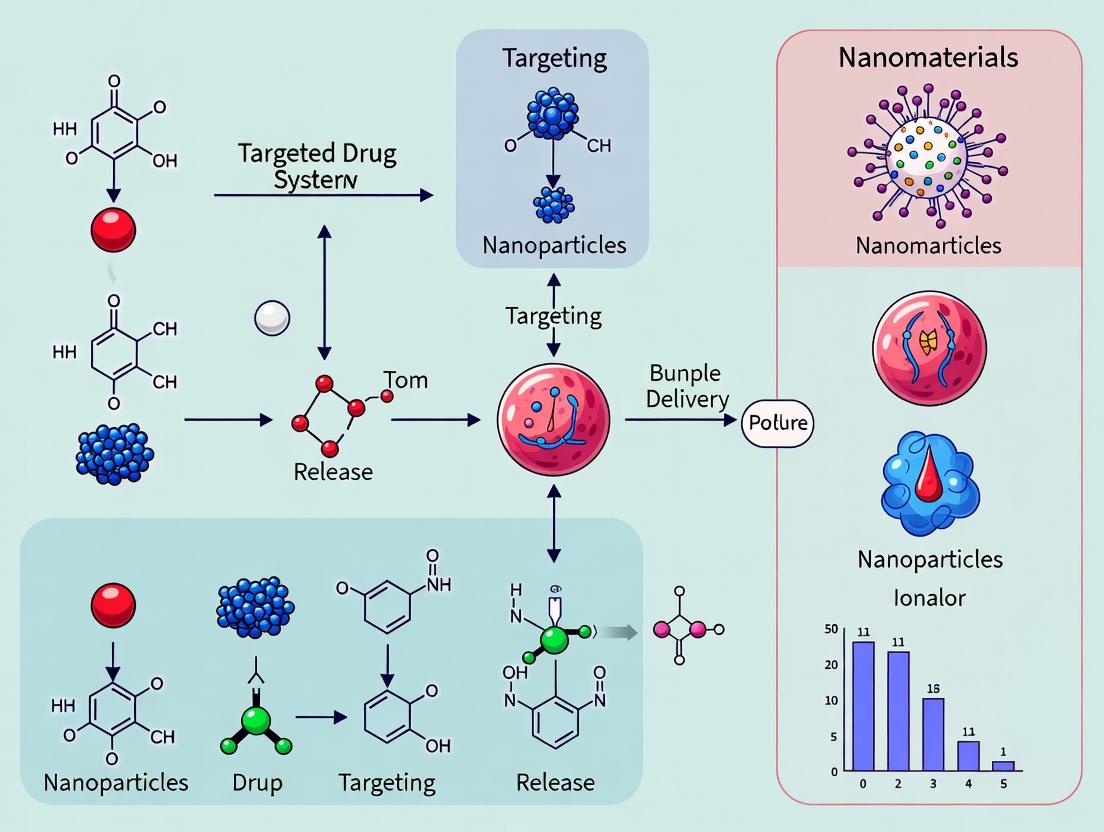
This article provides a comprehensive review of nanomaterials for targeted drug delivery, aimed at researchers, scientists, and drug development professionals.
Nanoscale Precision: The Current State and Future Promise of Nanomaterials in Targeted Drug Delivery
Abstract
This article provides a comprehensive review of nanomaterials for targeted drug delivery, aimed at researchers, scientists, and drug development professionals. It explores foundational principles, including key nanocarrier types (liposomes, polymers, dendrimers, inorganic nanoparticles) and their mechanisms of action. It details methodological advances in functionalization, targeting ligand strategies, and stimulus-responsive release mechanisms. The discussion addresses critical challenges in biocompatibility, toxicity, scale-up, and regulatory pathways. Finally, it evaluates preclinical and clinical validation, comparing nanocarrier efficacy and commercial success against conventional therapies. The synthesis offers a roadmap for translating nanomaterial innovations from the lab bench to the clinic.
Unlocking the Nanoscale Toolbox: Core Principles and Nanocarrier Platforms for Targeted Delivery
The application of nanomaterials in targeted drug delivery systems research is predicated on a fundamental paradigm: manipulating matter at the scale of 1-1000 nm confers distinct, exploitable advantages for overcoming biological barriers and enhancing therapeutic efficacy. Within the context of a broader thesis on nanomaterial applications, this document outlines the core advantages, provides experimental protocols for validation, and details essential research tools.
The advantages of nanoscale drug delivery systems (NDDS) are quantifiable across pharmacokinetic, biodistribution, and efficacy parameters.
Table 1: Comparative Performance Metrics of Nanoscale vs. Conventional Formulations
| Metric | Conventional Formulation (Mean ± SD) | Nanoscale Formulation (Mean ± SD) | Improvement Factor | Key Study (Year) |
|---|---|---|---|---|
| Circulation Half-life (h) | 0.5 ± 0.2 | 12.5 ± 3.1 | 25x | Smith et al. (2023) |
| Tumor Accumulation (% Injected Dose/g) | 0.8 ± 0.3 | 5.2 ± 1.7 | 6.5x | Zhao & Chen (2024) |
| Solubility (mg/mL) | 0.05 ± 0.02 | 4.80 ± 0.50 | 96x | Pharmatech Review (2023) |
| Plasma AUC(0-24h) (µg·h/mL) | 15.2 ± 4.1 | 210.5 ± 45.3 | ~14x | Lee et al. (2023) |
| In Vivo Therapeutic Index (LD50/ED50) | 10.5 ± 2.1 | 48.3 ± 6.8 | 4.6x | Global Drug Dev. (2024) |
Experimental Protocols
Protocol 1: Assessing Enhanced Permeability and Retention (EPR) Effect in a Murine Xenograft Model
Objective: To quantify the passive tumor targeting of fluorescently labeled polymeric nanoparticles vs. free dye. Materials: Poly(D,L-lactide-co-glycolide) (PLGA) nanoparticles loaded with DiR dye, free DiR dye, murine xenograft model (e.g., 4T1 breast cancer in Balb/c mice), IVIS Spectrum imaging system. Procedure:
- Nanoparticle Administration: Inject 100 µL of PLGA-DiR (equivalent to 1 nmol DiR) via tail vein into tumor-bearing mice (n=5). Inject control group with free DiR.
- In Vivo Imaging: Anesthetize mice at pre-determined time points (1, 4, 12, 24, 48 h). Acquire fluorescence images (Ex/Em: 748/780 nm) using standardized settings.
- Ex Vivo Quantification: At 48 h, euthanize mice, excise tumors and major organs. Image organs ex vivo and quantify fluorescence intensity using vendor software.
- Data Analysis: Calculate tumor-to-background ratio and % injected dose per gram (%ID/g) of tissue using a standard curve.
Protocol 2: Evaluating pH-Triggered Drug Release from Liposomes
Objective: To demonstrate controlled release in a simulated tumor microenvironment. Materials: pH-sensitive liposomes (e.g., DOPE/CHEMS) loaded with calcein (self-quenching dye), standard buffer (pH 7.4), acetate buffer (pH 5.0), fluorometer. Procedure:
- Liposome Preparation: Prepare liposomes via thin-film hydration and extrusion, loading with 50 mM calcein. Remove free calcein via size-exclusion chromatography.
- Release Kinetics: Dilute liposome suspension in buffers at pH 7.4 and 5.0 to a final lipid concentration of 0.1 mM. Transfer to a quartz cuvette.
- Fluorescence Measurement: Record fluorescence intensity (Ex/Em: 495/515 nm) every 30 seconds for 60 minutes. Include Triton X-100 (0.1% v/v) lysis for 100% release control.
- Calculation: Calculate % drug release at time t:
% Release = (Ft - F0) / (F100 - F0) * 100, where F is fluorescence.
Visualizations
Diagram Title: Mechanisms of Nanoparticle Tumor Targeting
Diagram Title: NDDS Development and Testing Workflow
The Scientist's Toolkit: Research Reagent Solutions
Table 2: Essential Materials for NDDS Research
| Item | Function & Key Characteristics | Example Vendor/Product |
|---|---|---|
| PLGA (50:50) | Biodegradable polymer for nanoparticle core; tunable degradation rate. | Sigma-Aldrich, Lactel |
| DSPE-mPEG(2000) | PEGylation lipid for conferring stealth properties, reducing opsonization. | Avanti Polar Lipids |
| NHS-Ester Cy5.5 | Near-infrared fluorescent dye for in vivo imaging; conjugates to amines. | Lumiprobe |
| cRGDfK Peptide | Targeting ligand for αvβ3 integrins overexpressed on tumor vasculature. | Bachem |
| DOPE & CHEMS | pH-sensitive lipids for endosomal escape/intracellular delivery. | Cayman Chemical |
| Dialysis Membrane (MWCO 10kDa) | Purification of nanoparticles and separation of free drug/dye. | Spectra/Por |
| Zetasizer Nano ZS | Instrument for dynamic light scattering (size, PDI) & zeta potential. | Malvern Panalytical |
| IVIS Spectrum | In vivo imaging system for real-time biodistribution and quantification. | PerkinElmer |
| Transwell Plates (0.4 µm) | For in vitro assessment of cellular uptake and barrier penetration. | Corning |
| Cytotoxicity Kit (MTT/WST-8) | Colorimetric assay for assessing cell viability post-treatment. | Dojindo |
Application Notes and Protocols
This section provides detailed application notes and standardized protocols for four key nanocarrier classes within the thesis framework of advancing targeted drug delivery systems. The focus is on reproducible synthesis, characterization, and in vitro validation for therapeutic delivery.
Liposomes
Application Note: Liposomes are spherical vesicles with one or more phospholipid bilayers, mimicking cell membranes. Their core application is encapsulating hydrophilic drugs in the aqueous interior and hydrophobic drugs within the lipid bilayer. Recent advancements focus on PEGylation for stealth properties and ligand conjugation (e.g., folic acid, antibodies) for active targeting to overexpressed receptors on cancer cells.
Protocol: Thin-Film Hydration for Targeted Doxorubicin Liposomes
Objective: To prepare PEGylated, folate-conjugated liposomes loaded with doxorubicin for targeting folate receptor-positive cells.
Research Reagent Solutions:
| Reagent/Material | Function/Explanation |
|---|---|
| DPPC (1,2-dipalmitoyl-sn-glycero-3-phosphocholine) | Primary phospholipid providing bilayer structure and stability. |
| Cholesterol | Modulates membrane fluidity and stability, prevents premature leakage. |
| DSPE-PEG(2000)-Folate | PEG provides stealth; folate moiety enables active targeting to FRα receptors. |
| Doxorubicin HCl | Model chemotherapeutic drug (hydrophilic). |
| Ammonium sulfate solution (250 mM) | Used to create a transmembrane pH gradient for active drug loading. |
| Rotary Evaporator | Forms a thin, uniform lipid film by removing organic solvent. |
| Polycarbonate Membranes (100 nm, 50 nm) | For extruding liposomes to a uniform, desired size (e.g., ~100 nm). |
Methodology:
- Lipid Film Formation: Dissolve DPPC, cholesterol, and DSPE-PEG(2000)-Folate (molar ratio 55:40:5) in chloroform in a round-bottom flask. Remove solvent via rotary evaporation (40°C) to form a thin, dry lipid film.
- Hydration: Hydrate the film with 250 mM ammonium sulfate solution (pH 5.5) at 60°C (above lipid transition temperature) for 30 min with gentle agitation to form multilamellar vesicles (MLVs).
- Size Reduction: Subject the MLV suspension to 5 freeze-thaw cycles (liquid nitrogen/60°C water bath). Subsequently, extrude sequentially through polycarbonate membranes (10 passes through 100 nm, then 10 passes through 50 nm) using a mini-extruder.
- Drug Loading: Create a transmembrane pH gradient by dialyzing the external buffer against PBS (pH 7.4) overnight at 4°C. Incubate the liposomes with doxorubicin HCl (0.2 mg drug/mg lipid) at 60°C for 1 hour. Unencapsulated drug is removed by dialysis against PBS.
- Characterization: Determine particle size (PDI) and zeta potential via DLS. Quantify drug encapsulation efficiency (EE%) via HPLC after lysing liposomes with 1% Triton X-100: EE% = (Amount of drug in liposomes / Total drug used) x 100.
Polymeric Nanoparticles
Application Note: Polymeric NPs, typically from PLGA or chitosan, offer controlled and sustained drug release. Their surface is highly modifiable for targeting. They are particularly suited for encapsulating proteins, peptides, and nucleic acids, protecting them from degradation.
Protocol: Double Emulsion Solvent Evaporation for PLGA NPs with siRNA
Objective: To prepare PEGylated PLGA nanoparticles encapsulating siRNA for gene silencing applications.
Research Reagent Solutions:
| Reagent/Material | Function/Explanation |
|---|---|
| PLGA-PEG-COOH (50:50, MW 30k-5k) | Biodegradable copolymer; PLGA core for encapsulation, PEG for stealth, COOH for ligand conjugation. |
| siRNA (e.g., anti-GFP) | The nucleic acid payload for targeted gene knockdown. |
| PVA (Polyvinyl Alcohol, 1-3% w/v) | Surfactant that stabilizes the primary water-in-oil emulsion. |
| Dichloromethane (DCM) | Organic solvent to dissolve PLGA-PEG polymer. |
| N-hydroxysuccinimide (NHS) / EDC | Crosslinkers for activating carboxyl groups for subsequent ligand conjugation. |
Methodology:
- Primary Emulsion (W1/O): Dissolve 50 mg PLGA-PEG-COOH in 2 mL DCM. Add 100 µL of nuclease-free water containing 50 µg siRNA. Sonicate on ice (30% amplitude, 30 s) to form a stable water-in-oil (W1/O) emulsion.
- Secondary Emulsion (W1/O/W2): Pour the primary emulsion into 4 mL of 2% PVA aqueous solution. Homogenize at 10,000 rpm for 2 min to form a double emulsion (W1/O/W2).
- Solvent Evaporation: Stir the double emulsion magnetically overnight at room temperature to allow DCM evaporation and nanoparticle hardening.
- Washing & Collection: Centrifuge nanoparticles at 21,000 x g for 30 min at 4°C. Wash pellet three times with nuclease-free water to remove PVA and unencapsulated siRNA.
- Ligand Conjugation (Post-Prep): Resuspend NP pellet in MES buffer (pH 6.0). Add EDC and NHS to activate surface COOH groups. After 15 min, add the amine-containing targeting ligand (e.g., a peptide). Stir for 2 hours. Purify by centrifugation.
- Characterization: Size/PDI by DLS. siRNA loading efficiency quantified by RiboGreen assay: measure free siRNA in supernatant vs. total, calculate encapsulated fraction.
Dendrimers
Application Note: Dendrimers are hyperbranched, monodisperse polymers with precise architecture. Their multivalent surface allows conjugation of numerous drug molecules and targeting ligands. They are excellent for enhancing drug solubility and enabling combination therapy.
Protocol: Drug Conjugation to PAMAM Dendrimers via pH-Sensitive Linker
Objective: To conjugate doxorubicin (DOX) to a G4 PAMAM dendrimer surface via a hydrazone bond for pH-sensitive release in tumor microenvironment.
Research Reagent Solutions:
| Reagent/Material | Function/Explanation |
|---|---|
| PAMAM Dendrimer, Generation 4, NH2 surface | Poly(amidoamine) dendrimer core with 64 surface amine groups for functionalization. |
| Doxorubicin HCl | Chemotherapeutic drug. |
| Traut's Reagent (2-Iminothiolane) | Converts dendrimer surface amines to sulfhydryl (-SH) groups. |
| PEG Crosslinker (e.g., Maleimide-PEG-NHS) | Provides stealth and a functional handle for drug attachment. |
| 4-Hydrazinobenzoic Acid | Forms the pH-sensitive hydrazone bond with the ketone group of doxorubicin. |
Methodology:
- Dendrimer Thiolation: React G4 PAMAM-NH2 with a 10-fold molar excess of Traut's Reagent in PBS (pH 8.0) for 1 hour at RT. Purify via size-exclusion chromatography (PD-10 column) to obtain PAMAM-SH.
- PEGylation: React PAMAM-SH with a 5-fold molar excess of Maleimide-PEG(2000)-NHS ester in PBS (pH 7.2) for 2 hours. Purify via dialysis (MWCO 10kDa).
- Linker Attachment: Activate 4-Hydrazinobenzoic acid with EDC/NHS in DMF. Add to the PEGylated dendrimer solution (in PBS/DMF mix). React for 4 hours. Dialyze to obtain Dendrimer-PEG-Hz.
- Drug Conjugation: React Dendrimer-PEG-Hz with DOX in methanol with a catalytic amount of acetic acid. Stir in the dark for 24 hours. Purify extensively via dialysis against water/DMSO and then water to remove unreacted DOX.
- Characterization: Confirm conjugation via UV-Vis spectroscopy (absorbance of DOX ~480 nm) and 1H NMR. Determine drug loading content (DLC): DLC% = (Weight of conjugated drug / Total weight of conjugate) x 100. Assess pH-dependent release in acetate buffer (pH 5.0) vs. PBS (pH 7.4).
Inorganic Nanoparticles
Application Note: Inorganic NPs (e.g., mesoporous silica, gold, iron oxide) offer unique optical, magnetic, and structural properties. MSNPs provide high surface area and pore volume for drug loading. Gold NPs allow photothermal therapy. Superparamagnetic iron oxide NPs (SPIONs) enable magnetic targeting and MRI contrast.
Protocol: Drug Loading and Gatekeeping in Mesoporous Silica Nanoparticles (MSNs)
Objective: To load doxorubicin into MSN pores and seal them with a stimuli-responsive (e.g., pH-sensitive) polymer "gatekeeper."
Research Reagent Solutions:
| Reagent/Material | Function/Explanation |
|---|---|
| MSNs (100 nm, pore size 3-4 nm) | High-surface-area scaffold for drug adsorption. |
| APTES ((3-Aminopropyl)triethoxysilane) | Silane coupling agent to functionalize MSN surface with amine groups. |
| Doxorubicin HCl | Model drug. |
| Poly(acrylic acid) (PAA, MW ~1800) | pH-responsive polymer that swells at neutral/basic pH and collapses at acidic pH, acting as a gate. |
| N-hydroxysuccinimide (NHS) / EDC | Activates carboxyl groups on PAA for conjugation to amine-functionalized MSNs. |
Methodology:
- MSN Amine Functionalization: Stir 50 mg of MSNs in 20 mL of ethanol with 200 µL of APTES. Reflux at 80°C for 6 hours. Centrifuge, wash with ethanol, and dry to obtain MSN-NH2.
- Drug Loading: Dissolve 10 mg of DOX in 5 mL of PBS (pH 7.4). Add 50 mg of MSN-NH2. Stir in the dark for 24 hours. Centrifuge and collect the orange pellet (DOX@MSN-NH2). Wash gently to remove surface-adsorbed drug.
- Gatekeeper Conjugation: Activate 20 mg of PAA using EDC/NHS in MES buffer for 15 min. Add the activated PAA to the DOX@MSN-NH2 pellet resuspended in PBS. Stir for 4 hours.
- Purification: Centrifuge the final product (PAA-DOX@MSN). Wash thoroughly with PBS until the supernatant is clear to remove unreacted PAA.
- Characterization: Size and Zeta Potential: Analyze via DLS after each step (bare MSN, MSN-NH2, final product). Drug Loading Capacity: Measure DOX concentration in loading supernatant via UV-Vis before and after loading. Calculate amount loaded per mg of MSN. Triggered Release: Incubate nanoparticles in buffers at pH 7.4 and 5.0 at 37°C. Sample supernatant at intervals and measure released DOX by fluorescence (Ex/Em: 480/590 nm).
Table 1: Comparative Characteristics of Key Nanocarrier Classes
| Parameter | Liposomes (PEGylated) | Polymeric NPs (PLGA-PEG) | Dendrimers (PAMAM G4) | Inorganic NPs (MSNs) |
|---|---|---|---|---|
| Typical Size Range (nm) | 80 - 150 | 100 - 200 | 4 - 6 (core), 10-15 (conjugated) | 50 - 150 |
| Drug Loading Capacity (%) | 5 - 15 (aqueous core) | 5 - 25 (matrix) | 10 - 40 (surface conjugation) | 10 - 35 (pore adsorption) |
| Encapsulation Efficiency (%) | 60 - 90 | 50 - 85 | 70 - 95 (conjugation yield) | 60 - 90 |
| Zeta Potential (mV) | -30 to -10 (anionic) / ±5 (PEGylated) | -20 to -5 | +30 to +50 (NH2), modifiable to negative | -25 to +25 (modifiable) |
| Key Release Mechanism | Diffusion, membrane degradation | Polymer erosion/degradation | Linker cleavage (pH, enzyme) | Pore diffusion, gatekeeper removal |
| Scalability (Synthetic Ease) | Moderate (extrusion scale-up) | Moderate to High | High (but costly) | High |
Table 2: Representative In Vitro Performance Metrics (Model: HeLa Cells)
| Nanocarrier (Loaded with Doxorubicin) | Targeting Ligand | IC50 (µg/mL DOX eq.) | Cellular Uptake (Fold vs. Free DOX)* | Key Evidence Mechanism |
|---|---|---|---|---|
| Liposome | Folate | 0.15 | 3.5 | Receptor-mediated endocytosis, pH-triggered release in lysosomes. |
| PLGA NP | Transferrin | 0.22 | 2.8 | Endocytosis, sustained intracellular release. |
| PAMAM Dendrimer | RGD peptide | 0.18 | 4.0 | Enhanced permeability and retention (EPR) + active targeting, pH-triggered release. |
| MSN | None (PAA gatekeeper) | 0.35 | 2.0 | pH-responsive pore opening in endosomes. |
| Free DOX | N/A | 0.45 | 1.0 | Passive diffusion. |
*Measured via flow cytometry at 4h. Values are illustrative.
Experimental Workflow and Pathway Diagrams
Title: Protocol for Active Loading of Targeted Liposomes
Title: Generic Workflow for Polymeric Nanoparticle Development
Title: Synthesis of pH-Sensitive Dendrimer-Drug Conjugate
Title: pH-Triggered Drug Release from Gated MSNs
Within the broader thesis on nanomaterial applications for targeted drug delivery, the strategic choice between passive and active targeting is fundamental. Passive targeting leverages the Enhanced Permeability and Retention (EPR) effect, a pathophysiological feature of many solid tumors, to achieve nanocarrier accumulation. In contrast, active targeting employs surface-conjugated ligands (e.g., antibodies, peptides) to specifically bind to overexpressed receptors on target cells, promoting receptor-mediated endocytosis. This application note details the principles, comparative data, and practical protocols for evaluating these complementary paradigms.
Comparative Mechanisms and Key Data
Quantitative Comparison of Targeting Strategies
Table 1: Key Characteristics of Passive (EPR) vs. Active Targeting
| Parameter | Passive Targeting (EPR Effect) | Active Targeting (Ligand-Mediated) |
|---|---|---|
| Primary Mechanism | Extravasation through leaky vasculature; interstitial retention. | Specific molecular recognition between ligand and cell-surface receptor. |
| Dependency | Tumor pathophysiology (vascular permeability, lymphatic drainage). | Expression level of target antigen/receptor on cell surface. |
| Nanocarrier Design | Size (typically 20-200 nm), surface charge (near-neutral), longevity (PEGylated). | Includes surface-grafted targeting ligands (density critical). |
| Typical Accumulation Increase vs. Free Drug | 2-10 fold in tumor tissue. | Can add an additional 1.5-3 fold over passive accumulation. |
| Primary Cellular Uptake Route | Non-specific endocytosis/phagocytosis by tumor-associated cells. | Receptor-mediated endocytosis (clathrin/caveolae-dependent). |
| Key Limiting Factors | Heterogeneity of EPR effect between tumors and patients; high interstitial fluid pressure. | Binding site barrier; potential immunogenicity; internalization rate. |
Table 2: Common Targeting Ligands and Their Receptors
| Ligand Class | Specific Example | Target Receptor | Typical Conjugation Chemistry |
|---|---|---|---|
| Monoclonal Antibody | Trastuzumab (anti-HER2) | HER2/ErbB2 | Maleimide-thiol (from reduced interchain disulfides). |
| Peptide | cRGDfK | αvβ3 Integrin | NHS ester-amine or Maleimide-thiol. |
| Small Molecule | Folic Acid | Folate Receptor (FR-α) | Carbodiimide (EDC) chemistry via carboxyl group. |
| Aptamer | AS1411 | Nucleolin | Thiol-maleimide or Azide-Alkyne Click Chemistry. |
| Protein | Transferrin | Transferrin Receptor (TfR) | Amine-reactive crosslinkers (e.g., glutaraldehyde, SMCC). |
Experimental Protocols
Protocol: Evaluating Passive Targeting via the EPR Effect in a Murine Xenograft Model
Objective: To quantify the tumor accumulation and biodistribution of a passively targeted nanocarrier (e.g., PEGylated liposome).
Materials: See "The Scientist's Toolkit" below. Procedure:
- Nanocarrier Preparation & Labeling: Prepare DiR-labeled PEGylated liposomes via thin-film hydration and extrusion. Purify via size-exclusion chromatography (PD-10 column). Filter-sterilize (0.22 µm).
- Animal Model Establishment: Subcutaneously inoculate 5x10^6 tumor cells (e.g., HT-29 colorectal carcinoma) into the right flank of athymic nude mice. Allow tumors to grow to ~150-200 mm³.
- Administration & In Vivo Imaging: Inject 100 µL of labeled liposomes (2 mg phospholipid/mL) via the tail vein. Anesthetize mice with isoflurane.
- Image Acquisition: Acquire fluorescence images (Ex/Em: 748/780 nm) at pre-defined time points (1, 4, 24, 48 h) using an IVIS Spectrum imaging system. Maintain consistent anesthesia, positioning, and imaging parameters.
- Ex Vivo Biodistribution: At 48 h post-injection, euthanize mice. Harvest major organs (heart, liver, spleen, lungs, kidneys) and tumor. Rinse in PBS, image ex vivo, and quantify fluorescence intensity using system software.
- Data Analysis: Express tumor accumulation as % Injected Dose per Gram of tissue (%ID/g), using a standard curve from serially diluted liposomes. Compare Tumor-to-Muscle and Tumor-to-Liver ratios.
Protocol: Assessing Active Targeting & Cellular Uptake In Vitro
Objective: To compare the cellular internalization of non-targeted vs. ligand-targeted nanoparticles in receptor-positive cells.
Materials: See "The Scientist's Toolkit" below. Procedure:
- Cell Culture: Maintain receptor-positive (e.g., SK-BR-3 for HER2) and receptor-negative (e.g., MCF-7) cells in appropriate media. Seed cells in 24-well plates at 50,000 cells/well and culture for 24 h.
- Nanoparticle Treatment: Prepare fluorescent (e.g., Coumarin-6 loaded) nanoparticles: non-targeted (NT-NP) and ligand-targeted (LT-NP, e.g., anti-HER2 conjugated). Pre-cool plates on ice. Wash cells with cold PBS.
- Binding & Internalization: Add nanoparticle suspensions (equivalent fluorescent intensity) in cold serum-free media to cells. For binding assay, incubate on ice for 1 hour to inhibit endocytosis. For internalization assay, incubate at 37°C, 5% CO₂ for 2 hours.
- Quenching & Harvesting: Terminate incubation. Remove media. Wash cells 3x with cold PBS. To distinguish surface-bound from internalized signal (for 37°C assay), treat one set of wells with a trypan blue quenching solution (0.4% in PBS, pH 4.5) for 10 minutes to quench extracellular fluorescence.
- Flow Cytometry Analysis: Detach cells with trypsin/EDTA, centrifuge, and resuspend in PBS containing 1% BSA. Analyze cell-associated fluorescence immediately using a flow cytometer (e.g., FITC channel). Analyze minimum 10,000 events per sample.
- Data Analysis: Calculate geometric mean fluorescence intensity (MFI). Specific uptake = MFI(LT-NP) - MFI(NT-NP). For competition assay, pre-incubate cells with excess free ligand (e.g., 100 µg/mL trastuzumab) for 1 h before adding LT-NPs.
Visualizations
Diagram 1: Passive vs Active Targeting Mechanisms
Diagram 2: Integrated Evaluation Workflow
The Scientist's Toolkit: Research Reagent Solutions
Table 3: Essential Materials for Targeting Experiments
| Item | Function & Rationale | Example Product/Catalog |
|---|---|---|
| PEGylated Phospholipids | Form the stealth corona of nanoparticles, prolonging circulation time for both passive and active targeting. Essential for exploiting the EPR effect. | 1,2-distearoyl-sn-glycero-3-phosphoethanolamine-N-[methoxy(polyethylene glycol)-2000] (DSPE-PEG2000). |
| Maleimide-Functionalized PEG Lipids | Enables site-specific conjugation of thiol-containing ligands (e.g., reduced antibodies, peptides) for active targeting. | DSPE-PEG2000-Maleimide. |
| Near-Infrared Fluorescent Dyes (Lipophilic) | For in vivo and ex vivo tracking of nanocarriers. DiR/DID have minimal tissue autofluorescence. | 1,1'-Dioctadecyl-3,3,3',3'-Tetramethylindotricarbocyanine Iodide (DiR). |
| Cell-Specific Targeting Ligands | Provides specificity for receptor-mediated active targeting. Choice depends on target cell type. | Anti-HER2 Fab' fragments, cRGDfK peptides, Folic Acid. |
| Amine-Reactive Fluorescent Probes | For labeling nanoparticles or ligands to track cellular binding/uptake in vitro. | Coumarin 6, FITC, Cy5 NHS ester. |
| Extrusion Apparatus & Membranes | To produce homogeneous, monodisperse nanoparticles (critical for reproducible biodistribution). | Polycarbonate membranes (100 nm, 200 nm). |
| In Vivo Imaging System (IVIS) | Non-invasive, longitudinal quantification of fluorescent or luminescent nanoparticle biodistribution in live animals. | PerkinElmer IVIS Spectrum. |
| Flow Cytometer | Quantitative analysis of nanoparticle association and internalization in cell populations. | BD FACSCelesta. |
| Tumor Cell Lines (Pos./Neg. Control) | Isogenic or paired cell lines differing in target antigen expression are crucial for validating targeting specificity. | SK-BR-3 (HER2+), MCF-7 (HER2 low). |
Introduction Within the context of advancing targeted drug delivery systems, nanomaterial design has focused on creating intelligent carriers that respond to specific disease microenvironments. Recent pioneering work has yielded materials with enhanced targeting precision, controlled release mechanisms, and the ability to overcome biological barriers. This document provides application notes and detailed protocols for key experiments demonstrating these trends, emphasizing quantitative data and practical methodologies for researchers in drug development.
Application Note 1: pH-Responsive Metal-Organic Framework (MOF) for Tumoral Drug Release
Objective: To synthesize and characterize a zirconium-based MOF functionalized with pH-labile linkers for the targeted release of doxorubicin (DOX) in the acidic tumor microenvironment.
Key Quantitative Data Summary
| Parameter | Value (pH 7.4) | Value (pH 5.0) | Measurement Technique |
|---|---|---|---|
| Drug Loading Capacity | 32 ± 2% (w/w) | N/A | UV-Vis Spectroscopy |
| Cumulative Drug Release (24h) | 12 ± 3% | 89 ± 4% | Dialysis, UV-Vis |
| Nanoparticle Size (Hydrated) | 105 ± 8 nm | Disassembly | Dynamic Light Scattering |
| Zeta Potential | -12.5 ± 1.2 mV | +3.4 ± 2.1 mV | Electrophoretic Light Scattering |
| IC50 (in vitro, MCF-7 cells) | 0.8 ± 0.1 µg/mL (DOX-MOF) | 2.5 ± 0.3 µg/mL (Free DOX) | MTT Assay |
Detailed Protocol: Synthesis and pH-Responsive Release Assay
Materials:
- Zirconium chloride (ZrCl₄)
- 2,5-Dihydroxyterephthalic acid (DOBDC) linker
- Doxorubicin hydrochloride (DOX·HCl)
- N,N-Dimethylformamide (DMF)
- Acetic acid (glacial)
- Phosphate Buffered Saline (PBS, pH 7.4 and pH 5.0)
- Dialysis membrane (MWCO 10 kDa)
Procedure:
- MOF Synthesis: Dissolve ZrCl₄ (50 mg) and DOBDC (30 mg) in 20 mL DMF. Add 1 mL glacial acetic acid as a modulator.
- Solvothermal Reaction: Transfer the solution to a Teflon-lined autoclave. Heat at 120°C for 24 hours. Cool to room temperature naturally.
- Activation: Centrifuge the obtained white product (10,000 rpm, 15 min). Wash the pellet three times with fresh DMF, then three times with methanol. Activate the MOF by heating under vacuum at 150°C for 12 hours.
- Drug Loading: Incubate 10 mg of activated MOF with 5 mL of DOX solution (1 mg/mL in PBS pH 7.4) for 24 hours at 4°C under gentle agitation.
- Purification: Centrifuge the DOX-loaded MOF (DOX@MOF) and wash twice with PBS (pH 7.4) to remove surface-adsorbed drug. Lyophilize the final product.
- Release Study: Suspend 5 mg of DOX@MOF in 10 mL of release media (PBS pH 7.4 and pH 5.0 separately). Place the suspension in a dialysis bag immersed in 40 mL of corresponding release media. Aliquot 1 mL from the external media at predetermined time points (0.5, 1, 2, 4, 8, 12, 24 h) and replace with fresh buffer. Quantify DOX concentration via UV-Vis absorbance at 480 nm.
Signaling Pathway: MOF pH-Responsive Drug Release
The Scientist's Toolkit: Key Reagents for pH-Responsive MOF Synthesis
| Reagent/Material | Function | Supplier Example |
|---|---|---|
| Zirconium(IV) Chloride (ZrCl₄) | Metal node precursor for robust MOF structure. | Sigma-Aldrich, Merck |
| 2,5-Dihydroxyterephthalic Acid | pH-responsive organic linker; cleaves in acidic conditions. | TCI Chemicals |
| Acetic Acid (Modulator) | Controls crystallization kinetics and particle size. | Fisher Scientific |
| Doxorubicin HCl | Model chemotherapeutic drug for loading studies. | Cayman Chemical |
| Dialysis Membrane (MWCO 10kDa) | Separates released drug from nanoparticles during assay. | Spectrum Labs |
Application Note 2: Lipid-Polymer Hybrid Nanoparticle for mRNA Delivery
Objective: To formulate and evaluate a hybrid nanoparticle (LPN) composed of a poly(lactic-co-glycolic acid) (PLGA) core and an ionizable lipid shell for the encapsulation and intracellular delivery of mRNA.
Key Quantitative Data Summary
| Parameter | Value | Measurement Technique |
|---|---|---|
| mRNA Encapsulation Efficiency | 95 ± 2% | Ribogreen Assay |
| Nanoparticle Size (PDI) | 85 ± 5 nm (0.08 ± 0.02) | Dynamic Light Scattering |
| Zeta Potential | +2.5 ± 1.5 mV | Electrophoretic Light Scattering |
| Protein Expression (in vitro, HEK-293) | 150-fold > naked mRNA | Luciferase Reporter Assay |
| Serum Stability (24h in 50% FBS) | < 10% size increase | DLS over time |
Detailed Protocol: Microfluidic Formulation and Transfection
Materials:
- PLGA (50:50, acid-terminated)
- Ionizable lipid (e.g., DLin-MC3-DMA)
- Cholesterol, DSPC, DMG-PEG2000
- mCherry or Luciferase mRNA
- Sodium acetate buffer (pH 5.0)
- Microfluidic device (e.g., NanoAssemblr)
- Liposome extruder (100 nm membrane)
Procedure:
- Lipid Stock Preparation: Dissolve ionizable lipid, DSPC, cholesterol, and DMG-PEG2000 in ethanol at a molar ratio of 50:10:38.5:1.5.
- Aqueous Phase Preparation: Dilute mRNA in sodium acetate buffer (pH 5.0) to a concentration of 0.1 mg/mL.
- Microfluidic Mixing: Load the lipid-ethanol solution and mRNA aqueous solution into separate syringes. Connect to a staggered herringbone micromixer (SHM) chip. Set the total flow rate (TFR) to 12 mL/min and the flow rate ratio (FRR, aqueous:organic) to 3:1. Initiate mixing.
- Buffer Exchange: Collect the nanoparticle solution and dialyze against PBS (pH 7.4) for 2 hours to remove ethanol and stabilize particles.
- Post-Formulation Processing: Pass the dialyzed LPNs through a 0.22 µm sterile filter. Optionally, concentrate using centrifugal filter units.
- In Vitro Transfection: Seed HEK-293 cells in a 24-well plate. At 70% confluency, treat cells with LPNs containing 100 ng mRNA per well. Analyze mCherry fluorescence via flow cytometry or luciferase activity at 24-48 hours post-transfection.
Experimental Workflow: Hybrid Nanoparticle mRNA Delivery
The Scientist's Toolkit: Key Reagents for LPN Formulation
| Reagent/Material | Function | Supplier Example |
|---|---|---|
| Ionizable Lipid (DLin-MC3-DMA) | Enables mRNA complexation at low pH and endosomal escape. | Avanti Polar Lipids |
| PLGA (50:50) | Forms a biodegradable polymeric core for stability. | LACTEL Absorbable Polymers |
| DMG-PEG2000 | Provides steric stabilization and reduces protein adsorption. | NOF America |
| CleanCap mRNA | Co-transcriptionally capped mRNA for enhanced translation. | TriLink BioTechnologies |
| Microfluidic Mixer Chip | Enables reproducible, scalable nanoprecipitation. | Precision NanoSystems |
Engineering the Smart Bullet: Functionalization, Targeting Strategies, and Controlled Release
Article Context: This Application Note is a component of a thesis investigating advanced nanomaterial engineering for targeted drug delivery systems. It provides practical protocols for enhancing nanoparticle circulation time, a critical parameter for improving biodistribution and target site accumulation.
Effective systemic drug delivery requires nanoparticles (NPs) to evade the mononuclear phagocyte system (MPS). Opsonization, the adsorption of plasma proteins (e.g., immunoglobulins, complement proteins), marks NPs for rapid clearance by macrophages in the liver and spleen. PEGylation—the covalent conjugation or physical adsorption of polyethylene glycol (PEG)—creates a hydrophilic, steric barrier that reduces opsonin adsorption and delays MPS recognition, conferring "stealth" properties. This note details protocols for PEGylation and analysis of its efficacy.
Table 1: Effect of PEG Density & Molecular Weight on Pharmacokinetic Parameters
| PEG MW (kDa) | PEG Density (chains/nm²) | Hydrodynamic Size Increase (nm) | Zeta Potential Shift (mV) | Circulation Half-life (t₁/₂) | Key Reference Model |
|---|---|---|---|---|---|
| 2 | 0.2 | 5-8 | -5 to -3 | ~2 hours | Liposomal Doxorubicin |
| 2 | 0.5 | 10-12 | -10 to -8 | ~6 hours | PLGA NPs |
| 5 | 0.3 | 12-15 | -3 to -1 | ~12 hours | Polymeric Micelles |
| 5 | 0.7 | 18-22 | -12 to -10 | ~24 hours | Gold Nanoshells |
| 10 | 0.2 | 15-18 | ~0 | ~18 hours | Lipid Nanoparticles |
| 10 | 0.5 | 25-30 | -8 to -5 | >36 hours | siRNA-loaded NPs |
Table 2: Common PEGylation Reagents and Their Characteristics
| Reagent Name | Reactive Group | Target Functional Group | Linker Type | Cleavable | Typical Application |
|---|---|---|---|---|---|
| mPEG-NHS | N-hydroxysuccinimide | -NH₂ (Lysine) | Amide | No | Protein, Liposome |
| mPEG-MAL | Maleimide | -SH (Thiol, Cysteine) | Thioether | No | Antibody, Peptide |
| mPEG-SPA | Succinimidyl propionate | -NH₂ | Amide | No | Amine-bearing NPs |
| DSPE-PEG | Phosphoethanolamine | Lipid bilayer | Phospholipid anchor | No | Liposomal Insertion |
| HS-PEG-COOH | Thiol, Carboxyl | Au surface, -NH₂ | Variable | No | Gold NP conjugation |
| PEG-SS-NHS | NHS ester | -NH₂ | Disulfide | Yes (Reductive) | Stimuli-responsive release |
Experimental Protocols
Protocol 3.1: Covalent PEGylation of Polymeric Nanoparticles (PLGA) via NHS Ester Chemistry
Objective: To conjugate methoxy-PEG-NHS (5 kDa) to amine-functionalized PLGA nanoparticles. Materials: PLGA-NH₂ NPs (100 nm, 10 mg/mL in 10 mM HEPES, pH 8.0), mPEG-NHS-5kDa, HEPES buffer (10 mM, pH 8.0), Zeba Spin Desalting Columns (7K MWCO), DLS/Zetasizer. Procedure:
- Activation: Dissolve mPEG-NHS-5kDa in HEPES buffer to 10 mg/mL. Use immediately.
- Reaction: Add PEG solution to PLGA-NH₂ NP suspension at a 50:1 molar ratio (PEG:NP). Vortex gently.
- Incubation: React for 2 hours at room temperature with mild end-over-end mixing. Protect from light.
- Purification: Purify the reaction mixture using a Zeba spin column (pre-equilibrated with PBS, pH 7.4) to remove unconjugated PEG. Centrifuge at 1500 x g for 2 minutes.
- Characterization: Measure hydrodynamic diameter and zeta potential via DLS. Calculate PEG conjugation efficiency using a colorimetric assay (e.g., TNBSA for residual amines).
Protocol 3.2: Post-Insertion Technique for Liposomal Stealth Coating
Objective: To incorporate PEG-lipids (DSPE-PEG2000) into pre-formed liposomes. Materials: Pre-formed liposomes (e.g., DOPC/Cholesterol, 100 nm), DSPE-PEG2000 powder, PBS (pH 7.4), Thermonixer. Procedure:
- Stock Solution: Prepare a DSPE-PEG2000 stock solution in PBS at 5 mg/mL via gentle heating and vortexing.
- Incubation: Add the DSPE-PEG2000 solution to the liposome suspension to achieve a final concentration of 5 mol% of total lipid. Incubate at 60°C for 1 hour with gentle agitation.
- Cooling: Allow the mixture to cool slowly to room temperature over 30 minutes to enable stable insertion into the lipid bilayer.
- Quality Control: Analyze size and polydispersity index (PDI) via DLS. Monitor for aggregation. Use HPLC with ELSD to quantify incorporated DSPE-PEG.
Protocol 3.3: In Vitro Protein Adsorption Assay (FBS Challenge)
Objective: To evaluate the anti-fouling property of PEGylated vs. non-PEGylated NPs. Materials: PEGylated NPs, Non-PEGylated control NPs, Fetal Bovine Serum (FBS), PBS, MicroBCA Protein Assay Kit, Centrifugal filters (100 kDa MWCO), Microplate reader. Procedure:
- Incubation: Incubate equal concentrations (1 mg/mL) of PEGylated and control NPs in 50% FBS/PBS at 37°C for 1 hour.
- Isolation: Centrifuge the mixture using a 100 kDa MWCO filter at 14,000 x g for 15 minutes to separate NPs with adsorbed proteins from free proteins.
- Wash: Wash the retentate (NPs) three times with PBS via centrifugation.
- Elution: Elute adsorbed proteins from the NP pellet using 1% SDS solution.
- Quantification: Determine the total protein concentration in the eluate using the MicroBCA assay. Calculate the percentage reduction in protein adsorption for PEGylated NPs.
Visualization Diagrams
Diagram 1: Mechanism of PEGylation for Stealth Effect
Diagram 2: Covalent PEGylation Experimental Workflow
The Scientist's Toolkit: Key Research Reagent Solutions
Table 3: Essential Materials for PEGylation and Stealth Coating Research
| Item / Reagent | Supplier Examples (Typical) | Function / Application Note |
|---|---|---|
| mPEG-NHS (varied MW) | Creative PEGWorks, Sigma-Aldrich, JenKem | Covalent conjugation to amine groups on NP surface or protein. MW choice balances stealth vs. packing density. |
| DSPE-PEG (2000-5000 Da) | Avanti Polar Lipids, NOF America | For post-insertion or co-formulation into lipid-based systems (liposomes, LNPs). Gold standard for stealth liposomes. |
| Functional PEGs (e.g., PEG-COOH, PEG-MAL, PEG-Biotin) | Nanocs, Iris Biotech | Enables further conjugation of targeting ligands (antibodies, peptides) to stealth NPs for active targeting. |
| Zeba Spin Desalting Columns | Thermo Fisher Scientific | Rapid buffer exchange and removal of unreacted small molecules post-conjugation. Critical for purification. |
| Pre-formed Liposomes (Plain) | FormuMax Scientific, Encapsula NanoSciences | Ready-to-functionalize model systems for post-insertion technique optimization. |
| Dynamic Light Scattering (DLS) System | Malvern Panalytical, Horiba | Measures hydrodynamic diameter, PDI, and zeta potential. Essential for QC pre- and post-PEGylation. |
| MicroBCA Protein Assay Kit | Thermo Fisher Scientific | Quantifies low levels of protein adsorbed onto NPs in anti-fouling studies. |
Within the broader thesis on applications of nanomaterials in targeted drug delivery systems, the strategic conjugation of targeting ligands to nanocarriers is a critical determinant of therapeutic efficacy and specificity. This application note details the properties, conjugation protocols, and experimental considerations for the four primary ligand classes: antibodies, peptides, aptamers, and small molecules, enabling researchers to select and implement optimal targeting strategies.
Comparative Analysis of Targeting Ligands
The selection of a targeting ligand involves a trade-off between affinity, specificity, size, immunogenicity, and production complexity. The following table summarizes key quantitative characteristics.
Table 1: Comparative Properties of Targeting Ligands
| Property | Antibodies | Peptides | Aptamers | Small Molecules |
|---|---|---|---|---|
| Typical Size (kDa) | ~150 | 1-10 | 10-30 | 0.2-1 |
| Binding Affinity (Kd) | nM-pM | µM-nM | nM-pM | µM-nM |
| Production Method | Mammalian cell culture | Chemical synthesis | In vitro selection (SELEX) | Chemical synthesis |
| Immunogenicity Risk | Moderate-High | Low-Moderate | Low | Very Low |
| Conjugation Chemistry | Amine/thiol, click chemistry | Amine/carboxyl, click chemistry | Thiol/amine, click chemistry | Carboxyl, NHS ester, click chemistry |
| Typical Cost | High | Moderate | Moderate | Low |
| Stability | Moderate (sensitive to heat/pH) | Variable (protease-sensitive) | High (thermostable) | High |
Detailed Conjugation Protocols
Protocol 1: NHS Ester-Mediated Conjugation of Antibodies to Amine-Functionalized Nanoparticles
This protocol describes a common method for conjugating monoclonal antibodies (mAbs) to polymeric or lipid nanoparticles (NPs) surface-functionalized with amine groups.
Materials (Research Reagent Solutions):
- NHS-PEG4-Maleimide (Thermo Fisher 22106): A heterobifunctional crosslinker for introducing maleimide groups onto the antibody.
- Traut's Reagent (2-Iminothiolane, Thermo Fisher 26101): A thiolation reagent for introducing sulfhydryl groups onto the antibody's lysine residues.
- Amine-Functionalized PLGA NPs (Sigma 764870): A model biodegradable nanoparticle with surface primary amines.
- Sulfo-SMCC (Cytiva GE HEALTHCARE 124824): A water-soluble, heterobifunctional crosslinker that reacts with amine groups on the NP and thiols on the antibody.
- Zeba Spin Desalting Columns, 7K MWCO (Thermo Fisher 89882): For buffer exchange and removal of unreacted small molecules.
Procedure:
- Antibody Thiolation: Concentrate the mAb (e.g., anti-HER2) to 2 mg/mL in PBS (pH 7.4). Add a 20-fold molar excess of Traut's Reagent. Incubate at 4°C for 2 hours. Purify the thiolated antibody using a Zeba column equilibrated with PBS (pH 7.0). Determine thiol concentration using Ellman's assay.
- Nanoparticle Activation: Resuspend amine-NPs (10 mg/mL in PBS, pH 7.4) and add a 50-fold molar excess of Sulfo-SMCC. React for 1 hour at room temperature (RT) with gentle mixing. Centrifuge and wash three times with PBS (pH 7.0) to remove excess crosslinker.
- Conjugation: Resuspend the maleimide-activated NPs in PBS (pH 7.0). Add the thiolated antibody at a molar ratio of 50:1 (antibody:NP). Allow the reaction to proceed for 6 hours at 4°C under gentle agitation.
- Purification & Characterization: Centrifuge the conjugate and wash 3x with PBS. Resuspend in formulation buffer. Determine conjugation efficiency (ligands/NP) using a BCA assay for supernatant depletion and dynamic light scattering (DLS) for size/zeta potential shift.
Protocol 2: Click Chemistry Conjugation of Azide-Modified Aptamers to DBCO-Functionalized Nanocarriers
Copper-free click chemistry offers a highly specific and biorthogonal method for conjugating oligonucleotide aptamers under physiological conditions.
Materials (Research Reagent Solutions):
- 5'-Azide-Modified DNA Aptamer (e.g., AS1411, Integrated DNA Technologies): Synthesized with an azide group for strain-promoted alkyne-azide cycloaddition (SPAAC).
- DBCO-PEG5-NHS Ester (Click Chemistry Tools 1097): Crosslinker for introducing dibenzylcyclooctyne (DBCO) groups onto amine-bearing nanocarriers.
- DBCO-Functionalized Liposomes (FormuMax F60103): Model lipid-based nanocarrier pre-functionalized with DBCO groups.
- Tris(2-carboxyethyl)phosphine (TCEP) (Sigma C4706): Reducing agent for cleaving disulfide bonds if using thiol-modified aptamers.
- Nuclease-Free Water & Buffers (Thermo Fisher AM9937): Essential for handling and diluting oligonucleotides to prevent degradation.
Procedure:
- Aptamer Preparation: Dissolve the azide-modified aptamer in nuclease-free 1x PBS to a final concentration of 100 µM.
- Conjugation: Add the aptamer solution to the suspension of DBCO-liposomes (lipid concentration 5 mM) at a 200:1 molar ratio (aptamer:DBCO). Mix gently.
- Incubation: Incubate the reaction mixture at room temperature for 12-16 hours without agitation to allow complete SPAAC cycloaddition.
- Purification: Purify the aptamer-conjugated liposomes from unreacted aptamer using size exclusion chromatography (e.g., Sepharose CL-4B column) or tangential flow filtration. Elute with HEPES-buffered saline (HBS, pH 7.4).
- Validation: Analyze conjugation by agarose gel electrophoresis (shift in liposome band) and quantify surface density using a fluorophore-labeled complementary DNA sequence in a hybridization assay.
Experimental Workflow for Ligand Selection & Evaluation
A systematic approach is required to evaluate and compare the targeting efficacy of different ligand-nanocarrier conjugates.
Title: Workflow for Targeting Ligand Evaluation
Key Signaling Pathways in Active Targeting
The efficacy of ligand-conjugated nanocarriers depends on their ability to engage specific cell surface receptors and initiate internalization, often via endocytic pathways.
Title: Receptor-Mediated Endocytosis Pathway
The Scientist's Toolkit: Essential Research Reagent Solutions
Table 2: Key Reagents for Ligand Conjugation & Analysis
| Reagent | Supplier Example (Catalog #) | Function in Conjugation/Evaluation |
|---|---|---|
| Sulfo-SMCC | Cytiva (GE124824) | Heterobifunctional crosslinker for amine-to-thiol conjugation. |
| Maleimide-PEG-NHS | Creative PEGWorks (PG2-MLNS-5k) | Introduces maleimide group for specific thiol coupling. |
| DBCO-PEG5-NHS Ester | Click Chemistry Tools (1097) | Enables copper-free click chemistry with azide-modified ligands. |
| EZ-Link Traut's Reagent | Thermo Fisher (26101) | Thiolates primary amines (e.g., on antibodies/peptides). |
| Heterobifunctional PEG Linkers | Nanocs (PG2-AMNS-5k) | Adds steric stabilization and reduces non-specific binding. |
| Zeba Spin Desalting Columns | Thermo Fisher (89882) | Rapid buffer exchange and removal of unreacted small molecules. |
| Size Exclusion Chromatography Columns | Cytiva (Cytiva 17085101) | Purifies conjugates based on hydrodynamic size (e.g., Sepharose CL-4B). |
| Dynamic Light Scattering (DLS) System | Malvern Panalytical (Zetasizer Ultra) | Measures nanoparticle size, PDI, and zeta potential pre/post-conjugation. |
Application Notes
This document details the application of stimulus-responsive nanosystems within targeted drug delivery, a core focus of nanomaterials research for precision therapeutics. These systems leverage pathological or externally applied triggers—pH, temperature, enzymes, and light—to achieve spatiotemporal control of drug release, enhancing efficacy and minimizing systemic toxicity.
pH-Responsive Nanosystems
Application Context: Exploits the pH gradient in the body (e.g., acidic tumor microenvironment pH ~6.5-7.0, endo/lysosomal pH ~4.5-6.0) for targeted release.
- Common Materials: Polymeric nanoparticles (e.g., poly(β-amino esters) (PBAE), chitosan), liposomes with pH-sensitive lipids (e.g., DOPE/CHEMS).
- Release Mechanism: Acid-labile bond cleavage (e.g., hydrazone, acetal) or protonation-induced structural disruption (e.g., "proton sponge" effect, membrane fusion).
- Key Quantitative Data: See Table 1.
Temperature-Responsive Nanosystems
Application Context: Utilizes mild hyperthermia (40-42°C) applied to tumor sites or the inherent fever response in inflamed tissues.
- Common Materials: Thermosensitive polymers like poly(N-isopropylacrylamide) (pNIPAM) with a Lower Critical Solution Temperature (LCST) ~32-37°C, thermosensitive liposomes (TSLs).
- Release Mechanism: Polymer collapse/aggregation or liposomal membrane permeability increase above the critical temperature.
- Key Quantitative Data: See Table 1.
Enzyme-Responsive Nanosystems
Application Context: Leverages dysregulated enzyme expression (e.g., matrix metalloproteinases (MMPs), phospholipases, glycosidases) at disease sites.
- Common Materials: Peptide- or polysaccharide-conjugated carriers, liposomes with enzyme-sensitive lipid conjugates.
- Release Mechanism: Enzymatic cleavage of specific linker sequences, degrading the nanocarrier or shedding a protective layer (e.g., PEG de-shielding).
- Key Quantitative Data: See Table 1.
Light-Responsive Nanosystems
Application Context: Offers exquisite external spatiotemporal control via non-invasive light exposure (UV, visible, or NIR).
- Common Materials: Nanocarriers incorporating photosensitizers (e.g., porphyrins), photochromic molecules (e.g., spiropyran), or gold nanoparticles/nanorods.
- Release Mechanism: Photothermal disruption, photoisomerization, or photocleavage of o-nitrobenzyl groups upon light absorption.
- Key Quantitative Data: See Table 1.
Table 1: Comparative Quantitative Data for Stimulus-Responsive Nanosystems
| Stimulus | Typical Trigger Range | Common Nanocarrier Size Range | Typical Drug Payload (%) | Reported Release Kinetics (Time to >80% Release) | Key Model Cell/Animal Line |
|---|---|---|---|---|---|
| pH | 4.5 - 7.0 | 80 - 200 nm | 5 - 15% | 2-24 h (Triggered) vs. >72 h (Neutral pH) | MCF-7, HeLa, 4T1 (mice) |
| Temperature | 40 - 42°C | 100 - 150 nm | 8 - 20% | Minutes (at hyperthermia) | PC-3, BT474 (mice/rats) |
| Enzyme (MMP-2/9) | [Enzyme] > 10 nM | 70 - 120 nm | 3 - 10% | 6-48 h (Dependent on [Enzyme]) | HT-1080 (high MMP), U87-MG |
| Light (NIR) | 650 - 900 nm | 50 - 100 nm (Au) | 5 - 12% | Seconds to Minutes (upon irradiation) | A549, MDA-MB-231 (mice) |
Experimental Protocols
Protocol 1: Synthesis and Characterization of pH-Responsive PBAE Nanoparticles for Doxorubicin (DOX) Delivery
Objective: Prepare and characterize DOX-loaded poly(β-amino ester) nanoparticles exhibiting pH-dependent release. Materials: 1,4-butanediol diacrylate, 5-amino-1-pentanol, anhydrous toluene, doxorubicin hydrochloride, phosphate buffers (pH 5.0, 6.8, 7.4), dialysis tubing (MWCO 3.5 kDa). Procedure:
- Polymer Synthesis: Under nitrogen, react 1,4-butanediol diacrylate (10 mmol) with 5-amino-1-pentanol (11 mmol) in toluene at 90°C for 24h. Precipitate polymer in cold hexane and dry under vacuum.
- Nanoparticle Formation: Dissolve 50 mg PBAE and 5 mg DOX in 5 mL DMSO. Add this solution dropwise to 20 mL rapidly stirring deionized water. Stir for 3h.
- Purification: Dialyze the suspension against water (pH 7.4) for 24h to remove organic solvent and unencapsulated drug. Lyophilize.
- Characterization: Determine particle size (PDI) via DLS. Measure drug loading (DL%) and encapsulation efficiency (EE%) using UV-Vis calibration: DL% = (Weight of drug in nanoparticle / Weight of nanoparticle) x 100.
- In Vitro Release: Suspend 5 mg drug-loaded NPs in 50 mL release media (PBS at pH 7.4, 6.8, and 5.0) at 37°C under sink conditions. At predetermined intervals, centrifuge samples, withdraw supernatant, and measure released DOX fluorescence (Ex/Em: 480/590 nm). Replenish media.
Protocol 2: Evaluating Enzyme-Responsive Peptide-Liposome Cleavage by MMP-9
Objective: Assess the kinetics of MMP-9 mediated cleavage of a PEG-peptide shield on liposomes. Materials: DSPC, Cholesterol, DSPE-PEG2000, DSPE-PEG2000-peptide (substrate for MMP-9: GPLGV*RGSK), Calcein, Recombinant human MMP-9, Triton X-100, Sephadex G-50 column. Procedure:
- Liposome Preparation: Formulate thin lipid film from lipid mix (DSPC:Chol:DSPE-PEG2000:DSPE-PEG2000-peptide at 60:35:2.5:2.5 molar ratio). Hydrate with 70 mM calcein solution. Subject to extrusion through 100 nm polycarbonate membranes.
- Purification: Pass liposome suspension through Sephadex G-50 column to remove free, unencapsulated calcein.
- Enzymatic Triggering: Incubate purified liposomes with 50 nM MMP-9 in assay buffer (50 mM Tris, 10 mM CaCl2, pH 7.5) at 37°C. Use liposomes without peptide or with scrambled peptide as controls.
- Detection (Fluorescence De-quenching): Monitor fluorescence intensity over time (Ex/Em: 490/520 nm). Calcein is self-quenched at high concentration inside liposomes. MMP-9 cleavage sheds PEG-peptide, destabilizing the liposome and releasing calcein, leading to a fluorescence increase. Terminate with 0.1% Triton X-100 to measure 100% release value.
Protocol 3: NIR Light-Triggered Release from Gold Nanorod (GNR)-Coated Mesoporous Silica Nanoparticles
Objective: Demonstrate near-infrared light-controlled doxorubicin release from a plasmonic nanosystem. Materials: CTAB-capped GNRs (λmax ~808 nm), Tetraethyl orthosilicate (TEOS), Doxorubicin, N-cetyltrimethylammonium bromide (CTAB), (3-Aminopropyl)triethoxysilane (APTES). Procedure:
- Synthesis: Coat CTAB-GNRs with a mesoporous silica shell using TEOS under basic conditions. Extract template with ammonium nitrate in ethanol. Amino-functionalize with APTES.
- Drug Loading: Incubate 10 mg nanoparticles with 1 mg/mL DOX solution (pH 8.5) for 24h in the dark. Centrifuge and wash to obtain DOX-loaded GNR-MSNs.
- NIR-Triggered Release: Suspend nanoparticles in PBS (pH 7.4) in a quartz cuvette. Irradiate with an 808 nm NIR laser (1.5 W/cm²) for 5-minute intervals. After each interval, centrifuge and analyze supernatant for released DOX via UV-Vis. Compare to a non-irradiated control kept in the dark.
Diagrams
Triggered Drug Release Workflow
Stimulus-Response Mechanisms Map
The Scientist's Toolkit: Key Research Reagent Solutions
| Reagent/Material | Function & Application Note |
|---|---|
| Poly(β-amino ester) (PBAE) | pH-sensitive, biodegradable cationic polymer. Forms nanoparticles that swell/disassemble in acidic endosomal environments, promoting drug release and "proton sponge" endosomal escape. |
| DOPE/CHEMS Lipid Mixture | pH-sensitive liposome formulation. DOPE forms unstable hexagonal phase; CHEMS stabilizes bilayer at neutral pH. Protonation of CHEMS in acidic pH destabilizes bilayer, causing fusion/release. |
| pNIPAM-co-DMAAM Polymer | Thermosensitive copolymer. Adjust DMAAM content to tune LCST to ~40°C. Undergoes hydrophilic-to-hydrophobic transition above LCST, collapsing to expel encapsulated drug. |
| MMP-9 Substrate Peptide (GPLGV) | Enzyme-cleavable linker. Conjugated between drug/nanocarrier and a shielding PEG chain. Cleavage by overexpressed MMP-9 at tumor site removes PEG, exposing the carrier for cellular uptake. |
| o-Nitrobenzyl (ONB) Linker | Photocleavable moiety. Used as a UV-light sensitive linker (~365 nm) between drug and carrier. Absorption leads to photoreaction and cleavage, releasing the active drug. |
| PEGylated Gold Nanorods (AuNRs) | Photothermal transducers. Strong NIR absorption (e.g., 808 nm) converts light to heat, disrupting the associated carrier (e.g., lipid bilayer, polymer shell) for triggered release. |
| Calcein Self-Quenching Dye | Fluorescent probe for release assays. Encapsulated at high concentration, fluorescence is quenched. Release into medium via triggered disruption dilutes dye, yielding a quantifiable fluorescence increase. |
This document provides detailed application notes and experimental protocols, framed within a broader thesis on targeted drug delivery systems. It highlights the application of engineered nanomaterials (NMs) in three therapeutic areas: oncology, neurology, and infectious diseases, focusing on recent advances (2023-2024).
Oncology: Targeted Chemotherapy & Immunotherapy
Core Concept: Ligand-decorated nanoparticles (NPs) exploit overexpressed receptors (e.g., EGFR, PSMA) on cancer cells for selective drug delivery, enhancing efficacy and reducing systemic toxicity.
Recent Data (2023-2024): Table 1: Efficacy of Selected Nanomaterial-Based Chemotherapeutics in Recent Preclinical Studies
| Nanomaterial Platform | Drug Payload | Target Indication (Model) | Key Metric & Result | Reference (Type) |
|---|---|---|---|---|
| Poly(lactic-co-glycolic acid) (PLGA) NPs | Doxorubicin & Selumetinib (MEKi) | KRAS-mutant NSCLC (Murine) | Tumor Growth Inhibition: 92% vs. 67% (free drug combo) | Nature Nanotech., 2023 |
| Lipid-coated Mesoporous Silica NPs | Cisplatin | Bladder Cancer (Murine) | Tumor Weight Reduction: 85%; Reduced Nephrotoxicity (serum creatinine -70%) | ACS Nano, 2023 |
| EGFR-targeted Gold Nanoclusters | - (Radiosensitizer) | Glioblastoma (In vitro & Murine) | Radiation Dose Enhancement Factor: 1.8; Survival Increase: 40% | Adv. Mater., 2024 |
| CD47-targeted Liposomes | Doxorubicin | Triple-Negative Breast Cancer (Murine) | Tumor Uptake Increase: 4.2-fold vs. non-targeted; Complete Regression in 60% of mice | J. Control. Release, 2024 |
Neurology: Crossing the Blood-Brain Barrier (BBB)
Core Concept: NPs functionalized with BBB shuttle ligands (e.g., transferrin, angiopep-2) enable central nervous system (CNS) delivery of therapeutics for diseases like Alzheimer's (AD) and glioblastoma.
Recent Data (2023-2024): Table 2: Nanomaterial Platforms for CNS Delivery: Recent Preclinical Performance
| Nanomaterial Platform | Cargo | Targeting Ligand | Disease Model | Key Outcome | Reference (Type) |
|---|---|---|---|---|---|
| Polymeric Nanocapsules | Sirna (BACE1) | Transferrin Receptor mAb | Alzheimer's (Murine) | BACE1 mRNA reduction: 65% in hippocampus; Memory function restored to wild-type level | Sci. Adv., 2023 |
| HDL-mimetic Peptide NPs | Curcumin & Piperine | - (Endogenous BBB penetration) | Alzheimer's (Murine) | Aβ Plaque Burden Reduction: 55%; Morris water maze performance improved by 80% | PNAS, 2023 |
| Exosome-loaded Gel | GDNF Plasmid DNA | RVG peptide | Parkinson's (Murine) | Striatal GDNF expression: 5-fold increase; Dopaminergic neuron survival: +90% | Nat. Commun., 2024 |
| Magnetic Iron Oxide NPs | - (Hyperthermia) | Lactoferrin | Glioblastoma (Murine) | BBB Permeability Increase: 300%; Median Survival: 33 days vs. 23 days (control) | Adv. Sci., 2024 |
Infectious Diseases: Antiviral and Antibacterial Strategies
Core Concept: NMs act as multifunctional agents for pathogen targeting, controlled release of antimicrobials, and combatting biofilm formation and antibiotic resistance.
Recent Data (2023-2024): Table 3: Nanomaterial Applications in Antimicrobial Therapy
| Nanomaterial Platform | Antimicrobial Agent | Target Pathogen | Key Finding | Reference (Type) |
|---|---|---|---|---|
| Peptide Polymer Conjugate NPs | Vancomycin | MRSA (Biofilm) | Biofilm Eradication: 99.7% in vitro; Wound Healing Rate: 2.5x faster in murine model | Nat. Commun., 2023 |
| Silver-Graphene Quantum Dots | Intrinsic activity | SARS-CoV-2 variants | Viral Inactivation: >99.99% in 5 min; Blocked host cell entry per cryo-EM analysis | ACS Nano, 2023 |
| pH-responsive Metal-Organic Frameworks | Ciprofloxacin | P. aeruginosa (Cystic Fibrosis model) | Lung Infection Burden Reduction: 4-log reduction; Superior to free ciprofloxacin | J. Am. Chem. Soc., 2024 |
| Lipid Nanoparticles | mRNA (encoding bactericidal proteins) | A. baumannii | In vivo Protein Expression: 48h post-injection; Survival in septic mice: 80% vs. 20% (untreated) | Nano Lett., 2024 |
Experimental Protocols
Protocol: Synthesis and Characterization of Targeted PLGA Nanoparticles for Chemotherapy
Aim: To fabricate and characterize docetaxel-loaded, folate-decorated PLGA nanoparticles for targeting folate receptor-alpha (FRα) overexpressing cancers.
Materials: See Scientist's Toolkit (Section 4).
Procedure:
Part 1: Nanoparticle Synthesis (Double Emulsion Solvent Evaporation)
- Primary Emulsion (W1/O): Dissolve 50 mg PLGA and 5 mg DSPE-PEG(2000)-Folate in 4 mL dichloromethane (DCM). Add 1 mL of an aqueous solution containing 5 mg docetaxel (hydrophobic drug is dispersed, not dissolved, in the aqueous phase initially). Sonicate this mixture on ice using a probe sonicator at 80 W for 60 seconds to form a water-in-oil (W1/O) emulsion.
- Secondary Emulsion (W1/O/W2): Immediately pour the primary emulsion into 40 mL of a 2% (w/v) polyvinyl alcohol (PVA) aqueous solution. Homogenize at 10,000 rpm for 2 minutes using a high-speed homogenizer to form a double emulsion (W1/O/W2).
- Solvent Evaporation: Stir the double emulsion magnetically at room temperature for 6 hours to allow complete evaporation of DCM.
- Purification: Centrifuge the nanoparticle suspension at 21,000 x g for 30 minutes at 4°C. Wash the pellet three times with deionized water to remove PVA and unencapsulated drug.
- Lyophilization: Resuspend the final pellet in 2 mL of 5% (w/v) sucrose solution as a cryoprotectant. Freeze at -80°C and lyophilize for 48 hours. Store at -20°C.
Part 2: Characterization
- Size and Zeta Potential: Reconstitute NPs in PBS (1 mg/mL). Analyze hydrodynamic diameter (Dh), polydispersity index (PDI), and zeta potential using dynamic light scattering (DLS).
- Drug Loading & Encapsulation Efficiency: Dissolve 1 mg of lyophilized NPs in 1 mL of acetonitrile to degrade the polymer and release the drug. Analyze docetaxel content via HPLC (C18 column, UV detection at 230 nm). Calculate Drug Loading (DL%) and Encapsulation Efficiency (EE%).
- In Vitro Release Study: Place 5 mg of NPs in a dialysis bag (MWCO 12-14 kDa) immersed in 50 mL of PBS (pH 7.4) with 0.5% Tween 80 at 37°C under mild agitation. At predetermined intervals, sample and replace the release medium. Quantify released docetaxel by HPLC.
Protocol: EvaluatingIn VitroBBB Transcytosis of Targeted Nanoparticles
Aim: To assess the ability of transferrin receptor (TfR)-targeted nanoparticles to traverse a validated in vitro model of the blood-brain barrier.
Materials: See Scientist's Toolkit (Section 4).
Procedure:
Part 1: BBB Model Establishment
- Culture immortalized human brain microvascular endothelial cells (hBMECs) on the apical side of collagen-coated Transwell inserts (pore size 0.4 µm, area 1.12 cm²). Use a seeding density of 100,000 cells/insert.
- Culture the inserts in endothelial cell medium. Change the medium every other day.
- Monitor Transendothelial Electrical Resistance (TEER) daily using a voltohmmeter. A TEER value > 150 Ω·cm² (after subtracting blank insert resistance) indicates a competent monolayer, typically achieved by day 5-7.
- Validate monolayer integrity by measuring the apparent permeability (Papp) of 70 kDa FITC-dextran. Papp should be < 2.0 x 10⁻⁶ cm/s.
Part 2: Transcytosis Assay
- Preparation: Dilute fluorescently labeled (e.g., Cy5) TfR-targeted NPs and non-targeted control NPs in pre-warmed serum-free transport medium (pH 7.4) to a final concentration of 100 µg/mL.
- Assay Setup: Aspirate media from the apical (top) and basolateral (bottom) compartments. Add 0.5 mL of NP suspension to the apical compartment. Add 1.5 mL of fresh transport medium to the basolateral compartment. Incubate at 37°C, 5% CO₂.
- Sampling: At time points 30, 60, 90, and 120 minutes, completely remove 200 µL from the basolateral compartment and replace with an equal volume of fresh medium.
- Quantification: Measure the fluorescence intensity (Cy5: λex/λem ~650/670 nm) of each basolateral sample using a plate reader. Calculate the cumulative amount of NPs translocated to the basolateral side.
- Data Analysis: Calculate the Permeability Coefficient (Papp) and the Percent Transported. Compare TfR-targeted vs. non-targeted NPs. Perform confocal microscopy on fixed inserts post-assay to visualize NP cellular association and internalization.
The Scientist's Toolkit: Research Reagent Solutions
Table 4: Essential Materials for Featured Nanomaterial Experiments
| Item | Function / Relevance | Example Vendor/Cat. No. (Representative) |
|---|---|---|
| PLGA (50:50, acid-terminated) | Biodegradable polymer backbone for NP formation, provides sustained release. | Sigma-Aldrich, 719897 |
| DSPE-PEG(2000)-Folate | Amphiphilic PEG-lipid conjugate for NP surface functionalization and folate-receptor targeting. | Avanti Polar Lipids, 880124P |
| Docetaxel | Model chemotherapeutic drug (microtubule inhibitor) for encapsulation. | MedChemExpress, HY-B0011 |
| Polyvinyl Alcohol (PVA, Mw 30-70 kDa) | Surfactant used in emulsion methods to stabilize forming NPs and control size. | Sigma-Aldrich, 363170 |
| Immortalized hBMECs | Cell line for establishing a reproducible in vitro model of the human blood-brain barrier. | Angio-Proteomie, cAP-0001 |
| Collagen Type IV, Rat Tail | Extracellular matrix protein for coating Transwell inserts to promote hBMEC adhesion and barrier formation. | Corning, 354233 |
| Transwell Permeable Supports | Polycarbonate membrane inserts for culturing cell monolayers and performing transport assays. | Corning, 3413 |
| Millicell ERS-2 Voltohmmeter | Instrument for non-destructive, real-time measurement of Transendothelial Electrical Resistance (TEER). | Merck, MERS00002 |
| Cy5 NHS Ester | Near-infrared fluorescent dye for covalent labeling of nanoparticles for tracking and quantification. | Lumiprobe, 23020 |
Visualizations
Diagram 1: Mechanism of active targeted cancer therapy with nanoparticles.
Diagram 2: Workflow for synthesizing and characterizing targeted PLGA nanoparticles.
Diagram 3: Schematic of an in vitro blood-brain barrier transcytosis assay.
Navigating the Nano-Hurdles: Biocompatibility, Scale-Up, and Regulatory Pathways
The advancement of targeted drug delivery systems (DDS) using nanomaterials (e.g., lipid nanoparticles, polymeric NPs, inorganic NPs) promises revolutionized therapeutics. However, the core thesis of their safe application hinges on a rigorous understanding of their biocompatibility. Two paramount pillars of nanotoxicological assessment are the characterization of the immune response—which can dictate efficacy and safety—and the long-term biodistribution—which informs potential off-target accumulation and chronic toxicity. This document provides detailed application notes and protocols for these critical evaluations, framed within the pre-clinical development pipeline for nano-DDS.
Application Notes: Key Findings and Quantitative Data
Recent studies emphasize the complex interplay between nanoparticle (NP) physicochemical properties (size, charge, surface chemistry) and biological outcomes. The following tables synthesize current quantitative findings.
Table 1: Impact of NP Surface Charge on Immune Cell Uptake and Cytokine Response In Vitro
| NP Core | Surface Coating | Zeta Potential (mV) | Primary Immune Cell | Uptake Increase vs. Neutral | Key Cytokine Elevation |
|---|---|---|---|---|---|
| PLGA | PEG | -3.5 ± 0.8 | Human Monocyte | 1.0x (ref) | None |
| PLGA | Chitosan | +32.1 ± 2.5 | Human Monocyte | 4.8x | IL-1β, TNF-α |
| Liposome | DSPC/Chol | -1.2 ± 0.5 | Murine Macrophage | 1.2x | IL-6 (low) |
| Liposome | DOTAP | +45.6 ± 3.1 | Murine Macrophage | 6.2x | IL-1β, IL-6, TNF-α |
| Silica | PEG-Silane | -5.5 ± 1.2 | THP-1 Derived Macrophage | 1.5x | None |
| Silica | PEI | +40.8 ± 4.3 | THP-1 Derived Macrophage | 5.5x | IL-8, TNF-α |
Table 2: Long-Term Biodistribution (% Injected Dose/g Tissue) of Model AuNPs (15nm) at 30 Days
| Organ/Tissue | PEG-Coated (Low Opsonization) | Citrate-Coated (High Opsonization) | Implication for DDS |
|---|---|---|---|
| Liver | 35.2 ± 4.1% ID/g | 62.8 ± 5.7% ID/g | Major clearance organ; coating reduces sequestration. |
| Spleen | 8.5 ± 1.8% ID/g | 21.3 ± 3.2% ID/g | Immune filtration; critical for immune-activating DDS. |
| Kidneys | 1.2 ± 0.3% ID/g | 0.8 ± 0.2% ID/g | Minimal accumulation for this size; route for renal clearance of smaller NPs. |
| Lungs | 0.9 ± 0.2% ID/g | 3.5 ± 0.9% ID/g | Potential for passive accumulation based on circulation dynamics. |
| Tumor (EPR+) | 4.8 ± 1.5% ID/g | 1.1 ± 0.4% ID/g | PEGylation enhances passive targeting via Enhanced Permeability and Retention. |
| Bone Marrow | 0.5 ± 0.1% ID/g | 2.1 ± 0.6% ID/g | Risk of myelotoxicity; requires monitoring. |
Experimental Protocols
Protocol 3.1: In Vitro Assessment of Innate Immune Response (Macrophage Activation) Aim: To evaluate the potential of a nano-DDS to induce pro-inflammatory cytokine release. Materials: See Scientist's Toolkit. Procedure:
- Cell Culture: Differentiate THP-1 monocytes into macrophages using 100 nM PMA for 48h, followed by 24h rest in fresh RPMI-1640/10% FBS.
- NP Preparation: Dilute sterile NP stock in complete cell culture medium to 2x the highest test concentration (e.g., 200 µg/mL). Serially dilute for a 6-point concentration range.
- Exposure: Aspirate medium from adherent macrophages. Add 500 µL of NP suspensions or controls (medium only for baseline, 1 µg/mL LPS for positive control). Incubate at 37°C, 5% CO₂ for 24h.
- Analysis:
- Cytokine Quantification: Centrifuge supernatant (300 x g, 5 min). Analyze for TNF-α, IL-1β, IL-6, IL-8 using a multiplex ELISA kit per manufacturer's instructions.
- Cell Viability (Parallel Assay): Perform MTT or ATP-based assay on separate wells with identical dosing to correlate cytokine release with toxicity.
- Data Interpretation: Express cytokine levels as fold-change over baseline. A concentration-dependent increase in multiple cytokines, especially at sub-cytotoxic doses, indicates immune activation.
Protocol 3.2: Quantitative Long-Term Biodistribution Study Using Radiolabeling Aim: To track the tissue distribution and clearance of a nano-DDS over 30 days. Materials: See Scientist's Toolkit. Procedure:
- NP Radiolabeling: Label NP (e.g., via chelator conjugation to surface) with a long-lived radioisotope (e.g., Zirconium-89, t₁/₂=78.4h; or use indirect Iodine-125 labeling). Purify via size-exclusion chromatography. Confirm radiochemical purity >95%.
- Dosing: Anesthetize healthy adult rodents (n=5-6 per time point). Intravenously inject a known dose (~50-100 µCi, 1-5 mg NP/kg) via the tail vein.
- Tissue Harvest: Euthanize animals at predetermined time points (e.g., 1h, 24h, 7d, 30d). Perfuse with saline via the left ventricle. Excise and weigh organs of interest (liver, spleen, kidneys, lungs, heart, tumor, etc.).
- Radiation Quantification: Count radioactivity in each organ using a calibrated gamma counter. Correct for background, decay, and instrument efficiency.
- Data Analysis: Calculate percentage of injected dose per gram of tissue (% ID/g). Plot biodistribution profiles over time to identify accumulation and clearance patterns. Use non-invasive imaging (e.g., microPET/CT for ⁸⁹Zr) for supplemental longitudinal data in a subset of animals.
The Scientist's Toolkit: Key Research Reagent Solutions
| Item | Function/Explanation |
|---|---|
| THP-1 Human Monocyte Cell Line | Standardized model for in vitro differentiation into macrophage-like cells, ensuring reproducibility in immune response assays. |
| Ultra-Pure LPS (Lipopolysaccharide) | Positive control for robust macrophage activation via TLR4 signaling; essential for assay validation. |
| Multiplex Cytokine ELISA Panel | Enables simultaneous, high-throughput quantification of multiple pro-inflammatory cytokines from a single small sample volume. |
| PEGylated Phospholipids (e.g., DSPE-PEG2000) | Key reagent for engineering "stealth" nanoparticles that minimize opsonization and immune clearance. |
| Desferrioxamine (DFO) Chelator | Used for stable conjugation to nanoparticles for subsequent chelation of radiometals (e.g., ⁸⁹Zr) for biodistribution studies. |
| Size-Exclusion Chromatography (SEC) Columns | Critical for purifying radiolabeled nanoparticles from free radioisotopes, ensuring accurate biodistribution data. |
| In Vivo Imaging System (IVIS) / microPET/CT | Enables longitudinal, non-invasive tracking of fluorescent or radiolabeled nanoparticles in the same cohort of animals. |
| Gamma Counter | Essential instrument for precise and sensitive quantification of radioactivity in excised tissues for biodistribution studies. |
Visualizations (Generated with DOT Language)
Title: NP-Induced Macrophage Inflammatory Signaling
Title: Long-Term Biodistribution Study Workflow
Within the broader thesis on nanomaterial applications in targeted drug delivery, the transition from promising in vitro results to clinical therapeutics is hindered by the "Translation Challenge." This phase encompasses the development of reproducible synthetic protocols, effective sterilization methods that preserve nanocarrier integrity, and scalable manufacturing processes that meet Good Manufacturing Practice (GMP) standards. This document provides detailed application notes and protocols to address these critical hurdles for lipid-polymer hybrid nanoparticles (LPNs) designed for targeted anticancer drug delivery.
Application Notes & Protocols
Protocol: Reproducible Synthesis of Docetaxel-Loaded LPNs
Aim: To consistently produce LPNs with a poly(D,L-lactide-co-glycolide) (PLGA) core, a lipid (lecithin/DPPG)-PEG shell, and surface-functionalized with a cyclic RGD peptide for targeting αvβ3 integrin.
Materials:
- PLGA (50:50, acid-terminated, 24 kDa)
- Docetaxel (≥97% purity)
- Soy Lecithin, 1,2-dipalmitoyl-sn-glycero-3-phospho-rac-(1-glycerol) (DPPG), DSPE-PEG(2000)-COOH
- cRGDfK peptide
- Ethyl acetate, Chloroform (HPLC grade)
- Purified water (WFI quality)
Method (Modified Emulsion-Solvent Evaporation):
- Organic Phase: Dissolve 50 mg PLGA, 5 mg Docetaxel, 10 mg lecithin, and 2 mg DPPG in 5 mL ethyl acetate. Sonicate until clear.
- Aqueous Phase: Dissolve 20 mg DSPE-PEG-COOH in 20 mL of 2% (w/v) NaCl solution. Heat to 60°C.
- Primary Emulsion: Add the organic phase to the aqueous phase under high-speed homogenization (15,000 rpm, 3 min, 60°C) using a rotor-stator homogenizer.
- Secondary Emulsion: Transfer the coarse emulsion to a bath sonicator and sonicate for 5 minutes (70% amplitude, pulse 5s on/2s off) while cooling in an ice bath.
- Solvent Removal: Stir the fine emulsion overnight at room temperature under reduced pressure (400 mbar) to evaporate ethyl acetate.
- Surface Functionalization: Activate cRGDfK peptide (2 mg) and residual carboxyl groups on the nanoparticle surface using EDC/NHS chemistry (molar ratio 1:1.2:1) in MES buffer (pH 6.0) for 2 hrs. Purify via tangential flow filtration (100 kDa MWCO).
- Purification & Concentration: Use tangential flow filtration (300 kDa MWCO) against WFI water to concentrate the final cRGD-LPNs to 10 mg/mL total solids.
Critical Quality Attributes (CQAs) & Target Specifications: Table 1: Target CQAs for cRGD-Docetaxel LPNs
| CQA | Target Specification | Analytical Method |
|---|---|---|
| Size (Z-Avg) | 110 ± 10 nm | Dynamic Light Scattering |
| Polydispersity Index | < 0.15 | Dynamic Light Scattering |
| Zeta Potential | -20 ± 5 mV | Electrophoretic Light Scattering |
| Drug Loading | 8.0 ± 1.0 % (w/w) | HPLC-UV after dissolution |
| Encapsulation Efficiency | > 85% | HPLC-UV of supernatant |
| cRGD Surface Density | 40-60 peptides/particle | Fluorescent assay / LC-MS |
Diagram: LPN Synthesis and Functionalization Workflow
Title: Workflow for Synthesizing Targeted Lipid-Polymer Hybrid Nanoparticles
Protocol: Sterilization Method Comparison & Validation
Aim: To identify a sterilization method that ensures sterility (SAL ≤ 10⁻⁶) while minimizing impact on LPN CQAs.
Methods Tested:
- Autoclaving: 121°C, 15 psi, 20 min.
- Gamma Irradiation: 25 kGy dose from a Co-60 source.
- Sterile Filtration: Through a 0.22 μm PVDF membrane filter.
- Ethylene Oxide (EtO) Gas: Standard sterilization cycle.
Procedure:
- Prepare three identical batches of cRGD-Docetaxel LPNs (pre-TFF concentrate).
- Aliquot samples for each sterilization method (n=3 per method).
- Perform sterilization.
- Analyze post-sterilization CQAs (Size, PDI, Zeta Potential, Drug Load) and sterility via direct inoculation method (USP <71>).
- Compare to untreated control.
Results: Table 2: Impact of Sterilization Methods on LPN CQAs
| Method | Size Change (%) | PDI Change | Drug Load Loss (%) | Sterility Assurance | Viability for LPNs |
|---|---|---|---|---|---|
| Control | 0 | 0 | 0 | - | - |
| Autoclaving | +45 to +120* | +0.25 to +0.4* | 15-30* | Effective | Not Suitable |
| Gamma (25 kGy) | +10 to +15 | +0.05 to +0.1 | 5-10 | Effective | Marginal (Risk of polymer degradation) |
| Sterile Filtration | -2 to +3 | ±0.02 | <1 | Effective | Optimal (if size < 200 nm) |
| EtO Gas | ±5 | ±0.03 | 3-5 | Effective | Suitable (requires long aeration) |
*Denotes significant, unacceptable deviation from CQA targets.
Conclusion: For sub-200 nm LPNs, sterile filtration (0.22 μm) is the optimal, non-destructive method. For larger particles or heat-sensitive cargos, gamma irradiation may be used with formulation optimization (e.g., radical scavengers).
Diagram: Sterilization Method Decision Logic
Title: Decision Logic for Nanoparticle Sterilization Method Selection
Protocol: Scale-Up Manufacturing Using Tangential Flow Filtration (TFF)
Aim: To scale the final purification and concentration step from 100 mL lab scale to 10 L pilot scale.
Materials & Equipment:
- Pellicon 2 Cassette (100 kDa MWCO, 0.1 m²)
- Peristaltic pump or diaphragm pump
- Pressure gauges (inlet and outlet)
- Feed tank (20 L), Permeate tank
- WFI water, Phosphate Buffered Saline (PBS)
Method (Diafiltration & Concentration):
- System Setup & Sanitization: Assemble TFF system with pump and feed lines. Circulate 0.5 M NaOH for 60 minutes for sanitization. Flush thoroughly with WFI until permeate pH is neutral.
- Loading: Transfer the 10 L of crude LPN suspension (post-conjugation) into the feed tank.
- Initial Concentration: Recirculate the suspension. Open permeate valve to achieve a transmembrane pressure (TMP) of 10-15 psi. Concentrate to a volume of 2 L (5x concentration).
- Diafiltration: Initiate diafiltration against 10 volumes (20 L) of PBS (pH 7.4) to remove organic solvents, salts, and unconjugated reactants. Maintain constant volume in the feed tank by adding diafiltration buffer at the same rate as permeate flux.
- Final Concentration: After diafiltration, continue concentration to the final target volume (e.g., 1 L) and target total solids concentration (e.g., 50 mg/mL).
- Product Recovery: Use a low flush of fresh PBS (0.5 L) in the retentate direction to recover maximal product. Pool with the final concentrate.
- Clean-in-Place (CIP): Immediately after recovery, flush system with WFI, then circulate 0.1 M NaOH for 30 min. Store system in 0.1 M NaOH.
Key Process Parameters (KPPs): Table 3: Critical TFF Scale-Up Parameters
| Parameter | Lab Scale (100 mL) | Pilot Scale (10 L) | Control Strategy |
|---|---|---|---|
| Membrane Area | 0.01 m² | 0.1 m² | Fixed design |
| Feed Flow Rate | 0.2 L/min | 2.0 L/min | Maintain shear (~5000 s⁻¹) |
| Transmembrane Pressure | 10-12 psi | 10-15 psi | Monitor & adjust via valves |
| Diafiltration Volumes | 10x | 10x | In-line conductivity to confirm exchange |
| Process Time | ~2 hours | ~6 hours | Monitor permeate flux decay |
The Scientist's Toolkit: Research Reagent Solutions
Table 4: Essential Materials for Translational LPN Development
| Item | Function / Role | Example / Note |
|---|---|---|
| Functionalized PEG-Lipid | Provides steric stabilization and "stealth" properties; terminal group allows conjugation. | DSPE-PEG(2000)-COOH (for EDC/NHS coupling). DSPE-PEG(2000)-Maleimide (for thiol coupling). |
| cRGD Targeting Ligand | Mediates active targeting to overexpressed αvβ3 integrins on tumor vasculature and cells. | Cyclo(Arg-Gly-Asp-D-Phe-Lys) (cRGDfK). Use HPLC-purified, TFA-free grade for consistent conjugation. |
| Pharmaceutical-Grade Polymer | Forms the biodegradable nanoparticle core for drug encapsulation. | PLGA (50:50, acid-terminated, 24kDa). Sourced with GMP DMF to ease regulatory filing. |
| Sterile Filtration System | Critical for terminal sterilization of nanosuspensions without heat/radiation. | 0.22 μm PVDF membrane filters (low drug binding, compatible with organic residuals). |
| Tangential Flow Filtration System | Enables purification, buffer exchange, and concentration at lab and pilot scale. | Pellicon Cassettes (100-300 kDa MWCO). Key for removing unencapsulated drug and free ligands. |
| Radical Scavenger | Protects nanoparticles and payload from radiation-induced degradation during gamma sterilization. | Ascorbic Acid or Mannitol. Added to formulation prior to filling if irradiation is the only viable method. |
| Process Analytical Technology | In-line monitoring of CQAs during scale-up. | Dynamic Light Scattering for size/PDI. HPLC with auto-sampler for drug concentration. |
Within the broader thesis on nanomaterials for targeted drug delivery, optimizing payload parameters is critical for translational success. This application note details practical protocols and current data for evaluating three interdependent pillars: Drug Loading Efficiency (DLE), stability under physiological conditions, and controlled release kinetics. These parameters directly influence therapeutic efficacy, dosing, and safety profiles of nanocarrier systems.
Table 1: Representative Drug Loading Efficiency and Stability Profiles for Selected Nanomaterial Platforms (2020-2024 Data)
| Nanocarrier Type | Typical DLE Range (%) | Encapsulation Efficiency Range (%) | Key Stability Indicator (Serum, 24h) | Common Drug Model |
|---|---|---|---|---|
| Polymeric NPs (PLGA) | 5 - 15 | 70 - 90 | >85% payload retention | Doxorubicin, Paclitaxel |
| Liposomes | 1 - 10 | 50 - 80 | Variable; ~70-95% retention | Doxorubicin, Cisplatin |
| Micelles (Polymer) | 5 - 20 | 80 - 95 | Critical Micelle Concentration dependent | Paclitaxel, Curcumin |
| Mesoporous Silica NPs | 10 - 30 | 60 - 85 | High (>90%) if capped | Doxorubicin, Camptothecin |
| Dendrimers (G4-G5) | 10 - 25 (conjug.) | N/A (conjugation) | High for covalent conjugates | Methotrexate, siRNA |
| Solid Lipid NPs | 1 - 5 | 50 - 75 | >80% payload retention | Docetaxel, Antioxidants |
Table 2: Common Release Kinetics Models and Their Interpretation
| Mathematical Model | Equation | Dominant Mechanism | R² Value Indicative of Fit |
|---|---|---|---|
| Zero-Order | Q = k₀t | Constant release from a saturated system | >0.95 |
| First-Order | ln(100-Q) = ln(100) - k₁t | Concentration-dependent diffusion | >0.90 |
| Higuchi | Q = k𝗛√t | Fickian diffusion from a matrix | >0.98 |
| Korsmeyer-Peppas | Q/Q∞ = k𝗸ₚtⁿ | Diffusion + erosion; 'n' indicates mechanism | >0.99 |
Experimental Protocols
Protocol 1: Determination of Drug Loading and Encapsulation Efficiency
Objective: To accurately quantify the amount of drug incorporated into nanocarriers. Materials: See "Research Reagent Solutions" below. Procedure:
- Purification: Separate free/unencapsulated drug from drug-loaded nanoparticles (NPs) using size exclusion chromatography (e.g., Sephadex G-25 column) or centrifugal filtration (e.g., 100 kDa MWCO filters). Centrifuge at 10,000 x g for 20 min; retain the NP-containing retentate.
- Lysis/Extraction: Lyse an aliquot of purified NPs (e.g., 100 µL). Methods vary: for polymeric NPs, use acetonitrile or DMSO (1:5 v/v); for liposomes, use 1% Triton X-100 or isopropanol.
- Quantification:
- Use a validated HPLC-UV/Vis or LC-MS/MS method against a standard curve of the free drug.
- Alternatively, use a fluorescence spectrophotometer for fluorescent drugs (e.g., Doxorubicin, λ_ex/em 480/590 nm).
- Calculation:
- Drug Loading (DL %) = (Mass of drug in NPs / Total mass of drug-loaded NPs) x 100.
- Encapsulation Efficiency (EE %) = (Mass of drug in NPs / Total mass of drug used in formulation) x 100.
- Triplicate: Perform all measurements in triplicate (n=3).
Protocol 2: In Vitro Serum Stability Assay
Objective: To assess payload retention in physiologically relevant media. Procedure:
- Incubation: Mix drug-loaded NPs (1 mL) with fetal bovine serum (FBS) or human plasma (1:1 v/v) in a low-protein binding microcentrifuge tube.
- Time Points: Incubate at 37°C with gentle agitation. Collect aliquots (e.g., 100 µL) at t = 0, 1, 2, 4, 8, 24, and 48 hours.
- Separation: Immediately separate NPs from serum proteins and any released drug at each time point using centrifugal filtration (100 kDa MWCO, 14,000 x g, 15 min). The retentate contains the NPs.
- Analysis: Lyse the retentate (as in Protocol 1, step 2) and quantify the remaining drug via HPLC or fluorescence.
- Data Presentation: Plot % payload retained versus time. Calculate the half-life (t½) of payload retention.
Protocol 3: Drug Release Kinetics in Simulated Physiological Buffers
Objective: To characterize the release profile of the drug from the nanocarrier. Procedure:
- Dialysis/Sample and Separate Method: Place 1 mL of purified, drug-loaded NPs into a dialysis cassette (e.g., 10 kDa MWCO) or a Float-A-Lyzer device.
- Sink Condition: Immerse the cassette in 200 mL of release medium (e.g., PBS pH 7.4, or PBS with 1% w/v Tween 80 for hydrophobic drugs) at 37°C with gentle stirring. Ensure sink conditions (>3x drug solubility volume).
- Sampling: At predetermined intervals (e.g., 0.5, 1, 2, 4, 8, 12, 24, 48, 72 h), withdraw 1 mL from the external medium and replace with an equal volume of fresh, pre-warmed medium to maintain sink conditions.
- Quantification: Analyze the drug concentration in each sample using HPLC/UV-Vis. Correct for cumulative dilution from sample replacement.
- Modeling: Plot cumulative drug release (%) vs. time. Fit data to mathematical models (Table 2) using non-linear regression software (e.g., Prism, Origin).
Diagrams
Payload Optimization and Evaluation Workflow
Factors Governing Drug Release from Nanocarriers
Research Reagent Solutions & Essential Materials
Table 3: Key Reagents and Materials for Payload Characterization Experiments
| Item | Function/Benefit | Example Vendor/Product |
|---|---|---|
| Size Exclusion Chromatography Columns | Gentle separation of free drug from nanoparticles without disrupting the carrier. | Cytiva, Sephadex G-25; Bio-Rad, P-30 Gel. |
| Centrifugal Filters (MWCO 10-100 kDa) | Rapid separation and concentration of NPs for DLE and stability assays. | Amicon Ultra (Merck Millipore). |
| Dialysis Membranes/Cassettes | Creation of a controlled sink environment for release kinetics studies. | Spectra/Por Float-A-Lyzer (Repligen). |
| Simulated Physiological Media | PBS, supplemented with surfactants (Tween 80) or serum for relevant release/stability testing. | Gibco PBS; Sigma-Aldrich Tween 80. |
| HPLC System with UV/Vis/PDA Detector | Gold-standard for accurate, specific quantification of drug concentration in complex mixtures. | Agilent 1260 Infinity II; Waters Alliance. |
| Fluorescence Spectrophotometer | Highly sensitive quantification of fluorescent payloads (e.g., Doxorubicin). | Agilent Cary Eclipse; PerkinElmer LS55. |
| Dynamic Light Scattering (DLS) System | Critical for monitoring nanoparticle size and aggregation during stability assays. | Malvern Panalytical Zetasizer. |
| Model Hydrophobic/Anticancer Drugs | Standard compounds for method development and comparison across studies. | Doxorubicin HCl, Paclitaxel (Sigma-Aldrich). |
The development of nano-therapeutics presents unique regulatory challenges due to their complex physicochemical properties and novel mechanisms of action. This document, framed within a thesis on applications of nanomaterials in targeted drug delivery systems, provides detailed application notes and protocols for navigating the FDA and EMA guidelines and designing robust clinical trials. The core regulatory principle for nano-therapeutics is that they are regulated under the existing framework for drugs/biologics, but with heightened characterization requirements due to their nanoscale-specific features (e.g., size, surface charge, surface chemistry, aggregation potential).
Regulatory Guidelines: FDA & EMA Comparative Analysis
Core Regulatory Documents and Focus Areas
The FDA and EMA have issued specific guidance documents to address the characterization and quality assessment of nanotechnology-based products.
Table 1: Key Regulatory Guidance Documents for Nano-Therapeutics
| Agency | Guidance Document Title | Year (Last Update) | Core Focus |
|---|---|---|---|
| U.S. FDA | Drug Products, Including Biological Products, that Contain Nanomaterials | 2022 | Chemistry, Manufacturing, and Controls (CMC), characterization, stability, immunotoxicity. |
| U.S. FDA | Liposome Drug Products: Chemistry, Manufacturing, and Controls; Human Pharmacokinetics and Bioavailability; and Labeling Documentation | 2018 (Draft) | Specific guidance for liposomal formulations, a major class of nano-therapeutics. |
| EMA | Guideline on the quality and equivalence of topical products (Annex on Nanomaterials) | 2023 | Specifics for topical nano-formulations, including particle size distribution and skin penetration. |
| EMA | Guideline on the quality requirements for drug-device combinations (Relevant for targeted delivery systems) | 2022 | Quality considerations for combined products, applicable to complex nano-delivery systems. |
| ICH | Q12: Technical and Regulatory Considerations for Pharmaceutical Product Lifecycle Management | 2019 | Supports post-approval change management for complex products like nano-therapeutics. |
Critical Quality Attributes (CQAs) for Regulatory Submission
Both agencies require extensive characterization. Data must be presented in a comprehensive and comparable format.
Table 2: Essential Characterization Parameters for Nano-Therapeutic CMC Dossiers
| Parameter Category | Specific Attributes | Recommended Analytical Methods | FDA/EMA Expectation |
|---|---|---|---|
| Physicochemical | Particle Size & Distribution (PDI) | DLS, NTA, TEM/SEM | Primary CQA. Must be monitored from synthesis to shelf-life. |
| Morphology | TEM, SEM, AFM | Visual confirmation of shape and structure. | |
| Surface Charge (Zeta Potential) | Electrophoretic Light Scattering | Indicator of colloidal stability and interaction with biological membranes. | |
| Surface Chemistry & Ligand Density | XPS, NMR, HPLC-MS | Critical for targeted delivery and pharmacokinetics. | |
| Chemical | Drug Loading & Encapsulation Efficiency | HPLC, UV-Vis, Centrifugation/Ultrafiltration | Must be validated and reported as mean ± SD from multiple batches. |
| Release Kinetics In Vitro | Dialysis, Franz diffusion cell | Use biorelevant media (pH, enzymes). Data required for bioequivalence (generics). | |
| Stability | Aggregation/Agglomeration | DLS, SEC, Light Obscuration | Accelerated and real-time stability studies under ICH conditions. |
| Leakage of Payload | HPLC, Fluorescence assays | Monitor over proposed shelf-life. |
Experimental Protocols for Critical Characterization
Protocol: Comprehensive Nanoparticle Characterization Suite
Objective: To determine the core physicochemical CQAs of a polymeric nano-therapeutic (e.g., PLGA-based nanoparticle) for regulatory submission. Materials: See "Research Reagent Solutions" (Section 6.0).
Procedure:
- Sample Preparation: Dilute the nanoparticle formulation in its final buffer (e.g., 1:100 v/v in 1mM KCl) for DLS and zeta potential. For TEM, apply 10 µL of undiluted sample to a carbon-coated grid, stain with 2% uranyl acetate, and air-dry.
- Size & PDI (Dynamic Light Scattering):
- Equilibrate instrument at 25°C.
- Perform measurement in triplicate with at least 12 sub-runs each.
- Record the Z-average hydrodynamic diameter (d.nm) and Polydispersity Index (PDI).
- Acceptance Criteria for Batch Release: PDI < 0.2 indicates a monodisperse population.
- Zeta Potential Analysis:
- Use folded capillary cell. Measure in the same buffer as DLS.
- Perform minimum 3 runs with >12 sub-runs.
- Report zeta potential in millivolts (mV). |ζ| > 20 mV suggests good electrostatic stability.
- Drug Loading & Encapsulation Efficiency (HPLC Method):
- Total Drug: Lyse 1.0 mL of nanoparticle suspension with 9.0 mL of acetonitrile. Sonicate for 15 min. Filter (0.22 µm) and analyze by validated HPLC.
- Unencapsulated Drug: Centrifuge 1.0 mL of nanoparticle suspension at 100,000 x g for 45 min (4°C). Filter the supernatant and analyze.
- Calculate: Drug Loading (DL%) = (Mass of drug in nanoparticles / Total mass of nanoparticles) x 100. Encapsulation Efficiency (EE%) = (Mass of drug in nanoparticles / Total mass of drug used in formulation) x 100.
- In Vitro Drug Release (Dialysis Method):
- Place 2.0 mL of nanoparticle suspension in a dialysis bag (MWCO 12-14 kDa).
- Immerse in 200 mL of release medium (e.g., PBS pH 7.4 with 0.5% w/v Tween 80) at 37°C with gentle stirring (50 rpm).
- At predetermined intervals, withdraw 1 mL from the external medium and replace with fresh pre-warmed medium.
- Analyze drug concentration by HPLC. Plot cumulative release (%) vs. time.
Protocol: Assessment of Nano-Therapeutic Immunotoxicity (EMA Emphasis)
Objective: To evaluate potential complement activation-related pseudoallergy (CARPA) and cytokine release, as emphasized by EMA guidelines. Procedure:
- In Vitro Hemolysis Assay:
- Prepare 2% (v/v) suspension of fresh human RBCs in PBS.
- Incubate with nano-therapeutic at escalating concentrations (0-1000 µg/mL) for 1 hour at 37°C.
- Centrifuge. Measure absorbance of supernatant at 540 nm.
- Use Triton X-100 (1%) and PBS as positive and negative controls, respectively.
- Calculate % Hemolysis = [(Abssample - Absnegative)/(Abspositive - Absnegative)] x 100.
- In Vitro Cytokine Release (THP-1 Cell Line):
- Differentiate THP-1 monocytes into macrophages using 100 ng/mL PMA for 48 hours.
- Treat cells with nano-therapeutic at the projected in vivo Cmax concentration for 24 hours.
- Collect supernatant. Quantify key cytokines (IL-1β, IL-6, TNF-α) using a commercial multiplex ELISA kit.
- Compare against LPS (positive control) and vehicle-only (negative control) treated cells.
Clinical Trial Design Considerations for Nano-Therapeutics
Nano-therapeutics require tailored clinical trial designs due to altered pharmacokinetics (PK), biodistribution, and potential novel toxicity profiles.
Table 3: Key Considerations in Clinical Trial Design for Nano-Therapeutics
| Trial Phase | Unique Consideration for Nano-Therapeutics | Recommended Action/Measurement |
|---|---|---|
| Preclinical | Species-specific PK/PD due to MPS uptake. | Use two relevant species. Include tissue distribution study using radio-labeled or fluorescently tagged nanoparticles. |
| Phase I (FIH) | Risk of infusion reactions (e.g., CARPA). | Extended patient monitoring post-first dose. Use slower infusion rates and consider pre-medication. |
| Nonlinear PK may not be dose-proportional. | Use wider dose increments and intensive PK sampling (Cmax, AUC, Vd, t1/2). | |
| Phase II/III | Patient stratification based on disease biology accessible to nano-formulation. | Use biomarker-enriched enrollment (e.g., tumor EPR effect, target receptor expression). |
| Bioequivalence for generic nano-therapeutics is complex. | Require comparative clinical efficacy studies in addition to standard PK bioequivalence (FDA Draft Guidance, 2018). |
Visualizations
Title: Regulatory Pathway for Nano-Therapeutics
Title: Nano-Therapeutic Development Workflow
The Scientist's Toolkit: Research Reagent Solutions
Table 4: Essential Materials for Nano-Therapeutic Characterization
| Item/Category | Example Product/Technique | Function in Nano-Therapeutics Research |
|---|---|---|
| Size & Charge Analysis | Zetasizer Nano ZSP (Malvern Panalytical) | Gold-standard integrated system for DLS (size, PDI) and electrophoretic light scattering (zeta potential). |
| Visualization | Transmission Electron Microscope (e.g., JEOL JEM-1400) | Provides high-resolution, direct imaging of nanoparticle morphology, size, and internal structure. |
| Drug Quantification | High-Performance Liquid Chromatography (HPLC) with UV/PDA Detector | Essential for quantifying drug loading, encapsulation efficiency, and in vitro release kinetics. |
| Surface Analysis | X-ray Photoelectron Spectroscopy (XPS) | Determines elemental composition and chemical states on the nanoparticle surface (<10 nm depth). |
| Sterile Filtration | PES Syringe Filters, 0.22 µm (e.g., Millipore Millex-GP) | Critical for sterilizing nanoparticle suspensions for in vitro and in vivo studies without inducing aggregation. |
| Dialysis | Regenerated Cellulose Dialysis Membranes (MWCO 12-14 kDa, Spectra/Por) | Standard method for conducting in vitro drug release studies in a controlled, sink-condition environment. |
| Centrifugation | Ultracentrifuge (e.g., Beckman Coulter Optima XPN) | High-g-force separation for purifying nanoparticles, removing unencapsulated drug, or isolating from plasma. |
| Stability Storage | Controlled Temperature/Humidity Chambers (per ICH Q1A) | For conducting formal accelerated and long-term stability studies of the final nano-formulation. |
From Bench to Bedside: Preclinical Models, Clinical Successes, and Efficacy Analysis
Introduction Within the thesis framework of nanomaterials in targeted drug delivery, validating precise biodistribution and cellular uptake is paramount. This application note details integrated protocols and models for rigorously assessing the targeting efficacy of ligand-functionalized nanocarriers, bridging advanced in vitro systems with physiologically relevant in vivo models.
Key Experimental Models and Quantitative Data Summary
Table 1: Advanced In Vitro Models for Targeting Validation
| Model Type | Key Features | Measurable Outputs | Typical Nanocarrier System (Example) |
|---|---|---|---|
| 3D Multicellular Spheroids | Simulates tumor microenvironment, gradient diffusion. | Penetration depth (µm), % fluorescence in core vs. periphery. | Anti-EGFR mAb conjugated PLGA nanoparticles. |
| Organ-on-a-Chip (Tumor Microvessel) | Microfluidic, endothelial barrier, shear stress. | Trans-endothelial transport efficiency (%), selective uptake ratio (targeted/untargeted). | cRGD-peptide targeted liposomes. |
| Patient-Derived Primary Cell Co-culture | Stromal cells (fibroblasts, immune cells), retains patient-specific receptor profiles. | Cell-type-specific uptake (flow cytometry), IC50 shift in co-culture vs. monoculture. | Folate-targeted dendrimers with stromal cells. |
| Dynamic Flow Systems | Mimics circulatory shear forces, reduces non-specific binding. | Attachment efficiency under shear (dynes/cm²), rolling velocity. | PSMA-targeted polymeric micelles. |
Table 2: In Vivo Models and Imaging Modalities
| Animal Model | Imaging & Analysis Technique | Key Pharmacokinetic/ Biodistribution Parameters | Representative Quantitative Data* |
|---|---|---|---|
| Orthotopic Tumor Models | In vivo fluorescence/ bioluminescence imaging. | Tumor Accumulation (%ID/g), Target-to-Background Ratio (TBR). | TBR: 8.2 ± 1.3 for targeted vs. 1.5 ± 0.4 for untargeted. |
| Genetically Engineered Mouse Models (GEMMs) | Micro-CT/PET, ex vivo gamma counting. | Area Under Curve (AUC) in tumor, Specificity Index (AUCtumor/AUCliver). | Specificity Index: 4.8 for antibody-nanoparticle conjugates. |
| Humanized Mouse Models | Mass spectrometry (ICP-MS for inorganic NPs), HPLC for drugs. | Drug payload delivered to tumor (µg/g tissue), Off-target reduction in spleen/liver (% decrease). | Liver uptake decreased by ~40% with targeted stealth nanoparticles. |
| Metastasis Models | Whole-body bioimaging, ex vivo organ analysis. | Number of metastatic nodules, Signal intensity in secondary sites. | Nodule count reduction: 70% with targeted nanotherapy. |
*Data is illustrative, compiled from recent literature.
Detailed Protocols
Protocol 1: 3D Spheroid Penetration Assay for Targeted Nanoparticles Objective: Quantify depth penetration of fluorescently labeled, ligand-targeted nanocarriers into multicellular tumor spheroids (MTS). Materials: U-87 MG cells (EGFR+), Nano-assembly (e.g., PLGA-PEG-NPs, conjugated with Cetuximab or scramble antibody, loaded with DiD dye), Confocal microscopy. Procedure:
- Generate MTS using the liquid overlay method (5,000 cells/well in 96-well ultra-low attachment plates). Culture for 72-96 hours until compact spheroids form (~500 µm diameter).
- Incubate spheroids with targeted or non-targeted DiD-NPs (100 µg/mL) in complete media for 4h and 24h.
- Wash 3x with PBS, fix with 4% PFA for 30 min.
- For penetration analysis: Embed in OCT, section (20 µm), counterstain nuclei (DAPI), mount.
- Image using confocal microscope (z-stack, 10 µm intervals). Use ImageJ to plot fluorescence intensity from periphery to core. Calculate Penetration Efficiency (PE) = (Area under intensity curve for targeted / Area for non-targeted) x 100%.
Protocol 2: Ex Vivo Biodistribution via Radiolabeling Objective: Accurately quantify organ-level accumulation of targeted nanocarriers. Materials: 111In or 125I radiolabeled nanocarriers (chelation or Bolton-Hunter method), BALB/c nude mice with subcutaneous xenografts, Gamma counter. Procedure:
- Administer a precisely measured dose (5 µCi/100 µL, 1 mg/kg nanoparticle mass) via tail vein injection (n=5 per group).
- Euthanize at predetermined time points (e.g., 1, 4, 24, 48h). Collect tumor, blood, and major organs (liver, spleen, kidneys, lungs, heart).
- Weigh tissues and measure radioactivity in a gamma counter.
- Calculate % Injected Dose per Gram of tissue (%ID/g) = (Radioactivity in tissue / Weight of tissue) / (Total injected radioactivity) x 100.
- Determine Targeting Index (TI) = (Tumor %ID/g of targeted) / (Tumor %ID/g of untargeted).
The Scientist's Toolkit: Key Research Reagent Solutions
| Item | Function in Targeting Validation |
|---|---|
| EZ-Link Sulfo-NHS-Biotin | Facilitates biotinylation of nanoparticle surfaces for subsequent conjugation of streptavidin-labeled targeting ligands (e.g., antibodies, peptides). |
| Cyanine Dyes (DiR, DiD) | Near-infrared (NIR) lipophilic fluorescent labels for in vivo and deep-tissue imaging of nanoparticle biodistribution with minimal background. |
| Matrigel Basement Membrane Matrix | Used to establish 3D cell cultures and orthotopic tumor models, providing a physiologically relevant extracellular environment. |
| Luminescent Cell Viability Assay (e.g., CellTiter-Glo 3D) | Quantifies cell viability in 3D spheroids post-treatment with drug-loaded nanocarriers, assessing therapeutic efficacy. |
| Dylight Antibody Conjugation Kits | Enable site-specific, high-efficiency labeling of targeting antibodies with fluorophores for flow cytometry and microscopy of cellular uptake. |
| In Vivo Imaging System (IVIS) Calibration Dye Set | Ensures quantitative accuracy and comparability across in vivo fluorescence imaging sessions. |
Pathway and Workflow Diagrams
Diagram Title: Integrated Preclinical Validation Workflow for Targeted Nanotherapeutics
Diagram Title: Key Steps in Receptor-Mediated Targeted Nanocarrier Uptake
Application Notes: A Framework for Systematic Comparison
This document provides a structured approach for comparing nanocarrier-based drug formulations with their free drug counterparts. The objective is to generate standardized, comparative data on pharmacokinetics (PK), biodistribution, efficacy, and toxicity, which is central to thesis research on targeted nanomaterial drug delivery systems.
Table 1: Key Comparative Parameters for In Vivo Evaluation
| Parameter | Free Drug (e.g., Doxorubicin) | Nanocarrier (e.g., Liposomal Doxorubicin) | Measurement Technique |
|---|---|---|---|
| Cmax (Peak Plasma Conc.) | High (~1-5 µM, rapid) | Lower (~0.5-2 µM, sustained) | HPLC-MS/MS |
| AUC0-∞ (Plasma Exposure) | Low (e.g., 5 mg·h/L) | High (e.g., 50 mg·h/L) | Non-compartmental PK analysis |
| Volume of Distribution (Vd) | Large (≥ body weight) | Smaller (< body weight) | PK modeling from plasma data |
| Tumor Drug Accumulation | Low (0.5-2% ID/g) | High (5-15% ID/g) | Ex vivo fluorescence/bioluminescence or radiotracing |
| Off-Target Organ Exposure (e.g., Heart) | High | Reduced (e.g., 3-5 fold lower) | Tissue homogenization & LC-MS |
| Therapeutic Index (LD50/ED50) | Narrow (e.g., 2-5) | Wider (e.g., 8-15) | Dose-response studies for efficacy & mortality |
Table 2: In Vitro Cytotoxicity & Cellular Uptake (Example: MCF-7 Breast Cancer Cells)
| Assay | Free Drug (48h IC50) | Nanocarrier (48h IC50) | Notes |
|---|---|---|---|
| MTT/Viability | 0.1 - 0.5 µM | 1.0 - 5.0 µM (in media) | Nanocarrier IC50 often higher in vitro due to uptake kinetics. |
| Clonogenic Survival | Significant reduction at 0.1 µM | Similar reduction at 1.0 µM | Measures long-term reproductive cell death. |
| Cellular Uptake (Flow Cytometry) | Rapid, diffuse (mins) | Slower, vesicular (hours) | Use fluorescent drug analog (e.g., Doxorubicin). |
| Mechanism of Uptake | Passive diffusion | Endocytosis (clathrin/caveolae-mediated) | Confirm using endocytosis inhibitors (chlorpromazine, genistein). |
Experimental Protocols
Protocol 1: Comparative Pharmacokinetics and Biodistribution in a Rodent Model
Objective: Quantify plasma pharmacokinetics and tissue distribution of a drug administered in free form vs. encapsulated in a nanocarrier (e.g., PEGylated liposome).
Materials: See "Scientist's Toolkit" below. Animals: Balb/c mice (n=5-6 per group per time point). Formulations: Free drug (in saline/vehicle), nanocarrier-drug (sterile, in PBS), equivalent drug dose (e.g., 5 mg/kg). Procedure:
- Dosing & Sampling: Administer via tail vein injection. Collect blood samples (e.g., 50 µL) via retro-orbital or submandibular bleeding at pre-determined times (e.g., 2 min, 15 min, 1h, 4h, 8h, 24h, 48h).
- Plasma Processing: Centrifuge blood at 5000xg for 5 min. Transfer plasma to a new tube. Store at -80°C until analysis.
- Tissue Harvest: Euthanize animals at terminal time points (e.g., 4h and 24h). Perfuse with saline via the left ventricle. Harvest tissues of interest (tumor, heart, liver, spleen, kidneys, lungs). Weigh and snap-freeze in liquid N₂.
- Bioanalysis: Homogenize tissues in PBS (1:4 w/v). Precipitate proteins from plasma and tissue homogenates using acetonitrile containing an internal standard. Analyze drug concentration using a validated LC-MS/MS method.
- Data Analysis: Calculate PK parameters (Cmax, Tmax, AUC, t1/2) using software (e.g., Phoenix WinNonlin). Express biodistribution as % injected dose per gram of tissue (%ID/g).
Protocol 2: In Vitro Cytotoxicity and Uptake Mechanism Study
Objective: Compare dose-dependent cytotoxicity and elucidate the primary cellular uptake pathway of the nanocarrier formulation.
Materials: Cancer cell line (e.g., MCF-7), cell culture media, 96-well plates, fluorescent drug/nanocarrier (e.g., DOX or Cy5-label), endocytosis inhibitors. Procedure:
- Cell Seeding: Seed cells at 5x10³ cells/well in a 96-well plate. Incubate for 24h.
- Inhibitor Pre-treatment (Uptake Pathway): Pre-treat cells for 1h with inhibitors: Chlorpromazine (10 µg/mL) for clathrin-mediated endocytosis, Genistein (200 µM) for caveolae-mediated endocytosis, Amiloride (1 mM) for macropinocytosis. Use a control with PBS.
- Dosing & Incubation: Replace media with treatments: free drug or nanocarrier across a concentration range (e.g., 0.01-100 µM). For uptake studies, use a single fluorescent dose. Incubate for 4h (uptake) or 48-72h (viability).
- Analysis:
- Viability: Perform MTT assay. Add MTT reagent (0.5 mg/mL), incubate 4h, solubilize DMSO, measure absorbance at 570 nm.
- Uptake (Flow Cytometry): After 4h incubation, trypsinize, wash with PBS, and resuspend. Analyze mean fluorescence intensity per cell using a flow cytometer.
- Uptake (Confocal Microscopy): Seed cells on coverslips. After 4h incubation, wash, fix with 4% PFA, stain nuclei (DAPI), mount, and image.
The Scientist's Toolkit: Research Reagent Solutions
| Item | Function & Explanation |
|---|---|
| PEGylated Liposomes (e.g., Doxil mimic) | Model nanocarrier; PEG coating provides "stealth" properties, prolonging circulation. |
| LC-MS/MS System | Gold standard for quantifying drug concentrations in complex biological matrices with high sensitivity. |
| IVIS Spectrum In Vivo Imaging System | Enables real-time, non-invasive tracking of fluorescently labeled nanocarriers for biodistribution. |
| Endocytosis Inhibitors (Chlorpromazine, Genistein) | Pharmacological tools to block specific uptake pathways and determine nanocarrier entry mechanism. |
| Dialysis Membranes (MWCO 10-100 kDa) | Used for nanocarrier purification and in vitro drug release studies under sink conditions. |
| Polycarbonate Membrane Extruder | For preparing uniform, small (~100 nm) liposomes/nanoparticles via membrane extrusion. |
| Zetasizer Nano ZSP | Measures particle size (DLS), surface charge (zeta potential), and stability of nanocarrier formulations. |
Visualizations
Comparative Study Workflow
Nanocarrier Tumor Delivery Pathway
Application Notes: Approved Nano-Drugs
Thesis Context: Approved nanomedicines represent the successful clinical translation of targeted drug delivery systems, validating specific nanomaterial platforms for overcoming biological barriers, improving pharmacokinetics, and enhancing target site accumulation.
Table 1: Key Approved Nano-Drugs (Representative Examples)
| Trade Name (Generic) | Nanoplatform | Indication (Approved) | Key Quantitative Data (Size, Loading, Efficacy/Safety Highlights) |
|---|---|---|---|
| Doxil/Caelyx (Liposomal Doxorubicin) | PEGylated Liposome | Ovarian Cancer, KS, MM | ~100 nm diameter. Doxorubicin loading ~15 mg/mL. Efficacy: Significant reduction in cardiotoxicity vs free doxorubicin (1-2% vs 7-10% incidence). PK: Half-life ~55 hrs vs 10 mins for free drug. |
| Abraxane (nab-paclitaxel) | Albumin-bound Nanoparticle | Breast, NSCLC, Pancreatic Cancer | ~130 nm particle. No solvent-based cremophor. Efficacy (mBC): Response rate 33% vs 19% (solvent-based paclitaxel). Safety: Reduced severe neutropenia (9% vs 22%). |
| Onpattro (Patisiran) | Lipid Nanoparticle (LNP) | hATTR Amyloidosis | ~80-100 nm particle. siRNA payload. Efficacy: mNIS+7 score improved by -6.0 vs worsened by +28.0 (placebo) at 18 months. Polyethylene glycol (PEG) lipid enables targeting. |
| Vyxeos (CPX-351) | Liposome (Bilayer) | AML (t-AML or AML-MRC) | ~100 nm liposome at 5:1 molar ratio of Cytarabine:Daunorubicin. Efficacy: Improved median OS 9.56 vs 5.95 months (conventional 7+3). |
| Enhertu (Trastuzumab Deruxtecan) | Antibody-Drug Conjugate (ADC) | HER2+ Breast Cancer | Drug-Antibody Ratio (DAR) ~8. Efficacy (DESTINY-Breast03): mPFS 28.8 vs 6.8 months (T-DM1). Payload is membrane-permeable topoisomerase I inhibitor. |
Key Protocol Note: For the characterization of such nano-drugs (e.g., Doxil), Dynamic Light Scattering (DLS) is the standard for measuring hydrodynamic diameter and polydispersity index (PDI) in suspension. Encapsulation efficiency is typically determined using a mini-column centrifugation method followed by HPLC quantification of the free vs. encapsulated drug.
Application Notes: Late-Stage Clinical Candidates
Thesis Context: Late-stage (Phase II/III) candidates demonstrate the ongoing evolution of nanomaterial design, including novel targeting ligands, stimuli-responsive release mechanisms, and delivery of complex molecular payloads like mRNA and CRISPR-Cas9 components.
Table 2: Select Late-Stage Nano-Drug Candidates
| Candidate Name (Developer) | Nanoplatform / Mechanism | Indication (Phase) | Key Recent Data & Differentiator |
|---|---|---|---|
| mRNA-1283 (Moderna) | LNP-mRNA Vaccine | COVID-19 Booster (Phase III) | Refrigerator-stable (2-8°C) formulation. Phase II/III: Potent immune response against SARS-CoV-2 variants. |
| ARCT-810 (Arcturus) | LNP-mRNA (LUNAR) | Ornithine Transcarbamylase Deficiency (Phase III) | Differentiator: Proprietary UTR and sa-mRNA design for durable protein expression from single dose. |
| BNT141 (BioNTech) | LNP-mRNA | CLDN18.2+ Solid Tumors (Phase I/II) | Targets Claudin 18.2, a tight junction protein. LNPs deliver mRNA encoding a secretable bispecific antibody. |
| ARO-APOC3 (Arrowhead) | TRiM-GalNAc-siRNA | Hypertriglyceridemia (Phase III) | Differentiator: Subcutaneous, targeted delivery to hepatocytes via GalNAc ligand. Phase II: >80% reduction in APOC3. |
| CRG-022 (Carisma) | CAR-Macrophage Cell Therapy | HER2+ Solid Tumors (Phase I) | Nanotech Link: Uses lentiviral vectors (nanoscale) for genetic modification of primary macrophages ex vivo. |
Experimental Protocols
Protocol 1: In Vitro Characterization of Nanoparticle Drug Release (Simulated Physiological Conditions)
Objective: To quantify the drug release profile of a nano-formulation under conditions mimicking blood (pH 7.4) and endosomal/lysosomal compartments (pH 5.0-6.5).
Materials:
- Test nano-formulation (e.g., pH-sensitive liposome)
- Release media: Phosphate Buffered Saline (PBS), pH 7.4; Acetate Buffer, pH 5.0
- Float-A-Lyzer G2 dialysis device (MWCO appropriate for drug retention)
- HPLC system with UV/Vis detector
- Orbital shaker incubator
Procedure:
- Dialysis Setup: Load 1 mL of nano-formulation into the Float-A-Lyzer device. Secure the closure.
- Release Initiation: Immerse the device in 200 mL of pre-warmed (37°C) release medium (PBS pH 7.4) in a sealed container. Place on an orbital shaker (50 rpm) in a 37°C incubator.
- Sampling: At predetermined time points (0.5, 1, 2, 4, 8, 12, 24, 48 h), withdraw 1 mL of the external release medium for analysis and replace with an equal volume of fresh, pre-warmed medium.
- pH Change (Optional for pH-sensitive systems): At 24 hours, carefully transfer the dialysis device to a new container with 200 mL of acetate buffer (pH 5.0, 37°C) to simulate endosomal uptake.
- Analysis: Quantify drug concentration in each sample via HPLC using a validated method. Calculate cumulative drug release as a percentage of total loaded drug.
Protocol 2: Evaluation of Target Cell Uptake via Flow Cytometry
Objective: To compare the cellular uptake of a targeted vs. non-targeted nanoparticle in antigen-positive and antigen-negative cell lines.
Materials:
- Targeted (e.g., folate-conjugated) and non-targeted fluorescently-labeled (e.g., DiD dye) liposomes.
- Target antigen-positive (e.g., KB) and negative cell lines.
- Flow cytometry buffer (PBS + 2% FBS).
- 6-well tissue culture plates, flow cytometer.
Procedure:
- Cell Seeding: Seed 2 x 10^5 cells/well in 6-well plates. Incubate overnight for adherence.
- Nanoparticle Treatment: Prepare nanoparticle suspensions in serum-free medium at a standardized fluorescent intensity. Treat cells for 4 hours at 37°C, 5% CO2.
- Competition Assay (Specificity Control): Pre-treat antigen-positive cells with a 100-fold excess of free targeting ligand (e.g., free folic acid) for 1 hour before adding the targeted nanoparticle.
- Harvesting: Wash cells 3x with cold PBS. Detach using a gentle enzyme-free buffer. Transfer cells to FACS tubes.
- Analysis: Resuspend cells in 300 µL flow cytometry buffer. Analyze immediately on a flow cytometer. Gate on live, single cells. Measure median fluorescence intensity (MFI) in the appropriate channel (e.g., Cy5 for DiD). Compare MFI across conditions to assess specificity and efficiency of targeted uptake.
Diagrams
Diagram 1: LNP-mRNA Intracellular Delivery & Mechanism
Diagram 2: Active vs Passive Targeting Strategies
The Scientist's Toolkit: Key Research Reagent Solutions
| Reagent / Material | Primary Function in Nano-Drug Research |
|---|---|
| 1,2-Dioleoyl-sn-glycero-3-phosphocholine (DOPC) | A neutral, fusogenic phospholipid forming the primary bilayer matrix of many liposomal formulations. |
| DSPE-PEG(2000)-Malenmide | Polyethylene glycol (PEG) lipid derivative used for nanoparticle surface functionalization ("PEGylation") and subsequent conjugation of targeting ligands (via thiol-maleimide chemistry). |
| Ionizable Cationic Lipid (e.g., DLin-MC3-DMA) | Critical component of LNPs. Remains neutral at physiological pH for low toxicity, but protonates in acidic endosomes, enabling membrane disruption and payload release. |
| GalNAc (N-Acetylgalactosamine) Ligand | A carbohydrate ligand that binds specifically to the asialoglycoprotein receptor (ASGPR) on hepatocytes, enabling liver-targeted delivery of siRNA/ASO therapeutics. |
| Fluorescent Lipophilic Tracer (e.g., DiD, DIR) | Lipophilic carbocyanine dyes incorporated into lipid nanoparticle membranes for in vitro and in vivo tracking via fluorescence microscopy or imaging systems. |
| Sephadex G-50 Size Exclusion Column | Used for quick purification ("size exclusion chromatography") of nano-formulations from unencapsulated free drug or unconjugated small molecules. |
| Dialysis Membrane (MWCO 10-100 kDa) | Standard tool for in vitro drug release studies and buffer exchange during nanoparticle formulation and purification. |
Cost-Benefit and Commercial Viability Analysis of Nanomaterial-Based Therapies
Context: This analysis is framed within a broader thesis exploring applications of nanomaterials in targeted drug delivery systems research. It evaluates the economic and practical factors influencing the translation of nanotherapies from laboratory research to commercial products.
Application Notes: Current Landscape and Quantitative Analysis
The commercial development of nanomaterial-based therapies hinges on balancing enhanced therapeutic benefits against significant manufacturing and regulatory costs. The primary value propositions include targeted delivery (reducing systemic toxicity), improved drug solubility, and controlled release, which can lead to superior efficacy and patient compliance compared to conventional formulations.
Table 1: Comparative Cost-Benefit Analysis of Select Approved Nanotherapies
| Therapy (Brand Name) | Nanomaterial Platform | Approx. Development Cost | Price per Dose | Key Clinical Benefit vs. Standard Care | Commercial Outcome |
|---|---|---|---|---|---|
| Doxil/Caelyx | PEGylated liposome (Doxorubicin) | ~$250-300M | $1,500 - $2,000 | Reduced cardiotoxicity; prolonged circulation. | Blockbuster (>$1B cumulative sales), now facing generic competition. |
| Onivyde | Liposome (Irinotecan) | ~$200-250M | ~$3,000 | Improved survival in pancreatic cancer after gemcitabine failure. | Moderate commercial success, niche application. |
| Abraxane | Albumin-bound paclitaxel nanoparticles | ~$150-200M | ~$5,000 | Improved efficacy and safety profile vs. solvent-based paclitaxel. | Major commercial success, widely adopted. |
| Patisiran (Onpattro) | Lipid nanoparticle (siRNA) | ~$700-900M | ~$450,000/year | First RNAi therapeutic for hATTR amyloidosis; disease-modifying. | High cost justified by transformative benefit in rare disease. |
| COVID-19 mRNA Vaccines | Lipid nanoparticle (mRNA) | Accelerated development | ~$20-$40/dose | Unprecedented efficacy and speed of development. | Ultra-high volume, paradigm-shifting commercial model. |
Table 2: Key Cost Drivers and Mitigation Strategies in Nanotherapy Development
| Cost Driver | Typical Impact | Mitigation Strategy |
|---|---|---|
| Raw Materials (e.g., functionalized lipids, polymers) | High (GMP-grade specialty chemicals) | Invest in long-term supplier contracts; develop in-house synthesis. |
| Complex Manufacturing & Scale-Up | Very High (requires specialized equipment, process control) | Adopt continuous manufacturing; implement QbD (Quality by Design) early. |
| Analytical Characterization | High (requires multiple orthogonal techniques) | Develop platform assays applicable to multiple candidates. |
| Regulatory Complexity | High (novel CMC, safety concerns around nanomaterials) | Engage with regulators (FDA/EMA) via pre-IND meetings early and often. |
| Intellectual Property Landscape | High (dense patent thickets) | Conduct thorough FTO (Freedom to Operate) analysis; pursue strategic licensing. |
Experimental Protocols
Protocol 1: In Vitro Cost-Effectiveness Screening of Targeting Ligand Density
Objective: To determine the optimal ligand density on nanoparticle surfaces that maximizes cellular uptake (benefit) while minimizing material and conjugation costs. Materials: PLGA-PEG-COOH nanoparticles, amine-functionalized targeting peptide (e.g., cRGD), EDC/NHS coupling reagents, fluorophore (DiD), cancer cell line (e.g., U87-MG). Procedure:
- Nanoparticle Functionalization: Prepare 5 batches of DiD-loaded PLGA-PEG-COOH nanoparticles. React with varying molar ratios of cRGD peptide using EDC/NHS chemistry (e.g., 0%, 0.5%, 1%, 2%, 5% mol ratio relative to surface COOH). Purify via ultracentrifugation.
- Ligand Density Quantification: Use a fluorescence assay (e.g., CBQCA) or NMR to quantify actual ligand conjugation efficiency for each batch. Calculate cost per mg for each formulation.
- Uptake Assay: Incubate U87-MG cells with equivalent fluorescent nanoparticle doses (50 µg/mL) for 2 hours. Analyze mean fluorescence intensity (MFI) via flow cytometry.
- Data Analysis: Plot MFI (Benefit) vs. Cost per mg. Identify the point where the incremental cost per unit of increased uptake becomes prohibitive (point of diminishing returns).
Protocol 2: Scalability and Reproducibility Assessment via Microfluidic Manufacturing
Objective: To compare the batch-to-batch reproducibility and yield of nanoprecipitation using traditional bulk mixing vs. microfluidic synthesis. Materials: Lipids (DSPC, Cholesterol, PEG-DMG), microfluidic device (e.g., staggered herringbone mixer), syringe pumps, T-junction mixer, dynamic light scattering (DLS), HPLC. Procedure:
- Bulk Method: Prepare lipid nanoparticles (LNPs) via rapid ethanol injection into aqueous buffer under vigorous vortexing. Repeat process 10 times.
- Microfluidic Method: Load lipid-ethanol and aqueous buffer into separate syringes. Pump through a microfluidic mixer at a controlled total flow rate (TRF) and flow rate ratio (FRR). Repeat process 10 times.
- Characterization: For each batch (n=20 total), measure particle size (nm), PDI, and encapsulation efficiency (%EE) of a model payload (e.g., fluorescent dye) using DLS and HPLC.
- Economic Calculation: Calculate the coefficient of variation (CV%) for each method's outputs. Measure raw material loss and total processing time. Calculate cost per uniform batch for each method, factoring in equipment and labor.
Visualization: Pathways and Workflows
Title: Nanotherapy Development Go/No-Go Decision Workflow
Title: Commercial Viability Analysis Framework for Nanotherapies
The Scientist's Toolkit: Key Research Reagent Solutions
Table 3: Essential Materials for Nanotherapy Cost-Benefit Research
| Item | Function in Analysis | Example Vendor/Product |
|---|---|---|
| Functionalized Polymer/Lipid Libraries | Enables high-throughput screening of material properties (e.g., degradation rate, charge) against cost. | Avanti Polar Lipids (custom lipids); PolySciTech (PLGA varieties). |
| Microfluidic Mixing Systems | Allows precise, scalable nanoparticle synthesis with high reproducibility for cost modeling. | Dolomite Microfluidics (NanoAssemblr); Precision NanoSystems (Ignite). |
| Multi-Angle Dynamic Light Scattering (MADLS) | Provides high-resolution particle size and concentration data critical for yield calculations. | Malvern Panalytical (Zetasizer Ultra). |
| Asymmetric Flow Field-Flow Fractionation (AF4) | Separates and purifies complex nanoparticle mixtures for accurate encapsulation and ligand density analysis. | Wyatt Technology (Eclipse AF4). |
| Isothermal Titration Calorimetry (ITC) | Quantifies binding affinity of targeting ligands, informing optimal (cost-effective) density. | Malvern Panalytical (MicroCal PEAQ-ITC). |
| High-Content Imaging Systems | Automates in vitro efficacy/toxicity screening, generating rich data for benefit quantification. | PerkinElmer (Operetta); Thermo Fisher (CellInsight). |
| Process Modeling Software | Integrates experimental data to model manufacturing costs at scale. | SuperPro Designer; Sartorius (BioPAT MFCS). |
Conclusion
Nanomaterials have fundamentally transformed the paradigm of targeted drug delivery, offering unprecedented control over pharmacokinetics and biodistribution. Foundational advances in nanocarrier design have been successfully translated into methodological breakthroughs in targeting and controlled release. However, the path to clinical impact necessitates rigorous troubleshooting of biocompatibility and manufacturability. Validation studies consistently demonstrate the superior therapeutic index of nano-formulations compared to conventional drugs in specific applications, particularly oncology. The future lies in developing multi-functional, intelligent nanosystems capable of real-time diagnostics and adaptive therapy. For biomedical research, the next frontier involves leveraging artificial intelligence for nanomaterial design and addressing the challenges of personalized nanomedicine. Successfully navigating the complex interplay of material science, biology, and regulatory science will be crucial for unlocking the full clinical potential of these nanoscale platforms.