Non-Viral Vectors in Gene Therapy: A 2025 Guide to Types, Advances, and Clinical Applications
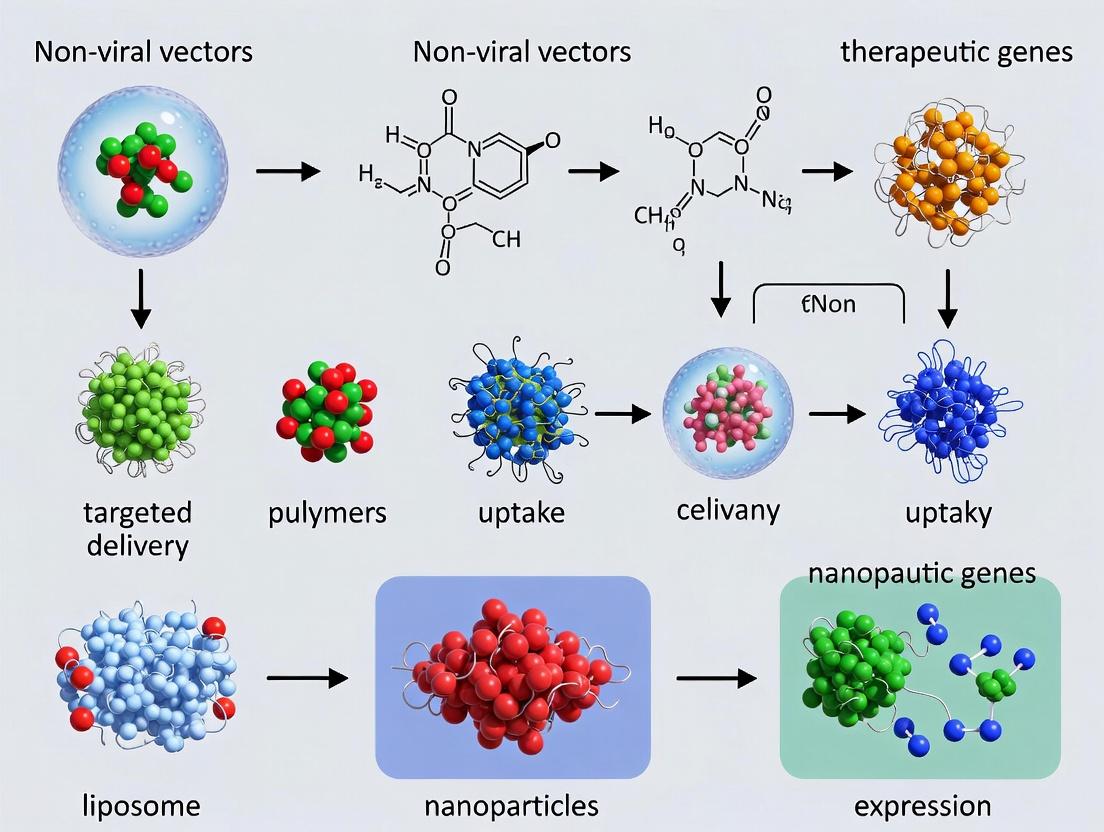
This comprehensive review addresses the current state and future potential of non-viral vectors for gene therapy, tailored for researchers and drug development professionals.
Non-Viral Vectors in Gene Therapy: A 2025 Guide to Types, Advances, and Clinical Applications
Abstract
This comprehensive review addresses the current state and future potential of non-viral vectors for gene therapy, tailored for researchers and drug development professionals. The article explores the foundational principles and categories of non-viral vectors, including lipid nanoparticles, polymeric vectors, and physical delivery methods. It details the latest methodological strategies for vector design, nucleic acid complexation, and targeted delivery in therapeutic applications. Critical troubleshooting aspects such as overcoming biological barriers, enhancing efficiency, and mitigating toxicity are analyzed. Finally, a comparative evaluation validates these systems against viral vectors, assessing safety profiles, scalability, and regulatory pathways. The synthesis provides a roadmap for translating non-viral gene therapies from bench to bedside.
What Are Non-Viral Vectors? Defining the Building Blocks of Safer Gene Delivery
Within the broader thesis on "What are non-viral vectors in gene therapy research," this whitepaper analyzes the core rationale for selecting non-viral over viral gene delivery systems. While viral vectors (e.g., lentivirus, AAV) have dominated clinical translation due to high transfection efficiency, non-viral vectors—encompassing physical methods, lipid/polymer nanoparticles, and inorganic carriers—offer distinct strategic advantages. This guide provides a technical comparison, detailed protocols, and a toolkit for researchers evaluating delivery platforms.
Comparative Rationale: Quantitative Analysis
The primary rationale for non-viral vectors is rooted in safety, payload flexibility, manufacturability, and cost, albeit with trade-offs in transfection efficiency and durability.
Table 1: Core Vector Comparison: Viral vs. Non-Viral
| Parameter | Viral Vectors (e.g., AAV, Lentivirus) | Non-Viral Vectors (e.g., LNPs, Polymers) | Rationale for Non-Viral Preference |
|---|---|---|---|
| Immunogenicity | High; pre-existing & adaptive immunity common. | Low; minimal innate immunogenicity with engineering. | Reduces risk of inflammatory toxicity and vector clearance. |
| Insertional Mutagenesis | Risk present (especially with RV, LV). | Negligible; predominantly episomal delivery. | Enhanced long-term safety profile. |
| Payload Capacity | Limited (~4.7 kb for AAV, ~8 kb for LV). | High (>10 kb); flexible for large genes or multiple cassettes. | Enables delivery of large genomic constructs (e.g., dystrophin). |
| Manufacturing | Complex, cell-based, low yields, high cost. | Scalable, synthetic, high yield, good cGMP compliance. | Facilitates rapid, cost-effective production at clinical scale. |
| Cost per Dose | Very high ($100k - $1M+ for some AAV therapies). | Significantly lower (potentially <$10k). | Improves therapeutic accessibility and sustainability. |
| Transfection Efficiency In Vivo | Consistently high across tissues. | Variable; often lower, requires formulation optimization. | Key Challenge for non-viral systems. |
| Expression Kinetics | Long-term (stable integration or episomal persistence). | Typically transient (days to weeks). | Suitable for non-integrating applications like gene editing or transient protein production. |
| Tropism/ Targeting | Natural tropism; retargeting is complex. | Easily surface-modified for specific cell targeting. | Enables precise tissue- and cell-specific delivery. |
Table 2: Recent Clinical Trial Data (2022-2024) Highlighting Non-Viral Trends
| Therapy Area | Vector Type (Non-Viral) | Phase | Key Efficacy Metric | Safety Note | Ref. |
|---|---|---|---|---|---|
| COVID-19 mRNA Vaccine | LNP-mRNA | Approved | >90% vaccine efficacy | Mild reactogenicity; no severe related events. | (BioNTech/Pfizer, Moderna) |
| Transthyretin Amyloidosis | LNP-siRNA (Patisiran) | Approved | ~80% TTR reduction | Infusion-related reactions managed. | Alnylam |
| Cystic Fibrosis (CFTR) | Polymer-based CFTR mRNA | I/II | FEV1 improvement trend | Well-tolerated, no vector-related SAEs. | Translate Bio (MRT5005) |
| CAR-T Ex Vivo | Electroporation of mRNA | II | >50% response rate | Avoids viral insertional mutagenesis risk. | Multiple trials |
| Solid Tumor (p53) | Lipid-pDNA complex | I/II | Tumor regression in subset | Local injection, mild inflammation. | Introgen (INGN-201) |
Key Experimental Protocols in Non-Viral Vector Research
Protocol: Formulation & Characterization of Lipid Nanoparticles (LNPs) for mRNA Delivery
This protocol details the preparation of LNPs via rapid microfluidic mixing, a standard for current mRNA therapies.
Materials: Ionizable lipid (e.g., DLin-MC3-DMA), DSPC, Cholesterol, PEG-lipid, mRNA in citrate buffer (pH 4.0), ethanol, 1X PBS (pH 7.4), microfluidic mixer (e.g., NanoAssemblr), dialysis cassettes, Zetasizer, Ribogreen assay.
Method:
- Lipid Solution: Dissolve ionizable lipid, DSPC, cholesterol, and PEG-lipid at a molar ratio (e.g., 50:10:38.5:1.5) in ethanol to a total lipid concentration of 12.5 mM.
- Aqueous Solution: Dilute mRNA in 10 mM citrate buffer (pH 4.0) to 0.2 mg/mL.
- Microfluidic Mixing: Using a staggered herringbone micromixer, pump the lipid (ethanol) and aqueous (mRNA) phases at a 3:1 volumetric flow ratio (total flow rate 12 mL/min) into a collection tube. This induces rapid nanoprecipitation.
- Buffer Exchange & Dialysis: Immediately dilute the formed LNP suspension with an equal volume of 1X PBS (pH 7.4). Transfer to a dialysis cassette (MWCO 20 kDa) and dialyze against 1L of PBS for 18 hours at 4°C to remove ethanol and exchange buffer.
- Characterization:
- Size & PDI: Measure by Dynamic Light Scattering (DLS) on a Zetasizer. Target diameter: 70-100 nm, PDI <0.2.
- Encapsulation Efficiency: Use a Ribogreen assay. Mix LNP sample with and without 1% Triton X-100 detergent. Fluorescence measures total and free RNA. EE% = (1 - Free RNA/Total RNA) * 100. Target: >90%.
- Zeta Potential: Measure surface charge in 1mM KCl using a Zetasizer. Target: Slightly negative to neutral (-5 to +5 mV).
Protocol:In VitroTransfection Efficiency & Cytotoxicity Assay (Polymer/DNA Polyplexes)
A standard assay to evaluate non-viral vector performance and safety in cell culture.
Materials: HEK293T or HeLa cells, polymer (e.g., polyethylenimine, PEI), plasmid DNA (e.g., pCMV-GFP), Opti-MEM, serum-free medium, complete growth medium, MTT reagent, flow cytometer, fluorescence plate reader.
Method:
- Polyplex Formation: Dilute plasmid DNA (1 µg) in 50 µL Opti-MEM. Separately, dilute polymer in 50 µL Opti-MEM at varying N/P ratios (molar ratio of polymer Nitrogen to DNA Phosphate). Combine the two solutions, vortex briefly, and incubate at room temperature for 20-30 min.
- Cell Seeding: Seed cells in a 24-well plate at 5 x 10^4 cells/well in complete medium 24 hours prior to transfection.
- Transfection: Aspirate medium, wash with PBS. Add 400 µL fresh serum-free medium to each well. Add 100 µL of prepared polyplexes dropwise. Incubate cells at 37°C for 4 hours, then replace medium with complete growth medium.
- Efficiency Analysis (48h post-transfection):
- Flow Cytometry: Trypsinize, wash, and resuspend cells in PBS+2% FBS. Analyze GFP-positive cells using a flow cytometer.
- Luciferase Assay: If using a luciferase reporter plasmid, lyse cells and measure luminescence, normalizing to total protein (BCA assay).
- Cytotoxicity Analysis (24h post-transfection): Add MTT reagent (0.5 mg/mL final) to the medium, incubate for 3-4 hours. Solubilize formed formazan crystals with DMSO. Measure absorbance at 570 nm. Viability % = (Abssample/Absuntreated) * 100.
Visualizing Key Pathways & Workflows
Diagram 1: LNP-mRNA Delivery Workflow and Key Hurdles (87 chars)
Diagram 2: Vector Integration and Safety Profiles (79 chars)
The Scientist's Toolkit: Key Research Reagent Solutions
Table 3: Essential Materials for Non-Viral Vector Research
| Reagent/Material | Example Product/Catalog | Function & Rationale |
|---|---|---|
| Ionizable Cationic Lipid | DLin-MC3-DMA (MedChemExpress), SM-102 (Avanti) | Core component of LNPs; protonates in endosome to facilitate membrane disruption and mRNA release. |
| PEGylated Lipid | DMG-PEG 2000 (Avanti 880151) | Provides a hydrophilic corona, stabilizes nanoparticles, reduces non-specific binding, and modulates pharmacokinetics. |
| In Vitro Transcription Kit | MEGAscript T7 (ThermoFisher) | High-yield production of research-grade mRNA with modified nucleotides (e.g., N1-methylpseudouridine) to reduce immunogenicity. |
| Polymer Transfection Agent | Linear PEI (Polysciences 23966), JetOPTIMUS (Polyplus) | Standard benchmark for polymeric transfection; forms polyplexes with nucleic acids via electrostatic interaction. |
| Microfluidic Mixer | NanoAssemblr (Precision NanoSystems) | Enables reproducible, scalable formation of uniform nanoparticles via rapid mixing of lipid and aqueous phases. |
| Encapsulation Efficiency Assay | Quant-iT RiboGreen RNA Assay (ThermoFisher R11490) | Accurately quantifies both free and total RNA to calculate the percentage encapsulated within nanoparticles. |
| Endosomal Escape Probe | LysoTracker Red (ThermoFisher L7528) | Fluorescent dye labeling acidic organelles (endosomes/lysosomes); co-localization studies assess escape efficiency. |
| In Vivo Imaging System | IVIS Spectrum (PerkinElmer) | Enables non-invasive, longitudinal tracking of bioluminescent (e.g., luciferase) or fluorescent reporter gene expression in live animals. |
The rationale for pursuing non-viral vectors is compelling for applications where safety, manufacturability, payload size, and cost are paramount. While challenges in delivery efficiency and persistence remain, advances in materials science, formulation, and targeting are rapidly closing the translational gap. The experimental frameworks and tools outlined here provide a foundation for researchers to innovate within this critical domain of gene therapy.
Within the thesis that non-viral vectors represent a transformative paradigm in gene therapy research, their core value proposition is defined by four key advantages over viral counterparts: enhanced safety profiles, reduced manufacturing costs, superior scalability, and unparalleled cargo flexibility. This technical guide deconstructs these advantages, providing researchers and drug development professionals with a detailed, evidence-based analysis of the underlying mechanisms, quantitative benchmarks, and experimental methodologies that validate these claims.
Safety: Mitigating Immunogenicity and Genotoxicity
The primary safety advantage of non-viral vectors is the avoidance of inherent viral biology.
Mechanisms:
- Reduced Immunogenicity: Unlike viral capsids or envelope proteins, synthetic materials (e.g., lipids, polymers) elicit less potent innate and adaptive immune responses. This minimizes acute inflammatory reactions (e.g., cytokine storm) and allows for repeat administration.
- Controlled Genotoxicity: Non-viral systems predominantly remain episomal, drastically reducing the risk of insertional mutagenesis that can lead to oncogenesis, a documented risk with retroviral vectors.
Supporting Data:
Table 1: Comparative Safety Profiles of Vector Classes
| Parameter | Viral Vectors (e.g., AAV, Lentivirus) | Non-Viral Vectors (e.g., LNP, Polyplex) |
|---|---|---|
| Risk of Insertional Mutagenesis | Moderate to High (random integration) | Very Low (primarily episomal) |
| Innate Immune Activation | High (TLR recognition of viral motifs) | Low to Moderate (dependent on material) |
| Pre-existing Neutralizing Antibodies | Common, limits patient pool | Rare |
| Potential for Repeat Dosing | Limited | Feasible |
Experimental Protocol: Assessing Immunogenicity In Vivo
- Animal Model: Administer vector (non-viral vs. viral control) intravenously to C57BL/6 mice (n=8 per group).
- Sample Collection: Collect serum at 2, 6, 24, and 48 hours post-injection.
- Cytokine Analysis: Quantify pro-inflammatory cytokines (IL-6, TNF-α, IFN-γ) using a multiplex Luminex assay or ELISA.
- Immune Cell Profiling: At 72 hours, harvest spleens for flow cytometry analysis of T-cell (CD4+, CD8+) and dendritic cell (CD11c+) activation markers (e.g., CD69, CD86).
- Repeat-Dosing Study: Administer a second dose at day 21 and measure vector-mediated transgene expression and anti-vector antibody titers.
Diagram 1: Safety advantage pathways of non-viral vectors.
Cost & Scalability: Streamlined Manufacturing
Non-viral vectors leverage synthetic chemistry and established industrial processes.
Key Factors:
- Raw Materials: Defined chemical compounds versus complex biological production in cell culture (e.g., HEK293 cells).
- Manufacturing Process: Scalable, single-batch synthesis (e.g., lipid mixing, polymer condensation) versus multi-step, aseptic viral production, purification, and concentration.
- Quality Control: Analytical chemistry methods (HPLC, MS) are often simpler than complex potency and infectivity assays for viruses.
Supporting Data:
Table 2: Comparative Manufacturing Metrics
| Metric | Viral Vector (Lentivirus) | Non-Viral Vector (LNP) |
|---|---|---|
| Production Timeline | 4-8 weeks (cell expansion, transfection, harvest, purification) | 1-2 weeks (chemical synthesis, formulation) |
| Cost per Dose (Relative) | High (1x baseline) | Low (Estimated 0.1x - 0.3x viral cost) |
| Batch Scalability | Challenging (limited by bioreactor scale) | Highly scalable (continuous flow microfluidics) |
| Storage & Stability | Often requires -80°C, sensitive to freeze-thaw | Frequently stable at 2-8°C or lyophilized |
Cargo Flexibility: Beyond the cDNA Limit
Non-viral systems are not constrained by viral packaging limitations.
Capabilities:
- Size: Can deliver constructs ranging from short siRNA (<50 bp) to large CRISPR/Cas9 systems (>10 kb) and even bacterial artificial chromosomes (BACs).
- Form: Can deliver DNA, mRNA, siRNA, ribonucleoproteins (RNPs), and oligonucleotides with similar formulation strategies.
Experimental Protocol: Formulating and Testing Large Cargo Delivery (e.g., CRISPR/Cas9 DNA Plasmid)
- Vector Formulation: Prepare lipid nanoparticles (LNPs) via rapid microfluidic mixing.
- Lipid Stock Solution: Dissolve ionizable lipid (e.g., DLin-MC3-DMA), DSPC, cholesterol, and PEG-lipid in ethanol at molar ratios (e.g., 50:10:38.5:1.5).
- Aqueous Phase: Dilute large plasmid DNA (e.g., 12 kb) in citrate buffer (pH 4.0).
- Mixing: Use a microfluidic device to mix aqueous and ethanol phases at a 3:1 flow rate ratio. Dialyze against PBS (pH 7.4) to remove ethanol and form LNPs.
- Characterization: Measure particle size (Z-average, PDI) via dynamic light scattering, zeta potential via electrophoretic light scattering, and encapsulation efficiency using a dye displacement assay (e.g., RiboGreen).
- Functional Assay: Transfect HEK293 cells stably expressing a GFP reporter gene interrupted by a stop cassette. Measure Cas9/sgRNA-mediated gene editing via restoration of GFP fluorescence by flow cytometry at 72 hours.
Diagram 2: Unified delivery of diverse cargo types by non-viral vectors.
The Scientist's Toolkit: Essential Reagent Solutions
Table 3: Key Research Reagents for Non-Viral Vector Development
| Reagent/Material | Function & Role in Research |
|---|---|
| Ionizable Cationic Lipids (e.g., DLin-MC3-DMA, SM-102) | Critical LNP component for nucleic acid encapsulation and endosomal escape. pH-dependent charge enables efficient release. |
| Poly(ethylenimine) (PEI), Branched or Linear | Gold-standard polymeric transfection reagent. High cationic charge density condenses nucleic acids and mediates "proton-sponge" endosomal escape. |
| Microfluidic Mixers (e.g., NanoAssemblr, staggered herringbone chips) | Enables reproducible, scalable synthesis of nanoparticles (LNPs, polyplexes) with precise control over size and PDI. |
| Fluorescent Dyes for Encapsulation Assay (e.g., RiboGreen, PicoGreen) | Quantify nucleic acid encapsulation efficiency by fluorescence quenching/activation. Essential for formulation optimization. |
| Endosomal Escape Reporters (e.g., Gal8-mRuby, LysoTracker) | Fluorescent probes to visualize and quantify the critical step of endosomal release, a major barrier to efficacy. |
| In Vivo Imaging Reagents (e.g., Luciferin for luciferase mRNA, NIR dyes) | Enable non-invasive tracking of biodistribution and kinetics of gene expression in animal models. |
Non-viral vectors are engineered delivery systems designed to transport therapeutic nucleic acids (DNA, mRNA, siRNA) into target cells without using viral components. They offer advantages over viral vectors, including improved safety profiles, reduced immunogenicity, and greater cargo capacity. Lipid-based, polymer-based, and inorganic nanoparticles represent the three primary categories of non-viral vectors, each with distinct physicochemical properties, mechanisms of action, and experimental considerations. This whitepaper provides a technical overview and comparison of these systems within the context of modern gene therapy research.
Lipid-Based Nanoparticles (LNPs)
Composition and Mechanism
LNPs are typically composed of four key components: (1) ionizable cationic lipids for nucleic acid complexation and endosomal escape, (2) helper lipids (e.g., DOPE, DSPC) to enhance bilayer stability and fusion, (3) cholesterol for structural integrity, and (4) PEG-lipids to reduce aggregation and opsonization. The dominant mechanism involves endocytosis followed by destabilization of the endosomal membrane via the proton-sponge effect or membrane fusion, releasing the nucleic acid payload into the cytoplasm.
Key Experimental Protocol: Microfluidic Mixing for LNP Formation
Aim: Reproducible preparation of siRNA/mRNA-loaded LNPs. Materials: Ethanol solution of lipids (ionizable lipid, DSPC, cholesterol, PEG-lipid), acidic aqueous buffer (pH 4.0) containing nucleic acid, microfluidic mixer (e.g., NanoAssemblr, staggered herringbone micromixer), dialysis cassettes, PBS. Procedure:
- Prepare lipid mixture in ethanol at a known molar ratio (e.g., 50:10:38.5:1.5).
- Dilute nucleic acid in 25 mM sodium acetate buffer, pH 4.0.
- Set total flow rate (TFR) and flow rate ratio (FRR, aqueous:organic) on microfluidic instrument. Typical TFR: 12 mL/min; FRR: 3:1.
- Simultaneously pump the two solutions into the mixing chamber.
- Collect the formed LNP suspension and dialyze against PBS (pH 7.4) for 18 hours at 4°C to remove ethanol and raise pH.
- Filter sterilize (0.22 µm) and characterize for size, PDI, encapsulation efficiency (using Ribogreen assay), and in vitro transfection.
Table 1: Characteristic Properties of Lipid-Based Nanoparticles
| Property | Typical Range/Value | Measurement Technique |
|---|---|---|
| Size (Diameter) | 60 - 100 nm | Dynamic Light Scattering (DLS) |
| Polydispersity Index (PDI) | 0.05 - 0.2 | DLS |
| Zeta Potential | Slightly negative to +10 mV (post-PEGylation) | Electrophoretic Light Scattering |
| Encapsulation Efficiency | >90% for mRNA/siRNA | Fluorescence (Ribogreen) Assay |
| N/P Ratio (Nitrogen/Phosphate) | 3:1 to 6:1 | Calculated from input masses |
| Stability (4°C) | Several weeks to months | DLS monitoring of size increase |
Polymer-Based Nanoparticles
Composition and Mechanism
Polymeric vectors are primarily based on cationic polymers which condense nucleic acids via electrostatic interactions. Common polymers include polyethylenimine (PEI, branched or linear), poly(L-lysine) (PLL), poly(β-amino esters) (PBAEs), and chitosan. They form polyplexes. Their high cationic charge density facilitates cellular uptake but can also contribute to cytotoxicity. Endosomal escape is primarily achieved via the "proton sponge" effect.
Key Experimental Protocol: Polyplex Formation and Optimization
Aim: Formulation and characterization of DNA-polyethylenimine (PEI) polyplexes. Materials: Branched PEI (25 kDa), plasmid DNA (pDNA) in TE buffer, sterile 5% glucose solution, heparin sodium salt solution. Procedure:
- Dilute pDNA and PEI separately in equal volumes of 5% glucose to identical concentrations (e.g., 20 µg/mL).
- Vortex the PEI solution vigorously and add it dropwise to the pDNA solution at the desired N/P ratio (e.g., N/P 5-10). Vortex immediately for 20-30 seconds.
- Incubate the mixture at room temperature for 20-30 minutes to allow polyplex formation.
- Characterization:
- Size/PDI/Zeta Potential: Dilute polyplexes in 1 mM KCl and measure via DLS.
- Gel Retardation Assay: Run polyplexes on 0.8% agarose gel (with heparin displacement) to confirm complete complexation.
- Transfection: Add polyplexes to cells in serum-free medium, incubate 4-6h, replace with complete medium, and assay gene expression after 24-48h.
Table 2: Characteristic Properties of Polymer-Based Nanoparticles (Polyplexes)
| Property | Polyethylenimine (PEI) | Poly(β-amino ester) (PBAE) | Chitosan |
|---|---|---|---|
| Typical Size | 80 - 200 nm | 100 - 250 nm | 150 - 500 nm |
| Zeta Potential | +20 to +40 mV | +15 to +30 mV | +10 to +30 mV |
| N/P Ratio | 5:1 to 10:1 | 20:1 to 50:1 (w/w) | 2:1 to 10:1 (N/P) |
| Transfection Efficiency | High (in vitro) | Very High (tunable) | Moderate |
| Cytotoxicity | High (esp. high MW) | Low to Moderate | Low |
| Key Advantage | Robust, efficient | Biodegradable, tunable | Biocompatible, mucoadhesive |
Inorganic Nanoparticles
Composition and Mechanism
This class includes gold nanoparticles (AuNPs), mesoporous silica nanoparticles (MSNs), magnetic nanoparticles (e.g., Fe₃O₄), and quantum dots. They offer precise control over size, shape, and surface functionalization. Gene delivery is often facilitated by surface modification with cationic coatings (e.g., polyamines, PEI) for nucleic acid binding. Unique properties enable auxiliary functions: magnetic targeting (Fe₃O₄), photothermal release (AuNPs), or imaging (quantum dots).
Key Experimental Protocol: PEI-Coated Gold Nanoparticle (AuNP) Synthesis and Gene Binding
Aim: Synthesis of cationic AuNPs for plasmid DNA delivery. Materials: Hydrogen tetrachloroaurate(III) trihydrate (HAuCl₄·3H₂O), trisodium citrate, branched PEI (25 kDa, 0.5 mg/mL in water), plasmid DNA. Procedure (Citrate Reduction & PEI Coating):
- AuNP Synthesis: Boil 100 mL of 1 mM HAuCl₄ solution under reflux. Rapidly add 10 mL of 38.8 mM sodium citrate with vigorous stirring. Continue heating and stirring for 15 min until deep red. Cool to room temperature.
- PEI Coating: Add PEI solution to the AuNP colloid under stirring (final PEI concentration ~0.1 mg/mL). Stir for 2 hours. Purify via centrifugation (12,000 rpm, 20 min) and resuspend in water. This yields PEI-AuNPs.
- Polyplex Formation: Mix PEI-AuNPs with pDNA at various w/w ratios (e.g., 5:1 to 20:1) in water for 30 min.
- Characterization: Use UV-Vis (surface plasmon resonance ~520 nm), TEM for core size, DLS for hydrodynamic size, and zeta potential analysis.
Table 3: Characteristic Properties of Inorganic Nanoparticles for Gene Delivery
| Property | Gold NPs (PEI-coated) | Mesoporous Silica NPs | Magnetic NPs (Fe₃O₄) |
|---|---|---|---|
| Core Size | 10 - 50 nm | 50 - 200 nm | 5 - 20 nm |
| Hydrodynamic Size | 40 - 120 nm | 80 - 250 nm | 50 - 150 nm |
| Surface Charge | +20 to +40 mV | Negative (unmodified) / Positive (aminated) | Variable with coating |
| Loading Method | Surface adsorption/ complexation | Pore loading & surface attachment | Surface complexation |
| Unique Function | Photothermal therapy, imaging | High cargo load, controlled release | Magnetic targeting & imaging |
| Key Challenge | Potential long-term toxicity | Biodegradation kinetics | Aggregation, coating stability |
Comparative Pathways for Cellular Uptake and Intracellular Trafficking
Diagram Title: Non-Viral Nanoparticle Uptake and Intracellular Trafficking Pathways
The Scientist's Toolkit: Key Research Reagent Solutions
Table 4: Essential Materials for Non-Viral Vector Research
| Reagent/Material | Supplier Examples | Function in Research |
|---|---|---|
| Ionizable Cationic Lipid (e.g., DLin-MC3-DMA, SM-102) | Avanti Polar Lipids, MedKoo | Core component of LNPs for nucleic acid encapsulation and endosomal escape. |
| DOPE (1,2-dioleoyl-sn-glycero-3-phosphoethanolamine) | Avanti Polar Lipids, Sigma-Aldrich | Helper lipid promoting membrane fusion and endosomal disruption in LNPs. |
| Branched Polyethylenimine (25 kDa) | Polysciences, Sigma-Aldrich | Gold-standard cationic polymer for forming polyplexes; high transfection efficiency. |
| Poly(β-amino ester) Library | Akina, Inc. (PolySci), Sigma-Aldrich | Biodegradable, tunable polymers enabling screening for cell-type specific transfection. |
| Citrate-stabilized Gold Nanospheres (10-50 nm) | nanoComposix, Sigma-Aldrich | Ready-made inorganic cores for surface functionalization and gene delivery studies. |
| Ribogreen Quantitation Assay Kit | Thermo Fisher Scientific | Fluorescent assay for quantifying encapsulation efficiency of RNA in nanoparticles. |
| Heparin Sodium Salt | Sigma-Aldrich | Used in gel shift assays to displace nucleic acids from complexes to assess loading. |
| Microfluidic Mixer (NanoAssemblr) | Precision NanoSystems | Enables reproducible, scalable manufacturing of LNPs with narrow size distribution. |
| Lipofectamine 3000 | Thermo Fisher Scientific | Commercial lipid-based transfection reagent used as a positive control in vitro. |
Within the paradigm of non-viral gene therapy, physical methods represent a crucial category of delivery vectors. Unlike chemical vectors (e.g., liposomes, polymers), these techniques utilize transient, physical forces to disrupt the plasma membrane, creating temporary pores that facilitate the intracellular transfer of nucleic acids. This guide provides an in-depth technical analysis of three principal physical methods: electroporation, sonoporation, and gene gun technologies, contextualizing their mechanisms, protocols, and applications for research and therapeutic development.
Core Mechanisms and Comparative Analysis
Electroporation
Electroporation applies short, high-voltage electrical pulses to cells, inducing a transmembrane potential that causes the formation of hydrophilic pores. The applied electric field also drives the electrophoretic migration of nucleic acids toward and into the cell.
Sonoporation
Sonoporation utilizes ultrasound, typically in the low-frequency range (20 kHz – 1 MHz), to induce cavitation—the formation, oscillation, and collapse of microbubbles. The mechanical shear stress from these events disrupts the cell membrane and enhances endocytosis, facilitating gene transfer.
Gene Gun (Biolistics)
The gene gun, or biolistic particle delivery system, propels micron-sized (0.5-5 µm) gold or tungsten particles coated with DNA at high velocity into target cells or tissues using pressurized inert gas (e.g., helium). This method is predominantly used for in vivo and ex vivo transfection of difficult-to-transfect cells.
Table 1: Comparative Quantitative Data of Physical Delivery Methods
| Parameter | Electroporation | Sonoporation | Gene Gun |
|---|---|---|---|
| Typical Efficiency (In Vitro) | 50-80% | 10-50% | 1-20% (cell-dependent) |
| Primary Driving Force | Electrical field (50-1000 V/cm) | Acoustic cavitation (0.5-2.0 MPa) | Kinetic energy (He pressure: 100-600 psi) |
| Particle/Carrier | None (naked DNA) | Often used with microbubble contrast agents | Gold/Tungsten microcarriers (0.5-5 µm) |
| Nucleic Acid Capacity | High (up to 100s of kb) | Moderate | Limited by particle surface area |
| Cell Viability Post-Procedure | Moderate (40-80%) | High (>80%) | Low to Moderate (10-70%) |
| Key Applications | Ex vivo cell therapy (e.g., CAR-T), in vivo muscle, tumor | In vivo solid tumors, cardiovascular tissue, skin | Plant cells, in vivo skin, mucosal tissue, primary neurons |
| Throughput Potential | High (bulk cell processing) | Moderate to High | Low (localized delivery) |
| Clinical Stage | Multiple Phase II/III trials (e.g., for cancer vaccines) | Early-phase clinical trials | Approved for veterinary DNA vaccines (e.g., WNV in horses) |
Detailed Experimental Protocols
Protocol:Ex VivoElectroporation of Primary T-Cells for CAR-T Therapy
This protocol outlines the non-viral introduction of a Chimeric Antigen Receptor (CAR) plasmid into human primary T-cells.
Materials & Reagents:
- Primary human T-cells, isolated and activated.
- CAR-encoding plasmid DNA (endotoxin-free, in TE buffer or water).
- Electroporation buffer (commercial kits like Lonza P3 or BTX Cytopulse).
- Electroporator (e.g., Lonza 4D-Nucleofector, BTX ECM 830).
- Pre-warmed complete T-cell media (RPMI-1640 + 10% FBS + IL-2).
Procedure:
- Cell Preparation: Harvest activated T-cells and centrifuge. Count and resuspend in electroporation buffer at a density of 1-10 x 10^7 cells/mL.
- DNA-Cell Mix: Combine 100 µL cell suspension with 5-20 µg plasmid DNA in an electroporation cuvette (with 2-4 mm gap).
- Electroporation: Insert cuvette into the electroporator. Apply the pre-optimized electrical pulse sequence (e.g., a single square-wave pulse: 500 V, 5 ms for T-cells).
- Post-Pulse Recovery: Immediately add 500 µL of pre-warmed complete media to the cuvette. Transfer the cell suspension to a culture plate.
- Culture & Analysis: Culture cells at 37°C, 5% CO2. Assess transfection efficiency via flow cytometry (for reporter or surface CAR expression) at 24-48 hours. Evaluate cell viability by Trypan Blue exclusion.
Protocol:In VitroSonoporation Using Microbubbles
This protocol describes ultrasound-mediated plasmid DNA delivery to adherent cancer cell lines.
Materials & Reagents:
- Adherent cells (e.g., HeLa, HepG2) seeded on a plate.
- Plasmid DNA encoding a reporter gene (e.g., eGFP).
- Microbubble solution (commercial phospholipid-shelled microbubbles like SonoVue or Definity).
- Ultrasound system with a calibrated transducer (1 MHz frequency typical).
- Coupling gel (ultrasound transmission gel).
- Serum-free media.
Procedure:
- Setup: Place the cell culture plate (with cells at 70-80% confluency) on the transducer stage. Apply coupling gel between the plate bottom and the transducer.
- Treatment Mixture: Replace media with serum-free media containing plasmid DNA (10-40 µg/mL) and microbubbles (10^7 – 10^8 bubbles/mL).
- Ultrasound Application: Apply pulsed ultrasound to the target area. Typical parameters: 1 MHz frequency, 1.0 MPa peak negative pressure, 50% duty cycle, 60-second total exposure time.
- Post-Sonication: Remove the treatment mixture, wash cells with PBS, and add complete growth media.
- Analysis: Incubate for 24-48 hours. Quantify transfection efficiency via fluorescence microscopy or flow cytometry for the reporter protein. Assess membrane integrity/viability using a lactate dehydrogenase (LDH) release assay.
Protocol: Gene Gun Transfection of Mouse SkinIn Vivo
This protocol details the delivery of a DNA vaccine to the epidermal layer of a mouse.
Materials & Reagents:
- Gold microcarriers (0.6 or 1.0 µm diameter).
- Plasmid DNA (e.g., encoding an antigen).
- Spermidine (0.05 M) and CaCl2 (1.0 M) solutions.
- Helium-driven gene gun system (e.g., Bio-Rad Helios).
- Tubing prep station, nitrogen dryer.
- Target animal (anesthetized).
Procedure:
- Microcarrier Preparation: Coat gold particles with DNA by precipitating the DNA onto the particles using spermidine and CaCl2. Vortex and let settle. Wash with ethanol.
- Tubing Coating: Resuspend DNA-coated gold in PVP/ethanol solution. Use the tubing prep station to evenly coat the inside of Tefzel tubing with the microcarrier suspension. Dry with nitrogen gas.
- Cartridge Preparation: Cut the coated tubing into cartridges for the gene gun.
- Delivery: Anesthetize the mouse and shave the target abdominal skin area. Place the gene gun nozzle perpendicularly against the skin. Fire the gun using a helium pulse (typically 200-400 psi). The helium shock wave accelerates the particles into the epidermis.
- Analysis: Sacrifice the animal at the desired time point. Excise the skin, process for histological analysis (H&E staining), or use luciferase assay if a reporter gene was delivered to confirm protein expression.
Signaling Pathways & Workflow Visualizations
Electroporation Mechanism & Outcome Pathway
Sonoporation Mechanism via Acoustic Cavitation
Workflow Comparison of Three Physical Methods
The Scientist's Toolkit: Key Research Reagent Solutions
Table 2: Essential Materials for Physical Gene Delivery Experiments
| Item | Function/Application | Example Products/Brands |
|---|---|---|
| Electroporation Buffer | Optimized low-conductivity solution to maintain cell viability during pulse and enhance DNA uptake. | Lonza Nucleofector Solution, BTX Cytopure Buffer, Bio-Rad Gene Pulser Electroporation Buffer. |
| Programmable Electroporator | Device generating controlled electrical pulses with customizable voltage, pulse length, and number. | Lonza 4D-Nucleofector X Unit, BTX ECM 830, Bio-Rad Gene Pulser Xcell. |
| Microbubble Contrast Agent | Ultrasound-responsive particles that nucleate cavitation, lowering the energy threshold for sonoporation. | SonoVue (Bracco), Definity (Lantheus), custom lipid-shelled microbubbles. |
| Calibrated Ultrasound Transducer | Probe delivering precise acoustic energy to in vitro or in vivo targets. Required for reproducible sonoporation. | VisualSonics (FujiFilm) transducers, Sonic Concepts probes. |
| Gold Microcarriers | Biologically inert, high-density particles used as DNA carriers in biolistic delivery. | 0.6 µm, 1.0 µm, or 1.6 µm gold microparticles (Bio-Rad). |
| Tubing Prep Station & Helium Gun | System for coating tubing with DNA-microcarriers and delivering them via a pressurized helium pulse. | Bio-Rad Helios Gene Gun System. |
| Reporter Plasmid Kits | Quality-controlled plasmids (e.g., encoding GFP, Luciferase) for standardizing and optimizing transfection protocols. | pMAX-GFP (Lonza), pCMV-Luc2 (Promega). |
| Cell Viability Assay Kits | For quantifying cytotoxicity post-transfection (critical for method optimization). | MTT/WST-1 assays, LDH Cytotoxicity Assay Kits (Pierce), Annexin V/PI kits for apoptosis. |
Non-viral vectors are engineered, synthetic systems designed to deliver therapeutic nucleic acids into target cells without utilizing viral components. Within the broader thesis on their role in gene therapy research, they are defined by their key advantages: improved safety profiles (reduced immunogenicity and insertional mutagenesis), greater cargo capacity, and ease of manufacturing scalability. The central challenge they address is the efficient, targeted, and timely transport of nucleic acids across extracellular and intracellular barriers to achieve functional protein expression. This guide details the complete technical workflow, from cargo design to functional readout.
Nucleic Acid Cargo Design and Preparation
The therapeutic cargo is the core component, dictating the mechanism and duration of action.
| Cargo Type | Typical Size (kb/bp) | Primary Therapeutic Goal | Expected Expression Duration |
|---|---|---|---|
| Plasmid DNA (pDNA) | 3-10 kb | Transgene expression | Transient (days-weeks) |
| minicircle DNA | ~3 kb | Transgene expression | Transient, but more prolonged than pDNA |
| mRNA | 1-5 kb | Transient protein expression | Short-term (hours-days) |
| siRNA | 21-23 bp | Gene knockdown via RNAi | Transient (several days) |
| CRISPR-Cas9 RNP | N/A (protein/nucleotide complex) | Gene editing | Permanent (upon genome cleavage) |
Experimental Protocol: pDNA Purification for Transfection
- Method: Endotoxin-free Maxi or Giga Prep using anion-exchange chromatography columns.
- Steps: 1) Harvest bacterial culture via centrifugation. 2) Alkaline lysis (NaOH/SDS) to release pDNA. 3) Neutralization and clarification. 4) Load supernatant onto equilibrated column. 5) Wash with medium-salt buffer. 6) Elute pDNA with high-salt buffer. 7) Precipitate with isopropanol, wash with 70% ethanol. 8) Resuspend in sterile, endotoxin-free TE buffer or water.
- Quality Control: Confirm purity via A260/A280 ratio (~1.8-2.0) and agarose gel electrophoresis. Quantify concentration via UV spectrophotometry. Verify supercoiled content (>90%) by HPLC.
Vector Formulation and Complexation
This step involves condensing and protecting the nucleic acid cargo with a non-viral vector.
Research Reagent Solutions Toolkit
| Reagent/Category | Example Brands/Names | Primary Function |
|---|---|---|
| Cationic Lipids | DOTAP, DLin-MC3-DMA (MC3), ionizable lipids (SM-102, ALC-0315) | Neutralize negative charge of nucleic acids, promote membrane fusion/endosomal escape. |
| Polymeric Vectors | Polyethylenimine (PEI), poly-L-lysine (PLL) | Condense DNA via charge interaction, often via "proton-sponge" effect for endosomal escape. |
| Lipid Nanoparticle (LNP) Components | PEG-lipids, cholesterol, phospholipids (DOPE) | Stabilize nanoparticles, modulate pharmacokinetics, enhance structural integrity. |
| Electroporation/Nucleofection Systems | Neon (Thermo Fisher), Nucleofector (Lonza) | Apply electrical pulses to create transient pores in cell membrane for direct cargo entry. |
| Physical Delivery Devices | Gene Gun, microinjection apparatus | Use physical force (pressure, microscopic needle) to bypass membrane barriers. |
Experimental Protocol: Formulating Lipid Nanoparticles (LNPs) via Microfluidics
- Method: Rapid mixing of aqueous and lipid phases using a microfluidic mixer (e.g., NanoAssemblr, staggered herringbone mixer).
- Steps: 1) Prepare aqueous phase: nucleic acid (e.g., mRNA) in citrate buffer (pH ~4.0). 2) Prepare lipid phase: ionizable lipid, phospholipid, cholesterol, and PEG-lipid dissolved in ethanol at precise molar ratios. 3) Set total flow rate (TRR) and flow rate ratio (FRR, typically aqueous:lipid = 3:1). 4) Rapidly mix streams in microfluidic chamber. 5) Collect nanoparticles in a phosphate buffer to raise pH and stabilize particles. 6) Dialyze or use tangential flow filtration (TFF) to remove ethanol and exchange buffer. 7) Sterile filter (0.22 µm).
- Quality Control: Measure particle size and PDI via dynamic light scattering (DLS). Assess zeta potential via electrophoretic light scattering. Determine encapsulation efficiency using dye-binding assays (e.g., RiboGreen for RNA).
Cellular Uptake and Intracellular Trafficking
The journey from extracellular delivery to cytoplasmic/nuclear release involves multiple barriers.
Title: Intracellular Trafficking of LNP-mRNA to Cytoplasm
Experimental Protocol: Visualizing Uptake and Trafficking via Confocal Microscopy
- Method: Live-cell imaging of fluorescently labeled cargo (e.g., Cy5-mRNA) and organelle markers.
- Steps: 1) Seed cells in glass-bottom imaging dishes. 2) Treat cells with fluorescent LNP complexes. 3) Stain endosomal/lysosomal compartments (e.g., LysoTracker). 4) Use confocal microscope with environmental control (37°C, 5% CO2) for time-lapse imaging. 5) Acquire Z-stacks at regular intervals (e.g., every 10 min for 2-6 hours). 6) Analyze colocalization coefficients (e.g., Pearson's coefficient) using software like ImageJ/Fiji.
Nuclear Entry and Gene Expression
For DNA cargos, nuclear entry is the major rate-limiting step.
Experimental Protocol: Assessing Nuclear Import of Plasmid DNA
- Method: Fluorescence in situ hybridization (FISH) combined with immunofluorescence (IF).
- Steps: 1) Transfert cells with labeled pDNA (e.g., labeled with fluorescent dNTPs via nick translation). 2) At designated time points (6, 24, 48h), fix cells with paraformaldehyde. 3) Permeabilize with Triton X-100. 4) Perform FISH using complementary probes to pDNA sequence. 5) Counterstain nucleus with DAPI and nuclear pore complexes with an anti-NPC antibody. 6) Image via super-resolution microscopy. 7) Quantify intranuclear vs. perinuclear fluorescence intensity.
Functional Readouts and Data Analysis
Success is measured by functional protein expression or genetic modulation.
| Readout Type | Assay | Detection Method | Quantitative Output |
|---|---|---|---|
| Transgene Expression | Luciferase reporter assay | Luminescence (plate reader) | Relative Light Units (RLU) / µg protein |
| Transgene Expression | Flow cytometry (GFP) | Fluorescence detection | % Positive cells, Mean Fluorescence Intensity (MFI) |
| Gene Knockdown | qRT-PCR | Quantitative PCR | % mRNA remaining vs. control (ΔΔCt method) |
| Gene Editing | T7 Endonuclease I or ICE assay | Gel electrophoresis / NGS | Indel frequency (%) |
| Therapeutic Effect | ELISA or Western Blot | Colorimetric / Chemiluminescence | Protein concentration or band density |
Experimental Protocol: Dual-Luciferase Reporter Assay for Transfection Efficiency
- Method: Co-transfection of experimental vector and control reporter, followed by sequential luminescence measurement.
- Steps: 1) Co-transfect cells with experimental plasmid (e.g., expressing Firefly luciferase) and control plasmid (e.g., expressing Renilla luciferase under a constitutive promoter). 2) Incubate for 24-48 hours. 3) Lyse cells with passive lysis buffer. 4) In a luminometer plate, add luciferase assay reagent II to measure Firefly luminescence (experimental signal). 5) Quench reaction and activate Renilla luciferase by adding Stop & Glo reagent. 6) Measure Renilla luminescence (transfection control). 7) Calculate normalized ratio: Firefly RLU / Renilla RLU.
The non-viral gene delivery workflow is a multi-stage, interdependent process where optimization at each barrier—from rational cargo design and vector formulation to overcoming intracellular trafficking hurdles—is critical for achieving high levels of functional cellular expression. Continued research into novel materials and a deeper mechanistic understanding of vector-cell interactions are driving the clinical translation of non-viral gene therapies, solidifying their role as versatile and safe tools within the gene therapy arsenal.
Designing and Deploying Non-Viral Systems: From Bench to Preclinical Models
Non-viral vectors, primarily lipid- and polymer-based systems, have emerged as critical alternatives to viral vectors in gene therapy due to their improved safety profiles, reduced immunogenicity, and greater payload capacity. Lipid Nanoparticles (LNPs) and polyplexes represent two dominant classes, each with distinct formulation challenges and optimization pathways. This guide details advanced strategies to optimize their physicochemical properties, transfection efficiency, and in vivo performance.
Core Optimization Parameters and Quantitative Benchmarks
Table 1: Key Optimization Parameters for LNPs vs. Polyplexes
| Parameter | Lipid Nanoparticles (LNPs) | Polyplexes | Ideal Target Range | Primary Impact |
|---|---|---|---|---|
| Particle Size (nm) | 70-120 nm | 50-200 nm | 80-150 nm (systemic); >200 nm (local) | Biodistribution, Cellular Uptake |
| Polydispersity Index (PDI) | <0.15 | <0.25 | ≤0.2 | Batch Uniformity, Reproducibility |
| Zeta Potential (mV) | Slightly negative to neutral (+2 to -10) | Highly positive (+15 to +40) | Slightly positive for systemic (0 to +10) | Stability, Cellular Interaction |
| N:P Ratio | Not Applicable (ionizable lipid:pKa ~6.5) | Critical (Nitrogen:Phosphate) | 5:1 to 20:1 (polymer-dependent) | Complexation, Charge, Toxicity |
| Encapsulation Efficiency (%) | >90% (standard for mRNA) | 70-90% (highly variable) | >85% | Therapeutic Payload, Efficacy |
| pKa (Ionizable Lipid) | 6.0-6.8 | Not Applicable | ~6.5 | Endosomal Escape |
Table 2: 2023-2024 Performance Benchmarks from Recent Studies
| Vector Type | Payload | Model | Transfection Efficiency (Relative) | Key Formulation Advance | Reference (Year) |
|---|---|---|---|---|---|
| LNP (SM-102) | mRNA (Luciferase) | HeLa cells | 100% (baseline) | Optimized PEG-lipid (1.5 mol%) | Moderna, 2023 |
| LNP (DLin-MC3-DMA) | siRNA | Murine Liver | 95% gene silencing | Structural lipid tuning | Nature Comm., 2023 |
| Polyplex (PBAE) | pDNA (GFP) | Primary Neurons | ~45% GFP+ cells | Polymer end-cap modification | Sci. Adv., 2024 |
| Polyplex (PEI-PEG) | mRNA | Lung Epithelium | ~60% protein expression | pH-responsive cleavage linker | J. Cont. Rel., 2024 |
Detailed Experimental Protocols
Protocol 3.1: Microfluidic Mixing for Reproducible LNP Formulation
Objective: Prepare monodisperse, mRNA-encapsulating LNPs using a staggered herringbone micromixer (SHM). Reagents: Ionizable lipid (e.g., DLin-MC3-DMA), DSPC, Cholesterol, PEG-lipid (DMG-PEG 2000), mRNA in citrate buffer (pH 4.0), Ethanol, 1x PBS (pH 7.4). Procedure:
- Lipid Phase: Dissolve lipids in ethanol at molar ratio 50:10:38.5:1.5 (ionizable lipid:DSPC:Cholesterol:PEG-lipid) to total 10 mg/mL lipid concentration.
- Aqueous Phase: Dilute mRNA in 50 mM citrate buffer (pH 4.0) to 0.1 mg/mL.
- Mixing: Using a syringe pump, introduce Lipid and Aqueous phases into a commercial SHM chip at a 3:1 flow rate ratio (total flow rate 12 mL/min). Maintain temperature at 25°C.
- Dialyze: Collect effluent and dialyze against 1x PBS (pH 7.4) for 4 hours at 4°C using a 20kD MWCO membrane to remove ethanol and buffer exchange.
- Concentrate & Sterilize: Concentrate using centrifugal filters (100kD MWCO). Sterilize by 0.22 µm filtration. Store at 4°C.
Protocol 3.2: Polyplex Self-Assembly and Stability Assessment
Objective: Formulate stable polyplexes and assess stability in physiological conditions. Reagents: Cationic polymer (e.g., branched PEI, 25kDa), Plasmid DNA or mRNA, HEPES Buffered Saline (HBS, 20 mM HEPES, 150 mM NaCl, pH 7.4), SYBR Gold dye. Procedure:
- Polyplex Formation: Dilute polymer and nucleic acid separately in HBS (pH 7.4). Rapidly mix the polymer solution into the nucleic acid solution under vortexing to achieve desired N:P ratio. Incubate 30 min at RT.
- Size & Zeta Measurement: Dilute polyplexes 1:20 in HBS. Perform triplicate DLS and zeta potential measurements.
- Heparin Displacement Assay: Incubate polyplexes (containing 1 µg nucleic acid) with increasing heparin concentrations (0-10 IU) for 30 min. Add SYBR Gold (1:10000), incubate 10 min, measure fluorescence (Ex/Em: 495/537 nm). Calculate % nucleic acid released.
- Serum Stability: Incubate polyplexes with 50% FBS at 37°C. Withdraw aliquots at 0, 1, 2, 4 h. Run on 1% agarose gel (ethidium bromide staining) to visualize nucleic acid degradation/complex integrity.
Diagrams of Critical Pathways and Workflows
Title: LNP Formulation via Microfluidic Mixing
Title: LNP Endosomal Escape Pathway
The Scientist's Toolkit: Research Reagent Solutions
Table 3: Essential Materials for LNP & Polyplex Optimization
| Item / Reagent | Function & Role in Optimization | Example Vendor/Catalog |
|---|---|---|
| Ionizable Lipids | Core structural component of LNPs; determines pKa, fusogenicity, and endosomal escape efficiency. | Avanti Polar Lipids (e.g., DLin-MC3-DMA, SM-102) |
| PEG-lipids (PEGylated Lipids) | Modulates surface hydrophilicity, particle stability, pharmacokinetics, and reduces protein corona formation. | NOF America (e.g., DMG-PEG2000, DSG-PEG2000) |
| Cationic Polymers | Forms electrostatic complexes with nucleic acids (polyplexes); impacts complex stability, charge, and toxicity. | Sigma-Aldrich (e.g., branched PEI, linear PEI), Polysciences |
| Microfluidic Mixers | Enables reproducible, rapid mixing for forming monodisperse nanoparticles with high encapsulation efficiency. | Dolomite Microfluidics (NanoAssemblr chips), Precision NanoSystems |
| Heparin Sodium Salt | Competitive polyanion used in displacement assays to assess polyplex/nucleic acid binding strength and stability. | Sigma-Aldrich (H3149) |
| SYBR Gold Nucleic Acid Gel Stain | Ultra-sensitive fluorescent dye for quantifying nucleic acid encapsulation/release in complexes. | Thermo Fisher Scientific (S11494) |
| Dynamic Light Scattering (DLS) System | Measures particle size (hydrodynamic diameter), size distribution (PDI), and zeta potential. | Malvern Panalytical (Zetasizer series) |
Within the broader thesis on non-viral vectors in gene therapy research, the selection and optimization of the genetic cargo itself are as critical as the delivery vehicle. Non-viral strategies—including lipid nanoparticles (LNPs), polymeric nanoparticles, and electroporation—must be tailored to the distinct physicochemical and biological characteristics of each cargo type to ensure efficient delivery, stability, and intended therapeutic function. This guide provides a technical overview of key considerations for four major cargo classes.
Plasmid DNA (pDNA)
pDNA is a circular, double-stranded DNA vector encoding a transgene expression cassette, including promoter, gene of interest, and polyadenylation signal.
- Key Considerations: Large size (typically 3-10 kbp), anionic charge, nuclear entry requirement for transcription.
- Primary Delivery Challenge: Requires nuclear localization for transcription, making it inefficient in non-dividing cells.
- Optimization Strategies: Use of minimized "minicircle" DNA lacking bacterial backbone sequences to enhance persistence and expression; incorporation of nuclear localization signals (NLS) in the plasmid or carrier.
Messenger RNA (mRNA)
mRNA is a linear, single-stranded RNA molecule that directs cytoplasmic translation of a target protein.
- Key Considerations: Inherent instability, susceptibility to RNase degradation, immunostimulatory potential.
- Primary Delivery Challenge: Cytoplasmic delivery while avoiding innate immune sensing (e.g., via TLRs, RIG-I).
- Optimization Strategies: Nucleoside modification (e.g., pseudouridine, 5-methylcytidine) to reduce immunogenicity and enhance stability; optimized 5' cap (e.g., CleanCap) and poly(A) tail for translation efficiency; sequence and codon optimization.
Small Interfering RNA (siRNA)
siRNA are short (19-23 bp), double-stranded RNA molecules that induce sequence-specific mRNA degradation via the RNA-induced silencing complex (RISC).
- Key Considerations: Small size, transient effect, potential for off-target effects.
- Primary Delivery Challenge: Cytosolic delivery for RISC loading; avoidance of renal clearance and endosomal entrapment.
- Optimization Strategies: Extensive chemical modifications (2'-OMe, 2'-F, phosphorothioate backbone) to enhance nuclease stability, reduce immunogenicity, and improve pharmacokinetics; covalent conjugation (e.g., GalNAc for hepatocyte targeting) enables receptor-mediated uptake.
CRISPR-Cas Components
This includes Cas9 nuclease mRNA or protein and single-guide RNA (sgRNA) for gene editing, or base editor/prime editor ribonucleoproteins (RNPs).
- Key Considerations: Large, multicomponent cargo (RNPs ~160 kDa), need for co-delivery of guide and nuclease, transient presence required to reduce off-target editing.
- Primary Delivery Challenge: Efficient cytosolic delivery of large, often negatively charged RNPs; rapid clearance before achieving editing.
- Optimization Strategies: Pre-complexed RNP delivery is favored for rapid action and reduced off-target persistence; engineering of Cas protein with cationic tags or NLSs; use of self-assembling, charge-altering degradable polymers.
Quantitative Cargo Comparison
Diagram Title: Intracellular Pathways for Different Genetic Cargos
Experimental Protocol: Formulation and In Vitro Testing of LNP-cargo Complexes
Aim: To formulate and test lipid nanoparticles (LNPs) encapsulating different genetic cargos and evaluate their transfection efficiency/activity in vitro.
Materials:
- Cargo: pDNA, mRNA, siRNA, or CRISPR-Cas9 RNP.
- Lipids: Ionizable cationic lipid (e.g., DLin-MC3-DMA), DSPC, cholesterol, PEG-lipid.
- Buffers: Ethanol, citrate buffer (pH 4.0), 1x PBS.
- Microfluidic device (e.g., NanoAssemblr) or turbulent mixing apparatus.
- Dialysis membranes or tangential flow filtration system.
- Cell culture: HeLa or HEK293 cells.
- Assay reagents: Luciferase assay kit (for pDNA/mRNA), qPCR reagents for target knockdown (siRNA), T7E1 or NGS assay for editing (CRISPR).
Methodology:
- Lipid Stock Preparation: Dissolve ionizable lipid, DSPC, cholesterol, and PEG-lipid in ethanol at a molar ratio (e.g., 50:10:38.5:1.5). Prepare aqueous phase: cargo diluted in citrate buffer (pH 4.0).
- Nanoparticle Formation: Using a microfluidic device, rapidly mix the ethanol phase and aqueous phase at a 1:3 volumetric ratio (total flow rate 12 mL/min). For RNP delivery, RNP is included in the aqueous phase.
- Buffer Exchange & Purification: Immediately dilute the formed LNP mixture in 1x PBS (pH 7.4). Dialyze against PBS for 2 hours or use tangential flow filtration to remove ethanol and exchange buffer.
- Characterization: Measure particle size and zeta potential using dynamic light scattering (DLS). Quantify encapsulation efficiency using dye exclusion assays (e.g., RiboGreen for RNA, PicoGreen for DNA).
- In Vitro Transfection: Seed cells in 24-well plates. At 70-80% confluency, treat with LNP-cargo complexes. For pDNA/mRNA, measure luciferase expression at 24-48h. For siRNA, extract RNA at 48h for qPCR. For CRISPR RNP, harvest genomic DNA at 72h for analysis of indel frequency by T7E1 assay or next-generation sequencing.
The Scientist's Toolkit: Key Reagent Solutions
| Item | Function in Non-Viral Delivery |
|---|---|
| Ionizable Cationic Lipid (e.g., DLin-MC3-DMA) | Key LNP component; protonates in acidic endosome, interacts with anionic cargo and endosomal membrane to enable escape. |
| PEGylated Lipid (e.g., DMG-PEG 2000) | Stabilizes LNP during formation, modulates pharmacokinetics and cellular uptake by reducing non-specific interactions. |
| Nucleoside-Modified mRNA | Enhances mRNA stability and translational capacity while reducing innate immune recognition. |
| GalNAc-conjugated siRNA | Enables targeted delivery to hepatocytes via asialoglycoprotein receptor-mediated endocytosis. |
| Pre-complexed CRISPR RNP | The active editing complex; direct delivery reduces off-target effects and accelerates kinetics compared to nucleic acid delivery. |
| Microfluidic Mixer (NanoAssemblr) | Enables reproducible, scalable manufacturing of LNPs via rapid, controlled mixing of lipid and aqueous phases. |
| Endosomal Escape Dye (e.g., LysoTracker) | Fluorescent probe to assess the efficiency of cargo release from endosomes into the cytoplasm. |
Within the framework of non-viral vector development for gene therapy, achieving cell-specific targeting is a paramount challenge. Non-viral vectors, such as lipid nanoparticles (LNPs) and polymeric nanoparticles, offer advantages in safety, scalability, and cargo flexibility over viral vectors. However, their innate lack of target specificity can lead to off-target effects and reduced therapeutic efficacy. Surface functionalization—the covalent or non-covalent modification of a nanoparticle's exterior with biological molecules—is the principal strategy to confer precise targeting capabilities. This guide details the core techniques for functionalizing non-viral vectors with ligands, peptides, and antibodies to direct them to specific cell surface receptors, thereby localizing therapeutic gene delivery.
Core Targeting Moieties: Mechanisms and Applications
Antibodies and Antibody Fragments: Monoclonal antibodies (mAbs) or their fragments (e.g., scFv, Fab) provide high-affinity, high-specificity binding to unique cell surface epitopes. Conjugation is often achieved via chemistries targeting lysine or cysteine residues on the antibody.
- Key Advantage: Exceptional specificity.
- Key Limitation: Large size can affect nanoparticle pharmacokinetics and may induce immune responses.
Peptides: Short amino acid sequences (typically 5-30 residues) can be identified via phage display to bind selectively to target receptors (e.g., RGD peptides for αvβ3 integrin).
- Key Advantage: Small size, lower immunogenicity, ease of chemical synthesis and modification.
- Key Limitation: Generally lower binding affinity compared to antibodies.
Natural Ligands and Aptamers: This category includes proteins (e.g., transferrin for the transferrin receptor), vitamins (e.g., folate for folate receptor), and nucleic acid aptamers (short, structured oligonucleotides).
- Key Advantage: Ligands often leverage natural receptor internalization pathways; aptamers are chemically stable and non-immunogenic.
- Key Limitation: Natural ligands may compete with endogenous molecules; aptamer discovery can be complex.
Table 1: Comparison of Common Targeting Moieties for Non-Viral Vectors
| Moisty Class | Example | Target Receptor | Typical Size (kDa) | Binding Affinity (Kd) | Primary Conjugation Method |
|---|---|---|---|---|---|
| Antibody | Anti-HER2 IgG | HER2/ErbB2 | ~150 | nM – pM | Amine (NHS), Thiol (Maleimide), Click Chemistry |
| Antibody Fragment | Anti-EGFR scFv | Epidermal Growth Factor Receptor | ~25 | nM | Maleimide, Click Chemistry |
| Peptide | c(RGDfK) | αvβ3/αvβ5 Integrin | ~0.6 | µM – nM | NHS Ester, Maleimide |
| Natural Ligand | Transferrin | Transferrin Receptor (TfR1) | ~80 | nM | NHS Ester, Periodate Oxidation (glycans) |
| Aptamer | AS1411 | Nucleolin | ~15 (≈ 26 nt) | nM – pM | Thiol-Maleimide, NHS Ester (5’-amine modified) |
Key Conjugation Chemistries and Protocols
The choice of conjugation chemistry is critical and depends on the functional groups available on both the nanoparticle surface and the targeting moiety.
Covalent Conjugation: NHS Ester-Amine Reaction
This is the most common method for conjugating to primary amines (-NH₂) on lysine residues or protein N-termini.
- Experimental Protocol:
- Activation: Suspend amine-functionalized nanoparticles (e.g., PEGylated liposomes with terminal -NH₂) in anhydrous, buffer-free DMSO or PBS (pH 7.4-8.5). Add a 5-10 molar excess of heterobifunctional crosslinker (e.g., SMCC or NHS-PEG-Maleimide) and react for 1 hour at room temperature (RT).
- Purification: Remove excess crosslinker via gel filtration chromatography (e.g., Sephadex G-25) or extensive dialysis against PBS.
- Conjugation: Immediately add the targeting ligand (e.g., antibody) containing a free thiol (-SH) group to the activated nanoparticle suspension. For antibodies, partial reduction of hinge disulfides with TCEP (tris(2-carboxyethyl)phosphine) can introduce thiols. React for 2-4 hours at RT or overnight at 4°C.
- Quenching & Final Purification: Quench the reaction by adding a 100-fold molar excess of L-cysteine or glycine. Purify the conjugated nanoparticles via size-exclusion chromatography or ultracentrifugation to remove unbound ligand.
Biotin-Streptavidin (Avidin) Bridge
This non-covalent but high-affinity (Kd ~10⁻¹⁴ M) method is useful for rapid screening or when covalent chemistry is detrimental to activity.
- Experimental Protocol:
- Biotinylation: Incubate the pre-formed nanoparticle with a 20-fold molar excess of NHS-PEG-Biotin in PBS (pH 7.4) for 2 hours at RT. Purify via dialysis.
- Streptavidin Coupling: Mix the biotinylated nanoparticles with a slight molar excess of streptavidin (e.g., 1:1.2 nanoparticle:streptavidin ratio) for 30 minutes at RT. Purify.
- Ligation: Incubate the nanoparticle-streptavidin complex with a 1.5-2 fold molar excess of biotinylated targeting ligand (antibody, peptide) for 30-60 minutes at RT. Purify to obtain the final targeted vector.
Click Chemistry (Copper-Free Strain-Promoted Azide-Alkyne Cycloaddition, SPAAC)
Ideal for sensitive biologics, as it occurs rapidly under physiological conditions without toxic catalysts.
- Experimental Protocol:
- Functionalization: Prepare nanoparticles bearing dibenzylcyclooctyne (DBCO) groups (e.g., DBCO-PEG-lipid incorporated into LNPs).
- Ligand Preparation: Modify the targeting ligand (e.g., peptide) with an azide group (N₃) via standard NHS-azide chemistry.
- Conjugation: Mix the DBCO-nanoparticles and azide-ligand at equimolar ratios (relative to functional groups) in PBS at 37°C for 2-4 hours.
- Purification: Separate conjugated nanoparticles from free ligand using ultrafiltration or HPLC.
Experimental Workflow for Targeted Vector Evaluation
The standard pipeline for developing and validating a functionalized non-viral vector involves synthesis, physicochemical characterization, in vitro targeting validation, and finally in vivo efficacy assessment.
Diagram 1: Workflow for Targeted Non-Viral Vector Development
Key Signaling Pathways for Receptor-Mediated Endocytosis
Most targeted vectors enter cells via receptor-mediated endocytosis. The following diagram generalizes the pathway post-receptor engagement.
Diagram 2: Receptor Mediated Endocytosis and Endosomal Escape
The Scientist's Toolkit: Key Research Reagents
Table 2: Essential Reagents for Surface Functionalization Experiments
| Reagent / Material | Supplier Examples | Function in Experiment |
|---|---|---|
| Heterobifunctional Crosslinkers (SMCC, NHS-PEG-Maleimide) | Thermo Fisher, Sigma-Aldrich, Creative PEGWorks | Provide a covalent bridge between nanoparticle surface groups (amine) and ligand thiols. PEG spacer reduces steric hindrance. |
| TCEP-HCl (Tris(2-carboxyethyl)phosphine) | Thermo Fisher, Sigma-Aldrich | Reduces disulfide bonds in antibodies to generate free thiols (-SH) for maleimide-based conjugation. |
| Size-Exclusion Chromatography Columns (Sephadex G-25, PD-10 Desalting) | Cytiva, Bio-Rad | Rapidly purifies conjugated nanoparticles from small molecule reagents (crosslinkers, quenching agents). |
| Dialysis Membranes (MWCO 10kDa, 100kDa) | Spectrum Labs, Thermo Fisher | Separates unbound proteins/ligands from nanoparticles based on size differential during purification. |
| Dynamic Light Scattering (DLS) / Zeta Potential Analyzer | Malvern Panalytical, Horiba | Measures hydrodynamic particle size (PdI) and surface charge (zeta potential) before/after functionalization. |
| Bicinchoninic Acid (BCA) Assay Kit | Thermo Fisher, Sigma-Aldrich | Quantifies total protein concentration, used to estimate ligand conjugation efficiency to nanoparticles. |
| Fluorescently-Labeled Ligands (e.g., FITC-peptide, Alexa Fluor-Antibody) | Thermo Fisher, Bio-Techne | Enable quantification of ligand density on nanoparticles and visualization of cellular binding/uptake via flow cytometry or microscopy. |
| Competitive Ligands / Blocking Antibodies | R&D Systems, Bio-Techne | Used in control experiments to confirm specificity of targeting by competing for receptor binding sites. |
This whitepaper details the critical intracellular barriers—endosomal entrapment and the nuclear envelope—that non-viral vectors must overcome for successful gene delivery. Within the broader thesis on non-viral vectors in gene therapy research, understanding these mechanisms is paramount. Non-viral vectors, including lipid nanoparticles (LNPs), polymeric nanoparticles, and inorganic systems, offer advantages in safety, manufacturability, and cargo capacity over viral vectors, but their transfection efficiency is often limited by poor endosomal escape and inadequate nuclear delivery of genetic material, particularly plasmid DNA (pDNA).
The Endosomal Escape Challenge
Upon cellular uptake via endocytosis, vectors are encapsulated within endosomes, which mature into acidic lysosomes, leading to cargo degradation. Escape into the cytosol is a major rate-limiting step.
Primary Mechanisms of Escape
The Proton Sponge Effect: Cationic polymers with buffering capacity in the endosomal pH range (e.g., polyethylenimine - PEI) absorb incoming protons. This leads to chloride influx, osmotic swelling, and eventual endosomal rupture. Membrane Fusion/Destabilization: Ionizable lipids in LNPs become positively charged at endosomal pH, interacting with and destabilizing the anionic endosomal membrane to promote fusion or pore formation. Peptide-Mediated Disruption: Cell-penetrating or fusogenic peptides (e.g., GALA, INF7) undergo conformational changes in acidic pH to insert into and disrupt the endosomal membrane.
Quantitative Data on Escape Efficiency
Table 1: Comparative Endosomal Escape Efficiencies of Non-Viral Systems
| Vector Type | Mechanism | Typical Escape Efficiency (%) (Reported Range) | Key Measurement Method |
|---|---|---|---|
| Polyethylenimine (PEI, 25kDa) | Proton Sponge | 10-30% | Fluorescence microscopy (dye/quencher assays) |
| Ionizable Lipid LNPs (DLin-MC3-DMA) | Membrane Disruption | 15-40% | Galectin-8 recruitment assay, cytosolic GFP signal |
| PBAE Polymers | Proton Sponge/Disruption | 5-25% | Chloroquine augmentation studies |
| Fusogenic Peptide (e.g., INF7) Conjugates | Membrane Disruption | 20-50% (highly variable) | Co-localization analysis with endosomal markers |
Data synthesized from recent literature (2023-2024). Efficiency is cargo- and cell-type dependent.
Experimental Protocol: Quantifying Endosomal Escape with a Dye-Quencher Assay
Objective: To measure the cytosolic release of a fluorescently labeled oligonucleotide cargo.
Materials:
- Cells seeded in an imaging-compatible plate.
- Test vector (e.g., LNP) loaded with a fluorescent oligonucleotide (e.g., FAM-labeled) paired with a quenching agent (e.g., Dabcyl).
- Confocal or high-content fluorescence microscope.
- Image analysis software (e.g., ImageJ, CellProfiler).
Procedure:
- Vector Preparation: Formulate the test vector to encapsulate the dual-labeled oligonucleotide. The close proximity of quencher to fluorophore suppresses fluorescence.
- Transfection: Treat cells with the vector for the desired time (typically 2-6 hours).
- Fixation and Staining: Fix cells and stain endosomes/lysosomes with a marker (e.g., anti-LAMP1 antibody, LysoTracker).
- Imaging: Acquire high-resolution z-stack images.
- Analysis: Quantify the fluorescence signal outside of the endosomal/lysosomal compartments. An increase in dequenched fluorescence in the cytosol indicates successful escape. Calculate the percentage of total cellular fluorescence that is cytosolic.
The Nuclear Entry Hurdle
For pDNA-based therapeutics, entry into the nucleus is the second major barrier. This is less critical for mRNA, which translates in the cytosol.
Mechanisms for Nuclear Translocation
Active Transport via the Nuclear Pore Complex (NPC): Vectors or pDNA must engage with importin proteins (karyopherins). This requires a functional Nuclear Localization Signal (NLS). Strategies include direct conjugation of NLS peptides to pDNA or designing vectors with surface-exposed NLS. Mitosis-Associated Entry: pDNA can passively access the nuclear compartment during mitotic nuclear envelope disassembly. Transfection efficiency correlates with cell division rate. Intranuclear Gene Delivery (INGD): Advanced strategies aim to tether vectors to chromatin or nuclear components during mitosis to ensure nuclear retention post-division.
Quantitative Data on Nuclear Import
Table 2: Nuclear Import Efficiency for pDNA Delivery Systems
| Delivery Strategy | NLS Functionalization? | Relative Nuclear Import Efficiency (Arbitrary Units) | Common Assay |
|---|---|---|---|
| Standard PEI/pDNA Polyplex | No | 1.0 (Baseline) | qPCR of nuclear fractions, FISH |
| PEI/pDNA Polyplex with conjugated NLS peptide (e.g., SV40) | Yes | 3-8x baseline | Fluorescence correlation spectroscopy (FCS) |
| Lipofectamine 3000 | Yes (proprietary) | 4-10x baseline | Live-cell tracking of labeled pDNA |
| Microinjection (direct cytosol) | N/A | ~100x baseline | (Control for maximum potential) |
Data synthesized from recent literature (2023-2024).
Experimental Protocol: Assessing Nuclear pDNA Delivery by Fractionation & qPCR
Objective: To quantitatively measure the amount of pDNA that reaches the nucleus.
Materials:
- Transfected cells.
- Cell fractionation kit (nuclear/cytoplasmic).
- Lysis buffers.
- DNase-free RNase, Proteinase K.
- Phenol-chloroform, isopropanol for DNA extraction.
- qPCR system, primers specific to the delivered transgene.
Procedure:
- Transfection: Treat cells with the pDNA-loaded vector.
- Fractionation: At designated time points, harvest and fractionate cells into cytoplasmic and nuclear fractions using a commercial kit (e.g., detergent-based lysis followed by differential centrifugation).
- DNA Purification: Treat each fraction with RNase and Proteinase K. Extract total DNA using phenol-chloroform and precipitate with isopropanol.
- qPCR Analysis: Perform qPCR on both fractions using transgene-specific primers. Use a standard curve from known amounts of the pDNA to calculate copy numbers.
- Calculation: Report the percentage of total recovered pDNA copies present in the nuclear fraction. Normalize to a housekeeping gene present in a single copy per genome if assessing potential genomic integration (not typical for non-viral delivery).
Pathways and Workflow Diagrams
Diagram 1: Key Pathways in Endosomal Escape
Diagram 2: Experimental Workflow: Nuclear Entry Analysis
Diagram 3: Logical Design of a Multi-Barrier Vector
The Scientist's Toolkit: Research Reagent Solutions
Table 3: Essential Reagents for Studying Intracellular Barriers
| Reagent/Category | Example Product(s) | Primary Function in Research |
|---|---|---|
| Endosomal Escape Probes | CytoDYNAMICS Screen Endosomal Escape Kit; pHrodo-based conjugates. | Visualize and quantify cytosolic release of cargo using dye-quencher or pH-sensitive fluorophore principles. |
| Galectin-8 Assay Reagents | Anti-Galectin-8 antibodies (for IF); GFP-Galectin-8 constructs. | Detect endosomal membrane damage via recruitment of galectin-8, a marker of vesicle rupture. |
| Ionizable Lipids | DLin-MC3-DMA, SM-102, ALC-0315. | Core lipid components of LNPs that protonate in endosomes to enable membrane destabilization and escape. |
| Cationic Polymers | Branched PEI (25 kDa), linear PEI, PBAE libraries. | Condense nucleic acids and promote endosomal escape via the proton sponge effect. |
| Fusogenic/Cell-Penetrating Peptides | GALA, INF7, TAT peptides (commercial synthetics). | Model peptides to study and enhance membrane interaction and disruption. Can be conjugated to vectors. |
| Nuclear Localization Signal (NLS) Peptides | SV40 NLS (PKKKRKV), c-Myc NLS. | Conjugate to pDNA or vectors to study and enhance active nuclear import via the importin pathway. |
| Cellular Fractionation Kits | NE-PER Nuclear and Cytoplasmic Extraction Kit (Thermo). | Isolate nuclear and cytoplasmic fractions to quantitatively localize delivered genetic material. |
| Live-Cell DNA Dyes | SYTO Select, Hoechst 33342 (cell-permeant); Propidium Iodide (impermeant). | Distinguish between intact and compromised membranes; stain nuclear DNA for imaging. |
| Inhibitors/Enhancers | Chloroquine (endosomal escape enhancer); Wortmannin (inhibits endosomal maturation). | Pharmacological tools to probe specific pathways involved in trafficking and barrier evasion. |
This technical guide examines the application of non-viral vectors in gene therapy across three critical therapeutic areas: oncology, rare diseases, and vaccinology. Non-viral vectors, primarily lipid nanoparticles (LNPs) and polymer-based systems, offer advantages over viral vectors, including reduced immunogenicity, higher cargo capacity, and simpler manufacturing. Their clinical translation is accelerating, driven by advances in delivery efficiency and targeting.
Case Studies in Oncology
Non-viral vectors are being deployed in cancer therapy for the delivery of immunomodulatory genes, tumor suppressor genes, and gene-editing machinery.
Case Study: Intratumoral mRNA Immunotherapy (Phase I Trial)
- Vector: Biodegradable polymer nanoparticles.
- Payload: mRNA encoding interleukin-12 (IL-12), a potent pro-inflammatory cytokine.
- Mechanism: Local intratumoral injection leads to transfection of resident cells, driving local and systemic anti-tumor immunity.
- Key Quantitative Outcomes:
| Parameter | Result | Notes |
|---|---|---|
| Objective Response Rate (ORR) | 40% (Injected lesions) | Complete or partial tumor shrinkage in injected lesions. |
| Distant Response Rate | 20% | Response observed in non-injected, measurable lesions, indicating abscopal effect. |
| Grade 3+ TRAEs | <10% | Treatment-related adverse events were predominantly low-grade. |
Experimental Protocol for In Vivo Evaluation of mRNA-LNP Anti-Tumor Efficacy:
- Animal Model Establishment: Inoculate immunocompetent mice (e.g., C57BL/6) subcutaneously with syngeneic tumor cells (e.g., B16F10 melanoma).
- Formulation Preparation: Complex firefly luciferase mRNA with LNPs (ionizable lipid:DSPC:Cholesterol:PEG-lipid = 50:10:38.5:1.5 mol%) via microfluidic mixing. For therapy, use mRNA encoding a therapeutic protein (e.g., IL-12, OX40L).
- Dosing: When tumors reach ~50 mm³, administer mRNA-LNPs via intratumoral (i.t.) or intravenous (i.v.) injection. Include control groups (PBS, empty LNPs, irrelevant mRNA-LNPs).
- Biodistribution Analysis (24h post-i.v.): Image mice using an in vivo imaging system (IVIS) after luciferin injection to quantify luminescence in tumors and major organs.
- Efficacy Monitoring: Measure tumor dimensions with calipers 2-3 times weekly. Calculate tumor volume (V = (length x width²)/2). Monitor survival.
- Endpoint Immune Profiling: Harvest tumors and draining lymph nodes. Process into single-cell suspensions for flow cytometry analysis of immune infiltrates (CD8⁺ T cells, Tregs, myeloid-derived suppressor cells).
Diagram Title: Mechanism of Intratumoral mRNA-LNP Immunotherapy
Case Studies in Rare Diseases
Non-viral vectors enable the delivery of large or multiple genes, addressing the monogenic basis of many rare diseases.
Case Study: Lipid Nanoparticle-mediated mRNA Delivery for Transthyretin Amyloidosis (ATTR)
- Vector: Ionizable lipid-based LNP (similar to Onpattro).
- Payload: mRNA encoding human transthyretin (TTR) protein with specific nucleotide modifications to reduce immunogenicity.
- Mechanism: Following intravenous administration and hepatocyte uptake, the mRNA produces functional TTR protein, enabling knockdown of endogenous mutant TTR via RNAi (co-administered) or, in a gene addition approach, directly supplementing functional protein.
- Key Quantitative Outcomes from Preclinical Studies:
| Parameter | Result (Mouse Model) | Notes |
|---|---|---|
| Liver Tropism | >90% of total luminescence | Post-i.v. administration. |
| Peak Serum TTR | 200% of baseline | Achieved 6 hours post-dose. |
| Expression Duration | >7 days | Detectable protein above baseline. |
| Reduction in Misfolded TTR | ~80% | In gene silencing combo approach. |
The Scientist's Toolkit: Key Reagents for LNP-mRNA Formulation & Testing
| Reagent / Material | Function |
|---|---|
| Ionizable Lipid (e.g., DLin-MC3-DMA, SM-102) | Critical for complexing mRNA and enabling endosomal escape. |
| Helper Lipids (DSPC, Cholesterol) | Stabilize LNP bilayer structure and fluidity. |
| PEGylated Lipid | Controls particle size and improves colloidal stability. |
| Nucleoside-modified mRNA | The therapeutic cargo; modifications reduce innate immune sensing. |
| Microfluidic Mixer (e.g., NanoAssemblr) | Enables reproducible, rapid mixing for consistent LNP formation. |
| Dynamic Light Scattering (DLS) Instrument | Measures LNP size (PDI) and zeta potential. |
| RiboGreen Assay Kit | Quantifies mRNA encapsulation efficiency. |
Case Studies in Vaccinology
The success of mRNA-LNP COVID-19 vaccines has validated non-viral platforms for prophylactic and therapeutic vaccines.
Case Study: Nucleoside-Modified mRNA-LNP Vaccine for Influenza
- Vector: Multicomponent LNP.
- Payload: mRNA encoding hemagglutinin (HA) antigens from multiple influenza strains.
- Mechanism: LNPs are taken up by antigen-presenting cells at the injection site and in draining lymph nodes. Translated HA proteins elicit potent, broad, and durable neutralizing antibody and T-cell responses.
- Key Quantitative Outcomes from a Recent Clinical Trial:
| Parameter | Result (Phase I/II) | Notes |
|---|---|---|
| Geometric Mean Titer (GMT) Fold Rise | 8-12x (H1N1 strain) | Post-boost compared to baseline. |
| Seroconversion Rate | >85% (for matched strains) | Met CBER/FDA criteria for licensure. |
| Cross-Reactive Antibodies | Significant increase | Against antigenically drifted strains. |
| CD4⁺ T-cell Response | Robust Th1-biased | High IFN-γ production. |
Experimental Protocol for Evaluating mRNA-LNP Vaccine Immunogenicity:
- Immunization: Administer mRNA-LNP vaccine (e.g., 10 µg dose) via intramuscular injection to BALB/c mice (n=10/group) on days 0 and 21.
- Serum Collection: Bleed mice via retro-orbital route on days 0 (pre-bleed), 14, 28, and 42.
- Antigen-Specific IgG ELISA: Coat ELISA plates with recombinant target antigen (e.g., HA protein). Add serially diluted serum samples. Detect bound IgG using enzyme-conjugated secondary antibodies. Calculate endpoint titers.
- Virus Neutralization Assay (e.g., PRNT): Incerate serum with live or pseudotyped virus. Add mixture to susceptible cell monolayers. After incubation, quantify plaque reduction or luciferase signal to determine neutralizing antibody titers (ID₅₀ or NT₅₀).
- Cellular Immune Response (ELISpot): At terminal endpoint, harvest splenocytes. Stimulate cells ex vivo with peptide pools spanning the target antigen. Perform IFN-γ ELISpot to quantify antigen-specific T-cell responses.
Diagram Title: mRNA-LNP Vaccine Immunogenicity Pathway
Challenges in Non-Viral Gene Delivery: Strategies to Boost Efficiency and Safety
Non-viral vectors represent a cornerstone of modern gene therapy research, offering potential advantages in safety, cargo capacity, and manufacturability over viral counterparts. Their development is framed within the broader thesis of creating safe, efficient, and clinically viable systems for nucleic acid delivery. This whitepaper provides a technical dissection of three paramount challenges hindering their clinical translation: serum instability, immune recognition, and low transfection efficiency.
Core Challenge Analysis
Serum Instability
Non-viral vectors, particularly cationic lipid or polymer-based nanoparticles, undergo aggregation, degradation, and opsonization in bloodstream.
Mechanism: Serum proteins (e.g., albumin, immunoglobulins, complement proteins) adsorb onto the vector surface, leading to rapid clearance by the mononuclear phagocyte system (MPS) and reduced target tissue accumulation.
Recent Data (2023-2024): A 2024 study systematically evaluated the stability of lipid nanoparticles (LNPs) in 50% fetal bovine serum (FBS) over 6 hours.
Diagram Title: Serum Instability Cascade Leading to LNP Clearance
Experimental Protocol for Serum Stability Assessment:
- Nanoparticle Preparation: Formulate fluorescently labeled LNPs (e.g., with DiD dye) encapsulating mRNA or pDNA.
- Incubation: Mix LNP suspension with equal volume of 100% FBS to achieve 50% serum concentration. Inculate at 37°C with gentle rotation.
- Time-Point Sampling: Withdraw aliquots at t=0, 0.5, 1, 2, 4, 6 hours.
- Analysis:
- Size & PDI: Dynamic Light Scattering (DLS).
- Zeta Potential: Laser Doppler Velocimetry.
- Integrity: Gel electrophoresis or RNase protection assay for nucleic acid core.
- Quantification: Measure fluorescent intensity pre/post centrifugation to assess aggregation-induced precipitation.
Table 1: Impact of Serum Incubation on LNP Properties (Representative 2024 Data)
| Time (h) | Hydrodynamic Size (nm) | Polydispersity Index (PDI) | Zeta Potential (mV) | % Nucleic Acid Protected |
|---|---|---|---|---|
| 0 | 105.2 ± 3.1 | 0.08 ± 0.02 | +2.5 ± 0.5 | 100 |
| 1 | 152.7 ± 12.4 | 0.21 ± 0.05 | -5.8 ± 1.2 | 92 ± 4 |
| 2 | 285.4 ± 25.6 | 0.34 ± 0.08 | -8.3 ± 1.5 | 85 ± 6 |
| 6 | >1000 (aggregated) | N/A | -10.1 ± 2.0 | 68 ± 8 |
Immune Recognition
Innate immune sensors, notably Toll-like Receptors (TLRs) and cytosolic nucleic acid sensors (cGAS-STING, RIG-I/MDA5), detect exogenous nucleic acids.
Pathway: Recognition triggers Type I Interferon (IFN) and pro-inflammatory cytokine release, causing toxicity and vector neutralization.
Diagram Title: Nucleic Acid Immune Sensing Pathways
Experimental Protocol for Immune Activation Profiling (In Vitro):
- Cell Culture: Seed immortalized macrophage-like cells (e.g., THP-1-derived or RAW 264.7) or primary dendritic cells.
- Transfection: Treat cells with non-viral vectors at multiple doses (e.g., 0.1, 0.5, 1.0 µg nucleic acid/mL). Include controls: naked nucleic acid, LPS (positive), buffer (negative).
- Incubation: 6-24 hours.
- Analysis:
- qPCR: Measure IFN-β, IL-6, TNF-α mRNA levels at 6h.
- ELISA/MSD: Quantify secreted IFN-α, IFN-β, IL-6, TNF-α in supernatant at 24h.
- Reporter Assays: Use cells with IFN-stimulated response element (ISRE)-luciferase reporter.
Low Transfection Efficiency
Inefficient cellular uptake, endosomal entrapment, and cytosolic release limit functional nucleic acid delivery.
Critical Bottleneck: <2% of internalized vectors typically achieve endosomal escape and functional delivery.
Diagram Title: Cumulative Losses in Non-Viral Transfection
Experimental Protocol for Quantifying Transfection Efficiency:
- Vector Preparation: LNPs encapsulating reporter mRNA (e.g., eGFP, Luciferase) or pDNA.
- In Vitro Transfection: Seed target cells (e.g., HEK293, HeLa, primary fibroblasts). At 70% confluency, transfect with optimized dose.
- Flow Cytometry for mRNA (24h post): Harvest, fix, and analyze % eGFP+ cells and Mean Fluorescence Intensity (MFI).
- Luciferase Assay (24-48h post): Lyse cells, add substrate, measure luminescence (RLU). Normalize to protein content.
- Endosomal Escape Quantification (Confocal Microscopy): Co-encapsulate nucleic acid with a pH-sensitive dye (e.g., Cy5) and use endosomal markers (e.g., Rab5, LAMP1). Colocalization analysis indicates trapped material.
Integrated Strategies and Recent Advances
Modern approaches tackle multiple hurdles simultaneously through rational vector engineering.
Table 2: Engineering Strategies to Overcome Major Hurdles
| Challenge | Strategy | Mechanism of Action | Key 2023-2024 Example |
|---|---|---|---|
| Serum Instability | PEGylation & Stealth Coatings | Creates hydrophilic barrier, reduces protein adsorption. | PEG-lipid variants with cleavable bonds (e.g., pH-sensitive) to balance stability & intracellular release. |
| Membrane Zwitterionic Lipids | High hydrophilicity and charge neutrality resist opsonization. | LNPs incorporating phosphorylcholine lipids show >3x longer circulation half-life. | |
| Immune Recognition | Nucleic Acid Modification | Eliminates immune-stimulatory motifs (e.g., Uridine depletion, CpG reduction). | N1-methylpseudouridine (m1Ψ) mRNA reduces TLR7/8 activation by >90%. |
| Vector Purification | Removes immunogenic impurities (dsRNA, fragmented RNA). | HPLC purification of mRNA reduces IFN response by 10-fold vs. standard purification. | |
| Low Transfection | Ionizable Cationic Lipids | pH-dependent charge enables endosomal disruption via "proton sponge" or membrane fusion. | SM-102, ALC-0315 (COVID-19 vaccine LNPs) show high endosomal escape efficiency. |
| Endosomolytic Polymers/Peptides | Directly disrupt endosomal membrane. | Incorporating pH-responsive polymer PBAE increases gene expression 50x in some cell types. |
The Scientist's Toolkit: Research Reagent Solutions
Table 3: Essential Reagents for Non-Viral Vector Research
| Reagent / Material | Function & Rationale | Example Vendor/Product |
|---|---|---|
| Ionizable Cationic Lipid | Critical component for LNP formation and endosomal escape. Key to efficiency. | Avanti: DLin-MC3-DMA, SM-102. Sigma: ALC-0315. |
| PEG-lipid (PEG-DMG, PEG-DSPE) | Stabilizes LNP, controls size, reduces aggregation and MPS uptake. | Avanti: PEG-2000-DMG, NOF: Sunbright DSPE-PEG. |
| Helper Lipids (DOPE, Cholesterol) | Promote bilayer fluidity and fusogenicity, aiding endosomal escape. | Avanti: DOPE, Cholesterol (plant-derived). |
| Nucleic Acid (Modified) | Minimizes immune activation, enhances stability and translation. | TriLink: CleanCap m1Ψ-modified mRNA. Aldevron: CpG-free pDNA. |
| Microfluidic Mixer | Enables reproducible, scalable production of uniform nanoparticles. | Precision Nanosystems: NanoAssemblr. Dolomite: Microfluidic chips. |
| In Vivo-JetRNA (or similar) | A commercial, ready-to-use non-viral transfection reagent benchmark for in vivo studies. | Polyplus-transfection: In vivo-jetRNA. |
| Endosomal Escape Probe | Visualizes and quantifies cytosolic release (e.g., galectin-8-GFP, pH-sensitive dyes). | Invitrogen: pHrodo dyes. Addgene: Galectin-8-mCherry plasmid. |
| IFN-β Reporter Cell Line | Quantifies innate immune activation by vectors in a high-throughput format. | InvivoGen: HEK-Blue IFN-α/β cells. |
Non-viral vectors represent a cornerstone of modern gene therapy research, offering a safer alternative to viral vectors by mitigating risks such as immunogenicity and insertional mutagenesis. This whitepaper focuses on lipid- and polymer-based systems, where optimization of formulation parameters—specifically helper lipid composition, polymer molecular weight (MW), and charge (N/P or +/-) ratios—is critical for achieving efficient nucleic acid delivery, endosomal escape, and ultimately, therapeutic efficacy.
The Role of Helper Lipids in Lipoplex Formulation
Helper lipids are integral to liposomal formulations, modulating bilayer fluidity, stability, and intracellular interactions.
Key Functions:
- Dioleoylphosphatidylethanolamine (DOPE): Promotes transition to a hexagonal (HII) phase under acidic endosomal conditions, facilitating membrane fusion and endosomal escape.
- Cholesterol: Enhances membrane stability and rigidity, improves serum compatibility, and prolongs circulation time.
- Phosphatidylcholine (PC) variants: Provide structural integrity and can influence biodistribution.
Quantitative Impact of Helper Lipid Ratios: Recent studies (2023-2024) quantify the effect of DOPE substitution on transfection efficiency (TE) and cytotoxicity in a HEK293 cell model using luciferase reporter plasmids.
Table 1: Impact of DOPE Content on Lipoplex Performance (Ionizable Lipid:DOPE:Cholesterol Formulations)
| Ionizable Lipid | DOPE % Molar | N/P Ratio | Transfection Efficiency (RLU/mg protein) | Cell Viability (%) |
|---|---|---|---|---|
| DLin-MC3-DMA | 0 | 5 | 1.2 x 10^6 | 95 |
| DLin-MC3-DMA | 20 | 5 | 8.5 x 10^7 | 88 |
| DLin-MC3-DMA | 50 | 5 | 2.3 x 10^8 | 82 |
| DLin-MC3-DMA | 20 | 10 | 5.1 x 10^7 | 75 |
Experimental Protocol: Screening Helper Lipid Ratios
- Lipid Film Preparation: Dissolve ionizable cationic lipid (e.g., DLin-MC3-DMA), DOPE, and cholesterol at varying molar ratios (e.g., 40:20:40, 50:10:40, 30:50:20) in chloroform. Dry under inert gas to form a thin film.
- Hydration & Sizing: Hydrate lipid film in sterile PBS or citrate buffer (pH 4.0) to 1 mg/mL total lipid. Subject to 5 freeze-thaw cycles, followed by extrusion through polycarbonate membranes (100 nm pore size).
- Complexation: Mix pre-formed liposomes with plasmid DNA (pDNA) at varying N/P ratios (molar ratio of nitrogen in lipid to phosphate in DNA) for 20 min at room temperature.
- Assessment: Transfect HEK293 cells (70% confluency) with lipoplexes. Measure TE via reporter assay (e.g., luciferase) at 48h and cell viability via MTT assay at 24h.
Influence of Polymer Molecular Weight in Polyplexes
The molecular weight of cationic polymers like polyethylenimine (PEI) and poly-L-lysine (PLL) directly impacts DNA condensation capacity, complex size, toxicity, and transfection mechanism.
Table 2: Effect of Polyethylenimine (PEI) Molecular Weight on Polyplex Properties
| PEI Type (MW) | Complex Size (nm) at N/P 10 | Zeta Potential (mV) at N/P 10 | Transfection Efficiency (relative) | Cytotoxicity (relative) |
|---|---|---|---|---|
| Linear 10 kDa | 120 ± 15 | +25 ± 3 | High | Moderate |
| Linear 25 kDa | 95 ± 10 | +28 ± 2 | Very High | High |
| Branched 25 kDa | 110 ± 20 | +30 ± 3 | High | Very High |
| Linear 2 kDa | >300 | +10 ± 5 | Low | Low |
Experimental Protocol: Characterizing Polyplexes by Polymer MW
- Polyplex Formation: Prepare stock solutions of PEI (varying MWs) and pDNA in separate vials of 25 mM HEPES-buffered glucose (HBG). Rapidly mix equal volumes to achieve desired N/P ratio. Vortex for 10 sec and incubate 30 min.
- Physicochemical Characterization:
- Size & Zeta Potential: Analyze polyplexes diluted in 1 mM KCl using dynamic light scattering (DLS) and laser Doppler velocimetry.
- Condensation Assay: Perform gel retardation assay via agarose gel electrophoresis to assess complete DNA binding.
- Biological Evaluation: Transfect HeLa or CHO cells. Use a dual-reporter system (e.g., GFP for efficiency, secreted alkaline phosphatase for normalization) to account for variability. Assess metabolic activity 24h post-transfection.
Optimizing Charge Ratios (N/P or +/-)
The charge ratio is a critical formulation parameter defining the electrostatic interaction between the cationic vector and anionic nucleic acid. It dictates complex stability, size, surface charge, cellular uptake, and unpacking.
Table 3: Transfection Outcomes as a Function of N/P Ratio for a Standard PEI 25kDa/pDNA System
| N/P Ratio | Complex Size | Zeta Potential | Uptake Efficiency | Endosomal Escape | Overall TE |
|---|---|---|---|---|---|
| 2 | Large, polydisperse | Slightly negative | Low | Poor | Very Low |
| 5 | ~150-200 nm | Near-neutral | Moderate | Moderate | Moderate |
| 10 | ~80-120 nm | +20 to +30 mV | High | Efficient (proton sponge) | High (Optimal) |
| 15 | <100 nm | >+30 mV | Very High | Efficient | High (Increased toxicity) |
| 20 | <80 nm | >+35 mV | Very High | Efficient | Reduced (High toxicity) |
Experimental Protocol: Determining the Optimal Charge Ratio
- Dosage Matrix Preparation: Prepare a matrix of complexes across a defined N/P range (e.g., 1 to 20) while keeping nucleic acid dose constant. Include controls (naked nucleic acid, untreated cells).
- High-Content Analysis (HCA): Seed cells in 96-well imaging plates. Transfect with the matrix. At 24h, stain nuclei (Hoechst), endosomes/lysosomes (LysoTracker), and visualize transfected protein (e.g., GFP). Use automated imaging to quantify uptake (puncta/cell), endosomal colocalization, and transfection yield.
- Flow Cytometry: At 48h, harvest cells to quantify the percentage of GFP-positive cells and mean fluorescence intensity, providing a population-averaged measure of TE.
Visualizing Pathways and Workflows
Diagram Title: Non-Viral Transfection Pathway & Key Optimization Parameters (100 chars)
Diagram Title: Formulation Optimization Experimental Workflow (95 chars)
The Scientist's Toolkit: Key Research Reagent Solutions
Table 4: Essential Reagents for Transfection Optimization Studies
| Reagent/Material | Function/Application | Example Product/Chemical |
|---|---|---|
| Ionizable Cationic Lipids | Core component for lipoplexes; enables nucleic acid condensation and endosomal escape. | DLin-MC3-DMA, SM-102, C12-200, ALC-0315. |
| Helper Lipids | Modulate bilayer properties and enhance endosomal escape or stability. | DOPE, Cholesterol, DSPC. |
| Cationic Polymers | Core component for polyplexes; condenses nucleic acids via electrostatic interaction. | Linear PEI (e.g., 10kDa, 25kDa), Branched PEI (25kDa), PLL, PBAE. |
| Fluorescent Reporters | Quantify transfection efficiency and cellular uptake via microscopy or flow cytometry. | pCMV-GFP, pCMV-Luciferase, Cy5-labeled siRNA, FAM-labeled oligonucleotides. |
| Cell Viability Assay Kits | Assess cytotoxicity of formulations. | MTT, CellTiter-Glo (ATP quantitation), LDH release assays. |
| Size/Zeta Potential Standards | Calibrate and validate DLS and zeta potential instruments. | Polystyrene nanospheres (e.g., 50nm, 100nm), Zeta Potential Transfer Standard. |
| Lipid Film Hydration Buffer | For forming stable, pH-controlled liposomes. | Citrate buffer (pH 4.0), HEPES-buffered saline (HBS). |
| Polyplex Formation Buffer | Non-interfering buffer for consistent polyplex self-assembly. | HEPES-buffered glucose (HBG), Sodium Acetate buffer. |
| Endosomal Staining Dyes | Visualize endosomal compartments and colocalization with vectors. | LysoTracker Red DND-99, Dextran conjugated pH-sensitive dyes. |
| Nucleic Acid Purification Kits | Obtain high-purity, endotoxin-free plasmid DNA or mRNA for reliable formulations. | Endotoxin-free maxiprep kits, mRNA purification kits (e.g., oligo-dT based). |
Within the broader thesis on non-viral vectors in gene therapy research, a primary challenge is overcoming the inherent limitations of unprotected nucleic acid payloads. Unmodified vectors face rapid clearance, immune recognition, and off-target toxicity, severely limiting their therapeutic efficacy. This whitepaper provides an in-depth technical guide on the design of advanced biodegradable and "stealth" coatings—a cornerstone strategy for creating viable non-viral therapeutics. These coatings function as synthetic extracellular matrices, engineered to shield cargo, evade immune surveillance, and degrade controllably at the target site.
Core Coating Strategies: Materials and Mechanisms
Polymeric Coatings for Biodegradability
Biodegradable polymers form the structural basis of many coatings, designed to disassemble under specific physiological conditions.
Common Biodegradable Polymers:
- Poly(lactic-co-glycolic acid) (PLGA): Degrades via ester hydrolysis; rate adjustable by LA:GA ratio.
- Poly(β-amino esters) (PBAEs): Degrade at pH-sensitive rates, useful for endosomal escape.
- Polycaprolactone (PCL): Slower degrading; provides sustained release.
- Chitosan: Natural polysaccharide degraded by lysozyme; mucoadhesive.
Stealth Coatings for Reduced Immunogenicity
Stealth functionalities are achieved by creating a hydrophilic, neutrally charged barrier that minimizes opsonization and subsequent phagocytic clearance.
Primary Stealth Agents:
- Poly(ethylene glycol) (PEG): The gold standard; forms a hydrated brush-like corona. Concerns regarding anti-PEG antibodies have spurred alternatives.
- Polyoxazolines (POZ): Emerging "PEG-like" polymers with potentially lower immunogenicity.
- Polysarcosines: Another PEG alternative with high proteolytic stability and low fouling.
- CD47 Mimetic Peptides: "Don't eat me" signals that directly engage phagocyte receptors.
"Smart" Responsive Coatings
Advanced coatings incorporate stimuli-responsive elements for triggered release at the target tissue.
- pH-Sensitive Linkers (e.g., hydrazone, acetal): Cleave in acidic endosomal or tumor microenvironments.
- Redox-Sensitive Linkers (e.g., disulfide bonds): Cleave in the high glutathione cytoplasm.
- Enzyme-Sensitive Sequences (e.g., MMP-9 substrates): Degrade in the presence of tumor-overexpressed enzymes.
Table 1: Comparative Performance of Common Coating Polymers for Nucleic Acid Delivery
| Polymer / Material | Degradation Trigger | Typical Half-Life (in vivo) | Key Immune Effect | Primary Advantage |
|---|---|---|---|---|
| PLGA | Hydrolytic scission | Days to weeks | Low to moderate; acidic byproducts can cause inflammation. | FDA-approved, tunable degradation. |
| PBAE | pH (<6.5) | Hours to days | Low; degradation products are typically benign. | Promotes endosomal escape. |
| PEG | Non-degradable (excreted) | N/A (conjugate dependent) | Can induce anti-PEG IgM, leading to accelerated blood clearance (ABC). | Excellent short-term stealth. |
| POZ | Non-degradable (excreted) | N/A (conjugate dependent) | Very low immunogenicity reported in early studies. | PEG-alternative with low ABC risk. |
| Chitosan | Enzymatic (lysozyme) | Variable | Generally low; can be immunostimulatory at high MW. | Bioadhesive, natural origin. |
Table 2: Impact of Coating on Key Pharmacokinetic (PK) and Pharmacodynamic (PD) Parameters
| Coating Type | Circulation Half-life Increase (vs. naked) | Reduction in TNF-α/IL-6 Production | Typical Payload Encapsulation Efficiency | Triggered Release Efficiency |
|---|---|---|---|---|
| Dense PEG Brush (5kDa) | 8-12x | 60-80% | 70-90% (dependent on core) | Low (passive diffusion) |
| PLGA Matrix | 3-6x | 40-70%* | >90% | High (on degradation) |
| PBAE + PEG Mixed | 10-15x | 70-85% | 80-95% | Very High (pH + degradation) |
| POZ Corona | 7-10x | 75-90% | 75-90% (dependent on core) | Low (passive diffusion) |
*Inflammation possible from degradation acids; can be mitigated with formulation.
Experimental Protocols for Coating Development & Analysis
Protocol 1: Synthesis of PEGylated PBAE Nanoparticles via Nano-precipitation
Objective: To prepare stealth-coated, pH-degradable nanoparticles encapsulating plasmid DNA (pDNA).
Materials: PBAE polymer (e.g., end-capped with acrylates), NHS-PEG-OMe (5kDa), pDNA in buffer (TE, pH 8.0), DMSO, PBS (pH 7.4).
Procedure:
- Polymer Synthesis: Synthesize PBAE via conjugate addition of diacrylate to amine, as per published methods (e.g., Lynn et al.). Terminate with end-cap amine.
- PEG Conjugation: React NHS-PEG with terminal amine groups on PBAE in anhydrous DMSO (1:1 molar ratio) with triethylamine catalyst. Stir for 12h at RT. Purify via precipitation in cold diethyl ether.
- Nanoparticle Formation: Dissolve PEG-PBAE conjugate in DMSO at 10 mg/mL. Dilute pDNA in PBS to 0.1 mg/mL. Rapidly mix polymer solution with pDNA solution at a 30:1 w/w ratio using pipette vortexing.
- Purification: Dialyze the resulting suspension against PBS (MWCO 3.5 kDa) for 24h to remove DMSO and free polymer. Filter through a 0.45µm sterile filter.
- Characterization: Measure particle size and zeta potential via dynamic light scattering (DLS). Determine pDNA encapsulation efficiency using a Quant-iT PicoGreen assay on lysed vs. supernatant fractions.
Protocol 2: In Vitro Assessment of Stealth Properties and Immunogenicity
Objective: To evaluate macrophage uptake and cytokine activation.
Materials: RAW 264.7 macrophage cell line, coated nanoparticles (from Protocol 1), LPS (positive control), ELISA kits for TNF-α and IL-6, flow cytometer.
Procedure:
- Cell Seeding: Seed macrophages in 24-well plates at 2x10^5 cells/well in complete medium. Incubate overnight.
- Treatment: Treat cells with nanoparticles at a standard concentration (e.g., 100 µg/mL polymer), LPS (1 µg/mL), or PBS (negative control). Use serum-containing medium.
- Uptake Assay (Flow Cytometry): After 4h, harvest cells, wash with PBS, and analyze for nanoparticle-associated fluorescence (if particles are fluorescently labeled). Calculate mean fluorescence intensity (MFI) as a proxy for uptake.
- Cytokine Assay (ELISA): After 24h, collect cell culture supernatants. Centrifuge to remove debris. Perform TNF-α and IL-6 ELISA according to manufacturer instructions. Normalize cytokine levels to protein content or cell count.
Visualizing Coating Strategies and Effects
Title: Mechanism of Stealth Coatings Reducing Immune Uptake
Title: Biodegradable Coating Triggered Release Workflow
The Scientist's Toolkit: Research Reagent Solutions
Table 3: Essential Materials for Coating Development & Testing
| Reagent / Material | Supplier Examples | Function in Research |
|---|---|---|
| NHS-PEG-COOH (various MW) | Thermo Fisher (Pierce), Sigma-Aldrich, Nanocs | Conjugation linker for adding stealth PEG layers to amine-containing polymer cores. |
| Poly(β-amino ester) Libraries | Akina (PolySci), Sigma-Aldrich | Pre-synthesized or custom PBAEs for screening biodegradable, pH-responsive vectors. |
| Resomer PLGA (RG series) | Merck (Sigma-Aldrich) | Standardized, medical-grade PLGA copolymers with defined LA:GA ratios for reproducible coating matrices. |
| Fluorescent Dye (DiO, Cy5) | Thermo Fisher, Lumiprobe | Hydrophobic or amine-reactive dyes for labeling coating polymers to track cellular uptake and biodistribution. |
| Picogreen / RiboGreen Assay Kits | Thermo Fisher (Invitrogen) | Quantifies encapsulation efficiency of DNA/RNA payloads within the coated nanoparticle. |
| RAW 264.7 Cell Line | ATCC, ECACC | Standard murine macrophage line for in vitro assessment of nanoparticle immunogenicity and stealth properties. |
| Mouse TNF-α / IL-6 ELISA Kits | R&D Systems, BioLegend, Thermo Fisher | Gold-standard for quantifying pro-inflammatory cytokine response to nanoparticle exposure. |
| Zeta Potential & DLS Standards | Malvern Panalytical | Polystyrene beads of known size and zeta potential for calibrating nanoparticle characterization instruments. |
The development of effective non-viral vectors represents a central thesis in modern gene therapy research. Unlike viral vectors, non-viral systems—including lipid nanoparticles (LNPs), polymeric nanoparticles, and inorganic carriers—offer advantages such as improved safety profiles, reduced immunogenicity, and greater payload capacity. However, their clinical translation has been historically limited by suboptimal in vivo performance, specifically uncontrolled biodistribution and rapid clearance. This whitepaper provides an in-depth technical guide on the rational design strategies and experimental methodologies used to tune the biodistribution and pharmacokinetics (PK) of non-viral vectors, thereby enhancing their therapeutic efficacy.
Core Design Parameters for Tuning
The in vivo fate of a non-viral vector is governed by a series of interconnected design parameters.
2.1 Physicochemical Properties
- Size: Dictates vascular extravasation, cellular uptake, and clearance pathway. Particles <5-10 nm undergo rapid renal clearance, while those >200 nm are more readily sequestered by the mononuclear phagocyte system (MPS).
- Surface Charge (Zeta Potential): Cationic surfaces promote cell binding but increase non-specific interactions and MPS uptake. Neutral or slightly negative surfaces promote longer circulation.
- Hydrophobicity: Influences protein adsorption, complement activation, and clearance kinetics.
- Surface Chemistry & Functionalization: The cornerstone of active targeting and stealth properties.
2.2 The "Stealth" Effect and PEGylation Polyethylene glycol (PEG) conjugation creates a hydrophilic corona that sterically hinders opsonin binding, reducing MPS recognition and extending circulation half-life. Recent research highlights the challenge of anti-PEG immunity, driving investigation into alternative polymers like polyglycerol, zwitterionic lipids, and polysarcosine.
2.3 Active Targeting via Ligand Conjugation Surface-grafted ligands (e.g., antibodies, peptides, aptamers, small molecules) enable receptor-mediated uptake by specific cell types. Effective targeting requires ligands to remain accessible after in vivo administration, a challenge known as the "protein corona" effect.
Key Signaling and Biological Pathways
Understanding the biological pathways involved in vector trafficking is essential for rational design.
3.1 Opsonization and MPS Clearance Pathway
3.2 Receptor-Mediated Endocytosis and Intracellular Trafficking
Table 1: Impact of Key Physicochemical Properties on Biodistribution & PK
| Design Parameter | Typical Optimal Range | Primary Effect on Circulation Half-life (t₁/₂) | Primary Biodistribution Outcome | Key Trade-off |
|---|---|---|---|---|
| Hydrodynamic Diameter | 80 - 150 nm | Increases from minutes to >12 hrs with size ~100nm | Liver/Spleen dominant (>80%); <5nm: Renal; >200nm: Lung capillary arrest | Larger size reduces renal clearance but increases MPS uptake. |
| PEG Lipid Molar % | 1.5 - 10% | Can increase t₁/₂ from <1 hr to >24 hrs | Reduces liver uptake from ~70% to ~40%; increases tumor/site accumulation | High PEG % can inhibit cellular uptake and endosomal escape. |
| Surface Charge (Zeta) | -10 mV to +10 mV | Cationic: Very short (<0.5 hr); Neutral/Anionic: Longer | Cationic: Lung & Liver; Neutral: Extended circulation; Anionic: Liver (Kupffer) | Cationic charge improves cell binding but causes rapid clearance. |
| Targeting Ligand Density | 5 - 50 ligands/particle | Often reduces t₁/₂ due to enhanced clearance | Can shift uptake to target tissue by 2-10 fold vs. non-targeted | Excessive density increases size/charge and can accelerate clearance. |
Table 2: Comparison of Common Non-Viral Vector Platforms (2023-2024 Data)
| Vector Type | Typical Size (nm) | Typical Zeta (mV) | Representative Circulation t₁/₂ (Mouse) | Dominant Organ(s) | Key Tuning Strategy |
|---|---|---|---|---|---|
| Standard Cationic LNP | 70-120 | +20 to +40 | < 0.5 hour | Liver (>60%), Lungs | Incorporate ionizable lipids & PEG for siRNA/mRNA. |
| PEGylated "Stealth" LNP | 80-150 | -5 to +5 | 3 - 8 hours | Liver (40-60%), Spleen | Adjust PEG chain length & lipid anchor stability. |
| Polymeric (e.g., PEI) | 50-200 | +30 to +50 | < 0.25 hour | Lungs, Liver, Spleen | Polymer functionalization (e.g., PEG-PEI copolymers). |
| Lipid-Polymer Hybrid | 100-200 | -10 to +10 | 2 - 6 hours | Liver, Tumor (if targeted) | Optimize lipid:polymer ratio and surface targeting. |
Detailed Experimental Protocols
5.1 Protocol: Formulating Tunable Lipid Nanoparticles (LNPs) via Microfluidics
- Objective: Reproducibly produce LNPs with controlled size, PDI, and surface charge.
- Materials: See "Scientist's Toolkit" below.
- Method:
- Prepare the lipid mix in ethanol: Combine ionizable/cationic lipid, helper lipid (DOPE/DPPC), cholesterol, and PEG-lipid at desired molar ratios. Typical total lipid concentration: 10-20 mM.
- Prepare the aqueous phase: The nucleic acid payload (mRNA, siRNA, pDNA) in citrate or acetate buffer (pH ~4.0). A nitrogen-to-phosphate (N/P) ratio of 3-6 is standard for condensing nucleic acids.
- Using a microfluidic device (e.g., NanoAssemblr, staggered herringbone mixer), set precise flow rate ratios (typically 3:1 aqueous:ethanol). Total flow rate (TFR) of 12 mL/min is common.
- Mix streams in the device. Turbulent mixing induces instantaneous nanoprecipitation.
- Collect the LNP suspension and dialyze against PBS (pH 7.4) for 2 hours at 4°C to remove ethanol and raise pH.
- Filter through a 0.22 µm sterile filter.
- Characterization: Measure size and PDI via DLS; zeta potential via electrophoretic light scattering; encapsulation efficiency via Ribogreen assay.
5.2 Protocol: Quantifying Biodistribution via Radiolabeling or Fluorescence
- Objective: Measure the in vivo organ accumulation of administered vectors over time.
- Materials: Radiolabel (e.g., ¹¹¹In via DOTA chelation) or lipophilic near-infrared dye (DiR, Cy7); IVIS Spectrum or gamma counter; animal model.
- Method:
- Label Vector: Incorporate a trace amount of lipophilic dye into the lipid bilayer during formulation OR chelate a radiolabel to surface groups post-formation.
- Administer: Inject dose intravenously into mice (e.g., 5 mg lipid/kg or 50 µg nucleic acid).
- Time Points: Euthanize animals at predetermined time points (e.g., 0.5, 2, 8, 24, 48 hours post-injection; n=5 per group).
- Harvest Organs: Collect blood, liver, spleen, kidneys, lungs, heart, brain, and target tissue (if applicable). Weigh each organ.
- Quantify Signal:
- For fluorescence: Image organs ex vivo using IVIS. Use region-of-interest analysis to calculate total radiant efficiency. Normalize to organ weight and background.
- For radionuclides: Count gamma emission from each organ. Express as percentage of injected dose per gram of tissue (%ID/g).
- PK Analysis: Plot %ID/g or fluorescence vs. time for each organ. Calculate pharmacokinetic parameters (AUC, t₁/₂) from blood/heart pool data.
5.3 Protocol: Assessing Protein Corona Formation
- Objective: Analyze proteins adsorbed onto vectors after in vitro or in vivo incubation.
- Method:
- Incubate purified vectors (100 µg) with 50% human or mouse plasma in PBS for 1 hour at 37°C.
- Centrifuge at 100,000 x g for 45 minutes to pellet the corona-coated vectors. Wash pellet gently with PBS 3x.
- Elute bound proteins using 1% SDS solution or Laemmli buffer.
- Analyze via SDS-PAGE and silver staining for profile, or via liquid chromatography-mass spectrometry (LC-MS/MS) for proteomic identification.
- Correlate specific opsonin patterns (e.g., immunoglobulins, complement, apolipoproteins) with observed biodistribution profiles.
The Scientist's Toolkit: Research Reagent Solutions
Table 3: Essential Materials for Biodistribution/PK Tuning Experiments
| Category & Item | Example Product/Species | Primary Function in Research |
|---|---|---|
| Ionizable/Cationic Lipids | DLin-MC3-DMA, SM-102, C12-200 | Core ionizable lipid for LNP formulation; enables nucleic acid encapsulation and endosomal escape. |
| Helper Phospholipids | DOPE (1,2-dioleoyl-sn-glycero-3-phosphoethanolamine), DPPC | Stabilize LNP bilayer structure; DOPE promotes non-bilayer phases that aid endosomal escape. |
| PEGylated Lipids | DMG-PEG2000, DSG-PEG2000, Ceramide-PEG | Provides stealth properties, controls particle size, and modulates in vivo clearance kinetics. |
| Fluorescent/Radio Labels | DiR, DiD, Cy5-lipid; ¹¹¹In-Oxine, ⁶⁴Cu-PTSM | Enables real-time in vivo imaging (fluorescence) or highly quantitative biodistribution (SPECT/PET). |
| Microfluidic Mixer | NanoAssemblr Ignite, Spark; DIY PDMS chips | Enables reproducible, scalable, and tunable formulation of nanoparticles with controlled properties. |
| In Vivo Imaging System | PerkinElmer IVIS Spectrum, Carestream MSFX PRO | Non-invasive, longitudinal tracking of fluorescently labeled vectors in live animals. |
| Dynamic Light Scattering | Malvern Zetasizer Nano ZS | Measures hydrodynamic particle size (nm), polydispersity index (PDI), and zeta potential (mV). |
| Animal Disease Models | C57BL/6 mice, BALB/c nude mice, orthotopic/xenograft models | Provides the in vivo context for evaluating PK/BD in healthy systems and diseased states (e.g., cancer). |
High-Throughput Screening (HTS) and AI-Driven Formulation Design
Non-viral vectors, including lipid nanoparticles (LNPs), polymeric nanoparticles, and inorganic vectors, are central to advancing safe and scalable gene therapies. Their formulation complexity—encompassing composition, structure, and function—makes empirical optimization inefficient. The convergence of High-Throughput Screening (HTS) and Artificial Intelligence (AI) creates a paradigm shift, enabling the rapid exploration of vast chemical and physical parameter spaces to identify optimal formulations for specific therapeutic payloads (e.g., mRNA, pDNA) and target tissues.
High-Throughput Screening (HTS) for Non-Viral Vectors
HTS automates the preparation and testing of thousands of formulation variants in parallel, generating robust datasets that link composition to performance.
Core HTS Workflow for LNP Formulation
A standard workflow for screening lipid nanoparticle libraries is detailed below.
Diagram Title: HTS Workflow for LNP Screening
Quantitative HTS Output Data
Representative data from a recent HTS campaign screening 1,000 LNP formulations for mRNA delivery efficiency.
Table 1: Summary of HTS Output for LNP-mRNA Formulation Screening (n=1000 Formulations)
| Parameter | Range | Optimal Range for Hepatocyte Transfection | Measurement Technique |
|---|---|---|---|
| Size (nm) | 40 - 150 nm | 70 - 100 nm | Dynamic Light Scattering (DLS) |
| Polydispersity Index (PDI) | 0.05 - 0.30 | < 0.15 | DLS |
| Zeta Potential (mV) | -10 to +5 mV | -2 to +2 mV | Phase Analysis Light Scattering |
| mRNA Encapsulation Efficiency (%) | 65% - 95% | > 90% | Ribogreen Assay |
| In Vitro Transfection (RLU/mg protein) | 10^3 - 10^8 | > 10^7 | Luciferase Assay in HepG2 cells |
| Cell Viability (%) | 60% - 100% | > 85% | MTT Assay |
Detailed Experimental Protocol: HTS of Lipidoid Nanoparticles
- Objective: To identify lipidoid-based LNPs with high mRNA transfection efficiency and low cytotoxicity in vitro.
- Materials: See "The Scientist's Toolkit" below.
- Procedure:
- Library Generation: Using an automated liquid handler, prepare lipid stock solutions in ethanol. In a 96-well plate, mix ionizable lipidoid, helper lipid (DSPC), cholesterol, and PEG-lipid at varying molar ratios (e.g., 50:10:38.5:1.5 to 30:20:48:2).
- Automated Formulation: Using a microfluidic mixer (e.g., NanoAssemblr), combine the lipid ethanolic solution from each well with an aqueous mRNA solution (0.1 mg/mL in citrate buffer, pH 4.0) at a fixed total flow rate (12 mL/min) and flow rate ratio (3:1 aqueous:ethanol).
- Buffer Exchange & Dialysis: Transfer formulations to a dialysis cassette and dialyze against PBS (pH 7.4) for 18 hours at 4°C to remove ethanol and facilitate buffer exchange.
- Primary Characterization: Aliquot each formulation for DLS (size, PDI) and zeta potential measurement.
- Functional Assay: Seed HEK293 or HepG2 cells in 384-well plates. Add LNP-mRNA formulations (containing 50 ng mRNA per well). After 24 hours, lyse cells and quantify luciferase expression. In parallel, assess cytotoxicity using a CellTiter-Glo luminescent assay.
- Data Collection: Automate data collection from plate readers into a centralized database for analysis.
AI-Driven Formulation Design
AI and Machine Learning (ML) models use HTS-generated data to predict novel formulations and elucidate design rules.
AI/ML Predictive Modeling Workflow
Diagram Title: AI-Driven Formulation Design Cycle
Key AI Models and Performance
Table 2: Common AI/ML Models in Formulation Design
| Model Type | Typical Use Case | Key Input Features | Reported Predictive Performance (R²) |
|---|---|---|---|
| Random Forest (RF) | Classifying high/low efficiency; predicting cytotoxicity. | Lipid molar ratios, calculated molecular descriptors. | 0.70 - 0.85 |
| Gradient Boosting (XGBoost) | Regression for predicting transfection efficiency (RLU). | Size, PDI, zeta potential, encapsulation efficiency. | 0.80 - 0.90 |
| Artificial Neural Network (ANN) | Mapping complex non-linear relationships from large libraries. | Extensive compositional and structural data. | 0.75 - 0.95 |
| Graph Neural Network (GNN) | Learning from molecular structure of novel ionizable lipids. | SMILES strings or molecular graphs. | Emerging field, R² > 0.80 in recent studies |
The Scientist's Toolkit: Key Research Reagent Solutions
Table 3: Essential Materials for HTS/AI-Driven Non-Viral Vector Research
| Item | Function/Description | Example Vendor/Product |
|---|---|---|
| Ionizable/Cationic Lipids | Key component for nucleic acid complexation/encapsulation and endosomal escape. | SM-102, DLin-MC3-DMA, proprietary lipidoids. |
| Helper Lipids (Phospholipids) | Stabilize LNP structure and bilayer fluidity. | DSPC, DOPE. |
| Cholesterol | Enhances membrane stability and integrity of LNPs. | Pharmaceutical grade. |
| PEGylated Lipids | Modulate surface charge, improve colloidal stability, reduce protein adsorption. | DMG-PEG2000, DSPE-PEG2000. |
| Microfluidic Mixer | Enables reproducible, scalable nanomaterial formulation for HTS. | NanoAssemblr Ignite or Blaze. |
| Automated Liquid Handler | For precise, high-volume library preparation of lipid stocks and assay plates. | Hamilton STARlet, Tecan Fluent. |
| Dynamic Light Scattering (DLS) | Measures hydrodynamic particle size and size distribution (PDI). | Malvern Panalytical Zetasizer. |
| Ribogreen Assay Kit | Quantifies mRNA encapsulation efficiency within LNPs. | Thermo Fisher Scientific. |
| Cell Viability Assay Kits | Assess formulation cytotoxicity (luminescent/fluorescent). | Promega CellTiter-Glo, Thermo Fisher MTT. |
| AI/ML Software Platforms | For model building, training, and virtual screening. | Python (scikit-learn, PyTorch), Schrödinger LiveDesign. |
Integrated Case Study: Designing a Hepatocyte-Targeted LNP
- Objective: Develop an LNP for efficient in vivo mRNA delivery to hepatocytes.
- Integrated HTS/AI Protocol:
- An HTS campaign generates data on 2,000 LNP formulations with varied ionizable lipid structures and component ratios.
- Data on composition, size, PDI, and in vitro hepatocyte transfection are used to train a Gradient Boosting regression model.
- The trained model predicts the performance of a virtual library of 50,000 formulation variants.
- The top 50 predicted candidates are synthesized and tested in vitro, validating the model's predictions (R² = 0.87 between predicted vs. observed efficiency).
- The lead formulation is advanced to in vivo murine studies, confirming high liver-specific expression and low toxicity.
The synergy of HTS and AI transforms non-viral vector development from a trial-and-error process to a rational, data-driven engineering discipline. This approach accelerates the discovery of bespoke vectors for diverse gene therapy applications, including CRISPR-Cas9 delivery and tissue-specific targeting. Future advancements will involve integrating multi-omics data (e.g., transcriptomic responses to LNPs) and employing active learning loops where AI directly designs the next HTS round, closing the design-make-test-analyze cycle with unprecedented efficiency.
Non-Viral vs. Viral Vectors: A Critical Comparative Analysis for Clinical Translation
Within the context of non-viral vector development for gene therapy, selecting the optimal delivery platform requires a rigorous, multi-factorial analysis. Non-viral vectors, primarily lipid nanoparticles (LNPs) and polymeric nanoparticles, offer distinct advantages over viral vectors, including lower immunogenicity, larger payload capacity, and simplified manufacturing. This whitepaper provides an in-depth technical comparison of the two leading non-viral platforms across the critical metrics of payload capacity, safety, manufacturing, and cost of goods (COGs), providing a framework for researchers and drug development professionals to inform platform selection.
Key Metrics Comparison Table
| Metric | Lipid Nanoparticles (LNPs) | Polymeric Nanoparticles (e.g., Polyplexes) |
|---|---|---|
| Typical Payload Capacity | High (up to ~30 kb mRNA, but optimal < 5 kb). Can encapsulate large plasmid DNA (pDNA) but with lower efficiency. | Very High. Efficiently condense large pDNA (> 10 kb) and siRNA. Capacity limited primarily by N:P (nitrogen-to-phosphate) ratio. |
| Safety & Immunogenicity | Generally good. Ionizable lipids can cause dose-dependent, transient inflammatory responses (e.g., complement activation, cytokine release). PEG-lipids may induce anti-PEG antibodies. | Variable. Cationic polymers (e.g., PEI) can be cytotoxic due to membrane disruption and reactive oxygen species (ROS) generation. Newer biodegradable polymers (e.g., PBAE) show improved profiles. |
| Manufacturing Scalability | Highly scalable. Utilized microfluidic mixing for reproducible, rapid formulation. Process is amenable to GMP and continuous manufacturing. | Scalable, but can be complex. Often involves multi-step polymer synthesis and purification. Formulation may require stringent control of pH and buffer conditions. |
| Estimated Cost of Goods (COGs) | Moderate to High. Cost driven by proprietary ionizable lipids, PEG-lipids, and cholesterol. Economies of scale are being realized for RNA therapies. | Generally Lower. Raw materials (polymers) are often less expensive. COGs heavily dependent on the complexity of polymer synthesis and purification. |
Experimental Protocols for Key Assessments
Protocol 1: In Vitro Transfection Efficiency and Cytotoxicity (Parallel Assessment)
- Objective: Quantify gene delivery efficacy (e.g., luciferase or GFP expression) and concurrent cytotoxicity for LNP and polyplex formulations.
- Materials: HEK293 or HeLa cells, 96-well plate, LNP/polyplex formulations, reporter gene plasmid (pDNA) or mRNA, luciferase assay kit, CellTiter-Glo Luminescent Cell Viability Assay.
- Method:
- Seed cells at 10,000 cells/well and culture for 24 hours.
- Prepare serial dilutions of vectors complexed with reporter gene payload.
- Replace medium with vector-containing medium (e.g., in opti-MEM). Incubate for 4-6 hours.
- Replace with fresh complete medium and incubate for an additional 24-48 hours.
- Dual Assay: Lyse cells with 1X Passive Lysis Buffer. Transfer half the lysate to a new plate for luciferase activity measurement. To the remaining half, add an equal volume of CellTiter-Glo Reagent, mix, and measure luminescence to determine viable cell count.
- Analysis: Normalize transfection efficiency (RLU) to cell viability for each dose to generate a therapeutic index.
Protocol 2: Serum Stability and Nuclease Protection Assay
- Objective: Evaluate the integrity of the nucleic acid payload within vectors upon exposure to biological fluids.
- Materials: Formulations loaded with fluorescently-labeled nucleic acid (e.g., Cy5-pDNA), fetal bovine serum (FBS), agarose gel, gel imaging system.
- Method:
- Incubate LNP and polyplex formulations with 50% FBS in PBS at 37°C.
- At time points (0, 15, 30, 60, 120 min), quench reactions with heparin (for LNPs) or heparin/SDS (for polyplexes) to dissociate complexes.
- Run samples on a 1% agarose gel. Use free nucleic acid +/- serum as controls.
- Image gel for fluorescence (Cy5 channel) and stain with ethidium bromide for total nucleic acid.
- Analysis: The retention of payload in the well indicates protection. Migration of degraded, low-molecular-weight fragments indicates nuclease degradation.
Visualizations
Diagram 1: Non-Viral Vector Formulation & Delivery Pathways
Diagram 2: Non-Viral Vector Development Workflow
The Scientist's Toolkit: Key Research Reagent Solutions
| Reagent/Material | Function in Non-Viral Vector Research |
|---|---|
| Ionizable Cationic Lipids (e.g., DLin-MC3-DMA, SM-102) | Core component of LNPs. Neutral at physiological pH, ionizable in endosomes, enabling nucleic acid complexation and endosomal escape. |
| Cationic Polymers (e.g., Polyethylenimine (PEI), PBAEs) | Condense nucleic acids via electrostatic interactions. High charge density enables "proton sponge" effect for endosomal escape. |
| Microfluidic Mixers (e.g., NanoAssemblr, T-junction chips) | Enable rapid, reproducible, and scalable mixing of aqueous and organic phases to form uniform, stable nanoparticles. |
| Heparin Sodium Salt | A polyanion used to dissociate vector-nucleic acid complexes post-incubation to analyze payload integrity or cellular uptake. |
| CellTiter-Glo Luminescent Assay | A homogeneous method to determine the number of viable cells based on quantitation of ATP, critical for assessing vector cytotoxicity. |
| Fluorescently-Labeled Nucleic Acids (e.g., Cy5-pDNA, FAM-siRNA) | Allow direct tracking of nanoparticle cellular uptake, biodistribution, and intracellular trafficking via flow cytometry or microscopy. |
| DLS/Zeta Potential Analyzer | Dynamic Light Scattering (DLS) measures nanoparticle size and PDI. Zeta potential indicates surface charge, predicting colloidal stability. |
The evaluation of Safety and Immunogenicity Profiles is a cornerstone in the clinical translation of gene therapies, particularly for non-viral vectors. Within the broader thesis on What are non-viral vectors in gene therapy research, this analysis is critical as these vectors—encompassing plasmids, lipid nanoparticles (LNPs), polymer-based carriers, and physical methods—present distinct safety and immune activation challenges compared to viral counterparts. Their immunogenicity profile is a double-edged sword: while inherent immune activation can be harnessed for vaccine applications, it poses risks of inflammatory toxicity and can limit transgene expression durability in therapeutic settings. Rigorous analysis of clinical trial data is therefore essential to de-risk development, optimize vector design, and establish safe dosing regimens.
Core Experimental Protocols for Assessing Safety & Immunogenicity
The following methodologies are standard in clinical trials for non-viral gene therapies and form the basis of the data analyzed.
Protocol for Systemic Safety Monitoring
- Objective: To identify and grade adverse events (AEs) and serious adverse events (SAEs).
- Methodology:
- Clinical Surveillance: Patients are monitored actively during and after vector administration for immediate reactions (e.g., fever, chills, hypotension). Diary cards and scheduled clinic visits capture delayed events.
- Laboratory Assessments: Serial blood samples are analyzed for:
- Clinical Chemistry: Liver function (ALT, AST, bilirubin), renal function (creatinine, BUN), and inflammation markers (C-reactive protein).
- Hematology: Complete blood counts with differential.
- Coagulation Panel: PT/INR, PTT.
- Grading: All events are graded for severity using standardized criteria (e.g., CTCAE v5.0).
Protocol for Humoral Immunogenicity (Anti-drug Antibodies - ADA)
- Objective: To detect host-generated antibodies against the nucleic acid payload (e.g., mRNA, plasmid) or the delivery vehicle (e.g., lipid components).
- Methodology (Bridging ELISA):
- Sample Collection: Serum/plasma collected at baseline, and at multiple timepoints post-dosing (e.g., days 7, 14, 28).
- Plate Coating: Streptavidin is coated onto a microtiter plate.
- Capture: Biotinylated vector components (e.g., LNP or plasmid) are immobilized.
- Incubation: Diluted patient samples are added. If present, ADA binds to the immobilized antigen.
- Detection: A labeled (e.g., HRP-conjugated) anti-human IgG/IgM secondary antibody is added.
- Signal Development & Readout: A chemiluminescent substrate is added, and signal intensity, measured as Relative Light Units (RLU), is proportional to ADA concentration. A pre-defined cut-point (based on baseline samples) establishes seropositivity.
Protocol for Cellular Immunogenicity (Cytokine & T-cell Analysis)
- Objective: To quantify pro-inflammatory cytokine release and antigen-specific T-cell responses.
- Methodology (Multiplex Cytokine Assay & ELISpot):
- Sample: Peripheral blood mononuclear cells (PBMCs) and serum isolated from trial subjects.
- Cytokine Profiling: Serum is analyzed via multiplexed bead-based immunoassay (e.g., Luminex) for a panel of cytokines (IFN-γ, TNF-α, IL-6, IL-1β, etc.).
- ELISpot for T-cell Response: a. Stimulation: PBMCs are cultured in plates coated with capture antibody and stimulated with peptides derived from the transgene product or vector components. b. Incubation: Antigen-specific T-cells secrete IFN-γ or IL-2. c. Detection & Analysis: A biotinylated detection antibody and enzyme conjugate are added. Spots, each representing a reactive T-cell, are counted using an automated reader.
Data Presentation: Summarized Clinical Trial Findings
The following tables consolidate quantitative data from recent clinical trials of leading non-viral vector modalities.
Table 1: Representative Safety Profile of Non-Viral Gene Therapies in Recent Trials
| Vector Type / Therapy (Indication) | Most Common AEs (≥15% Incidence) | Grade 3/4 AEs (% of subjects) | Related SAEs | Reference (Sample) |
|---|---|---|---|---|
| LNP-mRNA (SARS-CoV-2 Vaccine) | Injection-site pain (84%), Fatigue (63%), Headache (55%), Myalgia (38%), Chills (32%) | 4.5% (Fatigue, Headache) | Rare (Bell’s palsy, anaphylaxis) | PMID: 33306989 |
| LNP-siRNA (Amyloidosis) | Infusion-related reactions (IRR) (20%), Flushing (15%) | <2% (Liver enzyme elevations) | None reported | PMID: 30633782 |
| Polymer-DNA (Cancer Vaccine) | Injection-site erythema (70%), Flu-like symptoms (45%) | 0% | 0% | PMID: 29507230 |
| Electroporated Plasmid DNA (HPV+ Cancer) | Local pain at EP site (95%), Muscle contractions (80%) | 0% | 0% | PMID: 35100324 |
Table 2: Immunogenicity Profiles from Clinical Trials
| Vector Type | Humoral Response (Seroconversion Rate) | Cellular Response (IFN-γ ELISpot) | Key Cytokine Elevations (Peak Mean Fold-Change) | Neutralizing ADA Incidence |
|---|---|---|---|---|
| LNP-mRNA (Vaccine) | >94% (Anti-Spike IgG) | Positive in >87% of subjects | IL-6: 8x, IFN-α: 5x (Transient, within 48hrs) | Low (<1.5%) to vector lipids |
| Cationic Lipid-DNA (CFTR Gene) | 10-20% (Anti-DNA antibodies) | Not assessed | IL-6: 2x, TNF-α: 1.5x | Not reported |
| PEI-DNA (Cancer) | 30% (Anti-PEI antibodies) | Antigen-specific in 40% | IFN-γ: 10x, IL-12: 4x | Not applicable |
| Naked Plasmid (EP) | >90% (Anti-transgene IgG) | Robust CD8+ in 70% | Minimal systemic cytokines | Rare (<5%) |
Visualizations of Key Pathways and Workflows
Short Title: Non-Viral Vector Immune Activation Pathways
Short Title: Clinical Trial Data Analysis Workflow
The Scientist's Toolkit: Key Research Reagent Solutions
Table 3: Essential Reagents for Safety & Immunogenicity Assays
| Item / Reagent Solution | Function in Analysis | Key Consideration for Non-Viral Vectors |
|---|---|---|
| Multiplex Cytokine Panel Kits (e.g., Meso Scale Discovery, Luminex) | Simultaneous quantification of dozens of pro-/anti-inflammatory cytokines from serum/plasma to assess innate immune activation. | Must include IFN-α/β, IL-6, TNF-α, IP-10 to capture common nucleic acid-sensing pathway responses. |
| Anti-drug Antibody (ADA) Assay Development Kits | Provide standardized platforms (bridging ELISA, ECL) to detect and characterize antibodies against the vector or payload. | Critical to source or generate biotinylated/labeled versions of the specific LNP lipid or polymer component for capture. |
| Human IFN-γ/IL-2 ELISpot Kits | Quantify antigen-specific T-cell responses at the single-cell level using PBMCs. | Requires peptide libraries spanning the transgene product to differentiate target immunity from vector-specific responses. |
| cGAS/STING & RIG-I/MDA5 Pathway ELISA Kits | Measure phospho-proteins or downstream IRFs to mechanistically link vector design to specific intracellular sensing pathways. | Essential for preclinical optimization to engineer vectors with reduced innate immunogenicity. |
| Standardized Positive Control Sera | Provide known positive controls for ADA assays, ensuring inter-assay comparability and validation. | Difficult to obtain for novel vectors; often require generation from immunized animals or pooled patient samples. |
| High-Sensitivity Clinical Chemistry Assays | Precisely monitor organ function (liver, kidney) for signs of toxicity via automated analyzers. | Baseline and frequent post-dose monitoring is crucial due to potential for lipid/polymer organ accumulation. |
The advancement of non-viral vectors—including lipid nanoparticles (LNPs), polymeric nanoparticles, and naked/plasmid DNA—represents a pivotal shift in gene therapy research, offering potential safety and manufacturing advantages over viral vectors. However, the translation of promising preclinical results into commercially viable medicines is critically dependent on overcoming challenges in scalability and Good Manufacturing Practice (GMP) production. This whitepaper examines the technical and economic hurdles in scaling non-viral vector manufacturing, providing industry perspectives on achieving commercial viability.
Key Scalability Challenges for Non-Viral Vectors
Scaling non-viral vector production from laboratory to commercial scale presents distinct challenges. The core issues identified through current industry analysis are summarized below.
Table 1: Key Scalability Challenges for Major Non-Viral Vector Platforms
| Vector Platform | Primary Scalability Challenge | Impact on Cost of Goods (COGs) | Current Industry Focus |
|---|---|---|---|
| Lipid Nanoparticles (LNPs) | Precise control of microfluidic mixing parameters at >100L scale; lipid sourcing & purity. | High (~$50-200k/g for mRNA-LNP*). | Scaling continuous flow processes; implementing PAT (Process Analytical Technology). |
| Polymeric Vectors (e.g., PEI) | Reproducible polymer synthesis & purification; controlling polydispersity at scale. | Moderate to High. | Development of GMP-grade, defined-length polymers; alternative biodegradable polymers. |
| Electroporation/Naked DNA | Scalable cell processing for ex vivo applications; plasmid DNA (pDNA) manufacturing yield. | Variable (pDNA manufacturing is established). | Closed, automated cell processing systems; high-yield pDNA fermentation. |
| Physical Methods (e.g., Gene Gun) | Device engineering for consistent delivery in humans. | Low (device cost). | Clinical device engineering and sterilization. |
Note: Cost estimates are dynamic and subject to scale and process optimization.
GMP Manufacturing Pathways: Methodologies and Protocols
Protocol for Scalable LNP Formulation via Tangential Flow Filtration (TFF)
This protocol outlines the scale-up of LNP formulation, moving from microfluidics to a scalable dilution and TFF process.
Objective: To produce sterile, GMP-grade LNPs encapsulating mRNA or DNA at scales of 1-100 liters. Materials: mRNA/pDNA, ionizable lipid, phospholipid, cholesterol, PEG-lipid, ethanol, citrate buffer (pH 4.0), PBS (pH 7.4), 0.2 μm sterile filters, TFF system with 100 kDa MWCO membranes, in-line diafiltration cartridges. Method:
- Lipid Stock Preparation: Dissolve ionizable lipid, phospholipid, cholesterol, and PEG-lipid in ethanol to a defined molar ratio. Filter (0.2 μm) into a sterile holding vessel.
- Aqueous Phase Preparation: Dissolve mRNA or pDNA in citrate buffer (pH 4.0). Filter (0.2 μm).
- Rapid Mixing: Using a controlled pump system, rapidly mix the ethanol-lipid stream with the aqueous nucleic acid stream at a defined flow rate ratio (e.g., 1:3) in a confined volume mixer. This induces spontaneous nanoparticle formation.
- Buffer Exchange and Concentration: Immediately dilute the crude LNP mixture with PBS (pH 7.4) to quench particle formation. Process the entire volume through a TFF system.
- Diafiltration: Perform diafiltration against 10-20 volumes of PBS to remove ethanol, exchange the external buffer, and concentrate the LNP product.
- Sterile Filtration: Final sterile filtration through a 0.2 μm filter into a sterile product vessel.
- Quality Control: Test for particle size (DLS), polydispersity index (PDI), encapsulation efficiency (ribogreen assay), endotoxin, and sterility.
Workflow for GMP Plasmid DNA Production
pDNA is a critical starting material for most non-viral approaches. This is a standard large-scale protocol.
Objective: To produce high-quality, supercoiled pDNA at multi-gram scale under GMP. Materials: E. coli GMP Master Cell Bank, fermentation media, antibiotics, lysis solution (NaOH/SDS), neutralization solution (potassium acetate), RNase A, chromatography resins (anion-exchange, hydrophobic interaction), ultrafiltration/diafiltration (UF/DF) system, WFI (Water for Injection). Method:
- Fermentation: Inoculate a GMP bioreactor (e.g., 50-500L) with the MCB. Conduct fed-batch fermentation under controlled conditions (pH, dissolved O2, temperature) to high cell density.
- Harvest & Lysis: Harvest cells via continuous centrifugation. Resuspend biomass in lysis buffer. Add neutralization buffer to precipitate genomic DNA, host proteins, and cell debris.
- Clarification: Depth filtration followed by 0.2 μm filtration to remove precipitate.
- Purification: Primary Capture: Bind clarified lysate to an anion-exchange column. Wash and elute pDNA with a high-salt buffer. Polishing: Further purify the eluate via hydrophobic interaction chromatography to remove residual RNA and open-circular pDNA.
- Concentration & Buffer Exchange: Use UF/DF against WFI or final formulation buffer.
- Sterile Filtration: 0.2 μm filtration into sterile containers.
- QC: Test for identity (restriction digest, sequencing), purity (A260/A280, HPLC), supercoiled content (>95%), endotoxin, and bioburden.
Diagrams of Manufacturing Workflows and Critical Pathways
Title: GMP LNP Manufacturing & QC Workflow
Title: Scalability Challenges & Mitigation Logic
The Scientist's Toolkit: Essential Research Reagent Solutions
Table 2: Key Reagents and Materials for Non-Viral Vector Research & Process Development
| Reagent/Material | Function in R&D / Manufacturing | Key Considerations for Scale-Up |
|---|---|---|
| Ionizable Cationic Lipids | Core component of LNPs; encapsulates nucleic acid via electrostatic interaction and facilitates endosomal escape. | Requires GMP synthesis with strict impurity profiles. Scalable, reproducible chemical synthesis is critical. |
| GMP-Grade Plasmids | Template for mRNA in vitro transcription or direct use as therapeutic DNA. | High-yield fermentation and purification processes to produce supercoiled plasmid >95% purity with low endotoxin. |
| In Vitro Transcription Kits | Production of research and clinical-grade mRNA (cap analog, cleanCap). | Moving from enzyme kits to defined GMP enzyme mixes and NTPs for large-scale production. |
| Microfluidic Mixers | Enables reproducible nanoplex formation at small scale for R&D and process optimization. | Parameters must be translatable to larger-scale continuous mixing (e.g., impingement jet, T-junction mixers). |
| Process Analytical Technology (PAT) | In-line sensors for pH, conductivity, turbidity, particle size (e.g., DLS). | Essential for real-time monitoring and control of critical process parameters (CPPs) in GMP. |
| Chromatography Resins | Purification of pDNA, polymers, and final formulated products (e.g., anion-exchange). | Must be suitable for sanitary use, scalable column packing, and have defined cleaning/validation protocols. |
| Tangential Flow Filtration (TFF) Cassettes | Concentration and buffer exchange of final nanoparticle product. | Membrane material compatibility, scalability, and integrity testing are vital for product recovery and sterility. |
Within the thesis on What are non-viral vectors in gene therapy research, understanding the regulatory pathways is critical for translating laboratory innovation into clinical therapeutics. Non-viral vectors, encompassing plasmid DNA, RNA, and physical/chemical delivery systems, present distinct safety and manufacturing profiles compared to viral vectors, which directly influence regulatory requirements. This guide details the core considerations of the U.S. Food and Drug Administration (FDA) and the European Medicines Agency (EMA) for these products.
Key Regulatory Categorizations and Guidelines
Both agencies classify non-viral gene therapy products as advanced therapy medicinal products (ATMPs) or biologics. Primary guidance documents are:
- FDA: Specific sections of 21 CFR Parts 1271, 312, and 314. Key guidance includes Human Gene Therapy for Rare Diseases (2023) and Chemistry, Manufacturing, and Control (CMC) Information for Human Gene Therapy Investigational New Drug Applications (INDs) (2020).
- EMA: Regulation (EC) No 1394/2007 (ATMP Regulation). Key guidelines include Guideline on quality, non-clinical and clinical aspects of medicinal products containing genetically modified cells (2022) and Guideline on the quality, non-clinical and clinical requirements for investigational advanced therapy medicinal products in clinical trials (2019).
Table 1: Key Regulatory Guidance Comparison for Non-Viral Gene Therapy
| Regulatory Aspect | FDA (U.S.) | EMA (EU) |
|---|---|---|
| Legal Framework | Public Health Service Act §351; FD&C Act | Regulation (EC) No 1394/2007 |
| Primary Quality Guideline | CMC for Human Gene Therapy INDs (2020) | Guideline on quality of gene therapy products (CHMP/BWP/3088/99) |
| Non-Clinical Focus | Biodistribution, integration, vector shedding | Biodistribution, integration, local/systemic toxicity |
| Clinical Trial Application | Investigational New Drug (IND) | Clinical Trial Application (CTA) under EU No 536/2014 |
| Marketing Authorization | Biologics License Application (BLA) | Marketing Authorization Application (MAA) for ATMP |
Core Technical Considerations for Submissions
Chemistry, Manufacturing, and Controls (CMC)
Robust CMC data is paramount. Requirements differ based on vector type (e.g., plasmid, mRNA, lipid nanoparticle).
- Starting Materials: Detailed characterization of plasmid bacterial master cell banks, lipids, polymers.
- Manufacturing Process: Full description, including process controls, critical quality attributes (CQAs), and in-process testing. Data should demonstrate removal of process impurities (e.g., endotoxin, host cell DNA/protein).
- Product Characterization: Comprehensive data on identity, purity, potency, quantity, and stability.
- Identity: Sequence confirmation, vector topology.
- Purity: Residual impurities from manufacturing (e.g., RNA for plasmid DNA products).
- Potency: Relevant biological activity (e.g., in vitro transfection/expression, functional assay).
Table 2: Key CQAs for Different Non-Viral Vector Types
| Vector Type | Critical Quality Attributes (Examples) |
|---|---|
| Naked/Circular Plasmid DNA | Supercoiled content (>70-80%), endotoxin level, absence of host genomic DNA, sterility. |
| mRNA (e.g., in LNP) | mRNA integrity (capping efficiency, poly-A tail length), double-stranded RNA content, encapsulation efficiency, LNP size/polydispersity, pKa of ionizable lipid. |
| Polymer-based Complex | Polymer/DNA ratio (N/P ratio), complex size & zeta potential, aggregation status, endotoxin level. |
Non-Clinical Studies
Studies must be tailored to product-specific pharmacology and risk profile.
- Proof of Concept: Demonstrate biological activity in relevant in vitro and in vivo models.
- Biodistribution/Persistence: Use sensitive assays (qPCR, digital PCR) to assess vector distribution, persistence, and clearance. Assess risk of germline integration.
- Toxicology: Include safety pharmacology, repeat-dose toxicity studies in a relevant species. Assess local and systemic reactions, immunogenicity (anti-vector, anti-transgene immune responses).
Detailed Experimental Protocol: Biodistribution Study (qPCR-based) Objective: To quantify vector DNA/RNA biodistribution and persistence in rodent tissues following administration. Materials:
- Animal Model: Relevant rodent species (e.g., mice, rats), n=8-10 per timepoint.
- Test Article: Formulated non-viral gene therapy product.
- Tissue Collection: At pre-defined timepoints (e.g., 24h, 1wk, 1mo), harvest tissues (target organ, liver, spleen, gonads, blood, etc.). Snap-freeze in liquid N₂.
- DNA/RNA Extraction: Using commercial kits (e.g., Qiagen DNeasy, RNeasy) with DNase/RNase treatment as needed.
- qPCR Assay:
- Primers/Probes: Design to target the transgene expression cassette. Include a species-specific reference gene (e.g., Rpp30 for mouse).
- Standard Curve: Use a linearized plasmid containing the target sequence.
- Reaction Mix: 2X qPCR master mix, primers/probe, template DNA/cDNA.
- Cycling Conditions: 95°C for 10 min, then 40 cycles of 95°C for 15s and 60°C for 1 min.
- Data Analysis: Calculate vector copies per µg of total DNA or ng of total RNA using the standard curve. Normalize to reference gene for relative quantification.
Clinical Development
- Study Design: Early-phase trials must justify starting dose, route, and schedule. Include extensive immunogenicity monitoring.
- Safety Monitoring: Long-term follow-up (LTFU) is required (typically 5-15 years) to monitor delayed adverse events, per FDA guidance (2020) and EMA reflection paper (2018).
Comparative Regulatory Pathways & Interaction
While aligned in principles, procedural differences exist. The FDA often encourages early INTERACT or pre-IND meetings. The EMA offers scientific advice and PRIority MEdicines (PRIME) scheme for enhanced support. Parallel scientific advice from both agencies is possible.
Diagram 1: Core Non-Viral Gene Therapy Product Development Pathway
Diagram 2: Key CMC & Non-Clinical Data Requirements
The Scientist's Toolkit: Key Research Reagent Solutions
Table 3: Essential Materials for Non-Viral Vector Development & Testing
| Reagent/Material | Function in Research & Development |
|---|---|
| Endotoxin-Free Plasmid Maxi/Mega Prep Kits | For production of high-purity, low-endotoxin plasmid DNA for in vivo studies and as a critical starting material. |
| In Vitro Transcription Kits (for mRNA) | Enables rapid prototyping and production of research-grade mRNA for lipid nanoparticle (LNP) formulation testing. |
| Lipid Nanoparticle Formulation Systems | Microfluidic devices or bench-top systems for reproducible, scalable formulation of mRNA or DNA into LNPs. |
| Transfection-Grade Cationic Lipids/Polymers | Research reagents (e.g., lipofectamine, PEI, proprietary polymers) for in vitro and preliminary in vivo proof-of-concept studies. |
| Digital PCR (dPCR) Master Mix & Assays | Provides absolute quantification of vector biodistribution with high sensitivity and precision, superior to qPCR for low-copy detection. |
| Anti-dsRNA Antibody (for mRNA QC) | Critical for detecting and quantifying immunogenic double-stranded RNA impurities in synthesized mRNA. |
| Cell-Based Potency Assay Kits | Reporter gene systems (e.g., luciferase, SEAP) to measure functional delivery and expression as a key potency indicator. |
| Dynamic Light Scattering (DLS) Instrument | For measuring nanoparticle size (hydrodynamic diameter), polydispersity index (PDI), and zeta potential. |
Gene therapy has entered a transformative era, with non-viral vectors emerging as a pivotal technology to overcome historical limitations of viral systems, such as immunogenicity, insertional mutagenesis, and limited cargo capacity. This whitepaper provides an in-depth technical analysis of clinically approved non-viral gene therapies and promising late-stage candidates, framed within the thesis that non-viral vectors represent a safer, more versatile, and manufacturable cornerstone for next-generation genetic medicines.
As of 2024, several non-viral gene therapies have achieved regulatory approval, primarily utilizing in vivo electroporation or lipid nanoparticle (LNP) delivery. The quantitative data for key approved therapies are summarized below.
Table 1: Approved Non-Viral Gene Therapies
| Therapy (Brand Name) | Indication | Vector / Delivery System | Key Genetic Payload | Approval Year (Region) | Primary Efficacy Metric (Result) |
|---|---|---|---|---|---|
| Tecartus (brexucabtagene autoleucel) | Mantle Cell Lymphoma | Ex vivo electroporation of autologous T cells | Anti-CD19 CAR transgene (gammaretroviral) | 2020 (FDA, EMA) | ORR: 87% (CR: 62%) |
| Abecma (idecabtagene vicleucel) | Multiple Myeloma | Ex vivo electroporation of autologous T cells | BCMA-targeting CAR transgene (lentiviral) | 2021 (FDA, EMA) | ORR: 72% (CR: 28%) |
| Oncorine (H101) | Head & Neck Cancer | Oncolytic Adenovirus (intratumoral) | E1B-deleted adenovirus | 2005 (NMPA China) | Tumor Regression Rate: ~78% |
| Onpattro (patisiran) | hATTR Amyloidosis | LNP (IV infusion) | siRNA targeting TTR mRNA | 2018 (FDA, EMA) | mNIS+7 change: -6.0 vs +28.0 (placebo) |
| COVID-19 mRNA Vaccines | COVID-19 Prevention | LNP (IM injection) | mRNA encoding SARS-CoV-2 spike protein | 2020-2021 (Global) | Vaccine Efficacy: ~95% (BNT162b2) |
ORR: Overall Response Rate; CR: Complete Response; mNIS+7: modified Neuropathy Impairment Score.
Experimental Protocol for Ex Vivo Electroporation in CAR-T Manufacturing (as used in Tecartus/Abecma):
- Leukapheresis: Patient T cells are collected via apheresis.
- T Cell Activation: Cells are stimulated with anti-CD3/CD28 antibodies in culture medium containing IL-2.
- Vector Introduction: The DNA plasmid or RNA encoding the CAR transgene is mixed with the activated T cells.
- Electroporation: The cell-vector mixture is transferred to an electroporation cuvette. A specific electrical pulse (e.g., square wave, 500 V, 5 ms) is applied using a clinical-grade electroporator (e.g., MaxCyte GT or Lonza 4D-Nucleofector) to create transient pores in the cell membrane, allowing vector entry.
- Expansion & Formulation: Transfected cells are expanded ex vivo for 7-10 days in bioreactors, then washed, formulated, and cryopreserved.
- Quality Control: Tests for sterility, viability, transduction efficiency (flow cytometry for CAR expression), potency (cytokine release assay), and vector copy number (qPCR) are performed.
Workflow for Clinical Non-Viral CAR-T Manufacturing.
Late-Stage Pipeline Candidates and Key Experiments
The late-stage pipeline highlights innovations in vector chemistry and delivery for diverse indications.
Table 2: Select Late-Stage Non-Viral Gene Therapy Candidates (Phase II/III)
| Candidate / Developer | Indication | Vector / Platform | Payload | Trial Phase | Primary Endpoint (Interim Result) |
|---|---|---|---|---|---|
| NTLA-2001 (Intellia/Regeneron) | hATTR Amyloidosis, Cardiomyopathy | LNP (IV) | CRISPR-Cas9 mRNA + sgRNA targeting TTR gene | III | Serum TTR Reduction (>90% in Phase I) |
| VERVE-101 (Verve Therapeutics) | Heterozygous FH | LNP (IV) | Base Editor mRNA + sgRNA targeting PCSK9 gene | Ib | LDL-C Reduction (55% in Phase Ib) |
| pz-cel (Pzizz/Instil Bio) | Advanced Melanoma | Tumor-Infiltrating Lymphocytes (TILs) electroporated with a membrane-bound IL-12 transgene | DNA plasmid encoding membrane-bound IL-12 | III | Objective Response Rate (Ongoing) |
| ARCT-810 (Arcturus) | Ornithine Transcarbamylase (OTC) Deficiency | LNP (IV) | OTC mRNA | II/III | Ammonia Reduction (Ongoing) |
| mRNA-3927 (Moderna) | Propionic Acidemia (PA) | LNP (IV) | mRNA encoding both PCCA and PCCB subunits | I/II | Incidence of Metabolic Decompensation Events |
FH: Familial Hypercholesterolemia; LDL-C: Low-Density Lipoprotein Cholesterol.
Detailed Methodology for In Vivo CRISPR Gene Editing (NTLA-2001 Protocol):
- Vector Formulation: CRISPR-Cas9 mRNA and a single guide RNA (sgRNA) targeting the TTR gene are co-encapsulated in a proprietary, ionizable lipid-based LNP.
- Animal/Human Dosing: The LNP formulation is administered via a single intravenous infusion. Dosage is calculated based on mRNA mass per kg of body weight.
- Biodistribution & Delivery: LNPs preferentially target hepatocytes following IV administration. The ionizable lipid facilitates endosomal escape, releasing the mRNA payload into the cytoplasm.
- Mechanism of Action: The Cas9 mRNA is translated into protein, which complexes with the sgRNA to form an active ribonucleoprotein (RNP). This RNP enters the nucleus, creates a double-strand break in the TTR gene, and permanent knockout is achieved via error-prone non-homologous end joining (NHEJ).
- Efficacy Assessment: Serum levels of TTR protein are quantified using immunoassays (e.g., ELISA) at baseline and periodic intervals post-treatment. Next-generation sequencing (NGS) of liver biopsy DNA confirms target site editing.
Mechanism of LNP-delivered In Vivo CRISPR Gene Editing.
The Scientist's Toolkit: Key Research Reagent Solutions
Table 3: Essential Reagents for Non-Viral Gene Therapy Research
| Reagent / Material | Function in Research | Key Considerations for Selection |
|---|---|---|
| Ionizable Lipids (e.g., DLin-MC3-DMA, SM-102) | Core component of LNPs; enables encapsulation, in vivo delivery, and endosomal escape. | pKa, biodegradability, fusogenicity, and hepatotropism. |
| Clinical-Grade Electroporators (e.g., MaxCyte GT, Lonza 4D-Nucleofector) | Enables high-efficiency, GMP-compliant ex vivo transfection of cells (e.g., T cells) with DNA/RNA. | Throughput, pulse protocols, cell viability post-electroporation, and scalability. |
| mRNA Synthesis Kits (Co-transcriptional capping) | For in vitro transcription (IVT) of research and GMP-grade mRNA, incorporating modified nucleotides (e.g., N1-methylpseudouridine). | Yield, capping efficiency, impurity profile (dsRNA), and scalability. |
| DNA Plasmid Miniprep/Maxiprep Kits (GMP-grade) | Purification of high-quality, endotoxin-free plasmid DNA for electroporation or as a template for IVT. | Purity (A260/A280), endotoxin levels, and absence of host cell genomic DNA. |
| sgRNA Synthesis Kits | Chemical synthesis of high-purity, modified sgRNAs for CRISPR/Cas applications. | Truncation design, chemical modifications (e.g., 2'-O-methyl), and HPLC purification. |
| Next-Generation Sequencing (NGS) Assays for Off-Target Analysis | Unbiased assessment of CRISPR editing fidelity (e.g., GUIDE-seq, CIRCLE-seq). | Sensitivity, background signal, and ability to detect off-target sites genome-wide. |
| Cytokine Release Assay Kits | Measures T cell activation and potency (e.g., IFN-γ, IL-2) post-CAR transduction. | Sensitivity, dynamic range, and multiplexing capability. |
| qPCR/ddPCR for Vector Copy Number (VCN) | Quantifies the number of transgene copies integrated or present per cell genome. | Specificity, precision, and ability to detect low VCN in a high background. |
Conclusion
Non-viral vectors represent a rapidly maturing and essential pillar of gene therapy, offering a compelling safety and manufacturing profile that complements viral vector approaches. While foundational work has established diverse vector classes, current methodological advances are solving critical delivery challenges, enhancing targeting, and enabling complex cargo delivery like CRISPR systems. Troubleshooting efforts focused on efficiency and immunogenicity are yielding smarter, more biocompatible designs. The comparative validation against viral vectors underscores a complementary rather than purely competitive landscape, with non-viral systems excelling in repeat-administration and prophylactic applications. Future directions hinge on integrating novel biomaterials, leveraging computational design, and establishing robust, scalable production processes. For biomedical researchers and drug developers, the continued innovation in non-viral gene delivery is poised to unlock more accessible, safer, and broadly applicable genetic medicines, significantly expanding the therapeutic reach of the field.