PDA-TiO2 Composite Membranes: A Complete Guide to Fabrication, Optimization, and Biomedical Applications
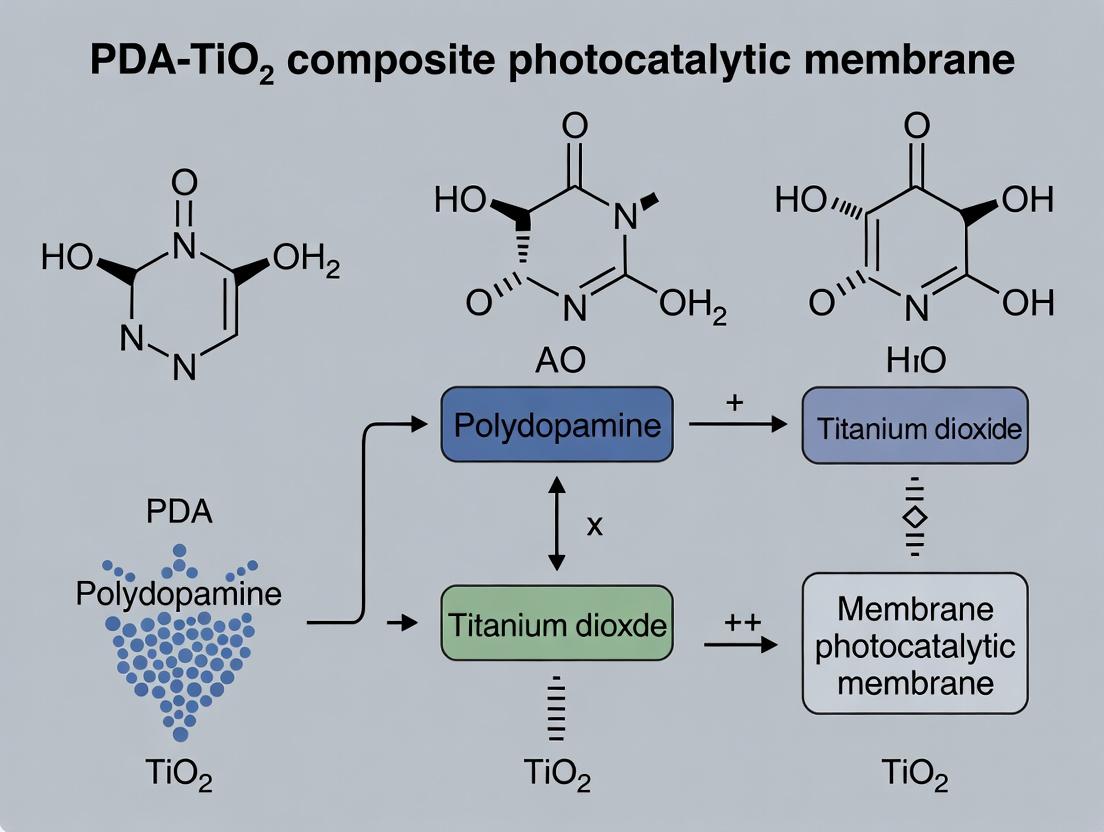
This comprehensive review provides researchers and material scientists with an in-depth guide to polydopamine (PDA) and titanium dioxide (TiO2) composite photocatalytic membranes.
PDA-TiO2 Composite Membranes: A Complete Guide to Fabrication, Optimization, and Biomedical Applications
Abstract
This comprehensive review provides researchers and material scientists with an in-depth guide to polydopamine (PDA) and titanium dioxide (TiO2) composite photocatalytic membranes. Covering foundational science to advanced applications, we detail the synthesis mechanisms of PDA adhesion and TiO2 integration, step-by-step fabrication protocols for robust membranes, and troubleshooting strategies for common issues. The article further compares performance metrics against other photocatalytic systems, validates efficacy through characterization methods, and explores targeted biomedical uses such as photodynamic therapy platforms and antimicrobial surfaces. This guide serves as a vital resource for developing next-generation functional materials in drug delivery and clinical environments.
Understanding the Synergy: Core Principles of PDA-TiO2 Composite Membranes
Application Notes
Photocatalytic membranes, particularly those based on polydopamine (PDA)-TiO2 composites, represent an advanced integration of separation technology and photocatalytic oxidation. In biomedical contexts, these membranes are primarily motivated by the need for advanced therapeutic delivery systems, antimicrobial surfaces, and degradation of organic pharmaceutical contaminants.
Key Biomedical Motivations and Applications:
- Localized, Triggered Drug Delivery: The photocatalytic activity enables spatiotemporal control of drug release (e.g., cancer therapeutics, antibiotics) using light as a non-invasive trigger. ROS generated by TiO2 can cleave labile bonds or degrade a PDA matrix, releasing payloads.
- Antimicrobial and Antifouling Surfaces: The ROS produced under light irradiation (UV or visible-light-active composites) can inactivate bacteria, viruses, and fungi on contact, preventing biofilm formation on medical devices, implants, and wound dressings.
- Degradation of Bio-Reactive Contaminants: They can be used in extracorporeal or environmental systems to degrade endocrine-disrupting pharmaceuticals, antibiotics, and cytotoxic agents from wastewater, addressing antimicrobial resistance (AMR) concerns.
- Combined Therapy and Diagnosis (Theranostics): The composite can be engineered to combine photocatalytic therapy with imaging capabilities (e.g., using TiO2's photo-luminescence or coupling with contrast agents).
Table 1: Performance Metrics of Selected Photocatalytic Membrane Applications
| Application | Key Metric | Reported Performance (Range) | Test Conditions / Model System |
|---|---|---|---|
| Antimicrobial Activity | Log Reduction of E. coli | 3.0 - 6.0 log | UV-Vis light (365-420 nm), 1-2 h, 10⁵-10⁶ CFU/mL |
| Drug Release | Cumulative Release of Doxorubicin | 20-80% increase with light | NIR/UV light trigger vs. dark control, pH 7.4, 24h |
| Contaminant Degradation | Degradation Efficiency of Ciprofloxacin | 60-95% removal | Simulated wastewater, UV-A light, 1-4 h, [CIP]=10 mg/L |
| Membrane Fouling Control | Flux Recovery Ratio (FRR) | 70-92% | BSA or alginate solution, visible light irradiation during filtration |
Experimental Protocols
Protocol 2.1: In-Situ Synthesis of PDA-TiO2 Composite Layer on a Polymeric Support
Objective: To prepare a uniform, adhesive composite photocatalytic layer via co-deposition of PDA and TiO2 nanoparticles on a ultrafiltration (UF) membrane support.
Materials: Polyethersulfone (PES) UF flat-sheet membrane (100 kDa MWCO), Tris(hydroxymethyl)aminomethane (Tris buffer), Dopamine hydrochloride, Titanium(IV) oxide (TiO2, P25 Degussa, ~21 nm), Hydrochloric acid (HCl, 1M), Deionized (DI) water.
Procedure:
- Support Pre-treatment: Cut the PES membrane into 10x10 cm sheets. Soak in DI water for 1 hour, then in 25% (v/v) ethanol for 30 minutes. Rinse thoroughly with DI water.
- Reaction Solution Preparation: Dissolve 121 mg of Tris buffer in 500 mL DI water. Adjust pH to 8.5 using 1M HCl. This is your Tris-HCl buffer (10 mM).
- Co-deposition Bath: To 200 mL of the Tris-HCl buffer in a glass beaker, add 200 mg of dopamine hydrochloride under magnetic stirring. Immediately add 400 mg of TiO2 (P25) powder. Sonicate the mixture for 30 minutes to achieve a well-dispersed suspension.
- Co-deposition Reaction: Immerse the pre-wetted PES membrane into the bath. Let the reaction proceed under gentle stirring (60 rpm) for 24 hours at room temperature (25°C). The solution will darken from white/grey to black.
- Post-treatment: Retrieve the membrane. Rinse thoroughly with copious DI water to remove any loosely adhered particles. Air-dry the composite membrane overnight in a clean, dark environment.
- Storage: Store the dried membrane in a desiccator protected from light until use.
Protocol 2.2: Evaluation of Photocatalytic Antimicrobial Activity (ISO 27447:2009 Adapted)
Objective: To quantify the bactericidal efficacy of the PDA-TiO2 composite membrane under light irradiation.
Materials: PDA-TiO2 composite membrane, control PES membrane, Escherichia coli ATCC 25922, Nutrient broth, Phosphate Buffered Saline (PBS), Sodium chloride (NaCl, 0.85%), Petri dishes with nutrient agar, LED light source (365 nm UV or 420 nm blue light, 20 mW/cm²).
Procedure:
- Culture Preparation: Inoculate E. coli in nutrient broth and incubate at 37°C overnight. Centrifuge, wash, and re-suspend in PBS to ~10⁷ CFU/mL.
- Sample Preparation: Aseptically cut membrane samples into 2x2 cm squares. Place each sample in a sterile Petri dish.
- Inoculation: Pipette 100 µL of the bacterial suspension onto the surface of each membrane sample. Use a sterile L-shaped spreader to evenly coat the surface.
- Irradiation: For test samples, expose immediately to the LED light source at a set distance to achieve desired intensity (e.g., 20 mW/cm²). For dark controls, cover with aluminum foil. Incubate all samples at room temperature for 2 hours.
- Elution and Enumeration: Transfer each membrane sample to a sterile tube containing 10 mL of 0.85% NaCl solution. Vortex vigorously for 2 minutes to elute bacteria. Perform serial dilutions of the eluent.
- Viability Count: Plate 100 µL of appropriate dilutions onto nutrient agar plates in duplicate. Incubate plates at 37°C for 24 hours. Count colony-forming units (CFU).
- Calculation: Calculate bacterial reduction: Log Reduction = Log₁₀(N₀/N), where N₀ is CFU/mL from dark control and N is CFU/mL from irradiated sample.
Visualizations
Title: Biomedical Action Pathways of Photocatalytic Membranes
Title: PDA-TiO2 Composite Membrane Preparation Workflow
The Scientist's Toolkit: Key Research Reagent Solutions
Table 2: Essential Materials for PDA-TiO2 Photocatalytic Membrane Research
| Material / Reagent | Typical Specification / Source | Primary Function in Research |
|---|---|---|
| Dopamine Hydrochloride | Sigma-Aldrich, >98% purity | Precursor for polydopamine (PDA) coating; provides universal adhesion and reactive sites for TiO2 binding and drug conjugation. |
| Titanium(IV) Oxide (TiO2), P25 | Evonik (Aeroxide P25), ~21 nm | Benchmark photocatalyst; provides high photocatalytic activity under UV light. Mixed-phase (anatase/rutile) enhances efficiency. |
| Polyethersulfone (PES) Ultrafiltration Membrane | Sterlitech Corp., 100 kDa MWCO | Common polymeric support; provides mechanical strength and initial separation function. |
| Tris(hydroxymethyl)aminomethane (Tris Buffer) | Fisher BioReagents, pH 8.5 | Alkaline buffer to maintain optimal pH (8.5) for the oxidative polymerization of dopamine. |
| Model Pharmaceutical Contaminant (e.g., Ciprofloxacin) | Sigma-Aldrich, pharmaceutical secondary standard | Representative antibiotic used to evaluate photocatalytic degradation performance and study AMR mitigation. |
| Model Therapeutic Payload (e.g., Doxorubicin HCl) | Cayman Chemical, >98% | A common chemotherapeutic used as a model drug to study light-triggered release kinetics and efficacy. |
| Live/Dead Bacterial Stain Kit (e.g., SYTO 9/PI) | Thermo Fisher Scientific (L7012) | For confocal microscopy visualization of membrane antimicrobial activity via cell viability staining. |
| Radical Scavengers (e.g., Isopropanol, p-Benzoquinone) | Sigma-Aldrich, reagent grade | Used in quenching experiments to identify the dominant reactive oxygen species (•OH, •O₂⁻, etc.) in photocatalytic mechanisms. |
Polydopamine (PDA) is a bio-inspired polymer that has become a cornerstone material for surface modification. Within the research thesis on "PDA-TiO₂ Composite Photocatalytic Membrane Preparation," understanding PDA's fundamental chemistry is critical. PDA serves as a universal, substrate-independent adhesive primer that enables the robust immobilization of TiO₂ nanoparticles onto polymeric or ceramic membrane supports. Its ability to facilitate secondary reactions allows for the functionalization of the composite surface, enhancing photocatalytic activity, fouling resistance, and stability in aqueous environments. This document details the application notes and protocols central to leveraging PDA's chemistry for this purpose.
Mechanism of PDA Adhesion and Coating Formation
PDA forms via the oxidative polymerization of dopamine under alkaline conditions (typically pH 8.5). The process involves:
- Oxidation: Dopamine is oxidized to dopaminequinone.
- Cyclization: Intramolecular cyclization forms leukodopaminechrome.
- Rearrangement/Polymerization: Further oxidation and rearrangement reactions lead to the formation of 5,6-dihydroxyindole (DHI) and its quinone, which polymerize via covalent and non-covalent interactions (π-π stacking, hydrogen bonding) to form PDA. The adherent properties stem from catechol/quinone groups that strongly interact with surfaces via coordination, hydrogen bonding, and Michael addition/Schiff base reactions with surface nucleophiles (-NH₂, -SH).
Diagram: PDA Polymerization and Adhesion Pathway
Key Research Reagent Solutions & Materials
Table 1: Essential Reagents for PDA Coating and Functionalization
| Reagent/Material | Function/Description | Role in PDA-TiO₂ Membrane Thesis |
|---|---|---|
| Dopamine Hydrochloride | Precursor monomer for PDA synthesis. | The foundational building block for the adhesive primer layer. |
| Tris(hydroxymethyl)aminomethane (Tris) | Buffering agent to maintain pH at 8.5 during polymerization. | Critical for controlled, reproducible PDA deposition on membrane supports. |
| Titanium Dioxide (TiO₂) Nanoparticles | Photocatalyst (e.g., P25, anatase). | The active photocatalytic component immobilized by the PDA layer. |
| Polymeric Membrane Support (e.g., PVDF, PES) | Porous substrate for composite membrane. | The underlying support structure requiring surface activation via PDA. |
| (3-Aminopropyl)triethoxysilane (APTES) | Amine-functionalizing agent for surfaces. | Used to pre-functionalize substrates or TiO₂ to enhance covalent PDA bonding. |
| Polyethylenimine (PEI) | Cationic polymer with abundant amines. | Can be co-deposited with PDA to modulate coating charge, thickness, and reactivity. |
Core Experimental Protocols
Protocol 3.1: Standard PDA Priming of a Membrane Support
Objective: To deposit a thin, uniform PDA adhesive layer on a polymeric membrane surface.
Materials: Dopamine HCl, Tris buffer (10 mM, pH 8.5), deionized (DI) water, target membrane (e.g., PVDF), beaker, orbital shaker.
Procedure:
- Clean the membrane substrate thoroughly with DI water and ethanol. Dry.
- Prepare a 2 mg/mL dopamine solution in 10 mM Tris buffer (pH 8.5). Filter (0.22 μm).
- Immerse the membrane in the dopamine solution. Ensure complete wetting.
- Allow the reaction to proceed under gentle agitation (orbital shaker, 60 rpm) for a defined period (e.g., 30 min to 24 h) at room temperature.
- Remove the membrane and rinse vigorously with DI water to remove loosely adhered particles.
- Dry the PDA-coated membrane in a vacuum desiccator or under nitrogen flow. Store dry.
Note: Coating thickness is proportional to reaction time. For membrane applications, 1-4 hours is typical to avoid significant pore blocking.
Table 2: Effect of Coating Time on PDA Layer Properties
| Coating Time (h) | Approx. Thickness (nm)* | Water Contact Angle (°) | Adhesion Strength (Relative) |
|---|---|---|---|
| 0.5 | 10-15 | 75 ± 3 | 1.0 |
| 2 | 20-30 | 62 ± 4 | 1.8 |
| 8 | 45-60 | 55 ± 5 | 2.5 |
| 24 | >100 | 48 ± 6 | 3.2 |
*Data representative of quartz crystal microbalance and ellipsometry studies.
Protocol 3.2: Immobilization of TiO₂ Nanoparticles onto PDA-Primed Membranes
Objective: To functionalize the PDA-coated membrane with TiO₂ photocatalyst.
Materials: PDA-coated membrane, TiO₂ nanopowder (e.g., Aeroxide P25), DI water, sonication bath.
Procedure (Physical Adsorption):
- Prepare a 1 mg/mL aqueous dispersion of TiO₂ nanoparticles. Sonicate for 30 min to ensure homogeneity.
- Immerse the PDA-coated membrane (from Protocol 3.1) into the TiO₂ dispersion.
- Agitate gently for 2-6 hours. The PDA layer will bind TiO₂ via catechol-Ti coordination.
- Remove the membrane and rinse gently with DI water to remove non-specifically bound aggregates.
- Dry at 60°C for 1 hour.
Procedure (In-situ Growth - for stronger integration):
- After PDA coating, immerse the membrane in an acidic aqueous solution of titanium oxysulfate or titanium tetraisopropoxide.
- Gradually raise the pH or temperature to hydrolyze the precursor, forming TiO₂ nanoparticles directly on and within the PDA matrix.
- Rinse and calcine at 300-400°C (if support tolerates) to crystallize TiO₂ (anatase phase).
Diagram: Workflow for PDA-TiO₂ Composite Membrane Fabrication
Functionalization Mechanisms for Enhanced Performance
The quinone and catechol groups in PDA enable post-modification, crucial for tuning membrane properties.
Protocol 4.1: Amine Functionalization via Michael Addition/Schiff Base Reaction Objective: To graft amine-containing molecules (e.g., PEI, cysteine) onto the PDA coating to impart specific charge or reactivity.
- Prepare a 1-5 mg/mL solution of the target amine (e.g., PEI, Mw=10k) in DI water or buffer (pH 7-9).
- Immerse the PDA-coated material in the solution.
- React for 6-24 h at room temperature with agitation.
- Rinse thoroughly with buffer and DI water to remove physisorbed molecules.
Table 3: Common PDA Functionalization Routes and Outcomes
| Target Group on PDA | Reactant | Reaction Type | Outcome for Membrane |
|---|---|---|---|
| Quinone/Catechol | Thiols (e.g., cysteamine) | Michael Addition | Introduces terminal -NH₂ for further bioconjugation or hydrophilicity. |
| Quinone | Amines (e.g., PEI) | Schiff Base/Michael | Creates a highly positively charged surface (anti-fouling, antibacterial). |
| Catechol | Metal Ions (Ti⁴⁺, Ag⁺) | Coordination | Seeds for enhanced TiO₂ binding or introduces Ag⁺ for bactericidal effect. |
| Entire Coating | Silanes (e.g., APTES) | Secondary Reaction | Increases surface hydrophilicity or provides anchors for other molecules. |
Application Notes for Photocatalytic Membrane Research
- Optimization is Key: The performance of the final composite membrane (flux, rejection, photocatalytic degradation efficiency) is highly sensitive to PDA coating time, TiO₂ loading method, and post-functionalization.
- Characterization Suite: Employ a combination of techniques: XPS (to confirm PDA and Ti presence), SEM (for morphology and TiO₂ distribution), Water Contact Angle (hydrophilicity), and filtration/degradation assays (methylene blue or pollutant degradation under UV/visible light).
- Stability Check: Always assess the long-term operational stability of the PDA-TiO₂ layer under hydrodynamic flow and photocatalytic conditions to ensure durable performance.
This document serves as a foundational application note within a broader thesis research program focused on developing a Polydopamine (PDA)-TiO2 composite photocatalytic membrane for advanced oxidation processes. The rationale for this composite lies in addressing the inherent limitations of pure TiO2, as detailed herein, by leveraging PDA's visible-light absorption and adhesive properties. Understanding the fundamental photocatalysis mechanisms, quantitative metrics, and constraints of TiO2 is critical for designing and characterizing the novel composite membrane.
Core Principles: Band Gap and ROS Generation
Upon photon absorption with energy equal to or greater than its band gap, TiO2 generates electron-hole pairs (e⁻/h⁺). These charge carriers migrate to the surface and react with adsorbed species to generate Reactive Oxygen Species (ROS), the primary agents for organic pollutant degradation.
Table 1: Key Photocatalytic Properties of Common TiO2 Polymorphs
| Polymorph | Crystal Structure | Band Gap (eV) | Primary ROS Generated | Relative Photocatalytic Activity (Under UV) |
|---|---|---|---|---|
| Anatase | Tetragonal | ~3.20 | •OH, O₂•⁻ | High (Reference) |
| Rutile | Tetragonal | ~3.00 | •OH, O₂•⁻ | Moderate |
| Brookite | Orthorhombic | ~3.10 - 3.40 | •OH, O₂•⁻ | Low/Moderate |
| P25 (Evonik) | Mixed Phase (80% Anatase, 20% Rutile) | ~3.15 | •OH, O₂•⁻, ¹O₂ | Very High (Synergistic Effect) |
Table 2: Primary Reactive Oxygen Species (ROS) in TiO2 Photocatalysis
| ROS Species | Formation Pathway (Simplified) | Redox Potential (V) | Primary Role in Degradation |
|---|---|---|---|
| Hydroxyl Radical (•OH) | h⁺ + H₂O/OH⁻ → •OH | +2.80 | Non-selective, potent oxidant; primary species for C-C bond cleavage. |
| Superoxide Anion (O₂•⁻) | e⁻ + O₂ → O₂•⁻ | -0.33 | Selective oxidant; can lead to H₂O₂ formation. |
| Hydrogen Peroxide (H₂O₂) | O₂•⁻ + 2H⁺ + e⁻ → H₂O₂ | +1.78 | Can be a precursor to •OH via photolysis or Fenton-like reactions. |
| Singlet Oxygen (¹O₂) | Energy transfer from excited TiO2 or from O₂•⁻ reactions. | +0.81 | Selective oxidant; important in dye degradation. |
Diagram 1: TiO2 Photocatalytic ROS Generation Pathways
Key Limitations of TiO2 in Photocatalytic Applications
- Wide Band Gap: Only active under UV light (~4% of solar spectrum), severely limiting solar efficiency.
- Rapid Charge Recombination: Short lifetime of photogenerated e⁻/h⁺ pairs reduces quantum yield.
- Post-Recovery Challenges: Nanoparticle suspensions require complex, costly separation from treated water.
- Fouling & Deactivation: Organic/inorganic species can adsorb irreversibly, blocking active sites.
These limitations directly motivate the thesis research on immobilizing TiO2 within a PDA-modified membrane to enable visible-light activity, enhance charge separation, and provide a fixed, reusable platform.
Experimental Protocols for TiO2 Characterization
Protocol 4.1: Band Gap Determination via UV-Vis Diffuse Reflectance Spectroscopy (DRS)
- Objective: Calculate the optical band gap energy of TiO2 powders.
- Materials: TiO2 sample, BaSO4 or Spectralon as white reference, UV-Vis-NIR spectrophotometer with integrating sphere.
- Procedure:
- Pack sample uniformly into a holder. Use BaSO4 as a reference standard.
- Collect diffuse reflectance spectra (R) from 250-800 nm. Convert to Kubelka-Munk function: F(R) = (1 - R)² / 2R.
- Plot [F(R) * hν]^n vs. hν (eV). For TiO2 (indirect semiconductor), n = 1/2.
- Extrapolate the linear region of the Tauc plot to the x-axis ([F(R) * hν]^{1/2} = 0). The intercept is the optical band gap energy.
Protocol 4.2: Quantitative ROS Detection & Scavenging Tests
- Objective: Identify and quantify dominant ROS species in a photocatalytic reaction.
- Materials: TiO2 suspension, target pollutant, specific ROS scavengers (see Toolkit), LED light source (UV or visible), HPLC/spectrophotometer for degradation monitoring.
- Procedure:
- Set up identical photocatalytic reactions (e.g., 50 mL of 10 ppm pollutant, 0.5 g/L TiO2).
- To individual reactors, add a known concentration of a specific scavenger before illumination.
- •OH Scavenger: 50 mM Isopropanol or 10 mM tert-Butanol.
- O₂•⁻ Scavenger: 1 mM p-Benzoquinone.
- h⁺ Scavenger: 10 mM Ammonium oxalate.
- ¹O₂ Scavenger: 10 mM Sodium azide.
- Illuminate under controlled stirring. Take aliquots at regular time intervals.
- Analyze pollutant concentration. Compare degradation rates: A significant decrease in rate in the presence of a specific scavenger indicates that the corresponding ROS is a primary contributor.
Protocol 4.3: Photocatalytic Activity Assessment (Dye Degradation)
- Objective: Benchmark the efficiency of different TiO2 samples.
- Materials: Methylene Blue (MB) or Rhodamine B (RhB) solution, photocatalyst, UV-A lamp (λ=365 nm), magnetic stirrer, centrifuge, UV-Vis spectrophotometer.
- Procedure:
- Prepare 100 mL of a 5-10 mg/L dye solution. Add 50 mg of TiO2 powder. Stir in the dark for 30 min to establish adsorption-desorption equilibrium.
- Take a 3 mL aliquot (t=0). Centrifuge to remove particles and measure absorbance at λmax (664 nm for MB).
- Turn on the UV lamp. Maintain constant stirring and temperature. Take aliquots at t=5, 10, 20, 30, 60 min.
- Centrifuge and analyze. Calculate degradation efficiency: % = (C₀ - Ct)/C₀ * 100, where C is concentration from absorbance.
The Scientist's Toolkit: Key Research Reagent Solutions
Table 3: Essential Reagents for TiO2 Photocatalysis Research
| Reagent/Solution | Function & Application | Notes for Thesis Context |
|---|---|---|
| TiO2 (P25, Aeroxide) | Benchmark photocatalyst; mixed-phase for high activity. | Used as control and as base material for PDA composite synthesis. |
| Polydopamine (PDA) Precursor | 10 mM Tris-HCl buffer (pH 8.5) with 2 mg/mL Dopamine hydrochloride. | In-situ polymerization on TiO2/membrane enables visible-light absorption and adhesion. |
| ROS Scavenger Set | Isopropanol, p-Benzoquinone, Ammonium Oxalate, Sodium Azide. | Critical for mechanistic studies to elucidate ROS roles in the composite membrane. |
| Probe Molecules | Methylene Blue, 4-Chlorophenol, Methylene Orange. | Model pollutants for standardized activity tests under UV/Vis light. |
| Spin Trap for EPR | 5,5-Dimethyl-1-pyrroline N-oxide (DMPO) in aqueous or methanol solution. | Direct detection and validation of •OH and O₂•⁻ generation by the composite. |
| Filtration Setup | Dead-end or cross-flow cell with membrane holder. | Required for testing the final PDA-TiO2 composite membrane, distinguishing it from slurry systems. |
Diagram 2: Thesis Workflow for PDA-TiO2 Composite Membrane Evaluation
Application Notes
Enhanced Dispersion and Stability
The integration of Polydopamine (PDA) with Titanium Dioxide (TiO2) addresses the inherent limitation of nanoparticle aggregation. PDA acts as a bio-adhesive dispersant, forming a stable, conformal coating on TiO2 surfaces via catechol-Ti coordination and non-covalent interactions. This significantly improves colloidal stability in aqueous and organic matrices, crucial for reproducible membrane fabrication.
Table 1: Quantitative Comparison of TiO2 vs. PDA-TiO2 Dispersion Stability
| Parameter | Pure TiO2 (P25) | PDA-TiO2 Composite (5 wt% PDA) | Measurement Method |
|---|---|---|---|
| Zeta Potential (mV) in H₂O, pH 7 | -15.2 ± 1.5 | -42.5 ± 2.1 | Dynamic Light Scattering (DLS) |
| Average Hydrodynamic Size (nm) after 24h | 850 ± 120 | 155 ± 25 | DLS |
| Sedimentation Time in Aqueous Suspension | < 2 hours | > 7 days | Visual Sedimentation Record |
| Isoelectric Point (pH) | 6.2 | < 3.0 | Zeta Potential Titration |
Extended Visible-Light Response
PDA, a semiconductor-like polymer with a narrow bandgap (~1.8 eV), sensitizes wide-bandgap TiO2 (3.2 eV for anatase) to visible light. The mechanism involves PDA absorbing visible photons, generating excitons, and injecting electrons into the conduction band of TiO2, thereby facilitating photocatalytic reactions under solar spectrum.
Table 2: Photocatalytic Performance Under Different Light Sources
| Composite Type | Bandgap (eV) | Rate Constant (k) for Methylene Blue Degradation (min⁻¹) | Visible-Light (λ>420 nm) Activity (µmol H₂ h⁻¹ g⁻¹) |
|---|---|---|---|
| Pure TiO2 (Anatase) | 3.20 | 0.012 ± 0.002 (UV) | 2.5 ± 0.8 |
| PDA-TiO2 (3 wt% PDA) | 2.85 | 0.009 ± 0.001 (UV) | 18.7 ± 2.1 |
| PDA-TiO2 (7 wt% PDA) | 2.65 | 0.008 ± 0.001 (UV) | 32.4 ± 3.5 |
| PDA-TiO2 (10 wt% PDA) | 2.50 | 0.005 ± 0.001 (UV) | 25.1 ± 2.8 |
Experimental Protocols
Protocol 1: Synthesis of PDA-Coated TiO2 Nanoparticles
Objective: To prepare a stable, visible-light-responsive PDA-TiO2 composite. Materials: See "The Scientist's Toolkit" below. Procedure:
- Dispersion: Disperse 1.0 g of TiO2 nanoparticles (e.g., Degussa P25) in 200 mL of 10 mM Tris-HCl buffer (pH 8.5) using ultrasonic probe sonication (400 W, 30 min, ice bath).
- PDA Coating: Add 0.05 g of dopamine hydrochloride (for 5 wt% target) to the stirring suspension.
- Polymerization: Stir the mixture vigorously at room temperature for 24 hours in open air to allow oxidative self-polymerization of dopamine onto the TiO2 surface.
- Purification: Centrifuge the resulting dark suspension at 12,000 rpm for 15 minutes. Decant the supernatant and wash the pellet with deionized water three times to remove unreacted monomers and oligomers.
- Drying: Re-disperse the final composite in water for immediate use or lyophilize for storage, yielding a gray-black powder.
Protocol 2: Fabrication of PDA-TiO2 Composite Photocatalytic Membrane
Objective: To integrate PDA-TiO2 composites into a polymeric membrane matrix for continuous flow photocatalytic applications. Procedure:
- Dope Solution Preparation: Dissolve 15 g of Polyvinylidene Fluoride (PVDF) in 85 g of N-Methyl-2-pyrrolidone (NMP) at 60°C with stirring for 12 hours.
- Composite Integration: Add 1.5 g of lyophilized PDA-TiO2 composite powder (from Protocol 1) to the PVDF/NMP solution. Use high-shear mixing (1 hour) followed by sonication (1 hour) to achieve a homogeneous casting dope.
- Phase Inversion: Cast the dope onto a clean glass plate using a doctor blade with a 200 µm gap. Immediately immerse the cast film into a coagulation bath of deionized water at 25°C. The membrane will form via nonsolvent-induced phase separation (NIPS).
- Post-treatment: After complete peeling, transfer the membrane to a fresh water bath for 48 hours to leach out residual solvent. Air-dry the membrane at room temperature for characterization and testing.
Protocol 3: Evaluating Visible-Light Photocatalytic Activity
Objective: To quantify the visible-light-driven degradation efficiency of the PDA-TiO2 composite membrane. Procedure:
- Setup: Cut the membrane into 3x3 cm squares. Place one piece in a quartz reactor containing 50 mL of aqueous Methylene Blue (MB, 10 mg/L).
- Adsorption-Desorption Equilibrium: Stir the solution in the dark for 60 minutes to establish adsorption equilibrium.
- Irradiation: Illuminate the reactor using a 300 W Xe lamp with a 420 nm long-pass cut-off filter. Maintain constant stirring and reactor temperature at 25°C.
- Sampling: At 20-minute intervals, withdraw 3 mL aliquots, centrifuge to remove any particulates.
- Analysis: Measure the absorbance of the supernatant at 664 nm using a UV-Vis spectrophotometer. Calculate the concentration (C) relative to the initial concentration (C₀). Plot ln(C₀/C) vs. time; the slope is the apparent first-order rate constant k.
Diagrams
Title: PDA-TiO2 Composite Synthesis Workflow
Title: Visible Light Activation Mechanism in PDA-TiO2
Title: Photocatalytic Composite Membrane Preparation
The Scientist's Toolkit
Table 3: Essential Research Reagents & Materials for PDA-TiO2 Composite Work
| Item | Function/Description | Typical Specification/Supplier Note |
|---|---|---|
| Titanium Dioxide (P25) | Benchmark photocatalyst; mixed-phase (80% anatase, 20% rutile) for high activity. | Degussa/Evonik, Ave. part. size ~21 nm. |
| Dopamine Hydrochloride | Precursor monomer for in-situ polymerization to form the PDA coating. | >98% purity, store desiccated at -20°C. |
| Tris-HCl Buffer (pH 8.5) | Alkaline buffer to catalyze the oxidative polymerization of dopamine. | 10 mM concentration is optimal. |
| Polyvinylidene Fluoride (PVDF) | Porous membrane matrix; chemically resistant and suitable for phase inversion. | MW ~180,000, for membrane fabrication. |
| N-Methyl-2-pyrrolidone (NMP) | Polar aprotic solvent to dissolve PVDF for casting dope preparation. | Anhydrous, >99.5% purity. |
| Methylene Blue (MB) | Model organic pollutant for standardizing photocatalytic degradation tests. | Dye content ≥82%. |
| 420 nm Long-Pass Filter | Optical filter to block UV light, enabling isolated visible-light activity testing. | Mounted in filter holder for Xe lamp. |
Key Properties and Performance Metrics for Biomedical Applications
Within the broader thesis on Polydopamine-Titanium Dioxide (PDA-TiO2) composite photocatalytic membrane preparation, this document details the key properties and performance metrics critical for evaluating these membranes in biomedical applications. The primary research focus is on leveraging the photocatalytic activity of TiO2, enhanced by the adhesive and functionalizable PDA layer, to create membranes for drug delivery systems, antimicrobial surfaces, and photocatalytic degradation of pharmaceutical pollutants. The composite aims to synergize TiO2's reactive oxygen species (ROS) generation with PDA's biocompatibility and secondary drug-loading capacity.
Key Properties for Biomedical Application
The efficacy of PDA-TiO2 membranes in biomedical settings hinges on a suite of interlinked properties, quantified through standardized metrics.
Table 1: Key Material Properties and Their Significance
| Property | Metric & Units | Relevance to Biomedical Function | Target Range for PDA-TiO2 Composites |
|---|---|---|---|
| Photocatalytic Activity | ROS (•OH, O₂•⁻) generation rate (μmol·L⁻¹·min⁻¹); Pollutant/Dye degradation efficiency (% over time) | Antimicrobial action, drug precursor activation, pollutant breakdown. Core function. | >80% methylene blue degradation under UV/Visible light in 60 min. |
| Surface Hydrophilicity | Water Contact Angle (°) | Governs protein adsorption, cell adhesion, and antifouling behavior. PDA improves hydrophilicity. | 30° - 70° (Tunable via PDA coating time). |
| Biocompatibility | Cell Viability (%) (e.g., via MTT assay); Hemolysis Rate (%) | Essential for any implantable or contact device. PDA enhances biocompatibility of TiO₂. | >90% cell viability; <5% hemolysis rate. |
| Drug Loading Capacity | Loading Capacity (μg·cm⁻² or μg·mg⁻¹); Encapsulation Efficiency (%) | For controlled drug delivery applications. PDA layer acts as a reservoir for therapeutics. | Varies by drug; >60% encapsulation efficiency common. |
| Mechanical Integrity | Tensile Strength (MPa); Elastic Modulus (MPa) | Required for handleability and in-situ performance in implants or filters. | >5 MPa tensile strength (for free-standing membranes). |
| Antimicrobial Efficacy | Log Reduction in CFU (Colony Forming Units); Zone of Inhibition (mm) | Quantitative measure of bactericidal performance under light irradiation. | >3 log reduction against S. aureus and E. coli under light. |
| Porosity & Permeability | Average Pore Size (nm); Pure Water Flux (L·m⁻²·h⁻¹·bar⁻¹) | Controls diffusion of drugs, nutrients, and reactive species. Critical for filtration applications. | Pore size: 10-200 nm; Flux: Highly tunable per fabrication. |
Core Performance Metrics and Experimental Protocols
Protocol: Quantifying Photocatalytic ROS Generation
Objective: To measure the rate of reactive oxygen species generation, typically hydroxyl radicals (•OH), using a chemical probe. Reagents:
- Tertiary-butyl alcohol (•OH scavenger, control)
- PDA-TiO₂ composite membrane sample (e.g., 2x2 cm)
- Probe solution (e.g., 0.1 mM Coumarin in deionized water)
Procedure:
- Immerse the membrane sample in 20 mL of coumarin solution in a quartz reactor.
- Place under controlled light irradiation (e.g., 365 nm UV or simulated solar light) at a fixed intensity (e.g., 100 mW/cm²). Maintain constant stirring.
- At regular time intervals (0, 5, 10, 20, 30 min), extract 2 mL aliquots.
- Filter the aliquots (0.22 μm syringe filter) to remove any photocatalyst particles.
- Analyze the filtrate by fluorescence spectroscopy (Excitation: 332 nm, Emission: 456 nm). The fluorescent product 7-hydroxycoumarin is proportional to •OH generated.
- Calculate the •OH generation rate using a standard curve of 7-hydroxycoumarin.
Protocol: Evaluating Antimicrobial Performance (ISO 27447:2009 adapted)
Objective: To determine the bactericidal efficacy of the PDA-TiO₂ membrane under light. Reagents & Strains:
- Test strains: Staphylococcus aureus (ATCC 6538), Escherichia coli (ATCC 8739)
- Nutrient broth/agar
- Phosphate Buffered Saline (PBS)
Procedure:
- Inoculum Prep: Grow bacteria to mid-log phase, wash, and resuspend in PBS to ~10⁷ CFU/mL.
- Inoculation: Place membrane sample in sterile Petri dish. Apply 100 μL bacterial suspension evenly on the surface.
- Irradiation: Cover with a sterile quartz lid. Irradiate sample for a set time (e.g., 60 min) with controlled light. Include dark controls (foil-wrapped) and light-only controls (no membrane).
- Recovery: Transfer membrane to a tube with 10 mL PBS. Sonicate briefly (5 min) and vortex vigorously (1 min) to detach bacteria.
- Enumeration: Perform serial dilutions of the PBS, plate on nutrient agar, and incubate (37°C, 24h). Count colonies.
- Calculation: Log Reduction = Log₁₀(N₀/N), where N₀ is CFU from dark control, N is CFU from irradiated sample.
Visualization of Key Concepts
Title: Mechanism of PDA-TiO2 Membrane Biomedical Action
Title: PDA-TiO2 Membrane Development Workflow
The Scientist's Toolkit: Research Reagent Solutions
Table 2: Essential Materials for PDA-TiO2 Composite Evaluation
| Item | Function in Research | Key Consideration for Biomedical Use |
|---|---|---|
| Dopamine Hydrochloride | Precursor for Polydopamine (PDA) coating via self-polymerization. | High purity (>98%) ensures consistent, homogeneous coating on TiO₂. |
| Tris-HCl Buffer (pH 8.5) | Alkaline buffer for controlled PDA polymerization. | Maintains optimal pH for adhesion and film quality. Sterile filtration recommended. |
| Anatase TiO₂ Nanoparticles | Core photocatalytic material. | Purity, crystalline phase (anatase most active), and primary particle size (e.g., 20-50 nm) are critical. |
| Polymeric Support (e.g., PVDF, PES) | Porous substrate for forming composite membranes. | Biocompatibility, thermal/chemical stability during fabrication, and inherent hydrophilicity. |
| Coumarin or Terephthalic Acid | Fluorescent chemical probes for quantifying hydroxyl radical (•OH) generation. | Probe specificity and sensitivity define accuracy of photocatalytic activity measurement. |
| Cell Lines (e.g., L929, HDF) | For in vitro cytotoxicity assessment (MTT/Alamar Blue assays). | Use standardized cell lines relevant to intended application (e.g., dermal for wound dressings). |
| Model Drug (e.g., Doxorubicin, Vancomycin) | For quantifying drug loading/release profiles. | Should be representative of target drug class (hydrophilic/hydrophobic, charge). |
| Simulated Body Fluid (SBF) | For evaluating biomineralization or stability in physiological conditions. | Ion concentration and pH should mimic human plasma. |
| Bacterial Strains (S. aureus, E. coli) | For standardized antimicrobial testing. | Use ATCC reference strains for reproducible, comparable log reduction values. |
Step-by-Step Fabrication: Protocols and Biomedical Applications of PDA-TiO2 Membranes
Within the context of preparing polydopamine (PDA)-TiO₂ composite photocatalytic membranes for advanced oxidation processes in water treatment and potential pharmaceutical pollutant degradation, the strategic selection of starting materials is paramount. These choices directly govern the morphological, structural, and functional properties of the final membrane, impacting photocatalytic efficiency, stability, and fouling resistance. These application notes detail the critical selection parameters and experimental protocols for key precursors, substrates, and solvents.
1. Research Reagent Solutions: The Scientist's Toolkit
The following table outlines essential materials for synthesizing a PDA-TiO₂ composite photocatalytic membrane.
| Reagent/Material | Function & Selection Rationale |
|---|---|
| Dopamine Hydrochloride | The precursor for PDA thin-film deposition. Provides excellent adhesion, hydrophilicity, and a reactive surface for secondary modification or nanoparticle binding. |
| Tris(hydroxymethyl)aminomethane (Tris Buffer) | Alkaline buffer (pH ~8.5) to initiate and control the oxidative self-polymerization of dopamine. Concentration controls PDA deposition kinetics and film thickness. |
| Anatase TiO₂ Nanoparticles (<50 nm) | The primary photocatalytic agent. Anatase phase is preferred for higher photocatalytic activity. Small particle size enhances surface area and dispersion within the composite. |
| Polyvinylidene Fluoride (PVDF) or Polyethersulfone (PES) | Porous polymeric substrate for membrane formation. PVDF offers strong chemical resistance; PES offers inherent hydrophilicity. Molecular weight cut-off (MWCO) is selected based on target separation. |
| N-Methyl-2-pyrrolidone (NMP) or Dimethylacetamide (DMAc) | Polar aprotic solvents for dissolving polymer substrates (e.g., PVDF, PES) during phase inversion membrane casting. |
| Polyethylene Glycol (PEG, varying MW) | Pore-forming additive in the casting solution. Molecular weight influences pore size and porosity of the substrate. |
| Deionized Water & Ethanol | Non-solvent (coagulation bath) for phase inversion and rinsing agents for removing residual solvent and unbound nanoparticles. |
2. Quantitative Data Summary: Precursor and Process Parameters
Table 1: Optimization Ranges for Key Synthesis Parameters.
| Parameter | Typical Range | Impact on Composite Membrane |
|---|---|---|
| Dopamine Concentration (in Tris buffer) | 0.5 - 3.0 mg/mL | Higher conc. yields thicker, denser PDA layers affecting permeability and TiO₂ loading. |
| PDA Deposition Time | 30 min - 24 h | Longer times increase coating thickness and surface coverage, but may block pores. |
| TiO₂ Nanoparticle Loading | 0.5 - 3.0 wt% (in casting solution) | Higher loading increases photocatalytic activity but can aggregate and compromise membrane integrity. |
| PVDF Concentration in Casting Solution | 15 - 20 wt% | Determines substrate mechanical strength and baseline porosity. |
| PEG Additive Concentration | 2 - 8 wt% | Controls pore size and interconnectivity in the substrate. |
3. Experimental Protocols
Protocol 3.1: Preparation of PDA-Coated Porous Substrate. Objective: To deposit a uniform, adhesive polydopamine layer on a polymeric membrane substrate. Materials: Dopamine hydrochloride, Tris buffer (10 mM, pH 8.5), PVDF flat-sheet ultrafiltration membrane (0.1 μm pore), beaker, magnetic stirrer. Procedure:
- Prepare a 2 mg/mL solution of dopamine hydrochloride in 10 mM Tris buffer (pH 8.5). Stir briefly.
- Immerse the pre-wetted PVDF membrane completely in the dopamine solution.
- Allow the reaction to proceed under ambient atmosphere with gentle stirring for 4-18 hours.
- Remove the membrane and rinse thoroughly with deionized water to remove any loosely adhered PDA particles.
- Dry the PDA-coated membrane at 40°C for 1 hour before further use or characterization. Note: The solution color will progressively darken to deep brown.
Protocol 3.2: Fabrication of TiO₂-Blended PVDF Substrate via Phase Inversion. Objective: To fabricate a porous membrane substrate with embedded TiO₂ nanoparticles. Materials: PVDF powder, anatase TiO₂ nanoparticles (<50 nm), NMP solvent, PEG-4000, glass plate, casting knife (200 μm gap), water coagulation bath. Procedure:
- Dissolve 18 wt% PVDF and 5 wt% PEG-4000 in NMP at 60°C with stirring to form a homogeneous dope solution.
- Separately, disperse 1.5 wt% TiO₂ nanoparticles (relative to total solution) in a small amount of NMP using sonication for 30 min.
- Mix the TiO₂ dispersion with the PVDF dope solution and stir for 12 hours to ensure homogeneity and degassing.
- Cast the solution onto a clean glass plate using a doctor blade set to a 200 μm gap.
- Immediately immerse the cast film along with the plate into a deionized water coagulation bath at 25°C.
- After complete phase separation (10-15 min), peel off the formed membrane and transfer it to a fresh water bath for 24 hours to leach out residual solvent.
- Dry the membrane at room temperature between filter papers.
Protocol 3.3: Preparation of Composite PDA-TiO₂ Membrane (Co-deposition Method). Objective: To simultaneously co-deposit PDA and TiO₂ nanoparticles onto a pristine membrane in a single step. Materials: Dopamine hydrochloride, Tris buffer, anatase TiO₂ nanoparticles, ethanol, pristine PVDF membrane, ultrasonic bath. Procedure:
- Disperse 1.0 g/L of TiO₂ nanoparticles in 10 mM Tris buffer (pH 8.5) using 30 min of ultrasonication.
- Add dopamine hydrochloride to the above dispersion to a final concentration of 2 g/L. Stir vigorously.
- Immerse the pristine PVDF membrane into the mixture immediately.
- Allow the reaction to proceed for 6 hours with constant stirring. PDA polymerization will entrap and bind TiO₂ particles to the membrane surface.
- Rinse the composite membrane thoroughly with a 1:1 water/ethanol mixture, then dry at 40°C.
4. Visualization of Synthesis Pathways and Selection Logic
Title: Material Selection Logic for Composite Membrane Synthesis.
Title: Sequential Deposition Workflow for PDA-TiO₂ Membrane.
Application Notes
This protocol details a method for fabricating a polydopamine (PDA)-TiO₂ composite photocatalytic membrane via in-situ polymerization. This approach enables the uniform integration of TiO₂ nanoparticles within a strongly adherent PDA matrix deposited on a polymeric support (e.g., PVDF). The composite leverages the synergistic effects of PDA's superior surface adhesion, hydrophilicity, and organic pollutant adsorption with TiO₂'s photocatalytic activity. The resultant membrane is designed for advanced water treatment applications, specifically for the degradation of organic micropollutants (e.g., dyes, pharmaceuticals) under UV or visible light irradiation, contingent on TiO₂ modification.
Protocols
Protocol 1: Substrate Preparation and Pre-wetting
Objective: To prepare a pristine, hydrophilic surface for uniform PDA/TiO₂ deposition.
- Cut commercial polyvinylidene fluoride (PVDF) ultrafiltration membrane (e.g., 0.1 μm pore size) into 10 cm x 10 cm sheets.
- Immerse the membrane sheets in 200 mL of isopropyl alcohol (IPA) and ultrasonicate for 30 minutes to remove preservatives and contaminants.
- Rinse thoroughly with deionized (DI) water for 10 minutes.
- Soak the cleaned membranes in DI water for a minimum of 1 hour to ensure complete pore wetting.
- Blot excess water gently with lint-free wipes before proceeding to polymerization.
Protocol 2: In-situ Polymerization of PDA with TiO₂ Incorporation
Objective: To co-deposit a homogeneous PDA-TiO₂ composite layer on the substrate. Reagent Preparation:
- Tris-buffer (10 mM, pH 8.5): Dissolve 1.21 g of tris(hydroxymethyl)aminomethane in 800 mL DI water. Adjust to pH 8.5 using 1 M HCl. Dilute to 1 L with DI water.
- Dopamine Solution (2 mg/mL): Weigh 200 mg of dopamine hydrochloride. Add to 90 mL of the prepared Tris-buffer and stir until fully dissolved.
- TiO₂ Dispersion (1 mg/mL): Disperse 100 mg of anatase TiO₂ nanoparticles (e.g., P25, ~21 nm primary particle size) in 100 mL of the prepared Tris-buffer. Sonicate using a probe sonicator (400 W, 20 kHz) for 30 minutes in an ice bath to achieve a stable, agglomerate-free dispersion.
Polymerization Procedure:
- In a glass dish, combine 100 mL of the dopamine solution and 100 mL of the TiO₂ dispersion under magnetic stirring.
- Immediately immerse the pre-wetted PVDF membrane from Protocol 1.
- Allow the polymerization to proceed at room temperature (25 ± 2°C) under continuous, gentle agitation (60 rpm) for a target duration (e.g., 4, 8, 12, or 24 hours).
- Terminate the reaction by removing the membrane and rinsing it extensively with DI water to remove loosely adhered particles and residual monomers.
- Air-dry the composite membrane at ambient temperature for 24 hours, then store in a desiccator.
Protocol 3: Photocatalytic Activity Assessment
Objective: To quantify the degradation efficiency of the composite membrane using a model pollutant. Procedure:
- Cut the composite membrane to fit a custom flow-through photoreactor or a batch reactor.
- Prepare a 10 mg/L aqueous solution of methylene blue (MB) or a selected pharmaceutical (e.g., 5 mg/L diclofenac).
- In a batch setup, immerse a 20 cm² membrane sample in 100 mL of pollutant solution. First, conduct adsorption in the dark for 60 minutes to establish adsorption-desorption equilibrium.
- Illuminate the system using a simulated solar light source (AM 1.5G) or a UV lamp (λ = 365 nm, 15 W). Maintain constant stirring.
- Withdraw 3 mL aliquots at regular time intervals (0, 15, 30, 60, 120 min).
- Analyze the pollutant concentration via UV-Vis spectrophotometry (MB: λmax = 664 nm). Calculate degradation efficiency (%) using: [(C₀ - Ct) / C₀] × 100, where C₀ is the concentration after dark adsorption and C_t is the concentration at time t.
Data Presentation
Table 1: Effect of Polymerization Time on Composite Membrane Properties
| Polymerization Time (h) | PDA/TiO₂ Layer Thickness (nm)* | Water Contact Angle (°) | TiO₂ Surface Loading (wt%) | Methylene Blue Degradation Efficiency (120 min, %) |
|---|---|---|---|---|
| 4 | 45 ± 5 | 52 ± 3 | 12.5 ± 1.2 | 65 ± 4 |
| 8 | 82 ± 8 | 38 ± 2 | 18.7 ± 1.5 | 78 ± 3 |
| 12 | 125 ± 10 | 32 ± 3 | 22.1 ± 1.8 | 89 ± 2 |
| 24 | 210 ± 15 | 28 ± 2 | 24.5 ± 2.0 | 92 ± 1 |
Measured by SEM cross-section. *Determined by thermogravimetric analysis (TGA).
Table 2: Photocatalytic Performance Comparison for Different Pollutants
| Target Pollutant (Initial Conc.) | Composite Membrane (12h coating) | Pure PVDF Membrane | Removal Mechanism Contribution (Composite) |
|---|---|---|---|
| Methylene Blue (10 mg/L) | 89% @ 120 min | <5% @ 120 min | Adsorption: ~15%, Photocatalysis: ~85% |
| Diclofenac (5 mg/L) | 76% @ 180 min | <5% @ 180 min | Adsorption: ~20%, Photocatalysis: ~80% |
| Tetracycline (10 mg/L) | 82% @ 150 min | <5% @ 150 min | Adsorption: ~10%, Photocatalysis: ~90% |
*Conditions: Simulated solar light, batch mode.
Experimental Visualization
Title: In-situ PDA/TiO₂ Composite Fabrication Workflow
Title: Synergistic Photocatalytic Mechanism of PDA-TiO₂ Membrane
The Scientist's Toolkit
Table 3: Key Research Reagent Solutions and Materials
| Item | Specification/Concentration | Primary Function in Protocol |
|---|---|---|
| Dopamine Hydrochloride | Purity ≥98%, stored desiccated at -20°C | Monomer for PDA formation, provides adhesion and matrix. |
| Anatase TiO₂ Nanoparticles | e.g., Aeroxide P25, ~21 nm, 50 m²/g | Primary photocatalyst, generates reactive oxygen species under light. |
| Tris(hydroxymethyl)aminomethane | Molecular Biology Grade, ≥99.8% | Buffer agent to maintain alkaline pH (8.5) for controlled dopamine oxidation/polymerization. |
| Polyvinylidene Fluoride (PVDF) Membrane | Hydrophobic, 0.1-0.45 μm pore size, 100-150 μm thickness | Porous mechanical support for the composite photocatalytic layer. |
| Isopropyl Alcohol (IPA) | ACS Grade, ≥99.5% | Solvent for ultrasonic cleaning to hydrophilize and degrease the PVDF support. |
| Methylene Blue (MB) | Indicator Grade, ≥95% | Standard model organic pollutant for quantitative assessment of photocatalytic activity. |
| Simulated Solar Light Source | Xenon lamp with AM 1.5G filter, 100 mW/cm² | Standardized light irradiation to activate the TiO₂ photocatalyst. |
This application note details the second primary synthesis route investigated in our thesis on developing robust PDA-TiO₂ composite photocatalytic membranes. While Route 1 focused on in-situ TiO₂ generation on polydopamine (PDA), Route 2 employs pre-synthesized, engineered TiO₂ nanoparticles (NPs) immobilized onto a PDA-coated support. This approach decouples NP synthesis from immobilization, allowing for precise control over TiO₂ crystal phase, size, and morphology, which are critical for optimizing photocatalytic activity for applications in advanced oxidation processes for water treatment and potentially in photodynamic therapy contexts in drug development.
Key Advantages & Rationale
Immobilizing pre-formed TiO₂ NPs offers distinct advantages:
- Crystalline Phase Control: Use of pre-characterized anatase, rutile, or mixed-phase NPs.
- Morphological Diversity: Enables use of nanospheres, nanotubes, or other shapes.
- Reduced Membrane Fouling: The PDA layer provides a hydrophilic, adhesive interlayer.
- Enhanced Stability: Strong covalent and non-covalent binding between PDA and TiO₂ minimizes NP leaching.
Research Reagent Solutions & Essential Materials
Table 1: Key Materials and Their Functions
| Item | Specification/Example | Primary Function |
|---|---|---|
| Support Material | Polyethersulfone (PES) or Al₂O₃ ceramic membrane | Provides mechanical strength and primary structure for the composite. |
| Dopamine Hydrochloride | ≥98% purity (Sigma-Aldrich) | Precursor for forming the universal adhesive PDA coating. |
| Tris-HCl Buffer | 10 mM, pH 8.5 | Provides the alkaline environment necessary for dopamine autoxidation and polymerization. |
| Pre-formed TiO₂ NPs | e.g., Aeroxide P25 (Evonik), or hydrothermally synthesized anatase NPs | The active photocatalytic component. P25 is a benchmark 80:20 anatase:rutile mix. |
| Dispersion Solvent | Deionized Water, Ethanol, or mixture | Medium for creating a stable TiO₂ NP suspension for immobilization. |
| Sonication Bath | Branson 2800 or equivalent | Ensutes de-agglomeration of TiO₂ NPs in suspension prior to immobilization. |
Detailed Experimental Protocol
PDA Coating of Support
- Support Preparation: Cut the base membrane (e.g., PES ultrafiltration membrane) to desired size. Rinse thoroughly with DI water and ethanol. Dry at 60°C for 1 hour.
- PDA Solution Preparation: Dissolve 2 mg/mL of dopamine hydrochloride in 10 mM Tris-HCl buffer (pH 8.5). Filter the solution (0.45 µm) to remove any particulates.
- Coating Process: Submerge the clean, dry support in the dopamine solution. Allow polymerization to proceed under ambient atmospheric conditions with gentle stirring (60 rpm) for 4-24 hours, depending on desired PDA thickness.
- Post-treatment: Rinse the PDA-coated support extensively with DI water to remove loose oligomers. Dry at room temperature overnight. Store in a desiccator until use.
Immobilization of Pre-formed TiO₂ Nanoparticles
- TiO₂ Suspension Preparation: Weigh a precise amount of TiO₂ NPs (e.g., 50 mg). Disperse in 100 mL of DI water (or water/ethanol 1:1). Sonicate the suspension in a bath sonicator for 60 minutes to achieve a well-dispersed, milky suspension.
- Immobilization Method (Dip-Coating):
- Immerse the PDA-coated support into the TiO₂ suspension.
- Allow adsorption/immobilization to proceed for 2 hours at room temperature with gentle agitation.
- Alternatively, use a vacuum-assisted filtration method for more uniform deposition: place the PDA-coated support on a filter funnel and slowly filter the TiO₂ suspension through it under mild vacuum.
- Post-immobilization Treatment: Carefully remove the composite membrane. Rinse gently with DI water to remove loosely bound NPs. Dry at 60°C for 2 hours.
- Optional Annealing: For enhanced adhesion, anneal the composite in a muffle furnace at 150°C for 1 hour (for polymer supports) or higher temperatures for ceramic supports.
Table 2: Typical Characterization Data for Route 2 Membranes
| Characterization Method | Key Parameters Measured | Typical Result for P25 on PDA/PES |
|---|---|---|
| SEM-EDS | TiO₂ coating morphology & elemental mapping | Uniform NP distribution; Ti signal confirms immobilization. |
| XRD | Crystalline phase of immobilized TiO₂ | Distinct anatase (101) and rutile (110) peaks from P25. |
| Contact Angle | Surface hydrophilicity | Reduction from ~75° (bare PES) to <40° (PDA-TiO₂/PES). |
| UV-Vis DRS | Optical bandgap (Eg) | Eg ~3.2 eV, characteristic of P25. |
| Photocatalytic Test | Methylene Blue (MB) degradation rate constant (k) | k ≈ 0.025 min⁻¹ under UV light (λ=365 nm). |
| Leaching Test | Ti concentration in solution (ICP-MS) after 24h operation | < 50 ppb, indicating strong immobilization. |
Workflow & Synthesis Logic Diagram
Diagram Title: Route 2: Pre-formed TiO2 Immobilization Workflow
Critical Considerations for Researchers
- TiO₂ Dispersion: The efficacy of immobilization is directly tied to the quality of the TiO₂ suspension. Prolonged sonication and potential use of dispersants (e.g., Triton X-100) are critical.
- PDA Thickness: A thicker PDA layer may enhance NP loading but could increase hydraulic resistance. Optimize coating time.
- Activity Validation: Always benchmark photocatalytic activity against a control (e.g., unmodified PDA membrane) using a standard contaminant like methylene blue or 4-nitrophenol under calibrated light intensity.
- Scalability: The dip-coating method is lab-friendly. For scale-up, consider spray-coating or continuous filtration immobilization methods.
Application Notes
Within the research on PDA-TiO₂ Composite Photocatalytic Membranes, the integration of polydopamine (PDA) with titanium dioxide (TiO₂) aims to enhance photocatalytic activity, improve pollutant degradation, and impart superior hydrophilicity and fouling resistance to polymeric or ceramic supports. The selection of a deposition technique critically determines the composite's final morphology, thickness, adhesion, and functionality. This note details three foundational coating techniques adapted for this specific composite system.
- Dip-Coating: Ideal for creating uniform, conformal PDA layers on complex 3D substrates, which can subsequently serve as an adhesive platform for TiO₂ nanoparticle immobilization. It is simple and cost-effective for preliminary studies.
- Filtration-Assembly (or Vacuum-Assisted Assembly): A key method for fabricating freestanding or supported multilayer nanostructured films. It allows for the precise layer-by-layer (LbL) construction of PDA-TiO₂ nanocomposites by filtering dispersions through a porous support, controlling loading and stratification.
- Spin-Coating: Best suited for creating thin, highly uniform films on flat substrates (e.g., silicon wafers, glass slides) for model studies. It enables rapid screening of coating parameters and the production of films with nanoscale precision for fundamental property analysis.
The choice among these protocols depends on the target substrate geometry, desired film architecture, and the intended application (e.g., flow-through membrane vs. flat film photocatalyst).
Experimental Protocols
Protocol 1: Dip-Coating of PDA Primer Layer & Subsequent TiO₂ Immobilization
Objective: To apply a thin, adherent polydopamine coating onto a membrane substrate to facilitate the robust attachment of TiO₂ nanoparticles. Materials: Dopamine hydrochloride, Tris-HCl buffer (10 mM, pH 8.5), TiO₂ nanoparticles (e.g., P25), Ethanol/Water mixture, Target substrate (e.g., PVDF, Al₂O₃ membrane).
- Substrate Pre-treatment: Clean the substrate ultrasonically in ethanol for 15 minutes. Rinse with deionized water and dry under nitrogen stream.
- PDA Solution Preparation: Dissolve dopamine hydrochloride in Tris-HCl buffer to a concentration of 2 mg/mL. Prepare fresh.
- Dip-Coating Process:
- Immerse the pre-cleaned substrate into the PDA solution.
- Allow polymerization to proceed for a specified duration (e.g., 30 min to 24 h) without agitation for a thin film, or with gentle stirring for a thicker layer.
- Withdraw the substrate vertically at a constant speed (e.g., 1-10 cm/min). A slower withdrawal rate typically yields a thicker coating.
- Rinse the coated substrate thoroughly with DI water to remove loose PDA aggregates.
- Dry in ambient air or a mild vacuum oven at 40°C for 1 hour.
- TiO₂ Immobilization: Immerse the PDA-coated substrate into a sonicated suspension of TiO₂ nanoparticles (1-5 wt% in ethanol/water) for 1-2 hours. The PDA layer chemically binds TiO₂. Rinse and dry.
Protocol 2: Filtration-Assembly of PDA-TiO₂ Nanocomposite Layers
Objective: To fabricate a composite catalytic layer by sequentially depositing PDA and TiO₂ via vacuum filtration, allowing precise control over composite loading and hierarchy. Materials: PDA solution (as above), TiO₂ nanoparticle dispersion (0.1-0.5 mg/mL in DI water, sonicated), Vacuum filtration setup, Porous support membrane (e.g., mixed cellulose ester, 0.22 μm).
- Setup: Secure the porous support membrane in a vacuum filtration funnel.
- Sequential Deposition:
- Step A (PDA Adhesion Layer): Filter a measured volume (e.g., 20 mL) of the PDA solution (2 mg/mL). A thin film forms on the support.
- Step B (TiO₂ Layer Deposition): Without drying, immediately filter a calculated volume of the well-dispersed TiO₂ suspension to achieve a target areal mass loading (e.g., 0.1 mg/cm²).
- Step C (PDA Encapsulation Layer - Optional): Filter an additional aliquot of PDA solution to "glue" and encapsulate the TiO₂ layer, enhancing stability.
- Drying & Curing: Carefully transfer the wet composite film (on its support) and dry at 60°C for 2 hours. The film can be used on the support or peeled for freestanding applications.
Protocol 3: Spin-Coating of PDA-TiO₂ Hybrid Solutions
Objective: To produce thin, uniform model films of PDA-TiO₂ composites on flat substrates for characterization of optical, surface, and photocatalytic properties. Materials: Hybrid coating solution (e.g., pre-mixed PDA solution containing dispersed TiO₂ nanoparticles, or a TiO₂ sol-gel precursor solution mixed with dopamine), Flat substrate (e.g., silicon wafer, glass slide), Spin coater.
- Substrate Preparation: Clean substrate with piranha solution (Caution: Highly corrosive) or oxygen plasma treatment to ensure high hydrophilicity.
- Solution Preparation: Prepare a stable, homogeneous coating solution. Example: Add 100 mg TiO₂ P25 to 50 mL of fresh dopamine solution (2 mg/mL in Tris buffer, pH 8.5). Sonicate for 30 min.
- Spin-Coating Process:
- Static Dispense: Place substrate on spin coater chuck. Pipette ~1-2 mL of solution onto the center of the substrate.
- Two-Step Spin Cycle:
- Step 1 (Spread): Low speed (e.g., 500 rpm) for 10 seconds to evenly spread the solution.
- Step 2 (Thin): High speed (e.g., 2000-4000 rpm) for 30-60 seconds to thin the film and evaporate solvent.
- Curing: Immediately transfer the wet film to a humid chamber (e.g., 80% RH) for 1-2 hours to allow further PDA polymerization, then oven-dry at 80°C for 30 min.
Table 1: Comparison of Coating Techniques for PDA-TiO₂ Composite Membranes
| Parameter | Dip-Coating | Filtration-Assembly | Spin-Coating |
|---|---|---|---|
| Primary Function | Conformal adhesion layer; Sequential functionalization | Build-up of stratified nanocomposite layers | Ultra-thin, uniform model films |
| Typical Thickness Range | 50 nm - 5 μm | 1 μm - 50 μm (adjustable by volume) | 20 nm - 1 μm |
| Control Lever | Immersion time, withdrawal speed, solution concentration | Filtration volume/loading, sequence, cycles | Spin speed, solution viscosity, time |
| Substrate Compatibility | Complex 3D shapes, porous supports | Primarily porous supports (for filtration) | Flat, smooth surfaces |
| Throughput / Speed | Low to Medium (batch process) | Medium | High (rapid processing per sample) |
| Key Advantage | Simplicity, excellent substrate coverage | Precise loading control, layered architecture | Outstanding thickness uniformity & reproducibility |
| Limitation | Thickness gradient possible on complex shapes | Limited to pressure-driven deposition | Wastage of material; not for porous 3D substrates |
Table 2: Example Quantitative Outcomes from Recent Studies (2023-2024)
| Study Focus | Technique | Key Parameters | Resultant Film Property | Reference (Type) |
|---|---|---|---|---|
| Dye Degradation | Filtration-Assembly | PDA/TiO₂ bilayer, 0.15 mg/cm² TiO₂ | 98% MB degradation in 60 min under UV | Research Article |
| Fouling Resistance | Dip-Coating | 4h PDA polymerization, then TiO₂ dip | 70% flux recovery ratio vs. 40% for uncoated | Conference Proc. |
| Hydrophilicity | Spin-Coating | 3000 rpm, 30s, hybrid sol | Water contact angle reduced from 85° to 22° | Research Article |
| Layer Stability | Filtration-Assembly | PDA-encapsulated TiO₂ (3-layer) | <5% nanoparticle loss after 24h ultrasonication | Research Article |
Visualization of Experimental Workflows
Dip-Coating Protocol Flow
Filtration-Assembly Protocol Flow
Spin-Coating Protocol Flow
The Scientist's Toolkit
Table 3: Key Research Reagent Solutions & Essential Materials
| Item | Function in PDA-TiO₂ Composite Preparation |
|---|---|
| Dopamine Hydrochloride | Precursor for polydopamine (PDA). Provides universal adhesion, reduces TiO₂ aggregation, and can enhance visible-light absorption. |
| Tris-HCl Buffer (pH 8.5) | Alkaline buffer to initiate and control the autoxidative polymerization of dopamine into PDA. |
| TiO₂ Nanoparticles (P25 Degussa) | Benchmark photocatalyst. Provides high photocatalytic activity under UV light. The composite aims to improve its dispersion and stability. |
| Ethanol & Deionized Water | Solvents for cleaning substrates, preparing dispersions, and rinsing intermediate layers to remove loosely bound material. |
| Porous Support Membrane | (For Filtration) Serves as a temporary or permanent scaffold for layer-by-layer assembly (e.g., mixed cellulose esters, anodized alumina). |
| Flat Model Substrates | (For Spin/Dip) Silicon wafers or glass slides for creating uniform films for fundamental characterization (AFM, ellipsometry, contact angle). |
| Vacuum Filtration Setup | Includes funnel, flask, and pump. Essential for the filtration-assembly technique to drive solvent removal and layer compaction. |
| Programmable Spin Coater | Provides precise rotational speed and time control for reproducible thin-film fabrication in spin-coating protocol. |
Application Notes
This document details targeted applications of polydopamine-titanium dioxide (PDA-TiO₂) composite photocatalytic membranes, developed within the thesis research on optimized PDA-TiO₂ membrane synthesis for controlled photocatalytic activity and drug loading.
Drug-Eluting Implant Coatings
PDA-TiO₂ composite coatings on metallic (e.g., Ti-6Al-4V) or polymeric implants leverage PDA's adhesive properties and TiO₂'s photocatalytic activity. Upon near-UV irradiation, the coating can catalytically trigger localized drug release (e.g., anti-proliferative agents like Paclitaxel) to prevent restenosis or biofilm formation. The PDA layer enhances biocompatibility and provides a secondary reservoir for drug molecules via π-π stacking and covalent conjugation.
Key Performance Data (In Vitro): Table 1: Performance of PDA-TiO₂ Drug-Eluting Coatings
| Parameter | Value Range | Test Model |
|---|---|---|
| Drug Loading Capacity | 45 - 120 µg/cm² | Paclitaxel, Doxorubicin |
| Controlled Release Duration | 14 - 28 days | PBS, pH 7.4, 37°C |
| Photocatalytic Release Boost | 30-70% increase per 10 min UV | 365 nm, 10 mW/cm² |
| Reduced Cell Adhesion (vs. bare metal) | 60-80% reduction | Vascular Smooth Muscle Cells |
Photodynamic Therapy (PDT) Platforms
The composite membrane acts as an immobilized photosensitizer carrier. The TiO₂ component, upon visible light activation (via PDA-mediated bandgap reduction), generates reactive oxygen species (ROS). Simultaneously, PDA can load and release traditional organic PSs (e.g., Chlorin e6). This dual ROS-generation strategy enhances therapeutic efficacy against superficial tumors or infected tissues.
Key Performance Data (In Vitro): Table 2: PDT Efficacy of PDA-TiO₂ Membranes
| Parameter | Value Range | Test Model |
|---|---|---|
| ROS Quantum Yield | 0.15 - 0.25 | Compared to Degussa P25 |
| Singlet Oxygen Production | 1.2 - 1.8 µmol/cm²/hr | SOSG assay, 660 nm light |
| Cancer Cell Killing (EC₅₀ Light Dose) | 8 - 15 J/cm² | A549 cells, 660 nm |
| Antibacterial Log Reduction | >4 log10 CFU | S. aureus, 30 min, white light |
Antimicrobial Wound Dressings
The PDA-TiO₂ composite is fabricated into porous, flexible membranes. The inherent photocatalytic activity under ambient light provides continuous, contact-based antimicrobial activity. PDA facilitates the incorporation of additional antimicrobial agents (e.g., Ag nanoparticles, cationic polymers) for synergistic effects, promoting a moist wound environment while combating infection.
Key Performance Data: Table 3: Antimicrobial & Wound Healing Performance
| Parameter | Value Range | Test Model |
|---|---|---|
| Broad-Spectrum Kill Rate | >99.9% within 2h | E. coli, S. aureus, C. albicans |
| Exudate Absorption Capacity | 450 - 650% of own weight | Simulated wound fluid |
| Moisture Vapor Transmission Rate | 1200 - 1800 g/m²/day | ASTM E96 standard |
| In Vivo Epithelialization Increase | 35-50% faster vs. gauze | Full-thickness rat wound model |
Experimental Protocols
Protocol 1: Synthesis of PDA-TiO₂ Composite Membrane
Aim: To prepare a uniform, stable PDA-coated TiO₂ nanoparticle-embedded polymeric membrane. Materials: Titanium(IV) isopropoxide, Dopamine hydrochloride, Tris-HCl buffer (10 mM, pH 8.5), Polyvinylidene fluoride (PVDF), N-Methyl-2-pyrrolidone (NMP). Procedure:
- TiO₂ Sol Preparation: Hydrolyze titanium(IV) isopropoxide in acidic ethanol under vigorous stirring for 12h at room temperature.
- Polymer Dope: Dissolve PVDF (18 wt%) in NMP. Mix with TiO₂ sol (5:1 mass ratio PVDF:TiO₂) for 24h.
- Phase Inversion: Cast the dope solution onto a glass plate, immerse in a water coagulation bath to form a porous substrate membrane.
- PDA Coating: Immerse the wet membrane in dopamine solution (2 mg/mL in Tris buffer). Shake gently for 6h. Rinse thoroughly with deionized water and dry at 40°C.
Protocol 2: Photocatalytic Drug Release Assay
Aim: To quantify light-triggered drug release from the composite membrane. Materials: PDA-TiO₂ membrane loaded with drug (e.g., Doxorubicin), UV Lamp (365 nm), Franz diffusion cell, Fluorescence spectrometer. Procedure:
- Load drug by soaking membrane in drug solution (1 mg/mL, 24h). Rinse gently and dry.
- Mount membrane in Franz cell, with receptor chamber filled with PBS (pH 7.4, 37°C).
- Irradiate donor side with UV light (10 mW/cm²) in cycles (e.g., 10 min ON / 50 min OFF).
- Sample receptor medium at predetermined intervals and quantify drug concentration via fluorescence (Ex/Em: 480/590 nm for Doxorubicin).
Protocol 3: In Vitro Photodynamic Therapy Efficacy
Aim: To evaluate ROS generation and cytotoxicity of the membrane under light. Materials: PDA-TiO₂ membrane, Singlet Oxygen Sensor Green (SOSG), Cell culture (e.g., A549), LED light source (660 nm), MTT assay kit. Procedure:
- ROS Detection: Incubate membrane with SOSG solution. Irradiate with 660 nm light (50 mW/cm²). Measure fluorescence (Ex/Em: 504/525 nm) every 5 minutes.
- Cytotoxicity: Seed cells in 24-well plate. Place sterile membrane inserts above cells. Irradiate with therapeutic light dose (e.g., 20 J/cm²). After 24h, perform MTT assay to determine cell viability.
Visualizations
Title: PDT Mechanism via PDA-TiO₂ Membrane
Title: Drug-Eluting Coating Workflow
Title: Antimicrobial Wound Dressing Function
The Scientist's Toolkit
Table 4: Key Research Reagent Solutions & Materials
| Item | Function in PDA-TiO₂ Composite Research |
|---|---|
| Titanium(IV) Isopropoxide | Precursor for in-situ synthesis of TiO₂ nanoparticles within the polymer matrix. |
| Dopamine Hydrochloride | Monomer for self-polymerization to form the adhesive, functional PDA coating layer. |
| Tris-HCl Buffer (pH 8.5) | Alkaline buffer to control the oxidation and self-polymerization rate of dopamine. |
| Polyvinylidene Fluoride (PVDF) | Base polymer for membrane formation due to its chemical stability and porosity control. |
| N-Methyl-2-pyrrolidone (NMP) | Polar aprotic solvent to dissolve PVDF and create a uniform casting dope. |
| Singlet Oxygen Sensor Green (SOSG) | Selective fluorescent probe for detecting and quantifying singlet oxygen (¹O₂) generation. |
| Chlorin e6 / Methylene Blue | Model organic photosensitizers for loading into PDA layer for combination PDT studies. |
| Franz Diffusion Cell | Standard apparatus for measuring in vitro drug release kinetics across membranes. |
Solving Common Challenges: Optimization Strategies for Enhanced PDA-TiO2 Membrane Performance
Troubleshooting Poor Adhesion and Non-Uniform PDA/TiO2 Layers
Within the broader research on PDA-TiO2 composite photocatalytic membranes for pharmaceutical pollutant degradation, achieving uniform, adherent layers is critical for performance and reproducibility. This document addresses common fabrication challenges.
Table 1: Primary Causes and Effects of Poor PDA/TiO2 Layer Quality
| Factor | Typical Range for Optimal Result | Effect of Deviation | Measurable Impact |
|---|---|---|---|
| Dopamine Concentration | 2.0 - 2.5 mg/mL in Tris buffer | <1.5 mg/mL: Thin, patchy film >3.0 mg/mL: Thick, unstable film | Thickness var. >50%; Adhesion <70% |
| Tris Buffer pH | 8.2 - 8.8 | <8.0: Slow polymerization >9.0: Rapid, uncontrolled deposition | Non-uniformity index >0.4 |
| TiO2 Nanoparticle Size | 10 - 25 nm (anatase) | >50 nm: Aggregation & settling | Surface coverage <60% |
| Substrate Pre-treatment | O2 plasma: 50-100 W, 1-2 min | No treatment: High hydrophobicity | Water contact angle >90°; Adhesion failure |
| Co-deposition Time (PDA/TiO2) | 4 - 8 hours | <2h: Incomplete coverage >12h: Micro-cracking | Photocatalytic efficiency drop >40% |
Table 2: Troubleshooting Metrics and Target Values
| Metric | Measurement Method | Acceptable Range | Poor Performance Threshold |
|---|---|---|---|
| Layer Uniformity | SEM Image Analysis (Std. Dev. of thickness) | < 10% of mean thickness | > 20% of mean thickness |
| Adhesion Strength | Tape Test (ASTM D3359) | Class 4B or 5B | Class 3B or below |
| TiO2 Distribution | EDS Elemental Mapping (CV of Ti signal) | Coefficient of Variation < 15% | Coefficient of Variation > 30% |
| Photocatalytic Activity | Methylene Blue Degradation Rate Constant (k) | k > 0.05 min⁻¹ | k < 0.02 min⁻¹ |
Experimental Protocols
Protocol 3.1: Optimized Substrate Pre-treatment for Enhanced Adhesion
Objective: To ensure a clean, hydrophilic surface for uniform PDA priming.
- Cut membrane substrate (e.g., PVDF, PES) to desired size.
- Sonicate in isopropanol for 15 minutes, followed by deionized water for 10 minutes.
- Dry under N2 stream.
- Treat with O2 plasma (Harrick Plasma, PDC-32G) at 75 W for 90 seconds.
- Use substrate immediately (within 10 minutes) for coating.
Protocol 3.2: Standardized Co-deposition of PDA/TiO2
Objective: To reproducibly form a uniform, adherent composite layer. Reagents: Tris-HCl buffer (10 mM, pH 8.5), Dopamine hydrochloride, Anatase TiO2 nanoparticles (20 nm).
- Prepare the coating solution:
- Dissolve 2.2 mg/mL dopamine hydrochloride in the Tris buffer.
- Disperse 0.5 mg/mL TiO2 nanoparticles via sonication (30 min, ice bath).
- Place the pre-treated substrate in a suitable container.
- Pour the freshly prepared coating solution over the substrate, ensuring full immersion.
- Allow co-deposition to proceed under ambient shaking (60 rpm) for 6 hours at 25°C.
- Rinse thoroughly with DI water (3 x 5 min) to remove loose particles.
- Dry at 40°C in an oven for 12 hours.
Protocol 3.3: Diagnostic Test for Layer Adhesion & Uniformity
Objective: Quantitatively assess coating quality.
- Tape Test (ASTM D3359):
- Make a 10x10 grid of 1mm cuts on the coated surface.
- Apply and firmly press a standard adhesive tape (3M #600).
- Peel tape off at a 180° angle rapidly.
- Compare to classification chart.
- UV-Vis Inspection for Uniformity:
- Scan the coated membrane at 5 different points using a UV-Vis spectrophotometer in reflectance mode.
- Calculate the coefficient of variation (CV) of the absorbance at 400 nm. A CV < 10% indicates high uniformity.
Visualization of Workflows
Title: PDA/TiO2 Coating Process & Failure Diagnosis
Title: Systematic Troubleshooting Decision Tree
The Scientist's Toolkit: Research Reagent Solutions
Table 3: Essential Materials for PDA/TiO2 Composite Membrane Research
| Item | Function & Rationale | Recommended Specification |
|---|---|---|
| Dopamine Hydrochloride | Precursor for polydopamine (PDA) adhesive layer. Pure grade ensures consistent polymerization kinetics. | Purity ≥ 98%, stored at -20°C, desiccated. |
| Anatase TiO2 Nanoparticles | Primary photocatalytic agent. Small, uniform size prevents settling and ensures even co-deposition. | 20 nm average diameter, surface area > 50 m²/g. |
| Tris(hydroxymethyl)aminomethane | To prepare buffer (pH 8.5) for controlled, oxidative dopamine polymerization. | Molecular biology grade, pH 8.5 ± 0.1 at 25°C. |
| Oxygen Plasma Cleaner | Creates hydrophilic -OH groups on polymer substrates, drastically improving PDA adhesion. | System capable of 50-150 W RF power. |
| Polymeric Membrane Substrate | Support for composite layer. Low surface roughness aids uniformity. | PVDF or PES, 0.22 μm pore size, 100-150 μm thick. |
| Sonicator with Cooler | To uniformly disperse TiO2 nanoparticles and prevent aggregation in coating solution. | 200-400 W, with pulse function and ice bath accessory. |
| Reflectance UV-Vis Spectrophotometer | For non-destructive, rapid assessment of coating uniformity and thickness. | Integrating sphere attachment, spot size < 5 mm. |
Optimizing TiO2 Loading and Distribution for Maximum Photocatalytic Activity
1. Introduction & Context This Application Note details advanced protocols for optimizing titanium dioxide (TiO2) integration into polydopamine (PDA)-modified polymeric membranes, a critical step within a broader thesis on PDA-TiO2 composite photocatalytic membrane preparation. The precise loading and uniform distribution of TiO2 nanoparticles are paramount for maximizing photocatalytic activity—essential for applications in pharmaceutical pollutant degradation and sterile drug manufacturing environments.
2. Key Parameters & Quantitative Data Summary The following table summarizes the critical parameters and their optimal ranges for maximizing photocatalytic activity, as determined from recent literature and experimental studies.
Table 1: Optimization Parameters for TiO2 Loading & Distribution
| Parameter | Optimal Range/Value | Key Impact on Photocatalytic Activity | Measurement Method |
|---|---|---|---|
| TiO2 Loading (wt%) | 1.5% - 3.0% (Polymer Matrix) | Peak activity at ~2.5%; >3.0% leads to agglomeration & reduced surface area. | Thermogravimetric Analysis (TGA) |
| Nanoparticle Size (nm) | 10 - 25 nm (Anatase) | Smaller particles increase surface-area-to-volume ratio and charge carrier mobility. | Dynamic Light Scattering (DLS), TEM |
| PDA Coating Thickness (nm) | 20 - 50 nm | Enhances TiO2 adhesion, promotes electron transfer, and prevents leaching. | Spectroscopic Ellipsometry |
| Photocatalytic Degradation Efficiency | >90% (Methylene Blue, 120 min) | Benchmark for optimized membrane performance under UV/Visible light. | UV-Vis Spectrophotometry |
| Hydrophilicity (Water Contact Angle) | < 40° | Improved by PDA and optimal TiO2 dispersion, enhancing foulant resistance. | Contact Angle Goniometry |
3. Detailed Experimental Protocols
Protocol 3.1: Controlled In-Situ Deposition of TiO2 on PDA-Coated Membranes Objective: To achieve uniform TiO2 distribution via in-situ sol-gel synthesis on a PDA-activated surface. Materials: Polyethersulfone (PES) membrane, Dopamine hydrochloride, Tris buffer (10 mM, pH 8.5), Titanium(IV) isopropoxide (TTIP), Ethanol absolute. Procedure:
- PDA Activation: Immerse the PES membrane in a 2 mg/mL dopamine solution in Tris buffer. Agitate for 4 hours at room temperature. Rinse thoroughly with DI water. Dry at 40°C.
- TiO2 Sol Preparation: In a glove box (N2 atmosphere), prepare Solution A: 5 mL TTIP in 20 mL ethanol. Solution B: 2 mL DI water, 1 mL nitric acid (0.1 M), and 20 mL ethanol.
- In-Situ Deposition: Immerse the PDA-coated membrane in Solution A for 30 min. Slowly add Solution B dropwise under mild stirring. Allow hydrolysis and condensation to proceed for 2 hours.
- Post-treatment: Remove the membrane, rinse with ethanol, and dry at 60°C for 1 hour. Anneal at 120°C for 2 hours to crystallize anatase TiO2.
Protocol 3.2: Quantitative Analysis of Photocatalytic Activity Objective: To standardize the assessment of photocatalytic degradation performance. Materials: Optimized PDA-TiO2 membrane, Methylene Blue (MB) solution (10 mg/L), UV-Vis spectrophotometer, UV-A light source (365 nm, 15 W/m²). Procedure:
- Cut the membrane to fit a custom reaction cell (active area: 5 cm²).
- Immerse the membrane in 50 mL of MB solution in the dark for 30 min to achieve adsorption-desorption equilibrium.
- Illuminate the setup under UV-A light. Withdraw 3 mL aliquots at 0, 15, 30, 60, 90, and 120 min.
- Centrifuge aliquots to remove any particulates. Measure absorbance of the supernatant at λ_max = 664 nm.
- Calculate degradation efficiency: Efficiency (%) = [(C_0 - C_t) / C_0] x 100, where C0 and Ct are concentrations at time 0 and t, respectively.
4. Visual Workflow & Pathway Diagrams
Diagram Title: Workflow for Optimized PDA-TiO2 Membrane Fabrication
Diagram Title: Photocatalytic & Electron Transfer Pathway in PDA-TiO2
5. The Scientist's Toolkit: Essential Research Reagent Solutions Table 2: Key Reagents for PDA-TiO2 Membrane Optimization
| Reagent/Material | Function & Rationale |
|---|---|
| Dopamine Hydrochloride | Precursor for polydopamine (PDA) coating; provides universal, hydrophilic adhesion layer for TiO2 binding. |
| Tris(hydroxymethyl)aminomethane Buffer (pH 8.5) | Alkaline buffer to initiate autoxidation and self-polymerization of dopamine. |
| Titanium(IV) Isopropoxide (TTIP) | High-purity alkoxide precursor for in-situ sol-gel synthesis of anatase TiO2 nanoparticles. |
| Anatase TiO2 Nanoparticles (10-25 nm) | Pre-synthesized benchmark photocatalyst for blending/comparison studies. |
| Methylene Blue (MB) | Standard model organic pollutant for quantifying photocatalytic degradation efficiency. |
| Polyethersulfone (PES) Ultrafiltration Membranes | Robust polymeric substrate with chemical resistance, suitable for PDA modification. |
| UV-A Light Source (365 nm) | Standardized irradiation source to activate TiO2 and ensure reproducible activity tests. |
Strategies to Improve Mechanical Stability and Longevity in Physiological Conditions
1. Introduction & Context Within the broader thesis on Polydopamine-Titanium Dioxide (PDA-TiO₂) composite photocatalytic membranes for biomedical applications (e.g., localized antimicrobial therapy, drug-eluting implants), a critical challenge is maintaining material integrity under physiological conditions. These conditions—characterized by aqueous saline environments, dynamic mechanical stresses (pulsatile flow, tissue movement), protein adsorption, and cellular interactions—can lead to membrane delamination, photocatalytic layer degradation, and loss of functional efficacy. This document outlines targeted strategies and protocols to enhance the mechanical stability and operational longevity of PDA-TiO₂ composite membranes in vitro and in vivo.
2. Key Degradation Challenges & Stabilization Strategies The primary failure modes and corresponding stabilization approaches are summarized below.
Table 1: Failure Modes and Corresponding Stabilization Strategies
| Failure Mode | Physiological Cause | Proposed Stabilization Strategy | Targeted Outcome |
|---|---|---|---|
| Interfacial Delamination | Hydrolytic attack at PDA/substrate interface; differential swelling stresses. | Covalent Crosslinking: Use genipin or glutaraldehyde to crosslink PDA layer. Substrate Priming: Apply (3-Aminopropyl)triethoxysilane (APTES) coating. | Enhanced interfacial adhesion energy (>1.5 J/m²). |
| TiO₂ Nanoparticle Leaching | Erosion of polymeric PDA matrix; weak PDA-TiO₂ bonding. | Coupling Agents: Use silane linkers (e.g., (3-Glycidyloxypropyl)trimethoxysilane) on TiO₂ before incorporation. Matrix Reinforcement: Integrate polymeric nanofibers (e.g., PCL). | >95% nanoparticle retention after 30-day PBS immersion. |
| PDA Matrix Hydrolysis/Oxidation | Hydrolytic scission; self-oxidation of PDA under prolonged UV/visible light. | Antioxidant Doping: Incorporate ascorbic acid or reduced graphene oxide into PDA matrix. Hybrid Matrix: Co-deposit PDA with polyethylenimine (PEI). | <10% loss of dry mass after 60 days in PBS at 37°C. |
| Mechanical Fatigue | Cyclic stress from peristalsis or pulsatile flow. | Electrospun Mesh Reinforcement: Fabricate on electrospun polyurethane or PCL nanofiber scaffold. Dual-Network Hydrogel Encapsulation. | Maintain >80% tensile strength after 10⁶ fatigue cycles at 1 Hz. |
3. Detailed Application Notes & Protocols
Protocol 3.1: Silane-Functionalization of TiO₂ Nanoparticles for Enhanced PDA Incorporation Objective: To introduce reactive epoxy groups on TiO₂ (P25) for covalent coupling with PDA amines, reducing leaching. Materials: TiO₂ nanoparticles (Aeroxide P25), (3-Glycidyloxypropyl)trimethoxysilane (GPTMS), anhydrous toluene, ethanol. Procedure:
- Dry 1g of TiO₂ nanoparticles at 120°C for 2 hours to remove adsorbed water.
- Disperse dried TiO₂ in 100 mL of anhydrous toluene under nitrogen atmosphere.
- Add 2 mL of GPTMS dropwise with vigorous stirring. Reflux at 110°C for 24 hours.
- Cool to room temperature. Centrifuge (10,000 rpm, 15 min) and wash sequentially with toluene and ethanol 3 times each.
- Dry functionalized TiO₂ (TiO₂-GPTMS) at 80°C under vacuum overnight. Store in a desiccator. Validation: Confirm functionalization via FTIR peak at ~910 cm⁻¹ (epoxy ring) and TGA weight loss step between 300-600°C.
Protocol 3.2: Fabrication of a Reinforced PDA-TiO₂/Electrospun PCL Composite Membrane Objective: To create a mechanically robust, flexible composite membrane with high photocatalytic activity. Materials: Polycaprolactone (PCL, Mw 80,000), Dichloromethane (DCM), N,N-Dimethylformamide (DMF), TiO₂-GPTMS (from Protocol 3.1), Dopamine hydrochloride, Tris buffer (10 mM, pH 8.5). Procedure: A. Electrospun PCL Scaffold:
- Prepare a 12% w/v PCL solution in DCM:DMF (7:3 ratio).
- Electrospin at 18 kV, 15 cm needle-to-collector distance, 1 mL/h flow rate. Collect fibers on aluminum foil for 4 hours (target thickness ~100 µm).
- Peel off scaffold and vacuum-dry. B. Composite Membrane Formation:
- Immerse PCL scaffold in a freshly prepared solution containing 2 mg/mL dopamine hydrochloride and 5 mg/mL TiO₂-GPTMS in Tris buffer.
- Allow PDA co-deposition with TiO₂-GPTMS under mild agitation (60 rpm) for 24 hours at 25°C.
- Rinse thoroughly with deionized water and dry in ambient conditions. Characterization: Assess morphology (SEM), tensile strength (ASTM D882), and photocatalytic methylene blue degradation under visible light.
Protocol 3.3: Accelerated Aging Test in Simulated Physiological Conditions Objective: To evaluate long-term stability and functional longevity. Materials: Composite membranes, Phosphate Buffered Saline (PBS, 1x, pH 7.4), Orbital shaker incubator (37°C). Procedure:
- Cut membrane samples into 1 cm x 4 cm strips (n=5). Record initial dry weight (W₀) and perform baseline tensile test (1 sample).
- Immerse samples in 20 mL PBS in individual vials. Place vials in an orbital shaker incubator at 37°C, 60 rpm.
- At predetermined intervals (1, 7, 14, 30, 60 days), remove one sample. Rinse, dry to constant weight (Wₜ), and perform tensile testing.
- Measure TiO₂ content in aged PBS supernatant via ICP-OES to quantify leaching.
- Periodically (e.g., every 7 days) test photocatalytic activity of one sample via standard dye degradation assay. Data Analysis: Calculate weight loss (%) and tensile strength retention (%) over time.
Table 2: Expected Performance Data from Accelerated Aging Test
| Time Point (Days) | Weight Loss (%) | Tensile Strength Retention (%) | TiO₂ Leached (µg/mL) | Photocatalytic Efficiency Retention (%) |
|---|---|---|---|---|
| 0 | 0.0 | 100.0 | 0.0 | 100.0 |
| 7 | 1.2 ± 0.3 | 98.5 ± 2.1 | 0.8 ± 0.2 | 99.0 ± 1.5 |
| 30 | 3.5 ± 0.7 | 92.0 ± 3.5 | 2.1 ± 0.5 | 95.5 ± 2.0 |
| 60 | 6.8 ± 1.2 | 85.3 ± 4.8 | 3.5 ± 0.8 | 90.2 ± 3.1 |
4. The Scientist's Toolkit: Research Reagent Solutions
Table 3: Essential Materials for Membrane Stabilization Research
| Reagent/Material | Function/Application | Key Consideration |
|---|---|---|
| (3-Aminopropyl)triethoxysilane (APTES) | Primer for substrate (e.g., steel, Ti) to provide -NH₂ groups for covalent PDA anchoring. | Use fresh, anhydrous ethanol solutions; control hydrolysis time. |
| Genipin | Natural, low-toxicity crosslinker for PDA and other polymers. Forms blue pigments. | Crosslinking is slower than glutaraldehyde; requires 24-48h reaction. |
| Polyethylenimine (PEI), Branched | Co-deposited with dopamine to form a more robust, cationic hybrid polymer matrix. | Increases hydrophilicity and may affect initial protein adsorption profile. |
| Reduced Graphene Oxide (rGO) | Incorporated as a nano-reinforcement and antioxidant to mitigate PDA oxidation. | Requires homogenization (e.g., sonication) for even dispersion in PDA solution. |
| Electrospun Polyurethane Nanofibers | Provides an elastic, high-strength scaffold resistant to mechanical fatigue. | Fiber diameter and alignment can be tuned to match mechanical anisotropy of target tissue. |
5. Visualization: Experimental Workflow & Stabilization Mechanisms
Diagram 1: Workflow for Stable PDA-TiO2 Membrane Prep
Diagram 2: Stressor-Failure-Strategy Relationship Map
1. Introduction & Context Within the research framework of a doctoral thesis focused on developing high-performance Polydopamine (PDA)-TiO₂ composite photocatalytic membranes, enhancing the visible-light absorption of inherently UV-active TiO₂ is paramount. This document provides detailed application notes and protocols for three principal strategies: elemental doping, dye-sensitization, and the mediating effects of PDA. These methods are integral to fabricating membranes capable of operating under solar irradiation for applications in pharmaceutical pollutant degradation and water treatment.
2. Quantitative Data Summary
Table 1: Comparison of Visible-Light Enhancement Strategies for TiO₂
| Strategy | Typical Materials/Agents | Key Optical Change (vs. Pure TiO₂) | Approximate Efficiency Increase* | Key Advantage | Key Challenge |
|---|---|---|---|---|---|
| Doping | N, S, C, Fe, Co | Bandgap reduction to ~2.5-3.0 eV | 2-5 fold under >400 nm light | Structural stability, permanent modification | Risk of charge recombination centers |
| Dye-Sensitization | Ru-complexes (N3, N719), Organic dyes (EY, RB) | Extends absorption to ~700-800 nm | 5-15 fold under AM 1.5G | Very high visible photon capture | Photodegradation/leaching of dye |
| PDA-Mediation | Self-polymerized Dopamine | Broadband absorption (UV to ~650 nm) | 3-8 fold under >420 nm light | Excellent substrate adhesion, co-catalyst function | Thickness control critical for charge transfer |
*Efficiency increase is for representative pollutant degradation (e.g., Methylene Blue, Rhodamine B) and is highly system-dependent.
Table 2: Protocol Parameters for Key Modifications
| Process Step | Doping (Sol-Gel N-Doping) | Dye-Sensitization (Adsorption) | PDA Coating (Self-Polymerization) |
|---|---|---|---|
| Core Precursor | Titanium(IV) isopropoxide, Urea | Anatase TiO₂ nanoparticles, N719 dye | Tris buffer (pH 8.5), Dopamine HCl |
| Concentration | Urea: 0.5-2.0 M in sol | Dye: 0.3-0.5 mM in ethanol | Dopamine: 0.5-2.0 mg/mL in Tris |
| Temperature | 500°C (Calcination) | Room Temperature | Room Temperature |
| Time | 2 hrs (Calcination) | 12-24 hrs (Immersion) | 2-24 hrs (Polymerization) |
| Post-Treatment | Annealing in air | Rinsing with ethanol | Rinsing with DI water |
3. Detailed Experimental Protocols
Protocol 3.1: Sol-Gel Synthesis of Nitrogen-Doped TiO₂ (N-TiO₂) Powder Objective: To incorporate N atoms into the TiO₂ lattice, reducing its bandgap. Materials: Titanium(IV) isopropoxide (TTIP, 97%), anhydrous ethanol, nitric acid, urea, deionized (DI) water. Procedure:
- Solution A: Dilute 10 mL TTIP in 40 mL anhydrous ethanol under vigorous stirring.
- Solution B: Mix 10 mL DI water, 30 mL ethanol, and 1 mL nitric acid.
- Add Solution B dropwise to Solution A under stirring to form a transparent sol.
- Add urea (e.g., 1.5 g) as the nitrogen source. Stir for 2 hours.
- Age the gel at room temperature for 24 hours, then dry at 80°C for 12 hours.
- Grind the xerogel and calcine in a muffle furnace at 500°C for 2 hours to obtain crystalline N-TiO₂ powder.
Protocol 3.2: Dye-Sensitization of TiO₂ Nanoparticles with N719 Objective: To anchor a ruthenium-based dye onto TiO₂ for visible-light harvesting via electron injection. Materials: TiO₂ nanoparticles (P25, ~21 nm), Di-tetrabutylammonium cis-bis(isothiocyanato)bis(2,2'-bipyridyl-4,4'-dicarboxylato)ruthenium(II) (N719 dye), absolute ethanol. Procedure:
- Disperse 1.0 g of TiO₂ P25 in 100 mL absolute ethanol via sonication for 30 min.
- Prepare a 0.5 mM solution of N719 dye in absolute ethanol.
- Combine the TiO₂ dispersion with the dye solution in a dark container.
- Stir gently in the dark at room temperature for 18-24 hours to allow dye adsorption.
- Centrifuge the suspension, and wash the solid pellet repeatedly with fresh ethanol until the supernatant is clear to remove physisorbed dye.
- Dry the sensitized powder in a dark, low-temperature (<60°C) environment.
Protocol 3.3: In-situ Polydopamine Coating on TiO₂ Membrane Substrate Objective: To form a uniform, thin PDA layer on a pre-formed TiO₂ membrane, enhancing visible absorption and surface functionality. Materials: Dopamine hydrochloride, Tris(hydroxymethyl)aminomethane (Tris base), DI water, pre-cast TiO₂ membrane. Procedure:
- Prepare a 10 mM Tris-HCl buffer solution (pH 8.5) by dissolving Tris base in DI water and adjusting pH with HCl.
- Dissolve dopamine hydrochloride in the Tris buffer to a final concentration of 2 mg/mL. The solution will appear colorless initially.
- Immerse the pre-wetted TiO₂ membrane into the dopamine solution.
- Allow the reaction to proceed under ambient atmospheric agitation for 4-8 hours. Observe the color change of both the solution and the membrane to dark brown/black.
- Remove the membrane and rinse thoroughly with DI water to stop the polymerization and remove loose PDA particles.
- Air-dry the PDA-modified TiO₂ composite membrane at room temperature.
4. The Scientist's Toolkit: Essential Research Reagents & Materials
Table 3: Key Reagent Solutions for Composite Membrane Fabrication
| Item | Typical Function/Explanation |
|---|---|
| Titanium(IV) Isopropoxide (TTIP) | High-purity alkoxide precursor for sol-gel synthesis of TiO₂. |
| Dopamine Hydrochloride | Monomer for in-situ polymerization into polydopamine (PDA) coatings. |
| Tris-HCl Buffer (pH 8.5) | Alkaline buffer to initiate and control the rate of dopamine polymerization. |
| N719 Dye | Standard ruthenium complex sensitizer for efficient electron injection into TiO₂. |
| Methylene Blue (MB) / Rhodamine B (RhB) | Model organic pollutants for standardized photocatalytic activity testing. |
| Nitric Acid (for sol-gel) | Catalyst for hydrolysis and condensation of TTIP. |
| Urea / Ammonium Sulfate | Common, safe nitrogen precursors for creating N-doped TiO₂. |
5. Diagrams
Diagram 1: Mechanism of Bandgap Reduction via Doping
Diagram 2: Experimental Workflow for TiO₂ Modification
Diagram 3: Multifunctional Roles of PDA in Composites
Application Notes
Within the broader thesis on Polydopamine-Titanium Dioxide (PDA-TiO2) composite photocatalytic membrane development, the interplay of three core parameters—Porosity, Water Flux, and Catalytic Efficiency—dictates functional efficacy in biomedical applications. Optimizing this triad enables membranes to transition from passive filters to active, multi-functional therapeutic platforms.
Application 1: Photocatalytic Degradation of Biofilm Exopolysaccharides
- Function: Membranes with moderate porosity (~35-45%) and high catalytic surface area are integrated into prototype wound dressing overlays. Upon exposure to visible light (λ ≥ 420 nm), the PDA-sensitized TiO2 generates reactive oxygen species (ROS) that degrade polysaccharide matrices, disrupting established biofilms.
- Key Balance: Sufficient porosity is required for exudate management and oxygen diffusion, while maximal catalytic efficiency (quantified by •OH radical generation rate) is needed for biofilm disruption. Flux is secondary but must prevent fluid accumulation.
Application 2: Continuous-Flow, Light-Activated Drug Precursor Synthesis
- Function: A high-flux, low-porosity composite membrane acts as a continuous-flow microreactor for synthesizing bioactive compounds, such as antimicrobial quinolone precursors. The photocatalytic surface facilitates multi-step reactions as precursor solutions permeate through.
- Key Balance: High flux (≥ 200 L m⁻² h⁻¹ bar⁻¹) and precise catalytic efficiency (controlled by TiO2 loading 15-25 wt%) are critical for throughput and yield. Porosity must be low and uniform (<30 nm mean pore size) to ensure sufficient reactant contact time with catalytic sites.
Application 3: Simultaneous Pathogen Removal and Immunomodulator Generation
- Function: Membranes designed for extracorporeal blood purification circuits. They physically filter bacteria while using photocatalytic action to convert endogenous nitrites to nitric oxide (NO), a potent vasodilator and immunomodulator, under low-intensity UV-A light.
- Key Balance: Extremely tight porosity (< 100 nm) is mandatory for pathogen capture. Catalytic efficiency must be finely tuned to generate therapeutic NO levels (picomolar to nanomolar range) without causing oxidative stress. Flux is constrained by hemodynamic requirements.
Table 1: Quantitative Performance Targets for Key Biomedical Applications
| Application | Target Porosity (%) | Mean Pore Size (nm) | Target Pure Water Flux (L m⁻² h⁻¹ bar⁻¹) | Key Catalytic Metric (Efficiency) | Primary Trade-Off Managed |
|---|---|---|---|---|---|
| Biofilm Disruption | 35 - 45 | 200 - 500 | 80 - 120 | •OH Generation: ≥ 2.5 µM min⁻¹ cm⁻² | Porosity vs. Catalytic Surface Area |
| Drug Synthesis | 20 - 30 | 20 - 50 | ≥ 200 | Reaction Yield: ≥ 85% per pass | Flux vs. Catalyst Contact Time |
| Blood Purification | < 25 | < 100 | 50 - 80 | NO Release Rate: 0.5 - 4.0 nmol cm⁻² h⁻¹ | Pathogen Rejection vs. Bio-compatibility/Flux |
Experimental Protocols
Protocol 1: Fabrication of Gradient-Porosity PDA-TiO2 Membranes via Phase Inversion This protocol creates an asymmetric membrane with a dense, catalytic skin layer and a porous support, balancing rejection and flux.
- Dope Solution Preparation: Dissolve 18 wt% Polyethersulfone (PES) in N-methyl-2-pyrrolidone (NMP) at 70°C for 12 hours.
- Catalyst Dispersion: Sonicate 20 wt% (relative to PES) anatase TiO2 nanoparticles (20-30 nm) and 2 wt% PDA-coated TiO2 nanohybrids in a portion of NMP for 1 hour.
- Casting & Coagulation: Mix the catalyst dispersion with the PES dope thoroughly. Cast the solution onto a glass plate with a 200 µm casting knife. Immediately immerse in a coagulation bath of deionized water (DI) at 25°C.
- Post-treatment: Transfer the formed membrane to a fresh DI water bath for 48 hours to remove residual solvent. Air-dry for 24 hours before testing.
Protocol 2: Standardized Test for Photocatalytic Flux and Biofilm Matrix Degradation This protocol quantifies the operational flux under photocatalytic conditions and efficacy against biofilm components.
- Flux under Irradiation: Mount a membrane disc (effective area 12.56 cm²) in a dead-end filtration cell. Apply a constant pressure of 0.5 bar. Illuminate the cell with a 420 nm LED array (50 mW cm⁻²). Record the permeate volume every 5 minutes for 1 hour. Calculate flux (J = V / (A * t)).
- Exopolysaccharide Degradation Assay: Prepare a 1 g L⁻¹ solution of Pseudomonas aeruginosa alginate in PBS. Recirculate 100 mL through the membrane cell in the dark for 30 mins to establish adsorption equilibrium. Then, illuminate with the LED array. Withdraw samples every 15 minutes.
- Analysis: Quantify alginate degradation using the phenol-sulfuric acid method for total carbohydrate, comparing to a standard curve. Express degradation as percentage reduction from the initial concentration.
Protocol 3: Quantification of Catalytic ROS Generation Efficiency This protocol measures the hydroxyl radical (•OH) generation rate, a key metric for catalytic efficiency.
- Probe Solution: Prepare a 0.5 mM solution of terephthalic acid (TA) in a 2 mM NaOH aqueous solution. TA reacts with •OH to form highly fluorescent 2-hydroxyterephthalic acid (HTA).
- Reaction Setup: Immerse a 2 cm x 2 cm membrane sample in 20 mL of the TA probe solution in a Petri dish. Illuminate with a 365 nm UV lamp (1.5 mW cm⁻²). Keep a control in dark conditions.
- Sampling & Measurement: At 10-minute intervals, extract 3 mL of solution, filter through a 0.22 µm syringe filter, and measure its fluorescence intensity at an emission of 425 nm (excitation 315 nm) using a spectrofluorometer.
- Calibration: Create an HTA standard curve. Convert fluorescence intensity to •OH concentration. Plot concentration vs. time; the slope is the •OH generation rate (µM min⁻¹).
Visualizations
Title: Parameter Priority Drives Application Design
Title: Membrane Fabrication and Testing Workflow
The Scientist's Toolkit: Key Research Reagent Solutions
Table 2: Essential Materials for PDA-TiO2 Photocatalytic Membrane Research
| Material/Reagent | Function in Research | Key Consideration |
|---|---|---|
| Anatase TiO2 Nanoparticles (20-30 nm) | Core photocatalyst; generates ROS under UV/Vis light. | Crystal phase (anatase) and particle size directly dictate initial catalytic activity. |
| Dopamine Hydrochloride | Precursor for polydopamine (PDA) coating; enables visible-light sensitization and surface adhesion. | Polymerization pH (typically 8.5) and time control coating thickness and properties. |
| Polyethersulfone (PES) | Primary polymer for membrane matrix; provides mechanical strength and chemical resistance. | Molecular weight and concentration in dope solution determine baseline porosity and flux. |
| N-Methyl-2-Pyrrolidone (NMP) | Solvent for PES; used in phase inversion process. | High purity is required for reproducible phase separation and pore formation. |
| Terephthalic Acid (TA) | Fluorescent probe molecule for quantifying hydroxyl radical (•OH) generation. | Specific reaction with •OH forms a single fluorescent product (2-hydroxyterephthalic acid). |
| Alginate from P. aeruginosa | Model exopolysaccharide for biofilm matrix degradation studies. | Represents a key structural component of clinically relevant biofilms. |
Benchmarking Success: Characterization, Performance Validation, and Comparative Analysis
Within a thesis on developing polydopamine (PDA)-TiO2 composite photocatalytic membranes for water treatment and potential drug degradation applications, comprehensive material characterization is paramount. These techniques provide complementary data on morphology, composition, crystallinity, chemical bonding, surface chemistry, and wettability, guiding synthesis optimization and explaining photocatalytic performance.
Application Notes & Protocols
Scanning Electron Microscopy with Energy-Dispersive X-ray Spectroscopy (SEM/EDS)
Application Note: Used to analyze the surface morphology, layer uniformity, and elemental composition of the PDA-TiO2 composite membrane. Critical for assessing TiO2 nanoparticle dispersion within the PDA matrix and membrane cross-sectional structure.
Quantitative Data from Typical Analysis: Table 1: Representative SEM/EDS Data for PDA-TiO2 Membrane
| Parameter | PDA Layer | PDA-TiO2 Composite | Measurement Insight |
|---|---|---|---|
| Surface Roughness (avg) | ~15 nm | ~85 nm | TiO2 incorporation increases topography. |
| TiO2 Particle Size (avg) | N/A | 25 ± 5 nm | Confirms nanoparticle loading. |
| Layer Thickness (avg) | 50 ± 5 nm | 120 ± 10 nm | Composite layer is significantly thicker. |
| Elemental At% (EDS) | C: 70%, O: 25%, N: 5% | C: 55%, O: 30%, Ti: 12%, N: 3% | Confirms presence and semi-quantification of Ti. |
Experimental Protocol:
- Sample Preparation: Cut a 5x5 mm piece of the membrane. For cross-section, freeze in liquid nitrogen and fracture. Mount on an aluminum stub using conductive carbon tape. Sputter-coat with a 5 nm layer of gold or platinum for 60 seconds to ensure conductivity.
- Instrument Setup: Load sample into the SEM chamber. Evacuate to high vacuum (~10⁻⁶ mbar). Set accelerating voltage to 5-10 kV for surface imaging (15-20 kV for EDS). Select secondary electron (SE) detector for topography.
- Imaging: Navigate to the region of interest. Adjust working distance (typically 8-10 mm). Focus and stigmate at high magnification. Capture images at various magnifications (e.g., 5kX, 25kX, 50kX).
- EDS Analysis: Switch to the EDS detector. Set the live time to 60-100 seconds. Select multiple points or an area on the composite surface for elemental analysis. Use standardless quantification software to obtain atomic and weight percentages.
X-ray Diffraction (XRD)
Application Note: Determines the crystalline phase and crystallite size of the incorporated TiO2. Confirms the presence of the photocatalytic active phase (typically anatase) and rules out undesirable phases (e.g., rutile, brookite).
Quantitative Data from Typical Analysis: Table 2: Representative XRD Data for PDA-TiO2 Membrane
| Parameter | Pure TiO2 NPs | PDA-TiO2 Composite | Measurement Insight |
|---|---|---|---|
| Crystalline Phase | Anatase | Anatase | PDA coating does not alter TiO2 phase. |
| Primary Peak (101) | 25.3° 2θ | 25.3° 2θ | No peak shift indicates no lattice strain. |
| Crystallite Size (Scherrer) | 28 nm | 26 nm | Slight size reduction suggests interaction. |
| Peak Intensity (101) | 10,000 a.u. | 1,500 a.u. | Significant attenuation due to PDA layer. |
Experimental Protocol:
- Sample Preparation: Carefully scrape the active layer from the membrane substrate using a clean ceramic blade. Gently grind the powder in an agate mortar to ensure a uniform, fine powder. Pack into a zero-background silicon sample holder.
- Instrument Setup: Load the sample into the XRD diffractometer. Use Cu Kα radiation (λ = 1.5406 Å). Set the voltage and current to 40 kV and 40 mA, respectively.
- Data Acquisition: Perform a continuous scan from 10° to 80° (2θ) with a step size of 0.02° and a dwell time of 2 seconds per step. Ensure the sample is properly leveled to minimize errors.
- Analysis: Identify peaks by matching to the ICDD PDF database (Anatase: 00-021-1272). Use the Scherrer equation (Dhkl = Kλ/βcosθ) on the full width at half maximum (β) of the (101) peak to estimate crystallite size.
Fourier-Transform Infrared Spectroscopy (FTIR)
Application Note: Probes the chemical bonding and functional groups. Identifies successful polymerization of PDA and its interaction with TiO2 (e.g., via catechol-Ti coordination bonds).
Quantitative Data from Typical Analysis: Table 3: Representative FTIR Peak Assignments for PDA-TiO2 Membrane
| Wavenumber (cm⁻¹) | Assignment | PDA Film | PDA-TiO2 Composite | Interpretation |
|---|---|---|---|---|
| ~3300 (broad) | O-H / N-H stretch | Strong | Strong | Persistent phenolic/polymer groups. |
| ~1600-1650 | N-H bend, C=C ring | Strong | Strong | Indole/aromatic structures of PDA. |
| ~1280 | C-O stretch (phenolic) | Medium | Medium-Weak | Slight shift indicates coordination. |
| ~400-800 | Ti-O-Ti vibrations | Absent | Present | Confirms incorporation of TiO2. |
Experimental Protocol:
- Sample Preparation: Use the membrane directly for Attenuated Total Reflectance (ATR) mode. For Transmission mode, scrape a small amount of material, mix with dry KBr (1:100 ratio), and press into a pellet.
- Instrument Setup: Load the sample onto the ATR crystal. Ensure good, uniform contact by applying consistent pressure via the anvil.
- Data Acquisition: Acquire background spectrum with a clean ATR crystal. Collect sample spectra over the range of 4000-400 cm⁻¹ with 64 scans at a resolution of 4 cm⁻¹.
- Analysis: Perform baseline correction and atmospheric compensation (CO₂, H₂O). Compare spectra to pure PDA and TiO2 controls to identify new peaks, shifts, or attenuation indicating chemical interaction.
X-ray Photoelectron Spectroscopy (XPS)
Application Note: Provides quantitative elemental surface composition (~10 nm depth) and chemical state information. Crucial for confirming PDA coating coverage, Ti oxidation state (Ti⁴⁺), and the presence of Ti-O-C bonds at the interface.
Quantitative Data from Typical Analysis: Table 4: Representative XPS Data for PDA-TiO2 Membrane Surface
| Element | Binding Energy (eV) | Assignment | Atomic % | Interpretation |
|---|---|---|---|---|
| C 1s | 284.8 | C-C/C-H | 65% | PDA backbone. |
| 286.2 | C-O/C-N | 25% | PDA catechol/amine groups. | |
| 288.5 | C=O/O-C=O | 10% | Oxidized components. | |
| O 1s | 530.0 | Ti-O | 40% | Lattice oxygen in TiO2. |
| 531.5 | C=O / O-H | 60% | Oxygen in PDA and adsorbed H₂O. | |
| N 1s | 399.8 | -NH- | 100% | Indolic/amine groups in PDA. |
| Ti 2p₃/₂ | 458.9 | Ti⁴⁺ | 100% | Confirms TiO₂ in +4 oxidation state. |
Experimental Protocol:
- Sample Preparation: Cut a 5x5 mm sample. Mount on the sample holder using double-sided conductive tape. Avoid touching the active surface. If possible, introduce into the ultra-high vacuum (UHV) load lock immediately to minimize airborne hydrocarbon contamination.
- Instrument Setup: Transfer the sample to the analysis chamber (pressure < 5x10⁻⁹ mbar). Use a monochromatic Al Kα X-ray source (1486.6 eV).
- Data Acquisition:
- Survey Scan: Collect from 0-1200 eV with a pass energy of 160 eV and step size of 1.0 eV.
- High-Resolution Scans: Acquire for C 1s, O 1s, N 1s, and Ti 2p regions with a pass energy of 20-40 eV and step size of 0.1 eV. Use charge neutralization as needed for insulating samples.
- Analysis: Calibrate spectra to adventitious carbon C 1s peak at 284.8 eV. Use software for background subtraction (Shirley or Tougaard), peak fitting with appropriate Gaussian-Lorentzian functions, and quantification using relative sensitivity factors (RSFs).
Contact Angle Goniometry
Application Note: Measures the surface wettability (hydrophilicity/hydrophobicity). A key parameter influencing water permeability, fouling resistance, and interaction with target pollutants/drug molecules in the photocatalytic process.
Quantitative Data from Typical Analysis: Table 5: Representative Contact Angle Data for Membrane Series
| Membrane Type | Static Water Contact Angle (°) | Dynamic Advancing Angle (°) | Interpretation |
|---|---|---|---|
| Base Polymer | 85 ± 3 | 88 ± 2 | Moderately hydrophobic. |
| PDA-Coated | 52 ± 4 | 58 ± 3 | PDA enhances hydrophilicity. |
| PDA-TiO2 Composite | 25 ± 3 | 30 ± 3 | TiO2 dramatically increases hydrophilicity. |
Experimental Protocol:
- Sample Preparation: Cut a flat, clean section of membrane (approx. 2x2 cm). Ensure the surface is free of dust and lint. Tape the sample securely to a glass slide to ensure a flat, stable surface.
- Instrument Setup: Level the sample stage. Set the syringe to dispense 2-5 µL deionized water droplets. Ensure proper, diffuse lighting and camera focus.
- Measurement:
- Static CA: Gently dispense a sessile droplet onto the membrane surface. Capture an image within 3 seconds. Use the instrument's software to fit the droplet shape (Young-Laplace or circle fitting) and calculate the angle. Repeat at least 5 times at different surface locations.
- Dynamic CA (Optional): For advancing angle, slowly add water to a sessile droplet while measuring. For receding angle, slowly withdraw water.
- Analysis: Report the average and standard deviation of the measurements. Correlate changes in CA with surface chemistry and morphology data from other techniques.
The Scientist's Toolkit: Research Reagent Solutions
Table 6: Essential Materials for PDA-TiO2 Membrane Characterization
| Item | Function/Application |
|---|---|
| Conductive Carbon Tape | Mounts non-conductive samples for SEM without inducing charge artifacts. |
| Gold/Palladium Sputter Target | Provides thin, conductive coating for SEM imaging of insulating materials. |
| Zero-Background Silicon XRD Holder | Minimizes background signal during XRD analysis of scraped powder samples. |
| KBr (Potassium Bromide), FTIR Grade | Transparent matrix for preparing transmission FTIR pellets of scraped material. |
| ATR Crystal (Diamond/ZnSe) | Enables direct, non-destructive FTIR analysis of membrane surfaces. |
| Adventitious Carbon Reference | The ubiquitous C-C/C-H peak at 284.8 eV serves as the binding energy calibrant for XPS. |
| Charge Neutralization Source (Flood Gun) | Compensates for surface charging during XPS analysis of insulating samples like PDA. |
| High-Purity Deionized Water (18.2 MΩ·cm) | Standard liquid for reliable and reproducible contact angle measurements. |
| Microliter Syringe with Flat-Tip Needle | Ensures precise, consistent droplet size for contact angle goniometry. |
Diagrams
SEM/EDS Analysis Workflow
PDA-TiO2 Interaction & Photocatalysis
Characterization Techniques Synergy
1. Introduction & Thesis Context
This document provides detailed application notes and protocols for validating the photocatalytic performance of Polydopamine-Titanium Dioxide (PDA-TiO₂) composite membranes. The work is framed within a broader thesis focused on the synthesis, characterization, and application of these advanced photocatalytic membranes for water treatment and biofilm control. Standardized validation against model pollutants and biofilms is critical for benchmarking performance against literature and guiding iterative membrane development.
2. Research Reagent Solutions & Essential Materials
Table 1: Key Research Reagents and Materials
| Item | Function/Brief Explanation |
|---|---|
| PDA-TiO₂ Composite Membrane | The core material under test; PDA enhances visible light absorption and surface adhesion, while TiO₂ provides photocatalytic activity. |
| Methylene Blue (MB) | A model dye pollutant used for standardized assessment of degradation kinetics under UV/visible light. |
| Rhodamine B (RhB) | An alternative model pollutant; used to study degradation specificity and pathway. |
| Methanol or Isopropanol | Scavenger for photogenerated holes (h⁺); used in radical trapping experiments to identify primary reactive species. |
| Benzoquinone (BQ) | Scavenger for superoxide radical anions (•O₂⁻). |
| Ethylenediaminetetraacetic Acid (EDTA) | Scavenger for photogenerated holes (h⁺). |
| Terephthalic Acid (TA) | Probe molecule; reacts with hydroxyl radicals (•OH) to form highly fluorescent 2-hydroxyterephthalic acid. |
| Phosphate Buffered Saline (PBS) | Provides a stable ionic environment for biofilm culture and photocatalytic challenge. |
| Pseudomonas aeruginosa (e.g., PAO1) | A common Gram-negative bacterium forming robust, model biofilms for disinfection studies. |
| Crystal Violet or SYTO 9 Stain | For quantifying total biofilm biomass (Crystal Violet) or visualizing live cells (SYTO 9) post-treatment. |
| Luria-Bertani (LB) Broth/Agar | Standard medium for cultivation and maintenance of bacterial strains. |
3. Experimental Protocols
Protocol 3.1: Degradation Kinetics of Model Pollutants (Methylene Blue)
Objective: To determine the pseudo-first-order rate constant (k) for the degradation of MB by a PDA-TiO₂ membrane.
Materials: PDA-TiO₂ membrane sample (e.g., 2 cm x 2 cm), MB stock solution (10 mg/L in deionized water), photocatalytic reactor with magnetic stirring, UV-Vis spectrophotometer, light source (e.g., 300W Xe lamp with AM 1.5 filter for simulated solar light, or specific UV/Visible LED array).
Procedure:
- Adsorption-Desorption Equilibrium: Immerse the membrane in 50 mL of MB solution in the reactor. Stir in the dark for 60 minutes. Sample 3 mL periodically to monitor absorbance at 664 nm until stable.
- Photocatalytic Reaction: Turn on the light source. Withdraw 3 mL samples at fixed time intervals (e.g., 0, 5, 15, 30, 45, 60 min).
- Analysis: Centrifuge samples to remove any particulates. Measure absorbance of supernatant at λmax = 664 nm. Calculate degradation efficiency: *Degradation (%) = (C₀ - Ct)/C₀ × 100%, where C₀ and C_t are concentrations at time 0 and *t.
- Kinetic Fitting: Plot ln(C₀/C_t) vs. time (t). The slope of the linear fit is the apparent pseudo-first-order rate constant k (min⁻¹).
Protocol 3.2: Reactive Species Trapping Experiments
Objective: To identify the primary reactive oxygen species (ROS) responsible for photocatalytic degradation.
Materials: As in Protocol 3.1, plus specific scavengers: BQ (•O₂⁻ scavenger), EDTA (h⁺ scavenger), Methanol (•OH/h⁺ scavenger), TA (•OH probe).
Procedure:
- Set up four identical photocatalytic reactions with MB as per Protocol 3.1.
- To three of the reactions, add a molar excess of a different scavenger (e.g., 1 mM BQ, 1 mM EDTA, 10 vol% Methanol) before turning on the light. The fourth is the control with no scavenger.
- Monitor MB degradation kinetics for each condition as in Protocol 3.1.
- For •OH Detection: Use a separate experiment with 0.5 mM TA in a 2 mM NaOH solution. Illuminate with the membrane present. Sample periodically and measure fluorescence intensity at ~425 nm (excitation 315 nm). Increasing fluorescence indicates •OH generation.
Protocol 3.3: Biofilm Formation and Photocatalytic Disruption
Objective: To quantify the eradication of pre-formed bacterial biofilms using PDA-TiO₂ membranes.
Materials: PDA-TiO₂ membrane, P. aeruginosa PAO1 culture, LB broth, PBS, 24-well plate, Crystal Violet stain, acetic acid (33%), light source, microplate reader.
Procedure:
- Biofilm Formation: Place sterile membrane samples in wells of a 24-well plate. Inoculate each well with 1 mL of diluted overnight bacterial culture (~10⁶ CFU/mL) in fresh LB. Incubate statically at 37°C for 24-48 hrs to form biofilm.
- Pre-treatment Wash: Gently wash membranes twice with PBS to remove planktonic cells.
- Photocatalytic Treatment: Add 1 mL of PBS to each well. Illuminate the plate (with lid removed) for a set duration (e.g., 0, 30, 60, 120 min). Include dark controls (membrane, no light) and light controls (light, no membrane).
- Biofilm Quantification (Crystal Violet Assay): a. Post-treatment, discard PBS and fix biofilms with 99% methanol for 15 minutes. b. Discard methanol, air dry plates. c. Stain with 0.1% Crystal Violet for 15 minutes. d. Wash extensively with water to remove unbound stain. e. Destain with 33% acetic acid for 15 minutes. f. Transfer 200 µL of destain solution to a new plate and measure absorbance at 590 nm. Higher absorbance correlates with more residual biofilm biomass.
4. Data Presentation
Table 2: Exemplary Photocatalytic Degradation Data for PDA-TiO₂ Membranes
| Pollutant | Light Source | Initial Conc. (C₀) | Rate Constant (k, min⁻¹) | Degradation (%) at 60 min | Primary ROS Identified |
|---|---|---|---|---|---|
| Methylene Blue | Simulated Solar (AM 1.5G) | 5 mg/L | 0.031 ± 0.002 | 85.2 ± 1.5 | •O₂⁻, •OH |
| Methylene Blue | UV-A (365 nm) | 5 mg/L | 0.048 ± 0.003 | 94.5 ± 0.8 | h⁺, •OH |
| Rhodamine B | Visible (λ > 420 nm) | 5 mg/L | 0.022 ± 0.001 | 73.8 ± 2.1 | •O₂⁻ |
| P. aeruginosa Biofilm | Simulated Solar (AM 1.5G) | -- | -- | 89.4 ± 3.2* | •OH, •O₂⁻ |
*Percentage reduction in biofilm biomass (A590) after 120 min of illumination.
5. Visualization: Diagrams & Workflows
Title: Pollutant Degradation Kinetic Assay Workflow
Title: Photocatalytic ROS Generation and Degradation Pathway
Application Notes: Performance and Applications
Polymer-TiO₂ composite membranes integrate the photocatalytic activity of TiO₂ with the structural and processing advantages of polymers. Polydopamine (PDA) serves as a unique bio-inspired polymer modifier, offering distinct advantages over conventional polymers like Polyvinylidene fluoride (PVDF) and Polyethersulfone (PES).
Key Comparative Advantages:
- PDA-TiO₂: Enhanced interfacial compatibility, superior hydrophilicity, and inherent adhesion properties. PDA acts as a versatile platform for secondary functionalization and improves TiO₂ dispersion. It is particularly effective in mitigating fouling in water treatment and enabling multifunctional surface coatings for biomedical devices.
- PVDF-TiO₂: Excellent chemical resistance, mechanical strength, and long-term durability. Primarily used in harsh environment applications like industrial wastewater treatment and membrane distillation, but suffers from hydrophobic-induced fouling.
- PES-TiO₂: Good thermal and oxidative stability with moderate hydrophilicity. Commonly used in ultrafiltration processes, but PES is prone to irreversible fouling and has lower chemical resistance than PVDF.
The selection of polymer matrix directly dictates the composite's primary application: PDA-TiO₂ for advanced, fouling-resistant, and biocompatible surfaces; PVDF/PES-TiO₂ for robust, high-flux separation in demanding conditions.
Table 1: Quantitative Comparison of Polymer-TiO₂ Composite Properties
| Property / Performance Metric | PDA-TiO₂ Composite | PVDF-TiO₂ Composite | PES-TiO₂ Composite | Measurement Method / Notes |
|---|---|---|---|---|
| Typical Water Contact Angle (°) | 20 - 40 | 70 - 110 (prone to hydrophobic fouling) | 50 - 70 | Static sessile drop method |
| Photocatalytic Dye Degradation Efficiency (%) | 92 - 98 (Methylene Blue, 120 min) | 85 - 95 (Methylene Blue, 120 min) | 80 - 92 (Methylene Blue, 120 min) | Under UV/Visible light, [Dye]₀ = 10 mg/L |
| Flux Recovery Ratio (FRR) (%) | 90 - 98 | 60 - 75 | 70 - 85 | After fouling & hydraulic cleaning |
| TiO₂ Loading Capacity (wt%) | 5 - 25 (excellent adhesion) | 10 - 30 (mechanical blending) | 5 - 20 (mechanical blending) | Before significant leaching/agglomeration |
| Mechanical Strength (Tensile, MPa) | 40 - 70 (substrate-dependent) | 80 - 120 | 60 - 90 | Dependent on polymer grade & fabrication |
| Key Application Area | Biomedical coatings, antifouling UF/NF, sensor surfaces | Industrial wastewater, membrane distillation, MF/UF | Bioprocessing, food & beverage, UF | UF: Ultrafiltration, NF: Nanofiltration, MF: Microfiltration |
Experimental Protocols
Protocol 1: Synthesis of PDA-TiO₂ Composite Coating on a Polymeric Membrane (Dip-Coating)
- Objective: To create a uniform, adherent PDA layer immobilizing TiO₂ nanoparticles on a base membrane (e.g., PES).
- Materials: Tris(hydroxymethyl)aminomethane (Tris) buffer (10 mM, pH 8.5), Dopamine hydrochloride, Anatase TiO₂ nanoparticles (~20 nm), Base polymeric membrane, Deionized (DI) water.
- Procedure:
- Membrane Pre-treatment: Cut base membrane to desired size. Soak in 25% ethanol for 30 min, then rinse thoroughly with DI water.
- PDA Deposition Solution: Dissolve 2 mg/mL dopamine hydrochloride in Tris buffer. Stir for 5 min.
- TiO₂ Dispersion: Sonicate 1 mg/mL TiO₂ nanoparticles in a separate Tris buffer for 30 min.
- Co-deposition: Combine the dopamine and TiO₂ dispersions. Immerse the pre-wetted membrane immediately.
- Reaction: Allow the oxidative polymerization to proceed for 4-24 hours at room temperature with gentle agitation.
- Post-treatment: Remove membrane, rinse with DI water to remove loose particles, and dry at 40°C for 12 hours.
Protocol 2: Photocatalytic Activity Assessment (Methylene Blue Degradation)
- Objective: Quantify and compare the photocatalytic efficiency of different Polymer-TiO₂ composite membranes.
- Materials: Composite membrane samples, Methylene Blue (MB) stock solution (20 mg/L), UV-A lamp (365 nm, 15W), Photoreactor, UV-Vis spectrophotometer.
- Procedure:
- Cut each composite membrane to identical dimensions (e.g., 2 x 4 cm).
- Place one membrane in 50 mL of 10 mg/L MB solution in the photoreactor. Keep in dark for 30 min to establish adsorption-desorption equilibrium.
- Turn on UV lamp, initiating photocatalysis. Maintain constant stirring and temperature.
- At fixed time intervals (0, 15, 30, 60, 120 min), withdraw 3 mL aliquots.
- Filter aliquots (0.45 μm syringe filter) to remove any suspended particles.
- Measure absorbance of filtrate at λ_max = 664 nm using a spectrophotometer.
- Calculate degradation efficiency: Efficiency (%) = [(C₀ - Cₜ) / C₀] x 100, where C₀ and Cₜ are concentrations at time 0 and t, respectively.
Diagrams
Title: Composite Membrane Research Workflow
Title: TiO₂ Photocatalytic Degradation Pathway
The Scientist's Toolkit: Key Research Reagent Solutions
Table 2: Essential Materials for Polymer-TiO₂ Composite Research
| Reagent / Material | Function & Rationale |
|---|---|
| Dopamine Hydrochloride | Precursor for polydopamine (PDA) coating. Provides universal adhesion, hydrophilicity, and a reactive platform for TiO₂ binding. |
| Tris Buffer (pH 8.5) | Alkaline buffer to initiate and maintain the auto-oxidative polymerization of dopamine. |
| Anatase TiO₂ Nanoparticles (20-30 nm) | Photocatalytic active phase. Anatase crystal structure is preferred for higher photocatalytic activity compared to rutile. |
| PVDF Pellet (Mw ~500,000) | Base polymer for fabricating robust, chemically resistant membranes via phase inversion. |
| PES Pellet | Base polymer for producing membranes with good thermal and mechanical stability. |
| N-Methyl-2-pyrrolidone (NMP) | Polar aprotic solvent for dissolving PVDF/PES polymers during membrane casting via phase inversion. |
| Polyethylene Glycol (PEG, Mw 400-20k) | Common pore-forming additive in casting solutions. Influences membrane porosity and morphology. |
| Methylene Blue (C₁₆H₁₈ClN₃S) | Standard model pollutant for quantifying photocatalytic degradation efficiency under UV/Vis light. |
| Bovine Serum Albumin (BSA) | Model foulant protein for evaluating anti-fouling performance and Flux Recovery Ratio (FRR). |
Evaluating Biocompatibility and Cytotoxicity for Clinical Translation
Within the context of a broader thesis on the development of Polydopamine-Titanium Dioxide (PDA-TiO₂) composite photocatalytic membranes for biomedical applications (e.g., antimicrobial wound dressings, implant coatings, or water purification for medical devices), rigorous biocompatibility and cytotoxicity evaluation is paramount for clinical translation. These membranes leverage photocatalytic activity for pathogen inactivation or pollutant degradation, but the potential release of nanoparticles, reactive oxygen species (ROS), or degradation byproducts necessitates thorough biological safety assessment per ISO 10993 standards. This document provides detailed application notes and protocols for evaluating PDA-TiO₂ composite membranes.
Key Standards and Quantitative Thresholds
Table 1: Key ISO 10993 Standards for Biocompatibility Evaluation
| Standard Part | Title | Primary Focus | Key Quantitative Metric/Endpoint |
|---|---|---|---|
| ISO 10993-5:2009 | Tests for in vitro cytotoxicity | Assessment of cell death, growth inhibition, and metabolic effects. | Cytotoxicity: <30% reduction in cell viability is generally considered non-cytotoxic. |
| ISO 10993-12:2021 | Sample preparation and reference materials | Preparation of eluates and direct contact samples. | Extraction Ratio: 0.1 g/mL to 0.2 g/mL in culture medium or saline, 24-72h at 37°C. |
| ISO 10993-10:2010 | Tests for irritation and skin sensitization | Assessment of local tissue irritation potential. | Irritation Score: Mean score ≤ 2.0 (for 3 time points) is considered non-irritant. |
| ISO 10993-4:2017 | Selection of tests for interactions with blood | Hemolysis, thrombosis, coagulation. | Hemolysis: <5% is considered non-hemolytic per ASTM F756. |
Table 2: Common Cytotoxicity Assays and Their Readouts
| Assay Type | Principle | Key Reagent | Primary Readout (for PDA-TiO₂ Evaluation) |
|---|---|---|---|
| MTT / MTS | Reduction of tetrazolium salt by mitochondrial dehydrogenases in viable cells. | 3-(4,5-dimethylthiazol-2-yl)-2,5-diphenyltetrazolium bromide (MTT) | Optical Density (OD) at 570 nm. Viability % vs. control. |
| Live/Dead Staining | Differential staining of live (intact membranes) and dead (compromised membranes) cells. | Calcein-AM (live, green) / Ethidium homodimer-1 (dead, red) | Fluorescence microscopy. Percentage of live cells. |
| LDH Release | Measurement of Lactate Dehydrogenase enzyme released from damaged cells. | Lactate Dehydrogenase (LDH) assay kit. | OD at 490 nm. % Cytotoxicity = (Exp - Low Ctrl)/(High Ctrl - Low Ctrl) x 100. |
| ATP Assay | Quantification of ATP, indicating metabolically active cells. | Luciferin/Luciferase reagent. | Luminescence (Relative Light Units, RLU). |
Experimental Protocols
Protocol 1: Preparation of Material Extracts (Based on ISO 10993-12)
Purpose: To prepare liquid extracts of the PDA-TiO₂ composite membrane for in vitro testing. Materials: Sterile PDA-TiO₂ membrane samples, cell culture medium (e.g., DMEM with 10% FBS, without phenol red), sterile scissors/forceps, sterile containers, incubator (37°C), centrifuge. Procedure:
- Sterilization: Sterilize the membrane sample via UV irradiation (30 min per side) or ethanol wash (70%, 30 min) followed by PBS rinse and air drying in a laminar flow hood.
- Sample Preparation: Using sterile instruments, cut the membrane to achieve a surface area-to-extractant volume ratio of 3 cm²/mL or a mass-to-volume ratio of 0.1 g/mL.
- Extraction: Immerse the sample in the pre-warmed culture medium in a sterile container.
- Incubation: Incubate the mixture at 37°C for 24 hours under gentle agitation.
- Collection: After incubation, centrifuge the extract (400 x g, 10 min) to pellet any particulate matter. Aseptically collect the supernatant (the extract) for immediate use or storage at -80°C.
Protocol 2: Direct Contact Cytotoxicity Test (MTT Assay per ISO 10993-5)
Purpose: To assess the cytotoxic effect of PDA-TiO₂ membrane extracts on mammalian cells (e.g., L929 mouse fibroblasts or human dermal fibroblasts). Materials: L929 fibroblasts, complete culture medium, 96-well plate, material extracts (from Protocol 1), MTT reagent (5 mg/mL in PBS), DMSO, plate reader. Procedure:
- Cell Seeding: Seed L929 cells in a 96-well plate at a density of 1 x 10⁴ cells/well in 100 µL medium. Incubate for 24 hours (37°C, 5% CO₂) to allow cell attachment.
- Exposure: Remove the medium from the wells. Add 100 µL of the material extract to test wells. Include controls: Negative Control (fresh medium), Positive Control (e.g., 1% Triton X-100 in medium), and Blank (medium only, no cells).
- Incubation: Incubate the plate for 24 hours.
- MTT Assay: After incubation, add 10 µL of MTT solution to each well. Incubate for 4 hours.
- Solubilization: Carefully remove the medium/MTT mixture. Add 100 µL of DMSO to each well to solubilize the formed formazan crystals.
- Measurement: Shake the plate gently for 10 minutes. Measure the absorbance at 570 nm using a plate reader.
- Calculation: Calculate cell viability as a percentage:
(OD_sample - OD_blank) / (OD_negative_control - OD_blank) x 100%. Results are interpreted per Table 1.
Protocol 3: ROS-Specific Cytotoxicity Assessment (Intracellular ROS Detection)
Purpose: To evaluate the photocatalytic activity-induced ROS generation from PDA-TiO₂ membranes and its direct impact on cells, which is critical for materials intended for light-activated applications. Materials: H₂DCFDA (2',7'-Dichlorodihydrofluorescein diacetate) probe, cells in a black-walled clear-bottom 96-well plate, material samples (sterile discs), light source matching photocatalytic activation wavelength (e.g., UVA, ~365 nm), fluorescence plate reader. Procedure:
- Cell Seeding & Probe Loading: Seed cells and incubate as in Protocol 2, step 1, but in a black-walled plate. After incubation, load cells with 10 µM H₂DCFDA in serum-free medium for 30 minutes at 37°C.
- Wash & Sample Application: Remove the probe solution and wash gently with PBS. Add fresh medium. Place the sterile PDA-TiO₂ membrane disc directly onto the cell monolayer or add extract.
- Photocatalytic Activation: Expose the test plate to the activating light source (e.g., 1 mW/cm² UVA for 30 min). Include controls: cells+material (no light), cells+light (no material).
- Measurement: Immediately measure fluorescence intensity (Excitation: 485 nm, Emission: 535 nm) kinetically or at a single endpoint (e.g., 60 min post-exposure).
- Analysis: Express data as fold-increase in fluorescence relative to the negative control (cells only, no light, no material).
Diagrams
Title: Biocompatibility Testing Workflow for PDA-TiO₂ Membranes
Title: Cytotoxicity Pathway of Photoactivated PDA-TiO₂ Membranes
The Scientist's Toolkit: Research Reagent Solutions
Table 3: Essential Materials for Biocompatibility Testing of PDA-TiO₂ Membranes
| Item / Reagent | Supplier Examples | Function & Relevance |
|---|---|---|
| L929 Mouse Fibroblast Cell Line | ATCC, ECACC | Standardized cell line recommended by ISO 10993-5 for cytotoxicity screening. |
| Dulbecco's Modified Eagle Medium (DMEM), Phenol Red-Free | Gibco, Sigma-Aldrich | Extraction vehicle and culture medium; phenol-free avoids interference in assays. |
| MTT Cell Proliferation Assay Kit | Abcam, Cayman Chemical | Ready-to-use kit for accurate, standardized viability assessment per ISO. |
| CytoTox 96 Non-Radioactive Cytotoxicity Assay (LDH) | Promega | Measures membrane damage via released LDH enzyme. |
| H₂DCFDA / CM-H₂DCFDA | Thermo Fisher, Abcam | Cell-permeant ROS-sensitive fluorescent probe for oxidative stress assessment. |
| Calcein-AM / EthD-1 Live/Dead Viability Kit | Thermo Fisher | Provides direct visual confirmation of cell viability and morphology. |
| Hemoglobin Standard & Drabkin's Reagent | Sigma-Aldrich | For quantitative spectrophotometric hemolysis assay (ASTM F756). |
| Sterile Cell Culture Inserts (e.g., Transwell) | Corning | Enables direct/indirect contact testing of membrane samples. |
| UVA Light Source (365 nm), calibrated radiometer | Thorlabs, Newport | Provides controlled photocatalytic activation for ROS-specific toxicity tests. |
Application Notes: Photocatalytic Degradation of Pharmaceutical Contaminants
This application note details the use of Polydopamine-Titanium Dioxide (PDA-TiO₂) composite photocatalytic membranes for the degradation of pharmaceutical residues in simulated biological fluid environments. The research is framed within the broader thesis on developing robust, reusable photocatalytic systems for advanced water treatment in biomedical and drug manufacturing waste streams.
Table 1: Photocatalytic Degradation Efficiency in Simulated Physiological Buffer (pH 7.4)
| Pharmaceutical Compound | Initial Concentration (µg/L) | Light Source (nm) | Exposure Time (min) | % Degradation (PDA-TiO₂) | % Degradation (Pure TiO₂) |
|---|---|---|---|---|---|
| Ciprofloxacin | 50 | 365 (UV-A) | 90 | 98.7 ± 0.5 | 72.3 ± 1.2 |
| Diclofenac | 50 | 365 (UV-A) | 120 | 95.2 ± 0.8 | 65.8 ± 2.1 |
| 17α-ethinylestradiol | 20 | 420 (Visible) | 150 | 89.5 ± 1.1 | 41.4 ± 1.8 |
| Ibuprofen | 100 | 365 (UV-A) | 60 | 99.1 ± 0.3 | 80.5 ± 1.0 |
Table 2: Membrane Reusability & Stability in Simulated Serum
| Cycle Number | Flux Recovery Ratio (%) | Degradation Efficiency Retention for Ciprofloxacin (%) | Notes |
|---|---|---|---|
| 1 | 100.0 | 98.7 | Baseline |
| 3 | 95.2 ± 1.5 | 97.1 ± 0.7 | Minor fouling observed |
| 5 | 88.7 ± 2.1 | 94.5 ± 1.0 | Chemical cleaning performed after cycle |
| 10 | 82.4 ± 3.0 | 90.2 ± 1.5 | Stable PDA layer; no TiO₂ leaching |
Experimental Protocols
Protocol 1: Preparation of PDA-TiO₂ Composite Photocatalytic Membrane
Purpose: To synthesize the core photocatalytic material for testing in simulated environments. Materials: Polyvinylidene fluoride (PVDF) membrane, Tris-HCl buffer (10 mM, pH 8.5), Dopamine hydrochloride, Anatase TiO₂ nanoparticles (10-20 nm), Deionized water. Procedure:
- Substrate Pretreatment: Soak a flat-sheet PVDF microfiltration membrane in ethanol for 1 hour, then rinse thoroughly with deionized water.
- Polydopamine Coating: Immerse the clean membrane in a 2 mg/mL dopamine hydrochloride solution prepared in Tris-HCl buffer (pH 8.5). Allow the oxidative self-polymerization to proceed for 12 hours at 25°C under constant gentle agitation.
- TiO₂ Immobilization: Prepare a 1% w/v suspension of anatase TiO₂ nanoparticles in deionized water. Sonicate for 30 minutes. Submerge the PDA-coated membrane in the suspension and agitate for 2 hours.
- Curing & Drying: Rinse the composite membrane gently to remove loosely bound nanoparticles. Dry at 50°C in a vacuum oven for 6 hours.
- Quality Check: Verify coating uniformity using SEM imaging and confirm elemental composition via EDS analysis.
Protocol 2: Photocatalytic Performance in Simulated Biomedical Fluid
Purpose: To evaluate degradation kinetics of target pharmaceuticals in a simulated biological matrix. Materials: PDA-TiO₂ composite membrane, Simulated physiological buffer (NaCl, NaHCO₃, KH₂PO₄, pH 7.4), Target pharmaceutical stock solution, UV-A (365 nm) or visible (420 nm) LED array, HPLC system. Procedure:
- Reactor Setup: Place the membrane in a custom-designed flow-through photoreactor cell (effective membrane area: 20 cm²).
- Feed Preparation: Spike the simulated physiological buffer with the target pharmaceutical to achieve the desired initial concentration (e.g., 50 µg/L).
- Adsorption-Desorption Equilibrium: Recirculate the feed solution in the dark through the reactor for 30 minutes to establish adsorption equilibrium.
- Photocatalytic Reaction: Initiate illumination with the specified light source. Maintain a constant recirculation flow rate of 10 mL/min.
- Sampling: Withdraw 1 mL aliquots from the reservoir at predetermined time intervals (0, 15, 30, 60, 90, 120 min).
- Analysis: Filter samples through a 0.22 µm syringe filter. Quantify residual pharmaceutical concentration using HPLC with a UV detector (method specific to compound).
- Calculation: Calculate degradation percentage as: % Deg = [(C₀ - Cₜ)/C₀] * 100, where C₀ is the initial concentration and Cₜ is concentration at time t.
Protocol 3: Fouling and Reusability Assessment
Purpose: To test membrane stability and cleaning protocols under conditions simulating protein-rich biomedical waste. Materials: PDA-TiO₂ composite membrane, Bovine serum albumin (BSA) solution (1 g/L in buffer), Photocatalytic reactor, Pure water flux measurement setup. Procedure:
- Initial Flux (Jw1): Measure the pure water flux of the clean membrane at 0.5 bar transmembrane pressure.
- Fouling Cycle: Perform Protocol 2 using a BSA-spiked feed solution for a 90-minute photocatalytic run.
- Post-Fouling Flux (Jp): Rinse the membrane with buffer and measure the water flux again under identical conditions.
- Photocatalytic Self-Cleaning: Expose the fouled membrane to UV-A light in the reactor filled only with clean buffer for 60 minutes.
- Recovered Flux (Jw2): Measure the pure water flux after the light-cleaning step.
- Calculation: Calculate Flux Recovery Ratio (FRR) as: FRR (%) = (Jw2 / Jw1) * 100. Repeat for multiple cycles, with chemical cleaning (0.1M NaOH, 30 min) introduced after every 5 cycles.
Visualization
The Scientist's Toolkit: Research Reagent Solutions
| Item | Function in Experiment |
|---|---|
| Anatase TiO₂ Nanoparticles (10-20 nm) | Primary photocatalyst; absorbs UV light to generate electron-hole pairs responsible for redox reactions. |
| Dopamine Hydrochloride | Precursor for polydopamine (PDA) coating; provides a universal, hydrophilic adhesive layer for immobilizing TiO₂ and enhancing biocompatibility. |
| Tris-HCl Buffer (pH 8.5) | Alkaline buffer essential for the autoxidation and self-polymerization of dopamine into PDA. |
| Simulated Physiological Buffer (pH 7.4) | Mimics the ionic strength and pH of biological fluids (e.g., serum, extracellular fluid) for realistic performance testing. |
| Pharmaceutical Standards (e.g., Ciprofloxacin) | Model pollutant compounds representing common drug classes found in biomedical waste streams. |
| Bovine Serum Albumin (BSA) | Model fouling agent used to simulate protein-rich biofouling conditions and test membrane cleaning efficiency. |
| PVDF Microfiltration Membrane | Porous polymeric substrate providing mechanical support for the composite photocatalytic layer. |
| LED Light Sources (365 nm & 420 nm) | Controlled, cool sources of UV-A and visible light to drive the photocatalytic reaction without heating the biological matrix. |
Conclusion
The development of PDA-TiO2 composite photocatalytic membranes represents a significant advancement in functional biomaterials, merging the robust, universal adhesion of polydopamine with the potent photocatalytic activity of titanium dioxide. From foundational principles to optimized fabrication, this guide has outlined a pathway to create membranes with enhanced stability, visible-light response, and tailored functionality for biomedical settings. Future research should focus on in vivo validation of these systems, particularly for localized drug delivery triggered by light and self-sterilizing medical device coatings. Further innovation lies in creating multi-functional composites that combine photocatalytic action with sensing or stimuli-responsive drug release, paving the way for intelligent, adaptive therapeutic platforms in precision medicine and infection control.