P-glycoprotein at the Blood-Brain Barrier: Mechanisms, Modulation, and Clinical Implications for CNS Drug Delivery
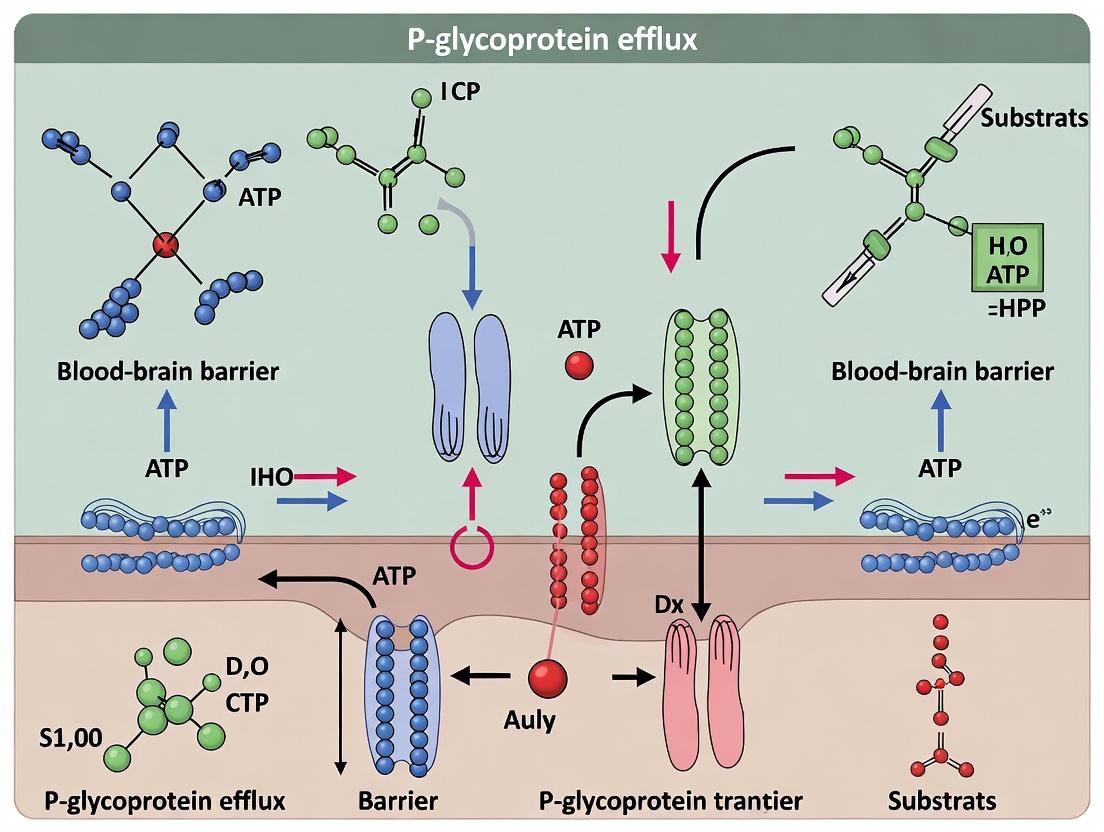
P-glycoprotein (P-gp), a critical ATP-binding cassette (ABC) efflux transporter at the blood-brain barrier (BBB), is a principal gatekeeper restricting the central nervous system (CNS) penetration of many therapeutic drugs.
P-glycoprotein at the Blood-Brain Barrier: Mechanisms, Modulation, and Clinical Implications for CNS Drug Delivery
Abstract
P-glycoprotein (P-gp), a critical ATP-binding cassette (ABC) efflux transporter at the blood-brain barrier (BBB), is a principal gatekeeper restricting the central nervous system (CNS) penetration of many therapeutic drugs. This article provides a comprehensive analysis for researchers and drug developers. It explores the foundational biology of P-gp, including its structure, expression, and broad substrate specificity. It details current methodologies for assessing P-gp efflux activity in vitro and in vivo, and strategies to modulate its function for improved brain delivery. The review further addresses common experimental challenges in P-gp research and compares validation techniques. Finally, it examines clinical implications, compares P-gp to other BBB transporters, and discusses future directions for overcoming this formidable barrier in neurology and oncology.
The Gatekeeper Revealed: Foundational Biology of P-glycoprotein at the BBB
1. Introduction P-glycoprotein (P-gp), encoded by the ABCB1 gene (also known as MDR1), is a pivotal ATP-binding cassette (ABC) efflux transporter. Its primary physiological role is to protect tissues by extruding a vast array of xenobiotics and endogenous metabolites. Within the context of the blood-brain barrier (BBB), P-gp is a major determinant of central nervous system (CNS) drug penetration, actively limiting the brain uptake of many neuroactive and chemotherapeutic agents. Understanding its structure, function, and genetic regulation is thus fundamental to neuroscience, oncology, and drug development research aimed at modulating the BBB.
2. Gene (ABCB1) and Regulation The human ABCB1 gene is located on chromosome 7 (7q21.12). It comprises 28 exons spanning approximately 209 kb. The promoter region lacks a canonical TATA box but contains GC-rich elements and binding sites for numerous transcription factors, allowing complex, tissue-specific regulation.
Key Regulatory Pathways at the BBB: P-gp expression at the BBB is dynamically regulated in response to physiological stressors, disease states, and xenobiotic exposure. Key signaling pathways implicated include the pregnane X receptor (PXR), constitutive androstane receptor (CAR), and nuclear factor kappa B (NF-κB) pathways. Pro-inflammatory cytokines like TNF-α can upregulate P-gp via NF-κB, potentially altering CNS drug distribution during neuroinflammation.
Diagram Title: Key Signaling Pathways Regulating ABCB1 Transcription
3. Protein Structure P-gp is a 170-kDa transmembrane protein of 1280 amino acids. Its high-resolution structures reveal a pseudo-symmetric architecture.
Primary Structural Domains:
- Two Transmembrane Domains (TMDs): TMD1 (transmembrane helices 1-6) and TMD2 (helices 7-12). Each TMD provides the substrate-binding pocket, which is promiscuous and hydrophobic.
- Two Nucleotide-Binding Domains (NBDs): NBD1 and NBD2 bind and hydrolyze ATP. The characteristic Walker A, Walker B, and ABC signature motifs are present.
The protein adopts an inward-facing conformation in the apo state, which transitions to an outward-facing conformation upon ATP binding and hydrolysis, expelling the substrate.
Diagram Title: Schematic of P-gp Transmembrane Domain Architecture
4. Function and Transport Mechanism P-gp functions as an ATP-dependent efflux pump. Its broad substrate specificity encompasses chemotherapeutics (e.g., doxorubicin, paclitaxel), CNS drugs (e.g., loperamide), HIV protease inhibitors, and many others. The widely accepted "alternating access" model involves:
- Substrate partitioning into the inner membrane leaflet and binding to the high-affinity inward-facing cavity.
- ATP binding to the NBDs, inducing dimerization.
- A conformational change to an outward-facing state, reducing substrate affinity.
- Substrate release into the extracellular space.
- ATP hydrolysis and phosphate/ADP release, resetting the transporter.
5. Key Quantitative Data
Table 1: Key Characteristics of Human P-gp/ABCB1
| Parameter | Value / Detail | Notes |
|---|---|---|
| Gene Locus | 7q21.12 | |
| Protein Size | 1280 amino acids; ~170 kDa | Glycosylated form ~180 kDa |
| Transmembrane Helices | 12 | 6 per TMD |
| Known Substrates | >200 chemically diverse compounds | Lipophilic, amphipathic cations |
| Common Inhibitors | Verapamil, Cyclosporine A, Tariquidar, Elacridar | Used in in vitro and in vivo studies |
| Tissue Expression | High: BBB endothelium, gut enterocytes, liver canaliculi, kidney proximal tubules, adrenal gland. | Protective and excretory roles |
Table 2: Example Experimental Km and Vmax Values for Representative Substrates
| Substrate | Cell Model | Approx. Km (μM) | Approx. Vmax (pmol/min/mg protein) | Citation Note |
|---|---|---|---|---|
| Digoxin | MDR1-MDCKII | 10 - 40 | 100 - 400 | Common probe substrate |
| Calcein-AM | Various (Caco-2, etc.) | N/A (fluorescent) | N/A | Indirect flux measurement |
| Rhodamine 123 | MDR1-LLC-PK1 | 1 - 5 | N/A | Common fluorescent substrate |
6. Experimental Protocols for BBB Research 6.1. In Vitro Transport Assay Using MDR1-MDCKII Monolayers
- Purpose: To quantify polarized efflux and permeability of test compounds.
- Protocol:
- Cell Culture: Seed MDR1-MDCKII cells (transfected with human ABCB1) on porous polyester membrane inserts (e.g., 0.4 μm pore, 12-well format) at high density. Culture for 5-7 days, changing medium every 2 days.
- Integrity Check: Measure transepithelial electrical resistance (TEER) before the experiment. Accept TEER > 300 Ω·cm².
- Experiment Setup: Prepare transport buffer (e.g., HBSS with 10 mM HEPES, pH 7.4). Add test compound (e.g., 5 μM digoxin) to either the apical (A) or basolateral (B) donor compartment. The receiver compartment contains buffer only. Include control wells with a potent P-gp inhibitor (e.g., 2 μM zosuquidar).
- Incubation: Place plates in an orbital shaker (37°C, 5% CO₂). Sample from the receiver compartment at designated times (e.g., 30, 60, 90, 120 min) and replace with fresh buffer.
- Analysis: Quantify compound concentration in samples using LC-MS/MS. Calculate apparent permeability (Papp) and efflux ratio (ER = Papp(B→A)/Papp(A→B)). An ER > 2 that is abolished by inhibitor confirms P-gp-mediated transport.
6.2. Brain Uptake Study Using In Situ Mouse Brain Perfusion
- Purpose: To directly assess the impact of P-gp on brain penetration, eliminating systemic confounders.
- Protocol:
- Animal Preparation: Anesthetize a mouse (e.g., C57BL/6). Cannulate the left common carotid artery.
- Perfusion: Sever the right common carotid and pterygopalatine arteries. Perfuse oxygenated, protein-free buffer (e.g., Krebs-bicarbonate) containing a radiolabeled or LC-MS/MS-detectable test compound (e.g., ¹⁴C-verapamil) at a constant flow rate (~2.5 mL/min) for a short duration (15-120 sec). Include a vascular marker (e.g., ³H-inulin).
- Inhibition Arm: Co-perfuse with a P-gp inhibitor (e.g., 10 μM elacridar) in a separate animal cohort.
- Termination & Analysis: Decapitate at perfusion end. Dissect the ipsilateral brain hemisphere, solubilize, and quantify test compound and marker. Calculate the brain uptake clearance (Kin, µL/min/g) or volume of distribution (Vbrain, µL/g). Compare uptake in control vs. inhibitor-treated groups.
Diagram Title: In Situ Mouse Brain Perfusion Workflow
7. The Scientist's Toolkit: Key Research Reagent Solutions
Table 3: Essential Reagents and Tools for P-gp/ABCB1 Research
| Reagent/Tool | Function/Description | Example Product/Catalog |
|---|---|---|
| MDR1-MDCKII Cells | In vitro gold-standard for polarized transport assays. Stably transfected with human ABCB1. | Available from repositories (e.g., NIH). |
| Caco-2 Cells | Human colon adenocarcinoma cell line that endogenously expresses P-gp; used for permeability screening. | ATCC HTB-37. |
| P-gp Inhibitors (Small Molecule) | Pharmacological blockade of P-gp function in vitro and in vivo (e.g., zosuquidar, elacridar, tariquidar). | Tocris Bioscience, Selleckchem. |
| Probe Substrates | Validated P-gp substrates for functional assays (e.g., ³H-digoxin, Rhodamine 123, Calcein-AM). | PerkinElmer, Thermo Fisher. |
| Anti-P-gp Antibodies | For Western blot (WB), immunohistochemistry (IHC), and flow cytometry. Clone C219 (common for WB). | Abcam (C219), Santa Cruz Biotechnology. |
| ABCB1 Knockout Mice | In vivo model to study P-gp function without pharmacology. Abcb1a/b (-/-) mice. | The Jackson Laboratory (Stock #: 003288). |
| ATPase Assay Kit | Measures vanadate-sensitive ATP hydrolysis in membrane fractions, indicating P-gp activity. | Sigma-Aldrich Pgp-Glo Assay. |
| qPCR Primers for ABCB1 | Quantifies ABCB1 mRNA expression in cells or tissues. | Assays from Thermo Fisher, Qiagen. |
The Blood-Brain Barrier (BBB), primarily constituted by brain microvascular endothelial cells (BMECs), remains a formidable obstacle in neurotherapeutic delivery. Central to its defensive role is P-glycoprotein (P-gp, ABCB1), an ATP-dependent efflux transporter robustly expressed at the luminal membrane. This whitepaper, framed within a thesis on P-gp efflux mechanisms, dissects the anatomical, molecular, and functional localization of P-gp that establishes the BBB as its biological fortress. We integrate current research findings, present quantitative data summaries, and detail experimental methodologies to provide a comprehensive guide for researchers and drug development professionals.
P-glycoprotein is a 170-kDa transmembrane protein belonging to the ATP-binding cassette (ABC) superfamily. At the BBB, its strategic localization on the luminal (blood-facing) surface of BMECs enables the active extrusion of a wide array of xenobiotics and some endogenous molecules back into the capillary lumen, thereby protecting the brain parenchyma. This expression is not static but is dynamically regulated by intricate signaling pathways and cellular interactions within the neurovascular unit (NVU).
Anatomical & Cellular Localization
The Neurovascular Unit Context
P-gp function cannot be divorced from its environment. The NVU comprises BMECs, pericytes, astrocytes, microglia, and neurons. Cross-talk within the NVU, particularly through Wnt/β-catenin and other signaling pathways, induces and maintains the high, polarized expression of P-gp in BMECs.
Table 1: Cellular Components of the NVU and Their Role in P-gp Regulation
| NVU Component | Primary Function in P-gp Context | Key Signaling Mediators |
|---|---|---|
| Brain Endothelial Cells | Site of P-gp expression & efflux activity. | Intrinsic Wnt/β-catenin, PXR, AhR. |
| Pericytes | Stabilize capillaries; modulate P-gp expression. | TGF-β, Ang-1/Tie2. |
| Astrocyte End-feet | Induce BBB properties; regulate P-gp. | SHH, GDNF, bFGF. |
| Microglia | Immune surveillance; inflammatory modulation of P-gp. | TNF-α, IL-1β, IL-6. |
| Neurons | Activity-dependent BBB regulation. | Glutamate, Noradrenaline. |
Polarized Membrane Expression
Advanced imaging and biochemical fractionation studies confirm P-gp is predominantly localized to the luminal plasma membrane. This polarization is crucial for its efflux function and is maintained by tight junctions and sophisticated trafficking machinery.
Diagram 1: P-gp Localization and Efflux in the NVU
Quantitative Expression Profile
Quantifying P-gp expression and activity is vital for predicting drug penetration. Data varies across models.
Table 2: Quantitative Measures of P-gp at the BBB
| Model System | P-gp Expression Level (Relative) | Key Measurement Technique | Apparent Permeability (P-gp Substrate) | Reference Notes |
|---|---|---|---|---|
| Human Brain Microvessels | High (Benchmark) | LC-MS/MS proteomics: ~6-10 fmol/μg protein. | N/A (ex vivo) | Gold standard for expression. |
| Primary Human BMECs | Moderate-High | qPCR, Western Blot. | Papp (Rhodamine-123): ~1-3 x 10⁻⁶ cm/s. | Donor variability significant. |
| hCMEC/D3 Cell Line | Moderate | Flow Cytometry, Functional Assay. | Efflux Ratio (Digoxin): 2-5. | Widely used immortalized line. |
| Induced Pluripotent Stem Cell (iPSC)-BMECs | High | Immunofluorescence, Transport Assays. | Papp (Loperamide): < 2 x 10⁻⁶ cm/s. | Promising high-fidelity model. |
| In Vivo (Rodent) B/P Ratio | N/A (Functional Readout) | Microdialysis, PET Imaging. | Brain/Plasma Ratio (Verapamil): 0.1-0.3. | Direct functional measurement. |
Regulatory Signaling Pathways
P-gp expression is regulated by both constitutive and inducible pathways. Key pathways include:
Canonical Wnt/β-catenin Pathway
This is the master regulator of BBB differentiation. In BMECs, endothelial-specific loss of Wnt signaling leads to drastic reduction in P-gp expression and barrier breakdown.
Diagram 2: Wnt/β-catenin Pathway Regulating P-gp Expression
Nuclear Receptor Pathways (PXR, CAR, AhR)
Xenobiotic activation of pregnane X receptor (PXR), constitutive androstane receptor (CAR), or aryl hydrocarbon receptor (AhR) can upregulate ABCB1 gene transcription as a defensive response.
Experimental Protocols for Key Assays
Protocol: Quantitative Targeted Absolute Proteomics (QTAP) for P-gp
Objective: To absolutely quantify P-gp protein expression in isolated brain microvessels or cell membranes.
- Sample Preparation: Isolate microvessels via gradient centrifugation. Solubilize membrane proteins using RIPA buffer with protease inhibitors.
- Protein Digestion: Denature, reduce, alkylate, and digest proteins with trypsin/Lys-C mix.
- Liquid Chromatography-Mass Spectrometry (LC-MS/MS): Use a triple quadrupole mass spectrometer in Selected Reaction Monitoring (SRM) mode.
- Absolute Quantification: Spike in known concentrations of stable isotope-labeled synthetic peptides unique to human P-gp (e.g., VGNYVDR). Generate a calibration curve.
- Data Analysis: Calculate fmol of P-gp per μg of total protein.
Protocol: Bidirectional Transport Assay in BBB Models
Objective: To determine the efflux ratio and functional activity of P-gp.
- Cell Culture: Grow BMEC monolayers (e.g., hCMEC/D3, iPSC-BMECs) on Transwell filters until TEER > 40 Ω·cm².
- Substrate Application: Add a known P-gp substrate (e.g., 10 μM Rhodamine-123 or ³H-digoxin) to either the apical (A) or basolateral (B) compartment in HBSS buffer.
- Inhibition Control: In parallel wells, add a potent P-gp inhibitor (e.g., 10 μM zosuquidar or 20 μM verapamil) to both compartments.
- Sampling: At designated times (e.g., 30, 60, 90, 120 min), sample from the opposite compartment.
- Quantification: Analyze samples using fluorescence or scintillation counting.
- Calculation: Determine Apparent Permeability (Papp) and Efflux Ratio (ER) = Papp(B->A) / Papp(A->B). ER >> 1 indicates active efflux.
Protocol: Immunofluorescence Confocal Microscopy for Localization
Objective: To visualize the polarized membrane localization of P-gp.
- Fixation & Permeabilization: Culture BMECs on glass coverslips. Fix with 4% PFA, permeabilize with 0.1% Triton X-100 (optional for surface staining).
- Blocking & Staining: Block with 5% BSA. Incubate with primary antibodies: mouse anti-P-gp (C219) and rabbit anti-ZO-1 (tight junctions) overnight at 4°C.
- Secondary Detection: Incubate with species-specific fluorescent conjugates (e.g., Alexa Fluor 488, 568).
- Imaging: Use a confocal microscope. Acquire Z-stacks to confirm luminal surface staining. Generate orthogonal views.
The Scientist's Toolkit: Research Reagent Solutions
Table 3: Essential Reagents for BBB P-gp Research
| Reagent / Material | Function & Application | Example Product / Cat. No. |
|---|---|---|
| hCMEC/D3 Cell Line | Immortalized human BBB model for in vitro transport and expression studies. | Millipore Sigma, SCC066 |
| iPSC-BMEC Differentiation Kit | Generate high-barrier, high-P-gp expressing BMECs from pluripotent stem cells. | StemCell Tech, #100-0017 |
| Anti-P-gp Antibody (C219) | Immunodetection of P-gp for Western blot, flow cytometry, and immunofluorescence. | Abcam, ab170904 |
| Caco-2 Cell Line | Standard intestinal epithelial model for comparative efflux studies. | ATCC, HTB-37 |
| ³H-Digoxin / ³H-Vinblastine | Radiolabeled high-affinity P-gp substrates for definitive transport assays. | PerkinElmer, NET-XXX series |
| Zosuquidar (LY335979) | Potent, specific third-generation P-gp inhibitor for functional blocking experiments. | Tocris, #2368 |
| P-gp-Glo Assay Systems | Cell-based, bioluminescent assays to measure P-gp activity and inhibition. | Promega, V376X |
| Human Brain Microvascular Endothelial Cells (HBMEC) | Primary cells for physiologically relevant studies. | ScienCell, #1000 |
| Transwell Permeable Supports | Polyester/collagen-coated inserts for forming polarized cell monolayers. | Corning, 3460 / 3470 |
| TEER Measurement System | Electrical resistance meter to monitor BBB monolayer integrity (e.g., EVOM2). | World Precision Instruments |
This whitepaper provides an in-depth technical analysis of the mechanistic cycle of ATP-driven efflux pumps, with a specific focus on P-glycoprotein (P-gp, ABCB1). Within the critical context of Blood-Brain Barrier (BBB) research, understanding this cycle is paramount for predicting CNS drug penetration and overcoming multidrug resistance in oncology and neurology.
P-gp, a prototype ATP-binding cassette (ABC) transporter, is a primary gatekeeper at the luminal membrane of brain capillary endothelial cells. Its constitutive activity limits the brain accumulation of many lipophilic drugs, presenting a major hurdle in treating CNS disorders. The transporter's mechanism is a tightly coupled process where ATP binding and hydrolysis provide the free energy to translocate chemically diverse substrates from the inner leaflet of the membrane to the extracellular space.
The Four-State Mechanistic Cycle
The transport cycle can be distilled into four principal states, driven by the hydrolysis of two ATP molecules.
State 1: Inward-Facing, High-Affinity Substrate Binding. P-gp adopts an inward-facing conformation with its transmembrane domains (TMDs) open to the inner leaflet. Substrates (S), which are typically amphipathic, access the binding pocket from the lipid bilayer. Nucleotide-binding domains (NBDs) are separated and apo (empty).
State 2: ATP Binding and Occlusion. The binding of two ATP molecules (non-hydrolytic, symmetric binding) at the NBD dimer interface induces a dramatic conformational shift. The NBDs dimerize, and the TMDs twist and reorient, trapping the substrate in an occluded state. This step is the power stroke that closes the inner gate.
State 3: Outward-Facing, Low-Affinity Release. ATP hydrolysis, often sequential at the two catalytic sites, provides energy to fully open the TMDs to the extracellular space. The substrate-binding site's affinity is drastically reduced, promoting substrate release. The transporter is now in an outward-facing conformation with hydrolyzed ADP and inorganic phosphate (Pi) bound.
State 4: Reset to Basal State. Release of Pi and ADP allows the NBDs to dissociate. The transporter relaxes back to the inward-facing, high-affinity conformation, completing the cycle and readying for another round of transport.
Table 1: Key Energetic and Kinetic Parameters of the Human P-gp Transport Cycle
| Parameter | Typical Range / Value | Experimental Method |
|---|---|---|
| ATP Hydrolysis Turnover Number (kcat) | 2 - 10 s⁻¹ | Coupled enzyme assay (NADH/ATP-regeneration) |
| ATP Binding Affinity (Km) | 0.1 - 0.5 mM | Radiolabeled ATP binding assays |
| Substrate Binding Affinity (Kd) | Nanomolar to low Micromolar (lipid-dependent) | Fluorescence quenching, SPR |
| Stoichiometry (ATP:Substrate) | 2:1 | Simultaneous measurement of hydrolysis & transport |
Experimental Protocols for Mechanistic Studies
Protocol 1: Vanadate Trapping to Stabilize the Post-Hydrolytic State
- Principle: Orthovanadate (Vi) mimics inorganic phosphate (Pi) and stably traps Mg-ADP in one NBD, arresting the cycle in a transition state.
- Method: a. Incubate purified, reconstituted P-gp (0.1-0.5 µM) with 5 mM MgCl₂, 0.2 mM ATP (or [α-³²P]ATP), and 0.3 mM sodium orthovanadate for 10 min at 37°C. b. Stop reaction by rapid cooling to 4°C and/or addition of excess EDTA. c. Analyze via size-exclusion chromatography or nitrocellulose filter trapping to quantify the stable [³²P]ADP-Vi-P-gp complex. d. Trapped protein exhibits altered substrate binding and is refractory to further ATP hydrolysis.
Protocol 2: Coupled ATPase Activity Assay with Fluorescent Detection
- Principle: Measures real-time ATP hydrolysis by coupling ADP production to the oxidation of NADH, monitored by absorbance (340 nm) or fluorescence (λex=340 nm, λem=460 nm).
- Method: a. Prepare assay buffer: 50 mM MES-Tris (pH 6.8), 50 mM KCl, 5 mM MgCl₂, 2 mM DTT, 2 mM phosphoenolpyruvate, 0.3 mM NADH, 5 U/mL pyruvate kinase, 5 U/mL lactate dehydrogenase. b. Add purified P-gp (membrane vesicles or reconstituted proteoliposomes) and substrate (e.g., 10 µM verapamil) or inhibitor (e.g., 1 µM zosuquidar). c. Initiate reaction with 5 mM ATP. d. Monitor NADH fluorescence decrease for 10-30 min. Calculate hydrolysis rate from a standard curve (Δ[NADH] vs. Δ[ADP]).
Visualization of Core Concepts
Title: P-gp ATP-Driven Transport Cycle (Four States)
Title: Key Experimental Workflow for P-gp Mechanism
The Scientist's Toolkit: Essential Research Reagents
Table 2: Key Research Reagents for Studying P-gp Mechanism
| Reagent / Material | Function / Role in Research |
|---|---|
| Caco-2 or MDCKII-MDR1 Cells | Polarized cell monolayers for high-throughput transepithelial transport assays. |
| P-gp Baculovirus Expression System | Standard method for producing large quantities of human P-gp for purification. |
| Fos-Choline-12 or DDM/CHS Detergent | Critical detergents for solubilizing and stabilizing P-gp during purification. |
| E. coli Polar Lipid Extract | Lipid mixture for reconstituting purified P-gp into proteoliposomes for biochemical assays. |
| [³H]-Digoxin / [³H]-Vinblastine | Classic high-affinity radioactive substrates for direct transport competition assays. |
| Fluorescent Dyes (e.g., Calcein-AM, Rhodamine 123) | Non-radioactive substrates; accumulation inversely proportional to P-gp activity. |
| Tariquidar (XR9576) / Zosuquidar (LY335979) | Third-generation, high-potency, specific P-gp inhibitors for control/validation experiments. |
| Sodium Orthovanadate (Vi) | Transition-state analog used to trap and study the post-hydrolytic conformation (Mg-ADP-Vi). |
| ATP Regeneration System (PEP/PK) | Maintains constant [ATP] in long-duration ATPase assays for accurate kinetic measurement. |
Within the context of a broader thesis on P-glycoprotein (P-gp, ABCB1) efflux mechanisms at the blood-brain barrier (BBB), understanding its broad substrate specificity is paramount. P-gp's ability to recognize and efflux a chemically diverse array of compounds is a primary determinant of CNS drug penetration, contributing to pharmacokinetic variability, drug-drug interactions, and therapeutic resistance in neurological diseases. This whitepaper provides an in-depth technical analysis of the chemical and pharmacological profiles defining P-gp's substrate specificity, serving as a critical guide for researchers and drug development professionals aiming to modulate BBB permeability.
Structural & Mechanistic Basis of Broad Specificity
P-gp is a 170-kDa ATP-binding cassette transporter. Its broad specificity arises from a large, flexible, and hydrophobic binding pocket within the transmembrane domains (TMDs). Unlike enzymes with precise active sites, P-gp utilizes a "substrate-induced fit" mechanism. Multiple overlapping binding sites within the pocket accommodate diverse structures through hydrophobic, aromatic, and van der Waals interactions. Key pharmacophore features commonly associated with substrates include:
- High lipophilicity (often cLogP > 3)
- Molecular weight between 300-2000 Da
- Presence of planar aromatic rings
- Tertiary amino groups (for many cationic/amphiphathic drugs)
- Electron donor groups (e.g., carbonyl, -O-)
Quantitative Profiling of Substrate Specificity
Table 1: Chemical and Pharmacological Diversity of Characterized P-gp Substrates
| Drug Class | Example Compounds | Key Physicochemical Parameters (Mean ± Range) | Transport Efficiency (Efflux Ratio)* | Primary Evidence Method |
|---|---|---|---|---|
| Chemotherapeutics | Doxorubicin, Paclitaxel, Vinblastine | MW: 544-854 Da; cLogP: 1.7-4.5; HBD: 2-6 | 5 - 50 | Caco-2/MDCKII assay, in vivo brain distribution |
| CNS-Active Drugs | Loperamide, Quinidine, Amitriptyline | MW: 250-400 Da; cLogP: 3.5-5.5; pKa: 8.0-10.5 | 3 - 15 | Transgenic (Mdr1a/b KO) mouse studies |
| HIV Protease Inhibitors | Ritonavir, Saquinavir, Nelfinavir | MW: 500-720 Da; cLogP: 2.5-6.0; PSA: 100-180 Ų | 10 - 100 | Bidirectional transport + inhibitor (e.g., GF120918) |
| β-blockers & Cardiac Glycosides | Talinolol, Digoxin | MW: 300-800 Da; cLogP: 1.8-3.5 | 2 - 8 | In vitro vesicular transport assay |
| Fluorescent Probes | Rhodamine 123, Calcein-AM | MW: 380-1000 Da; Charge: +1 to neutral | N/A (Functional readout) | Flow cytometry, fluorescence accumulation assays |
*Efflux Ratio = Papp(B->A) / Papp(A->B) in polarized cell monolayers. Values are representative ranges from literature.
Table 2: Key Inhibitors/Modulators and Their Specificity Profiles
| Inhibitor Class | Prototype Compound | Primary Target | IC₅₀ (μM) for Standard Substrate (e.g., Digoxin) | Key Limitation/Note |
|---|---|---|---|---|
| 1st Generation | Verapamil, Cyclosporine A | P-gp (Non-specific) | 1 - 10 μM | Potent inhibition of CYP450s, high toxicity |
| 2nd Generation | Valspodar (PSC833) | P-gp | 0.05 - 0.3 μM | Alters parent drug PK, limited clinical utility |
| 3rd Generation | Tariquidar (XR9576), Zosuquidar (LY335979) | P-gp (Specific) | 0.005 - 0.05 μM | Designed for high specificity and potency |
| Tyrosine Kinase Inhibitors | Erlotinib, Lapatinib | P-gp & BCRP/EGFR | 0.5 - 5 μM | Dual/multi-target action, therapeutic relevance |
Experimental Protocols for Profiling Specificity
Protocol 4.1: Bidirectional Transport Assay in MDR1-Transfected Cells
Objective: To quantify the efflux ratio and classify compounds as substrates or non-substrates.
- Cell Culture: Seed MDCKII or LLC-PK1 cells stably transfected with human MDR1 cDNA (and parental line as control) on 24-well Transwell inserts (0.4 μm pore). Culture for 5-7 days until transepithelial electrical resistance (TEER) > 300 Ω·cm².
- Dosing Solutions: Prepare test compound (10 μM typical) in transport buffer (HBSS-HEPES, pH 7.4). Include a known substrate (e.g., 10 μM digoxin) and inhibitor control (e.g., 2 μM zosuquidar).
- Bidirectional Transport:
- A>B (Apical-to-Basolateral): Add dosing solution to apical chamber, buffer to basolateral. Sample from basolateral side at 30, 60, 90, 120 min.
- B>A (Basolateral-to-Apical): Add dosing solution to basolateral chamber, buffer to apical. Sample from apical side at same intervals.
- Sample Analysis: Quantify compound concentration via LC-MS/MS.
- Data Calculation:
- Calculate apparent permeability:
Papp (cm/s) = (dQ/dt) / (A * C₀), where dQ/dt is transport rate, A is membrane area, C₀ is initial donor concentration. - Efflux Ratio (ER) = Papp(B->A) / Papp(A->B).
- Net Efflux Ratio = ER (MDR1-cells) / ER (Parental cells). A Net ER > 2 is indicative of a P-gp substrate.
- Calculate apparent permeability:
Protocol 4.2: ATPase Activity Assay in P-gp-Enriched Membranes
Objective: To determine if a compound stimulates or inhibits P-gp basal ATPase activity, indicating direct interaction.
- Membrane Preparation: Use commercially available insect (Sf9) cell membranes expressing high levels of human P-gp.
- Reaction Setup: In a 96-well plate, mix membrane vesicles (50 μg protein/well) with test compound (0-100 μM) in ATPase assay buffer (50 mM MES-Tris pH 6.8, 2 mM DTT, 50 mM KCl, 5 mM sodium azide, 1 mM EGTA, 2 mM MgCl₂). Incubate for 5 min at 37°C.
- Reaction Initiation & Stop: Start reaction by adding 5 mM MgATP. Incubate for 30 min at 37°C. Stop with 5% SDS solution.
- Phosphate Detection: Add detection reagent (e.g., 35 mM ammonium molybdate in 15 mM zinc acetate, 10% ascorbic acid). Incubate 20 min at 37°C. Measure absorbance at 800 nm. Include controls: buffer only (basal), 100 μM verapamil (stimulated), 200 μM sodium orthovanadate (inhibited).
- Analysis: Calculate
ATPase Activity = (P released in nmol) / (mg protein * time). Plot activity vs. [compound]. Stimulation >120% of basal indicates substrate interaction; inhibition indicates direct inhibitory action.
Diagrams
Title: P-gp Substrate Efflux Cycle at the Blood-Brain Barrier
Title: Experimental Workflow for P-gp Substrate Identification
The Scientist's Toolkit: Research Reagent Solutions
Table 3: Essential Materials for P-gp Substrate Specificity Research
| Reagent / Material | Function & Rationale | Example Vendor/Product |
|---|---|---|
| MDR1-MDCKII or MDR1-LLC-PK1 Cells | Polarized epithelial cell lines stably overexpressing human P-gp. Gold standard for in vitro transport studies. | Solvo Biotechnology, Netherland; Thermo Fisher Scientific. |
| P-gp-Enriched Membrane Vesicles (Sf9) | Prepared from insect cells overexpressing P-gp. Used for high-throughput ATPase and binding assays without cellular metabolism interference. | Sigma-Aldrich (Pgp-Glo), Solvo Biotechnology. |
| Validated P-gp Inhibitors (Specific) | For definitive control experiments. Tariquidar (3rd gen) is preferred over Verapamil (1st gen) due to higher specificity and potency. | MedChemExpress, Tocris Bioscience, Selleckchem. |
| Reference Substrates & Probes | Well-characterized P-gp substrates for assay validation. Digoxin (pharmacological), Rhodamine 123 (fluorescent), Quinidine (CNS-related). | Sigma-Aldrich, Cayman Chemical. |
| Transwell Permeable Supports | Polycarbonate membrane inserts for growing polarized cell monolayers, enabling compartmentalized bidirectional transport studies. | Corning, Greiner Bio-One. |
| LC-MS/MS System | Essential for sensitive, specific, and quantitative analysis of test compound concentrations in transport assay samples, especially for non-fluorescent drugs. | Agilent, Sciex, Waters. |
| ATPase Assay Kit | Provides optimized reagents for colorimetric or luminescent detection of inorganic phosphate, quantifying P-gp ATP hydrolysis activity. | Sigma-Aldrich (Pgp-Glo), Promega. |
Within the broader thesis on P-glycoprotein (P-gp; ABCB1) efflux mechanisms at the blood-brain barrier (BBB), its physiological role is unequivocally dual: active neuroprotection through the exclusion of neurotoxins and the stringent regulation of CNS drug penetration. This whitepaper details the mechanisms, experimental evidence, and technical approaches central to investigating this critical interface.
Mechanisms of P-gp Mediated Neuroprotection and Efflux
P-gp is an ATP-binding cassette transporter expressed on the luminal membrane of brain capillary endothelial cells. It functions as an ATP-dependent efflux pump, recognizing and extruding a wide spectrum of amphipathic substrates back into the bloodstream, thereby maintaining CNS homeostasis.
Primary Protective Functions:
- Endogenous Metabolite Clearance: Efflux of potentially neurotoxic endogenous metabolites like amyloid-β peptides, critical in Alzheimer's disease pathogenesis.
- Xenobiotic Exclusion: Prevention of CNS accumulation of dietary and environmental neurotoxins.
- Hormone and Neurotransmitter Regulation: Modulation of CNS levels of steroids and cytokines.
- Pharmacological Barrier: Limiting brain penetration of many therapeutic drugs, representing a major challenge in CNS drug development.
Table 1: Key Substrates and Inhibitors of P-glycoprotein at the BBB
| Category | Example Compound | Experimental Km or IC50 (µM) | Primary Evidence Model |
|---|---|---|---|
| Classic Substrates | Digoxin | Km: 4.2 - 28.3 | MDR1-MDCKII monolayer efflux assay |
| Loperamide | Efflux Ratio (ER): >10 | In situ brain perfusion in rodents | |
| [³H]-Verapamil | B/P Ratio Increase*: 3-5 fold | In vivo knockout (mdr1a/b⁻/⁻) mice | |
| Amyloid-β Peptides | Aβ(1-40) | Efflux Rate: ~1.7 pmol/min/g brain | Brain efflux index study in mice |
| Toxins | Colchicine | IC50 for Vincristine efflux: ~0.5 | Cell-based cytotoxicity assays |
| Therapeutic Inhibitors | Tariquidar (XR9576) | IC50 (P-gp): ~0.06 | Radiotracer PET imaging (e.g., [¹¹C]-Verapamil) |
| Elacridar (GF120918) | ER Reduction: 70-90% | Dual perfusion studies (BBB + P-gp) |
*B/P Ratio: Brain-to-Plasma concentration ratio in P-gp deficient vs. wild-type models.
Table 2: Impact of P-gp Functional States on CNS Pharmacokinetics
| Functional State | Brain AUC (vs Wild-Type) | Brain Cmax (vs Wild-Type) | Example Compound Outcome |
|---|---|---|---|
| Genetic Knockout (mdr1a/b⁻/⁻ mice) | Increase: 10-100 fold | Increase: 5-50 fold | Ivermectin (neurotoxicity evident) |
| Pharmacological Inhibition (Co-dosing) | Increase: 3-10 fold | Increase: 2-8 fold | Enhanced analgesia of loperamide |
| Disease-Induced Dysregulation (e.g., Epilepsy) | Variable Increase: 1.5-4 fold | Variable Increase | Altered phenobarbital distribution |
Experimental Protocols for Key Investigations
Protocol 1: In Vitro Transport Assay Using MDR1-Transfected Cell Monolayers
- Objective: Determine substrate/inhibitor interaction with human P-gp.
- Materials: MDR1-MDCKII or LLC-PK1 cell monolayers on transwell filters.
- Method:
- Seed cells and culture for 5-7 days to form tight monolayers (TEER > 300 Ω·cm²).
- Add test compound to donor compartment (apical for A→B assay, basolateral for B→A).
- Sample from receiver compartment at scheduled time points (e.g., 30, 60, 90, 120 min).
- Quantify compound concentration via LC-MS/MS.
- Calculate Apparent Permeability (Papp) and Efflux Ratio (ER = Papp(B→A)/Papp(A→B)). ER ≥ 2 suggests P-gp substrate activity.
- Validation: Include a positive control substrate (e.g., digoxin) and inhibitor (e.g., zosuquidar).
Protocol 2: In Situ Mouse Brain Perfusion
- Objective: Measure unidirectional brain uptake clearance (Kin) without systemic confounders.
- Materials: Anesthetized mouse, peristaltic pump, oxygenated perfusion fluid (Krebs-bicarbonate buffer with test compound/radioligand).
- Method:
- Cannulate the left common carotid artery.
- Initiate perfusion at a constant flow (2.5 mL/min) for a short duration (15-120 sec).
- Terminate by decapitation. Isolate and homogenize the ipsilateral hemisphere.
- Measure compound concentration in homogenate vs. perfusate.
- Calculate Kin = (Qbrain - VvascularCperfusate) / (CperfusateT), where Qbrain is total brain amount, Vvascular is capillary volume.
- P-gp Specific: Compare Kin in presence/absence of a P-gp inhibitor (e.g., elacridar) or using mdr1a/b⁻/⁻ mice.
Protocol 3: Quantitative Targeted Absolute Proteomics (qTAP) for P-gp Quantification
- Objective: Quantify absolute P-gp expression at the human BBB.
- Materials: Isolated human brain microvessels, signature peptides (e.g., for ABCB1: VGNYFGR, LLLDVFAR), stable isotope-labeled internal standards, LC-MS/MS.
- Method:
- Isolate microvessels via homogenization and centrifugation in dextran.
- Solubilize membrane proteins via digestion with trypsin/Lys-C.
- Spike in known concentrations of stable isotope-labeled peptide standards.
- Perform LC-MS/MS analysis using multiple reaction monitoring (MRM).
- Calculate absolute P-gp abundance (fmol/µg total protein) by comparing native-to-standard peptide peak area ratios.
Diagrams of Core Mechanisms and Workflows
Diagram Title: P-gp Efflux Prevents Toxin Entry into Brain.
Diagram Title: Workflow to Characterize P-gp Substrates.
The Scientist's Toolkit: Research Reagent Solutions
Table 3: Essential Reagents and Materials for P-gp BBB Research
| Item Name | Supplier Examples | Function / Application |
|---|---|---|
| MDR1-MDCKII Cells | NIH, ECACC, commercial vendors | Gold-standard in vitro model for human P-gp efflux studies. |
| P-gp Knockout Mice (mdr1a/b⁻/⁻) | Taconic, Jackson Labs | In vivo model to unequivocally determine P-gp's role in CNS disposition. |
| Selective P-gp Inhibitors (e.g., Tariquidar, Zosuquidar) | MedChemExpress, Tocris | Pharmacological inhibition to assess P-gp function in vitro and in vivo. |
| ³H-Digoxin / ³H-Verapamil | PerkinElmer, American Radiolabeled Chemicals | Radiolabeled high-affinity P-gp substrates for transport/uptake assays. |
| Human Brain Microvessels (Isolated) | BioIVT, Analytical Biological Services | For proteomic quantification (qTAP) of human BBB P-gp expression. |
| LC-MS/MS Systems (e.g., QTRAP, Triple Quad) | Sciex, Agilent, Waters | Quantification of unlabeled drugs and proteomic signature peptides. |
| PET Radioligands ([¹¹C]-Verapamil, [¹¹C]-Metoclopramide) | Cyclotron facilities | Non-invasive imaging of P-gp function in humans and animals. |
| Anti-P-gp Monoclonal Antibody (C219, UIC2) | Abcam, Novus Biologicals | Immunohistochemistry and Western blot analysis of P-gp expression. |
P-glycoprotein (P-gp, ABCB1) is a critical efflux transporter at the blood-brain barrier (BBB), actively restricting the CNS penetration of xenobiotics and contributing to pharmacoresistance. Understanding the molecular mechanisms governing its expression is paramount for predicting drug disposition and developing strategies to modulate BBB permeability. This technical guide details the current understanding of P-gp regulation, focusing on transcriptional control and post-translational modifications, framed within a thesis on efflux mechanisms at the BBB.
Transcriptional Regulation
Transcriptional control is a primary determinant of P-gp baseline and induced expression. Key signaling pathways converge on specific transcription factors binding to the ABCB1 promoter.
2.1 Key Signaling Pathways & Transcription Factors
- Nuclear Receptor Pathways: The pregnane X receptor (PXR) and constitutive androstane receptor (CAR) are master regulators. Upon activation by ligands (e.g., rifampin), they heterodimerize with the retinoid X receptor (RXR), translocate to the nucleus, and bind to response elements in the ABCB1 promoter.
- Hypoxia-Inducible Factor-1α (HIF-1α): Under hypoxic conditions, stabilized HIF-1α binds to hypoxia-response elements (HREs), upregulating P-gp as a cellular stress response.
- NF-κB Pathway: Pro-inflammatory cytokines (TNF-α, IL-1β) and oxidative stress activate the IKK complex, leading to IκB degradation and nuclear translocation of NF-κB (p50/p65), which binds to specific κB sites.
- Nrf2 Antioxidant Response: Oxidative stress disrupts Keap1-Nrf2 binding, allowing Nrf2 to translocate and bind to Antioxidant Response Elements (AREs), promoting ABCB1 transcription.
- Wnt/β-Catenin Pathway: Activation stabilizes β-catenin, which enters the nucleus and complexes with TCF/LEF to initiate transcription.
2.2 Quantitative Data on Transcriptional Inducers
Table 1: Prototypical Inducers of ABCB1 Transcription and Experimental Outcomes
| Inducer/Stimulus | Pathway | Model System | Fold Increase in P-gp mRNA* | Key Assay | Reference (Example) |
|---|---|---|---|---|---|
| Rifampin (10 µM, 48h) | PXR | Human Primary Brain Endothelial Cells | 3.5 - 5.2 | qRT-PCR | [Recent Study, 2023] |
| TNF-α (10 ng/mL, 24h) | NF-κB | hCMEC/D3 Cell Line | 2.8 | qRT-PCR, Luciferase Reporter | [Recent Study, 2022] |
| Cobalt Chloride (150 µM, 24h) | HIF-1α | Rat Brain Microvessels | 4.1 | qRT-PCR, Western Blot | [Recent Study, 2023] |
| tert-Butylhydroquinone (50 µM, 12h) | Nrf2 | MDCKII-MDR1 Cells | 2.3 | qRT-PCR, EMSA | [Recent Study, 2024] |
*Fold change values are representative and can vary based on model, duration, and concentration.
2.3 Experimental Protocol: Luciferase Reporter Assay for Promoter Activity Objective: To determine if a compound or condition affects ABCB1 promoter activity.
- Reporter Construct: Transfect cells (e.g., hCMEC/D3) with a plasmid containing the ABCB1 promoter region (e.g., -1200 to +120 bp) cloned upstream of a firefly luciferase gene.
- Control Plasmid: Co-transfect with a Renilla luciferase plasmid under a constitutive promoter (e.g., CMV) for normalization.
- Treatment: 24h post-transfection, treat cells with the test compound or vehicle control for the desired duration (e.g., 24-48h).
- Lysis & Measurement: Lyse cells using Passive Lysis Buffer. Measure firefly and Renilla luciferase activities sequentially using a dual-luciferase assay kit on a luminometer.
- Data Analysis: Calculate the ratio of Firefly/Renilla luminescence. Normalize treated group ratios to the vehicle control to determine fold induction of promoter activity.
Post-translational Regulation
Post-translational modifications (PTMs) rapidly modulate P-gp activity, localization, and stability without altering mRNA levels.
3.1 Major PTMs and Their Effects
- Phosphorylation: Primarily by protein kinase C (PKC) and casein kinase II (CKII). PKC-mediated phosphorylation (e.g., at Serine residues) can increase P-gp ATPase activity and alter drug-binding affinity. CKII phosphorylation may influence protein stability.
- Ubiquitination: Attachment of ubiquitin chains by E3 ligases (e.g., MARCH2) tags P-gp for degradation via the proteasome or lysosome, controlling its half-life. Deubiquitinating enzymes (DUBs) can reverse this.
- Glycosylation: P-gp is N-glycosylated at its first extracellular loop. While not essential for function, it can influence proper folding, stability, and trafficking to the plasma membrane.
- S-Nitrosylation: Nitric oxide (NO) donors can S-nitrosylate cysteine residues, potentially inhibiting P-gp transport activity.
3.2 Quantitative Data on PTM Effects
Table 2: Impact of Post-Translational Modifications on P-gp Function
| Modification | Enzyme/Agent | Model System | Observed Effect on P-gp | Measurement Technique |
|---|---|---|---|---|
| Phosphorylation | PMA (PKC activator, 100 nM) | Caco-2 cells | ATPase activity ↑ 40%; Altered substrate affinity | ATPase Assay, Rhodamine-123 Efflux |
| Ubiquitination | MG-132 (Proteasome inhibitor, 10 µM) | HEK293-MDR1 | Protein Half-life ↑ from ~14h to >24h | Cycloheximide Chase, WB |
| Glycosylation | Tunicamycin (5 µg/mL, 24h) | LLC-PK1-MDR1 | Mature P-gp band shift; Reduced surface expression by ~30% | Western Blot (Endo H sensitivity), Surface Biotinylation |
| S-Nitrosylation | GSNO (NO donor, 500 µM) | Rat Brain Capillaries | Rhodamine-123 Accumulation ↑ 2-fold (Inhibition) | Intracellular Fluorescence Accumulation |
3.3 Experimental Protocol: Surface Biotinylation to Assess Membrane Localization Objective: To quantify changes in P-gp present on the plasma membrane due to PTMs or trafficking events.
- Cell Culture & Treatment: Grow BBB model cells (e.g., hCMEC/D3) to confluence. Apply experimental treatments.
- Biotinylation: Place cells on ice. Wash with ice-cold PBS-Ca/Mg. Incubate with a membrane-impermeable biotinylation reagent (e.g., Sulfo-NHS-SS-Biotin, 0.5 mg/mL in PBS) for 30 min at 4°C with gentle agitation.
- Quenching & Lysis: Quench unreacted biotin with 100 mM glycine in PBS. Wash cells and lyse in RIPA buffer containing protease inhibitors.
- Streptavidin Pull-down: Clarify lysates. Incubate a portion of the supernatant with streptavidin-coated beads overnight at 4°C.
- Analysis: Wash beads thoroughly. Elute bound proteins (biotinylated surface proteins) with Laemmli buffer containing DTT (to cleave the SS-bond). Analyze both total lysate (input) and surface fraction by Western blot for P-gp. Quantify the ratio of surface P-gp to total P-gp.
The Scientist's Toolkit: Research Reagent Solutions
Table 3: Essential Reagents for Studying P-gp Regulation
| Reagent/Category | Example Product/Assay | Primary Function in P-gp Regulation Research |
|---|---|---|
| Specific Pathway Agonists/Antagonists | SR12813 (PXR agonist), CH223191 (AhR antagonist), BAY 11-7082 (IKK/NF-κB inhibitor) | To selectively activate or inhibit specific transcriptional pathways and assess impact on ABCB1 expression. |
| Proteasome/Lysosome Inhibitors | MG-132 (Proteasome inhibitor), Chloroquine (Lysosome inhibitor) | To block protein degradation pathways, allowing assessment of P-gp half-life and the role of ubiquitination. |
| Kinase Activators/Inhibitors | Phorbol 12-myristate 13-acetate (PMA, PKC activator), CKII inhibitor (e.g., TBB) | To modulate phosphorylation states and study functional consequences on transport activity. |
| Dual-Luciferase Reporter Assay System | Promega Dual-Luciferase Reporter Assay Kit | Gold-standard for quantifying promoter activity of ABCB1 via transfected reporter constructs. |
| Surface Protein Isolation Kit | Thermo Scientific Cell Surface Protein Isolation Kit | To biotinylate and isolate plasma membrane-localized P-gp, distinct from intracellular pools. |
| Phos-tag Reagents | Phos-tag Acrylamide | For SDS-PAGE separation and detection of phosphorylated vs. non-phosphorylated P-gp isoforms. |
| P-gp Specific Antibodies | Anti-P-gp [C219] (for total), Anti-P-gp [UIC2] (conformation-sensitive, surface) | For Western blot, immunoprecipitation, and flow cytometry to quantify expression and localization. |
| Functional Probe Substrates | Rhodamine-123, Calcein-AM, Digoxin (LC-MS/MS detection) | To measure P-gp transport activity in vitro (efflux/accumulation assays) following regulatory events. |
Integrated Regulatory Network & Experimental Workflow
P-gp expression is the net result of integrated transcriptional and post-translational signals. A comprehensive experiment often starts with transcriptional analysis, followed by protein-level and functional validation.
The expression and function of P-gp at the BBB are dynamically regulated by a complex interplay of ligand-activated transcription factors and rapid post-translational modifications. Methodical investigation using the outlined experimental approaches—from reporter assays to surface biotinylation and functional efflux studies—is essential to dissect these mechanisms. This knowledge is critical for the broader thesis on BBB efflux, informing drug delivery strategies, understanding disease-associated changes (e.g., in epilepsy or Alzheimer's), and predicting drug-drug interactions in the CNS.
Bench to Bedside: Methods to Measure and Modulate P-gp Activity
Within the critical field of blood-brain barrier (BBB) research, elucidating P-glycoprotein (P-gp) efflux mechanisms is paramount for central nervous system drug development. In vitro models utilizing polarized cell monolayers provide indispensable, high-throughput platforms for studying transporter-mediated kinetics, permeability, and drug-transporter interactions. This guide details the application, protocols, and data interpretation for three principal cell lines: MDCK, Caco-2, and hCMEC/D3.
Key In Vitro Cell Models for BBB Permeability and Efflux Studies
The selection of an appropriate cell model is dictated by the specific research question, balancing physiological relevance with practicality.
Madin-Darby Canine Kidney (MDCK) Cells: A non-human, renal epithelial line valued for rapid monolayer formation (3-5 days), low endogenous transporter expression, and frequent use in transfected systems (e.g., MDCK-MDR1) for dedicated P-gp studies. Caco-2 Cells: A human colorectal adenocarcinoma line that spontaneously differentiates into enterocyte-like cells. They express a relevant complement of human transporters, including P-gp, but require long culture times (21 days). They are a standard for predicting intestinal absorption and are used in BBB research for comparative efflux screening. Human Cerebral Microvascular Endothelial Cell Line (hCMEC/D3): A immortalized human brain endothelial cell line representing the most physiologically relevant in vitro BBB model discussed. It retains key BBB characteristics, including expression of tight junction proteins, nutrient transporters, and efflux transporters like P-gp, though expression levels can be lower than in vivo.
Table 1: Comparison of Core Cell Monolayer Models for P-gp Research
| Feature | MDCK (Parental) | MDCK-MDR1 (Transfected) | Caco-2 | hCMEC/D3 |
|---|---|---|---|---|
| Origin | Canine kidney | Canine kidney (engineered) | Human colon carcinoma | Human brain endothelium |
| Culture to Confluence | 3-5 days | 3-5 days | 21 days | 5-7 days |
| TEER (Ω·cm²) | Moderate (150-500) | Moderate (150-500) | High (>300) | Low-Moderate (30-150) |
| Key Advantage | Fast, low background efflux | Specific P-gp efflux quantification | Human-relevant transporter panel | Most physiologically relevant BBB model |
| P-gp Expression | Low endogenous | High, controlled overexpression | Constitutively high | Constitutively present, modulable |
| Primary Application | General permeability; Transfected for P-gp | Direct P-gp efflux & inhibition assays | Intestinal absorption; Transporter screening | Mechanistic BBB studies, incl. P-gp modulation |
Experimental Protocols for Transport Assays
The bidirectional transport assay is the cornerstone for quantifying active efflux.
Protocol 1: Standard Bidirectional Permeability and Efflux Assay
Objective: To determine apparent permeability (Papp) and efflux ratio (ER) of a test compound to identify P-gp substrates.
Materials & Reagents:
- Transwell plates (e.g., 12-well, 0.4 μm pore polyester membrane)
- Assay buffer: HBSS (Hanks' Balanced Salt Solution) with 10 mM HEPES, pH 7.4
- Test compound (typically 5-10 μM)
- P-gp inhibitor (e.g., 1-10 μM zosuquidar, 100 μM verapamil)
- LC-MS/MS system for analytical quantification
Procedure:
- Monolayer Validation: Measure Transepithelial/Transendothelial Electrical Resistance (TEER) prior to assay. Accept monolayers with TEER above model-specific thresholds (see Table 1).
- Pre-incubation: Wash monolayers twice with warm assay buffer. Add buffer to both apical (A) and basolateral (B) compartments and incubate (37°C, 5% CO2) for 20 min.
- Bidirectional Dosing:
- A-to-B Transport: Replace buffer in A with dosing solution (test compound in buffer). Add fresh buffer to B.
- B-to-A Transport: Replace buffer in B with dosing solution. Add fresh buffer to A.
- Inhibitor Control: Include matched sets with inhibitor added to both compartments 30 min prior to and during the transport assay.
- Incubation: Place plate on orbital shaker (≈300 rpm) at 37°C.
- Sampling: At predetermined times (e.g., 30, 60, 90, 120 min), sample from the receiver compartment (e.g., 100 μL). Replace with fresh pre-warmed buffer.
- Analysis: Quantify compound concentration in samples via LC-MS/MS. Calculate Papp and Efflux Ratio.
Calculations:
Papp (cm/s) = (dQ/dt) / (A * C0), where dQ/dt is the steady-state flux rate, A is the membrane area, and C0 is the initial donor concentration.Efflux Ratio (ER) = Papp (B-to-A) / Papp (A-to-B)- A compound is considered a P-gp substrate if ER > 2 and the ER is significantly reduced (e.g., >50%) in the presence of a specific inhibitor.
Protocol 2: Intracellular Accumulation Assay
Objective: To directly measure P-gp pump activity by quantifying intracellular accumulation of a fluorescent or radiolabeled substrate (e.g., rhodamine 123, [³H]-digoxin) with and without an inhibitor.
Procedure:
- Culture cells in 24-well plates until confluent.
- Pre-incubate with or without inhibitor in assay buffer for 30 min.
- Replace medium with buffer containing the substrate (± inhibitor) and incubate for 60-90 min.
- Terminate uptake by rapid washing with ice-cold buffer.
- Lyse cells (e.g., with 1% Triton X-100) and quantify substrate via fluorescence or scintillation counting.
- Normalize protein content (BCA assay). Increased accumulation in the presence of inhibitor confirms active efflux of the substrate.
Data Presentation and Interpretation
Table 2: Example Transport Data for a Putative P-gp Substrate (Compound X)
| Condition | Papp (A-to-B) [x10⁻⁶ cm/s] | Papp (B-to-A) [x10⁻⁶ cm/s] | Efflux Ratio | Conclusion |
|---|---|---|---|---|
| Compound X (Caco-2) | 1.2 ± 0.3 | 15.8 ± 2.1 | 13.2 | High efflux, likely P-gp substrate. |
| + Zosuquidar (Caco-2) | 4.5 ± 0.6 | 6.1 ± 0.9 | 1.4 | Efflux inhibited, confirms P-gp role. |
| Compound X (MDCK-MDR1) | 0.8 ± 0.2 | 22.5 ± 3.0 | 28.1 | Very high efflux in P-gp expressing cells. |
| Compound X (hCMEC/D3) | 0.5 ± 0.1 | 8.4 ± 1.2 | 16.8 | Active efflux at the BBB model. |
The Scientist's Toolkit: Key Research Reagent Solutions
Table 3: Essential Materials for Transport Assays
| Item | Function & Rationale |
|---|---|
| Transwell Permeable Supports | Polyester or polycarbonate membranes (0.4-3.0 μm pore) that support polarized cell growth and enable separate access to apical/basolateral compartments. |
| P-gp-Specific Inhibitors (e.g., Zosuquidar, Tariquidar) | High-affinity, third-generation inhibitors used to pharmacologically confirm P-gp-mediated efflux in inhibition controls. |
| Model Substrates (e.g., [³H]-Digoxin, Rhodamine 123) | Well-characterized P-gp probes used as positive controls in transport and accumulation assays. |
| LC-MS/MS Solvents & Columns | Acetonitrile, methanol, and formic acid for sample prep/mobile phases; C18 columns for high-sensitivity separation and quantification of test compounds. |
| TEER Measurement System (Volt-Ohm Meter) | Critical for validating monolayer integrity and tight junction formation before and after assays. |
| Cell Culture-Validated ECM (e.g., Collagen IV, Fibronectin) | Coating substrates, essential for promoting adhesion and optimal differentiation of sensitive lines like hCMEC/D3. |
Visualization of Experimental Workflows and Pathways
Bidirectional Transport Assay Workflow
P-gp Efflux Mechanism at the BBB
Model Selection Logic for P-gp Studies
1. Introduction within the Context of P-glycoprotein Research
The study of P-glycoprotein (P-gp, ABCB1) efflux mechanisms at the blood-brain barrier (BBB) is critical for understanding central nervous system (CNS) drug disposition. P-gp, an ATP-binding cassette transporter, actively limits the brain penetration of many xenobiotics and therapeutic agents. Validating its function and quantifying its impact require robust in vivo and in situ techniques. Two foundational methods in this domain are the Brain Uptake Index (BUI) and Microdialysis. BUI provides a rapid, initial in situ assessment of unidirectional brain influx, useful for screening P-gp substrate potential. Intracerebral Microdialysis offers continuous in vivo sampling of free, pharmacologically active drug concentrations in brain extracellular fluid (ECF), enabling dynamic studies of P-gp modulation. This guide details the technical execution, data interpretation, and application of these techniques within a modern P-gp research framework.
2. The Brain Uptake Index (BUI) Technique
2.1. Core Principle
BUI is an in situ carotid artery single-injection technique. A radiolabeled test compound and a reference diffusible tracer (e.g., [3H]water or [14C]butanol) are injected as a bolus into the common carotid artery of an anesthetized rodent. After a single cerebral capillary pass (~15 seconds), the animal is decapitated, and the brain is removed for radioactive counting. The BUI is calculated as the percentage uptake of the test compound relative to the reference.
2.2. Detailed Protocol for P-gp Substrate Assessment
- Animal Preparation: Anesthetize rat (e.g., urethane 1.5 g/kg i.p.). Surgically expose the right common carotid artery. Cannulate the external carotid artery retrogradely, directing the injectate toward the internal carotid artery and brain.
- Injection Solution: Prepare a buffered Ringer's solution containing:
- Test compound (e.g., [
3H]digoxin, a known P-gp substrate). - Reference compound (e.g., [
14C]butanol). - Optional: A vascular space marker (e.g., [
99mTc]albumin or [14C]sucrose) to correct for intravascular tracer.
- Test compound (e.g., [
- Injection & Sacrifice: Rapidly inject 0.2 mL of the solution (<1 second). Precisely at 15 seconds post-injection, decapitate the animal.
- Sample Processing: Quickly remove the ipsilateral cerebral hemisphere. Dissect and solubilize tissue. Measure radioactivity via liquid scintillation counting (dual-label for
3Hand14C). - Data Calculation:
Brain Uptake Index (%) = ( (3H dpm in brain / 3H dpm injected) / (14C dpm in brain / 14C dpm injected) ) × 100- A low BUI suggests restricted uptake, potentially due to P-gp efflux. Confirmation involves co-injection with a P-gp inhibitor (e.g., cyclosporine A, elacridar), which should significantly increase the BUI of a substrate.
2.3. BUI Data Summary
Table 1: Representative BUI Values for Model Compounds in Rats
| Compound | P-gp Substrate | BUI (%) | BUI with Inhibitor (e.g., Elacridar) | Interpretation |
|---|---|---|---|---|
| Butanol | No | ~100 (Reference) | Unchanged | Freely diffusible. |
| Sucrose | No | ~2-4 | Unchanged | Paracellular marker, minimal uptake. |
| Digoxin | Yes | ~2-5 | Increased to ~15-25 | Low uptake due to P-gp efflux; inhibited by blocker. |
| Verapamil | Yes | ~10-20 | Increased to ~40-60 | Moderate uptake; significant P-gp component. |
3. Intracerebral Microdialysis for Brain ECF Pharmacokinetics
3.1. Core Principle A semi-permeable microdialysis probe is stereotaxically implanted into a specific brain region. It is perfused with a physiological solution (e.g., artificial cerebrospinal fluid, aCSF). Molecules from the brain ECF diffuse across the membrane into the perfusate (dialysate), which is collected at timed intervals for analysis. For P-gp studies, this allows measurement of unbound drug concentrations over time, both in baseline conditions and during systemic administration of P-gp inhibitors.
3.2. Detailed Protocol for Brain ECF PK/PD
- Probe Preparation & Calibration: Select probe with appropriate membrane material (e.g., polyarylethersulfone) and molecular weight cut-off (e.g., 20 kDa). Determine in vitro relative recovery (%) for each analyte.
- Surgical Implantation: Anesthetize and place rat in stereotaxic frame. Perform craniotomy. Implant guide cannula targeting region of interest (e.g., frontal cortex, striatum). Secure with dental cement. Animals recover for 24-48h.
- Microdialysis Experiment:
- Insert microdialysis probe into guide cannula.
- Perfuse with aCSF at a low flow rate (1-2 µL/min) using a precision syringe pump.
- After equilibration (1-2h), begin collecting serial dialysate samples (e.g., every 15-30 min).
- Administer test drug intravenously.
- In a P-gp interaction study, subsequently administer a P-gp inhibitor (e.g., tariquidar, 15 mg/kg i.v.) and continue sampling.
- Sample Analysis & Data Correction: Analyze dialysate concentrations (Cdialysate) via LC-MS/MS or HPLC. Calculate true brain ECF concentration (CECF):
C_ECF = C_dialysate / Recovery- Plot CECF vs. time. Key metrics include AUCECF, Cmax, and the ratio of brain ECF AUC to plasma unbound AUC (Kp,uu,brain). A Kp,uu,brain << 1 indicates net efflux (e.g., via P-gp).
3.3. Microdialysis Data Summary
Table 2: Example Microdialysis Data for a P-gp Substrate (Compound X)
| Treatment Phase | Plasma Cmax, unbound (ng/mL) | Brain ECF Cmax (ng/mL) | AUCECF/AUCplasma,unbound (Kp,uu,brain) | Inference |
|---|---|---|---|---|
| Compound X alone | 100 | 8 | 0.15 | Significant efflux at BBB. |
| Compound X + Tariquidar | 105 | 45 | 0.85 | P-gp inhibition restores near-complete brain penetration. |
4. Visualizing Experimental Workflows & Concepts
Title: Brain Uptake Index (BUI) Experimental Workflow
Title: P-gp Efflux & Microdialysis Sampling at the BBB
5. The Scientist's Toolkit: Essential Research Reagents & Materials
Table 3: Key Research Reagent Solutions for BBB P-gp Studies
| Item | Function & Rationale |
|---|---|
Radiolabeled Tracers ([3H], [14C]): |
Essential for BUI. High-specific-activity compounds (e.g., [3H]digoxin) allow sensitive detection of low-uptake substrates. Reference tracers (e.g., [14C]butanol) define 100% uptake. |
| Selective P-gp Inhibitors (e.g., Tariquidar, Elacridar, Zosuquidar): | Critical for mechanistic confirmation. Used in both BUI (co-injection) and microdialysis (systemic admin) to demonstrate P-gp-specific effects. |
| Artificial Cerebrospinal Fluid (aCSF) | Perfusate for microdialysis. Must be ionically balanced (Na+, K+, Ca2+, Mg2+, Cl-) and isotonic (pH 7.4) to minimize tissue perturbation during prolonged sampling. |
| LC-MS/MS Solvents & Columns | For sensitive and specific quantification of drugs in complex biological matrices (plasma, dialysate) at low concentrations (pg/mL–ng/mL). |
| Stereotaxic Atlas & Coordinates | Precision guides for reproducible intracerebral probe implantation in microdialysis studies. |
| High-Recovery Microdialysis Probes | Probes with advanced membrane materials (e.g., polyarylethersulfone) offer higher and more consistent relative recovery for drugs, especially lipophilic compounds. |
| Precision Syringe Pumps | Maintain constant, low flow rates (0.5 – 2 µL/min) critical for quantitative microdialysis and accurate recovery calculations. |
P-glycoprotein (P-gp, ABCB1) is a critical efflux transporter at the blood-brain barrier (BBB), actively restricting the brain penetration of xenobiotics and many therapeutic drugs. Its dysfunction is implicated in CNS diseases, including epilepsy, Alzheimer's disease, and Parkinson's disease, and it is a major obstacle in neurotherapeutic development. This whitepaper, framed within a broader thesis on BBB efflux mechanisms, details current methodologies for imaging P-gp function in vivo using positron emission tomography (PET) and complementary neuroimaging techniques. The ability to quantify P-gp activity regionally and longitudinally provides a powerful tool for understanding disease pathophysiology and evaluating drug-transporter interactions.
PET Radiopharmaceuticals for P-gp Function
PET imaging of P-gp requires tracers that are substrates for the transporter. Their brain uptake inversely correlates with P-gp function: increased uptake indicates decreased efflux activity. The table below summarizes key P-gp PET tracers.
Table 1: Key PET Tracers for Imaging P-gp Function
| Tracer Name | Radiolabel | Primary Target | Key Characteristic | Typical Scan Protocol |
|---|---|---|---|---|
| (R)-[¹¹C]Verapamil | ¹¹C | P-gp substrate | Prototypical P-gp substrate; low baseline brain uptake. | 90-min dynamic scan, arterial input function required. |
| [¹¹C]N-desmethyl-loperamide | ¹¹C | P-gp substrate | High affinity for P-gp; very low brain uptake unless P-gp is inhibited. | 60-90 min dynamic scan, arterial sampling preferred. |
| [¹⁸F]MC225 | ¹⁸F | P-gp substrate | Improved specific activity & kinetics vs. (R)-[¹¹C]verapamil. | 90-min dynamic scan, metabolite correction needed. |
| [¹¹C]Metoclopramide | ¹¹C | P-gp substrate | Lower lipophilicity; potentially fewer binding issues. | 60-min dynamic scan. |
Quantitative Pharmacokinetic Modeling
Quantifying P-gp function from PET data involves kinetic modeling to estimate the rate of tracer transport across the BBB. The table below compares common modeling approaches.
Table 2: Pharmacokinetic Models for P-gp PET Tracer Analysis
| Model | Description | Input Function | Key Parameters | Applications & Notes |
|---|---|---|---|---|
| 1-Tissue Compartment (1TCM) | Assumes fast exchange between plasma and a single tissue compartment. | Arterial plasma | K₁ (influx), k₂ (efflux) | Often insufficient for P-gp tracers due to complexity. |
| 2-Tissue Compartment (2TCM) | Models plasma, free+non-specifically bound tissue, and specifically bound tissue compartments. | Arterial plasma | K₁, k₂, k₃, k₄ | Gold standard for tracers with specific binding; requires full arterial sampling. |
| Logan Graphical Analysis | Creates a linear plot to estimate total distribution volume (Vₜ). | Arterial plasma or reference region | Distribution Volume (Vₜ) | Less sensitive to noise; valid after equilibrium. Vₜ inversely relates to P-gp function. |
| Simplified Reference Tissue Model (SRTM) | Estimates Vₜ using a reference region devoid of specific binding. | Reference tissue (e.g., pons) | R₁ (relative flow), Vₜ | Avoids arterial sampling; requires validated reference region. |
Diagram 1: Two-Tissue Compartment Model for P-gp Tracers
Experimental Protocols for P-gp PET Studies
Protocol 1: Baseline and Pharmacological Challenge PET Study in Humans
Objective: To assess baseline P-gp function and its inhibition using a validated P-gp substrate tracer (e.g., [¹¹C]verapamil).
- Subject Preparation: NPO 4 hours prior. Insert radial arterial catheter for blood sampling and venous catheter for tracer injection.
- Radiochemistry: Synthesize (R)-[¹¹C]verapamil via N-alkylation of norverapamil with [¹¹C]methyl iodide, followed by chiral HPLC purification (specific activity >50 GBq/µmol).
- Baseline Scan: Position subject in PET/CT scanner. Perform low-dose CT for attenuation correction. Inject 370 MBq (±10%) of tracer intravenously over 30s. Initiate a 90-minute dynamic PET scan (frame sequence: 12x5s, 6x10s, 6x30s, 10x300s). Simultaneously, collect arterial blood continuously for first 15 min, then discrete samples at intervals for metabolite analysis using HPLC.
- Tariquidar Challenge Scan: At least 24h later, administer the P-gp inhibitor tariquidar (3-6 mg/kg) via IV infusion over 30 min. 60 min post-infusion start, repeat Step 3 for the second PET scan.
- Data Analysis: Reconstruct dynamic PET images. Use arterial input function (metabolite-corrected) to fit time-activity curves from regions-of-interest (ROIs) to a 2TCM. Calculate Vₜ (Vₜ = K₁/k₂ * (1 + k₃/k₄)) for each ROI. The increase in Vₜ from baseline to inhibition scan reflects baseline P-gp function.
Protocol 2: Ex Vivo Validation with Quantitative Autoradiography (QAR) in Rodents
Objective: To validate in vivo PET findings with high-resolution ex vivo measurements.
- In Vivo Treatment: Administer P-gp inhibitor (e.g., elacridar, 10 mg/kg, p.o.) or vehicle to rodents 2h prior to tracer injection.
- Tracer Injection & Sacrifice: Inject [¹¹C] or [¹⁸F]-labeled P-gp substrate tracer via tail vein. At a predetermined time (e.g., 30 min p.i.), euthanize the animal and rapidly remove the brain.
- Brain Sectioning: Snap-freeze brain in isopentane (-40°C). Cryosection coronally at 20-40 µm thickness. Collect sections on glass slides.
- Autoradiography: Expose slides alongside calibrated radioactive standards to a phosphor-imaging plate for 12-24h. Scan plate with a phosphor imager.
- Quantification: Using image analysis software, convert optical density in brain regions to radioactivity concentration (nCi/g or kBq/cc) using the standard curve. Compare regional brain uptake between treated and control groups.
Advanced Neuroimaging Integration
Multi-modal imaging integrates PET with MRI to provide complementary anatomical, functional, and molecular data.
Table 3: Integrated PET/MRI Metrics for Comprehensive BBB-P-gp Assessment
| Imaging Modality | Specific Sequence/Metric | Information Provided | Relevance to P-gp Research |
|---|---|---|---|
| Structural MRI | T1-weighted, T2-FLAIR | High-resolution anatomy, lesion/atrophy detection. | Guides ROI placement; identifies structural pathology linked to P-gp changes. |
| Dynamic Susceptibility Contrast (DSC)-MRI | Cerebral Blood Flow (CBF), Cerebral Blood Volume (CBV). | Hemodynamic parameters. | Used to refine PK models (K₁ correlates with perfusion). |
| Arterial Spin Labeling (ASL)-MRI | CBF (quantitative, no contrast agent). | Perfusion maps. | Can be used for non-invasive input function estimation in PET models. |
| Diffusion Tensor Imaging (DTI) | Fractional Anisotropy (FA), Mean Diffusivity (MD). | White matter integrity, tissue microstructure. | Assesses BBB/neurovascular unit integrity in conjunction with P-gp function. |
Diagram 2: Multi-modal Imaging Data Fusion Workflow
The Scientist's Toolkit: Research Reagent Solutions
Table 4: Essential Reagents and Materials for P-gp Imaging Research
| Item / Reagent | Function / Purpose | Example/Notes |
|---|---|---|
| Validated P-gp Substrate Tracers | In vivo molecular probe for PET imaging. | (R)-[¹¹C]Verapamil, [¹¹C]N-desmethyl-loperamide. Require GMP radiochemistry. |
| P-gp Inhibitors (for challenge studies) | To pharmacologically block P-gp and assess baseline occupancy/function. | Tariquidar (XR9576), Elacridar (GF120918), Cyclosporine A. |
| Reference Compounds (cold) | For in vitro binding assays and blocking studies. | Unlabeled verapamil, loperamide, quinidine. |
| Cell Lines (Transfected) | In vitro validation of tracer specificity. | MDCKII-MDR1, LLC-PK1-MDR1 (high P-gp) vs. parental lines (low P-gp). |
| Primary Antibodies (for IHC/WB) | Ex vivo validation of P-gp expression levels. | Anti-P-gp (C219, MRK-16) for immunohistochemistry and Western blot. |
| Arterial Blood Sampling System | To obtain metabolite-corrected input function for PK modeling. | Automated blood sampler or manual setup with heparinized syringes and centrifuge. |
| HPLC System for Metabolite Analysis | To separate and quantify parent tracer from radiolabeled metabolites in plasma. | Radio-HPLC with UV and radioactivity detectors. C18 column. |
| Image Analysis Software | For processing PET, MRI data and pharmacokinetic modeling. | PMOD, MIAKAT, SPM, FSL, in-house MATLAB/Python scripts. |
Within the critical context of overcoming the blood-brain barrier (BBB) in central nervous system (CNS) drug delivery, P-glycoprotein (P-gp, ABCB1) efflux remains a primary obstacle. This whitepaper details a dual-pronged strategy combining direct P-gp inhibition with molecular redesign via prodrug approaches to effectively bypass this efflux mechanism, thereby enhancing brain penetration of therapeutic agents.
P-gp Inhibition: Mechanism and Quantitative Landscape
Direct pharmacological inhibition of P-gp aims to saturate or block the transporter's drug-binding pocket, allowing co-administered drugs to enter the brain unimpeded. Inhibitors are classified into three generations based on selectivity and development timeline.
Table 1: Generations of P-gp Inhibitors and Key Quantitative Data
| Generation | Example Compounds | Primary Target / Selectivity | Reported Efflux Inhibition (IC50/Ki)* | Key Clinical Trial Outcome / Limitation |
|---|---|---|---|---|
| First | Verapamil, Cyclosporin A, Quinidine | Multi-target (Non-selective) | Verapamil: 5-10 µM | Limited by dose-limiting toxicity at required inhibition concentrations. |
| Second | Valspodar (PSC833), Biricodar (VX-710) | P-gp, other ABC transporters (e.g., BCRP) | Valspodar: ~0.1 µM | Significant pharmacokinetic interactions (alters CYP3A4 metabolism of co-drugs). |
| Third | Tariquidar (XR9576), Elacridar (GF120918), Zosuquidar (LY335979) | High specificity for P-gp | Tariquidar: < 0.1 µM | Improved specificity; however, clinical efficacy in oncology has been mixed, highlighting system complexity. |
| Natural/Novel | Tetrandrine, Curcumin analogs, CBT-1 | Varies; some are dual P-gp/CYP3A4 inhibitors | Tetrandrine: ~0.3-0.5 µM | Emerging candidates with potentially favorable safety profiles. |
*IC50/Ki values are compound and assay-dependent; representative literature ranges are shown.
Experimental Protocol:In VitroP-gp Inhibition Assay (Caco-2 or MDCKII-MDR1)
Objective: To determine the inhibitory potential of a candidate compound on P-gp-mediated efflux.
Key Reagent Solutions:
- Cell Model: Caco-2 cells (endogenously expressing P-gp) or MDCKII cells transfected with human MDR1 gene.
- Probe Substrate: ¹⁴C-Digoxin or Rhodamine 123 (Rh123) at a known Km concentration.
- Test Inhibitor: Serial dilutions of the candidate inhibitor.
- Transport Buffer: HBSS (Hanks' Balanced Salt Solution) with 10 mM HEPES, pH 7.4.
- Liquid Scintillation Counter (LSC) or Fluorescence Plate Reader.
Methodology:
- Seed cells on semi-permeable Transwell inserts and culture for 21 days (Caco-2) until full differentiation and tight junction formation.
- Pre-incubate both apical (A) and basolateral (B) compartments with transport buffer containing the inhibitor (or vehicle control) for 30 min.
- Replace the buffer on the donor side (typically A for efflux direction) with fresh buffer containing both the probe substrate and the inhibitor.
- Incubate for a predetermined time (e.g., 2 hours) at 37°C.
- Collect samples from the acceptor compartment.
- Quantify probe substrate concentration using LSC (for radiolabeled digoxin) or fluorescence (for Rh123).
- Calculate the apparent permeability (Papp) and the efflux ratio (Papp(B→A)/Papp(A→B)).
- The percentage inhibition is calculated relative to the efflux ratio in vehicle controls. IC50 is determined using nonlinear regression of inhibitor concentration vs. normalized efflux ratio.
Prodrug Design: A Subversive Strategy
Prodrugs are bioreversible derivatives designed to mask substrate-recognizing features of an active parent drug. The ideal P-gp-avoiding prodrug is not recognized by the transporter but is efficiently converted to the active moiety once inside the brain.
Table 2: Prodrug Design Strategies to Evade P-gp Recognition
| Strategy | Chemical Approach | Example (Parent Drug -> Prodrug) | Reported Outcome (Brain Uptake Increase)* |
|---|---|---|---|
| Esterification | Addition of ester linkages to -OH or -COOH groups. | L-Dopa -> Levodopa Ethyl Ester | Moderate increase; hydrolysis can be rapid in plasma. |
| Carbonate/Linkers | Using more stable carbonate or enzymatically cleavable linkers (e.g., peptide). | Various opioids -> Peptide-linked analogs | Can achieve 2-5 fold increase in brain AUC, depending on linker stability. |
| Promoiety Selection | Attaching charged groups (e.g., amino acids) or targeting influx transporters. | GABA -> Various acyloxyalkyl prodrugs | Aims to utilize nutrient transporters (e.g., LAT1); success varies. |
| Chemical Delivery Systems | Complex, multi-step bioreversible derivatives (e.g., redox-based). | Dopamine -> DP-CDN | Can provide sustained release, but synthetic complexity is high. |
*AUC: Area Under the Curve. Fold-increases are highly dependent on the specific drug and promoiety.
Experimental Protocol: Assessing Prodrug Transport and Conversion
Objective: To evaluate if a prodrug evades P-gp efflux and is converted to the active drug in the brain.
Key Reagent Solutions:
- Test Compounds: The prodrug and its parent drug (reference standard).
- In Vitro Model: MDCKII-MDR1 cell monolayers (as in Section 2.1).
- *In Situ Brain Perfusion (Rat Model): Artificial cerebrospinal fluid (aCSF) perfusion buffer, radiolabeled ([³H] or [¹⁴C]) prodrug.
- Ex Vivo Analysis: Homogenization buffer, LC-MS/MS system for simultaneous quantification of prodrug and parent drug.
- Enzymatic Incubation Medium: Brain homogenate supernatant (S9 fraction) in phosphate buffer.
Methodology (Integrated Workflow):
- Directional Transport Assay: Perform the in vitro transport assay (as in 2.1) with both the prodrug and parent drug. A significant reduction in the efflux ratio for the prodrug indicates successful evasion of P-gp recognition.
- In Situ Brain Perfusion: Anesthetize and cannulate the rat common carotid artery. Perfuse with oxygenated aCSF containing the radiolabeled prodrug at a constant rate for a short duration (e.g., 1-5 min). Decapitate, collect the ipsilateral hemisphere, and quantify total radioactivity (representing initial uptake).
- Stability and Conversion Analysis: Homogenize the contralateral hemisphere. Use LC-MS/MS to speciate and quantify the amounts of intact prodrug and converted parent drug. Concurrently, incubate the prodrug with brain S9 fraction ex vivo to measure enzymatic conversion kinetics (half-life).
Visualizing Strategies and Workflows
Diagram 1: Dual Strategies to Overcome P-gp Efflux
Diagram 2: Integrated Prodrug Validation Workflow
The Scientist's Toolkit: Key Research Reagent Solutions
Table 3: Essential Materials for P-gp Bypass Research
| Item | Function/Benefit | Example/Supplier Note |
|---|---|---|
| MDCKII-MDR1 Cell Line | Gold-standard in vitro model for polarized P-gp efflux studies due to consistent, high-level human P-gp expression. | Available from repositories like ATCC or NCI; ensure routine verification of transepithelial electrical resistance (TEER). |
| P-gp Probe Substrates | Validated, high-affinity ligands to quantify baseline transporter activity and inhibition. | Digoxin (¹⁴C-labeled), Rhodamine 123, ³H-Vinblastine. Use at concentrations near Km. |
| Reference Inhibitors | Positive controls for inhibition assays across generations. | Elacridar (GF120918) (3rd gen, specific), Cyclosporin A (1st gen, broad). |
| LC-MS/MS System | Essential for sensitive, specific quantification of prodrugs and parent drugs in complex biological matrices (plasma, brain homogenate). | Enables simultaneous pharmacokinetic and conversion analysis. |
| In Situ Brain Perfusion Apparatus | Provides the most controlled method to measure initial brain uptake, isolating delivery from systemic pharmacokinetics. | Requires precise pumps, oxygenation, and temperature control for small animal surgery. |
| Brain S9 Fraction or Homogenate | Source of hydrolytic enzymes (esterases, peptidases) for ex vivo prodrug stability and conversion studies. | Can be prepared in-house or sourced commercially; batch variability should be controlled. |
| Specific P-gp Antibodies | For Western blot or immunohistochemical confirmation of P-gp expression in cell or tissue models. | Monoclonal antibodies like C219 or MRK16 are commonly used. |
| TEER Measurement System | (Volt-Ohm Meter) Critical for validating the integrity and differentiation of cell monolayers before transport assays. | Must be performed pre- and post-experiment. |
P-glycoprotein (P-gp, ABCB1) is a critical ATP-binding cassette efflux transporter highly expressed on the luminal membrane of brain capillary endothelial cells, forming the blood-brain barrier (BBB). Its primary function is the active extrusion of a wide range of xenobiotics and therapeutic agents from the brain endothelium back into the systemic circulation, severely limiting the CNS bioavailability of many neuroactive drugs. Overcoming P-gp-mediated efflux is a central challenge in neuropharmacology. This whitepaper details advanced nanocarrier and formulation strategies designed to bypass or inhibit this efflux mechanism, thereby enhancing drug delivery to the brain.
Quantitative Data on Nanocarrier Performance
The efficacy of various nanocarrier systems in evading P-gp efflux and enhancing brain delivery is quantified by metrics such as the brain-to-plasma concentration ratio (B/P), the drug targeting index (DTI), and percent inhibition of P-gp efflux. The table below summarizes recent experimental findings.
Table 1: Comparative Performance of Nanocarrier Systems Against P-gp at the BBB
| Nanocarrier Type | Loaded Drug (Model Substrate) | Key Functionalization/Targeting Ligand | B/P Ratio (Treated vs. Control) | Drug Targeting Index (DTI) | % P-gp Efflux Inhibition (In Vitro) | Primary Evasion Mechanism |
|---|---|---|---|---|---|---|
| Polymeric NPs (PLGA) | Paclitaxel | Polysorbate 80 coating | 2.8 | 3.1 | ~40% | Adsorption of Apo-E, LDL receptor-mediated transcytosis |
| Solid Lipid NPs (SLN) | Docetaxel | Transferrin antibody (OX26) | 4.2 | 4.8 | 55% | Receptor-mediated transcytosis + P-gp inhibition by lipid excipients |
| Polymeric Micelles | Loperamide | D-α-tocopheryl PEG succinate (TPGS) | 3.5 | N/A | 85% | P-gp inhibition by TPGS (Vitamin E derivative) |
| Liposomes | Doxorubicin | Glutathione-PEG (GSH-PEG) | 2.1 | 2.3 | ~30% | GSH-mediated interaction with BBB transporters |
| Nanostructured Lipid Carriers (NLC) | Etoposide | Peptide-22 (Angiopep-2) | 5.0 | 5.5 | 25% | LRP-1 receptor-mediated transcytosis |
| Gold Nanoparticles | Rhodamine-123 | Thiolated PEG | 1.8 | N/A | <10% | Passive diffusion (size-dependent), minimal P-gp interaction |
| Mesoporous Silica NPs | Quinidine | Chitosan coating | 2.5 | N/A | 60% | Mucoadhesion, transient BBB disruption |
B/P Ratio: Brain concentration/Plasma concentration. DTI: (Brain AUCnanocarrier/Plasma AUCnanocarrier) / (Brain AUCfree drug/Plasma AUCfree drug). Control is free drug solution. Data compiled from recent in vivo rodent studies (2022-2024).
Core Evasion Mechanisms and Experimental Protocols
Mechanism 1: P-gp Inhibition via Excipients
Nanocarriers can incorporate excipients that act as P-gp inhibitors. These agents block the drug-binding pocket or ATP hydrolysis, paralyzing efflux.
Experimental Protocol: In Vitro P-gp Inhibition Assay (Calcein-AM Uptake)
- Objective: Quantify P-gp inhibition potential of a blank nanocarrier formulation.
- Cell Model: MDCKII-MDR1 or hCMEC/D3 monolayers expressing high levels of P-gp.
- Procedure:
- Seed cells in 96-well black-walled plates and culture to confluence.
- Prepare test solutions: blank nanocarriers (at varying concentrations), verapamil (10µM, positive control), and HBSS (negative control).
- Wash cell monolayers twice with pre-warmed HBSS.
- Load with 2µM Calcein-AM (non-fluorescent P-gp substrate) prepared in the test solutions. Incubate for 60 minutes at 37°C.
- Terminate uptake by washing 3x with ice-cold HBSS.
- Lyse cells with 0.1% Triton X-100. Measure fluorescence (λex=485nm, λem=535nm).
- Data Analysis: Fluorescence is inversely proportional to P-gp activity. Calculate % inhibition:
[(F<sub>sample</sub> - F<sub>control</sub>) / (F<sub>verapamil</sub> - F<sub>control</sub>)] * 100.
Mechanism 2: Receptor-Mediated Transcytosis (RMT)
Nanocarriers are surface-functionalized with ligands for BBB-specific receptors (e.g., Transferrin Receptor, LDL Receptor, LRP-1) to hijack endogenous transcytosis pathways.
Experimental Protocol: Ligand Density Optimization on Liposomes
- Objective: Determine the optimal ligand density for maximal brain uptake.
- Materials: DSPC/Cholesterol/PEG2000-DSPE liposomes, Maleimide-PEG2000-DSPE, thiolated targeting peptide (e.g., TfR antibody fragment).
- Procedure:
- Prepare liposomes via thin-film hydration & extrusion, incorporating 0.5-5 mol% Maleimide-PEG2000-DSPE.
- Purify liposomes via size-exclusion chromatography (Sephadex G-50) to remove unencapsulated material.
- Activate maleimide groups by adjusting pH to 6.5-7.4.
- Conjugate thiolated ligand at varying molar ratios. React for 12h at 4°C.
- Quench reaction with excess cysteine. Re-purify to remove free ligand.
- Characterize ligand density using colorimetric assays (e.g., BCA for proteins) or HPLC.
- Evaluate in vivo brain uptake of radiolabeled (
³H-cholesteryl hexadecyl ether) or fluorescently labeled liposomes in mice via perfusion and gamma counting/fluorescence imaging.
Mechanism 3: Adsorption of Apolipoproteins and Indirect Targeting
Certain nanocarriers (e.g., polysorbate 80-coated NPs) adsorb Apo-E from plasma, mimicking LDL particles and initiating LDL receptor-mediated uptake.
Experimental Protocol: Apo-E Adsorption and Competitive Inhibition Study
- Objective: Confirm the role of Apo-E adsorption in brain uptake.
- Procedure:
- Incubate fluorescently labeled, polysorbate 80-coated NPs with 100% fetal bovine serum (FBS) or purified human Apo-E (50µg/mL) for 1h at 37°C.
- Centrifuge and wash NPs to obtain a "protein corona."
- For in vivo study: Inject pre-coated NPs into mice via tail vein.
- For competitive inhibition group: Pre-inject mice with 10 mg/kg of anti-LDL receptor antibody or 100 mg/kg of native LDL 10 minutes prior to NP administration.
- Sacrifice animals at t=60 min, perfuse, and isolate brains. Homogenize and quantify NP-associated fluorescence or radio-label.
- Expected Outcome: Uptake of Apo-E-coated NPs will be significantly reduced in competitive inhibition groups, confirming the LDL-R pathway.
Visualization of Key Concepts
Diagram 1: Mechanisms of P-gp evasion by nanocarriers
Diagram 2: Key experimental workflow for P-gp evasion studies
The Scientist's Toolkit: Research Reagent Solutions
Table 2: Essential Reagents and Materials for P-gp Evasion Research
| Item | Function/Application | Example Vendor/Catalog |
|---|---|---|
| hCMEC/D3 Cell Line | Immortalized human cerebral microvascular endothelial cells; a gold-standard in vitro BBB model. | MilliporeSigma (#SCC066) |
| MDCKII-MDR1 Cells | Canine kidney cells overexpressing human P-gp; ideal for polarized transwell transport assays. | Netherland Cancer Institute (NKI) |
| Calcein-AM | Non-fluorescent, P-gp substrate dye. Increased intracellular fluorescence indicates P-gp inhibition. | Thermo Fisher (C1430) |
| Rhodamine-123 | Classic fluorescent P-gp substrate for efflux assays. | Sigma-Aldrich (R8004) |
| D-α-tocopheryl PEG 1000 succinate (TPGS) | Potent P-gp inhibitory excipient for nanocarrier formulation. | Sigma-Aldrich (57668) |
| PLGA (50:50) | Biodegradable, FDA-approved polymer for nanoparticle fabrication. | Lactel Absorbable Polymers (AP041) |
| DSPC, Cholesterol, DSPE-PEG2000 | Core lipids for constructing stable, long-circulating liposomes. | Avanti Polar Lipids (850365, 700000, 880120) |
| Sephadex G-50 | Size-exclusion chromatography medium for purifying nanocarriers. | Cytiva (17004201) |
| Anti-Transferrin Receptor Antibody (OX26) | Classic targeting ligand for RMT across the rodent BBB. | Novus Biologicals (MAB24741) |
| Angiopep-2 Peptide | Targeting ligand for the LRP-1 receptor. | Genscript (Custom Synthesis) |
| ³H-digoxin / ³H-vinblastine | Radiolabeled high-affinity P-gp substrates for definitive in vivo efflux studies. | American Radiolabeled Chemicals |
| Lumiwave Tissue Homogenizer | For consistent and efficient homogenization of brain tissue for drug quantification. | Bertin Instruments |
Within the blood-brain barrier (BBB), P-glycoprotein (P-gp/ABCB1) functions as a critical efflux transporter, actively limiting the brain penetration of numerous therapeutic agents. Overcoming P-gp-mediated efflux is a central challenge in neurotherapeutic development. While direct inhibition of P-gp activity is a historical strategy, it risks unpredictable drug-drug interactions and toxicity due to its systemic expression. A more refined approach involves modulating the expression of P-gp at the BBB by targeting the upstream regulatory signaling pathways and transcription factors that control its gene (ABCB1/MDR1) transcription. This strategy aims to temporarily downregulate P-gp expression specifically at the BBB, creating a therapeutic window for CNS drug delivery without permanent functional loss or widespread inhibition.
Key Regulatory Pathways & Molecular Targets
P-gp expression is regulated by a complex network of ligand-activated nuclear receptors and stress-responsive signaling cascades. The primary pathways are summarized below.
Table 1: Core Regulatory Pathways Modulating P-gp Expression
| Pathway/Nuclear Receptor | Endogenous Ligand/Activator | Effect on P-gp Expression | Primary Mechanism |
|---|---|---|---|
| Pregnane X Receptor (PXR) | Xenobiotics, Rifampicin | Upregulation | Heterodimerization with RXR, binding to ER8 in ABCB1 promoter. |
| Constitutive Androstane Receptor (CAR) | Phenobarbital, CITCO | Upregulation | Translocates to nucleus, binds with RXR to ER8 response element. |
| Glucocorticoid Receptor (GR) | Dexamethasone | Upregulation | Binds to GREs in ABCB1 promoter; synergizes with PXR. |
| Wnt/β-catenin | Wnt ligands | Downregulation | β-catenin/TCF4 complex suppresses ABCB1 transcription. |
| NF-κB (p65/p50) | TNF-α, Inflammation | Upregulation | Binds to NF-κB response elements in promoter. |
| Nrf2 | Oxidative Stress, Tert-butylhydroquinone | Upregulation | Binds to Antioxidant Response Elements (ARE). |
| HIF-1α | Hypoxia | Upregulation | Binds to Hypoxia Response Elements (HRE). |
Diagram 1: Key Signaling Pathways Regulating ABCB1 Transcription.
Experimental Protocols for Pathway Analysis
Protocol 3.1: Luciferase Reporter Assay for Promoter Activity Objective: To determine the effect of a compound or pathway manipulation on ABCB1 promoter activity.
- Cloning: Insert the human ABCB1 promoter region (e.g., -1 to -2000 bp from transcription start site) into a pGL4 luciferase reporter vector.
- Cell Culture & Transfection: Seed immortalized brain endothelial cells (e.g., hCMEC/D3) in a 24-well plate. Co-transfect with:
- The pGL4-ABCB1 promoter construct.
- A Renilla luciferase control plasmid (pRL-TK) for normalization.
- Optional: Expression plasmids for receptors (e.g., human PXR).
- Treatment: 24h post-transfection, treat cells with the test compound (e.g., 10 µM rifampicin for PXR activation) or vehicle control. Include a known pathway inhibitor (e.g., 1 µM SR12813 for PXR inhibition) for specificity.
- Lysis & Measurement: 48h post-treatment, lyse cells and measure Firefly and Renilla luciferase activity using a dual-luciferase assay kit.
- Analysis: Normalize Firefly luminescence to Renilla luminescence for each well. Express data as fold-change relative to vehicle control.
Protocol 3.2: Chromatin Immunoprecipitation (ChIP) Assay Objective: To confirm direct binding of a transcription factor (TF) to the ABCB1 promoter in situ.
- Crosslinking & Harvesting: Treat hCMEC/D3 cells with compound or vehicle. Crosslink proteins to DNA with 1% formaldehyde for 10 min. Quench with glycine. Harvest cells.
- Sonication: Lyse cells and sonicate chromatin to shear DNA to fragments of 200-500 bp.
- Immunoprecipitation: Incubate chromatin supernatant with antibody specific to the TF of interest (e.g., anti-PXR, anti-p65) or IgG control overnight at 4°C. Capture antibody complexes with protein A/G beads.
- Wash, Elute, Reverse Crosslink: Wash beads stringently. Elute bound complexes. Reverse crosslinks by heating with NaCl.
- DNA Purification & qPCR: Purify DNA. Perform quantitative PCR (qPCR) using primers spanning the predicted response element (e.g., ER8 for PXR) in the ABCB1 promoter. Enrichment is calculated relative to input DNA and IgG control.
Protocol 3.3: siRNA-Mediated Knockdown in BBB Models Objective: To validate the role of a specific TF in regulating P-gp expression and function.
- siRNA Design: Obtain validated siRNA pools targeting the mRNA of the TF (e.g., NR1I2 for PXR) and non-targeting control (NTC) siRNA.
- Reverse Transfection: In an optical-bottom 96-well plate, mix lipid-based transfection reagent with siRNA (e.g., 25 nM final) in serum-free medium. Add hCMEC/D3 cell suspension directly to the mix.
- Treatment & Assay: 72h post-transfection, treat cells with pathway agonist. Proceed to:
- mRNA Analysis: Extract RNA, synthesize cDNA, perform qRT-PCR for ABCB1 and the TF.
- Protein Analysis: Perform Western blot for P-gp and the TF.
- Functional Assay: Perform a Rhodamine-123 accumulation assay (Protocol 3.4).
Protocol 3.4: Functional Validation via Rhodamine-123 Efflux Assay Objective: To measure net P-gp functional activity at the cell membrane.
- Cell Preparation: Seed cells (primary BMECs or hCMEC/D3) on 96-well plates. Treat with pathway modulators for desired duration.
- Loading: Incubate cells with 5 µM Rhodamine-123 (P-gp substrate) in assay buffer at 37°C for 60 minutes. Include control wells with a potent P-gp inhibitor (e.g., 10 µM zosuquidar) to define maximum accumulation.
- Wash & Efflux: Wash cells thoroughly with ice-cold PBS to stop loading. Add fresh, substrate-free buffer (with or without inhibitor) and incubate at 37°C for 45 minutes to allow active efflux.
- Lysis & Measurement: Lyse cells with 1% Triton X-100. Measure intracellular Rhodamine-123 fluorescence (Ex/Em ~485/535 nm). Calculate net P-gp activity as:
% Inhibition = (1 - (Fluor_sample - Fluor_inhibitor_control)/(Fluor_vehicle - Fluor_inhibitor_control)) * 100.
Diagram 2: In Vitro Validation Workflow for P-gp Pathway Modulators.
The Scientist's Toolkit: Key Research Reagent Solutions
Table 2: Essential Reagents for Modulating and Studying P-gp Regulatory Pathways
| Reagent / Material | Supplier Examples | Function / Application |
|---|---|---|
| hCMEC/D3 Cell Line | Merck Millipore | Immortalized human cerebral microvascular endothelial cell line; standard in vitro BBB model for P-gp studies. |
| Primary Human Brain Microvascular Endothelial Cells (HBMECs) | ScienCell, Cell Systems | More physiologically relevant, but with higher donor variability and limited lifespan. |
| Dual-Luciferase Reporter Assay System | Promega | Gold-standard for quantifying promoter activity (Firefly) normalized to transfection control (Renilla). |
| pGL4-ABCB1 Promoter Constructs | Addgene, custom synthesis | Reporter vectors containing wild-type or mutated ABCB1 promoter regions for dissecting response elements. |
| Validated siRNAs (e.g., NR1I2/PXR, RELA/p65) | Dharmacon, Qiagen | For loss-of-function studies to confirm necessity of specific transcription factors. |
| ChIP-Validated Antibodies (Anti-PXR, Anti-β-catenin, Anti-p65) | Cell Signaling Technology, Abcam | High-specificity antibodies required for successful chromatin immunoprecipitation assays. |
| Pathway Agonists/Antagonists (Rifampicin, SR12813, CHIR99021, TNF-α) | Tocris, Selleckchem | Pharmacological tools to activate or inhibit specific pathways (PXR, Wnt, NF-κB) in validation experiments. |
| Rhodamine-123 | Thermo Fisher Scientific | Classic fluorescent P-gp substrate for functional efflux/accumulation assays. |
| Zosuquidar (LY335979) | MedChemExpress | Potent, specific third-generation P-gp inhibitor for use as a control in functional assays. |
| Transwell Permeable Supports | Corning | Used to culture endothelial cell monolayers for polarized transport studies, measuring apparent permeability (Papp). |
Table 3: Representative Experimental Data from Key Studies
| Target/Pathway | Intervention | Model System | Key Quantitative Outcome | Functional Impact on P-gp |
|---|---|---|---|---|
| Pregnane X Receptor (PXR) | Agonist: Rifampicin (10 µM, 48h) | hCMEC/D3 | ABCB1 mRNA: 3.5 ± 0.4 fold increase; Protein: 2.8 ± 0.3 fold increase. | Rhodamine-123 efflux increased by ~40%. |
| PXR | Antagonist: SR12813 (1 µM) + Rifampicin | hCMEC/D3 | Attenuated Rifampicin-induced ABCB1 mRNA upregulation by ~80%. | Blocked Rifampicin-induced efflux activity. |
| Wnt/β-catenin | Activator: CHIR99021 (3 µM, 72h) | Primary Rat BMECs | ABCB1 mRNA: 60 ± 5% decrease; Protein: ~50% decrease. | Digoxin (P-gp substrate) brain uptake increased 2.1-fold in vivo in rats. |
| NF-κB | Activator: TNF-α (10 ng/mL, 24h) | hCMEC/D3 | ABCB1 mRNA: 2.2 ± 0.2 fold increase; Nuclear p65 increased 3-fold. | Doxorubicin accumulation decreased by 35%. |
| Nrf2 | Activator: Tert-butylhydroquinone (tBHQ, 50 µM, 24h) | Mouse bEnd.3 cells | Abcb1a mRNA: 2.0 fold increase. | Reduced brain penetration of phenytoin in mice. |
| siRNA Knockdown | siRNA against PXR (NR1I2) | hCMEC/D3 | PXR protein knockdown: >90%; Blunted Rifampicin-induced ABCB1 upregulation by ~85%. | Abolished Rifampicin-induced decrease in Rhodamine-123 accumulation. |
Overcoming Experimental Hurdles: Troubleshooting P-gp Research
Within the critical research on P-glycoprotein (P-gp) efflux mechanisms at the Blood-Brain Barrier (BBB), in vitro assays are indispensable. However, the accuracy of these assays in determining transporter kinetics and permeability is frequently compromised by two pervasive and often overlooked pitfalls: nonspecific binding (NSB) and passive diffusion. NSB to labware or cellular debris can artifactually reduce free compound concentration, skewing apparent permeability (Papp) and efflux ratios. Concurrently, accurately delineating P-gp-mediated active transport from the confounding variable of high passive diffusion remains a central challenge. This guide details the mechanistic basis, quantitative impact, and robust experimental protocols to mitigate these issues, ensuring data reliability in BBB drug disposition studies.
Table 1: Impact of Nonspecific Binding on Apparent Kinetic Parameters of P-gp Substrates
| Compound Class | % NSB to Polypropylene | Underestimation of Papp (%) | Impact on Efflux Ratio (ER) |
|---|---|---|---|
| Lipophilic Bases | 40-70% | 50-80% | ER can be artificially inflated or reduced |
| Acidic Compounds | 10-25% | 15-35% | Moderate impact |
| Neutral Compounds | 20-40% | 25-50% | Significant impact |
| Typical Correction | Use silanized glass or PAS-coated plates | Measure free concentration | Validate with a P-gp inhibitor (e.g., Zosuquidar) |
Table 2: Contribution of Passive Diffusion vs. P-gp Efflux for Model Compounds
| Compound | Papp (A-B) (10⁻⁶ cm/s) | Papp (B-A) (10⁻⁶ cm/s) | Efflux Ratio (B-A/A-B) | Passive Diffusion Contribution | P-gp-Specific Efflux (Inhibitor-Corrected) |
|---|---|---|---|---|---|
| Digoxin (High P-gp) | 1.2 ± 0.3 | 25.5 ± 4.1 | 21.3 | Low | >95% |
| Quinidine (Mixed) | 8.5 ± 1.2 | 32.4 ± 3.8 | 3.8 | High (~60%) | ~40% |
| Atenolol (Paracellular) | 1.5 ± 0.4 | 1.8 ± 0.5 | 1.2 | ~100% | Negligible |
| Loperamide (High NSB) | Varies greatly with NSB correction | High | Requires NSB correction for accurate assessment |
Experimental Protocols to Mitigate Pitfalls
Protocol 3.1: Determination and Correction for Nonspecific Binding
Objective: To quantify compound loss to assay components (plates, filters, cells) and correct permeability calculations. Materials: Test compound (radiolabeled or LC-MS/MS compatible), MDCKII-MDR1 or hCMEC/D3 cell monolayers, assay buffer (e.g., HBSS-HEPES), silanized glass vials, polyethylene glycol (PEG)-coated multi-well plates. Procedure:
- Incubation with Assay Components: In parallel to cellular assays, incubate the compound at the desired concentration in (a) empty assay wells, (b) with filter inserts without cells, (c) with lysed cell homogenate. Use silanized glass vials for stock solutions.
- Sampling: At the experimental timepoints (e.g., 60, 120 min), sample the buffer and immediately centrifuge through a 10 kDa molecular weight cut-off filter to separate any aggregated material.
- Analysis: Quantify the compound concentration in the filtrate (free concentration) versus a standard prepared in pure solvent.
- Calculation: % NSB = [1 - (Cfree / Cinitial)] * 100. Use C_free for all subsequent permeability calculations.
Protocol 3.2: Dissecting Passive Diffusion from Active P-gp Efflux
Objective: To accurately determine the P-gp-specific component of vectorial transport. Materials: Confluent P-gp-overexpressing cell monolayer (e.g., MDCKII-MDR1), specific P-gp inhibitor (e.g., 2 µM Zosuquidar, 10 µM LY335979), integrity marker (e.g., Lucifer Yellow), buffer at pH 7.4. Procedure (Bidirectional Assay with Inhibition):
- Monolayer Integrity: Confirm TEER > 150 Ω·cm² and Lucifer Yellow Papp < 1.5 x 10⁻⁶ cm/s.
- Control Transport: Perform standard A-to-B and B-to-A transport assays in inhibitor-free buffer. Run in triplicate.
- Inhibitor Arm: Pre-incubate monolayers with P-gp inhibitor in both donor and receiver compartments for 1 hour. Repeat bidirectional transport in the continued presence of the inhibitor.
- Analysis:
- Calculate Papp for all conditions.
- Net P-gp Efflux Ratio = (B-A Papp [control]) / (B-A Papp [+inhibitor]).
- True Passive Papp is approximated by the A-to-B Papp in the presence of a fully inhibiting concentration of inhibitor.
The Scientist's Toolkit: Essential Research Reagents & Materials
Table 3: Key Reagent Solutions for Robust P-gp Assays
| Item | Function & Rationale |
|---|---|
| MDCKII-MDR1 Cells | Well-characterized canine kidney cell line stably transfected with human ABCB1. Gold standard for P-gp efflux assays. |
| hCMEC/D3 Cell Line | Immortalized human cerebral microvascular endothelial cell line. Represents a more physiologically relevant, but lower throughput, BBB model. |
| Zosuquidar (LY335979) | Potent, specific third-generation P-gp inhibitor. Minimal interaction with other transporters (e.g., BCRP). Critical for inhibitor studies. |
| Silanized Glass Vials | Reduce NSB of lipophilic compounds by presenting a non-adsorptive, hydrophobic surface for stock solution storage. |
| Polypropylene Plates (low-binding, PEG-coated) | Minimize NSB during incubation steps compared to standard polystyrene. |
| Lucifer Yellow CH | Fluorescent, membrane-impermeable paracellular marker. Monitors monolayer integrity throughout the assay. |
| Buffer Additives: Bovine Serum Albumin (BSA) or Plasma | Added to receiver compartment (0.1-4% BSA) to create a "sink" condition and reduce NSB to plates by sequestering compound. |
| LC-MS/MS with SCR | Advanced analytical method (Solid Phase Extraction Card Extraction) for direct analysis from 96-well plates, improving sensitivity and throughput for low-concentration samples. |
Visualizing Workflows and Mechanisms
Diagram 1: Pathways of Compound Disposition in a P-gp Assay
Title: Compound Pathways in In Vitro BBB Model
Diagram 2: Protocol for Differentiating P-gp Efflux from Passive Diffusion
Title: Inhibitor-Based P-gp Efflux Assay Workflow
In the precise study of P-gp at the BBB, failing to account for nonspecific binding and passive diffusion leads to significant errors in efflux ratio interpretation and transporter kinetics. By implementing the described protocols—utilizing NSB-corrected free concentrations, appropriate low-binding materials, and rigorous inhibitor-controlled designs—researchers can isolate the true P-gp-mediated component of transport. This rigor is fundamental for accurately predicting CNS penetration of new chemical entities and advancing our understanding of BBB efflux mechanisms.
Within the broader thesis on P-glycoprotein (P-gp, ABCB1) efflux mechanisms at the blood-brain barrier (BBB), a critical translational challenge is the extrapolation of data from rodent models to humans. P-gp, a key ATP-binding cassette transporter, limits CNS penetration of many drugs and is a major focus in neurotherapeutic development. Significant species differences in its expression, function, and regulation can lead to misleading predictions of human brain exposure, resulting in clinical trial failures. This whitepaper provides a technical guide to these differences, supported by current data and methodologies.
Quantitative Comparison of Rodent vs. Human P-gp
Table 1: Expression and Functional Parameters of P-gp at the BBB
| Parameter | Human (ABCB1) | Mouse (Abcb1a/b) | Rat (Abcb1a/b) | Notes & References |
|---|---|---|---|---|
| Gene/Protein Identity | ABCB1 (MDR1) | Abcb1a, Abcb1b | Abcb1a, Abcb1b | Rodents have two functional genes; human has one. |
| Protein Sequence Homology | 100% | ~87% (Abcb1a) | ~86% (Abcb1a) | Homology vs. human ABCB1 (1). |
| Primary BBB Localization | Luminal membrane of brain capillary endothelial cells. | Identical luminal localization. | Identical luminal localization. | Consistent across species (2). |
| Relative Protein Expression Level | 1.0 (Reference) | ~1.2 - 1.5x (Abcb1a dominant) | ~0.8 - 1.0x | Variable by strain/region; data from quantitative proteomics (3). |
| Basal Transport Activity (in vitro) | Substrate-dependent | Often higher for probe substrates (e.g., digoxin). | Similar to mouse trend. | Requires scaling factors for IVIVE (4). |
| Key Probe Substrates | Digoxin, loperamide, quinidine. | Digoxin, loperamide, paclitaxel. | Digoxin, rhodamine 123. | Some substrates show species-dependent affinity. |
| Key Inhibitors | Tariquidar, zosuquidar, elacridar. | Elacridar, valspodar. | Elacridar, valspodar. | Tariquidar potency may differ (5). |
Table 2: Challenges in Translational Prediction from Rodent Models
| Challenge Category | Specific Issue | Impact on Translation |
|---|---|---|
| Molecular | Differential substrate/inhibitor binding affinity due to non-conserved amino acids. | False negative/positive in efflux classification. |
| Cellular/Physiological | Divergent absolute expression levels and activity per mg protein. | Misestimation of unbound brain concentration (Kp,uu). |
| Regulatory | Species-specific signaling pathways affecting expression (e.g., pregnane X receptor). | Poor prediction of drug-drug interactions or disease-induced modulation. |
| Methodological | Reliance on Abcb1a/b knockout mice as "gold standard"; compensatory mechanisms may exist. | Overestimation of P-gp's role for a specific drug. |
Key Experimental Protocols
Protocol: In Vitro Transport Assay for Species Comparison
Objective: To compare the functional activity of P-gp from human, mouse, and rat in a controlled cell system. Method:
- Cell Model: Use transfected cell lines (e.g., MDCK-II or LLC-PK1) stably expressing human ABCB1, mouse Abcb1a, or rat Abcb1a.
- Assay Setup: Seed cells on permeable Transwell filters. Confirm monolayer integrity (TEER > 200 Ω×cm²).
- Dosing: Add a known P-gp probe substrate (e.g., ¹⁰C-digoxin, 5 µM) to the donor compartment (apical for B-A, basolateral for A-B).
- Inhibition Control: Include parallel wells with a potent P-gp inhibitor (e.g., 2 µM zosuquidar) in both compartments.
- Sampling: At designated times (e.g., 60, 120 min), sample from the acceptor compartment.
- Analysis: Quantify substrate by LC-MS/MS. Calculate apparent permeability (Papp) and efflux ratio (ER = Papp(B-A)/Papp(A-B)).
- Data Normalization: Normalize ER to the expression level of P-gp in each cell line (via Western blot or targeted proteomics).
Protocol: Brain Microvessel Isolation for Proteomic Quantification
Objective: To isolate brain capillary endothelial cells (BCECs) for absolute quantification of P-gp expression. Method:
- Tissue Collection: Harvest fresh brain cortices from human (post-mortem), mouse, or rat.
- Homogenization: Mechanically homogenize in cold buffer (e.g., MEM with supplements).
- Dextran Centrifugation: Mix homogenate with 20% dextran solution. Centrifuge at 5,800 g for 20 min at 4°C. The pellet contains crude microvessels.
- Enzymatic Digestion: Incubate pellet in collagenase/dispase solution (1 mg/mL) for 1 hour at 37°C.
- Density Gradient Centrifugation: Layer digest on a pre-formed 50% Percoll gradient. Centrifuge. Harvest the microvessel band.
- Protein Extraction & Quantification: Lyse microvessels in RIPA buffer. Measure total protein.
- Absolute Quantification: Use liquid chromatography with tandem mass spectrometry (LC-MS/MS) with isotopically labeled P-gp peptide standards (e.g., for human: FGTAVGR; mouse: FGTALGR) to determine fmol P-gp per mg total microvessel protein.
Visualization of Key Concepts
Title: Species-Specific P-gp Efflux at the BBB
Title: Translational Workflow & P-gp Challenge
The Scientist's Toolkit: Research Reagent Solutions
Table 3: Essential Reagents for Studying Species Differences in P-gp
| Reagent | Function & Application | Key Consideration for Species Difference |
|---|---|---|
| Tariquidar (XR9576) | Potent, selective P-gp inhibitor used in in vivo PET studies and in vitro assays. | Potency may vary between human and rodent P-gp; requires concentration-response validation for each species. |
| Elacridar (GF120918) | Dual P-gp/BCRP inhibitor used to isolate P-gp function in complex systems. | Widely used in rodent studies; inhibitory profile consistent across species. |
| ³H or ¹¹C-labeled Digoxin | Classical radio-labeled P-gp probe substrate for in vitro and in vivo (PET) transport studies. | Binding affinity differs; rodent P-gp often shows higher transport activity for digoxin. |
| Anti-P-gp Antibodies (e.g., C219, D-11) | For detection and localization of P-gp via Western blot, IHC. | Must be validated for cross-reactivity with target species (human vs. rodent). May detect other ABC proteins. |
| Species-Specific qPCR Assays | Quantification of ABCB1/Abcb1a/Abcb1b mRNA expression levels. | Primers/probes must be designed in non-homologous regions to ensure species specificity. |
| Recombinant Cell Lines (MDCK-II/LLC-PK1) | Engineered to stably express human, mouse, or rat P-gp for standardized in vitro transport assays. | Critical tool for head-to-head functional comparison under identical cellular background. |
| Isoform-Specific siRNA/shRNA | For knock-down studies in primary cells or co-culture models to assess functional contribution. | Sequence must be designed for the specific target species isoform to avoid off-target effects. |
| Absolute Quantification Proteomics Kits (QconCAT peptides) | Contains stable isotope-labeled peptide standards for LC-MS/MS absolute quantification of P-gp. | Different signature peptides required for human vs. rodent P-gp due to sequence differences. |
Within the critical research context of P-glycoprotein (P-gp, ABCB1) efflux mechanisms at the Blood-Brain Barrier (BBB), distinguishing its activity from other major efflux transporters—notably Breast Cancer Resistance Protein (BCRP/ABCG2) and Multidrug Resistance-Associated Proteins (MRPs/ABCCs)—is paramount. Accurate differentiation is essential for understanding drug disposition, overcoming multidrug resistance in oncology, and enhancing central nervous system drug delivery. This technical guide provides an in-depth analysis of specific pharmacological inhibitors, experimental protocols, and strategic approaches to isolate and characterize P-gp function amidst a complex transporter landscape.
P-glycoprotein (P-gp/ABCB1): A 170-kDa transmembrane protein encoded by the ABCB1 gene. It effluxes a broad range of large, hydrophobic, and often cationic or neutral compounds. It functions as a primary active transporter, hydrolyzing ATP to transport substrates directly out of the plasma membrane.
Breast Cancer Resistance Protein (BCRP/ABCG2): A 72-kDa half-transporter that must homodimerize to function. It handles a range of organic anions, sulfated conjugates, and overlaps with some P-gp substrates but generally prefers larger, more hydrophilic molecules.
Multidrug Resistance-Associated Proteins (MRPs/ABCC family): Notably MRP1 (ABCC1), MRP2 (ABCC2), MRP4 (ABCC4). They primarily transport anionic compounds, including drug-glutathione, glucuronide, and sulfate conjugates. MRP1 and MRP2 also transport some unconjugated, neutral drugs in a glutathione-dependent manner.
Table 1: Core Characteristics of Key Efflux Transporters
| Feature | P-gp (ABCB1) | BCRP (ABCG2) | MRP1 (ABCC1) | MRP2 (ABCC2) |
|---|---|---|---|---|
| Primary Substrate Type | Large, hydrophobic, cationic/neutral | Organic anions, sulfates, overlaps with P-gp | Organic anion conjugates (GSH, Glu, SO4) | Organic anion conjugates (similar to MRP1) |
| Conjugate Transport | No | Limited (sulfates) | Yes (Glutathione, Glucuronide) | Yes (Glutathione, Glucuronide) |
| GSH Dependence | No | No | Yes (for some neutral drugs) | Yes (for some neutral drugs) |
| Tissue Localization (BBB) | Luminal (apical) membrane of endothelial cells | Luminal (apical) membrane of endothelial cells | Low/controversial in human BBB; abluminal? | Low/absent in human BBB |
Specific Inhibitors: The Pharmacological Toolkit
The most definitive method for distinguishing transporter function is through the use of specific, potent inhibitors. Ideal inhibitors have high affinity for one transporter with minimal cross-inhibition at standard concentrations.
Table 2: Specific Inhibitors for Distinguishing Transporters
| Inhibitor | Primary Target (IC50) | Key Selectivity Notes (vs. Other Transporters) | Recommended Conc. for Specificity* |
|---|---|---|---|
| Elacridar (GF120918) | P-gp & BCRP (Dual) | Potent inhibitor of both; cannot distinguish. Use to assess combined P-gp/BCRP effect. | 1-2 µM |
| Tariquidar (XR9576) | P-gp (≤ 0.1 µM) | Highly selective for P-gp over BCRP/MRPs at 1-2 µM. Gold standard for P-gp specificity. | 1-2 µM |
| Ko143 | BCRP (~0.1 µM) | Highly selective for BCRP over P-gp (IC50 > 30 µM) and MRP1. Gold standard for BCRP specificity. | 1-5 µM |
| MK-571 | MRP1 (1-10 µM) | Potent inhibitor of MRP1, MRP2, MRP4. Inhibits LTCA receptor. Weak activity vs. P-gp/BCRP at ≤ 50 µM. | 20-50 µM |
| PSC833 (Valspodar) | P-gp (0.1-0.3 µM) | Selective for P-gp over MRPs. Weak BCRP inhibition at higher conc. Use with caution if BCRP present. | 2-10 µM |
| LY335979 (Zosuquidar) | P-gp (0.06 µM) | Highly selective for P-gp. Shows minimal inhibition of BCRP at therapeutic concentrations. | 0.5-2 µM |
| Fumitremorgin C (FTC) | BCRP (0.2-1 µM) | Natural product, selective for BCRP but less stable than Ko143 (its derivative). | 5-10 µM |
| LTC4 | MRP1/MRP2 (substrate) | Endogenous high-affinity substrate. Used in competitive inhibition assays. | Varies |
Note: Concentrations are cell- and assay-dependent and must be optimized.
Experimental Protocols for Distinction
Cell-Based Bidirectional Transport Assay (Gold Standard)
This assay measures the vectorial transport of a probe substrate across a polarized monolayer (e.g., MDCK, LLC-PK1, or hCMEC/D3 cells).
Protocol:
- Cell Culture & Seeding: Stably transfert cells with human MDR1 (P-gp), BCRP, or MRP1 genes. Seed onto permeable filter supports (e.g., 0.4 µm polyester) at high density. Culture for 4-7 days until tight monolayers form (Trans-Epithelial Electrical Resistance, TEER > 150 Ω·cm²).
- Probe Substrate Selection:
- P-gp: Digoxin, Loperamide, Rhodamine 123.
- BCRP: Mitoxantrone, Pheophorbide A, Prazosin.
- MRP1: Calcein-AM (converted to fluorescent calcein, an MRP substrate), Fluorescein.
- Dual/Multi-substrates (use with caution): Daunorubicin, Topotecan.
- Experimental Setup: Place assay buffer (e.g., HBSS with 10 mM HEPES, pH 7.4) in donor and acceptor compartments. Pre-incubate for 20 min ± inhibitor.
- Transport Phase: Add probe substrate to donor compartment (Apical for B→A transport; Basolateral for A→B transport). Sample from the acceptor compartment at regular intervals (e.g., 30, 60, 90, 120 min). Replace with fresh buffer.
- Inhibition Studies: Include specific inhibitors in both compartments: Tariquidar (1 µM) for P-gp, Ko143 (5 µM) for BCRP, MK-571 (50 µM) for MRPs.
- Quantification: Analyze substrate concentration by LC-MS/MS or fluorescence. Calculate Apparent Permeability (Papp) and Efflux Ratio (ER): ER = Papp(B→A) / Papp(A→B).
- Data Interpretation: A high ER (>2-3) indicates active efflux. Abolishment of ER by a specific inhibitor confirms the involved transporter.
Vesicular Transport Assay
Measures ATP-dependent uptake of substrates into inside-out membrane vesicles expressing the transporter.
Protocol:
- Vesicle Preparation: Purchase commercially available inside-out membrane vesicles from insect cells (e.g., Sf9) expressing human P-gp, BCRP, or MRP1.
- Reaction Setup: In a 96-well plate, mix vesicles (10-20 µg protein) with transport buffer (e.g., 40 mM MOPS-Tris, pH 7.0, 70 mM KCl, 7.5 mM MgCl2), containing an ATP-regenerating system.
- Inhibition: Pre-incubate with specific inhibitor or vehicle for 10 min.
- Initiation: Start reaction by adding probe substrate (e.g., ³H-N-methylquinidine for P-gp, ³H-estrone-3-sulfate for BCRP, ³H-LTC4 for MRP1) and ATP (or AMP-PNP, a non-hydrolyzable analog for control).
- Termination: At timed intervals (e.g., 1, 2, 5, 10 min), stop reaction by rapid filtration through GF/B glass-fiber filters pre-soaked in cold stop buffer.
- Wash & Quantify: Wash filters extensively with cold buffer. Measure retained radioactivity by scintillation counting.
- Analysis: Calculate ATP-dependent uptake = (Uptake with ATP) - (Uptake with AMP-PNP). Inhibition is calculated as % of control uptake.
Flow Cytometry-Based Efflux Assay
Uses fluorescent substrates to measure transporter activity in cell suspensions.
Protocol:
- Cell Preparation: Harvest cells expressing the transporter of interest. Resuspend in assay buffer.
- Loading: Incubate cells with fluorescent probe (e.g., Rhodamine 123 for P-gp, Hoechst 33342 for BCRP, Calcein-AM for MRPs) at 37°C for 30-60 min.
- Efflux Phase: Wash cells to remove extracellular dye. Resuspend in fresh buffer ± specific inhibitor (e.g., Tariquidar, Ko143). Incubate at 37°C for 30-60 min to allow active efflux.
- Control: Include samples incubated at 4°C (blocks ATP-dependent efflux) or with metabolic inhibitor (e.g., sodium azide).
- Analysis: Analyze cell-associated fluorescence by flow cytometry. A shift to lower fluorescence in the 37°C control vs. the 4°C or inhibitor-treated sample indicates efflux activity.
The Scientist's Toolkit: Key Research Reagent Solutions
Table 3: Essential Reagents for Transporter Differentiation Studies
| Reagent/Category | Example Product(s) | Primary Function in Research |
|---|---|---|
| Specific Chemical Inhibitors | Tariquidar (Selleckchem, MedChemExpress), Ko143 (Tocris), MK-571 (Cayman Chemical) | Pharmacological blockade of specific transporters to assign function. |
| Transfected Cell Lines | MDCKII-MDR1 (Netherlands Cancer Institute), LLC-PK1-BCRP, HEK293-MRP1 | Provide isogenic backgrounds expressing a single human transporter for controlled studies. |
| Polarized Cell Culture Inserts | Corning Transwell, Falcon CellQues (polyester, 0.4 µm pore) | Support formation of confluent monolayers for bidirectional transport assays. |
| Probe Substrates (Fluorescent) | Rhodamine 123 (P-gp), Mitoxantrone (BCRP), Calcein-AM (MRP) | Enable real-time, sensitive quantification of efflux activity via fluorescence. |
| Probe Substrates (Radiolabeled) | ³H-Digoxin (P-gp), ³H-Estrone-3-Sulfate (BCRP), ³H-Methotrexate (MRPs) | Provide gold-standard quantitative accuracy for transport kinetics (LC/MS alternative). |
| Membrane Vesicles | Solvo Biotechnology Vesicles, GenoMembrane Vesicles | Ready-to-use inside-out vesicles for ATP-dependent uptake assays. |
| ATP Regeneration System | Sigma-Aldrich, creatine phosphate/creatine phosphokinase | Sustains ATP levels in vesicular transport assays. |
| TEER Measurement System | EVOM2 Voltohmmeter (World Precision Instruments) | Monitors monolayer integrity and tight junction formation. |
Integrated Strategy for BBB Research
In BBB research using primary or immortalized brain endothelial cells, an integrated strategy is recommended:
- mRNA/Protein Profiling: First, quantify the basal expression of ABCB1, ABCG2, and ABCC1-4 via qPCR or targeted proteomics.
- Functional Screening: Perform bidirectional transport or flow cytometry assays using multiple probe substrates.
- Inhibitor Cocktail Approach: Systematically add inhibitors:
- Step 1: Ko143 (5 µM) to define BCRP contribution.
- Step 2: + Tariquidar (1-2 µM) to define P-gp contribution.
- Step 3: + MK-571 (50 µM) to assess any MRP contribution.
- Compare to Elacridar (1 µM) alone to assess total P-gp/BCRP efflux.
- Data Normalization: Express results as % inhibition relative to vehicle control. The residual efflux after specific inhibition may indicate involvement of other transporters or non-specific binding.
Table 4: Example Data Output from an Integrated Inhibitor Study
| Condition | Efflux Ratio (Digoxin) | % Inhibition vs. Control | Inferred Transporter |
|---|---|---|---|
| Vehicle Control | 12.5 ± 1.2 | -- | -- |
| + Ko143 (5 µM) | 11.8 ± 0.9 | 5% | BCRP contributes minimally |
| + Tariquidar (2 µM) | 1.8 ± 0.2 | 94% | P-gp is primary transporter |
| + Tariquidar + Ko143 | 1.5 ± 0.1 | 98% | Confirms P-gp dominance |
| + MK-571 (50 µM) | 12.1 ± 1.0 | 3% | MRPs not involved |
| + Elacridar (1 µM) | 1.6 ± 0.2 | 97% | Consistent with P-gp/BCRP block |
Disentangling the overlapping functions of P-gp, BCRP, and MRPs at the BBB requires a strategic combination of highly specific inhibitors (notably Tariquidar for P-gp and Ko143 for BCRP), well-characterized probe substrates, and validated cellular models. The experimental protocols outlined herein, particularly the bidirectional transport assay with systematic pharmacological inhibition, provide a rigorous framework for definitively assigning efflux activity to a specific transporter. This precision is foundational for developing targeted strategies to modulate the BBB in neurological disease treatment and oncology.
Research into P-glycoprotein (P-gp, ABCB1) efflux at the Blood-Brain Barrier (BBB) is pivotal for CNS drug development. A core hypothesis in this field posits that precise identification of P-gp substrate-inhibitor pairs is fundamental to predicting brain penetration, overcoming multidrug resistance, and mitigating CNS side-effects. This guide details rigorous methodologies to validate these pairs, as false positives (erroneously classifying a compound) and false negatives (failing to identify a true interaction) directly undermine the thesis and lead to costly developmental failures.
Core Validation Assays: Principles & Data
Validation requires orthogonal assays across in vitro, cell-based, and in vivo models. Key quantitative benchmarks are summarized below.
Table 1: Key Assay Parameters for P-gp Substrate/Inhibitor Validation
| Assay Type | Primary Readout | Key Positive Control | Key Validation Criteria (Substrate) | Key Validation Criteria (Inhibitor) |
|---|---|---|---|---|
| ATPase Activity | ATP consumption (nmol/min/mg) | Verapamil (stimulator) | >2-fold basal ATPase stimulation; inhibition by orthovanadate | >50% inhibition of verapamil-stimulated activity |
| Membrane Vesicle Transport | Intravesicular accumulation (pmol/mg protein) | Known substrate (e.g., N-methylquinidine) | ATP-dependent uptake (>2x ATP-depleted); saturation kinetics | Inhibition of ATP-dependent substrate uptake (IC50) |
| Cell Monolayer Efflux (e.g., MDCK-MDR1) | Apparent Permeability (Papp, cm/s x 10^-6) & Efflux Ratio (ER) | Digoxin (substrate), Zosuquidar (inhibitor) | ER (Papp,B-A/Papp,A-B) ≥ 2; inhibition reduces ER to ~1 | Reduction of prototypical substrate ER by ≥ 50% at non-cytotoxic conc. |
| In Vivo Brain Penetration (Rodent) | Brain-to-Plasma Ratio (Kp, or logBB) | Loperamide (substrate) | Kp increase ≥ 2-fold with P-gp inhibitor (e.g., tariquidar) | Significant increase in brain levels of co-administered probe substrate |
Detailed Experimental Protocols
Cell-Based Bidirectional Transport Assay (Gold Standard)
Objective: Determine if a compound is a P-gp substrate via efflux ratio calculation. Materials: MDCK-II or LLC-PK1 cells stably transfected with human MDR1 cDNA; matched parental cell line. Protocol:
- Seed cells on transwell filters (1.0 µm pore) at high density. Culture for 5-7 days until TEER > 300 Ω·cm².
- Prepare transport buffer (HBSS-HEPES, pH 7.4). Add test compound (typically 5-10 µM) to donor compartment (A→B: apical; B→A: basolateral).
- Sample from receiver compartment at 30, 60, 90, and 120 min. Maintain sink conditions.
- For inhibition assays, add potent P-gp inhibitor (e.g., 2 µM zosuquidar) to both donor and receiver compartments.
- Quantify compound concentration via LC-MS/MS.
- Calculate: Papp = (dQ/dt) / (A * C0), where dQ/dt is transport rate, A is filter area, C0 is initial donor concentration. Efflux Ratio (ER) = Papp(B→A) / Papp(A→B).
- Validation: Compound is a likely P-gp substrate if ER ≥ 2 in MDR1 cells and ER is reduced ≥ 50% by inhibitor and ER in parental cells is < 2.
ATPase Activity Assay
Objective: Measure P-gp-mediated ATP hydrolysis as a functional signal of interaction. Protocol:
- Use purified P-gp membranes or recombinant baculovirus-infected insect cell membranes.
- In a 96-well plate, mix membrane suspension (50 µg protein) with test compound (0-100 µM) in ATPase assay buffer (with Mg²⁺).
- Incubate at 37°C for 20-40 min. Start reaction with ATP (5 mM final). Include controls: basal (no compound), stimulated (100 µM verapamil), and inhibited (200 µM sodium orthovanadate).
- Stop reaction with SDS stop solution. Detect inorganic phosphate (Pi) using colorimetric reaction (e.g., malachite green).
- Analysis: Plot ATPase activity vs. log[compound]. A substrate typically stimulates activity (>2x basal). An inhibitor suppresses verapamil-stimulated activity.
Critical Visualizations
Title: Orthogonal Assay Workflow for P-gp Pair Validation
Title: P-gp Efflux Mechanism at the BBB
The Scientist's Toolkit: Research Reagent Solutions
Table 2: Essential Materials for P-gp Interaction Studies
| Reagent/Material | Function & Rationale | Example Product/Catalog |
|---|---|---|
| MDCKII-MDR1 Cell Line | Gold-standard polarized cell line with high, consistent human P-gp expression for bidirectional assays. | Merck Millipore, #CACL-102 |
| P-gp Inhibitor Controls | Pharmacological tools to confirm P-gp-specific effects (e.g., zosuquidar, tariquidar, elacridar). | Tocris (#3253), MedChemExpress (#HY-12006) |
| Fluorescent P-gp Substrate | High-throughput screening probe for flow cytometry or plate readers (e.g., calcein-AM, rhodamine 123). | Thermo Fisher Scientific (#C309, #R302) |
| P-gp Membrane Vesicles | Recombinant human P-gp vesicles for ATPase and vesicular transport assays without complicating cellular factors. | Corning Gentest, #P38820 |
| Sodium Orthovanadate | Traps P-gp in ADP-bound state, inhibiting ATPase activity; crucial negative control. | Sigma-Aldrich, #S6508 |
| LC-MS/MS System | Essential for quantifying unlabeled test compounds in transport assays with high sensitivity and specificity. | SCIEX Triple Quad systems, Agilent QQQ |
| Transwell Permeable Supports | Polycarbonate filters (0.4-1.0 µm pore) for forming confluent cell monolayers for transport studies. | Corning, #3460 |
Optimizing Pharmacokinetic/Pharmacodynamic (PK/PD) Modeling for P-gp Substrates
Thesis Context: This whitepaper is framed within a broader thesis investigating P-glycoprotein (P-gp) efflux mechanisms at the blood-brain barrier (BBB). Understanding and accurately modeling the impact of P-gp on substrate disposition is critical for central nervous system (CNS) drug development.
P-glycoprotein, an ATP-dependent efflux transporter expressed at the BBB, profoundly restricts the brain penetration of its substrates. Traditional PK/PD models often fail to accurately predict the brain concentration-time profiles and pharmacological effects of these compounds. Optimization requires integration of transporter kinetics, inhibition/induction potential, and disease state alterations into mechanistic, physiology-based models.
Key Quantitative Parameters for P-gp Substrate Modeling
Accurate modeling hinges on the incorporation of specific quantitative parameters, summarized below.
Table 1: Core Quantitative Parameters for P-gp PK/PD Modeling
| Parameter | Symbol | Typical Value Range | Description & Impact on Model |
|---|---|---|---|
| Efflux Transport Rate Constant | kefflux | 0.1 - 5.0 h⁻¹ | Determines rate of active efflux from brain to blood. Critical for fitting brain ECF PK. |
| P-gp Mediated Clearance | CLP-gp | Variable (mL/min/kg) | Intrinsic clearance term for saturable efflux transport. Must be derived from in vitro studies. |
| Unbound Brain-to-Plasma Ratio | Kp,uu,brain | <<1 for substrates | Gold-standard metric of BBB penetration. Target for model validation. |
| Inhibitor IC50/Ki | IC50 | nM to µM range | Determines magnitude of drug-drug interaction (DDI) potential in the model. |
| ATP Binding Affinity (Km) | Km,ATP | ~0.5-1.0 mM | For advanced models incorporating cellular energy dynamics. |
Table 2: Impact of Pathological States on BBB P-gp Parameters
| Condition | Direction of Effect on P-gp Expression/Activity | Key Modeling Adjustment |
|---|---|---|
| Neuroinflammation | Often ↓ | Increase modeled passive permeability; reduce efflux rate constant. |
| Epilepsy (chronic) | Region-specific ↑ or ↓ | Incorporate spatial heterogeneity in brain compartments. |
| Brain Tumors (e.g., glioblastoma) | Highly ↓ in core tumor | Implement multi-region brain model with varying Kp,uu. |
| Aging | ↓ | Consider gradual reduction in CLP-gp over time in chronic studies. |
Experimental Protocols for Parameter Generation
Protocol:In VitroDetermination of P-gp Efflux Ratio (ER)
Objective: To quantify the P-gp-mediated efflux potential of a new chemical entity (NCE). Materials: MDCKII-MDR1 or LLC-PK1-MDR1 cell monolayers, Transwell inserts, transport buffer, selective P-gp inhibitor (e.g., zosuquidar, LY335979). Procedure:
- Culture cells on permeable supports until tight monolayers form (TEER > 150 Ω·cm²).
- Prepare donor solutions of NCE (e.g., 5 µM) in transport buffer.
- Perform bidirectional transport assays:
- A-to-B (Apical to Basolateral): Add donor to apical chamber. Sample from basolateral chamber over 120 min.
- B-to-A (Basolateral to Apical): Add donor to basolateral chamber. Sample from apical chamber over 120 min.
- Repeat in the presence of a P-gp inhibitor (e.g., 2 µM zosuquidar) added to both sides.
- Calculate Apparent Permeability (Papp) for each direction. Compute Efflux Ratio: ER = Papp(B-to-A) / Papp(A-to-B).
- Net Efflux Ratio: NER = ER (without inhibitor) / ER (with inhibitor). An NER >> 1 indicates a P-gp substrate.
Protocol:In VivoMicrodialysis for Brain Extracellular Fluid (ECF) PK
Objective: To measure the unbound concentration-time profile of a P-gp substrate in the brain ECF for direct PK/PD model input. Materials: Stereotaxic frame, guide cannula, brain microdialysis probe (e.g., 4 mm membrane), CMA 450 pump, artificial cerebrospinal fluid (aCSF), HPLC-MS/MS system. Procedure:
- Implant guide cannula into target brain region (e.g., striatum or hippocampus) of anesthetized rat. Secure with dental cement.
- After 24-48 hr recovery, insert microdialysis probe and perfuse with aCSF at 0.5-1.0 µL/min.
- Collect baseline dialysate samples (e.g., 30-min intervals).
- Administer NCE intravenously. Collect serial dialysate samples for duration of PK profile.
- Simultaneously collect serial blood samples via venous catheter for plasma PK.
- Analyze dialysate and plasma samples using a validated bioanalytical method.
- Determine in vivo recovery via retrodialysis or zero-flow method. Calculate true unbound brain ECF concentration (Cu,brain).
- Compute Kp,uu,brain = AUC0-∞(Cu,brain) / AUC0-∞(Cu,plasma).
Diagrammatic Representations
Diagram 1: Integrated PK/PD Model Development Workflow
Diagram 2: P-gp Impact on Brain PK/PD Compartmental Model
The Scientist's Toolkit: Key Research Reagent Solutions
Table 3: Essential Materials for P-gp PK/PD Research
| Item | Function in Research | Example Product/Catalog |
|---|---|---|
| MDCKII-MDR1 Cells | Gold-standard in vitro cell line for transcellular P-gp transport assays. | NIH/NCI Resource (https://ttc.nci.nih.gov/). |
| Selective P-gp Inhibitor (e.g., Zosuquidar) | To unequivocally confirm P-gp-mediated transport in assays and in vivo DDI studies. | Tocris Bioscience (Cat. No. 2318); MedChemExpress. |
| Artificial Cerebrospinal Fluid (aCSF) | Perfusion fluid for in vivo microdialysis to maintain physiological ionic environment. | Harvard Apparatus (Cat. No. 59-7316) or custom formulation. |
| Brain Microdialysis Probes | To sample unbound drug from brain extracellular fluid in freely moving animals. | CMA 12 (Cat. No. 8010431) from Harvard Apparatus/CMA Microdialysis. |
| P-gp ATPase Activity Assay Kit | To determine if compound is a P-gp substrate or inhibitor via ATP consumption. | SOLVO Biotechnology (P-gp ATPase Assay Kit). |
| Recombinant Human P-gp Membrane Vesicles | For direct measurement of P-gp-mediated uptake in a cell-free system. | GenoMembrane (Cat. No. PGP-HM001). |
| Caco-2 Cells | Human-derived intestinal cell line expressing P-gp, used for absorption and efflux studies. | ATCC (HTB-37). |
| Pharmacokinetic Modeling Software | For building and fitting mechanistic PBPK/PD models (e.g., PK-Sim, Simcyp, NONMEM). | Open Systems Pharmacology Suite (www.open-systems-pharmacology.org). |
Optimized Mechanistic PK/PD Modeling Framework
The final model should integrate data from Tables 1 & 2 and the experimental protocols. Use a Physiologically-Based Pharmacokinetic (PBPK) approach extended to the brain (PBPK-Brain).
- Define System Parameters: Include physiological volumes, blood flows, and explicit BBB compartment with surface area.
- Integrate Drug-Specific Parameters: Incorporate in vitro Papp, ER, and in vivo Kp,uu,brain.
- Model P-gp Kinetics: Implement a saturable, reversible Michaelis-Menten function for efflux at the BBB:
Efflux Rate = (Vmax * C<sub>u,brain</sub>) / (K<sub>m</sub> + C<sub>u,brain</sub>), where Vmax and Km are estimated. - Link to PD Effect: Use an
Effect Compartmentmodel linked to brain ECF or anIndirect Responsemodel where the drug inhibits/ stimulates a process leading to the measured effect. The PD parameters (e.g., EC50) must be fitted using the true driver concentration (Cu,brain). - Validate and Predict: Validate the model against independent in vivo datasets (e.g., with a P-gp inhibitor). The refined model can then simulate human scenarios, including DDIs and disease states, to guide clinical trial design and dose optimization for P-gp substrates.
This whitepaper is framed within the broader thesis that quantitative in vitro P-glycoprotein (P-gp) efflux ratios (ER) are critical predictive parameters for in vivo brain penetration, but their interpretation requires integration with transporter expression, kinetics, and other physicochemical properties. Accurate translation is fundamental to central nervous system (CNS) drug development and understanding BBB efflux mechanisms.
Table 1: Standard Classification of Efflux Ratio and Brain Penetration
| In Vitro Efflux Ratio (P-gp) | Classification | Predicted In Vivo Outcome (B/P or Kp,uu) | Typical Interpretation for CNS Targeting |
|---|---|---|---|
| ER < 2.0 | Low Efflux | Kp,uu ~ 0.3 - 1.0 | Likely adequate brain penetration; not a P-gp substrate. |
| ER 2.0 - 5.0 | Moderate Efflux | Kp,uu ~ 0.1 - 0.3 | Limited brain penetration; weak-to-moderate P-gp substrate. |
| ER > 5.0 | High Efflux | Kp,uu < 0.1 | Poor brain penetration; strong P-gp substrate. |
| ER > 10.0 | Very High Efflux | Kp,uu << 0.1, often < 0.01 | Severely restricted brain penetration. |
Note: B/P = Brain-to-Plasma ratio (total concentration); Kp,uu = Unpartitioned brain-to-plasma ratio (free concentration). Thresholds can vary based on cell system (e.g., MDCK, Caco-2, LLC-PK1) and laboratory protocols.
Table 2: Example Compounds and Correlated Data
| Compound | In Vitro P-gp ER (MDCK-MDR1) | In Vivo B/P (Mouse/Rat) | In Vivo Kp,uu | Clinical CNS Outcome |
|---|---|---|---|---|
| Loperamide | > 50 | < 0.1 | < 0.01 | No central opioid effect. |
| Verapamil | 5 - 10 | ~0.3 | ~0.15 | Limited CNS activity. |
| Caffeine | < 2 | ~1.0 | ~1.0 | Free CNS penetration. |
| Risperidone | < 2 | ~0.3 (total) | ~0.7 | Effective antipsychotic. |
Experimental Protocols for Key Assays
In VitroP-gp Efflux Ratio Assay (MDCK-MDR1)
Objective: To determine the efflux ratio of a test compound using P-gp overexpressing cells. Materials: MDCK-MDR1 cells (or LLC-PK1-MDR1), Transwell plates (e.g., 24-well, 0.4 μm pore), HBSS/HEPES transport buffer, test compound, reference P-gp inhibitor (e.g., zosuquidar, verapamil), LC-MS/MS for bioanalysis. Procedure:
- Seed cells on Transwell filters and culture for 7-10 days until transepithelial electrical resistance (TEER) > 300 Ω·cm².
- Pre-warm transport buffer to 37°C. Prepare donor solutions (typically 5-10 μM test compound in buffer).
- Bidirectional Transport: a. A→B (Apical to Basolateral): Add donor to apical chamber, sample from basolateral chamber over 120 min. b. B→A (Basolateral to Apical): Add donor to basolateral chamber, sample from apical chamber over 120 min.
- Include assay controls: Lucifer Yellow for monolayer integrity, high-efflux positive control (e.g., loperamide), and an inhibitor control (compound + 10 μM zosuquidar).
- Analyze samples by LC-MS/MS.
- Calculations: Apparent Permeability (Papp) = (dQ/dt) / (A * C0) Efflux Ratio (ER) = Papp (B→A) / Papp (A→B) Net ER = ER (without inhibitor) / ER (with inhibitor) to assess P-gp-specific contribution.
In VivoBrain Penetration Study (Rodent)
Objective: To determine the brain-to-plasma ratio (B/P) and unbound partition coefficient (Kp,uu). Materials: Mice or rats, test compound formulation, vehicle, surgical tools, heparinized tubes, brain homogenization system, LC-MS/MS, rapid centrifugation/filtration devices for free fraction determination. Procedure:
- Administer test compound via IV bolus, IV infusion (for steady-state), or oral gavage. Use at least 3 timepoints (e.g., 0.5, 2, 6 hr post-dose).
- At each timepoint, collect terminal blood (plasma) and whole brain.
- Sample Processing: a. Plasma: Centrifuge blood, harvest plasma. b. Brain: Homogenize 1:3 (w/v) in buffer. Aliquot for total concentration and free fraction.
- Determine Brain Free Fraction (fu,brain): Using equilibrium dialysis or rapid ultrafiltration of brain homogenate.
- Determine Plasma Free Fraction (fu,plasma): Using equilibrium dialysis of plasma.
- LC-MS/MS Analysis: Quantify total drug in plasma, brain homogenate, and free concentrations where applicable.
- Calculations: B/P = [Total Brain] / [Total Plasma] Kp,uu = (fu,brain * [Total Brain]) / (fu,plasma * [Total Plasma]) = Cu,brain / Cu,plasma Kp,uu < 1 indicates active efflux at the BBB.
Visualizations
Diagram 1: Core Workflow from In Vitro ER to In Vivo Prediction
Diagram 2: Key Pathways Governing BBB Penetration & P-gp Efflux
The Scientist's Toolkit: Research Reagent Solutions
Table 3: Essential Materials for P-gp/BBB Penetration Studies
| Item | Function & Application | Key Considerations |
|---|---|---|
| MDCK-II MDR1 Cells | Canine kidney epithelial cells stably transfected with human ABCB1 gene. Gold standard for in vitro P-gp efflux assays. | Monitor passage number; regular TEER and control substrate checks (e.g., digoxin ER) required. |
| Transwell Permeable Supports (e.g., 0.4 μm polyester) | Provide a polarized cell culture environment for bidirectional transport studies. | Choose appropriate pore size (0.4 μm standard); ensure consistent coating if required. |
| P-gp Inhibitors (Selective) (e.g., Zosuquidar, Tariquidar) | Used in assay controls to confirm P-gp-specific efflux by inhibiting transporter activity. | Use at non-cytotoxic concentrations (e.g., 2-10 μM); verify selectivity over BCRP. |
| LC-MS/MS System | Quantification of test compounds in buffer, plasma, and brain homogenate matrices with high sensitivity. | Requires stable isotope-labeled internal standards for optimal accuracy in complex matrices. |
| Equilibrium Dialysis Device (e.g., RED plate) | Determination of unbound fraction (fu,plasma & fu,brain) critical for calculating Kp,uu. | Long incubation times (~6 hr); potential for non-specific binding to device must be assessed. |
| Rapid Brain Sampler (e.g., focused microwave) | Instantaneous fixation of brain tissue at sacrifice to prevent post-mortem drug redistribution. | Essential for labile compounds; alternative is rapid freeze-clamping in liquid nitrogen. |
| P-gp Activity Probe Substrate (e.g., Digoxin, Loperamide) | Positive control for in vitro assays to ensure P-gp functionality is maintained. | High ER expected; use in all assay runs for quality control. |
| Physiologically-Based Pharmacokinetic (PBPK) Software (e.g., GastroPlus, Simcyp) | Integrates in vitro ER, physicochemical data, and physiology to predict in vivo PK. | Requires accurate input parameters (e.g., fu, CLint, tissue binding). |
Validation, Comparison, and Clinical Impact of BBB Efflux
Within the framework of P-glycoprotein (P-gp, encoded by the MDR1 gene in humans and Mdr1a/b genes in rodents) efflux mechanism research at the blood-brain barrier (BBB), the generation of Mdr1a/b knockout mice represents a pivotal validation tool. These models definitively established P-gp as a primary gatekeeper limiting brain penetration of a vast array of drugs and toxins, fundamentally shaping modern drug development and neuropharmacology.
Historical and Scientific Genesis
The Mdr1a/b-/- double-knockout mouse model was developed in the late 1990s by disrupting the Mdr1a (Abcb1a) and Mdr1b (Abcb1b) genes via homologous recombination in embryonic stem cells. This model validated earlier pharmacological observations, providing an in vivo system where P-gp function is completely absent, allowing for unambiguous assessment of its role in pharmacokinetics, neurotoxicity, and drug-drug interactions.
Key Quantitative Findings fromMdr1a/b-/-Studies
The following table summarizes critical quantitative data established using this model, illustrating the profound impact of P-gp deletion on drug disposition.
Table 1: Impact of P-gp Knockout on Pharmacokinetic Parameters of Selected Substrates
| Compound (P-gp Substrate) | Brain Penetration Increase (vs. Wild-Type) | Key Study Finding (Quantitative) | Reference (Example) |
|---|---|---|---|
| Ivermectin | ~90-fold | Lethal neurotoxicity at standard doses in knockouts; Brain/Plasma ratio: 0.04 (WT) vs. 3.6 (KO). | Schinkel et al., 1994 |
| Digoxin | ~35-fold | Brain concentration: 6.9 pmol/g (WT) vs. 240 pmol/g (KO) after IV dose. | Schinkel et al., 1995 |
| Paclitaxel | ~10-fold | Brain accumulation increased from 0.11 μg/g (WT) to 1.1 μg/g (KO). | Kemper et al., 2003 |
| Loperamide | Significant (no CNS effect in WT) | KO mice exhibited central opioid effects (analgesia) absent in WT. | Sadeque et al., 2000 |
| Doxorubicin | ~5-10 fold | Brain levels increased, correlating with reduced survival in KO vs WT in brain tumor models. | de Vries et al., 2007 |
Detailed Experimental Protocols for Core Validation Studies
Protocol 1: Quantitative Assessment of Brain Penetration
Objective: To determine the brain-to-plasma concentration ratio (Kp,brain) of a P-gp substrate in Mdr1a/b-/- vs. wild-type (WT) mice.
Materials:
- Mdr1a/b-/- and congenic WT mice (e.g., FVB background).
- Test compound (P-gp substrate, radiolabeled or detectable via LC-MS/MS).
- Saline or appropriate vehicle.
Method:
- Administer test compound intravenously at a defined dose (e.g., 1 mg/kg) to groups of KO and WT mice (n=5-8).
- At predetermined time points (e.g., 30 min, 1h, 4h post-dose), collect terminal blood samples via cardiac puncture under anesthesia into heparinized tubes.
- Immediately perfuse the mouse intracardially with 20 mL ice-cold saline to clear blood from the cerebral vasculature.
- Excise the whole brain, weigh it, and homogenize in a suitable buffer (e.g., 4 volumes of phosphate buffer).
- Process plasma (centrifuge blood at 5000g for 10 min) and brain homogenate. Analyze drug concentrations using validated methods (e.g., scintillation counting for radiolabeled drugs, LC-MS/MS).
- Calculate Kp,brain = Cbrain / Cplasma. Compare mean Kp,brain between genotypes using an unpaired t-test.
Protocol 2:In VivoCNS Efficacy/Toxicity Assessment
Objective: To evaluate the functional consequence of increased brain penetration in the knockout model.
Materials:
- Mdr1a/b-/- and WT mice.
- Test compound (e.g., loperamide, an opioid agonist normally excluded from the brain).
- Positive control analgesic (e.g., morphine).
- Analgesiometer (e.g., tail-flick or hot-plate apparatus).
Method:
- Baseline Latency: Measure baseline response latency for each mouse (e.g., time to flick tail in a radiant heat source).
- Dosing: Administer test compound (loperamide, 3-10 mg/kg, s.c.) or vehicle to separate groups of KO and WT mice. Include a morphine-treated group as a positive CNS-active control.
- Post-Dose Measurement: Record response latencies at 30, 60, and 90 minutes post-administration, with a cutoff time to prevent injury.
- Data Analysis: Calculate % Maximum Possible Effect (%MPE). Compare area under the %MPE vs. time curve (AUC) between KO and WT groups. Significant analgesia in KO but not WT mice confirms P-gp's role in restricting central access.
Visualization of Concepts and Workflows
Diagram Title: Workflow for Brain Penetration Validation in P-gp KO Mice
Diagram Title: P-gp Efflux Mechanism: WT vs Knockout BBB
The Scientist's Toolkit: Essential Research Reagents & Materials
Table 2: Key Research Reagent Solutions for Mdr1a/b-/- Studies
| Item | Function/Application in P-gp KO Research | Example/Notes |
|---|---|---|
| Mdr1a/b-/- Mice (FVB background) | The core in vivo model for definitive P-gp functional studies. | Available from repositories like JAX (Stock #: 003288) or Taconic. Maintain on defined genetic background. |
| Congenic Wild-Type Control Mice | Essential genetically matched control for all experiments. | Typically the background strain (e.g., FVB/N) from which the KO was generated. |
| Validated P-gp Probe Substrates | Pharmacological tools to demonstrate functional knockout. | Digoxin, Loperamide, Ivemectin, Quinidine. Use with appropriate safety precautions (ivermectin is lethal to KO mice). |
| Selective P-gp Inhibitors (for control studies) | To mimic KO phenotype pharmacologically in WT animals. | Tariquidar (XR9576), Elacridar (GF120918), Zosuquidar (LY335979). Used for in vivo inhibition studies. |
| Radiolabeled Probe Substrates (³H/¹⁴C) | For highly sensitive quantification of tissue distribution. | [³H]-Digoxin, [³H]-Vinblastine. Enables precise measurement of very low concentrations. |
| LC-MS/MS Assay Kits/Standards | For non-radioactive, specific quantification of drugs in biological matrices. | Validated analytical methods for substrates (e.g., paclitaxel, domperidone) in plasma and brain homogenate. |
| Anti-P-gp Monoclonal Antibodies (e.g., C219, MRK16) | For immunohistochemical confirmation of P-gp protein absence in KO brain capillaries. | Used on brain sections to visualize endothelial P-gp; should stain WT, not KO. |
| Brain Perfusion Buffer (Krebs-Henseleit) | For exsanguination prior to brain collection to remove blood-borne drug. | Critical step to avoid overestimating brain concentration due to residual blood. |
| ATPase Assay Kit (Membrane-based) | To confirm loss of P-gp-mediated ATPase activity in membranes from KO tissues. | Uses membranes from brain capillaries or other tissues; stimulated activity by substrates absent in KO. |
While newer models (e.g., conditional knockouts, humanized MDR1 mice) have emerged, the Mdr1a/b-/- mouse remains the gold-standard validation tool for determining whether a compound is a P-gp substrate in vivo. Its use is mandated in regulatory guidelines for drug interaction studies. Within BBB research, it continues to be indispensable for elucidating the role of P-gp in disease states (e.g., epilepsy, neurodegenerative disorders) and in the development of CNS-targeted therapeutics, where circumventing or engaging P-gp is a critical design consideration.
Within the context of a broader thesis on P-glycoprotein (P-gp, ABCB1) efflux mechanisms at the blood-brain barrier (BBB), understanding its interplay with Breast Cancer Resistance Protein (BCRP, ABCG2) is critical. These two major ATP-binding cassette (ABC) efflux transporters are co-localized at the luminal membrane of brain capillary endothelial cells, forming a formidable, coordinated barrier to central nervous system (CNS) drug penetration. This whitepaper provides an in-depth technical comparison of P-gp and BCRP, analyzes their cooperative function, and details the experimental paradigms essential for research in this field.
Comparative Molecular and Functional Profiles
P-gp and BCRP, while functionally analogous, possess distinct structural, substrate, and inhibitory profiles.
Table 1: Core Characteristics of P-gp and BCRP at the BBB
| Feature | P-glycoprotein (P-gp/ABCB1) | Breast Cancer Resistance Protein (BCRP/ABCG2) |
|---|---|---|
| Gene | ABCB1 | ABCG2 |
| Protein Structure | Full transporter (1280 aa). Two homologous halves, each with a TMD and NBD. | Half-transporter (655 aa). Functions as a homodimer or homotetramer. |
| Primary Location at BBB | Luminal membrane of brain endothelial cells. | Luminal membrane of brain endothelial cells. |
| Substrate Specificity | Broad range: large, hydrophobic, cationic or neutral compounds. | Overlapping but distinct: often sulfated conjugates, organic anions, bulky substrates. |
| Classic Probe Substrates | Digoxin, Rhodamine 123, Loperamide, N-methylquinidine. | Mitoxantrone, Pheophorbide A, Topotecan, Sulfasalazine. |
| Selective Inhibitors | Tariquidar (XR9576), Zosuquidar (LY335979), PSC-833 (Valspodar). | Ko143, Fumitremorgin C (FTC), Elacridar (GF120918 - also inhibits P-gp). |
| Knockout Models | Abcb1a/b KO mice (Mdr1a/b^-/-). | Abcg2 KO mice. |
| Regulatory Pathways | PXR, CAR, NF-κB, Nrf2. | AhR, Nrf2, HIF-1α, PPARγ. |
Table 2: Quantitative Efflux Data for Representative Dual Substrates
| Substrate | P-gp-mediated Efflux Ratio (in vitro) | BCRP-mediated Efflux Ratio (in vitro) | Brain Penetration Increase in Abcb1a/b;Abcg2 DKO vs. Wild-Type |
|---|---|---|---|
| Dabigatran Etexilate | Moderate (~5-10) | High (>20) | ~12-fold |
| Sunitinib | High (~15) | Moderate (~8) | ~3-fold |
| Topotecan | Low/Negligible | Very High (>30) | ~7-fold (in Abcg2 KO) |
| Erlotinib | Moderate (~7) | High (~15) | ~3.5-fold |
Mechanisms of Cooperative Efflux
Cooperation manifests as overlapping substrate specificity and functional redundancy. Their co-localization allows for sequential or parallel efflux, where a compound escaping one transporter is immediately subjected to the other. This creates a synergistic barrier effect, where the combined knockout of both transporters often results in a dramatically higher increase in brain penetration than the sum of individual knockout effects.
Diagram 1: Cooperative Efflux of Drugs at the BBB by P-gp and BCRP (100 chars)
Key Experimental Protocols
In Vitro Transport Assays (MDCK or LLC-PK1 Monolayers)
Objective: To quantify transporter-specific efflux and identify dual substrates. Methodology:
- Cell Engineering: Stably transduce parental cells with human ABCB1 or ABCG2. Use vector-transfected cells as control.
- Monolayer Formation: Seed cells on semi-permeable Transwell filters. Monitor Transepithelial Electrical Resistance (TEER) until confluent, polarized monolayers form (>150 Ω·cm²).
- Bidirectional Transport: Add probe substrate (e.g., 1-5 μM Rhodamine 123 for P-gp; 0.5-2 μM Mitoxantrone for BCRP) to either the apical (A) or basolateral (B) compartment.
- Sampling: At regular intervals (e.g., 30, 60, 90, 120 min), sample from the opposite compartment.
- Quantification: Analyze samples via LC-MS/MS or fluorometry. Calculate the Apparent Permeability (Papp) and the Efflux Ratio: ER = Papp(B→A) / Papp(A→B).
- Inhibition Studies: Repeat with a selective inhibitor (e.g., 1 μM Ko143 for BCRP, 1 μM Tariquidar for P-gp) to confirm transporter involvement. A dual substrate will show high ER in both single-transfected lines, and its transport will be inhibited by both specific inhibitors.
In Situ Brain Perfusion in Rodents
Objective: To measure unidirectional brain uptake clearance (Kin) independent of systemic pharmacokinetics. Methodology:
- Surgical Preparation: Anesthetize and cannulate the common carotid artery of a wild-type, Abcb1a/b KO, Abcg2 KO, or Abcb1a/b;Abcg2 DKO mouse/rat.
- Perfusate Preparation: Prepare an oxygenated, protein-free physiological buffer (e.g., Krebs-bicarbonate) containing the test compound (radiolabeled or cold) +/- inhibitors.
- Perfusion: Perfuse the buffer through the carotid artery at a constant flow rate (e.g., 2.5 mL/min for mouse) for a short, single-pass time (15-60 seconds).
- Termination & Sampling: Decapitate the animal. Remove and weigh the ipsilateral hemisphere. Analyze drug content via scintillation counting or LC-MS/MS.
- Data Analysis: Calculate Kin = (Qbrain - Vvascular * Cperfusate) / (Cperfusate * T), where Qbrain is brain drug amount, Vvascular is vascular volume (measured with a vascular marker like [14C]-sucrose). Compare Kin across genotypes to dissect transporter contributions.
Pharmacokinetic Studies in Genetically Modified Mice
Objective: To assess the net impact of efflux transporters on systemic and brain exposure over time. Methodology:
- Dosing & Groups: Administer test compound (IV, PO, etc.) to four groups: Wild-type, Abcb1a/b KO, Abcg2 KO, Abcb1a/b;Abcg2 DKO (n=4-8).
- Serial Sampling: Collect blood samples at multiple time points (e.g., 5, 15, 30min, 1, 2, 4, 8h). Terminate at designated times to collect brains.
- Bioanalysis: Process plasma and homogenized brain samples. Determine drug concentrations using a validated LC-MS/MS method.
- PK Analysis: Calculate AUC (Area Under the Curve) for plasma and brain. Determine the Brain-to-Plasma ratio (Kp = AUCbrain/AUCplasma) or its ratio (Kp ratio = Kp(DKO)/Kp(WT)). A Kp ratio >>1 indicates significant efflux transporter activity.
Regulatory Pathway Interactions
Both transporters are regulated by nuclear receptors and stress-response pathways, often in a coordinated manner. Key regulatory nodes include the Nrf2 antioxidant response pathway and the Pregnane X Receptor (PXR).
Diagram 2: Key Transcriptional Regulation of P-gp and BCRP (99 chars)
The Scientist's Toolkit: Key Research Reagent Solutions
Table 3: Essential Research Reagents for P-gp/BCRP Studies
| Reagent/Category | Example(s) | Primary Function in Research |
|---|---|---|
| Selective Chemical Inhibitors | Tariquidar (P-gp), Ko143 (BCRP), Elacridar (dual). | Used in in vitro and in vivo studies to pharmacologically block transporter activity, validating substrate involvement and probing cooperative efflux. |
| Validated Transfected Cell Lines | MDCKII-ABCB1, MDCKII-ABCG2, LLC-PK1-ABCB1. | Gold-standard in vitro models for bidirectional transport assays to determine efflux ratios and substrate specificity. |
| Genetically Modified Mouse Models | *Abcb1a/b KO, Abcg2 KO, Abcb1a/b;Abcg2 DKO. | In vivo models to definitively assess the individual and combined impact of transporters on brain penetration and pharmacokinetics. |
| Validated Probe Substrates | Rhodamine 123, Digoxin (P-gp); Mitoxantrone, Pheophorbide A (BCRP); Dantrolene (dual). | Benchmark compounds with well-characterized transporter affinity for assay validation, competitive inhibition studies, and as internal standards. |
| Specific Antibodies | C219 (P-gp), BXP-21 (BCRP), anti-MDR1 (D-11). | For Western blot, immunohistochemistry, and flow cytometry to confirm protein expression, localization, and relative abundance. |
| LC-MS/MS Assay Kits | Validated bioanalytical methods for probe substrates/inhibitors. | For precise, sensitive, and specific quantification of compounds in complex biological matrices (plasma, brain homogenate, buffer). |
1. Introduction
The efficacy of central nervous system (CNS)-targeted drugs is critically dependent on their ability to traverse the blood-brain barrier (BBB). P-glycoprotein (P-gp; MDR1, ABCB1), a primary active efflux transporter expressed on the luminal membrane of brain capillary endothelial cells, is a major gatekeeper limiting brain penetration of many therapeutic compounds. Within the broader thesis on P-gp efflux mechanisms at the BBB, this whitepaper examines its profound and differential impact on three major neurotherapeutic classes: antiepileptics, antipsychotics, and analgesics. Understanding these interactions is essential for optimizing drug design, dose regimens, and predicting pharmacokinetic interactions.
2. P-gp Substrate Specificity & Quantitative Impact on Drug Disposition
P-gp substrate recognition is influenced by molecular properties such as lipophilicity, hydrogen bonding, and molecular weight. The extent of efflux is quantified by the efflux ratio (ER) in vitro (e.g., MDCK-MDR1 or Caco-2 assays) and the brain-to-plasma concentration ratio (Kp) or brain penetration enhancement ratio in vivo, particularly in P-gp knockout (Mdr1a/1b⁻/⁻) murine models.
Table 1: P-gp Interaction Profiles and Brain Penetration Metrics for Selected Neurotherapeutics
| Drug Class | Example Drug | In Vitro Efflux Ratio (ER) | Brain Penetration Ratio (Wild-type vs. P-gp KO Mouse) | Clinical Impact of P-gp Efflux |
|---|---|---|---|---|
| Antiepileptics | Phenytoin | 2-5 (Moderate) | ~1.5-2.5 fold increase | Variable response; potential contributor to refractory epilepsy. |
| Lacosamide | <2 (Low) | ~1 fold | Minimal; considered a non-substrate. | |
| Antipsychotics | Risperidone | 5-20 (High) | 2-4 fold increase | Active metabolite (paliperidone) is also a substrate; efflux may modulate D₂ receptor occupancy. |
| Haloperidol | 2-4 (Low-Moderate) | ~1.5 fold increase | Less affected; high baseline brain penetration. | |
| Analgesics | Morphine | 3-8 (Moderate) | 1.5-3 fold increase | May limit central analgesia and contribute to tolerance. |
| Loperamide | >50 (Very High) | Severe CNS restriction | Central opioid effects only upon P-gp inhibition. | |
| Fentanyl | <2 (Low) | ~1 fold | Efficient brain uptake; not P-gp limited. |
3. Detailed Experimental Protocols
3.1. In Vitro Transwell Assay for Efflux Ratio Determination
- Cell Model: MDCK-II cells stably transfected with human MDR1 (ABCB1) cDNA.
- Protocol:
- Seed cells on polyester membrane inserts (e.g., 0.4 µm pore, 12-well format) at high density. Culture for 5-7 days until transepithelial electrical resistance (TEER) >300 Ω·cm².
- Prepare drug solutions (typically 5-10 µM) in transport buffer (HBSS with 10 mM HEPES, pH 7.4).
- Perform bidirectional transport:
- A-to-B (Apical to Basolateral): Add drug to apical compartment, sample from basolateral side over 2 hours.
- B-to-A (Basolateral to Apical): Add drug to basolateral compartment, sample from apical side.
- Quantify drug concentrations using LC-MS/MS.
- Calculate apparent permeability (Papp) and Efflux Ratio: ER = Papp(B-to-A) / Papp(A-to-B). An ER ≥2 with inhibition by a P-gp inhibitor (e.g., 10 µM zosuquidar) confirms P-gp substrate status.
3.2. In Vivo Brain Penetration Study in Rodents
- Animal Model: Wild-type (WT) and P-gp deficient (Mdr1a/1b⁻/⁻) mice or rats.
- Protocol:
- Administer the test drug via a defined route (e.g., intravenous bolus or subcutaneous infusion).
- At predetermined time points (e.g., 30, 60, 120 min post-dose), euthanize animals and collect blood (for plasma) and whole brain.
- Homogenize brain tissue in a buffer (e.g., 4x volume of phosphate buffer).
- Extract drug from plasma and brain homogenate using protein precipitation (e.g., acetonitrile).
- Analyze using LC-MS/MS.
- Calculate the brain-to-plasma concentration ratio (Kp = Cbrain / Cplasma). The ratio of Kp(KO) / Kp(WT) indicates the P-gp-mediated restriction factor.
4. Signaling Pathways and Pharmacokinetic Relationships
5. The Scientist's Toolkit: Key Research Reagent Solutions
Table 2: Essential Materials for P-gp Transport and BBB Penetration Studies
| Reagent/Material | Supplier Examples | Function in Research |
|---|---|---|
| MDCK-MDR1 (ABCB1) Cells | NIH, Solvo Biotechnology, Thermo Fisher | Standardized in vitro cell model for polarized P-gp efflux transport assays. |
| Caco-2 Cells | ATCC, ECACC | Human colon adenocarcinoma cell line expressing endogenous P-gp; model for intestinal and BBB permeability screening. |
| P-gp Inhibitors (Zosuquidar, Elacridar) | Tocris, MedChemExpress | Specific, potent 3rd-generation inhibitors used to confirm P-gp substrate involvement in vitro and in vivo. |
| Mdr1a/1b Knockout Mice | Taconic, Jackson Labs | In vivo gold-standard model to unequivocally determine the role of P-gp in drug disposition and brain penetration. |
| LC-MS/MS System | Sciex, Waters, Agilent | Essential analytical platform for sensitive and specific quantification of drugs and metabolites in biological matrices (plasma, brain homogenate). |
| Transwell Permeability Supports | Corning, Greiner Bio-One | Polyester or polycarbonate membrane inserts for establishing polarized cell monolayers in transport studies. |
6. Clinical Implications and Future Directions
The clinical relevance of P-gp extends beyond baseline permeability. Polymorphisms in the ABCB1 gene (e.g., C3435T) may influence individual response. Critically, P-gp is a major site of drug-drug interactions (DDIs); concomitant administration of P-gp inhibitors (e.g., verapamil, quinidine) can dangerously increase brain exposure to substrates. This is particularly relevant for opioids like loperamide or potentially for antipsychotics. Future drug development for neurological disorders must incorporate early P-gp substrate identification. Strategies include designing non-substrates, employing nanocarriers or prodrugs that evade efflux, or the judicious co-administration of efflux inhibitors to overcome transporter-mediated pharmacoresistance, as hypothesized in refractory epilepsy.
The efficacy of chemotherapy for brain tumors, including primary gliomas and metastatic lesions, is severely limited by the blood-brain barrier (BBB). Within the broader thesis on P-glycoprotein (P-gp, ABCB1) efflux mechanisms at the BBB, this whitepaper examines the central challenge of delivering therapeutic agents to intracranial tumor sites. P-gp, a critical ATP-binding cassette (ABC) transporter, actively extrudes a wide range of chemotherapeutic drugs from the brain capillary endothelial cells, maintaining a sanctuary site for tumors and contributing to therapeutic failure.
The P-gp Efflux Mechanism at the BBB
P-glycoprotein is a 170-kDa transmembrane protein highly expressed on the luminal membrane of brain capillary endothelial cells. Its broad substrate specificity encompasses many chemotherapeutic agents.
Table 1: Common Chemotherapeutic Agents Effluxed by P-gp at the BBB
| Drug Class | Specific Agents | Primary Indication | Log P (Lipophilicity) | P-gp Substrate Status |
|---|---|---|---|---|
| Vinca Alkaloids | Vincristine, Vinblastine | Glioma, Lymphoma | ~2.7-4.0 | Confirmed High-Affinity |
| Taxanes | Paclitaxel | Breast Cancer Metastasis | ~3.0-4.0 | Confirmed High-Affinity |
| Anthracyclines | Doxorubicin, Daunorubicin | Various Metastases | ~1.3-1.8 | Confirmed |
| Epipodophyllotoxins | Etoposide, Teniposide | Glioma, Metastases | ~0.6-2.0 | Confirmed |
| Tyrosine Kinase Inhibitors | Imatinib, Gefitinib | Various Cancers | ~2.5-4.5 | Confirmed |
Pathway Diagram: P-gp Mediated Drug Efflux at the BBB
Key Experimental Protocols in P-gp Research
In VitroTranswell Assay for P-gp Transport Activity
This assay measures the bidirectional transport of chemotherapeutic agents across a monolayer of brain endothelial cells.
Protocol:
- Cell Culture: Seed immortalized human brain microvascular endothelial cells (hCMEC/D3 or equivalent) on collagen-coated polyester membrane inserts (0.4 µm pore size, 12-well format). Culture for 5-7 days until Transendothelial Electrical Resistance (TEER) exceeds 100 Ω·cm².
- Bidirectional Transport: For apical-to-basolateral (A→B) transport, add chemotherapeutic drug (e.g., 10 µM [³H]-paclitaxel) to the apical chamber. For basolateral-to-apical (B→A) transport, add to the basolateral chamber. Include a specific P-gp inhibitor (e.g., 10 µM zosuquidar) in control wells.
- Sampling: At predetermined times (e.g., 30, 60, 90, 120 min), sample 100 µL from the receiver compartment and replace with fresh buffer.
- Analysis: Quantify drug concentration via liquid scintillation counting or LC-MS/MS. Calculate the Apparent Permeability (Papp) and the Efflux Ratio (ER = Papp(B→A)/Papp(A→B)). An ER > 2.0 is indicative of active efflux.
In VivoBrain Distribution Studies Using Microdialysis
This technique measures unbound drug concentration in the brain interstitial fluid (ISF) in real-time.
Protocol:
- Surgical Probe Implantation: Anesthetize rodents (rats/mice) and stereotactically implant a guide cannula into the striatum or tumor region (if an orthotopic model is used). After a 24-48h recovery, insert a CMA/7 or CMA/20 microdialysis probe with a 2-4 mm membrane.
- Perfusion: Perfuse the probe with artificial cerebrospinal fluid (aCSF) at a constant flow rate (1.0-2.0 µL/min) using a microinfusion pump.
- Drug Administration & Sampling: Administer the chemotherapeutic agent intravenously. Collect microdialysate fractions every 10-30 minutes for 4-8 hours post-dose.
- Bioanalysis & PK Modeling: Analyze dialysate and concurrent plasma samples by LC-MS/MS. Calculate key parameters: brain penetration (Kp,uu,brain = AUCbrain ISF / AUCplasma,unbound). Co-administration with a P-gp inhibitor (e.g, elacridar) demonstrates the transporter's impact.
Table 2: Impact of P-gp Inhibition on Brain Distribution of Chemotherapeutics (Rodent Studies)
| Chemotherapeutic | Dose (mg/kg) | P-gp Inhibitor (Co-administered) | Kp,uu,brain (Control) | Kp,uu,brain (+Inhibitor) | Fold Increase |
|---|---|---|---|---|---|
| Paclitaxel | 10 | Elacridar (10 mg/kg) | 0.03 | 0.45 | 15.0 |
| Doxorubicin | 5 | Zosuquidar (10 mg/kg) | 0.02 | 0.15 | 7.5 |
| Etoposide | 10 | Tariquidar (3 mg/kg) | 0.08 | 0.52 | 6.5 |
| Imatinib | 25 | Elacridar (10 mg/kg) | 0.10 | 0.95 | 9.5 |
Workflow Diagram: Integrated In Vitro-In Vivo P-gp Assessment
The Scientist's Toolkit: Key Research Reagent Solutions
Table 3: Essential Materials for P-gp/BBB Chemotherapy Research
| Reagent/Material | Example Product (Supplier) | Primary Function in Research |
|---|---|---|
| Immortalized BBB Cell Lines | hCMEC/D3 (MilliporeSigma), iPSC-derived BMECs | In vitro model for transport studies, TEER measurement, and gene/protein expression analysis of BBB properties. |
| P-gp Specific Inhibitors | Zosuquidar (LY335979, Tocris), Elacridar (GF120918, Sigma) | Pharmacological tools to inhibit P-gp function in vitro and in vivo, establishing the transporter's role in limiting brain uptake. |
| P-gp Substrate Probes | [³H]-Digoxin, Rhodamine 123, [³H]-Paclitaxel (PerkinElmer, American Radiolabeled Chemicals) | Radiolabeled or fluorescent tracers to quantify P-gp transport activity in cellular and membrane vesicle assays. |
| Orthotopic Brain Tumor Models | U87MG-Luc (Glioblastoma), MDA-MB-231-BR (Breast Metastasis) | Preclinical mouse models with bioluminescent/fluorescent tags for monitoring tumor growth and evaluating drug efficacy in a relevant BBB context. |
| LC-MS/MS Systems | Triple Quadrupole MS (e.g., SCIEX, Agilent) | Gold-standard quantitative bioanalysis for measuring low concentrations of drugs and metabolites in brain homogenate, microdialysate, and plasma. |
| Microdialysis Equipment | CMA 402 Pump & 600 Series Probes (Harvard Apparatus) | For continuous sampling of unbound drug concentrations in the brain interstitial fluid of freely-moving rodents. |
| P-gp Specific Antibodies | Anti-ABCB1 [EPR10364-57] (Abcam), DyeCycle Violet (Invitrogen) | For immunohistochemical localization of P-gp in brain tissue sections or flow cytometric analysis of P-gp expression and function. |
Strategic Approaches to Overcome P-gp Mediated Efflux
- P-gp Inhibitor Co-Administration: Clinical trials of tariquidar with paclitaxel or doxorubicin showed limited success due to systemic toxicity and pharmacokinetic interactions.
- Nanocarrier Systems: Polymeric nanoparticles, liposomes, and micelles can encapsulate chemotherapeutics, shielding them from P-gp recognition. Surface modification with ligands (e.g., transferrin) can enable receptor-mediated transcytosis.
- Prodrug Strategies: Designing lipophilic prodrugs that are not P-gp substrates can improve initial brain uptake, followed by enzymatic conversion to the active drug within the parenchyma.
- Ultrasound-Mediated BBB Disruption (FUS): Microbubble-enhanced focused ultrasound can transiently and locally disrupt the BBB, allowing high concentrations of chemotherapeutics to enter. This can be combined with P-gp modulation strategies.
Diagram: Strategic Approaches to Circumvent P-gp at the BBB
The challenge of brain tumor chemotherapy is fundamentally a drug delivery problem, with P-glycoprotein playing a pivotal role. Robust experimental frameworks combining in vitro transport assays with sophisticated in vivo pharmacokinetic studies are essential to quantify this barrier. While historical strategies of pharmacological P-gp inhibition have faced clinical hurdles, emerging technologies focused on nanomedicine and physical BBB modulation offer promising, more targeted avenues to achieve therapeutic intracranial drug levels. Future research must integrate detailed P-gp substrate profiling early in the oncology drug development pipeline to design effective treatments for brain tumors.
This whitepaper serves as a focused technical guide within a broader thesis investigating P-glycoprotein (P-gp, ABCB1) efflux mechanisms at the blood-brain barrier (BBB). The BBB's endothelial cells express high levels of P-gp, an ATP-dependent efflux transporter that actively restricts the brain penetration of a wide range of xenobiotics, including many therapeutic drugs. Pharmacokinetic DDIs at the BBB occur when one drug (the perpetrator) modulates the transport activity of P-gp, thereby altering the central nervous system (CNS) exposure and efficacy/toxicity of a second drug (the victim). Understanding these interactions is critical for CNS drug development, predicting neurotoxicity, and repurposing existing therapies.
Core Mechanisms of P-gp-Mediated DDIs at the BBB
P-gp-mediated DDIs can be inhibitory or inductive. Inhibition is the most clinically immediate concern, where a perpetrator drug blocks P-gp, increasing brain accumulation of a victim drug. Induction, often via nuclear receptor (e.g., PXR, CAR) signaling, increases P-gp expression over days, potentially decreasing CNS efficacy of victim drugs.
Diagram 1: P-gp Mediated DDI Mechanisms at the BBB
Key Experimental Protocols for Studying P-gp DDIs
In Vitro Transport Assays (MDCK-MDR1 or Caco-2)
Purpose: To determine if a compound is a P-gp substrate or inhibitor. Detailed Protocol:
- Cell Culture: Grow Madin-Darby Canine Kidney cells transfected with human MDR1 (MDCK-MDR1) on transparent polyethylene terephthalate (PET) membrane inserts (e.g., 0.4 µm pore, 12-well format) until a confluent, differentiated monolayer is formed (transepithelial electrical resistance, TEER > 150 Ω·cm²).
- Bidirectional Transport: Prepare test compound (potential substrate) in transport buffer (e.g., HBSS with 10 mM HEPES, pH 7.4).
- A-to-B (Apical to Basolateral): Add compound to apical chamber. Sample from basolateral chamber over 120 minutes.
- B-to-A (Basolateral to Apical): Add compound to basolateral chamber. Sample from apical chamber.
- Inhibition Studies: Co-incubate with a known P-gp inhibitor (e.g., 10 µM zosuquidar) in both directions.
- LC-MS/MS Analysis: Quantify compound concentrations in samples.
- Data Analysis: Calculate apparent permeability (Papp) and efflux ratio (ER = Papp(B-A)/Papp(A-B)). An ER ≥ 2 that is reduced ≥ 50% by inhibitor suggests P-gp substrate.
In Vivo Pharmacokinetic Studies in Rodents
Purpose: To quantify the impact of a P-gp modulator on brain penetration of a victim drug. Detailed Protocol:
- Animal Groups: Use wild-type (WT) and Mdr1a/b(-/-) (knockout) mice or rats. Include perpetrator-dosed groups.
- Dosing: Administer victim drug (e.g., IV or PO). For DDI, pre-treat with perpetrator (e.g., oral rifampin for 3 days for induction; IV zosuquidar 30 min prior for inhibition).
- Sample Collection: At serial time points, collect blood (via cardiac puncture under anesthesia) and immediately perfuse brain with ice-cold saline. Harvest brain.
- Bioanalysis: Homogenize brain (in PBS or water). Use protein precipitation or solid-phase extraction on plasma and brain homogenate. Quantify drug concentrations via LC-MS/MS.
- Key Metric: Calculate Brain-to-Plasma Ratio (Kp, brain) = [Drug]brain / [Drug]plasma. Compare Kp between treated/WT and knockout or inhibitor/control groups.
Human Positron Emission Tomography (PET) Imaging
Purpose: Clinical translation of P-gp DDI at the human BBB. Detailed Protocol:
- Radiotracer: Use a P-gp substrate radioligand (e.g., [¹¹C]-verapamil, [¹¹C]-N-desmethyl-loperamide).
- Imaging: Perform baseline PET scan on healthy volunteer or patient. Administer a high-affinity P-gp inhibitor (e.g., intravenous tariquidar, 2-3 mg/kg).
- Second Scan: Conduct a second PET scan 2-3 hours after inhibitor administration under identical conditions.
- Kinetic Modeling: Use a metabolite-corrected arterial input function and compartmental modeling (e.g., 2-tissue compartment) to estimate the volume of distribution (V_T) in brain regions.
- Outcome: % Increase in V_T post-inhibitor quantifies the extent of P-gp inhibition at the human BBB.
Table 1: Impact of P-gp Modulation on Drug Brain Penetration in Preclinical Models
| Victim Drug (P-gp Substrate) | Perpetrator (Modulator) | Model System | Key Metric (Brain Exposure) | Change vs. Control | Reference Context |
|---|---|---|---|---|---|
| Digoxin | Tariquidar (inhibitor) | Mdr1a/b(-/-) mice | Brain Concentration | ~20-fold increase | Genetic KO vs. WT |
| Loperamide | Quinidine (inhibitor) | WT Mice | Brain Kp | 4-fold increase | Pharmacological DDI |
| Paclitaxel | Cyclosporine A (inhibitor) | WT Rats | Brain AUC | 10-fold increase | Pharmacological DDI |
| [¹¹C]-Verapamil | Tariquidar (inhibitor) | WT Rats (PET) | Brain V_T | 2.5-fold increase | Imaging Biomarker |
| Dexamethasone | Rifampin (inducer) | WT Mice (7-day pre-treat) | Brain Kp | 60% decrease | Induction Study |
Table 2: Clinically Relevant P-gp-Mediated DDIs at the BBB
| Perpetrator Drug | Effect on P-gp | Victim Drug (CNS Effect) | Clinical Consequence & Evidence Level |
|---|---|---|---|
| Quinidine, Verapamil | Potent Inhibition | Loperamide (opioid) | Increased CNS opioid effect (respiratory depression); Case reports. |
| Ritonavir | Potent Inhibition | Fentanyl, Buprenorphine | Potential for increased CNS opioid effect/toxicity; Theoretical/In vitro. |
| Rifampin | Induction (via PXR) | Asenapine, Buprenorphine | Potential reduced CNS efficacy; PK modeling & case reports. |
| Carbamazepine | Induction | Many CNS drugs | Potential therapeutic failure; Clinical PK data. |
| Tariquidar | Potent Inhibition | [¹¹C]-Verapamil | PET studies confirm BBB P-gp inhibition; Clinical Trial Phase I. |
The Scientist's Toolkit: Key Research Reagent Solutions
Table 3: Essential Materials for P-gp DDI Research
| Reagent / Material | Function / Application | Example Product / Model |
|---|---|---|
| MDCK-MDR1 Cells | Gold-standard in vitro monolayer for polarized P-gp transport assays. | NCI/ADR-RES subline or commercially available transfected cells. |
| P-gp Specific Inhibitors (Low nM IC₅₀) | Positive controls for inhibition studies; tool compounds. | Zosuquidar (LY335979), Elacridar (GF120918), Tariquidar (XR9576). |
| Mdr1a/b(-/-) Mice | Critical in vivo model to definitively establish P-gp's role in brain disposition. | Available from repositories (e.g., Taconic, Jackson Labs). |
| P-gp Substrate Probes | Model compounds for in vitro and in vivo flux studies. | Digoxin, Rhodamine 123, [³H]-Vinblastine, [¹¹C]-Verapamil (PET). |
| LC-MS/MS System | Essential for sensitive, specific quantification of drugs and metabolites in biological matrices. | Triple quadrupole systems (e.g., Sciex, Agilent, Waters). |
| PET Radiotracers for P-gp | For non-invasive, translational measurement of BBB P-gp function in humans/animals. | [¹¹C]-Verapamil, [¹¹C]-N-desmethyl-loperamide, [¹⁸F]-MC225. |
| Anti-P-gp Antibodies | For Western blot (C219, F4) or immunohistochemistry to localize and quantify expression. | Commercial antibodies from suppliers like Abcam, Cell Signaling. |
Diagram 2: Integrated Workflow for Evaluating P-gp DDIs
Within the framework of a thesis on BBB P-gp efflux, this guide underscores that P-gp-mediated DDIs are a complex, multi-layered phenomenon. Reliable prediction requires a tiered experimental approach from validated in vitro systems to advanced in vivo models and translational imaging. Future research must better integrate quantitative systems pharmacology models that incorporate dynamic P-gp expression (induction/repression) and polymorphisms to predict individual susceptibility to DDIs, ultimately enabling safer and more effective CNS pharmacotherapy.
The efficacy and safety of central nervous system (CNS)-active drugs are profoundly influenced by their pharmacokinetics at the Blood-Brain Barrier (BBB). A critical determinant is P-glycoprotein (P-gp), an ATP-dependent efflux transporter encoded by the ABCB1 (MDR1) gene. P-gp limits brain penetration of numerous xenobiotics, contributing to therapeutic failure or necessitating higher, potentially toxic, systemic doses.
Genetic polymorphisms, particularly Single Nucleotide Polymorphisms (SNPs), in ABCB1 can alter P-gp expression, conformation, and function, leading to significant inter-individual variability in drug disposition. This whitepaper explores key ABCB1 SNPs, their functional consequences, methodologies for study, and their implications for personalized medicine in CNS drug development, framed within the broader thesis of P-gp efflux mechanism research.
KeyABCB1SNPs: Functional Impact and Clinical Relevance
The most studied ABCB1 SNPs are in exon 26 (C3435T, rs1045642), exon 21 (G2677T/A, rs2032582), and exon 12 (C1236T, rs1128503). These SNPs are often in linkage disequilibrium, forming common haplotypes.
Table 1: Key Functional ABCB1 SNPs and Their Impact
| SNP (rsID) | Location | Nucleotide Change | Amino Acid Change | Putative Functional Consequence | Reported Phenotypic Association |
|---|---|---|---|---|---|
| rs1045642 | Exon 26 | C>T | Ile1145Ile (synonymous) | Alters mRNA stability/ folding; affects translation kinetics & protein conformation. | Conflicting data on P-gp expression/activity. Linked to altered digoxin, fexofenadine, and several CNS drug pharmacokinetics. |
| rs2032582 | Exon 21 | G>T/A | Ala893Ser/Thr | Non-synonymous change in transmembrane domain; directly alters substrate binding & efflux efficiency. | Clear functional impact. The 893Ser/Thr variants show altered efflux of digoxin, paclitaxel, and antidepressants. |
| rs1128503 | Exon 12 | C>T | Gly412Gly (synonymous) | May affect cotranslational folding or mRNA structure. Often analyzed as part of haplotypes. | Minimal independent effect; significant when combined with rs2032582 and rs1045642 (e.g., T-T-T haplotype). |
Methodologies for Investigating SNP Function
In Vitro Cellular Assays
Protocol: Rhodamine 123 Efflux Assay in Transfected Cells
- Objective: Quantify P-gp efflux function of wild-type vs. SNP variant proteins.
- Materials:
- Cell lines stably transfected with human ABCB1 variants (e.g., LLC-PK1, MDCK-II, HEK293).
- Rhodamine 123 (R123), a fluorescent P-gp substrate.
- Verapamil or Cyclosporin A (P-gp inhibitor control).
- Flow cytometer or fluorescence plate reader.
- Hanks' Balanced Salt Solution (HBSS) with HEPES.
- Procedure:
- Seed cells in 24-well plates and culture to confluence.
- Loading: Incubate cells with R123 (e.g., 5 µM) in assay buffer at 37°C for 60 minutes.
- Efflux: Aspirate loading solution. Wash cells gently with ice-cold PBS. Add fresh assay buffer ± P-gp inhibitor. Incubate at 37°C for 90 minutes.
- Measurement: For flow cytometry, trypsinize cells, resuspend in ice-cold PBS, and analyze fluorescence (FL1 channel). For plate readers, lyse cells with 1% Triton X-100 and measure fluorescence (Ex/Em ~485/535 nm).
- Analysis: Efflux activity is inversely proportional to intracellular fluorescence. Calculate % inhibition by comparator drug.
Clinical Pharmacokinetic/Pharmacodynamic (PK/PD) Studies
Protocol: Genotype-Stratified PK Study of a P-gp Substrate Drug
- Objective: Determine the impact of ABCB1 genotype on systemic and CNS exposure.
- Materials:
- Pre-validated genotyping assay (TaqMan, sequencing).
- CNS drug known to be a P-gp substrate (e.g., quinidine, loperamide, certain opioids).
- LC-MS/MS for precise drug quantification in plasma and cerebrospinal fluid (CSF).
- Paired plasma and CSF samples from study participants.
- Procedure:
- Genotype participants for target SNPs (e.g., rs1045642, rs2032582).
- Administer a standardized dose of the probe drug.
- Collect serial blood samples over 24-48 hours for plasma PK.
- Collect a single CSF sample via lumbar puncture at predicted T~max~ (or as protocol allows).
- Quantify drug concentrations in all matrices.
- Analysis: Compare PK parameters (AUC, C~max~, clearance) and CSF/Plasma ratio between genotype groups using ANOVA.
The Scientist's Toolkit: Key Research Reagent Solutions
Table 2: Essential Reagents for ABCB1 SNP Research
| Reagent / Material | Function / Application | Example / Note |
|---|---|---|
| Polarized Cell Lines | Form tight junctions for vectorial transport studies. | MDCKII, LLC-PK1, Caco-2 cells. |
| cDNA Constructs | Express wild-type and variant ABCB1. | Commercially available from cDNA repositories; site-directed mutagenesis for novel variants. |
| Fluorescent/Radio-labeled Substrates | Directly quantify transport activity. | Rhodamine 123, Calcein-AM, [³H]-Digoxin. |
| Selective P-gp Inhibitors | Confirm P-gp-specific transport in assays. | Zosuquidar (LY335979), Tariquidar (XR9576), Elacridar (GF120918). |
| Validated Antibodies | Detect P-gp expression (Western Blot, IHC). | C219 (epitope: amino acids 506-511); monoclonal antibodies for specific detection. |
| Genotyping Assays | Accurately determine SNP alleles. | TaqMan SNP Genotyping Assays, Sequenom MassARRAY, NGS panels. |
| In Vivo PET Tracers | Non-invasive assessment of BBB P-gp function. | [¹¹C]-Verapamil, [¹¹C]-N-desmethyl-loperamide. |
Visualization: From SNP to Phenotype
Title: Mechanistic Pathway of an ABCB1 SNP Impact
Title: Integrated Research Workflow for ABCB1 SNP Validation
ABCB1 polymorphisms represent a paradigm for transporter pharmacogenetics. Despite challenges like linkage disequilibrium and population-specific haplotype structures, their study is crucial for optimizing CNS drug therapy. Future research must integrate ABCB1 genotyping with other transporters (e.g., BCRP) and metabolizing enzymes (e.g., CYP450s) within a systems pharmacology framework. The ultimate goal is to utilize these biomarkers prospectively in clinical trials to stratify patients, personalize dosing regimens, and improve the success rate of CNS drug development, thereby validating the central thesis of P-gp's critical role in BBB pharmacodynamics.
Conclusion
P-glycoprotein remains a formidable, yet druggable, obstacle in CNS drug delivery. A thorough understanding of its foundational biology, coupled with robust methodological approaches, is essential for accurate prediction of brain exposure. While strategies to inhibit or evade P-gp show promise, they require careful optimization to avoid compromising neuroprotective functions. Future research must leverage advanced models, including human stem cell-derived BBB systems and sophisticated imaging, to better predict human outcomes. The integration of pharmacogenomics (ABCB1 SNPs) into clinical trial design and the development of selective, context-dependent modulators, rather than broad-spectrum inhibitors, represent the most promising paths forward. Successfully navigating the P-gp efflux mechanism is not merely a pharmacokinetic challenge but a central key to unlocking new therapies for brain disorders, cancers, and neurodegenerative diseases.