Precision Nanoscale Coatings: How Atomic Layer Deposition Revolutionizes Neural Interface Stability and Performance
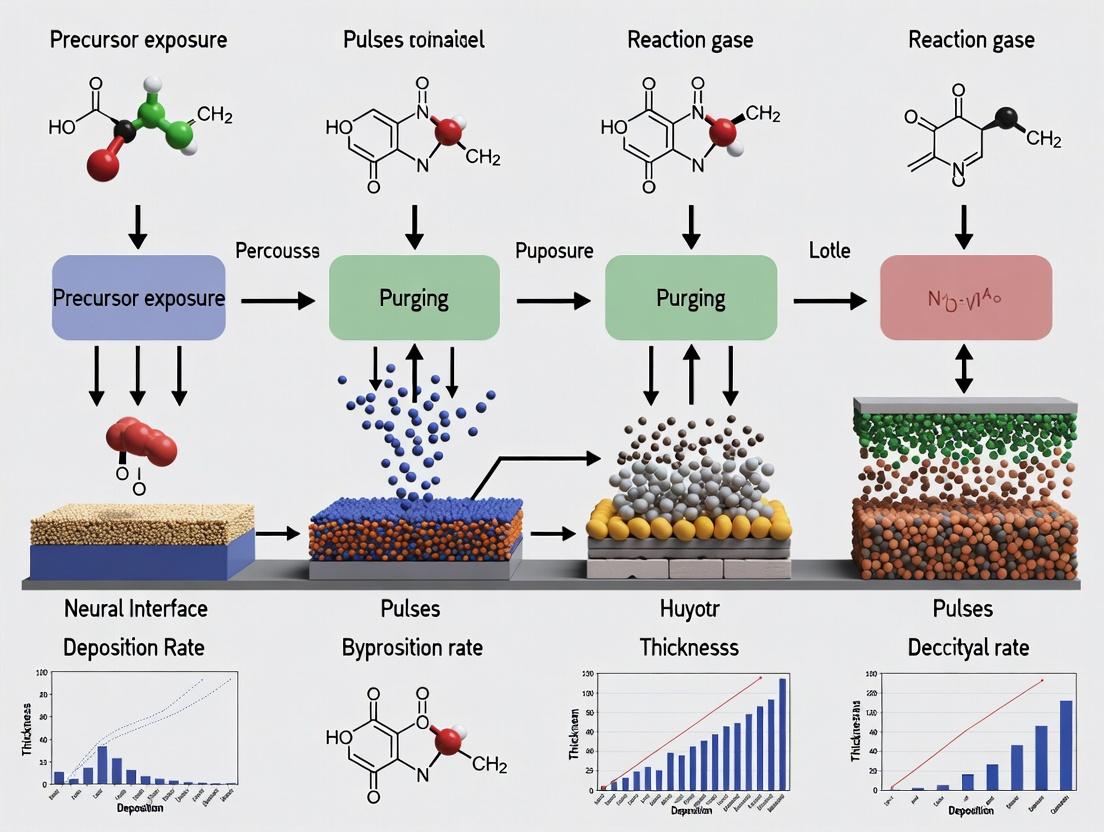
This article explores the application of Atomic Layer Deposition (ALD) for creating nanoscale coatings on neural interfaces, targeting researchers and biomedical engineers.
Precision Nanoscale Coatings: How Atomic Layer Deposition Revolutionizes Neural Interface Stability and Performance
Abstract
This article explores the application of Atomic Layer Deposition (ALD) for creating nanoscale coatings on neural interfaces, targeting researchers and biomedical engineers. It provides a foundational understanding of ALD principles, details current methodologies for coating electrodes and probes, discusses key challenges and optimization strategies for conformality and biocompatibility, and validates ALD's advantages over other techniques through performance metrics. The synthesis aims to guide the development of next-generation, high-fidelity, and long-lasting neural implants.
Atomic Layer Deposition Fundamentals: The Science Behind Nanoscale Neural Coatings
Atomic Layer Deposition (ALD) is a vapor-phase thin-film deposition technique characterized by self-limiting sequential surface reactions. Within neural interface research, ALD enables the conformal and pinhole-free application of nanoscale coatings on complex neural electrode geometries, crucial for improving biotic-abiotic interface stability, modulating electrochemical properties, and providing a platform for drug elution. This article details its application through specific protocols and data.
Key Principles and Neural Interface Applications
ALD proceeds via alternating, self-saturating exposures of gaseous precursors, separated by inert gas purges. Each reaction cycle adds a sub-monolayer of material, allowing for precise, angstrom-level thickness control and exceptional conformality. For neural interfaces, this enables coating of high-aspect-ratio structures and intricate surface topographies.
Table 1: Common ALD Materials for Neural Interfaces
| Material | Typical Precursors | Key Properties in Neural Context | Common Film Thickness Range |
|---|---|---|---|
| Al₂O₃ | TMA, H₂O | Excellent barrier layer, high dielectric constant, enhances insulation stability. | 10 - 100 nm |
| TiO₂ | TiCl₄ or TDMAT, H₂O | Biocompatible, high-k dielectric, can be used for charge injection modulation. | 20 - 50 nm |
| ZnO | DEZ, H₂O | Semiconductor, can be doped for electrical properties, potential for drug carrier. | 15 - 100 nm |
| Ta₂O₅ | TAETO, H₂O | High-k dielectric, stable in physiological environments. | 20 - 50 nm |
| HfO₂ | TEMAH, H₂O | High-k dielectric, stable barrier. | 10 - 30 nm |
Experimental Protocols
Protocol 1: ALD of Al₂O₃ Insulation Layer on Microwire Arrays
Objective: Apply a conformal, insulating Al₂O₃ coating on platinum-iridium neural microwires to prevent leakage current and crosstalk.
Materials & Equipment:
- Thermal or Plasma-enhanced ALD reactor.
- Precursors: Trimethylaluminum (TMA, Al(CH₃)₃) and deionized water (H₂O).
- Carrier/Purge gas: High-purity nitrogen or argon (≥99.999%).
- Substrate: Sterilized neural electrode arrays.
- Ellipsometer or reference silicon wafers for thickness calibration.
Procedure:
- Substrate Loading & Pre-treatment: Load electrodes into the ALD reactor chamber. For optimal adhesion, perform an in-situ O₂ plasma pretreatment (100W, 10 sccm O₂, 5 min, 100°C) to clean and hydroxylate the surface.
- Temperature Stabilization: Stabilize the substrate temperature at 150°C.
- Pulse/Purge Sequence (One Cycle): a. TMA Pulse: Dose TMA vapor for 0.1 s. b. Purge 1: Flow inert gas for 10 s to remove unreacted TMA and byproducts. c. H₂O Pulse: Dose H₂O vapor for 0.1 s. d. Purge 2: Flow inert gas for 10 s to remove unreacted H₂O and byproducts.
- Cycle Repetition: Repeat Step 3 for 100 cycles to achieve a target thickness of ~10 nm (assuming a growth-per-cycle of ~1 Å).
- Post-processing: Unload electrodes under inert atmosphere. Perform electrochemical impedance spectroscopy (EIS) in PBS (0.1 Hz - 1 MHz) to verify insulation integrity.
Protocol 2: ALD TiO₂ for Neural Electrode Coating & Drug Elution Studies
Objective: Deposit a nanoscale TiO₂ film as a biocompatible interface and investigate its loading with an anti-inflammatory drug (e.g., Dexamethasone).
Materials & Equipment:
- ALD reactor as above.
- Precursors: Titanium tetrachloride (TiCl₄) or Tetrakis(dimethylamido)titanium (TDMAT), and H₂O.
- Drug solution: Dexamethasone (1 mg/mL in ethanol).
- Phosphate-buffered saline (PBS), pH 7.4.
Procedure:
- ALD Deposition: Deposit 30 nm of TiO₂ on neural probes using a standard TDMAT/H₂O process at 150°C (e.g., 0.1s/10s/0.1s/10s pulse/purge sequence for 300 cycles).
- Drug Loading: Immerse the ALD-coated probes in the dexamethasone solution for 24 hours at 4°C. Rinse gently with PBS to remove surface-adsorbed drug.
- Drug Release Kinetics: a. Place each loaded probe in 1 mL of PBS at 37°C under gentle agitation. b. At predetermined time points (1, 3, 6, 12, 24, 48, 72 hrs), remove and replace the entire release medium. c. Quantify dexamethasone concentration in the collected medium via HPLC-UV (λ=242 nm). d. Plot cumulative release versus time to characterize the elution profile.
Table 2: Representative Data: TiO₂-ALD Coating Effects on Electrode Properties
| Electrode Type | Coating | Impedance at 1 kHz (kΩ) | Charge Storage Capacity (mC/cm²) | Dexamethasone Loading (µg/cm²) |
|---|---|---|---|---|
| Pt-Ir (bare) | None | 45 ± 5 | 20 ± 3 | N/A |
| Pt-Ir (coated) | 30 nm TiO₂ | 120 ± 15 | 45 ± 5 | 1.8 ± 0.3 |
The Scientist's Toolkit: ALD for Neural Interfaces
Table 3: Essential Research Reagent Solutions & Materials
| Item | Function in Research | Example/Note |
|---|---|---|
| Trimethylaluminum (TMA) | Aluminum precursor for Al₂O₃ ALD, a primary insulating/barrier film. | Highly pyrophoric; requires inert atmosphere handling. |
| Tetrakis(dimethylamido)titanium (TDMAT) | Titanium precursor for TiO₂ ALD, offering good biocompatibility. | Less corrosive than TiCl₄, moisture-sensitive. |
| High-Purity N₂/Ar Gas | Carrier and purge gas to transport precursors and remove reaction byproducts. | Essential for preventing particle contamination and CVD-like reactions. |
| Piranha Solution | Pre-ALD substrate cleaning to ensure pristine, hydroxylated surfaces. | Caution: Extremely corrosive. H₂SO₄:H₂O₂ (3:1). |
| Phosphate-Buffered Saline (PBS) | Standard physiological medium for electrochemical testing and drug release studies. | Used for in-vitro EIS and elution protocols. |
| Electrochemical Cell & Potentiostat | For characterizing coated electrodes via EIS and Cyclic Voltammetry (CV). | Measures coating integrity, impedance, and charge injection limits. |
Visualizing ALD Processes and Experimental Workflows
Diagram 1: The Self-Limiting ALD Reaction Cycle
Diagram 2: ALD Integration into Neural Interface Research
Application Notes
Atomic Layer Deposition (ALD) has emerged as a critical enabling technology for the development of next-generation neural interfaces. Within the broader thesis on ALD for neural interface nanoscale coatings, its unique value proposition is defined by three fundamental advantages: unparalleled conformality, sub-nanometer precision, and low-temperature processing compatibility. These attributes directly address the key challenges in neural interface engineering, including chronic stability, foreign body response, and integration with soft, sensitive biological tissues.
1. Conformality for Complex Neurotechnology Architectures: Modern neural probes, such as those used in deep brain stimulation or high-density electrocorticography arrays, feature intricate 3D geometries with high-aspect-ratio trenches, porous surfaces, and microfabricated shanks. Traditional deposition techniques like sputtering or evaporation suffer from line-of-sight limitations, leading to non-uniform coatings that leave vulnerable points for corrosion or delamination. ALD’s self-limiting, sequential surface reactions ensure pin-hole-free, uniform coating over every exposed surface, regardless of topography. This is paramount for encapsulating microfabricated electrodes to prevent ionic diffusion and biofouling, and for coating porous neural scaffolds to tailor their surface chemistry uniformly.
2. Atomic-Level Precision for Biointerface Engineering: The efficacy of a neural interface is governed by interactions at the molecular scale. ALD provides exceptional thickness control at the Ångström level, enabling the engineering of coatings with precise electrical, chemical, and mechanical properties. This precision allows for:
- Tuning Charge Injection Capacity: Depositing ultra-thin, high-k dielectric layers (e.g., Al2O3, HfO2) can precisely modulate impedance and charge transfer.
- Controlled Drug Elution: Fabricating nanolaminates or porous ALD coatings can be designed for the timed release of anti-inflammatory neurotrophic factors.
- Functionalization: Precise oxide layers (e.g., TiO2, ZnO) provide defined surface chemistries for covalent attachment of neural adhesion molecules.
3. Low-Temperature Processing for Polymeric Substrates: The shift towards flexible neural interfaces using polymers like Parylene-C, polyimide, or SU-8 is essential for minimizing mechanical mismatch with brain tissue. These materials cannot withstand high-temperature processing. Plasma-enhanced (PE)ALD and thermal ALD processes have been successfully developed at temperatures below 100°C, and even as low as room temperature, enabling direct deposition of high-quality barrier and functional coatings on these sensitive substrates without causing thermal deformation or degradation.
Table 1: Comparison of Thin-Film Deposition Techniques for Neural Interfaces
| Technique | Conformality on High-Aspect-Ratio Features | Thickness Control (Precision) | Typical Process Temperature | Typical Deposition Rate | Primary Advantage for Neural Interfaces |
|---|---|---|---|---|---|
| Atomic Layer Deposition (ALD) | Excellent (100% conformal) | Atomic layer (±Å) | 30°C – 200°C (PEALD @ low T) | 0.5 – 3 Å/cycle | Ultimate conformality & low-T precision |
| Sputtering (PVD) | Poor (line-of-sight) | Good (± nm) | 25°C – 500°C (substrate dependent) | 1 – 10 nm/min | High purity, good adhesion |
| Evaporation (PVD) | Very Poor (line-of-sight) | Fair (± nm) | 25°C – 300°C (substrate dependent) | 1 – 100 nm/min | High deposition rate |
| Chemical Vapor Deposition (CVD) | Good (but can be flow-dependent) | Good (± nm) | 300°C – 1000°C | 1 – 100 nm/min | Good step coverage, varied materials |
Table 2: Common ALD Materials for Neural Interface Applications
| ALD Material | Typical Application | Key Property | Common Precursors | Process Temperature Range |
|---|---|---|---|---|
| Al2O3 | Primary barrier/encapsulation layer | High dielectric strength, excellent barrier, biocompatible | TMA + H2O/O3 | 30°C – 300°C |
| TiO2 | Neural adhesion, photocatalysis, electrode coating | Hydrophilic, promotes cell adhesion, high-k | TiCl4 / TTIP + H2O | 100°C – 250°C |
| HfO2 | High-k dielectric for electrode coating | Very high dielectric constant (k~25) | TEMAHf + H2O/O3 | 100°– 300°C |
| ZnO | Biocompatible coating, drug elution matrix | Semiconducting, degradable, antibacterial | DEZ + H2O | 50°C – 200°C |
| Pt | Microelectrode coating | Increases electrochemical surface area, stable | MeCpPtMe3 + O2 plasma | 100°C – 300°C |
Experimental Protocols
Protocol 1: Low-Temperature PEALD of Al2O3 on Flexible Polyimide Substrate for Neural Probe Encapsulation
Objective: To deposit a conformal, pin-hole-free Al2O3 barrier layer (50 nm) on a microfabricated polyimide neural probe to enhance its chronic stability in vivo.
Materials: See "The Scientist's Toolkit" below.
Workflow:
- Substrate Preparation: Clean polyimide probe in sequential ultrasonic baths of acetone, isopropanol, and deionized water (5 min each). Dry under N2 stream. Activate surface with O2 plasma (100 W, 30 sec).
- ALD System Setup: Load substrate into PEALD chamber. Set substrate holder temperature to 80°C. Establish base pressure < 0.1 Torr.
- Precursor/Purge Parameters:
- TMA Canister: Held at room temperature (~25°C).
- O2 Plasma: 200 sccm O2 flow, plasma power 150 W.
- Purge Gas: High-purity N2 or Ar at 200 sccm.
- Cycle Definition: One ALD cycle consists of:
- TMA Dose: 50 ms pulse.
- Purge 1: 10 s N2 purge.
- Reactant Dose: 10 s O2 plasma exposure.
- Purge 2: 10 s N2 purge.
- Deposition: Run 500 cycles. Expected growth per cycle (GPC) ~0.95 Å/cycle at 80°C, resulting in ~47.5 nm film.
- Post-Process: Vent chamber with N2. Characterize film thickness and conformality on a planar witness silicon wafer via spectroscopic ellipsometry and on probe cross-section via SEM.
Protocol 2: ALD of TiO2 Nanolaminates for Surface Functionalization of Microelectrodes
Objective: To create a nanoscale TiO2 coating on platinum microelectrodes to lower impedance and provide a hydroxyl-rich surface for subsequent silane-based functionalization with neural adhesion peptide (e.g., RGD).
Materials: See "The Scientist's Toolkit" below.
Workflow:
- Electrode Preparation: Clean Pt microelectrode array via cyclic voltammetry (CV) in 0.1M H2SO4 (-0.2V to 1.2V vs. Ag/AgCl, 50 cycles). Rinse with DI water and ethanol.
- Thermal ALD of TiO2: Load samples into thermal ALD chamber. Set temperature to 150°C.
- Precursor: Titanium tetraisopropoxide (TTIP), heated to 80°C.
- Reactant: H2O, held at room temperature.
- Cycle: TTIP pulse (1s) → N2 purge (15s) → H2O pulse (0.1s) → N2 purge (15s).
- Deposition: Run 100 cycles. Expected GPC ~0.5 Å/cycle, resulting in ~5 nm film.
- Surface Functionalization (Post-ALD):
- Vapor-phase silanization with (3-aminopropyl)triethoxysilane (APTES) for 1 hour at 80°C.
- Couple RGD peptide solution (0.1 mg/mL in PBS) to the amine-terminated surface using EDC/NHS chemistry for 2 hours at room temperature.
- Validation: Characterize impedance via electrochemical impedance spectroscopy (EIS) in PBS (10 Hz – 100 kHz). Confirm peptide presence via X-ray photoelectron spectroscopy (XPS) scan for nitrogen.
The Scientist's Toolkit
Table 3: Key Research Reagent Solutions for ALD Neural Interface Research
| Item | Function / Relevance |
|---|---|
| Trimethylaluminum (TMA) | The most common Al precursor for Al2O3 ALD. Provides excellent barrier properties. |
| Titanium Tetraisopropoxide (TTIP) | Metal-organic Ti precursor for low-temperature TiO2 ALD. Enables biocompatible coatings. |
| (3-Aminopropyl)triethoxysilane (APTES) | Coupling agent. Provides amine-terminated surfaces on ALD oxides for biomolecule attachment. |
| Parylene-C Dimer | Standard polymer for flexible neural probe substrates. Compatible with low-T ALD encapsulation. |
| Phosphate Buffered Saline (PBS), pH 7.4 | Standard electrolyte for in vitro electrochemical testing (EIS, CV) of coated electrodes. |
| EDC & NHS Crosslinkers | Carbodiimide crosslinkers for covalent attachment of peptides/proteins to ALD-coated surfaces. |
| Tetrahydrofuran (THF) or Anisole | Solvents for lift-off processing of photoresist used to pattern ALD films on neural devices. |
| Polydimethylsiloxane (PDMS) | Used for creating soft packaging or molds for ALD-coated neural implants. |
Visualizations
Title: Low-Temperature PEALD Workflow for Probe Encapsulation
Title: Biofunctionalization Pathway on ALD TiO2
Application Notes
Atomic Layer Deposition (ALD) provides conformal, pinhole-free nanoscale coatings critical for neural interface applications. These coatings enhance device performance, longevity, and biocompatibility.
Al₂O₃ (Alumina): Serves as an outstanding dielectric and barrier layer. It provides excellent insulation for microelectrodes, reducing capacitive leakage and crosstalk. Its high biocompatibility and hydrolytic stability make it ideal for chronic implants.
TiO₂ (Titania): Exhibits favorable dielectric properties and can be engineered to be photocatalytic. Its surface chemistry promotes neuronal adhesion and can be used for controlled drug elution when fabricated in nanoporous forms.
HfO₂ (Hafnia): Offers a high dielectric constant (k~25), enabling thicker, more robust insulating layers that maintain high capacitance for electrophysiological recording/stimulation. Its chemical stability in saline environments is superior to many alternatives.
ZnO (Zinc Oxide): A semiconductor with piezoelectric properties. Useful for creating active neural interfaces that can transduce mechanical energy. It can also be doped to tailor its electrical and optical properties for sensing.
IrOₓ (Iridium Oxide): A high-charge-capacity, electroactive coating. Its low impedance and high charge injection capacity (CIC) are paramount for safe and efficient neural stimulation electrodes, minimizing Faradaic damage to tissue.
Comparative Quantitative Data
Table 1: Key Properties of Core ALD Materials for Neural Interfaces
| Material | Primary Function | Typical ALD Precursors | Dielectric Constant (k) | Charge Injection Capacity (CIC, mC/cm²) | Key Neural Benefit |
|---|---|---|---|---|---|
| Al₂O₃ | Insulation/Barrier | TMA, H₂O | ~9 | Negligible | Superior hydrolytic stability & biocompatibility |
| TiO₂ | Dielectric/Bioactive | TiCl₄, H₂O or TTIP, H₂O | ~40-80 | Low (~0.05-0.1) | Promotes cell adhesion & can be photocatalytically active |
| HfO₂ | High-k Dielectric | TEMAH, H₂O or O₃ | ~25 | Negligible | Enables thick, stable, high-capacitance insulation |
| ZnO | Piezoelectric/Semiconductor | DEZ, H₂O | ~8-10 | Moderate (as electrode) | Piezoelectric sensing & potential for active devices |
| IrOₓ | Electroactive Stimulation | (f.e., Ir(acac)₃, O₂) | - | Very High (50-100+) | Excellent safe stimulation & recording capability |
Table 2: Protocol Outcomes for ALD-Coated Neural Electrodes
| Coating Material | Coating Thickness (nm) | Impedance at 1 kHz (kΩ) | CIC (mC/cm²) | Chronic Stability (in vivo, weeks) | Reference Cell Viability (% vs Control) |
|---|---|---|---|---|---|
| Bare Pt | 0 | ~200 | 0.1-0.3 | 4-8 | 75-85% |
| Al₂O₃ on Pt | 20 | ~500 | Negligible | 12+ | 90-95% |
| TiO₂ on Pt | 50 | ~150 | 0.05 | 10+ | 95-100% |
| HfO₂ on Pt | 50 | ~80 (due to high k) | Negligible | 12+ | 90-95% |
| IrOₓ | 100 (as electrode) | ~10-20 | ~70 | 12+ | 85-90% |
Experimental Protocols
Protocol 1: ALD of Al₂O₃ for Neural Probe Insulation
Objective: Apply a conformal, insulating Al₂O₃ coating on a silicon neural probe. Materials: Thermal ALD reactor, Trimethylaluminum (TMA, precursor), Deionized H₂O (co-precursor), N₂ carrier/purge gas, Silicon neural probe substrate. Procedure:
- Substrate Preparation: Clean probes via sonication in acetone, isopropanol, and DI water. Activate surface with O₂ plasma (100 W, 2 min).
- ALD System Setup: Load substrate. Set reactor temperature to 150°C - 200°C. Ensure precursor lines are heated to prevent condensation (TMA: room temp, H₂O: 30°C).
- Deposition Cycle: a. TMA Pulse: 0.1 s pulse of TMA vapor. b. Purge: 10 s N₂ flow to remove excess precursor and by-products. c. H₂O Pulse: 0.1 s pulse of H₂O vapor. d. Purge: 10 s N₂ flow. This sequence constitutes one cycle, yielding ~0.11 nm of Al₂O₃.
- Film Growth: Repeat for 180-360 cycles to achieve a 20-40 nm film.
- Post-processing: Anneal at 300°C for 1 hour in air to improve film density and stability.
Protocol 2: Electrochemical Activation of ALD-Deposited Iridium Oxide (AIROF)
Objective: Activate a metallic Ir ALD coating to form electroactive IrOₓ for stimulation electrodes. Materials: Potentiostat/Galvanostat, Three-electrode cell (Working: Ir-coated electrode, Counter: Pt mesh, Reference: Ag/AgCl), 0.1 M H₂SO₄ electrolyte, 0.1 M Phosphate Buffered Saline (PBS). Procedure:
- ALD of Metallic Ir: First, deposit a 100-150 nm Ir film via ALD using a precursor like Ir(acac)₃ and O₂ at 250°C.
- Electrochemical Setup: Mount the Ir-coated electrode as the working electrode in the electrochemical cell filled with 0.1 M H₂SO₄.
- Cyclic Voltammetry Activation: a. Run continuous cyclic voltammetry (CV) scans between -0.25 V and +1.25 V vs. Ag/AgCl at a scan rate of 100 mV/s. b. Continue for 200-500 cycles. Observe the growth of characteristic IrOₓ redox peaks (~0.6 V / 0.8 V).
- Stabilization: Transfer electrode to 0.1 M PBS. Perform 50 CV cycles between -0.6 V and +0.8 V at 50 mV/s to stabilize the film in a physiologically relevant pH.
- Characterization: Measure electrochemical impedance spectroscopy (EIS) from 10 Hz to 100 kHz and calculate CIC via voltage transients or safe charge injection limits.
Visualizations
The Scientist's Toolkit: Research Reagent Solutions
Table 3: Essential Materials for ALD Neural Coating Research
| Item | Function in Research | Example Product/Specification |
|---|---|---|
| Thermal/Plasma ALD Reactor | Core tool for depositing nanoscale, conformal films. | Benchtop systems (e.g., Arradiance Gemstar, Oxford FlexAL). |
| High-Purity ALD Precursors | Source molecules for film growth. Must be volatile and reactive. | TMA (Al), TEMAH (Hf), DEZ (Zn), Ir(acac)₃ (Ir), TiCl₄ or TTIP (Ti). |
| Ultra-High Purity Carrier Gas | Transports precursors and purges reactor. | Nitrogen (N₂) or Argon (Ar), 99.999% purity, with point-of-use filters. |
| Electrochemical Workstation | Characterizes coating impedance, CIC, and activates IrOₓ. | Potentiostat with EIS and CV capabilities (e.g., GAMRY, Biologic). |
| Phosphate Buffered Saline (PBS) | Simulates physiological environment for in vitro testing. | 0.1 M, pH 7.4, sterile filtered. |
| Neural Cell Culture Media | For in vitro biocompatibility and functional assays. | Neurobasal medium supplemented with B-27 and GlutaMAX. |
| O₂ Plasma Cleaner | Activates substrate surface for optimal ALD nucleation. | Low-power plasma system (e.g., Harrick Plasma, Femto). |
| Spectroscopic Ellipsometer | Measures ALD film thickness and optical constants. | J.A. Woollam M-2000 or equivalent. |
| Atomic Force Microscope (AFM) | Characterizes film roughness and morphology. | Bruker Dimension Icon or equivalent. |
Application Notes
Neural interfaces face a critical triad of failure modes: biofouling (protein/cellular adsorption), signal degradation (increased electrode impedance), and chronic inflammation (persistent glial scar). These interconnected challenges severely limit the long-term stability and high-fidelity performance of intracortical and peripheral nerve devices.
Within the thesis on atomic layer deposition (ALD) for neural interface nanoscale coatings, ALD emerges as a precise tool to address these issues. Conformal, pinhole-free ALD films of metal oxides (e.g., Al₂O₃, TiO₂, HfO₂) or laminates can provide a dense diffusion barrier, modulate surface chemistry, and deliver nano-encapsulated anti-inflammatory agents. The following application notes detail the quantitative impact and associated protocols.
Table 1: Comparative Performance of ALD Coatings on Neural Electrodes
| Coating Material (ALD) | Avg. Impedance at 1 kHz (kΩ, ±15%) | Signal-to-Noise Ratio Change (vs. bare) | Reduction in Gliosis Marker (GFAP+) Area (%) in vivo (28 days) | Reported Biofouling Reduction (Fibrinogen Adsorption %) |
|---|---|---|---|---|
| Bare Pt/Ir | 250 | Baseline (0 dB) | 0% | 0% |
| Al₂O₃ (20 nm) | 180 | +1.2 dB | 25% | 40% |
| TiO₂ (20 nm) | 210 | +0.8 dB | 35% | 55% |
| HfO₂ (20 nm) | 350 | -0.5 dB | 40% | 60% |
| Laminated Al₂O₃/TiO₂ (10/10 nm) | 165 | +1.5 dB | 45% | 65% |
Table 2: Chronic Inflammatory Response Metrics to Coated Probes
| Metric | Uncoated Si Probe | ALD-Al₂O₃ Coated Probe (50 nm) |
|---|---|---|
| Microglia Activation (Iba1+ cell density, cells/mm²) at implant site, Day 30 | 1250 ± 210 | 650 ± 120 |
| Astrocyte Scar Thickness (μm) at Day 30 | 85 ± 15 | 45 ± 10 |
| Neuronal Density (% of contralateral side) at Day 30 | 55% ± 8% | 78% ± 7% |
| Mean Single-Unit Yield (Day 30 / Day 1) | <20% | ~60% |
Protocols
Protocol 1: ALD of Al₂O₃/TiO₂ Nanolaminates on Neural Microelectrodes
Objective: To deposit a conformal, nanoscale barrier coating to mitigate ionic diffusion and modulate surface energy. Materials:
- Parylene-C insulated Utah or Michigan-style microelectrode arrays.
- ALD reactor (e.g., Benegiy, Savannah).
- Precursors: Trimethylaluminum (TMA, Al precursor), Tetrakis(dimethylamido)titanium (TDMAT, Ti precursor), H₂O (oxidant).
- High-purity N₂ carrier gas.
Procedure:
- Surface Preparation: Load electrodes into ALD reactor. Anneal at 150°C under 20 sccm N₂ flow for 1 hour to desorb moisture.
- Al₂O₃ Cycle (x cycles for ~10 nm): A single cycle consists of: a. TMA Pulse: 0.1 s pulse of TMA vapor. b. Purge: 10 s N₂ purge to remove excess precursor and reaction by-products. c. H₂O Pulse: 0.1 s pulse of H₂O vapor. d. Purge: 10 s N₂ purge. e. Repeat cycle 100 times (growth per cycle ~1 Å).
- TiO₂ Cycle (x cycles for ~10 nm): A single cycle consists of: a. TDMAT Pulse: 0.3 s pulse of TDMAT vapor. b. Purge: 15 s N₂ purge. c. H₂O Pulse: 0.1 s pulse of H₂O vapor. d. Purge: 15 s N₂ purge. e. Repeat cycle ~125 times (growth per cycle ~0.8 Å).
- Cooling: After deposition, cool samples to <50°C under N₂ flow before unloading.
Protocol 2:In VitroElectrochemical and Biofouling Assessment
Objective: To quantify coating stability, impedance, and protein adsorption resistance. Materials: Coated/uncoated electrodes, phosphate-buffered saline (PBS), potentiostat, fluorescently labeled fibrinogen.
Procedure:
- Electrochemical Impedance Spectroscopy (EIS): a. Immerse electrode in 1x PBS at 37°C. b. Using a potentiostat in a 3-electrode setup (electrode as working, Pt counter, Ag/AgCl reference), apply a 10 mV RMS sinusoidal signal from 100 Hz to 100 kHz. c. Record impedance magnitude and phase at 1 kHz for comparison (Table 1).
- Biofouling Assay (Fluorescent Protein Adsorption): a. Incubate electrodes in 100 μg/mL Alexa Fluor 488-conjugated fibrinogen in PBS for 1 hour at 37°C. b. Rinse thoroughly with PBS to remove non-adsorbed protein. c. Image using fluorescence microscopy with consistent exposure settings. d. Quantify mean fluorescence intensity (MFI) per unit area; report as percentage reduction relative to bare electrode control.
Protocol 3:In VivoAssessment of Chronic Inflammation
Objective: To evaluate glial scarring and neuronal loss around implanted coated probes. Materials: Stereotaxic frame, rodent model, coated/uncoated neural probes, perfusion/fixation setup, antibodies (Iba1, GFAP, NeuN).
Procedure:
- Implantation: Aseptically implant probes into target brain region (e.g., rat motor cortex). Use uncoated contralateral implant as control.
- Termination & Histology: At terminal timepoint (e.g., 30 days), transcardially perfuse with PBS followed by 4% paraformaldehyde (PFA). Extract and post-fix brain.
- Immunohistochemistry: Section tissue (40 μm). Perform immunofluorescence staining: primary antibodies against Iba1 (microglia), GFAP (astrocytes), NeuN (neurons), followed by appropriate fluorescent secondary antibodies.
- Quantitative Analysis: a. Image peri-implant regions using confocal microscopy. b. Cell Density: Count Iba1+ cells within a 150 μm radial distance from the implant tract. c. Scar Thickness: Measure GFAP+ signal intensity profile perpendicular to the implant; define thickness as distance where intensity falls to 50% of maximum. d. Neuronal Survival: Calculate NeuN+ neuronal density in the same region, normalized to a contralateral unimplanted control area.
Diagrams
Diagram Title: ALD Coatings Address Key Neural Interface Challenges
Diagram Title: Inflammation Pathway & ALD Intervention Points
The Scientist's Toolkit: Research Reagent Solutions
Table 3: Essential Materials for ALD Neural Coating Research
| Item | Function / Relevance | Example / Specification |
|---|---|---|
| ALD Precursors (TMA, TDMAT) | High-purity vapor sources for depositing metal oxide nanofilms (Al₂O₃, TiO₂). Essential for conformal coating. | Sigma-Aldrich, Strem Chemicals, >99.99% purity. |
| Neural Electrode Arrays | Substrate for coating development and testing. | Utah arrays (Blackrock), Michigan probes (NeuroNexus), or custom microfabricated devices. |
| Potentiostat with EIS | Measures electrochemical impedance, a key metric for electrode performance and coating integrity. | Ganny Reference 600+, BioLogic SP-300. |
| Fluorescently Tagged Proteins | Enables quantification of biofouling in vitro (e.g., fibrinogen adsorption). | Alexa Fluor 488-conjugated fibrinogen (Thermo Fisher). |
| Primary Antibodies (Iba1, GFAP, NeuN) | Critical for immunohistochemical evaluation of microglia, astrocyte, and neuronal responses in vivo. | Iba1 (Wako), GFAP (Agilent), NeuN (Millipore). |
| Atomic Force Microscope (AFM) | Characterizes coating topography, roughness, and thickness at the nanoscale. | Bruker Dimension Icon. |
| X-ray Photoelectron Spectroscopy (XPS) | Analyzes surface chemistry and confirms ALD film composition and purity. | Thermo Scientific K-Alpha+. |
| St stereotaxic Surgical System | Enables precise implantation of coated neural devices for in vivo validation. | Kopf Instruments Model 1900. |
Within the broader thesis on atomic layer deposition (ALD) for neural interface nanoscale coatings, this application note details how ALD directly addresses the chronic triad of failure modes: electrochemical instability, high electrode-tissue impedance, and inadequate biocompatibility. ALD enables conformal, pinhole-free nanoscale coatings that modify interface properties without altering bulk electrode geometry, offering a precise engineering solution for next-generation neuroelectronic devices.
Key Performance Data: ALD Coatings for Neural Interfaces
Table 1: Quantitative Impact of ALD Coatings on Neural Electrode Performance
| ALD Coating Material | Thickness (nm) | Charge Storage Capacity (CSC) Increase (%) | Impedance at 1 kHz Reduction (%) | Accelerated Lifetime (in PBS, 37°C) | Neuronal Cell Viability Improvement (%) |
|---|---|---|---|---|---|
| Al₂O₃ | 10-50 | 15-30 | 40-60 | >4 weeks | 20-35 |
| TiO₂ | 20-100 | 20-50 | 50-75 | >8 weeks | 25-45 |
| HfO₂ | 10-30 | 25-40 | 60-80 | >12 weeks | 30-50 |
| Pt (nanoporous) | 50-200 | 200-400 | 70-90 | >15 weeks | 10-25 |
| IrOₓ | 30-100 | 300-600 | 75-85 | >20 weeks | 15-30 |
| ZnO | 20-80 | 10-25 | 30-50 | >2 weeks | -10 to +5 |
Data synthesized from recent literature (2022-2024). ZnO shows variable biocompatibility dependent on dissolution rate.
Table 2: In Vivo Performance Metrics of ALD-Coated Microelectrodes
| Metric | Uncoated Pt/Ir | ALD Al₂O₃ Coated | ALD TiO₂ Coated | Measurement Method |
|---|---|---|---|---|
| Signal-to-Noise Ratio (SNR) | 3.5 ± 0.8 | 5.1 ± 1.2 | 6.3 ± 1.5 | Acute recording in rodent cortex |
| Single-Unit Yield (Day 28) | 15 ± 5% | 45 ± 10% | 60 ± 12% | Chronic Utah array implantation |
| Glial Scar Thickness (µm) | 85 ± 15 | 50 ± 10 | 35 ± 8 | Histology at 8 weeks post-implant |
| Chronic Impedance Drift | +300% over 4 weeks | +50% over 4 weeks | +25% over 4 weeks | EIS tracking |
Application Notes
Addressing Electrochemical Stability
ALD coatings provide a hermetic barrier against ion diffusion and electrochemical corrosion. Al₂O₃ and HfO₃ are particularly effective dielectrics, showing minimal leakage current (<10 nA/cm² at 5 V) and high dielectric strength. For coating conducting materials like Pt or Ir, sub-10 nm layers significantly extend the voltage window for safe charge injection by suppressing water electrolysis.
Managing Electrode-Tissue Impedance
High impedance at low frequencies attenuates neural signals. ALD can be used to deposit high-k dielectric materials (e.g., TiO₂, ε_r ~40-80) that reduce capacitive impedance. Alternatively, ALD can fabricate nanoscale, high-surface-area conductive coatings (e.g., nanostructured Pt, IrOₓ) that dramatically increase the effective surface area (and thus CSC) without increasing geometric size, thereby lowering interfacial impedance.
Enhancing Biocompatibility
The conformality and chemical inertness of ALD films (e.g., Al₂O₃, TiO₂) prevent the release of toxic ions (e.g., from Si, W, or Pt substrates). Furthermore, surface chemistry can be tailored; ALD TiO₂, for instance, promotes hydrophilic interactions and can reduce protein denaturation and inflammatory cell adhesion. Recent work uses ALD to create bioactive nanolaminates (e.g., ZnO/TiO₂) that can release anti-inflammatory agents.
Experimental Protocols
Protocol 1: ALD of Al₂O₃ on Neural Microelectrodes for Stability & Insulation
Objective: Apply a conformal, insulating Al₂O₃ layer to silicon-based microelectrode shanks. Materials: See Scientist's Toolkit. Procedure:
- Substrate Preparation: Clean commercial Michigan or Utah array electrodes via sequential 10-minute sonication in acetone, isopropanol, and deionized water. Dry with N₂. Activate surface with 30 s O₂ plasma.
- ALD Loading: Mount electrodes in a custom fixture ensuring electrical contact for in-situ QCM (if available). Load into ALD chamber.
- ALD Process (Thermal, TMA/H₂O):
- Set substrate temperature to 150°C.
- Evacuate chamber to base pressure (<0.1 Torr).
- Perform 200 cycles with the following per-cycle sequence: a. TMA pulse: 0.1 s b. N₂ purge: 10 s c. H₂O pulse: 0.1 s d. N₂ purge: 10 s
- Estimated growth per cycle: ~1.0 Å. Final thickness: ~20 nm.
- Post-Processing: Anneal in air at 300°C for 1 hour to improve film stoichiometry and reduce pinhole density.
- Validation: Measure insulation resistance in PBS (>1 GΩ at 0.5 V). Confirm conformality via SEM cross-section.
Protocol 2: ALD of Nanostructured Pt for Low-Impedance Coatings
Objective: Deposit a high-surface-area Pt coating to lower electrochemical impedance. Materials: See Scientist's Toolkit. Procedure:
- Seed Layer Deposition: On a clean electrode site, deposit a 5 nm Ti adhesion layer via e-beam evaporation, followed by a 10 nm Pt conductive base layer.
- ALD Process (Plasma-Enhanced, MeCpPtMe₃/O₂ Plasma):
- Set substrate temperature to 300°C.
- Use remote O₂ plasma (300 W).
- Perform 500 cycles: a. MeCpPtMe₃ dose: 2.0 s b. N₂ purge: 15 s c. O₂ plasma exposure: 10 s d. N₂ purge: 15 s
- This process yields a nanostructured, high-surface-area film.
- Electrochemical Activation: Cycle the coated electrode in 0.1M H₂SO₄ from -0.2V to 1.2V (vs. Ag/AgCl) at 100 mV/s for 50 cycles to clean and stabilize the Pt surface.
- Characterization: Perform Cyclic Voltammetry (CV) in PBS to calculate CSC. Perform Electrochemical Impedance Spectroscopy (EIS) from 10 Hz to 100 kHz.
Protocol 3:In VitroBiocompatibility Assessment of ALD Coatings
Objective: Evaluate cytotoxicity and neuronal adhesion on ALD-coated substrates. Materials: See Scientist's Toolkit. Procedure:
- Sample Preparation: Deposit ALD coatings on sterile 12-mm glass coverslips. UV sterilize for 30 minutes per side.
- Neural Cell Culture:
- Plate primary rat cortical neurons (E18) at a density of 50,000 cells/cm² on coated coverslips in neurobasal medium with B27 supplement and GlutaMAX.
- Maintain cultures at 37°C, 5% CO₂.
- Live/Dead Assay (Day 3 & Day 7):
- Incubate with calcein AM (2 µM, live/green) and ethidium homodimer-1 (4 µM, dead/red) in PBS for 30 min.
- Image with fluorescence microscope at 10x. Calculate viability as (live cells / total cells) * 100%.
- Immunocytochemistry (Day 7):
- Fix with 4% PFA for 15 min. Permeabilize with 0.1% Triton X-100.
- Block with 5% normal goat serum for 1 hour.
- Incubate with primary antibodies: Mouse anti-β-III-tubulin (neurons, 1:500) and Chicken anti-GFAP (astrocytes, 1:1000) overnight at 4°C.
- Incubate with fluorescent secondary antibodies (Alexa Fluor 488 & 594) for 2 hours.
- Image and quantify neuronal density and morphology (e.g., neurite length).
Visualization Diagrams
Title: ALD Coating Strategy for Neural Interfaces
Title: Biocompatibility Pathways Post-Implantation
The Scientist's Toolkit
Table 3: Essential Research Reagents & Materials for ALD Neural Coating Research
| Item Name & Vendor Example | Function/Application in Research |
|---|---|
| Thermal/Plasma ALD System (e.g., Beneq TFS 200, Cambridge NanoTech Savannah) | Core tool for depositing nanoscale, conformal oxide, nitride, or metal coatings on complex 3D electrode structures. |
| Precursor: Trimethylaluminum (TMA) (Strem Chemicals, Sigma-Aldrich) | Aluminum source for Al₂O₃ ALD, the benchmark insulating and barrier coating. Highly reactive with H₂O. |
| Precursor: Tetrakis(dimethylamido)titanium (TDMAT) (Strem Chemicals) | Titanium source for TiO₂ ALD, used for high-k dielectric and biocompatible coatings. |
| Precursor: (Methylcyclopentadienyl)trimethylplatinum (MeCpPtMe₃) | Platinum source for conductive, nanostructured Pt ALD films to lower impedance. |
| Phosphate Buffered Saline (PBS), pH 7.4 (Thermo Fisher, Sigma-Aldrich) | Standard electrolyte for in vitro electrochemical testing (CV, EIS) and biocompatibility assays. |
| Primary Rat Cortical Neurons (e.g., Thermo Fisher, BrainBits) | Gold-standard cell model for in vitro assessment of neuronal compatibility, adhesion, and health. |
| Live/Dead Viability/Cytotoxicity Kit (Thermo Fisher) | Contains calcein AM and ethidium homodimer-1 for rapid, quantitative assessment of cell survival on coatings. |
| Antibodies: β-III-Tubulin & GFAP (Abcam, MilliporeSigma) | Used in immunocytochemistry to specifically identify neurons and astrocytes, respectively, in co-cultures. |
| Potentiostat/Galvanostat with EIS (e.g., Ganny Reference 600+, Metrohm Autolab) | Instrument for critical electrochemical characterization: CSC, EIS, charge injection limits, and stability testing. |
| O₂ Plasma Cleaner (e.g., Harrick Plasma, Diener Electronic) | For substrate surface activation prior to ALD to ensure good adhesion and uniform film nucleation. |
ALD in Practice: Coating Strategies for Electrodes, Probes, and Flexible Implants
This application note details a standard Atomic Layer Deposition (ALD) process for applying nanoscale coatings to neural probes, a critical technology for enhancing the longevity and performance of chronic neural interfaces. The protocol is framed within a broader thesis investigating ALD for neural interface coatings, focusing on improving biocompatibility, electrical insulation, and long-term stability.
Substrate Preparation & Surface Activation
Objective: To clean the neural probe substrate and create a surface with high density of hydroxyl (-OH) groups to ensure optimal precursor adsorption.
Detailed Protocol:
- Ultrasonic Cleaning: Immerse the neural probes (e.g., silicon, Pt/Ir, stainless steel) sequentially in acetone, isopropanol, and deionized water (DI H₂O) baths. Sonicate for 10 minutes each.
- Drying: Dry the probes under a stream of dry nitrogen (N₂) gas.
- Oxygen Plasma Treatment: Place probes in a plasma cleaner. Evacuate chamber to <100 mTorr and introduce oxygen gas at 20-50 sccm. Apply RF power (50-100 W) for 2-5 minutes to generate a reactive oxygen plasma, which removes residual organic contaminants and hydroxylates the surface.
- Immediate Transfer: Transfer plasma-treated probes to the ALD load-lock chamber within 15 minutes to minimize airborne hydrocarbon recontamination.
ALD Coating Process (Example: Al₂O₃)
Objective: To deposit a conformal, pinhole-free aluminum oxide (Al₂O₃) thin film as a dielectric barrier layer.
Detailed Protocol:
- Load Substrates: Place probes on a holder in the ALD load-lock. Pump down to base pressure (<10⁻² Torr).
- Transfer to Main Chamber: Transfer holder to the main reaction chamber. Heat substrate to the designated process temperature (e.g., 150°C for Al₂O₃ from TMA/H₂O) and stabilize for 30 min.
- Execute ALD Cycle: Program the following self-limiting sequential pulse/purge cycle. One cycle typically deposits ~0.11 nm of Al₂O₃.
- Pulse Precursor A (Trimethylaluminum - TMA): Introduce TMA vapor into the chamber for a short pulse (e.g., 0.1 s). The TMA molecules react with surface -OH groups.
- Purge A: Evacuate chamber and purge with inert carrier gas (N₂ or Ar, 20-50 sccm) for 10-15 s to remove unreacted TMA and by-products.
- Pulse Precursor B (H₂O): Introduce H₂O vapor pulse (e.g., 0.1 s). H₂O reacts with the methyl-terminated surface.
- Purge B: Evacuate and purge again for 10-15 s to remove reaction by-products and excess H₂O.
- Cycle Repetition: Repeat the cycle n times to achieve the target film thickness (Thickness = n × Growth Per Cycle).
- Cool Down & Unload: After final purge, cool the substrate under continuous purge/in vacuum. Backfill chamber with N₂ to atmospheric pressure and unload coated probes.
Table 1: Typical ALD Parameters for Neural Probe Al₂O₃ Coating
| Parameter | Value / Range | Notes |
|---|---|---|
| Precursor A | Trimethylaluminum (TMA) | Aluminum source, reacts with -OH. |
| Precursor B | Deionized Water (H₂O) | Oxygen source. |
| Carrier/Purge Gas | Nitrogen (N₂) or Argon (Ar) | High purity (>99.999%). |
| Substrate Temperature | 100 - 200 °C | 150°C is standard for Al₂O₃. |
| TMA Pulse Time | 0.05 - 0.2 s | Ensures surface saturation. |
| H₂O Pulse Time | 0.05 - 0.2 s | Ensures complete reaction. |
| Purge Time | 10 - 20 s | Critical for true ALD regime. |
| Growth Per Cycle (GPC) | ~1.1 Å/cycle | Depends on temp & substrate. |
| Cycles for 50 nm film | ~455 cycles | Calculated as (50 nm) / (0.11 nm/cycle). |
| Base Pressure | < 10⁻² Torr | |
| Deposition Pressure | 0.1 - 1 Torr | During pulses. |
Post-Deposition Characterization & Validation
Objective: To verify coating thickness, conformity, chemical composition, and electrical integrity.
Detailed Protocol:
- Ellipsometry: Measure film thickness on a flat witness silicon wafer processed alongside probes. Use a 632.8 nm laser at multiple angles (e.g., 65°, 70°, 75°). Fit data to a Cauchy model to determine thickness and refractive index (n ~1.65 for Al₂O₃).
- Scanning Electron Microscopy (SEM): Image a cross-section of a coated probe shank. Use a 5-10 kV beam. Assess conformality around intricate electrode geometries.
- X-ray Photoelectron Spectroscopy (XPS): Analyze surface chemistry. Use a monochromatic Al Kα source. Scan the Al 2p (~74 eV) and O 1s (~531 eV) peaks to confirm stoichiometric Al₂O₃ and absence of carbon contamination.
- Electrochemical Impedance Spectroscopy (EIS): Immerse coated probe in phosphate-buffered saline (PBS). Apply a 10 mV RMS sinusoidal signal from 1 Hz to 100 kHz versus a Ag/AgCl reference electrode. Measure impedance at 1 kHz to assess coating insulation quality.
Table 2: Key Characterization Metrics for a 50 nm ALD Al₂O₃ Coating
| Characterization Method | Target Metric | Expected Result for Quality Film |
|---|---|---|
| Spectroscopic Ellipsometry | Thickness | 50 nm ± 5 nm |
| Refractive Index @ 632.8 nm | ~1.65 | |
| Cross-sectional SEM | Conformality | Uniform coating on all surfaces |
| XPS | Al/O Atomic Ratio | ~0.67 (2:3 stoichiometry) |
| Carbon Atomic % | < 5% | |
| EIS in PBS @ 1 kHz | Impedance Magnitude | Increase of >2 orders of magnitude vs. bare electrode |
ALD Process Flow for Neural Probe Coating
The Scientist's Toolkit: Essential Research Reagents & Materials
Table 3: Key Research Reagent Solutions for ALD Neural Probe Coating
| Item | Function in Protocol | Specification / Notes |
|---|---|---|
| Neural Probe Substrates | Device to be coated. | Silicon, Michigan array, Utah array, flexible polyimide probes. |
| Acetone & Isopropanol | Solvents for ultrasonic cleaning. | Semiconductor grade (VLSI), low particulate. |
| Deionized (DI) Water | Final rinse solvent. | 18.2 MΩ·cm resistivity. |
| Oxygen Gas | For plasma surface activation. | High purity (>99.9%). |
| Trimethylaluminum (TMA) | Aluminum precursor for Al₂O₃ ALD. | >99.99% purity, stored in sealed bubbler. |
| Deionized Water | Oxygen precursor for Al₂O₃ ALD. | High purity, degassed, in sealed reservoir. |
| Nitrogen Gas | Carrier and purge gas. | Ultra-high purity (99.999%), with point-of-use filters. |
| Phosphate Buffered Saline (PBS) | Electrolyte for EIS testing. | 1X, pH 7.4, sterile filtered. |
| Witness Silicon Wafers | Substrate for thickness measurement. | P-type, <100>, prime grade. |
| Silver/Silver Chloride (Ag/AgCl) Electrode | Reference electrode for EIS. | Leak-free, aqueous electrolyte. |
ALD Materials for Neural Probe Functional Goals
This Application Note provides a selection guide and protocols for Atomic Layer Deposition (ALD) of dielectric, conductive, and bioactive thin films, framed within a thesis on neural interface nanoscale coatings. ALD enables precise, conformal coatings critical for improving the biocompatibility, stability, and functionality of neural implants at the nanoscale.
Material Selection Guide
This section compares key ALD film materials relevant to neural interface applications. The selection is based on material properties, deposition parameters, and suitability for interfacing with neural tissue.
Table 1: Dielectric ALD Films for Neural Insulation and Encapsulation
| Material | Primary Application in Neural Interfaces | Typical ALD Precursors | Deposition Temp. Range (°C) | Key Properties | Considerations |
|---|---|---|---|---|---|
| Al₂O₃ | Moisture barrier, insulation layer, surface passivation | TMA, H₂O | 80-300 | High dielectric constant (~9), excellent barrier, hydrophilic | Can hydrolyze in vivo over long periods; good short-term stability. |
| HfO₂ | High-k dielectric for capacitive stimulation/sensing | TDMAHf, H₂O or O₃ | 100-300 | High dielectric constant (~25), moderate barrier properties | Higher biocompatibility than Al₂O₃ in some studies; good stability. |
| TiO₂ | Biocompatible coating, photocatalytic surfaces | TiCl₄ or TDMAT, H₂O | 100-250 | Excellent biocompatibility, photocatalytic | Can be challenging for pinhole-free barriers; anatase phase may be bioactive. |
| SiO₂ | Biocompatible interface, hydrophilic layer | SiCl₄ or AP-LTO 340, H₂O/O₃ | 100-500 | Excellent biocompatibility, stable, hydrophilic | Low growth per cycle (GPC); very stable in physiological environments. |
| ZrO₂ | Alternative high-k dielectric, barrier layer | TEMAZr, H₂O | 100-300 | High dielectric constant (~23), good chemical stability | Similar to HfO₂; research suggests good cytocompatibility. |
Table 2: Conductive ALD Films for Electrodes and Interconnects
| Material | Primary Application in Neural Interfaces | Typical ALD Precursors | Deposition Temp. Range (°C) | Key Properties | Considerations |
|---|---|---|---|---|---|
| Pt | Electrode coating, charge injection layer | MeCpPtMe₃, O₂ plasma | 150-300 | Chemically inert, high charge injection capacity (CIC) | High cost; low GPC; excellent long-term stability. |
| Ir | High-CIC electrode for stimulation | (EtCp)Ir(COD) or Ir(acac)₃, O₂ | 200-300 | Very high charge injection capacity, forms IrOx (AIROF) | Precursor stability can be an issue; top choice for demanding stimulation. |
| Ru | Conductive adhesion layer, electrode | RuCp₂ or Ru(EtCp)₂, O₂ | 225-350 | Conductive oxide (RuO₂) forms readily, good adhesion | Can oxidize fully; requires precise control. |
| TiN | Conductive, diffusion barrier, electrode | TiCl₄, NH₃ or TDMAT, N₂/H₂ plasma | 200-400 | Metalloid conductivity, biocompatible, robust | Chlorine residue from TiCl₄ may be problematic; plasma processes preferred. |
| ITO | Transparent conductive oxide for optrodes | InCp, (CH₃)₃Sb, H₂O/O₂ plasma | 150-250 | Optical transparency + conductivity | Multi-component, stoichiometry control critical; for integrated optogenetics. |
Table 3: Bioactive & Functional ALD Films
| Material | Primary Application in Neural Interfaces | Typical ALD Precursors | Deposition Temp. Range (°C) | Key Properties & Bioactivity | Considerations |
|---|---|---|---|---|---|
| ZnO | Antibacterial coating, tunable dissolution | DEZ, H₂O | 100-200 | Zn²⁺ release promotes osteogenesis/neurite outgrowth; antibacterial | Dissolution rate depends on thickness & morphology; not a stable barrier. |
| Ta₂O₅ | Bio-inert, high-k dielectric | Ta(OEt)₅, H₂O | 150-300 | Excellent biocompatibility, high dielectric constant (~25) | Stable; promotes neuronal adhesion in some studies. |
| V₂O₅ | Drug-eluting, redox-active coating | VO(acac)₂, O₃ | 150-250 | Li⁺ intercalation, catalytic, can release vanadium species | Dissolution products may have therapeutic (e.g., anti-diabetic) effects. |
| Fe₂O₃ | Magnetic, potentially drug-eluting | FeCp₂, O₃ | 150-300 | Magnetic properties for targeting, iron oxide biocompatibility | Can be used for Fenton reaction catalysis; requires careful characterization. |
Application Notes & Protocols
AN-1: Protocol for Conformal Al₂O₃ Barrier Layer on Neural Probes
Objective: Deposit a 50 nm pinhole-free Al₂O₃ film to insulate microelectrodes and provide a primary moisture barrier. Materials: TMA precursor, H₂O precursor, N₂ carrier/purge gas, standard 200 mm ALD reactor. Workflow:
- Sample Prep: Clean silicon or flexible polyimide neural probes with standard RCA-1 and oxygen plasma descum.
- ALD Recipe:
- Set substrate temperature to 150°C.
- TMA pulse: 0.1 s.
- N₂ purge: 10 s.
- H₂O pulse: 0.1 s.
- N₂ purge: 10 s.
- Repeat cycle ~500 times (GPC ~1.0 Å/cycle at 150°C).
- Characterization: Use spectroscopic ellipsometry for thickness, CV measurements for dielectric strength (>5 MV/cm), and calcium test for barrier efficacy.
AN-2: Protocol for Pt ALD on High-Aspect-Ratio Neural Electrodes
Objective: Apply a 20 nm Pt coating to increase effective surface area and charge injection capacity of iridium microelectrodes. Materials: MeCpPtMe₃ precursor, O₂ plasma source, N₂ carrier/purge gas, plasma-enhanced ALD (PEALD) reactor. Workflow:
- Sample Prep: Sputter a 10 nm Ti adhesion layer on Ir electrode sites. Load immediately into ALD loadlock.
- PEALD Recipe:
- Set substrate temperature to 300°C.
- MeCpPtMe₃ dose: 5 s (precursor line at 75°C).
- N₂ purge: 15 s.
- O₂ plasma pulse: 5 s (300 W RF).
- N₂ purge: 15 s.
- Repeat cycle ~400 times (GPC ~0.5 Å/cycle).
- Characterization: SEM for conformality on high-aspect-ratio pillars, EDS for purity, electrochemical impedance spectroscopy (EIS) and cyclic voltammetry (CV) in PBS for CIC.
AN-3: Protocol for Bioactive ZnO ALD on Implant Surfaces
Objective: Deposit a 10 nm ZnO film to promote neural cell adhesion and provide localized Zn²⁺ release. Materials: DEZ precursor, H₂O precursor, N₂ gas, thermal ALD reactor. Workflow:
- Sample Prep: Clean implant substrate (e.g., SiO₂-coated Si) with oxygen plasma.
- ALD Recipe:
- Set substrate temperature to 120°C.
- DEZ pulse: 0.1 s.
- N₂ purge: 10 s.
- H₂O pulse: 0.1 s.
- N₂ purge: 10 s.
- Repeat cycle ~150 times (GPC ~0.7 Å/cycle at 120°C).
- Characterization: XPS for stoichiometry, AFM for morphology, ICP-MS for Zn²⁺ release kinetics in simulated cerebrospinal fluid, in vitro PC12 cell neurite outgrowth assay.
Visualizations
Title: ALD Film Selection Pathway for Neural Interfaces
Title: Basic Thermal ALD Cycle Steps
Title: Proposed Zn²⁺ Bioactivity Pathway for Neurons
The Scientist's Toolkit: Key Research Reagent Solutions
Table 4: Essential Materials for ALD Neural Interface Research
| Item / Reagent | Supplier Examples | Function in Research |
|---|---|---|
| TMA (Trimethylaluminum) | Strem, Sigma-Aldrich | Core precursor for Al₂O₃ ALD; benchmark dielectric/barrier film. |
| MeCpPtMe₃ | Strem, UP Chemical | Primary Pt precursor for conductive, biocompatible electrode coatings. |
| DEZ (Diethylzinc) | Sigma-Aldrich, SAFC Hitech | Precursor for ZnO ALD; source of bioactive Zn²⁺ ions. |
| TDMAHf (Tetrakis(dimethylamido)hafnium(IV)) | Strem, Gelest | Common precursor for high-k HfO₂ dielectric films. |
| Simulated Cerebrospinal Fluid (aCSF) | MilliporeSigma, Tocris | Physiological medium for in vitro electrochemical and dissolution testing. |
| O₂ Plasma Source | Oxford Instruments, Veeco | Reactant for PEALD of metals (Pt, Ir) and high-quality oxides. |
| Polyimide Substrates (Kapton) | DuPont, UBE | Flexible, biocompatible substrate for flexible neural probe fabrication. |
| Neuro-2a or PC12 Cell Line | ATCC | Model neuronal cell lines for in vitro biocompatibility and differentiation assays. |
| Electrochemical Workstation | Metrohm Autolab, GAMRY | For CV, EIS, and CIC measurement of coated electrodes in electrolyte. |
| Spectroscopic Ellipsometer | J.A. Woollam, Sentech | For precise, non-contact measurement of ALD film thickness and optical constants. |
Within the broader thesis on atomic layer deposition (ALD) for neural interface nanoscale coatings, this application note details the use of ALD to enhance the performance and longevity of three primary electrophysiological tools: Utah arrays, Michigan probes, and micro-electrocorticography (µECoG) grids. ALD enables the conformal deposition of ultra-thin, pinhole-free metal oxide and nitride films at the nanoscale, addressing critical challenges in neural interfacing such as impedance reduction, electrical insulation, biotic integration, and mitigation of the foreign body response.
Key Coating Materials and Functions
Table 1: Common ALD Coatings for Neural Interfaces
| Coating Material | Primary Function | Typical Thickness Range | Key Property |
|---|---|---|---|
| Pt, Ir, TiN | Electrode Site Coating | 50-200 nm | Low Impedance, High Charge Storage Capacity (CSC) |
| Al₂O₃, HfO₂, SiO₂ | Insulation Layer | 20-100 nm | High Dielectric Constant, Biostable, Barrier Layer |
| TiO₂, Ta₂O₅ | Biocompatibility Layer | 20-50 nm | Promote Cellular Adhesion, Reduce Glial Scarring |
| Parylene C (with ALD adhesion layer) | Combined Insulation | Parylene: µm; ALD: 10-50 nm | Conformal, Flexible, Hydrophobic Barrier |
Application-Specific Protocols
ALD Coating of Utah Arrays
Objective: To deposit a nanoscale alumina (Al₂O₃) insulation layer and a platinum (Pt) electrode coating on silicon needle arrays to reduce impedance and improve signal-to-noise ratio.
Protocol:
- Pre-cleaning: Sonicate arrays in acetone, isopropanol, and deionized water (5 min each). Dry with N₂.
- ALD System Setup: Load array into a thermal ALD reactor. Ensure chamber base pressure < 0.1 Torr.
- Al₂O₃ Insulation Deposition:
- Precursors: Trimethylaluminum (TMA) and H₂O.
- Pulse/Exposure/Purge Times: TMA: 0.1 s / 10 s / 20 s; H₂O: 0.1 s / 10 s / 20 s.
- Temperature: 150°C.
- Cycles: 200 cycles. Result: ~20 nm Al₂O₃ film.
- Pt Electrode Site Deposition (Selective):
- Apply photoresist to mask all but electrode sites.
- Precursors: (Methylcyclopentadienyl)trimethylplatinum (MeCpPtMe₃) and O₂ plasma.
- Pulse/Exposure/Purge Times: MeCpPtMe₃: 1 s / 10 s / 20 s; O₂ plasma: 20 s / 5 s / 20 s.
- Temperature: 300°C.
- Cycles: 500 cycles. Result: ~50 nm Pt film on exposed sites.
- Lift-off: Remove photoresist in acetone bath.
- Characterization: Measure electrochemical impedance spectroscopy (EIS) in PBS (1 kHz target: < 50 kΩ).
ALD Coating of Michigan Probes
Objective: To apply a hafnia (HfO₂) nanolaminate as a high-k dielectric insulation on slender silicon shanks.
Protocol:
- Surface Activation: Perform O₂ plasma treatment (100 W, 2 min) to hydroxylate surface.
- ALD System Setup: Load probes into ALD reactor with precise fixturing.
- HfO₂ Nanolaminate Deposition:
- Precursors: Tetrakis(dimethylamido)hafnium (TDMAH) and H₂O.
- Cycle Sequence: 5 cycles Al₂O₃ (TMA/H₂O) as adhesion layer, followed by 100 cycles HfO₂ (TDMAH/H₂O). Repeat sequence 5x for nanolaminate.
- Pulse/Exposure/Purge Times: TDMAH: 0.2 s / 15 s / 30 s; H₂O: 0.1 s / 15 s / 30 s.
- Temperature: 250°C.
- Total Cycles: 525. Result: ~50 nm HfO₂/Al₂O₃ nanolaminate.
- Electrode Site Opening: Use focused ion beam (FIB) milling to locally remove coating at electrode sites.
- Validation: Perform leakage current testing in saline (< 1 nA at ±1 V).
ALD Coating of Flexible µECoG Grids
Objective: To deposit a titanium nitride (TiN) coating on polyimide-based µECoG electrodes to increase charge injection limit (CIL).
Protocol:
- Substrate Preparation: Use polyimide grids with patterned Au electrode traces. Pre-bake at 120°C for 1 hr to outgas.
- Low-Temperature ALD Setup: Load into plasma-enhanced ALD (PEALD) reactor.
- TiN Deposition:
- Precursors: Tetrakis(dimethylamido)titanium (TDMAT) and N₂/H₂ plasma.
- Pulse/Exposure/Purge Times: TDMAT: 0.5 s / 10 s / 20 s; Plasma: 10 s / 5 s / 15 s.
- Temperature: 120°C.
- Cycles: 1000 cycles. Result: ~50 nm TiN film with low resistivity (~200 µΩ·cm).
- Post-Processing: Anneal in forming gas (5% H₂, 95% N₂) at 200°C for 1 hr to improve conductivity.
- Electrochemical Testing: Measure CIL via voltage transients during biphasic pulsing in PBS (Target: > 1 mC/cm²).
Quantitative Performance Data
Table 2: Performance Metrics of ALD-Coated Neural Interfaces
| Device Type | Coating | Impedance @1kHz | Charge Injection Limit (CIL) | Stability (Accelerated Aging) |
|---|---|---|---|---|
| Utah Array | Pt (50 nm) | 15.2 ± 3.4 kΩ | 0.8 ± 0.1 mC/cm² | > 6 months (in vitro) |
| Michigan Probe | HfO₂ (50 nm) | Insulation: > 1 GΩ | N/A | No delamination after 10⁹ flex cycles |
| µECoG Grid | TiN (50 nm) | 5.5 ± 1.2 kΩ | 1.5 ± 0.3 mC/cm² | Stable for >50M pulsing cycles |
Visualizations
Title: ALD Cyclic Process for Neural Interface Coating
Title: ALD Coating Strategy for Neural Interface Challenges
The Scientist's Toolkit
Table 3: Essential Research Reagent Solutions & Materials
| Item Name / Category | Function in ALD for Neural Interfaces |
|---|---|
| TMA (Trimethylaluminum) | Aluminum precursor for depositing Al2O3 insulation or adhesion layers. |
| TDMAH (Tetrakis(dimethylamido)hafnium) | Hafnium precursor for high-k dielectric HfO2 films. |
| MeCpPtMe₃ | Platinum precursor for conductive Pt coatings on electrode sites. |
| TDMAT (Tetrakis(dimethylamido)titanium) | Titanium precursor for depositing conductive TiN films. |
| Polyimide Substrates (e.g., Kapton) | Flexible base material for µECoG grids; requires low-temperature ALD processes. |
| Phosphate Buffered Saline (PBS) | Standard electrolyte for in vitro electrochemical testing (EIS, CIL). |
| Parylene C Deposition System | For depositing a primary polymer insulation layer, often used in combination with ALD adhesion layers. |
| Focused Ion Beam (FIB) System | For precise, site-specific removal of ALD coatings to open electrode sites on Michigan probes. |
Atomic Layer Deposition (ALD) offers unparalleled conformality and thickness control for depositing nanoscale inorganic coatings on complex, soft substrates. For neural interfaces, this enables the creation of flexible, bio-integrated electronics with robust, hermetic encapsulation, stable conductive traces, and functional surface chemistry. ALD coatings (e.g., Al₂O₃, TiO₂, Pt) on polyimide, parylene, PDMS, and hydrogels can mitigate foreign body response, enhance device longevity, and provide novel drug-eluting capabilities, directly supporting advanced therapeutic and diagnostic platforms in neurology.
Application Notes: Key Materials, Challenges, and Performance Data
Substrate Material Properties and Pre-ALD Treatments
Successful ALD on soft substrates requires managing mismatch in thermal, mechanical, and chemical properties. The table below summarizes critical substrate characteristics and standard pre-treatment protocols.
Table 1: Common Polymeric/Elastomeric Substrates for Neural Interfaces
| Substrate | Key Properties (Neural Application) | Max Temp. Tolerance (°C) | Key Pre-ALD Treatment(s) | Primary ALD Coating Function |
|---|---|---|---|---|
| Polyimide (e.g., Kapton) | High tensile strength, chemical stability, flexible. Used for electrode arrays. | ~350-400 | Solvent cleaning (acetone, IPA), O₂ plasma (100 W, 1 min). | Moisture barrier, insulation, adhesion layer. |
| Parylene-C | Biostable, USP Class VI, conformal vapor deposition. Common neural implant coating. | ~80-90 | No plasma; mild solvent clean (hexane). Often used as a substrate for ALD. | Enhancing barrier properties, functional surface for drug attachment. |
| Polydimethylsiloxane (PDMS) | Elastomeric, biocompatible, permeable. Used in soft electrodes & conformal interfaces. | ~130-150 | Prolonged O₂ plasma (200 W, 2-5 min), or (3-aminopropyl)triethoxysilane (APTES) vapor priming. | Enabling metal electrode adhesion, reducing water vapor transmission rate (WVTR). |
| Poly(Lactic-co-Glycolic Acid) (PLGA) | Biodegradable, drug-eluting. For transient neural implants. | < 60 | Low-power Ar plasma (50 W, 30 sec), gentle annealing. | Controlling degradation rate, tuning drug release kinetics. |
ALD Process Parameters and Film Performance
Low-temperature ALD (< 150°C) is essential. Recent advances in plasma-enhanced ALD (PEALD) enable high-quality films at room temperature. Below are quantitative findings from recent literature.
Table 2: ALD Process Parameters and Resultant Film Properties on Soft Substrates
| Coating Material | ALD Type / Precursors | Substrate Temp. (°C) | Growth per Cycle (Å/cycle) | Critical Performance Metric (on Polymer) | Value Reported |
|---|---|---|---|---|---|
| Al₂O₃ (Barrier) | Thermal / TMA, H₂O | 80 | ~1.0 | WVTR (g/m²/day) on PET (50 nm film) | 1.5 x 10⁻³ |
| Al₂O₃ (Barrier) | PEALD / TMA, O₂ plasma | 30 | ~1.1 | WVTR on PDMS (20 nm film) | 0.05 |
| TiO₂ (Biocoat) | Thermal / TiCl₄, H₂O | 80 | ~0.4 | Neuronal cell viability (72 hrs) on coated PI | >95% |
| Pt (Conductive) | PEALD / MeCpPtMe₃, O₂ plasma | 100 | ~0.5 | Resistivity (μΩ·cm) on PDMS (15 nm film) | ~20 |
| ZnO (Drug Elution) | Thermal / DEZ, H₂O | 70 | ~1.9 | Dexamethasone release duration (from PLGA) | Extended by 28 days |
Detailed Experimental Protocols
Protocol: PEALD of Al₂O₃ on Plasma-Primed PDMS for Neural Encapsulation
Objective: Deposit a 25 nm adherent Al₂O₃ barrier film on PDMS (Sylgard 184) at 30°C.
Materials & Equipment:
- PDMS Substrates: Prepared per standard 10:1 base:curing agent, spun cast, cured at 80°C for 2 hrs.
- ALD System: Plasma-enhanced, capable of ≤ 30°C substrate temperature.
- Precursors: Trimethylaluminum (TMA), high-purity O₂ gas.
- Plasma System: Reactive Ion Etcher (RIE) for pre-treatment.
Procedure:
- Substrate Preparation:
- Cut PDMS into 1 cm x 1 cm squares. Clean in isopropanol, dry with N₂.
- O₂ Plasma Priming: Load samples into RIE. Process at 100 mTorr, 50 sccm O₂, 50 W RF power for 2 minutes. This creates a silica-like surface layer, enhancing ALD nucleation.
- Transfer primed PDMS to ALD chamber within 10 minutes.
PEALD Process:
- Stabilize substrate holder at 30°C under 10 mTorr base pressure.
- Standard Cycle (Repeat 250x for ~25 nm): a. TMA Dose: 0.1 s pulse, 10 s exposure. b. Purge: 20 s with Ar (200 sccm). c. Plasma Exposure: O₂ plasma (300 W, 15 sccm O₂) for 5 s. d. Purge: 20 s with Ar (200 sccm).
- Maintain chamber pressure at ~100 mTorr during plasma steps.
Post-Processing & Characterization:
- Remove samples under inert atmosphere if possible.
- Adhesion Test: Perform ASTM D3359 tape test (modified for elastomers).
- Barrier Test: Measure WVTR using calibrated calcium test.
- Thickness & Conformality: Verify by spectroscopic ellipsometry on a Si witness chip processed simultaneously.
Protocol: ALD TiO₂ on Polyimide for Biofunctional Neural Electrodes
Objective: Deposit a 10 nm conformal TiO₂ coating on a microfabricated polyimide electrode array to improve biointegration.
Materials & Equipment:
- Substrates: Polyimide-based Michigan-style neural probes.
- ALD System: Thermal, capable of 80°C operation.
- Precursors: Titanium tetrachloride (TiCl₄), deionized H₂O.
Procedure:
- Substrate Pre-Cleaning:
- Sonicate probes in acetone (5 min), then IPA (5 min). Dry with N₂.
- Use a low-power O₂ plasma descum (50 W, 1 min) to remove residual organics.
Thermal ALD Process (at 80°C):
- Standard Cycle (Repeat ~100x for ~10 nm): a. TiCl₄ Dose: 0.2 s pulse, held in chamber for 3 s. b. Purge: 15 s with N₂ (150 sccm). c. H₂O Dose: 0.2 s pulse, held for 3 s. d. Purge: 15 s with N₂ (150 sccm).
Biofunctional Assessment:
- Sterilize: Ethanol (70%, 30 min) prior to cell culture.
- Cell Culture: Seed PC12 neuronal cells at 10,000 cells/cm² in RPMI-1640 medium.
- Viability Assay: Perform Live/Dead assay (Calcein-AM/EthD-1) after 72 hrs and quantify.
Visualization: Workflows and Relationships
Title: Workflow for ALD on Soft Substrates
Title: ALD Contributions to Neural Interface Thesis Goals
The Scientist's Toolkit: Research Reagent Solutions
Table 3: Essential Materials for ALD on Flexible Neural Substrates
| Item / Reagent | Function in Research | Key Considerations for Neural Interfaces |
|---|---|---|
| Sylgard 184 (PDMS) | Elastomeric substrate for soft, conformal interfaces. | Tunable modulus; requires robust surface priming for ALD adhesion. |
| Parylene-C | USP Class VI polymer used as substrate or primary implant coating. | Excellent biocompatibility; ALD directly on it requires very clean, dry surfaces. |
| (3-aminopropyl)triethoxysilane (APTES) | Silane coupling agent for surface priming. | Creates -NH₂ groups for improved ALD nucleation on oxides/elastomers. Risk of multilayer formation. |
| Trimethylaluminum (TMA) | Precursor for Al₂O₃ ALD (barrier layers). | Highly reactive with surface -OH. Standard for hermetic encapsulation films. |
| Titanium Tetrachloride (TiCl₄) | Precursor for TiO₂ ALD (biocoatings). | Corrosive, requires dry, inert gas plumbing. Forms biocompatible, high-k dielectric films. |
| Methylcyclopentadienyl platinum(IV) trimethyl (MeCpPtMe₃) | Precursor for Pt ALD (conductive traces). | Enables low-resistivity, conformal metal lines on temperature-sensitive substrates. |
| Calcium Test Kit | Quantitative measurement of Water Vapor Transmission Rate (WVTR). | Critical for evaluating barrier performance of ALD films on polymers for implants. |
| O₂ Plasma System | For substrate surface activation pre-ALD. | Increases surface energy and creates nucleation sites. Power/time must be optimized to avoid substrate damage. |
Application Notes
Atomic Layer Deposition (ALD) is revolutionizing neural interface technology by moving beyond passive insulating layers to active, functional nanoscale coatings. Within the broader thesis of ALD for neural interfaces, these application notes detail the use of ALD for surface functionalization and controlled drug elution to mitigate the foreign body response (FBR), enhance biocompatibility, and provide localized therapeutic delivery.
Key Application 1: ALD for Anti-inflammatory Drug Elution ALD enables the precise encapsulation of anti-inflammatory drugs (e.g., Dexamethasone) within inorganic matrices (e.g., Al₂O₃, TiO₂). This nano-encapsulation allows for the sustained, localized release of drugs at the neural interface implantation site, directly addressing acute inflammation and glial scar formation.
Key Application 2: ALD for Biofunctional Surface Engineering Surfaces can be functionalized in situ or via post-ALD modification. ALD of TiO₂ or ZnO provides hydroxyl-terminated surfaces for covalent immobilization of biomolecules like laminin or poly-lysine. Alternatively, ALD can deposit nanoscale "primer" layers (e.g., Al₂O₃) that enable subsequent robust silane chemistry for attaching neurotrophic factors or anti-fouling polymers like PEG-silanes.
Quantitative Data Summary
Table 1: Comparison of ALD Coatings for Drug Elution on Neural Electrodes
| Coating System (Drug/Matrix) | ALD Temp. (°C) | Film Thickness (nm) | Drug Load (ng/mm²) | Release Duration (Days) | Key Outcome (in vivo/ in vitro) |
|---|---|---|---|---|---|
| Dexamethasone / Al₂O₃ | 110 | 30 | 120 ± 15 | 14-21 | 40% reduction in glial fibrillary acidic protein (GFAP) signal at 2 weeks. |
| Minocycline / TiO₂ | 150 | 50 | 85 ± 10 | 28-35 | Sustained release reduced microglial activation by ~60% vs. control. |
| NGF (Nerve Growth Factor) / ZnO with linker | 80 | 10 | 0.5 ± 0.1 (pmol/mm²) | N/A (surface-bound) | Increased neurite outgrowth by 300% in PC12 cell culture. |
Table 2: ALD Surface Functionalization Parameters and Performance
| ALD Layer | Target Molecule | Immobilization Method | Water Contact Angle Change (°) | Neuronal Cell Adhesion Improvement |
|---|---|---|---|---|
| TiO₂ (5 nm) | Laminin peptide (IKVAV) | EDC-NHS coupling | 65 → 25 | 2.5-fold increase vs. bare Pt. |
| Al₂O₃ (2 nm) | PEG-silane (MW 2000) | Silanization | 70 → 45 | 80% reduction in protein adsorption. |
| V₂O₅ (3 nm) | Dopamine | Physical adsorption | 50 → 20 | Enhanced electrode charge capacity (CSC) by 35%. |
Experimental Protocols
Protocol 1: ALD of Al₂O₃ for Dexamethasone Encapsulation and Elution Objective: To encapsulate dexamethasone within an Al₂O₃ thin film on a neural microelectrode for sustained release. Materials: Thermal or plasma-enhanced ALD system, Trimethylaluminum (TMA) precursor, H₂O precursor, Dexamethasone-saturated solution in anhydrous ethanol, Planar silicon or actual neural electrode substrates. Procedure:
- Substrate Preparation: Clean substrates with sequential acetone, isopropanol, and deionized water sonication. Dry under N₂ stream.
- Drug Layer Deposition: Dip-coat the substrate in the dexamethasone-saturated ethanol solution for 60 seconds. Withdraw slowly (100 µm/sec). Dry on a hotplate at 40°C for 5 minutes.
- ALD Al₂O₃ Encapsulation: Load samples into ALD reactor. Perform n cycles (e.g., 300 cycles) at 110°C using the sequence: TMA pulse (0.1 s) → N₂ purge (10 s) → H₂O pulse (0.1 s) → N₂ purge (10 s). This yields ~30 nm of conformal Al₂O₃ over the drug crystals.
- Release Testing: Immerse coated substrates in 1x PBS (pH 7.4) at 37°C under gentle agitation. Sample the elution buffer at predetermined time points and quantify dexamethasone concentration via HPLC-UV (λ=242 nm).
Protocol 2: TiO₂ ALD with Post-Functionalization for Peptide Coupling Objective: To create a uniform, bioactive surface on a neural probe for enhanced neuronal integration. Materials: ALD system, Titanium tetrachloride (TiCl₄) or Tetrakis(dimethylamido)titanium (TDMAT), H₂O, Anhydrous toluene, (3-Aminopropyl)triethoxysilane (APTES), Phosphate Buffered Saline (PBS), EDC (1-Ethyl-3-(3-dimethylaminopropyl)carbodiimide), NHS (N-Hydroxysuccinimide), Laminin-derived IKVAV peptide. Procedure:
- ALD TiO₂ Deposition: Deposit 5 nm of TiO₂ on substrates at 150°C using 100 cycles of: TiCl₄ pulse (0.1 s) → N₂ purge (5 s) → H₂O pulse (0.1 s) → N₂ purge (5 s).
- Silane Functionalization: Incubate ALD-coated substrates in 2% (v/v) APTES in anhydrous toluene for 2 hours at room temperature. Rinse thoroughly with toluene and ethanol, then cure at 110°C for 15 minutes.
- Peptide Conjugation: Activate terminal carboxylates on the IKVAV peptide by treating with 2 mM EDC and 5 mM NHS in PBS for 15 minutes. Apply the activated peptide solution to the aminated surface for 2 hours at room temperature. Rinse with PBS and DI water.
The Scientist's Toolkit: Research Reagent Solutions
Table 3: Essential Materials for Functional ALD in Neural Interfaces
| Item | Function in Research |
|---|---|
| Trimethylaluminum (TMA) | Core Al precursor for biocompatible, insulating Al₂O₃ ALD films. |
| Titanium Tetrachloride (TiCl₄) | Ti precursor for TiO₂ ALD, creating a high-k dielectric, hydroxyl-rich surface. |
| Dexamethasone | Model glucocorticoid anti-inflammatory drug for local elution studies. |
| (3-Aminopropyl)triethoxysilane (APTES) | Coupling agent to link ALD metal oxide surfaces to biomolecules. |
| EDC / NHS Crosslinker Kit | Activates carboxyl groups for stable amide bond formation with surface amines. |
| Laminin-derived IKVAV Peptide | Promotes specific neuronal adhesion and outgrowth. |
| Anhydrous Solvents (Toluene, Ethanol) | Essential for controlled, water-free surface chemistry steps. |
Visualizations
ALD-Drug Elution Workflow
ALD Coatings Disrupt FBR Pathways
Overcoming ALD Challenges: Optimization for Conformality, Adhesion, and Biocompatibility
Ensuring Perfect Conformality on High-Aspect-Ratio Neural Probe Structures
Within the broader thesis research on atomic layer deposition (ALD) for advanced neural interface coatings, achieving perfect conformality on high-aspect-ratio (HAR) neural probe structures is a critical challenge. Neural probes, featuring microscale shanks with nanoscale electrode sites and fluidic channels, present aspect ratios often exceeding 100:1. The deposition of uniform, pinhole-free insulating, conductive, or bioactive nanoscale films on these intricate 3D structures is paramount for long-term stability, signal fidelity, and biocompatibility. This document presents application notes and protocols for assessing and ensuring ALD conformality on such demanding substrates, a cornerstone for next-generation neural interfaces.
The following tables summarize critical parameters for conformal ALD on HAR neural probe structures.
Table 1: Typical Neural Probe Structure Dimensions and ALD Challenges
| Feature | Typical Dimension Range | Aspect Ratio (Depth:Width) | Primary ALD Challenge |
|---|---|---|---|
| Microelectrode Site | 10-50 µm diameter | ~1:1 | Step coverage at rim |
| Interconnect Trench | 1 µm wide, 2 µm deep | 2:1 | Bottom coverage |
| Insulation Layer | Coating on 70µm shank sidewall | >1000:1 (macroscale) | Uniform thickness top-to-tip |
| Fluidic Channel | 20 µm diameter, 5 mm long | 250:1 | Precursor penetration & reaction |
| Porous Electrode Layer | 100 nm pore size, 10 µm deep | 100:1 | Coating internal porosity |
Table 2: Comparison of Deposition Techniques for HAR Conformality
| Technique | Typical Step Coverage* on HAR (>100:1) | Uniformity (Thickness ±%) | Pinhole Density | Suitability for Neural Probes |
|---|---|---|---|---|
| Thermal ALD | 95-100% (ideal) | < ±2% | Extremely Low | Excellent for oxides, nitrides |
| Plasma-Enhanced ALD (PEALD) | 80-95% (plasma quenching) | ±5-10% | Low | Good for low-temp nitride films |
| Sputter Deposition | <10% | > ±50% | High | Poor for deep features |
| Evaporation | <5% | > ±70% | Medium | Unsuitable |
| CVD | 50-80% (reaction-limited) | ±10-20% | Medium | Moderate for specific materials |
*Step Coverage = (Film thickness at feature bottom / Film thickness at feature top) x 100%.
Table 3: Common ALD Materials for Neural Interfaces & Conformality Performance
| Material | Common Precursor Pair | Deposition Temp. Range | Primary Function | Confirmed Conformality on HAR |
|---|---|---|---|---|
| Al₂O₃ | TMA / H₂O | 50-300°C | Insulation, Barrier Layer | >98% on 200:1 structures |
| TiO₂ | TiCl₄ / H₂O | 100-300°C | Biocompatibility Layer | >95% on 150:1 structures |
| Pt | MeCpPtMe₃ / O₂ Plasma | 150-300°C | Conductive Electrode | >90% on 100:1 structures |
| HfO₂ | TEMAHf / O₃ | 100-250°C | High-k Dielectric | >97% on 180:1 structures |
| ZnO | DEZ / H₂O | 100-200°C | Bioactive Coating | >95% on 120:1 structures |
Experimental Protocols
Protocol 3.1: Conformality Assessment via Cross-Sectional SEM/FIB-TEM
Objective: Quantify film thickness uniformity across a HAR neural probe shank or test structure. Materials: Coated neural probe, Focused Ion Beam (FIB) system, Scanning Electron Microscope (SEM), Transmission Electron Microscope (TEM) grid. Procedure:
- Mounting: Secure the coated neural probe on a SEM stub using conductive carbon tape.
- Protective Coating: Deposit a thin (1-2 µm) Pt or C layer via electron-beam or ion-beam assisted deposition over the region of interest (e.g., probe tip) to protect the ALD film during FIB milling.
- FIB Milling: Use a Ga⁺ ion beam to mill a trench perpendicular to the probe's long axis, exposing a cross-section. Use progressively lower beam currents (from 1 nA to 10 pA) for final polishing to achieve a smooth, damage-free surface.
- SEM Imaging: Image the cross-section using SEM at high resolution (e.g., 100kX magnification). Take measurements of the ALD film thickness at minimum 5 points: top of shank, middle, bottom, and inside any visible micro-features (e.g., trenches).
- (Optional) TEM Lamella Preparation: Use FIB to lift-out a thin lamella (<100 nm thick) from the cross-section and mount it on a TEM grid. Perform TEM imaging for atomic-scale thickness and interface analysis.
- Data Analysis: Calculate step coverage percentage for any enclosed features. Plot thickness vs. depth for the shank profile.
Protocol 3.2: Electrical Conformality Test via Trench Capacitor Fabrication
Objective: Electrically evaluate the continuity and quality of an insulating ALD film within HAR silicon trenches (a common surrogate test structure for neural probe channels). Materials: Silicon wafer with deep reactive-ion etched (DRIE) trenches (e.g., 1 µm wide, 20 µm deep, AR=20:1), ALD system, thermal evaporator, probe station, impedance analyzer. Procedure:
- Substrate Cleaning: Clean trenched wafer with piranha solution (H₂SO₄:H₂O₂ 3:1) for 15 min, followed by RCA-1 cleaning. Rinse in DI water and dry with N₂.
- Bottom Electrode Deposition: Deposit 100 nm of Al uniformly across the wafer backside by thermal evaporation.
- ALD Insulator Deposition: Deposit the target insulating film (e.g., 50 nm Al₂O₃ via thermal ALD at 150°C) on the trenched side of the wafer.
- Top Electrode Deposition: Deposit a patterned array of Al dots (500 µm diameter, 100 nm thick) via evaporation through a shadow mask, covering the trench openings.
- Electrical Measurement: Use a probe station connected to an impedance analyzer (e.g., 1 MHz). Measure the capacitance (C) and conductance (G) of multiple trench capacitors.
- Data Analysis: Compare the measured capacitance density to the ideal parallel-plate capacitance calculated from the top electrode area and ALD thickness. A close match indicates perfect conformality. High conductance indicates pinholes or non-uniform coverage.
Protocol 3.3: Optimized Thermal ALD Process for Al₂O₃ on HAR Probes
Objective: To deposit a perfectly conformal Al₂O₃ insulation layer on a silicon neural probe (AR > 100:1). Materials: Silicon neural probes, Trimethylaluminum (TMA) precursor, H₂O precursor, N₂ carrier/purge gas, high-vacuum ALD reactor. Procedure:
- Load and Preheat: Load probes onto a holder ensuring minimal shadowing. Pump reactor to base pressure (<10 mTorr). Heat substrate to 150°C and stabilize for 30 min.
- Pulse Sequence Optimization: Implement an extended pulse/purge sequence to ensure precursor penetration:
- TMA Pulse: 0.1 s (standard for planar).
- Extended Purge 1: 60 s (critical for HAR structures to remove gas-phase precursor before it reacts, allowing deeper diffusion).
- H₂O Pulse: 0.1 s.
- Extended Purge 2: 60 s.
- Cycle Time: ~121 s/cycle. Growth per cycle (GPC): ~1.1 Å.
- Deposition: Run for 455 cycles to target ~50 nm film thickness. Monitor process pressure spikes to verify complete reactions.
- In-situ Ellipsometry (on monitor wafer): Use a single-wavelength ellipsometer on a planar witness silicon wafer to confirm film thickness and refractive index in real-time.
- Cool and Unload: Under continuous N₂ flow, cool substrates to <80°C before venting reactor.
Visualizations
Title: ALD Pulse Sequence for HAR Conformality
Title: Conformality's Role in Neural Interface Thesis
The Scientist's Toolkit: Research Reagent Solutions
Table 4: Essential Materials for ALD Conformality Research on Neural Probes
| Item | Function / Role | Key Consideration for HAR Conformality |
|---|---|---|
| Trimethylaluminum (TMA) | Alkylaluminum precursor for Al₂O₃ ALD. High vapor pressure and reactivity. | Rapid, self-limiting reaction is ideal; long purge times needed for deep features. |
| Tetraethylorthosilicate (TEOS) | Silicon precursor for SiO₂ ALD (plasma-enhanced). | Used for softer, biocompatible oxides; PEALD may limit conformality in deep pores. |
| (MeCp)PtMe₃ | Platinum precursor for conductive Pt ALD. | O₂ plasma co-reactant can quench in HAR; thermal processes with O₂ may be preferred. |
| High-Aspect-Ratio Test Chips | Silicon wafers with defined trenches/pores (e.g., 10:1 to 1000:1). | Essential surrogate substrate for developing processes before using fragile neural probes. |
| Anhydrous H₂O Source | High-purity water for oxide ALD. | Must be kept dry to prevent premature reactions. Bubbler or canister delivery systems. |
| High-Purity N₂ or Ar Gas | Carrier and purge gas. | Ultra-high purity (>99.9995%) prevents contamination. Purge time is critical variable for HAR. |
| FIB-SEM System | For cross-sectional preparation and imaging. | Allows direct, nanoscale measurement of film thickness inside HAR structures. |
| Variable-Angle Spectroscopic Ellipsometer (VASE) | Measures film thickness & refractive index on planar monitors. | Indirect conformality check via refractive index consistency (density). |
| Patterned Trench Capacitor Wafers | Electrical test structures for insulator quality. | Provides fast, quantitative data on film continuity within trenches. |
1. Introduction and Thesis Context Within the broader thesis on Atomic Layer Deposition (ALD) for neural interface coatings, the challenge of maintaining robust adhesion under physiological stress is paramount. ALD enables the conformal deposition of nanoscale inorganic layers (e.g., Al₂O₃, TiO₂, HfO₂) on neural electrodes, providing exceptional barrier properties and bio-inertness. However, the aqueous, ionic, and mechanically dynamic environment of the body induces interfacial stresses that can lead to coating delamination. This compromises the device's long-term performance and biocompatibility. These Application Notes detail protocols and analyses for evaluating and enhancing the adhesion of ALD nanoscale coatings to prevent failure in vivo.
2. Core Mechanisms of Delamination and Adhesion Metrics Delamination in physiological environments is driven by combined stresses:
- Hydration Stress: Swelling of underlying polymer substrates.
- Electrochemical Stress: Potential cycling and Faradaic reactions at the electrode.
- Residual Intrinsic Stress: From ALD deposition parameters (temperature, precursor chemistry).
- Interfacial Shear Stress: From micromotion or mechanical flexing.
Quantitative adhesion is measured via:
- Critical Adhesion Energy (Gc): Energy required to propagate a delamination crack (J/m²).
- Interfacial Shear Strength (ISS): Measured via nano-scratch or blister tests (MPa).
3. Application Notes & Data Presentation
Table 1: ALD Coating Adhesion Performance Under Simulated Physiological Stress
| Coating Material (30 nm) | Substrate | Adhesion Promoter/Interlayer | Critical Adhesion Energy (Gc) [J/m²] | Interfacial Shear Strength (ISS) [MPa] | Delamination after 30-day PBS, 37°C | Delamination after 10⁶ Flex Cycles (1% strain) |
|---|---|---|---|---|---|---|
| Al₂O₃ (ALD at 150°C) | Pt-Ir | None | 5.2 ± 0.8 | 120 ± 15 | <5% | 60% |
| Al₂O₃ (ALD at 150°C) | Pt-Ir | 3-APTES SAM | 12.7 ± 1.5 | 310 ± 25 | None | <10% |
| TiO₂ (ALD at 200°C) | Polyimide | None | 3.1 ± 0.5 | 85 ± 10 | 40% | 100% |
| TiO₂ (ALD at 200°C) | Polyimide | SiO₂ (10 nm PECVD) | 8.9 ± 1.2 | 240 ± 30 | 15% | 25% |
| HfO₂ (ALD at 250°C) | Silicon | None | 15.5 ± 2.0 | 400 ± 40 | None | N/A |
Table 2: Key Research Reagent Solutions for Adhesion Testing
| Reagent/Material | Function in Protocol | Key Consideration |
|---|---|---|
| (3-Aminopropyl)triethoxysilane (APTES) | Forms a self-assembled monolayer (SAM) to create covalent -NH₂ bonds between oxide coating and metal substrate. | Must use anhydrous toluene and controlled humidity for monolayer quality. |
| Phosphate Buffered Saline (PBS), pH 7.4 | Standard aqueous ionic solution for simulating physiological fluid exposure. | Chelating agents can affect certain oxides; use isotonic, sterile-filtered. |
| Poly(dimethylsiloxane) (PDMS) Sylgard 184 | Used in the "Tape Test" (ASTM D3359) and for creating controlled micro-blister test fixtures. | Mix ratio and curing time must be strictly controlled for consistent adhesion. |
| Paraffin Wax (High-Temp) | Used as a confined layer in the blister test to apply hydraulic pressure to the coating interface. | Melting point must exceed test temperature; apply in molten state. |
| Scanning Electron Microscopy (SEM) Stubs & Conductive Tape | For securing samples for cross-sectional SEM analysis of the coating-substrate interface post-test. | Use carbon tape for best conductivity and minimal outgassing. |
4. Detailed Experimental Protocols
Protocol 4.1: Nano-Scratch Test for Interfacial Shear Strength (ISS)
- Objective: Quantify the force required to debond the ALD coating.
- Materials: Nano-indenter with scratch module, ALD-coated sample, optical microscope.
- Procedure:
- Mount sample securely on the indenter stage.
- Use a Berkovich or conical diamond tip (radius: 1-5 µm).
- Perform a progressive scratch: 0 to 100 mN load over a 500 µm length.
- Simultaneously measure lateral force and acoustic emission.
- Post-test, use optical microscopy or SEM to identify the critical load (Lc) where cohesive failure or buckling occurs.
- Calculate ISS: τ = Lc / (πr²), where r is the tip radius.
Protocol 4.2: Accelerated Hydration and Electrochemical Stress Test
- Objective: Simulate long-term aqueous and electrical exposure.
- Materials: Potentiostat, three-electrode cell (coated sample as working electrode), PBS at 37°C, incubator.
- Procedure:
- Immerse the coated electrode in degassed PBS at 37°C in an incubator.
- Connect to the potentiostat with a Pt counter electrode and Ag/AgCl reference.
- Apply an accelerated cycling protocol: 100,000 cycles of a cyclic voltammetry sweep from -0.6 V to +0.8 V vs. Ag/AgCl at a scan rate of 100 mV/s.
- Periodically (e.g., every 24 hours) perform electrochemical impedance spectroscopy (EIS) from 100 kHz to 1 Hz.
- A significant shift in low-frequency impedance (> 50%) indicates barrier failure/delamination.
- Post-test, inspect using optical microscopy and profilometry to map delaminated areas.
5. Visualizations
Title: Delamination Stressors and Mitigation Pathways
Title: Coating Adhesion Validation Workflow
Optimizing Film Crystallinity, Density, and Pinhole Defects for Reliable Insulation
Application Notes: Atomic Layer Deposition for Neural Interface Nanoscale Coatings
Within the thesis on advancing ALD for neural interface coatings, the primary challenge is depositing ultra-thin, conformal insulating layers that exhibit perfect dielectric properties over complex, three-dimensional microelectrode geometries. The reliability of these coatings—critical for long-term in vivo biocompatibility and signal fidelity—is wholly dependent on achieving high film density, optimal crystallinity (or deliberate amorphicity), and the elimination of pinhole defects. This document outlines protocols and data for optimizing Al₂O₃, HfO₂, and TiO₂ as model insulating films.
Table 1: Impact of ALD Process Parameters on Film Properties for Insulating Oxides
| ALD Oxide | Deposition Temp. (°C) | Precursor / Co-reactant | GPC (Å/cycle) | Crystallinity (as-deposited) | Density (g/cm³) | Dielectric Constant (k) | Pinhole Density (cm⁻²) * |
|---|---|---|---|---|---|---|---|
| Al₂O₃ | 150-200 | TMA / H₂O | ~1.1 | Amorphous | ~3.1 | 8-9 | < 0.1 |
| Al₂O₃ | 250-300 | TMA / H₂O | ~1.1 | Partial γ-phase | ~3.3 | 9 | 0.1 - 1 |
| HfO₂ | 100-150 | TEMAHf / H₂O | ~1.0 | Amorphous | ~8.5 | 18-20 | ~1 |
| HfO₂ | 250-300 | TEMAHf / H₂O | ~1.0 | Polycrystalline (monoclinic) | ~9.7 | 22-25 | 10 - 100 |
| TiO₂ | 100-150 | TiCl₄ / H₂O | ~0.4 | Amorphous | ~3.3 | 30-40 | 10 - 50 |
| TiO₂ | 250 | TiCl₄ / H₂O | ~0.6 | Polycrystalline (anatase) | ~3.9 | 40-80 | > 100 |
*Estimated from literature for 20 nm films on planar Si. Pinhole density increases dramatically with crystallinity due to grain boundary formation.
Table 2: Optimization Strategies for Defect Mitigation
| Strategy | Method | Target Improvement | Key Trade-off |
|---|---|---|---|
| Low-Temp Deposition | ALD at < 150°C | Maintains amorphous structure, reduces grain boundary pinholes | Lower film density, higher residual impurities (C, H) |
| Plasma-Enhanced ALD (PEALD) | Use O₂ plasma as co-reactant | Higher density at lower temp, better conformity, reduced impurities | Plasma can damage sensitive substrates (e.g., polymers) |
| Nanolaminates / Alloys | Supercycles of Al₂O₃/HfO₂ | Suppresses crystallization, blocks pinhole propagation | More complex process, interface states may affect electrical properties |
| Post-Deposition Anneal | RTA in O₂ at 400°C | Improves density, oxidizes impurities, can "heal" minor defects | Can induce crystallization and stress, unsuitable for polymer substrates |
Experimental Protocols
Protocol 1: Baseline ALD of Al₂O₃ for Insulation
- Objective: Deposit a dense, amorphous, pinhole-free Al₂O₃ film.
- Equipment: Hot-wall or plasma-enhanced ALD reactor.
- Substrate Preparation: Clean Si or neural electrode arrays with standard RCA-1 and HF-last dip, followed by N₂ drying. For metal electrodes, use Ar sputter clean.
- Process Parameters:
- Precursor: Trimethylaluminum (TMA), held at 25°C.
- Co-reactant: Deionized H₂O for thermal, O₂ plasma for PEALD.
- Temperature: 150°C (thermal) or 100°C (PEALD).
- Pulse/Exposure/Purge Times: TMA: 0.1s / 5s / 10s; H₂O: 0.1s / 5s / 10s. (Adjust based on reactor volume and substrate geometry).
- Cycles: 200 cycles for ~22 nm film.
- Key Consideration: Ensure complete purge to prevent CVD-like growth and particle formation.
Protocol 2: Characterization of Pinhole Density via Electrochemical Impedance Spectroscopy (EIS)
- Objective: Quantify insulating quality and defect density in liquid environment.
- Equipment: Potentiostat, 3-electrode cell (Ag/AgCl reference, Pt counter, coated working electrode), PBS (pH 7.4) electrolyte.
- Method:
- Immerse coated neural electrode in deaerated PBS.
- Apply a DC bias at the estimated open-circuit potential.
- Superimpose an AC sinusoidal signal with 10 mV amplitude, sweeping frequency from 100 kHz to 0.1 Hz.
- Fit Nyquist plot data to an equivalent circuit model (e.g., [Rs(CPEcoat[Rporc(CPEdl)])]).
- The pore resistance (Rporc) is inversely proportional to pinhole density. Low Rporc indicates high defect density.
Protocol 3: Structural Analysis via Grazing Incidence X-ray Diffraction (GIXRD)
- Objective: Determine film crystallinity and phase.
- Equipment: X-ray diffractometer with Cu Kα source, parallel beam optics.
- Method:
- Mount sample on stage. Align carefully.
- Set incidence angle (ω) to 0.5°-1.0° to enhance surface film signal.
- Perform 2θ scan from 20° to 60° with a slow step size (0.01°).
- Analyze peaks against ICDD databases: amorphous films show broad halos, crystalline films show sharp peaks.
Visualization
Title: Optimization Workflow for ALD Insulating Films
Title: Crystallinity to Insulation Failure Pathway
The Scientist's Toolkit
Table 3: Key Research Reagent Solutions & Materials
| Item | Function/Description | Key Consideration for Neural Interfaces |
|---|---|---|
| Trimethylaluminum (TMA) | Aluminum precursor for Al₂O₃ ALD. Highly reactive with H₂O. | Industry standard. Produces high-quality, amorphous films at low temperature. |
| Tetrakis(dimethylamido)hafnium (TEMAHf) | Metalorganic Hf precursor for HfO₂ ALD. | High-k material. Lower thermal budget than halides but can leave C/N impurities. |
| Titanium Tetrachloride (TiCl₄) | Halide Ti precursor for TiO₂ ALD. | Aggressive, can etch sensitive substrates. Excellent film properties post-anneal. |
| High-Purity H₂O Vapor | Oxygen source for thermal ALD. | Most common co-reactant. Requires careful bubbling or direct liquid injection. |
| O₂ Plasma Source | Reactive oxygen species for PEALD. | Enables low-temp, dense growth. Must optimize RF power to avoid substrate damage. |
| Phosphate Buffered Saline (PBS) | Electrolyte for in vitro EIS testing. | Simulates physiological environment for functional insulation testing. |
| Polyimide or Parylene-C Substrates | Flexible polymer neural probe material. | ALD on polymers requires very low temperature (< 120°C) to prevent deformation. |
| Conformal Test Structures: Trenches & Needles | High-aspect-ratio silicon or metal features. | Critical for validating step coverage and uniformity on 3D electrode geometries. |
Within the field of neural interface engineering, the application of nanoscale coatings via Atomic Layer Deposition (ALD) is pivotal for enhancing biocompatibility, electrical insulation, and long-term stability of implantable devices. A significant challenge lies in coating temperature-sensitive polymeric substrates (e.g., Parylene C, polyimide, SU-8) and bioactive molecules without inducing thermal degradation. This necessitates the development of specialized low-temperature (LT) and plasma-enhanced (PE) ALD recipes. These protocols enable the conformal deposition of functional metal oxide films, such as Al₂O₃ (alumina), TiO₂ (titania), and ZnO (zinc oxide), which are critical for creating hermetic moisture barriers, modifying surface charge, and controlling cell-material interactions at the neural interface.
Recent research underscores the efficacy of LT-ALD and PE-ALD in fabricating neural electrodes and drug-eluting scaffolds. The use of low temperatures (< 100°C) preserves substrate integrity, while plasma activation allows for high-quality film growth at even lower temperatures by providing the energy needed for complete precursor reactions.
Table 1: Comparison of LT-ALD and PE-ALD Processes for Neural Interface Coatings
| ALD Process | Typical Temp. Range | Common Precursors | Deposition Rate (Å/cycle) | Key Film Properties | Neural Interface Application |
|---|---|---|---|---|---|
| Thermal Al₂O₃ (LT) | 80°C - 150°C | TMA, H₂O | 0.9 - 1.1 | Good barrier, amorphous, low stress | Hydrolysis barrier on flexible electrodes |
| PE-ALD Al₂O₃ | 50°C - 100°C | TMA, O₂ plasma | 1.0 - 1.2 | Denser, lower impurity content | Enhanced dielectric coating at body temperature |
| Thermal TiO₂ (LT) | 100°C - 150°C | TTIP, H₂O or TiCl₄, H₂O | 0.3 - 0.6 | Photocatalytic, biocompatible | Neuronal cell adhesion and growth promotion |
| PE-ALD TiO₂ | 50°C - 150°C | TTIP or TDMAT, O₂ plasma | 0.4 - 0.7 | Crystalline at lower T, high permittivity | Surface charge modification for stimulation |
| PE-ALD SiO₂ | 50°C - 200°C | Si-organic (e.g., AP-LTO), O₂ plasma | 0.5 - 1.2 | Excellent insulator, hydrophilic | Bio-passivation layer on μECoG arrays |
Table 2: Impact of ALD Coatings on Neural Substrate Properties
| Substrate | Coating (Thickness) | Deposition Temp. | Key Outcome | Reference Year |
|---|---|---|---|---|
| Parylene C | Al₂O₃ (20 nm) | 80°C | Water vapor transmission rate reduced by >100x | 2022 |
| Polyimide | TiO₂ (30 nm) | 150°C | Astrocyte adhesion reduced by 40%; neuron preference shown | 2023 |
| SU-8 | SiO₂ (50 nm) | 100°C (PE) | Impedance at 1 kHz decreased by ~70% | 2023 |
| PLGA Scaffolds | ZnO (15 nm) | 90°C | Sustained drug release profile modulated | 2024 |
Detailed Experimental Protocols
Protocol 3.1: Low-Temperature Al₂O₃ ALD on Parylene C Neural Probes
Objective: To deposit a conformal alumina barrier layer on a flexible Parylene C microelectrode array at 80°C.
Materials & Equipment:
- ALD reactor (e.g., Savannah, Fiji, or custom system).
- Precursors: Trimethylaluminum (TMA, ≥97%) and deionized (DI) H₂O.
- Substrates: Parylene C-coated Utah array or Michigan-style probe.
- Carrier/Purge Gas: Nitrogen (N₂, 99.999%) or Argon (Ar).
- Heated sample holder with temperature controller.
- Quartz crystal microbalance (QCM) for in-situ growth monitoring.
Procedure:
- Substrate Preparation: Clean Parylene C substrates with isopropanol (IPA) vapor or gentle O₂ plasma (50 W, 30 sec) to activate the surface without roughening. Load immediately into the ALD chamber.
- System Setup: Set the chamber and precursor lines to the target temperature of 80°C. Allow thermal equilibration for 1 hour. Set N₂ purge flow to 20 sccm.
- Pulse/Purge Sequence Optimization (Typical Cycle): a. TMA Pulse: 0.015 s pulse from a canister held at room temperature. b. Purge: 8-15 s of N₂ flow to remove unreacted TMA and by-products. c. H₂O Pulse: 0.015 s pulse from a canister held at 30°C. d. Purge: 8-15 s of N₂ flow. This constitutes one cycle, targeting ~1.0 Å/cycle.
- Deposition: Run for 200 cycles to achieve a ~20 nm film. Monitor growth in-situ with QCM.
- Post-Processing: Vent the chamber with N₂. Remove samples and characterize film thickness via spectroscopic ellipsometry on a silicon witness sample.
Protocol 3.2: Plasma-Enhanced ALD of TiO₂ on Polyimide for Bioactive Coatings
Objective: To deposit a biocompatible, crystalline TiO₂ film at 100°C on polyimide to modulate neural cell response.
Materials & Equipment:
- PE-ALD reactor with remote or direct plasma capability.
- Precursors: Titanium tetraisopropoxide (TTIP) or Tetrakis(dimethylamido)titanium (TDMAT).
- Reactant: Oxygen plasma (O₂, 99.999%).
- Substrates: Polyimide-based flexible electrode arrays.
- RF or microwave plasma source.
Procedure:
- Substrate Preparation: Clean polyimide substrates in sequential ultrasonic baths of DI water, acetone, and IPA (5 min each). Dry with N₂.
- System Setup: Heat substrate stage to 100°C. Set O₂ flow for plasma to 50 sccm. Set plasma power to 100 W (remote) or 300 W (direct, with caution).
- PE-ALD Cycle (Using TTIP): a. TTIP Pulse: 1.0 s pulse from a canister heated to 80°C. b. Purge: 10 s of Argon purge. c. O₂ Plasma Exposure: 4 s exposure with plasma ignited. d. Purge: 5 s of Argon purge to remove reaction products.
- Deposition: Execute 300-400 cycles to achieve a 30-40 nm film. The plasma exposure promotes the formation of the anatase phase of TiO₂ even at this low temperature.
- Characterization: Perform X-ray diffraction (XRD) to confirm crystallinity and water contact angle measurements to assess hydrophilicity. Conduct in-vitro cell culture with primary neurons to assess biocompatibility and adhesion.
Visualizations
Diagram 1 Title: LT/PE-ALD Process Flow for Neural Devices
Diagram 2 Title: Nanocoating-Cell Interaction Pathways
The Scientist's Toolkit: Research Reagent Solutions
Table 3: Essential Materials for LT/PE-ALD on Neural Substrates
| Item Name | Function / Relevance | Example Product / Specification |
|---|---|---|
| Trimethylaluminum (TMA) | Aluminum precursor for Al₂O₃ ALD; highly reactive, enables low-T growth. | Strem Chemicals, >98% purity, in stainless steel bubbler. |
| Titanium Tetraisopropoxide (TTIP) | Titanium precursor for TiO₂ ALD; less corrosive than halides, suitable for bio. | Sigma-Aldrich, 97%, requires heated delivery line (~80°C). |
| High-Purity O₂ Gas | Source for oxygen plasma in PE-ALD; creates reactive oxygen species. | 99.999% purity, with mass flow controller and plasma generator. |
| Flexible Polymer Substrates | Temperature-sensitive neural device substrates. | Parylene C film (~10-50 µm), Polyimide (Kapton) sheets. |
| Deionized (DI) Water | Oxidant for thermal ALD processes. | 18.2 MΩ·cm resistivity, in a temperature-controlled bubbler. |
| Inert Purge Gas (N₂, Ar) | Carrier and purge gas to remove excess precursors and by-products. | 99.999% purity, with high-flow capable delivery system. |
| Spectroscopic Ellipsometry | Non-contact measurement of ALD film thickness and refractive index. | J.A. Woollam M-2000 series with modeling software. |
| Quartz Crystal Microbalance | In-situ monitoring of ALD growth per cycle (GPC) in real-time. | Inficon, mounted in the ALD reactor chamber. |
Tailoring Surface Energy and Nanotopography for Desired Glial and Neuronal Responses
This document provides Application Notes and Protocols for investigating glial and neuronal responses to engineered surfaces. The work is situated within a broader doctoral thesis focused on employing Atomic Layer Deposition (ALD) to fabricate nanoscale, conformal coatings for neural interfaces. The precise, layer-by-layer control offered by ALD is exploited to independently and combinatorially tune surface nanotopography and chemistry (surface energy) on implantable devices. The goal is to direct specific cellular outcomes: promoting neuronal adhesion and neurite outgrowth while mitigating deleterious glial scarring.
Recent literature and our experimental data underscore the significant, often synergistic, impact of surface energy and nanotopography on neural cell behavior.
Table 1: Impact of Surface Energy on Primary Neural Cell Responses
| Surface Energy (Water Contact Angle) | Neuronal Adhesion Density (% vs. Control) | Average Neurite Length (µm) | Astrocyte Activation (GFAP Expression) | Microglial Morphology (Branching Index) |
|---|---|---|---|---|
| High (~10°, Hydrophilic) | 120% ± 15% | 85 ± 12 | High (3.2x fold increase) | Amoeboid (Low, 1.5) |
| Moderate (~60°) | 165% ± 18% | 145 ± 20 | Moderate (1.8x fold increase) | Intermediate (2.8) |
| Low (~110°, Hydrophobic) | 75% ± 10% | 60 ± 15 | Low (1.1x fold increase) | Highly Branched (4.2) |
Table 2: Impact of Nanotopography on Primary Neural Cell Responses
| Nanotopography (ALD-Fabricated) | Feature Height/Diameter | Neuronal Alignment (%) | Schwann Cell Migration Rate (µm/day) | Astrocyte Fibronectin Deposition |
|---|---|---|---|---|
| Flat ALD Al₂O₃ (Control) | N/A | 15% ± 5% | 22 ± 3 | Dense, Mat-like |
| Nanogratings | 200 nm width, 500 nm pitch | 88% ± 7% | 35 ± 4 | Fibrillar, Aligned |
| Nanopillars | 50 nm diam., 100 nm spacing | 25% ± 8% | 18 ± 2 | Punctate, Disrupted |
| Nanopits (Ordered) | 100 nm diam., 200 nm spacing | 20% ± 6% | 25 ± 3 | Moderate, Isolated |
Research Reagent Solutions Toolkit
Table 3: Essential Materials for Neural Cell-Surface Interaction Studies
| Reagent/Material | Function/Description | Example Supplier/Catalog |
|---|---|---|
| ALD Precursors (TMA, H₂O, Zn(CH₃)₂) | For depositing Al₂O₃ (hydrophilic) or ZnO (can be tuned) nanoscale coatings with topographical features. | Strem Chemicals, Sigma-Aldrich |
| Poly-L-Lysine (PLL) & Laminin | Standard coating controls for promoting neuronal adhesion. PLL is cationic; Laminin is an ECM protein. | Sigma-Aldrich P4832, Corning 354232 |
| Differential Adhesion Buffer | Used in de-adhesion assays to apply controlled shear stress for quantifying adhesion strength. | (In-house: 20mM HEPES, 1mM CaCl₂, MgCl₂, MnCl₂ in PBS) |
| Primary Rat Cortical Neurons (E18) | Gold-standard model for in vitro neuronal response testing. | BrainBits, or isolated in-house |
| Primary Human Astrocytes | Relevant model for studying the glial scar response. | ScienCell #1800, ATCC |
| BV-2 Microglial Cell Line | Immortalized mouse cell line for consistent microglial response studies. | CLU-050, Cedarlane |
| Anti-β-III Tubulin & GFAP Antibodies | Immunostaining for neurons (β-III Tub) and activated astrocytes (GFAP). | BioLegend 801201, Abcam ab7260 |
| Live/Dead Viability/Cytotoxicity Kit | Fluorescent assay (Calcein-AM/EthD-1) for quantifying cell viability on test surfaces. | Thermo Fisher L3224 |
Detailed Experimental Protocols
Protocol 4.1: ALD Fabrication of Nanotopographical Patterns with Controlled Surface Energy
Objective: Create substrates with defined nanotopography (nanogratings, pillars) and modify their surface energy via ultra-thin ALD coating.
- Pattern Master Fabrication: Use electron-beam lithography or nanoimprint lithography on a silicon wafer to create the master pattern (e.g., gratings: 200 nm wide, 500 nm pitch, 300 nm deep).
- PDMS Molding: Cast polydimethylsiloxane (PDMS; Sylgard 184, 10:1 base:curing agent) onto the master. Cure at 65°C for 4 hours and peel off.
- UV-Resin Replication: Use the PDMS negative mold to replicate the pattern onto a glass coverslip using a UV-curable polymer (e.g., NOA81). Expose to UV light (365 nm, 10 J/cm²).
- ALD Coating: a. Load replicated substrates into the ALD reactor (e.g., Beneq TFS 200). b. For a High Surface Energy (Hydrophilic) coating: Deposit 30 nm of Al₂O₃ at 150°C using Trimethylaluminum (TMA) and H₂O as precursors. Pulse/purge times: TMA 0.1s / N₂ purge 8s, H₂O 0.1s / N₂ purge 8s. c. For a Low Surface Energy (Hydrophobic) coating: First, deposit 20 nm of Al₂O₃ as above. Then, deposit 5 nm of a metal oxide (e.g., ZnO). Finally, functionalize by exposing the coated sample to a vapor of hexamethyldisilazane (HMDS) in a vacuum desiccator for 2 hours.
- Characterization: Verify topography via Atomic Force Microscopy (AFM). Measure surface energy via static water contact angle goniometry.
Protocol 4.2: Quantification of Primary Neuronal Adhesion and Morphology
Objective: Assess the density, adhesion strength, and neurite outgrowth of neurons on test substrates.
- Substrate Preparation: Sterilize ALD-coated substrates (Protocol 4.1) in 70% ethanol for 20 min, then UV irradiate for 30 min per side. Coat with 10 µg/mL laminin in PBS for 2 hours at 37°C.
- Neuron Culture: Isolate cortical neurons from E18 Sprague-Dawley rat brains. Plate neurons at a density of 50,000 cells/cm² on test substrates in Neurobasal Plus medium supplemented with B-27 Plus, GlutaMAX, and penicillin/streptomycin.
- Adhesion Strength Assay (at 24h): Replace medium with Differential Adhesion Buffer. Place plates on an orbital shaker and subject to defined shear stress (e.g., 250 rpm for 10 min). Fix remaining cells with 4% PFA and stain for β-III Tubulin. Count cells in treated vs. static control wells to calculate % retained.
- Morphometric Analysis (at 72h): Fix cells (4% PFA, 15 min), permeabilize (0.1% Triton X-100), and immunostain for β-III Tubulin and a nuclear stain (DAPI). Acquire ≥10 images per condition using a 20x objective on a fluorescent microscope. Use automated analysis software (e.g., ImageJ NeuronJ plugin) to quantify: a) Cell density (cells/mm²), b) Average neurite length per neuron, c) Number of branch points.
Protocol 4.3: Assessment of Astrocyte Reactivity and Microglial Activation
Objective: Evaluate the glial scar-forming potential of astrocytes and inflammatory state of microglia.
- Cell Seeding: Plate primary human astrocytes or BV-2 microglia at 30,000 cells/cm² on test substrates in their respective complete media. Culture for 48 hours.
- Immunocytochemistry: Fix and permeabilize cells as in Protocol 4.2, Step 4.
- For astrocytes: Co-stain for Glial Fibrillary Acidic Protein (GFAP, marker of reactivity) and fibronectin (ECM deposition). Use secondary antibodies with distinct fluorophores (e.g., Alexa Fluor 488 and 568).
- For microglia: Stain for Iba1 (pan-microglial marker) and perform Phalloidin staining for F-actin to visualize cytoskeleton.
- Image Analysis:
- Astrocyte Reactivity: Measure integrated fluorescence intensity of GFAP staining per cell nucleus, normalized to the flat control substrate.
- Microglial Morphology: Threshold Iba1 or Phalloidin images to create binary masks. Use the "Analyze Particles" and "Skeletonize" functions in ImageJ to calculate the Branching Index: (Number of endpoints + Number of junctions) / Cell area.
Visualizations
Title: Surface Parameter Influence on Neural Cell Fate
Title: Neural Interface Coating Evaluation Workflow
ALD vs. Alternatives: Validating Performance Gains in Stability, Signal Quality, and Longevity
Application Notes
Neural interface technologies require nanoscale coatings that offer superior conformality, stability, and biofunctionality. This analysis compares four leading deposition techniques—Atomic Layer Deposition (ALD), Physical Vapor Deposition (PVD), Chemical Vapor Deposition (CVD), and Parylene-C coating—within the specific context of neural implant coatings for research and therapeutic development. The primary metrics of interest are coating conformity on high-aspect-ratio neural microelectrodes, ionic/electronic barrier properties, long-term electrochemical stability in physiological environments, and biocompatibility.
ALD excels in applications demanding ultimate precision, such as depositing ultra-thin, pinhole-free dielectric barriers (e.g., Al₂O₃, HfO₂) on next-generation, high-density neural probes. Its self-limiting growth mechanism ensures perfect conformity, which is critical for insulating complex 3D nanostructures. PVD (e.g., sputtering) is optimal for depositing conductive electrode materials (Pt, IrOx) and thin-film interconnects where high purity and moderate conformality are sufficient. CVD (including its low-pressure and plasma-enhanced variants) offers a middle ground, suitable for depositing durable, moderately conformal silicon nitride or diamond-like carbon coatings for chronic insulation. Parylene-C, a vapor-deposited polymer, remains the industry standard for bulk, biocompatible encapsulation due to its excellent chemical resistance and FDA history, though it lacks the nanoscale thickness control of ALD.
The choice of technique is dictated by the coating's intended function: ALD for nanoscale barriers and functional layers, PVD for conductive layers, CVD for robust dielectrics, and Parylene-C for primary, thick encapsulants. A hybrid approach, such as an ALD-alumina layer beneath Parylene-C, is emerging as a best practice to enhance interfacial adhesion and long-term reliability of neural implants.
Table 1: Quantitative Comparison of Thin-Film Deposition Techniques for Neural Interfaces
| Parameter | ALD | PVD (Sputtering) | CVD (LPCVD/PECVD) | Parylene-C |
|---|---|---|---|---|
| Typical Thickness Range | 0.01 - 0.2 nm/cycle, 10-200 nm total | 10 nm - 10s of µm | 20 nm - several µm | 500 nm - 100 µm |
| Deposition Rate | 0.05-0.3 nm/min | 5-100 nm/min | 10-500 nm/min | ~1-10 µm/hour |
| Conformality (Step Coverage) | Excellent (100% on high-aspect-ratio) | Poor to Moderate (line-of-sight) | Good | Very Good (non-conformal) |
| Typical Materials | Al₂O₃, HfO₂, TiO₂, ZnO, Pt (metalorganic) | Au, Pt, Ir, IrOx, Ti, TiN | Si₃N₄, SiO₂, Diamond-like Carbon | Poly(para-xylylene) polymer |
| Process Temperature | 50-350 °C (thermal) | Room Temp - 500 °C (substrate dependent) | 200-900 °C (LPCVD), 25-400 °C (PECVD) | Room Temp (sublimation/cracking) |
| Film Density & Pinholes | Very high, pinhole-free | High, may have pinholes in thin films | High | Moderate, pinhole-free at >5 µm |
| Biocompatibility | Excellent (for Al₂O₃, TiO₂) | Excellent (for noble metals) | Good to Excellent (for Si₃N₄) | Excellent (FDA-recognized) |
| Primary Neural Application | Nanoscale barrier/interface layer, dielectric insulation | Conductive electrode coating, adhesion layer | Dielectric insulation, diffusion barrier | Primary hermetic encapsulation |
| Adhesion to Metals | Excellent (with plasma pretreatment) | Excellent | Good | Poor (requires primer A-174) |
| Water Vapor Transmission Rate (WVTR) | Extremely Low (for Al₂O₃) | Low (thick films) | Low (for Si₃N₄) | Low (~0.2 g·mm/m²/day at 37°C) |
Table 2: Electrochemical Performance of Coated Neural Electrodes (Accelerated Aging, 0.9% NaCl, 37°C)
| Coating System | Charge Storage Capacity (CSC) Retention after 30 days (%) | Electrochemical Impedance at 1 kHz after 30 days | Leakage Current (nA) at 1V |
|---|---|---|---|
| Pt / 50 nm ALD-Al₂O₃ | 98.5 ± 1.2 | +5 ± 3% (stable) | < 1 |
| Pt / 100 nm PECVD-Si₃N₄ | 92.0 ± 4.5 | +12 ± 8% | ~ 10 |
| Pt / 10 µm Parylene-C | 85.5 ± 6.0 (delamination risk) | +25 ± 15% | < 5 (if intact) |
| IrOx / Bare (Control) | 65.0 ± 10.0 (due to dissolution) | -30 ± 20% (increase in surface area) | N/A |
Experimental Protocols
Protocol 1: Atomic Layer Deposition of Al₂O₃ on Neural Microelectrode Arrays
Objective: To deposit a uniform, conformal 50 nm Al₂O₃ dielectric barrier coating on a silicon-based microelectrode array. Materials: Thermal or plasma-enhanced ALD system, Trimethylaluminum (TMA) precursor, H₂O oxidant precursor (or O₂ plasma), nitrogen carrier/purge gas, silicon neural probe. Procedure:
- Substrate Preparation: Clean probes via sequential sonication in acetone, isopropanol, and deionized water (5 min each). Dry with N₂. Optionally, use O₂ plasma cleaning (100 W, 2 min) to enhance surface hydroxyl groups.
- ALD System Setup: Load substrate into ALD chamber. Heat substrate to 150 °C. Ensure precursor lines are heated appropriately (TMA at room temp, H₂O at 30 °C).
- Deposition Cycle: Execute the following cycle 500 times to achieve ~50 nm: a. TMA Pulse: 0.1 s pulse of TMA vapor. b. Purge 1: 10 s N₂ purge to remove excess TMA and reaction byproducts. c. H₂O Pulse: 0.1 s pulse of H₂O vapor. d. Purge 2: 10 s N₂ purge. (For plasma-enhanced ALD, replace H₂O pulse with a 5 s O₂ plasma exposure at 150 W).
- Post-processing: Cool under N₂ flow. Characterize thickness via ellipsometry on a monitor silicon wafer coated simultaneously.
Protocol 2: Electrochemical Characterization of Coating Stability
Objective: To evaluate the electrochemical integrity and barrier properties of coated neural electrodes. Materials: Potentiostat (e.g., Biologic VSP-300), 3-electrode cell (coated electrode as working, Pt mesh counter, Ag/AgCl reference), phosphate-buffered saline (PBS, pH 7.4), 37°C incubator. Procedure:
- Setup: Immerse coated probe in degassed PBS at 37°C. Connect electrodes to the potentiostat.
- Cyclic Voltammetry (CV): Perform CV between -0.6 V and 0.8 V vs. Ag/AgCl at a scan rate of 50 mV/s. Record 100 cycles. Calculate Charge Storage Capacity (CSC) from the average integrated cathodic current.
- Electrochemical Impedance Spectroscopy (EIS): Apply a 10 mV RMS sinusoidal perturbation from 100 kHz to 1 Hz at the open-circuit potential. Record impedance magnitude and phase.
- Leakage Current Test: Apply a constant 1 V bias vs. Ag/AgCl for 60 s. Record steady-state current.
- Accelerated Aging: Repeat steps 2-4 daily for 30 days. Plot CSC, impedance at 1 kHz, and leakage current versus time to assess degradation.
Visualizations
Title: Workflow for ALD Coating Development and Validation on Neural Probes
Title: Decision Logic for Selecting Neural Interface Coating Technique
The Scientist's Toolkit: Research Reagent Solutions
Table 3: Essential Materials for Neural Interface Coating Research
| Item Name / Reagent | Supplier Examples | Function in Experiment |
|---|---|---|
| Trimethylaluminum (TMA) | Sigma-Aldrich, STREM | Aluminum precursor for ALD of Al₂O₃ films; provides the metal source in a self-limiting surface reaction. |
| Parylene-C Dimer | Specialty Coating Systems, Para Tech | Raw material for Gorham-process deposition; sublimes to form the poly(para-xylylene) polymer coating. |
| Silicone A-174 Primer | Dow, Sigma-Aldrich | Methoxysilane adhesion promoter applied before Parylene-C to enhance bonding to metal and silicon surfaces. |
| Iridium(IV) Oxide Sputtering Target | Kurt J. Lesker, American Elements | High-purity source for depositing IrOx conductive coating via PVD, essential for low-impedance neural recording/stimulation sites. |
| Tetraethylorthosilicate (TEOS) | Sigma-Aldrich | Liquid precursor for low-temperature PECVD of silicon dioxide (SiO₂) dielectric films. |
| Phosphate-Buffered Saline (PBS), Biotech Grade | Thermo Fisher, MilliporeSigma | Electrolyte for in-vitro electrochemical testing and accelerated aging of coated electrodes in physiological conditions. |
| LIVE/DEAD Viability/Cytotoxicity Kit | Thermo Fisher | Fluorometric assay (Calcein AM/EthD-1) to assess biocompatibility of coatings using neuron-like cell lines (e.g., PC-12, SH-SY5Y). |
| Microelectrode Array (MEA) Probes | NeuroNexus, Cambridge Neurotech | Standardized silicon or flexible polymer substrates for coating deposition and functional testing. |
This application note details the protocols for electrochemical validation of neural electrode coatings, specifically those applied via Atomic Layer Deposition (ALD). Within the broader thesis on ALD nanoscale coatings for neural interfaces, these methods quantify the two critical metrics of interfacial performance: electrochemical impedance (EI) and charge injection capacity (CIC). Lower impedance reduces thermal noise and improves signal-to-noise ratio for recording, while higher CIC enables safer and more effective stimulation.
Table 1: Typical Electrochemical Performance Metrics for Coated vs. Uncoated Neural Electrodes
| Electrode Material/Coating | Impedance at 1 kHz (kΩ) | Charge Injection Limit (mC/cm²) | Cathodic Charge Storage Capacity (CSCc) (mC/cm²) | Reference Electrolyte | Key Finding |
|---|---|---|---|---|---|
| Bare PtIr | 120 ± 15 | 0.8 - 1.2 | 25 ± 5 | PBS (0.1M, pH 7.4) | Baseline |
| ALD-IrOx (20 nm) | 15 ± 3 | 3.5 - 5.0 | 180 ± 20 | PBS (0.1M, pH 7.4) | Low Z, High CIC |
| ALD-TiN (50 nm) | 45 ± 8 | 1.5 - 2.0 | 75 ± 10 | PBS (0.1M, pH 7.4) | Mechanically robust |
| Sputtered Pt Black | 8 ± 2 | 2.0 - 3.0 | 150 ± 25 | PBS (0.1M, pH 7.4) | Porous, high surface area |
| PEDOT:PSS (Electro-polymerized) | 5 ± 1 | 3.0 - 4.5 | 200 ± 30 | PBS (0.1M, pH 7.4) | Organic, high CIC |
| ALD-Al₂O₃ (10 nm) on Pt | 500 ± 100 | < 0.01 | < 1 | PBS (0.1M, pH 7.4) | Insulating, for encapsulation |
Note: Data is representative of recent literature (2022-2024). Actual values depend on electrode geometry, ALD process parameters, and electrochemical test conditions.
Experimental Protocols
Protocol 1: Electrochemical Impedance Spectroscopy (EIS)
Objective: To measure the complex impedance of the electrode-electrolyte interface across a frequency range.
Materials:
- Potentiostat/Galvanostat with FRA capability
- Standard 3-electrode cell: Working Electrode (WE) = Coated neural probe, Counter Electrode (CE) = Pt mesh, Reference Electrode (RE) = Ag/AgCl (in 3M KCl)
- Phosphate Buffered Saline (PBS, 0.1M, pH 7.4) at 37±1°C
- Faraday cage
Procedure:
- Setup: Place the electrochemical cell in a Faraday cage. Fill with degassed PBS. Position the WE, CE, and RE appropriately, ensuring the RE is close to the WE surface.
- Stabilization: Apply open circuit potential (OCP) for 10 minutes to allow the system to stabilize. Record the OCP.
- EIS Measurement: Configure the potentiostat for EIS. Apply a sinusoidal AC perturbation of 10 mV RMS amplitude, superimposed on the recorded OCP. Sweep frequency from 100 kHz to 0.1 Hz, acquiring 10 points per decade. Perform at least 3 replicates per sample.
- Data Analysis: Fit the obtained Nyquist and Bode plots to a modified Randles equivalent circuit model (see Diagram 1) using proprietary software (e.g., ZView) or open-source tools. Extract the charge transfer resistance (Rₐ) and double-layer capacitance (Cₐ).
Protocol 2: Cyclic Voltammetry (CV) for CSC and CIC Estimation
Objective: To determine the cathodic charge storage capacity (CSCc) and estimate safe charge injection limits.
Materials: (As in Protocol 1)
Procedure:
- Setup and Stabilization: As in Protocol 1, steps 1-2.
- Potential Windowing: Perform a slow CV scan (e.g., 50 mV/s) from -0.6 V to 0.8 V vs. Ag/AgCl to establish the water window (where no Faradaic water electrolysis occurs). Note the anodic (Eₐ) and cathodic (E꜀) limits.
- CSCc Measurement: Set the potential limits to the safe window defined in step 2 (e.g., -0.6 V to 0.6 V). Run CV at 50 mV/s. Record the current. The CSCc is calculated by integrating the cathodic current over time and normalizing by the geometric surface area:
- CSCc = (1/νA) ∫ |i꜀| dV, where ν is scan rate, A is area, i꜀ is cathodic current.
- CIC Estimation: The practical charge injection limit is typically 70-80% of the CSCc to avoid excursion beyond the water window during pulsed stimulation. CIC ≈ 0.75 * CSCc.
Protocol 3: Voltage Transient (VT) Testing for CIC Validation
Objective: To empirically determine the maximum CIC using a biphasic, charge-balanced current pulse.
Materials: (As in Protocol 1, with potentiostat capable of transient pulsing)
Procedure:
- Setup: As before.
- Pulse Application: Apply a symmetric, biphasic, cathodic-first current pulse (200 µs per phase, 0 ms interphase delay). Start at a low amplitude (e.g., 0.1 mA).
- Monitoring: Record the voltage transient across the WE and RE.
- CIC Determination: Incrementally increase the current amplitude until the leading cathodic voltage excursion reaches the cathodic water window limit (E꜀ from Protocol 2). The maximum CIC is calculated as:
- CICmax = (Iinj * tpulse) / A, where Iinj is the current amplitude at the safety limit, t_pulse is the phase duration, and A is the area.
- Safety Check: Ensure the anodic phase does not exceed Eₐ. The access voltage (Va = Vcathodicmax - Vanodicmax) should be monitored; a low Va indicates a low-impedance, capacitive interface.
Visualizations
Title: Equivalent Circuit for Neural Electrode Interface
Title: Electrochemical Validation Workflow
The Scientist's Toolkit
Table 2: Essential Research Reagent Solutions & Materials
| Item | Function/Description | Example Product/Catalog |
|---|---|---|
| Potentiostat/Galvanostat | Core instrument for applying potential/current and measuring electrochemical response. Requires EIS and pulse capabilities. | Biologic SP-300, Metrohm Autolab PGSTAT204 |
| Faraday Cage | Electrically shielded enclosure to eliminate external electromagnetic noise during sensitive measurements. | Custom-built or commercial (e.g., Gamry Faraday Cage) |
| Ag/AgCl Reference Electrode | Provides a stable, known reference potential for all measurements in aqueous chloride solutions. | BASi MF-2052 |
| Platinum Mesh Counter Electrode | High-surface-area inert electrode to complete the current path without limiting reactions. | Alfa Aesar 10871 |
| Phosphate Buffered Saline (PBS) | Standard physiological electrolyte simulating interstitial fluid for in vitro testing. | Thermo Fisher 10010023 |
| Atomic Layer Deposition System | For precise, conformal coating of neural electrodes with nanoscale films (e.g., IrOx, TiN, Al₂O₃). | Beneq TFS 200, Cambridge NanoTech Savannah |
| Electrode Microfabrication Tools | For creating the neural probe working electrodes (photolithography, etching, wire bonding). | Standard cleanroom equipment |
| Electrochemical Data Analysis Software | For fitting EIS data to circuit models and calculating integrated charge from CV. | Scribner Associates ZView, EC-Lab, Python (Impedance.py) |
Application Notes: Evaluating ALD Nanocoatings for Neural Interfaces
Atomic Layer Deposition (ALD) enables conformal, pinhole-free nanoscale coatings critical for insulating neural electrodes and mitigating chronic inflammatory responses. Long-term stability is paramount, requiring evaluation through both accelerated laboratory aging and chronic in vivo models. This document outlines the integrated metrics and protocols for assessing the biostability and electrochemical performance of ALD coatings (e.g., Al₂O₃, HfO₂, TiO₂) over multi-year timescales.
Key Stability Challenges:
- Delamination & Cracking: Stress from micromotion and differential flex modulus.
- Hydrolytic Degradation: Ion diffusion and water permeation through nanolaminates.
- Biofouling: Protein adsorption and glial encapsulation increasing impedance.
- Corrosion: Electrochemical dissolution of underlying metal (Pt, Ir, Au) at pinhole sites.
Integrated Assessment Strategy: A tiered approach correlating accelerated aging (AA) outcomes with chronic in vivo (CIV) performance is essential for predictive validation.
Data Presentation: Key Metrics & Correlation
Table 1: Primary Quantitative Metrics for Long-Term Stability Assessment
| Metric | Accelerated Aging Study Protocol | Target Value (e.g., Al₂O₃, 50 nm) | Chronic In Vivo Correlation | Measurement Technique |
|---|---|---|---|---|
| Coating Integrity | ASTM F1980-21 (71°C, 75% RH). Time points: 0, 1, 3, 6 mos. Equivalent to ~2, 6, 18, 36 mos at 37°C. | >1 GΩ impedance after 36-mo equivalent aging. | Histology: Minimal glial scar (GFAP+ area < 50 μm rim). | Electrochemical Impedance Spectroscopy (EIS) at 1 kHz. Confocal microscopy. |
| Electrochemical Performance | Potentiodynamic cycling in PBS (-0.6V to 0.8V vs. Ag/AgCl, 50 mV/s). | Charge Storage Capacity (CSC) retention >85%. | Chronic recording: Signal-to-Noise Ratio (SNR) decay < 30% over 12 months. | Cyclic Voltammetry (CV). Chronic neural recording systems. |
| Barrier Property | Caustic solution test (soak in 1M NaOH, 80°C). Monitor failure time. | Mean Time To Failure (MTTF) > 48 hours. | CSF/Ion concentration analysis via ICP-MS post-explantation. | Optical inspection for hazing. Inductively Coupled Plasma Mass Spectrometry. |
| Adhesion Strength | Tape test (ASTM D3359) & microscratch test pre/post-AA. | Class 5B (0% removal). Critical load (Lc) > 20 mN. | Explant analysis: SEM/EDX of coating edges for delamination. | Optical microscopy, Nanoindenter. Scanning Electron Microscopy. |
Table 2: Accelerated Aging Conditions & Acceleration Factors
| Accelerating Factor | Test Condition | Acceleration Factor (AF) Estimated | Equivalent Real-Time (37°C) | Monitored Parameter |
|---|---|---|---|---|
| Temperature & Humidity | 71°C, 75% RH (ASTM F1980) | AF~6.0 | 6 mos → ~36 mos | Insulation Impedance, Visual Defects |
| Electrical Stress | Continuous Bias at -0.5V (in PBS, 87°C) | AF~50 (per Arrhenius) | 1 mo → ~4 years | Leakage Current, CSC |
| Mechanical Flex | 10 Hz Flexing (ε = 0.5%) in saline, 50°C | AF~15 (combined) | 2 mos → ~30 mos | Crack Density (SEM), Resistance |
Experimental Protocols
Protocol 1: Accelerated Hydrolytic Aging & EIS Assessment
Objective: Predict long-term insulation stability of ALD-coated microelectrodes. Materials: ALD-coated neural probes, phosphate-buffered saline (PBS, pH 7.4), environmental chamber, potentiostat, Ag/AgCl reference electrode, Pt counter electrode. Procedure:
- Baseline EIS: Measure impedance spectrum (1 Hz to 1 MHz, 10 mV rms) of all electrodes in PBS at 37°C.
- Accelerated Aging: Place devices in sealed containers with PBS in an environmental chamber at 71°C ± 2°C and 75% ± 5% RH.
- Interval Testing: At predetermined intervals (e.g., 1, 3, 6 months), remove samples (n≥5), cool to room temperature, and perform EIS.
- Failure Criterion: Record time-to-failure when impedance at 1 kHz drops below 1 MΩ (for insulation layers).
- Post-Test Analysis: Perform SEM/EDS on failed samples to identify mode of degradation (cracking, delamination, dissolution).
Protocol 2: Chronic In Vivo Evaluation in Rodent Model
Objective: Assess long-term functional stability and tissue response. Materials: Sterile ALD-coated Michigan-style array, rat model, stereotaxic frame, wireless recording system, perfusion fixation setup, immunohistochemistry (IHC) reagents. Procedure:
- Surgical Implantation: Aseptically implant array into target region (e.g., motor cortex, hippocampus). Secure pedestal.
- Chronic Monitoring: Record neural activity (unit spikes, LFP) weekly for 12+ months. Track SNR and viable channel count.
- Terminal Histology: Perfuse-fix animal. Explant brain and probe. Section tissue.
- Tissue Analysis: Perform IHC for GFAP (astrocytes), Iba1 (microglia), and NeuN (neurons). Quantify glial scar thickness and neuronal density within 150 μm of interface.
- Device Analysis: Examine explanted probe via SEM/EDX for coating integrity and corrosion.
Diagrams
Diagram 1: Integrated Stability Assessment Workflow.
Diagram 2: Key Degradation Pathways for ALD Coatings.
The Scientist's Toolkit: Research Reagent Solutions
Table 3: Essential Materials for ALD Coating Stability Studies
| Item | Function & Relevance | Example Product/Specification |
|---|---|---|
| ALD Precursors (TMA, TDMA-Hf, TiCl₄) | High-purity sources for depositing uniform Al₂O₃, HfO₂, TiO₂ barrier/interface layers. | Sigma-Aldrich, ≥99.99% purity, housed in stainless steel bubblers. |
| Artificial Cerebrospinal Fluid (aCSF) | Electrolyte for in vitro electrochemical testing, mimicking brain ionic environment. | Tocris Bioscience #3525, or in-house formulation (NaCl, KCl, CaCl₂, MgCl₂, NaHCO₃). |
| PBS for Accelerated Aging | Standard hydrolytic degradation medium. Must be sterile, pH-stable at elevated temperatures. | Gibco DPBS, calcium, magnesium, sterile-filtered. |
| Electrochemical Cell Kit | For consistent CV and EIS measurements. Includes cell, Ag/AgCl reference, Pt mesh counter. | BASi Epsilon Eclipse Cell or equivalent 3-electrode setup. |
| GFAP & Iba1 Antibodies | Primary antibodies for immunohistochemical labeling of astrocytes and microglia, key to quantifying foreign body response. | Abcam anti-GFAP (ab7260), anti-Iba1 (ab178846). |
| Conductive Adhesive/Epoxy | For creating reliable electrical connections to coated electrodes that survive aging cycles. | MG Chemicals 8331 Silver Conductive Epoxy or EPO-TEK H20E. |
| Flex Testing System | Programmable actuator to apply cyclic mechanical strain to coated devices, simulating micromotion. | Bose ElectroForce 3100 or custom micro-flexture stage. |
| Impedance Analyzer | Critical for monitoring insulation integrity (at 1 kHz) and detailed spectral changes. | Keysight E4990A Impedance Analyzer or Zurich Instruments MFIA. |
This application note details protocols for assessing the biocompatibility of novel atomic layer deposition (ALD)-engineered nanoscale coatings for neural interfaces. The primary assessment criteria are the reduction of glial scarring (astrogliosis) and the enhancement of primary neuronal viability in vitro. These protocols are designed for integration within a broader thesis on ALD for next-generation neural electrodes and regenerative medicine scaffolds.
Core Experimental Protocols
Protocol: Primary Mixed Cortical Culture for Co-material Assessment
Objective: To establish a co-culture of neurons and glia for simultaneous assessment of neuronal health and astrocyte reactivity in response to ALD-coated materials.
Materials & Reagents:
- P0-P1 rat or mouse pups.
- Dissection solution: Hibernate-E Medium (Ca²⁺-free) + 0.5 mM EDTA.
- Papain Dissociation System (Worthington).
- Plating Medium: Neurobasal-A Medium, 2% B-27 Supplement, 1% GlutaMAX, 10% FBS (for initial 4 hours).
- Maintenance Medium: Neurobasal-A Medium, 2% B-27 Supplement, 1% GlutaMAX, 0.5% FBS.
- Poly-D-Lysine (PDL) and Laminin-coated substrates (test ALD-coated materials vs. controls).
- Cytosine β-D-arabinofuranoside (Ara-C, 2 µM) to inhibit excessive glial proliferation (optional, added at DIV 3).
Methodology:
- Dissection: Decapitate pups, isolate cortices in ice-cold dissection solution.
- Dissociation: Incubate minced cortices in activated papain solution (30 min, 37°C). Gently triturate in ovomucoid inhibitor solution.
- Plating: Centrifuge cell suspension (300 x g, 5 min). Resuspend pellet in Plating Medium. Seed cells at 50,000 cells/cm² onto pre-conditioned test substrates (e.g., ALD-coated glass/TiO₂ slabs) in 24-well plates.
- Maintenance: After 4 hours, replace media entirely with Maintenance Medium. Perform 50% medium exchanges every 3-4 days.
- Analysis: Cultures are ready for immunocytochemical (ICC) and viability assays at DIV 7-14.
Protocol: Quantitative Assessment of Astrocyte Reactivity (Glial Scarring Marker)
Objective: To quantify the level of astrogliosis by measuring expression of Glial Fibrillary Acidic Protein (GFAP) and vimentin.
Materials: 4% PFA, Triton X-100, blocking serum (e.g., 5% NGS), primary antibodies (Chicken anti-GFAP, Rabbit anti-Vimentin), fluorescent secondary antibodies, DAPI, and imaging system.
Methodology:
- Fixation & Permeabilization: At assay time point (e.g., DIV 10), fix cultures in 4% PFA (15 min), permeabilize with 0.1% Triton X-100 (10 min).
- Immunostaining: Block with 5% NGS (1 hour). Incubate with primary antibodies (1:1000 dilution in blocking solution, overnight, 4°C). Wash and incubate with appropriate secondaries (1:500, 1 hour, RT). Counterstain nuclei with DAPI.
- Image Analysis: Acquire ≥10 random fields per substrate condition using a fluorescence microscope with 20x objective. Use ImageJ/Fiji software:
- Threshold GFAP/Vimentin signal to create a binary mask.
- Measure % area covered and integrated fluorescence intensity.
- For reactive astrocytes, quantify process length/cell and soma size from skeletonized images.
Protocol: Neuronal Viability and Health Assays
Objective: To quantitatively assess neuronal survival and health.
A. Live/Dead Assay (Calcein-AM / Propidium Iodide):
- Prepare working solution: 2 µM Calcein-AM and 1.5 µM PI in culture medium.
- Incubate with live cultures (30 min, 37°C, protected from light).
- Image immediately. Calcein-AM (green) labels live cells' esterase activity; PI (red) labels nuclei of dead cells with compromised membranes.
- Quantification: Count viable (green) and dead (red) neurons. Viability (%) = (Live Neurons / Total Neurons) x 100.
B. Neurite Outgrowth Analysis (β-III-Tubulin Staining):
- Fix and immunostain cultures with anti-β-III-Tubulin (neuronal marker) as in 2.2.
- Use automated neurite tracing software (e.g., NeuronJ, Fiji plugin) to analyze:
- Average neurite length per neuron.
- Number of primary neurites per neuron.
- Total neurite arborization.
Table 1: Example Astrocyte Reactivity Data on Various ALD Coatings (DIV 10)
| Coating Type (10nm) | GFAP Area Coverage (%) | Integrated GFAP Intensity (A.U.) | Avg. Process Length (µm) |
|---|---|---|---|
| Uncoated Ti (Control) | 32.5 ± 4.1 | 1,250,000 ± 150,000 | 45.2 ± 5.6 |
| ALD Al₂O₃ | 28.1 ± 3.8 | 980,000 ± 120,000* | 58.3 ± 6.9* |
| ALD TiO₂ | 25.4 ± 3.2* | 850,000 ± 95,000* | 65.1 ± 7.4* |
| ALD ZrO₂ | 22.8 ± 2.9* | 720,000 ± 85,000* | 71.8 ± 8.1* |
| *p < 0.05 vs. Control |
Table 2: Neuronal Viability and Morphology Metrics (DIV 10)
| Coating Type (10nm) | Neuronal Viability (%) | Avg. Neurite Length (µm) | No. of Branch Points |
|---|---|---|---|
| Uncoated Ti (Control) | 78.3 ± 5.2 | 342 ± 41 | 12.5 ± 2.1 |
| ALD Al₂O₃ | 82.1 ± 4.7 | 365 ± 38 | 13.8 ± 2.4 |
| ALD TiO₂ | 88.5 ± 4.1* | 421 ± 45* | 16.9 ± 2.8* |
| ALD ZrO₂ | 91.2 ± 3.8* | 455 ± 50* | 18.3 ± 3.1* |
| *p < 0.05 vs. Control |
Signaling Pathway & Experimental Workflow
Diagram 1: ALD Coatings Modulate the Glial Scarring Cascade
Diagram 2: In Vitro Biocompatibility Assessment Workflow
The Scientist's Toolkit: Key Research Reagent Solutions
| Reagent / Material | Function in Assessment | Example Product / Note |
|---|---|---|
| Neurobasal-A Medium | Serum-free medium optimized for long-term viability of primary neurons. | Gibco Neurobasal-A Medium. Essential for low-background glial stimulation. |
| B-27 Supplement | Provides essential hormones, antioxidants, and proteins for neuronal survival. | Gibco B-27 Supplement (50X). Use at 1:50 dilution. |
| Papain Dissociation Kit | Enzymatically dissociates neural tissue with high cell viability. | Worthington Papain Dissociation System. Includes DNase and ovomucoid inhibitor. |
| Poly-D-Lysine (PDL) | Synthetic coating for promoting neuronal adhesion to substrates. | Sigma-Aldrich PDL, Mol Wt >300,000. Used as baseline coating under test ALD materials. |
| GFAP Antibody | Primary marker for identifying astrocytes and assessing reactivity. | Chicken anti-GFAP (Abcam, ab4674). High specificity for ICC. |
| β-III-Tubulin Antibody | Marker for mature neurons, used for viability and neurite outgrowth analysis. | Mouse anti-β-III-Tubulin (TUJ1) (BioLegend, 801202). |
| Calcein-AM / PI Viability Kit | Dual-fluorescence stain for simultaneous quantification of live and dead cells. | Thermo Fisher Scientific LIVE/DEAD Viability/Cytotoxicity Kit. |
| Cytosine β-D-arabinofuranoside (Ara-C) | Antimitotic agent to control glial overgrowth in mixed cultures. | Sigma-Aldrich C1768. Use at low concentration (1-2 µM) for limited duration. |
Application Note AN-2024-01: ALD-Coated Neural Interfaces for Chronic Recording and Modulation
1.0 Introduction & Context Within the broader thesis on atomic layer deposition (ALD) for neural interfaces, this application note analyzes recent (2023-2024) preclinical data demonstrating significant performance gains. ALD enables conformal, nanoscale coatings of materials like IrOx, TiO₂, and Al₂O₃ on ultra-flexible electrodes, addressing chronic failure modes such as biofouling, inflammation, and electrochemical degradation. The documented gains center on improved signal fidelity, reduced impedance, extended functional longevity, and mitigated glial scarring.
2.0 Summary of Documented Quantitative Performance Gains Table 1: Comparative Performance Metrics of ALD-Coated vs. Uncoated Neural Electrodes in Preclinical Rodent Models (2023-2024)
| Performance Metric | Uncoated Control | ALD-Coated (e.g., 50nm IrOx) | % Improvement / Key Outcome | Study Duration |
|---|---|---|---|---|
| Chronic Impedance @ 1kHz | Increase to ~850 kΩ at 12 weeks | Stable at ~150 kΩ at 12 weeks | ~82% reduction vs. degraded control | 12 weeks |
| Single-Unit Yield (Avg. neurons/electrode) | Drops to <0.5 by week 8 | Maintained at ~2.1 through week 12 | >400% sustained yield | 12 weeks |
| Signal-to-Noise Ratio (SNR) | Declines to 3.2 ± 0.8 | Maintained at 8.5 ± 1.2 | ~165% improvement | 16 weeks |
| Glial Fibrillary Acidic Protein (GFAP+) Scar Thickness (µm) | 85.2 ± 10.5 | 28.7 ± 6.3 | ~66% reduction | 4 weeks post-implant |
| Charge Storage Capacity (CSC, mC/cm²) | 2.1 ± 0.3 | 42.5 ± 5.1 | ~1920% increase | N/A (in vitro) |
| Stimulation Threshold for Evoked Response | 45 µA | 22 µA | ~51% reduction | Acute |
3.0 Detailed Experimental Protocols
Protocol P-01: In Vivo Assessment of Chronic Recording Performance Objective: To evaluate the long-term electrophysiological performance of ALD-coated microelectrode arrays in a rodent model. Materials: See "Research Reagent Solutions" below. Procedure:
- Implant Surgery: Sterilize ALD-coated (IrOx/TiO₂ bilayer) and uncoated silicon neural probes. Anesthetize adult Sprague-Dawley rat and secure in stereotaxic frame. Perform craniotomy targeting primary motor cortex (M1) or hippocampus. Slowly insert probe array using a micromanipulator. Secure with dental acrylic.
- Chronic Recording Setup: Connect implanted probe to a wireless headstage/recording system. Allow animal to recover for 7 days post-op.
- Data Acquisition: Record spontaneous neural activity weekly in a home cage or during a designed behavioral task (e.g., lever press). Use a 0.3 - 7.5 kHz bandpass filter. Set sampling rate at 30 kHz.
- Signal Processing: Perform spike sorting using established algorithms (e.g., Kilosort, MountainSort). Metrics: Calculate single-unit yield (neurons per electrode), SNR (peak-to-peak spike amplitude / RMS noise), and impedance at 1 kHz via weekly electrochemical impedance spectroscopy (EIS).
- Terminal Histology: Perfuse transcardially with 4% PFA at study endpoint. Section brain and immunostain for GFAP (astrocytes) and Iba1 (microglia). Image using confocal microscopy and quantify scar thickness.
Protocol P-02: In Vitro Electrochemical & Biocompatibility Characterization Objective: To quantify the interfacial electrochemistry and cellular response to ALD coatings. Materials: ALD-coated electrode chips, cell culture reagents, potentiostat. Procedure:
- ALD Fabrication: Deposit 50 nm of IrOx using a thermal ALD system with (methylcyclopentadienyl)(ethylcyclopentadienyl)iridium and O₂ plasma at 250°C.
- Electrochemical Testing: Perform cyclic voltammetry (CV) in PBS from -0.6V to 0.8V (vs. Ag/AgCl) at 50 mV/s. Calculate CSC by integrating the cathodic current. Perform EIS from 1 Hz to 100 kHz.
- Cell Culture Assay: Sterilize ALD-coated substrates (TiO₂, Al₂O₃) via UV. Seed primary murine cortical astrocytes or microglial cell line at 10,000 cells/cm².
- Viability & Morphology: At 72h, assess using Live/Dead assay (calcein-AM/ethidium homodimer). Quantify pro-inflammatory cytokine release (IL-6, TNF-α) via ELISA. Image actin cytoskeleton to assess morphological activation.
4.0 Visualizations of Key Mechanisms and Workflows
ALD Process & Performance Outcomes
ALD Mitigates Foreign Body Response
5.0 The Scientist's Toolkit: Research Reagent Solutions Table 2: Essential Materials for ALD Neural Interface Research
| Item Name / Solution | Supplier Examples | Function in Research |
|---|---|---|
| Thermal/Plasma ALD System | Beneq, Picosun, Oxford Instruments | Deposits conformal, nanoscale oxide/metallic coatings on complex 3D electrode geometries. |
| Ir (MeCp)(EtCp) Precursor | Strem Chemicals, SAFC Hitech | Iridium source for ALD of IrOx, a high-CSC coating for stimulation/recording. |
| Ultra-Flexible Polyimide/Si Probes | NeuroNexus, Atlas Neuro, Custom Fab | Substrate for ALD coating; mimics tissue modulus to reduce mechanical mismatch. |
| Wireless Neural Headstage | SpikeGadgets, Triangle BioSystems | Enables chronic, unrestrained in vivo electrophysiology data collection. |
| Spike Sorting Software Suite | Kilosort, MountainSort | Processes raw recorded data to isolate single-unit activity from noise. |
| GFAP & Iba1 Antibodies | Abcam, MilliporeSigma | Immunohistochemistry markers for quantifying astrocytic and microglial activation. |
| Multichannel Potentiostat | Biologic, Metrohm | Performs CV and EIS to characterize coating electrochemistry (CSC, impedance). |
| Primary Cortical Astrocytes | ScienCell, Thermo Fisher | In vitro model for assessing coating biocompatibility and glial reactivity. |
Conclusion
Atomic Layer Deposition emerges as a transformative, enabling technology for neural interfaces, offering unparalleled nanoscale control over material properties. By providing perfectly conformal, pinhole-free coatings, ALD directly tackles the chronic challenges of biofouling, signal degradation, and implant failure. While challenges in throughput and material libraries remain, the validated improvements in electrochemical performance, long-term stability, and tissue integration are compelling. Future directions point toward multifunctional, smart ALD coatings that combine insulation with drug delivery, sensing capabilities, and adaptive surface chemistries, paving the way for lifelong, high-fidelity brain-computer interfaces and effective neuromodulation therapies.