Rapid Prototyping Revolution: A Comprehensive Guide to 3D Printing Microfluidic Devices for Biomedical Research
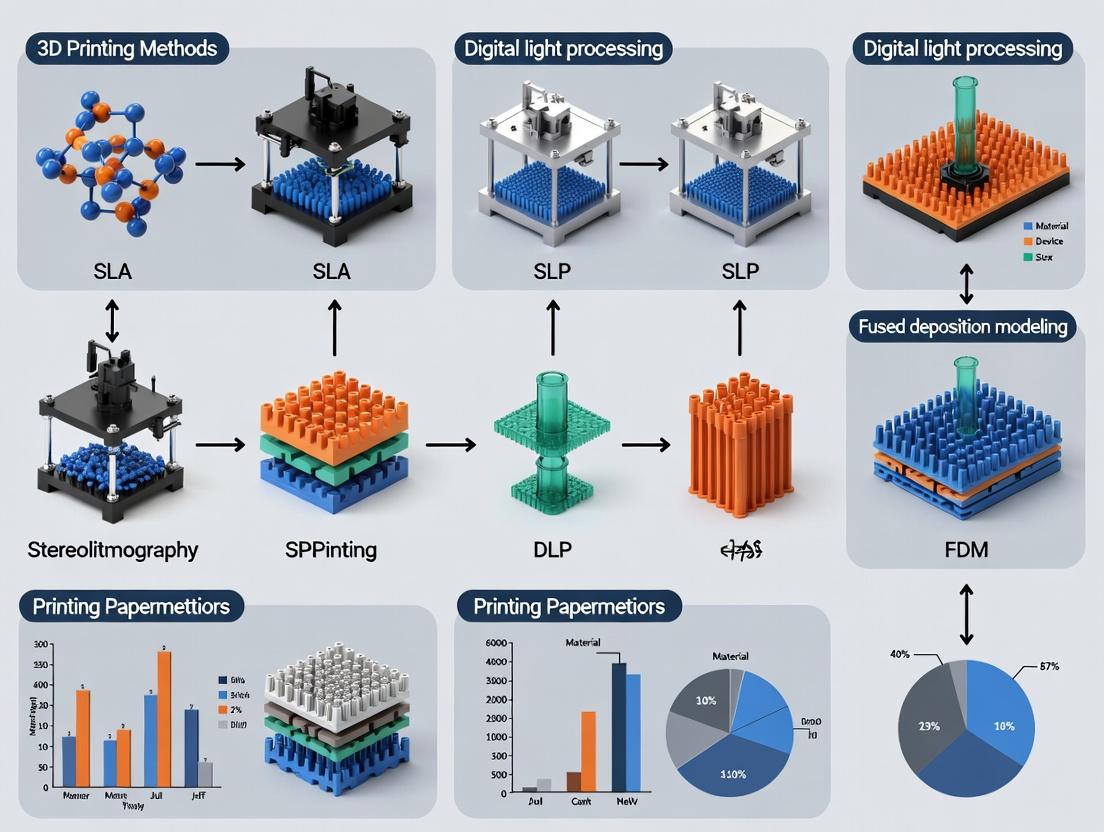
This article provides researchers, scientists, and drug development professionals with a complete guide to leveraging 3D printing for rapid microfluidic device prototyping.
Rapid Prototyping Revolution: A Comprehensive Guide to 3D Printing Microfluidic Devices for Biomedical Research
Abstract
This article provides researchers, scientists, and drug development professionals with a complete guide to leveraging 3D printing for rapid microfluidic device prototyping. We explore foundational principles, compare vat polymerization (SLA/DLP), material jetting, and fused deposition modeling (FDM) methods, detail practical workflows from design to post-processing, address common troubleshooting and optimization strategies, and validate performance against traditional fabrication techniques. The content synthesizes current methodologies to empower labs to accelerate their microfluidics research and development cycles.
From CAD to Chip: Understanding 3D Printing's Role in Modern Microfluidics Prototyping
Application Notes: Accelerating Microfluidic Development with 3D-Printed Prototypes
The integration of 3D printing into microfluidics research enables an iterative design-test-refine cycle, compressing development timelines from months to days. This acceleration is critical for applications in point-of-care diagnostics, organ-on-a-chip systems, and high-throughput drug screening. The direct translation of CAD models to functional devices allows for the rapid exploration of complex geometries—such as serpentine mixers, droplet generators, and concentration gradient networks—that are costly or impossible with traditional soft lithography.
Table 1: Comparison of Prototyping Methods for Microfluidics
| Method | Typical Turnaround Time | Minimum Feature Size (µm) | Approx. Cost per Prototype | Key Limitation |
|---|---|---|---|---|
| PDMS Soft Lithography | 1-3 days | ~10 | $50-$200 | Master mold fabrication bottleneck |
| Stereo-lithography (SLA) 3D Printing | 1-4 hours | ~25 | $5-$20 | Biocompatibility post-processing |
| Inkjet 3D Printing | 2-8 hours | ~50 | $10-$40 | Material property limitations |
| PolyJet 3D Printing | 3-10 hours | ~16 | $30-$100 | Support material removal |
| CNC Machining (PMMA) | 1-2 days | ~100 | $100-$500 | Limited to 2.5D geometries |
| Injection Molding | 4-8 weeks | ~10 | $1000+ (initial tooling) | Not suitable for prototyping |
Note: Data compiled from recent literature and vendor specifications (2023-2024). Turnaround time includes post-processing.
Experimental Protocols
Protocol 1: Rapid Fabrication of a Droplet Generator via SLA 3D Printing
This protocol details the fabrication of a water-in-oil droplet generator for single-cell analysis applications.
Materials & Equipment:
- SLA 3D Printer (e.g., Formlabs Form 3+)
- Biocompatible Photopolymer Resin (e.g., Formlabs BioMed Clear)
- Isopropyl Alcohol (IPA, >99%)
- UV Curing Chamber
- Syringes (1 mL) and PTFE tubing (0.02” ID)
- Syringe pumps
- Surfactant solution (e.g., 2% Span 80 in mineral oil)
- Aqueous sample solution
Procedure:
- Design: Create a droplet generator design (flow-focusing geometry) in CAD software. Channel dimensions: 150 µm (width) x 150 µm (height). Include 1/16” barbed outlet/inlet ports.
- Print Preparation: Orient the model at a 45° angle to minimize step artifacts. Generate supports automatically.
- Printing: Print using 25 µm layer thickness settings. Estimated print time: 2.5 hours.
- Post-Processing: a. Rinse the printed part in IPA bath for 10 minutes with gentle agitation. b. Transfer to a second clean IPA bath for 5 minutes. c. Air dry, then remove support structures. d. Post-cure in a UV oven at 60°C for 15 minutes per side.
- Bonding: Apply a thin layer of uncured resin to the device's mating surface. Place a clean PMMA cover plate on top. Cure under UV light (365 nm) for 5 minutes to seal.
- Fluidic Connection: Press-fit PTFE tubing into barbed inlets.
- Operation: Load the oil phase (with surfactant) and aqueous phase into separate syringes. Connect to device. Set syringe pumps to specific flow rates (e.g., Oil: 500 µL/hr, Aqueous: 100 µL/hr). Collect droplets from outlet.
Validation: Monitor droplet size and generation frequency using high-speed microscopy. Expected output: monodisperse droplets of ~80 µm diameter.
Protocol 2: Functional Testing of a 3D-Printed Gradient Generator for Cell Chemotaxis Studies
This protocol validates the performance of a 3D-printed tree-like concentration gradient generator.
Procedure:
- Device Fabrication: Fabricate a 3-inlet (1 for buffer, 2 for dye/solute), 7-outlet gradient generator using PolyJet printing (e.g., Stratasys J735) with VeroClear material. Post-process per manufacturer instructions.
- Surface Treatment: To prevent non-specific adsorption, perfuse the device with 1% Pluronic F-127 solution for 1 hour, then rinse with PBS.
- Gradient Calibration: a. Connect syringe pumps to inlets: Inlet 1 (PBS buffer), Inlet 2 (0.1 mg/mL fluorescein solution). b. Set equal flow rates (e.g., 100 µL/hr) for all inlets. c. Run for 10 minutes to establish steady-state flow. d. Collect effluent from each outlet and measure fluorescence intensity with a plate reader. e. Generate a standard curve to correlate intensity with concentration.
- Data Analysis: Plot concentration per outlet. A linear gradient across outlets 1-7 is expected. Calculate coefficient of variation (CV) between repeated runs (<5% is acceptable).
Key Diagrams
Title: Rapid Prototyping Iterative Cycle for Microfluidics
Title: Cell Chemotaxis Assay in a 3D-Printed Microfluidic Device
The Scientist's Toolkit: Key Research Reagent Solutions
Table 2: Essential Materials for Rapid Microfluidic Prototyping Experiments
| Item | Function | Example Product/Brand |
|---|---|---|
| Biocompatible Photopolymer Resin | Primary material for SLA printing; must be non-cytotoxic for cell-based assays. | Formlabs BioMed Clear, Dental SG Resin |
| Support Material (for PolyJet) | Water-soluble gel that supports complex overhangs during printing. | Stratasys SUP706, SUP707 |
| Pluronic F-127 or F-68 | Surface-active agent; used to passivate channels and prevent cell/protein adhesion. | Sigma-Aldrich P2443 |
| PDMS (Sylgard 184) | Often used for comparison or hybrid devices; elastomeric properties. | Dow Sylgard 184 Kit |
| Fluorescent Dyes (e.g., Fluorescein) | For visualizing flow patterns, validating gradient generation, and quantifying mixing. | ThermoFisher Scientific F6377 |
| Cell Culture Medium (Serum-Free) | For biological assays; serum-free reduces bubble formation in microchannels. | Gibco FluoroBrite DMEM |
| Precision Syringe Pumps | To provide stable, pulse-free low flow rates (µL/hr to mL/hr) for device operation. | Harvard Apparatus PHD ULTRA, neMESYS |
| Optical Adhesive or Uncured Resin | Used as an adhesive layer for bonding 3D-printed parts to glass or PMMA covers. | Norland Optical Adhesive 81, Original Resin (Formlabs) |
| Isopropyl Alcohol (High Purity) | Critical for washing uncured resin from printed parts in post-processing. | >99% IPA, ACS grade |
| UV Curing Lamp/Oven | For final curing of printed resin to achieve maximum biocompatibility and stability. | Formlabs Form Cure, Any 405nm UV Lamp |
Within the broader research on 3D printing for rapid microfluidic device prototyping, the selection of the core printing technology dictates the functional capabilities, resolution, and application suitability of the final device. This application note details the three predominant technologies—Stereolithography (SLA)/Digital Light Processing (DLP), PolyJet, and Fused Deposition Modeling (FDM)—providing comparative data, experimental protocols for device fabrication, and essential research toolkits to guide researchers and development professionals in microfluidics and drug development.
Technology Comparison and Quantitative Data
Table 1: Core 3D Printing Technology Comparison for Microfluidics
| Parameter | SLA / DLP | PolyJet | FDM |
|---|---|---|---|
| Typical XY Resolution | 25 - 150 µm | 16 - 42 µm | 100 - 400 µm |
| Typical Layer Height | 10 - 100 µm | 16 - 30 µm | 50 - 300 µm |
| Minimum Feature Size | ~50 - 150 µm | ~20 - 100 µm | ~200 - 500 µm |
| Surface Finish | Smooth | Very Smooth | Layered (Visible Raster Lines) |
| Biocompatible Materials | Limited (e.g., Class I resins) | Several (e.g., MED610) | Common (e.g., PLA, ABS, PP) |
| Multi-Material Capability | No (typically) | Yes (Simultaneous) | Yes (Sequential, with tool changes) |
| Optical Clarity | Good to High | High | Low (Opaque, translucent possible) |
| Typical Build Speed | Moderate to Fast | Moderate | Slow to Moderate |
| Post-Processing Requirement | Mandatory (IPA wash, post-cure) | Support removal (water jet) | Minimal (support removal) |
| Relative Cost (Printer & Material) | Medium | High | Low |
Table 2: Application Suitability for Microfluidic Functions
| Application Goal | Recommended Technology | Rationale |
|---|---|---|
| High-Resolution Mixers & Droplet Generators | SLA/DLP, PolyJet | Superior resolution for sub-100µm features. |
| Cell Culture & Organ-on-a-Chip | PolyJet (MED610), SLA (Biocompatible resins) | Certified biocompatibility and optical clarity for imaging. |
| Rapid, Low-Cost Prototyping of Macroscopic Fluidic Networks | FDM | Low barrier to entry, fast design iteration for channel >300µm. |
| Integrated Valves/Pumps with Flexible Components | PolyJet | Ability to print rigid and elastomeric materials simultaneously. |
| Optical Detection Flow Cells | SLA/DLP, PolyJet | High clarity and smooth surfaces minimize light scattering. |
Experimental Protocols for Device Fabrication
Protocol 1: Fabricating a Microfluidic Mixer via DLP Printing Objective: To create a herringbone micromixer for rapid fluid blending.
- Design: Using CAD software (e.g., SolidWorks, Fusion 360), design a straight channel (width: 500 µm, height: 250 µm) with integrated staggered herringbone ridges (height: 100 µm) on the channel ceiling. Export as an STL file.
- Preparation: Import the STL into the printer slicer (e.g., ChiTuBox for DLP). Orient the device at a 45-degree angle to minimize layer stepping on critical features. Add support structures automatically. Slice with a layer height of 25 µm.
- Printing: Use a commercially available biocompatible, clear photopolymer resin (e.g., Formlabs Dental SG or equivalent). Initiate the print. The DLP projector will cure each layer based on the sliced image.
- Post-Processing: Upon completion, transfer the print to an isopropyl alcohol (IPA) bath. Agitate for 5 minutes to remove uncured resin. Remove from IPA and gently air dry. Place the device in a UV post-curing chamber (365 nm wavelength) for 20-30 minutes to ensure complete polymerization and optimal mechanical properties.
- Bonding: For enclosed channels, bond the printed part to a flat substrate. Oxygen plasma treat both the device (open face) and a PDMS slab or glass slide for 60 seconds. Bring surfaces into contact immediately to form an irreversible seal.
Protocol 2: Creating a Multi-Material Organ-on-a-Chip Model via PolyJet Objective: To prototype a dual-channel chip with integrated porous membrane.
- Design: Model two overlapping microfluidic channels (1 mm x 1 mm) separated by a thin (100 µm thick) planar membrane. Design the chip body as a single part with the membrane region assigned as a separate body in the CAD assembly.
- Material Assignment: In the PolyJet print preparation software (e.g., GrabCAD Print), assign the main chip body material as a rigid, clear photopolymer (e.g., VeroClear). Assign the membrane region to a digital material simulating a porous, flexible structure (e.g., a blend of Agilus30 and Vero, or use the dedicated "Digital ABS" for rigidity with slight flex).
- Support & Print: The software will automatically generate gel-like support material. Print the job. The printer will jet and UV-cure both model materials simultaneously layer-by-layer.
- Support Removal: After printing, use a high-pressure water jet station to meticulously remove the support material from the delicate channels and membrane.
Protocol 3: Rapid Iteration of a Fluidic Connector Manifold via FDM Objective: To produce a macro-to-micro interface for tubing connections.
- Design: Create a manifold block with multiple inlet/outlet ports (diameter ≥ 1 mm) leading to a common channel. Include features for standard luer lock or barbed fittings.
- Slicing: Import STL into FDM slicer (e.g., Ultimaker Cura, PrusaSlicer). Select a biocompatible filament like PLA or PP. Use a nozzle diameter of 0.25 mm for finer detail. Set layer height to 0.1 mm for better seal surface. Enable "ironing" top surface setting for improved smoothness. Generate tree-style supports for easy removal.
- Printing: Level the print bed. Begin print. Monitor first layer adhesion.
- Post-Processing: Remove support structures manually. Smooth sealing surfaces with fine-grit sandpaper if necessary. Clean channels with compressed air.
Diagrams and Workflows
Title: SLA/DLP Device Fabrication Workflow
Title: Technology Selection Decision Tree
The Scientist's Toolkit: Key Research Reagent Solutions
Table 3: Essential Materials for 3D-Printed Microfluidics Research
| Item | Function in Research | Example/Note |
|---|---|---|
| Biocompatible Photopolymer Resin | For creating devices for cell-contact applications (e.g., organ-on-chip). | Formlabs BioMed Clear, Stratasys MED610. Must be ISO 10993 certified. |
| High-Resolution Clear Resin | For general prototyping requiring optical access and fine features. | Anycubic Clear, Phrozen Aqua-Grey 8K. |
| Dissolvable or Breakaway Support Material | Enables printing of complex, enclosed internal geometries. | PolyJet SUP706 (water jet), SLA Breakaway Support (manual remove). |
| Polydimethylsiloxane (PDMS) | Used as a bonding substrate or for creating hybrid devices due to its gas permeability. | Sylgard 184. Often bonded to printed parts. |
| Oxygen Plasma System | Activates surfaces of printed polymers and PDMS/glass for irreversible bonding. | Harrick Plasma Cleaner. Critical for creating sealed devices. |
| Biocompatible FDM Filament | For prototyping fluidic manifolds, holders, or large-scale systems. | PLA (generally safe), Polypropylene (PP, chemical resistant). |
| IPA (≥99% purity) | Mandatory for washing uncured resin from SLA/DLP prints. | Used in post-processing wash stations. |
| UV Post-Curing Chamber | Ensures complete resin polymerization, improving mechanical strength & biocompatibility. | Formlabs Form Cure, or custom-built with 405nm LEDs. |
| Fluidic Connectors & Tubing | Interfaces between macro-world equipment and microfluidic chips. | Luer locks, barbed fittings (e.g., 10-32 thread), PTFE tubing. |
This Application Note is a critical subsection of a broader thesis on 3D printing methods for rapid microfluidic device prototyping for biomedical research. The selection of a biocompatible material is the foundational step determining the success of subsequent cell culture, organ-on-a-chip, or drug screening experiments. This guide categorizes and evaluates mainstream 3D-printable biocompatible materials, providing direct protocols for their implementation in microfluidic research workflows.
Material Categories & Quantitative Comparison
The following tables summarize key properties of commercially available, 3D-printable biocompatible materials relevant to microfluidics. Data is compiled from manufacturer datasheets and recent literature (2023-2024).
Table 1: Biocompatible Vat Polymerization Resins (SLA/DLP)
| Material (Example Trade Name) | Biocompliance Standard (Tested) | Typical Elastic Modulus | Key Advantages for Microfluidics | Key Limitations |
|---|---|---|---|---|
| Methacrylate-based (Formlabs Biomedical Resin) | ISO 10993-5, -10 | 1.5 - 2.0 GPa | High resolution (~50 µm), optical clarity, rigid. | May require extensive post-curing/leaching; can be brittle. |
| Methacrylate-based (Stratasys MED610) | ISO 10993-1 | 2.6 - 2.9 GPa | Biocompatible, long-term implantable (≤30 days). | Requires specialized PolyJet printers; support removal critical. |
| Ceramic-filled (3D Systems Biomaterial) | ISO 10993-5 | 4.0+ GPa | High temperature resistance, sterilizable. | Opaque, high abrasiveness requires hardened tools. |
Table 2: Biocompatible Thermoplastics for FDM/FFF
| Material | Biocompliance | Print Temp (°C) | Glass Transition Tg (°C) | Key Advantages | Key Limitations |
|---|---|---|---|---|---|
| Polylactic Acid (PLA) | Generally Recognized As Safe (GRAS) | 190-220 | 55-60 | Low cost, easy to print, biodegradable. | Hydrolytic degradation, moderate chemical resistance. |
| Polyethylene Terephthalate Glycol (PETG) | USP Class VI | 230-250 | 80 | Chemical resistant, transparent, low shrinkage. | Can be challenging to surface functionalize. |
| Polycarbonate (PC) | ISO 10993 | 280-310 | 147 | High strength, heat & chemical resistance, autoclavable. | High printing temp, prone to moisture absorption. |
Table 3: Biocompatible Elastomers for Inkjet, SLA, or Direct Printing
| Material (Type) | Biocompliance | Shore Hardness | Key Advantages for Microfluidics | Primary Printing Method |
|---|---|---|---|---|
| Silicone (PDMS) Mimics (e.g., Silicone-based Resins) | ISO 10993-5 | 30A - 80A | Elastic, gas-permeable, tunable modulus. | VAT Photopolymerization |
| Thermoplastic Polyurethane (TPU) | USP Class VI | 95A - 74D | Flexible, durable, FDM-printable. | FDM/FFF |
| Hydrogels (GelMA, PEGDA) | Cell-laden compatible | N/A | Support cell growth/embedding, mimic ECM. | Direct Ink Writing (DIW), SLA |
Application Notes & Experimental Protocols
Protocol 3.1: Post-Processing & Validation for Resin-Based Microfluidic Devices
Objective: To render a 3D-printed resin device biocompatible for cell culture.
- Post-Print Wash: Immerse the printed part in ≥99% isopropanol (IPA) for 10 minutes in an ultrasonic bath. Repeat with fresh IPA.
- Secondary Cure & Leaching: Cure under 405 nm UV light (20 mW/cm²) for 30 min per side. Submerge in 70% ethanol and incubate at 60°C on an orbital shaker (50 rpm) for 4 hours.
- Extensive Leaching: Rinse with sterile deionized water. Submerge in sterile PBS (pH 7.4) and incubate at 37°C for 7 days, changing PBS daily.
- Biocompatibility Validation (Direct Contact Test):
- Seed mammalian cells (e.g., HEK293) at 50,000 cells/cm² in a well containing the leached device.
- Incubate for 48 hours (37°C, 5% CO₂).
- Assess viability via Calcein-AM/EthD-1 live/dead staining and compare to a tissue culture plastic control (≥80% viability target).
Protocol 3.2: Surface Activation of FDM-Printed Thermoplastics for Bonding
Objective: To create a permanent, leak-tight seal for multilayer thermoplastic microfluidics.
- Surface Preparation: Smooth the bonding surface of the FDM-printed part (e.g., PC, PETG) via light sanding (600-grit) and sonicate in IPA for 5 min.
- Chemical Activation (for PC or PS):
- Prepare a 5% (v/v) solution of 3-(Trimethoxysilyl)propyl methacrylate in ethanol.
- Immerse the part for 20 minutes, rinse with ethanol, and air dry.
- Thermal Bonding:
- Align the activated part with a flat substrate (e.g., PMMA sheet).
- Place in a programmable hot press with a soft silicone cushion.
- Apply 0.5 MPa pressure at 5°C above the material's Tg for 10 minutes.
- Cool under pressure to
Visualized Workflows & Relationships
Title: Material Selection Decision Workflow for Biocompatible Microfluidics
Title: Post-Processing Protocol for Resin Biocompatibility
The Scientist's Toolkit: Research Reagent Solutions
| Item | Function in Biocompatible 3D Printing | Example/Note |
|---|---|---|
| High-Purity Isopropanol (≥99%) | Removes uncured resin residue from printed parts. Essential for preventing cytotoxicity. | Use in a well-ventilated area or fume hood. |
| Phosphate-Buffered Saline (PBS), Sterile | For leaching residual monomers and photoinitiators from printed polymers. | Change solution daily during long-term leaching. |
| Calcein-AM / Ethidium Homodimer-1 Kit | Standard live/dead fluorescent assay to validate material cytocompatibility post-processing. | Incubate with cells for 20-45 min before imaging. |
| 3-(Trimethoxysilyl)propyl methacrylate | Silane coupling agent for surface activation of thermoplastics to enable bonding. | Handle under inert atmosphere; hydrolyzes in air. |
| Sterile Cell Culture Media | For final rinsing and conditioning of devices prior to cell seeding. | Confirms device does not alter media pH/osmolarity. |
| Programmable Hot Press | For thermal fusion bonding of thermoplastic microfluidic layers. | Enables precise control of temperature, pressure, and time. |
Within research on 3D printing for rapid microfluidic device prototyping, Design for Additive Manufacturing (DfAM) is critical. This document outlines key principles and practical protocols for designing and fabricating microfluidic channels using common additive manufacturing technologies, enabling researchers and drug development professionals to accelerate device iteration and functional testing.
Key DfAM Principles & Quantitative Guidelines
Successful printing of microfluidic channels requires adherence to specific design rules tailored to each printing technology. The following table summarizes critical quantitative parameters.
Table 1: DfAM Parameters for Microfluidic Channels by Printing Technology
| Principle / Parameter | Stereolithography (SLA) | Digital Light Processing (DLP) | PolyJet / Material Jetting | Fused Deposition Modeling (FDM) | Comments |
|---|---|---|---|---|---|
| Minimum Channel Width | 100 - 150 µm | 50 - 100 µm | 200 - 300 µm | 300 - 500 µm | Dependent on optical spot size or nozzle diameter. |
| Minimum Feature Size | 50 - 100 µm | 25 - 50 µm | 100 - 150 µm | 150 - 200 µm | Includes pillars, valves, and mixing elements. |
| Aspect Ratio (H:W) Limit | 10:1 | 8:1 | 5:1 | 3:1 | For unsupported vertical walls. |
| Channel Roof Sag Limit | 10:1 (Span:Height) | 8:1 (Span:Height) | 6:1 (Span:Height) | 4:1 (Span:Height) | Maximum unsupported roof span to avoid collapse. |
| Optimal Orientation | 45° from build plate | Vertical (Z-axis) | As designed, multi-material support | Horizontal (XY-plane) | Minimizes stair-step, supports, and printing time. |
| Surface Roughness (Ra) | 0.2 - 1.0 µm | 0.5 - 1.5 µm | 1.0 - 3.0 µm | 5.0 - 20 µm | Critical for optical clarity and flow resistance. |
| Post-Processing Required | IPA Wash, UV Cure | IPA Wash, UV Cure | Support Removal, Water Jet | Support Removal, Solvent Smoothing | Essential for clearing uncured resin or support material from channels. |
Detailed Experimental Protocols
Protocol 1: Vat Polymerization (SLA/DLP) Device Fabrication & Post-Processing
This protocol details the creation of sealed microfluidic devices using vat polymerization, a common high-resolution method.
Materials:
- Clear, biocompatible photopolymer resin (e.g., Formlabs Dental SG, PR48).
- Isopropyl Alcohol (IPA), >99% purity.
- Compressed air or nitrogen gun.
- Secondary UV curing chamber.
- Appropriate personal protective equipment (PPE): nitrile gloves, safety glasses.
Methodology:
- Design & Orientation: Design the microfluidic device with channel dimensions respecting Table 1 limits. Include inlet/outlet ports. Orient the device at a 10-20° angle on the build platform to reduce suction forces and improve channel definition.
- Support Generation: Use the printer's software to generate lightweight, touch-point supports for overhanging channel roofs. Manual editing is often required to ensure supports do not intrude into critical channel areas.
- Printing: Initiate the print using manufacturer-recommended layer thickness (typically 25-100 µm for microfluidics).
- Primary Wash: Immediately after printing, submerge the part in an IPA bath for 5-10 minutes with gentle agitation to remove excess surface resin.
- Channel Clearing: Using a syringe filled with fresh IPA, forcefully flush the channels from the inlet ports to evacuate any trapped uncured resin. Repeat 3-5 times.
- Secondary Wash & Dry: Place the device in a second, clean IPA bath for 2 minutes. Remove and dry thoroughly with compressed air.
- Final Cure: Post-cure the device in a UV chamber for 30-60 minutes per side, ensuring complete polymerization of all internal surfaces.
- Sealing: Bond the cured device to a flat substrate (e.g., glass slide, PMMA) using a compatible UV-curable adhesive or a plasma bonding protocol.
Protocol 2: FDM Nozzle Temperature & Flow Calibration for Channel Integrity
For FDM printing of microfluidic masters or devices, precise calibration is needed to prevent voids or sagging roofs.
Materials:
- Poly(lactic acid) (PLA) or Acrylonitrile Butadiene Styrene (ABS) filament, 1.75 mm diameter.
- FDM 3D printer with a 0.25 mm or 0.4 mm nozzle.
Methodology:
- Design Test Coupon: Create a test block containing a series of straight channels (widths: 400, 500, 600 µm; roof span: 1-5 mm).
- Printer Setup: Level the build plate and ensure the filament path is unobstructed.
- Temperature Tower Print: Print a temperature calibration tower spanning 190-230°C (PLA) or 240-270°C (ABS). Visually inspect each section for stringing, gloss, and layer adhesion.
- Extrusion Multiplier Calibration: Print a single-wall calibration cube. Measure the actual wall thickness with calipers. Adjust the extrusion multiplier in the slicer:
New Multiplier = (Expected Width) / (Measured Width). - Cooling Fan Optimization: For PLA, set the cooling fan to 100% after the first layer. For ABS, fan should be off or very low (<20%) to prevent warping and delamination of roof layers.
- Print Test Coupon: Using optimized settings, print the channel test coupon.
- Analysis: Inspect channels under a microscope. Measure actual channel width vs. designed width. Check roof integrity. Iterate on extrusion multiplier and cooling settings until channel geometry matches design within 10% tolerance.
Visualizing the DfAM Decision Workflow
DOT Script for Microfluidic DfAM Decision Workflow
Title: DfAM Technology Selection Workflow for Microfluidics
The Scientist's Toolkit: Essential Research Reagent Solutions
Table 2: Key Materials for 3D Printed Microfluidic Device Development & Testing
| Item | Function | Example Product/Chemical |
|---|---|---|
| Biocompatible Photopolymer | Primary structural material for vat polymerization of cell-contact devices. Must have low cytotoxicity. | Formlabs BioMed Amber, PR48; Digital ABS RGD875. |
| Water-Soluble Support Material | Enables printing of complex, enclosed channels that can be cleared post-print without manual intervention. | Stratasys SUP706 (for PolyJet); PVA filament (for FDM). |
| IPA (Isopropanol) | Standard solvent for washing uncured resin from vat-polymerized parts. High purity reduces residue. | Laboratory Grade IPA, >99% purity. |
| PDMS (Sylgard 184) | Elastomeric material for creating seals, membranes, or casting from 3D-printed masters. | Dow Sylgard 184 Silicone Elastomer Kit. |
| UV-Curable Adhesive | For bonding 3D-printed parts to substrates (glass, PMMA) to seal channels optically. | Norland Optical Adhesive 81 (NOA81). |
| Fluorescent Tracers / Beads | For quantifying flow profiles, visualizing mixing efficiency, and identifying channel defects. | Fluorescein dye; 1-10 µm fluorescent polystyrene microspheres. |
| Surface Passivation Agent | Coats printed channels to reduce non-specific adsorption of biomolecules (proteins, cells). | Pluronic F-127, Bovine Serum Albumin (BSA). |
1. Introduction This application note details the end-to-end workflow for the rapid prototyping of microfluidic devices, situated within a thesis exploring advanced 3D printing methodologies. The transition from a digital concept to a functional physical prototype is critical for accelerating research in diagnostics, synthetic biology, and drug development. This protocol emphasizes iterative design, modern fabrication via vat photopolymerization (e.g., DLP, SLA), and validation.
2. Digital Design & Simulation Workflow The initial phase involves creating a 2D layout and translating it into a 3D model suitable for printing.
Protocol 2.1: CAD Model Preparation
- Software Selection: Utilize CAD software (e.g., AutoCAD, SolidWorks, or freeware like Fusion 360) for precise design.
- Channel Design: Define channel widths (typically 50-500 µm) and heights (50-300 µm). Maintain an aspect ratio (width:height) ≤ 5:1 to prevent roof sagging.
- Feature Integration: Design inlet/outlet ports (diameter ≥ 1.5 mm) for tubing interfacing. Include alignment markers for multi-layer bonding if required.
- Export: Save the final design as an STL (stereolithography) file with a resolution of 0.01 mm.
Table 1: Common Microfluidic Channel Dimensions and Applications
| Feature Size (µm) | Typical Application | Recommended Printing Technique |
|---|---|---|
| 50 - 100 | Single-cell traps, high-res mixing | High-res DLP, Two-Photon Polymerization |
| 100 - 200 | Standard cell culture, gradient generators | DLP, Projection SLA |
| 200 - 500 | Droplet generation, organ-on-chip chambers | SLA, DLP |
| > 500 | Macro-fluidic reservoirs, perfusion channels | FDM, SLA |
Protocol 2.2: Fluidic Simulation (Optional but Recommended)
- Tool Import: Import the 2D layout into finite element analysis (FEA) software (e.g., COMSOL Multiphysics, ANSYS Fluent).
- Parameter Setting: Define fluid properties (e.g., water: ρ=997 kg/m³, μ=0.001 Pa·s), boundary conditions (inlet velocity/pressure), and mesh size (~1/5 of smallest feature).
- Run Simulation: Execute a laminar flow study to visualize pressure drops, shear stress, and flow profiles.
- Iterate: Refine the design based on simulation results to optimize performance before printing.
3. 3D Printing & Post-Processing Protocol This core protocol focuses on using a high-resolution DLP printer for device fabrication.
Protocol 3.1: Print Preparation & Slicing
- Resin Selection: Choose a biocompatible, water-resistant photopolymer resin (e.g., Formlabs Dental SG or proprietary acrylic-based resins).
- Orientation: Orient the device at a 10-45° angle to the build platform to minimize stair-stepping on critical channel surfaces and reduce suction forces.
- Support Generation: Auto-generate light-touch supports for overhangs, ensuring they are not placed inside fluidic channels.
- Slice Parameters: Set layer height to 25-50 µm. Adjust exposure time per layer based on resin datasheet (e.g., 2-8 seconds).
Protocol 3.2: Printing & Post-Processing
- Print Execution: Initiate print. Monitor first layers for adhesion.
- Cleaning: Post-print, submerge the part in isopropanol (IPA) in an ultrasonic bath for 3-5 minutes to remove uncured resin.
- Support Removal: Carefully detach all support structures using flush cutters.
- Post-Curing: Cure the device under a 405 nm UV lamp for 10-20 minutes to ensure complete polymerization and improve mechanical stability.
- Surface Inspection: Inspect channels under a stereo microscope for defects or residual resin.
Table 2: Quantitative Comparison of 3D Printing Modalities for Microfluidics
| Method | Typical XY Resolution (µm) | Z Resolution (Layer Height) | Print Speed | Material Cost | Best For |
|---|---|---|---|---|---|
| DLP / mSLA | 25 - 100 | 10 - 50 µm | Fast (parallel layer cure) | Moderate | High-resolution, rapid iteration |
| Two-Photon Polymerization | < 1 | 0.1 - 1 µm | Very Slow (point-by-point) | Very High | Nanofluidic, ultra-high complexity |
| Fused Deposition Modeling (FDM) | 100 - 300 | 50 - 200 µm | Moderate | Low | Macroscopic fixtures, rough prototypes |
| Inkjet 3D Printing | 20 - 50 | 5 - 30 µm | Moderate | High | Multi-material, embedded components |
4. Bonding, Functionalization & Assembly Creating a sealed, functional device is critical.
Protocol 4.1: Bonding to Substrate (Glass Slide)
- Surface Activation: Treat the bottom of the 3D-printed device and a clean glass slide with oxygen plasma (e.g., 100 W, 30 sec, 0.5 mBar O₂).
- Alignment & Contact: Immediately bring the activated surfaces into contact, applying gentle, uniform pressure.
- Thermal Annealing: Place the bonded assembly on a hotplate at 60°C for 15-30 minutes to strengthen the irreversible bond.
Protocol 4.2: Channel Surface Functionalization
- PBS Rinse: Flush channels with phosphate-buffered saline (PBS), pH 7.4.
- Protein Coating (for cell adhesion): Introduce a solution of 50 µg/mL fibronectin or poly-D-lysine in PBS. Incubate at 37°C for 1 hour.
- Blocking: Flush with 1% Bovine Serum Albumin (BSA) in PBS for 30 minutes to block non-specific binding sites.
- Rinse: Flush with cell culture medium prior to cell seeding.
5. Validation & Functional Testing Protocol Protocol 5.1: Hydrodynamic Performance Test
- Setup: Connect device inlets to a programmable syringe pump via biocompatible tubing (e.g., PTFE, 0.5 mm ID).
- Dye Perfusion: Perfuse a food dye or fluorescent dye (e.g., 10 µM fluorescein) at a set flow rate (Q = 1-100 µL/min).
- Imaging & Analysis: Capture flow using a high-speed camera or fluorescence microscope. Use ImageJ to measure flow front velocity and compare to theoretical values (Q = v*A).
Protocol 5.2: Biological Validation (Cell Seeding)
- Cell Preparation: Trypsinize and resuspend HUVECs or HeLa cells at 2x10⁶ cells/mL in complete medium.
- Seeding: Slowly introduce 20 µL of cell suspension into the main channel. Allow cells to settle and adhere for 15 minutes.
- Perfusion Culture: Connect the device to a perfusion system with medium reservoir. Maintain flow at 5-10 µL/min in an incubator (37°C, 5% CO₂).
- Viability Assay: After 24-48 hours, perfuse a Live/Dead stain (e.g., Calcein-AM/EthD-1). Image and calculate viability (>90% expected for non-cytotoxic devices).
The Scientist's Toolkit: Essential Materials & Reagents
| Item | Function / Purpose |
|---|---|
| Biocompatible Photopolymer Resin (e.g., Formlabs BioMed Clear) | Primary printing material; ensures cytocompatibility for cell-based assays. |
| Isopropanol (IPA), >99% purity | Post-processing solvent for washing uncured resin from printed parts. |
| Oxygen Plasma Cleaner | Activates polymer and glass surfaces to enable strong, irreversible bonding. |
| PTFE Microbore Tubing (ID: 0.5 mm, OD: 1/16") | Connects syringe pumps and reservoirs to device ports with minimal dead volume. |
| Programmable Syringe Pump | Provides precise, pulsation-free flow control for perfusion and experiments. |
| Fibronectin, Lyophilized | Extracellular matrix protein coating to promote cell adhesion in channels. |
| Bovine Serum Albumin (BSA) | Used as a blocking agent to passivate channel surfaces and prevent non-specific binding. |
| Fluorescein Sodium Salt | Fluorescent tracer for visualizing flow profiles, mixing efficiency, and leakage. |
| Live/Dead Viability/Cytotoxicity Kit (e.g., Calcein AM/Ethidium homodimer-1) | Two-color fluorescence assay to assess cell health within the fabricated device. |
Visualization: Workflow and Validation Diagrams
Figure 1: Rapid Prototyping Iterative Workflow
Figure 2: Prototype Functional Testing Setup
Step-by-Step Protocols: Building and Applying Your 3D Printed Microfluidic Device
Application Notes
In the context of a thesis on 3D printing for rapid microfluidic device prototyping, the selection of an appropriate software stack is critical. This stack bridges the conceptual design of complex, millimeter- to micrometer-scale fluidic architectures with their physical realization via additive manufacturing. The workflow is bifurcated into Computer-Aided Design (CAD) for geometry creation and slicing for machine instruction generation. For research-grade microfluidic devices, key considerations include the ability to design precise, sealed channels (typically 100-500 µm), incorporate interconnects, and export watertight models in formats compatible with high-resolution printing technologies like stereolithography (SLA), digital light processing (DLP), and two-photon polymerization (2PP). The following notes detail the essential tools, their roles, and integration points.
Software Tool Comparison & Quantitative Data
Table 1: Comparison of Primary CAD Software for Microfluidic Device Design
| Software | Primary License Type | Key Feature for Microfluidics | Typical Learning Curve | Optimal Print Technology | Export Formats (Key) |
|---|---|---|---|---|---|
| SolidWorks | Commercial | Robust parametric design, advanced assembly mates for multi-part devices. | Steep | SLA, FDM, PolyJet | STL, STEP, 3MF |
| Fusion 360 | Freemium/Commercial | Cloud-based parametric & direct modeling, integrated CAM/simulation. | Moderate | SLA, FDM | STL, STEP, 3MF |
| FreeCAD | Open-Source | Parametric, modular workbenches (e.g., Part, PartDesign). | Steep | SLA, FDM | STL, STEP |
| AutoCAD | Commercial | Precision 2D drafting for mask creation (for lithography). | Moderate | DLP (mask-based) | DXF, DWG |
| Blender | Open-Source | Advanced organic/freeform modeling, boolean operations. | Very Steep | SLA, DLP | STL, OBJ |
| Shapr3D | Commercial | Intuitive touch/tablet-based direct modeling. | Shallow | SLA, FDM | STL, STEP |
Table 2: Comparison of Primary Slicing Software for High-Resolution 3D Printing
| Software | Primary Use | Key Microfluidic Feature | Support Generation | Critical Setting for Microfluidics | Typical Layer Height Range |
|---|---|---|---|---|---|
| Chitubox | SLA/DLP (MSLA) | Advanced hollowing & drainage hole tools. | Excellent, automatic & manual | Exposure Time, Anti-Aliasing | 10 - 100 µm |
| PrusaSlicer | FDM, SLA (multi-tech) | Variable layer height for optimal speed/quality. | Excellent, customizable | Layer Height, Print Speed | 50 - 200 µm |
| Formlabs PreForm | Formlabs printers | Optimized, material-specific profiles. | Good, automatic only | Layer Thickness, Supports | 25 - 100 µm |
| Ultimaker Cura | FDM, SLA (emerging) | Extensive plugin marketplace (e.g., custom supports). | Very Good, customizable | Wall Thickness, Flow | 50 - 300 µm |
| Lychee Slicer | SLA/DLP (MSLA) | AI-supported support generation, advanced rafts. | Excellent, AI-assisted | Light-off Delay, Lift Speed | 10 - 150 µm |
| Nanoslicer (e.g., for Nanoscribe) | 2PP | Voxel-based control for sub-micron features. | Specialized (scaffolding) | Laser Power, Scan Speed | 0.1 - 10 µm |
Experimental Protocols
Protocol 1: Designing a Sealed Microfluidic Mixer for SLA Printing
Objective: Create a 3D model of a two-inlet, serpentine-channel mixer with outlet, ready for slicing.
Materials:
- CAD Software (e.g., Fusion 360).
- Target channel dimensions: Width: 200 µm, Height: 200 µm.
- Device footprint: 15 mm x 15 mm x 5 mm.
Methodology:
- Sketch Base Geometry: In the XY plane, sketch a 15x15 mm square. Extrude it to 5 mm (base substrate).
- Create Channel Negative: On the top face of the substrate, sketch the channel network. Use offset lines to define a 200 µm wide path for the serpentine. Ensure inlets/outlets extend to the device edge.
- Extrude Cut for Channels: Select the channel sketch and perform an "extrude cut" operation to a depth of 200 µm. This creates the channel trench.
- Create Roof Layer: Create a new component. Sketch a 15x15 mm rectangle on the top face of the substrate (covering channels). Extrude it upward by 1 mm to form the roof, fully encapsulating the channels.
- Add Fluidic Interconnects: On the roof component, sketch 1.5 mm diameter circles aligned over the channel inlets/outlets. Use the "extrude cut" tool to create through-holes.
- Combine Components: Use a "Boolean union" or "Combine" operation to merge the substrate and roof components into a single, sealed body.
- Export: Finalize the design. Export the final device as an STL or 3MF file with "high" resolution settings. Ensure the mesh is watertight (no gaps).
Protocol 2: Slicing a High-Resolution Microfluidic Device for DLP Printing
Objective: Prepare an STL file for printing on a DLP printer (e.g., 50 µm XY resolution) using a biocompatible resin.
Materials:
- Slicing Software (e.g., Chitubox v1.9.4).
- Device STL file from Protocol 1.
- Printer Profile: Asiga MAX UV.
- Resin: PEGDA (Poly(ethylene glycol) diacrylate).
Methodology:
- Import & Orient: Import the STL. Orient the device so that the channel roof is facing the build platform. This minimizes cross-sectional area during peeling, reducing suction forces.
- Hollowing (Optional): For large devices, use the "Hollow" tool to create a 1.5 mm thick outer shell. Add at least two 2.5 mm diameter "Drain Holes" to the non-critical bottom face to allow uncured resin to escape.
- Support Generation:
- Switch to "Support" mode.
- Set contact depth to 0.4 mm, contact diameter to 0.30 mm, and tip diameter to 0.15 mm for minimal scarring.
- Use the "Auto-Supports" function with a density of 75%.
- Manually add heavy supports to the first few layers of any large overhangs (e.g., the device edges).
- Remove any auto-supports that contact critical channel or sealing surfaces.
- Slice Settings Configuration:
- Layer Thickness: 50 µm.
- Normal Exposure Time: 4.0 s (calibrate per resin datasheet).
- Bottom Exposure Time: 35 s.
- Bottom Layers: 8.
- Lift Speed: 2 mm/s.
- Anti-Aliasing: Enable to 8x to reduce pixelation artifacts.
- Slice & Preview: Execute the slice. Use the layer-by-layer preview to visually inspect for any islands (unsupported areas) or potential resin traps.
- Export: Save the sliced file as a
.ctb,.phz, or printer-specific format.
Workflow & Logical Relationship Diagrams
Title: 3D Printing Software Stack Workflow for Microfluidics
The Scientist's Toolkit: Research Reagent Solutions for Prototyping
Table 3: Essential Materials for 3D Printed Microfluidic Device Fabrication & Testing
| Item | Function in Prototyping | Example Product/Brand |
|---|---|---|
| High-Resolution Photopolymer Resin | Base material for SLA/DLP printing. Biocompatible variants (e.g., PEGDA, IBT) are essential for cell-based assays. | Formlabs Biomedical Resin, PEGDA (Sigma-Aldrich), Anycubic Plant-Based. |
| Isopropyl Alcohol (IPA) (>99%) | Primary solvent for washing uncured resin from printed parts in post-processing. | Laboratory-grade IPA. |
| UV Curing Chamber | Provides uniform post-print curing to fully polymerize and strengthen the resin device. | Anycubic Wash & Cure Station, Formlabs Curing Unit. |
| Silicone Tubing (e.g., 1/16" ID) | Connects device ports to syringe pumps or fluid reservoirs for functional testing. | Platinum-cured silicone lab tubing. |
| Syringe Pump | Provides precise, controllable fluid flow (µL/min to mL/min) for device characterization. | Harvard Apparatus PHD ULTRA, NE-1000. |
| Surface Passivation Agent | Coats channel walls to prevent non-specific adsorption of proteins or cells (e.g., BSA, Pluronic F-127). | 1% w/v Bovine Serum Albumin (BSA) solution. |
| Food Dye / Colored Ink | Visual tracer for qualitative flow visualization, mixing efficiency, and leak testing. | Commercial food coloring. |
| Leak Test Sealant | Applied to external ports/connections to ensure fluidic integrity during pressurization (e.g., epoxy). | Five-minute epoxy glue. |
| Digital Microscope / Profilometer | Measures actual printed channel dimensions, surface roughness, and feature fidelity. | Keyence VHX Series, Dino-Lite digital microscope. |
Within the context of rapid prototyping for microfluidic device research, achieving dimensional precision and channel fidelity is paramount. This document details the critical printing parameters—Layer Height, Exposure Time, and Print Orientation—and their synergistic impact on device performance. Optimized protocols are essential for creating leak-free, optically clear devices suitable for cell culture, droplet generation, and analyte detection.
Layer Height
Layer height directly influences Z-axis resolution, surface finish, and print time. For microfluidics, thinner layers produce smoother channel walls and finer vertical features, reducing post-processing.
Table 1: Layer Height Effects on Print Quality
| Layer Height (µm) | XY Fidelity | Vertical Resolution (Z) | Surface Roughness (Ra, µm) | Print Time Relative to 50µm | Recommended Use Case |
|---|---|---|---|---|---|
| 25 | Excellent | High | ~1.5 - 2.5 | +100% | High-resolution features, optical clarity critical. |
| 50 (Standard) | Very Good | Moderate | ~3.0 - 5.0 | Baseline (1x) | General channel networks (>100 µm width). |
| 100 | Good | Low | >7.0 | -35% | Prototyping large reservoirs, support structures. |
Exposure Time
Exposure time dictates the degree of photopolymerization, affecting cure depth, feature accuracy, and mechanical properties. Over-exposure causes blooming; under-exposure causes delamination.
Table 2: Exposure Time Optimization for 50µm Layers (Clear Resin)
| Parameter | Under-Exposure (<80% Optimal) | Optimal Range | Over-Exposure (>120% Optimal) |
|---|---|---|---|
| Channel Dimensional Error | +15 to +30% (wider) | ±5% | -10 to -20% (narrower) |
| Tensile Strength | Low (Delamination risk) | High | Brittle |
| Critical Cleaning Difficulty | High (Uncured resin in channels) | Low | Moderate |
Note: Optimal base exposure is resin and printer-specific. A typical range for 385-405nm LCD/DLP printers with standard clear resin is 1.5 - 3.0 seconds.
Print Orientation
Orientation manages the surface area of each layer, affecting support usage, anisotropy, and channel cross-sectional shape.
Table 3: Orientation Impact on Microfluidic Channel Geometry
| Orientation | Channel Deformation | Support Usage on Device | Anisotropy (XY vs. Z Strength) | Key Advantage |
|---|---|---|---|---|
| Flat (0°) | Minimal XY distortion. Roof may sag. | Minimal (edges only). | Low | Best for channel width/height fidelity. |
| Vertical (90°) | Excellent roof/wall finish. Elliptical width distortion. | High (on one side). | High | Best for smooth internal surfaces and tall features. |
| Angled (45°) | Compromise between flat & vertical. | Moderate. | Moderate | Balanced approach for complex devices. |
Experimental Protocols for Parameter Optimization
Protocol: Determining Optimal Exposure Time (Exposure Finder Test)
Objective: To empirically determine the ideal normal exposure time for a specific resin-printer combination. Materials: SLA/DLP 3D printer, clear photopolymer resin, exposure test model (e.g., AmeraLabs Town, Siraya Tech XP Finder). Procedure:
- Model Preparation: Slice the chosen calibration model at your target layer height (e.g., 50µm).
- Exposure Array: Print the model with a range of exposure times (e.g., 1.0s, 1.5s, 2.0s, 2.5s, 3.0s).
- Post-Processing: Wash and cure all parts identically per resin manufacturer specifications.
- Evaluation:
- Measure critical features (pins, holes, gaps) using a digital microscope or calipers.
- Visually inspect for feature coalescence (over-exposure) or failure to form (under-exposure).
- The time producing features closest to the CAD dimensions with minimal deformity is optimal.
Protocol: Evaluating Orientation-Dependent Channel Fidelity
Objective: Quantify the geometric distortion of microfluidic channels based on build orientation. Materials: CAD software, SLA/DLP 3D printer, clear resin, profilometer or micro-CT scanner. Procedure:
- Design: Create a test chip with an array of rectangular channels (e.g., 100µm x 100µm cross-section).
- Orientation: Slice and print identical chips at 0° (flat), 45°, and 90° (vertical) orientations.
- Post-Processing: Clean and cure identically. Carefully remove all supports.
- Measurement: Section the channels and image cross-sections using a microscope or micro-CT.
- Analysis: Measure achieved width (Wa) and height (Ha). Calculate % deviation from designed (Wd, Hd): Deviation = [(Wa - Wd) / W_d] * 100.
Protocol: Layer Height for Optical Clarity
Objective: Assess the impact of layer height on the optical transparency of device walls for microscopy. Materials: Printer, clear resin, spectrophotometer or light microscope. Procedure:
- Print: Fabricate flat, solid plaques (1mm thick) at varying layer heights (25µm, 50µm, 100µm).
- Post-Process: Apply identical washing and curing.
- Test: Measure light transmission (%) at 550nm wavelength using a spectrophotometer. Alternatively, image a standard sample (e.g., fluorescent beads) through each plaque using a microscope and quantify signal-to-noise ratio.
Visualized Workflows and Relationships
Diagram Title: Microfluidic Print Parameter Optimization Workflow
Diagram Title: Primary Effects of Key Printing Parameters
The Scientist's Toolkit: Research Reagent Solutions
Table 4: Essential Materials for High-Precision Microfluidic Prototyping
| Item | Function & Rationale |
|---|---|
| Biocompatible Clear Resin (e.g., Formlabs Biomed Amber, PEGDA-based resins) | Provides cytocompatibility for cell-laden devices, necessary for biological assays. Offers low autofluorescence. |
| Isopropyl Alcohol (IPA, >99%) or Bio-Safe Alternatives (e.g., Tripropylene Glycol Monomethyl Ether) | Standard washing solvent to remove uncured resin from intricate channels. Bio-safe alternatives reduce toxicity. |
| Post-Curing Chamber (405nm LED) | Ensures complete polymerization, maximizes mechanical strength, and stabilizes material properties. |
| Digital Microscope or Optical Profilometer | Critical for non-destructive measurement of channel dimensions, surface roughness, and defect identification. |
| Plasma Surface Treater (Air or Oxygen) | Creates hydrophilic surface on cured resin, enabling spontaneous aqueous filling of microchannels. |
| Silanizing Agent (e.g., (Tridecafluoro-1,1,2,2-tetrahydrooctyl) trichlorosilane) | Renders channel surfaces hydrophobic, essential for applications like droplet generation. |
| Syringe Tips & Tubing (e.g., Polyurethane, 0.5mm ID) | For interfacing printed devices with fluidic control systems (syringe pumps, pressure controllers). |
| Optical Adhesive (UV-Curing, Index-Matching) | For bonding printed layers or sealing devices to glass coverslips for high-resolution microscopy. |
Within the thesis on "3D Printing Methods for Rapid Microfluidic Device Prototyping," post-processing is a critical, non-negotiable phase that directly determines the functional viability of printed devices. For applications in drug development and biomedical research, unoptimized post-processing leads to channel occlusion, surface-induced analyte adsorption, and structural failure, invalidating experimental results. This document provides detailed Application Notes and Protocols to standardize these crucial steps for researchers and scientists.
Support Removal for Microfluidic Channels
Application Notes
Support material removal is the most delicate step in microfluidic device fabrication. Residual supports within micron-scale channels catastrophically affect fluid dynamics and particle flow. The chosen method must balance efficacy with the preservation of the primary resin's structural integrity and feature fidelity.
Quantitative Data & Methods Comparison
Table 1: Comparison of Support Removal Techniques for Resin-Based Microfluidics
| Technique | Recommended For | Typical Duration | Efficacy (% Material Removal) | Risk to Fine Features | Key Consideration for Microfluidics |
|---|---|---|---|---|---|
| Solvent Immersion (IPA, Ethanol) | Standard & Tough Resins | 10-30 min | >99% | Low-Moderate | Can cause resin swelling; requires multiple washes. |
| Heated Bath (NaOH Solution, ~60°C) | Soluble Supports (e.g., PVA) | 1-2 hours | ~100% | Very Low | Ideal for complex internal channels; pH must be neutralized after. |
| Ultrasonic Agitation | Complementary to immersion | 2-5 min cycles | Enhances primary method | High | Can crack thin channel walls; use with extreme caution. |
| Mechanical (Flush Syringe) | Large, accessible channels | Varies | ~80-95% | Moderate | Manual pressure control is critical to avoid delamination. |
| Post-Curing Dissolution | Specialized resins (e.g., PEGDA) | Varies | High | Low | Material-specific; integrates removal with final curing. |
Detailed Protocol: Solvent Immersion with Agitated Rinse for Standard Resin Supports
Objective: To completely remove support material from internal microchannels of a stereolithography (SLA)-printed device without damaging features >100 µm.
Materials & Reagents:
- Printed microfluidic device with supports.
- Laboratory-grade Isopropyl Alcohol (IPA), ≥99%.
- Two ultrasonic cleaners (optional, for gentle agitation only).
- Soft-bristle brushes and dental picks.
- Lint-free wipes.
- Compressed air or nitrogen gun.
- Personal Protective Equipment (PPE): Nitrile gloves, safety glasses, lab coat.
Procedure:
- Initial Detachment: Gently remove the device from the build platform. Use flush-cutting snips to remove large, external support structures. Peel supports away from the device along the build direction (Z-axis), not laterally.
- Primary Solvent Bath: Submerge the device in a bath of fresh IPA at room temperature for 15 minutes. For devices with channels <500 µm, gentle manual swirling of the bath is preferred over ultrasonication.
- Agitated Secondary Rinse: Transfer the device to a second bath of clean IPA. Place this bath in an ultrasonic cleaner filled with water (acting as a coupling medium). Run the ultrasonic cleaner at a low frequency (40 kHz) and low power for no more than 60-second intervals. Inspect channels between intervals.
- Mechanical Assistance: For visible support remnants at channel inlets/outlets, use a soft-bristle brush or blunt dental pick under a stereomicroscope. Follow with a flush of IPA from a syringe.
- Final Rinse & Dry: Perform a final static rinse in a third bath of clean IPA for 5 minutes. Remove the device and pat dry with lint-free wipes. Use a low-pressure stream of compressed air or nitrogen to evaporate residual IPA and dry channels completely. Do not oven dry at this stage if post-curing is pending.
Diagram Title: Support Removal Protocol Workflow
Curing for Functional Stability
Application Notes
Post-curing polymerizes residual monomers, increasing the device's mechanical strength, chemical resistance, and biocompatibility—essential for long-term or biologically active fluid experiments. Over-curing can induce brittleness and yellowing.
Quantitative Data
Table 2: Post-Curing Parameters for Common Microfluidic Resins
| Resin Type (Example) | Recommended Wavelength | Power Density | Typical Duration | Temperature | Key Outcome for Microfluidics |
|---|---|---|---|---|---|
| Standard Clear (e.g., Formlabs RS-F2-GPCL) | 405 nm | 10-30 mW/cm² | 30-60 min | 60°C | Maximizes transparency for imaging; stabilizes swelling. |
| Biocompatible (e.g., Formlabs MED610) | 405 nm | 20-40 mW/cm² | 45-90 min | 40-60°C | Ensures cytotoxicity-free surfaces for cell culture. |
| Flexible (e.g., Agilus30) | 385-405 nm | 5-15 mW/cm² | 60-120 min | RT - 40°C | Balances elasticity with dimensional stability for pneumatic valves. |
| High-Temp (e.g., RIgid10K) | 395-410 nm | 30-50 mW/cm² | 60+ min | 80-100°C | Enhances Tg for applications involving elevated temperatures. |
Detailed Protocol: Thermal-Assisted UV Post-Curing
Objective: To fully polymerize a clear resin microfluidic device, optimizing optical clarity and hydrolysis resistance.
Materials & Reagents:
- Support-removed, dry device.
- UV post-curing chamber (wavelength 385-405 nm).
- Programmable thermal oven or curing chamber with heating.
- UV light power meter (for calibration).
- IPA and lint-free wipes.
Procedure:
- Pre-Cure Clean: Wipe the device with IPA to remove any surface contaminants or oils.
- Calibration: Verify the UV irradiance at the device placement plane using a power meter. Adjust distance or time to achieve target dose (e.g., 20 J/cm²).
- Thermal-Assisted Cure: Place the device in the curing chamber. If the chamber has integrated heating, set to the resin-specific temperature (e.g., 60°C for standard clear). If not, pre-heat the device in an oven at the target temperature for 10 minutes before transferring to the UV chamber.
- Curing Cycle: Initiate UV exposure for the recommended duration (e.g., 30 minutes at 60°C). Ensure the device is rotated 180° halfway through for even exposure if the light source is not omnidirectional.
- Cooling: Allow the device to cool gradually to room temperature inside the closed, UV-off chamber or in a dust-free environment to prevent thermal stress cracking.
Surface Treatment and Functionalization
Application Notes
The native hydrophobicity of most photopolymers leads to poor wetting, bubble trapping, and protein adsorption. Surface treatment modifies the channel's physicochemical properties to suit the application, from passive hydrophilic flow to active biorecognition sites.
Quantitative Data & Method Comparison
Table 3: Surface Treatment Techniques for 3D-Printed Microfluidics
| Technique | Mechanism | Effect on Water Contact Angle (WCA) | Durability | Application in Drug Development |
|---|---|---|---|---|
| Oxygen Plasma | Creates polar -OH, C=O groups | 100° → <10° | Days to weeks | Short-term hydrophilic flow; prepares surface for bonding. |
| Surfactant Addition (e.g., Tween 20) | Adsorption to surface | Moderate reduction | Single experiment | Prevents protein adhesion in assays; used in buffer. |
| Silane Functionalization | Covalent siloxane bond | Tunable (hydrophobic/philic) | Permanent | Creates epoxy, amine, or thiol groups for biomolecule conjugation (e.g., antibodies). |
| PVA Coating | Hydrophilic polymer layer | 100° → ~40° | Moderate | Provides a consistent, low-fouling surface for particle synthesis. |
| Layer-by-Layer (LbL) Assembly | Electrostatic multilayer deposition | Tunable | High | Creates tailored surface charge and chemistry for cell studies. |
Detailed Protocol: Silane-Based Amine Functionalization for Protein Immobilization
Objective: To covalently attach an amine-terminated monolayer to microchannel surfaces for subsequent conjugation of biomarkers or enzymes.
Materials & Reagents:
- (3-Aminopropyl)triethoxysilane (APTES): Coupling agent providing primary amine groups.
- Anhydrous Toluene: Solvent for silane reaction.
- Oxygen Plasma Cleaner: For surface activation.
- Phosphate Buffered Saline (PBS), pH 7.4: For rinsing.
- Glutaraldehyde (optional): Crosslinker for direct protein attachment.
- Nitrogen gun.
Procedure:
- Surface Activation: Place the cured device in a plasma cleaner. Treat with oxygen plasma at medium power (50-100 W) for 1-2 minutes. This creates a dense, reactive layer of hydroxyl (-OH) groups.
- Silane Solution Preparation: In a glove box or under dry nitrogen, prepare a 2% (v/v) solution of APTES in anhydrous toluene. Mix thoroughly.
- Functionalization: Immediately after plasma treatment, immerse the device in the APTES solution for 1 hour at room temperature. Ensure channels are fully filled via vacuum degassing or syringe flushing.
- Rinsing: Remove the device and rinse thoroughly with anhydrous toluene to remove physisorbed silane, followed by a rinse with pure ethanol.
- Curing: Bake the device at 110°C for 30 minutes to complete the covalent siloxane (Si-O-Si) bond formation to the surface.
- Verification: Confirm functionalization via a contact angle measurement (should be moderately hydrophilic) or colorimetric assay like Acid Orange II.
- Next Step (e.g., Protein Conjugation): The amine-coated device can now be treated with glutaraldehyde (a linker) or activated esters (e.g., NHS esters) to covalently immobilize proteins.
Diagram Title: Surface Amine Functionalization Pathway
The Scientist's Toolkit: Essential Research Reagents & Materials
Table 4: Key Reagents for Post-Processing 3D-Printed Microfluidics
| Item | Function in Post-Processing | Critical Application Note |
|---|---|---|
| Isopropyl Alcohol (IPA), ≥99% | Primary solvent for dissolving uncured resin and support material. | Must be kept anhydrous and changed frequently. Multi-bath process is essential for complete cleaning. |
| (3-Aminopropyl)triethoxysilane (APTES) | Forms a covalent, amine-terminated monolayer on activated oxide surfaces for biomolecule conjugation. | Must be used under anhydrous conditions. Moisture causes self-polymerization and uneven coating. |
| Oxygen Plasma | Activates polymer surfaces by creating reactive hydroxyl and carboxyl groups, enabling bonding and functionalization. | Effect is time-sensitive; proceed to next step within 10 minutes of treatment. |
| Phosphate Buffered Saline (PBS), pH 7.4 | Standard rinsing and hydration buffer for biologically relevant functionalization and to prepare channels for aqueous solutions. | Use to remove salts and unbound reagents after surface reactions before introducing biomolecules. |
| Tween 20 (Polysorbate 20) | Non-ionic surfactant added to running buffers to passivate surfaces, reducing non-specific protein adsorption and bubble formation. | Typical concentration 0.1% v/v. Critical for immunoassays and cell-based studies in printed devices. |
| Glutaraldehyde (25% Aqueous Solution) | Homobifunctional crosslinker for covalently linking amine-functionalized surfaces to proteins (via lysine residues). | Use at low concentration (0.5-2.5%) for short durations (15-30 min) to avoid excessive crosslinking and brittleness. |
| Polyvinyl Alcohol (PVA) Solution | Forms a hydrophilic, sacrificial coating inside channels to promote wetting and can be used as a temporary pore-forming material. | A 1-5% w/v solution is flushed and dried in channels. Dissolves upon first aqueous use, leaving a wetted surface. |
Bonding and Sealing Methods for Creating Enclosed Fluidic Networks
Within a broader thesis on 3D printing methods for rapid microfluidic device prototyping, the final and critical step is reliable bonding and sealing to create enclosed, leak-free fluidic networks. This phase translates a printed substrate into a functional device. The choice of bonding method is dictated by the 3D printing material, desired feature resolution, chemical compatibility, and the intended pressure regime of the application. These protocols are essential for researchers, scientists, and drug development professionals aiming to implement rapid prototyping workflows for microfluidic assay and device development.
Key Bonding Methods: Application Notes
The following table summarizes the primary bonding techniques applicable to 3D-printed microfluidic devices, based on current literature and practices.
Table 1: Comparison of Bonding Methods for 3D-Printed Microfluidics
| Method | Compatible Materials (Examples) | Estimated Bond Strength (kPa) | Max Temp/Pressure Tolerance | Key Advantages | Key Limitations |
|---|---|---|---|---|---|
| Adhesive Bonding | PLA, ABS, PETG, Resins, Glass | 200 - 800 | 60°C / ~200 kPa | Simple, fast, material-agnostic | Potential channel clogging, chemical incompatibility |
| Thermal Fusion | PLA, ABS, PMMA | 500 - 1500 | Tg of material / ~500 kPa | No adhesives, good strength | Feature distortion, requires precise temperature control |
| Solvent Bonding | ABS, PMMA, PS, some Resins | 400 - 1200 | Tg of material / ~400 kPa | Strong, monolithic-like bond | Solvent attack on fine features, safety concerns |
| Surface Activation | PDMS, Plastics, Glass | 300 - 1000 (PDMS) | Varies / ~300 kPa | High-quality seals for PDMS | Requires equipment (plasma cleaner) |
| Mechanical Fastening | All (with design) | 100 - 600 (seal-dependent) | Gasket-dependent / ~150 kPa | Reversible, no chemical treatment | Prone to leaks at high pressure, more complex design |
Detailed Experimental Protocols
Protocol 3.1: Oxygen Plasma Bonding for PDMS-to-Glass/PDMS (Surface Activation)
This protocol is standard for sealing PDMS devices, often used as a mold cast from a 3D-printed master.
I. Materials & Equipment
- PDMS slab (base:curing agent 10:1, cured).
- Glass slide or another PDMS slab.
- Oxygen plasma cleaner (e.g., Harrick Plasma, Femto).
- Isopropyl alcohol (IPA).
- Nitrogen gun or clean compressed air.
II. Procedure
- Surface Preparation: Clean the glass slide thoroughly with IPA and dry with nitrogen. Clean the PDMS surface with adhesive tape to remove debris, followed by an IPA rinse and nitrogen dry.
- Plasma Treatment: Place both pieces with bonding surfaces facing up in the plasma chamber. Evacuate the chamber and introduce oxygen gas. Treat at high RF power (e.g., 30 W) for 30-60 seconds.
- Bonding: Immediately after treatment, carefully bring the activated PDMS surface into conformal contact with the glass slide. Apply gentle, even pressure starting from one edge to avoid trapping air bubbles.
- Post-Processing: Bonding is immediate. For increased strength, place the bonded assembly on a hotplate at 80°C for 10-15 minutes.
Protocol 3.2: Thermal Fusion Bonding for 3D-Printed PLA Devices
I. Materials & Equipment
- 3D-printed PLA substrate (with fluidic channels).
- 3D-printed PLA flat lid or cover slab.
- Hot press or programmable thermal press with flat plates.
- Shim stock or spacers.
- Digital calipers.
II. Procedure
- Part Preparation: Print substrate and lid with 100% infill. Lightly sand mating surfaces with fine-grit sandpaper (e.g., P600) to ensure flatness. Clean with IPA and dry.
- Parameter Determination: Determine the glass transition temperature (Tg) of the PLA filament (typically ~60°C). The bonding temperature (Tbond) should be slightly above Tg (e.g., Tg + 5°C = ~65°C).
- Alignment: Manually align the lid onto the substrate.
- Thermal Pressing: Place the aligned stack between two flat metal plates in the hot press. Insert shims around the device to control final thickness and prevent excessive flow. Heat to T_bond (65°C) and apply a low pressure (e.g., 10-20 kPa) for 15-20 minutes.
- Cooling: Cool the press to below T_g (to ~40°C) under maintained pressure before removing the bonded device.
Protocol 3.3: Solvent Bonding for 3D-Printed ABS Devices
I. Materials & Equipment
- 3D-printed ABS substrate and lid.
- Solvent: Acetone or 60:40 Acetone:Ethanol mixture.
- Fume hood.
- Glass dish.
- Weight or clamp.
II. Procedure
- Part Preparation: Smooth mating surfaces with fine sandpaper. Clean with IPA to remove oil and particles.
- Solvent Application: In a fume hood, lightly wet a lint-free wipe with the acetone mixture. Gently and uniformly wipe the bonding surface of the lid only. Alternatively, expose the surface to acetone vapor for 5-10 seconds by holding it over the glass dish.
- Assembly: Immediately align and place the lid onto the substrate. Apply gentle, even pressure.
- Curing: Place a light weight (~1 kPa) on top of the assembly. Allow it to cure for at least 2-4 hours at room temperature. Full bond strength develops over 24-48 hours.
The Scientist's Toolkit: Essential Bonding Materials
Table 2: Key Research Reagent Solutions & Materials
| Item | Function in Bonding & Sealing |
|---|---|
| Oxygen Plasma Cleaner | Generates reactive oxygen species to create hydrophilic silanol groups on PDMS and other surfaces, enabling irreversible covalent bonding. |
| Polydimethylsiloxane (PDMS) | The ubiquitous elastomer for soft lithography; bonds to itself and glass via plasma activation. |
| Sylgard 184 Kit | The standard two-part (base & curing agent) silicone elastomer kit for casting PDMS devices. |
| (3-Aminopropyl)triethoxysilane (APTES) | A silane coupling agent used to promote adhesion between dissimilar materials (e.g., glass to resin) or to modify surface chemistry. |
| UV-Curable Optical Adhesive (e.g., NOA 81) | A low-viscosity, solvent-free adhesive cured by UV light for bonding transparent polymers and creating watertight seals. |
| Cyanoacrylate (CA) "Super Glue" | Fast-setting adhesive for quick, high-strength prototyping bonds on plastics; can clog channels if applied imprecisely. |
| Silicone Gaskets & O-Rings | Used in mechanical fastening methods to provide a compressive seal between device layers, enabling reversibility. |
| Programmable Hot Press | Provides precise control of temperature, pressure, and time for thermal fusion bonding of thermoplastics. |
Visualization: Bonding Method Decision Workflow
Title: Bonding Method Selection for 3D-Printed Fluidics
This Application Note details experimental case studies leveraging rapid 3D-printed microfluidic devices. Framed within a thesis on additive manufacturing for microfluidic prototyping, we present three focused applications demonstrating the agility of 3D printing in developing functional research platforms for cell culture, droplet-based assays, and biosensing.
Case Study 1: 3D-Printed Perfusion Bioreactor for HepG2 Spheroid Culture
Objective: To maintain functional HepG2 spheroids for 7 days in a sterile, perfusion-enabled 3D-printed device. Device Fabrication: A two-part bioreactor was printed using a commercial Digital Light Processing (DLP) printer with biocompatible resin (e.g., Formlabs Dental SG). Post-printing, parts were washed in isopropanol, UV-post-cured, and autoclaved for sterility. Key Advantage: The entire design-to-device cycle was completed in under 24 hours.
Protocol:
- Seed the device: Inject a suspension of 1x10⁶ HepG2 cells/mL in complete DMEM into the central culture chamber.
- Allow spheroid formation: Let the device sit static in a 37°C, 5% CO₂ incubator for 48 hours.
- Initiate perfusion: Connect the device inlet to a syringe pump via sterile tubing. Begin perfusing with complete DMEM at 10 µL/min.
- Monitor and sample: Perfuse for 7 days. Collect effluent from the outlet daily for analysis (e.g., albumin secretion via ELISA).
- Endpoint analysis: On day 7, stop perfusion, introduce Calcein-AM/EthD-1 live/dead stain into the chamber, incubate for 45 minutes, and image via confocal microscopy.
Results & Quantitative Data: Table 1: HepG2 Spheroid Viability and Function in 3D-Printed Perfusion Bioreactor
| Metric | Static Culture (Day 7) | Perfusion Culture (Day 7) | Assay Method |
|---|---|---|---|
| Viability (%) | 65.2 ± 7.1 | 92.5 ± 4.3 | Live/Dead Fluorescence |
| Spheroid Diameter (µm) | 151.3 ± 21.4 | 185.7 ± 18.9 | Brightfield Imaging |
| Albumin Secretion Rate (ng/day/10⁶ cells) | 35.1 ± 5.2 | 108.6 ± 12.7 | ELISA of Daily Effluent |
| Urea Production Rate (µg/day/10⁶ cells) | 8.4 ± 1.3 | 22.3 ± 3.1 | Colorimetric Assay |
Case Study 2: Rapid Prototyping of Droplet Generators for Single-Cell Encapsulation
Objective: To compare the performance of 3D-printed flow-focusing droplet generators with traditional PDMS devices. Device Fabrication: Nozzle designs (20µm, 50µm, 100µm orifice diameters) were printed using a high-resolution stereolithography (SLA) printer. Channels were rendered hydrophilic via a brief (30 sec) oxygen plasma treatment.
Protocol:
- Device priming: Flush the oil channel with HFE-7500 oil containing 2% fluorosurfactant.
- Prepare phases: Continuous phase (CP): Fluorinated oil with 2% surfactant. Dispersed phase (DP): PBS with 0.5% PEGDA and 1x10⁶ cells/mL.
- Generate droplets: Using dual syringe pumps, infuse DP at 200 µL/hr and CP at 800 µL/hr.
- Characterize droplets: Collect droplets and image under a high-speed camera. Use ImageJ to analyze droplet diameter and cell encapsulation.
- Gelation (if applicable): Expose collected droplets to UV light (365 nm, 100 mW/cm² for 10 sec) to polymerize the PEGDA, forming cell-laden microgels.
Results & Quantitative Data: Table 2: Performance of 3D-Printed vs. Soft Lithography Droplet Generators
| Parameter | PDMS Device (50µm design) | 3D-Printed Device (50µm design) | Measurement |
|---|---|---|---|
| Droplet Diameter (µm) | 51.3 ± 2.1 | 53.8 ± 3.7 | High-Speed Imaging (n=200) |
| Coefficient of Variation (%) | 1.8 | 3.5 | (SD/Mean)*100 |
| Generation Frequency (Hz) | 1200 | 950 | High-Speed Camera Count |
| Single-Cell Encapsulation Efficiency (%) | ~33% (Poisson) | ~29% (Poisson) | Microscopy Count of >500 droplets |
| Device Fabrication Time | ~24-48 hours | ~2 hours | Design to final device |
Case Study 3: Integrated Electrochemical Biosensor for Glucose Monitoring
Objective: To fabricate a monolithic 3D-printed device with integrated electrodes for amperometric glucose sensing. Device Fabrication: A three-electrode system (WE: Carbon-black composite, CE/RE: Ag/AgCl) was printed in a single run using a multi-material extrusion printer (e.g., BioBot Series 2). The microfluidic channel was printed atop the electrodes.
Protocol:
- Enzyme functionalization: Pipette 5 µL of glucose oxidase solution (10 mg/mL in PBS) onto the working electrode. Let it adsorb for 1 hour at 4°C.
- Device assembly: Bond a clear film lid to the top of the channel using a silicone adhesive.
- Calibration: Connect electrodes to a potentiostat. Perfuse PBS with increasing concentrations of glucose (0, 2, 5, 10 mM) at 50 µL/min. Apply +0.6V vs. Ag/AgCl and record steady-state current.
- Sample measurement: Perfuse unknown sample (e.g., cell culture media) and record current response.
- Data analysis: Plot calibration curve (current vs. [glucose]) and calculate sample concentration from the linear fit.
Results & Quantitative Data: Table 3: Performance of Monolithic 3D-Printed Glucose Biosensor
| Performance Metric | Value | Conditions / Notes |
|---|---|---|
| Linear Range | 0.1 - 15 mM | R² = 0.998 |
| Sensitivity | 125.4 nA/mM·cm² | From slope of calibration curve |
| Limit of Detection (LOD) | 50 µM | Signal-to-Noise Ratio = 3 |
| Response Time (t90) | < 5 seconds | Time to 90% steady-state current |
| Interference Test | <5% signal change | Against 0.1 mM ascorbic acid |
The Scientist's Toolkit
Table 4: Key Research Reagent Solutions for Featured Applications
| Item | Function / Application | Example Product / Specification |
|---|---|---|
| Biocompatible DLP/SLA Resin | For printing cell-contact devices; must be non-cytotoxic post-curing. | Formlabs BioMed Clear, Dental SG |
| Fluorosurfactant | Stabilizes water-in-fluorocarbon droplets, prevents coalescence. | RAN Biotechnologies 008-FluoroSurfactant |
| HFE-7500 Oil | Biocompatible, dense fluorinated oil for droplet generation. | 3M Novec 7500 Engineered Fluid |
| Polyethylene Glycol Diacrylate (PEGDA) | Photopolymerizable hydrogel precursor for cell encapsulation in droplets. | Sigma-Aldrich, MW 700 |
| Glucose Oxidase | Enzyme for biosensor functionalization; catalyzes glucose oxidation. | Aspergillus niger, ≥100 U/mg |
| Calcein-AM / EthD-1 | Live/dead viability assay stain for 3D cell cultures. | Thermo Fisher Scientific L3224 |
| Conductive Graphene/ Carbon-black Composite Filament | For printing functional electrochemical electrodes via FDM. | BlackMagic 3D Conductive Graphene |
Experimental Workflow & Pathway Diagrams
Workflow for 3D-Printed Perfusion Cell Culture
Amperometric Glucose Sensing Pathway
Solving Print Failures and Enhancing Performance: A Troubleshooting Handbook
Within the research thesis on 3D printing methods for rapid microfluidic device prototyping, a critical barrier to widespread adoption is the consistent production of functional, leak-free devices. This application note details the predominant failure modes encountered when using vat photopolymerization (e.g., stereolithography - SLA, digital light processing - DLP) for microfluidic fabrication. Understanding and mitigating channel collapse, leaks, resin incompatibility, and warping is essential for researchers, scientists, and drug development professionals aiming to use 3D printing for creating robust prototypes for cell studies, organ-on-a-chip models, and diagnostic devices.
Channel Collapse
Channel collapse refers to the deformation or complete closure of unsupported microfluidic channels during or after the printing process, primarily due to insufficient mechanical strength of the green-state resin or inadequate support structures.
Quantitative Analysis of Contributing Factors
Table 1: Parameters Influencing Channel Collapse in VAT Photopolymerization
| Parameter | Typical Risk Range | Recommended Safe Range | Effect on Structural Integrity |
|---|---|---|---|
| Aspect Ratio (Height/Width) | > 5:1 | < 3:1 | Higher ratios increase ceiling sag risk. |
| Channel Roof Span (Unsupported, µm) | > 500 µm | < 250 µm | Longer spans are prone to mid-point sagging. |
| Resin Elastic Modulus (Green State) | < 0.5 GPa | > 1.0 GPa | Lower modulus increases deformation. |
| Post-Cure Delay | > 60 minutes | < 15 minutes | Prolonged uncured state leads to creep. |
Experimental Protocol: Assessing Maximum Unsupported Span
Objective: To empirically determine the maximum unsupported channel width for a given resin and printer configuration without ceiling collapse.
Materials: SLA/DLP 3D printer, test resin, isopropyl alcohol (IPA), post-curing unit.
Method:
- Design: Create a test mold with channels of varying widths (e.g., 100 µm to 800 µm in 100 µm increments) but constant height (300 µm) and length (10 mm). Ensure the design includes a solid base layer >1 mm thick.
- Printing: Slice the model with the layer thickness standard for your resin (e.g., 50 µm). Orient the model to minimize channel roof contact with supports; supports should only contact the outer device edges.
- Post-Processing: Wash per resin specifications (e.g., 5 min in IPA with agitation). Dry with compressed air or nitrogen.
- Inspection: Use optical microscopy or confocal profiling to measure the cross-sectional area of each channel. Collapse is defined as a roof deflection >20% of the designed channel height.
- Analysis: Plot channel width versus percentage roof deflection. The maximum unsupported span is the width at which deflection exceeds the 20% threshold.
Leaks
Leaks occur due to incomplete fusion between layers, porous internal structures, or cracks originating from stress or improper handling, compromising fluidic integrity.
Table 2: Common Causes and Detection Limits for Microfluidic Leaks
| Cause | Typical Defect Size | Detection Method | Minimum Detectable Leak Rate (µL/min) |
|---|---|---|---|
| Inter-Layer Delamination | 1-10 µm gap | Dye penetration / Pressure decay | ~0.5 µL/min |
| Micro-Porosity | 0.5-5 µm pores | SEM imaging / Helium leak test | ~0.01 µL/min |
| Crack from Stress | >10 µm width | Visual inspection / Micro-CT | >5 µL/min |
| Poor Seal at Interface | N/A | Burst pressure test | Varies widely |
Experimental Protocol: Burst Pressure Testing
Objective: To quantify the pressure resistance of a sealed microfluidic device and identify failure points.
Materials: 3D-printed device with sealed ports, pressure tester or syringe pump with pressure sensor, tubing, dye solution (e.g., food coloring).
Method:
- Device Preparation: Seal all but one inlet/outlet port with plugs or epoxy. Fill the device with dyed water via the open port, ensuring no air bubbles.
- Connection: Connect the open port to a pressure source (syringe pump with pressure sensor or regulated air supply with liquid intermediary).
- Pressurization: Gradually increase the pressure at a constant rate (e.g., 0.5 psi/s or ~3.45 kPa/s). Monitor for visual leaks or pressure drop.
- Failure Point: Record the pressure at which fluid is first observed leaking from any point on the device (the burst pressure). Document the location of failure.
- Analysis: Perform statistical analysis on multiple devices (n>=5). Compare burst pressures across different design iterations (e.g., wall thickness, seal design) or printing parameters.
Resin Incompatibility
Many photopolymer resins are not biocompatible or chemically resistant, leading to device failure through swelling, dissolution, or toxic leaching.
Quantitative Chemical Compatibility
Table 3: Resistance of Common 3D Printing Resin Classes to Microfluidic Reagents
| Resin Class | Water/Buffer (24h) | Ethanol (24h) | Acetonitrile (1h) | Cell Viability (vs. Control) |
|---|---|---|---|---|
| Standard Acrylate | Swelling: 1-3% | Severe Cracking/Dissolution | Complete Failure | <10% |
| Biocompatible (CE) | Swelling: <0.5% | Moderate Swelling: ~5% | Not Recommended | >85%* |
| Industrial (Tough) | Stable | Stable | Swelling: 2-8% | N/A |
| PP-Like (Flexible) | Stable | Severe Swelling: >15% | Failure | Varies |
*After thorough post-curing and extraction.
Experimental Protocol: Cytocompatibility Testing via Direct Contact
Objective: To assess the toxicity of a printed and post-processed device material to cultured mammalian cells.
Materials: 3D-printed disks (e.g., 5 mm diameter x 1 mm thick), cell line (e.g., HEK293, HepG2), cell culture reagents, multi-well plate, alamarBlue or MTT assay kit.
Method:
- Sample Preparation: Print disks. Post-process rigorously: wash, post-cure, and then extract by soaking in PBS or culture medium (1 cm²/mL) at 37°C for 24-72 hours. Sterilize (e.g., UV irradiation, ethanol rinse).
- Cell Seeding: Seed cells in a 24-well plate at a standard density (e.g., 50,000 cells/well) and allow to adhere for 24 hours.
- Exposure: Carefully place one sterilized disk into each test well, ensuring direct contact with the culture medium. Use wells with cells but no disk as negative controls. Include a known toxic material as a positive control.
- Incubation: Incubate for 24-48 hours.
- Viability Assay: Perform alamarBlue assay per manufacturer's protocol. Measure fluorescence/absorbance.
- Analysis: Calculate cell viability as a percentage of the negative control. Viability >70% is typically considered acceptable for many research applications.
Warping
Warping is the distortion of the printed part from its intended geometry, caused by internal stresses from resin shrinkage during polymerization, leading to poor sealing and misalignment.
Quantitative Stress Factors
Table 4: Factors Contributing to Warping and Mitigation Strategies
| Factor | Typical Impact | Mitigation Strategy | Expected Reduction |
|---|---|---|---|
| Layer Adhesion Force | High force increases peel stress. | Use low-suction tank (silicone) or reduced layer time. | Up to 60% less deformation |
| Part Cross-Section | Large, solid areas shrink more. | Incorporate lattice or hollow sections. | Warp reduction ~40% |
| Support Design | Inadequate anchoring allows curl. | Increase support density at edges and corners. | Prevents anchor failure |
| Post-Cure Temperature | Excessive heat softens resin. | Cure at room temp first, then ramp temperature. | Minimizes thermal stress |
Experimental Protocol: Dimensional Fidelity Assessment
Objective: To measure the degree of warping in a critical planar feature (e.g., a device sealing surface).
Materials: Printed test part (flat with sealing rim), coordinate measuring machine (CMM) or high-resolution surface profilometer, flat reference plate.
Method:
- Design & Print: Print a standardized test part featuring a large, thin flange (e.g., 40 mm x 40 mm x 1 mm) intended to be perfectly flat.
- Acclimation: Allow the part to rest for 24 hours after post-curing to release residual stresses.
- Measurement: Place the part on a flat reference plate. Use a CMM touch probe or laser profilometer to measure the Z-height at a grid of points (e.g., 5x5 grid) across the flange surface.
- Analysis: Calculate the flatness error, defined as the maximum positive deviation from the lowest point (or best-fit plane). Compare across different printing orientations, support strategies, and resins.
The Scientist's Toolkit: Key Research Reagent Solutions
Table 5: Essential Materials for Reliable Microfluidic Prototyping
| Item | Function | Example Product/Type |
|---|---|---|
| Biocompatible/Certified Resin | Ensures cytocompatibility for cell-based assays. | Formlabs BioMed Clear, Dental SG resin. |
| Chemical Resistant Resin | Allows prototyping of devices for organic solvents. | Formlabs Rigid 10K, Anycubic Tough. |
| IPA (≥99.9% purity) | Standard washing solvent for most resins. Removes uncured monomers. | Laboratory-grade isopropyl alcohol. |
| Post-Curing Chamber (405 nm LED) | Ensures complete polymerization, improves mechanical properties & biocompatibility. | Formlabs Form Cure, any UV chamber with rotation. |
| Pressure Tester | Quantifies seal integrity and device robustness. | Syringe pump with integrated pressure sensor (e.g., Chemyx). |
| Oxygen-Permeable Membrane | For special printing techniques (like continuous liquid interface production - CLIP) that reduce peel forces and warping. | FEP or PDMS film on print vat. |
| Surface Profilometer | Measures channel dimensions, roof sag, and warping with micron-scale accuracy. | Keyence VR-3000 series or similar. |
| Plasma Treater | Activates surface for irreversible bonding of 3D-printed parts to glass or PDMS. | Harrick Plasma Cleaner. |
Visualization: Experimental Workflow for Failure Mode Analysis
Title: Workflow for 3D Printed Microfluidic Failure Analysis
Visualization: Interrelationship of Common Failure Modes
Title: Root Causes and Relationships of Printing Failure Modes
Within the broader thesis on 3D printing methods for rapid microfluidic device prototyping, channel fidelity is the paramount performance metric. The geometric accuracy and surface roughness of printed channels directly dictate experimental reliability in research and drug development applications. This document details application notes and protocols for optimizing these parameters in vat photopolymerization (e.g., DLP, SLA) and material extrusion (FDM) 3D printing, the most prevalent methods for prototyping.
Table 1: Impact of Printing Parameters on Channel Fidelity
| Parameter | Recommended Value (SLA/DLP) | Recommended Value (FDM) | Effect on Channel Walls | Effect on Dimensional Accuracy |
|---|---|---|---|---|
| Layer Height | 10 - 25 µm | 50 - 100 µm | Lower height reduces stair-stepping, increases smoothness. | Lower height improves axial (Z) accuracy. |
| UV Exposure/Light Power | Calibrated for resin (typ. 1-5 s/layer) | N/A (Temperature-dependent) | Over-exposure causes blooming, widening channels. Under-exposure causes poor cohesion. | Critical for XY accuracy; must be calibrated. |
| Print Orientation | Channels parallel to build plate (XY plane) | Channels vertical (Z-axis) | Optimizes surface finish of top/bottom walls. Reduces support scarring. | Best for circular cross-section accuracy. Minimizes elliptical distortion. |
| Post-Curing | Controlled duration (1-5 min) in UV chamber | N/A | Excessive curing can induce warping and channel deformation. | Can alter dimensions (shrinkage); must be standardized. |
| Print Temperature (Nozzle/Bed) | N/A | 5-10°C above material TG, heated bed (60°C) | Higher temperature improves layer adhesion, reduces voids. | Reduces warping, improving overall shape retention. |
| Print Speed | N/A (Fixed by layer time) | 30-50 mm/s | Lower speed improves layer adhesion and contour accuracy. | High speed can cause overshoot, inaccuracies at corners. |
Table 2: Measured Outcomes from Optimized Protocols
| Printing Method | Optimized Parameter Set | Resultant Avg. Surface Roughness (Ra) | Dimensional Deviation (100 µm Target Channel) | Best Suited For |
|---|---|---|---|---|
| High-Res DLP | 10 µm layer, 1.8 s exposure, XY orientation | < 0.5 µm | ± 5 µm | Cell-culture devices, high-resolution features. |
| Standard SLA | 25 µm layer, 2.5 s exposure, XY orientation, 2 min post-cure | ~ 1.2 µm | ± 10 µm | Rapid prototyping of functional test devices. |
| FDM (0.25 mm nozzle) | 50 µm layer, 240°C, 30 mm/s, vertical orientation | ~ 5-10 µm | ± 20 µm | Low-cost prototypes, pneumatic control layers. |
Experimental Protocols
Protocol A: Calibrating UV Exposure for DLP/SLA
Objective: Determine the optimal exposure time to achieve target channel dimensions without distortion.
- Design: Print a calibration part containing straight channels with designed widths from 50 µm to 200 µm.
- Printing: Print multiple copies, varying only exposure time (e.g., 1.0s, 1.5s, 2.0s, 2.5s per layer). Keep layer height and orientation constant.
- Measurement: Use a calibrated optical microscope or confocal profilometer to measure the top width of each channel.
- Analysis: Plot measured width vs. exposure time. The optimal time is where the measured width equals the designed width for all channel sizes.
Protocol B: Achieving Smooth Vertical Walls via Chemical Polishing
Objective: Reduce surface roughness of printed channels post-printing.
- Safety: Perform in a fume hood with appropriate PPE (gloves, goggles, lab coat).
- Post-Print: Wash printed device thoroughly in IPA (or manufacturer-recommended solvent) to remove uncured resin. UV post-cure after polishing if required.
- Polishing Bath: Prepare a bath of 90% ethanol or isopropanol and 10% (v/v) acetone. Note: Acetone concentration and exposure time must be empirically tested for each resin.
- Process: Submerge the device for 10-60 seconds, agitating gently.
- Rinse & Final Cure: Immediately rinse in pure ethanol, then water. Air dry. Perform final UV post-curing if necessary.
- Validation: Measure surface roughness (Ra) using a profilometer before and after treatment.
Protocol C: Optimizing FDM for Sealed, Leak-Free Channels
Objective: Print water-tight microfluidic channels with FDM by maximizing layer adhesion.
- Material Preparation: Dry hydrophilic filament (e.g., PLA, PETG) in a filament dryer at 60°C for >4 hours.
- Slicer Setup:
- Set channel orientation vertically.
- Enable "Print Outer Perimeter First."
- Set perimeter/wall count to at least 3.
- Set infill to 100%.
- Use a slightly reduced extrusion width (e.g., 95% of nozzle diameter) to improve perimeter bonding.
- Printing: Print on a clean, heated bed with minimal cooling fan for the first 5-10 layers, then moderate fan (≤50%) thereafter.
- Leak Testing: Connect channel to syringe pump, infuse with dyed water at 10 µL/min, and observe under microscope for leaks or absorption into walls.
Visualizations
Title: Optimization Workflow for 3D Printed Microchannels
The Scientist's Toolkit: Key Research Reagent Solutions
Table 3: Essential Materials for High-Fidelity 3D Printing of Microfluidics
| Item | Function in Protocol | Key Consideration for Fidelity |
|---|---|---|
| High-Resolution Photopolymer Resin (Biocompatible) | Primary material for SLA/DLP printing. | Low viscosity and low shrinkage formulations minimize channel deformation and improve accuracy. |
| Hydrophilic Filament (e.g., PLA, PETG) | Primary material for FDM printing. | Must be kept dry to prevent bubbling during extrusion, which creates voids in channel walls. |
| Anhydrous Isopropanol (IPA), ≥99.8% | Post-print washing for resin parts. | Prevents residue formation inside microchannels, which can affect surface roughness and bonding. |
| Acetone (ACS Grade) | Component of chemical polishing bath (Protocol B). | Smooths surfaces by partially dissolving polymer; concentration and time are critical to avoid feature loss. |
| UV Post-Curing Chamber (385-405 nm) | Final curing of photopolymerized devices. | Ensures complete polymerization; controlled time/temperature prevents thermal warping of channels. |
| Optical Profilometer / Confocal Microscope | Quantitative measurement of surface roughness (Ra) and channel dimensions. | Essential for validating protocols and calibrating the printing process against design specifications. |
| Fluorescent or Dyed Aqueous Solution | For leak testing and visualizing flow in printed channels. | Reveals minor leaks, wall absorption, and defects not visible under standard microscopy. |
This document details protocols and application notes for enhancing the biocompatibility of 3D-printed microfluidic devices. Within the broader thesis on "Advanced 3D Printing Methods for Rapid Microfluidic Device Prototyping," this section addresses a critical bottleneck: the inherent cytotoxicity and protein fouling associated with as-printed polymers (e.g., stereolithography (SLA) resins, digital light processing (DLP) acrylates). Effective post-processing is mandatory to transition a prototype from a structural model to a functional device for cell culture, organ-on-a-chip, or protein-based assays in drug development.
Key Post-Processing Challenges & Mechanisms
As-printed devices exhibit biocompatibility issues primarily due to:
- Unreacted (Leachable) Monomers: Cytotoxic, inhibit cell adhesion and growth.
- Surface Chemistry: Hydrophobic surfaces promote non-specific protein adsorption.
- Surface Topography: Rough layers from printing can trap contaminants and affect cell behavior.
- Photoinitiator Residues: Can cause oxidative stress in cells.
Quantitative Comparison of Post-Processing Methods
Table 1: Summary of Post-Processing Methods for Biocompatibility
| Method | Primary Mechanism | Key Metric Improvement | Reported Outcome (Typical Range) | Processing Time | Best For |
|---|---|---|---|---|---|
| Thermal Curing | Drives polymerization to completion. | Monomer Leachate Reduction | >95% reduction in HEMA/Daikin leachates | 1-4 hrs @ 60-80°C | SLA/DLP Acrylates |
| Solvent Extraction | Dissolves and removes unreacted monomers. | Cell Viability (vs. Control) | Increase from ~40% to >90% (MCF-7 cells) | 30 min - 2 hrs | Resins with high leachables |
| UV/Ozone Treatment | Oxidizes organics, increases surface energy. | Water Contact Angle | Reduction from 75°±5° to <30° | 15-30 min | Introducing hydrophilicity |
| Oxygen Plasma | Functionalizes surface with -OH, -COOH groups. | Protein Adsorption Reduction | Up to 70% reduction in BSA adsorption | 2-10 min | Permanent surface modification |
| Biological Coating | Creates a bioactive interface. | Cell Adhesion Efficiency | Improvement from 15% to 85% (HUVECs) | 1-2 hrs + incubation | Specific cell types, dynamic cultures |
| Chemical Etching (NaOH) | Hydrolyzes surface esters, increases roughness. | Surface Free Energy | Increase from ~35 mJ/m² to ~65 mJ/m² | 30-60 min | PDMS bonding; enhanced wettability |
Detailed Experimental Protocols
Protocol 4.1: Combined Solvent Extraction and Thermal Curing for SLA Resins
Objective: To drastically reduce leachable monomers and achieve >90% cell viability. Materials: 3D-printed device, Isopropanol (IPA) or Ethanol (≥95%), Deionized Water, Orbital Shaker, Oven (60-80°C), Biosafety Cabinet. Procedure:
- Initial Rinse: Submerge the printed device in fresh IPA for 2 minutes with gentle agitation. Discard solvent.
- Primary Extraction: Immerse the device in a fresh volume of IPA (1:10 device volume:solvent) on an orbital shaker (120 rpm) for 60 minutes at room temperature.
- Solvent Exchange: Transfer the device to a second fresh IPA bath for 30 minutes.
- Hydration & Rinse: Transfer sequentially through three baths of sterile deionized water (10 min each) to remove residual solvent.
- Thermal Post-Curing: Place the rinsed device in a dry oven at 65°C for 2 hours.
- Sterilization: UV sterilize the device under a biosafety cabinet for 30 minutes per side before cell seeding.
Protocol 4.2: Oxygen Plasma Treatment and Collagen I Coating
Objective: To create a hydrophilic, protein-adsorbing surface for adherent cell cultures. Materials: Plasma Cleaner, Collagen Type I (rat tail), 0.1% Acetic Acid, PBS, Microfluidic device. Procedure:
- Plasma Activation:
- Place the dry, clean device in the plasma chamber.
- Set parameters: 100% O₂, pressure 0.3-0.6 mbar, RF power 50-100W.
- Treat for 2 minutes.
- CRITICAL: Proceed to coating immediately after treatment (surface remains active for ~5-15 minutes).
- Collagen Coating Solution: Dilute Collagen I to 50 µg/mL in 0.1% acetic acid.
- Static Coating:
- Introduce the coating solution into all channels of the device.
- Incubate at room temperature for 1 hour in a humidified environment.
- Rinsing & Preparation: Gently aspirate the coating solution. Rinse channels twice with sterile PBS. The device is now ready for cell seeding. Do not allow channels to dry.
Signaling Pathways in Cell-Biomaterial Interaction
Diagram Title: Cell Adhesion Signaling on Modified Surfaces
Post-Processing Workflow Decision Tree
Diagram Title: Post-Processing Workflow for Biocompatibility
The Scientist's Toolkit: Key Research Reagent Solutions
Table 2: Essential Materials for Biocompatibility Post-Processing
| Item | Function in Protocol | Example Product/Catalog |
|---|---|---|
| High-Purity Isopropanol (≥99.5%) | Primary solvent for extracting unreacted monomers and photoinitiators. Minimal residue. | Sigma-Aldrich, 278475 |
| Oxygen Plasma System | Creates a highly reactive surface with carboxyl and hydroxyl groups for permanent hydrophilicity and bonding. | Harrick Plasma, PDC-32G |
| UV/Ozone Cleaner | Less aggressive than plasma; uses UV light to generate ozone, cleaning and mildly oxidizing surfaces. | Novascan, PSD Series |
| Collagen I, from rat tail | Gold-standard extracellular matrix protein for coating; promotes adhesion of most mammalian cell types. | Corning, 354236 |
| Fibronectin, human plasma | Key adhesion glycoprotein for coating; mediates attachment for many cell lines including endothelial and stem cells. | Gibco, 33016015 |
| (3-Aminopropyl)triethoxysilane (APTES) | Silane coupling agent; provides amine-terminated surface for covalent bonding of proteins or PEG. | Sigma-Aldrich, 440140 |
| mPEG-Silane | Creates a non-fouling, protein-repellent surface by forming a hydrated polymer brush layer. | Nanocs, PG2-SCM-5k |
| AlamarBlue Cell Viability Reagent | Fluorescent resazurin-based assay to quantitatively assess cell health and proliferation in treated devices. | Thermo Fisher Scientific, DAL1025 |
| Micro-BCA Protein Assay Kit | Colorimetric assay to quantify total protein adsorption on treated surfaces. | Thermo Fisher Scientific, 23235 |
Enhancing Optical Clarity for Microscopy and Detection
Application Notes: Transparent 3D Printing for Microfluidics
Within the broader thesis on rapid microfluidic device prototyping, achieving optical clarity is paramount for integrated microscopy and on-chip detection. Conventional 3D printing methods, particularly stereolithography (SLA) and digital light processing (DLP), often yield devices with inherent subsurface light scattering and refractive index inhomogeneities, impairing high-resolution imaging and quantitative assays. These application notes detail post-processing protocols and material strategies to enhance transparency, specifically for applications in cell imaging and absorbance/fluorescence detection.
Key Challenges in Optical Clarity:
- Light Scattering: Caused by residual uncured resin, polymer crystallinity, and surface roughness.
- Autofluorescence: Some photopolymer resins exhibit fluorescence under common excitation wavelengths, increasing background noise.
- Refractive Index Mismatch: Differences between the device material, immersion oil, and aqueous solutions cause lensing and distortion.
Table 1: Optical Properties of Common 3D Printing Resins Post-Processing
| Material/Resin Type | Post-Processing Protocol | Avg. % Transmittance (400-700 nm) | Surface Roughness, Ra (nm) | Autofluorescence (Relative to PDMS) | Suitability for High-NA Imaging |
|---|---|---|---|---|---|
| Standard Clear SLA Resin | Isopropanol Wash, 60°C Cure | 78% | 250 | High (12x) | Low |
| Biocompatible SLA Resin | Protocol A (Below) | 92% | 15 | Moderate (5x) | Medium |
| "ABS-like" Clear Resin | Protocol B (Below) | 85% | 120 | Low (2x) | Medium |
| PDMS (Sylgard 184) | Traditional Replica Molding | >95% | <5 | Very Low (1x) | High |
Table 2: Impact of Clarity on Detection Limits in Microfluidic Assays
| Detection Modality | Device Material (Post-Processed) | Limit of Detection (LOD) Improvement vs. Non-Optimized | Key Clarity Factor |
|---|---|---|---|
| Fluorescence (FITC) | Biocompatible SLA Resin (Proto. A) | 5-fold lower LOD | Reduced Autofluorescence |
| Absorbance (450 nm) | "ABS-like" Clear Resin (Proto. B) | 3-fold lower LOD | Increased Transmittance |
| Phase Contrast Imaging | Any Resin, Polished Surface | 40% higher contrast | Reduced Surface Roughness |
Experimental Protocols
Protocol A: High-Clarity, Low-Autofluorescence Finish for Cell Culture Devices
Objective: To produce optically clear, biocompatible 3D-printed microfluidic devices suitable for live-cell microscopy.
Materials (Research Reagent Solutions):
- Biocompatible Photoresin (e.g., "Biomed Clear"): Low-autofluorescence resin formulated for cell contact.
- Anhydrous Isopropanol (IPA), >99%: For initial wash to remove uncured resin.
- Ethanol, 200 Proof: For secondary cleaning and dehydration.
- "Optical Clear" Solvent Bath (e.g., Propylene Glycol Methyl Ether): Swells polymer surface for smoothing.
- UV/Ozone Chamber or Plasma Cleaner: For final surface activation and residual organics removal.
- Index-Matching Immersion Oil (Type NVH = 1.52): To minimize refraction during oil-immersion microscopy.
Procedure:
- Print: Design channels >500 µm wide for flow. Print with the device's imaging surface oriented at a 10-15° angle to the build platform to reduce layer-line artifacts.
- Primary Wash: Submerge the printed device in anhydrous IPA in an ultrasonic bath for 5 minutes. Agitate gently.
- Secondary Wash: Transfer to fresh 200-proof ethanol for 2 minutes to displace IPA and promote drying.
- Solvent Vapor Smoothing: Place device in a sealed container with 5 mL of Propylene Glycol Methyl Ether solvent on a heated plate (40°C) for 20-30 minutes. Monitor to prevent over-softening.
- Post-Cure: Cure under nitrogen atmosphere in a post-curing chamber with 405 nm light for 30 minutes at 60°C to ensure complete polymerization.
- UV/Ozone Treatment: Expose the imaging surface to UV/ozone for 15 minutes to eliminate surface hydrocarbons and reduce autofluorescence.
- Hydration: For cell-based devices, prime channels with phosphate-buffered saline (PBS) for 24 hours prior to imaging to achieve stable hydration and refractive index.
Protocol B: Rapid Optical Polishing for Absorbance Detection Cuvettes
Objective: To achieve high transmittance for spectrophotometric measurements in 3D-printed flow cells.
Procedure:
- Print: Use "ABS-like" clear resin. Design cuvette with 1 mm path length.
- Wash: Standard IPA wash (2 x 5 mins).
- Mechanical Polishing: Sequentially polish external optical windows with micro-mesh polishing sheets (grits from 1500 to 12000) under a stream of water.
- Chemical Polishing: Dip polished windows in a 5:1 mixture of Ethyl Acetate and Acetone for 5 seconds. Immediately rinse with deionized water.
- Final Cure & Test: Post-cure for 10 minutes. Validate with blank (water) spectrophotometer scan from 400-750 nm.
Visualizations
Diagram Title: Workflow for Enhancing 3D Printed Device Optical Clarity
Diagram Title: Factors Degrading Optical Clarity in 3D Prints
The Scientist's Toolkit: Key Research Reagent Solutions
Table 3: Essential Materials for Optically Clear Microfluidic Prototyping
| Item | Function & Rationale |
|---|---|
| Low-Autofluorescence Photoresin | Foundation material engineered with photoinitiators and monomers that minimize fluorescence under blue/green excitation, critical for fluorescence assays. |
| Anhydrous, HPLC-Grade Solvents (IPA, Ethanol) | High-purity washes prevent residue deposition on channel surfaces, which can increase light scatter. |
| Optical Surface Polishing Kit (Micro-Mesh) | For physical abrasion of external optical windows to sub-micron roughness, directly increasing light transmission. |
| UV/Ozone Cleaner | Oxidizes organic contaminants and residual photoinitiators on the polymer surface, dramatically reducing autofluorescence. |
| Index-Matching Fluid (n ~1.52) | Applied between the microfluidic device and microscope objective, mitigates refraction losses and spherical aberration. |
| Non-ionic Surfactant (e.g., Pluronic F-68) | Added to priming buffers to wet hydrophobic printed channels evenly, preventing air bubbles that scatter light. |
Within the broader thesis on 3D printing methods for rapid microfluidic device prototyping, achieving a reliable, leak-free bond between device layers is a critical, non-trivial challenge. Delamination and fluid leakage at interfaces compromise device integrity, experimental reproducibility, and data validity. These sealing failures arise from mismatches in material chemistry, inadequate interfacial bonding, and residual stresses from the printing and assembly processes. This application note details protocols and material strategies to diagnose, prevent, and remediate sealing failures in 3D-printed microfluidic devices.
Quantitative Analysis of Sealing Performance
The efficacy of sealing methods is quantified through burst pressure testing and long-term leakage observation. The following table summarizes key performance data from recent literature for common 3D printing substrates and bonding techniques.
Table 1: Quantitative Comparison of Sealing Methods for 3D-Printed Microfluidics
| Substrate Material | Bonding Method | Average Burst Pressure (kPa) | Reported Leakage Rate (Long-term, >24h) | Key Advantage | Primary Failure Mode |
|---|---|---|---|---|---|
| Clear Resin (SLA) | Plasma + Thermal Fusion | 450 - 620 | 0% (tested to 72h) | High strength, monolithic-like bond | Bulk fracture before delamination |
| Clear Resin (SLA) | Solvent Vapor Bonding (IPA/ACE) | 380 - 500 | <5% (minor seepage) | Rapid, no specialized equipment | Micro-channel deformation |
| ABS (FDM) | Acetone Solvent Welding | 250 - 400 | 10-15% (evaporation loss) | Strong weld, common material | Brittleness at weld line |
| PLA (FDM) | Adhesive (Epoxy) Layer | 150 - 300 | 0% if cured properly | Bonds dissimilar materials | Clogging, manual application variance |
| TPU (FDM) | Direct Thermal Bonding | 200 - 350 (flexible) | 0% (elastic seal) | Inherently flexible, good conformal seal | Channel collapse under pressure |
| PMMA (SLA/DLP) | UV/ozone + Pressure | 500 - 700 | 0% | Optical clarity, high strength | Requires precise alignment jig |
Experimental Protocol 1: Burst Pressure Testing Objective: Quantify the mechanical strength of a bonded microfluidic interface. Materials: Pressure tester (syringe pump or regulated air source), pressure sensor (0-1000 kPa), data logger, sealed device with fluidic inlet, dye solution. Procedure:
- Fill the device and connecting tubing with dyed water, ensuring no air bubbles.
- Connect the device inlet to the pressure source and sensor.
- Gradually increase the inlet pressure at a constant rate (e.g., 10 kPa/s).
- Monitor the device interface and outlet for leakage.
- Record the pressure at the moment of catastrophic failure (burst) or the onset of persistent leakage.
- Repeat for n≥5 devices per bonding condition.
Experimental Protocol 2: Long-Term Leakage & Delamination Test Objective: Assess the durability and chemical resistance of the bond under continuous flow. Materials: Syringe pump, sealed device, PBS or relevant buffer, incubation chamber (37°C optional), precision balance (0.1 mg). Procedure:
- Weigh a dry, empty collection vial (W1).
- Place the vial at the device outlet.
- Set the syringe pump to infuse PBS at the device's operational flow rate.
- Run the system for 24-72 hours in the intended environmental conditions.
- Weigh the collection vial with any effluent (W2).
- Compare (W2 - W1) to the expected mass of infused fluid. Mass loss >1% indicates significant leakage or evaporation through micro-cracks.
- Visually inspect interfaces for delamination or dye accumulation.
Diagnostic & Remediation Workflow
The following diagram outlines a systematic approach to diagnosing and addressing the root causes of sealing failure.
Title: Diagnostic Workflow for Sealing Failure
Optimized Sealing Protocol: Plasma-Assisted Thermal Bonding for Resins
This protocol is recommended for achieving high-strength, leak-free bonds between stereolithography (SLA) printed device layers.
Materials & Equipment:
- SLA-printed parts (fully cured & cleaned).
- Oxygen Plasma cleaner.
- Hot press or programmable oven.
- Alignment jig (3D-printed alignment pins/holes recommended).
- Flat, heat-resistant substrates (glass/silicon wafers).
- Weights or clamps.
Procedure:
- Post-Printing Preparation: Wash parts thoroughly in IPA, post-cure per resin specifications, and polish bonding surfaces with progressively fine grit sandpaper (up to 1200 grit) if necessary. Clean ultrasonically in IPA for 5 minutes and dry.
- Surface Activation: Place parts bonding-side-up in a plasma cleaner. Treat with oxygen plasma at high power for 60-120 seconds (e.g., 100 W, 0.3-0.6 mbar).
- Immediate Assembly: Within 10 minutes of plasma treatment, align device layers precisely using the alignment jig.
- Thermal Fusion: Place the assembled device between two flat substrates in the hot press/oven. Apply a gentle clamping pressure (~5 kPa). Heat to a temperature 5-10°C above the resin's glass transition temperature (Tg) for 30-60 minutes. Critical: Ramp temperature slowly (1-2°C/min) to avoid thermal stress.
- Annealing: Cool the device slowly to room temperature inside the oven/press at a rate of <5°C/min. This step relieves residual thermal stress, preventing later delamination.
The Scientist's Toolkit: Essential Research Reagents & Materials
Table 2: Key Reagents and Materials for Reliable Sealing
| Item | Function/Application | Key Consideration |
|---|---|---|
| Oxygen Plasma System | Increases surface energy of polymers for bonding via oxidative activation and nanoscale roughening. | Essential for resin bonding. Treatment efficacy decays with time; bond immediately. |
| Anhydrous Isopropyl Alcohol (IPA) | Solvent for cleaning printed parts and for solvent vapor bonding of certain resins. | Use high purity to avoid residue. For vapor bonding, concentration and exposure time are critical. |
| Biocompatible Epoxy (e.g., MG Chemicals 832) | Adhesive layer for bonding dissimilar or difficult-to-bond materials (PLA to glass). | Can clog channels; requires precise dispensing. Verify chemical compatibility with assay reagents. |
| Polydimethylsiloxane (PDMS) Sylgard 184 | Used to create gaskets or flexible interfacial seals for hybrid device assembly. | Self-adhesive to plasma-treated surfaces; useful for creating reversible or pressure-actuated seals. |
| Sodium Hydroxide (NaOH) Solution (1M) | Surface hydrolysis treatment for polyesters (e.g., PLA) to increase hydrophilicity and bondability. | Concentration and time must be controlled to prevent excessive degradation of fine features. |
| (3-Aminopropyl)triethoxysilane (APTES) | Silane coupling agent for creating covalent bonds between glass/oxide surfaces and printed parts. | Useful for hybrid glass-polymer devices. Requires controlled humidity during application. |
| Alignment Jig (3D-printed) | Ensures precise registration of microfluidic layers during bonding. | Should be printed with high accuracy (e.g., SLA) and designed with taper pins for easy release. |
Benchmarking Success: Validating and Comparing 3D Printed vs. Traditional Microfluidic Devices
1. Introduction: Metrics in Microfluidic Prototyping Research
Within the thesis context of evaluating 3D printing methods for rapid microfluidic device prototyping, quantitative assessment of performance metrics is critical for method selection and validation. This document provides application notes and standardized protocols for measuring three core metrics: Resolution (feature fidelity), Throughput (production speed), and Repeatability (process reliability). These metrics directly impact the feasibility of using a given 3D printing technique for iterative development of microfluidic devices for applications in cell culture, organ-on-a-chip, and point-of-care diagnostics in drug development.
2. Performance Metrics: Definitions and Measurement Protocols
2.1. Resolution (Spatial Fidelity)
- Definition: The minimum size of a reliably printable feature and the dimensional accuracy of printed structures compared to the digital design. Critical for microchannels, valve seats, and pillar arrays.
- Primary Metric: Minimum Achievable Channel Width and Dimensional Error (% Deviation).
- Measurement Protocol:
- Design: Create a test CAD model containing a series of straight channels with nominal widths from 50 µm to 500 µm (in 50 µm increments), along with positive features (pillars) of equivalent diameters.
- Printing: Fabricate the test structure using the target 3D printing method (e.g., Stereolithography (SLA), Digital Light Processing (DLP), Two-Photon Polymerization (2PP), or Material Jetting) with optimized parameters.
- Post-Processing: Conduct all necessary washing, curing, and support removal steps as per the printer manufacturer's protocol.
- Imaging: Image the channels and features using a calibrated optical microscope (for features >20 µm) or a scanning electron microscope (SEM) for sub-20 µm features. Take measurements at a minimum of three points along each channel/feature.
- Analysis: Use image analysis software (e.g., ImageJ) to measure the actual widths/diameters. Calculate the percentage deviation from the nominal design value.
2.2. Throughput (Production Speed)
- Definition: The number of devices or volume of functional microstructure that can be produced per unit time. A key determinant for rapid iteration.
- Primary Metric: Total Print Time per Device and Volume Processing Rate (mm³/hour).
- Measurement Protocol:
- Standardized Device: Define a standard, representative microfluidic device design (e.g., a T-junction droplet generator or a simple 2-layer chamber device).
- Time Logging: For a single build, record: a) Pre-print preparation time (file preparation, resin filling), b) Actual print time (from build plate immersion to print completion, as reported by the printer software), and c) Post-processing time (washing, curing, support removal, drying).
- Batch Printing: Print the maximum number of the standardized devices that can fit within the printer's build volume in a single job. Record the total print time.
- Analysis: Calculate the average time per device for a batch print. Compute the volume processing rate by dividing the total volume of material in the final printed parts by the total print time.
2.3. Repeatability (Process Reliability)
- Definition: The consistency of printed output across multiple print runs under identical nominal conditions. Essential for experimental reliability.
- Primary Metric: Dimensional Standard Deviation and Success Rate.
- Measurement Protocol:
- Experimental Run: Print the resolution test structure (from 2.1) five (n=5) separate times over different days, using the same printer, material batch, and nominal settings.
- Measurement: For each print, measure the actual width of three specific channels (e.g., 100 µm, 250 µm, and 400 µm nominal) at three set locations.
- Analysis: For each nominal channel size, calculate the mean measured width and the standard deviation across all prints (n=15 data points). Calculate the Success Rate as the percentage of prints where all channels are fully formed and unobstructed.
3. Quantitative Data Summary Table
Table 1: Comparative Performance Metrics for Common Microfluidic Prototyping 3D Printing Methods (Representative Data).
| 3D Printing Method | Typical Minimum Channel Width (µm) | Dimensional Error (%) | Avg. Print Time for Std. Device* (min) | Volume Rate (mm³/hr) | Dimensional Repeatability (Std. Dev., 100µm feature, µm) | Key Limiting Factor |
|---|---|---|---|---|---|---|
| Stereolithography (SLA) | 100 - 150 | ±5 - 10% | 120 | 100 - 500 | ± 4.5 | Laser spot size, resin viscosity |
| Digital Light Processing (DLP) | 50 - 100 | ±3 - 7% | 60 | 500 - 2000 | ± 3.2 | Pixel size, layer adhesion |
| Material Jetting | 200 - 300 | ±5 - 15% | 90 | 200 - 800 | ± 6.8 | Drop size, material shrinkage |
| Two-Photon Polymerization (2PP) | 0.5 - 5 | ±1 - 3% | 300+ | 1 - 10 | ± 0.8 | Extremely slow scan speed |
*Standard device: 25 mm x 25 mm x 5 mm footprint with 200 µm internal channels.
4. Experimental Workflow Diagram
Title: Workflow for Validating 3D Printing Performance Metrics
5. The Scientist's Toolkit: Key Research Reagent Solutions & Materials
Table 2: Essential Materials for Performance Metric Assessment in 3D Printed Microfluidics.
| Item | Function/Application | Example/Note |
|---|---|---|
| High-Resolution Photopolymer Resin (Biocompatible) | Primary printing material for SLA/DLP; must be selected for compatibility with intended biological assays. | e.g., Formlabs BioMed or Rigid Resins; ensures device functionality post-printing. |
| Isopropyl Alcohol (IPA, >99%) | Standard solvent for washing uncured resin from printed parts in SLA/DLP processes. | Critical for achieving clear channels and good surface finish. Requires proper disposal. |
| Post-Curing Apparatus (UV Chamber) | Provides uniform UV exposure to fully cure and strengthen printed devices, stabilizing dimensions. | Necessary for final mechanical properties and to reduce leaching of monomers. |
| Calibrated Optical Microscope | Non-destructive measurement of feature dimensions (>20µm) and qualitative inspection of channels. | Equipped with a calibrated reticle or digital image analysis capability. |
| Surface Profilometer or Confocal Microscope | For precise measurement of channel depth, surface roughness, and 3D topography. | Key for assessing vertical resolution and surface quality affecting fluid flow. |
| Pressure Source & Flow Sensor | For functional testing of microfluidic channels (e.g., checking for leaks, measuring flow resistance). | Validates that printed devices are functionally equivalent to design specifications. |
| Image Analysis Software | Quantifies feature dimensions from microscope images and calculates statistical metrics. | e.g., ImageJ/Fiji with scale calibration; essential for objective, repeatable measurements. |
In the context of a broader thesis on 3D printing methods for rapid microfluidic device prototyping, evaluating material properties is critical for application-specific selection. For microfluidics used in chemical synthesis, biological assays, and drug development, key properties include chemical resistance to solvents and reagents, low autofluorescence for optical detection, and mechanical strength for durable devices. This application note provides a comparative analysis and protocols for testing these properties in common 3D printing polymers.
Table 1: Chemical Resistance of 3D Printing Polymers to Common Laboratory Reagents
| Polymer (Print Method) | Acetone | Isopropanol | 10% NaOH | 10% HCl | DMSO | Water (24h) |
|---|---|---|---|---|---|---|
| Standard Resin (SLA) | Poor (Dissolves) | Good | Fair | Fair | Poor | Good |
| ABS (FDM) | Poor (Cracks) | Good | Good | Good | Fair | Excellent |
| PLA (FDM) | Fair | Good | Good | Fair | Fair | Excellent |
| PETG (FDM) | Good | Excellent | Good | Good | Good | Excellent |
| PP (FDM) | Excellent | Excellent | Excellent | Excellent | Excellent | Excellent |
| Cytocompatible Resin (SLA) | Poor | Good | Fair | Fair | Poor | Good |
Table 2: Autofluorescence Intensity (Relative Fluorescence Units, 485/520 nm)
| Polymer | Autofluorescence (RFU, Mean ± SD) | Suitability for Fluorescence Assays |
|---|---|---|
| Standard Black Resin (SLA) | 15,250 ± 1,100 | Very Poor |
| Standard Clear Resin (SLA) | 8,540 ± 750 | Poor |
| ABS (Black, FDM) | 1,220 ± 95 | Good |
| PLA (White, FDM) | 980 ± 80 | Good |
| PETG (Clear, FDM) | 420 ± 35 | Very Good |
| PP (Natural, FDM) | 185 ± 20 | Excellent |
Table 3: Mechanical Strength Properties
| Polymer | Tensile Strength (MPa) | Flexural Modulus (GPa) | Impact Resistance (J/m) | Recommended Minimum Feature Wall Thickness (µm) |
|---|---|---|---|---|
| Standard Resin (SLA) | 50-65 | 2.0-2.3 | 20-25 | 300 |
| ABS (FDM) | 30-40 | 2.1-2.4 | 120-200 | 400 |
| PLA (FDM) | 45-55 | 3.0-3.5 | 25-50 | 350 |
| PETG (FDM) | 45-55 | 2.0-2.2 | 80-100 | 350 |
| PP (FDM) | 25-35 | 1.2-1.5 | 40-60 | 500 |
Experimental Protocols
Protocol 1: Chemical Resistance Immersion Test
Objective: To assess dimensional stability and mass change of 3D printed materials upon exposure to common solvents. Materials: 3D printed test coupons (20mm x 10mm x 2mm), analytical balance (±0.1 mg), controlled temperature bath, glass vials, reagents. Procedure:
- Print at least 3 coupons per material with defined print settings (layer height, orientation, post-processing).
- Dry coupons in a desiccator for 24h. Record initial mass (M_i) and measure dimensions with calipers.
- Immerse each coupon in 20 mL of test reagent in a sealed vial. Incubate at 25°C for 24h.
- Remove coupon, rinse with DI water (if miscible), and pat dry with a lint-free cloth.
- Immediately record final mass (M_f) and dimensions.
- Calculate percent mass change: ((Mf - Mi) / M_i) * 100%.
- Visually inspect for cracking, clouding, or dissolution. A mass change >1% or visible deformation indicates poor resistance.
Protocol 2: Quantitative Autofluorescence Measurement
Objective: To quantify inherent fluorescence of materials at common assay wavelengths. Materials: Microplate reader (or fluorometer), black 96-well plate (or cuvette), 3D printed material disks (diameter to fit well), PBS (pH 7.4). Procedure:
- Print material disks to fit the bottom of a microplate well (~6mm diameter, 1mm thickness). Apply consistent post-processing (e.g., IPA wash, UV cure, polishing).
- Place one disk per well. Add 200 µL of PBS to submerge the disk and eliminate air-gap artifacts.
- Load plate into microplate reader. Set excitation/emission wavelengths for common dyes (e.g., 485/520 nm for GFP/FITC, 550/580 nm for RFP/TRITC).
- Perform top-read fluorescence measurement. Include wells with only PBS as background controls.
- Subtract average background control value from sample readings. Report mean RFU and standard deviation from at least n=5 replicates.
Protocol 3: Compressive Strength for Microfluidic Chips
Objective: To determine failure pressure of microfluidic channels. Materials: 3D printed microfluidic device with integrated pressure ports, pressure source/regulator, pressure sensor, data acquisition system, dyed water. Procedure:
- Design a test chip with a straight channel (e.g., 100µm x 100µm cross-section, 10mm long) and inlet/outlet ports compatible with fittings.
- Print chip using target material and settings. Seal all ports except inlet and outlet.
- Connect inlet to a regulated pressure source filled with dyed water. Connect a pressure sensor to the inlet line.
- Gradually increase pressure in 5-10 kPa increments, holding for 30 seconds at each step.
- Monitor for leakage or catastrophic failure. Record the pressure at which failure occurs.
- Repeat for n=5 devices. The median failure pressure indicates the maximum operating pressure for that material/geometry.
Visualization of Material Selection Workflow
Title: Material Selection Workflow for 3D Printed Microfluidics
The Scientist's Toolkit: Key Research Reagent Solutions
Table 4: Essential Materials for Property Testing
| Item | Function/Application | Example Product/Brand |
|---|---|---|
| Isopropyl Alcohol (IPA), >99% | Standard post-wash for SLA/DLP resins to remove uncured monomer. Also a test reagent for chemical resistance. | Sigma-Aldrich 278475 |
| Polylactic Acid (PLA) Filament | A biodegradable, low-autofluorescence FDM thermoplastic; baseline material for prototyping. | Hatchbox 1.75mm PLA |
| Polypropylene (PP) Filament | Gold standard for chemical resistance in FDM; inert to most organic solvents and acids/bases. | Ultimaker PP Filament 2.85mm |
| Low-Autofluorescence Resin | SLA resin formulated for minimal fluorescence interference in optical detection. | Formlabs BioMed Clear Resin |
| Digital Calipers | Precise measurement of dimensional changes in chemical resistance tests. | Mitutoyo 500-196-30 |
| Microplate Reader | Quantification of autofluorescence across standard assay wavelengths. | BioTek Synergy H1 |
| Benchtop Pressure Tester | Applying and monitoring precise pressure for channel failure testing. | Elveflow OB1 MK3+ |
| Optical Profilometer | Non-contact measurement of surface roughness and channel deformation. | Zygo NewView 9000 |
Within the broader context of a thesis on 3D printing methods for rapid microfluidic device prototyping, this application note provides a direct comparison between modern additive manufacturing techniques and the established standard of soft lithography. The analysis focuses on quantifiable metrics of time, equipment, and material costs, providing researchers and drug development professionals with a framework for selecting an appropriate prototyping methodology.
Comparative Cost-Benefit Analysis
Table 1: Quantitative Comparison of Key Prototyping Metrics
| Parameter | Soft Lithography (PDMS) | Stereolithography (SLA) 3D Printing | Digital Light Processing (DLP) 3D Printing | Inkjet PolyJet 3D Printing |
|---|---|---|---|---|
| Typical Setup/Capital Cost | $10,000 - $25,000 (spin coater, plasma cleaner, oven) | $3,000 - $10,000 | $2,000 - $8,000 | $15,000 - $60,000+ |
| Prototype Material Cost per Device | $5 - $15 (PDMS, reagents) | $2 - $10 (resin) | $1 - $8 (resin) | $20 - $50+ (proprietary resin) |
| Minimum Feature Resolution | ~1 µm | 25 - 150 µm | 10 - 50 µm | 16 - 42 µm |
| Typical Prototype Lead Time (Design-to-Test) | 24 - 72 hours | 1 - 4 hours | 1 - 3 hours | 2 - 6 hours |
| Primary Labor Time (Hands-on) | High (master fab, degassing, curing, bonding) | Low (file prep, post-processing) | Low (file prep, post-processing) | Low (file prep, support removal) |
| Design Iteration Agility | Low (new mask/photolithography master required) | High (digital file edit) | High (digital file edit) | High (digital file edit) |
| Biocompatibility | Excellent (requires treatment) | Material-dependent (some biocompatible resins) | Material-dependent | Material-dependent (limited options) |
| Optical Clarity | High | Moderate to High | Moderate to High | Moderate |
Protocols
Protocol 1: Standard Soft Lithography for PDMS Microfluidic Device Fabrication
Objective: To fabricate a polydimethylsiloxane (PDMS)-based microfluidic device from a silicon wafer master.
Materials:
- Silicon wafer with patterned SU-8 photoresist master.
- PDMS base and curing agent (e.g., Sylgard 184).
- Plastic cups and stir sticks for mixing.
- Vacuum desiccator and pump.
- Oven.
- Plasma cleaner.
- Microscope slides or glass substrates.
- Scalpel and biopsy punches.
Procedure:
- Master Preparation: Ensure the SU-8 silicon wafer master is silanized (e.g., with trichloro(1H,1H,2H,2H-perfluorooctyl)silane) in a desiccator for at least 1 hour to prevent PDMS adhesion.
- PDMS Mixing & Degassing: Mix PDMS base and curing agent at a 10:1 (w/w) ratio in a cup. Stir thoroughly for 5 minutes. Place the cup in a vacuum desiccator and degas until all bubbles are removed (~30-45 minutes).
- PDMS Pouring & Curing: Pour the degassed PDMS over the master in a Petri dish. Cure in an oven at 65°C for 4 hours or at 80°C for 2 hours.
- Device Demolding & Cutting: After curing, carefully peel the cured PDMS block from the master. Use a scalpel to cut out individual devices.
- Inlet/Outlet Punching: Use a biopsy punch to create fluidic inlet and outlet ports at the channel termini.
- Bonding: Clean the PDMS device and a glass slide with isopropanol. Treat both surfaces in an oxygen plasma cleaner for 45 seconds. Immediately bring the activated surfaces into conformal contact to form an irreversible bond.
- Post-Processing: Place the bonded device on a hotplate at 80°C for 10 minutes to improve bond strength. The device is now ready for tubing interfacing and testing.
Protocol 2: Rapid Prototyping of a Microfluidic Device via DLP 3D Printing
Objective: To rapidly fabricate a microfluidic device using a commercial DLP 3D printer and biocompatible resin.
Materials:
- CAD software (e.g., Fusion 360, SolidWorks).
- Slicing software (printer-specific).
- DLP 3D printer (e.g., Asiga, B9Creations, or Formlabs).
- Biocompatible, water-resistant resin (e.g., Dental SG, Biomed Clear).
- Isopropanol (≥90%).
- Ultrasonic cleaner.
- Curing chamber (405 nm UV LED).
- Compressed air or nitrogen gun.
Procedure:
- Digital Design: Design the microfluidic device (channel network, inlets, outlets) in CAD software. Export as an STL file.
- File Preparation & Slicing: Import the STL into the printer's slicing software. Orient the device to minimize cross-sectional area and support usage. Generate supports automatically or manually. Slice the model into layers (e.g., 25 µm layer thickness).
- Printing: Pour the resin into the printer vat. Initiate the print job. Print time is layer-dependent (e.g., a 2 cm tall device at 25 µm layers may take 1.5 hours).
- Post-Processing: a. Resin Drainage: Remove the build platform and allow excess resin to drain back into the vat. b. Primary Wash: Submerge the printed part in an IPA bath for 5 minutes with gentle agitation to remove uncured resin. c. Secondary Wash: Transfer the part to a second, clean IPA bath for an additional 2-3 minutes. d. Support Removal: Carefully remove all support structures using flush cutters. e. Drying: Dry the device thoroughly with compressed air or nitrogen. f. Final Cure: Post-cure the device in a 405 nm UV chamber for 15-20 minutes to ensure complete polymerization and improve mechanical properties.
- Inspection & Testing: Inspect channels under a microscope. Connect to fluidic tubing via press-fit or glued connectors for testing.
Visualization: Workflow Decision Logic
Title: Microfluidic Prototyping Method Selection Logic
The Scientist's Toolkit: Essential Research Reagent Solutions
Table 2: Key Materials for Microfluidic Prototyping
| Item | Function/Application | Example Product/Note |
|---|---|---|
| Sylgard 184 PDMS Kit | Elastomeric polymer for soft lithography. Provides gas permeability, optical clarity, and biocompatibility. | Dow Silicones Corporation. The industry standard. |
| SU-8 Photoresist | High-contrast, epoxy-based negative photoresist for creating high-aspect-ratio masters on silicon wafers. | Kayaku Advanced Materials. Available in multiple viscosities. |
| Biocompatible 3D Printing Resin | Photopolymer resin formulated for reduced cytotoxicity, used in DLP/SLA printing of cell-compatible devices. | Formlabs Dental SG, Asiga BIO MED. Require thorough post-curing. |
| Oxygen Plasma Cleaner | Activates PDMS and glass/plastic surfaces for irreversible hydrophilic bonding via generation of silanol groups. | Henniker Plasma HPT-100, Harrick Plasma PDC-32G. |
| FluoroSilane (e.g., FOTS) | Vapor-phase deposition onto silicon masters to create an anti-adhesion layer, facilitating PDMS release. | Trichloro(1H,1H,2H,2H-perfluorooctyl)silane. Use in a fume hood. |
| Waterproof/High-Resolution 3D Printing Resin | Formulated for low water absorption and swelling, critical for maintaining dimensional fidelity in aqueous experiments. | Anycubic Water Washable, PRUSA SL1S Tough. |
| Polyethylene Glycol Diacrylate (PEGDA) | Photopolymerizable hydrogel used in stereolithography for creating biocompatible or sacrificial structures. | Sigma-Aldrich. MW varies crosslinking density & properties. |
| Bonding Adhesive/Sealant | For bonding 3D-printed thermoplastics or sealing interfaces. Must be chemically compatible with experimental fluids. | Norland Optical Adhesive 81 (UV-cure), Epoxy 5-Minute. |
1.0 Introduction Within the thesis on 3D printing for rapid microfluidic device prototyping, this document establishes application notes and decision protocols for selecting prototyping methods. The choice between 3D printing and traditional microfabrication (e.g., soft lithography) is not trivial and hinges on specific project requirements concerning resolution, material properties, throughput, and cost.
2.0 Quantitative Comparison of Prototyping Methods The following table synthesizes current performance data for common rapid prototyping techniques in microfluidics.
Table 1: Comparison of Microfluidic Prototyping Methods
| Parameter | Fused Deposition Modeling (FDM) | Stereolithography (SLA)/Digital Light Processing (DLP) | PolyJet/MultiJet Printing (MJP) | Traditional PDMS Soft Lithography |
|---|---|---|---|---|
| Best Achievable Resolution (µm) | 50 - 200 | 10 - 50 | 16 - 30 | < 1 (mold dependent) |
| Typical Minimum Feature Size (µm) | 200 - 500 | 50 - 150 | 50 - 200 | 10 - 100 |
| Surface Roughness (Ra, µm) | 5 - 20 | 0.5 - 2 | 1 - 3 | < 0.5 (on molded side) |
| Biocompatibility | Limited (requires specific filaments) | Good (requires post-curing, Biocompatible resins available) | Good (Biocompatible materials available) | Excellent (PDMS is standard) |
| Optical Clarity | Poor | Good to Excellent | Good | Excellent |
| Material Gas Permeability | Low | Very Low | Very Low | High (PDMS) |
| Prototype Fabrication Time | 1 - 6 hours | 0.5 - 3 hours | 1 - 4 hours | 24 - 48 hours (includes mold fab) |
| Relative Cost per Device (Low Volume) | Very Low ($1 - $5) | Low to Medium ($5 - $50) | Medium to High ($20 - $100) | Medium ($10 - $50) |
| Ease of Iteration | Very High | High | High | Low (new mold often required) |
3.0 Decision Protocol: When to Choose 3D Printing
Choose 3D Printing (FDM/SLA/DLP) when:
- Speed is Critical: Iterative design cycles are needed within hours to days.
- Complex 3D Geometries: Internal channels, valves, or connectors that are impossible or very difficult to mold are required.
- Low-Volume Customization: Producing small batches of application-specific devices is necessary.
- Integrated Fixtures: Device housings, screw threads, or fluidic ports can be monolithically printed.
- Material Exploration (Research): Testing functional polymers (e.g., flexible, conductive) is part of the study.
Choose 3D Printing (Specifically SLA/DLP) when:
- High Resolution is Needed: Features down to 50-100 µm are acceptable for the application.
- Smooth Surfaces are Required: For optical detection or to reduce non-specific binding.
Avoid 3D Printing (Favor Soft Lithography) when:
- Sub-50 µm Features are Mandatory: For capillary networks or single-cell traps.
- High Optical Clarity is Essential: For high-magnification microscopy.
- Gas Permeability is Needed: For long-term cell culture (e.g., PDMS's gas permeability).
- Surface Chemistry is Critical: Well-established PDMS surface modification protocols are required.
- Absolute Material Biocompatibility is Paramount: For sensitive in vitro or in vivo studies without extensive validation.
4.0 Experimental Protocols for Validation
Protocol 4.1: Validating 3D-Printed Microfluidic Device Fidelity Objective: To quantify the dimensional accuracy and sealing capability of a 3D-printed microfluidic chip. Materials: See Scientist's Toolkit. Procedure: 1. Design: Create a test chip design with features spanning the printer's claimed resolution (e.g., 50 µm to 500 µm channels). 2. Printing: Print the chip using optimized parameters (layer height, exposure time for SLA, nozzle temp for FDM). 3. Post-Processing: Wash (SLA) or cure (SLA/FDM) as per manufacturer guidelines. Ensure complete support removal. 4. Bonding: For multi-part devices, use appropriate bonding (chemical, thermal, adhesive). Apply uniform pressure. 5. Dimensional Analysis: Use a calibrated optical microscope or confocal profilometer to measure feature widths/depths at ≥5 locations per feature. Compare to CAD dimensions. 6. Leak & Pressure Test: Connect to a pressure-controlled fluid source (e.g., syringe pump). Fill with dyed water. Gradually increase pressure to 2-3x intended operating pressure. Monitor for leaks or delamination for 30 minutes. 7. Surface Roughness: Use a profilometer to measure Ra (arithmetic mean roughness) along a 1 mm section of channel floor.
Protocol 4.2: Assessing Biocompatibility of 3D-Printed Materials Objective: To evaluate cytotoxicity of printed and post-processed devices for cell-based assays. Materials: Cell culture reagents, murine fibroblast cell line (e.g., L929), cytotoxicity assay kit (e.g., MTT, AlamarBlue). Procedure: 1. Extract Preparation: Sterilize printed parts (70% ethanol, UV irradiation). Incubate parts in cell culture medium (e.g., DMEM) at 37°C for 24 hours (ISO 10993-12 standard). Use a surface area-to-volume ratio of 3 cm²/mL. 2. Cell Seeding: Seed L929 cells in a 96-well plate at a density of 10,000 cells/well. Allow to adhere for 24 hours. 3. Exposure: Replace medium with 100 µL of material extract (test), fresh medium (negative control), or medium with 1% Triton X-100 (positive control). 4. Incubation: Incubate cells with extracts for 24-48 hours. 5. Viability Assay: Perform MTT assay per manufacturer instructions. Add MTT reagent, incubate 4 hours, solubilize formazan crystals, measure absorbance at 570 nm. 6. Analysis: Calculate cell viability as % of negative control. Viability >70% (per ISO 10993-5) indicates acceptable biocompatibility under test conditions.
5.0 Visualization of Decision Workflow
Decision Flow for 3D Printing in Microfluidics
6.0 The Scientist's Toolkit: Essential Research Reagents & Materials
Table 2: Key Research Reagent Solutions for Prototyping Validation
| Item | Function & Application |
|---|---|
| Isopropyl Alcohol (IPA), >99% | Standard solvent for washing uncured resin from SLA/DLP prints. Critical for post-processing. |
| UV Cure Chamber | Provides uniform 405nm (or relevant wavelength) light for final polymerization and biocompatibility enhancement of SLA/DLP resins. |
| Oxygen Plasma Treater | Modifies surface energy of printed parts (especially plastics) or PDMS to enable strong bonding for sealing devices. |
| Biocompatible SLA/DLP Resins | Formulations (e.g., PEGDA, Methacrylate-based) certified for in vitro cytocompatibility. Essential for cell-contact devices. |
| Cyanoacrylate or Epoxy Adhesive | For bonding 3D-printed parts to themselves or other materials (e.g., glass slides) to create sealed fluidic networks. |
| Optical Profilometer | Non-contact measurement of printed channel dimensions, surface roughness (Ra), and print fidelity vs. CAD model. |
| Syringe Pump with Pressure Sensor | For precise flow control and quantitative leak/pressure testing of assembled fluidic devices. |
| MTT Cell Viability Assay Kit | Standard colorimetric method to assess cytotoxicity of material extracts from printed devices (ISO 10993-5). |
| Fluorescent Dye (e.g., Fluorescein) | Used in flow visualization experiments to assess channel performance, mixing, or identify leaks. |
Application Notes: Integrating 2PP for Advanced Microfluidics Prototyping
For researchers in drug development, the rapid prototyping of microfluidic devices that can mimic complex in-vivo conditions is paramount. Traditional 3D printing methods (stereolithography, digital light processing) offer speed but lack the resolution for sub-micron features critical for cell-scale interactions, vascular network modeling, or high-density microfluidic logic. Two-Photon Polymerization (2PP) addresses this gap by enabling direct, maskless fabrication of true 3D structures with resolution down to ~100 nm.
The following application notes and protocols contextualize 2PP within a rapid prototyping workflow, transitioning from conceptual design to functional biological testing.
Table 1: Quantitative Comparison of Prototyping Methods for Microfluidics
| Feature | Stereolithography (SLA) | Digital Light Processing (DLP) | Two-Photon Polymerization (2PP) |
|---|---|---|---|
| Typical Lateral Resolution | 50 - 150 µm | 20 - 100 µm | 0.1 - 0.5 µm |
| Build Volume (Typical) | Large (~10⁵ cm³) | Medium (~10³ cm³) | Small (< 1 cm³) |
| Print Speed | Fast (cm/hr) | Very Fast (cm/min) | Slow (mm/hr) |
| True 3D Structuring | No (Layer-by-Layer) | No (Layer-by-Layer) | Yes (Volumetric) |
| Best Application | Macrofluidic & Millifluidic molds, device housings | Standard microchannel networks (≥50µm) | Sub-cellular features, 3D porous scaffolds, waveguides, nanofluidic elements |
| Relative Cost per Unit | Low | Low | Very High |
Key Application Areas in Drug Development Research:
- Organ-on-a-Chip Scaffolds: Direct printing of 3D extracellular matrix-mimicking scaffolds with tunable porosity and stiffness inside microfluidic chambers to guide 3D cell culture and tissue organization.
- Biomimetic Vascular Networks: Fabrication of complex, branching, multi-scale fluidic networks that mimic capillary beds for studying nanoparticle transport, metastasis, and drug delivery efficiency.
- Integrated Micromechanical Sensors: Printing of compliant micro-cantilevers or membranes within flow cells to act as force sensors for measuring cell contraction or pressure changes in real-time.
- High-Precision Mixers and Droplet Generators: Creating micron-scale flow-focusing geometries and chaotic mixers that operate at very low Reynolds numbers for precise reagent control.
Experimental Protocols
Protocol 1: Direct 2PP Fabrication of a 3D Cell Trapping Array within a PDMS Microfluidic Device
Objective: To create a monolithic 3D pillar array for single-cell trapping and analysis inside a pre-formed PDMS channel.
I. Materials & Design (The Scientist's Toolkit)
| Research Reagent / Material | Function & Rationale |
|---|---|
| IP-S or IP-Visio Photoresist (Nanoscribe GmbH) | High-resolution, biocompatible (post-processing) photoresist optimized for 2PP. Low autofluorescence is critical for imaging. |
| Fused Silica or Glass Substrate | Provides excellent optical clarity and low autofluorescence for high-resolution microscopy post-fabrication. |
| Acetone & Isopropanol (IPA) | For developing the unexposed photoresist post-printing. |
| (3-Aminopropyl)triethoxysilane (APTES) | Promotes adhesion of the printed structure to the glass substrate. |
| Poly(dimethylsiloxane) (PDMS) | Standard elastomer for microfluidics. The printed structure will be integrated into a PDMS-sealed channel. |
| Oxygen Plasma System | For activating PDMS and glass/printed structure surfaces to create an irreversible seal. |
| Confocal or Two-Photon Microscope | For in-situ inspection and functional validation of the trapped cells. |
II. Methodology
- Substrate Functionalization:
- Clean a fused silica substrate with acetone and IPA in an ultrasonic bath for 10 minutes each. Dry with nitrogen.
- Expose the substrate to oxygen plasma for 1 minute.
- Apply a few drops of APTES solution (2% in ethanol) for 5 minutes, rinse with ethanol, and bake at 110°C for 5 minutes.
2PP Writing (General Parameters):
- Mount the functionalized substrate on the 2PP printer stage.
- Apply a drop of IP-S photoresist directly onto the substrate.
- Laser Parameters: Use a femtosecond laser (e.g., 780 nm wavelength). Set laser power between 10-25 mW (at objective). Set scan speed to 10,000–50,000 µm/s, depending on feature size.
- Writing Strategy: Define the 3D trapping structure (e.g., a "cup" or "cage" shape, 15 µm in diameter, 20 µm tall) using the printer's slicing software. Use a 63x objective (NA 1.4). Critical: Align the writing coordinate system to match the location of the pre-defined PDMS channel mold.
Development:
- Submerge the printed substrate in a PGMEA (propylene glycol monomethyl ether acetate) bath for 20 minutes to dissolve unexposed resin.
- Transfer to an IPA bath for 2 minutes to rinse and stop development.
- Dry gently with a nitrogen stream.
Integration with PDMS Microfluidics:
- Prepare a PDMS mixture (10:1 base:curing agent), degas, and pour over a SU-8 mold containing the main microchannel design.
- Cure at 65°C for 2 hours. Peel off and cut out the PDMS slab.
- Treat both the PDMS slab (channel side) and the glass substrate with the printed traps with oxygen plasma for 45 seconds.
- Precisely align the PDMS channel over the printed trap array under a stereomicroscope and bring into contact to form an irreversible bond.
Validation & Cell Assay:
- Introduce a fluorescently labeled cell suspension (e.g., HeLa cells at 1x10⁶ cells/mL) into the device via a syringe pump at 1 µL/min.
- Monitor trapping efficiency in real-time using an inverted fluorescence microscope.
- Perform live/dead staining or drug perfusion experiments as required.
Workflow for Integrated 3D Cell Trap Fabrication
Protocol 2: Rapid Iteration Workflow: Combining DLP Master Mold and 2PP Functional Elements
Objective: To prototype a microfluidic device with both large channels (for fluid delivery) and high-resolution functional elements (e.g., nano-pores, filters) in a time-efficient manner.
Methodology:
- DLP Master Fabrication: Use a standard DLP printer (e.g., 385 nm wavelength) to rapidly print a master mold containing the main microchannel network (e.g., 100 µm wide, 50 µm deep) on a silicon wafer. This process takes minutes to hours.
- PDMS Casting: Cast PDMS over this DLP master, cure, and peel to create a PDMS slab with the channel network.
- 2PP Add-on Fabrication: On a separate glass slide, use 2PP to directly print the high-resolution functional components (e.g., a membrane with 500 nm pores).
- Hybrid Integration: Treat both the flat PDMS slab (channel side) and the 2PP-on-glass slide with oxygen plasma. Precisely align the PDMS channel outlet directly over the 2PP-printed membrane and bond. This creates a hybrid device where the DLP-PDMS channels feed into the 2PP functional unit.
Hybrid DLP & 2PP Prototyping Workflow
Table 2: Protocol Comparison for Targeted Applications
| Protocol | Primary Advantage | Typical Turnaround Time | Ideal for Testing... |
|---|---|---|---|
| Protocol 1 (Direct 2PP) | Highest Function Integration | Slow (2-3 days) | Complex 3D cell-material interactions, precise mechanobiology. |
| Protocol 2 (Hybrid DLP/2PP) | Optimized Speed vs. Resolution | Moderate (1-2 days) | Prototyping systems requiring one high-res component (e.g., filters, sensors). |
The Scientist's Toolkit: Essential Reagents for 2PP Microfluidics
| Item Category | Specific Example | Function in Research |
|---|---|---|
| Photoresins | IP-S, IP-Visio (Nanoscribe); SZ2080 (Iesl); PEGDA-based Bioinks | The printable material. Choice determines biocompatibility, stiffness, optical properties, and resolution. |
| Substrate Coatings | APTES, Bind-Silane (GPTS) | Creates a covalent bond between the printed polymer and glass, preventing delamination during fluidic operation. |
| Development Solvents | PGMEA, SU-8 Developer, Isopropanol (IPA) | Removes un-polymerized resin after printing. Solvent choice is resin-specific and critical for structure integrity. |
| Biocompatibility Coatings | Poly-L-lysine, Fibronectin, Collagen I | Coated onto printed structures post-development to promote cell adhesion and viability in biological assays. |
| Reference Standards | Nanogrids, Woodpile Structures | Pre-designed calibration structures used to validate printing resolution and fidelity before experimental runs. |
Conclusion
3D printing has unequivocally democratized and accelerated the microfluidic device prototyping cycle, offering researchers an agile tool for iterative design and functional testing. While challenges in resolution, material properties, and surface finish remain, the methodological advancements and optimization strategies discussed provide a clear path to successful implementation. The validation against traditional techniques reveals a compelling trade-off: slightly reduced ultimate feature size for dramatically improved speed and design flexibility. As materials and printers continue to evolve, 3D printing is poised to move beyond prototyping into direct production of specialized devices, further accelerating innovation in personalized medicine, point-of-care diagnostics, and advanced in vitro models. Researchers are encouraged to adopt a hybrid mindset, leveraging 3D printing for rapid iteration while understanding its current role within the broader fabrication ecosystem.