Red Blood Cell Membrane Camouflage: The Next Frontier in Targeted Antitumor Nanomedicine
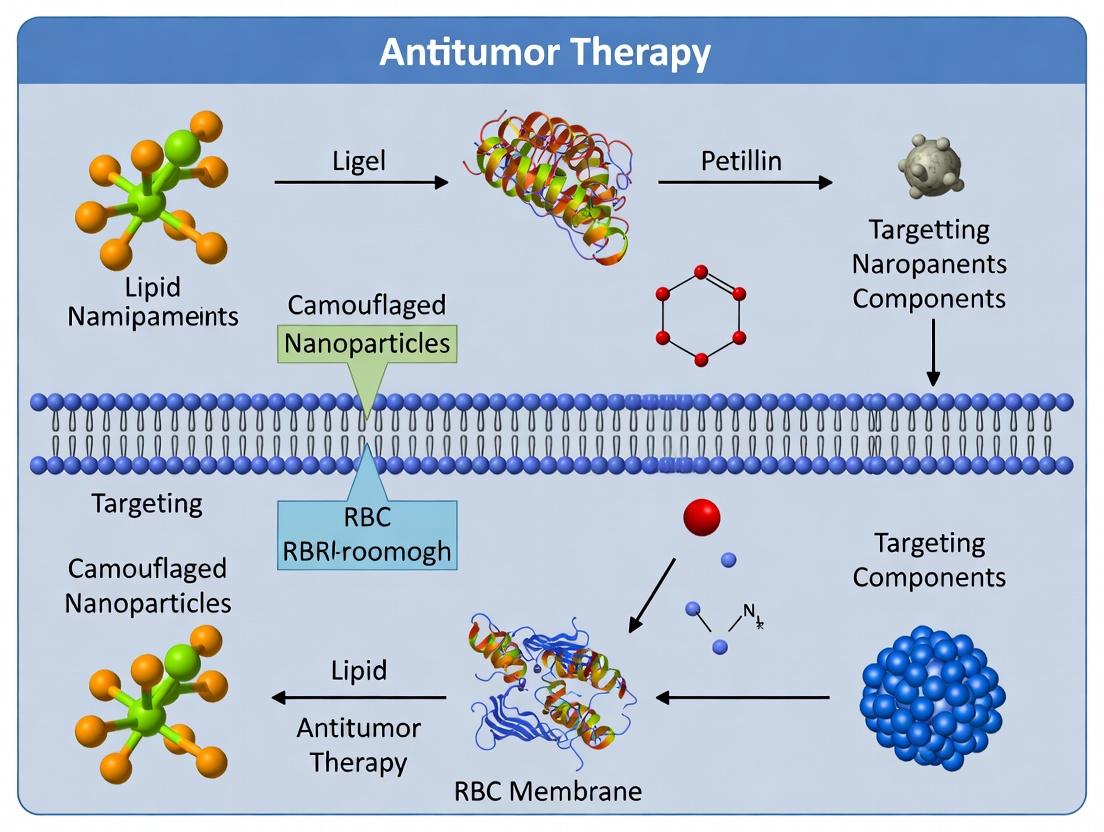
This article provides a comprehensive review of Red Blood Cell (RBC) membrane-camouflaged nanoparticles (RBC-NPs) for antitumor therapy, targeting researchers, scientists, and drug development professionals.
Red Blood Cell Membrane Camouflage: The Next Frontier in Targeted Antitumor Nanomedicine
Abstract
This article provides a comprehensive review of Red Blood Cell (RBC) membrane-camouflaged nanoparticles (RBC-NPs) for antitumor therapy, targeting researchers, scientists, and drug development professionals. It explores the foundational immunoevasive 'stealth' principles of RBC membranes, detailing key membrane proteins like CD47. The piece outlines methodological strategies for membrane extraction, nanoparticle core fabrication (e.g., polymeric, metallic), and the crucial fusion process. It addresses critical troubleshooting in stability, scalability, and batch consistency. Furthermore, the article validates the platform through comparative analysis of pharmacokinetics, biodistribution, and therapeutic efficacy against traditional PEGylated and other biomimetic nanoparticles. This synthesis of current research highlights RBC-NPs' potential to overcome biological barriers, enhance tumor targeting, and reduce systemic toxicity in next-generation cancer therapeutics.
The Stealth Principle: Unpacking the Science Behind RBC Membrane Camouflage
Within the thesis on RBC membrane-camouflaged nanoparticles (RBC-NPs) for antitumor therapy, the core concept of biomimetic 'self' vs. 'non-self' recognition is foundational. The 'self' signal is conferred by the intact RBC membrane, which displays a complex array of surface proteins (e.g., CD47, CD55, CD59) and glycans that inhibit phagocytosis by the mononuclear phagocyte system (MPS) and evade immune surveillance. The 'non-self' signal refers to the synthetic nanoparticle core or any surface marker that triggers immune clearance.
Application Note 1: Enhancing Circulation Half-life RBC membrane cloaking reduces opsonization and MPS uptake. CD47, via interaction with signal regulatory protein alpha (SIRPα) on macrophages, delivers a potent "don't-eat-me" signal. This biomimetic 'self' recognition can extend nanoparticle circulation half-life from hours to over 48 hours, significantly improving tumor accumulation via the Enhanced Permeation and Retention (EPR) effect.
Application Note 2: Targeted Tumor Therapy The 'self' camouflage can be engineered to incorporate 'non-self' targeting ligands (e.g., peptides, antibodies) in a hybrid membrane approach. This creates a nanoparticle that is systemically 'self' but locally 'non-self' at the tumor site, enabling active targeting while maintaining long circulation.
Application Note 3: Immune Modulation The RBC membrane can be modified to present immunomodulatory signals. For instance, co-embedding 'self' markers with engineered 'non-self' antigens can be used for cancer vaccine development, where the nanoparticle platform presents tumor-specific antigens in an immunogenic context while retaining biocompatibility.
Table 1: Impact of RBC Membrane Camouflage on Nanoparticle Pharmacokinetics
| Nanoparticle Type | Circulation Half-life (t1/2) | MPS Uptake (% Injected Dose in Liver at 24h) | Tumor Accumulation (% ID/g at 24h) |
|---|---|---|---|
| Bare PLGA NP | 1.8 ± 0.4 h | 65.2 ± 5.7 | 2.1 ± 0.5 |
| PEGylated NP | 12.5 ± 2.1 h | 35.8 ± 4.3 | 4.7 ± 1.1 |
| RBC-NP (Basic) | 39.7 ± 5.6 h | 15.3 ± 2.8 | 8.9 ± 1.8 |
| RBC-NP (CD47-rich) | 48.2 ± 6.3 h | 9.8 ± 1.9 | 10.5 ± 2.2 |
Table 2: Key 'Self' Markers on RBC Membranes and Their Functions
| Marker Protein | Ligand/Receptor on Immune Cell | Primary Function in 'Self' Recognition | Effect on NP Pharmacokinetics |
|---|---|---|---|
| CD47 | SIRPα on macrophages | Transmits inhibitory "don't-eat-me" signal | Major increase in half-life, reduced phagocytosis |
| CD55 (DAF) | C3/C5 convertases | Inhibits complement cascade, prevents formation of Membrane Attack Complex (MAC) | Reduces complement opsonization and clearance |
| CD59 (MAC-IP) | C8/C9 in MAC | Binds to C8/C9, preventing MAC insertion | Protects NP from complement-mediated lysis |
| ST8SIA4 | Siglec receptors | Adds sialic acid residues, engages inhibitory Siglecs | Contributes to reduced immune activation |
Experimental Protocols
Protocol 1: Preparation of RBC Membrane-Camouflaged Nanoparticles (RBC-NPs) Objective: To fabricate nanoparticles cloaked with an intact RBC membrane for 'self' recognition.
- RBC Isolation & Membrane Vesicle Derivation: Collect fresh whole blood (e.g., murine or human) in anticoagulant tubes. Centrifuge at 800 × g for 10 min at 4°C. Carefully collect the RBC pellet. Lyse RBCs in hypotonic Tris-NH4Cl buffer (pH 7.4) for 10 min on ice. Centrifuge at 10,000 × g for 15 min to pellet RBC ghosts (membranes). Wash ghosts repeatedly with 1x PBS until white. Extrude ghosts through 400 nm, then 200 nm polycarbonate porous membranes using a mini-extruder to obtain RBC membrane vesicles.
- Core Nanoparticle Synthesis: Prepare poly(lactic-co-glycolic acid) (PLGA) nanoparticles via nanoprecipitation. Dissolve 50 mg PLGA and drug (e.g., doxorubicin) in 5 mL acetone. Inject rapidly into 20 mL deionized water under stirring. Evaporate acetone overnight. Concentrate NPs via centrifugation at 15,000 × g for 20 min.
- Membrane Coating: Co-extrude the pre-formed PLGA nanoparticle core with the RBC membrane vesicles (typically at a 1:1 protein-to-polymer weight ratio) through a 200 nm membrane for 10-15 passes. The resulting RBC-NPs are purified via centrifugation or density gradient centrifugation.
Protocol 2: In Vitro Assessment of 'Self' Recognition via Macrophage Uptake Objective: To quantify phagocytosis of NPs by macrophages as a measure of immune evasion.
- Cell Culture: Seed RAW 264.7 macrophages in a 24-well plate at a density of 2 × 10^5 cells/well and culture overnight.
- NP Treatment: Label NPs (Bare NP, PEG-NP, RBC-NP) with a lipophilic fluorescent dye (e.g., DiD). Treat cells with labeled NPs (equivalent polymer concentration: 100 µg/mL) for 4 hours at 37°C, 5% CO2.
- Analysis: Wash cells with PBS, trypsinize, and resuspend in flow cytometry buffer. Analyze using a flow cytometer. Measure mean fluorescence intensity (MFI) in the appropriate channel to quantify NP uptake. Calculate percentage reduction in uptake relative to bare NPs.
Protocol 3: In Vivo Pharmacokinetic and Biodistribution Study Objective: To evaluate circulation half-life and tumor targeting in a murine tumor model.
- Animal Model: Establish subcutaneous xenograft tumors (e.g., 4T1 breast cancer) in Balb/c mice.
- NP Administration: When tumors reach ~200 mm³, inject mice intravenously with DiR-labeled NPs (bare, PEGylated, RBC-NP) via the tail vein (dose: 5 mg/kg polymer equivalent, n=5 per group).
- Blood Circulation: Collect retro-orbital blood samples at predetermined time points (e.g., 5 min, 30 min, 2h, 8h, 24h, 48h). Lyse blood samples and measure fluorescence. Fit data to a two-compartment model to calculate circulation half-life.
- Biodistribution: At 24h post-injection, euthanize mice. Harvest major organs (heart, liver, spleen, lungs, kidneys) and tumor. Image ex vivo using an IVIS imaging system. Quantify fluorescence intensity per gram of tissue (% ID/g).
Visualization Diagrams
Title: Mechanism of RBC-NP Immune Evasion
Title: RBC-NP Synthesis Workflow
The Scientist's Toolkit
Table 3: Essential Research Reagents & Materials
| Item | Function/Application | Key Notes |
|---|---|---|
| PLGA (50:50) | Biodegradable polymer forming the nanoparticle core. Provides controlled drug release. | Vary molecular weight (e.g., 10-100 kDa) to tune degradation rate. |
| CD47 Antibody (Blocking) | Validates the role of CD47-SIRPα pathway. Pre-blocking reduces 'self' signal, increasing macrophage uptake. | Use in flow cytometry and phagocytosis assays as a control. |
| Lipophilic Tracers (DiO, DiD, DiR) | Fluorescently labels membranes for in vitro and in vivo tracking. | DiR is ideal for deep-tissue in vivo imaging. Incorporate during membrane vesicle preparation. |
| Mini-Extruder | Critical for producing uniform membrane vesicles and fusing them onto NP cores. | Use polycarbonate membranes (400, 200, 100 nm). Maintain system at 4°C during extrusion. |
| Density Gradient Medium (e.g., Iodixanol) | Purifies final RBC-NPs from uncoated cores and free membrane fragments. | Ensures sample homogeneity for reproducible experiments. |
| SIRPα-Fc Recombinant Protein | Binds to CD47 on RBC-NPs. Used in surface plasmon resonance (SPR) to measure binding affinity. | Quantifies the strength of the key 'self' recognition interaction. |
| Complement Serum | Used in in vitro assays to test complement activation and inhibition by CD55/CD59 on RBC-NPs. | Measure C3a, C5a generation or MAC deposition via ELISA. |
| Siglec-2/G (CD22/Siglec-G) Recombinant Protein | Binds sialic acids on RBC membrane. Assesses contribution of glycan-mediated 'self' signaling. |
Application Notes
The application of red blood cell (RBC) membrane camouflage for nanoparticles (NPs) exploits the innate biological properties of RBCs to create a next-generation drug delivery platform with superior pharmacokinetics and stealth capabilities. The primary advantage lies in the complex biomolecular corona present on the RBC membrane, which confers long circulation and immune evasion—critical hurdles in systemic antitumor therapy.
Core Advantages:
- Extended Circulation Half-life: The RBC membrane displays "self-markers" like CD47, which interacts with Signal Regulatory Protein Alpha (SIRPα) on immune cells, transmitting a "do not eat me" signal that inhibits phagocytosis by macrophages. This dramatically reduces clearance by the mononuclear phagocyte system (MPS).
- Immune Evasion: The membrane's surface glycosylation pattern and complement regulatory proteins (e.g., CD55, CD59) help evade complement activation and subsequent opsonization.
- Enhanced Biocompatibility & Safety: The natural membrane coating reduces the immunogenicity and cytotoxicity often associated with synthetic nanomaterials.
- Inherent Targeting Potential: While not inherently tumor-targeted, the long circulation enables enhanced passive accumulation in tumor tissue via the Enhanced Permeability and Retention (EPR) effect. The platform can be further functionalized with active targeting ligands.
Quantitative Data Summary:
Table 1: Key Quantitative Advantages of RBC-Membrane Camouflaged Nanoparticles (RBC-NPs) vs. PEGylated & Bare NPs
| Parameter | Bare Nanoparticles (e.g., PLGA) | PEGylated Nanoparticles | RBC-Membrane Camouflaged Nanoparticles | Notes |
|---|---|---|---|---|
| Circulation Half-life (in vivo) | ~0.5 - 2 hours | ~5 - 15 hours | ~15 - 40 hours | Varies by core material/size. RBC-NPs show longest persistence. |
| Macrophage Uptake (in vitro) | High (80-95%) | Moderate (40-60%) | Low (10-25%) | Measured by flow cytometry using RAW 264.7 or primary macrophages. |
| Complement Activation (C3a deposition) | High | Low to Moderate | Very Low | ELISA-based measurement of complement split products. |
| Tumor Accumulation (%ID/g) | Low (< 2% ID/g) | Moderate (3-5% ID/g) | High (5-10% ID/g) | % Injected Dose per gram of tumor tissue at 24-48h post-injection. |
| CD47 Protein Density on Coating | 0 molecules/µm² | 0 molecules/µm² | ~200 - 500 molecules/µm² | Quantified via western blot or quantitative proteomics after membrane isolation. |
Table 2: Common Core Nanoparticles Used for RBC Camouflage & Key Parameters
| Core Nanoparticle Type | Typical Size Range (post-coating) | Typical Drug Loaded | Key Benefit for Antitumor Therapy |
|---|---|---|---|
| Poly(lactic-co-glycolic acid) (PLGA) | 100-150 nm | Doxorubicin, Paclitaxel | Biodegradable, FDA-approved polymer; sustained release. |
| Mesoporous Silica (MSN) | 80-120 nm | Doxorubicin, siRNA, Cas9/sgRNA | High surface area & pore volume for large payloads. |
| Magnetic Nanoparticles (Fe₃O₄) | 80-110 nm | (Often used as theranostics) | Enables MRI contrast and magnetic hyperthermia. |
| Gold Nanocages (AuNC) | 70-100 nm | Small molecules (e.g., Dox) | Photothermal therapy capability under NIR irradiation. |
| Liposome | 90-130 nm | Various chemotherapeutics | High biocompatibility; can fuse with RBC membrane easily. |
Detailed Experimental Protocols
Protocol 1: Preparation of RBC Membrane Vesicles (RBC-MVs)
Purpose: To isolate and purify the RBC membrane fraction from whole blood for subsequent coating.
Materials:
- Fresh whole blood (mouse, human, or porcine source).
- 1X Phosphate Buffered Saline (PBS), pH 7.4.
- Hypotonic Tris Buffer (10 mM Tris-HCl, pH 7.4).
- Protease Inhibitor Cocktail.
- Ultracentrifuge and compatible tubes.
- Sonicator (tip or bath).
- 0.22 µm syringe filter.
Procedure:
- Collect blood in heparinized tubes. Centrifuge at 800 x g for 10 min at 4°C to separate RBCs from plasma and buffy coat.
- Wash RBC pellet with cold PBS 3-5 times until supernatant is clear.
- Lyse washed RBCs in hypotonic Tris buffer (with protease inhibitors) for 30 min on ice. The solution will become translucent.
- Centrifuge the lysate at 20,000 x g for 20 min at 4°C to pellet the membrane fraction (stroma).
- Wash the pinkish membrane pellet with PBS repeatedly (3-4 times) until it becomes white/colorless.
- Resuspend the purified membrane pellet in a minimal volume of PBS.
- Extrude the membrane suspension through a polycarbonate membrane filter (e.g., 400 nm, then 200 nm pore size) 10-15 times using a mini-extruder to obtain homogeneous RBC-MVs. Alternatively, sonicate on ice (3 cycles of 30s on/30s off at low power).
- Filter through a 0.22 µm syringe filter. Store at 4°C for immediate use or at -80°C with cryoprotectant.
Protocol 2: Co-Wrapping of RBC Membrane on Polymeric Nanoparticles
Purpose: To coat pre-formed polymeric nanoparticles (e.g., PLGA) with the isolated RBC membrane.
Materials:
- Purified RBC-MVs (from Protocol 1).
- Pre-formed drug-loaded PLGA NPs (prepared by emulsion/solvent evaporation, ~100 nm).
- Sonicator (bath or tip).
- Mini-extruder with 100 nm polycarbonate membrane.
Procedure:
- Mix the suspension of PLGA NPs and RBC-MVs at a predetermined optimal weight ratio (typically 1:1 to 1:4 membrane protein:PLGA weight) in PBS.
- Sonicate the mixture in a bath sonicator for 5-10 minutes. Ensure the mixture is kept on ice to prevent overheating.
- Immediately extrude the co-sonicated mixture through a 100 nm polycarbonate membrane using a mini-extruder for 10-15 passes. This mechanical force promotes fusion and wrapping of the membrane around the NP core.
- Purify the resultant RBC-NPs from free membrane vesicles and uncoated NPs by centrifugation (e.g., sucrose density gradient centrifugation at 100,000 x g for 1 hour) or size exclusion chromatography (e.g., Sepharose CL-4B column).
- Characterize the final product for size (DLS), zeta potential (DLS), morphology (TEM), and membrane protein orientation/presence (SDS-PAGE, western blot for CD47).
Protocol 3: In Vitro Macrophage Uptake Assay
Purpose: To quantify the immune evasion capability of RBC-NPs by measuring phagocytosis by macrophages.
Materials:
- RAW 264.7 murine macrophage cell line.
- Fluorescently labeled NPs (Bare NP, PEG-NP, RBC-NP) (e.g., labeled with DiD or Coumarin-6).
- Cell culture medium (DMEM + 10% FBS).
- Flow cytometer.
- 4% Paraformaldehyde (PFA).
Procedure:
- Seed RAW 264.7 cells in 12-well plates at a density of 2 x 10^5 cells/well and culture overnight.
- Treat cells with fluorescent NPs (equivalent particle concentration, e.g., 50 µg/mL) in serum-free medium. Incubate for 2-4 hours at 37°C, 5% CO₂.
- Aspirate the medium and wash cells gently with cold PBS 3 times to remove non-internalized NPs.
- Harvest cells using trypsin-EDTA or a cell scraper. Centrifuge cell suspension at 500 x g for 5 min and resuspend in PBS containing 1% BSA and 1% PFA.
- Analyze the fluorescence intensity of at least 10,000 cells per sample using a flow cytometer. Gate on live cells based on forward/side scatter.
- Calculate the mean fluorescence intensity (MFI) for each sample. The reduction in MFI for RBC-NPs compared to controls directly indicates reduced phagocytosis.
Visualization: Diagrams and Pathways
Title: RBC-NP Fabrication Workflow
Title: CD47-SIRPα Anti-Phagocytosis Pathway
The Scientist's Toolkit: Research Reagent Solutions
Table 3: Essential Materials for RBC-NP Research
| Item / Reagent | Function & Application in RBC-NP Research | Example Supplier / Catalog Consideration |
|---|---|---|
| Poly(lactic-co-glycolic acid) (PLGA) | Biodegradable polymer for forming the core nanoparticle; allows encapsulation of hydrophobic drugs. | Lactel Absorbable Polymers (e.g., 50:50, acid-terminated). |
| 1,2-Distearoyl-sn-glycero-3-phosphoethanolamine-N-[amino(polyethylene glycol)-2000] (DSPE-PEG2000) | Used for making PEGylated control nanoparticles or for inserting targeting ligands into the RBC membrane post-coating. | Avanti Polar Lipids (850127P). |
| CD47 Antibody (for blocking/validation) | Used to block the CD47-SIRPα interaction in control experiments, proving the mechanism of immune evasion. | BioLegend (clone miap301) for mouse; (clone CC2C6) for human. |
| DiD or Dir Lipophilic Tracers | Fluorescent dyes for in vitro and in vivo tracking of nanoparticles via fluorescence imaging or flow cytometry. | Thermo Fisher Scientific (D7757, D12731). |
| Protease Inhibitor Cocktail (EDTA-free) | Added during RBC membrane isolation to prevent degradation of key surface proteins like CD47, CD55, CD59. | Roche (4693132001). |
| Mini-Extruder with Polycarbonate Membranes | Critical device for preparing uniform RBC membrane vesicles and for fusing them onto nanoparticle cores. | Avanti Polar Lipids (610000). |
| Sucrose (for Density Gradient) | Used in centrifugation-based purification of coated nanoparticles from free membrane debris. | Sigma-Aldrich (S8501). |
| Sepharose CL-4B Size Exclusion Columns | Alternative purification method for separating RBC-NPs based on size/hydrodynamic radius. | Cytiva (17015001). |
| Anti-Ter-119 / Anti-CD235a Microbeads | For positive selection of pure RBC populations from whole blood before membrane isolation. | Miltenyi Biotec (130-049-901 for mouse). |
Within the thesis on RBC membrane-camouflaged nanoparticles (RBC-NPs) for antitumor therapy, understanding the role of key membrane proteins is critical. The CD47-SIRPα signaling axis is a primary "don't eat me" signal that protects RBCs from phagocytic clearance by macrophages. Co-opting this signal via RBC membrane coating is a central strategy to confer nanoparticles with long circulation and enhanced tumor-targeting capabilities. Beyond CD47, other integral membrane proteins such as CR1 (CD35), decay-accelerating factor (DAF/CD55), and membrane inhibitor of reactive lysis (MIRL/CD59) contribute to complement evasion and membrane stability. This document outlines detailed protocols and application notes for studying these proteins in the context of RBC-NP bio-interfacing.
Table 1: Key RBC Membrane Proteins and Their Functions in Camouflaged Nanoparticles
| Protein | Ligand/Function | Primary Role in RBCs | Impact on RBC-NP Pharmacokinetics | Typical Expression Level on RBC (molecules/cell)* |
|---|---|---|---|---|
| CD47 | Binds SIRPα on phagocytes | "Don't eat me" signal, inhibits phagocytosis | Critical. Extends circulation half-life by evading mononuclear phagocyte system (MPS). | ~20,000 - 40,000 |
| CD59 (MIRL) | Inhibits MAC (C5b-9) formation | Prevents complement-mediated lysis | Prevents complement activation on NP surface, enhancing stability in serum. | ~30,000 - 50,000 |
| CD55 (DAF) | Accelerates decay of C3/C5 convertases | Regulates complement pathway | Works synergistically with CD59 to inhibit opsonization by C3b. | ~10,000 - 20,000 |
| CD35 (CR1) | Binds C3b/C4b | Clears immune complexes, regulates complement | May aid in clearance of opsonins but is less dominant in NP context. | ~200 - 1,500 |
| Band 3 | Anion exchanger, anchors membrane skeleton | Structural integrity, senescence signal | Critical for membrane vesicle formation and correct orientation during coating. | ~1.2 million |
| Glycophorin A | Sialic acid residues | Provides negative charge, prevents aggregation | Contributes to hydrophilic, non-adhesive surface, reducing non-specific uptake. | ~500,000 - 1 million |
Note: Expression levels are approximate and can vary between individuals and species.
Table 2: Comparative In Vivo Performance of NP Formulations
| Nanoparticle Type | Coating/Modification | Key Membrane Proteins Present | Reported Circulation t½ (in mice) | Tumor Accumulation (%ID/g)* |
|---|---|---|---|---|
| Bare PLGA NP | None | N/A | ~1-2 h | ~2-4 %ID/g |
| PEGylated NP | PEG2000-DSPE | N/A | ~8-12 h | ~5-8 %ID/g |
| RBC-Membrane Camo NP | Native RBC membrane | CD47, CD55, CD59, etc. | ~24-39 h | ~8-12 %ID/g |
| CD47-Enriched RBC-NP | Engineered RBC membrane | High CD47, CD55, CD59 | ~40-48 h | ~10-14 %ID/g |
%ID/g: Percentage of injected dose per gram of tissue.
Experimental Protocols
Protocol 3.1: Isolation and Validation of RBC Membrane Proteins for Coating
Objective: To isolate RBC membranes (ghosts) and quantitatively analyze key protein composition. Materials: Fresh whole blood, heparin tubes, hypotonic lysis buffer (10mM NaHCO₃, pH 7.4, protease inhibitors), ultracentrifuge, BCA assay kit, SDS-PAGE system, Western blot apparatus, antibodies (anti-CD47, anti-CD59, anti-CD55, anti-GAPDH). Procedure:
- RBC Ghost Preparation: Isolate RBCs from whole blood by centrifugation (800 x g, 10 min, 4°C). Wash 3x with PBS. Lyse RBCs in 20x volume of ice-cold hypotonic lysis buffer for 30 min. Pellet ghosts by ultracentrifugation (35,000 x g, 20 min, 4°C). Repeat lysis/wash until pellet is pale pink/white.
- Protein Quantification: Resuspend ghost pellet in PBS. Determine total protein concentration using BCA assay.
- Protein Validation: Load 10 µg of ghost protein per lane on 4-20% gradient SDS-PAGE gel. Perform Coomassie staining for total protein profile. For Western blot, transfer proteins to PVDF membrane, block, and probe with specific primary antibodies (1:1000 dilution) overnight at 4°C. Use HRP-conjugated secondary antibodies and chemiluminescence for detection. GAPDH serves as a loading control.
- Densitometry: Use image analysis software (e.g., ImageJ) to quantify band intensity relative to control. Confirm presence of CD47, CD55, and CD59.
Protocol 3.2: Fabrication and Characterization of RBC-Membrane Camouflaged Nanoparticles (RBC-NPs)
Objective: To coat polymeric nanoparticles with isolated RBC membranes and characterize physical and biochemical properties. Materials: PLGA (50:50), PVA, organic solvent (ethyl acetate), extruder with 100 nm polycarbonate membranes, dynamic light scattering (DLS) instrument, zeta potential analyzer, TEM. Procedure:
- Core NP Preparation: Prepare PLGA nanoparticles using a single emulsion-solvent evaporation method. Dissolve 100 mg PLGA in 3 mL ethyl acetate. Emulsify in 10 mL of 2% PVA aqueous solution using a probe sonicator (70% amplitude, 2 min). Stir overnight to evaporate solvent. Collect NPs by centrifugation (20,000 x g, 20 min) and wash 3x with DI water.
- Membrane Coating: Co-sonicate RBC membrane vesicles (1 mg protein) with pre-formed PLGA NPs (10 mg) in PBS using a bath sonicator (10 min, 4°C). Pass the mixture through a polycarbonate membrane extruder (100 nm pore size) 11 times.
- Characterization:
- Size & PDI: Measure by DLS. Target: 100-120 nm, PDI < 0.2.
- Zeta Potential: Should shift from negative (bare PLGA, ~ -20 mV) to slightly more negative but closer to RBC ghost potential (~ -15 mV).
- Morphology: Visualize core-shell structure using negative stain TEM (1% uranyl acetate).
- Protein Orientation/Validation: Use flow cytometry with non-permeabilized staining for CD47 to confirm right-side-out orientation.
Protocol 3.3: In Vitro Macrophage Uptake Assay
Objective: To quantify the role of CD47-SIRPα in preventing phagocytosis of RBC-NPs. Materials: RAW 264.7 macrophage cell line, DiD lipophilic dye, serum-free RPMI, flow cytometer, anti-CD47 blocking antibody (clone MIAP301). Procedure:
- NP Labeling: Label bare NPs, RBC-NPs, and CD47-blocked RBC-NPs with DiD dye (1 µg/mL, 30 min incubation). Remove excess dye via size-exclusion column.
- Blocking: Pre-treat a portion of RBC-NPs with 10 µg/mL anti-CD47 antibody for 30 min at 37°C.
- Phagocytosis Assay: Seed macrophages in 12-well plates (2.5x10⁵ cells/well). Add labeled NPs (100 µg/mL) to cells in serum-free media. Incubate for 2 h at 37°C.
- Analysis: Wash cells 3x with cold PBS, detach gently, and analyze by flow cytometry. Measure median fluorescence intensity (MFI) of DiD in the macrophage population. Calculate percentage reduction in uptake:
[1 - (MFI(RBC-NP) / MFI(bare NP))] * 100.
Protocol 3.4: In Vivo Pharmacokinetics and Biodistribution Study
Objective: To evaluate the circulation half-life and tumor targeting of DiR-labeled RBC-NPs in a murine tumor model. Materials: Balb/c mice, 4T1 breast cancer cell line, IVIS Spectrum imaging system, DiR dye, analysis software (Living Image). Procedure:
- Tumor Model: Inoculate 1x10⁶ 4T1 cells subcutaneously into the flank of female Balb/c mice. Proceed with experiments when tumors reach ~150 mm³.
- NP Administration: Label NPs with near-infrared dye DiR. Inject 200 µL of DiR-labeled bare NPs, PEG-NPs, and RBC-NPs (equivalent to 1 mg NP dose) via the tail vein (n=5 per group).
- Imaging: Anesthetize mice and image at time points 1, 4, 8, 24, 48 h post-injection using IVIS. Use consistent imaging parameters (exposure time, f/stop).
- Ex Vivo Analysis: At terminal time point (e.g., 48 h), euthanize mice, collect blood, tumor, and major organs (liver, spleen, kidney, lung, heart). Image organs ex vivo. Quantify fluorescence signal in each organ using region-of-interest (ROI) analysis. Express data as %ID/g.
- Pharmacokinetics: Collect blood retro-orbitally at serial time points (5 min, 30 min, 2h, 8h, 24h). Measure plasma fluorescence. Fit data to a two-compartment model to calculate circulation half-life (t½β).
Visualizations
Diagram 1: CD47-SIRPα "Don't Eat Me" Signaling Pathway (100 chars)
Diagram 2: RBC-NP Synthesis and Evaluation Workflow (99 chars)
Diagram 3: Complement Evasion by CD55 and CD59 on RBC-NPs (98 chars)
The Scientist's Toolkit: Essential Research Reagents and Materials
Table 3: Key Research Reagent Solutions for RBC-NP Studies
| Item | Function/Application | Example Product/Catalog # (Hypothetical) |
|---|---|---|
| Anti-Human CD47 Blocking Antibody | To inhibit CD47-SIRPα interaction in vitro; validates mechanism. | BioLegend, clone B6H12 (Cat# 323102) |
| Anti-Mouse CD16/32 (Fc Block) | Prevents non-specific antibody binding to Fc receptors on macrophages. | Tonbo Biosciences, clone 2.4G2 (Cat# 70-0161) |
| Fluorescent Lipophilic Tracers (DiD, DiR, DiO) | For stable labeling of lipid membranes for in vitro and in vivo tracking. | Thermo Fisher Scientific, DiD oil (Cat# D7757) |
| Protease Inhibitor Cocktail (EDTA-free) | Preserves native protein structure during RBC membrane isolation. | MilliporeSigma, cOmplete (Cat# 11873580001) |
| Poly(lactic-co-glycolic acid) (PLGA) | Biodegradable polymer for core nanoparticle synthesis. | Lactel Absorbable Polymers, 50:50, 7-17 kDa (Cat# AP081) |
| Polycarbonate Membrane Extruder | For obtaining uniform, monodisperse nanoparticles and fusing membranes. | Avanti Polar Lipids, Mini-Extruder (Cat# 610000) |
| 100 nm Polycarbonate Membranes | Used with extruder for final sizing of RBC-NPs. | Avanti Polar Lipids (Cat# 610005) |
| Dynamic Light Scattering (DLS) Cell | Disposable cuvettes for accurate size and PDI measurement. | Malvern ZEN0040 |
| Gel Filtration Columns | For rapid purification and removal of unencapsulated dyes from NP suspensions. | Cytiva, Sephadex G-25 PD-10 columns (Cat# 17085101) |
| Near-Infrared Imaging Standard | For calibration and quantification of in vivo fluorescence imaging data. | PerkinElmer, Multispectral Imaging Beads (Cat# CLM300) |
The development of nanoparticle-based drug delivery has evolved through three key phases. Early synthetic carriers like liposomes improved drug solubility but suffered from rapid immune clearance. The introduction of PEGylation created a "stealth" effect, prolonging circulation. The most recent advancement, cell membrane-coating technology, leverages natural biological membranes—particularly from red blood cells (RBCs)—to create nanoparticles with superior biocompatibility, prolonged circulation, and active targeting capabilities. This progression forms the foundational thesis for utilizing RBC membrane-camouflaged nanoparticles (RBC-NPs) in antitumor therapy.
Application Notes
Comparative Performance of Nanoparticle Generations
Table 1: Evolution of Key Nanoparticle Delivery System Characteristics
| Characteristic | Liposomes (1st Gen) | PEGylated NPs (2nd Gen) | RBC Membrane-Coated NPs (3rd Gen) |
|---|---|---|---|
| Circulation Half-life (hr) | 2 - 4 | 10 - 24 | 24 - 48 |
| Immune Evasion (Relative) | Low | Moderate | High |
| Tumor Accumulation (%ID/g)* | 1 - 3% | 3 - 6% | 5 - 10% |
| Membrane Proteins | None (synthetic) | None (synthetic) | Present (CD47, etc.) |
| Primary Clearance Mechanism | RES Uptake | Reduced RES Uptake | Minimized RES Uptake |
| Manufacturing Complexity | Low | Moderate | High |
%ID/g: Percentage of Injected Dose per gram of tumor tissue. *RES: Reticuloendothelial System.
Key Signaling Pathways in RBC Membrane Camouflage
The efficacy of RBC-NPs hinges on proteins retained from the source membrane. CD47 is the most critical, binding to Signal Regulatory Protein Alpha (SIRPα) on macrophages and inhibiting phagocytosis.
Title: CD47-SIRPα Phagocytosis Inhibition Pathway
Experimental Protocols
Protocol 1: Preparation of RBC Membrane Vesicles
Objective: Isolate and purify RBC membranes from whole blood for subsequent coating.
Materials:
- Fresh whole blood (mouse or human, with anticoagulant)
- 1X Phosphate Buffered Saline (PBS), pH 7.4
- Hypotonic Lysing Buffer (0.25X PBS)
- Protease inhibitor cocktail
- Ultracentrifuge and compatible tubes
Procedure:
- Blood Processing: Centrifuge whole blood at 800 x g for 10 min at 4°C. Remove plasma and buffy coat. Wash RBC pellet 3x with 1X PBS.
- Hemolysis: Resuspend pure RBCs in 20 volumes of ice-cold Hypotonic Lysing Buffer. Incubate on ice for 30 min with gentle stirring.
- Membrane Isolation: Centrifuge the lysate at 20,000 x g for 20 min at 4°C. The pink pellet contains RBC membranes (ghosts).
- Washing: Resuspend the ghost pellet in Hypotonic Lysing Buffer and repeat centrifugation (3x total) until the pellet appears white/translucent.
- Vesiculation: Resuspend the final pellet in 1X PBS with protease inhibitors. Subject to 5 cycles of extrusion through a 400 nm polycarbonate membrane using a mini-extruder. Store at 4°C for immediate use or at -80°C.
Protocol 2: Coating of Polymeric Nanoparticles with RBC Membranes
Objective: Fuse RBC membrane vesicles onto pre-formed polymeric nanoparticle cores (e.g., PLGA).
Materials:
- Prepared RBC membrane vesicles (Protocol 1)
- PLGA nanoparticles loaded with drug (e.g., Doxorubicin)
- Sonicator (bath or probe)
- 1X PBS, pH 7.4
Procedure:
- Mixing: Combine RBC membrane vesicles and PLGA nanoparticles at a membrane protein-to-core weight ratio of 1:1 in 1X PBS. Typical total volume: 1 mL.
- Co-Sonication: Sonicate the mixture using a probe sonicator (e.g., 30% amplitude) for 2-3 minutes in an ice bath. For bath sonication, sonicate for 10-15 minutes.
- Purification: Centrifuge the sonicated mixture at 14,000 x g for 10 min to remove large aggregates. Collect the supernatant.
- Isolation of Coated NPs: Ultracentrifuge the supernatant at 150,000 x g for 30 min at 4°C to pellet the RBC membrane-coated nanoparticles (RBC-NPs).
- Characterization: Resuspend the pellet in PBS. Characterize size (DLS), zeta potential, and polydispersity index (PDI). Confirm coating via Western blot for RBC-specific proteins (e.g., CD47) or by a significant change in surface charge towards that of native RBC membranes.
Protocol 3: In Vivo Pharmacokinetics and Biodistribution Study
Objective: Evaluate circulation half-life and tumor accumulation of RBC-NPs versus uncoated controls.
Materials:
- RBC-NPs and control NPs (labeled with a near-infrared dye, e.g., DiR)
- Tumor-bearing mouse model (e.g., 4T1 breast cancer in Balb/c mice)
- In vivo imaging system (IVIS) or similar
- Software for pharmacokinetic analysis (e.g., PK Solver)
Procedure:
- Dosing: Inject mice (n=5 per group) via tail vein with DiR-labeled NPs at a standard dose (e.g., 5 mg/kg NP weight).
- Time-Point Imaging: Anesthetize mice and image at predetermined time points (e.g., 1, 2, 4, 8, 12, 24, 48 h) using IVIS.
- Ex Vivo Analysis: At terminal time point (e.g., 48 h), sacrifice mice. Harvest major organs (heart, liver, spleen, lung, kidney) and tumors. Image organs ex vivo to quantify fluorescence intensity.
- Data Analysis: Calculate fluorescence intensity in the region of interest (ROI). Plot plasma concentration (from blood samples) vs. time to determine circulation half-life (t1/2) using non-compartmental analysis. Calculate tumor accumulation as %ID/g.
Table 2: Typical Expected Results from Protocol 3
| Nanoparticle Type | t1/2 (h, mean ± SD) | Tumor Accumulation at 24 h (%ID/g) | Liver Uptake (%ID/g) |
|---|---|---|---|
| Uncoated PLGA NP | 2.1 ± 0.5 | 2.3 ± 0.7 | 35.2 ± 4.1 |
| PEGylated PLGA NP | 14.5 ± 3.2 | 5.1 ± 1.2 | 18.5 ± 3.3 |
| RBC-NP | 39.8 ± 6.5 | 8.7 ± 1.9 | 12.1 ± 2.8 |
The Scientist's Toolkit: Research Reagent Solutions
Table 3: Essential Materials for RBC-NP Research
| Item | Function / Role | Example Product / Note |
|---|---|---|
| Poly(D,L-lactide-co-glycolide) (PLGA) | Biodegradable polymer core for drug encapsulation. | Lactel Absorbable Polymers, 50:50 ratio, acid-terminated. |
| DiR or DID Fluorescent Dye | Lipophilic tracer for labeling the nanoparticle core or membrane for in vivo tracking. | Thermo Fisher Scientific, Vybrante DiR cell labeling solutions. |
| CD47 Antibody | Validation of successful membrane coating via Western blot or flow cytometry. | BioLegend, clone miap301 (mouse). |
| Mini-Extruder | For creating uniform RBC membrane vesicles and fusing them onto cores. | Avanti Polar Lipids, with 400 nm & 200 nm membranes. |
| Protease Inhibitor Cocktail | Preserves native membrane proteins during isolation and processing. | Sigma-Aldrich, EDTA-free for metal-sensitive samples. |
| Dynamic Light Scattering (DLS) Instrument | Measures hydrodynamic diameter, PDI, and zeta potential of nanoparticles. | Malvern Panalytical Zetasizer series. |
| Hypotonic Lysing Buffer | Lyses RBCs without disrupting membrane integrity. | 0.25X PBS, 1mM EDTA, pH 7.4, prepared in-house. |
Synthesis and Characterization Workflow
Title: RBC-NP Synthesis and Validation Workflow
The efficacy of systemically administered nanomedicines for antitumor therapy is primarily governed by two interconnected biological phenomena: rapid clearance by the Reticuloendothelial System (RES) and the tumor-targeting potential of the Enhanced Permeability and Retention (EPR) effect. The RES, comprising phagocytic cells in the liver, spleen, and bone marrow, recognizes and removes foreign particulates, severely limiting nanoparticle circulation time. Conversely, the EPR effect, driven by leaky tumor vasculature and impaired lymphatic drainage, promotes the accumulation of macromolecules and nanoparticles within the tumor interstitium. This application note, framed within research on RBC membrane-camouflaged nanoparticles, details the rationale for overcoming the former to exploit the latter, providing protocols for key characterization experiments.
Quantitative Data on RES Clearance and EPR
Table 1: Comparative Pharmacokinetic and Biodistribution Profiles of Nanoparticles
| Nanoparticle Type | Hydrodynamic Size (nm) | Surface Charge (mV) | Circulation Half-life (t₁/₂) | % Injected Dose in Liver (at 24h) | % Injected Dose in Tumor (at 24h) | Key Surface Modification |
|---|---|---|---|---|---|---|
| Conventional PLGA NP | 150-200 | -10 to -20 | 0.5 - 2 h | 60-80% | 1-3% | PEG (5k Da) |
| PEGylated Liposome | 80-100 | -5 to -10 | 10-15 h | 25-35% | 5-8% | DSPE-PEG(2k) |
| RBC Membrane-Camouflaged NP (Core: PLGA) | 100-120 | -15 to -25 | > 24 h | 10-20% | 8-15% | Native RBC membrane proteins (CD47) |
| Mesoporous Silica NP | 50-80 | +20 to +30 | < 0.25 h | >85% | <0.5% | None (bare) |
| Polymeric Micelle | 20-40 | ~0 | 4-8 h | 30-50% | 3-6% | Pluronic F127 |
Table 2: Tumor Microenvironment Parameters Influencing the EPR Effect
| Parameter | Typical Range in Solid Tumors | Measurement Technique | Impact on NP Accumulation |
|---|---|---|---|
| Vascular Pore Size | 200 - 2000 nm | Transmission EM, Intravital Microscopy | NPs < 200 nm show superior extravasation. |
| Interstitial Fluid Pressure (IFP) | 10 - 100 mmHg (vs. ~0 in normal tissue) | Wick-in-needle, MR Elastography | High IFP opposes convective inflow, favoring passive diffusion. |
| Blood Flow Rate | 0.01 - 0.1 mL/g/min (Highly heterogeneous) | Laser Doppler, Contrast-US | Irregular flow limits uniform NP delivery. |
| Extent of Lymphatic Drainage | Severely impaired | Lymphangiography, tracer studies | Promotes retention but also increases IFP. |
| Degree of Vascularity | 1-5% of tissue volume (vs. 10-15% in muscle) | Immunohistochemistry (CD31) | Lower vascular density limits total NP influx. |
Experimental Protocols
Protocol 3.1: Synthesis and Characterization of RBC Membrane-Camouflaged Nanoparticles
Objective: To prepare and characterize RBC membrane-camouflaged polymeric nanoparticles for enhanced circulation and tumor targeting.
Materials:
- Whole blood (mouse or human, in anticoagulant).
- Poly(lactic-co-glycolic acid) (PLGA, 50:50, MW 30k-60k).
- Dichloromethane (DCM), analytical grade.
- Polyvinyl alcohol (PVA, MW 30k-70k).
- Hypotonic lysis buffer (0.25x PBS, pH 7.4).
- Ultracentrifuge and tubes.
- Sonicator (probe and bath).
- Dynamic Light Scattering (DLS) / Zeta Potential Analyzer.
- SDS-PAGE gel electrophoresis system.
- Transmission Electron Microscope (TEM).
Procedure:
- RBC Ghost Preparation: Isolate RBCs from whole blood via centrifugation (800xg, 10 min, 4°C). Wash 3x in cold PBS. Lyse RBCs in 20x volume of hypotonic lysis buffer for 30 min on ice. Centrifuge at 20,000xg for 20 min at 4°C to pellet membrane fragments. Repeat lysis/wash 3-5 times until pellet is off-white. Resuspend final membrane pellet in PBS.
- Membrane Vesiculation: Sonicate the membrane suspension using a probe sonicator (3 min, 30% amplitude, pulse 5s on/2s off) in an ice bath. Alternatively, extrude through a 400 nm, then 200 nm polycarbonate membrane 11 times each.
- Polymer Core Preparation: Prepare a 5% (w/v) PLGA solution in DCM. Emulsify this organic phase into 2% (w/v) PVA aqueous solution using probe sonication (1 min, 40% amplitude) to form a primary emulsion. This emulsion is then poured into a 0.5% PVA solution and stirred overnight to evaporate DCM. Harvest NPs by centrifugation (15,000xg, 20 min).
- Membrane Coating: Co-extrude the prepared RBC membrane vesicles and the bare PLGA nanoparticle cores through a 200 nm polycarbonate membrane 11 times at room temperature.
- Characterization:
- Size & Zeta Potential: Measure by DLS and laser Doppler electrophoresis in PBS.
- Membrane Protein Retention: Analyze by SDS-PAGE, comparing RBC ghosts, membrane vesicles, and coated NPs for markers like CD47, Band 3, and glycophorin A.
- Morphology: Negative stain TEM imaging (stain with 2% uranyl acetate).
Protocol 3.2: In Vivo Pharmacokinetics and Biodistribution Study
Objective: To quantify the blood circulation time and organ/tumor accumulation of nanoparticles.
Materials:
- Near-Infrared (NIR) fluorophore (e.g., DiR, Cy7.5).
- Animal model: Mice bearing subcutaneous xenograft tumors (e.g., 4T1, HeLa, U87MG).
- In Vivo Imaging System (IVIS) or similar.
- Flow Cytometer.
- Tissue homogenizer.
Procedure:
- NP Labeling: Load NPs with a lipophilic NIR dye (e.g., DiR) by adding it to the organic phase during NP synthesis or by incubating with pre-formed NPs.
- Animal Administration: Inject tumor-bearing mice (tumor volume ~150-200 mm³) intravenously with labeled NPs (dose equivalent to ~1 mg/kg of polymer).
- Blood Pharmacokinetics: Collect retro-orbital blood samples (e.g., 10 µL) at predetermined time points (5 min, 30 min, 2h, 6h, 12h, 24h, 48h). Lyse blood in 1% Triton X-100/PBS. Measure fluorescence intensity (Ex/Em for DiR: 748/780 nm). Fit data to a two-compartment model to calculate half-life (t₁/₂α and t₁/₂β).
- Biodistribution: At terminal time points (e.g., 24h and 48h), euthanize mice, perfuse with PBS, and harvest major organs (heart, liver, spleen, lungs, kidneys) and tumor. Image organs ex vivo using IVIS to determine relative fluorescence.
- Quantification: Homogenize tissues, extract dye, and quantify fluorescence. Express data as % Injected Dose per Gram of tissue (%ID/g).
Protocol 3.3: Evaluation of RES Uptake and Macrophage Evasion
Objective: To assess the role of CD47 in mitigating phagocytic clearance.
Materials:
- Raw 264.7 macrophage cell line.
- Fluorescence-activated cell sorter (FACS) buffer (PBS + 2% FBS).
- Anti-mouse CD47 antibody and isotype control.
- Flow cytometer.
Procedure:
- In Vitro Phagocytosis Assay: Seed macrophages in 12-well plates. Incubate with fluorescently labeled (e.g., FITC) bare NPs, PEGylated NPs, and RBC-camouflaged NPs (50 µg/mL) for 2h at 37°C.
- Quenching & Analysis: Remove supernatant, wash cells thoroughly with PBS, and treat with trypan blue (0.4%) to quench extracellular fluorescence. Detach cells and analyze by flow cytometry. Report mean fluorescence intensity (MFI) as a measure of NP uptake.
- CD47 Blocking Study: Pre-treat macrophages with a saturating dose of anti-CD47 antibody (10 µg/mL) for 30 min prior to adding RBC-camouflaged NPs. Compare uptake to an isotype control pretreatment.
Visualizations
Title: Nanomedicine Journey: RES vs. EPR
Title: RBC Membrane Camouflage Synthesis Workflow
The Scientist's Toolkit: Research Reagent Solutions
Table 3: Essential Materials for RBC-Camouflage and EPR Studies
| Item | Function & Rationale | Example Product/Catalog |
|---|---|---|
| PLGA (50:50, ester-terminated) | Biodegradable, FDA-approved polymer core providing drug encapsulation. Determines NP size and release kinetics. | Lactel Absorbable Polymers (AP041) |
| DSPE-PEG(2000)-NH₂ | Conventional stealth agent for comparative studies. PEGylation is the benchmark for reducing RES uptake. | Avanti Polar Lipids (880120P) |
| CD47 Antibody (anti-mouse/human) | For blocking studies to validate the "don't eat me" signal role in RBC-camouflage. | BioLegend (Clone miap301) |
| Lipophilic Tracer (DiD, DiR) | For stable, non-leaching fluorescent labeling of nanoparticles for in vivo and cellular tracking. | Thermo Fisher Scientific (V22887, D12731) |
| Polycarbonate Membrane Filters (100, 200 nm) | For extruding vesicles and NPs to achieve uniform, monodisperse size distributions critical for EPR. | Whatman Nuclepore Track-Etch (800309, 800281) |
| Matrigel Basement Membrane Matrix | For establishing orthotopic or high-fidelity subcutaneous tumor models with better EPR representation. | Corning (356234) |
| Near-Infrared II (NIR-II) Dye | For superior in vivo imaging depth and resolution to quantify tumor accumulation and biodistribution. | Lumiprobe (880nm-absorbing dyes) |
| SIRPα-Fc Recombinant Protein | To measure ligand-specific binding affinity of camouflaged NPs to the macrophage SIRPα receptor. | ACROBiosystems (SI0-H5259) |
From Lab to Nanoparticle: Fabrication, Functionalization, and Tumor-Targeting Strategies
This protocol details the harvesting of red blood cells (RBCs), the generation of RBC-derived membrane vesicles, and their subsequent purification. Within the broader thesis on RBC membrane-camouflaged nanoparticles for antitumor therapy, this workflow provides the foundational biomaterial. The RBC membrane serves as an ideal natural cloak for synthetic nanoparticles, conferring prolonged systemic circulation, immune evasion, and enhanced tumor targeting through biocompatible surface markers.
RBC Harvesting and Isolation
Protocol 2.1: Whole Blood Collection and RBC Separation
Objective: To obtain packed, contaminant-free RBCs from whole blood.
Materials:
- Fresh whole blood (human or murine) collected in EDTA or heparin vacutainers.
- Sterile 1x Phosphate-Buffered Saline (PBS), pH 7.4.
- Histopaque-1077 or equivalent density gradient medium.
- Centrifuge with swinging-bucket rotor.
Method:
- Dilute whole blood 1:1 with sterile PBS.
- Carefully layer 5 mL of diluted blood over 3 mL of Histopaque-1077 in a 15 mL conical tube.
- Centrifuge at 400 × g for 30 minutes at 4°C with the brake OFF.
- Post-centrifugation, discard the upper plasma and buffy coat (mononuclear cell) layers.
- Harvest the pelleted RBCs using a sterile pipette.
- Wash RBCs three times with cold PBS (centrifuge at 300 × g for 10 min at 4°C per wash) until supernatant is clear.
- Store packed RBCs at 4°C for immediate use or freeze for long-term storage.
Quantitative Data Summary: Table 1: Typical Yield from Murine and Human Blood Harvesting
| Species | Blood Volume Input | Average Packed RBC Yield | Key Contaminants Removed |
|---|---|---|---|
| Mouse (C57BL/6) | ~800 µL (terminal draw) | 300-400 µL | >99% platelets & plasma proteins |
| Human | 10 mL | 4-5 mL | >99% leukocytes & platelets |
RBC Membrane Vesiculation
Protocol 3.1: Hypotonic Lysis and Membrane Fragmentation
Objective: To lyse RBCs and fragment the membrane into nano-sized vesicles.
Materials:
- Packed RBCs from Protocol 2.1.
- Hypotonic Lysis Buffer (0.25x PBS, 1mM EDTA, protease inhibitor cocktail).
- Hypertonic Restoration Buffer (10x PBS).
- Probe sonicator or extruder (e.g., Avanti Mini-Extruder).
Method:
- Resuspend 1 mL of packed RBCs in 20 mL of ice-cold Hypotonic Lysis Buffer. Incubate on ice for 30 min with gentle agitation.
- Centrifuge the lysate at 10,000 × g for 15 min at 4°C to pellet hemoglobin and other cytosolic contents.
- Collect the pink, opaque supernatant containing membrane fragments.
- Restore isotonicity by adding Hypertonic Restoration Buffer (calculated volume).
- Sonication Method: Sonicate the membrane suspension on ice using a probe sonicator (3-5 cycles of 30 sec on/30 sec off at 40% amplitude).
- Extrusion Method (Preferred for Uniformity): Pass the membrane suspension through polycarbonate membranes sequentially (e.g., 400 nm, 200 nm, 100 nm) using an extruder for 15-21 passes.
- The resulting suspension contains RBC membrane vesicles (RBC-MVs).
Vesicle Purification and Characterization
Protocol 4.1: Density Gradient Ultracentrifugation
Objective: To purify RBC-MVs from residual protein and lipid aggregates.
Materials:
- Sucrose solutions: 30%, 45%, and 60% (w/v) in 1x PBS.
- Ultracentrifuge with fixed-angle rotor (e.g., Type 70.1 Ti).
- Disposable ultracentrifuge tubes.
Method:
- In an ultracentrifuge tube, create a discontinuous sucrose gradient by carefully layering 2 mL each of 60%, 45%, and 30% sucrose solutions (from bottom to top).
- Gently layer 1-2 mL of the crude RBC-MV suspension (from Protocol 3.1) on top of the gradient.
- Ultracentrifuge at 150,000 × g for 2 hours at 4°C.
- Collect the opaque band at the 30%/45% sucrose interface. This contains purified RBC-MVs.
- Dilute the collected band with 10x volume of PBS and pellet the vesicles by ultracentrifugation at 150,000 × g for 1 hour.
- Resuspend the purified RBC-MV pellet in a small volume of PBS (e.g., 200-500 µL). Store at 4°C for immediate use or -80°C for storage.
Quantitative Data Summary: Table 2: Characterization of Purified RBC Membrane Vesicles (RBC-MVs)
| Parameter | Typical Value/Range | Analytical Method | Significance for Camouflage |
|---|---|---|---|
| Hydrodynamic Size | 80 - 150 nm | Dynamic Light Scattering (DLS) | Determines final nanoparticle size. |
| Surface Charge (Zeta Potential) | -25 to -35 mV | Laser Doppler Velocimetry | Influences stability & cellular interactions. |
| Membrane Protein Yield | 0.8 - 1.2 mg per mL packed RBCs | BCA/DC Assay | Indicates coating capacity. |
| Key Protein Retention | CD47, Glycophorin A | Western Blot | Confirms immune evasion & biocompatibility. |
| Purity (Lipid/Protein Ratio) | Consistent with native RBC membrane | Spectrophotometry | Ensures faithful biomimicry. |
Visualization of Workflows and Pathways
Title: RBC Membrane Vesicle Harvesting and Purification Workflow
Title: RBC Camouflage Mechanism for Antitumor Therapy
The Scientist's Toolkit: Key Research Reagent Solutions
Table 3: Essential Materials for RBC Membrane Camouflage Research
| Item | Function/Application in Workflow | Example Product/Catalog | Critical Notes |
|---|---|---|---|
| EDTA or Heparin Tubes | Prevents coagulation during blood collection. | BD Vacutainer (K2EDTA) | Maintain cell integrity prior to processing. |
| Histopaque-1077 | Density gradient medium for isolating RBCs from plasma and PBMCs. | Sigma-Aldrich 10771 | Crucial for removing leukocyte contamination. |
| Protease Inhibitor Cocktail | Preserves membrane protein integrity during lysis and processing. | Roche cOmplete Mini | Essential for retaining CD47 and other key proteins. |
| Mini-Extruder & Membranes | Generates uniform, nano-sized membrane vesicles and coats nanoparticles. | Avanti Polar Lipids 610000 | 100 nm pores finalize vesicle/nanoparticle size. |
| Sucrose (Ultra Pure) | Forms density gradients for high-purity vesicle isolation via ultracentrifugation. | Sigma-Aldrich 84097 | Must be prepared in PBS for physiological compatibility. |
| CD47 Antibody | Verification of critical 'self' marker retention on purified vesicles and final nanoparticles. | BioLegend 127515 (mouse) | Confirm via flow cytometry or western blot. |
| Dynamic Light Scattering (DLS) Instrument | Measures hydrodynamic size and zeta potential of vesicles and coated nanoparticles. | Malvern Zetasizer Nano ZS | Key for quality control and batch consistency. |
Within the thesis on RBC membrane-camouflaged nanoparticles for antitumor therapy, the selection of the inner nanoparticle core is a pivotal determinant of the final construct's efficacy. The core template dictates drug loading capacity, release kinetics, intrinsic physicochemical properties, and biocompatibility. This application note provides a comparative analysis of commonly used nanoparticle templates—PLGA, mesoporous silica, and gold—alongside other notable materials, offering detailed protocols for their synthesis and subsequent RBC membrane coating for targeted cancer therapy.
Quantitative Comparison of Nanoparticle Core Templates
Table 1: Key Characteristics of Common Nanoparticle Templates for RBC Membrane Camouflage
| Core Material | Typical Size Range (nm) | Primary Loading Method | Drug Loading Capacity (Typical %) | Key Advantages for Antitumor Therapy | Notable Limitations |
|---|---|---|---|---|---|
| PLGA | 80-200 | Encapsulation (emulsion) | 5-20% | Biodegradable, FDA-approved, sustained release, high biocompatibility. | Burst release potential, acidic degradation byproducts. |
| Mesoporous Silica (MSN) | 50-150 | Adsorption (pore loading) | 10-35% | Extremely high surface area, tunable pores, versatile surface chemistry, good stability. | Slow biodegradability, long-term toxicity concerns. |
| Gold (AuNP) | 20-100 | Surface conjugation/ adsorption | 1-10% (chemotherapeutics) | Photothermal therapy (PTT), surface plasmon resonance, precise surface functionalization, radiosensitization. | Non-biodegradable, lower drug loading, potential immunogenicity. |
| Lipid (Solid Lipid NP) | 70-250 | Encapsulation | 1-10% | Biocompatible, biodegradable, scalable production. | Drug expulsion during storage, lower loading vs. MSN. |
| Magnetic Iron Oxide | 10-50 | Surface conjugation/ encapsulation | 1-5% (chemotherapeutics) | Magnetic targeting, MRI contrast, magnetic hyperthermia. | Aggregation risk, specific to combination therapies. |
Detailed Experimental Protocols
Protocol 1: Synthesis of Doxorubicin-Loaded PLGA Nanoparticles (Single Emulsion)
Objective: To fabricate biodegradable PLGA cores for subsequent RBC membrane coating. Materials: PLGA (50:50, acid-terminated), Doxorubicin hydrochloride, Polyvinyl alcohol (PVA), Dichloromethane (DCM), Deionized water. Procedure:
- Dissolve 50 mg PLGA and 5 mg doxorubicin in 2 mL DCM (organic phase).
- Prepare 20 mL of 2% w/v PVA solution in water (aqueous phase).
- Emulsify the organic phase into the aqueous phase using a probe sonicator (70% amplitude, 60 s on ice).
- Pour the primary emulsion into 50 mL of 0.3% PVA solution and stir overnight to evaporate DCM.
- Collect nanoparticles by centrifugation at 18,000 x g for 20 min. Wash twice with water.
- Resuspend in PBS and lyophilize for storage.
Protocol 2: Preparation of Camptothecin-Loaded Mesoporous Silica Nanoparticles (MSNs)
Objective: To create high surface-area silica cores for high-efficiency drug loading. Materials: Cetyltrimethylammonium bromide (CTAB), Tetraethyl orthosilicate (TEOS), Ammonium hydroxide, Campothecin (CPT), Ethanol. Procedure:
- Dissolve 0.5 g CTAB in 240 mL DI water. Add 1.75 mL ammonium hydroxide (28%) with stirring (35°C).
- Slowly add 2.5 mL TEOS and stir for 2 h to form MSNs.
- Collect by centrifugation, wash with ethanol, and remove template by calcination (550°C, 5 h) or acid extraction.
- For drug loading, incubate 20 mg calcined MSNs with 4 mg CPT in 2 mL ethanol for 24 h in the dark.
- Centrifuge, wash, and dry under vacuum.
Protocol 3: RBC Membrane Vesicle Derivation and Coating (Universal Protocol)
Objective: To harvest and fuse RBC membranes onto synthesized nanoparticle cores. Materials: Whole blood (murine/human), Hypotonic hemolysis buffer, PBS, 0.1x PBS, Probe sonicator. Procedure:
- Isolate RBCs from whole blood via centrifugation (800 x g, 5 min). Remove plasma and buffy coat.
- Lyse RBCs in hypotonic buffer (0.25x PBS) for 30 min on ice. Centrifuge at 20,000 x g for 10 min to collect membrane pellets.
- Wash membranes repeatedly with 0.1x PBS until white.
- Extrude membranes through 400 nm, then 200 nm polycarbonate membranes to form vesicles.
- Co-incubate RBC membrane vesicles with synthesized nanoparticles (1:1 protein-to-particle weight ratio) at 4°C for 15 min.
- Sonicate the mixture in a bath sonicator for 5 min, then extrude through a 200 nm membrane 10 times to fuse the membrane onto the core.
- Purify coated nanoparticles via sucrose density gradient centrifugation.
Visualized Workflows and Pathways
Title: Workflow for RBC-Camouflaged Nanoparticle Synthesis
Title: Antitumor Mechanisms of RBC-NPs
The Scientist's Toolkit: Essential Research Reagents & Materials
Table 2: Key Reagent Solutions for RBC-Mimetic Nanoparticle Research
| Item | Function in Research | Example/Note |
|---|---|---|
| PLGA (50:50, acid term.) | Biodegradable polymer core for controlled drug release. | MW 10-30 kDa common for balance of degradation & stability. |
| Cetyltrimethylammonium Bromide (CTAB) | Template for mesoporous silica nanoparticle synthesis. | Critical for pore formation; must be fully removed. |
| Chloroauric Acid (HAuCl₄) | Precursor for gold nanoparticle synthesis. | Enables photothermal core creation. |
| Doxorubicin HCl | Model chemotherapeutic drug for loading studies. | Fluorescent, allowing tracking. |
| Polyvinyl Alcohol (PVA) | Surfactant for stabilizing emulsion during NP synthesis. | Quality affects particle size distribution. |
| Polycarbonate Membranes (200 nm) | For extruding RBC membranes & fusing them onto cores. | Essential for uniform coating & size control. |
| Sucrose Density Gradient Media | Purification of final camouflaged nanoparticles. | Separates coated NPs from free membrane or drug. |
| Anti-CD47 Antibody | Validation of RBC membrane protein orientation. | Confirms "self-marker" retention. |
| Dynamic Light Scattering (DLS) System | Characterizing hydrodynamic size & Zeta potential. | Key for QC pre- and post-coating. |
Within the development of red blood cell (RBC) membrane-camouflaged nanoparticles (RBC-NPs) for antitumor therapy, the fusion of the RBC membrane vesicle with a synthetic polymeric or inorganic nanoparticle core is a critical step. This process creates a biomimetic vehicle that combines the long circulatory half-life and immune evasion properties of RBCs with the drug-loading capacity and targeting potential of engineered nanoparticles. Three primary techniques—co-extrusion, sonication, and microfluidic electroporation—are employed to facilitate this fusion. These application notes and protocols detail the methodologies, comparative parameters, and reagent toolkits for implementing these fusion techniques in a research setting.
Comparative Analysis of Fusion Techniques
The selection of a fusion method significantly impacts the final characteristics of the RBC-NPs, including size, polydispersity index (PDI), encapsulation efficiency, and membrane integrity.
Table 1: Quantitative Comparison of Fusion Techniques for RBC-NP Synthesis
| Parameter | Co-extrusion | Sonication | Microfluidic Electroporation |
|---|---|---|---|
| Typical Particle Size (nm) | 80 - 120 | 90 - 150 | 70 - 110 |
| Polydispersity Index (PDI) | 0.10 - 0.18 | 0.15 - 0.25 | 0.08 - 0.15 |
| Membrane Orientation (Right-side-out) | Preserved (~70-85%) | Often disrupted | Highly Preserved (>90%) |
| Drug Encapsulation Efficiency | Moderate-High (60-75%) | Moderate (50-65%) | High (70-85%) |
| Process Throughput | Low-Medium (Batch) | Medium (Batch) | High (Continuous) |
| Key Advantage | Reproducible, simple setup | Rapid, minimal equipment | Precise control, high homogeneity |
| Primary Limitation | Membrane shear stress, pore clogging | Potential lipid oxidation/denaturation | Device fabrication, parameter optimization |
Detailed Experimental Protocols
Protocol 1: Co-extrusion Fusion
Objective: To fuse RBC membrane vesicles with poly(lactic-co-glycolic acid) (PLGA) nanoparticles via mechanical forcing through porous membranes. Materials: RBC membrane vesicles, pre-formed drug-loaded PLGA NPs, phosphate-buffered saline (PBS), Avanti Mini-Extruder, polycarbonate porous membranes (e.g., 400 nm, 200 nm, 100 nm). Procedure:
- Mixture Preparation: Combine RBC membrane vesicles and PLGA nanoparticle cores at a membrane protein-to-core weight ratio of 1:10 in PBS (pH 7.4) to a final volume of 1 mL. Gently mix by pipetting.
- Pre-extrusion: Pass the mixture 11 times through a 400 nm polycarbonate membrane using the mini-extruder to pre-homogenize and initiate fusion.
- Sequential Extrusion: Transfer the assembly to a 200 nm membrane and extrude 11 times. Finally, extrude the mixture 11 times through a 100 nm membrane.
- Purification: Collect the extruded product and centrifuge at 14,000 x g for 20 minutes at 4°C to remove unfused components. Resuspend the pellet (RBC-NPs) in sterile PBS.
- Characterization: Analyze particle size and PDI via dynamic light scattering (DLS). Confirm coating via zeta potential shift (from negative PLGA to less negative/more neutral RBC-NP) and by SDS-PAGE/western blot for RBC membrane proteins (e.g., CD47).
Protocol 2: Sonication Fusion
Objective: To fuse components using acoustic energy to disrupt and reassemble lipid membranes around nanoparticle cores. Materials: RBC membrane vesicles, nanoparticle cores, PBS, ice bath, probe sonicator (e.g., Branson Sonifier). Procedure:
- Mixture Preparation: Combine RBC membrane vesicles and nanoparticle cores at a 1:10 weight ratio in a 1.5 mL microcentrifuge tube placed on ice.
- Sonication: Insert the probe into the mixture. Sonicate at 30-40 W power for 2-5 minutes using a pulsed mode (e.g., 3 seconds on, 2 seconds off) to prevent excessive heating.
- Cooling: Maintain the sample in the ice bath throughout the sonication process.
- Purification: Transfer the sonicated sample to a centrifuge tube and centrifuge at 12,000 x g for 15 minutes at 4°C. Collect the supernatant containing fused RBC-NPs.
- Characterization: Use DLS for size/PDI. Monitor for protein aggregation via gel electrophoresis.
Protocol 3: Microfluidic Electroporation Fusion
Objective: To achieve high-efficiency, controlled fusion via electrical pulses within a microfluidic channel. Materials: RBC membrane vesicles, nanoparticle cores, PBS, microfluidic electroporation chip (e.g., with ~100 µm wide channel, integrated electrodes), syringe pumps, pulse generator. Procedure:
- Sample Loading: Load separate syringes with RBC membrane vesicles and nanoparticle core suspensions. Connect to separate inlets of a microfluidic mixing junction.
- Flow & Mixing: Use syringe pumps to co-flow both components at a combined flow rate of 10-50 µL/min, ensuring rapid mixing just upstream of the electroporation zone.
- Electroporation: Apply a series of short, high-intensity DC pulses (e.g., 5-10 pulses of 100-200 V, 10 ms duration) across the channel electrodes as the mixed stream passes through.
- Collection: Collect the output from the device outlet into a tube kept on ice.
- Purification & Characterization: Purify as in Protocol 1. Characterize size, PDI, and fusion efficiency via fluorescence resonance energy transfer (FRET) assays if fluorescently labeled membranes are used.
The Scientist's Toolkit: Key Reagent Solutions
Table 2: Essential Materials for RBC-NP Fusion Experiments
| Item | Function & Rationale |
|---|---|
| 1,2-dioleoyl-sn-glycero-3-phosphocholine (DOPC) | Synthetic lipid used to supplement RBC membrane vesicles for improved fluidity and fusion efficiency during sonication/electroporation. |
| Poly(lactic-co-glycolic acid) (PLGA) | Biodegradable, FDA-approved polymer forming the core nanoparticle for drug encapsulation. |
| Dioctadecyloxacarbocyanine (DiO) / Dir | Lipophilic fluorescent dyes for membrane labeling. Used in FRET-based fusion efficiency assays. |
| CD47 Antibody | For validation of membrane coating via flow cytometry or western blot, confirming the presence of "self-marker" protein. |
| Trehalose | Cryoprotectant used in lyophilization buffers to maintain nanoparticle stability and membrane integrity post-fusion. |
| Polycarbonate Porous Membranes | Key consumable for co-extrusion. Sequential pore sizes (400, 200, 100 nm) control the final size and lamellarity of the fused product. |
Visualization of Methodologies and Workflow
Title: Workflow for RBC-NP Synthesis via Three Fusion Methods
Title: Microfluidic Electroporation Fusion Mechanism
Application Notes
Post-camouflage engineering of RBC membrane (RBCm)-cloaked nanoparticles is a sequential strategy where the core nanoparticle is first camouflaged with an erythrocyte membrane, then further modified to incorporate advanced functionalities. This approach preserves the innate immune evasion and long circulation benefits of the RBCm cloak while enabling active tumor targeting, real-time imaging, and controlled drug release. The field is rapidly evolving towards multi-modal, theranostic platforms for antitumor therapy.
Key Quantitative Data Summary
Table 1: Recent Performance Metrics of Post-Engineered RBCm-Nanoparticles in Vivo
| Nanoparticle Core | Post-Engineered Ligand | Imaging Agent | Stimuli-Responsive Element | Tumor Model | Circulation Half-life (h) | Tumor Accumulation (%ID/g) | Reference (Year) |
|---|---|---|---|---|---|---|---|
| PLGA | Folic Acid (FA) | Cy5.5 (Fluor.) | pH-sensitive polymer shell | HeLa (Xenograft) | 15.2 | 8.7 | ACS Nano (2023) |
| Fe₃O₄ | cRGDfK peptide | None (T₂ MRI) | Matrix Metalloproteinase-2 (MMP-2) cleavable PEG | U87MG (Xenograft) | 18.5 | 10.2 | Adv. Mater. (2023) |
| Mesoporous Silica | Anti-EGFR | Indocyanine Green (NIRF/PTT) | Glutathione (GSH)-responsive linker | A431 (Xenograft) | 14.8 | 12.4 | Nature Commun. (2024) |
| Upconversion Nanoparticle | Hyaluronic Acid | NaYF₄:Yb,Er (UCL) | ROS-responsive thioketal linker | 4T1 (Xenograft) | 16.7 | 9.8 | Angew. Chem. (2024) |
| Gold Nanorod | Anti-PDL1 | Au (PA/PTT) | Near-Infrared (NIR) light (808 nm) | B16-F10 (Xenograft) | 13.3 | 11.5 | Nano Lett. (2024) |
Abbreviations: PLGA: Poly(lactic-co-glycolic acid); Fluor.: Fluorescence; MRI: Magnetic Resonance Imaging; NIRF: Near-Infrared Fluorescence; PTT: Photothermal Therapy; UCL: Upconversion Luminescence; PA: Photoacoustic; %ID/g: Percentage of Injected Dose per gram of tissue.
Table 2: Comparison of Common Conjugation Strategies for Post-Camouflage Engineering
| Conjugation Method | Target Functional Group | Reaction Efficiency | Risk of Membrane Disruption | Typical Application |
|---|---|---|---|---|
| EDC/NHS Chemistry | -COOH / -NH₂ | 60-80% | Moderate | Ligand & Protein coupling |
| Maleimide-Thiol | -SH (introduced) | >90% | Low | Site-specific peptide conjugation |
| Click Chemistry (SPAAC) | Azide / DBCO | >95% | Very Low | Modular labeling, sequential addition |
| Streptavidin-Biotin | Biotin (introduced) | Near 100% | Low | High-affinity, pre-complexed agents |
| Lipid Insertion | Lipid tail | Variable (kinetic) | Minimal | Hydrophobic anchor insertion (e.g., DSPE-PEG-ligand) |
Experimental Protocols
Protocol 2.1: Preparation and Characterization of Core RBCm-Cloaked Nanoparticles (Pre-Engineering)
A. Materials & Equipment:
- Poly(lactic-co-glycolic acid) (PLGA, 50:50, MW 30kDa), Dichloromethane (DCM), Polyvinyl alcohol (PVA, MW 30-70kDa).
- Fresh whole blood (e.g., murine), 1x PBS (pH 7.4), Hypotonic lysing buffer (0.25x PBS), Protease inhibitor cocktail.
- Sonication probe, Extruder with 400 nm and 200 nm polycarbonate membranes, Dynamic Light Scattering (DLS) system, Transmission Electron Microscope (TEM).
B. Procedure:
- Core NP Synthesis: Prepare PLGA NPs via double emulsion. Dissolve 100 mg PLGA and drug (e.g., Doxorubicin, 5 mg) in 3 mL DCM. Add to 6 mL of 2% PVA aqueous solution. Sonicate (100 W, 60 s) on ice. Pour into 20 mL of 0.5% PVA under stirring. Evaporate DCM overnight. Centrifuge (15,000 rpm, 20 min) and wash 3x with DI water. Resuspend in PBS.
- RBC Ghost Derivation: Collect blood in heparinized tubes. Centrifuge (800 g, 5 min, 4°C). Remove plasma and buffy coat. Wash RBC pellet 3x with cold 1x PBS. Lyse washed RBCs in 20 volumes of hypotonic lysing buffer for 30 min on ice. Centrifuge (12,000 g, 10 min, 4°C) to pellet ghosts. Repeat washing until pellet is pink-white.
- Membrane Vesiculation: Suspend RBC ghosts in PBS with protease inhibitors. Probe-sonicate (10 W, 30 s on/off for 2 min) on ice. Centrifuge at 12,000 g for 10 min to remove large debris. Collect supernatant containing RBCm vesicles.
- Camouflage by Co-Extrusion: Mix purified PLGA NPs and RBCm vesicles at a 1:10 protein weight ratio. Pass the mixture through a polycarbonate membrane (400 nm, then 200 nm) using an extruder for 15 passes each. Purify RBCm-PLGA NPs via sucrose density gradient centrifugation (30%/50%/70%) at 100,000 g for 1 h. Collect the middle band.
C. Characterization:
- Size & Zeta Potential: Use DLS. Expected shift: Bare PLGA (~180 nm, -25 mV) → RBCm-PLGA (~200 nm, -15 mV, similar to native RBCs).
- Morphology: Negative stain TEM to confirm core-shell structure.
- Membrane Protein: SDS-PAGE/Western blot to confirm presence of CD47 and other key RBC proteins.
Protocol 2.2: Post-Camouflage Engineering via Maleimide-Thiol Conjugation of a Targeting Ligand
Aim: To conjugate a cyclic RGD (cRGD) peptide onto the surface of RBCm-PLGA NPs for targeting αvβ3 integrin on tumor vasculature.
A. Materials:
- RBCm-PLGA NPs (from Protocol 2.1), cRGDfK peptide with a C-terminal cysteine (cRGDfK-Cys).
- Traut's Reagent (2-iminothiolane), Maleimide-PEG₃₄₀₀-NHS ester.
- Zeba Spin Desalting Columns (7K MWCO), Ellman's Reagent (DTNB).
B. Procedure:
- Thiolation of RBCm Surface: To 1 mL of RBCm-PLGA NPs (1 mg/mL phospholipid) in PBS (pH 8.0, EDTA-free), add a 500-fold molar excess of Traut's Reagent. React for 1 h at RT under gentle agitation.
- Purification: Pass the reaction mixture through a Zeba column pre-equilibrated with PBS (pH 7.2) to remove excess reagent. Collect the eluate containing thiolated NPs (RBCm-SH).
- Quantify Thiol Groups: Mix 50 µL of RBCm-SH with 200 µL of Ellman's reagent. Measure absorbance at 412 nm. Calculate concentration using a standard curve (L-cysteine).
- Activate cRGD Peptide: Dissolve cRGDfK-Cys and Maleimide-PEG-NHS at a 1:1.2 molar ratio in DMSO. React for 30 min at RT to form Maleimide-PEG-cRGD.
- Conjugation: Immediately add a 1.5x molar excess of Maleimide-PEG-cRGD (relative to surface thiols) to the purified RBCm-SH suspension. React for 4 h at 4°C under gentle agitation.
- Purification: Purify the final product (RBCm-PLGA-cRGD) via size-exclusion chromatography (e.g., Sepharose CL-4B) or ultracentrifugation (15,000 rpm, 20 min, wash 2x).
- Validation: Confirm conjugation via DLS (slight size increase ~10-15 nm) and HPLC analysis of reaction supernatant for unconjugated peptide.
Protocol 2.3: EvaluatingIn VitroTargeting and Stimuli-Responsive Drug Release
Aim: To assess targeted cellular uptake and pH-triggered drug release.
A. Materials:
- RBCm-PLGA-cRGD NPs (loaded with Doxorubicin), Control NPs (non-targeted).
- αvβ3 integrin-positive U87MG cells and negative MCF-7 cells.
- PBS at pH 7.4 and 5.5 (simulating endo/lysosome), Fluorescence plate reader, Confocal microscope.
B. Procedure:
- Targeted Cellular Uptake: Seed cells in 24-well plates (5×10⁴ cells/well). Incubate with Cy5-labeled RBCm-PLGA-cRGD or control NPs (50 µg/mL) for 2 h at 37°C. Wash, trypsinize, and analyze by flow cytometry. For imaging, fix cells with 4% PFA, stain nuclei with DAPI, and image using confocal microscopy.
- pH-Responsive Drug Release: Place 1 mL of Dox-loaded NP suspension in dialysis bags (MWCO 14 kDa). Immerse in 30 mL of release media (PBS with 0.1% Tween 80) at pH 7.4 or 5.5 at 37°C with gentle shaking. At predetermined time points, withdraw 1 mL of external medium (and replace with fresh buffer). Measure Dox fluorescence (Ex/Em: 480/590 nm). Calculate cumulative release.
Diagrams
Diagram Title: Workflow for Post-Camouflage Engineering
Diagram Title: Stimuli-Responsive Drug Release Mechanism
The Scientist's Toolkit
Table 3: Essential Research Reagent Solutions for Post-Camouflage Engineering
| Category | Item/Reagent | Function & Brief Explanation |
|---|---|---|
| Membrane Source | Fresh Whole Blood (Species-matched) | Provides authentic RBC membranes containing CD47 for 'self' marker, ensuring optimal immune evasion. |
| Core NP Materials | PLGA (varied MW, LA:GA ratios) | Biodegradable, FDA-approved polymer allowing tunable drug loading and release kinetics. |
| Conjugation Chemistry | DBCO-PEG₅₀₀₀-NHS / Azide Modifiers | Enables bioorthogonal, copper-free click chemistry for efficient, stable post-modification with minimal membrane damage. |
| Targeting Ligands | cRGDfK Peptide / Folic Acid / Biotinylated Antibodies | Provides specific molecular recognition of overexpressed receptors on tumor cells or vasculature (αvβ3, FRα, etc.). |
| Imaging Agents | Cy5.5 NHS ester / DIR lipophilic dye / SPIONs | Allows near-infrared fluorescence, photoacoustic, or magnetic resonance imaging for tracking biodistribution and accumulation. |
| Responsive Linkers | DSPE-PEG₂₀₀₀-Citrate / Thioketal crosslinkers | pH-sensitive bond cleaves in acidic tumor endosomes; ROS-sensitive linker degrades in high oxidative stress tumor milieu. |
| Characterization | Dynamic Light Scattering (DLS) / Nanoparticle Tracking Analysis (NTA) | Critical for measuring hydrodynamic size, polydispersity index (PDI), and zeta potential at each engineering step. |
| Purification | Zeba Spin Desalting Columns / Sucrose Density Gradient | Rapid buffer exchange to remove unreacted small molecules; isolates successfully camouflaged NPs from free membrane or core. |
Within the broader thesis on red blood cell (RBC) membrane-camouflaged nanoparticles (RBC-NPs) for antitumor therapy, this application note details their utility as a versatile platform for co-delivering diverse therapeutic payloads. The RBC membrane cloak confers prolonged circulation, immune evasion, and enhanced tumor accumulation via the Enhanced Permeability and Retention (EPR) effect. This document provides current protocols and data for loading chemotherapeutics, photothermal agents, immunomodulators, and gene therapies onto/into the RBC-NP core.
Key Research Reagent Solutions
| Reagent/Material | Function in RBC-NP Research |
|---|---|
| 1,2-Distearoyl-sn-glycero-3-phosphoethanolamine-N-[amino(polyethylene glycol)-2000] (DSPE-PEG2000) | Anchors into the RBC membrane bilayer to provide steric stability and conjugate targeting ligands. |
| Doxorubicin Hydrochloride | Model chemotherapeutic drug; loaded into the polymeric/inorganic core for pH-sensitive release. |
| Indocyanine Green (ICG) | Near-infrared (NIR) dye; serves as a photothermal agent and imaging probe for phototherapy. |
| CpG Oligodeoxynucleotide 1826 | Toll-like receptor 9 (TLR9) agonist; an immunomodulator adsorbed onto or encapsulated within the nanoparticle. |
| Lipofectamine 3000 | Commercial transfection reagent; used as a benchmark for in vitro gene delivery efficiency of RBC-NPs. |
| Poly(lactic-co-glycolic acid) (PLGA), 50:50, MW 10kDa | Biodegradable polymer forming the core of many RBC-NP systems for drug encapsulation. |
| Dioleoyl-3-trimethylammonium propane (DOTAP) | Cationic lipid used to formulate positively charged cores for complexation with nucleic acids (gene therapy). |
| Anti-PD-L1 Peptide (dPPA) | Immune checkpoint blockade peptide; can be conjugated to the PEG terminus on the RBC-NP surface. |
Chemotherapeutic Delivery
RBC-NPs encapsulating chemotherapeutics (e.g., Doxorubicin, Paclitaxel) show reduced systemic toxicity and enhanced tumor growth inhibition.
Table 1: In Vivo Pharmacokinetic & Efficacy Data for Doxorubicin-Loaded RBC-NPs
| Parameter | Free Doxorubicin | Conventional Liposomal Dox | RBC-NP-Dox |
|---|---|---|---|
| Circulation Half-life (t1/2, h) | ~0.2 | ~20 | ~39.5 |
| Tumor AUC (0-72h, %ID*h/g) | 100 (Baseline) | 280 | 525 |
| Maximum Tolerated Dose (mg/kg) | 8 | 12 | 15 |
| Tumor Growth Inhibition (%) | 45.2 | 68.7 | 88.4 |
| Cardiotoxicity Index | High | Moderate | Low |
Protocol 1.1: Preparation of Doxorubicin-Loaded PLGA Core RBC-NPs
- Materials: PLGA (10 mg), Doxorubicin·HCl (2 mg), Dichloromethane (DCM, 2 mL), Polyvinyl alcohol (PVA, 1% w/v), PBS, Purified RBC membranes.
- Steps:
- Dissolve PLGA and Doxorubicin·HCl in DCM to form the organic phase.
- Emulsify the organic phase into 10 mL of 1% PVA solution using a probe sonicator (100 W, 1 min on ice).
- Evaporate DCM overnight with stirring. Collect PLGA-Dox nanoparticles via centrifugation (15,000 x g, 20 min).
- Co-extrude the PLGA-Dox core with purified RBC membrane vesicles (protein:PLGA ratio ~1:10 by weight) through a 200 nm, then a 100 nm polycarbonate membrane (11 passes each).
- Purify the resultant RBC-NP-Dox via centrifugation (10,000 x g, 15 min) and resuspend in PBS. Store at 4°C.
Photothermal Agent Delivery
NIR-absorbing agents like ICG can be loaded for imaging-guided photothermal therapy (PTT).
Table 2: Photothermal Performance of ICG-Loaded RBC-NPs
| Parameter | Free ICG | RBC-NP-ICG |
|---|---|---|
| Serum Half-life (t1/2, min) | ~2-3 | ~180 |
| Photothermal Conversion Efficiency (%) | 8.2 | 32.1 |
| Temperature Increase ΔT (°C, 808 nm, 1 W/cm², 5 min) | 12.5 | 28.4 |
| Tumor Accumulation (%ID/g at 24 h) | 2.1 | 8.7 |
Protocol 2.1: Loading of ICG into RBC-NPs
- Materials: Pre-formed blank PLGA RBC-NPs, ICG (1 mg/mL in DMSO), PBS.
- Steps:
- Incubate blank RBC-NPs (1 mg/mL in PBS) with ICG solution (final ICG concentration 100 µg/mL) at room temperature for 4 hours in the dark.
- Remove unencapsulated/free ICG by gel filtration using a Sephadex G-25 column or via centrifugation (10,000 x g, 15 min) with a 100 kDa molecular weight cutoff filter.
- Measure ICG concentration by UV-Vis spectroscopy (absorbance at 780 nm).
Immunomodulator Delivery
RBC-NPs can deliver immunostimulatory agents (e.g., CpG) to antigen-presenting cells or carry checkpoint inhibitors.
Table 3: Immunological Response to CpG-Loaded RBC-NPs in a B16F10 Melanoma Model
| Immune Parameter (Splenocytes) | PBS Control | Free CpG | RBC-NP-CpG |
|---|---|---|---|
| CD86+ Dendritic Cells (%) | 15.3 | 24.1 | 41.8 |
| IFN-γ+ CD8+ T Cells (%) | 5.2 | 9.8 | 22.4 |
| Serum IL-12 (pg/mL) | 25 | 110 | 350 |
| Tumor Infiltrating CD8+ T Cells (% of live cells) | 4.5 | 7.1 | 15.6 |
Protocol 3.1: Adsorption of CpG onto Cationic RBC-NPs
- Materials: DOTAP/PLGA hybrid core RBC-NPs (positively charged), CpG ODN 1826 (1 mg/mL in nuclease-free water), PBS.
- Steps:
- Prepare cationic RBC-NPs (ζ-potential ~+20 mV) using a DOTAP-containing core formulation.
- Mix RBC-NPs with CpG at a charge ratio (N/P ratio) of 5:1 (positive/negative) for 30 min at room temperature.
- Verify complex formation by agarose gel electrophoresis retardation assay and measure particle size/charge.
Gene Therapy Delivery
RBC-NPs facilitate the delivery of plasmid DNA, siRNA, or mRNA to tumor cells or immune cells.
Table 4: In Vitro Gene Delivery Efficacy of siRNA-Loaded RBC-NPs
| Parameter | Lipofectamine 3000 | RBC-NP-siRNA |
|---|---|---|
| Transfection Efficiency (GFP+ %, HEK293) | 85 | 72 |
| Gene Knockdown (siPLK1, % vs. scramble) | 78 | 81 |
| Cell Viability Post-Transfection (%) | 75 | 95 |
| Serum Stability (siRNA integrity after 6h in 50% FBS) | Low | High |
Protocol 4.1: Complexation of siRNA with RBC-NPs for Gene Silencing
- Materials: Cationic RBC-NPs (from Protocol 3.1), target siRNA (e.g., anti-PLK1), scrambled siRNA control, Opti-MEM reduced serum medium.
- Steps:
- Dilute cationic RBC-NPs and siRNA separately in Opti-MEM.
- Combine the solutions at the desired N/P ratio (e.g., 10:1) by pipetting the siRNA solution into the nanoparticle suspension.
- Vortex immediately for 10 seconds and incubate at room temperature for 20-30 min to form complexes.
- Add the complexes directly to cells in culture after washing with Opti-MEM.
Visualizations
Diagram 1: RBC-NP synthesis workflow
Diagram 2: Multimodal antitumor action
Diagram 3: CpG immune activation pathway
Overcoming Hurdles: Stability, Scalability, and Translational Challenges
Within the broader thesis on red blood cell (RBC) membrane-camouflaged nanoparticles (RBC-NPs) for antitumor therapy, a critical challenge is maintaining the structural and functional integrity of the biomimetic coating. Two primary, interconnected pitfalls are membrane protein denaturation and core-membrane decoupling. Protein denaturation compromises the "self" signature crucial for immune evasion and targeted delivery, while decoupling leads to premature coating loss, exposing the synthetic core. This document outlines the mechanisms, detection methods, and protocols to mitigate these issues.
Mechanisms and Consequences
Membrane Protein Denaturation: During nanoparticle extrusion, sonication, or storage, physical stresses (shear, heat, interfacial tension) can unfold or aggregate integral and peripheral proteins. This disrupts key functions like CD47-mediated "don't eat me" signaling or specific antigen targeting.
Core-Membrane Decoupling: Inadequate fusion or adsorption of the lipid bilayer to the nanoparticle core (e.g., PLGA, mesoporous silica) results in unstable coating. This is exacerbated by mismatched surface curvature, charge, or hydrophobicity, leading to in vivo shedding.
Table 1: Common Stressors and Their Impact on RBC Membrane Integrity
| Stressor | Typical Parameter Range | Observed Denaturation (%) | Decoupling Incidence |
|---|---|---|---|
| Extrusion Pressure | 500-2000 psi | 15-40% | Low (if post-insertion) |
| Sonication Energy | 100-500 J/mL | 25-60% | High |
| Storage pH | <6.0 or >8.0 | 30-50% | Medium |
| Temperature (Long-term) | >4°C | 10-30%/month | Low-Medium |
| Surface Charge Mismatch (Δζ-potential) | >15 mV | 10-25% | Very High |
Table 2: Analytical Techniques for Detecting Pitfalls
| Technique | Target Pitfall | Measurable Output | Critical Threshold |
|---|---|---|---|
| SDS-PAGE / Western Blot | Protein Denaturation/Loss | Band intensity vs. native membrane | >20% loss of key protein (e.g., CD47) |
| Flow Cytometry | Protein Function & Coating Integrity | Fluorescence from membrane dye vs. core dye | Co-localization <85% |
| Dynamic Light Scattering (DLS) | Decoupling (Aggregation) | Polydispersity Index (PDI) | PDI >0.25 |
| Surface Plasmon Resonance (SPR) | Protein Binding Affinity | Binding response (RU) to ligand (e.g., SIRPα) | >50% reduction in KD |
| Förster Resonance Energy Transfer (FRET) | Core-Membrane Proximity | FRET efficiency between core & membrane dyes | Efficiency <30% |
Experimental Protocols
Protocol 1: Assessing Protein Integrity Post-Fabrication
Objective: Quantify preservation of key RBC membrane proteins (CD47, Band 3) on camouflaged nanoparticles.
- Sample Preparation: Prepare RBC-NPs (via extrusion), native RBC vesicles, and denatured control (heat-treated at 70°C for 30 min).
- Membrane Solubilization: Lyse samples in RIPA buffer with protease inhibitors for 30 min on ice.
- Electrophoresis: Load 20 µg protein per lane on 4-20% gradient SDS-PAGE gel. Run at 120V for 90 min.
- Western Blot: Transfer to PVDF membrane. Block with 5% BSA. Incubate with primary antibodies (anti-CD47, anti-Band 3) overnight at 4°C.
- Detection: Incubate with HRP-conjugated secondary antibody. Develop with chemiluminescent substrate. Image and quantify band density using ImageJ.
Protocol 2: FRET-based Assay for Core-Membrane Stability
Objective: Monitor real-time stability of the membrane coating on the nanoparticle core.
- Dye Labeling:
- Label nanoparticle core (e.g., PLGA) with FRET donor dye (e.g., Coumarin 6, 1% w/w).
- Label RBC membrane lipids with FRET acceptor dye (e.g., Dil, 0.1 mol%).
- Coating & Purification: Fabricate RBC-NPs using standard extrusion. Purify via size-exclusion chromatography.
- Measurement: Dilute RBC-NPs in PBS (simulating physiological conditions). Immediately measure fluorescence emission spectra (excitation: 430 nm). Record emission from 450-650 nm.
- Data Analysis: Calculate FRET efficiency from donor quenching or acceptor sensitization. Monitor over time or under stress (e.g., serum incubation) to assess decoupling kinetics.
Visualization
Title: Pathway from Fabrication Stressors to Therapeutic Failure
Title: RBC-NP Fabrication Workflow with Key Risks & Mitigations
The Scientist's Toolkit: Research Reagent Solutions
Table 3: Essential Materials for Mitigating Pitfalls
| Item | Function/Application | Key Consideration |
|---|---|---|
| Protease Inhibitor Cocktail (e.g., EDTA-free) | Prevents proteolytic degradation of membrane proteins during isolation. | Use EDTA-free versions if divalent cations are needed for membrane stability. |
| Antioxidants (e.g., Trolox, Ascorbic Acid) | Scavenges ROS during processing/storage, preventing lipid/protein oxidation. | Must be biocompatible and not interfere with downstream conjugation. |
| PEGylated Lipids (DSPE-PEG) | Enhances colloidal stability, reduces protein adsorption, and can improve fusion efficiency. | PEG chain length (2k-5k Da) impacts steric shielding and pharmacokinetics. |
| Charge Modifiers (e.g., DOTAP, PA) | Fine-tunes surface charge of core NP to improve electrostatic interaction with membrane. | Aim for a final ζ-potential close to that of native RBC vesicles (~ -15 mV). |
| Membrane-Compatible Surfactants (e.g., CHAPS, DDM) | Mild detergents for initial membrane solubilization or aiding fusion, minimizing denaturation. | Critical micelle concentration (CMC) dictates easy removal post-fusion. |
| FRET Dye Pairs (e.g., Coumarin 6 / Dil) | Directly quantifies core-membrane proximity and stability in real-time. | Ensure dyes incorporate into correct phases (core vs. lipid bilayer). |
| SIRPα-Fc Recombinant Protein | Functional ligand for validating CD47 conformation and activity on finished RBC-NPs via SPR or flow cytometry. | Binds only to properly folded CD47. |
| Cryoprotectants (e.g., Trehalose, Sucrose) | Preserves membrane integrity and prevents aggregation during lyophilization for long-term storage. | Form a stable glassy matrix; ratio to lipid is crucial. |
Within the broader thesis research on Red Blood Cell (RBC) Membrane-Camouflaged Nanoparticles for Antitumor Therapy, long-term storage stability is a critical translational hurdle. These biomimetic nanoparticles, comprising a synthetic polymeric or inorganic core cloaked by an RBC membrane vesicle, are prized for their prolonged circulation and tumor-targeting capabilities. However, their complex, multicomponent structure is susceptible to degradation, aggregation, and membrane fusion during storage. This application note details optimized cryopreservation strategies and formulation additives to ensure the stability of biological activity, colloidal integrity, and monodisperse size distribution of RBC-camouflaged nanoparticles from lab-scale synthesis to preclinical application.
Key Stability Challenges for RBC-Camouflaged Nanoparticles
- Membrane Vesicle Disruption: Ice crystal formation during freezing can pierce or destabilize the outer RBC membrane cloak.
- Core Aggregation: The nanoparticle core (e.g., PLGA, mesoporous silica) can aggregate upon freezing or during freeze-drying.
- Loss of "Self" Signature: Denaturation or rearrangement of membrane proteins (e.g., CD47) critical for immune evasion.
- Payload Leakage: For drug-loaded nanoparticles, freezing can cause premature release of encapsulated therapeutic agents.
- Particle Size Increase: Irreversible aggregation leads to increased polydispersity index (PDI), negatively impacting pharmacokinetics.
Cryoprotectant Additives: Mechanisms and Selection
Cryoprotectants (CPAs) are essential to mitigate freezing damage. They operate via two primary mechanisms: colligative action (replacing water to reduce ice crystal formation) and vitrification (forming an amorphous glassy state).
Table 1: Common Cryoprotectants and Their Utility for RBC-Nanoparticles
| Additive Category | Example Compounds | Primary Mechanism | Key Considerations for RBC-NPs |
|---|---|---|---|
| Sugars | Trehalose, Sucrose, Mannitol | Vitrification, Water replacement, Stabilization of membrane lipids | Excellent for lyophilization. Trehalose directly interacts with phospholipid heads. Non-reducing sugars preferred. |
| Polyols | Glycerol, Sorbitol | Colligative, Penetrating (Glycerol) | Glycerol may penetrate membrane, potentially causing swelling. Often used in combination. |
| Polymers | Polyethylene Glycol (PEG), Hydroxyethyl Starch (HES) | Surface adsorption, Steric hindrance, Vitrification | PEG can provide additional steric stabilization. May interfere with membrane proteins. |
| DMSO | Dimethyl Sulfoxide | Penetrating CPA, Colligative | Potentially disruptive to membrane integrity at high concentrations. Use at low % (e.g., 2-5%). |
| Amino Acids | Proline, Glycine | Water replacement, Surface activity | Can inhibit ice recrystallization. Generally biocompatible and low toxicity. |
Optimized Cryopreservation Protocol
This protocol is designed for 1.0 mL aliquots of purified RBC-membrane camouflaged nanoparticle suspension (1-10 mg/mL nanoparticle concentration in PBS or 10 mM HEPES buffer).
Materials & Reagents
- Purified RBC-membrane camouflaged nanoparticle suspension
- Cryoprotectant stock solutions (e.g., 1M Trehalose, 20% w/v PEG-4000, 10% DMSO)
- Sterile PBS (pH 7.4)
- 2.0 mL cryovials
- Controlled-rate freezer (or -80°C freezer with isopropanol-filled "Mr. Frosty" jar)
- Lyophilizer (for freeze-drying protocol)
Procedure: Controlled-Rate Freezing for Liquid Storage (-80°C)
- Formulation: Gently mix the nanoparticle suspension with an equal volume of a 2X cryoprotectant cocktail. Final recommended formulation: 5% w/v Trehalose + 1% w/v PEG-4000 + 2% DMSO in nanoparticle buffer.
- Aliquoting: Dispense 1.0 mL of the final formulation into labeled 2.0 mL cryovials.
- Equilibration: Let stand on ice for 15-30 minutes to allow CPA permeation/equilibration.
- Freezing: Place vials in a controlled-rate freezer. Program: 1°C/min from 4°C to -40°C, hold for 10 minutes, then rapid cool to -80°C. Alternatively, use an isopropanol freezing container placed at -80°C for approximately 4 hours.
- Storage: Transfer vials to long-term storage at -80°C. Avoid repeated freeze-thaw cycles.
- Thawing: For use, rapidly thaw in a 37°C water bath with gentle agitation until just ice-free. Proceed immediately to characterization or dilution.
Procedure: Freeze-Drying (Lyophilization) for Powder Storage
- Formulation: Mix nanoparticles with a lyoprotectant cocktail. Final recommended formulation: 10% w/v Trehalose + 2% w/v Mannitol + 1% w/v Poloxamer 188.
- Aliquoting: Dispense 1.0 mL into sterile lyophilization vials.
- Pre-freezing: Snap-freeze in a dry ice/ethanol bath or on a shelf pre-cooled to -50°C.
- Primary Drying: Load onto lyophilizer pre-cooled to -40°C. Apply vacuum (≤ 100 mTorr). Ramp shelf temperature from -40°C to -20°C over 24 hours. Hold at -20°C for 20 hours.
- Secondary Drying: Gradually increase shelf temperature to +25°C over 10 hours. Hold at 25°C for 10 hours.
- Storage: Back-fill vials with dry nitrogen or argon, seal under vacuum. Store at 4°C or -20°C protected from light and moisture.
- Reconstitution: Add sterile water or buffer to original volume. Gently vortex for 30 seconds, then allow to hydrate at room temperature for 15 minutes before brief, low-power sonication (bath sonicator, 30 seconds).
Post-Thaw/Reconstitution Assessment Protocol
Essential characterization to validate stability.
- Particle Size & PDI: Use Dynamic Light Scattering (DLS). Criteria: ≤ 15% increase in hydrodynamic diameter from pre-freeze baseline; PDI < 0.25.
- Zeta Potential: Use Laser Doppler Velocimetry. Criteria: No significant shift from baseline (typically -20 to -30 mV for RBC-NPs), indicating membrane surface integrity.
- Morphology: Confirm core-shell structure and absence of gross aggregation via Transmission Electron Microscopy (TEM) with negative staining.
- Protein Integrity: Analyze RBC membrane protein profile (especially CD47) via SDS-PAGE and/or Western Blot. Compare band intensity and location to fresh nanoparticles.
- Functionality Assay: Perform an in vitro macrophage uptake assay (e.g., using RAW 264.7 cells) to confirm retention of "self" immune evasion properties.
The Scientist's Toolkit: Research Reagent Solutions
Table 2: Essential Materials for Cryopreservation of RBC-Nanoparticles
| Item | Function & Rationale |
|---|---|
| D-(+)-Trehalose dihydrate | Non-reducing disaccharide; forms a stable glassy matrix, directly hydrogen-bonds to lipid head groups, preserving membrane integrity during dehydration. |
| Polyethylene Glycol (PEG 4000) | Polymer cryoprotectant; provides steric stabilization against nanoparticle aggregation during freezing and reconstitution. |
| Dimethyl Sulfoxide (DMSO) | Penetrating cryoprotectant; reduces intracellular ice formation. Used at low concentration to minimize membrane disruption. |
| Poloxamer 188 (Pluronic F-68) | Non-ionic surfactant; adsorbs to nanoparticle surfaces, preventing aggregation during freeze-drying and reconstitution. |
| D-Mannitol | Bulking agent and cryoprotectant; provides structural cake for lyophilized product and contributes to vitrification. |
| HEPES Buffer | Preferred over phosphate buffers for pre-lyophilization due to lower tendency to crystallize and cause pH shifts during freezing. |
| Controlled-Rate Freezer | Ensures reproducible, optimal cooling rates (typically 1°C/min) to minimize ice crystal damage, superior to passive freezing. |
| Isopropanol Freezing Container | Provides an approximate -1°C/min cooling rate when placed at -80°C, a cost-effective alternative to controlled-rate freezers. |
Visual Summaries
Title: Cryopreservation Workflow for RBC-Nanoparticles
Title: Cryoprotectant Action Against Key Challenges
Within the research for developing red blood cell (RBC) membrane-camouflaged nanoparticles (RBC-NPs) for antitumor therapy, batch-to-batch consistency is a critical translational hurdle. The hybrid nature of these biomimetic platforms—synthetic nanoparticle cores enveloped by a complex biological membrane—necessitates a rigorous, multi-parametric quality control (QC) regimen. This application note details essential protocols and metrics for characterizing three critical attributes: hydrodynamic size distribution (via DLS and NTA), particle concentration and morphology (NTA), and membrane protein coating fidelity and uniformity (Western Blot). Standardizing these assays ensures that experimental outcomes and therapeutic efficacy are reproducible across batches.
Quality Control Data Tables
Table 1: Representative Batch QC Data for RBC-NPs (Hypothetical Data Based on Current Standards)
| Batch ID | DLS: Z-Avg (nm) | DLS: PDI | NTA: Mode Size (nm) | NTA: Concentration (particles/mL) | WB: Band Intensity (CD47) (Normalized) | WB: Band Intensity (CR1) (Normalized) |
|---|---|---|---|---|---|---|
| NP-RBC-01 | 112.3 ± 2.1 | 0.08 ± 0.02 | 109 ± 5 | (1.2 ± 0.1) x 10¹¹ | 1.00 ± 0.05 | 0.98 ± 0.07 |
| NP-RBC-02 | 115.6 ± 1.8 | 0.09 ± 0.01 | 112 ± 7 | (1.1 ± 0.2) x 10¹¹ | 0.95 ± 0.06 | 1.02 ± 0.05 |
| NP-RBC-03 | 135.4 ± 3.5 | 0.21 ± 0.03 | 125 ± 15 | (0.8 ± 0.2) x 10¹¹ | 0.65 ± 0.10 | 0.70 ± 0.12 |
| Acceptance Criteria | 110-120 nm | < 0.15 | 105-115 nm | >1.0 x 10¹¹ | >0.85 | >0.85 |
Table 2: Comparison of DLS vs. NTA for RBC-NP Characterization
| Parameter | Dynamic Light Scattering (DLS) | Nanoparticle Tracking Analysis (NTA) |
|---|---|---|
| Primary Output | Intensity-weighted mean (Z-Avg) & polydispersity (PDI) | Particle-by-particle size & concentration |
| Size Measurement | Hydrodynamic diameter; biased towards larger particles. | Direct visualization and tracking; provides mode and distribution. |
| Concentration | No direct measurement. | Direct measurement of particle concentration. |
| Ideal for RBC-NPs | Quick assessment of monodispersity and gross stability. | Critical for verifying core-membrane fusion efficiency and detecting aggregates/vesicles. |
| Protocol Key Note | Filter all samples (0.22 µm) and use consistent dilution buffer. | Syringe-free, laminar flow loading is essential for accurate counts. |
Detailed Experimental Protocols
Protocol 1: Dynamic Light Scattering (DLS) for RBC-NPs
Objective: Determine the average hydrodynamic diameter and size distribution polydispersity index (PDI) of RBC-NP preparations. Materials: Purified RBC-NP suspension, PBS (filtered through 0.1 µm), disposable micro cuvettes (low volume), DLS instrument (e.g., Malvern Zetasizer). Procedure:
- Sample Preparation: Dilute the RBC-NP suspension in filtered PBS to achieve an optimal scattering intensity (typically 0.1-1 mg/mL total lipid/protein). Mix gently by inversion.
- Loading: Pipette ~50-70 µL of the diluted sample into a clean, low-volume cuvette. Avoid introducing air bubbles.
- Instrument Setup: Set instrument temperature to 25°C with a 2-minute equilibration time. Select the appropriate material refractive index (e.g., 1.45 for polymeric core) and dispersant (PBS) parameters.
- Measurement: Perform a minimum of 3 sequential measurement runs (typically 10-15 sub-runs each). Ensure the attenuator is chosen automatically for optimal signal.
- Data Analysis: Record the Z-Average diameter (Z-Avg) and the PDI. Acceptable batches should have a PDI < 0.15. Analyze the intensity, volume, and number distribution graphs to identify multiple populations (e.g., free vesicles, aggregates).
Protocol 2: Nanoparticle Tracking Analysis (NTA) for RBC-NPs
Objective: Determine particle concentration and visualize the size distribution profile of individual RBC-NPs. Materials: Purified RBC-NP suspension, PBS (filtered through 0.02 µm), 1 mL syringes, NTA instrument (e.g., Malvern NanoSight NS300), silicone gaskets. Procedure:
- System Priming: Clean the sample chamber with filtered PBS (0.02 µm) according to manufacturer instructions. Ensure laser and camera are aligned.
- Sample Preparation: Dilute RBC-NP sample in filtered PBS to achieve an ideal particle count for the camera (20-100 particles per frame). A starting dilution of 1:10,000 to 1:100,000 from stock is typical.
- Loading: Using a syringe, slowly inject the diluted sample into the chamber via the fluid port, avoiding air bubbles. Use a new syringe for each sample.
- Capture Settings: Set camera level to ~14-16 and detection threshold to ~5. Adjust slider gain and camera shutter as needed to clearly visualize individual particles as point-scatters with Brownian motion.
- Video Capture: Record three 60-second videos from different, non-consecutive positions in the sample chamber.
- Data Analysis: Use the instrument software to analyze all videos. Record the mode and mean particle size, concentration (particles/mL), and the size distribution profile. Compare the mode size to the DLS Z-Avg.
Protocol 3: Western Blot Analysis of RBC Membrane Protein Coating
Objective: Qualitatively and semi-quantitatively verify the presence and relative abundance of key RBC membrane proteins (e.g., CD47, CR1) on the nanoparticle surface. Materials: RBC-NP samples (lysed in RIPA buffer), native RBC ghost membrane (positive control), nanoparticle core material (negative control), SDS-PAGE gel system, PVDF membrane, primary antibodies (anti-CD47, anti-CR1, anti-spectrin as loading control), HRP-conjugated secondary antibodies, chemiluminescent substrate. Procedure:
- Sample Preparation: Lyse an equivalent particle number or total protein amount (e.g., from 50 µg protein) of each RBC-NP batch and controls in 1X Laemmli buffer. Heat at 95°C for 5 minutes.
- Electrophoresis: Load samples and a pre-stained protein ladder onto a 4-20% gradient SDS-PAGE gel. Run at constant voltage (120-150V) until the dye front reaches the bottom.
- Transfer: Activate PVDF membrane in methanol and perform wet or semi-dry transfer to transfer proteins from gel to membrane.
- Blocking: Block the membrane in 5% non-fat dry milk in TBST for 1 hour at room temperature.
- Antibody Incubation:
- Primary Antibody: Incubate with specific antibodies diluted in blocking buffer (e.g., anti-CD47 at 1:1000) overnight at 4°C.
- Wash: Wash membrane 3 x 10 minutes with TBST.
- Secondary Antibody: Incubate with species-appropriate HRP-conjugated antibody (1:5000) in blocking buffer for 1 hour at RT. Wash again 3 x 10 minutes.
- Detection: Incubate membrane with chemiluminescent substrate and image using a digital imager.
- Analysis: Normalize the band intensity of CD47 and CR1 to the spectrin band (or total protein stain of the membrane) for each batch. Compare normalized intensities across batches.
The Scientist's Toolkit: Key Research Reagent Solutions
| Item | Function in RBC-NP QC |
|---|---|
| 0.02 µm filtered PBS | Provides ultra-clean dispersant for NTA to eliminate background signal from buffer particulates. |
| RIPA Lysis Buffer | Efficiently solubilizes membrane proteins from the RBC-NP coating for subsequent Western Blot analysis. |
| Anti-CD47 Antibody | Critical primary antibody for verifying the presence of the "don't eat me" signal protein on the camouflaged surface. |
| Pre-stained Protein Ladder | Allows real-time monitoring of electrophoresis and accurate molecular weight estimation during Western Blot. |
| Size Exclusion Chromatography (SEC) Columns | For final purification of RBC-NPs from free membrane vesicles and unencapsulated core materials before QC. |
| Syringe Filters (0.22 µm) | For clarifying samples prior to DLS measurements to remove dust and large aggregates. |
Visualizations
RBC-NP Batch QC and Release Workflow
Western Blot for Batch Consistency Check
Application Notes
Scaling the production of red blood cell (RBC) membrane-camouflaged nanoparticles (RBC-NPs) for antitumor therapy from bench-scale research to Good Manufacturing Practice (GMP)-compatible processes presents distinct, interconnected challenges. Success hinges on addressing two core pillars: the sourcing of a consistent, high-quality RBC membrane supply and the implementation of robust, scalable, and validated downstream processing steps.
Membrane Sourcing: The transition from research-grade animal blood or outdated human RBCs to a clinically acceptable membrane source is paramount. Current GMP pathways favor the use of leukoreduced human packed red blood cells from approved blood establishments, or the development of immortalized erythroid cell lines. Each source carries implications for cost, scalability, and regulatory documentation (e.g., traceability, viral safety). The critical quality attributes (CQAs) of the membrane—such as protein profile integrity (particularly CD47 retention), lipid composition, and the absence of residual hemoglobin and contaminants—must be consistently met.
Process Scalability: Key unit operations must be re-engineered for scale. Sonication and extrusion methods for membrane vesiculation and nanoparticle fusion, while effective at small scale, face challenges in heat dissipation, batch uniformity, and sterility at larger volumes. Alternative technologies like continuous-flow microfluidics or high-pressure homogenization are being investigated for more controllable and scalable production. Furthermore, purification and concentration steps (e.g., tangential flow filtration, density gradient centrifugation) must be optimized to handle larger volumes while maintaining nanoparticle monodispersity, encapsulation efficiency, and sterility.
The following data and protocols provide a framework for addressing these scale-up challenges within a GMP-oriented development thesis.
Table 1: Comparison of RBC Membrane Sources for Scalable Production
| Source | Scalability Potential | Key Advantages | Major Challenges for GMP | Estimated Cost (per 100mL membrane) |
|---|---|---|---|---|
| Outdated Human RBCs (Blood Bank) | Moderate | Human origin, defined procurement path. | Lot-to-lot variability, limited supply, pathogen testing burden. | $500 - $1,500 |
| Fresh Leukoreduced Packed RBCs | High | Consistent quality, GMP starting material available. | Very high cost, ethical sourcing logistics, requires formal agreement with blood center. | $5,000 - $15,000+ |
| Animal RBCs (e.g., Porcine) | Very High | Abundant supply, lower cost. | Significant immunogenicity concerns, regulatory hurdles for human use, xenogeneic proteins. | $100 - $500 |
| Immortalized Eryroid Cell Lines | Theoretically Unlimited | Ultimate consistency, avoids donor variability, facilitates genetic engineering. | Not yet fully established for membrane harvesting, requires full characterization as a Master Cell Bank. | R&D stage; Capital intensive |
Table 2: Scalability Assessment of Key Unit Operations in RBC-NP Manufacturing
| Process Step | Bench-Scale Method | Scale-Up Challenge | Potential GMP-Compatible Alternative | Critical Process Parameter (CPP) to Monitor |
|---|---|---|---|---|
| Membrane Vesiculation | Probe Sonication | Heat degradation, metal contamination, low volume. | High-Pressure Homogenization or Continuous Flow Microfluidics. | Pressure/Shear rate, cycle number, temperature control. |
| Nanoparticle Fusion | Manual Extrusion (mL scale) | Pressure inconsistencies, aseptic handling, time-consuming. | In-line High-Pressure Homogenization or Automated Extrusion System. | Pressure, pore size, number of passes, feed rate. |
| Purification & Buffer Exchange | Sequential Centrifugation | Loss of yield, open processing, time. | Tangential Flow Filtration (TFF). | Cross-flow rate, transmembrane pressure, membrane pore size (MWCO). |
| Sterilization | 0.22 µm Syringe Filtration | Membrane clogging, small batch size. | Sterilizing-Grade TFF or Asceptic Process Integration. | Integrity test pressure, bioburden control. |
Experimental Protocols
Protocol 1: Scalable RBC Membrane Derivation from Leukoreduced Packed RBC Units Objective: To harvest RBC membranes from a GMP-sourceable starting material under controlled, reproducible conditions suitable for scale-up. Materials: Leukoreduced packed RBC unit (O-negative), GMP-grade phosphate-buffered saline (PBS), hypotonic lysis buffer (GMP-grade 10 mM Tris-HCl, pH 7.4), protease inhibitor cocktail, sterile processing bags, validated TFF system with 0.1 µm hollow fiber filter. Procedure:
- Transfer & Washing: Under aseptic conditions in a Class A/B environment, transfer the packed RBCs (~300mL) to a sterile processing bag. Wash cells 3x with excess cold PBS using closed-system centrifugation (e.g., via a refrigerated centrifuge with bucket adaptors for bags) or TFF to remove plasma and buffy coat.
- Hypotonic Lysis: Resuscribe washed RBC pellet in 20 volumes of cold hypotonic lysis buffer with protease inhibitors. Mix continuously for 2 hours at 4°C to ensure complete lysis.
- Membrane Washing (TFF): Diafilter the lysate against 10 volumes of lysis buffer using a 0.1 µm TFF system to remove hemoglobin and cytosolic components. Concentrate the retentate (ghost membranes) to approximately 50 mL.
- Final Formulation & Storage: Diafilter the membrane concentrate into the final formulation buffer (e.g., sucrose solution for stabilization). Aliquot under sterile conditions and store at -80°C. Document membrane protein yield (BCA assay) and CD47 content (western blot) as CQAs.
Protocol 2: Scalable Production of RBC-NPs via High-Pressure Homogenization Objective: To fuse pre-formed polymeric nanoparticles (e.g., PLGA-NPs) with derived RBC membranes using a scalable, closed-system process. Materials: RBC membrane suspension (from Protocol 1), core nanoparticle suspension (e.g., PLGA-NPs), high-pressure homogenizer (e.g., Microfluidics processor) with ice jacket, GMP-grade formulation buffer. Procedure:
- Co-incubation: Mix the core nanoparticle suspension and RBC membrane suspension at a predetermined optimal mass ratio (e.g., 1:1 protein weight) in a sterile reservoir. Incubate with gentle stirring at 4°C for 1 hour.
- High-Pressure Homogenization Fusion: Prime the sterile, cold homogenizer with formulation buffer. Pass the mixture through the homogenizer’s interaction chamber at a controlled pressure (e.g., 15,000 - 20,000 PSI) for 3-5 discrete passes. Maintain sample temperature below 10°C using the cooling jacket.
- Purification: Direct the homogenized product into a sterile feed tank. Purify the resultant RBC-NPs from unfused membranes and free core nanoparticles using TFF with an appropriate molecular weight cutoff (e.g., 500 kDa).
- QC Sampling: Sample the final product for particle size (DLS), polydispersity index (PDI), zeta potential, and morphology (TEM). Determine encapsulation efficiency of the core nanoparticle payload.
Diagrams
RBC Membrane Scalable Derivation Workflow
Scalable RBC-NP Assembly via Homogenization
The Scientist's Toolkit: Key Research Reagent Solutions
| Item | Function in RBC-NP Scale-Up |
|---|---|
| GMP-Grade Leukoreduced Packed RBCs | Provides a traceable, clinically relevant source material for membrane harvesting, ensuring a path toward regulatory compliance. |
| High-Pressure Homogenizer | Enables scalable, controllable, and closed-system fusion of membranes with core nanoparticles, replacing manual extrusion. |
| Tangential Flow Filtration (TFF) System | Allows for efficient, sterile purification, concentration, and buffer exchange of both membrane vesicles and final RBC-NPs at larger volumes. |
| Protease Inhibitor Cocktail (GMP) | Essential for maintaining the integrity of critical membrane proteins (e.g., CD47) during the isolation and processing steps. |
| Sterile Processing Bag Systems | Facilitates aseptic handling and processing of liters of biological material in a closed or functionally closed manner. |
| CD47-Specific Antibody & ELISA Kit | Critical for quantifying the retention of the "self-marker" protein CD47 on the final RBC-NP, a key quality attribute for immune evasion. |
| GMP-Grade Sucrose/Trehalose | Used as a cryoprotectant and lyoprotectant in the final formulation buffer to stabilize the RBC-NP product during storage. |
Application Notes: Immunogenicity Challenges in RBC-Camouflaged Nanoparticles
Within antitumor therapy research, red blood cell (RBC) membrane-camouflaged nanoparticles (RBC-NPs) offer superior biocompatibility and prolonged circulation. However, their immunogenic potential remains a critical translational hurdle. Two primary sources of this immunogenicity are:
- Variability in Donor RBC Membranes: The composition of RBC membranes, including antigen profiles (ABO, Rh, etc.) and immunomodulatory proteins (e.g., CD47, complement regulatory proteins), varies between donors. This variability can lead to inconsistent nanoparticle behavior and unpredictable immune recognition across patient populations.
- Pre-existing Anti-RBC Antibodies in Recipients: Patients may harbor alloantibodies (from transfusions, pregnancies) or autoantibodies, which can rapidly opsonize and clear donor-derived RBC-NPs, reducing efficacy and potentially causing adverse reactions.
Table 1: Key Immunogenic Factors in RBC-NP Translation
| Factor | Source | Potential Consequence | Mitigation Strategy |
|---|---|---|---|
| ABO/Rh Antigen Mismatch | Donor RBC membrane | Rapid clearance by isohemagglutinins; hemolytic reactions. | Use universal donor (O Rh-) or blood group-matched membranes. |
| Other Alloantigen Mismatch | Donor RBC membrane (e.g., Kell, Duffy) | Clearance if recipient has corresponding alloantibody. | Membrane screening for high-frequency antigens; use autologous membranes. |
| Anti-CD47 Antibodies | Recipient pre-existing immunity | Blocks "don't eat me" signal, increasing macrophage phagocytosis. | Use membranes from donors with intact, high-CD47 expression. |
| Complement Protein Variability | Donor RBC membrane (e.g., DAF, CD59 levels) | Variable complement activation and clearance. | Quantify complement regulators on sourced membranes. |
| Membrane Oxidation/ Damage | RBC processing & storage | Exposure of neoantigens like phosphatidylserine. | Implement gentle, rapid isolation and processing protocols. |
Table 2: Quantitative Impact of Pre-existing Antibodies on RBC-NP Pharmacokinetics Data synthesized from recent murine and non-human primate studies.
| Antibody Type | Model | Result on Circulation Half-life (vs. Control) | Clearance Mechanism |
|---|---|---|---|
| Anti-A Isohemagglutinin | A-antigen RBC-NPs in B-type mice | Reduction of 85-95% | IgM-mediated complement activation and hepatic clearance. |
| Anti-Triazine (Model Hapten) | Hapten-sensitized mice | Reduction of 70-80% | IgG-mediated RES phagocytosis. |
| Anti-CD47 Monoclonal | CD47-sufficient RBC-NPs in mice | Reduction of 50-60% | Fc receptor-mediated macrophage uptake in spleen. |
| None (Autologous NPs) | Murine autologous model | Extended by ~15-20% | Minimal immune recognition; optimal stealth. |
Experimental Protocols
Protocol 1: Screening and Characterizing Donor RBC Membranes for Nanoparticle Coating
Objective: To standardize the immunogenic profile of sourced RBC membranes. Materials: Whole blood (with IRB approval), Histopaque-1077, hypotonic phosphate buffer (10 mM, pH 7.4), protease inhibitor cocktail, BCA assay kit, flow cytometry antibodies (anti-CD235a, -CD47, -CD55, -CD59, anti-A/B). Procedure:
- RBC Isolation: Dilute whole blood 1:1 in PBS. Layer over Histopaque-1077. Centrifuge at 700 x g for 30 min (no brake). Collect the RBC pellet. Wash 3x with PBS.
- Ghost Cell Preparation: Lyse RBCs in 10x volume of cold hypotonic phosphate buffer for 30 min on ice. Centrifuge at 20,000 x g, 4°C for 20 min. Repeat until pellet is white/ pale pink.
- Membrane Vesiculation: Resuspend ghost pellets in PBS, subject to 10 extrusion cycles through a 400 nm polycarbonate membrane. Centrifuge at 1,000 x g to remove large debris. Collect supernatant containing RBC vesicles (RBCVs).
- Characterization:
- Protein Content: Quantify via BCA assay.
- Antigen Profile: Incubate RBCVs with fluorescent antibodies (anti-A/B, anti-CD47, etc.) for 1 hr. Analyze by flow cytometry. Calculate Mean Fluorescence Intensity (MFI) ratios relative to isotype control.
- SDS-PAGE: Confirm presence of characteristic bands (e.g., Band 3, Spectrin).
Protocol 2: In Vitro Assessment of Nanoparticle-antibody Interaction
Objective: To test if pre-existing antibodies opsonize RBC-NPs. Materials: Fabricated RBC-NPs, patient or commercial serum/plasma (heat-inactivated), flow cytometry buffer, PE-conjugated anti-human IgG/IgM, aggregometry plate. Procedure:
- Serum Incubation: Incubate 100 µg of RBC-NPs with 50 µL of serum (or control PBS) in 100 µL total volume for 1 hr at 37°C.
- Wash: Pellet NPs by centrifugation (14,000 x g, 10 min). Wash 2x with PBS.
- Detection: Resuspend NP pellet in 100 µL of flow buffer containing PE-anti-human IgG (1:100). Incubate 30 min in dark. Wash 2x.
- Analysis: Analyze by flow cytometry. A rightward shift in PE fluorescence indicates antibody binding.
- Aggregation Assay (Parallel): Post serum incubation, transfer NP suspension to an aggregometry plate. Monitor absorbance at 650 nm for 30 min. Increased absorbance loss indicates antibody-mediated aggregation.
Research Reagent Solutions Toolkit
| Item | Function in RBC-NP Immunogenicity Research |
|---|---|
| Histopaque-1077 | Density gradient medium for clean separation of RBCs from WBCs and platelets. |
| Hypotonic Phosphate Buffer (10 mM) | For gentle osmotic lysis of RBCs to harvest "ghost" membranes. |
| Polycarbonate Porous Membranes (400 nm, 100 nm) | For extruding vesicles and core nanoparticles to control size. |
| Anti-CD235a (Glycophorin A) Antibody | Flow cytometry marker for confirming RBC membrane origin on NPs. |
| Anti-CD47 Antibody | Critical for quantifying "don't eat me" signal retention on coated NPs. |
| Human AB Serum (Pooled) | Negative control serum lacking anti-A/B antibodies for baseline studies. |
| Blood Group A/B Antigen Microbeads | Positive controls for validating antibody-binding assays. |
| Protease Inhibitor Cocktail (EDTA-free) | Preserves membrane protein integrity during isolation. |
| Dynamic Light Scattering (DLS) Zeta Potential Analyzer | Measures NP size, PDI, and surface charge (influenced by opsonization). |
Visualizations
Title: Donor RBC Membrane Screening Workflow
Title: Antibody-Mediated Clearance Pathways of RBC-NPs
Proof of Efficacy: Benchmarking RBC-NPs Against Existing Nanoplatforms
Application Notes
Within the thesis research on RBC membrane-camouflaged nanoparticles (RBC-NPs) for antitumor therapy, a critical comparative analysis is performed against the gold standard, PEGylated nanoparticles (PEG-NPs). The primary metrics are pharmacokinetic (PK) parameters and circulation half-life, which directly dictate tumor accumulation via the Enhanced Permeation and Retention (EPR) effect.
Key Findings from Current Literature (2023-2024):
- Stealth Mechanism: PEG-NPs rely on a synthetic polymer brush to create a hydrophilic corona that reduces protein opsonization. RBC-NPs employ a biomimetic lipid bilayer integrated with native RBC membrane proteins (like CD47), which actively delivers "self" signals to macrophage phagocytic checkpoints.
- ABC Phenomenon: Repeated dosing of PEG-NPs can induce anti-PEG IgM antibodies, leading to an Accelerated Blood Clearance (ABC) phenomenon. This significantly reduces half-life in subsequent administrations. RBC-NPs, derived from autologous or homologous sources, show a markedly reduced propensity to trigger such immune responses.
- Half-Life & Clearance: Optimal PEG-NPs (with dense PEGylation > 5 kDa) achieve half-lives in mice ranging from 12-24 hours. Recent studies of optimally engineered RBC-NPs report half-lives extending beyond 40 hours in murine models, primarily due to reduced hepatic sequestration.
Quantitative Data Summary
Table 1: Comparative Pharmacokinetic Profile of Nanoparticle Platforms in Murine Models
| Parameter | PEGylated Nanoparticles (PEG-NPs) | RBC Membrane-Camouflaged Nanoparticles (RBC-NPs) | Measurement & Notes |
|---|---|---|---|
| Circulation Half-life (t₁/₂, β) | 12 - 24 hours | 24 - 48 hours | Varies with core material, PEG density/chain length, or membrane coating integrity. |
| Initial Clearance (t₁/₂, α) | 0.5 - 2 hours | 1 - 3 hours | Often slower for RBC-NPs due to immediate biomimicry. |
| Area Under Curve (AUC0-∞) | Moderate | 1.5 - 3x Higher than PEG-NPs | Indicates greater total systemic exposure. |
| Volume of Distribution (Vd) | Relatively Low | Similar to Blood Volume | Confines largely to the vascular compartment, ideal for targeting vascularized tumors. |
| ABC Phenomenon Impact | Significant: >70% reduction in AUC on 2nd dose | Minimal: <20% reduction in AUC on repeated dosing | Dependent on PEG antibody titers or membrane source immunogenicity. |
| Primary Clearance Organ | Liver (Kupffer cells) & Spleen | Spleen > Liver | RBC-NPs show more splenic filtration; engineering can modulate this. |
Experimental Protocols
Protocol 1: Parallel Pharmacokinetics and Biodistribution Study
Objective: To directly compare the blood circulation kinetics and organ biodistribution of DiR-labeled RBC-NPs and PEG-NPs in a murine model.
Materials (Research Reagent Solutions):
- Nanoparticles: DiR dye-labeled RBC-NPs and PEG-NPs (equivalent size ~100 nm, same polymeric core (e.g., PLGA)).
- Animal Model: Healthy Balb/c mice (n=5 per group per time point).
- Imaging Agent: Near-infrared dye DiR (1,1'-dioctadecyl-3,3,3',3'-tetramethylindotricarbocyanine iodide).
- Buffer: 1x PBS, pH 7.4.
- Analytical Instruments: IVIS Spectrum In Vivo Imaging System, HPLC system for blood quantification.
Procedure:
- Dosing: Administer a single intravenous injection (via tail vein) of each nanoparticle formulation at a standardized dose (e.g., 100 µg nanoparticle per mouse).
- Blood Sampling: Collect blood samples (~20 µL) from the retro-orbital plexus at predetermined time points (e.g., 5 min, 30 min, 2 h, 8 h, 24 h, 48 h, 72 h).
- Sample Processing: Lyse blood samples in 1% Triton X-100/PBS. Extract DiR fluorescence using a solvent mixture (e.g., DMSO:isopropanol 1:1).
- Quantification: Measure fluorescence intensity (Ex/Em: 748/780 nm) using a plate reader. Generate concentration-time curves using a standard curve of known nanoparticle concentrations.
- Biodistribution: At terminal time points (e.g., 24h and 72h), euthanize mice, harvest major organs (heart, liver, spleen, lung, kidneys), and image ex vivo using IVIS. Quantify fluorescence signal per gram of tissue.
- PK Analysis: Fit blood concentration-time data using a two-compartment model (e.g., with PK Solver) to calculate t₁/₂ α, t₁/₂ β, AUC, Clearance (CL), and Vd.
Protocol 2: Assessment of Accelerated Blood Clearance (ABC) Phenomenon
Objective: To evaluate the immune-mediated clearance upon repeated injection of nanoparticles.
Materials: As in Protocol 1, plus materials for serum collection.
Procedure:
- Priming Dose: Day 0: Inject mice (n=6 per group) with a priming dose of PBS (control), PEG-NPs, or RBC-NPs.
- Serum Collection: Day 7: Collect serum from all mice. Store at -80°C for anti-PEG IgM ELISA if applicable.
- Challenge Dose: Day 7: Administer a second, DiR-labeled "challenge" dose of the same nanoparticle formulation to each group.
- PK Monitoring: Perform intensive blood sampling over 24 hours post-challenge dose as in Protocol 1.
- Analysis: Compare the AUC and half-life of the challenge dose between groups. A significant reduction in the PEG-NP primed group compared to the PBS-primed group confirms the ABC effect. The RBC-NP group should show minimal change.
Visualization
Clearance Pathways of PEG vs RBC Nanoparticles
Workflow for PK and Biodistribution Study
The Scientist's Toolkit
Table 2: Essential Research Reagents and Materials
| Item | Function in Experiment |
|---|---|
| PLGA (50:50, acid-terminated) | Biodegradable polymer core for encapsulating drugs; common base for both PEG-NP and RBC-NP fabrication. |
| mPEG-PLGA (PEGylation Reagent) | Block copolymer used to create the hydrophilic stealth corona on PEGylated nanoparticles. |
| CD47 Antibody (for flow cytometry) | Validates the successful retention of the key "don't eat me" signal protein on the RBC membrane coating. |
| DiR Near-Infrared Dye | Hydrophobic lipophilic tracer for labeling nanoparticle cores; enables in vivo and ex vivo fluorescence imaging and quantification. |
| Anti-PEG IgM ELISA Kit | Quantifies anti-PEG IgM antibody titers in serum to correlate with the ABC phenomenon. |
| Sonicator with Microtip | Critical for membrane extrusion and homogenization during RBC vesicle preparation and nanoparticle coating. |
| Mini-Extruder with Polycarbonate Membranes (e.g., 100 nm pores) | Used for size homogenization and sequential coating of polymeric cores with RBC membrane vesicles. |
| Dynamic Light Scattering (DLS) / Zetasizer | For characterizing nanoparticle hydrodynamic diameter, polydispersity index (PDI), and zeta potential. |
| IVIS Imaging System | For non-invasive, longitudinal tracking of fluorescently labeled nanoparticles in live animals and ex vivo organs. |
Within the thesis on RBC membrane-camouflaged nanoparticles (RBC-NPs) for antitumor therapy, understanding the in vivo fate and tumor-targeting efficacy of these biomimetic systems is paramount. This Application Notes and Protocols document details quantitative methodologies for evaluating biodistribution, tumor accumulation, and consequent pharmacodynamic effects, providing a critical experimental framework for validating therapeutic potential.
Quantitative Imaging for Biodistribution and Tumor Accumulation
Non-invasive imaging provides longitudinal, quantitative data on nanoparticle localization. Key modalities include fluorescence imaging, bioluminescence imaging, and nuclear imaging (PET/SPECT). Data is quantified as percentage of injected dose per gram of tissue (%ID/g) or standardized uptake value (SUV).
Table 1: Comparison of Quantitative Imaging Modalities for RBC-NP Tracking
| Imaging Modality | Tracer/Label | Primary Metric | Advantages for RBC-NP Studies | Limitations |
|---|---|---|---|---|
| Fluorescence (FLI) | Near-Infrared (NIR) dyes (e.g., DiR, Cy7) | Radiant Efficiency ([p/s/cm²/sr] / [µW/cm²]) | High throughput, low cost, real-time imaging. Ideal for proof-of-concept biodistribution. | Limited depth penetration, semi-quantitative, prone to tissue autofluorescence. |
| Bioluminescence (BLI) | Luciferase (e.g., Fluc) transfected tumor cells | Total Flux (photons/sec) | Extremely sensitive, low background. Excellent for monitoring tumor response in orthotopic models. | Requires genetically engineered cells, does not track nanoparticle directly. |
| Positron Emission Tomography (PET) | Radionuclides (e.g., ⁸⁹Zr, ⁶⁴Cu) | %ID/g, SUVmax | Truly quantitative, excellent depth penetration and tissue quantification. Gold standard for clinical translation. | Requires radiochemistry facility, radiation safety, lower temporal resolution. |
| Computed Tomography (CT) | High-Z elements (e.g., Gold, Iodine) | Hounsfield Units (HU) | Excellent anatomical context, high resolution. Used with Au-core RBC-NPs. | Lower sensitivity compared to nuclear/optical techniques. |
Detailed Experimental Protocols
Protocol 1: Near-Infrared Fluorescence Imaging for Biodistribution
Objective: To quantify the spatial and temporal distribution of NIR-labeled RBC-NPs in a subcutaneous tumor model.
Materials: NIR dye (DiR)-labeled RBC-NPs, nude mice with subcutaneous xenografts, IVIS Spectrum or equivalent imager, isoflurane anesthesia system, analysis software (Living Image).
Procedure:
- Labeling: Prepare RBC-NPs incorporating 0.5-1.0 mol% DiR lipid in the formulation. Purify via centrifugation (15,000 x g, 15 min).
- Administration: Inject mice intravenously via tail vein with DiR-RBC-NPs (2 mg/kg nanoparticle dose, n=5 per time point).
- Imaging: Anesthetize mice at pre-determined time points (e.g., 1, 4, 24, 48, 72h). Acquire fluorescence images (Ex/Em: 745/800 nm) with consistent exposure time and binning.
- Ex Vivo Quantification: Euthanize mice at terminal time points. Harvest major organs (heart, liver, spleen, lungs, kidneys) and tumor. Image organs ex vivo using the same settings.
- Data Analysis: Draw regions of interest (ROIs) over each organ/tumor. Subtract background fluorescence from a non-injected control mouse. Calculate mean radiant efficiency for each ROI. Convert to %ID/g using a standard curve of known concentrations of DiR-RBC-NPs imaged in vitro.
Protocol 2: Ex Vivo Gamma Counting for Radiolabeled RBC-NPs
Objective: To obtain highly quantitative biodistribution data using radiolabeled nanoparticles.
Materials: ⁸⁹Zr- or ¹¹¹In-labeled RBC-NPs, tumor-bearing mice, gamma counter, pre-weighed tissue vials.
Procedure:
- Radiolabeling: Chelate ⁸⁹Zr to RBC-NPs via surface-conjugated deferoxamine (DFO). Purify using size-exclusion chromatography (PD-10 column). Confirm radiochemical purity (>95%) via iTLC.
- Administration & Harvest: Inject mice intravenously with a known radioactive dose (e.g., 50 µCi per mouse). At defined time points, euthanize mice and perfuse with saline via cardiac puncture. Harvest and weigh organs of interest.
- Gamma Counting: Place each tissue in a gamma counter vial. Count radioactivity using an appropriate energy window for the isotope. Include a diluted aliquot of the injected dose as a reference standard.
- Calculation: Calculate %ID/g using the formula:
(Counts in tissue / tissue weight in g) / (Total counts of injected standard) * 100.
Pharmacodynamic Studies
Quantifying tumor accumulation must be linked to therapeutic effect. Key pharmacodynamic (PD) endpoints include tumor growth inhibition, apoptosis, and immunomodulation.
Table 2: Key Pharmacodynamic Endpoints and Assays
| PD Endpoint | Assay/Method | Protocol Summary | Correlation to RBC-NP Accumulation |
|---|---|---|---|
| Tumor Growth Inhibition | Caliper measurements, BLI tumor volume. | Measure tumor volume (V=0.5lengthwidth²) 2-3 times weekly. Compare treated (RBC-NP drug) vs. control groups. | Strong correlation expected between high tumor %ID/g and enhanced growth inhibition. |
| Apoptosis & Proliferation | Immunohistochemistry (IHC) of tumor sections. | Stain for Cleaved Caspase-3 (apoptosis) and Ki-67 (proliferation). Quantify positive cells per high-power field (5 fields/section). | Increased apoptosis/decreased proliferation in tumors with high nanoparticle accumulation. |
| Immunocyte Infiltration | Flow Cytometry of tumor homogenate. | Digest tumor, isolate single-cell suspension, stain for CD45⁺ (leukocytes), CD8⁺ T cells, F4/80⁺ macrophages. | RBC-NPs may alter tumor microenvironment; profile changes with accumulation level. |
Visualizations
Biodistribution and PD Study Workflow
Tumor Accumulation to Therapeutic Outcome Pathway
The Scientist's Toolkit: Research Reagent Solutions
| Item | Function & Application |
|---|---|
| Lipid-PEG-NHS (e.g., DSPE-PEG(2000)-NHS) | Conjugates targeting ligands or chelators (like DFO) to the RBC membrane surface for active targeting or radiolabeling. |
| Near-Infrared Dyes (DiR, Cy7 NHS ester) | Hydrophobic dyes for labeling the nanoparticle core or membrane for non-invasive fluorescence imaging and ex vivo quantification. |
| Desferrioxamine (DFO) p-SCN | Bifunctional chelator for radiolabeling RBC-NPs with zirconium-89 (⁸⁹Zr) for quantitative PET imaging and biodistribution studies. |
| IVISpectrum / Living Image Software | In vivo imaging system and analysis suite for acquiring and quantifying 2D/3D fluorescence and bioluminescence data. |
| Gamma Counter (Wizard2, PerkinElmer) | Instrument for highly sensitive and quantitative measurement of gamma radiation in tissues from radiolabeled (⁸⁹Zr, ¹¹¹In) RBC-NPs. |
| Tumor Dissociation Kit (e.g., Miltenyi) | Enzymatic cocktail for gentle dissociation of solid tumors into single-cell suspensions for downstream flow cytometric PD analysis. |
| Antibody Panels for Flow Cytometry | Fluorochrome-conjugated antibodies against CD45, CD3, CD8, F4/80, etc., to profile immune cell populations in the tumor microenvironment as a PD readout. |
Within the broader thesis on RBC membrane (RBCm)-camouflaged nanoparticles (NPs) for antitumor therapy, evaluating therapeutic success requires a multifaceted approach. This document outlines the critical application notes and experimental protocols for assessing three core in vivo therapeutic outcome metrics: Tumor Growth Inhibition (TGI), Survival Benefit, and systemic Toxicity Profiles. These standardized evaluations are essential for validating the efficacy and safety of RBCm-NP drug delivery platforms compared to free drug and conventional nanoformulations.
Application Notes: Core Metrics & Significance
Tumor Growth Inhibition (TGI)
TGI is a primary pharmacodynamic endpoint quantifying a treatment's direct antitumor effect. For RBCm-NPs, which aim to enhance tumor targeting via prolonged circulation and immune evasion, TGI analysis demonstrates functional delivery and payload efficacy.
- Key Parameters: Tumor volume measurement, calculation of TGI rate and tumor growth delay.
- RBCm-NP Specific Consideration: Enhanced permeability and retention (EPR) effect combined with active targeting can lead to superior intratumoral drug accumulation, resulting in a more potent and sustained inhibition profile.
Survival Benefit
Survival studies provide the most clinically relevant endpoint, reflecting the net therapeutic effect. RBCm-NPs aim to improve survival by increasing the therapeutic index—enhancing efficacy while minimizing dose-limiting toxicities.
- Key Parameters: Median survival time, percentage increase in lifespan (%ILS), and survival curves (Kaplan-Meier).
- RBCm-NP Specific Consideration: Reduced reticuloendothelial system (RES) uptake and off-target toxicity should translate to an improved survival benefit at equivalent or lower doses compared to controls.
Toxicity Profiles
Comprehensive toxicity profiling is mandatory to establish safety. The hypothesized "self" nature of RBCm coating should mitigate innate immune recognition and associated adverse effects.
- Key Parameters: Body weight change, clinical observation scores, hematological analysis, and serum biochemistry for organ function (liver, kidney).
- RBCm-NP Specific Consideration: Monitoring for potential complement activation-related pseudoallergy (CARPA) – albeit reduced – and histological examination of major organs (liver, spleen, kidneys, heart) for signs of toxicity or nanoparticle accumulation.
Detailed Experimental Protocols
Protocol 2.1:In VivoTumor Growth Inhibition Study
Objective: To evaluate the antitumor efficacy of RBCm-NP formulations over time.
Materials:
- Animal model: Immunodeficient or immunocompetent mice with established subcutaneous/syngeneic tumors (e.g., 4T1, CT26, B16F10, or human xenografts).
- Test articles: RBCm-NP (loaded with drug), Bare NP (control), Free drug, Saline/Vehicle control.
- Calibrated digital calipers, Animal scale.
Procedure:
- Tumor Implantation & Grouping: Implant tumor cells. When tumors reach ~100 mm³, randomize mice into treatment groups (n=6-8).
- Dosing: Administer treatments via intravenous injection at predetermined equimolar drug doses (e.g., 5 mg/kg) on schedule (e.g., Days 0, 3, 7).
- Monitoring: Measure tumor dimensions (length, width) and mouse body weight every 2-3 days.
- Tumor Volume Calculation: Volume (V) = (Length × Width²) / 2.
- Endpoint Calculation (Day 21 or when control tumors reach limit):
- Calculate TGI (%) = [(1 - (Tfinal - Tinitial)treated / (Tfinal - Tinitial)control)] × 100.
- Calculate Tumor Growth Delay = Ttreated(days to reach 1000mm³) - Tcontrol(days to reach 1000mm³).
Table 1: Exemplar Tumor Growth Inhibition Data
| Treatment Group | Avg. Tumor Vol. Day 0 (mm³) | Avg. Tumor Vol. Day 21 (mm³) | TGI (%) | Body Weight Change (%) |
|---|---|---|---|---|
| Saline Control | 105 ± 12 | 1850 ± 210 | - | +5.2 |
| Free Drug | 103 ± 10 | 980 ± 145 | 47.1 | -8.5 (Toxicity) |
| Bare NP (Drug) | 104 ± 11 | 720 ± 98 | 61.1 | -3.2 |
| RBCm-NP (Drug) | 102 ± 9 | 450 ± 75 | 75.7 | +1.8 |
Protocol 2.2: Survival Benefit Analysis
Objective: To determine the long-term therapeutic impact on overall survival.
Procedure:
- Study Initiation: Follow Protocol 2.1 for tumor establishment and initial dosing.
- Endpoint Definition: Establish a humane endpoint (e.g., tumor volume >1500 mm³, severe ulceration, >20% body weight loss).
- Monitoring: Monitor mice daily after treatment cycle. Record the date of death or euthanasia for each mouse.
- Data Analysis:
- Plot Kaplan-Meier survival curves. Perform log-rank test for statistical significance.
- Calculate Median Survival Time (MST) for each group.
- Calculate % Increase in Lifespan: %ILS = [(MSTtreated / MSTcontrol) - 1] × 100.
Table 2: Exemplar Survival Data
| Treatment Group | Median Survival Time (Days) | % Increase in Lifespan | p-value (vs. Control) |
|---|---|---|---|
| Saline Control | 28 | - | - |
| Free Drug | 35 | 25.0% | 0.07 |
| Bare NP (Drug) | 42 | 50.0% | 0.02 |
| RBCm-NP (Drug) | 52 | 85.7% | <0.01 |
Protocol 2.3: Systemic Toxicity Profiling
Objective: To assess acute and sub-chronic adverse effects of treatments.
Materials: Blood collection tubes (EDTA, serum separator), automated hematology analyzer, clinical chemistry analyzer, histological supplies.
Procedure:
- Sample Collection: At study termination (Protocol 2.1), collect blood via cardiac puncture under anesthesia.
- Hematology: Analyze whole blood (EDTA) for white blood cell count (WBC), red blood cell count (RBC), hemoglobin (HGB), platelet count (PLT).
- Serum Biochemistry: Isolate serum. Analyze key markers:
- Liver Function: Alanine transaminase (ALT), aspartate transaminase (AST).
- Kidney Function: Blood urea nitrogen (BUN), creatinine (CRE).
- Histopathology: Harvest major organs (liver, spleen, kidneys, heart, lungs). Fix in 10% formalin, process, section, stain with H&E. Score for lesions, inflammation, or necrosis.
Table 3: Exemplar Toxicity Profile (Serum Biochemistry)
| Treatment Group | ALT (U/L) | AST (U/L) | BUN (mg/dL) | CRE (mg/dL) |
|---|---|---|---|---|
| Healthy Mice | 30 ± 5 | 60 ± 8 | 25 ± 3 | 0.3 ± 0.05 |
| Saline Control | 32 ± 6 | 65 ± 10 | 26 ± 4 | 0.31 ± 0.06 |
| Free Drug | 120 ± 25* | 200 ± 40* | 45 ± 8* | 0.55 ± 0.1* |
| Bare NP (Drug) | 65 ± 15 | 110 ± 20 | 35 ± 5 | 0.4 ± 0.08 |
| RBCm-NP (Drug) | 40 ± 8 | 75 ± 12 | 28 ± 4 | 0.33 ± 0.06 |
*Indicates significant toxicity (p<0.05 vs. Saline Control).
The Scientist's Toolkit: Research Reagent Solutions
Table 4: Essential Materials for In Vivo Therapeutic Evaluation
| Item | Function in Context of RBCm-NP Therapy |
|---|---|
| RBC Membrane Isolation Kit | Standardized preparation of erythrocyte ghosts for NP coating, ensuring batch-to-batch consistency. |
| Liposome/NP Extrusion Kit | For preparing core nanoparticles (e.g., PLGA, liposomes) of controlled size before membrane coating. |
| Near-Infrared (NIR) Dye (e.g., DiR) | Lipid membrane-incorporating dye for in vivo biodistribution and tumor accumulation imaging of RBCm-NPs. |
| Mouse Tumor Cell Lines (4T1, CT26, B16F10) | Standard models for syngeneic studies, allowing evaluation in immunocompetent hosts. |
| Clinical Chemistry & Hematology Assay Kits | For high-throughput, accurate analysis of toxicity markers in small-volume mouse serum/blood. |
| Anti-CD47 Antibody | Used as a control to block "self" signaling on RBCm-NPs, verifying the role of CD47 in immune evasion. |
| Luminescent ATP-based Cell Viability Assay | For in vitro validation of drug-loaded RBCm-NP cytotoxicity against tumor cells prior to in vivo studies. |
Experimental Workflow & Pathway Visualizations
Diagram Title: In Vivo Study Workflow for RBCm-NPs
Diagram Title: RBCm-NP Mechanism for Better Therapeutic Index
Application Notes
The engineering of nanoparticle (NP) surfaces with natural cell membranes—a strategy known as biomimetic camouflage—has revolutionized targeted drug delivery, particularly in oncology. This note compares the four predominant coating strategies within the context of antitumor therapy, focusing on synthesis, pharmacokinetics, targeting mechanisms, and therapeutic applications.
1. Red Blood Cell (RBC) Membrane-Camouflaged Nanoparticles (RBC-NPs)
- Core Advantage: Superior immune evasion and prolonged systemic circulation (half-life can exceed 24-48 hours in murine models), derived from RBCs' inherent "self" markers (e.g., CD47) that inhibit phagocytosis.
- Therapeutic Role: Primarily used as a "stealth" platform for passive tumor targeting via the Enhanced Permeability and Retention (EPR) effect. Ideal for delivering chemotherapeutics (e.g., Doxorubicin, Paclitaxel) to reduce systemic toxicity and improve pharmacokinetics. Limited active targeting unless functionalized with ligands.
- Key Quantitative Data: See Table 1.
2. Platelet Membrane-Camouflaged Nanoparticles (P-NPs)
- Core Advantage: Innate affinity for vascular injury, circulating tumor cells (CTCs), and pathogen surfaces. Adhesive proteins (e.g., P-selectin) enable binding to CD44-overexpressing tumor cells and platelet-adhering bacteria.
- Therapeutic Role: Active targeting of CTCs and metastatic niches; potential for targeted thrombolysis or anti-bacterial therapy. Useful in post-surgical settings to target residual tumor cells and prevent metastasis.
- Key Quantitative Data: See Table 1.
3. Leukocyte Membrane-Camouflaged Nanoparticles (L-NPs)
- Core Advantage: Complex functionality, including immune evasion and active endothelial/tumor transmigration. Proteins (e.g., integrins, selectins) facilitate margination and adhesion to inflamed endothelium characteristic of tumor sites.
- Therapeutic Role: Excellent for active tumor penetration and targeting of inflamed tissues. Used in immunotherapy delivery (e.g., checkpoint inhibitors, cytokines) and for treating inflammatory diseases.
- Key Quantitative Data: See Table 1.
4. Cancer Cell Membrane-Camouflaged Nanoposomes (CC-NPs)
- Core Advantage: Homotypic targeting. The membrane retains tumor-specific antigens and adhesion molecules, enabling preferential binding to the source tumor cell type via "like-likes-like" interactions.
- Therapeutic Role: Induction of antitumor immunity when used as a vaccine platform. Enables personalized therapy. Potential for targeted delivery of immunogenic cell death inducers or photosensitizers to primary tumors and metastases.
- Key Quantitative Data: See Table 1.
Table 1: Comparative Quantitative Data of Biomimetic Nanoparticles
| Parameter | RBC-NPs | Platelet-NPs | Leukocyte-NPs | Cancer Cell-NPs |
|---|---|---|---|---|
| Avg. Coating Thickness (nm) | 6-8 | 5-7 | 7-10 | 7-10 |
| Typical Hydrodynamic Size (nm) | 110-130 | 100-120 | 115-140 | 120-150 |
| Zeta Potential (mV) | -25 to -30 | -20 to -25 | -15 to -20 | -20 to -25 |
| Blood Circulation t½ (in mice, h) | 24-48 | 12-24 | 18-36 | 10-20 |
| Primary Targeting Mechanism | Passive (EPR) | Active (Adhesion to CTCs/injury) | Active (Inflamed endothelium) | Active (Homotypic) |
| Immune Interaction | Evasion (CD47) | Adhesion/Evasion | Adhesion/Activation | Antigenic/Immunogenic |
| Key Membrane Marker(s) | CD47, Glycophorin A | P-selectin, GPIIb/IIIa | LFA-1, CD45, CCR2 | Tumor-Associated Antigens (e.g., EGFR) |
| Optimal Therapeutic Payload | Chemotherapeutics | Anti-metastatic drugs, Antibiotics | Immunotherapeutics, Anti-inflammatories | Vaccines, Photosensitizers |
Experimental Protocols
Protocol 1: Core Synthesis of Biomimetic Membrane-Coated Nanoparticles
Title: Co-extrusion Protocol for Biomimetic NP Synthesis
Principle: Mechanical extrusion through porous membranes forces vesicle formation and fusion of pre-formed cell membrane vesicles with synthetic nanoparticle cores.
Materials:
- Poly(lactic-co-glycolic acid) (PLGA) NPs (pre-formed, loaded with drug/imaging agent).
- Cell membrane vesicles (from RBCs, Platelets, Leukocytes, or Cancer cells).
- Phosphate Buffered Saline (PBS), pH 7.4.
- Avanti Mini-Extruder kit.
- Polycarbonate porous membranes (400 nm, 200 nm, 100 nm pore sizes).
- Ultracentrifuge and tubes.
Procedure:
- Membrane Vesicle Preparation: Isolate target cells, lyse, and purify membrane fragments via differential centrifugation. Sonicate the membrane pellet and extrude through a 400 nm membrane 5-10 times to form homogeneous vesicles.
- Mixing: Co-incubate pre-formed polymeric NPs (e.g., PLGA) with cell membrane vesicles at a predetermined mass ratio (typically 1:1 protein weight) in PBS at 4°C for 15 min.
- Co-extrusion: Load the mixture into the mini-extruder. Pass it through a 200 nm polycarbonate membrane 11 times, then through a 100 nm membrane another 11 times. This process fuses the membrane onto the NP core.
- Purification: Centrifuge the extruded product at 14,000 x g for 20 min to remove large aggregates. Collect the supernatant and ultracentrifuge at 100,000 x g for 1 hour. Wash the pellet with PBS and resuspend for characterization.
- Characterization: Measure size (DLS), zeta potential (ELS), morphology (TEM), and membrane protein presence (Western blot, flow cytometry).
Protocol 2: In Vivo Circulation Half-life and Tumor Accumulation Study
Title: Pharmacokinetic & Biodistribution Analysis of Biomimetic NPs
Principle: Tracking fluorescently or radio-labeled nanoparticles in live animals to quantify blood clearance and organ/tumor distribution.
Materials:
- Biomimetic NPs labeled with a near-infrared dye (e.g., DiR) or radioisotope (e.g., ⁹⁹ᵐTc).
- Tumor-bearing mouse model (e.g., 4T1 breast cancer in BALB/c mice).
- In Vivo Imaging System (IVIS) or Gamma Counter.
- Heparinized capillary tubes for blood collection.
- Analysis software (e.g., Living Image).
Procedure:
- Administration: Inject a standardized dose (e.g., 100 µL, 1 mg/mL NPs) of labeled biomimetic NPs intravenously via the tail vein (n=5 per group).
- Blood Kinetics: Collect blood samples (10-20 µL) from the retro-orbital plexus at predetermined time points (e.g., 5 min, 30 min, 2h, 8h, 24h, 48h). Lyse red cells and measure fluorescence/radioactivity.
- Imaging: Anesthetize mice at set time points (e.g., 4h, 24h, 48h) and acquire whole-body fluorescence or SPECT/CT images.
- Ex Vivo Biodistribution: Euthanize mice at terminal time point (e.g., 48h). Harvest major organs (heart, liver, spleen, lung, kidney) and tumors. Weigh organs and measure signal intensity. Express data as % injected dose per gram of tissue (%ID/g).
- Data Analysis: Fit blood concentration-time data to a two-compartment model to calculate half-life (t½). Compare tumor-to-liver or tumor-to-muscle ratios to assess targeting specificity.
Visualizations
Title: Biomimetic Nanoparticle Synthesis Workflow
Title: Coating Type Determines Primary Therapeutic Action
The Scientist's Toolkit: Essential Research Reagent Solutions
Table 2: Key Materials for Biomimetic NP Research
| Item | Function/Benefit | Example/Supplier |
|---|---|---|
| PLGA (50:50, acid-terminated) | Biodegradable, FDA-approved polymer core for drug encapsulation. Provides controlled release. | Lactel Absorbable Polymers |
| DiD, DiR, DIR-BOA NIR Dyes | Lipophilic membrane-intercalating dyes for in vitro and in vivo fluorescent tracking of NPs. | Thermo Fisher Scientific |
| Avanti Mini-Extruder | Bench-top device for reproducible membrane vesicle and biomimetic NP preparation via extrusion. | Avanti Polar Lipids |
| Polycarbonate Membranes (100 nm) | Porous membranes for size-constrained co-extrusion, ensuring uniform NP size and coating. | Cytiva (Whatman) |
| CD47, P-Selectin, CD45 Antibodies | Validation of specific membrane protein retention on coated NPs via Western Blot or Flow Cytometry. | BioLegend |
| Dynasore | Cell-permeable inhibitor of dynamin, used to study clathrin-mediated endocytosis of NPs in cells. | Sigma-Aldrich |
| Heparin Sodium Salt | Anti-coagulant for blood collection during pharmacokinetic studies to prevent clotting. | STEMCELL Technologies |
| 4T1 Luciferase-tagged Cell Line | Syngeneic, metastatic breast cancer model for in vivo tumor targeting and therapy studies. | ATCC |
| In Vivo Imaging System (IVIS) | Platform for non-invasive, longitudinal tracking of fluorescent or bioluminescent signals in mice. | PerkinElmer |
| Ultracentrifuge & Rotors | Essential for high-G force purification of membrane vesicles and final biomimetic NPs. | Beckman Coulter |
Application Notes: Preclinical and Clinical Landscape
Note 1: Core Therapeutic Rationale Red Blood Cell (RBC) membrane-camouflaged nanoparticles (RBC-NPs) represent a significant advancement in nanomedicine for antitumor therapy. The biomimetic coating confers prolonged systemic circulation by evading immune clearance, enhances tumor accumulation via the Enhanced Permeability and Retention (EPR) effect, and provides a versatile platform for co-loading chemotherapeutics, photothermal agents, or immunomodulators.
Note 2: Key Translational Challenges While preclinical data is compelling, clinical translation faces hurdles including scalable and reproducible manufacturing of homogenous RBC-NP batches, rigorous documentation of long-term biodistribution and potential degradation products, and the need for biomarkers to identify patient populations most likely to benefit from the EPR effect.
Note 3: Recent Strategic Focus Recent in vivo studies have pivoted towards combination strategies, particularly with immunotherapy (e.g., anti-PD-1), and the development of "intelligent" RBC-NPs that respond to tumor microenvironment stimuli (pH, enzymes, redox) for triggered drug release, aiming to improve therapeutic index and overcome multidrug resistance.
The following table summarizes quantitative outcomes from key recent preclinical studies utilizing RBC membrane-camouflaged nanoparticles for antitumor therapy.
Table 1: Recent In Vivo Preclinical Studies of RBC-NPs for Antitumor Therapy
| Nanoparticle Core & Load | Cancer Model (Mouse) | Key Quantitative Outcomes | Ref. Year |
|---|---|---|---|
| Doxorubicin (DOX) + Indocyanine Green (ICG) | 4T1 breast carcinoma | Tumor Inhibition Rate: 96.7% (RBC-NP/DOX/ICG + Laser) vs 68.4% (Free DOX). Circulation t₁/₂: Increased 2.8-fold vs bare NPs. | 2024 |
| Paclitaxel (PTX) + anti-PD-1 peptide | B16F10 melanoma | Tumor Growth Inhibition: 91% vs 62% for free PTX. Metastatic Nodules (Lung): Reduced by 95%. CD8⁺ T cell Infiltration: 3.1-fold increase in tumor vs control. | 2023 |
| MnFe₂O₄ (for MR Imaging) & Gambogic Acid | CT26 colorectal cancer | Tumor Accumulation (\%ID/g): 8.7% at 24h post-injection. Signal-to-Noise Ratio (T2 MRI): 12.4 in tumor. Survival Rate (Day 60): 83% (RBC-NP) vs 0% (PBS). | 2024 |
| Sorafenib & NLG919 (IDO inhibitor) | HepG2 liver cancer | Tumor Volume Reduction: 78% vs 45% for sorafenib alone. Tregs in Tumor: Decreased from 32% to 14%. Mean Survival: Prolonged from 38 to >60 days. | 2023 |
| Catalase & Chlorin e6 (Ce6) | MDA-MB-231 breast cancer (Hypoxic) | Intratumoral H₂O₂ Depletion: >70% within 2h. ROS Generation (Post-laser): 4.5-fold higher than Ce6 alone. Hypoxia Area (%): Reduced from 42% to 15%. | 2024 |
Table 2: Ongoing Clinical Trials Involving Biomimetic RBC-Based Nanotherapies (As of 2024)
| Trial Identifier | Phase | Intervention Description | Condition | Primary Endpoints | Status |
|---|---|---|---|---|---|
| NCT05683418 | I | RBC membrane-camouflaged nanoparticles loaded with Docetaxel (RBC-DTX-NP) | Advanced Solid Tumors | MTD, Safety, Pharmacokinetics | Recruiting |
| NCT05816399 | I/II | Biomimetic nanovesicles co-loaded with Doxorubicin and a TLR9 agonist | Metastatic Triple-Negative Breast Cancer | Objective Response Rate (ORR), Progression-Free Survival (PFS) | Not yet recruiting |
| NCT05423006 | I | RBC-derived microvesicles for tumor-targeted delivery of siRNA (KRAS G12D) | Pancreatic Cancer with KRAS G12D mutation | Incidence of Treatment-Related Adverse Events, Pharmacokinetics | Active, not recruiting |
| NCT05734279 | II | Autologous RBC membrane-coated PLGA nanoparticles with Paclitaxel (ARCP-NP) vs. Nab-Paclitaxel | Recurrent Ovarian Cancer | Overall Survival (OS), PFS | Enrolling by invitation |
Detailed Experimental Protocols
Protocol 1: Preparation and Characterization of Doxorubicin-Loaded RBC-NPs (Based on 2024 Study) Objective: To fabricate and characterize RBC membrane-camouflaged polymeric nanoparticles loaded with doxorubicin for breast cancer therapy.
Materials & Reagents:
- Fresh whole blood (human or murine, with ethics approval).
- PLGA (50:50, acid-terminated, MW ~30kDa).
- Doxorubicin hydrochloride.
- Dichloromethane (DCM), Polyvinyl Alcohol (PVA).
- Hypotonic lysis buffer (0.25x PBS, pH 7.4).
- Ultracentrifuge and polycarbonate membrane extruder.
- Dynamic Light Scattering (DLS) and Nanoparticle Tracking Analysis (NTA) systems.
- SDS-PAGE gel electrophoresis apparatus.
Procedure: A. RBC Membrane Vesicle Derivation:
- Isolate RBCs from whole blood by centrifugation at 800xg for 10 min at 4°C. Wash three times with cold 1x PBS.
- Lyse washed RBCs in hypotonic lysis buffer for 30 min on ice. Centrifuge at 16,000xg for 15 min to pellet ghost membranes.
- Wash the ghost pellet repeatedly with 1x PBS until it turns pinkish-white.
- Resuspend the RBC ghost pellet in PBS and subject to 5 cycles of freeze-thaw (liquid N₂/37°C water bath).
- Sequentially extrude the suspension through polycarbonate membranes (800 nm, 400 nm, 200 nm, 100 nm) using an extruder to obtain nanovesicles.
B. Core Nanoparticle Fabrication (DOX-PLGA):
- Dissolve 100 mg PLGA and 10 mg DOX-HCl (neutralized) in 4 mL DCM.
- Emulsify the organic phase into 20 mL of 2% (w/v) PVA aqueous solution using a probe sonicator (100W, 1 min on ice).
- Evaporate DCM overnight with stirring. Collect nanoparticles by centrifugation at 20,000xg for 20 min. Wash 3x with water.
C. Membrane Coating (Fusion/Co-extrusion):
- Mix the purified DOX-PLGA NP pellet with the RBC vesicle suspension at a 1:10 protein-to-polymer weight ratio.
- Co-extrude the mixture 10 times through a 200 nm polycarbonate membrane.
- Purify the final RBC-DOX-NPs by centrifugation on a sucrose density gradient (30%/60%) at 150,000xg for 1 hr. Collect the middle band and wash with PBS.
D. Characterization:
- Size & Zeta Potential: Measure by DLS in PBS.
- Drug Loading & Encapsulation Efficiency: Lyse NPs with DMSO, measure DOX fluorescence (Ex/Em: 480/590 nm).
- Membrane Protein Validation: Analyze by SDS-PAGE and Western blot for CD47.
- In Vitro Drug Release: Dialyse NPs against PBS (pH 7.4 and 5.5) at 37°C; sample and measure released DOX over 72h.
Protocol 2: In Vivo Efficacy and Biodistribution Study in 4T1 Tumor-Bearing Mice Objective: To evaluate the antitumor efficacy and tumor-targeting capability of RBC-DOX-NPs in a syngeneic breast cancer model.
Materials:
- Balb/c mice (female, 6-8 weeks).
- 4T1 murine breast cancer cell line.
- RBC-DOX-NPs, Free DOX, PBS.
- In Vivo Imaging System (IVIS) with Cy5.5 filter set.
- Caliper, histology equipment.
Procedure: A. Tumor Implantation & Treatment:
- Implant 1x10⁶ 4T1 cells subcutaneously into the right flank of each mouse.
- When tumors reach ~100 mm³, randomize mice into 4 groups (n=6): (i) PBS, (ii) Free DOX (5 mg DOX/kg), (iii) Bare DOX-PLGA NPs, (iv) RBC-DOX-NPs (5 mg DOX/kg).
- Administer treatments via tail vein injection every 3 days for a total of 4 doses.
- Measure tumor dimensions and body weight every other day. Calculate tumor volume: V = (Length x Width²)/2.
B. Biodistribution Imaging:
- Prepare Cy5.5-labeled RBC-DOX-NPs (label membrane protein with Cy5.5-NHS ester).
- Inject a separate cohort of tumor-bearing mice with labeled NPs.
- Image mice at 1, 4, 12, 24, and 48h post-injection using IVIS.
- Euthanize mice at 48h, harvest major organs and tumors, and perform ex vivo fluorescence imaging to quantify %ID/g.
C. Endpoint Analysis:
- On day 21, euthanize all mice, excise tumors, and weigh them.
- Calculate Tumor Inhibition Rate (TIR): TIR (%) = [(Mean tumor weight of control - Mean tumor weight of treated) / Mean tumor weight of control] x 100.
- Process tumors for H&E staining and immunohistochemistry (Ki67, CD31, TUNEL).
Visualization: Diagrams and Pathways
RBC-NP Fabrication Workflow
RBC-NP In Vivo Mechanism & Combination
The Scientist's Toolkit: Essential Research Reagent Solutions
Table 3: Key Reagents and Materials for RBC-NP Research
| Item | Function / Relevance |
|---|---|
| Poly(lactic-co-glycolic acid) (PLGA) | Biodegradable, FDA-approved polymer forming the core nanoparticle matrix for drug encapsulation. |
| 1,1'-Dioctadecyl-3,3,3',3'-tetramethylindotricarbocyanine iodide (DiR) | Lipophilic near-infrared fluorescent dye for in vivo and ex vivo tracking of nanoparticle biodistribution. |
| Polycarbonate Membrane Extruder (100-400nm) | Critical for producing uniform RBC membrane vesicles and for the final co-extrusion coating step. |
| Anti-CD47 Antibody | Used to validate the presence of the "self-marker" protein CD47 on the RBC-NP surface via flow cytometry or Western blot. |
| Density Gradient Medium (e.g., Sucrose/Iodixanol) | Essential for purifying membrane-coated nanoparticles from free membrane fragments and uncoated cores. |
| Recombinant SIRPα Protein | Used in competitive binding assays to confirm the functional activity of CD47 on the RBC-NP surface. |
| Hypotonic Lysis Buffer (0.25x PBS) | For gentle osmotic lysis of RBCs to harvest intact ghost membranes with preserved proteins. |
| Protease Inhibitor Cocktail | Added during RBC membrane processing to prevent degradation of surface proteins like CD47. |
Conclusion
RBC membrane-camouflaged nanoparticles represent a paradigm shift in antitumor nanomedicine, masterfully combining the innate biocompatibility and long-circulating properties of natural cells with the versatile payload capacity of synthetic nanocarriers. This review has synthesized key insights: the foundational 'stealth' mechanism is robust, methodological advances enable sophisticated multifunctional designs, and despite persisting optimization challenges, the platform consistently demonstrates superior pharmacokinetic and therapeutic profiles compared to conventional systems. The compelling preclinical data validates RBC-NPs as a powerful strategy to enhance drug delivery efficiency while minimizing off-target effects. Future directions must focus on resolving translational roadblocks in scalable, reproducible manufacturing and advancing targeted, combination therapies into early-phase clinical trials. Ultimately, this biomimetic approach holds significant promise for developing the next generation of smarter, safer, and more effective cancer treatments.