Shielding Success: Advanced PEGylation Strategies to Minimize Nanoparticle Immunogenicity for Clinical Translation
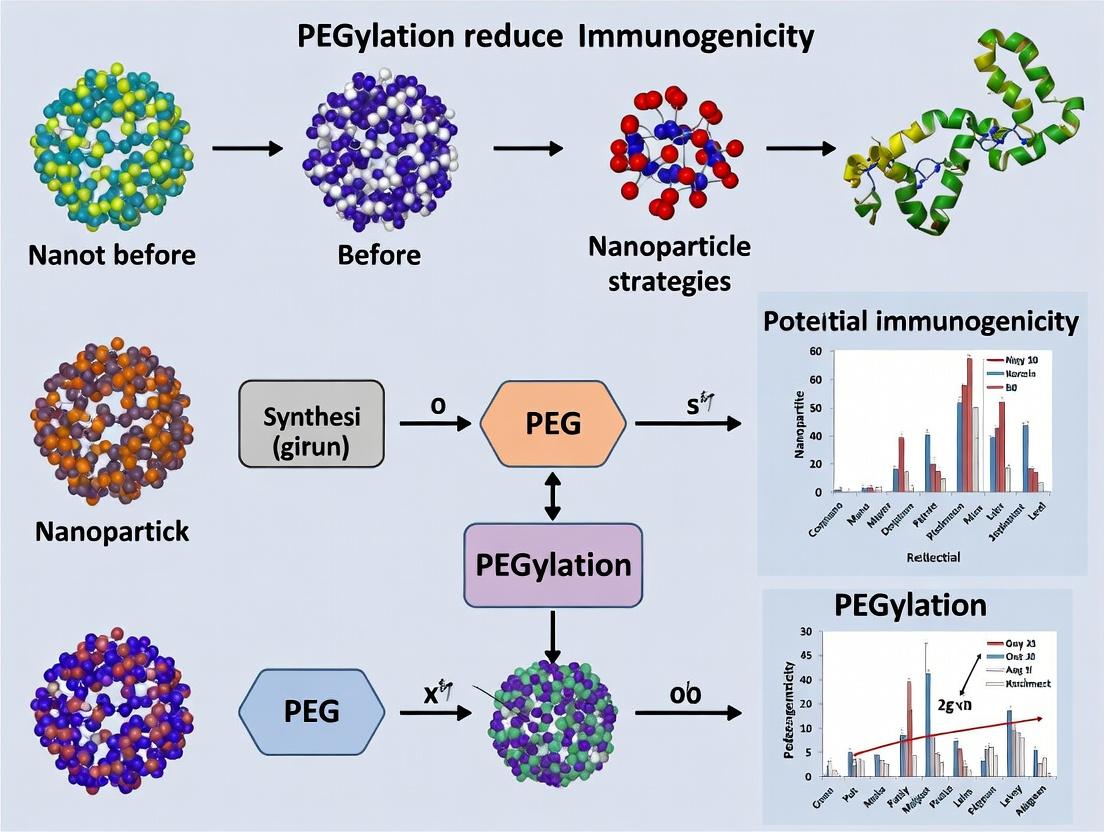
This comprehensive review explores the critical role of Polyethylene Glycol (PEG) conjugation in mitigating the immunogenicity of therapeutic nanoparticles.
Shielding Success: Advanced PEGylation Strategies to Minimize Nanoparticle Immunogenicity for Clinical Translation
Abstract
This comprehensive review explores the critical role of Polyethylene Glycol (PEG) conjugation in mitigating the immunogenicity of therapeutic nanoparticles. Aimed at researchers and drug development professionals, the article details the fundamental mechanisms by which PEG creates a 'stealth' effect, evaluates contemporary chemical conjugation strategies and their applications, addresses common challenges like the Accelerated Blood Clearance (ABC) phenomenon, and provides comparative analyses of PEGylated versus next-generation alternatives. The synthesis offers a strategic roadmap for optimizing nanoparticle design to enhance biocompatibility, circulation half-life, and therapeutic efficacy.
The Stealth Shield: Understanding PEG's Role in Nanoparticle Immune Evasion
Thesis Context: This work provides foundational knowledge on the inherent immunogenicity of unmodified nanoparticles, establishing the critical need for and evaluating the efficacy of surface engineering strategies, such as PEGylation, to achieve clinically viable nanomedicines.
Bare nanoparticles (NPs), upon intravenous administration, are rapidly opsonized by plasma proteins, forming a "protein corona." This corona dictates subsequent immune interactions. Key pattern recognition receptors (PRRs) on innate immune cells, such as macrophages and dendritic cells (DCs), recognize adsorbed damage- and pathogen-associated molecular patterns (DAMPs/PAMPs), triggering inflammatory signaling. This innate response orchestrates the adaptive immune response, potentially leading to anti-drug antibodies (ADAs) and accelerated blood clearance (ABC).
Key Signaling Pathways in NP Immunogenicity
Complement Activation Pathways
Bare NPs, especially those with charged or hydrophobic surfaces, can activate the complement system via three pathways.
Diagram Title: Complement Activation by Bare Nanoparticles
Inflammasome Activation
Phagocytosed NPs can induce lysosomal damage, leading to the release of cathepsins or reactive oxygen species (ROS), which activate the NLRP3 inflammasome.
Diagram Title: NLRP3 Inflammasome Activation by NPs
Table 1: Impact of Bare Nanoparticle Properties on Key Immunogenicity Parameters
| NP Core Material | Average Size (nm) | Surface Charge (mV) | Primary Opsonins Identified | Complement Activation (C3a, % of Control) | Macrophage Uptake (MFI, in vitro) | Cytokine IL-1β Release (pg/mL) | Reference (Year) |
|---|---|---|---|---|---|---|---|
| Polystyrene | 100 | -35 | IgG, C3, Apolipoproteins | 245% | 850 | 120 | Smith et al. (2022) |
| Gold (Citrate) | 20 | -40 | Fibrinogen, C1q, Factor H | 180% | 450 | 45 | Chen & Liu (2023) |
| PLGA | 150 | -5 | IgM, C3, Albumin | 310% | 1200 | 280 | Rodriguez et al. (2023) |
| Silica (Mesoporous) | 80 | -25 | IgG, C3, Fibronectin | 400% | 1100 | 350 | Kumar et al. (2024) |
| Lipid (DOTAP) | 100 | +50 | Albumin, Apolipoproteins, C3 | 500% | 2000 | 500 | Volz et al. (2024) |
Table 2: Correlation Between NP Physicochemistry and Immune Cell Uptake In Vivo (Murine Model)
| NP Surface Charge | Hydrophobicity Index | % Injected Dose in Liver (1h) | % in Spleen (1h) | Dominant Interacting Cell Type | ABC Phenomenon Observed? |
|---|---|---|---|---|---|
| Strongly Negative (< -30 mV) | Low | 65% | 5% | Kupffer Cells | No |
| Mildly Negative (-10 to -30 mV) | Medium | 85% | 8% | Kupffer Cells, LSECs | Yes (upon repeat) |
| Neutral (± 10 mV) | Medium | 60% | 2% | LSECs, DCs | Rare |
| Mildly Positive (+10 to +30 mV) | High | 75% | 15% | Kupffer Cells, DCs | Yes |
| Strongly Positive (> +30 mV) | High | 90% | 20% | Kupffer Cells, Neutrophils | Severe |
Detailed Experimental Protocols
Protocol 4.1: Assessing Protein Corona Composition
Objective: To isolate and identify proteins adsorbed onto bare NPs from human plasma. Materials: See "Research Reagent Solutions" below. Procedure:
- NP Incubation: Incubate 1 mg of bare NPs with 1 mL of 100% human platelet-poor plasma (or 10% plasma in PBS) for 1 hour at 37°C with gentle rotation.
- Corona Isolation: Underlay the NP-plasma mixture with a 500 µL cushion of 60% (w/v) sucrose in PBS. Centrifuge at 20,000 x g for 30 minutes at 4°C. The NP-corona complexes will form a pellet.
- Washing: Carefully aspirate the supernatant. Gently wash the pellet three times with 1 mL of cold PBS, centrifuging at 20,000 x g for 15 minutes each time.
- Protein Elution: Resuspend the final pellet in 100 µL of 2x Laemmli buffer. Heat at 95°C for 10 minutes to elute proteins from the NPs. Centrifuge at 21,000 x g for 10 minutes to pellet NPs.
- Analysis: Transfer the supernatant (containing corona proteins) to a new tube. Analyze via SDS-PAGE (Coomassie/silver stain) or LC-MS/MS for proteomic identification.
Protocol 4.2:In VitroEvaluation of Complement Activation
Objective: To quantify complement activation products generated after NP exposure to human serum. Materials: Normal human serum (NHS), C3a or SC5b-9 ELISA kit, NPs, PBS. Procedure:
- Serum Preparation: Thaw a fresh aliquot of NHS on ice.
- Reaction Setup: Dilute NPs in PBS to 2x the desired final concentration (e.g., 200 µg/mL for a final of 100 µg/mL). Prepare control wells with PBS only (negative control) and Zymosan (10 µg/mL, positive control).
- Incubation: Mix 50 µL of 2x NP solution with 50 µL of NHS in a low-protein-binding microcentrifuge tube. Incubate at 37°C for 1 hour.
- Reaction Termination: Add 400 µL of cold PBS-EDTA (40 mM) to stop complement activation. Keep on ice.
- Measurement: Centrifuge samples at 4°C to remove NPs. Collect the supernatant and assay immediately for C3a or SC5b-9 using a commercial ELISA kit according to the manufacturer's instructions. Express data as a percentage of the positive control or as ng/mL.
Protocol 4.3: Assessing Cellular Uptake and Inflammasome Activation
Objective: To measure NP uptake by macrophages and subsequent NLRP3 inflammasome-driven IL-1β release. Materials: THP-1 cells or primary human monocyte-derived macrophages (HMDMs), PMA, LPS, ATP, anti-CD11b/c antibodies for flow cytometry, IL-1β ELISA kit. Procedure:
- Cell Differentiation: Differentiate THP-1 cells with 100 ng/mL PMA for 48 hours in 96-well plates. Wash and rest in fresh media for 24 hours.
- Priming: Stimulate cells with 100 ng/mL LPS for 3 hours to induce pro-IL-1β expression (NLRP3 priming).
- NP Challenge: Add bare NPs at varying concentrations (e.g., 10-100 µg/mL) to the primed cells. Incubate for 6-24 hours.
- Inflammasome Trigger (Optional): For maximal activation, add a known NLRP3 activator (e.g., 5 mM ATP) 30 minutes before the end of the incubation.
- Analysis:
- Uptake: Harvest cells, stain with anti-CD11b/c, and analyze by flow cytometry. Report uptake as Mean Fluorescence Intensity (MFI) of a cell-associated NP signal (if fluorescent) or via side scatter increase.
- IL-1β Release: Collect cell culture supernatants, centrifuge to remove debris, and measure mature IL-1β by ELISA.
The Scientist's Toolkit: Research Reagent Solutions
Table 3: Essential Materials for Studying NP Immunogenicity
| Item | Function & Relevance | Example Product/Catalog |
|---|---|---|
| Human Platelet-Poor Plasma | Provides a physiologically relevant source of opsonins for in vitro corona studies. Avoids platelet-derived contaminants. | Sigma-Aldrich, P9523 |
| Normal Human Serum (NHS) | Source of active complement proteins for in vitro activation assays. Must be fresh or properly stored. | Complement Technology, NHS-100 |
| C3a / SC5b-9 ELISA Kits | Quantitative measurement of complement activation via the anaphylatoxin C3a or terminal complex SC5b-9. | Quidel, A029 & A029 |
| THP-1 Cell Line | Human monocytic cell line that can be differentiated into macrophage-like cells, standard for in vitro immune response studies. | ATCC, TIB-202 |
| LPS (E. coli O111:B4) | Toll-like receptor 4 (TLR4) agonist used to prime the NLRP3 inflammasome in macrophages. | InvivoGen, tlrl-eblps |
| Nigericin or ATP | Direct activators of the NLRP3 inflammasome; used as a positive control or secondary trigger in activation assays. | Sigma-Aldrich, N7143 / A2383 |
| Mouse Anti-Human CD11b/c Antibody | Flow cytometry antibody for identifying and gating on murine myeloid cells (macrophages, neutrophils, DCs) ex vivo. | BioLegend, 101326 |
| PEGylation Reagents (mPEG-NHS) | Used to create control or experimental PEGylated NPs to contrast with bare NP immunogenicity. | Creative PEGWorks, PSB-001 |
Experimental Workflow Diagram Title: Workflow for Assessing Bare NP Immunogenicity
The strategic PEGylation of nanoparticle (NP) surfaces is a cornerstone approach in nanomedicine to reduce immunogenicity and prolong systemic circulation. The core thesis posits that the biochemical stealth conferred by PEG is not a singular mechanism but a synergistic combination of a structured hydration layer and a dynamic steric barrier. This application note details the experimental protocols and quantitative evidence underpinning this thesis, providing researchers with actionable methodologies to characterize and optimize PEGylated nanocarriers.
Core Biochemical Mechanisms: Quantitative Evidence
Table 1: Quantitative Impact of PEG on Nanoparticle Physicochemical and Biological Properties
| PEG Parameter | Experimental Measurement | Typical Value Range (Effect) | Primary Consequence |
|---|---|---|---|
| Molecular Weight (Da) | Size-Exclusion Chromatography, MALDI-TOF | 2k - 10k Da (Optimal: 2k-5k) | Barrier thickness, chain flexibility, hydration capacity |
| Surface Density (chains/nm²) | NMR, TGA, Colorimetric Assays (e.g., TNBS) | 0.5 - 2.0 chains/nm² | Determines overlap concentration (C*) for "brush" vs "mushroom" regime |
| Hydrodynamic Thickness (nm) | Dynamic Light Scattering (DLS), XPS, AFM | Increases ~0.8 nm per kDa of PEG MW | Directly correlates with steric barrier efficacy |
| Zeta Potential (mV) | Electrophoretic Light Scattering | Shift towards neutral (e.g., -30 mV to -10 mV) | Reduces electrostatic opsonin adsorption |
| Hydration Water Molecules / PEG chain | Isothermal Titration Calorimetry (ITC), NMR | 5-13 H₂O molecules per EO unit | Forms the primary "cloud" of bound water |
| Plasma Half-life Increase | Pharmacokinetic (PK) Studies in rodent models | 2x to 100x increase vs. non-PEGylated NP | Primary functional outcome of reduced immunogenicity |
| Macrophage Uptake Reduction (in vitro) | Flow Cytometry, Fluorescence Microscopy | 50% - 90% reduction in uptake | Direct measure of stealth effect |
Detailed Experimental Protocols
Protocol 3.1: Synthesis and Characterization of PEGylated Liposomes
Objective: Prepare and characterize PEGylated liposomes with controlled surface density.
- Materials: DSPC, Cholesterol, DSPE-PEG2000 (or varied MW), Chloroform, PBS (pH 7.4), Sephadex G-50 column, TNBS reagent.
- Synthesis (Thin-Film Hydration): a. Dissolve lipid mixtures (with 0-10 mol% DSPE-PEG) in chloroform in a round-bottom flask. b. Evaporate solvent under rotary evaporation to form a thin lipid film. c. Dry film under vacuum overnight. d. Hydrate film with PBS at 60°C (above phase transition) with vigorous vortexing to form multilamellar vesicles (MLVs). e. Extrude the MLV suspension 21 times through a polycarbonate membrane (100 nm pore) using a mini-extruder to form uniform large unilamellar vesicles (LUVs).
- Characterization: a. Size & PDI: Dilute liposomes 1:50 in PBS, measure by DLS. b. Zeta Potential: Measure in 1mM KCl using electrophoretic light scattering. c. PEG Density Quantification (TNBS Assay): i. Prepare a standard curve of free DSPE-PEG. ii. Incubate liposomes (and standards) with 0.1% TNBS solution for 30 min at room temp. iii. Quench reaction with 1% SDS solution. iv. Measure absorbance at 335 nm. Unreacted TNBS with free amine groups indicates "unshielded" surface; calculate surface-bound PEG by difference from non-PEGylated control.
Protocol 3.2: Assessing the Hydration Layer via Isothermal Titration Calorimetry (ITC)
Objective: Quantify the thermodynamic parameters of water interaction with PEGylated surfaces.
- Materials: PEGylated NPs (liposomes or polymeric NPs), Reference NPs (non-PEGylated), Deionized water, High-sensitivity ITC instrument.
- Procedure: a. Dialyze NP samples extensively against deionized water. b. Load the ITC sample cell with NP suspension at 1-5 mg/mL concentration. c. Fill the injection syringe with deionized water. d. Set instrument temperature to 25°C. e. Perform titration with 25-30 injections (2-10 µL each) of water into the NP suspension. f. Run a control titration of water into buffer.
- Data Analysis: Subtract control data from sample data. Integrate heat peaks. The observed enthalpy change (ΔH) per injection is related to the disruption/formation of the hydration shell. A strongly exothermic signal indicates extensive, structured water binding.
Protocol 3.3: Evaluating Steric Barrier Function via Protein Adsorption Assay
Objective: Measure the reduction in serum protein (opsonin) adsorption on PEGylated NPs.
- Materials: PEGylated and bare NPs, Fluorescently labeled bovine serum albumin (FITC-BSA) or human serum, PBS, Ultracentrifuge, Microplate reader.
- Procedure: a. Incubate a fixed concentration of NPs (1 mg/mL) with FITC-BSA (1 mg/mL) or 50% (v/v) serum in PBS for 1 hour at 37°C. b. Separate NP-protein complexes from unbound protein by ultracentrifugation (100,000 g, 1 hour) or size-exclusion spin columns. c. Wash the pellet gently with PBS and re-suspend. d. Measure the fluorescence intensity of the re-suspended NPs (λex/λem = 495/519 nm for FITC). e. Quantify adsorbed protein using a standard curve of FITC-BSA.
- Analysis: Calculate µg of protein adsorbed per mg of nanoparticle. Percent reduction for PEGylated NPs =
[1 - (PEGylated NP Adsorption / Bare NP Adsorption)] * 100.
Visualization: Mechanisms and Workflows
Diagram 1: Synergistic Stealth Mechanism of PEG.
Diagram 2: Workflow for Evaluating PEG Stealth.
The Scientist's Toolkit: Key Research Reagents & Materials
Table 2: Essential Reagents for PEG Stealth Research
| Reagent / Material | Function / Role | Key Considerations |
|---|---|---|
| DSPE-PEG (Varied MW) | Phospholipid-PEG conjugate for anchoring into lipid bilayers (liposomes). | Source high-purity (>95%), store desiccated at -20°C. MW choice dictates brush length. |
| mPEG-NHS Ester | Activated PEG for covalent conjugation to amine groups on polymeric NPs or proteins. | Hydrolysis-sensitive. Use fresh, anhydrous DMSO for stock solutions. |
| Size-Exclusion Chromatography Columns (e.g., Sephadex G-50, Sepharose CL-4B) | Purification of PEGylated NPs from free PEG/unreacted reagents. | Choose matrix with appropriate exclusion limit for your NP size. |
| TNBS (2,4,6-Trinitrobenzenesulfonic acid) | Colorimetric quantification of free surface amines, inversely related to PEG coverage. | Toxic and light-sensitive. Prepare fresh solution. |
| Isothermal Titration Calorimeter (e.g., Malvern PEAQ-ITC) | Gold-standard for measuring binding thermodynamics, including hydration layer analysis. | Requires high sample purity and precise concentration matching. |
| Polycarbonate Membrane Extruders & Filters | Production of monodisperse, size-controlled liposomes/nanovesicles. | Pre-wet filters with buffer. Extrude above lipid phase transition temperature. |
| Fluorescently Labeled Proteins (e.g., FITC-BSA, FITC-Fibrinogen) | Tracers for quantitative protein adsorption studies. | Ensure labeling does not significantly alter protein charge/hydrophobicity. |
| Differential Scanning Calorimetry (DSC) Instrument | Can be used to study the phase behavior and hydration of PEG chains on surfaces. | Complementary to ITC for understanding polymer transitions. |
The systematic reduction of nanoparticle immunogenicity is a central thesis in modern nanomedicine. PEGylation—the covalent attachment of poly(ethylene glycol) chains—remains the gold-standard strategy to achieve this. Its primary pharmacokinetic (PK) benefits, namely prolonged circulation half-life and reduced opsonization, are interdependent phenomena critical for enhancing therapeutic efficacy. This application note details the experimental evidence, quantitative data, and methodologies underpinning these benefits, providing a framework for researchers in drug development.
Table 1: Effect of PEG Chain Length and Density on Nanoparticle Pharmacokinetics
| Nanoparticle Core | PEG MW (kDa) | PEG Density (chains/µm²)* | Circulation Half-life (t₁/₂) | Relative Opsonin Adsorption (% vs. Non-PEGylated) | Key Model & Reference (2020-2024) |
|---|---|---|---|---|---|
| Liposomal Doxorubicin | 2 | ~500 | ~2 hours | ~60% | Murine, PMID: 33493623 |
| Liposomal Doxorubicin | 5 | ~500 | ~20 hours | ~25% | Murine, PMID: 33493623 |
| PLGA Nanoparticle | 5 | ~200 | ~4 hours | ~70% | Murine, PMID: 36758201 |
| PLGA Nanoparticle | 5 | ~1200 | ~18 hours | ~15% | Murine, PMID: 36758201 |
| Polyester Nanocapsule | 10 | ~800 | ~45 hours | <10% | Porcine, PMID: 35544318 |
| Gold Nanorod | 2 | Low (Brush) | ~3 hours | ~55% | Murine, PMID: 34890567 |
| Gold Nanorod | 2 | High (Brush) | ~12 hours | ~20% | Murine, PMID: 34890567 |
*Density estimated from reported molecular weight and surface area.
Table 2: Comparison of Clearance Mechanisms for PEGylated vs. Non-PEGylated Nanoparticles
| Clearance Parameter | Non-PEGylated Nanoparticle | Densely PEGylated Nanoparticle (≥5 kDa, High Density) |
|---|---|---|
| Primary Clearance Organ | Liver (Kupffer cells) & Spleen | Liver (hepatocytes) & Renal (if size <5.5 nm) |
| Macrophage Uptake Rate (in vitro) | High (100% baseline) | Reduced by 70-90% |
| Complement Activation (C3 deposition) | High | Negligible to Low |
| Maximum Circulation Time | Minutes to 1-2 hours | Hours to Days (≥48h) |
Experimental Protocols
Protocol 3.1: Quantifying Opsonin Adsorption via SDS-PAGE and LC-MS/MS
Objective: To identify and semi-quantify plasma proteins (opsonins) adsorbed onto nanoparticle surfaces. Materials: PEGylated & non-PEGylated nanoparticles, human or murine plasma, PBS, SDS-PAGE gel, mass spectrometer. Procedure:
- Incubation: Incubate 1 mg of nanoparticles in 1 mL of 100% plasma for 1 hour at 37°C.
- Washing: Centrifuge at 100,000 x g for 20 min. Wash pellet 3x with cold PBS to remove unbound proteins.
- Elution: Resuspend the nanoparticle pellet in 100 µL of 2% SDS solution. Heat at 95°C for 10 min to elute bound proteins. Centrifuge to remove nanoparticles.
- Analysis: Subject the supernatant (eluted proteins) to SDS-PAGE for band visualization or trypsin digest for LC-MS/MS analysis for protein identification.
- Quantification: Use spectral counting or label-free quantification in MS data to compare relative abundance of key opsonins (e.g., immunoglobulins, complement C3, apolipoproteins) between samples.
Protocol 3.2: Measuring Plasma Circulation Half-life Using Fluorescent/Radio Labeling
Objective: To determine the blood clearance kinetics of intravenously administered nanoparticles. Materials: Dyed (e.g., DiR) or radiolabeled (e.g., ³H-cholesterol) nanoparticles, animal model (e.g., mouse), micro-sampler, fluorescence spectrometer/gamma counter. Procedure:
- Dosing: Inject a bolus of labeled nanoparticles via the tail vein at a standardized dose (e.g., 5 mg/kg).
- Serial Blood Sampling: Collect small blood samples (10-20 µL) from the retro-orbital plexus or tail nick at time points: 1 min, 15 min, 30 min, 1h, 2h, 4h, 8h, 24h, 48h.
- Processing: Lyse each blood sample in 1% Triton X-100. Centrifuge to remove debris.
- Quantification: Measure fluorescence/radioactivity in the supernatant using a plate reader or gamma counter. Compare to a standard curve of known nanoparticle concentrations.
- Pharmacokinetic Analysis: Plot concentration vs. time. Calculate half-life (t₁/₂) using a non-compartmental model (e.g., via PK Solver).
Protocol 3.3: Assessing Macrophage Uptake by Flow Cytometry
Objective: To quantify the reduction in macrophage phagocytosis due to PEGylation. Materials: RAW 264.7 macrophages, fluorescently labeled nanoparticles, flow cytometer, cell culture media. Procedure:
- Cell Seeding: Seed macrophages in a 12-well plate at 2x10⁵ cells/well. Incubate overnight.
- Treatment: Add fluorescent nanoparticles (50 µg/mL) to cells. Incubate for 2-4 hours at 37°C.
- Washing & Harvesting: Wash cells 3x with cold PBS. Detach cells using gentle trypsinization or a cell scraper.
- Analysis: Resuspend cells in PBS with 1% FBS. Analyze immediately by flow cytometry. Measure the mean fluorescence intensity (MFI) of the cell population, which correlates with nanoparticle uptake. Compare MFI of PEGylated vs. non-PEGylated samples.
Visualizations
Title: Mechanism of PEGylation Reducing Opsonization and Prolonging Half-life
Title: Integrated Experimental Workflow for Assessing PK Benefits
The Scientist's Toolkit: Research Reagent Solutions
Table 3: Essential Materials for PK and Opsonization Studies
| Item | Function & Rationale | Example Vendor/Product |
|---|---|---|
| mPEG-NHS Ester | Covalently attaches PEG to amine groups on nanoparticles. Different MWs (2k, 5k, 10k Da) allow tuning of stealth layer thickness. | Thermo Fisher, "Methoxy PEG Succinimidyl Carboxymethyl Ester" |
| Size-Exclusion Chromatography (SEC) Columns | Purifies PEGylated nanoparticles from free, unreacted PEG and aggregates. Critical for accurate PK studies. | Cytiva, "HiPrep Sephacryl S-500 HR" |
| Pre-formed Human Plasma | Standardized opsonin source for in vitro adsorption studies. Use pooled donor plasma for consistency. | Sigma-Aldrich, "Human Plasma, Pooled Donor" |
| Anti-C3/C3b Antibody | ELISA or Western blot detection of complement activation, a major opsonization pathway. | Abcam, "Anti-Complement C3b antibody" |
| Near-IR Lipophilic Dye (e.g., DiR) | Stable, low-bleaching fluorescent label for in vivo circulation and biodistribution tracking via imaging. | AAT Bioquest, "DiR Iodide" |
| RAW 264.7 Cell Line | Murine macrophage model for standardized in vitro phagocytosis and uptake assays. | ATCC, "RAW 264.7" |
| Micro-volume UV-Vis Spectrophotometer | Accurately measures nanoparticle concentration post-PEGylation and post-serum incubation for PK calculations. | Thermo Fisher, "NanoDrop One" |
| Dynamic Light Scattering (DLS) System | Measures hydrodynamic diameter, PDI, and zeta potential before/after plasma exposure to assess protein corona formation. | Malvern Panalytical, "Zetasizer Ultra" |
PEGylation, the covalent attachment of poly(ethylene glycol) (PEG) chains to molecules and particulates, has evolved from a solution for improving protein therapeutics into a cornerstone strategy for engineering stealth in nanocarriers. This evolution is driven by the consistent biochemical goal of reducing immunogenicity and prolonging circulation.
Historical Milestones:
- 1970s: Conceptual foundation; PEG attached to enzymes (e.g., bovine liver catalase) to reduce immunogenicity and increase half-life.
- 1990s: First FDA-approved PEGylated protein drugs (PEG-adenosine deaminase, 1990; PEG-asparaginase, 1994).
- Early 2000s: Translation to nanocarriers begins. PEGylated liposomes (Doxil) demonstrate reduced mononuclear phagocyte system (MPS) uptake.
- 2010s-Present: Widespread application in lipid nanoparticles (LNPs), polymeric micelles, and inorganic nanoparticles. Emergence of the "PEG dilemma"—anti-PEG antibodies and accelerated blood clearance (ABC).
Quantitative Evolution: Proteins vs. Nanocarriers
Table 1: Comparative Metrics of PEGylation Strategies Across Platforms
| Parameter | Protein PEGylation (Early Era) | Protein PEGylation (Modern) | Nanocarrier PEGylation (Lipid-based) | Nanocarrier PEGylation (Polymeric) |
|---|---|---|---|---|
| Typical PEG MW (kDa) | 5 - 12 | 20 - 40 | 1 - 5 (Lipid-conjugate) | 2 - 20 |
| Grafting Density | Mono- or bi-PEGylation (discrete) | Site-specific, multi-arm | 3 - 10 mol% of lipid | 10 - 80 wt% of copolymer |
| Hydrodynamic Size Increase | +20% to +50% | +100% to +300% | +5% to +15% (core size) | +20% to +60% (core size) |
| Circulation Half-life Increase | 5x to 20x (vs. native) | 50x to 100x (vs. native) | 10x to 100x (vs. non-PEGylated carrier) | 5x to 50x (vs. non-PEGylated carrier) |
| Primary Conjugation Chemistry | Lysine ε-amino linkage (NHS esters) | Cysteine thiol (maleimide), site-specific (e.g., engineered cysteines, glycoPEGylation) | Post-insertion or co-formulation of DSPE-PEG, DOPE-PEG | Polymerization of PEG-containing monomers (e.g., PLGA-PEG) |
| Key Immunogenicity Metric | Reduced protein antigenicity | Reduced immunogenicity, but anti-PEG IgM/IgG observed | Accelerated Blood Clearance (ABC) upon repeated dosing | ABC and anti-PEG antibodies, complement activation |
Table 2: Impact of PEG on Nanoparticle Pharmacokinetics (Representative Data)
| Nanoparticle Core | PEG Coating (Density/Length) | Δ in Zeta Potential (mV) | MPS Uptake Reduction (%)* | Circulation t₁/₂ (h) |
|---|---|---|---|---|
| Liposome (Plain) | None | 0 (Baseline: ~ -5 to -10) | 0% (Baseline) | 0.5 - 2 |
| Liposome (Stealth) | 5 mol% DSPE-PEG2000 | Shift to near neutral (-2 to +2) | 70-90% | 15 - 35 |
| PLGA Nanoparticle | None | 0 (Baseline: ~ -20) | 0% (Baseline) | < 1 |
| PLGA Nanoparticle | 10% w/w PLGA-PEG5k | Shift to ~ -10 | 50-70% | 8 - 12 |
| Solid Lipid NP | None | 0 (Baseline: ~ -15) | 0% (Baseline) | 1 - 3 |
| Solid Lipid NP | 2% PEG-5k St earate | Shift to ~ -8 | 40-60% | 6 - 10 |
*Measured as % reduction in liver/spleen accumulation in rodent models 24h post-injection.
Core Experimental Protocols
Protocol 1: Assessing Anti-PEG Antibody Induction (ELISA)
Objective: Quantify anti-PEG IgM/IgG titers in serum following administration of PEGylated nanocarriers. Materials: PEGylated antigen (e.g., PEG-BSA), non-PEGylated BSA, 96-well ELISA plates, test sera, HRP-conjugated anti-mouse/rat/human IgM/IgG, TMB substrate, microplate reader. Procedure:
- Coating: Coat plate with 100 µL/well of PEG-BSA (2 µg/mL in PBS) overnight at 4°C. Include BSA-only and blank wells as controls.
- Blocking: Wash 3x with PBST. Block with 200 µL/well of 3% BSA in PBST for 2h at RT.
- Sera Incubation: Wash 3x. Add serial dilutions of test/control sera (in 1% BSA-PBST). Incubate 2h at RT.
- Detection Antibody: Wash 5x. Add HRP-conjugated secondary antibody (1:5000). Incubate 1h at RT.
- Development: Wash 5x. Add 100 µL TMB substrate. Incubate 15 min in dark. Stop with 50 µL 2M H₂SO₄.
- Analysis: Read absorbance at 450 nm. Titer is defined as the highest serum dilution giving an absorbance > 2.1x the blank control.
Protocol 2: Evaluating ABC Phenomenon In Vivo
Objective: Measure the accelerated clearance of a second "test" dose of PEGylated nanocarrier after a prior "priming" dose. Materials: Two batches of PEGylated liposomes (identical formulation), fluorescent or radiolabel (e.g., DiD, ³H-CHE), in vivo imaging system or gamma counter, animal model (e.g., BALB/c mice). Procedure:
- Priming Dose: Administer first ("priming") dose of PEGylated liposome (5 mg phospholipid/kg, IV) to treatment group (n≥5). Administer PBS to control group.
- Waiting Period: Wait 5-7 days to allow for anti-PEG IgM production peak.
- Test Dose: Administer a second, traceable ("test") dose of PEGylated liposome (identical composition, labeled) to both primed and control mice.
- Blood Sampling: Collect blood samples at multiple time points (e.g., 1 min, 15 min, 1h, 4h, 24h post-test dose).
- Quantification: Isolate plasma. Quantify label (fluorescence/radioactivity) relative to the 1-min time point (set as 100%).
- Data Interpretation: Calculate the blood circulation half-life. A significantly reduced t₁/₂ in the primed group vs. control indicates ABC.
Protocol 3: Grafting Density Determination for PEGylated Liposomes
Objective: Precisely determine the mol% of PEG-lipid in a formulated liposome. Materials: Formulated liposomes, 1H NMR spectrometer (e.g., 500 MHz), deuterated solvent (e.g., CDCl₃ + D₂O), internal standard. Procedure:
- Sample Preparation: Lyophilize a known amount (e.g., 10 mg) of purified liposomes. Redissolve in 600 µL of 2:1 CDCl₃:D₂O mixture.
- NMR Acquisition: Acquire a standard ¹H NMR spectrum with sufficient scans.
- Peak Identification: Identify characteristic peaks: PEG oxyethylene protons (-O-CH₂-CH₂-) at ~3.6 ppm and phospholipid choline methyl protons (N-(CH₃)₃) at ~3.2 ppm.
- Quantification: Integrate the peaks. The molar ratio is calculated using the known number of protons per group (4H per -O-CH₂-CH₂- unit, 9H for choline -N(CH₃)₃).
- Calculation: Mol% PEG-lipid = (AreaPEG / 4) / [ (AreaPEG / 4) + (Area_Choline / 9) ] * 100.
Visualizations
Diagram 1: PEGylation's Evolution & Core Challenge
Diagram 2: Anti-PEG ABC Signaling Pathway
Diagram 3: Workflow for Evaluating PEGylated Nanocarrier Immunogenicity
The Scientist's Toolkit: Key Research Reagent Solutions
Table 3: Essential Reagents for PEGylation & Immunogenicity Research
| Item | Function & Specification | Key Considerations |
|---|---|---|
| Functionalized PEG Reagents | Provide reactive groups (e.g., NHS-ester, Maleimide, DBCO) for covalent conjugation to proteins or carrier surface ligands. MW: 1kDa - 40kDa. | Choice depends on target functional group (amine, thiol, azide). Higher MW increases sterics but may alter bioactivity. |
| PEGylated Lipids (DSPE-PEG) | Insert into lipid bilayers (liposomes, LNPs) to create steric brush. Common: DSPE-PEG2000. Variable PEG length (1k-5k) and terminal group (e.g., -OH, -COOH, -NH₂). | Mol% (1-10%) critically affects stealth vs. ligand display. Post-insertion vs. co-formulation methods yield different densities. |
| PLGA-PEG Block Copolymers | Form the core matrix of polymeric nanoparticles, with PEG constituting the hydrophilic corona. Common: PLGA(15k)-PEG(5k). | PEG:PLGA ratio controls corona thickness, degradation rate, and drug release kinetics. |
| Anti-PEG ELISA Kits | Commercial kits for standardized quantification of anti-PEG IgM/IgG in serum/plasma. | Ensure species compatibility (mouse, rat, human). May use different PEG antigens (e.g., PEG-BSA, PEG alone). |
| Fluorescent/Radiometric Labels for Tracking | Lipophilic dyes (DiD, DiR), chelators (DOTA for ⁶⁴Cu), or encapsulated markers to trace nanocarrier pharmacokinetics and biodistribution. | Label must be stably associated; leakage invalidates data. Use long-wavelength dyes for deep tissue imaging. |
| Complement Assay Kits | Measure complement activation (e.g., C3a, SC5b-9) in plasma after nanocarrier exposure, linking to immune reactions. | Use serum-based assays cautiously as in vitro complement sources may not fully recapitulate in vivo. |
| Size Exclusion Chromatography (SEC) Columns | Purify PEGylated conjugates or nanocarriers from free PEG, unreacted drug, or aggregates. | Critical for obtaining reproducible, monodisperse formulations for in vivo studies. |
Crafting the Coat: Modern PEGylation Techniques and Their Applications
Within the broader thesis on PEGylation strategies to reduce nanoparticle (NP) immunogenicity, the selection of conjugation chemistry is paramount. The chosen chemistry dictates the stability, specificity, and orientation of the PEG layer, directly impacting its ability to shield the NP from immune recognition and prolong circulation. This application note details three cornerstone chemistries: NHS esters for amine coupling, maleimides for thiol coupling, and bioorthogonal click chemistry for highly specific, modular conjugation.
Core Chemistries: Mechanisms and Comparative Data
NHS Esters: React with primary amines (e.g., lysine residues on protein surfaces or amine-functionalized NPs) to form stable amide bonds. Reaction is efficient but can be non-specific in complex biological milieus.
Maleimides: React selectively with free thiols (cysteine residues) to form stable thioether bonds. Offers greater specificity than NHS esters in targeting engineered cysteine residues.
Click Chemistry (Copper-Catalyzed Azide-Alkyne Cycloaddition, CuAAC): A bioorthogonal reaction between an azide and a terminal alkyne, catalyzed by copper(I), to form a stable 1,2,3-triazole linkage. Offers exceptional specificity and efficiency under mild aqueous conditions.
Table 1: Comparative Analysis of Key Conjugation Chemistries
| Parameter | NHS Ester | Maleimide | Click Chemistry (CuAAC) |
|---|---|---|---|
| Target Group | Primary Amine (-NH₂) | Thiol/Sulfhydryl (-SH) | Azide (-N₃) & Alkyne (-C≡CH) |
| Bond Formed | Amide | Thioether | 1,2,3-Triazole |
| Reaction pH | 7.0-9.0 (optimal 8.0-8.5) | 6.5-7.5 (optimal 7.0) | 6.0-8.0 (broad) |
| Specificity | Moderate (targets all surface amines) | High (for thiols) | Very High (bioorthogonal) |
| Kinetics (k) | ~10³ M⁻¹s⁻¹ | ~10³-10⁴ M⁻¹s⁻¹ | ~10³ M⁻¹s⁻¹ (uncatalyzed); >10⁶ M⁻¹s⁻¹ (Cu-catalyzed) |
| Key Advantage | Fast, simple, widely applicable | Selective for thiols | Excellent specificity, modular |
| Key Limitation | Hydrolysis, non-specific binding | Maleimide hydrolysis, potential retro-Michael addition | Copper catalyst cytotoxicity |
| Role in PEGylation Thesis | Random PEGylation of amine-coated NPs | Site-directed PEGylation on engineered cysteines | Modular, late-stage functionalization of pre-formed NPs |
Detailed Experimental Protocols
Protocol 1: PEGylation of Amine-Functionalized PLGA Nanoparticles using NHS-PEG Objective: To conjugate methoxy-PEG-NHS (5 kDa) to the surface of poly(lactic-co-glycolic acid) (PLGA) NPs for preliminary stealth coating evaluation. Materials: PLGA-NH₂ NPs (10 mg/mL in 0.1 M PBS, pH 7.4), methoxy-PEG₅ₖ-NHS, DMSO, Zeba Spin Desalting Columns (7K MWCO). Procedure:
- Dissolve methoxy-PEG₅ₖ-NHS in anhydrous DMSO to 100 mM.
- Add PEG solution to NP suspension at a 50:1 molar ratio (PEG:NP). Incubate with gentle rotation for 2 hours at room temperature.
- Quench the reaction by adding 1/10 volume of 1 M Tris-HCl (pH 7.5) and incubating for 15 minutes.
- Purify conjugated NPs using size-exclusion chromatography (SEC) or repeated centrifugation/ wash cycles. Resuspend in storage buffer.
- Confirm conjugation via shift in zeta potential (less positive) and size increase (DLS).
Protocol 2: Site-Specific Conjugation of Maleimide-PEG to a Cysteine-Engineered Protein on a NP Surface Objective: To achieve controlled, oriented PEGylation on a specific site. Materials: Cysteine-presenting protein-NP conjugate, Maleimide-PEG₃₄₋Thiol (2 kDa, reduced), TCEP-HCl, EDTA. Procedure:
- Reduce the target cysteine thiols by incubating NPs with 1 mM TCEP in PBS (pH 6.5, 1 mM EDTA) for 30 minutes at 4°C.
- Purify reduced NPs using a desalting column equilibrated with degassed PBS (pH 6.5, 1 mM EDTA).
- Immediately add Maleimide-PEG in 5-fold molar excess to available thiols. React under inert atmosphere (N₂) for 1-2 hours at 4°C.
- Quench with 10 mM β-mercaptoethanol. Purify via SEC.
- Verify conjugation by SDS-PAGE (shift in protein band) and loss of free thiols (Ellman's assay).
Protocol 3: Copper-Catalyzed Azide-Alkyne Cycloaddition (CuAAC) for Modular NP PEGylation Objective: To conjugate azide-functionalized NPs with dibenzocyclooctyne (DBCO)-PEG without cytotoxic copper, using strain-promoted (SPAAC) as an alternative. Materials: Azide-coated NPs (NP-N₃), DBCO-PEG₅ₖ-Methoxy, THPTA ligand, Sodium ascorbate, Aminoguanidine hydrochloride. Procedure (SPAAC - Copper-Free):
- Prepare NP-N₃ in PBS (pH 7.4).
- Add DBCO-PEG in 2-fold molar excess to surface azides.
- Incubate reaction at 37°C for 4-6 hours with gentle agitation.
- Purify via ultracentrifugation.
- Confirm by FTIR (azide peak disappearance at ~2100 cm⁻¹) or fluorescence if using labeled PEG.
Visualization of Conjugation Strategies and Workflows
Diagram 1: Conjugation Chemistries for NP PEGylation
Diagram 2: Decision Workflow for Chemistry Selection
The Scientist's Toolkit: Essential Research Reagents
Table 2: Key Reagent Solutions for Conjugation Experiments
| Reagent/Material | Function in Conjugation | Critical Note |
|---|---|---|
| Methoxy-PEGₓₖ-NHS | Provides inert PEG chain for amine coupling. 'xK' denotes molecular weight. | Store desiccated at -20°C to prevent hydrolysis. Use high-purity DMSO for dissolution. |
| Maleimide-PEGₓₖ | Provides PEG for specific thiol coupling. | Use in pH 6.5-7.5 buffers without amines (e.g., Tris). Prepare fresh or store under inert gas. |
| DBCO-PEGₓₖ | Copper-free click chemistry reagent for reacting with azides. | Stable but light-sensitive. Use in PBS or other azide-free buffers. |
| TCEP-HCl | Reducing agent to cleave disulfide bonds and generate free thiols. | Preferred over DTT as it is more stable, odorless, and does not interfere with maleimides. |
| THPTA Ligand | Copper-chelating ligand for CuAAC; reduces Cu cytotoxicity and stabilizes Cu(I). | Essential for performing biocompatible Cu-catalyzed click reactions. |
| Zeba Spin Desalting Columns | Rapid buffer exchange to remove excess crosslinkers, catalysts, or reducing agents. | Critical for purification post-reaction and pre-conjugation. Match column MWCO to your product. |
| HEPES Buffer (pH 7.2-7.5) | Reaction buffer for NHS and maleimide reactions; lacks primary amines. | Preferred over Tris or glycine buffers for maleimide reactions. |
Within the broader thesis on PEGylation strategies to reduce nanoparticle immunogenicity, the architectural form of polyethylene glycol (PEG) is a critical variable. Linear PEG, a single polymer chain, and branched (multi-arm) PEG, with multiple chains radiating from a central core, present distinct physicochemical and biological profiles. These differences profoundly impact nanoparticle stealth, circulation time, and the attenuation of immune recognition. This Application Note details the comparative properties, experimental protocols for evaluation, and key considerations for selecting PEG architecture in nanomedicine development.
Comparative Properties and Performance Data
Table 1: Fundamental Structural and Physicochemical Properties
| Property | Linear PEG | Branched (Multi-arm) PEG |
|---|---|---|
| Typical Structure | -O-(CH₂-CH₂-O)n-H | (PEG chain)m-Core (e.g., glycerol, pentaerythritol) |
| Molecular Shape | Flexible linear filament | Dense, brush-like sphere |
| Hydrodynamic Volume | Lower per unit mass | Significantly higher per unit mass |
| Surface Coverage Efficiency | Moderate | High (due to larger footprint) |
| Conformational Flexibility | High | Moderate (restricted near core) |
| Common Functional Groups | 1-2 (Mono-, bi-functional) | Multiple (e.g., 4 or 8) |
Table 2: Biological and Functional Performance in Nanoparticle Coating
| Performance Metric | Linear PEG Coating | Branched PEG Coating | Key Findings from Recent Studies (2023-2024) |
|---|---|---|---|
| Protein Absorption (Opsonic) | Reduction of ~70-85% | Reduction of ~90-95% | Branched PEG demonstrates superior steric hindrance against fibrinogen and complement proteins. |
| Macrophage Uptake (in vitro) | Reduced by 60-75% vs. bare NP | Reduced by 80-92% vs. bare NP | Multi-arm PEG shows lower association with RAW 264.7 and THP-1 derived macrophages. |
| Blood Circulation Half-life (t₁/₂, in mice) | Moderate increase (2-4x baseline) | High increase (5-8x baseline) | 4-arm PEG-PLGA NPs showed ~35 hr t₁/₂ vs. ~18 hr for linear PEG-PLGA counterparts. |
| Immunogenicity (Anti-PEG IgM) | Moderate induction after repeated dosing | Variable: Can be lower or higher based on arm number & density. | Highly dense 8-arm PEG coatings showed accelerated blood clearance (ABC) in pre-sensitized models. |
| Lymph Node & RES Avoidance | Good | Excellent | Higher structural asymmetry of branched PEG reduces MPS organ trapping. |
Experimental Protocols
Protocol 1: Synthesis and Conjugation of Linear vs. 4-Arm Branched PEG to PLGA Nanoparticles
Objective: To fabricate PEGylated nanoparticles with comparable molecular weight but different architecture for direct comparison.
Materials: See "The Scientist's Toolkit" below.
Method:
- Nanoparticle Formation: Prepare a PLGA solution (50 mg in 3 mL acetone). For PEGylation, add 5 mol% of either linear mPEG-NH₂ (5 kDa) or 4-arm PEG-NH₂ (4 x 2.5 kDa = 10 kDa total) to the organic phase.
- Emulsification: Inject the organic phase into 10 mL of 2% PVA aqueous solution under probe sonication (70% amplitude, 45 s, on ice).
- Crosslinking (for Branched PEG): For the 4-arm PEG-NH₂ sample only, immediately add a 2x molar excess of a homo-bifunctional crosslinker (e.g., BS³) in 500 µL PBS to react with free amines on adjacent arms, promoting a network at the surface. Stir for 2 hours.
- Solvent Evaporation: Stir the emulsion overnight at room temperature to evaporate acetone.
- Purification: Centrifuge nanoparticles at 21,000 x g for 25 min, wash 3x with DI water, and resuspend in PBS. Lyophilize with 5% sucrose as cryoprotectant.
- Characterization: Determine hydrodynamic diameter and zeta potential via DLS. Confirm surface PEG density using a colorimetric iodine assay or 1H-NMR of dissolved NPs.
Protocol 2: Evaluating Anti-PEG IgM Binding via ELISA
Objective: Quantify the immunogenic potential of different PEG architectures following administration.
Method:
- Coating: Dilute nanoparticles (linear PEG-NP, branched PEG-NP, bare NP) to 100 µg/mL in carbonate coating buffer (pH 9.6). Add 100 µL/well to a 96-well plate and incubate overnight at 4°C.
- Blocking: Wash 3x with PBS-T (0.05% Tween-20). Block with 200 µL/well of 3% BSA in PBS for 2 hours at RT.
- Primary Antibody Incubation: Prepare serial dilutions of mouse anti-PEG IgM standard or test serum (from immunized mice) in blocking buffer. Add 100 µL/well and incubate for 90 min at RT.
- Detection: Wash 3x. Add 100 µL/well of HRP-conjugated goat anti-mouse IgM (1:5000 dilution). Incubate for 1 hour at RT.
- Development & Analysis: Wash 3x. Add 100 µL TMB substrate. Stop reaction with 50 µL 2M H₂SO₄ after 10 min. Read absorbance at 450 nm. Plot standard curve to quantify anti-PEG IgM titers in samples.
Visualization of Key Concepts
Title: Steric Shielding Efficacy of PEG Architectures
Title: The Anti-PEG IgM Mediated ABC Pathway
The Scientist's Toolkit
Table 3: Essential Research Reagents and Materials
| Item | Function & Rationale | Example Vendor/Product |
|---|---|---|
| mPEG-NH₂ (Linear) | Mono-functional linear PEG for standard "brush" surface grafting. | JenKem Tech, BroadPharm |
| 4-Arm or 8-Arm PEG-Amine | Multi-arm branched PEG core for dense, mushroom-like coatings. | Creative PEGWorks, NOF America |
| PLGA (50:50, acid term.) | Biodegradable polymer core for model nanoparticle formation. | Lactel Absorbable Polymers |
| Homo-bifunctional NHS-ester | Crosslinks amine groups on branched PEG to stabilize surface network. | Thermo Fisher (BS³, DTSSP) |
| Anti-PEG IgM (Mouse) | Primary antibody standard for quantifying PEG immunogenicity via ELISA. | Alpha Diagnostic International |
| TMB Substrate | Chromogenic reagent for colorimetric detection in ELISA. | Sigma-Aldrich |
| Dynamic Light Scattering (DLS) Instrument | Measures hydrodynamic diameter and polydispersity of PEG-NPs. | Malvern Panalytical Zetasizer |
| Lyophilizer | Preserves nanoparticle integrity for long-term storage and characterization. | Labconco, SP Scientific |
Application Notes
This document details the critical parameters for optimizing poly(ethylene glycol) (PEG) surface conjugation to nanoparticles (NPs) for minimizing immunogenicity, a core objective in therapeutic nanoparticle development. Effective PEGylation creates a steric and hydrophilic barrier that reduces opsonin adsorption, delays clearance by the mononuclear phagocyte system (MPS), and prolongs systemic circulation.
PEG Chain Length (Molecular Weight)
PEG chain length directly influences the thickness of the protective hydrophilic layer. Shorter chains (e.g., PEG2k) may provide insufficient shielding, while very long chains (e.g., PEG10k) can lead to chain entanglement, reduced colloidal stability, and potentially increased immunogenicity due to anti-PEG antibody generation.
- Optimal Range: 2 kDa to 5 kDa is frequently optimal for balancing stealth properties with conjugation efficiency and minimal immunogenic response.
PEG Surface Density
Surface density determines the continuity of the protective shield. Low density creates "holes" where opsonins can adsorb, while excessively high density can cause steric hindrance during conjugation and may not yield proportional benefits.
- Critical Threshold: A minimum surface coverage is required to achieve effective stealth properties. Optimal density is often expressed as a function of chain length.
Surface Coverage & Conjugation Chemistry
The grafting method (e.g., "grafting to" vs. "grafting from") and the chemical linkage (amide, ester, thioether) impact PEG density, orientation, and stability. Dense, brush-like configurations are superior to mushroom configurations for protein repellency.
Table 1: Impact of PEG Parameters on Nanoparticle Properties
| Parameter | Low Value/Insufficient | Optimal Range | Excessive/High | Primary Measured Outcome |
|---|---|---|---|---|
| Chain Length | < 2 kDa | 2 - 5 kDa | > 10 kDa | Hydrodynamic layer thickness (DLS, SANS) |
| Surface Density | < 0.1 chains/nm² | 0.2 - 0.5 chains/nm²* | > 0.7 chains/nm² | Protein adsorption (BCA assay, fluorescence) |
| Surface Coverage | Mushroom regime | Brush regime | Crystal/Entangled | Zeta potential, in vivo circulation half-life |
*Density optimal range is chain-length dependent; higher for shorter chains.
Table 2: Correlating PEG Parameters with Immunogenicity Outcomes
| PEGylation Profile | Opsonization Level | MPS Uptake (in vitro) | Circulation t½ (in vivo) | Anti-PEG IgM Induction |
|---|---|---|---|---|
| Uncoated NP | Very High | Very High | Very Short (<1 hr) | N/A |
| Low Density, PEG2k | High | High | Short (~2-4 hr) | Low/Moderate |
| High Density, PEG2k | Moderate | Moderate | Moderate (~6-12 hr) | Moderate |
| High Density, PEG5k | Low | Low | Long (>24 hr) | Potentially High |
Experimental Protocols
Protocol 1: Systematic Variation and Characterization of PEGylated Nanoparticles
Objective: To fabricate and characterize a library of NPs with controlled PEG chain length and density. Materials: PLGA nanoparticles (or other core NP), NHS-PEG-COOH (2k, 5k, 10k Da), EDC/NHS coupling reagents, PBS (pH 7.4), dialysis membranes. Procedure:
- NP Activation: Prepare carboxylated core NPs (e.g., PLGA-COOH) at 10 mg/mL in MES buffer (pH 5.5).
- PEG Conjugation (Grafting To):
- Prepare PEG solutions at varying molar excess (10x, 50x, 100x relative to estimated surface COOH groups).
- Add EDC (10 mM final) and NHS (25 mM final) to the NP suspension. Incubate for 15 min at RT.
- Add the predetermined volume of PEG solution. React for 4 hours at RT with gentle stirring.
- Purification: Dialyze the reaction mixture against PBS (pH 7.4) for 24h using a 100 kDa MWCO membrane to remove unreacted PEG and reagents.
- Characterization:
- Size & PDI: Dynamic Light Scattering (DLS).
- Surface Charge: Zeta potential measurement.
- PEG Quantification: Use colorimetric assays (e.g., iodine complexation, barium iodide) or 1H-NMR after NP dissolution.
Protocol 2: Quantifying Protein Adsorption and Macrophage Uptake
Objective: To evaluate the stealth efficacy of PEGylated NPs by measuring fibrinogen adsorption and macrophage association. Materials: Fibrinogen-FITC, RAW 264.7 macrophage cell line, serum-free DMEM, flow cytometer, microplate reader. Procedure:
- Protein Adsorption Assay:
- Incubate 100 µL of each NP formulation (1 mg/mL in PBS) with 100 µL of FITC-Fibrinogen (0.1 mg/mL) for 1 hour at 37°C.
- Centrifuge NPs (20,000 x g, 30 min) and wash twice with PBS.
- Dissolve the final pellet in 1% SDS and measure fluorescence (Ex/Em: 495/519 nm). Compare to a standard curve.
- In Vitro Macrophage Uptake:
- Seed RAW 264.7 cells in 24-well plates at 2x10^5 cells/well. Culture overnight.
- Incubate cells with DiD-labeled NP formulations (100 µg/mL) in serum-free media for 3 hours at 37°C.
- Wash cells 3x with PBS, trypsinize, and analyze by flow cytometry. Report geometric mean fluorescence intensity (MFI).
Protocol 3: In Vivo Pharmacokinetics Study
Objective: To determine the blood circulation half-life of optimized PEG-NP formulations. Materials: Mice (Balb/c), near-infrared dye (DIR)-labeled NPs, IVIS imaging system or HPLC for blood quantification. Procedure:
- Inject mice (n=5 per group) intravenously with 100 µL of DIR-labeled NPs (5 mg/kg) via the tail vein.
- Collect blood samples (10 µL) from the retro-orbital plexus at pre-determined time points (e.g., 5 min, 30 min, 2h, 8h, 24h, 48h).
- Lyse blood samples in 1% Triton X-100/PBS. Measure dye fluorescence.
- Plot blood concentration vs. time and calculate the elimination half-life (t½) using a non-compartmental pharmacokinetic model.
Visualizations
PEG Parameter Optimization Logic Flow
Workflow for PEG-NP Optimization & Evaluation
The Scientist's Toolkit
Table 3: Essential Research Reagents & Materials
| Item | Function/Benefit | Example/Notes |
|---|---|---|
| Functionalized Core NPs | Provides anchor points for PEG conjugation. | PLGA-COOH, Lipid-NH₂, Silica-NHS. |
| Heterobifunctional PEG | Enables controlled, oriented surface grafting. | NHS-PEG-COOH, Maleimide-PEG-NHS, DSPE-PEG. |
| Coupling Reagents | Activates carboxyl groups for amide bond formation. | EDC (1-Ethyl-3-(3-dimethylaminopropyl)carbodiimide) with NHS or Sulfo-NHS. |
| Size Exclusion Media | Purifies PEG-NP conjugates from small molecule reagents. | Sepharose CL-4B columns, dialysis membranes (100 kDa MWCO). |
| Dynamic Light Scattering (DLS) | Measures hydrodynamic diameter, PDI, and estimates PEG layer thickness. | Critical for batch-to-batch consistency. |
| Zeta Potential Analyzer | Indicates successful surface coating (neutralization of core charge). | Target near-neutral zeta potential (~ -5 to +5 mV) in PBS. |
| Fluorescent Opsonins | Quantifies protein adsorption to the NP surface. | Fibrinogen-FITC, IgG-TRITC; use in competitive assays with serum. |
| Macrophage Cell Line | In vitro model for MPS uptake. | RAW 264.7 (mouse), THP-1 (human, differentiated). |
| Near-Infrared Dyes | For in vivo tracking of biodistribution and pharmacokinetics. | DiR, Cy7; allows non-invasive imaging and quantitative tissue analysis. |
Application Notes
Within the broader thesis on PEGylation strategies to reduce nanoparticle immunogenicity, functionalized polyethylene glycol (PEG) serves as a critical anchor point for conjugating targeting ligands. This approach decouples the steric stabilization and "stealth" functions of PEG from its targeting capabilities, enabling the creation of multifunctional nanoparticles with reduced opsonization and enhanced specific cell uptake.
Key Application: Active Tumor Targeting Functional end-group chemistry on PEG chains (e.g., maleimide, NHS ester, azide, DBCO) allows for the precise conjugation of targeting moieties like antibodies, peptides, or small molecules (e.g., folic acid) to the distal end of the PEG corona. This architecture preserves the nanoparticle's low immunogenic profile while conferring receptor-mediated endocytosis in target cells.
Quantitative Data Summary
Table 1: Common Functional Groups for PEG Ligand Conjugation
| Functional Group | Reactive Towards | Conjugation Chemistry | Typical Reaction Conditions | Key Advantage |
|---|---|---|---|---|
| Maleimide | Thiols (-SH) | Michael Addition | pH 6.5-7.5, room temp | Fast, specific for cysteine residues |
| NHS Ester | Amines (-NH₂) | Amidation | pH 7.0-9.0, aqueous buffer | Efficient with antibodies, proteins |
| Azide | Alkyne (DBCO) | Strain-promoted click | No catalyst, room temp | Bio-orthogonal, high selectivity |
| Carboxylic Acid | Amines (-NH₂) | EDC/NHS coupling | pH 4.5-6.0, then buffer | Versatile, requires activation |
Table 2: Impact of Functionalized PEG on Nanoparticle Properties
| Nanoparticle System (Core) | PEG MW (kDa) | Ligand Conjugated | % Ligand Conjugation Efficiency | Reduction in Non-Specific Uptake (vs. non-PEG) | Increase in Target Cell Uptake (vs. non-targeted PEG-NP) |
|---|---|---|---|---|---|
| PLGA Nanoparticle | 5 | Anti-EGFR Fab' | 85% | 92% | 8-fold |
| Lipid Nanoparticle (LNP) | 2 | cRGDfK peptide | 78% | 88% | 6-fold |
| Silica Nanoparticle | 10 | Folic Acid | >95% | 95% | 10-fold |
| Gold Nanoshell | 3 | HER2 affibody | 82% | 90% | 12-fold |
Experimental Protocols
Protocol 1: Conjugation of Thiol-Containing Ligands to Maleimide-Functionalized PEG on Nanoparticles
Objective: To attach a cysteine-terminated targeting peptide (e.g., cRGD) to pre-formed nanoparticles coated with maleimide-PEG-lipid (Mal-PEG-DSPE).
Materials (Research Reagent Solutions Toolkit): Table 3: Essential Materials and Reagents
| Item | Function/Description | Example Vendor/Product Code |
|---|---|---|
| Maleimide-PEG-DSPE (Mal-PEG₃₄₀₀-DSPE) | Amphiphilic PEG anchor for nanoparticle surface insertion; maleimide provides thiol-reactive site. | Nanocs, PG1-MLSL-3400 |
| Pre-formed Nanoparticles (e.g., PLGA, Liposome) | Core drug delivery vehicle. | Prepared in-house or commercial (e.g., Avanti Polar Lipids) |
| Thiolated Ligand (e.g., cRGDfC peptide) | Targeting moiety with terminal cysteine for specific conjugation. | Bachem, custom synthesis |
| Purification Device (e.g., Size Exclusion Column, Tangential Flow Filtration) | Removes unreacted ligand and free PEG. | GE Healthcare, PD-10 Desalting Columns |
| Nitrogen (or Argon) Gas Stream | Creates inert atmosphere to prevent thiol oxidation. | Standard lab supply |
Procedure:
- Nanoparticle Preparation: Incorporate 5 mol% Mal-PEG-DSPE into your standard nanoparticle formulation (e.g., lipid mix for liposomes, or add during PLGA nanoprecipitation). Purify nanoparticles via size exclusion chromatography (SEC) or dialysis into deoxygenated, ligand-free conjugation buffer (e.g., 10 mM HEPES, 150 mM NaCl, pH 7.0).
- Ligand Reduction (if required): Dissolve the thiolated ligand in conjugation buffer. Treat with a mild reducing agent (e.g., 10 mM TCEP, 30 min, RT) to ensure free thiols are available. Immediately purify the reduced ligand using a desalting column into conjugation buffer.
- Conjugation Reaction: Add the reduced ligand to the nanoparticle suspension at a 2:1 molar ratio (ligand:maleimide). Incubate with gentle stirring under a nitrogen atmosphere for 4-6 hours at room temperature.
- Quenching & Purification: After incubation, add a 10-fold molar excess (relative to maleimide) of L-cysteine to the reaction mixture to quench unreacted maleimide groups. Incubate for 30 minutes. Purify the ligand-conjugated nanoparticles via SEC or dialysis against storage buffer (e.g., PBS, pH 7.4) to remove free ligand, quenching agent, and buffer salts.
- Characterization: Use H NMR or a colorimetric thiol assay (e.g., Ellman's) to determine conjugation efficiency. Confirm size and stability via dynamic light scattering (DLS).
Protocol 2: Click Conjugation of DBCO-Ligands to Azide-Functionalized PEGylated Nanoparticles
Objective: To conjugate a dibenzocyclooctyne (DBCO)-modified antibody to nanoparticles coated with azide-PEG (N₃-PEG-DSPE) using bio-orthogonal strain-promoted alkyne-azide cycloaddition (SPAAC).
Procedure:
- Nanoparticle Formulation: Prepare nanoparticles containing 3-7 mol% of N₃-PEG-DSPE within the surface PEG layer.
- Ligand Preparation: Obtain or modify your antibody (e.g., trastuzumab) with a DBCO functional group using a commercial DBCO-NHS ester kit according to the manufacturer's instructions. Purify the DBCO-Ab via SEC.
- Click Conjugation: Mix the DBCO-Ab with the azide-presenting nanoparticles at a 1.5:1 molar ratio (DBCO:Azide) in PBS (pH 7.4). Incubate the mixture for 12-18 hours at 4°C with gentle agitation. Note: No copper catalyst is required.
- Purification: Pass the reaction mixture through a Sepharose CL-4B size exclusion column or use tangential flow filtration to separate nanoparticle-bound antibody from free antibody.
- Validation: Quantify antibody conjugation using a BCA protein assay on the purified nanoparticles (compared to a non-PEGylated control) or via fluorescence if using a labeled antibody. Analyze by SDS-PAGE.
Diagrams
Diagram 1: PEG as an Anchor for Ligand Conjugation
Diagram 2: Maleimide-Thiol Conjugation Workflow
Diagram 3: From PEG Stealth to Targeted Delivery
Overcoming Hurdles: Addressing the ABC Phenomenon and PEG Immunogenicity
Within the broader thesis investigating PEGylation strategies to reduce nanoparticle (NP) immunogenicity, the Accelerated Blood Clearance (ABC) phenomenon represents a critical counterpoint and a significant clinical challenge. While initial PEGylation effectively extends circulation time by imparting "stealth" properties, repeated administration can trigger an unexpected immune response, leading to rapid clearance of subsequent doses. This application note details the mechanisms, risk factors, and experimental protocols essential for studying the ABC phenomenon in the context of advanced nanomedicine development.
Mechanisms of the ABC Phenomenon
The ABC phenomenon is a two-phase process involving a priming dose and a subsequent accelerated clearance of the second dose. The primary mechanism is the production of anti-PEG IgM antibodies.
Diagram 1: Core ABC Phenomenon Mechanism
Key Signaling/Interaction Pathways:
- B Cell Receptor (BCR) Recognition: PEG or NP-core epitopes are recognized by BCRs on marginal zone B cells in the spleen.
- T Cell-Independent (TI-2) Response: The repetitive, dense structure of surface PEG polymers acts as a TI-2 antigen, activating B cells without significant T-helper cell involvement.
- Complement Activation: The formed NP-IgM complexes activate the classical complement pathway (C1q binding), leading to C3 opsonization.
- RES Uptake: Opsonized complexes are rapidly phagocytosed by macrophages in the liver (Kupffer cells) and spleen.
Quantitative Risk Factors
The magnitude of the ABC effect is influenced by multiple physicochemical and biological variables, summarized in Table 1.
Table 1: Key Risk Factors Influencing the ABC Phenomenon
| Risk Factor Category | Specific Parameter | Effect on ABC Magnitude | Typical Quantitative Range for High Risk |
|---|---|---|---|
| Dosing Regimen | Time Interval Between Doses | Peaks at 5-7 days; wanes after 2-4 weeks | Peak Effect: 5-7 day interval |
| Priming Dose Size | Biphasic; very low or high doses may attenuate | Strong Priming: 0.001 - 1 mg/kg | |
| Nanoparticle Properties | PEG Conformation (Density & MW) | Dense brush conformation reduces ABC | Lower Risk: PEG MW > 2000 Da, Density > 10% |
| NP Core Chemistry | Liposomal (anionic) > Polymeric > Solid Lipid | Strong ABC: DSPC/Cholesterol liposomes | |
| PEG Properties | PEG Linkage & Stability | Cleavable or unstable linkages may reduce ABC | Susceptible: Stable amide/thioether bonds |
| Biological Variables | Animal Species | Mouse ≈ Rat > Rabbit > Primate > Human | Strong Response: Rodent models |
| Individual Immune Status | Pre-existing anti-PEG antibodies | Titers > 1:100 (significant risk) |
Experimental Protocols
Protocol 1: In Vivo Evaluation of ABC Phenomenon in a Rodent Model
- Objective: To quantify the accelerated clearance of a second dose of PEGylated nanoparticles.
- Materials: See "Scientist's Toolkit" below.
- Procedure:
- Priming Dose Administration: Inject groups of mice (n=5-6) intravenously with the PEGylated NP formulation (priming dose, e.g., 0.1 mg/kg) or PBS (control group).
- Incubation Period: House mice for a standardized interval (typically 7 days) to allow anti-PEG IgM production.
- Second (Challenging) Dose Administration: On day 7, administer a second, identical IV dose of the PEGylated NPs. This dose can be radiolabeled (e.g., ^3H-cholesteryl hexadecyl ether for liposomes) or fluorescently labeled (e.g., DiR dye) for tracking.
- Blood Sampling: Collect blood samples from the retro-orbital plexus or tail vein at multiple time points post-injection (e.g., 1, 5, 15, 30, 60, 120, 240 minutes).
- Sample Analysis: Measure radioactivity or fluorescence in blood samples. Calculate the percentage of injected dose (%ID) remaining in circulation over time.
- Pharmacokinetic Analysis: Determine the half-life (t1/2) and AUC (Area Under the Curve) for the second dose. Compare to the pharmacokinetics in the PBS-primed control group. A significantly reduced t1/2 and AUC indicate ABC.
Protocol 2: Detection of Anti-PEG IgM Antibodies by ELISA
- Objective: To quantify anti-PEG IgM levels in serum following the priming dose.
- Procedure:
- Coating: Coat a 96-well plate with 100 µL/well of PEG-conjugated BSA (e.g., PEG5000-BSA, 10 µg/mL in carbonate buffer) overnight at 4°C.
- Washing & Blocking: Wash plate 3x with PBS containing 0.05% Tween-20 (PBST). Block with 200 µL/well of 1% BSA in PBS for 2 hours at 37°C.
- Serum Incubation: Add serial dilutions of test serum (from Protocol 1, day 6) to wells. Include a negative control (naive serum) and a positive control (serum from a high-titer mouse). Incubate 2 hours at 37°C.
- Detection Antibody: Wash plate. Add 100 µL/well of HRP-conjugated goat anti-mouse IgM (diluted in blocking buffer). Incubate 1 hour at 37°C.
- Substrate & Stop: Wash plate. Add TMB substrate solution (100 µL/well). Incubate in the dark for 10-15 minutes. Stop the reaction with 50 µL/well of 1M H2SO4.
- Analysis: Measure absorbance at 450 nm. Report titers as the reciprocal of the highest serum dilution that gives an absorbance significantly above the negative control.
Diagram 2: ABC Phenotype Experimental Workflow
The Scientist's Toolkit: Essential Research Reagents & Materials
| Item | Function in ABC Research | Example/Specification |
|---|---|---|
| PEGylated Liposomes | Model nanoparticle to induce and study ABC. | DSPC:Cholesterol:PEG2000-DSPE (55:40:5 molar ratio). |
| PEG-Conjugated Protein | Antigen for coating ELISA plates to detect anti-PEG antibodies. | PEG5000-BSA (or other MW variants). |
| HRP-conjugated Anti-IgM | Detection antibody for anti-PEG IgM ELISA. | Goat anti-mouse IgM (µ-chain specific). |
| Long-Circulating Tracer | Label for in vivo tracking of the challenge dose. | ^3H-Cholesteryl Hexadecyl Ether, DiR lipophilic dye. |
| Animal Model | Standardized in vivo system. | Female BALB/c or ICR mice (6-8 weeks old). |
| Scintillation Cocktail/Fluorimeter | Quantification of radiolabel/fluorescent label in biological samples. | Required for PK and biodistribution analysis. |
Within the research thesis on optimizing PEGylation strategies to reduce nanoparticle immunogenicity, a significant and often underappreciated hurdle is the pre-existing immune response to polyethylene glycol (PEG) itself. Anti-PEG antibodies (APAs) can accelerate blood clearance (ABC) of PEGylated therapeutics, reduce efficacy, and potentially cause severe hypersensitivity reactions. This document details the prevalence, methods for detection, and clinical implications of APAs, providing essential application notes and protocols for researchers in nanomedicine and drug development.
Prevalence of Anti-PEG Antibodies
Recent epidemiological and clinical studies indicate a concerning prevalence of APAs in treatment-naïve individuals. Data is summarized in the table below.
Table 1: Prevalence of Anti-PEG Antibodies in Various Populations
| Population / Cohort | Sample Size | % IgM Positive | % IgG Positive | Assay Method | Key Citation / Source |
|---|---|---|---|---|---|
| Healthy Blood Donors (US) | 1,260 | 23.4% | 4.4% | Bridging ELISA | Chen et al., 2023 |
| Healthy Individuals (EU) | 843 | 18.7% | 3.8% | Electrochemiluminescence | European Med. Agency, 2024 |
| Pre-COVID-19 Pandemic (Archive) | 987 | ~15% | ~2% | ELISA | Lila et al., 2022 |
| Post mRNA COVID-19 Vaccine* | 500 | 56.2% | 28.1% | Bridging ELISA | Recent Pharma Study, 2024 |
| Patients with Prior PEGylated Drug Exposure | 310 | Up to 40% | Up to 25% | Various | Industry Aggregate Data |
Note: Vaccine-induced titers often decline over time but can persist.
Detection Methodologies & Protocols
Accurate detection of APAs is critical for assessing immunogenicity risk. The gold standard is a bridging ELISA, which detects antibodies capable of binding two PEG epitopes, suggesting functional relevance.
Detailed Protocol: Bridging ELISA for Anti-PEG IgM/IgG
Objective: To detect and quantify anti-PEG IgM and IgG antibodies in human serum/plasma.
Research Reagent Solutions & Essential Materials:
| Item | Function / Specification |
|---|---|
| PEG-BSA Coated Plates | 96-well plates coated with BSA conjugated to linear methoxy-PEG (5-20 kDa). Capture antigen. |
| PEG-Biotin Conjugate | Same PEG length/structure as coating PEG. Detection antigen. |
| Streptavidin-HRP | Enzyme conjugate for signal amplification upon binding to biotin. |
| IgM/IgG Specific Detection Antibodies (HRP) | For isotype-specific assays if not using the bridging format directly. |
| Reference Positive Control Serum | Pooled or single-donor serum with known high APA titer. |
| Negative Control Serum | Confirmed APA-negative human serum. |
| TMB Substrate Solution | Chromogenic substrate for HRP. |
| Plate Reader (450nm) | For absorbance measurement. |
Procedure:
- Plate Preparation: Use commercially available PEG-BSA coated plates or coat plates overnight at 4°C with 100 µL/well of PEG-BSA (2 µg/mL in PBS).
- Blocking: Aspirate and block with 200 µL/well of assay diluent (e.g., PBS with 1% BSA, 0.05% Tween-20) for 1 hour at room temperature (RT).
- Sample Incubation: Dilute test sera (typically starting at 1:50 or 1:100) in assay diluent. Add 100 µL/well in duplicate. Include positive, negative, and blank (diluent only) controls. Incubate 2 hours at RT.
- Detection Incubation (Bridging): Wash plate 5x with PBS-Tween. Add 100 µL/well of PEG-Biotin conjugate (e.g., 0.5 µg/mL in assay diluent). Incubate 1 hour at RT.
- Streptavidin-HRP Incubation: Wash 5x. Add 100 µL/well of Streptavidin-HRP (recommended dilution in assay diluent). Incubate 30 minutes at RT, protected from light.
- Signal Development: Wash 5x. Add 100 µL/well of TMB substrate. Incubate for 10-15 minutes at RT.
- Reaction Stop & Read: Add 100 µL/well of stop solution (e.g., 1M H2SO4). Read absorbance immediately at 450 nm with a reference wavelength of 620-650 nm.
- Data Analysis: Calculate the signal-to-noise ratio (Sample OD / Negative Control OD). A cutoff value (e.g., mean of negative controls + 3 SD) is established to determine positivity. Titers can be reported as the highest dilution yielding a positive signal.
Key Considerations:
- PEG Structure: The molecular weight and branching of PEG used in the assay should match the therapeutic of interest.
- Interference: Rheumatoid factor can cause false positives; use appropriate blocking agents.
- Standard Curve: For quantification, a reference standard curve is needed.
Supplementary Protocol: Cell-Based Assay for ABC Phenomenon
Objective: To functionally assess the impact of APAs on the clearance of PEGylated nanoparticles in vitro.
Procedure:
- Serum Incubation: Incubate PEGylated nanoparticles (labeled with a fluorescent dye, e.g., DiD) with APA-positive or control serum for 30 min at 37°C to allow opsonization.
- Macrophage Co-culture: Add the opsonized nanoparticle complexes to a culture of murine RAW 264.7 or human THP-1 derived macrophages.
- Uptake Measurement: After 2-4 hours, wash cells thoroughly and analyze cellular fluorescence via flow cytometry or fluorescence microscopy.
- Data Analysis: Compare the mean fluorescence intensity (MFI) between APA-positive and negative serum conditions. A significant increase in MFI indicates enhanced phagocytosis due to APA-mediated opsonization, modeling the ABC effect.
The presence of APAs correlates with altered pharmacokinetics and adverse events for PEGylated drugs.
Table 2: Clinical Implications of Anti-PEG Antibodies
| Implication | Mechanism | Observed Effect / Data |
|---|---|---|
| Accelerated Blood Clearance (ABC) | APA binding mediates opsonization and uptake by the mononuclear phagocyte system. | >80% reduction in circulation half-life upon second dose in animal models with induced APAs. |
| Loss of Therapeutic Efficacy | Reduced systemic exposure and target engagement due to ABC. | Correlative data in patients receiving PEGylated enzymes (e.g., pegloticase) showing reduced uric acid lowering. |
| Hypersensitivity Reactions (HSR) | Possible complement activation-related pseudoallergy (CARPA) via IgM binding. | Association between pre-existing high APA titers and increased incidence of infusion reactions. |
| Vaccine Efficacy Reduction | Potential neutralization of PEGylated lipid nanoparticles (LNPs), encapsulating mRNA. | In vitro studies show reduced cellular uptake of LNPs pre-incubated with high-titer APA serum. |
Visualizations
Diagram 1: APA Impact on PK & Safety
Diagram 2: Bridging ELISA Workflow
Diagram 3: Mitigation Strategies Overview
Thesis Context: This document provides application notes and protocols as part of a broader thesis investigating PEGylation strategies to mitigate nanoparticle (NP) immunogenicity. The focus is on optimizing PEG molecular weight and exploring alternative, "stealth" surface chemistries to overcome anti-PEG immunity and accelerate immune clearance.
Application Notes: Quantitative Analysis of PEG MW on Stealth Properties
The efficacy of PEG in conferring "stealth" properties to nanoparticles is non-linearly dependent on its molecular weight (MW) and surface density. The following table synthesizes key quantitative findings from recent literature on the impact of PEG MW on pharmacokinetic (PK) parameters and immune recognition.
Table 1: Impact of PEG Molecular Weight on Nanoparticle Properties
| PEG MW (kDa) | Optimal Surface Density (chains/nm²) | Half-life (t₁/₂) in Mice | Anti-PEG IgM Production | Macrophage Uptake (in vitro) | Key Trade-off / Note |
|---|---|---|---|---|---|
| 2 kDa | > 0.5 | ~ 2-4 hours | Low | Moderate to High | Limited steric protection; susceptible to opsonization. |
| 5 kDa | 0.2 - 0.5 | ~ 8-12 hours | Moderate | Low | Common benchmark; balance of stealth and conjugation efficiency. |
| 10 kDa | 0.1 - 0.3 | ~ 20-30 hours | High | Very Low | Pronounced immune sensitization; maximal hydrodynamic cloud. |
| 20 kDa | < 0.2 | > 40 hours | Very High | Minimal | High viscosity, potential for accelerated blood clearance (ABC). |
| Mixed MW (2 & 10) | 0.3 (composite) | ~ 15-25 hours | Reduced | Low | Proposed strategy to reduce immunogenicity while maintaining half-life. |
Data synthesized from recent studies (2022-2024). The "ABC phenomenon" refers to the accelerated clearance of PEGylated particles upon repeated administration, linked strongly to anti-PEG antibody production.
Experimental Protocols
Protocol 2.1: Synthesis and Characterization of PEGylated Liposomes with Varied MW
Objective: To prepare a series of PEGylated liposomes with systematically varied PEG MW and measure their hydrodynamic diameter, polydispersity (PDI), and zeta potential.
Materials:
- Hydrogenated soy phosphatidylcholine (HSPC), Cholesterol, mPEG-DSPE (2k, 5k, 10k Da).
- Chloroform, Phosphate Buffered Saline (PBS, pH 7.4).
- Rotary evaporator, Extruder with 100 nm polycarbonate membranes, Dynamic Light Scattering (DLS) / Zetasizer.
Procedure:
- Formulation: Prepare lipid films with a fixed molar ratio (HSPC:Cholesterol:PEG-lipid = 55:40:5). Vary only the MW of the mPEG-DSPE component.
- Hydration & Extrusion: Hydrate the dried lipid film in PBS at 60°C for 1 hour. Subject the multilamellar vesicle suspension to 10 freeze-thaw cycles. Extrude 11 times through two stacked 100 nm membranes.
- Characterization: Dilute the final liposome preparation 1:100 in PBS. Measure hydrodynamic diameter, PDI, and zeta potential using DLS at 25°C. Perform measurements in triplicate.
Protocol 2.2: In Vitro Macrophage Uptake Assay (Flow Cytometry)
Objective: To quantify the uptake of PEGylated nanoparticles by RAW 264.7 macrophages as a function of PEG MW.
Materials:
- RAW 264.7 murine macrophage cell line.
- Fluorescently labeled nanoparticles (e.g., DiI-labeled liposomes from Protocol 2.1).
- Cell culture media (DMEM + 10% FBS), flow cytometry buffer (PBS + 1% BSA).
- 12-well plates, flow cytometer.
Procedure:
- Seed RAW 264.7 cells at 2.5 x 10⁵ cells/well in a 12-well plate. Incubate for 24h.
- Replace media with fresh media containing fluorescent nanoparticles (50 µg lipid/mL). Incubate for 3 hours at 37°C, 5% CO₂.
- Aspirate media, wash cells twice with cold PBS. Detach cells using gentle scraping.
- Centrifuge cells (300 x g, 5 min), resuspend in flow cytometry buffer, and analyze immediately using a flow cytometer (e.g., FL2 channel for DiI). Gate on live cells and analyze the geometric mean fluorescence intensity (MFI) of 10,000 events per sample. Use cells without nanoparticles as a negative control.
Protocol 2.3: Evaluating the ABC Phenomenon in a Murine Model
Objective: To assess the impact of PEG MW on the accelerated blood clearance phenomenon following repeated injection.
Materials:
- C57BL/6 mice (6-8 weeks old).
- PEGylated liposomes (from Protocol 2.1), non-PEGylated liposomes (control).
- Near-infrared (NIR) fluorescent dye (e.g., DiR) for in vivo imaging.
- IVIS Spectrum or similar in vivo imaging system.
Procedure:
- Sensitization Dose: Administer a low "sensitizing" dose (1 µmol phospholipid/kg) of PEGylated liposomes (varying MW) or PBS intravenously to mice (n=5 per group). Day 0.
- Challenge Dose: On Day 7, administer a "challenge" dose (5 µmol phospholipid/kg) of the same liposome formulation labeled with DiR.
- Pharmacokinetic Imaging: Image mice at 1, 4, 24, and 48 hours post-injection under anesthesia. Quantify fluorescence intensity in a standardized region of interest (ROI) over the heart/liver area.
- Analysis: Calculate blood circulation half-life from the fluorescence decay curve. Compare the area under the curve (AUC) between the sensitized and naïve (first-dose) groups to quantify the ABC effect.
Visualization: Pathways and Workflows
Title: Anti-PEG ABC Phenomenon Signaling Pathway
Title: Experimental Workflow for PEG Optimization
The Scientist's Toolkit: Research Reagent Solutions
Table 2: Essential Materials for PEGylation & Immunogenicity Studies
| Item | Function / Rationale | Example Vendor/Product |
|---|---|---|
| mPEG-DSPE Lipids (Varied MW) | The core reagent for creating the PEGylated stealth corona. Different MWs (1k-5k Da) are essential for structure-activity studies. | Avanti Polar Lipids (880120, 880124, 880130) |
| Phospholipids (HSPC, DPPC, POPC) | Form the primary nanoparticle bilayer structure, providing biocompatibility and encapsulation. | Avanti Polar Lipids, Lipoid GmbH |
| Dynamic Light Scattering (DLS) Instrument | Critical for measuring hydrodynamic diameter, PDI, and zeta potential, which dictate in vivo behavior. | Malvern Panalytical Zetasizer |
| Near-Infrared (NIR) Lipophilic Dyes (DiR, DiD) | For sensitive, non-invasive tracking of nanoparticle biodistribution and pharmacokinetics in vivo. | Thermo Fisher Scientific (V22887, D7757) |
| Anti-Mouse IgM ELISA Kit | Quantifies anti-PEG IgM antibody titers in serum, directly measuring the immune response to PEGylated NPs. | Abcam (ab157719), Chondrex (3010) |
| RAW 264.7 Cell Line | A standard murine macrophage model for in vitro evaluation of nanoparticle uptake and stealth properties. | ATCC (TIB-71) |
| Polycarbonate Membrane Extruders | For producing monodisperse, size-controlled liposomes/nanoparticles, ensuring batch-to-batch reproducibility. | Northern Lipids Inc., Avanti Mini-Extruder |
| Alternative Polymer (e.g., PVP, PVA, Poloxamer) | Non-PEG stealth coatings used as comparative controls or next-generation alternatives to mitigate anti-PEG immunity. | Sigma-Aldrich (PVP360, PVA 30-70k) |
The Role of Nanoparticle Core Composition and PEGylation Heterogeneity
Within the ongoing thesis research focused on developing next-generation PEGylation strategies to reduce nanoparticle (NP) immunogenicity, a critical and often underexplored variable is the interplay between the NP core composition and the heterogeneity of the PEG surface coating. While PEG is employed to confer stealth properties, its effectiveness is modulated by the physical and chemical properties of the underlying core material (e.g., polymeric, lipid, metallic, silica). Furthermore, the density, chain length, conformation, and batch-to-batch consistency of PEGylation are rarely uniform, leading to heterogeneous populations that exhibit divergent biological behaviors. This application note details protocols to systematically investigate this interplay, providing a framework for optimizing stealth nanoparticle design.
Data Presentation: Core and PEGylation Impact on Immunogenicity
Table 1: Impact of Core Composition on PEGylated Nanoparticle Protein Corona & Immunogenicity
| Core Material | Common Use | Key Surface Property | Observed Effect on PEG Shield Efficiency | Typical MHC-I Presentation (Relative) |
|---|---|---|---|---|
| PLGA | Drug Delivery | Hydrophobic, Negative Zeta | Moderate. Corona formation depends on PEG density. | Medium |
| Lipid (LNPs) | Nucleic Acid Delivery | Cationic Lipid Charge | High. Cationic cores can attract proteins, challenging PEG. | High |
| Gold (Au) | Imaging, Therapy | Inert, High Density | High with thiol-PEG. Dense packing possible. | Low |
| Silica (Mesoporous) | Drug Delivery | Porous, Silanol Groups | Variable. PEG can block pores; surface chemistry is key. | Medium-High |
| Iron Oxide (SPIONs) | MRI, Hyperthermia | Magnetic, Oxidic | Moderate. PEG must resist oxidation and displacement. | Medium |
Table 2: Quantifying PEGylation Heterogeneity and Corresponding Immune Outcomes
| PEGylation Parameter | Measurement Technique | High Heterogeneity Impact | Optimized Condition (Example) |
|---|---|---|---|
| Grafting Density | NMR, TGA, DLS/Zeta | Low density: Opsonization. High density: Steric hindrance. | 0.5 - 1 PEG/nm² for Au NPs |
| Chain Length Distribution | GPC, MALDI-TOF | Short chains: Poor stealth. Long chains: Potential entanglement. | Dispersity (Đ) < 1.1 for mPEG-NHS |
| Conformation (Brush vs. Mushroom) | DLS, SANS, AFM | Mushroom regime: Reduced steric protection. | Achieve brush regime (Σ > 1) |
| Batch-to-Batch Consistency | HPLC, ELISA | Variable pharmacokinetics and immunogenicity. | CV < 15% for in vivo PK AUC |
Experimental Protocols
Protocol 1: Assessing PEGylation Heterogeneity via Hydrodynamic Radius Shift Analysis
Objective: To determine the effective grafting density and conformation of PEG on nanoparticles of different core compositions. Materials: Purified nanoparticles, mPEG-thiol (for Au) or mPEG-NHS (for polymeric/lipid), PBS, Zeta Potential Analyzer.
- Baseline Characterization: Measure the hydrodynamic diameter (Dh) and zeta potential of bare NPs in PBS (pH 7.4) via dynamic light scattering (DLS). Perform in triplicate.
- Controlled PEGylation: Incubate a fixed mass of NPs with increasing molar ratios of PEG ligand (e.g., 100:1 to 5000:1 PEG:NP) for 12h at room temperature with gentle agitation.
- Purification: Purify PEGylated NPs via size-exclusion chromatography (e.g., Sepharose CL-4B) or tangential flow filtration to remove unreacted PEG.
- Post-PEGylation Analysis: Re-measure Dh and zeta potential under identical conditions. Calculate the increase in Dh (ΔDh).
- Data Interpretation: Plot ΔDh vs. PEG:NP ratio. A plateau indicates saturation grafting density. Use the Daoud-Cotton model to assess if PEG chains are in the brush (linear increase) or mushroom regime.
Protocol 2: Evaluating Immunogenicity: MHC-I Antigen Presentation Assay
Objective: To quantify the immunogenicity of heterogeneous NP formulations by measuring antigen cross-presentation by dendritic cells. Materials: Bone marrow-derived dendritic cells (BMDCs) from C57BL/6 mice, OVA protein, NP-OVA conjugates (with varied core/PEG), ELISA kit for IFN-γ.
- NP Antigen Loading: Physically adsorb or chemically conjugate Ovalbumin (OVA) model antigen to NP variants. Ultracentrifuge to remove free OVA.
- Cell Stimulation: Differentiate BMDCs for 7 days. Seed 1x10^5 cells/well and stimulate with NP-OVA formulations (10 µg/mL OVA equivalent) for 18 hours. Include soluble OVA and LPS as controls.
- Co-culture: Harvest stimulated BMDCs and co-culture with naïve OT-I CD8+ T cells (specific for OVA257-264 peptide) at a 1:5 ratio (BMDC:T cell) for 72 hours.
- Readout: Collect supernatant. Quantify IFN-γ release via ELISA as a measure of MHC-I-restricted cross-presentation.
- Analysis: Correlate IFN-γ levels with NP core type and PEGylation parameters from Protocol 1.
Diagrams
Diagram Title: NP Core & PEG Heterogeneity Impact Pathway
Diagram Title: Core-PEG Immunogenicity Study Workflow
The Scientist's Toolkit: Research Reagent Solutions
Table 3: Essential Materials for Investigating Core/PEG Immunogenicity
| Item | Function & Relevance | Example/Note |
|---|---|---|
| Functionalized PEGs | Provide reactive groups for covalent attachment to NP cores. Critical for controlling density. | mPEG-SH (for Au), mPEG-NHS (for amine groups), DSPE-PEG (for lipid insertion). |
| Size-Exclusion Chromatography (SEC) Columns | Purify PEGylated NPs from free PEG and aggregates. Essential for batch consistency. | Sepharose CL-4B, Sephacryl S-500 HR. |
| Zeta Potential Analyzer | Measure surface charge pre- and post-PEGylation. Indicator of coating success and stability. | Malvern Zetasizer Nano ZS. |
| Differential Scanning Calorimetry (DSC) | Characterize PEG crystallinity and conformation on the NP surface, related to heterogeneity. | Useful for polymeric/lipid cores. |
| OT-I Transgenic Mouse Splenocytes | Source of antigen-specific CD8+ T cells for MHC-I presentation assays (Protocol 2). | Specific for OVA257-264/SIINFEKL peptide. |
| IFN-γ ELISA Kit | Quantify T cell activation as a definitive readout of NP immunogenicity. | High-sensitivity kit for mouse IFN-γ. |
| Asymmetric Flow Field-Flow Fractionation (AF4) | Resolve and analyze heterogeneous NP populations by size. Directly measures batch polydispersity. | Couple to MALS and DLS for detailed characterization. |
Benchmarking Stealth: PEGylated vs. Alternative Coating Strategies
Application Notes
Within a thesis focused on PEGylation strategies to reduce nanoparticle (NP) immunogenicity, this document provides a comparative analysis of emerging surface chemistries. The goal is to present data and protocols for evaluating alternatives that may address limitations of PEG, such as accelerated blood clearance (ABC) and anti-PEG immunity.
1. Comparative Performance Metrics
The efficacy of stealth coatings is quantified through key in vitro and in vivo parameters. The following table summarizes benchmark data from recent literature.
Table 1: Quantitative Comparison of Stealth Coating Performance
| Coating Type | Hydrodynamic Thickness (nm) | Protein Adsorption (% Reduction vs. Bare NP) | Macrophage Uptake In Vitro (% Reduction) | Blood Circulation Half-life (t₁/₂, h in mice) | Reported Immunogenicity/ABC Effect |
|---|---|---|---|---|---|
| PEG (MW 2k Da, dense brush) | 5-8 | 85-95% | 70-85% | 12-24 | Moderate to High (Anti-PEG IgM, ABC) |
| Polysaccharide (e.g., Hyaluronic Acid) | 10-15 | 75-90% | 60-80% | 8-15 | Low (CD44 targeting possible) |
| Zwitterion (e.g., PCBMA) | 2-5 | >90% | 80-95% | 15-30 | Very Low |
| Peptide Brush (e.g., EK-rich) | 3-7 | 80-92% | 75-90% | 10-20 | Low (Sequence-dependent) |
Note: PCBMA = Poly(carboxybetaine methacrylate). Data are representative ranges; actual values depend on grafting density, NP core, and model system.
2. Experimental Protocols
Protocol 2.1: In Vitro Protein Corona & Macrophage Uptake Assay
Objective: To compare the protein adsorption and cellular uptake of differently coated NPs in a standardized setting.
Materials:
- Coated NPs (PEG, Polysaccharide, Zwitterionic, Peptide).
- Complete cell culture medium (e.g., RPMI-1640 + 10% FBS).
- RAW 264.7 murine macrophage cell line.
- PBS, flow cytometry buffer.
- BCA Protein Assay Kit.
- Centrifugal filters (100 kDa MWCO).
Procedure:
- Protein Corona Formation: Incubate each NP type (100 µg/mL) in complete medium at 37°C for 1 hour.
- Corona Isolation: Purify corona-coated NPs by centrifugal filtration (3x, 5000 g, 10 min) with PBS. Retain the flow-through for analysis.
- Protein Quantification:
- Use BCA assay on the initial medium and the final flow-through to calculate the amount of protein depleted (adsorbed) by the NPs.
- Express as % Reduction = [(Proteininitial - Proteinflow-through) / Protein_initial] x 100% compared to a bare NP control.
- Cell Uptake:
- Seed RAW 264.7 cells in 24-well plates (2x10^5 cells/well) and culture overnight.
- Treat cells with fluorescently labeled, corona-coated NPs (50 µg/mL) for 4 hours.
- Wash cells thoroughly with PBS, trypsinize, and resuspend in flow cytometry buffer.
- Analyze fluorescence intensity via flow cytometry. Calculate % Uptake Reduction relative to uptake of bare NPs.
Protocol 2.2: In Vivo Pharmacokinetics Study
Objective: To determine the blood circulation half-life of differently coated NPs.
Materials:
- Dyed (e.g., DiR-labeled) or radiolabeled coated NPs.
- Animal model (e.g., BALB/c mice, n=5 per group).
- IV injection setup.
- Blood collection equipment (capillary tubes, heparin).
- Ex vivo fluorescence imager or gamma counter.
Procedure:
- Administer NPs via tail vein injection at a standard dose (e.g., 5 mg/kg).
- Collect blood samples (≈20 µL) retro-orbitally at predetermined time points (e.g., 2 min, 15 min, 30 min, 1h, 2h, 4h, 8h, 24h).
- Process blood: Dilute samples in PBS and lyse red blood cells if necessary. Centrifuge to obtain clear plasma.
- Quantification: Measure fluorescence/radioactivity in each plasma sample. For fluorescence, include control plasma for background subtraction.
- Data Analysis: Plot plasma concentration (%) vs. time. Fit data to a two-compartment pharmacokinetic model using software (e.g., PKSolver) to calculate the terminal elimination half-life (t₁/₂β).
Visualizations
Title: Experimental Workflow for Stealth Coating Comparison
Title: Immunogenicity Pathways for PEG vs Ideal Stealth Coatings
The Scientist's Toolkit
Table 2: Essential Research Reagents & Materials
| Item | Function in Evaluation |
|---|---|
| Functionalized PLGA or PLA NPs | Standardized nanoparticle core for consistent coating conjugation. |
| Heterobifunctional PEG Linkers (e.g., NHS-PEG-Maleimide) | Standard tool for conjugating alternative ligands (peptides, sugars) to NP surfaces. |
| Carboxybetaine Methacrylate (CBMA) Monomer | Key monomer for synthesizing zwitterionic polymer brushes via surface-initiated ATRP. |
| Anti-PEG IgM ELISA Kit | Critical for quantifying the anti-PEG immune response in serum from PK studies. |
| Dynamic Light Scattering (DLS) / Zetasizer | Measures hydrodynamic size (stealth layer thickness) and zeta potential of coated NPs. |
| Surface Plasmon Resonance (SPR) Chip with COOH surface | For label-free, quantitative analysis of protein adsorption kinetics to different coatings. |
| Near-IR Fluorescent Dye (e.g., DiR, Cy7) | For non-radioactive labeling of NPs for in vivo imaging and blood concentration tracking. |
| Centrifugal Filter Units (various MWCO) | For isolating protein corona-coated NPs from unbound plasma proteins (Protocol 2.1). |
In Vitro and In Vivo Models for Assessing Immunogenicity and Phagocytic Uptake
Within the context of a thesis focused on PEGylation strategies to mitigate nanoparticle (NP) immunogenicity, the selection of robust and predictive models is critical. These models are essential for screening NP formulations, elucidating clearance mechanisms, and guiding iterative design. This document provides detailed application notes and protocols for established in vitro and in vivo models that assess immunogenicity and phagocytic uptake, key parameters determining the fate and efficacy of nanomedicines.
In Vitro Models: Protocols and Application Notes
Monocyte-Derived Macrophage (MDM) Phagocytosis Assay
This protocol quantifies the uptake of NPs by human macrophages, a primary mediator of clearance.
Research Reagent Solutions:
| Reagent/Material | Function |
|---|---|
| Human Peripheral Blood Mononuclear Cells (PBMCs) | Source for primary monocytes. |
| Recombinant Human M-CSF | Differentiates monocytes into macrophages. |
| RPMI-1640 + 10% FBS | Culture medium for cell maintenance. |
| Fluorescently-labeled NPs (e.g., Cy5, FITC) | Enables quantification via flow cytometry or microscopy. |
| Cytochalasin D (Inhibitor Control) | Actin polymerization inhibitor to confirm active uptake. |
| Flow Cytometer with appropriate lasers | Instrument for quantifying cell-associated fluorescence. |
Detailed Protocol:
- Cell Isolation & Differentiation: Isolate PBMCs from leukocyte cones or buffy coats using density gradient centrifugation (Ficoll-Paque). Seed monocytes at 2.5 x 10^5 cells/cm² in culture plates. Differentiate using 50 ng/mL M-CSF in complete medium for 6-7 days, with medium refreshment on day 4.
- Nanoparticle Treatment: Harvest mature MDMs and re-seed for assay. Pre-incubate cells with or without 10 µM Cytochalasin D for 30 min. Add fluorescently-labeled PEGylated and non-PEGylated NPs at a range of concentrations (e.g., 10-100 µg/mL) in serum-containing or serum-free medium. Incubate at 37°C, 5% CO₂ for 2-4 hours.
- Uptake Quantification: Terminate uptake by placing plates on ice and washing 3x with cold PBS. Detach cells using gentle scraping or enzyme-free dissociation buffer. Analyze immediately by flow cytometry, gating on live, single cells. Measure median fluorescence intensity (MFI) of the relevant channel.
- Data Analysis: Calculate specific uptake by subtracting MFI of cytochalasin D-treated (inhibited) samples. Express as fold-change relative to control NPs or absolute particle number using calibration beads.
Table 1: Representative In Vitro Uptake Data for PEGylated vs. Non-PEGylated Polystyrene NPs (200 nm) in MDMs
| NP Formulation | Incubation Time (h) | Serum Condition | Mean MFI (±SD) | % Inhibition by Cytochalasin D | Relative Uptake (vs. Non-PEG) |
|---|---|---|---|---|---|
| Non-PEGylated | 2 | 10% FBS | 15,200 ± 1,850 | 92% | 1.0 |
| PEG 2kDa | 2 | 10% FBS | 4,100 ± 560 | 88% | 0.27 |
| PEG 5kDa | 2 | 10% FBS | 2,050 ± 310 | 85% | 0.13 |
| Non-PEGylated | 2 | Serum-Free | 28,500 ± 3,200 | 95% | 1.0 |
| PEG 5kDa | 2 | Serum-Free | 8,900 ± 1,100 | 90% | 0.31 |
In Vitro Dendritic Cell (DC) Activation Assay
This protocol assesses NP immunogenicity by measuring DC maturation markers and cytokine secretion.
Detailed Protocol:
- DC Generation: Differentiate human monocytes from PBMCs using 50 ng/mL GM-CSF and 20 ng/mL IL-4 for 6 days to generate immature DCs.
- NP Stimulation: Harvest immature DCs and seed in 96-well plates (1x10^5 cells/well). Stimulate with NPs (10-100 µg/mL), using 1 µg/mL LPS as a positive control and medium alone as a negative control. Incubate for 24-48 hours.
- Surface Marker Analysis: Harvest cells, stain with fluorochrome-conjugated antibodies against CD80, CD83, CD86, and HLA-DR, and analyze by flow cytometry. Report MFI or % positive cells.
- Cytokine Secretion: Collect supernatant post-incubation. Quantify pro-inflammatory cytokines (e.g., IL-6, IL-1β, TNF-α) using ELISA or multiplex bead-based assays.
In Vivo Models: Protocols and Application Notes
Murine Pharmacokinetics and Blood Clearance Model
This protocol evaluates how PEGylation impacts NP circulation half-life, a direct in vivo correlate of reduced immunogenicity and phagocytic uptake.
Detailed Protocol:
- NP Preparation & Dosing: Prepare sterile, fluorescently-labeled or radiolabeled (e.g., ¹¹¹In) PEGylated and control NPs. Use a minimum of n=5 animals per group. Administer via tail vein injection at a standard dose (e.g., 5 mg/kg) in a volume of 100-200 µL.
- Blood Sampling: Collect blood via submandibular or retro-orbital puncture at defined time points (e.g., 2 min, 15 min, 1h, 2h, 4h, 8h, 24h). Use heparinized capillaries. Centrifuge to obtain plasma.
- Quantification: For fluorescent NPs, measure fluorescence in plasma (diluted in PBS) using a plate reader, comparing to a standard curve. For radiolabeled NPs, measure radioactivity in a gamma counter.
- Pharmacokinetic Analysis: Plot plasma concentration vs. time. Calculate key parameters using non-compartmental analysis (e.g., with PKSolver).
Table 2: Representative In Vivo Pharmacokinetic Parameters for PEGylated Gold Nanoparticles (15 nm) in Mice
| NP Formulation | Dose (mg/kg) | t₁/₂α (min) | t₁/₂β (h) | AUC₀→∞ (µg/mL*h) | Clearance (mL/h) |
|---|---|---|---|---|---|
| Citrate-coated (Control) | 5 | 12.5 ± 3.2 | 1.8 ± 0.4 | 85 ± 11 | 58.8 |
| PEG 2kDa | 5 | 25.8 ± 5.1 | 8.5 ± 2.1 | 420 ± 45 | 11.9 |
| PEG 5kDa | 5 | 31.4 ± 6.7 | 14.2 ± 3.3 | 580 ± 62 | 8.6 |
Ex Vivo Splenic and Hepatic Macrophage Uptake
This protocol follows PK studies to directly quantify NP uptake by resident phagocytes in key clearance organs.
Detailed Protocol:
- Organ Harvest: At terminal time points (e.g., 24h post-injection), perfuse mice with PBS via the heart. Harvest liver and spleen.
- Immune Cell Isolation: Mechanically dissociate organs and digest with collagenase/DNase. Purify immune cells via density gradient centrifugation.
- Cell Staining & Analysis: Stain for cell surface markers: F4/80⁺ CD11b⁺ for total macrophages, Kupffer cells (KC: F4/80⁺ CD11b⁺ Clec4F⁺), and splenic red pulp macrophages (RPM: F4/80⁺ CD11b⁺ VCAM1⁺). Include a viability dye. Analyze by flow cytometry. Gate on target populations and measure the percentage of NP⁺ cells and the MFI.
Key Signaling Pathways in Nanoparticle Recognition
PEGylation primarily functions by sterically hindering interactions between the NP core and immune cell receptors. The diagram below illustrates the key pathways involved when this shielding is incomplete.
Title: Immune Recognition Pathways for Nanoparticles
Integrated Experimental Workflow
The following diagram outlines a logical, iterative workflow for assessing NP immunogenicity and uptake within a thesis research program.
Title: Workflow for Evaluating PEGylated Nanoparticle Immunogenicity
Within the broader thesis exploring PEGylation strategies to mitigate nanoparticle immunogenicity, this document serves as a critical application note. It reviews clinically approved PEGylated nanomedicines, extracting quantitative data and practical lessons to inform the design of next-generation stealth delivery systems. The focus is on applied protocols and reagent toolkits derived from these translational successes.
The following table summarizes key quantitative data on FDA/EMA-approved PEGylated nanomedicines, highlighting their core characteristics and clinical translation outcomes.
Table 1: Clinically Approved PEGylated Nanomedicines: Key Data and Status
| Product Name (Generic) | Approval Year | Indication | Nanocarrier Type | PEG Conjugation Method & Mw | Key Quantitative Benefit (vs. non-PEGylated) | Current Status & Notable Lesson |
|---|---|---|---|---|---|---|
| Doxil/Caelyx (PEGylated liposomal doxorubicin) | 1995 (FDA) | Ovarian cancer, KS, MM | Liposome (~100 nm) | DSPE-PEG2000 (Post-insertion) | ~55-fold increase in AUC; Significant reduction in cardiotoxicity (≤5% vs. up to 48%) | Active. Lesson: PEG drastically alters pharmacokinetics (PK), enabling new dosing regimens. |
| Onivyde (Irinotecan liposome injection) | 2015 (FDA) | Pancreatic cancer | Liposome (~110 nm) | DSPE-PEG2000 | Increased irinotecan SN-38 active metabolite tumor exposure; Distinct toxicity profile vs. free drug. | Active. Lesson: PEGylation enables combination therapy (used with 5-FU/leucovorin). |
| Macugen (Pegaptanib) | 2004 (FDA) | Neovascular AMD | PEG-aptamer conjugate | Branched 40 kDa PEG (Terminal) | Intraocular t1/2 ~94 hours (vs. ~10 hours for unmodified aptamer). | Withdrawn (commercial reasons, 2023). Lesson: PEG can stabilize biologics (aptamers) for new routes (intravitreal). |
| Adynovate (PEGylated recombinant factor VIII) | 2015 (FDA) | Hemophilia A | Protein conjugate | PEGylation of lysines (20 kDa) | 1.4-1.5x increase in half-life vs. unmodified product. | Active. Lesson: Site-specific PEGylation is crucial for maintaining protein activity while improving PK. |
| Pegasys (Peginterferon alfa-2a) | 2002 (FDA) | Hepatitis B/C | Protein conjugate | Branched 40 kDa PEG (Lysine) | ~70-hour half-life (vs. ~8 hours for interferon). | Active, but use declined. Lesson: High Mw, branched PEG profoundly impacts PK but can introduce new immunogenicity concerns (Anti-PEG antibodies). |
Detailed Experimental Protocols
The following protocols are derived from standard characterization methods used for the development and batch analysis of approved products like Doxil.
Protocol 1: Determination of Liposome Size, PDI, and Zeta Potential via Dynamic Light Scattering (DLS) This protocol is critical for ensuring batch-to-batch consistency of PEGylated nanomedicines, as size directly influences EPR effect and clearance.
- Sample Preparation: Dilute the PEGylated liposome/nanoparticle formulation (e.g., 10 µL) in 1 mL of filtered (0.1 µm) 1x PBS or 10 mM NaCl to achieve an optimal scattering intensity. Perform in triplicate.
- Instrument Calibration: Use a latex standard of known size (e.g., 100 nm) to validate the DLS instrument (e.g., Malvern Zetasizer).
- Size Measurement: Transfer sample to a disposable polystyrene cuvette. Set temperature to 25°C with 2-minute equilibration. Perform a minimum of 12 sub-runs. Record the Z-Average diameter (nm) and the Polydispersity Index (PDI).
- Zeta Potential Measurement: Transfer sample to a folded capillary cell. Set temperature to 25°C. Measure the zeta potential (mV) using the Smoluchowski model. Perform at least 3 measurements.
- Data Analysis: Report the mean and standard deviation of the Z-Average and PDI. A PDI <0.2 is generally considered monodisperse. Zeta potential values >|±30| mV indicate good electrostatic stability.
Protocol 2: In Vivo Pharmacokinetic (PK) and Biodistribution Study of PEGylated vs. Non-PEGylated Nanoparticles This foundational experiment demonstrates the "stealth" effect of PEGylation.
- Formulation: Prepare two batches of fluorescently labeled (e.g., DiR or Cy5.5) nanoparticles: Test Article: PEGylated formulation. Control: Non-PEGylated counterpart.
- Animal Model: Use healthy female BALB/c mice (n=5-6 per group). Acclimate for 1 week.
- Dosing & Sampling: Administer a single intravenous dose (e.g., 5 mg/kg nanoparticle mass) via tail vein. Collect blood samples (∼20 µL) from the retro-orbital plexus at pre-determined time points (e.g., 5 min, 30 min, 2h, 8h, 24h, 48h).
- Sample Processing: Centrifuge blood samples immediately to obtain plasma. At terminal time points (e.g., 24h, 48h), euthanize animals, perfuse with saline, and harvest major organs (liver, spleen, kidneys, heart, lungs, tumor if applicable).
- Quantification:
- For Fluorescent Label: Homogenize organs. Measure fluorescence intensity in plasma and organ homogenates using a plate reader. Compare to a standard curve of the nanoparticle.
- For Radio/Drug Label: Use gamma counting or HPLC-MS/MS to quantify the payload.
- Data Analysis: Plot plasma concentration vs. time. Calculate PK parameters (AUC, Cmax, t1/2, clearance) using non-compartmental analysis. Compare organ biodistribution as % injected dose per gram of tissue (%ID/g). The PEGylated formulation should show higher AUC, longer t1/2, and reduced liver/spleen accumulation.
Visualization: Pathways and Workflows
Diagram 1: PEGylated Nanoparticle Blood Clearance Pathways
Diagram 2: Protocol for PK & Biodistribution Study Workflow
The Scientist's Toolkit: Research Reagent Solutions
Table 2: Essential Materials for PEGylated Nanomedicine Characterization
| Reagent / Material | Function / Application | Key Consideration |
|---|---|---|
| DSPE-PEG2000 (and variants) | The gold-standard lipid-PEG conjugate for liposome stealth coating. Provides a steric barrier. | Vary PEG chain length (1k-5k Da) and terminal group (-OH, -COOH, -NH2) for surface engineering. |
| mPEG-NHS Ester (e.g., 20kDa, 40kDa) | For covalent PEGylation of amine groups on proteins (e.g., interferons) or surface-functionalized nanoparticles. | High Mw PEG significantly increases half-life but may impact bioactivity; requires purification. |
| Fluorescent Lipids (e.g., DiD, DiR) | Incorporate into lipid bilayers for non-invasive in vivo imaging and biodistribution tracking. | Choose fluorophores with near-infrared emission (>700 nm) to minimize tissue autofluorescence. |
| Size Exclusion Chromatography (SEC) Columns | Purify PEGylated conjugates (e.g., proteins) from unreacted PEG and native protein. | Essential for obtaining a homogeneous product for accurate characterization and dosing. |
| Dynamic Light Scattering (DLS) Instrument | Measure hydrodynamic diameter, PDI, and zeta potential of nanoparticles in suspension. | Always dilute in relevant buffer (e.g., PBS) and report intensity-weighted distribution. |
| Anti-PEG Antibodies (ELISA Kit) | Quantify levels of anti-PEG IgM/IgG in serum samples to assess immunogenicity risk. | Critical for studying the Accelerated Blood Clearance (ABC) phenomenon in pre-clinical models. |
Application Notes
Within the broader thesis of developing advanced PEGylation strategies to mitigate nanoparticle (NP) immunogenicity, hybrid PEG-based coatings and stimuli-responsive shedding mechanisms represent a pivotal frontier. These strategies aim to resolve the "PEG dilemma": while PEG reduces opsonization and extends circulation, it can trigger anti-PEG antibodies, leading to accelerated blood clearance (ABC) and hypersensitivity reactions.
Hybrid PEG-Based Coatings: These systems integrate PEG with other functional polymers or biomolecules to create synergistic surfaces. Common hybrids include PEG-polysaccharides (e.g., PEG-hyaluronic acid) and PEG-polyzwitterions. The hybrid architecture can further shield the NP core, provide additional "stealth" properties, and introduce alternative functionalities (e.g., mucoadhesion, targeting) while potentially reducing the immunogenic epitope density of pure PEG.
Stimuli-Responsive PEG Shedding: This approach involves tethering PEG to the NP surface via cleavable linkers that respond to specific pathological or physiological stimuli (e.g., low pH, elevated reactive oxygen species (ROS), or overexpressed enzymes like matrix metalloproteinases (MMPs) in the tumor microenvironment). Upon reaching the target site, PEG is shed, revealing a secondary surface (e.g., cell-penetrating or targeting moiety) to enhance cellular uptake, while maintaining stealth during systemic circulation to avoid immune recognition.
Key Quantitative Findings from Recent Studies (2023-2024):
Table 1: Comparative Performance of Hybrid PEG Coatings vs. Conventional PEGylation
| Coating Type | NP Core | Circulation Half-life (vs. bare NP) | Anti-PEG IgM Induction (Relative) | Target Site Accumulation (vs. conventional PEG) | Reference Model |
|---|---|---|---|---|---|
| Conventional PEG (5k Da) | PLGA | 12x increase | High (1.0) | 1.0 | Mouse (IV) |
| PEG-Hyaluronic Acid Hybrid | PLGA | 15x increase | Moderate (0.6) | 1.4 | Mouse (IV) |
| PEG-Poly(sulfobetaine) Zwitterion | Lipid | 22x increase | Low (0.3) | 1.1 | Mouse (IV) |
| PEG-Polydopamine Adlayer | Gold Nanoshell | 18x increase | Low (0.4) | 1.7 (NIR-triggered release) | Mouse (IV) |
Table 2: Efficacy of Stimuli-Responsive PEG Shedding Linkers
| Stimulus | Cleavable Linker | NP Platform | % PEG Shedding (in vitro) | Cellular Uptake Post-Shedding (Fold Increase) | In vivo Tumor Growth Inhibition |
|---|---|---|---|---|---|
| pH (~6.5) | Hydrazone | Mesoporous Silica | >85% (pH 6.5, 4h) | 8.5x | 68% vs. non-shedding control |
| ROS (H₂O₂) | Thioketal | Polymeric Micelle | ~90% (10 mM H₂O₂, 2h) | 6.2x | 60% vs. non-shedding control |
| MMP-9 | Peptide (GPLGIAGQ) | Liposome | 95% (10 ng/mL MMP-9, 1h) | 10.1x | 75% vs. non-shedding control |
| Reductase (GSH) | Disulfide | Quantum Dot | 80% (10 mM GSH, 2h) | 7.8x | Data pending |
Experimental Protocols
Protocol 1: Synthesis of MMP-9 Responsive PEG-Shedding Liposomes
Objective: To prepare and characterize liposomes coated with PEG conjugated via an MMP-9 cleavable peptide linker.
Materials: See "Research Reagent Solutions" below. Procedure:
- Lipid Film Formation: Dissolve HSPC (58 µmol), cholesterol (30 µmol), and Mal-PEG2000-PE (2 µmol) in chloroform in a round-bottom flask. For the cleavable formulation, replace Mal-PEG2000-PE with an equimolar amount of DSPE-PEG2000-Mal. Rotate flask under reduced pressure (40°C, 30 min) to form a thin lipid film.
- Hydration & Extrusion: Hydrate the film with 3 mL of ammonium sulfate buffer (250 mM, pH 5.5) at 60°C for 1 h with vigorous vortexing. Subject the multilamellar vesicle suspension to 5 freeze-thaw cycles (liquid N₂/60°C water bath). Extrude sequentially through polycarbonate membranes (400 nm, 200 nm, 100 nm, 11 times each) at 60°C.
- Remote Loading & Purification: Perform size-exclusion chromatography (Sephadex G-50) to exchange the external buffer to HEPES-buffered saline (HBS, pH 7.4). For drug loading (e.g., doxorubicin), incubate liposomes with drug (0.1:1 drug:lipid w/w) at 60°C for 1 h. Purify via a second size-exclusion column.
- Peptide Conjugation: Synthesize or obtain the MMP-9 cleavable peptide (Ac-G(Cy5)PLGIAGQC(FAM)-NH₂) with a terminal cysteine. Reduce the peptide in 5 mM TCEP for 30 min. React the reduced peptide with the maleimide-containing liposomes (peptide:maleimide, 1.2:1 molar ratio) in HBS for 12 h at 4°C under N₂. Purify via size-exclusion chromatography to remove unreacted peptide.
- Characterization: Determine size and PDI by DLS, assess PEG shedding via fluorescence de-quenching (FAM signal increase) upon incubation with recombinant MMP-9 (10 ng/mL, 37°C, 1 h), and measure cellular uptake in MMP-9 overexpressing cells (e.g., MDA-MB-231) using flow cytometry (Cy5 signal).
Protocol 2: Evaluating Anti-PEG Immune Response to Hybrid Coatings
Objective: To compare the immunogenicity of hybrid PEG-polysaccharide coatings versus standard PEG in a murine model.
Materials: PLGA NPs, PEG5k-NH₂, Hyaluronic Acid (HA, 10k Da), EDC/NHS coupling reagents, ELISA kits for mouse anti-PEG IgM. Procedure:
- NP Fabrication: Prepare plain PLGA NPs using single-emulsion solvent evaporation.
- Hybrid Coating Conjugation: Activate the carboxylic acid groups of HA (5 mg) with EDC (10 mM) and NHS (5 mM) in MES buffer (pH 5.5) for 20 min. Purify via PD-10 column into PBS (pH 7.4). Immediately mix with PEG5k-NH₂ (5 mg) and incubate for 4 h at RT to form PEG-HA conjugates. Purify by dialysis.
- NP Coating: Incubate plain PLGA NPs (10 mg) with PEG-HA conjugate (5 mg) in PBS overnight at 4°C. Purify by centrifugation (15,000 rpm, 20 min). Prepare control NPs coated with mPEG5k (using carbodiimide chemistry).
- Animal Study: Divide Balb/c mice (n=6 per group) into three groups: Saline, PEG-PLGA, and PEG-HA-PLGA. Inject via tail vein (5 mg NPs/kg) on Day 1 and Day 14.
- Serum Analysis: Collect blood via retro-orbital puncture on Days 13 (pre-boost) and 21. Isolate serum. Measure anti-PEG IgM titers via commercial ELISA per manufacturer's instructions. Calculate titers relative to a pooled standard serum.
- Pharmacokinetics: On Day 21, administer a second, fluorescently labeled (DiR) dose of the respective NPs. Use in vivo imaging to track fluorescence intensity in the blood over 48 h to assess ABC effect.
Visualization
Diagram 1: Stimuli-Responsive Shedding Mechanism for Tumor Targeting
Diagram 2: Workflow for Hybrid Coating Synthesis & Immunogenicity Assessment
The Scientist's Toolkit: Research Reagent Solutions
Table 3: Essential Materials for Hybrid & Sheddable PEG-NP Research
| Item | Function & Application | Example Vendor/Cat. No. (Representative) |
|---|---|---|
| Functionalized PEGs | Provide reactive termini (e.g., Maleimide, NHS ester, Amine, Carboxyl) for conjugation to NPs or hybrid partners. | BroadPharm (BP-xxxxx series), JenKem Technology |
| MMP-Substrate Peptides | Serve as cleavable linkers for stimuli-responsive shedding. Often contain a Cys for conjugation and a fluorophore/quencher pair for detection. | Genscript (Custom synthesis), AnaSpec |
| Hyaluronic Acid (Low MW) | Used to create hybrid PEG-HA coatings, adding steric stabilization and potentially targeting CD44 receptors. | Lifecore Biomedical, Sigma-Aldrich |
| DSPE-PEG2000-Mal | A phospholipid-PEG conjugate for inserting cleavable linkers into lipid-based NP membranes. | Avanti Polar Lipids (880120P) |
| Recombinant MMP-9 Enzyme | Used in vitro to validate the enzymatic cleavage efficiency of responsive linkers. | R&D Systems (911-MP) |
| Anti-PEG IgM ELISA Kit | Critical for quantifying the immunogenic response to various PEGylated formulations in animal sera. | Alpha Diagnostic Intl. (PEG 11-KM) |
| PLGA Resorbable Polymer | A common, biocompatible polymer for forming the core of drug-delivery nanoparticles. | Lactel Absorbable Polymers (DURECT Corporation) |
| EDC & NHS Crosslinkers | Carbodiimide coupling reagents for conjugating carboxyl and amine groups (e.g., for hybrid coating synthesis). | Thermo Fisher Scientific (PG82079, 24500) |
| Size-Exclusion Columns (PD-10) | For rapid buffer exchange and purification of NPs from unconjugated molecules. | Cytiva (17043501) |
| Dynamic Light Scattering (DLS) Instrument | For measuring nanoparticle hydrodynamic diameter, PDI, and zeta potential. | Malvern Panalytical (Zetasizer series) |
Conclusion
PEGylation remains the gold-standard strategy for reducing nanoparticle immunogenicity, fundamentally enabling their translation from bench to bedside. Success hinges on a nuanced understanding of the interplay between PEG architecture, conjugation chemistry, and biological response, particularly in light of challenges like the ABC phenomenon. Future directions point toward sophisticated, multi-functional coatings that combine PEG's proven benefits with novel polymers or stimuli-responsive elements to create next-generation 'smart' stealth systems. For researchers, the path forward involves not only refining PEGylation but also developing robust preclinical immunogenicity assays to better predict clinical performance and safety.