The Evaporation Challenge: Advanced Strategies for Reliable Long-Term Microfluidic Experiments in Biomedical Research
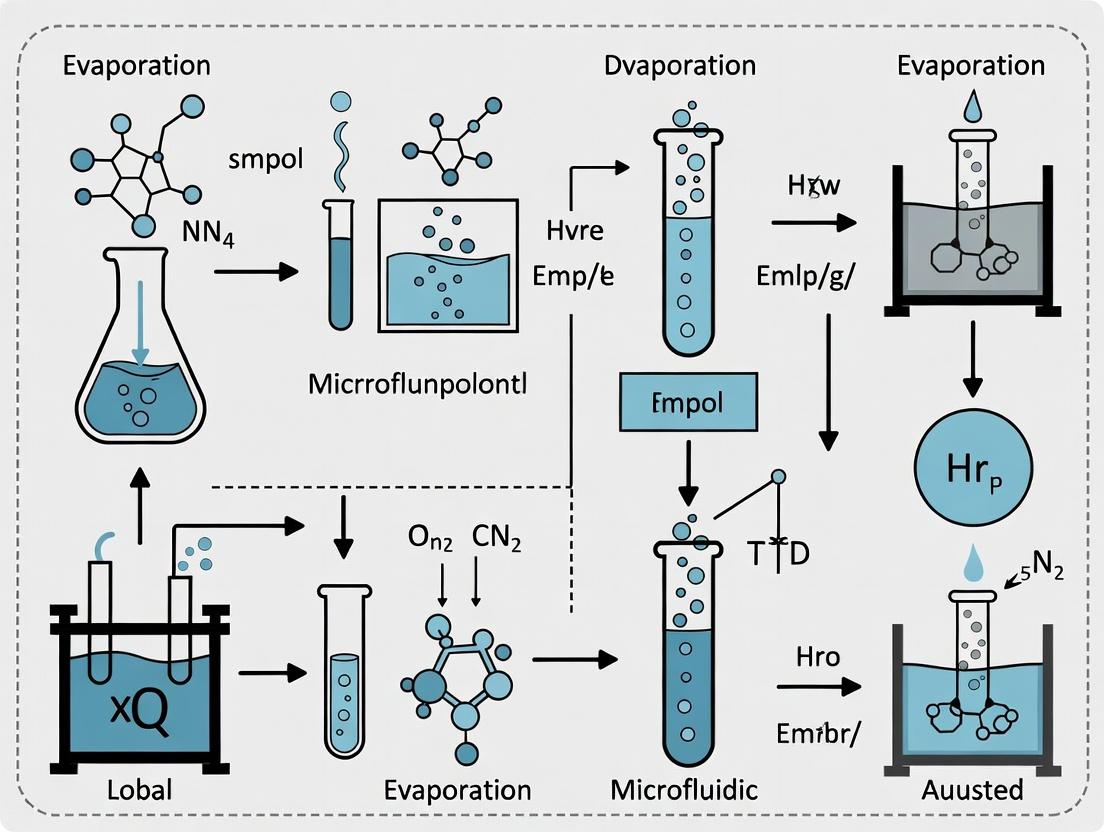
This article provides a comprehensive guide for researchers and drug development professionals on managing evaporation in long-term microfluidic experiments.
The Evaporation Challenge: Advanced Strategies for Reliable Long-Term Microfluidic Experiments in Biomedical Research
Abstract
This article provides a comprehensive guide for researchers and drug development professionals on managing evaporation in long-term microfluidic experiments. We explore the fundamental science of evaporation in microscale environments, detail current methodological solutions from passive incubation chambers to active humidity control systems, and offer practical troubleshooting frameworks. By comparing the efficacy, complexity, and cost of various anti-evaporation strategies, this review enables scientists to select and validate robust protocols, ensuring data integrity in critical applications such as organ-on-a-chip studies, continuous perfusion cell culture, and point-of-care diagnostic device development.
Why Evaporation Ruins Microfluidic Data: The Science and Scale of the Problem
Technical Support Center
Troubleshooting Guide
Q1: During a long-term perfusion experiment, the flow rate in my microfluidic channel gradually decreases and eventually stops after 48 hours. What is the cause and solution? A: This is a classic symptom of microscale evaporation, leading to bubble formation and meniscus recession. The primary cause is the saturation of the local environment with vapor, increasing vapor pressure and causing evaporation at the fluid-air interface (e.g., at reservoirs or open ports).
Protocol: Diagnosis and Mitigation
- Diagnosis: Use a high-speed camera (mounted on the microscope) to monitor the meniscus in the reservoir over 24 hours. Measure the recession rate.
- Immediate Action: Place a humidified chamber (e.g., a Petri dish with saturated Kimwipes) around the entire chip and reservoirs. Maintain at 37°C if needed.
- Long-term Solution: Implement oil overlays. Gently pipette 50 µL of fluorinated oil (e.g., FC-40) or dimethyl silicone oil onto the surface of your aqueous media in all open reservoirs. This creates a vapor-diffusion barrier.
- Verification: Under the microscope, confirm no oil has entered the main culture channels. Monitor flow stability for another 24 hours.
Q2: I observe unintended concentration of reagents or cells in specific regions of my device over time. How do I prevent this? A: This is due to the "coffee-ring effect," driven by evaporation-induced capillary flow. Evaporation at a pinned contact line causes outward flow to replenish the lost liquid, carrying solutes or cells to the edge.
Protocol: Minimizing Evaporative Concentration
- Device Design: If possible, design channels without open ends. Use closed-loop or recirculation systems.
- Environmental Control: Conduct experiments in an environmental chamber with controlled relative humidity (RH >95%). See Table 1 for data.
- Surface Treatment: Treat channel walls with a hydrophilic coating (e.g., Pluronic F-127) to reduce contact line pinning and allow the meniscus to recede uniformly.
- Additive: For non-biological applications, add a trace amount (0.1% v/v) of surfactant (e.g., Tween 20) to reduce surface tension gradient.
Q3: My calculations for diffusion coefficients are inaccurate in open-channel systems. Could evaporation be a factor? A: Absolutely. Evaporation creates a convective flow that superimposes on diffusion, leading to overestimation of mass transport rates.
Protocol: Correcting for Evaporative Flux
- Control Experiment: Perform an identical experiment in a humidity-controlled environment (RH >98%) to establish a baseline.
- Dye-Tracer Method: Introduce a non-volatile, non-diffusing fluorescent dye (e.g., 70 kDa FITC-Dextran) into your solution. Image the channel over time. Any movement of the dye front indicates convective flow from evaporation.
- Calculation Adjustment: Use the measured meniscus recession velocity (Vevap) to apply a correction factor to your diffusion model. The effective transport equation becomes *J = -D*(dc/dx) + C*Vevap*.
Frequently Asked Questions (FAQs)
Q: What is the most effective way to physically seal reservoirs for long-term (>1 week) experiments? A: A hybrid method works best:
- Apply a gas-permeable, water-impermeable membrane (e.g., PDMS layer, 1 mm thick) directly over the reservoir.
- Seal the edges of this membrane with a bead of vacuum grease or a non-absorbent, inert epoxy.
- Fill the headspace above the liquid with water-saturated, sterile air or inert gas before final sealing. This balances vapor pressure.
Q: How do I choose between an oil overlay and a humidity chamber? A: Refer to Table 2 for a comparison based on critical experimental parameters.
Q: Can I calculate the expected evaporation rate for my device geometry? A: Yes, using a simplified model based on Fick's first law. The evaporative mass flux (J, kg/m²s) is approximated by: J = (D_v * ΔC) / L Where D_v is the diffusivity of vapor in air (~2.5e-5 m²/s), ΔC is the vapor concentration difference between the liquid surface and ambient air, and L is the diffusion path length (reservoir depth). See Table 3 for sample calculations.
Data Presentation
Table 1: Impact of Relative Humidity on Evaporation Rate in a 5 µL Reservoir
| Relative Humidity (%) | Ambient Temp (°C) | Meniscus Recession Rate (µm/hr) | Time to 50% Volume Loss (hr) |
|---|---|---|---|
| 30 | 25 | 25.4 | 39.4 |
| 60 | 25 | 12.1 | 82.6 |
| 90 | 25 | 2.5 | 400.0 |
| 99 | 37 | 0.8 | 1250.0 |
Data sourced from current literature on open-microwell evaporation dynamics.
Table 2: Oil Overlay vs. Humidity Chamber for Evaporation Control
| Method | Effectiveness (Evap. Reduction) | Best For | Key Drawback |
|---|---|---|---|
| Oil Overlay | >95% | Long-term cell culture, high-throughput plate experiments | Risk of oil ingress; may absorb hydrophobic compounds. |
| Humidity Chamber | 80-90% | Imaging-heavy protocols, sensitive biologicals | Condensation on optics; difficult to access device. |
| Combined | >99% | Critical long-term (>1 week) perfusion studies | Increased protocol complexity. |
Table 3: Calculated Evaporative Flux for Common Solvents in Microfluidics
| Solvent | Vapor Pressure at 25°C (kPa) | Surface Tension (mN/m) | Calculated Initial Flux, J (µg/mm²·min) |
|---|---|---|---|
| Water | 3.17 | 72.8 | 0.11 |
| Ethanol | 7.87 | 22.1 | 0.87 |
| PDMS (Sylgard) | ~0.001 (cured) | ~20 | <0.0001 |
| FC-40 Oil | 0.00028 | 16 | ~0 |
Flux calculation assumes still air, 25°C, 50% RH, and an infinite planar surface.
Experimental Protocol: Quantifying Meniscus Recession
Objective: To directly measure the evaporation rate from an open microfluidic reservoir.
Materials: (See Scientist's Toolkit below) Methodology:
- Fill the device's inlet reservoir with your experimental fluid spiked with 0.01% w/v fluorescent nanobeads (500 nm).
- Place the chip on the microscope stage. Focus on the edge of the reservoir where the liquid meets the wall (the contact line).
- Using time-lapse microscopy, capture an image of this interface every 5 minutes for 24 hours.
- Using image analysis software (e.g., ImageJ), track the position of the contact line relative to a fixed feature on the chip.
- Plot position vs. time. The slope of the linear region is the meniscus recession velocity (µm/hr).
- Multiply by the reservoir's cross-sectional area to obtain volumetric evaporation rate.
Visualizations
Title: Evaporation Mitigation Decision Pathway
Title: Coffee-Ring Effect Mechanism
The Scientist's Toolkit: Research Reagent Solutions
| Item & Example Product | Function in Evaporation Control |
|---|---|
| Fluorinated Oil (FC-40, FC-70) | Forms a dense, inert, non-miscible overlay with very low vapor pressure, creating a near-perfect evaporation barrier for aqueous solutions. |
| Dimethyl Silicone Oil (50 cSt) | A cheaper alternative to fluorinated oils for some applications; forms a stable overlay but may absorb small hydrophobic molecules. |
| Humidity Chamber (PeCon, Okolab) | Encloses the entire microscope stage, allowing precise control of temperature and relative humidity (>95%) to minimize vapor pressure deficit. |
| Gas-Permeable Lid (Dunn Dish Lid) | Allows for gas exchange (O₂/CO₂) while significantly reducing evaporation in multi-well plates, compatible with live-cell imaging. |
| Pluronic F-127 Surfactant | Aqueous solution used to coat channels. Reduces contact line pinning, promoting uniform meniscus recession and mitigating coffee-ring effects. |
| Vacuum Grease (Apiezon L) | Used for creating reversible, water-tight seals around reservoir covers or between device layers, impermeable to water vapor. |
| Water-Saturated, Inert Gas (N₂) | When bubbled into headspace, it equalizes vapor pressure, eliminating the driving force for evaporation without altering pH or oxygen tension. |
Troubleshooting Guides & FAQs
Q1: How do temperature fluctuations cause inconsistent evaporation rates in my microfluidic device, and how can I stabilize them? A: Temperature changes directly affect the vapor pressure of your reagents. A 5°C increase can increase the evaporation rate by 20-30%. Stabilization requires both environmental and device-level control.
- Protocol: Place the entire setup in an incubator or on a thermally regulated stage. For the device, integrate an on-chip temperature sensor (e.g., a thin-film platinum resistor) paired with a PID controller to maintain temperature within ±0.5°C of your setpoint (e.g., 37°C).
- Data: The relationship between temperature and evaporation rate for water in a PDMS device is summarized below.
| Temp (°C) | Approx. Evaporation Rate Increase (vs. 20°C) | Recommended Control Method |
|---|---|---|
| 20 | Baseline | Ambient enclosure |
| 25 | +15% | Passive thermal box |
| 37 | +75% | Active PID-controlled stage/incubator |
| 45 | +120% | Active PID with pre-heated humidified gas |
Q2: My cell culture medium evaporates too quickly in the reservoir, concentrating salts and harming cells. How can I mitigate this? A: This is a classic high surface-to-volume (S/V) ratio issue. The reservoir's open air interface is the primary site of loss.
- Protocol: Implement a layered reservoir design. Top the medium with 2-3 mm of lightweight, water-immiscible oil (e.g., mineral oil). For a 100 µL reservoir in a 96-well plate format, this can reduce evaporation by over 95% over 72 hours. Ensure oil biocompatibility with your cells.
- Data: Evaporation reduction efficacy of common overlay solutions.
| Overlay Solution | Vapor Permeability | Evap. Reduction (72 hrs) | Biocompatibility Notes |
|---|---|---|---|
| None (Air) | High | 0% (Baseline) | N/A |
| Mineral Oil | Very Low | >95% | Excellent for most cell lines |
| PDMS Oil | Low | ~90% | Good, may absorb small molecules |
| Agarose Gel (1%) | Medium | ~70% | Excellent, allows gas exchange |
Q3: My device has long, meandering channels. Evaporation at the outlet creates unwanted backflow or stalls flow. How does channel geometry influence this? A: Evaporation at an open outlet creates a capillary pressure that acts against the driving pressure (e.g., syringe pump). This is exacerbated by small channel cross-sectional dimensions (high S/V) and long channel lengths.
- Protocol: Redesign the outlet geometry. Replace a simple open port with a large-volume (>50 µL) hydration bulb or bubble trap filled with humidified medium or a water-saturated sponge. This maintains vapor saturation at the terminus, eliminating the evaporative pressure gradient.
- Data: Impact of outlet design on flow stability in a 10 cm long, 100 µm x 100 µm channel driven at 100 nL/min.
| Outlet Design | Avg. Flow Rate Stability (over 24h) | Required Pump Pressure Increase |
|---|---|---|
| Open to Air (Simple Port) | ± 40% | >200% |
| Humidified Chamber | ± 15% | ~50% |
| Integrated Hydration Bulb | ± 5% | <10% |
Experimental Protocols
Protocol 1: Quantifying Device-Specific Evaporation Rate Objective: Measure the volumetric evaporation loss (nL/hr) for a specific device material and geometry under controlled conditions. Materials: Microfluidic device, syringe pump, high-precision analytical balance (±0.1 µg), humidification chamber, data logger.
- Load device with pure water or PBS. Connect inlet to a stopped syringe pump.
- Place the entire device on the analytical balance inside a humidity-controlled enclosure.
- Record the mass loss every minute for 60 minutes. Convert mass to volume (1 µL ≈ 1 mg).
- Plot volume vs. time; the slope is the evaporation rate (nL/hr). Repeat at different temperatures/humidities.
Protocol 2: Testing Hydration Barrier Efficacy Objective: Evaluate the performance of oils or gels as evaporation barriers. Materials: 96-well plate, test reagents (culture medium), overlay candidates (oils, gels), plate reader.
- Aliquot 100 µL of PBS into wells (n=6 per condition).
- Apply test overlays: None (control), 2 mm mineral oil, 2 mm PDMS oil, 1% agarose plug.
- Incubate plate at 37°C with 5% CO2 but without humidity control.
- Weigh plate every 24 hours for 3 days. Calculate % volume retained.
Protocol 3: Characterizing Evaporation-Induced Flow Objective: Visualize and measure flow stalling or backflow due to outlet evaporation. Materials: Microfluidic device with a single long channel, fluorescent beads, syringe pump, confocal or time-lapse microscope.
- Stop pump after establishing a stable bead flow.
- Image the bead front near the outlet over time.
- Track the displacement of the bead front. Movement toward the inlet indicates backflow from outlet evaporation. Quantify the backflow velocity (µm/s).
Visualizations
Title: Troubleshooting Evaporation in Microfluidic Experiments
Title: Step-by-Step Evaporation Mitigation Workflow
The Scientist's Toolkit: Key Research Reagent Solutions
| Item | Function in Evaporation Control | Example/Note |
|---|---|---|
| Water-Immiscible Oil | Forms a vapor barrier over open reservoirs. | Mineral oil (lightweight, sterile-filtered). |
| Humidified Air/ Gas Mix | Saturates environment around device to reduce vapor pressure gradient. | 95-100% RH, often with 5% CO2 for cell culture. |
| Agarose (Low Gelling Temp) | Creates a porous, hydrating plug at outlets or reservoirs. | Allows gas exchange while limiting liquid evaporation. |
| Permeable Membrane | Seals channels while allowing gas exchange for cell culture. | PDMS, PTFE; critical for organs-on-chip. |
| On-Chip Humidity Sensor | Monitors local vapor pressure within microchannels. | Thin-film capacitive or resistive sensors. |
| Pre-Hydrated PDMS | Reduces water absorption-driven volume loss from channels. | Soak device in PBS >24h before experiment. |
| Vapor-Tight Enclosure | Physically contains humidified atmosphere around setup. | Acrylic box with sealed ports for tubing. |
Technical Support Center
Troubleshooting Guides & FAQs
Q1: My cell viability drops significantly after 24 hours in my long-term perfusion culture. I suspect osmolarity changes. How can I confirm and mitigate this?
- A: Evaporation from reservoirs or even through permeable device materials is a primary cause of osmolarity increase. To confirm, use an osmometer to measure the effluent medium versus fresh reservoir medium. A shift >20 mOsm/kg is problematic.
- Mitigation Protocol:
- Use of Evaporation Barriers: Place a layer of immiscible, water-saturated oil (e.g., mineral oil) over all open fluid reservoirs.
- Humidified Chamber: Enclose the entire microfluidic setup in a custom or commercial humidified chamber maintained at >95% relative humidity.
- Closed Reservoir Systems: Implement sealed, pressurized reservoir systems with gas-permeable, water-impermeable membranes.
- Osmotic Ballast: For very long runs (>3 days), consider adding a small, non-toxic osmotic balast (e.g., 0.5-1% glycerol) to the medium to buffer against proportional concentration shifts.
Q2: I observe unpredictable or pulsatile flow rates over time in my pressure-driven system, affecting shear stress. What is the likely cause and solution?
- A: This is a classic symptom of evaporation from upstream fluidic components, leading to bubble formation or meniscus regression in tubing, which alters system resistance.
- Troubleshooting Steps:
- Inspect All Liquid-Air Interfaces: Check for droplet formation or meniscus movement at tubing connections, inline bubbles, and media reservoirs.
- Implement Liquid-Liquid Interfaces: Use water-equilibrated oil layers in all source and waste wells to eliminate direct air contact.
- Use Non-Permeable Tubing: Replace standard silicone (highly gas-permeable) with fluorinated ethylene propylene (FEP) or Viton tubing for long-term experiments.
- Monitor Actively: Integrate inline flow sensors for continuous feedback, or use time-lapse imaging of a dye front or beads to calculate drift.
Q3: Unexpected micro-precipitates are forming in my channels or at cell injection ports during extended experiments. What triggers this and how can I prevent it?
- A: Precipitate formation often results from localized concentration of salts or biomolecules due to evaporation at open ports, or incompatible reagent mixing.
- Prevention Guide:
- Port Design: Always cap unused ports with sealed plugs. For active ports, use sealed, septum-style injectors.
- Reagent Compatibility: Ensure all buffers and media are fully filtered (0.22 µm) and compatible. Phosphate buffers are particularly prone to Ca²⁺/Mg²⁺ precipitate formation.
- Priming Protocol: Prior to cell introduction, flush the system thoroughly with particle-free buffer/medium and inspect channels under high magnification.
- Chemical Treatment: For protein adsorption, pre-treat channels with Pluronic F-127 (0.1%) or bovine serum albumin (BSA, 1%) to passivate surfaces.
Data Summary: Impact of Uncontrolled Evaporation
Table 1: Measured Consequences of Evaporation in Microfluidic Systems
| Parameter | Control Condition | With 10% Volume Loss (Simulated Evaporation) | Measurement Method | Typical Timeframe |
|---|---|---|---|---|
| Medium Osmolarity | 310 mOsm/kg | 341 mOsm/kg (+10%) | Freezing-point osmometer | 48 hours |
| Flow Rate Drift (Pressure-driven) | 100 µL/hr steady | 72-115 µL/hr (variable) | Inline flow sensor | 24 hours |
| Shear Stress Variation | 1.0 ± 0.05 dyn/cm² | 0.7 - 1.4 dyn/cm² | Computational modeling + bead tracking | 24 hours |
| Precipitate Formation Score | 0 (none visible) | 3 (numerous micro-crystals) | Brightfield microscopy count | 72 hours |
Experimental Protocols
Protocol 1: Quantifying Osmolarity Shift.
- Objective: Measure the increase in medium osmolarity due to evaporation in a open-well microfluidic plate.
- Materials: Microfluidic device on-stage incubator, control medium, freezing-point depression osmometer, sterile PCR tubes.
- Method:
- Aliquot fresh medium from the reservoir into a labeled PCR tube (Time=0 sample).
- Load device and run experiment under standard conditions for desired duration (e.g., 24, 48, 72h).
- Carefully collect effluent medium from the device outlet into a new PCR tube.
- Calibrate osmometer with standard solutions.
- Measure osmolarity for both Time=0 and effluent samples in triplicate.
- Calculate the mean and standard deviation. A >5% increase is significant for most cell types.
Protocol 2: Visualizing and Quantifying Precipitate Formation.
- Objective: Assess the degree of particulate formation in channels under different evaporation mitigation strategies.
- Materials: Phase-contrast or high-resolution brightfield microscope, microfluidic devices, image analysis software (e.g., ImageJ/Fiji).
- Method:
- Run two identical devices in parallel: one with standard open reservoirs (Test), one with oil-overlay or in a humidified chamber (Control).
- At set time intervals (e.g., every 12h), acquire 10-20 high-magnification, non-overlapping images of the main channel and junction areas per device.
- Process images: Apply a bandpass filter to remove background unevenness, then set a consistent threshold to identify particles.
- Use the "Analyze Particles" function to count particles per image field.
- Report data as mean particles/mm² of channel area for each condition and time point.
Diagrams
Title: Primary Consequences of Experimental Evaporation
Title: Sequential Evaporation Mitigation Workflow
The Scientist's Toolkit: Essential Reagent Solutions
Table 2: Key Materials for Evaporation Control & Troubleshooting
| Reagent/Material | Function | Example/Concentration |
|---|---|---|
| Water-Saturated Mineral Oil | An immiscible evaporation barrier for open wells. Prevents water vapor loss while allowing gas (O₂/CO₂) exchange. | Sterile-filtered, equilibrated in cell culture incubator for >24h before use. |
| Pluronic F-127 | A non-ionic surfactant used for channel passivation. Reduces non-specific adsorption of proteins and biomolecules, mitigating nucleation sites for precipitates. | 0.1% w/v in PBS or medium, flush system for 1h before experiment. |
| Fluorinated Ethylene Propylene (FEP) Tubing | Low gas-permeability tubing for pressure-driven systems. Dramatically reduces oxygen/water vapor transmission compared to silicone, minimizing bubble formation. | Various inner/outer diameters, opaque white color. |
| Humidity Chamber | A sealed enclosure to maintain local relative humidity near 100%. Can be custom-built from acrylic or purchased. | Include a saturated salt solution or electrical humidifier for control. |
| In-line Flow Sensor | Provides real-time, quantitative feedback on flow rate stability, directly detecting drift caused by evaporation or blockages. | Microfluidic capacitive or thermal sensors (nL/min to µL/min range). |
| Osmolarity Standard Solutions | Calibrants for verifying osmometer performance. Critical for obtaining accurate, reproducible measurements of medium concentration shifts. | Typically 50, 290, and 1000 mOsm/kg standards. |
Technical Support Center: Troubleshooting & FAQs
Q1: What are the primary signs that evaporation is affecting my 7-day Organ-on-a-Chip assay?
A: Key indicators include:
- A measurable increase in the osmolarity of the media in the reservoir (e.g., >15 mOsm/kg/day increase).
- A progressive, non-physiological increase in the concentration of waste products (e.g., lactate, ammonia).
- A visible decrease in the volume of media in open reservoirs or bubble traps.
- Cell death (reduced viability) or altered phenotype that initiates after 48-72 hours and worsens over time, particularly at the microfluidic channel inlets/outlets.
- Increased shear stress due to meniscus recession and changing fluid column heights.
Q2: How can I quantitatively measure evaporation rates in my specific microfluidic device?
A: Implement the following protocol:
- Setup: Fill your organ-chip device with sterile PBS or culture medium. Connect it to the perfusion system as you would for a cell culture experiment.
- Conditioning: Place the entire system in a standard cell culture incubator (37°C, 5% CO₂, 95% humidity).
- Weighing Protocol: At defined intervals (e.g., 0, 24, 48, 72, 96, 120, 144, 168 hours), quickly remove the media reservoir(s) from the system.
- Measurement: Wipe the exterior dry and weigh it on an analytical balance. Record the mass.
- Calculation: The change in mass (Δm) over time (Δt) is the evaporation rate. Account for medium density (~1.003 g/mL for aqueous solutions) to convert mass loss to volume loss.
Table 1: Typical Evaporation Rates and Impacts in Standard Incubator Conditions
| Device Reservoir Type | Avg. Evaporation Rate (µL/day) | Osmolarity Increase after 7 Days (mOsm/kg) | Projected Viability Impact at Day 7 |
|---|---|---|---|
| Open-well (Polystyrene, 1 mL vol) | 150 - 300 | +80 to +150 | Severe (>50% loss) |
| Semi-open (with lid, no seal) | 50 - 100 | +25 to +50 | Moderate (30-50% loss) |
| Sealed with gas-permeable membrane | 10 - 30 | +5 to +15 | Mild (<20% loss) |
| Humidified chamber enclosure | < 10 | < 5 | Minimal |
Q3: What are the most effective physical mitigation strategies for evaporation?
A: A layered approach is most effective:
- Primary Barrier: Use gas-permeable, water-impermeable sealing membranes (e.g., PDMS, PTFE) over all fluid reservoirs.
- Secondary Enclosure: Place the entire organ-chip platform within a secondary humidified chamber inside the incubator. A simple dish with sterile water-saturated towels can increase local humidity to >95%.
- Media Supplementation: Implement a scheduled media replenishment protocol that accounts for expected evaporative loss (e.g., add 50 µL of sterile water or 60% of lost volume as fresh medium daily to maintain osmolarity). Caution: This dilutes secreted factors.
- System Design: Utilize closed-loop perfusion systems with bubble traps that are sealed or have minimized air-liquid interfaces.
Experimental Protocol: Osmolarity Monitoring for Evaporation Control
- Objective: To track and correct for media concentration shifts during a 7-day experiment.
- Materials: Micro-osmometer, sterile water or isosmotic supplement, micropipettes.
- Procedure:
- At each medium change/sampling point, collect a 50 µL aliquot from the main reservoir.
- Measure osmolarity immediately or store at 4°C for batch analysis.
- If osmolarity exceeds baseline by >20 mOsm/kg, calculate the volume of sterile water required to restore original concentration:
V_add = V_current * (Os_measured / Os_desired - 1). - Aseptically add the calculated volume of sterile, endotoxin-free water to the reservoir. Mix gently if possible.
Q4: How does evaporation chemically compromise cell viability beyond simple dehydration?
A: Evaporation drives hypertonic stress, activating specific cell death and inflammation pathways.
Diagram Title: Signaling Pathways Linking Evaporation to Cell Death
Q5: What are common pitfalls when trying to seal devices, and how can I avoid them?
A:
- Pitfall 1: Complete hypoxia. Sealing with an impermeable material (e.g., glass, acrylic) blocks O₂/CO₂ exchange.
- Solution: Use gas-permeable silicone membranes or adhesives.
- Pitfall 2: Introducing contamination.
- Solution: Perform all sealing steps in a sterile laminar flow hood using sterile materials (pre-autoclaved PDMS, ethanol-sterilized films).
- Pitfall 3: Creating bubbles during sealing. Trapped bubbles can block microchannels.
- Solution: Seal one port at a time, or perform sealing with channels filled with liquid.
The Scientist's Toolkit: Key Research Reagent Solutions
Table 2: Essential Materials for Evaporation Control in Long-Term OoC Assays
| Item | Function & Rationale |
|---|---|
| Gas-Permeable Sealing Membranes (e.g., PDMS sheets, PTFE film) | Creates a primary physical barrier against water vapor loss while permitting essential O₂/CO₂ exchange for cell respiration and pH balance. |
| Micro-Osmometer | Enables precise, repeatable measurement of media osmolarity from small sample volumes (≤50 µL), providing the key quantitative readout for evaporation. |
| Humidity-Buffering Trays (e.g., sealed plastic containers with sterile water reservoirs) | Creates a secondary, high-humidity microenvironment around the entire chip setup, drastically reducing the evaporation gradient. |
| Water-for-Injection (WFI) Grade Sterile Water | Used for osmolarity correction without introducing contaminants, ions, or endotoxins that could affect cell response. |
| Peristaltic or Syringe Pumps with Feedback | Enables precise, continuous perfusion. Closed-loop systems recirculate medium, minimizing the volume in open reservoirs. |
| Liquid Surfactants (e.g., Pluronic F-68) | Added to medium to reduce surface tension, minimizing meniscus recession in channels and associated shear stress changes. |
Diagram Title: Workflow for Evaporation Control in 7-Day Assays
Practical Solutions: A Toolkit for Evaporation Control in Your Lab
Technical Support Center: Troubleshooting & FAQs
This support center addresses common issues encountered when implementing passive evaporation-control methods in long-term microfluidic cell culture and assay experiments. These methods are critical for maintaining medium osmolality and preventing meniscus collapse over days to weeks.
Frequently Asked Questions (FAQs)
Q1: My reservoir medium is depleting faster than predicted, causing channel dehydration. What could be wrong? A: This indicates an imbalance between vapor pressure and reservoir capacity. First, verify the humidity and temperature of your incubator; standard 37°C, 5% CO₂ incubators often have low relative humidity (<80%). Ensure the reservoir volume is at least 10x the calculated evaporation loss for your experiment's duration. Use the table below to check your setup against standard parameters.
Q2: I applied an oil overlay, but my cells are hypoxic or not proliferating. How do I correct this? A: This is a common issue with improper oil selection. Not all oils are gas-permeable enough for cell culture. Switch to a high-grade, sterile mineral oil or a specific gas-permeable fluorocarbon oil designed for microfluidics. Ensure the oil layer is no thicker than 5 mm. See the "Research Reagent Solutions" table for recommended products.
Q3: After sealing my incubation chamber, I observe pH drift in the medium. How can I maintain pH stability? A: Sealed chambers can trap CO₂, altering carbonic acid equilibrium. Use a medium with a robust buffering system (e.g., HEPES buffer at 25 mM final concentration in addition to bicarbonate). For CO₂-dependent cells, integrate a small, gas-permeable membrane (e.g., PDMS) window in your sealed chamber design to allow for gas exchange while minimizing evaporation.
Q4: How do I choose between an oil overlay and a sealed chamber for my 7-day co-culture experiment? A: The choice depends on your sampling needs and cell type. Oil overlays are excellent for preventing evaporation while allowing direct physical access (e.g., for pipetting) if the oil is displaced. Sealed chambers are superior for absolute evaporation control and physical stability but require pre-planning for any medium changes. Refer to the Comparative Data table for guidance.
Q5: Contamination (fungal/bacterial) appears under the oil overlay. How can I prevent this? A: Sterility is paramount. Always use sterile, filtered oil. Perform the overlay in a laminar flow hood. Consider adding 0.5% (v/v) Penicillin-Streptomycin to the medium, though this may not be suitable for all experiments. Ensure your microfluidic device and reservoirs are autoclaved or ethanol-sterilized prior to use.
Troubleshooting Guides
Issue: Rapid Evaporation in Reservoir Channels
- Symptoms: Media meniscus recedes from channel inlets/outlets, increased channel wall staining, increased solute concentration.
- Possible Causes & Solutions:
- Cause: Low humidity environment. Solution: Place the entire device in a secondary, humidified container (e.g., a Petri dish with wet kimwipes) within the incubator.
- Cause: Excessive air flow over reservoir openings. Solution: Relocate device away from incubator fan vents; use a smaller, still-air incubator if available.
- Cause: Reservoir surface area too large relative to volume. Solution: Redesign reservoir to be deeper with a smaller opening, or use a compliant reservoir material (like a PDMS bladder) that collapses as fluid is lost.
Issue: Oil Incursion into Microfluidic Channels
- Symptoms: Oil visible in main culture channels, cells detaching or morphologically abnormal.
- Possible Causes & Solutions:
- Cause: Incorrect oil viscosity or surface tension. Solution: Use a higher viscosity (e.g., 50 cSt) silicone or mineral oil. Pre-wet channels with medium thoroughly before adding oil.
- Cause: Pressure imbalance during overlay. Solution: Apply oil gently at the reservoir edge. Ensure device and oil are at the same temperature to prevent bubble formation.
- Cause: Channel opening design. Solution: Design channels with a sudden constriction or lip at the reservoir junction to provide a capillary barrier.
Table 1: Evaporation Rate Comparison of Passive Methods
| Method | Avg. Evaporation Rate (µL/day per 10 mm² surface) | Typical Max Duration (days) | Relative Cost | Ease of Access |
|---|---|---|---|---|
| Open Reservoir (Control) | 25 - 40 | 2-3 | $ | Excellent |
| Agarose/PEG Reservoir Media | 5 - 10 | 7-10 | $$ | Good |
| Mineral Oil Overlay | 1 - 3 | 14-21 | $$ | Moderate* |
| Sealed Incubation Chamber | 0.1 - 0.5 | 30+ | $$$ | Poor |
*Access requires moving/displacing the oil layer.
Table 2: Impact on Cell Culture Health (Typical Mammalian Cells)
| Method | pH Stability | Osmolality Change per Day | Gas Exchange (O₂/CO₂) | Risk of Contamination |
|---|---|---|---|---|
| Open Reservoir | Poor | High (+5-10 mOsm/day) | Excellent | High |
| Agarose/PEG Reservoir | Good | Moderate (+1-2 mOsm/day) | Good | Moderate |
| Mineral Oil Overlay | Excellent | Very Low (<+0.5 mOsm/day) | Moderate | Low-Moderate |
| Sealed Chamber | Variable* | Negligible | Poor** | Very Low |
Dependent on oil type and thickness. Requires integrated buffer or gas-permeable window. *Unless designed with gas-permeable membranes.
Experimental Protocols
Protocol 1: Applying a Mineral Oil Overlay for a 96-Hour Perfusion Culture
- Objective: To prevent evaporation from media reservoirs during a long-term microfluidic experiment without impeding diffusive gas exchange.
- Materials: Sterile, light mineral oil (e.g., Sigma-Aldrich M8410), microfluidic device filled with culture medium, sterile pipette and tips.
- Procedure:
- Place the filled microfluidic device in the incubator (37°C, 5% CO₂) for at least 1 hour to allow temperature and pH equilibration.
- In a biosafety cabinet, gently warm the bottle of sterile mineral oil to 37°C in a water bath.
- Using a sterile pipette, slowly draw up 1 mL of warm oil.
- Tilt the microfluidic device at a 45-degree angle. Gently dispense the oil onto the lower edge of each media reservoir, allowing it to flow over the entire liquid surface. Avoid introducing bubbles.
- Aim for a final oil layer thickness of 3-5 mm over each reservoir.
- Return the device to the incubator for the duration of the experiment.
Protocol 2: Creating and Using a Sealed Humidified Incubation Chamber
- Objective: To create a zero-evaporation environment for extended observation (>1 week).
- Materials: Air-tight container (e.g., plastic box with gasket), humidity source (saturated salt solution or water with antimicrobial like 0.002% sodium azide), gas-permeable membrane (optional), CO₂-independent medium or HEPES buffer.
- Procedure:
- Place the humidity source (e.g., a small open petri dish filled with saturated KCl solution for ~85% RH) in the bottom of the airtight container.
- If using a gas-permeable membrane, cut a window in the container lid and affix the membrane sealantly.
- Fill the microfluidic device with CO₂-independent medium (e.g., Leibovitz's L-15) or medium supplemented with 25 mM HEPES.
- Place the device inside the container, ensuring it is not in direct contact with the liquid humidity source.
- Seal the container lid. If no gas-permeable membrane is used, pre-equilibrate the internal atmosphere with 5% CO₂ in air before sealing.
- Place the entire sealed chamber in a temperature-controlled environment (37°C).
Diagrams
Title: Decision Tree for Selecting a Passive Evaporation Control Method
Title: Oil Overlay Application Workflow
The Scientist's Toolkit: Research Reagent Solutions
Table 3: Essential Materials for Evaporation Control
| Item Name & Example | Function in Experiment | Key Considerations |
|---|---|---|
| Light Mineral Oil (Sterile)e.g., Sigma-Aldrich M8410 | Forms a gas-permeable, immiscible barrier over aqueous media reservoirs to drastically reduce evaporation. | Viscosity (~35 cSt); ensure sterile filtration (0.22 µm) and biocompatibility testing. |
| Gas-Permeable Fluorocarbon Oile.g., FC-40 (3M) | Alternative overlay oil with high O₂/CO₂ solubility, excellent for sensitive hypoxia studies. | Very low viscosity; may require surfactants for droplet-based systems. High cost. |
| HEPES Buffer (1M Solution)e.g., Gibco 15630080 | Provides pH stabilization in sealed systems or low-CO₂ environments by acting as a zwitterionic biological buffer. | Final concentration typically 10-25 mM. Can be cytotoxic at very high levels (>50 mM). |
| High-Grade Agarosee.g., LonSeaPlaque 50101 | Used to create hydrogel plugs or reservoir matrices that slow water vapor diffusion. | Use low-gelling temperature agarose at 0.5-2.0% w/v in culture medium. |
| PDMS Membrane (100 µm thick)e.g., Bisco SIBS film | Integrated into sealed chambers as a gas-permeable window to allow O₂/CO₂ exchange while blocking vapor loss. | High permeability to gases, low permeability to water vapor. Biocompatible and sterilizable. |
| Humidity Control Salt (KCl)e.g., Saturated KCl solution | Creates a stable, known relative humidity (~85%) within a sealed incubation chamber. | Prevents both evaporation and condensation. Use antimicrobial agent in water if needed. |
Frequently Asked Questions (FAQs)
Q1: Why is active humidity control critical for long-term microfluidic experiments, especially in drug development? A1: Evaporation from microfluidic reservoirs over extended periods (hours to days) alters solute concentration, flow rates, and osmotic pressure, invalidating quantitative data on cell behavior or drug response. Active humidification stabilizes the vapor pressure deficit, preventing evaporation and ensuring experimental integrity over 24-72 hour assays.
Q2: Our commercial humidifier (e.g., HCP series, Mediprint) connected to a custom acrylic enclosure produces condensation on the chamber walls. How do we mitigate this? A2: Condensation indicates local temperature is below the dew point. Implement a two-stage control loop:
- Primary PID Control: Use the humidifier's sensor to maintain RH at 95-98% (not 100%).
- Secondary Thermal Control: Integrate a low-power heating element (e.g., resistive wire) along the base of the enclosure, regulated by a separate thermostat to keep the enclosure walls 1-2°C above the internal air temperature.
Q3: When integrating a sensor (e.g., Sensirion SHT40) for feedback control, where should it be placed for accurate readings? A3: Place the sensor inside the microfluidic device's primary reservoir or immediately above the culture region within the enclosure. Avoid placement near the humidifier inlet or exhaust vents. Use a sensor with ±1.5% RH accuracy and sample at ≥1 Hz for PID loop stability.
Q4: Our custom enclosure (made of PMMA) shows a slow humidity rise time (>30 mins) to reach 95% RH. How can we improve response? A4: Slow rise time is often due to air exchange or material absorption.
- Sealing: Use silicone gaskets and magnetic locks. Line internal seams with closed-cell foam tape.
- Humidifier Specs: Ensure the humidifier's output volume (e.g., mL/hr) exceeds the enclosure's internal volume by a factor of 1.5-2. For a 10L enclosure, use a humidifier with a capacity of 15-20 mL/hr.
- Pre-conditioning: Pre-humidify the enclosure for 60 minutes before introducing the microfluidic device.
Q5: We observe salt crystallization or particle deposition from the humidifier's output onto our chip. What is the cause and solution? A5: This is caused by using tap or deionized water. Dissolved solids aerosolize and deposit. Implement a two-step filtration protocol:
- Source Water: Use only ultrapure, Type I laboratory water (18.2 MΩ·cm).
- In-line Filter: Install a 0.22 μm hydrophobic PTFE membrane filter (e.g., Millex-FG50) at the humidifier's outlet nozzle to capture any aerosols or tank-derived particulates.
Troubleshooting Guides
Issue: Unstable Humidity Readings Causing Oscillatory Control
Symptoms: Relative Humidity (RH) fluctuates by >±5% around the setpoint, causing visible media evaporation/condensation cycles. Diagnosis & Resolution:
| Probable Cause | Diagnostic Step | Solution |
|---|---|---|
| Sensor Placement | Log data from sensor at chip vs. enclosure corner. | Relocate sensor per FAQ A3. Use a small fan (5V DC) for gentle air circulation (<0.5 m/s) to eliminate gradients. |
| Aggressive PID Gains | Observe system response to a step change (70% to 95% RH). | Tune PID parameters: Start with low P (proportional), high I (integral) time. Typical values: P=1.5, I=0.1 min⁻¹, D=0. |
| Humidifier Overshoot | Check humidifier's minimum duty cycle. | If the unit cannot modulate below a minimum output, add a solenoid-valved bypass duct to vent excess humidity. |
Issue: Bacterial or Fungal Growth in Humidifier or Enclosure
Symptoms: Visible biofilm in humidifier tank or on enclosure walls, risking contamination. Diagnosis & Resolution:
| Probable Cause | Diagnostic Step | Solution |
|---|---|---|
| Non-sterile Water Source | Inspect tank and tubing. | Use sterile, filtered Type I water. Add 0.001% v/v laboratory-grade biocide (e.g., ProClin 300) to the humidifier tank. CAUTION: Ensure biocide is non-volatile and will not affect cells. |
| Stagnant Water in Enclosure | Check for pooled condensation. | Adjust thermal control (see FAQ A2) to eliminate condensation. Design enclosure with a slight slope (2°) to drain any condensate to an absorbent pad. |
| Unsterilized Enclosure | Swab test interior surfaces. | Before each experiment, sterilize the enclosure with 70% ethanol vapor for 30 minutes, followed by UV-C irradiation (254 nm) for 20 minutes. |
Experimental Protocol: Validating Humidity Control for a 72-Hour Perfusion Culture
Objective: To quantify evaporation suppression in a microfluidic perfusion culture under active humidity control versus a standard incubator.
Materials:
- Microfluidic PDMS device with two 2 mL media reservoirs.
- Custom acrylic enclosure (15L volume) with integrated sensor port.
- Commercial ultrasonic humidifier (e.g, DriSteem Ultrasonic Mini).
- PID controller (e.g., Omega CNi16D).
- High-accuracy RH/T sensor (e.g., Sensirion SHT40).
- Analytical balance (0.1 mg readability).
Procedure:
- Calibration: Calibrate the RH sensor against a NIST-traceable salt standard (75% RH) for 24 hours.
- Setup: Place the microfluidic device inside the enclosure on the balance. Connect media reservoirs to inlet tubing. Seal the enclosure.
- Control Group (Uncontrolled): Place an identical setup in a standard cell culture incubator (37°C, 5% CO₂, ambient RH ~60%).
- Test Group (Controlled): Activate the humidifier and PID controller with a setpoint of 97% RH at 37°C. Activate the secondary wall heating at 38.5°C.
- Data Collection: Record reservoir weight from the balance and chamber RH every 15 minutes for 72 hours. Maintain perfusion at 0.5 µL/min.
- Analysis: Calculate evaporation rate (µL/hr) from mass loss. Compare final solute concentration (via conductivity measurement) between control and test reservoirs.
Quantitative Data Summary:
| Condition | Avg. Evaporation Rate (µL/hr) | Final Concentration Increase | RH Stability (±SD) |
|---|---|---|---|
| Standard Incubator (60% RH) | 42.7 µL/hr | 28.5% | Not Applicable |
| Active Control (97% RH Setpoint) | 1.2 µL/hr | 0.8% | 96.8% ± 0.9% |
| Improvement Factor | ~35x reduction | ~35x reduction | -- |
The Scientist's Toolkit: Research Reagent & Material Solutions
| Item | Function & Rationale |
|---|---|
| ProClin 300 (Supelco) | A low-toxicity, broad-spectrum biocide. Used at 0.001-0.01% in humidifier water reservoirs to prevent biofilm formation without releasing volatile compounds that could affect sensitive cell cultures. |
| Sylgard 184 Silicone Encapsulant | Used to create airtight gaskets and seals around sensor ports and access holes on custom enclosures. Provides a chemically inert, flexible, and durable seal. |
| Ultrapure Type I Laboratory Water | 18.2 MΩ·cm, filtered through 0.22 µm. The essential solvent for humidification, ensuring no particulates or ionic contaminants are aerosolized onto microfluidic systems. |
| PTFE Hydrophobic Membrane Filter (0.22 µm pore) | Installed in-line at the humidifier outlet. Acts as a final barrier to aerosolized particulates and any potential biological contaminants from the reservoir, protecting the sterile field. |
| Black Anodized Aluminum Sheet | Used as a thermally conductive lining for the bottom of the enclosure. Promotes even heat distribution from low-power resistive heaters to eliminate cold spots and control dew point. |
System Integration & Control Logic Diagram
Title: Active Humidity Control System Workflow
Evaporation Impact & Mitigation Pathway
Title: Evaporation Consequences and Control Solution
Technical Support Center
Troubleshooting Guide
Issue 1: Increased Evaporation Rate in Coated Device
- Problem: Despite applying a vapor-barrier coating, evaporation rate exceeds 5% over 72 hours.
- Diagnosis: Likely causes are an insufficient coating thickness, coating degradation, or improper application leaving pinholes.
- Solution: Verify coating protocol. Ensure spin-coat speed and time are precise. Inspect for defects under microscope. Reapply coating, ensuring a clean, dust-free environment. Curing parameters (time/temperature) must be strictly followed.
Issue 2: Bubble Formation in Closed-Loop System
- Problem: Bubbles appear in microchannels, occluding flow and disrupting assays.
- Diagnosis: Typically caused by: 1) Temperature fluctuations, 2) Permeation of gases through polymer (e.g., PDMS), 3) Leaks at tubing connections.
- Solution: Implement a temperature control stage (±0.5°C). Use gas-impermeable substrates (e.g., COC, PMMA) or barrier-coated PDMS. Check all fittings; use degassed solutions. Integrate an inline bubble trap.
Issue 3: Drift in Concentration in Long-Term Perfusion
- Problem: Measured analyte concentration drifts over time despite constant input.
- Diagnosis: Evaporative loss is altering hydrostatic pressure and flow dynamics, or coating is leaching chemicals.
- Solution: Validate system with a non-volatile control dye. Ensure the closed-loop reservoir is also sealed with a vapor barrier. Switch to a biocompatible, inert coating like parylene C or ALD alumina.
Issue 4: Coating Delamination or Cracking
- Problem: The vapor-barrier coating peels or cracks, exposing the substrate.
- Diagnosis: Poor adhesion due to surface contamination or mismatch in coefficient of thermal expansion.
- Solution: Perform rigorous substrate cleaning (oxygen plasma, solvent). Apply a primer layer (e.g., silane for glass/PDMS). For flexible substrates, ensure coating is within its critical strain threshold.
Frequently Asked Questions (FAQs)
Q1: What is the most effective vapor-barrier coating for PDMS microfluidics? A: Atomic Layer Deposition (ALD) of alumina (Al₂O₃) provides the best performance, reducing PDMS vapor transmission by >99%. For ease of application, multilayer polymer coatings (e.g., alternating parylene and silicone) are also highly effective, offering a good balance of flexibility and barrier properties.
Q2: How do I calculate the evaporation rate in my system? A: Monitor the mass of your entire device or the volume in the reservoir over time using a high-precision scale or calibrated imaging. The evaporation rate (E) is calculated as E = (Δm / (ρ * A * Δt)), where Δm is mass loss, ρ is fluid density, A is the air-fluid interface area, and Δt is time. Compare coated vs. uncoated devices.
Q3: Can I use these coatings for cell culture applications? A: Yes, but biocompatibility is critical. Parylene C (USP Class VI) and ALD alumina are widely used and show excellent cell viability. Always test your specific coating process with your cell line. Ensure sterilization methods (e.g., UV, ethanol) do not degrade the coating.
Q4: What is the key advantage of a closed-loop microfluidic system over an open one for long-term experiments? A: A truly closed-loop system recirculates medium, minimizing waste and allowing for the study of secreted factors over time. When combined with vapor-barrier coatings, it virtually eliminates evaporation, ensuring stable osmolarity, cytokine concentration, and mechanical pressure for the entire experiment duration (weeks).
Q5: My flow rate is becoming unstable. Could evaporation be the cause? A: Absolutely. Evaporation at an open outlet or through permeable walls increases fluid viscosity and creates pressure changes, leading to flow instability. Implementing a closed, coated system or adding a humidity chamber are essential first steps in troubleshooting.
Data Presentation
Table 1: Performance of Vapor-Barrier Coatings on PDMS
| Coating Type | Thickness (nm) | Water Vapor Transmission Rate (g/m²/day) | Evaporation Reduction vs. Bare PDMS | Flexibility | Biocompatibility |
|---|---|---|---|---|---|
| ALD Al₂O₃ | 25 | 0.005 | >99.9% | Low (cracks at >2% strain) | High |
| Parylene C | 1000 | 0.1 | ~99% | High | Excellent (USP Class VI) |
| Multilayer Polymer | 5000 | 0.05 | ~99.5% | Medium | Good (needs testing) |
| SiO₂ (PECVD) | 100 | 0.08 | ~98% | Low | Medium |
Table 2: Impact of Evaporation Control on 7-Day Cell Culture Experiment
| System Configuration | Total Volume Loss (%) | Osmolarity Increase (%) | Cell Viability at Day 7 (%) | Comment |
|---|---|---|---|---|
| Open PDMS Chip | 45 | +18 | 65 ± 7 | High evaporation, unreliable data |
| PDMS Chip in Humid Box | 15 | +6 | 78 ± 5 | Better, but humidity control is tricky |
| Coated PDMS Chip | 5 | +2 | 92 ± 3 | Good for most applications |
| Coated Closed-Loop System | <1 | <0.5 | 95 ± 2 | Optimal for long-term studies |
Experimental Protocols
Protocol 1: Applying an ALD Alumina Vapor Barrier to a PDMS Microfluidic Device
- Surface Preparation: Clean cured PDMS device in IPA and dry with N₂. Treat with oxygen plasma (50 W, 30 sec) to activate surface.
- Primer Layer (Optional but Recommended): Immediately expose to vapor of (3-aminopropyl)triethoxysilane (APTES) for 30 minutes to improve adhesion.
- ALD Coating: Place device in ALD chamber. Cycle at 150°C: Trimethylaluminum (TMA) pulse (0.1s) -> N₂ purge (5s) -> H₂O pulse (0.1s) -> N₂ purge (5s). Repeat for 100 cycles to achieve ~10 nm thickness.
- Post-Processing: Anneal at 150°C for 1 hour in air to stabilize the film. Sterilize with UV for 30 min per side before cell culture.
Protocol 2: Establishing a Closed-Loop Microfluidic Perfusion System
- System Assembly: Connect coated microfluidic chip to a peristaltic or syringe pump via gas-impermeable tubing (e.g., PTFE). Form a loop from outlet back to medium reservoir.
- Bubble Removal: Prior to connection, flush all lines and chip with degassed phosphate-buffered saline (PBS). Include an inline bubble trap immediately before the chip inlet.
- Priming and Sealing: Start the pump at a high flow rate (e.g., 100 µL/min) to prime the loop. Once fluid circulates without bubbles, reduce to desired physiological flow rate (e.g., 1-10 µL/min).
- Environmental Control: Place the entire loop assembly (except pump) in a temperature-controlled incubator (37°C, 5% CO₂) or on a heated stage to minimize thermal gradients that cause bubbles.
Visualizations
Diagram 1: Closed-loop microfluidic system workflow
Diagram 2: Vapor-barrier coating efficacy logic
The Scientist's Toolkit
Table 3: Research Reagent Solutions for Evaporation Control
| Item | Function | Example/Note |
|---|---|---|
| Parylene C | Conformal polymer coating for vapor barrier. | Applied via chemical vapor deposition. Biocompatible. |
| APTES (Silane) | Adhesion promoter for coatings on glass/PDMS. | Forms covalent bonds; use after O₂ plasma. |
| Degassed Media | Prevents bubble nucleation in closed loops. | Use a degassing flask or chamber for 30 min. |
| Gas-Impermeable Tubing | Minimizes gas exchange in fluidic lines. | PTFE (Teflon) or metal capillaries. |
| In-line Bubble Trap | Removes bubbles from recirculating fluid. | Contains a hydrophobic membrane. |
| Atomic Layer Deposition (ALD) System | Deposits ultra-thin, pin-hole-free ceramic films. | For Al₂O₃, TiO₂ coatings. |
| Precision Micro-Syringe Pump | Provides stable, pulseless flow in closed loops. | Essential for maintaining shear stress. |
| Humidity Sensor | Monitors local environment of open chips. | Feedback for humidity control chambers. |
| Optical Caulk/Sealant | Seals reservoirs and ports. | Must be non-cytotoxic and inert. |
Technical Support Center
Troubleshooting Guides & FAQs
Q1: Our cell viability data shows increased toxicity in control wells after 72 hours in the microfluidic plate. Is this likely due to evaporation? A: Yes. Evaporation increases osmolality and concentrates toxins/DMSO in the media, creating false positive toxicity signals. To confirm, measure the medium volume in peripheral wells versus the center wells at the start and end of the experiment. A loss >15% per day typically indicates problematic evaporation.
Q2: What is the most effective physical barrier for a 96-well microplate format over a 7-day assay? A: A combination of a sealing tape (e.g., breathable, adhesive sealing film) topped with a chemically inert, water-saturated reservoir tray (like a lid with soaked foam) is most effective. The data below compares methods.
Table 1: Efficacy of Evaporation Control Methods for a 96-Well Plate (37°C, 7 Days)
| Method | Avg. Volume Loss per Well/Day | Notes |
|---|---|---|
| Unsealed Plate | 4.5% | Unusable for long-term assays. |
| Standard Adhesive Seal | 2.1% | Can cause oxygen limitation. |
| Breathable Seal (CO₂ permeable) | 1.8% | Better for cell health, but slow evaporation persists. |
| Breathable Seal + Humidified Chamber | 0.7% | Recommended protocol. Maintains gas exchange. |
| Mineral Oil Overlay | 0.5% | Can absorb hydrophobic compounds, altering drug kinetics. |
Q3: How do we correct for evaporation-induced concentration changes in our drug dosing calculations? A: Implement a volume correction factor. Prepare separate, sacrificial control wells (without cells) filled with media only. Weigh the plate at intervals to calculate the volume loss curve. Use this to adjust the nominal drug concentration over time using the formula: C_corrected(t) = C_initial * (V_initial / (V_initial - ΔV(t))). Integrate this into your analysis software.
Q4: Our imaging is blurred after applying a sealing film. How can we maintain optical clarity? A: Use an optically clear, low-autofluorescence sealing film designed for microscopy. Ensure the seal is applied without wrinkles using a roller. For inverted microscopes, consider using a bottom seal only and placing the entire plate in a humidified incubation chamber.
Q5: What is the impact of evaporation on oxygen tension and pH, and how can it be mitigated? A: Evaporation cools the medium and increases gas solubility, initially perturbing pO₂ and pH. In a humidified, temperature-controlled incubator, these effects stabilize. The greater risk is from seals that limit gas exchange, causing respiring cells to deplete oxygen. Use breathable seals and maintain standard incubator CO₂ levels.
Experimental Protocol: Implementing Humidified Chamber Evaporation Control
Objective: To maintain medium composition over a 7-day microfluidic drug toxicity screen.
Materials: See "Scientist's Toolkit" below. Procedure:
- Preparation: Fill all wells of the microfluidic plate with assay medium. Include sacrificial wells for volume calibration.
- Baseline Measurement: Weigh the entire plate using an analytical balance. Record as Initial Mass.
- Sealing: Apply a breathable adhesive sealing film using an applicator to ensure a uniform, wrinkle-free seal.
- Humidified Chamber Setup: Place a sterile absorbent pad in the empty space of a plate storage box. Add 50mL of sterile, distilled water to saturate the pad.
- Assembly: Place the sealed microplate inside the box. Close the lid.
- Incubation: Place the entire box in a standard cell culture incubator (37°C, 5% CO₂).
- Volume Monitoring: At each assay timepoint (e.g., 24h, 72h, 168h), remove the plate from the box, wipe condensation from the bottom, and re-weigh. Calculate volume loss from mass difference (assuming density = 1 g/mL).
- Data Correction: Apply the volume-loss curve from sacrificial wells to correct drug concentration and osmolality in data analysis.
Visualizations
Diagram 1: Evaporation Impact on Assay Readouts
Diagram 2: Evaporation Control Workflow
The Scientist's Toolkit: Research Reagent Solutions
Table 2: Essential Materials for Evaporation Control
| Item | Function & Rationale |
|---|---|
| Breathable Sealing Film (e.g., gas-permeable membrane) | Allows essential CO₂/O₂ exchange while significantly slowing water vapor loss. Critical for >48h assays. |
| Humidified Chamber (e.g., box with saturated foam) | Creates a water vapor-saturated environment around the plate, minimizing the driving force for evaporation from wells. |
| Optically Clear, Non-cytotoxic Sealant (for imaging) | Used for port-based microfluidic devices; seals inlets/outlets without interfering with microscopy. |
| Mineral Oil (Molecular Biology Grade) | Immiscible overlay for open-well plates; physical barrier to evaporation. Avoid with hydrophobic drugs. |
| Analytical Balance (±0.01g) | For gravimetric measurement of medium loss in sacrificial wells to generate correction data. |
| Osmometer | To directly validate that control methods maintain stable osmolality in the medium over time. |
| Water-Jacketed CO₂ Incubator | Provides superior temperature stability versus air-jacketed models, reducing condensation/evaporation cycles. |
Diagnosing and Solving Evaporation Issues: A Step-by-Step Guide
Technical Support Center: Troubleshooting Evaporation in Microfluidics
Troubleshooting Guides
Q1: How do I diagnose a slow drift in my syringe pump's flow rate during a multi-day experiment?
A: Flow rate drift is a classic indicator of evaporation. Perform a systematic diagnosis:
- Direct Measurement: Place your outlet reservoir on a high-precision analytical balance. Log the mass over 24+ hours against the expected mass based on your set flow rate and fluid density. A deviation >2% typically signals significant evaporation.
- Visual Inspection: Check all tubing connections, especially at the reservoir-air interface, for microscopic cracks or poor seals.
- Control Experiment: Run your system with the microfluidic device bypassed (i.e., tubing connected directly from pump to waste). Persistent drift points to a pump or reservoir issue; resolved drift indicates the device itself is the evaporation site.
Q2: What immediate steps should I take when I observe bubbles forming in my microfluidic channels?
A: Bubble formation often stems from degassing or increased local concentration due to evaporation.
- Immediate Mitigation: If possible, gently increase the system pressure downstream to compress and move the bubble to a waste reservoir. Do not use excessive pressure.
- Prime Again: Stop the flow, disconnect from the device, and re-prime all lines with degassed fluid to remove the bubble and any nucleation sites.
- Long-term Fix: Implement the preventive measures outlined in the FAQs below, focusing on reservoir sealing and humidity control.
Q3: My assay shows unexpected concentration gradients or precipitation over time. Is this related to evaporation?
A: Yes, evaporation directly increases solute concentration, leading to artifacts.
- Confirm the Artifact: Use a control solute with a known fluorescence or absorbance signature. Monitor its intensity at the inlet and a distal point in the channel. An increase in intensity downstream is a direct sign of evaporative concentration.
- Protocol Adjustment: Implement continuous, slow on-chip mixing if your experiment allows, or switch to a closed-loop perfusion system that minimizes air-fluid interfaces.
Frequently Asked Questions (FAQs)
Q: What are the most effective physical barriers to prevent evaporation?
A: A multi-layered approach is best:
- Primary Layer (Device): Use a device lid or a sealing tape (e.g., PCR sealing film) over any open ports.
- Secondary Layer (Reservoir): Use sealed vials with low gas permeability (e.g., glass) for inlet/outlet reservoirs. For tube-based reservoirs, use sealing putty or a layer of immiscible, low-vapor-pressure oil (e.g., mineral oil) on top of the aqueous phase.
- Tertiary Layer (Environment): Place the entire setup in a humidity-controlled chamber or box. Maintaining >80% relative humidity drastically reduces evaporative loss.
Q: Which materials and designs minimize evaporative loss in reservoirs?
A: The choice of reservoir is critical.
| Reservoir Type | Evaporation Resistance | Best Use Case | Key Consideration |
|---|---|---|---|
| Open Well (e.g., 96-well plate) | Low | Short-term experiments (<4 hrs), easy access | Never use for long-term perfusion. |
| Sealed Glass Vial | High | Long-term, stable flow rates. | Ensure PTFE/silicone septa provide an airtight seal for tubing. |
| Oil-Overlaid Solution | Very High | Cell culture media, sensitive biochemical assays. | Verify oil is immiscible and non-toxic to the system. |
| Gas-Permeable Bag (e.g., IV bag) | Medium | Very large volume, low-pressure applications. | Not suitable for high-precision syringe pumps. |
Q: Can software or pump settings compensate for evaporation?
A: Partial compensation is possible but not a replacement for physical prevention.
- Feedback Control: Use a system where a flow sensor provides feedback to the pump to adjust the drive speed, maintaining a constant volumetric flow.
- Predictive Algorithm: For known, consistent evaporative loss (e.g., 0.5 µL/hr), you can program the pump to infuse at a slightly higher rate (e.g., Set Rate + 0.5 µL/hr). This requires precise prior characterization and a stable environment.
Data compiled from recent literature and empirical testing.
| Experimental Condition | Approx. Evaporation Rate (µL/hr) | Impact on 10 µL/hr Flow Rate | Recommended Mitigation |
|---|---|---|---|
| Open tubing (ID: 0.5 mm) in ambient lab air (30% RH) | 1.5 - 3.0 | 15-30% error | Use sealed reservoirs, increase humidity. |
| PDMS device with open ports (1 mm) | 0.8 - 2.0 | 8-20% error | Apply sealing film or lid to device. |
| Sealed glass vial reservoir with PTFE septum | < 0.1 | <1% error | Gold standard for long-term experiments. |
| System in 80% RH enclosure | 0.2 - 0.5 | 2-5% error | Effective for most applications. |
Experimental Protocol: Gravimetric Validation of Evaporative Loss
Objective: To accurately measure the evaporative loss from a microfluidic perfusion system over time.
Materials:
- Microfluidic setup (pump, tubing, device, reservoirs).
- High-precision analytical balance (0.1 mg resolution).
- Sealed control reservoir (e.g., empty sealed glass vial).
- Data logging software or manual log sheet.
- Humidity & temperature sensor.
Methodology:
- Setup: Assemble your complete microfluidic system as for a typical experiment. Fill the inlet reservoir with your experimental fluid.
- Tare: Place the outlet reservoir (empty and dry) on the balance and tare it. Place a control sealed reservoir next to it and tare it as well.
- Initial Mass: Record the initial mass (Moutletinitial) of the outlet reservoir after it begins receiving flow and is at operational weight.
- Data Collection: Start the flow at your desired rate (Qset). Log the mass of the outlet reservoir (Moutlet(t)) and the control reservoir (M_control(t)) every 15 minutes for the first 2 hours, then every hour for up to 72 hours. Simultaneously log ambient humidity and temperature.
- Calculation: The actual flow rate (Qactual) at any time interval is calculated from the mass change of the outlet reservoir, corrected for any drift recorded by the control reservoir (which captures environmental effects on the balance itself).
Q_actual (µL/hr) = [ (ΔM_outlet - ΔM_control) / ρ_fluid ] / Δtwhere ρfluid is the fluid density in g/µL. - Analysis: Plot Qactual vs. time. A constant line equal to Qset indicates minimal evaporation. A negative slope indicates evaporative loss. The slope of the line is the evaporative loss rate.
The Scientist's Toolkit: Research Reagent Solutions
| Item | Function / Rationale |
|---|---|
| Degassed PDMS | Pre-polymer degassed under vacuum removes air nuclei, preventing spontaneous bubble formation within the device during operation or temperature changes. |
| Fluorinert FC-40 Oil | An inert, dense, immiscible, and low vapor-pressure perfluorinated oil. Used to overlay aqueous solutions in reservoirs or as a carrier phase in droplet generators to prevent evaporation. |
| PCR Sealing Films | Adhesive, optically clear, and gas-impermeable films designed to seal well plates. Can be punctured by tubing and re-seal, making them ideal for sealing device ports. |
| PTFE (Teflon) Microbore Tubing | Has very low gas permeability compared to many silicones, reducing vapor transport through the tube wall itself over long lengths. |
| Humidity Control Chamber | A simple plastic or acrylic box with a controlled humidifier and hygrometer. Maintaining a saturated environment is the single most effective way to eliminate evaporation. |
| In-line Bubble Trap | A small, disposable device placed just upstream of the microfluidic chip. It captures bubbles formed from degassing before they can enter and obstruct critical channels. |
Visualizations
Title: Evaporation Signs & Solutions Flowchart
Title: Evaporation Validation Protocol Workflow
Technical Support Center: Troubleshooting & FAQs
Troubleshooting Guides
Issue 1: Excessive Evaporation in Long-Term Microfluidic Experiments
- Problem: Media volume decreases significantly, leading to increased osmolarity, cell stress, and unreliable data.
- Checkpoints:
- Incubator Humidity: Verify relative humidity (RH) is maintained at ≥95% for aqueous cultures. Use a calibrated hygrometer.
- Reservoir Design: Ensure media reservoirs are sufficiently large (>10x channel volume) and have a small surface-area-to-volume ratio.
- Interfacial Sealing: Check for micro-leaks at tubing connections and device/plate interfaces. Apply a thin layer of biocompatible grease or use a gasket.
- Gas Composition: Confirm CO₂ levels (e.g., 5%) are stable. Fluctuations can affect pH and evaporation rates.
- Protocol for Evaporation Rate Quantification:
- Prepare a control microfluidic device filled with culture medium or PBS, sealed as per your experimental setup.
- Place it in the incubator on the stage/plate holder used for imaging.
- Weigh the entire assembly (device, tubing, reservoir) at time T=0 using a precision balance.
- Re-weigh at 24-hour intervals for 72-96 hours without disturbing the setup.
- Calculate the daily evaporation rate: (Weight loss per day) / (Initial medium weight).
- Target: A loss of <5% of total reservoir volume per 24 hours is generally acceptable for most cell assays.
Issue 2: Microbial or Fungal Contamination
- Problem: Cloudiness, pH shifts, or visible growth in channels/reservoirs, compromising sterility.
- Checkpoints:
- Sterilization Protocol: Validate that all components (device, tubing, connectors) undergo a validated sterilization step (e.g., autoclave, UV, ethanol flush).
- Laminar Flow: Perform all fluidic loading and connections in a biosafety cabinet.
- Antibiotics: Consider adding penicillin-streptomycin (1%) or similar to the medium, but note it may mask low-level contamination and affect some cell phenotypes.
- Gas Sterilization: Use 0.22 µm hydrophobic filters on all gas vent lines entering the incubator.
- Protocol for Aseptic Priming:
- Under a laminar flow hood, flush all device channels and reservoirs with 70% ethanol for 20 minutes.
- Flush exhaustively with 3-5x the system volume of sterile, endotoxin-free water.
- Flush with 2-3x system volume of sterile culture medium or PBS before introducing cells.
- Always use sterile, single-use syringes and filter tips for media handling.
Issue 3: Hypoxia or Gas Exchange Deficiency
- Problem: Cells in deep channels show reduced viability or altered metabolism compared to periphery.
- Checkpoints:
- Channel Geometry: For thick tissues (>200 µm), incorporate passive or active perfusion. The oxygen diffusion limit in aqueous media is ~100-200 µm.
- Gas-Permeable Materials: Use PDMS or gas-permeable membranes for the device base. For non-permeable materials (e.g., PMMA), ensure active flow.
- Incubator Gas Calibration: Regularly calibrate O₂ and CO₂ sensors. For hypoxia experiments, use pre-mixed gases and allow >4 hours for chamber stabilization.
- Protocol for Gas Exchange Verification:
- Use an oxygen-sensitive fluorescent dye (e.g., Image-iT Green Hypoxia Reagent) embedded in a hydrogel within your device geometry.
- Image fluorescence intensity across the device under your standard incubation conditions.
- Generate a calibration curve using the dye in media equilibrated with known O₂ concentrations (21%, 10%, 5%, 1%).
- Map the actual O₂ concentration gradients within your cultured tissue or channel.
Frequently Asked Questions (FAQs)
Q1: What is the optimal humidity level to prevent evaporation without causing condensation on my microscope objective? A: Maintain incubator RH at 95-98%. To prevent condensation on the objective during live imaging, use an objective heater set 2-3°C above the incubator's internal temperature. This creates a local thermal gradient that prevents water droplet formation.
Q2: How can I effectively seal ports and tubing connections for gas exchange while maintaining sterility over weeks? A: Use a layered approach:
- Use Luer-lock or proprietary leak-tight connectors.
- Wrap the connection junction with gas-permeable paraffin film.
- Apply a secondary, removable seal with a low-viscosity, UV-curable, biocompatible adhesive (e.g., NOA 81) that can be peeled off if needed.
Q3: My cells are dying at the edges of the microfluidic chamber. Is this a gas exchange or an evaporation issue? A: This "edge effect" is typically due to evaporation-induced hypertonic stress. Media at the air-liquid interface (device inlets/outlets) evaporates first, creating a local increase in salt concentration. This hypertonic solution slowly diffuses into the device, affecting peripheral cells first. Solution: Use humidity traps (small Petri dishes with sterile water) placed near device inlets inside the incubator, or employ sealed, oil-overlay systems.
Q4: What is the best material for long-term (>1 month) microfluidic cultures requiring gas exchange? A: Polydimethylsiloxane (PDMS) remains the gold standard due to its high gas permeability (especially for O₂ and CO₂) and optical clarity. For applications sensitive to small hydrophobic molecules, consider surface-treated thermoplastics like COP or PMMA with integrated thin PDMS membranes.
Table 1: Evaporation Rate vs. Incubation Conditions
| Condition | Avg. Temp (°C) | Avg. RH (%) | Media Reservoir Type | Evaporation Rate (% vol/day) | Key Finding |
|---|---|---|---|---|---|
| Standard Incubator | 37.0 | 85 | Open Well (96-plate) | 15-20 | Unacceptable for microfluidics |
| Humidified Incubator | 37.0 | 95 | Open Reservoir | 8-12 | Marginal; risk over 48h |
| Humidified Incubator | 37.0 | >98 | Sealed with Gas Filter | 2-5 | Recommended Baseline |
| On-Stage Heater | 37.0 | Ambient (40-50) | Microfluidic Device | >25 | Severe desiccation in hours |
| Incubator + Oil Overlay | 37.0 | Any | Device Inlet/Outlet | <1 | Gold Standard for Stability |
Table 2: Gas Permeability of Common Microfluidic Materials
| Material | O₂ Permeability (Barrer)* | CO₂ Permeability (Barrer)* | Optical Clarity | Suitability for Long-Term Culture |
|---|---|---|---|---|
| PDMS | ~600 | ~3,200 | Excellent | Excellent (if properly hydrated) |
| Polycarbonate (PC) | ~20 | ~80 | Good | Poor (requires active perfusion) |
| Cyclic Olefin Copolymer (COP) | ~10 | ~40 | Excellent | Poor (requires active perfusion) |
| Polystyrene (PS) | ~15 | ~60 | Good | Poor (standard cell culture plate) |
| Poly(methyl methacrylate) (PMMA) | ~5 | ~15 | Excellent | Very Poor |
*1 Barrer = 10⁻¹⁰ cm³(STP) · cm / (cm² · s · cmHg). Data are approximate values for comparison.
The Scientist's Toolkit: Research Reagent Solutions
| Item | Function & Rationale |
|---|---|
| Humidity-Calibrated Hygrometer | Provides accurate, real-time measurement of relative humidity inside the incubator or imaging chamber. Critical for diagnosing evaporation. |
| Gas-Permeable PTFE Membrane Filters (0.22 µm) | Attach to reservoir vent lines. Allow equilibration with incubator gas while maintaining sterility against airborne contaminants. |
| Biocompatible, Water-Saturated Oil | Mineral oil or perfluorocarbon equilibrated with water/culture medium. Overlaid on reservoirs, it creates a physical barrier to evaporation with minimal gas exchange interference. |
| Oxygen-Sensitive Nanoparticles / Dyes | Enable 2D/3D mapping of oxygen tension within microfluidic cultures to verify sufficient gas exchange (e.g., Pt(II)-porphyrin probes, Image-iT reagents). |
| Programmable Syringe Pumps with Refreshing Mode | For active perfusion systems. A "refreshing" mode periodically replaces media from a large sterile reservoir, combating both evaporation and nutrient depletion. |
| UV-Curable, Biocompatible Sealant (e.g., NOA 81) | Allows rapid, on-demand sealing of ports and connections after device loading in the biosafety cabinet, improving sterility. |
| Pre-Hydrated PDMS Devices | Storing fabricated PDMS devices in sterile water or PBS before use prevents hydration-driven deformation during experiments and ensures stable geometry. |
Experimental Workflow & Pathway Diagrams
Diagram Title: Evaporation Impact Pathway in Microfluidic Culture
Diagram Title: Optimization Workflow for Stable Incubation
Troubleshooting Guides & FAQs
Q1: In my long-term cell culture experiment, the medium in the PDMS device is evaporating too quickly even with a reservoir. What's wrong? A: This is likely due to an incompatible reservoir fluid. PDMS is permeable to water vapor. If the reservoir fluid (e.g., some mineral oils) is also permeable or has a high vapor pressure, it will not effectively suppress evaporation. Ensure you are using a heavy, biocompatible mineral oil or a specifically designed PDMS-compatible fluorinated oil as your reservoir layer. Always pre-equilibrate the oil with your culture medium by vortexing and letting it separate overnight to minimize osmotic-driven water loss.
Q2: I observed cell toxicity after adding mineral oil over my culture medium. What could be the cause? A: Many standard mineral oils contain toxic additives or unsaturated hydrocarbons. For microfluidics, you must use only highly pure, sterile-filtered, biomedical-grade mineral oil. A common and reliable source is Sigma-Aldrich's product M8410 (Light White Mineral Oil, BioReagent grade). Always test a new batch of oil with your cell type in a well-plate control experiment before committing to a long-term microfluidic run.
Q3: How do I prevent bubble formation under the oil layer when setting up the reservoir? A: Bubbles form due to improper priming and temperature differences. Follow this protocol: 1) Degas all fluids (medium and oil) before loading. 2) Load and prime your microfluidic device with medium completely in a 37°C incubator. 3) Gently inject the pre-warmed (37°C) oil reservoir fluid using a syringe pump at a very low flow rate (e.g., 2 µL/min) to allow the oil to displace the air without shearing the medium interface.
Q4: My fluorescent signals are being quenched or absorbed when using certain reservoir fluids. How can I mitigate this? A: Hydrocarbon-based mineral oils can dissolve and quench small hydrophobic molecules and certain dyes. For fluorescence-based assays, consider switching to a water-saturated, PDMS-compatible fluorinated oil (e.g., HFE-7500 with 1% biocompatible surfactant). These oils are gas-permeable but chemically inert and do not interfere with most fluorophores. Refer to the table below for quantitative transparency data.
Table 1: Key Properties of Reservoir Fluids for Long-Term Microfluidics
| Property | Light Mineral Oil (BioReagent) | Heavy Mineral Oil (BioReagent) | Fluorinated Oil (HFE-7500) | PDMS-Compatible FC-40 |
|---|---|---|---|---|
| Density (g/mL, 25°C) | ~0.84 | ~0.88 | ~1.61 | ~1.85 |
| Vapor Pressure (mmHg, 25°C) | <0.01 (Very Low) | ~0.001 (Negligible) | 28.5 (Moderate) | ~2.8 (Low) |
| Water Vapor Permeability | Low | Very Low | High | Moderate |
| O2 Permeability (Barrer) | ~50 | ~45 | ~560 | ~380 |
| Biocompatibility (Typical) | Good | Good | Excellent with surfactant | Excellent |
| Fluorescence Compatibility | Poor (hydrophobic quench) | Poor (hydrophobic quench) | Excellent | Excellent |
| Evaporation Suppression (over 7 days) | Moderate (5-15% loss) | High (2-8% loss) | Low without saturation (High loss) | High (3-10% loss) |
| Pre-equilibration Required? | Yes, critical | Yes, critical | Yes, mandatory | Yes, mandatory |
Table 2: Evaporation Rate Comparison in a Standard 5-Day Experiment*
| Reservoir Condition | Avg. Daily Vol. Loss (µL/day) | Total Vol. Loss after 5 Days | Notes |
|---|---|---|---|
| No Oil (Open Well) | 25.2 ± 3.1 | 126 µL (63% of initial) | Unusable for long-term |
| Light Mineral Oil (unequilibrated) | 6.5 ± 1.2 | 32.5 µL (16%) | Osmotic loss dominant |
| Light Mineral Oil (equilibrated) | 3.1 ± 0.7 | 15.5 µL (7.8%) | Acceptable for some assays |
| Heavy Mineral Oil (equilibrated) | 1.8 ± 0.4 | 9.0 µL (4.5%) | Recommended for standard culture |
| HFE-7500 (saturated) | 2.2 ± 0.5 | 11.0 µL (5.5%) | Recommended for imaging/optics |
*Assumes 200 µL medium in a PDMS/glass well (5 mm deep) at 37°C, 95% humidity.
Experimental Protocols
Protocol 1: Pre-equilibration of Oil with Aqueous Medium Objective: To minimize osmotic-driven water transfer between the medium and the oil reservoir.
- Materials: Sterile biomedical-grade oil, cell culture medium, sterile 50 mL conical tube.
- Combine oil and medium at a 3:1 volume ratio (e.g., 15 mL oil to 5 mL medium) in the tube.
- Vortex vigorously for 2 minutes to create an emulsion.
- Incubate the mixture at 37°C for 24 hours to allow phases to separate fully.
- The top oil layer is now water-saturated. Aseptically draw off this oil for use as your reservoir fluid.
- Note: The bottom (medium) layer is oil-saturated and should NOT be used for cell culture.
Protocol 2: Setting Up a Sealed Reservoir for a 96-Hour Perfusion Experiment Objective: To create a stable, evaporation-minimized environment for a long-term microfluidic cell culture.
- Prime Device: Fully prime all microchannels with pre-warmed, degassed cell culture medium using a syringe pump. Ensure no bubbles remain.
- Load Reservoirs: Place the device in the incubator. Using a P200 pipette with filter tips, gently overlay the pre-equilibrated (and 37°C-warmed) oil onto all open media reservoirs (e.g., inlet and outlet wells). Aim for a layer thickness of at least 4-5 mm.
- Seal Access Ports: If using tubing, ensure all tubing connectors pierce through the oil layer into the medium. Seal any unused ports with a dab of vacuum grease or a sealed plug.
- Monitor: Daily, check the oil layer integrity and device under the microscope. Refill oil only if it has visibly thinned, using pre-equilibrated stock.
The Scientist's Toolkit: Research Reagent Solutions
| Item | Function & Key Consideration |
|---|---|
| Light White Mineral Oil (BioReagent, e.g., Sigma M8410) | General-purpose evaporation barrier. Must be pre-equilibrated. Check for cell-specific toxicity. |
| Heavy White Mineral Oil (Sterile-filtered) | Superior evaporation suppression due to higher viscosity and lower permeability. Preferred for >3-day cultures. |
| Fluorinated Oil (HFE-7500) | Oxygen-permeable, bio-inert, and fluorescence-compatible. Essential for live-cell imaging. Must be used with a surfactant (e.g., 008-FluoroSurfactant) for droplet generation. |
| Water Saturation Setup (Shaker/Incubator) | Dedicated equipment for pre-equilibrating oil with medium to prevent osmotic imbalance. |
| Gas-Permeable Lid Seals (for well plates) | Used as a control or in conjunction with oil layers to allow gas exchange while slightly reducing evaporation. |
| Humidity-Controlled Incubator | First line of defense against evaporation. Maintain at >95% relative humidity for all long-term microfluidic experiments. |
| Degassing Module/Chamber | Critical for removing dissolved gases from PDMS and fluids to prevent bubble formation under operational temperatures. |
| Biocompatible Surfactant (e.g., PEG-silane, Pico-Surf) | For stabilizing interfaces in droplet-based systems when using fluorinated oils, preventing unwanted biomolecule adsorption. |
Visualizations
Title: Reservoir Fluid Selection Decision Flowchart
Title: Evaporation Pathways With and Without an Oil Barrier
Troubleshooting Checklist for Common Platforms (e.g., PDMS, Thermoplastics, Glass)
Troubleshooting Guides & FAQs
Q1: In a PDMS device, rapid and non-uniform evaporation from channels is disrupting my long-term perfusion culture experiment. What are the primary causes and solutions?
A: Evaporation in PDMS is primarily due to its high gas permeability. Solutions are multi-layered:
- Device-Level Sealing: Ensure bonding is complete. Use a fresh oxygen plasma protocol (see Experimental Protocol 1). Apply a thin layer of uncured PDMS as an adhesive seal around reservoir ports.
- Environmental Control: Maintain high ambient humidity (>80%) using a humidified incubator or chamber. Reduce air flow over the device surface.
- Medium Supplementation: Increase the concentration of buffers (e.g., HEPES) to counteract pH shifts from CO₂ loss. For osmolarity control, consider adding inert osmolytes like polyethylene glycol (PEG).
- Barrier Coatings: Apply a thin, gas-impermeable layer. A 10-20 µm coating of parylene-C via chemical vapor deposition is highly effective. Alternatively, a glass coverslip can be bonded to the top of the PDMS layer.
Q2: My thermoplastic (e.g., COP/COC, PMMA) device shows minimal evaporation, but I observe bubbles forming in channels during long-term operation. How do I diagnose and fix this?
A: Bubble formation in sealed thermoplastics is often due to gas coming out of solution (nucleation) or permeation through thinner features.
- Degas All Liquids: Prior to loading, degas your media and reagents under vacuum for 30+ minutes. Use a pressurized degassing chamber for best results.
- Check for Localized Heating: Ensure device temperature is uniform. Local hotspots from an objective or heater can cause outgassing. Use a calibrated external heater block.
- Pressure Management: Maintain positive, stable pressure on your fluid reservoirs. Pressure fluctuations can cause dissolved gases to nucleate.
- Inspect for Microscopic Defects: Microscopic cracks or incomplete sealing at bonded interfaces can be air ingress points. Inspect under high magnification.
Q3: Glass devices are prone to evaporation from open reservoirs. What reservoir designs or additives effectively minimize evaporation over 72+ hours?
A: Glass's low permeability shifts the focus to reservoir design and medium formulation.
- Reservoir Geometry: Use tall, narrow reservoirs (e.g., 1 mL volume with a small surface area) instead of wide wells. This reduces the surface area-to-volume ratio.
- Immiscible Oil Overlay: Carefully layer sterile, biocompatible mineral oil or perfluorocarbon (e.g., FC-40) over the aqueous medium in the reservoir. A 2-3 mm layer creates an effective vapor barrier.
- Humidified Enclosure: Place the entire device setup in a custom-made or commercial humidification chamber.
- Medium Additives: Increase the concentration of pluronic F-68 (0.2% w/v) to reduce surface tension and slow evaporation, and use high-capacity buffers.
Q4: How can I quantitatively compare the evaporation rates between PDMS, thermoplastics, and glass under my specific experimental conditions?
A: Perform a controlled gravimetric evaporation test (see Experimental Protocol 2). The key metrics are the evaporation flux (mass/area/time) and the time to critical osmolarity shift.
Experimental Protocols
Protocol 1: Enhanced PDMS Bonding & Edge Sealing for Long-Term Experiments
- Clean PDMS and substrate (glass, PDMS, or thermoplastic) with isopropanol and dry with filtered air.
- Treat both surfaces with oxygen plasma at high RF power (e.g., 80 W) for 45 seconds.
- Immediately bring the surfaces into contact. Apply firm, even pressure.
- Cure the bonded assembly on a 80°C hotplate for at least 2 hours.
- Prepare a low-viscosity "sealing" PDMS mix (base:curing agent = 15:1). Using a fine tip, carefully apply this mix around all reservoir openings and the device perimeter.
- Cure again at 80°C for 1 hour before use.
Protocol 2: Gravimetric Measurement of Microfluidic Evaporation Rate
- Fabricate devices from each material (PDMS-glass, bonded thermoplastic, glass) with identical, open reservoir designs (e.g., 5 mm diameter cylindrical wells).
- Fill each reservoir with 50 µL of deionized water. Record the initial mass (Mᵢ) of the entire device using a microbalance (0.1 mg resolution).
- Place devices in the exact experimental environment (e.g., on-stage incubator, 37°C, 5% CO₂, varying humidity).
- Weigh the device (Mₜ) at regular intervals (e.g., every 6 hours) for 72 hours. Avoid condensation on external surfaces.
- Calculate evaporation rate: Rate (µg/mm²/hr) = (Mᵢ - Mₜ) / (Reservoir Surface Area in mm² * Time in hrs).
Data Presentation
Table 1: Comparative Evaporation Rates of Common Microfluidic Materials Conditions: 37°C, Ambient Laboratory Humidity (~40%), Open Reservoir (Surface Area = 19.6 mm²)
| Material | Avg. Evaporation Rate (µg/mm²/hr) | Time for 10% Vol. Loss (hrs, 50 µL start) | Primary Mitigation Strategy |
|---|---|---|---|
| PDMS (1 mm thick) | 12.5 ± 2.1 | ~4 | Parylene Coating, Humidified Enclosure |
| Polystyrene (PS) | 3.2 ± 0.5 | ~15.5 | Oil Overlay, Degassed Media |
| Cyclic Olefin Copolymer (COC) | 1.8 ± 0.3 | ~27.5 | Oil Overlay, Positive Pressure |
| Borosilicate Glass | 1.5 ± 0.2 | ~33 | Oil Overlay, Tall Reservoirs |
Table 2: Effectiveness of Evaporation Mitigation Techniques for PDMS Base Condition: PDMS, 37°C, 40% RH. Technique applied individually.
| Mitigation Technique | Reduction in Evaporation Rate (%) | Impact on Gas Permeability (CO₂/O₂) |
|---|---|---|
| Ambient Humidity >90% | ~75% | No change |
| 20 µm Parylene-C Coating | ~95% | Severe reduction (>90%) |
| 3 mm Mineral Oil Overlay | ~85% | Moderate reduction |
| 5x HEPES Buffer | Does not reduce rate | Prevents pH drift from CO₂ loss |
Visualizations
Decision Path for Evaporation Mitigation
Evaporation Impacts on Cell Assay
The Scientist's Toolkit: Research Reagent Solutions
| Item | Function in Evaporation Control |
|---|---|
| Parylene-C | A vapor-deposited polymer coating that creates a gas-impermeable barrier on PDMS, drastically reducing vapor transmission. |
| HEPES Buffer (1M stock) | A zwitterionic buffer used at 25-50 mM final concentration to maintain physiological pH independent of atmospheric CO₂ levels. |
| Pluronic F-68 | A non-ionic surfactant (0.1-0.2% w/v) added to medium to reduce surface tension, slowing evaporation and protecting cells from shear. |
| Density-Matched Fluorocarbon Oil (e.g., FC-40) | An inert, immiscible liquid used to overlay aqueous reservoirs, forming a physical vapor barrier without absorbing small molecules. |
| Polyethylene Glycol (PEG 400) | An inert osmoticant added to medium to compensate for water loss, stabilizing osmolarity over long durations. |
| Sylgard 184 PDMS Kit | Standard silicone elastomer for devices. Mixed at 10:1 (base:curing agent) for standard layers, or 15:1 for low-viscosity sealing adhesive. |
| Oxygen Plasma Cleaner | Critical for activating PDMS and other surfaces to achieve strong, irreversible bonds that prevent leakage and edge evaporation. |
| Microbalance (0.1 mg res.) | Essential equipment for performing gravimetric evaporation rate measurements to quantify and compare mitigation strategies. |
Benchmarking Anti-Evaporation Strategies: Efficacy, Cost, and Ease of Use
Technical Support Center
Troubleshooting Guide & FAQs
Q1: In our long-term cell culture experiment, we observed a consistent increase in osmolality and cell death after 48 hours within the microfluidic device, despite using an on-chip reservoir. What is the most likely cause and how can we mitigate it?
- A: The most likely cause is progressive evaporation from the main culture channel, even with a reservoir. This occurs because the reservoir's air-liquid interface, if not sealed, allows for vapor loss. To mitigate, ensure the reservoir is covered with a gas-permeable, water-impermeable membrane (e.g., PDMS layer) or use a water-immiscible oil overlay (e.g., mineral oil) directly on top of the media in both the channel and the reservoir. Regularly replenishing the reservoir from a sealed, external source via tubing can also maintain hydrostatic pressure and concentration.
Q2: We are using a humidified incubation chamber for our droplet generation experiment, but droplet size still shrinks significantly over 12 hours. Why does this happen and what solution is recommended?
- A: A standard humidified chamber (e.g., 95% RH) reduces but does not eliminate the vapor pressure deficit, especially at 37°C. Evaporation is accelerated in droplets due to their high surface-area-to-volume ratio. The recommended solution is to pre-saturate the carrier oil with aqueous medium for at least 24 hours before the experiment. Additionally, consider adding a small percentage (0.1-0.5% v/v) of a biocompatible surfactant (e.g., PEG-PFPE) to the oil to further reduce aqueous phase transport into the oil.
Q3: After applying a thin PDMS membrane seal over our device ports, we noticed a gradual deflection of the membrane into the channels, affecting flow rates. How can we prevent this?
- A: Membrane deflection is caused by a pressure drop inside the channel due to fluid evaporation, creating a partial vacuum. To prevent this, you must create a vapor-tight but pressure-compensated seal. This can be achieved by placing the entire device in a sealed, humidified container (a "second-layer" humidification) so the external pressure equals the internal pressure. Alternatively, use a sealed, headspace-free fluidic connection from your device to an external, closed syringe.
Q4: When using oil overlays, we are concerned about oxygen transport limitations for our primary neurons. What are the best practices?
- A: Oxygen permeability is crucial. Use oils with high oxygen solubility, such as perfluorocarbons (e.g., FC-40) or specific low-viscosity silicone oils. A common practice is a bilayer system: a thin layer of oxygen-permeable, water-impermeable oil (like FC-40) overlaid with a thicker layer of mineral oil to further reduce evaporation from the FC-40 itself. Ensure your incubation system has adequate gas control (e.g., 5% CO₂) in the atmosphere above the oil.
Quantitative Data Summary: Evaporation Rate Reduction Techniques
Table 1: Performance Comparison of Evaporation Mitigation Techniques
| Technique | Approximate Evaporation Reduction (vs. open well) | Key Advantage | Key Limitation | Best Suited For |
|---|---|---|---|---|
| Humidified Chamber (95% RH) | 60-75% | Simple, non-invasive, good for gross culture. | Incomplete prevention, risk of condensation. | Short-term (<24h) cell assays. |
| Water-Immersible Oil Overlay | 85-92% | Very effective, standard for micro-droplets. | Can limit gas exchange, may absorb small molecules. | Droplet-based PCR, digital assays. |
| Gas-Permeable Membrane Seal | 90-95% | Excellent gas exchange, physical barrier. | Can be delicate; may require custom fabrication. | Long-term organ-on-chip culture (>7 days). |
| Liquid Reservoir with Hydration Chamber | 94-98% | System-level solution, stable for weeks. | More complex setup, requires larger footprint. | High-throughput screening, prolonged perfusion. |
| Hydrogel-based Humidification | ~99% | Extreme humidity at device interface. | Can complicate device geometry and imaging. | Extreme sensitivity applications (e.g., crystallization). |
Experimental Protocols
Protocol 1: Testing Evaporation Rate with Oil Overlay
- Prepare Device: Fill a straight microchannel (e.g., 100µm x 100µm x 2cm) with distilled water or PBS dyed with 0.1% w/v blue dextran.
- Control Group: Leave the inlet/outlet ports open to ambient air in a standard bench-top condition (RT, ~40% RH).
- Test Group: Carefully overlay the fluid in the channel and reservoirs with 100 cSt silicone oil or FC-40 that has been pre-saturated with water for 24 hours.
- Measure: Image the channel ends at time zero (t0) and at regular intervals (e.g., every hour for 6h). Measure the meniscus recession distance using image analysis software.
- Calculate: Evaporation Rate = (Volume Loss) / (Time * Air-Liquid Interface Area). Volume Loss = Cross-sectional area of channel * meniscus recession distance.
Protocol 2: Implementing a Second-Layer Hydration Chamber for Long-term Experiments
- Chamber Preparation: Use a standard plastic cell culture incubator box or a sealed container.
- Hydration Source: Place open Petri dishes filled with ultrapure water (covering >50% of the container floor area) in the chamber. Alternatively, use water-saturated sponges.
- Device Placement: Place your sealed microfluidic device (with ports sealed by tape or membranes) inside the chamber, elevated on a rack above the water source.
- Pre-equilibration: Close the container lid and allow it to equilibrate in the incubator (e.g., 37°C, 5% CO₂) for at least 2 hours before introducing the device to achieve >99% RH.
- Operation: Quickly transfer your pre-loaded device into the pre-equilibrated chamber for the duration of the experiment. Minimize chamber open time.
Visualizations
Evaporation Impact Pathway on Microfluidic Assays
Decision Workflow for Selecting an Evaporation Reduction Technique
The Scientist's Toolkit: Essential Research Reagent Solutions
| Item | Function & Rationale |
|---|---|
| Perfluorocarbon Oils (e.g., FC-40, FC-70) | Biocompatible, immiscible with water, high oxygen and CO₂ solubility. Ideal for creating oxygenated, evaporation-resistant overlays for sensitive cell cultures. |
| Silicone Oils (Various viscosities) | Inert, water-immiscible oils used to overlay aqueous channels and reservoirs. Lower viscosity oils (10-50 cSt) are used for overlays; higher viscosities (100-1000 cSt) for sealing ports. |
| Gas-Permeable Membranes (e.g., PDMS, PTFE) | Polydimethylsiloxane (PDMS) sheets or thin polytetrafluoroethylene (PTFE) membranes allow O₂/CO₂ exchange while presenting a physical barrier to water vapor loss. |
| Water-Saturated Sponges/Chemical Humidipaks | Placed in a secondary sealed chamber, they maintain a near-100% relative humidity environment, eliminating the vapor pressure gradient that drives evaporation. |
| Biocompatible Surfactants (e.g., PEG-PFPE, KRYTOX) | Added to carrier oils to reduce interfacial tension and form stable microdroplets. They also significantly slow the diffusion of water molecules into the oil phase. |
| Osmolality Standards & Meter | Essential quality control tools to directly measure the concentration of salts and nutrients in media before, during, and after experiments to quantify evaporation effects. |
Troubleshooting Guides & FAQs
Cell Viability Assays in Microfluidic Channels
Q1: During a 72-hour perfusion experiment, my cell viability (measured by live/dead staining) drops significantly in the downstream chambers compared to upstream. What is the cause and how can I fix it?
A: This is a classic symptom of nutrient or gas (O2/CO2) gradient formation due to evaporation-induced media concentration and flow rate changes.
- Root Cause: Evaporation from reservoirs or channel access ports increases media osmolarity and slows perfusion, creating depletion zones downstream.
- Solution:
- Use vapor-trapping lids or water-saturated sponge inserts in reservoir wells.
- Employ on-chip or inline degassers to remove bubbles that exacerbate evaporation and flow instability.
- Pre-humidify the incubator environment to >95% RH.
- Validate with an osmolarity meter at the outlet vs. inlet.
Q2: My fluorescent reporter signal (e.g., GFP under a stress promoter) shows high spatial heterogeneity across identical culture chambers. Is this biological or technical?
A: While biological heterogeneity exists, inconsistent signals in microfluidic devices are often technically driven by evaporation.
- Troubleshooting Steps:
- Check Flow Uniformity: Introduce a inert tracer dye (e.g., 10 µM Alexa Fluor 647) and image its distribution. Heterogeneity indicates flow issues.
- Quantify Evaporation Rate: Weigh the main media reservoir at the start and end of a 24-hour period. A loss >5% of total volume can induce significant shear stress and concentration changes.
- Control Experiment: Run a control with a non-inducible constitutive reporter (e.g., CMV-GFP). If its expression is also heterogeneous, the issue is flow/evaporation, not your specific pathway.
Q3: Over time in live-cell imaging, I observe gradual cell rounding and detachment, confounding morphology analysis. How do I prevent this?
A: Uncontrolled evaporation increases shear stress and alters cell-substrate interactions.
- Protocol for Mitigation:
- Surface Treatment: Ensure consistent extracellular matrix coating (e.g., 50 µg/mL fibronectin for 1 hour at 37°C) to improve adhesion under potential shear.
- Flow Control: Use a pressure-driven pump (not syringe pumps prone to drift) with feedback control to maintain constant shear.
- Media Supplementation: Add a shear-protective agent like 0.1% Pluronic F-68 to the perfusion media.
- Environmental Seal: Apply a thin layer of biocompatible, water-immiscible oil (e.g., FC-40) over any open fluid ports to create a vapor barrier.
Experimental Protocols for Evaporation Impact Quantification
Protocol 1: Direct Measurement of Evaporation-Induced Osmolarity Shift
- Load your standard cell culture medium into the device's inlet reservoir.
- Place the device in its standard experimental incubator (e.g., 37°C, 5% CO2).
- Perfuse at your standard set flow rate (e.g., 0.1 µL/min) for 24 hours.
- Collect effluent media from the device outlet in a microcentrifuge tube sealed with Parafilm.
- Simultaneously, collect fresh media from the inlet reservoir.
- Measure the osmolarity of both samples using a freezing-point depression osmometer.
- Calculate: ΔOsmolarity = Outlet Osmolarity - Inlet Osmolarity. Values >20 mOsm/kg indicate problematic evaporation.
Protocol 2: Calcein-AM/Propidium Iodide Viability Assay under Flow
- Seed cells in the microfluidic device and allow them to adhere under static conditions for 6 hours.
- Start perfusion with fresh, pre-warmed media.
- After the experimental duration (e.g., 48 hours), stop flow and introduce a staining solution: 2 µM Calcein-AM and 4 µM Propidium Iodide (PI) in serum-free, phenol-red-free media.
- Incubate for 30 minutes at 37°C protected from light.
- Gently perfuse with PBS for 5 minutes to remove excess dye.
- Image immediately using standard FITG (Calcein, live cells) and TRITC (PI, dead cells) filter sets.
- Quantify: Use ImageJ or similar software. Viability % = (Calcein-positive cells / (Calcein-positive + PI-positive cells)) * 100. Compare upstream vs. downstream regions.
Protocol 3: Quantifying Morphological Parameters
- Acquire phase-contrast or label-free images (e.g., using DIC) at 20x magnification every 2 hours over the experiment.
- Pre-process images: Apply a mild Gaussian blur (σ=2) and subtract background.
- Segment cells using a thresholding algorithm (e.g., Otsu's method) or machine learning tool (Cellpose).
- Analyze the following for each segmented object:
- Area: Pixel area converted to µm².
- Circularity: 4π(Area/Perimeter²). A value of 1.0 indicates a perfect circle.
- Solidity: Area / Convex Area. Measures shape concavity.
- Track changes in these median values over time. A significant increase in circularity (>0.9) and decrease in area indicates apoptosis/evaporation-induced stress.
Data Presentation
Table 1: Impact of Evaporation Mitigation Strategies on Key Endpoints
| Mitigation Strategy | Avg. Osmolarity Shift (mOsm/kg) | Downstream Cell Viability (%) | Reporter Signal CV* (%) | Morphology (Avg. Circularity) |
|---|---|---|---|---|
| No Mitigation (Control) | +45 | 62.3 ± 8.1 | 34.7 | 0.87 ± 0.12 |
| Reservoir Sealing with Oil | +15 | 88.5 ± 4.2 | 18.9 | 0.65 ± 0.08 |
| Humidified Chamber (>95% RH) | +8 | 92.1 ± 3.7 | 12.4 | 0.61 ± 0.06 |
| On-chip Degasser + Sealing | +5 | 94.7 ± 2.5 | 9.8 | 0.59 ± 0.05 |
*CV: Coefficient of Variation across 8 identical culture chambers.
Table 2: Troubleshooting Checklist for Endpoint Degradation
| Symptom | Primary Suspected Cause | Confirmatory Test | Immediate Action |
|---|---|---|---|
| Viability decreases with time/position | Nutrient/Waste Gradient | Measure glucose at outlet vs. inlet | Increase flow rate; check for channel blockages |
| Reporter signal is noisy/decaying | Evaporative cooling & enzyme inhibition | Log temperature at the device with a microsensor | Enclose device in a thermal incubator box |
| Generalized cell rounding | Increased shear stress from concentrated media | Calculate shear stress (Poiseuille's law) with measured viscosity | Reduce flow rate; add Pluronic F-68 |
| Bubble formation in channels | Gas supersaturation from warming or pressure changes | Visual inspection under microscope | Install a bubble trap; pre-degas all media |
Diagrams
Title: How Evaporation Confounds Microfluidic Endpoint Data
Title: Experimental Workflow with Evaporation Control Loop
The Scientist's Toolkit: Research Reagent Solutions
| Item | Function in Context of Evaporation Control & Endpoint Assays |
|---|---|
| Pluronic F-68 (0.1% solution) | Non-ionic surfactant added to perfusion media to reduce shear stress on cells and prevent adhesion to tubing, especially when media viscosity increases due to evaporation. |
| FC-40 Fluorinated Oil | Water-immiscible, biocompatible oil used to create a vapor barrier over open media reservoirs or ports, drastically reducing evaporative loss. |
| Calcein-AM / Propidium Iodide Kit | Fluorescent live/dead stain for endpoint or time-lapse viability quantification. Calcein-AM (live) requires intracellular esterase activity, which is sensitive to evaporation-induced stress. |
| CellTracker Dyes (e.g., CM-Dil) | Membrane-permeable fluorescent dyes for long-term cell tracking and morphology analysis, less prone to leakage than GFP in changing osmolarity. |
| Osmolarity Standard Solutions (290 & 1000 mOsm/kg) | Used to calibrate an osmometer for direct measurement of media concentration shifts at device inlets vs. outlets. |
| Matrigel / Fibronectin | Extracellular matrix proteins for coating microfluidic channels to ensure robust cell adhesion under potential variable shear conditions. |
| Humidifying Chamber (>95% RH) | A sealed, water-saturated enclosure placed inside the standard incubator to create a local high-humidity environment for the microfluidic device. |
| Inline Bubble Trap / Degasser | A PDMS or PEEK module placed upstream of the culture chamber to remove bubbles that nucleate due to gas supersaturation from media warming/evaporation. |
Technical Support & Troubleshooting Center
This support center addresses common issues related to evaporation mitigation in long-term microfluidic experiments, framed within the thesis context of developing scalable, high-throughput compatible solutions. The following FAQs and guides analyze trade-offs between method complexity, implementation cost, and system compatibility.
Frequently Asked Questions (FAQs)
Q1: Our high-throughput screening (HTS) droplet generation experiment fails after 6 hours due to droplet shrinkage. What are the most cost-effective and compatible solutions? A: Droplet shrinkage is a classic sign of evaporation. For HTS compatibility, consider passive hydration systems.
- Issue: Evaporation alters droplet volume and concentration, ruining assays.
- Root Cause: Permeable device materials (e.g., PDMS) and extended incubation on heated stages.
- Solution Trade-off Analysis:
- Low Complexity/Cost: Use a mineral oil overlay with 2% v/v surfactant. This is highly compatible with existing HTS workflows but may only extend viability to ~24 hours.
- Medium Complexity/Cost: Integrate a passive humidity chamber (a sealed container with wet kimwipes). Cost is negligible and compatible with most plate readers, but adds a manual step.
- Higher Complexity/Cost: Utilize a dedicated humidified incubator enclosure for the stage. This has high upfront cost but is fully automated and HTS-optimized.
Q2: When implementing a constant pressure-driven flow system for a 96-hour organ-on-chip study, we observe significant medium osmolity increase. How can we mitigate this without redesigning the entire system? A: Osmolity spikes are due to water evaporation, which concentrates salts.
- Issue: Drifting biochemical conditions compromise cell viability and data.
- Root Cause: Evaporative loss at reservoir interfaces (e.g., open ports, tubing connections).
- Solution Trade-off Analysis: Implement a hydration cartridge in-line with your gas supply.
- Protocol: Humidify the 5% CO2 gas stream by bubbling it through a sterile water bottle (37°C) before it enters the medium reservoir.
- Trade-offs: This low-complexity, low-cost method (<$500 setup) is highly compatible with standard pressure controllers. However, it requires calibration to ensure full saturation and prevent aerosol contamination.
Q3: We are using an automated imaging system. Which evaporation barrier fluid is most compatible for preventing well-plate evaporation over 72 hours without interfering with optics or cells? A: The choice involves a direct trade-off between biocompatibility, optical clarity, and vapor pressure. Solution Comparison Table:
| Barrier Fluid | Cost (per mL) | Complexity of Use | HTS Compatibility | Key Consideration |
|---|---|---|---|---|
| Mineral Oil | $0.05 | Low - Direct overlay | High | Can be auto-dispensed; may absorb hydrophobic compounds. |
| Perfluorocarbon | $5.00 | Medium - Requires degassing | Medium | Excellent O2 permeability; very high cost for large scales. |
| Advanced Sealing Tapes/Films | $2.50 per well | Low - Automated applicators exist | Very High | Excellent for imaging; prevents reagent addition post-seal. |
Detailed Experimental Protocols
Protocol 1: Quantitative Evaluation of Evaporation Rate in Microfluidic Channels Purpose: To measure baseline evaporation loss under experimental conditions to inform mitigation strategy selection. Materials: Microfluidic device, syringe pump, high-precision balance (0.1 mg), humidity/temperature sensor, data logger. Methodology:
- Load the device with distilled water or your typical medium.
- Place the entire setup (device, tubing, open reservoir) on the stage inside a controlled environment.
- Connect the reservoir to a syringe pump set to a very low, continuous flow (0.1 µL/min) to compensate for expected loss.
- Continuously record the mass of the supply reservoir on the balance and the local humidity/temperature for 24-72 hours.
- Data Analysis: Plot mass loss over time. The slope corrected for the perfusion rate gives the evaporation rate (µL/hr). Compare this against your acceptable threshold for your assay.
Protocol 2: Implementing and Testing a Passive Humidity Chamber for Multi-Well Plates Purpose: To create a simple, low-cost environment that reduces evaporation for benchtop experiments. Materials: Large plastic container with sealable lid, wire rack, saturated salt solution (e.g., K2CO3 for ~40% RH) or distilled water-soaked sponges, digital hygrometer. Methodology:
- Place the wet sponges or saturated salt solution in the bottom of the container.
- Position the wire rack above the liquid to hold your microfluidic plate or device.
- Place the hygrometer and your experimental plate inside.
- Seal the lid and allow the chamber to equilibrate for 1 hour.
- Verify the internal relative humidity is >95% before starting your experiment.
- Note: Minimize opening the chamber during time-course experiments. This method is low-cost and compatible but adds manual handling complexity.
The Scientist's Toolkit: Research Reagent Solutions
| Item | Function in Evaporation Mitigation | Key Consideration |
|---|---|---|
| Gas-Permeable Sealing Film | Seals well plates while allowing gas (O2/CO2) exchange for cell culture. Reduces evaporation by >90%. | Ensure compatibility with your plate reader's focal height. |
| High-Viscosity Paraffin Oil | An immiscible, inert overlay for aqueous droplets in wells. Creates a physical barrier to water vapor loss. | Check for fluorescence in your detection channels. |
| Humidified CO2 Incubator | Maintains near-100% humidity and stable temperature for off-stage device incubation between measurements. | Essential for any >24 hour cell-based experiment. |
| Degassed PDMS | For device fabrication: Removing dissolved gases from PDMS pre-curing reduces bubble formation during long-term perfusion. | Bubbles can block channels and accelerate evaporation at interfaces. |
| Osmolality Meter | Critical QC instrument to measure solution concentration pre- and post-experiment, directly quantifying evaporative effect. | Regular calibration is required for accurate data. |
Visualizations
Diagram 1: Evaporation Mitigation Strategy Decision Pathway
Diagram 2: Workflow for Evaporation-Robust Long-Term Microfluidic Experiment
Technical Support Center
Troubleshooting Guides & FAQs
Q1: Our medium's osmolarity increases dramatically after 72 hours, suggesting evaporation. How can we diagnose and fix this? A: This is a critical failure point. First, diagnose the source:
- Measure: Use a nano-osmometer to take readings from your reservoir and outlet waste at 0, 24, 72, and 168-hour marks.
- Check Seals: Inspect all tubing connections, PDMS-glass bonds, and reservoir seals under a microscope for microfractures. Apply a thin layer of vacuum grease or use threaded, o-ring-sealed reservoirs.
- Humidity Control: Enclose the entire system (microscope stage, pump, reservoirs) in a custom acrylic box with a controlled environment. Maintain air temperature at 25°C and relative humidity at >95% using a passive water pan or an active humidifier with a feedback controller (e.g., Arduino + DHT22 sensor).
Q2: We observe inconsistent flow rates and bubble formation after day 3, disrupting our cell culture. A: This is often caused by gas permeation and evaporation.
- Bubble Prevention: Pre-equilibrate all media to experimental temperature and degas using a vacuum desiccator for 30 minutes before loading. Use gas-impermeable tubing (e.g., PharMed BPT) instead of standard PVC.
- Flow Rate Stability: Implement a closed-loop flow rate sensor (e.g., flow unit from Elveflow) paired with a syringe or peristaltic pump. Calibrate against a graduated microfluidic bubble flowmeter daily. The protocol is:
- Connect the flow sensor in-line before the chip inlet.
- Program the pump for your desired flow rate (e.g., 1 µL/min).
- Measure the actual flow rate via the sensor's output.
- Adjust the pump drive until the sensor reading matches the target within ±2%.
- Log this calibration factor.
Q3: Bacterial or fungal contamination appears in the reservoirs after day 5. A: Long-term experiments are vulnerable to contamination.
- Sterilization Protocol: Autoclave all chip components when possible. For assembled devices, flush with 70% ethanol for 30 minutes, followed by 1x PBS for 1 hour, and then sterile culture medium for 2 hours—all at a low flow rate (5 µL/min).
- Additives: Use a combination of 0.5% (v/v) Penicillin-Streptomycin and 0.2% (v/v) Pluronic F-68 in your medium. Pluronic F-68 also reduces protein adsorption to channel walls.
- Reservoir Design: Use sterile, sealed, and vented (with a 0.2 µm filter) tissue culture flasks as media reservoirs instead of open wells.
Q4: How do we validate that the cellular microenvironment is stable for the full 7 days? A: Perform a pre-experiment certification run with sensors.
- Protocol: Environmental Stability Certification:
- Seed your microfluidic device with fluorescent pH (e.g., SNARF-5F) and oxygen-sensitive (e.g., Ru(dpp)3) microbeads.
- Load with complete medium and start the flow.
- Enclose the system in the humidified chamber.
- Take time-lapse fluorescence microscopy images at 12-hour intervals.
- Quantify intensity ratios to calculate pH and pO2.
- A stable system should show variations of less than ±0.3 pH units and ±10% pO2 over 168 hours.
Table 1: Impact of Humidification on Evaporation in a 7-Day Experiment
| Condition | Reservoir Volume Loss (Mean ± SD) | Outlet Osmolarity Increase (%) | Flow Rate Drift (Final 24h) |
|---|---|---|---|
| Open Air (Lab Bench) | 45.2 ± 8.7 µL/day | +32.5% | -18.7% |
| Passive Humidification Box | 8.1 ± 2.3 µL/day | +5.8% | -4.2% |
| Active Humidification (>95% RH) | 1.5 ± 0.6 µL/day | +1.2% | -0.9% |
Table 2: Key Reagent Solutions for Evaporation Mitigation
| Reagent/Material | Function | Example Product/Formulation |
|---|---|---|
| Gas-Barrier Tubing | Minimizes O2/CO2 permeation and bubble formation. | Saint-Gobain PharMed BPT, Iso-Versinic |
| Humectant/Stabilizer | Reduces evaporative loss from open ports, stabilizes proteins. | Pluronic F-68 (0.1-0.2% w/v in medium) |
| Osmolarity Check Solution | For daily calibration of osmometer. | 290 mOsm/kg and 1000 mOsm/kg standards |
| Oxygen-Sensitive Dye | Maps oxygen tension in channels over time. | Tris(4,7-diphenyl-1,10-phenanthroline) ruthenium(II) ([Ru(dpp)₃]²⁺) |
| Silicone Sealant | Creates vapor-tight seals for reservoirs and tubing joints. | Dow Sylgard 184, applied as a thin, cured layer |
Experimental Protocol: 7-Day System Certification
Title: Pre-Experimental System Certification for Long-Term Microfluidics
Objective: To verify all subsystems maintain a stable physical and chemical environment for 168 hours prior to initiating a biological experiment.
Materials: Microfluidic system, active humidification chamber, flow sensor, nano-osmometer, pH and O2 sensor beads, degassed medium.
Methodology:
- Assembly & Sterilization: Assemble the fluidic path with gas-barrier tubing. Sterilize using the ethanol/PBS flush protocol (see FAQ A3).
- Sensor Loading: Flush the device with a suspension of pH and O2 sensor beads at 2 µL/min for 20 minutes. Allow to settle.
- System Priming: Load degassed medium into sterile, sealed reservoirs. Prime the system at 10 µL/min until all bubbles are purged.
- Environmental Control: Place the entire setup on the microscope stage within the active humidification chamber. Set to >95% RH and 25°C. Seal the chamber.
- Flow Calibration: Calibrate the flow rate using the in-line sensor (see FAQ A2). Set experimental flow rate (e.g., 1 µL/min).
- Data Acquisition: Program automated microscopy to capture brightfield and fluorescence (for sensor beads) images at 12 positions every 12 hours for 168 hours. Log flow sensor data hourly.
- Endpoint Analysis: At 168 hours, collect 1 µL samples from the inlet reservoir and outlet waste for osmolarity measurement.
- Validation Criteria: The system is certified if:
- Flow rate drift is < ±5% of setpoint.
- Outlet osmolarity increase is < ±5%.
- pH (from beads) varies < ±0.3 units.
- No bubbles or contamination are observed.
System Validation Workflow Diagram
Diagram Title: 7-Day Microfluidic System Certification Workflow
Evaporation Mitigation Strategy Diagram
Diagram Title: Four-Pronged Strategy to Mitigate Evaporation
Conclusion
Effectively managing evaporation is not merely a technical hurdle but a fundamental requirement for generating reproducible, high-quality data in long-term microfluidic studies. By understanding the underlying principles (Intent 1), implementing robust methodological controls (Intent 2), systematically troubleshooting issues (Intent 3), and rigorously validating chosen strategies (Intent 4), researchers can unlock the full potential of microfluidics for prolonged biological observations. The future of biomedical microfluidics, particularly in translational applications like personalized medicine and advanced disease modeling, depends on the development of standardized, accessible, and reliable evaporation-control systems. Continued innovation in materials science and integrated device design promises next-generation platforms where evaporation is engineered out from the start, enabling more complex and clinically predictive long-term experiments.