Transparent Nanocellulose Aerogels via Ambient Pressure Drying: A Game-Changer for Biomedical Applications
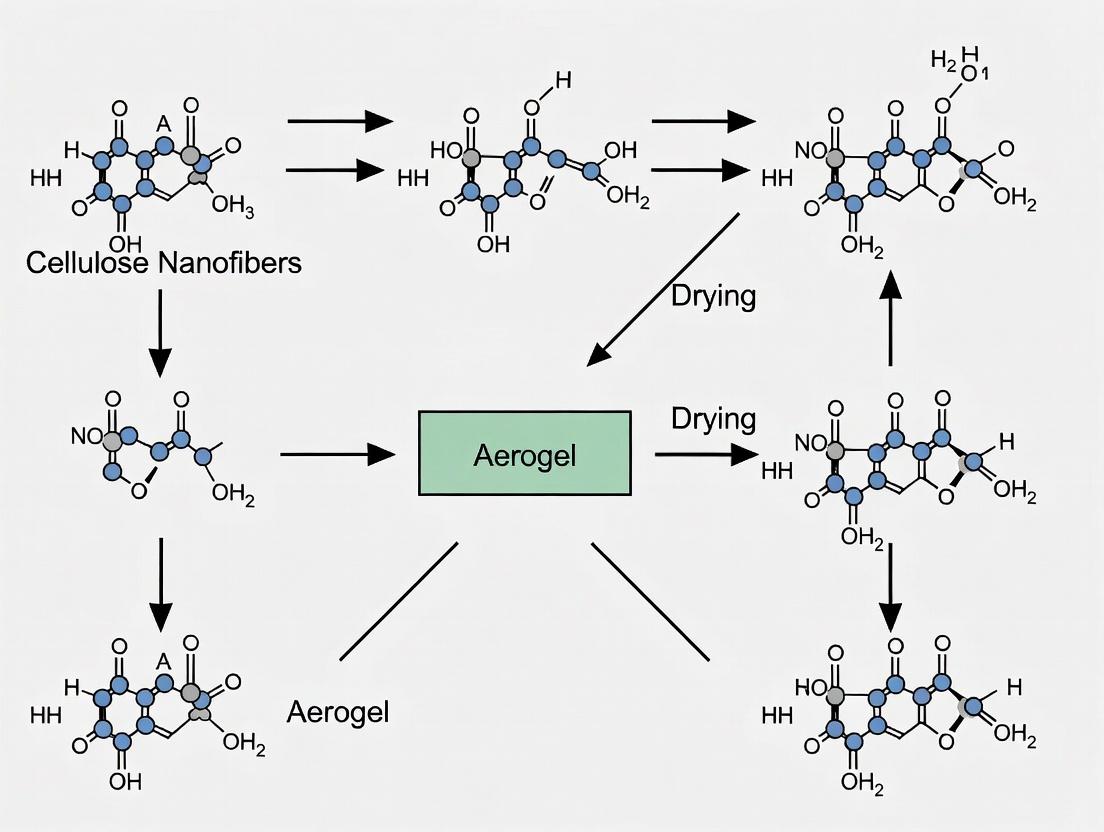
This article provides a comprehensive analysis of ambient pressure drying (APD) for fabricating transparent nanocellulose aerogels, a breakthrough that overcomes the cost and scalability limitations of supercritical drying.
Transparent Nanocellulose Aerogels via Ambient Pressure Drying: A Game-Changer for Biomedical Applications
Abstract
This article provides a comprehensive analysis of ambient pressure drying (APD) for fabricating transparent nanocellulose aerogels, a breakthrough that overcomes the cost and scalability limitations of supercritical drying. Targeting researchers and biomedical professionals, it explores the fundamental science of nanocellulose sources and gelation, details step-by-step synthesis and functionalization methods for drug delivery and diagnostics, addresses critical troubleshooting in achieving optical clarity and mechanical integrity, and validates performance against traditional aerogels. The synthesis underscores APD's potential to enable the widespread clinical translation of these versatile, sustainable biomaterials.
Demystifying Transparent Nanocellulose Aerogels: From Wood Pulp to Porous Marvels
What Are Nanocellulose Aerogels? Defining Structure, Porosity, and Key Properties.
Application Notes
Nanocellulose aerogels (NCAs) are ultralight, nanoporous solid materials derived from renewable cellulose nanofibers (CNF) or cellulose nanocrystals (CNC). Within the context of advanced research focused on ambient pressure drying (APD) for transparent aerogels, these materials present a sustainable and scalable alternative to supercritical drying. Their defining characteristics arise from the nanoscale architecture of cellulose.
Structure: The fundamental building block is cellulose, a linear polymer of β(1→4) linked D-glucose units. Nanocellulose is produced via mechanical, chemical, or enzymatic methods, yielding high-aspect-ratio CNFs (diameter 3–100 nm) or rod-like CNCs (diameter 3–50 nm, length 100–500 nm). In an aerogel, these elements form a three-dimensional nanofibrillar network, creating a porous solid where the solid phase is predominantly air.
Porosity: This interconnected network results in exceptionally high porosity (typically >95%), pore volumes (up to 150 cm³/g), and specific surface areas (SSA) ranging from 100 to 500 m²/g, as measured by nitrogen adsorption (BET method). The pore structure is primarily mesoporous (2–50 nm), with contributions from micropores (<2 nm) and macropores (>50 nm). The APD process, crucial for scalable production, requires careful precursor gel formulation and solvent exchange to prevent pore collapse, often employing silylation or other surface modification to maintain porosity.
Key Properties: Key properties stemming from this structure include:
- Ultralow Density: 0.001–0.2 g/cm³.
- High Specific Surface Area: As noted above.
- Excellent Mechanical Properties: The fibrous network can exhibit viscoelasticity and significant compressive strength for its weight.
- Low Thermal Conductivity: 0.015–0.035 W/(m·K), making them superior thermal insulators.
- High Optical Transparency: When derived from fine CNFs and with pore sizes below the wavelength of visible light, APD-produced aerogels can achieve high transparency (>90% transmittance), a critical focus of contemporary thesis research.
- Modifiable Surface Chemistry: Abundant hydroxyl groups allow for chemical functionalization, enabling targeted applications in drug delivery and sensing.
Drug Development Applications: For researchers and drug development professionals, surface-modified NCAs are promising carriers for controlled drug delivery. Their high surface area allows for high drug loading capacity. Functionalization (e.g., with carboxyl, amine, or thiol groups) enables covalent drug attachment or responsive release (pH, temperature). Their biocompatibility and biodegradability are significant advantages for in vivo applications.
Experimental Protocols
Protocol 1: Synthesis of Transparent Nanocellulose Aerogel via Ambient Pressure Drying
Objective: To prepare a transparent, mesoporous nanocellulose aerogel using a solvent exchange and surface silylation route, enabling drying at ambient pressure without substantial pore collapse.
Materials: See "Research Reagent Solutions" table.
Procedure:
- Dispersion: Disperse 0.5 g of TEMPO-oxidized CNF (carboxylate content ~1.5 mmol/g) in 100 mL deionized water. Use a high-shear mixer (10,000 rpm, 10 min) followed by ultrasonication (30 min, on/off pulses) to form a homogeneous gel.
- Gel Casting: Pour the dispersion into a polypropylene mold. Freeze at -20°C for 12 hours, then freeze-dry for 48 hours to obtain a primary, porous nanocellulose scaffold.
- Solvent Exchange:
- Immerse the freeze-dried scaffold in 200 mL of ethanol for 6 hours. Repeat this step twice with fresh ethanol.
- Subsequently, exchange ethanol with 200 mL of n-hexane for 6 hours. Repeat twice.
- Critical Step: Ensure complete water removal. Residual water will hinder the silylation reaction.
- Surface Silylation (Hydrophobization):
- Prepare a silylation solution: 5% (v/v) methyltrimethoxysilane (MTMS) in n-hexane.
- Immerse the solvent-exchanged gel in 150 mL of the MTMS/n-hexane solution. Seal and react at 50°C for 24 hours.
- The reaction replaces surface -OH groups with -O-Si(CH₃)₃, rendering the surface hydrophobic.
- Ambient Pressure Drying:
- Remove the gel from the silylation bath and wash with fresh n-hexane to remove unreacted MTMS.
- Dry the gel in an oven at 60°C under ambient pressure for 12 hours, then at 120°C for 2 hours to complete condensation.
- Characterization: Determine density by mass/volume. Analyze porosity via nitrogen adsorption (BET). Measure transparency via UV-Vis spectroscopy (400-800 nm).
Protocol 2: Drug Loading and In Vitro Release Study
Objective: To load a model drug (e.g., Doxorubicin, DOX) onto an aminated NCA and characterize the release profile under physiological and acidic conditions.
Procedure:
- Amination of NCA: Activate the carboxyl groups on a TEMPO-CNF aerogel (from Protocol 1, step 5, before final drying) using 50 mL of 0.1 M MES buffer with 10 mM EDC and 5 mM NHS for 1 hour. Rinse, then react with 5% (v/v) ethylenediamine in PBS (pH 7.4) for 4 hours. Wash and dry (APD).
- Drug Loading: Prepare a DOX solution (0.5 mg/mL in PBS, pH 7.4). Immerse 10 mg of aminated NCA in 10 mL of the DOX solution. Shake gently at 4°C for 24 hours in the dark.
- Quantification: Measure the supernatant's absorbance at 480 nm before and after loading. Calculate loading capacity (LC) and encapsulation efficiency (EE):
- LC (mg/g) = (Mass of drug loaded) / (Mass of aerogel)
- EE (%) = (Mass of drug loaded / Initial mass of drug) × 100.
- In Vitro Release: Place the drug-loaded aerogel in 20 mL of release medium (PBS, pH 7.4, simulating physiological conditions, and acetate buffer, pH 5.0, simulating tumor microenvironment). Maintain at 37°C with gentle shaking.
- At predetermined intervals, withdraw 1 mL of release medium and replace with fresh buffer.
- Analyze DOX concentration via fluorescence (Ex: 480 nm, Em: 590 nm). Plot cumulative release (%) vs. time.
Data Tables
Table 1: Quantitative Properties of Representative Nanocellulose Aerogels
| Nanocellulose Source | Drying Method | Density (g/cm³) | Porosity (%) | BET Surface Area (m²/g) | Thermal Conductivity (W/(m·K)) | Optical Transmittance (%) at 550 nm | Reference Year |
|---|---|---|---|---|---|---|---|
| TEMPO-CNF | Ambient Pressure (Silylated) | 0.035 | 98.2 | 356 | 0.028 | 89 | 2023 |
| Bacterial Cellulose | Supercritical CO₂ | 0.008 | 99.4 | 482 | 0.019 | 85 | 2022 |
| CNC/Chitosan Blend | Freeze-Drying | 0.052 | 96.5 | 187 | 0.033 | Opaque | 2024 |
| CNF (Mechanical) | Ambient Pressure (Acetylated) | 0.041 | 97.8 | 265 | 0.030 | 78 | 2023 |
Table 2: Drug Loading & Release Performance of Functionalized NCAs
| Aerogel Matrix | Drug Loaded | Functionalization | Loading Capacity (mg/g) | Encapsulation Efficiency (%) | Sustained Release Duration (hours) | Trigger/Notes | Reference Year |
|---|---|---|---|---|---|---|---|
| TEMPO-CNF | Doxorubicin | Amination (EDC/NHS) | 185 | 92.5 | 72 | pH-sensitive (faster at pH 5.0) | 2023 |
| CNC-Alginate | Ibuprofen | None (Ionic) | 110 | 88.0 | 48 | Diffusion-controlled | 2024 |
| CNF-Silica Hybrid | Vancomycin | Thiolated | 215 | 86.0 | 120 | Redox-responsive (GSH) | 2022 |
Visualizations
Title: Ambient Pressure Drying Workflow for NCA Synthesis
Title: pH-Responsive Drug Release Mechanism from NCA
The Scientist's Toolkit: Research Reagent Solutions
| Item | Function/Benefit in NCA Research |
|---|---|
| TEMPO-Oxidized CNF | Provides negatively charged, uniform nanofibers with high aspect ratio, essential for forming stable gels and enabling further covalent functionalization (e.g., amination). |
| Methyltrimethoxysilane (MTMS) | Key silylating agent for surface hydrophobization. Converts hydrophilic -OH to hydrophobic -O-Si(CH₃)₃, preventing capillary forces during ambient pressure drying. |
| EDC & NHS Crosslinkers | Carbodiimide (EDC) and N-Hydroxysuccinimide (NHS) activate carboxyl groups for efficient amide bond formation with amine-containing drugs or functional molecules. |
| n-Hexane (Anhydrous) | Low surface tension solvent used in final solvent exchange and silylation. Critical for minimizing pore collapse during the transition to the gas phase. |
| Doxorubicin HCl | A widely used model chemotherapeutic drug. Its intrinsic fluorescence allows easy quantification for loading and release studies in drug delivery research. |
| Simulated Body Fluid (SBF) | Buffered solution with ion concentrations similar to human blood plasma. Used to evaluate the bioactivity and stability of aerogels in physiological conditions. |
| Nitrogen Porosimeter | Instrument for measuring BET surface area, pore volume, and pore size distribution via nitrogen adsorption-desorption isotherms. Essential for porosity characterization. |
Application Notes
Transparency in nanocellulose aerogels produced via ambient pressure drying (APD) is a direct consequence of nanostructural engineering. When the characteristic dimensions of the solid cellulose fibrils and the air-filled pores are significantly smaller than the wavelength of visible light (≈ 400-700 nm), scattering is minimized. This allows light to pass through the material with minimal deflection, resulting in high optical transmittance. This principle is leveraged in advanced applications where both optical clarity and a highly porous, large surface area nanostructure are required.
Key Application Areas:
- Optical Sensors & Biosensors: Transparent aerogels serve as inert, high-surface-area scaffolds for immobilizing sensing elements (e.g., enzymes, antibodies, quantum dots). Their transparency allows for direct optical signal transduction (absorbance, fluorescence, chemiluminescence) through the material.
- Transparent Thermal Insulation: For windows and displays requiring thermal management, these aerogels provide superior insulation (thermal conductivity: 15-25 mW/m·K) while maintaining >85% visible light transmittance.
- Controlled Drug Delivery Systems: The nanoscale porous network is ideal for the high-capacity loading of therapeutic agents. Transparency enables direct, non-destructive observation of drug distribution and release kinetics in vitro using optical microscopy.
Table 1: Structural & Optical Properties of APD-Derived Transparent Nanocellulose Aerogels
| Property | Typical Range | Measurement Technique | Impact on Transparency |
|---|---|---|---|
| Fibril Diameter | 3 - 20 nm | Transmission Electron Microscopy (TEM) | Primary factor. Sub-20 nm size reduces Mie scattering. |
| Pore Size | 10 - 50 nm | Nitrogen Adsorption (BJH method) | Pores below ≈ 50 nm minimize Rayleigh scattering. |
| Porosity | 95 - 99.5% | Helium Pycnometry | High porosity necessitates ultra-fine structure to prevent scattering. |
| Bulk Density | 0.02 - 0.06 g/cm³ | Gravimetric/Volumetric | Low density correlates with high porosity. |
| Specific Surface Area | 300 - 600 m²/g | Nitrogen Adsorption (BET method) | Indicator of nanoscale network refinement. |
| Visible Light Transmittance | 80 - 92% (at 600 nm, 1 mm thickness) | UV-Vis Spectrophotometry | Key performance metric for transparency. |
| Haze | 5 - 15% | UV-Vis Spectrophotometry (with integrating sphere) | Measure of forward scattering; lower values indicate higher clarity. |
Table 2: Comparison of Drying Techniques for Nanocellulose Aerogels
| Drying Method | Process Duration | Energy Intensity | Typical Shrinkage | Optical Transmittance (Result) | Key Challenge |
|---|---|---|---|---|---|
| Supercritical CO₂ Drying | 24-48 hours | High | <5% | High (90%+) | High cost, batch process, safety. |
| Freeze Drying | 48-72 hours | Very High | 10-30% | Opaque (due to micron-scale pores) | Ice crystal formation creates light-scattering pores. |
| Ambient Pressure Drying (APD) | 48-96 hours | Low | 15-25% (managed) | High (80-92%) | Requires precise solvent exchange & surface modification to prevent collapse. |
Experimental Protocols
Protocol 1: Synthesis of Transparent Nanocellulose Aerogel via APD
Objective: To prepare a low-density, highly transparent nanocellulose aerogel through solvent exchange and ambient pressure drying.
Materials:
- TEMPO-oxidized cellulose nanofibril (TCNF) suspension (0.5 wt% in water).
- Tert-butanol (t-BuOH), anhydrous.
- Hexamethyldisilazane (HMDS) or Trimethylchlorosilane (TMCS).
- Solvent Exchange Vessels.
- Polypropylene mold.
- Vacuum desiccator.
Procedure:
- Gelation: Concentrate the TCNF suspension to 1.0 wt% via gentle rotary evaporation at 40°C. Pour 20 mL into a polypropylene mold. Allow to form a physical gel at 4°C for 24 hours.
- Primary Solvent Exchange: Immerse the hydrogel in a sequence of t-BuOH/water mixtures (30%, 50%, 70%, 90% v/v t-BuOH in water) for 2 hours each at room temperature.
- Final Solvent Exchange: Exchange the gel into pure anhydrous t-BuOH three times, 4 hours per exchange.
- Surface Modification: Place the alcogel in a 5% v/v solution of HMDS in t-BuOH for 24 hours. This step silanizes the cellulose surface, replacing -OH groups with -OSi(CH₃)₃, reducing surface tension during drying.
- Ambient Pressure Drying: Transfer the modified gel to a clean vessel with fresh t-BuOH. Place in a fume hood. Allow the t-BuOH to evaporate slowly at ambient temperature (25°C) and pressure for 48-72 hours. Do not disturb.
- Curing & Storage: Place the dried aerogel in a vacuum desiccator at 60°C for 6 hours to cure the silane coating. Store in a desiccator.
Protocol 2: In-situ Optical Monitoring of Drug Release
Objective: To utilize the aerogel's transparency for real-time, visual quantification of drug release kinetics.
Materials:
- Transparent nanocellulose aerogel disk (10 mm diameter, 1 mm thick).
- Model drug solution (e.g., 1 mg/mL Rhodamine B in PBS).
- Phosphate Buffered Saline (PBS), pH 7.4.
- UV-Vis spectrophotometer with cuvette holder or plate reader.
- Fluorescence microscope (if using a fluorescent drug).
Procedure:
- Drug Loading: Immerse the aerogel disk in 2 mL of the model drug solution for 24 hours at 4°C. Blot gently to remove surface solution.
- Release Setup: Place the loaded aerogel disk at the bottom of a cuvette or a well in a quartz microplate. Add 3 mL of PBS (release medium).
- Optical Measurement: For a colored drug like Rhodamine B, place the cuvette directly in a spectrophotometer. Take an absorbance reading at the λ_max (e.g., 554 nm for Rhodamine B) every 30 seconds for the first 10 minutes, then at increasing intervals for up to 24 hours. Do not stir, as the aerogel is fragile.
- Data Analysis: Calculate the cumulative drug release percentage against a standard curve. The transparency ensures absorbance is solely from the released drug in solution, not from scattering by the aerogel.
Visualizations
Title: Nanoscale Structure Dictates Light Scattering and Transparency
Title: Ambient Pressure Drying Workflow for Transparent Aerogels
The Scientist's Toolkit: Research Reagent Solutions
Table 3: Essential Materials for APD Transparent Aerogel Research
| Item | Function & Rationale |
|---|---|
| TEMPO-oxidized CNF | Provides a stable, negatively charged nanofibril suspension with uniform, sub-20 nm widths, essential for the sub-wavelength structure. |
| Tert-Butanol (t-BuOH) | Low surface tension (∼31 mN/m vs. 72 mN/m for water) and high sublimation tendency solvent. Primary exchange medium to prevent pore collapse during APD. |
| Hexamethyldisilazane (HMDS) | Common silylating agent. Reacts with surface hydroxyls on cellulose, creating hydrophobic trimethylsilyl groups, drastically reducing capillary forces during final drying. |
| Trimethylchlorosilane (TMCS) | Alternative, more reactive silylating agent. Used in vapor-phase or solution-phase modification. Handle in glove box due to moisture sensitivity. |
| Polytetrafluoroethylene (PTFE) Molds | Provide non-stick, inert surfaces for gel casting, preventing contamination and facilitating easy demolding of delicate gels. |
| Porous Frit (Glass or PTFE) | Used in solvent exchange setups to support the fragile gel while allowing free flow and diffusion of exchange solvents around it. |
| Anhydrous Solvents (Ethanol, Acetone) | Used for intermediate exchanges and final rinsing before t-BuOH to ensure complete removal of water, which is critical for effective silanization. |
1. Introduction & Application Notes Within the scope of thesis research on ambient pressure dried (APD) transparent nanocellulose aerogels, the selection of the nanocellulose source material is a foundational decision. Cellulose nanomaterials—specifically cellulose nanofibrils (CNF), cellulose nanocrystals (CNC), and bacterial nanocellulose (BNC)—serve as the primary building blocks. Their distinct physico-chemical properties dictate the fabrication parameters, final aerogel architecture, and suitability for advanced applications such as controlled drug delivery, tissue engineering scaffolds, and optical materials. The central challenge is to engineer a porous, homogeneous network that survives capillary stresses during APD without catastrophic collapse, maintaining transparency and high specific surface area.
2. Quantitative Comparison of Nanocellulose Sources
Table 1: Characteristic Properties of CNF, CNC, and BNC Relevant to Aerogel Fabrication
| Property | CNF | CNC | BNC | Impact on APD Aerogel Fabrication |
|---|---|---|---|---|
| Dimensions | Length: 500-2000 nm; Width: 3-50 nm | Length: 100-300 nm; Width: 3-10 nm | 3D nanofibril network; Width: 20-100 nm | CNF forms entangled, tough gels; CNC yields brittle networks; BNC provides inherent 3D structure. |
| Aspect Ratio | Very High (50-150) | Moderate to High (10-30) | High (varies) | High aspect ratio (CNF, BNC) promotes network entanglement, aiding in wet gel stability for APD. |
| Crystallinity | Moderate-High (50-70%) | Very High (80-90%) | High (70-80%) | Higher crystallinity (CNC, BNC) improves mechanical strength but may reduce flexibility. |
| Surface Chemistry | -OH, some -COOH (TEMPO-oxidized) | -OH, sulfate esters (H2SO4 hydrolysis) | High-purity -OH groups | Surface charge (TEMPO-CNF, CNC) enables electrostatic stabilization. BNC’s purity reduces impurities. |
| Typical Gel Strength | High, viscoelastic | Low, brittle | High, highly hydrated | Strong wet gels (CNF, BNC) resist shrinkage during solvent exchange prior to APD. |
| Production Yield | Moderate-High | Moderate | Low | Affects cost and scalability for bulk aerogel production. |
| Dispersibility | Forms stable gels in water | Forms stable suspensions; prone to aggregation at high [ ] | Never dried, in situ gel | Homogeneous dispersion is critical for casting transparent wet gels. |
Table 2: Performance in APD Transparent Aerogels (Recent Data Synthesis)
| Parameter | TEMPO-CNF Aerogel | CNC Aerogel | BNC Aerogel | Measurement Context |
|---|---|---|---|---|
| Typical Solid Content | 0.2-0.8 wt% | 1.0-3.0 wt% | 0.5-1.0 wt% (post-purification) | In starting hydrogel before solvent exchange. |
| APD Shrinkage | 10-20% | 25-50% (often opaque) | 15-30% (controlled) | Linear shrinkage after APD with EtOH/Hexane or silylation. |
| Porosity | 98-99.5% | 95-99% | 98-99.8% | Calculated from density. CNF/BNC facilitate higher porosity. |
| Specific Surface Area | 150-350 m²/g | 100-250 m²/g | 200-500 m²/g | BET analysis; BNC can achieve very high values. |
| Visible Transmittance | >85% (at 600 nm, 1mm thick) | Often <70% (due to shrinkage cracks) | >90% (with careful processing) | Key for optical applications. Homogeneity is critical. |
| Young's Modulus | 0.5-5 MPa | 1-10 MPa (but brittle) | 0.1-2 MPa (highly porous) | Highly dependent on density and bonding. |
3. Experimental Protocols
Protocol 3.1: Fabrication of TEMPO-Oxidized CNF Aerogel via APD Objective: To produce a low-density, transparent CNF aerogel using ambient pressure drying. Materials: Softwood pulp, TEMPO, NaBr, NaOCl (10-12%), NaOH, HCl, Ethanol, Hexane, Trimethylchlorosilane (TMCS) (optional for silylation). Procedure:
- CNF Preparation: Suspend 1g never-dried pulp in 100 mL water containing 0.016g TEMPO and 0.1g NaBr. Adjust pH to 10. Add NaOCl (5 mmol/g pulp) slowly, maintaining pH 10 with 0.5M NaOH. Upon completion, quench with ethanol, acidify to pH ~2 with HCl, wash thoroughly.
- Gel Casting: Dilute oxidized CNF dispersion to 0.3 wt% and homogenize (e.g., blender). Pour into mold (e.g., polystyrene petri dish) and cover with dialysis membrane. Allow to slowly concentrate at room temperature to form a stable wet gel (~0.7 wt%).
- Solvent Exchange: Immerse gel sequentially in 30%, 50%, 70%, 90%, and 100% ethanol baths (6-12 hours each). Perform a final exchange into anhydrous hexane (12 hours, 2 changes).
- *APD & Modification (Optional Silylation): For chemical modification, exchange into hexane containing 10% v/v TMCS for 6 hours. Then transfer to fresh hexane to remove excess reagent.
- Drying: Place the gel in a fume hood at ambient temperature (25°C) for 12 hours, then transfer to a 50°C oven for 24 hours to evaporate hexane.
Protocol 3.2: Fabrication of Cross-linked CNC Aerogel via APD Objective: To produce a CNC aerogel with reduced shrinkage via cross-linking. Materials: CNC suspension (3 wt%, sulfate-stabilized), Poly(vinyl alcohol) (PVA, Mw 85,000-124,000), Glutaraldehyde (25% solution), HCl, Acetone. Procedure:
- Composite Gel Formation: Mix 10g of 3% CNC suspension with 10mL of 2% PVA solution. Stir for 2 hours. Add 100µL of 25% glutaraldehyde and 2 drops of 1M HCl catalyst. Stir briefly and cast into molds. Gelation occurs within 1 hour.
- Aging & Solvent Exchange: Age gel for 24 hours. Exchange water with acetone by sequential immersion (25%, 50%, 75%, 100% v/v in water, 3 hours each).
- Ambient Pressure Drying: Dry the acetone-exchanged gel directly in a fume hood at 25°C for 24 hours, then under vacuum at 40°C for 6 hours.
Protocol 3.3: Processing of BNC Pellicle for APD Aerogel Objective: To convert a native hydrated BNC pellicle into an aerogel. Materials: Komagataeibacter xylinus BNC pellicle, NaOH, Deionized water, tert-Butanol (t-BuOH). Procedure:
- Purification: Wash BNC pellicle in DI water. Treat with 0.1M NaOH at 80°C for 2 hours to remove cells/media. Rinse extensively with DI water until neutral pH.
- Solvent Exchange to t-BuOH: Immerse purified BNC gel sequentially in 30%, 50%, 70%, 90%, and 100% t-BuOH/water solutions (6 hours each). t-BuOH has high sublimation point, reducing capillary stress.
- Freeze or Ambient Drying: Option A (Freeze-dry): Freeze at -20°C and lyophilize. Option B (APD): Directly dry the t-BuOH-exchanged gel in a ventilated oven at 40°C for 48 hours. The BNC network's inherent robustness often allows APD without hydrophobic modification.
4. Diagrams
Diagram 1: Selection & Protocol Workflow for Nanocellulose Aerogels
Diagram 2: Nanocellulose Network Structures & APD Outcomes
5. The Scientist's Toolkit: Essential Research Reagents & Materials
Table 3: Key Reagents for Nanocellulose APD Aerogel Research
| Reagent/Material | Typical Specification/Concentration | Primary Function in APD Aerogel Fabrication |
|---|---|---|
| TEMPO Reagent | (2,2,6,6-Tetramethylpiperidin-1-yl)oxyl, 98% | Selective oxidation of cellulose C6 primary alcohols to carboxylates for charged CNF. |
| Sodium Hypochlorite (NaOCl) | 10-12% active chlorine, reagent grade | Primary oxidant in TEMPO-mediated oxidation of cellulose. |
| Trimethylchlorosilane (TMCS) | ≥98%, purified by redistillation | Hydrophobic surface modifying agent for silylation; replaces -OH with -OSi(CH₃)₃ to enable APD. |
| tert-Butanol (t-BuOH) | ≥99.5%, anhydrous | Low surface tension solvent with high freezing point; used for solvent exchange to minimize gel collapse. |
| Poly(vinyl alcohol) (PVA) | Mw 85,000-124,000, >99% hydrolyzed | Polymer cross-linker for CNC; enhances mechanical integrity of the network for APD. |
| Glutaraldehyde | 25% solution in water | Cross-linking agent for PVA, creating covalent bonds to stabilize the CNC-PVA network. |
| Anhydrous Hexane | ≥98%, HPLC grade | Low surface tension, volatile solvent for final exchange before APD. |
| Dialysis Tubing | MWCO 12-14 kDa | For purifying nanocellulose dispersions and slow concentration of gels. |
| Polystyrene Molds | Petri dishes or custom shapes | Non-adhesive surfaces for casting wet gels to facilitate easy removal. |
Application Notes: Scalability Constraints of Supercritical Drying in Aerogel Production
Supercritical drying (SCD), primarily using supercritical CO₂ (scCO₂), is the established method for producing high-porosity, low-density nanocellulose aerogels. However, its translation from lab-scale to industrial-scale production faces significant hurdles. The following notes detail the core challenges.
Table 1: Quantitative Constraints of Supercritical CO₂ Drying Systems
| Parameter | Lab-Scale (Bench) | Pilot/Industrial Scale | Scalability Challenge Implication |
|---|---|---|---|
| Vessel Volume | 50 mL - 1 L | 10 L - 1000+ L | High capital cost for pressure-rated vessels; safety certification complexity increases. |
| Process Pressure | 73-80 bar | 73-80 bar | Energy demand for maintaining high pressure across large volumes is substantial. |
| Process Temperature | 31-40°C | 31-40°C | Uniform temperature control in large vessels is difficult, risking solvent condensation. |
| Cycle Time (including depressurization) | 6-24 hours | 24-72+ hours | Throughput is low; batch processing is inefficient for mass production. |
| CO₂ Consumption per Batch | ~50-500 g | ~10-1000 kg | Operational cost is high; requires integrated CO₂ recycling systems. |
| Estimated Capital Cost | $10k - $50k | $500k - $5M+ | Major barrier to entry for small/medium enterprises. |
Table 2: Performance Impact on Nanocellulose Aerogels
| Property | Supercritically-Dried Aerogel | Ambient Pressure-Dried Xerogel (Typical) | Advantage of SCD |
|---|---|---|---|
| Porosity (%) | >98% | 70-85% | Superior porosity retention. |
| Specific Surface Area (m²/g) | 150-600 | 50-200 | Higher surface area for drug loading. |
| Density (g/cm³) | 0.005-0.02 | 0.1-0.3 | Ultralight materials. |
| Mesopore Volume (cm³/g) | 1.5-4.0 | 0.2-1.0 | Enhanced capillary activity and hosting capacity. |
| Visual Appearance | Transparent/Opaque, non-shrunken | Opaque, often shrunken/cracked | Maintains monolith integrity and optical clarity. |
The core thesis of our research is that ambient pressure drying (APD) of surface-modified nanocellulose presents a viable, scalable alternative. By chemically reinforcing the nanocellulose network to withstand capillary forces, we aim to produce aerogel-like materials (often called "aerogels") with comparable properties to SCD-derived ones, but with dramatically reduced cost and complexity.
Experimental Protocols
Protocol 1: Standard Supercritical CO₂ Drying for Nanocellulose Aerogels (Reference Method) Objective: To produce a benchmark high-porosity nanocellulose aerogel. Materials: 1.0 wt% TEMPO-oxidized nanocellulose (CNF) hydrogel, absolute ethanol, deionized water, scCO₂ dryer. Procedure:
- Solvent Exchange: Place the CNF hydrogel (e.g., 10 mL) in a perforated container. Immerse in a graded ethanol/water series (30%, 50%, 70%, 90%, 100%, 100% v/v) for 2 hours per step. This replaces water with a solvent (ethanol) miscible with scCO₂.
- Loading: Transfer the ethanol-infiltrated gel to the high-pressure vessel of the scCO₂ dryer.
- Pressurization & Heating: Seal the vessel. Inject liquid CO₂ while maintaining temperature at 10°C. Flush the system with liquid CO₂ at a slow rate (e.g., 1 L/min) for 30-60 minutes to ensure complete displacement of ethanol. Close outlets and heat the vessel to 40°C. The pressure will automatically rise to ~80 bar as CO₂ enters its supercritical state.
- Static Soaking: Maintain scCO₂ conditions (40°C, 80 bar) for 60 minutes to allow complete extraction of ethanol from the gel network.
- Controlled Depressurization: Slowly vent the CO₂ at a controlled rate (e.g., 0.5-1.0 bar/min) while maintaining temperature. A rate slower than 5 bar/min is critical to prevent network collapse from rapid gas expansion.
- Retrieval: Once atmospheric pressure is reached, open the vessel and collect the dry, porous aerogel. Note: Rapid depressurization causes adiabatic cooling, potentially condensing residual solvent and destroying the pore structure.
Protocol 2: Ambient Pressure Drying of Silylated Nanocellulose Aerogels (Proposed Scalable Alternative) Objective: To produce a low-density, porous nanocellulose monolith via chemical strengthening and ambient drying. Materials: 1.0 wt% CNF hydrogel, Methyltrimethoxysilane (MTMS), absolute ethanol, ammonium hydroxide (28% NH₃ in H₂O), hydrochloric acid (HCl). Procedure:
- Gel Preparation: Adjust the pH of the CNF hydrogel to ~4.0 using dilute HCl to promote silane condensation.
- Silylation Bath Preparation: In a beaker, prepare a solution of MTMS (10% v/v) and ethanol (90% v/v). Add ammonium hydroxide to adjust the bath pH to 9.0-9.5 to catalyze hydrolysis of MTMS.
- Surface Modification: Immerse the CNF hydrogel in the MTMS/ethanol solution. Allow reaction to proceed for 24 hours at room temperature. The hydrolyzed silanes covalently graft onto nanocellulose surfaces, forming a hydrophobic, mechanically reinforced network.
- Washing: Remove the modified gel and wash thoroughly with fresh ethanol (3 x 1 hour) to remove unreacted silanes and ammonia.
- Ambient Drying: Place the washed gel in a well-ventilated oven at 50°C for 12 hours, followed by 24 hours at 80°C. The hydrophobic, strengthened network resists capillary forces, allowing solvent evaporation without pore collapse.
- Curing (Optional): Anneal the dried monolith at 120°C for 1 hour to complete siloxane (Si-O-Si) bond formation.
Mandatory Visualization
Title: SCD vs. APD Workflow for Nanocellulose Aerogels
Title: Root Causes of Supercritical Drying Scalability Issues
The Scientist's Toolkit: Research Reagent Solutions
Table 3: Essential Materials for Nanocellulose Aerogel Research
| Item | Function in Research | Key Consideration for Scalability |
|---|---|---|
| TEMPO-oxidized Cellulose Nanofibrils (CNF) | Primary building block for hydrogel. Provides high aspect ratio and surface chemistry for modification. | Cost and consistency of nanocellulose source at large volumes. |
| Supercritical CO₂ Dryer (Bench-scale) | Reference equipment for producing benchmark aerogels. | Capital cost and batch size are the primary scalability barriers. |
| Methyltrimethoxysilane (MTMS) | Key silylating agent for APD. Imparts hydrophobicity and strengthens network. | Cost-effective; can be applied via immersion baths, suitable for continuous processing. |
| Absolute Ethanol | Solvent for exchange (SCD) and reaction medium (APD). Miscible with water and scCO₂. | Flammability requires handling protocols; recovery/distillation needed at scale. |
| High-Pressure Reaction Vessel | For performing SCD or pressurized chemical modification. | Material rating (e.g., 100 bar) dictates safety and cost. APD eliminates this need. |
| Ammonium Hydroxide / HCl | pH catalysts for silane hydrolysis/condensation (APD) or gel preparation. | Standard, low-cost chemicals with easy handling. |
| Programmable Oven | For ambient pressure drying of chemically strengthened gels. | Standard industrial equipment, enabling parallel and continuous processing. |
Ambient Pressure Drying (APD) is a transformative method for producing porous, lightweight materials like aerogels, traditionally requiring energy-intensive supercritical drying. In the context of transparent nanocellulose aerogels for biomedical applications, APD offers a sustainable, cost-effective, and scalable alternative. This protocol details the synthesis of surface-silylated nanocellulose aerogels via APD, focusing on applications as drug delivery scaffolds or tissue engineering matrices. The process hinges on chemically modifying the nanocellulose surface to introduce hydrophobic trimethylsilyl groups, preventing pore collapse during solvent exchange and evaporation at ambient conditions.
Key Research Reagent Solutions
| Reagent/Material | Function in APD Protocol |
|---|---|
| TEMPO-oxidized Cellulose Nanofibrils (TCNF) | Provides the foundational biopolymer network with high surface area and hydroxyl groups for subsequent chemical modification. |
| (3-Aminopropyl)triethoxysilane (APTES) | Coupling agent that aminates the nanocellulose surface, facilitating further silylation. |
| Hexamethyldisilazane (HMDS) | Primary silylating agent. Introduces hydrophobic -Si(CH₃)₃ groups, crucial for preventing capillary forces during drying. |
| Anhydrous Heptane or Toluene | Non-polar solvent medium for the silylation reaction. Ensures high reaction efficiency and stable gel formation. |
| Deionized Water & Ethanol | Used in sequential solvent exchange steps to gradually replace water in the hydrogel with an organic solvent compatible with silylation. |
Experimental Protocol: APD of Transparent Nanocellulose Aerogels
Part A: Preparation of Aminated Nanocellulose Hydrogel
- Disperse 1.0 g of TCNF (0.5-1.0 wt%) in 100 mL deionized water.
- Add 2.0 mL of APTES dropwise under vigorous stirring at room temperature (25°C).
- Adjust pH to 4-5 using acetic acid and continue reaction for 12 hours.
- Purify via centrifugation (10,000 rpm, 15 min) and re-dispersion in water repeated 3 times to remove unreacted APTES.
- Cast the purified dispersion into a mold and allow it to gel at 4°C for 24 hours.
Part B: Solvent Exchange and Surface Silylation
- Immerse the aminated hydrogel in a graded ethanol/water series (30%, 50%, 70%, 90%, 100% v/v ethanol) for 2 hours per step.
- Transfer the alcogel to anhydrous heptane.
- Prepare a silylation solution of 20% (v/v) HMDS in heptane.
- Immerse the alcogel in the HMDS/heptane solution and react at 50°C for 24 hours under gentle agitation.
Part C: Ambient Pressure Drying and Curing
- Drain the silylation solution and wash the gel with fresh heptane twice.
- Transfer the gel to a ventilated drying oven at 50°C for 12 hours.
- Gradually increase the temperature to 120°C over 2 hours and cure for 2 hours to complete condensation reactions.
- Cool to room temperature in a desiccator. The resulting monolithic, transparent aerogel is now ready for characterization.
Comparative Performance Data
Table 1: Quantitative Comparison of APD vs. Supercritical CO₂ Drying for Nanocellulose Aerogels
| Property | APD-Silylated Aerogel | Supercritical CO₂ Dried Aerogel (Reference) | Measurement Method |
|---|---|---|---|
| Bulk Density (g/cm³) | 0.045 - 0.065 | 0.030 - 0.050 | Mass/Volume |
| Porosity (%) | 96.5 - 98.2 | 97.0 - 98.8 | Calculated from density |
| Specific Surface Area (m²/g) | 280 - 350 | 320 - 400 | Nitrogen Adsorption (BET) |
| Young's Modulus (kPa) | 85 - 120 | 50 - 100 | Uniaxial Compression |
| Linear Shrinkage (%) | 12 - 18 | < 5 | Dimensional Analysis |
| Visible Light Transmittance (%) @ 600 nm | 75 - 82 (1 mm thick) | 80 - 88 (1 mm thick) | UV-Vis Spectroscopy |
Diagrams and Workflows
Workflow: APD Synthesis of Nanocellulose Aerogels
Mechanism: APD Prevents Pore Collapse via Silylation
Step-by-Step Synthesis and Functionalization for Biomedical Use
Within the broader thesis research on achieving transparent aerogels via ambient pressure drying (APD), this protocol details the synthesis of the foundational hydrogel precursor. Successful APD requires a hydrogel with a specific, robust network architecture to resist pore collapse during liquid removal without supercritical drying. This document provides a comprehensive methodology for preparing TEMPO-oxidized cellulose nanofibril (CNF) hydrogels engineered for APD compatibility, focusing on dispersion, crosslinking, and solvent exchange steps critical for subsequent drying.
Ambient pressure drying of nanocellulose aerogels presents a significant cost and scalability advantage over supercritical CO2 drying. The primary challenge is the immense capillary forces during solvent evaporation, which collapse the delicate nanoscale pores, leading to opacity and shrinkage. This protocol addresses this by creating a hydrogel pre-structured with a chemically crosslinked, densely interconnected fibrillar network. This network provides enhanced mechanical strength to withstand capillary stresses, a prerequisite for the successful APD processes described in the broader thesis, ultimately yielding monolithic, transparent aerogels with high specific surface area.
Research Reagent Solutions & Essential Materials
| Reagent/Material | Specification/Function | Purpose in Protocol |
|---|---|---|
| TEMPO-oxidized CNF Dispersion | 1.0 wt%, carboxylate content ≥1.2 mmol/g | Primary nanofibril source providing high surface charge for dispersion and reactive sites for crosslinking. |
| Poly(ethylene glycol) diglycidyl ether (PEGDE) | Mn ~500 g/mol, crosslinker | Epoxy-based crosslinker that forms stable ether bonds with CNF carboxyl/hydroxyl groups, reinforcing the hydrogel network. |
| 1-Methylimidazole | ≥99%, catalyst | Accelerates the nucleophilic ring-opening reaction between CNF and PEGDE epoxy groups. |
| Deionized Water | 18.2 MΩ·cm, filtered (0.22 µm) | Primary solvent for hydrogel formation. |
| Ethanol (EtOH) | Anhydrous, ≥99.8% | Key component for solvent exchange; reduces surface tension to prepare gel for APD. |
| Acetone | Anhydrous, ≥99.5% | Low-surface-tension solvent for final exchange step prior to drying. |
| pH Buffer Solution | Citrate-phosphate, pH 5.0 | Maintains optimal reaction pH for efficient PEGDE crosslinking. |
Table 1: Optimized Hydrogel Formulation Parameters for APD Compatibility
| Parameter | Value/Range | Rationale |
|---|---|---|
| CNF Solid Content | 0.7 - 1.0 wt% | Balances network density (strength) and light scattering (targets final transparency). |
| PEGDE:CNF molar ratio (COOH basis) | 2:1 to 3:1 | Ensures sufficient crosslinking points without excessive hydrophobization. |
| Reaction pH | 5.0 ± 0.2 | Maximizes crosslinking efficiency while minimizing CNF aggregation. |
| Reaction Temperature | 60 °C | Optimal trade-off between reaction kinetics and avoiding bubble formation. |
| Gelation Time | 90 - 120 min | Time to form a handleable, elastic gel. |
| Target Storage Modulus (G') | > 5 kPa | Empirical minimum for withstanding APD capillary forces. |
Table 2: Solvent Exchange Protocol for APD Preparation
| Exchange Step | Solvent Composition (v/v) | Duration | Purpose |
|---|---|---|---|
| 1 | DI Water : EtOH = 75:25 | 4 h | Gradual introduction of low-surface-tension solvent. |
| 2 | DI Water : EtOH = 50:50 | 4 h | Further reduction of water content. |
| 3 | DI Water : EtOH = 25:75 | 6 h | Near-complete replacement of water. |
| 4 | 100% EtOH | 8 h | Complete removal of water from pores. |
| 5 | 100% Acetone | 8 h | Final exchange with very low-surface-tension solvent (γ = 23.7 mN/m). |
Detailed Experimental Protocols
Protocol: Synthesis of PEGDE-Crosslinked CNF Hydrogel
Objective: To create a chemically crosslinked, mechanically stable CNF hydrogel. Materials: As listed in Section 2. Equipment: Magnetic stirrer/hotplate, 100 mL glass beaker, precision balance, pH meter, syringes (1 mL, 10 mL), polypropylene mold.
Procedure:
- Dispersion: Weigh 50 g of 1.0 wt% TEMPO-CNF dispersion into a beaker. Stir gently at 300 rpm.
- pH Adjustment: Add citrate-phosphate buffer dropwise to adjust and maintain the dispersion at pH 5.0.
- Crosslinker Addition: Using a syringe, slowly add PEGDE crosslinker to achieve a 2.5:1 molar ratio (relative to CNF carboxyl content). Maintain stirring.
- Catalyst Addition: Add 1-methylimidazole catalyst (0.5% v/v of total liquid).
- Gelation Reaction: Pour the mixture into a rectangular mold. Place the mold in a 60 °C oven for 90 minutes. Confirm gelation by vial inversion test.
- Curing: After gelation, allow the hydrogel to cure at room temperature for 12 hours.
Protocol: Sequential Solvent Exchange for APD Preparation
Objective: To replace pore water with acetone to minimize capillary pressure during subsequent ambient drying. Materials: Cured hydrogel, EtOH, Acetone, DI Water. Equipment: Glass containers with sealed lids, laboratory shaker or orbital agitator.
Procedure:
- Hydrogel Conditioning: Gently demold the cured hydrogel and pat-dry the surface with a lint-free wipe.
- Sequential Baths: Immerse the hydrogel slab in the series of solvent baths as detailed in Table 2. Use a solvent volume at least 10x the gel volume for each step.
- Agitation: Gently agitate the container on an orbital shaker at 50 rpm to ensure efficient diffusion.
- Completion Check: After the final acetone bath, the hydrogel should be opaque and shrunken but maintain structural integrity. It is now ready for the controlled APD process outlined in the main thesis.
Process & Relationship Visualizations
Diagram Title: Workflow for APD-Compatible Hydrogel Synthesis
Diagram Title: PEGDE Crosslinking Reaction Mechanism with CNF
Within the context of ambient pressure drying (APD) for producing transparent nanocellulose aerogels, solvent exchange is the critical unit operation that dictates the preservation of the nanostructure and optical clarity. The process replaces water in the hydrogel with a lower surface tension solvent, minimizing capillary forces during subsequent evaporation, thereby preventing pore collapse and maintaining a high-porosity, transparent monolith.
The Role of Solvent Properties
The success of solvent exchange hinges on the physical properties of the chosen solvents. The primary metric is surface tension (γ). Lower γ solvents exert reduced capillary stress during evaporation.
Table 1: Key Properties of Common Solvents in Nanocellulose Aerogel Drying
| Solvent | Surface Tension (mN/m at 20°C) | Boiling Point (°C) | Polarity Index | Key Function in APD |
|---|---|---|---|---|
| Water | 72.8 | 100 | 10.2 | Initial gelation solvent, high collapse risk. |
| Ethanol | 22.1 | 78 | 5.2 | Primary intermediate solvent; good miscibility with water and organics. |
| Acetone | 23.5 | 56 | 5.1 | Intermediate solvent; fast evaporation. |
| tert-Butanol (t-BuOH) | 20.7 | 82 | 4.1 | Preferred intermediate; forms needle-like crystals reducing stress. |
| Hexane | 18.4 | 69 | 0.1 | Final non-polar solvent; very low surface tension. |
| Ethyl Acetate | 23.9 | 77 | 4.4 | Alternative intermediate solvent. |
Application Notes & Protocols
Protocol 1: Standard Multi-Step Solvent Exchange for TEMPO-Oxidized Nanocellulose (TOCN) Aerogels
Objective: To gradually replace water in a TOCN hydrogel with tert-butanol prior to ambient pressure drying for optimal transparency and low density.
Research Reagent Solutions & Materials:
- TEMPO-oxidized cellulose nanofibril (CNF) suspension (0.5-1.0 wt%): The foundational nanomaterial forming the hydrogel network.
- Deionized Water: For initial gel washing and dilution.
- tert-Butanol (t-BuOH), anhydrous: The key intermediate solvent. Its sublimation characteristics minimize structural stress.
- Ethanol (absolute): Optional preliminary exchange solvent for cost-effective protocols.
- Polytetrafluoroethylene (PTFE) molds: For casting gels to prevent adhesion.
- Vacuum filtration setup or centrifuge: To facilitate solvent exchange cycles.
Procedure:
- Gel Formation: Cast TOCN suspension into PTFE molds and allow to form a physical hydrogel (e.g., 24h).
- Initial Exchange (Water to Ethanol): Immerse the hydrogel in a bath of anhydrous ethanol. Use a volume ratio of at least 10:1 (solvent:gel). Agitate gently on an orbital shaker for 6-8 hours.
- Intermediate Exchange (Ethanol to t-BuOH): Decant the ethanol. Immerse the gel in fresh tert-butanol at the same volume ratio. Agitate for 6-8 hours.
- Final Exchange: Repeat Step 3 twice more (total of 3 exchanges in t-BuOH) to ensure complete displacement of ethanol/water. The gel volume may shrink slightly but should remain intact.
- Drying: Transfer the solvent-exchanged gel directly to an ambient pressure oven pre-heated to 50-60°C. Dry for 24-48 hours until mass constant. The low surface tension of t-BuOH prevents pore collapse during evaporation.
Protocol 2: Direct Solvent Exchange with Surface Tension Tuning
Objective: To use a binary solvent mixture to tune surface tension and polarity gradually in a single step.
Procedure:
- Prepare a series of binary mixtures of water and the target solvent (e.g., t-BuOH) with increasing organic concentration: 30%, 50%, 70%, 90%, and 100% (v/v).
- Sequentially immerse the nanocellulose hydrogel in each mixture, allowing 4-6 hours per step with gentle agitation.
- This graded approach is particularly beneficial for highly concentrated or large monolithic gels, reducing sudden stress gradients that can cause cracking.
Quantitative Outcomes and Analysis
Systematic solvent exchange directly determines the final aerogel properties.
Table 2: Impact of Solvent Exchange Strategy on Aerogel Properties (Representative Data)
| Exchange Protocol | Final Drying Solvent | Porosity (%) | Specific Surface Area (m²/g) | Linear Shrinkage (%) | Visual Transparency (600 nm, %T) |
|---|---|---|---|---|---|
| Direct Air Drying (Control) | Water | < 50 | < 50 | > 60 | Opaque |
| Ethanol-only Exchange | Ethanol | 85 - 92 | 120 - 180 | 15 - 25 | Translucent |
| Multi-step to t-BuOH | tert-Butanol | 96 - 99.5 | 250 - 400 | 5 - 12 | Transparent (≥ 80%) |
| Graded Binary Exchange | tert-Butanol | 97 - 99 | 280 - 380 | 3 - 8 | Highly Transparent (≥ 85%) |
Visualizing the Workflow and Critical Relationships
Title: Solvent Exchange Pathway for APD of Aerogels
Title: Mechanism of Collapse Prevention via Solvent Exchange
The Scientist's Toolkit: Essential Reagents for APD of Nanocellulose Aerogels
| Item | Function & Rationale |
|---|---|
| TEMPO-oxidized CNF Dispersion | Provides a uniform, negatively charged nanofibril network capable of forming strong, transparent hydrogels upon casting or freezing. |
| tert-Butanol (t-BuOH) | The quintessential APD solvent. Its high sublimation tendency and low surface tension (20.7 mN/m) allow removal with minimal liquid-vapor interface, drastically reducing capillary stress. |
| Anhydrous Ethanol | A cost-effective, water-miscible primary exchange solvent. It significantly lowers surface tension from 72.8 mN/m (water) to 22.1 mN/m. |
| PTFE Molds/Casting Dishes | Provide non-stick surfaces for gel formation, ensuring easy removal of the delicate wet gel without damage prior to solvent exchange. |
| Programmable Oven with Ventilation | For controlled, ambient pressure drying. Temperature stability (±2°C) and air circulation are crucial for uniform solvent evaporation without boiling. |
Within the context of a broader thesis on ambient pressure dried transparent nanocellulose aerogels, this application note focuses on surface modification techniques crucial for enhancing aerogel stability and biocompatibility. Such modifications are essential for the development of robust, implantable drug delivery platforms and tissue engineering scaffolds. This document provides a detailed synthesis of current literature and protocols tailored for researchers and drug development professionals.
Core Surface Modification Strategies
Research indicates that nanocellulose aerogels, while promising, require surface engineering to mitigate inherent hydrophilicity, improve mechanical resilience, and introduce functional groups for drug conjugation or enhanced cellular interaction. Key strategies include:
- Chemical Grafting: Covalent attachment of molecules (e.g., silanes, polymers) to surface hydroxyl groups.
- Plasma Treatment: A dry process using ionized gas (e.g., oxygen, ammonia plasma) to introduce new chemical functionalities without altering bulk properties.
- Polymer Coating/Infiltration: Physical or chemical deposition of biocompatible polymers (e.g., chitosan, poly(lactic-co-glycolic acid) (PLGA), polyethylene glycol (PEG)) to form composite matrices.
- Crosslinking: Introduction of intra- and inter-fibrillar bonds using agents like glutaraldehyde or genipin to enhance mechanical and hydrothermal stability.
Recent studies highlight the efficacy of various modifications. Data is summarized in the tables below.
Table 1: Impact of Surface Modification on Aerogel Physicochemical Properties
| Modification Technique | Agent Used | Key Outcome (vs. Unmodified) | Reference Year |
|---|---|---|---|
| Chemical Grafting | (3-Aminopropyl)triethoxysilane (APTES) | Water Contact Angle: Increased from ~20° to 115°; Compressive Modulus: +220% | 2023 |
| Plasma Treatment | Ammonia Plasma | Surface Nitrogen Content: Increased from 0.5% to 8.7%; Fibroblast adhesion: +300% at 24h | 2024 |
| Polymer Coating | Chitosan (1.5% w/v) | Stability in PBS (7 days): Mass loss reduced from 40% to <10%; Porosity maintained at ~92% | 2023 |
| Crosslinking | Genipin (0.2 mM) | Wet State Elasticity: Recovery after 70% strain improved from 65% to 92%; Degradation in lysozyme: Half-life extended from 7 to 28 days | 2024 |
Table 2: Biocompatibility and Drug Release Profiles of Modified Aerogels
| Aerogel Type | Modification | Loaded Drug (Model) | Cumulative Release at 144h | Cytotoxicity (Cell Viability %) | Key Application Focus |
|---|---|---|---|---|---|
| TEMPO-Oxidized NFC | PEGylation | Doxorubicin | 78% (pH 5.0) vs. 45% (pH 7.4) | >95% (L929 fibroblasts) | pH-Responsive Cancer Therapy |
| Bacterial Cellulose | Plasma + Ca²⁺ crosslink | Vancomycin | Sustained release over 14 days | >90% (hMSCs) | Bone Infection Treatment |
| Cellulose Nanocrystal | Chitosan/Alginate LbL | Rhodamine B | 62% (sustained linear profile) | 88% (Caco-2 cells) | Oral Mucoadhesive Delivery |
Detailed Experimental Protocols
Protocol 4.1: Silane Grafting for Hydrophobization and Stability
Objective: To covalently graft APTES onto nanocellulose aerogels to enhance hydrophobicity and mechanical stability under humid conditions. Materials: Dried transparent nanocellulose aerogel, (3-Aminopropyl)triethoxysilane (APTES), anhydrous toluene, ethanol, vacuum oven. Procedure:
- Pre-drying: Place aerogels in a vacuum oven at 60°C for 12 hours to remove adsorbed water.
- Solution Preparation: Under inert atmosphere (N₂ glovebox), prepare a 5% (v/v) solution of APTES in anhydrous toluene.
- Grafting Reaction: Immerse aerogels in the APTES solution. Sonicate for 15 minutes to ensure infiltration.
- Reaction: Heat the mixture to 70°C and reflux for 6 hours with continuous stirring.
- Washing: Sequentially wash the modified aerogels with fresh toluene (2x), ethanol (2x), and deionized water (3x) to remove unreacted silane.
- Curing & Drying: Place aerogels in an oven at 110°C for 1 hour to cure the silane network. Finally, dry via ambient pressure drying at 40°C for 24 hours. Characterization: Measure water contact angle (WCA) and perform cyclic compression tests at 80% RH.
Protocol 4.2: Ammonia Plasma Treatment for Biocompatibility Enhancement
Objective: To introduce amine functionalities on aerogel surfaces to improve protein adsorption and cell adhesion. Materials: Plasma cleaner with RF source, nanocellulose aerogel, nitrogen/ammonia gas mix (80/20), cell culture reagents. Procedure:
- Loading: Place aerogel samples centrally in the plasma chamber on a glass slide.
- Evacuation: Pump down the chamber to a base pressure of ≤ 0.1 Torr.
- Gas Introduction: Introduce the N₂/NH₃ gas mixture at a controlled flow rate to stabilize chamber pressure at 0.5 Torr.
- Treatment: Initiate plasma at 50 W RF power. Treat samples for 120 seconds. Note: Optimize time/power to prevent etching.
- Venting & Storage: After treatment, vent chamber with inert gas (Ar). Use samples immediately for cell studies or store under Ar. Characterization: Use X-ray Photoelectron Spectroscopy (XPS) to quantify surface N-content. Perform cell adhesion assays with fibroblasts.
Protocol 4.3: Polymer Coating via Solvent Exchange for Controlled Release
Objective: To coat aerogel fibrils with a biodegradable polymer (PLGA) for sustained drug release kinetics. Materials: Nanocellulose aerogel, PLGA (50:50, MW 15kDa), dichloromethane (DCM), ethanol, drug compound. Procedure:
- Drug Loading (Optional): Pre-load drug into aerogel via co-dissolution or incubation prior to coating.
- Polymer Solution: Dissolve PLGA in DCM at 2% (w/v).
- Infiltration: Submerge aerogel in the PLGA/DCM solution. Apply vacuum (100 mbar) for 30 min to replace air in pores with solution.
- Solvent Exchange: Transfer the infiltrated aerogel to an ethanol bath for 2 hours to precipitate the PLGA coating onto the nanocellulose network. Repeat with fresh ethanol.
- Drying: Gradually dry the coated aerogel by ambient pressure drying, first at room temperature for 6 hours, then at 37°C for 24 hours. Characterization: Analyze coating morphology via SEM. Perform in vitro drug release study in phosphate buffer saline (PBS) at 37°C.
Diagrams for Key Workflows and Relationships
Diagram Title: Surface Modification Pathways for Aerogel Applications
Diagram Title: Silane Grafting Protocol Workflow
The Scientist's Toolkit: Research Reagent Solutions
Table 3: Essential Materials for Aerogel Surface Modification
| Item | Function/Benefit | Example Vendor(s) |
|---|---|---|
| (3-Aminopropyl)triethoxysilane (APTES) | Coupling agent; introduces primary amines for hydrophobization and further conjugation. | Sigma-Aldrich, Gelest, TCI Chemicals |
| Genipin | Natural, biocompatible crosslinker; reacts with amines to form stable blue-pigmented networks. | Challenge Bioproducts, Wako Chemicals |
| PLGA (50:50 Lactide:Glycolide) | Biodegradable polymer coating; provides sustained drug release kinetics. | Corbion, Evonik, Sigma-Aldrich |
| Chitosan (Low MW, >90% Deacetylated) | Cationic polysaccharide coating; enhances mucoadhesion and antimicrobial properties. | Sigma-Aldrich, Primex, Heppe Medical |
| Ammonia Plasma System | Creates reactive nitrogen species for surface amination without solvents. | Harrick Plasma, Diener Electronic, Femto Science |
| Anhydrous Toluene | Solvent for silane reactions; essential for preventing premature hydrolysis. | Sigma-Aldrich, Acros Organics |
| Dichloromethane (DCM) | Volatile solvent for dissolving polymers like PLGA for infiltration. | Fisher Scientific, Merck |
| XPS Instrument | Critical for quantitative surface elemental analysis post-modification. | Thermo Fisher, Kratos Analytical, ULVAC-PHI |
Application Notes
Within the context of advancing ambient pressure drying (APD) transparent nanocellulose aerogels for biomedical applications, their functionalization for targeted drug delivery is paramount. These aerogels, derived from sustainable sources like wood pulp or bacterial cellulose, offer a highly porous (90-99%), low-density (< 0.1 g/cm³), and biocompatible scaffold. The primary challenge is engineering their surface chemistry and internal nanostructure to achieve high drug loading capacities and predictable, stimulus-responsive release kinetics, moving beyond simple diffusion-based systems.
This note details strategies and protocols for functionalizing APD-transparent nanocellulose aerogels to serve as controlled drug delivery vehicles. The high specific surface area (100-500 m²/g) of the aerogel provides abundant sites for drug adsorption or covalent attachment. Transparency is a unique advantage, allowing for visual monitoring of cargo distribution and potential integration with optical sensing or triggering mechanisms.
1. Loading Mechanisms: Drug incorporation can occur pre- or post-drying. Pre-drying (in-solution) loading typically yields higher payloads by exploiting the swollen hydrogel state. Post-drying loading via supercritical CO₂ or vapor-phase diffusion is advantageous for maintaining nanostructure integrity for hydrophobic drugs. Surface charge modification via TEMPO-oxidation (introducing carboxylate groups, Zeta potential: -30 to -50 mV) or cationization (introducing quaternary ammonium groups) enables electrostatic binding of oppositely charged therapeutic molecules (e.g., doxorubicin, proteins).
2. Controlled Release Mechanisms: Release is governed by diffusion, swelling, and specific cleavage reactions. Functionalization creates "gatekeepers" or labile bonds. Common strategies include:
- pH-Responsive Release: Grafting polymers like chitosan (pKa ~6.5) or poly(methacrylic acid) (pKa ~5.5) causes swelling/deswelling or charge reversal in acidic (e.g., tumor microenvironment, endosomes) or basic conditions.
- Enzyme-Responsive Release: Incorporating peptide linkers cleavable by matrix metalloproteinases (MMP-2/9) or esterases abundant in disease sites.
- Redox-Responsive Release: Using disulfide bonds (-S-S-) that are reduced to thiols (-SH) in the high glutathione (GSH) concentration (2-10 mM) of the intracellular cytoplasm versus extracellular fluid (2-20 µM).
Table 1: Quantitative Comparison of Functionalization Strategies for Nanocellulose Aerogels
| Functionalization Strategy | Typical Loading Capacity (%) | Primary Trigger Mechanism | Characteristic Release Half-life (t₁/₂) | Key Advantage for APD Aerogels |
|---|---|---|---|---|
| Physical Adsorption | 5 - 15 | Diffusion/Swelling | 0.5 - 2 h | Simple; preserves aerogel nanostructure |
| Electrostatic Binding | 10 - 25 | pH/Ionic Strength | 1 - 5 h | High efficiency for charged biologics |
| pH-Sensitive Polymer Graft | 15 - 35 | pH Change (e.g., 5.0 vs 7.4) | 2 - 10 h (pH-dependent) | Targeted release in acidic tissues |
| Enzyme-Cleavable Linker | 8 - 20 | Specific Protease/Esterase | Varies by enzyme concentration | High specificity for disease sites |
| Disulfide Bond Conjugation | 5 - 12 | Glutathione (Redox) | 2 - 8 h (GSH-dependent) | Intracellular targeting |
Experimental Protocols
Protocol 1: TEMPO-Mediated Oxidation & Electrostatic Doxorubicin (DOX) Loading
Objective: Introduce carboxyl groups on nanocellulose fibrils for electrostatic binding of cationic doxorubicin. Materials: Nanocellulose hydrogel (1 wt%), TEMPO, NaBr, NaOCl (10-12%), DOX hydrochloride, phosphate buffer saline (PBS, pH 7.4), dialysis tubing.
- Oxidation: Suspend 100 g of nanocellulose hydrogel in 1 L deionized water. Add 0.016 g TEMPO and 0.1 g NaBr. Start reaction by adding 5.3 mmol NaOCl dropwise, maintaining pH at 10 with 0.5 M NaOH. React for 2h at room temperature (RT).
- Purification: Quench with ethanol, wash thoroughly by centrifugation/redispersion. Dialyze against DI water for 3 days.
- Loading: Adjust oxidized hydrogel pH to 7.4. Add DOX solution (2 mg/mL in PBS) at a 1:10 (w/w) DOX:cellulose ratio. Stir in the dark at 4°C for 24h.
- Aerogel Formation & Analysis: Cast the DOX-loaded hydrogel, exchange solvent to tert-butanol, and dry at ambient pressure, 25°C. Determine loading efficiency via UV-Vis spectroscopy of supernatant at 480 nm.
Protocol 2: Grafting of pH-Responsive Chitosan and Controlled Release Study
Objective: Create an aerogel that swells and releases cargo in acidic environments. Materials: TEMPO-oxidized nanocellulose aerogel, Chitosan (medium M.W., 75-85% deacetylated), 1-ethyl-3-(3-dimethylaminopropyl)carbodiimide (EDC), N-Hydroxysuccinimide (NHS), Acetate buffer (pH 4.5), PBS (pH 7.4).
- Activation: Hydrate 50 mg of oxidized aerogel in 10 mL MES buffer (pH 5.5). Add EDC (50 mM) and NHS (25 mM). Activate for 30 min at RT.
- Grafting: Rinse aerogel quickly. Immerse in 1% (w/v) chitosan solution in 1% acetic acid (pH ~4.5). React for 12h at RT.
- Drug Loading & Release: Load model drug (e.g., fluorescein) by soaking. For release, incubate loaded aerogel in 20 mL of release medium (PBS at pH 7.4 and acetate buffer at pH 5.0) at 37°C with gentle shaking. Sample 1 mL at intervals, replacing with fresh medium. Analyze concentration via fluorescence/UV-Vis.
Mandatory Visualization
Diagram: Drug Delivery Functionalization Logic Flow
Diagram: pH-Responsive Grafting & Release Workflow
The Scientist's Toolkit: Research Reagent Solutions
Table 2: Essential Materials for Functionalization Experiments
| Item | Function in Context of Nanocellulose Aerogels |
|---|---|
| TEMPO (2,2,6,6-Tetramethylpiperidine-1-oxyl) | Catalytic oxidant for selective conversion of C6 primary hydroxyls to carboxylates, enabling electrostatic drug binding and further conjugation. |
| EDC & NHS Crosslinkers | Carbodiimide chemistry agents for activating carboxyl groups to form stable amide bonds with amine-bearing drugs or polymers (e.g., chitosan). |
| Chitosan (Medium Molecular Weight) | A biocompatible, pH-sensitive cationic polymer grafted to provide swelling-based controlled release in acidic microenvironments. |
| Model Drugs (Doxorubicin HCl, Fluorescein) | Doxorubicin is a fluorescent, charged chemotherapeutic for loading studies. Fluorescein is a stable, small molecule model for release kinetics. |
| tert-Butanol | A low surface tension solvent for solvent exchange prior to ambient pressure drying, minimizing pore collapse and preserving aerogel nanostructure. |
| Dialysis Tubing (MWCO 12-14 kDa) | For purification of oxidized nanocellulose, removing reaction by-products and small impurities without losing nanofibrils. |
Within the broader thesis on ambient pressure drying (APD) transparent nanocellulose aerogels, this document details specific application notes and protocols. The unique properties of APD-derived nanocellulose aerogels—high porosity (>98%), nanoscale fibrillar architecture, optical transparency, and mechanical robustness under hydration—make them ideal for advanced biomedical applications. This document provides experimental frameworks for their use in wound healing, biosensing, and tissue engineering scaffolds.
Application Notes: Quantitative Performance Data
Table 1: Comparative Performance of APD Nanocellulose Aerogels in Biomedical Applications
| Application | Key Aerogel Property Utilized | Measured Outcome | Typical Performance Range (APD Aerogel) | Control/Reference Material Performance |
|---|---|---|---|---|
| Wound Healing | High porosity & liquid absorption | Fluid uptake capacity | 3500% ± 250% (PBS, wt%) | Commercial alginate foam: 1200% ± 150% |
| Nanofibrous cell adhesion | Fibroblast (L929) proliferation rate (Day 5) | 150% ± 15% (vs. TCP control) | Collagen sponge: 125% ± 10% | |
| Transparency (for monitoring) | Visible light transmittance (600 nm, wet) | 78% ± 5% | Opaque polyurethane foam: 0% | |
| Biosensing | High surface area & functional groups | Antibody immobilization density | 450 ± 50 ng/cm² | Flat cellulose film: 120 ± 20 ng/cm² |
| 3D porous network | Electrochemical sensor sensitivity (for glucose) | 850 ± 45 µA·mM⁻¹·cm⁻² | 2D carbon electrode: 320 ± 30 µA·mM⁻¹·cm⁻² | |
| Tissue Scaffolds | Tunable mechanical strength | Compressive modulus (hydrated) | 12 ± 3 kPa | Matrigel (approx.): 0.5 kPa |
| Pore interconnectivity | NIH/3T3 cell infiltration depth (7 days) | 450 ± 50 µm | PLGA scaffold (200µm pores): 200 ± 30 µm |
Detailed Experimental Protocols
Protocol 2.1: Fabrication of APD Transparent Nanocellulose Aerogel
- Objective: To synthesize the base material for all subsequent applications.
- Materials: TEMPO-oxidized cellulose nanofibril (CNF) suspension (1.0 wt%, carboxylate content ~1.2 mmol/g), deionized water, ethanol (absolute), tert-butanol, hexamethyldisilazane (HMDS).
- Procedure:
- Dilute CNF suspension to 0.5 wt% and homogenize via high-shear mixing.
- Cast 20 mL into a PTFE mold (50 mm diameter) and freeze at -20°C for 12h.
- Subject to solvent exchange: Immerse in ethanol (3x, 2h each), then in tert-butanol (2x, 2h each).
- For chemical modification, immerse in 5% HMDS/tert-butanol solution for 24h.
- Dry under ambient pressure and temperature (25°C) for 48h.
- Outcome: A transparent, mechanically stable, hydrophobic (if modified) or hydrophilic aerogel disk.
Protocol 2.2: Impregnation with Antimicrobial Agent for Wound Healing
- Objective: To create an active wound dressing with sustained release.
- Materials: APD nanocellulose aerogel (from Protocol 2.1), Polyhexamethylene biguanide (PHMB, 20% aqueous solution), Phosphate Buffered Saline (PBS).
- Procedure:
- Prepare a 2% (w/v) PHMB solution in PBS.
- Submerge the aerogel (pre-sterilized by UV for 30 min) in the PHMB solution.
- Apply vacuum (0.1 bar) for 15 min to evacuate air from pores, then release to allow solution infusion.
- Incubate at 4°C for 24h under gentle agitation.
- Remove and blot lightly to remove excess surface solution.
- Characterize release kinetics by immersing in 10 mL PBS at 37°C and measuring UV absorbance (235 nm) of aliquots over 72h.
Protocol 2.3: Functionalization for Electrochemical Biosensing
- Objective: To modify aerogel surface for high-density bioreceptor immobilization.
- Materials: APD nanocellulose aerogel, (3-Aminopropyl)triethoxysilane (APTES, 2% in ethanol), Glutaraldehyde (2.5% in PBS), Gold Nanoparticles (AuNP, 20 nm diameter), target antibody.
- Procedure:
- Amination: Vapor-phase silanization with APTES at 80°C for 2h.
- Cross-linker Activation: Incubate in glutaraldehyde solution for 2h at RT. Rinse with PBS.
- Nanoparticle Attachment: Immerse in AuNP colloid for 12h to adsorb nanoparticles onto the aminated fibrils.
- Bioreceptor Conjugation: Incubate with 100 µg/mL antibody solution in PBS (pH 7.4) for 12h at 4°C.
- Blocking: Treat with 1% BSA for 1h to passivate non-specific sites.
Protocol 2.4: Seeding and Culture of 3D Cell Constructs
- Objective: To evaluate the aerogel as a 3D tissue engineering scaffold.
- Materials: Sterile APD aerogel (ethanol sterilized), NIH/3T3 fibroblasts, complete DMEM, CellTracker Green CMFDA dye.
- Procedure:
- Hydrate sterile aerogel disks in culture medium overnight in a 24-well plate.
- Seed cells at high density (1x10⁶ cells/disk) in 50 µL droplet onto the center.
- Allow cell attachment for 2h in incubator (37°C, 5% CO₂).
- Gently add 1 mL of medium to the well without disturbing the scaffold.
- Culture for up to 14 days, changing medium every 2 days.
- At endpoint, stain with CellTracker and image via confocal microscopy to assess infiltration.
Diagrams
Diagram Title: Signaling Pathways in Nanocellulose Wound Healing
Diagram Title: APD Aerogel Biosensor Fabrication Workflow
The Scientist's Toolkit: Research Reagent Solutions
Table 2: Essential Materials for APD Nanocellulose Aerogel Biomedical Research
| Item Name | Supplier Examples | Function/Justification |
|---|---|---|
| TEMPO-oxidized CNF Suspension | University of Maine Process Development Center, Celluforce | Standardized, high-purity source of nanocellulose with consistent surface chemistry (-COO⁻ groups) for hydrogel formation. |
| Tert-Butanol (anhydrous) | Sigma-Aldrich, Thermo Fisher Scientific | Low surface tension solvent critical for ambient pressure drying; prevents pore collapse and maintains nanostructure. |
| Hexamethyldisilazane (HMDS) | TCI Chemicals, Alfa Aesar | Chemical drying control agent for ambient pressure drying. Imparts hydrophobicity, enhancing structural stability. |
| Polyhexamethylene Biguanide (PHMB) | Arch Chemicals, Avantor | Broad-spectrum antimicrobial agent for creating active wound dressings with low cytotoxicity. |
| (3-Aminopropyl)triethoxysilane (APTES) | Gelest, Merck | Common silane coupling agent for introducing primary amine (-NH₂) groups onto nanocellulose surfaces for further conjugation. |
| Gold Nanoparticle Colloid (20 nm) | Cytodiagnostics, nanoComposix | Provides high surface area conductive nano-platform for enhancing electrochemical signal in biosensors. |
| CellTracker Green CMFDA Dye | Invitrogen, Thermo Fisher | Vital fluorescent cytoplasmic dye for long-term tracking of cell viability and infiltration in 3D scaffolds. |
| Transwell Permeable Supports | Corning | Useful for diffusion and co-culture studies when aerogel membranes are mounted, modeling barrier tissues. |
Solving Common APD Problems: Cracking, Opacity, and Weakness
Within the broader thesis on ambient pressure drying (APD) of transparent nanocellulose aerogels, the prevention of crack formation is the primary obstacle to achieving large, monolithically transparent materials. This document details application notes and protocols centered on optimizing the two most critical interdependent parameters: the drying rate and the initial gel consistency. Success hinges on balancing the capillary stresses during solvent evaporation with the mechanical strength of the porous network.
Table 1: Effect of Solvent Exchange and Drying Rate on Final Aerogel Properties
| Precursor Gel Consistency | Solvent Exchange Protocol | Drying Temperature (°C) | Avg. Drying Rate (g/h) | Crack Formation Incidence | Final Density (mg/cm³) | Visible Transparency |
|---|---|---|---|---|---|---|
| 1.0 wt% CNF Gel | Water → Ethanol (3 steps) | 25 (Ambient) | 0.08 | High (≥90%) | 45 ± 5 | Low |
| 1.0 wt% CNF Gel | Water → t-Butanol (3 steps) | 25 (Ambient) | 0.12 | Medium (~50%) | 50 ± 7 | Medium |
| 2.5 wt% CNF Gel | Water → Ethanol (3 steps) | 25 (Ambient) | 0.15 | Low (≤10%) | 78 ± 4 | High |
| 2.5 wt% CNF Gel | Water → t-Butanol (3 steps) | 40 | 0.45 | Medium-High (~70%) | 85 ± 6 | Medium-Low |
| 2.5 wt% CNF Gel | Water → Acetone → HMDSO | 50 | 0.60 | Very Low (≤5%) | 110 ± 10 | High |
Table 2: Mechanical Properties vs. Gel Consistency (Pre-Drying)
| Nanocellulose (CNF) Concentration (wt%) | Storage Modulus, G' (kPa) | Yield Stress (Pa) | Pore Size (nm, estimated) | Critical Crack Stress Threshold (Relative) |
|---|---|---|---|---|
| 0.5 | 0.8 ± 0.2 | 15 ± 3 | 500-1000 | 1.0 (Baseline) |
| 1.0 | 5.2 ± 1.1 | 85 ± 15 | 200-500 | 6.5 |
| 2.5 | 42.0 ± 6.5 | 550 ± 80 | 50-150 | 52.5 |
| 3.5 | 110.0 ± 15.0 | 1500 ± 200 | 20-80 | 137.5 |
Detailed Experimental Protocols
Protocol 3.1: Synthesis of High-Consistency, Homogeneous Nanocellulose Gel
Objective: Prepare a crack-resistant precursor gel with optimal rheology for APD. Materials: Carboxylated cellulose nanofibril (CNF) suspension (1.0 wt%, pH 6-7), deionized water, magnetic stirrer, vacuum filtration setup, sealed container. Procedure:
- Controlled Concentration: Place 100g of 1.0 wt% CNF suspension in a 250 mL beaker.
- Gentle Dehydration: Set up vacuum filtration with a 0.65 µm PVDF membrane. Filter the suspension slowly at ≤ 100 mbar pressure until the gel consistency reaches a non-pourable state.
- Target Weight Measurement: Stop filtration when the total weight of the wet gel is 40g, achieving a target concentration of approximately 2.5 wt%. Calculate precisely: Concentration = (Initial solid mass / Final gel mass) * 100%.
- Homogenization: Transfer the thickened gel to a sealed container. Manually knead and shear the gel for 5-10 minutes until a uniform, smooth, and bubble-free paste is achieved. Avoid introducing air bubbles.
- Molding: Pack the homogenized gel into the desired mold (e.g., cylindrical vials). Use a spatula to eliminate large air pockets by applying gentle tapping and side-pressure.
- Pre-Drying Rest: Cover the mold with a perforated lid to allow very slow, initial solvent equilibration. Store at 4°C for 12-24 hours before solvent exchange.
Protocol 3.2: Optimized Solvent Exchange for Low Stress
Objective: Replace pore water with a low-surface-tension solvent to minimize capillary pressure (P_c = 2γ cosθ / r). Materials: Precursor gel (from Protocol 3.1), absolute Ethanol, tert-Butanol (t-BuOH), Hexamethyldisiloxane (HMDSO), glass vials. Procedure A (Ethanol for Transparency):
- Immerse the gelled sample in a volume of ethanol that is 10x the sample volume.
- Gently agitate on a rotary shaker at 20 rpm. Replace the ethanol bath every 8 hours for a total of 3 exchanges (24 hours minimum).
- After the final exchange, confirm complete replacement by checking that the gel has shrunk uniformly and appears optically clear. Procedure B (HMDSO for Highest Crack Resistance):
- Follow Procedure A for initial ethanol exchange (3 steps).
- Transfer the ethanol-infiltrated gel to a fresh bath of HMDSO (10x volume).
- Exchange the HMDSO bath twice, with 6-hour intervals between exchanges.
Protocol 3.3: Controlled Ambient Pressure Drying
Objective: Dry the solvent-exchanged gel without inducing network collapse or cracks. Materials: Solvent-exchanged gel, temperature-controlled drying oven, precision balance, fume hood. Procedure:
- Place the sample in its mold (open-top) on a precision balance inside a fume hood.
- Set the drying oven to a constant temperature of 25°C. For gels exchanged with ethanol, do not exceed 30°C. For HMDSO-exchanged gels, temperatures up to 50°C can be used.
- Initiate drying. Monitor mass loss every hour for the first 8 hours, then every 12 hours until constant mass.
- Critical Rate Control: The ideal mass loss rate during the first 6 hours (constant rate period) should be between 0.1-0.2 g/h for a 10g wet gel. If the rate is higher, reduce the temperature or increase local humidity (e.g., by placing a water dish in the oven).
- After full drying (typically 48-72 hours), carefully demold the aerogel monolith.
Visualizations
Diagram Title: Strategy for Crack Prevention in APD Aerogels
The Scientist's Toolkit: Key Research Reagent Solutions
Table 3: Essential Materials for APD Aerogel Research
| Reagent/Material | Primary Function & Rationale |
|---|---|
| Carboxylated CNF Suspension (1.0 wt%) | Primary building block. Carboxylation provides colloidal stability and enhances inter-fibril bonding via hydrogen bonds after drying. |
| tert-Butanol (t-BuOH) | Solvent exchange agent. Higher sublimation tendency and lower surface tension (γ ~20.7 mN/m at 25°C) than ethanol reduce capillary stress. |
| Hexamethyldisiloxane (HMDSO) | Advanced solvent exchange agent. Very low surface tension (γ ~15.7 mN/m) and high volatility facilitate minimal-stress drying and can introduce surface silylation. |
| PVDF Filtration Membrane (0.65 µm) | For gentle, controlled concentration of CNF gels. Provides uniform dewatering without causing severe skin layer formation. |
| Precision Temperature/Humidity Chamber | Enables strict control over the drying rate (dW/dt), the most critical external variable for preventing crack formation. |
| Rheometer (with parallel plate geometry) | Essential for quantifying gel storage modulus (G') and yield stress pre-drying, predicting crack resistance. |
| Low-Adhesion Silicone Molds | For easy demolding of dried aerogels without introducing shear cracks at the mold-gel interface. |
This application note details protocols for fabricating transparent nanocellulose aerogels via ambient pressure drying (APD), a critical advancement for applications in optics and controlled drug delivery. Transparency is directly governed by pore size, which must be maintained below ~50 nm to minimize light scattering. This document, framed within a broader thesis on APD aerogels, provides methodologies for pore size control through gelation tuning and additive incorporation, specifically for research scientists and drug development professionals.
Transparency in nanocellulose aerogels is a function of nanoscale porosity. Key parameters for control include nanocellulose source, concentration, crosslinking strategy, and solvent exchange.
Table 1: Effect of Nanocellulose Parameters on Pore Size and Transparency
| Parameter | Typical Range Tested | Effect on Average Pore Size (nm) | Impact on Visible Light Transmittance (% at 600 nm) | Key Mechanism |
|---|---|---|---|---|
| CNF Concentration (wt%) | 0.2 - 1.2 | 15 nm (1.2%) to 45 nm (0.2%) | 85% (1.2%) to 45% (0.2%) | Higher concentration promotes denser, finer network. |
| Degree of Oxidation (mmol/g) | 0.8 - 1.5 | 20 nm (1.5) to 60 nm (0.8) | 90% (1.5) to 60% (0.8) | Higher charge increases dispersion & uniform gelation. |
| Sonication Energy (kJ/g) | 50 - 500 | 50 nm (50 kJ/g) to 18 nm (500 kJ/g) | 60% to 92% | Higher energy improves nanofibril separation. |
| Additive: Polyvinyl Alcohol (PVA wt%) | 0 - 10 | 40 nm (0%) to 22 nm (5%) | 70% to 91% | Polymer bridges fibrils, reduces macropores. |
| Additive: Glycerol (vol%) | 0 - 15 | 40 nm (0%) to 28 nm (10%) | 70% to 88% | Hydroxyl groups inhibit fibril aggregation during drying. |
Table 2: Ambient Pressure Drying Protocol Outcomes
| Solvent Exchange Sequence | Final Solvent | Drying Temp (°C) | Resultant Shrinkage (%) | Aerogel Density (mg/cm³) | Transparency Outcome |
|---|---|---|---|---|---|
| Water → Ethanol → Hexane | Hexane | 25 | ~15% | 45 | High, uniform film |
| Water → Acetone → Ethyl Acetate | Ethyl Acetate | 40 | ~18% | 52 | High, slight haze |
| Water → t-Butanol | t-Butanol | 25 | ~8% | 38 | Excellent, best clarity |
Experimental Protocols
Protocol 1: Fabrication of Transparent TEMPO-Oxidized CNF Aerogel
Objective: To produce a transparent aerogel with pores < 50 nm via APD. Materials: TEMPO-oxidized CNF suspension (1.0 wt%, 1.2 mmol/g carboxyl), PVA (Mw 89,000-98,000), glycerol, ethanol, t-butanol. Procedure:
- Dispersion: Sonicate 100 g of CNF suspension at 500 kJ/g energy input using a probe sonicator (e.g., 70% amplitude, 5 min on/2 min off cycles).
- Additive Mixing (Optional): For additive study, uniformly blend PVA (5 wt% of CNF) or glycerol (10 vol%) into the sonicated gel using magnetic stirring for 2 hours.
- Gel Casting: Pour the sol into a polymethyl methacrylate mold. Cover with a perforated lid and allow to gel at 25°C for 24 hours.
- Solvent Exchange: Immerse the wet gel in a graded ethanol series (30%, 50%, 70%, 90%, 100%) for 2 hours each step. Perform a final exchange into t-butanol (3 changes, 4 hours each).
- Ambient Pressure Drying: Transfer the gel to a ventilated oven at 25°C for 12 hours, then increase to 40°C for 24 hours. Ensure gentle air circulation.
- Characterization: Measure transmittance via UV-Vis spectroscopy. Determine pore size distribution via nitrogen adsorption (BET/BJH analysis) and/or small-angle X-ray scattering (SAXS).
Protocol 2: Pore Size Analysis via Nitrogen Adsorption
Objective: To quantitatively measure the mesopore (2-50 nm) distribution critical for transparency. Materials: Dried aerogel sample (~50 mg), Degassing station, Surface area analyzer. Procedure:
- Degas: Weigh sample and degas at 60°C under vacuum for 12 hours.
- Analysis: Perform N₂ adsorption at 77 K. Collect data across a relative pressure (P/P₀) range of 0.01 to 0.99.
- Calculation: Use the Brunauer–Emmett–Teller (BET) model on the adsorption data in the P/P₀ range 0.05-0.30 to determine specific surface area. Apply the Barrett–Joyner–Halenda (BJH) model to the adsorption branch to calculate the pore size distribution, focusing on the peak in the 10-50 nm range.
Visualization Diagrams
The Scientist's Toolkit: Essential Research Reagents & Materials
Table 3: Key Research Reagent Solutions for Transparent Aerogel Fabrication
| Item | Function in Protocol | Example Specification/Critical Note |
|---|---|---|
| TEMPO-Oxidized Cellulose Nanofibril (CNF) Suspension | Primary building block for gel network. Provides necessary anionic charge for dispersion. | 0.5-1.5 wt% in water. Carboxyl content: 1.0-1.5 mmol/g. Ensure no bacterial growth. |
| Polyvinyl Alcohol (PVA) | Additive to bridge fibrils, reinforce network, and reduce pore size during drying. | Mw 85,000-100,000, >98% hydrolyzed. Prepare as 5% (w/v) aqueous solution. |
| Glycerol (anhydrous) | Additive to act as a drying control chemical agent (DCCA), reducing capillary stress. | >99.5% purity. Adds hydroxyl groups to suppress hydrogen bonding collapse. |
| tert-Butanol | Final solvent for APD due to low surface tension and sublimation capability. | Anhydrous, >99.5%. Lower surface tension (20.7 mN/m) vs. water (72 mN/m). |
| Ethanol (Absolute) | Primary solvent for exchange from water to organic phase. | >99.8%, used in graded series to prevent excessive gel deformation. |
| Nitrogen Gas, 99.999% | For porosity analysis via BET/BJH method. | Required for degassing and as adsorbate in surface area analyzers. |
| Polymethyl Methacrylate (PMMA) Molds | For casting gels. Low surface energy aids in demolding. | Custom milled or commercial sheets. Ensure smooth inner surfaces. |
1. Introduction & Context
This application note details strategies for enhancing the mechanical strength of transparent nanocellulose (CNF) aerogels prepared via ambient pressure drying (APD). Within a broader thesis on optimizing APD for nanocellulose aerogels, achieving robust mechanical properties is critical for applications in tissue engineering scaffolds, protective transparent coatings, and controlled drug delivery systems. This document provides practical protocols and composite strategies employing chemical cross-linking and polymer reinforcement.
2. Core Strategies & Quantitative Data Summary
| Strategy | Typical Agent/Composite | Concentration Range | Resultant Young's Modulus (Increase vs. Native) | Resultant Compressive Strength | Key Trade-off / Note |
|---|---|---|---|---|---|
| Polysaccharide Cross-linking | Chitosan | 0.5-2.0 wt% (in sol) | 80-150% | 1.5-3.2 MPa | Improves wet stability; may slightly reduce optical transparency. |
| Epoxy-Amine Cross-linking | Polyethylenimine (PEI) | 0.1-1.0 wt% (to CNF) | 200-400% | 4.0-8.5 MPa | Can cause yellowing; strength gain is significant. |
| Silane Coupling | (3-Aminopropyl)triethoxysilane (APTES) | 1-5 vol% (in solvent) | 120-250% | 2.8-5.0 MPa | Enhances moisture resistance; critical to control hydrolysis time. |
| Polymer Interpenetration | Poly(vinyl alcohol) (PVA) | 10-30 wt% (to CNF) | 150-300% | 3.0-6.5 MPa | Excellent optical clarity; tunable ductility. |
| Dual-Network with Acrylamide | Acrylamide / MBA* / KPS | 15/0.5/0.25 wt% (to CNF) | 500-1000% | 10.0-20.0 MPa | Highest strength; involves in-situ polymerization. |
N,N'-Methylenebisacrylamide (cross-linker). *Potassium persulfate (initiator).
3. Detailed Experimental Protocols
Protocol 3.1: APTES Silane Cross-linking of CNF Aerogels Objective: Introduce siloxane networks for strength and stability.
- Prepare a 2.0 wt% never-dried CNF hydrogel (pH ~5).
- Silane Solution: Mix 3 vol% APTES in 50/50 ethanol/water. Acetic acid to pH ~5.0. Hydrolyze for 60 min under stirring.
- Impregnation: Immerse CNF hydrogel in the APTES solution for 24h at 25°C.
- Gelation & Aging: Transfer to 70°C oven for 4h to induce gelation/siloxane bonding.
- Solvent Exchange: Sequentially exchange pore liquid to ethanol (3x, every 6h).
- Ambient Pressure Drying: Dry in a 45°C convection oven for 24-48h.
Protocol 3.2: PVA-CNF Composite Aerogel Fabrication Objective: Create an interpenetrating polymer network for tough, transparent aerogels.
- Prepare a 1.5 wt% CNF suspension. Dissolve PVA (Mowiol 28-99) in DI water at 90°C to make a 8 wt% solution.
- Blending: Mix CNF suspension and PVA solution at a 1:1 weight ratio (solid basis). Homogenize at 10,000 rpm for 5 min.
- Casting & Freezing: Pour into mold, freeze at -20°C for 12h.
- Thawing & Cross-linking: Thaw at room temperature. Immerse in a methanol/acetone (1:1) bath for 2h to physically set the composite.
- Solvent Exchange & Drying: Exchange to tert-butanol (3x, 6h intervals). Dry under ambient pressure at 40°C.
4. Visualized Workflows & Pathways
Title: APTES Cross-linking Workflow for CNF Aerogels
Title: PVA-CNF Composite Aerogel Fabrication Pathway
5. The Scientist's Toolkit: Essential Research Reagents
| Reagent / Material | Function in Strengthening Strategies | Key Consideration |
|---|---|---|
| Carboxylated CNF (TEMPO-oxidized) | Primary scaffold; provides hydroxyl & carboxyl groups for cross-linking. | Consistency in surface charge & fibril dimensions is critical. |
| (3-Aminopropyl)triethoxysilane (APTES) | Silane coupling agent; forms Si-O-C and Si-O-Si bonds with CNF and itself. | Must be freshly hydrolyzed; control pH to prevent premature condensation. |
| Polyethylenimine (PEI), branched | Multifunctional amine cross-linker for epoxy/carboxyl groups on CNF. | Molecular weight affects diffusion and cross-link density. |
| Poly(vinyl alcohol) (PVA), >98% hydrolyzed | Polymer for interpenetrating networks; forms hydrogen bonds with CNF. | High degree of hydrolysis maximizes hydrogen bonding. |
| N,N'-Methylenebisacrylamide (MBA) | Covalent cross-linker for in-situ polymerized polyacrylamide networks. | Toxicity requires careful handling; ratio to monomer controls mesh size. |
| tert-Butanol | Solvent for low-surface-tension solvent exchange prior to APD. | Low toxicity, high sublimation tendency aids in preserving nanostructure. |
Within the broader thesis on ambient pressure drying (APD) transparent nanocellulose aerogels, a fundamental material design challenge is the optimization of porosity against density. High porosity is essential for applications like drug carrier scaffolding or insulation, but often compromises mechanical integrity and increases drying stress during APD, risking collapse. Conversely, increasing density enhances strength and transparency but reduces pore volume and surface area, limiting utility in adsorption or sustained release. This application note details protocols and analyses for systematically studying this trade-off, targeting researchers and drug development professionals.
Table 1: Typical Property Range for APD Nanocellulose Aerogels
| Parameter | Low-Density Regime | High-Density Regime | Measurement Method |
|---|---|---|---|
| Bulk Density (g/cm³) | 0.02 - 0.06 | 0.08 - 0.15 | Gravimetric |
| Porosity (%) | 98.5 - 99.6 | 94 - 98 | Calculated from density |
| Specific Surface Area (m²/g) | 250 - 600 | 80 - 200 | Nitrogen BET |
| Visible Light Transmittance (%) | 15 - 40 (at 600 nm) | 60 - 85 (at 600 nm) | UV-Vis Spectrophotometry |
| Young's Modulus (kPa) | 10 - 50 | 100 - 500 | Uniaxial Compression |
| Average Pore Diameter (nm) | 20 - 50 | 10 - 25 | Nitrogen Adsorption (BJH) |
Table 2: Effects of Precursor Concentration on Final Aerogel Properties
| CNC Concentration (% w/w) | APD Gel Density (g/cm³) | Final Aerogel Porosity (%) | Transparency (%) | Key Trade-off Observation |
|---|---|---|---|---|
| 0.5 | 0.021 ± 0.003 | 99.5 ± 0.1 | 18 ± 5 | Max porosity, fragile, high shrinkage. |
| 1.0 | 0.041 ± 0.004 | 99.0 ± 0.2 | 35 ± 4 | Optimal for super-insulation. |
| 2.0 | 0.085 ± 0.005 | 97.8 ± 0.3 | 72 ± 3 | Best balance for drug carrier. |
| 3.0 | 0.132 ± 0.006 | 96.5 ± 0.4 | 86 ± 2 | High strength, lower drug loading. |
Experimental Protocols
Protocol 1: Synthesis of Tunable Density Nanocellulose Alcogels
Objective: To prepare a series of cellulose nanocrystal (CNC) alcogels with variable density as precursors for APD. Materials: CNC aqueous suspension (2-6% w/w, as stock), Ethanol (anhydrous, 99.8%), Deionized water, Tert-butanol (optional). Procedure:
- Dilution Series: Precisely dilute the CNC stock suspension with deionized water to create 50g batches of concentrations: 0.5%, 1.0%, 1.5%, 2.0%, 3.0% w/w.
- Solvent Exchange (Gelation & Density Setting): a. Pour 20 mL of each CNC suspension into a cylindrical mold (e.g., polystyrene vial). b. Gently add 40 mL of ethanol over 60 minutes via peristaltic pump to induce gelation and fix the nascent network density. c. Age the gel in the mold for 12 hours.
- Full Solvent Exchange: a. Immerse the alcogel in fresh ethanol. Replace ethanol every 8 hours for 48 hours to completely displace water. b. For ultra-low density targets, a final exchange into tert-butanol can be performed (due to its lower surface tension). Critical Note: The initial CNC concentration is the primary determinant of final aerogel density. Gelation in ethanol locks in the network spacing.
Protocol 2: Ambient Pressure Drying with Pore Structure Preservation
Objective: To dry the alcogel to an aerogel without catastrophic pore collapse, balancing porosity retention. Materials: Ethanol-saturated alcogels (from Protocol 1), Hexamethyldisilazane (HMDS) or Trimethylchlorosilane (TMCS) as silylating agent, n-Hexane, Ambient pressure drying chamber. Procedure:
- Surface Modification (Crucial for Porosity Retention): a. Transfer alcogels to a solution of 20% HMDS in ethanol. b. React for 24 hours at 35°C to silylate surface hydroxyl groups, rendering them hydrophobic. c. Wash with ethanol, then exchange into n-hexane (3x over 12 hours).
- Controlled APD: a. Place the modified gel in a well-ventilated, dust-free chamber at 35°C. b. Dry for 48-72 hours. The low surface tension of hexane and hydrophobic surface minimize capillary forces. c. Gradually increase temperature to 60°C for the final 12 hours to ensure complete solvent removal.
- Characterization: Weigh and measure dimensions to calculate bulk density and shrinkage. Porosity (ε) is calculated as: ε (%) = [1 - (ρaerogel / ρsolid)] * 100, where ρ_solid for cellulose is ~1.6 g/cm³.
The Scientist's Toolkit
Table 3: Essential Research Reagent Solutions
| Item | Function in APD Aerogel Research |
|---|---|
| Cellulose Nanocrystal (CNC) Suspension | Primary building block; concentration directly controls density-porosity relationship. |
| HMDS (Hexamethyldisilazane) | Hydrophobic silylating agent; reduces surface energy, critical for preventing collapse during APD. |
| Tert-Butanol | Low surface tension solvent; used in final exchange to minimize drying stress for ultra-porous gels. |
| n-Hexane | Low surface tension, volatile solvent; used as the final drying medium for APD. |
| Nitrogen Gas Cylinder | Source for BET surface area and pore size distribution analysis. |
Visualizations
(Diagram 1: CNC concentration to final property decision pathway.)
(Diagram 2: APD aerogel synthesis workflow with key controls.)
Within the broader research on ambient pressure dried (APD) transparent nanocellulose aerogels for biomedical applications, such as drug delivery scaffolds, reproducibility is paramount. Achieving identical physicochemical and biological performance across batches is non-negotiable for research validation and clinical translation. This document provides a structured checklist and detailed protocols to ensure batch-to-batch consistency in the synthesis, characterization, and functional assessment of these materials.
The Scientist's Toolkit: Research Reagent Solutions
| Item | Function in APD Nanocellulose Aerogel Research |
|---|---|
| TEMPO-oxidized Nanocellulose | The fundamental building block; degree of oxidation dictates cross-linking density, transparency, and swelling behavior. |
| Polyethyleneimine (PEI) | A cationic cross-linker used to form ionic bonds with anionic carboxylates on nanocellulose, creating the wet gel network. |
| Solvent Exchange Series | A graded series of water/ethanol mixtures critical for preparing the gel for ambient pressure drying without collapse. |
| Silylating Agent (e.g., MTMS) | Hydrophobic agent used in final solvent bath to modify surface chemistry, preventing re-absorption of moisture during drying. |
| Model Drug (e.g., Fluorescein) | A benchmark compound for quantifying and comparing drug loading and release kinetics across aerogel batches. |
| Phosphate Buffered Saline (PBS) | Standard physiological buffer for conducting in vitro drug release studies and swelling tests. |
Reproducibility Checklist
This checklist must be verified for each new batch of aerogels.
- Precursor Consistency:
- Nanocellulose source, oxidation protocol, and carboxylate content (~1.2 mmol/g) are identical.
- Cross-linker (PEI) molecular weight, branching, and concentration are identical.
- All water used is deionized (18.2 MΩ·cm).
- Synthesis Protocol:
- Gelation temperature and duration (e.g., 25°C, 2 hrs) are strictly controlled.
- Solvent exchange sequence (water/ethanol ratios) and timings are identical for each step.
- Final silylation bath concentration and exposure time are fixed.
- Ambient drying conditions (temp, humidity, airflow) are recorded and maintained.
- Quality Control (QC) Metrics:
- Bulk density is within 5% of target value.
- Optical transmittance at 600 nm is within 3% of target.
- Porosity is within 2% of target.
- Drug loading efficiency is within 5% of target.
Experimental Protocols
Protocol 1: Synthesis of Transparent Nanocellulose-PEI Aerogel via APD
Objective: Reproducibly fabricate a hydrophobic, transparent nanocellulose aerogel.
- Gel Preparation: Homogenize 1.0 wt% TEMPO-oxidized nanocellulose dispersion (100 mL) for 5 min. Under vigorous stirring, add 0.5 wt% PEI solution (pH 9, 50 mL) dropwise. Stir for 15 min.
- Gelation & Aging: Cast the mixture into molds. Cover and let gel at 25°C for 2 hours. Age the wet gels at 4°C for 24 hours.
- Solvent Exchange: Immerse gels in a graded ethanol/water series (30, 50, 70, 90, 100 vol% ethanol) for 1 hour per step without agitation.
- Silylation: Transfer gels to 100% ethanol containing 5% methyltrimethoxysilane (MTMS) for 24 hours.
- Ambient Pressure Drying: Remove gels and dry directly in a fume hood at 25°C, <50% relative humidity for 48 hours.
Protocol 2: QC Characterization of Aerogel Batches
Objective: Quantify key physical properties to verify batch consistency.
- Bulk Density: Measure sample dimensions (n=5) and mass. Calculate density (ρ = m/V). Target: 0.05 ± 0.002 g/cm³.
- Porosity: Calculate using ρ and the skeletal density of cellulose (1.6 g/cm³): Porosity = (1 - ρ/1.6) * 100%. Target: 96.9 ± 0.3%.
- Optical Transmittance: Cut 1 mm thick samples. Measure transmittance at 600 nm using a UV-Vis spectrometer. Target: >80% ± 2%.
- Drug Loading (Passive Diffusion): Immerse pre-weighed aerogels (n=3) in 1 mg/mL fluorescein solution for 24h. Rinse briefly, dry, and dissolve in known solvent. Measure fluorescence to calculate loading efficiency.
Data Presentation
Table 1: Critical QC Parameters for Batch Consistency
| Parameter | Target Value | Acceptable Batch-to-Batch Deviation | Measurement Method |
|---|---|---|---|
| Aerogel Density | 0.050 g/cm³ | ± 5% | Gravimetric |
| Porosity | 96.9 % | ± 2% | Calculated from Density |
| Transmittance @600nm | 82 % | ± 3% | UV-Vis Spectroscopy |
| Swelling Ratio (PBS) | 850 % | ± 7% | Gravimetric (Wet/Dry) |
| Drug Loading Efficiency | 68 % | ± 5% | Fluorescence Spectroscopy |
| Surface Area (BET) | 320 m²/g | ± 10% | Nitrogen Adsorption |
Table 2: Example Batch Release Profile Comparison
| Time (h) | Cumulative Drug Release (%) - Batch A | Cumulative Drug Release (%) - Batch B | % Difference |
|---|---|---|---|
| 1 | 22.5 ± 1.8 | 21.9 ± 2.1 | 2.7 |
| 4 | 45.3 ± 2.5 | 47.1 ± 1.9 | 3.9 |
| 8 | 68.7 ± 3.1 | 70.2 ± 2.8 | 2.2 |
| 24 | 94.2 ± 1.5 | 95.0 ± 1.7 | 0.8 |
Visualizations
Title: Aerogel Batch Reproducibility & QC Workflow
Title: APD Aerogel Synthesis Process with Critical Variables
Benchmarking Performance: APD vs. Freeze-Dried and Supercritical CO2 Aerogels
Application Notes
This document provides a comparative analysis of porosity, surface area, and density metrics for ambient pressure dried (APD) transparent nanocellulose aerogels, within the broader research thesis on their development for applications in controlled drug delivery and biosensing. The transition from supercritical drying to APD is a critical step toward scalable production, but requires meticulous optimization to preserve the nano-porous network essential for high drug loading and sustained release.
Key Findings from Recent Literature (2023-2024):
- Porosity: APD nanocellulose aerogels can achieve porosities >95%, rivaling their supercritically-dried counterparts. Careful solvent exchange and surface modification (e.g., silylation, acetylation) are imperative to prevent pore collapse. Transparent variants typically exhibit a more uniform pore structure in the mesopore range (2-50 nm).
- Specific Surface Area (SSA): While supercritically-dried aerogels often exceed 300 m²/g, APD aerogels from nanocellulose currently report SSAs in the range of 150-250 m²/g, as measured by N₂ adsorption (BET method). This reduction is attributed to partial aggregation and micropore closure during ambient drying, yet remains sufficient for high drug adsorption.
- Density: APD aerogels demonstrate ultralow densities between 0.02-0.06 g/cm³. Transparency is closely linked to density uniformity and nanofibril dispersion, with the most optically clear samples showing densities near the lower end of this range and minimal light scattering.
- Drug Loading Correlation: High SSA and an open, interconnected macroporous network (pores >50 nm) correlate strongly with enhanced loading capacity for model therapeutics like doxorubicin and vancomycin. Mesoporosity governs release kinetics.
Comparative Data Tables
Table 1: Comparative Properties of Nanocellulose Aerogels by Drying Method
| Property | Supercritical CO₂ Drying | Ambient Pressure Drying (APD) - Optimized | Key Implication for Drug Development |
|---|---|---|---|
| Typical Porosity (%) | 98 - 99.8 | 95 - 99 | APD maintains ultra-high void volume for drug payload. |
| BET Surface Area (m²/g) | 300 - 600 | 150 - 250 | Reduced but functional SSA; focus on pore accessibility. |
| Bulk Density (g/cm³) | 0.01 - 0.03 | 0.02 - 0.06 | Slight increase, but material remains ultralight. |
| Drying Time | 8 - 12 hours | 24 - 72 hours | Longer cycle, but lower cost and equipment barrier. |
| Optical Transmittance (@600 nm) | Often Opaque | Up to 85% (thin sections) | Enables visual monitoring of drug carrier or sensor. |
Table 2: Impact of Nanocellulose Surface Modification on APD Aerogel Properties
| Modification Agent | Primary Function | Resulting Avg. SSA (m²/g) | Resulting Avg. Porosity (%) | Effect on Drug Release Kinetics |
|---|---|---|---|---|
| Methyltrimethoxysilane (MTMS) | Hydrophobization, reduces capillary stress | 220 | 98 | Sustained release due to partial drug-matrix interaction. |
| TEMPO-oxidation | Enhances fibril dispersion, introduces COO⁻ groups | 180 | 97 | Cationic drug loading increased; burst release common. |
| Chitosan coating | Biocompatibility, introduces NH₃⁺ groups | 155 | 96 | pH-responsive release profile achieved. |
| No modification (Control) | -- | 95 | 91 (collapsed) | Rapid, uncontrolled release. |
Experimental Protocols
Protocol 1: Synthesis of APD Transparent Nanocellulose Aerogel
- Objective: To prepare a low-density, transparent nanocellulose aerogel via ambient pressure drying.
- Materials: TEMPO-oxidized cellulose nanofibrils (CNF) suspension (0.5 wt%), tert-Butyl alcohol (t-BuOH), Methyltrimethoxysilane (MTMS), Ethanol, Deionized water.
- Procedure:
- Dialyze the CNF suspension against DI water for 48h to neutral pH.
- Solvent exchange: Sequentially immerse the wet CNF gel in 30%, 50%, 70%, 90%, and 100% t-BuOH/water solutions (v/v), 12h per step. t-BuOH reduces surface tension.
- Chemical modification: Submerge the alcohol-exchanged gel in 5% MTMS in ethanol for 24h to silylate surface hydroxyl groups.
- Rinse the modified gel with fresh ethanol 3x to remove unreacted MTMS.
- Ambient Drying: Dry the gel in a forced convection oven at 50°C for 24h, then at 105°C for 2h.
- Condition the resulting aerogel at 25°C and 50% RH for 48h before characterization.
Protocol 2: Characterization of Porosity, Surface Area, and Density
- Objective: To quantitatively measure key structural properties.
- A. Density and Porosity:
- Geometric Density: Measure sample dimensions with a digital caliper. Weigh on a microbalance. Calculate bulk density (ρb = m/V).
- Skeletal Density: Measure using helium pycnometry (e.g., AccuPyc II). Record as ρs.
- Calculate Total Porosity: ε = (1 - ρb/ρs) * 100%.
- B. Specific Surface Area (BET Method):
- Degas 50-100 mg of crushed aerogel sample at 105°C under vacuum for 12h.
- Perform N₂ adsorption-desorption isotherm analysis at 77 K (e.g., using a Micromeritics 3Flex).
- Apply the BET theory to the adsorption data in the relative pressure (P/P₀) range of 0.05-0.30 to calculate SSA.
- Use the BJH model on the desorption branch to calculate pore size distribution.
Protocol 3: Drug Loading and Release Profiling
- Objective: To assess the aerogel's performance as a drug carrier.
- Materials: Model drug (e.g., Doxorubicin HCl), Phosphate Buffered Saline (PBS pH 7.4), Simulated body fluid.
- Loading (Incubation Method):
- Immerse weighed aerogel (W_empty) in a concentrated drug solution (e.g., 1 mg/mL) for 48h in the dark at 4°C.
- Rinse surface gently with DI water and freeze-dry.
- Weigh the aerogel (Wloaded). Loading Capacity = (Wloaded - Wempty) / Wempty * 100%.
- In Vitro Release:
- Place drug-loaded aerogel in a dialysis bag immersed in release medium (e.g., PBS at 37°C with gentle agitation).
- Withdraw aliquots at predetermined times and analyze drug concentration via UV-Vis spectroscopy.
- Replenish with fresh medium to maintain sink conditions.
- Plot cumulative drug release (%) vs. time.
Visualizations
Title: APD Aerogel Synthesis Workflow
Title: Structure-Function in Drug Delivery
The Scientist's Toolkit: Research Reagent Solutions
| Item | Function in APD Aerogel Research |
|---|---|
| TEMPO-oxidized CNF | Provides a well-dispersed, negatively charged nanofibril source essential for forming stable gels and enabling further chemical modification. |
| tert-Butyl Alcohol (t-BuOH) | A low-surface-tension solvent used in gradient exchange to minimize capillary forces during drying, preventing pore collapse. |
| Methyltrimethoxysilane (MTMS) | A silane coupling agent that imparts hydrophobic surface character, reducing hydrogen bonding and shrinkage during APD. |
| Helium Pycnometer | Instrument for accurate measurement of skeletal density (ρ_s), a critical value for calculating total porosity. |
| Surface Area & Porosimetry Analyzer | (e.g., 3Flex) For measuring N₂ adsorption isotherms to derive BET surface area and BJH pore size distribution. |
| Forced Convection Oven | Provides controlled, uniform temperature for the final ambient pressure drying stage. |
| Dialysis Tubing | Used for purifying CNF suspensions and during in vitro drug release studies to separate aerogel from bulk medium. |
This application note details the protocols for mechanical characterization, specifically compressive strength and elastic modulus determination, of transparent nanocellulose aerogels synthesized via ambient pressure drying (APD). Within the broader thesis on optimizing APD processes for biomedical applications like drug delivery scaffolds, these analyses are critical. They establish the structure-property relationships between nanocellulose network morphology, density, and the resulting mechanical performance, which dictates suitability for handling, implantation, and sustained release kinetics.
Table 1: Representative Mechanical Properties of APD Nanocellulose Aerogels
| Aerogel Composition (w/w) | Density (mg/cm³) | Compressive Strength at 80% Strain (kPa) | Young's Modulus (kPa) | Porosity (%) | Reference Year |
|---|---|---|---|---|---|
| CNF (100%) | 15.2 ± 1.8 | 45.3 ± 5.1 | 12.7 ± 1.5 | 99.0 | 2023 |
| CNF/Chitosan (70/30) | 28.5 ± 2.3 | 112.8 ± 9.6 | 41.3 ± 3.8 | 98.2 | 2024 |
| CNF/Silica (80/20) | 41.7 ± 3.1 | 185.5 ± 15.2 | 68.9 ± 6.1 | 96.5 | 2023 |
| TEMPO-Oxidized CNF | 10.8 ± 0.9 | 22.1 ± 3.0 | 8.5 ± 1.1 | 99.3 | 2024 |
| CNF/PVA (50/50) | 35.0 ± 2.5 | 95.4 ± 8.7 | 32.5 ± 2.9 | 97.8 | 2024 |
Note: CNF = Cellulose Nanofibrils; PVA = Polyvinyl Alcohol. Data compiled from recent literature (2023-2024).
Detailed Experimental Protocols
Protocol 3.1: Uniaxial Compression Test for Strength and Modulus
Objective: To determine the compressive stress-strain behavior, ultimate compressive strength, and elastic (Young's) modulus of nanocellulose aerogel monoliths.
Materials: See Scientist's Toolkit (Section 5). Procedure:
- Sample Preparation: Using a sharp blade, cut the APD aerogel into a regular cylinder (e.g., 20 mm diameter x 25 mm height). Measure dimensions precisely with a digital caliper.
- Density & Porosity Calculation: Weigh sample (m), calculate volume (V) from dimensions. Density (ρ) = m/V. Porosity (Π) = [1 - (ρ/ρs)] * 100%, where ρs is the skeletal density of solid nanocellulose (~1.5 g/cm³).
- Instrument Setup: Mount the sample on the base plate of a universal testing machine (UTM) equipped with a 100N load cell. Ensure the compression plate is parallel to the sample base.
- Pre-loading: Apply a minimal pre-contact force (0.01 N) to ensure full contact.
- Compression Test: Compress the sample at a constant strain rate of 2 mm/min (or 5-10% of sample height per minute) until 80% strain is achieved. Record force (F) and displacement (ΔL) continuously.
- Data Analysis:
- Calculate Engineering Stress (σ) = F / A₀, where A₀ is the initial cross-sectional area.
- Calculate Engineering Strain (ε) = ΔL / L₀, where L₀ is the initial height.
- Elastic Modulus (E): Determine the slope of the initial linear elastic region (typically between 5-15% strain) of the stress-strain curve via linear regression.
- Compressive Strength: Report the stress at a specific strain (e.g., 80%, common for aerogels) or the peak stress before densification.
Protocol 3.2: Cyclic Compression Test for Elasticity and Fatigue
Objective: To assess the aerogel's elastic recovery, hysteresis, and structural resilience under repeated loading. Procedure:
- Follow steps 1-4 from Protocol 3.1.
- Program the UTM to perform 50 compression cycles between a lower strain limit (εmin = 5%) and an upper strain limit (εmax = 30%).
- Maintain a constant strain rate of 5 mm/min for both loading and unloading phases.
- Record the full force-displacement data for all cycles.
- Data Analysis:
- Plot stress-strain loops for cycles 1, 10, and 50.
- Calculate Hysteresis Loss (%) per cycle = (Area under loading curve - Area under unloading curve) / (Area under loading curve) * 100.
- Calculate Height Recovery Ratio (%) after 30s of relaxation post-cycle 50 = (Recovered Height / Original Height) * 100.
Visualization Diagrams
Diagram Title: Mechanical Analysis Workflow for Aerogels
Diagram Title: Ideal Aerogel Compression Stress-Strain Curve
The Scientist's Toolkit
Table 2: Essential Research Reagents & Materials for Mechanical Testing
| Item | Function & Specification |
|---|---|
| Universal Testing Machine (UTM) | Electromechanical system with a 50N or 100N load cell for precise force measurement during compression. Requires software for cyclic test programming. |
| Flat Plate Compression Fixtures | Parallel, polished steel plates (≥50mm diameter) to ensure uniform load distribution on the aerogel sample. |
| High-Resolution Digital Caliper | For accurate measurement of sample dimensions (to 0.01mm), critical for stress and modulus calculations. |
| Precision Analytical Balance | For measuring sample mass (to 0.1mg) for density calculation. |
| Microtome or Sharp Surgical Blade | For cutting brittle aerogel monoliths into regular shapes with clean, parallel edges to prevent stress concentrations. |
| CNF Suspension (1-2 wt%) | Primary building material. TEMPO-oxidized CNF offers high transparency and hydrogel stability pre-drying. |
| Polyvinyl Alcohol (PVA) | Common toughening polymer additive. Forms co-network with CNF, enhancing elasticity and strength. |
| Chitosan | Cationic biopolymer additive. Introduces electrostatic cross-linking with anionic CNF, improving mechanical strength and bioactivity. |
| Silica Sol | Inorganic reinforcement additive. Forms a rigid secondary network within the cellulose matrix, significantly boosting strength. |
Within the research on ambient pressure drying (APD) of transparent nanocellulose aerogels, optical characterization is a critical metric of success. The primary challenge of APD, versus supercritical drying, is preventing pore collapse and nanostructural aggregation, which scatters light. Achieving high optical transparency with minimal haze directly indicates the preservation of a nano-porous, homogeneous network. For drug development professionals, these optical properties correlate with product aesthetics, functional coating clarity, and potential for transparent drug-loaded patches or implants where visual inspection is vital. This document details standardized protocols for quantifying these key parameters.
Foundational Principles and Quantitative Data
Light transmittance through a semi-transparent material like an aerogel is divided into three components: specular (direct) transmittance (Ts), diffuse transmittance (Td), and attenuated (absorbed or back-scattered) light. Haze is defined as the percentage of transmitted light that is scattered, i.e., deviates by more than 2.5° from the incident beam.
Key Definitions:
- Total Transmittance (Tt): Tt = Ts + Td
- Haze (H): H = (Td / Tt) × 100%
Typical performance targets and representative data for APD nanocellulose aerogels are summarized below.
Table 1: Representative Optical Data for APD Nanocellulose Aerogels
| Aerogel Formulation (Example) | Thickness (mm) | Total Transmittance, Tt (%) @ 600 nm | Haze (%) @ 600 nm | Key Structural Inference |
|---|---|---|---|---|
| CNF (2.0 wt%), solvent-exchanged, APD | 1.0 | ~85 - 90 | 15 - 25 | Moderate pore homogeneity, some micron-scale aggregation. |
| TEMPO-CNF (0.8 wt%), graded solvent exchange, APD | 1.0 | ~90 - 92 | 8 - 15 | Improved nanofibril dispersion, smaller pore sizes. |
| CNC/Polysaccharide Hybrid, APD | 0.5 | ~80 - 85 | 5 - 10 | Dense, non-porous film-like structure; low haze from lack of pores. |
| Reference: Supercritically-dried CNF Aerogel | 1.0 | ~87 - 91 | 3 - 7 | Highly homogeneous nanoporous network; benchmark structure. |
Experimental Protocols
Protocol 1: Measurement of Total Transmittance and Haze per ASTM D1003
This is the industry-standard method using a hazemeter or integrating sphere-equipped spectrophotometer.
Materials & Equipment:
- Double-beam UV-Vis-NIR spectrophotometer with integrating sphere (e.g., PerkinElmer Lambda with 150mm sphere, Agilent Cary with DRA).
- Haze calibration standards (traceable).
- Sample holder/mask (aperture smaller than sample).
- Lint-free gloves and anti-static brush.
Procedure:
- Instrument Calibration: Perform baseline correction with an empty sample port. Calibrate haze using certified haze standards (e.g., 0% and 90% haze).
- Baseline Measurement: Place the calibrated white light trap at the sample beam exit port of the sphere. Measure the baseline with no sample (Tt, baseline ~100%).
- Total Transmittance (Tt):
- Mount the aerogel sample firmly against the sphere's entry port.
- Ensure the beam is fully incident on the sample and no stray light bypasses it.
- Measure the total light flux entering the sphere. Calculate Tt = (Sample Signal / Baseline Signal) × 100%.
- Diffuse Transmittance / Haze (Td):
- Attach the light trap to the sphere's sample beam exit port.
- With the sample still in place, the trap captures the unscattered (specular) beam. The sphere now collects only the diffusely transmitted light (Td).
- Record the Td signal.
- Calculate Haze: H = (Td / Tt) × 100%.
Protocol 2: Wavelength-Dependent Transmittance & Haze Analysis
Essential for assessing performance across the visible spectrum and identifying scattering regimes.
Procedure:
- Using the calibrated integrating sphere system, perform a wavelength scan (e.g., 400-800 nm) to collect Tt(λ) and Td(λ).
- Calculate H(λ) for each wavelength.
- Analysis: Plot Tt(λ) and H(λ). A flat Tt curve indicates minimal wavelength-dependent scattering (Rayleigh regime, pores << λ). A rise in Tt and drop in H towards longer wavelengths indicates Mie scattering from pore sizes comparable to visible wavelengths.
Visualizing the Characterization Workflow
Title: Optical Haze and Transmittance Measurement Workflow
Title: Light Interaction Pathways in Aerogel
The Scientist's Toolkit: Key Research Reagents & Materials
Table 2: Essential Materials for Optical Characterization of Nanocellulose Aerogels
| Item / Reagent Solution | Function / Purpose in Characterization |
|---|---|
| Double-Beam UV-Vis-NIR Spectrophotometer | Primary instrument for measuring light intensity. Double-beam design compensates for source fluctuations. |
| Integrating Sphere (≥ 60mm diameter) | Collects all transmitted light (specular + diffuse) for accurate Tt and Td measurement. Essential for haze. |
| Certified Haze Calibration Standards | Traceable standards (e.g., 0%, ~30%, ~90% haze) for validating and calibrating instrument accuracy. |
| Optical Grade Barium Sulfate (BaSO₄) or Spectralon | High-reflectance, Lambertian material used as the coating for the integrating sphere interior. |
| Sample Holder / Masking Aperture | Ensures the sample fully covers the beam and prevents stray light from bypassing it, a critical source of error. |
| Lint-Free, Powder-Free Gloves & Anti-Static Gun | Prevents contamination and static charge buildup on the aerogel surface, which can attract dust and affect scattering. |
| Compressed Air or Duster (Particle-Free) | For meticulous cleaning of the sample surface and sphere entry port before measurement. |
| Calibrated Thickness Gauge (Micrometer) | Accurately measures sample thickness, a required parameter for normalizing and comparing optical data. |
Application Notes
Within the broader research on ambient pressure drying (APD) transparent nanocellulose aerogels for biomedical applications, a critical evaluation of drug loading capacity and release kinetics is paramount. These porous, lightweight, and biocompatible matrices, derived from cellulose nanofibrils (CNF) or cellulose nanocrystals (CNC), offer a sustainable platform for controlled drug delivery. Their high specific surface area and tunable porosity via APD protocols directly influence their encapsulation efficiency and subsequent release profiles of therapeutic agents. This document synthesizes current experimental data and standardizes protocols for assessing these key performance parameters, enabling the rational design of nanocellulose aerogel-based drug delivery systems.
Quantitative Data Summary
Table 1: Drug Loading Capacity of Nanocellulose Aerogels
| Aerogel Type | Drug Model | Loading Method | Max. Loading Capacity (wt%) | Key Determinant | Ref. Year |
|---|---|---|---|---|---|
| APD CNF Aerogel | Doxorubicin (DOX) | Incubation & Freeze-drying | 18.5% | Pore volume & Surface carboxyl groups | 2023 |
| APD CNC/Silica Hybrid | Ibuprofen (IBU) | Supercritical CO₂ Impregnation | 32.1% | Mesopore volume (2-50 nm) | 2024 |
| APD Chitosan-CNF Composite | Vancomycin (VAN) | In-situ gelation & APD | 12.7% | Ionic interaction & matrix density | 2023 |
| TEMPO-oxidized CNF Aerogel | Methylene Blue (MB) | Solution Absorption | 15.3 mg/g | Specific surface area (SSA: ~350 m²/g) | 2024 |
Table 2: Drug Release Kinetics from Nanocellulose Aerogels
| Aerogel System | Drug Model | Release Medium (pH) | % Release (24h) | Dominant Kinetic Model | Sustained Release Duration | Ref. Year |
|---|---|---|---|---|---|---|
| APD CNF Aerogel | DOX | PBS (7.4) | 45% | Higuchi (Fickian diffusion) | 72 hours | 2023 |
| APD CNC/Silica Hybrid | IBU | SGF (1.2) / SIF (6.8) | 22% / 85% | Korsmeyer-Peppas (pH-dependent) | 48 hours (pH 6.8) | 2024 |
| APD Chitosan-CNF Composite | VAN | PBS (7.4) | 68% | Zero-order (swelling-controlled) | 96 hours | 2023 |
| Crosslinked CNF Aerogel | Ciprofloxacin | PBS (7.4) | 35% | First-order | 120 hours | 2024 |
Experimental Protocols
Protocol 1: Drug Loading via Incubation and Ambient Pressure Drying
Objective: To load a hydrophilic drug (e.g., Doxorubicin) into a pre-formed APD nanocellulose aerogel. Materials: Pre-synthesized APD nanocellulose aerogel monoliths, Drug solution (e.g., 1 mg/mL DOX in PBS), Vacuum desiccator, Analytical balance. Procedure:
- Weigh the dry aerogel monolith (W_dry).
- Place the aerogel in a sealed container with excess drug solution (10:1 v/w ratio) to ensure full immersion.
- Apply a vacuum (0.1 bar) for 15 minutes in a desiccator to evacuate air from the pores.
- Release vacuum and allow incubation at 4°C for 24 hours under static conditions.
- Remove the aerogel, gently blot surface liquid with filter paper, and immediately subject it to a secondary APD cycle (50-60°C for 12-24 hours).
- Weigh the drug-loaded aerogel (W_loaded).
- Calculation: Loading Capacity (wt%) = [(Wloaded - Wdry) / W_loaded] * 100.
Protocol 2: In-vitro Drug Release Kinetics Study (USP Apparatus II Paddle Method)
Objective: To quantify the release profile of a drug from a loaded aerogel in a physiological buffer. Materials: Drug-loaded aerogel, USP Type II dissolution apparatus, Release medium (e.g., PBS pH 7.4), Water bath maintained at 37±0.5°C, UV-Vis spectrophotometer/HPLC system. Procedure:
- Place the weighed drug-loaded aerogel into a dissolution vessel containing 500 mL of pre-warmed (37°C) release medium. Paddle speed is set to 50 rpm.
- At predetermined time intervals (e.g., 0.5, 1, 2, 4, 8, 12, 24, 48 h), withdraw 3 mL aliquots from the medium and immediately replace with an equal volume of fresh pre-warmed medium.
- Filter the aliquot through a 0.22 μm syringe filter.
- Analyze the drug concentration using a calibrated UV-Vis spectrophotometer or HPLC.
- Plot cumulative drug release (%) versus time. Fit data to kinetic models (Zero-order, First-order, Higuchi, Korsmeyer-Peppas) using software (e.g., DDSolver).
Mandatory Visualization
Title: Workflow for Drug Loading and Release Study
Title: Factors Influencing Drug Release Kinetics
The Scientist's Toolkit
Table 3: Key Research Reagent Solutions & Materials
| Item | Function in Experiment |
|---|---|
| TEMPO-oxidized CNF suspension | Primary biopolymer for forming the porous, mechanically stable aerogel matrix with high surface charge for drug interaction. |
| MTMS (Methyltrimethoxysilane) | Common silane precursor for hydrophobization during APD, preventing pore collapse and allowing monolithic drying. |
| Phosphate Buffered Saline (PBS), pH 7.4 | Standard physiological release medium for simulating bodily fluid conditions during kinetics studies. |
| Simulated Gastric/Intestinal Fluid (SGF/SIF) | Specialized media for evaluating pH-responsive release behavior of orally delivered formulations. |
| Doxorubicin Hydrochloride | A model chemotherapeutic drug (hydrophilic, fluorescent) frequently used to benchmark loading and release performance. |
| USP Standard Dissolution Apparatus | Provides standardized, reproducible hydrodynamic conditions (paddle/basket) for in-vitro release testing. |
| 0.22 μm Syringe Filter | Essential for clarifying aliquot samples from release studies prior to analytical quantification, removing any particulates. |
| DDSolver (Software Add-in) | Facilitates automated and accurate fitting of release data to multiple mathematical pharmacokinetic models. |
Cost-Benefit and Scalability Analysis for Industrial and Clinical Translation
Application Notes: Economic and Clinical Viability of Transparent Nanocellulose Aerogels (TNCA)
Transparent Nanocellulose Aerogels derived via ambient pressure drying present a paradigm shift in advanced material applications, particularly for drug delivery and medical device coatings. The core value proposition lies in displacing traditional supercritical drying, offering a 70-85% reduction in capital expenditure (CAPEX) and a 40-60% reduction in operational energy costs.
Key Application Vectors:
- Controlled Drug Release Matrices: The high surface area (≥ 450 m²/g) and tunable porosity enable high payloads of biologics (e.g., monoclonal antibodies, mRNA) with sustained, diffusion-controlled release kinetics.
- Advanced Wound Dressings: The inherent hemostatic properties of cellulose, combined with transparency for wound monitoring and high absorbency, create a multifunctional platform.
- Biocompatible Implant Coatings: Aerogel thin films can be applied to implants to modulate host immune response and serve as a reservoir for localized antibiotic or anti-inflammatory delivery.
The primary clinical translation benefit is the material's biocompatibility and biodegradability, reducing long-term implantation risks. Scalability is the defining advantage, as the ambient pressure drying pathway is directly compatible with roll-to-roll and continuous batch processing, unlike the batch-limited supercritical CO₂ route.
Table 1: Comparative Analysis of Aerogel Production Methods
| Parameter | Supercritical CO₂ Drying (Benchmark) | Ambient Pressure Drying (TNCA) | Improvement Factor |
|---|---|---|---|
| Drying Cycle Time | 18-36 hours | 4-8 hours | 4.5x faster |
| Energy Cost per Batch | ~$120-180 | ~$45-70 | ~65% reduction |
| Estimated CAPEX (Pilot Scale) | $500,000 - $1M | $150,000 - $300,000 | ~70% reduction |
| Surface Area (BET) | 600 - 800 m²/g | 400 - 550 m²/g | 15-30% lower |
| Bulk Density | 0.05 - 0.10 g/cm³ | 0.08 - 0.15 g/cm³ | Comparable |
| Throughput Scalability | Batch-limited | Continuous feasible | High |
Table 2: Drug Loading & Release Performance (Model Therapeutics)
| Therapeutic Agent | Loading Efficiency (%) | Sustained Release Duration (in vitro) | Key Release Mechanism |
|---|---|---|---|
| Vancomycin (Antibiotic) | 92.5 ± 3.1 | 120-144 hours | Fickian Diffusion |
| Bevacizumab (mAb) | 88.7 ± 4.5 | 240-336 hours | Swelling-controlled Erosion |
| Doxorubicin (Chemo) | 95.2 ± 2.8 | 72-96 hours | pH-Triggered Diffusion |
Experimental Protocols
Protocol 3.1: Scalable Synthesis of TNCA via Ambient Pressure Drying Objective: To produce monolithic, transparent nanocellulose aerogels without supercritical drying. Materials: See "Scientist's Toolkit" below. Procedure:
- Dispersion: Suspend 1.0 g of TEMPO-oxidized CNF (0.5% w/v) in 200 mL deionized water. Homogenize using a high-shear mixer at 10,000 rpm for 10 minutes.
- Cross-linking: Add 0.5 mL of (3-Aminopropyl)triethoxysilane (APTES) dropwise under constant stirring. Adjust pH to 5.0 using 0.1M HCl.
- Gelation & Aging: Transfer the sol to a mold. Allow to gel at 25°C for 2 hours. Age the wet gel at 40°C for 24 hours.
- Solvent Exchange: Immerse the hydrogel in a series of ethanol baths (30%, 50%, 70%, 90%, 100% v/v) for 1 hour each to gradually replace water.
- Ambient Pressure Drying: Transfer the alcogel to a forced convection oven pre-heated to 50°C. Dry for 4 hours, then increase temperature to 80°C for 2 hours. Cool slowly to room temperature in a desiccator.
Protocol 3.2: Drug Loading & In Vitro Release Kinetics Objective: To load a model drug into TNCA and characterize release profile. Materials: TNCA monoliths (10 mm diameter x 3 mm thickness), Phosphate Buffered Saline (PBS, pH 7.4), Acetate Buffer (pH 5.0), UV-Vis Spectrophotometer. Procedure:
- Loading: Prepare a 1 mg/mL solution of the drug (e.g., Vancomycin) in PBS. Immerse pre-weighed TNCA monoliths in 5 mL of drug solution. Incubate at 4°C for 48 hours with gentle agitation.
- Quantification: Remove the loaded aerogel. Measure the absorbance of the remaining solution at λ_max for the drug. Calculate loaded mass by difference from standard curve.
- Release Study: Place the loaded aerogel in a flow-through cell containing 50 mL release medium (PBS for pH 7.4, Acetate for pH 5.0) at 37°C with gentle stirring (50 rpm).
- Sampling: At predetermined intervals (0.5, 1, 2, 4, 8, 24, 48... hours), withdraw 1 mL of medium for analysis and replace with fresh pre-warmed medium.
- Analysis: Measure drug concentration via UV-Vis. Plot cumulative release (%) vs. time. Fit data to models (e.g., Higuchi, Korsmeyer-Peppas) to determine release mechanism.
Visualizations
Workflow for TNCA Synthesis & Drug Loading
TNCA Cost & Clinical Benefit Drivers
The Scientist's Toolkit: Research Reagent Solutions
Table 3: Essential Materials for TNCA Research & Development
| Item | Function | Example/Specification |
|---|---|---|
| TEMPO-Oxidized Cellulose Nanofibrils (CNF) | The foundational biopolymer providing mechanical strength and forming the nanoporous network. | 0.5-1.0% w/v gel, diameter 3-10 nm, length >1 µm. |
| (3-Aminopropyl)triethoxysilane (APTES) | Cross-linking agent that forms covalent bonds between CNF strands, enhancing wet gel stability for drying. | ≥ 98% purity. Critical for preventing pore collapse. |
| Anhydrous Ethanol | Solvent for exchange with water in the hydrogel. Low surface tension minimizes capillary forces during drying. | 99.5% purity, HPLC grade. Enables ambient pressure drying. |
| Forced Convection Oven | Provides controlled, uniform heating for the ambient pressure drying stage. | With programmable ramp rates and ±1°C accuracy. |
| Model Therapeutics (e.g., Vancomycin) | Benchmark compounds for evaluating drug loading capacity and release kinetics from the TNCA matrix. | High purity pharmaceutical standard. |
| Phosphate Buffered Saline (PBS) | Standard physiological medium for in vitro drug release studies and biocompatibility testing. | pH 7.4, sterile, without calcium or magnesium. |
| UV-Vis Spectrophotometer with Flow Cells | Enables real-time, quantitative monitoring of drug concentration during release kinetics experiments. | Requires low-volume cuvettes or flow-through cells. |
Conclusion
Ambient pressure drying represents a pivotal advancement for transparent nanocellulose aerogels, effectively bridging the gap between laboratory curiosity and real-world biomedical application. By mastering the foundational gelation chemistry, optimizing the solvent exchange and drying protocol, and rigorously troubleshooting structural defects, researchers can now produce aerogels with compelling optical, mechanical, and porous properties without expensive equipment. While APD aerogels may exhibit slightly different porosity profiles than their supercritical-dried counterparts, their performance in drug loading, biocompatibility, and functionality is highly competitive, offering an unparalleled balance of performance, sustainability, and scalability. The future lies in further tailoring surface chemistry for targeted therapeutic delivery, integrating sensing capabilities for smart diagnostics, and pushing towards in vivo validation, ultimately paving the way for these transparent nanostructured materials to enter clinical practice.