Viral vs. Non-Viral Vectors for Gene Therapy: A Comprehensive Guide for Drug Development
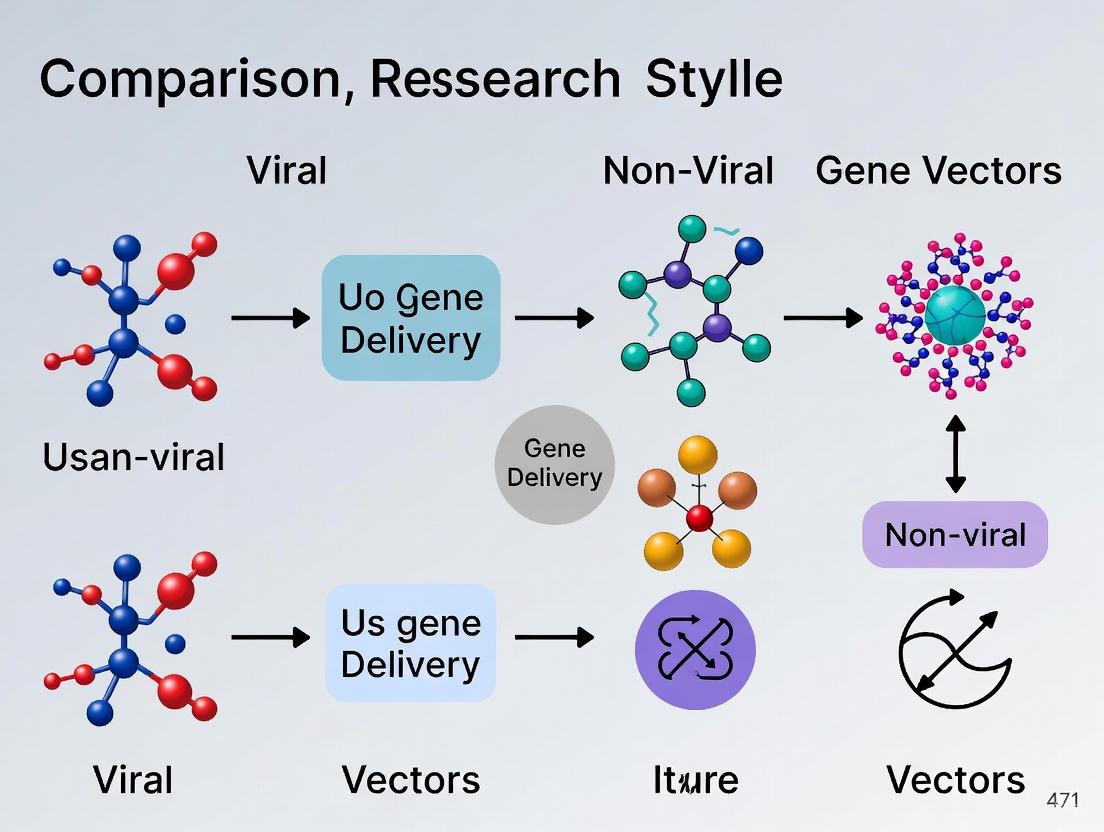
This article provides a detailed comparison of viral and non-viral gene delivery vectors, tailored for researchers, scientists, and drug development professionals.
Viral vs. Non-Viral Vectors for Gene Therapy: A Comprehensive Guide for Drug Development
Abstract
This article provides a detailed comparison of viral and non-viral gene delivery vectors, tailored for researchers, scientists, and drug development professionals. It covers the foundational principles of gene therapy vectors, explores their specific methodologies and clinical applications, addresses key challenges and optimization strategies, and offers a validated, side-by-side analysis of their efficacy, safety, and commercial viability. By synthesizing the latest research and clinical trial data, this review serves as a strategic resource for selecting the optimal vector system for therapeutic development.
Gene Delivery Vectors: Unveiling the Core Principles and Mechanisms
Defining Gene Therapy and the Critical Role of Delivery Vectors
Gene therapy represents a transformative approach in modern medicine, aiming to treat or cure genetic disorders by introducing, removing, or modifying genetic material within a patient’s cells. [1] The success of this intervention hinges critically on the delivery vehicle, or vector, which must safely and efficiently transport therapeutic genetic cargo to target cells while navigating multiple biological barriers. [2] [3] Vectors are broadly categorized into viral and non-viral systems, each with distinct advantages, limitations, and ideal applications, making the choice between them a fundamental decision in therapy design. [4] [5]
Viral Vectors: Harnessing Nature's Delivery Machinery
Viral vectors are engineered from viruses that have been modified to remove their pathogenic capabilities while leveraging their innate efficiency at delivering genetic material into cells. [6] [4] The most widely used viral vectors in clinical settings are adenoviruses (Ad), adeno-associated viruses (AAV), and lentiviruses (LV). [7] [8]
Table 1: Key Characteristics of Major Viral Vectors
| Vector Type | Genetic Material | Packaging Capacity | Integration into Host Genome | Duration of Expression | Primary Advantages | Key Challenges |
|---|---|---|---|---|---|---|
| Adenovirus (Ad) | dsDNA | ~8-36 kb [9] | No [9] | Transient [5] | High transduction efficiency; infects dividing & non-dividing cells [1] [6] | Significant immunogenicity [1] [6] |
| Adeno-Associated Virus (AAV) | ssDNA | ~4.7 kb [10] | No (primarily episomal) [10] | Long-term in non-dividing cells [1] [10] | Favorable safety profile; low immunogenicity [1] [6] [10] | Limited packaging capacity; pre-existing immunity in populations [6] [10] |
| Lentivirus (LV) | RNA (reverse transcribed to dsDNA) | ~8 kb [4] | Yes [1] [4] | Stable, long-term [1] [6] | Infects dividing & non-dividing cells; stable expression [1] [6] | Risk of insertional mutagenesis [1] [6] |
Non-Viral Vectors: A Modular Synthetic Approach
Non-viral vectors comprise synthetic or natural compounds and physical methods to introduce genetic material into cells. [1] Their development has been accelerated by advances in nanotechnology and materials science, offering enhanced safety and manufacturing flexibility. [2] [3]
Table 2: Comparison of Major Non-Viral Delivery Methods
| Delivery Method | Mechanism of Action | Key Advantages | Key Challenges |
|---|---|---|---|
| Lipid Nanoparticles (LNPs) [1] [2] | Cationic/ionizable lipids encapsulate nucleic acids; facilitate endosomal escape. | Proven clinical success (e.g., mRNA vaccines, Onpattro); scalable production. [7] [1] [3] | Potential toxicity at high doses; can activate immune response. [4] |
| Polymeric Vectors (e.g., PEI) [2] [4] | Cationic polymers condense DNA/RNA into polyplexes via electrostatic interactions. | High transfection efficiency; "proton-sponge" effect for endosomal escape. [4] | Cytotoxicity; non-biodegradable, can accumulate in cells. [4] |
| Electroporation [1] [5] | Electrical pulses create temporary pores in cell membranes for nucleic acid entry. | High efficiency for ex vivo delivery (e.g., CAR-T cells); versatile for cell types. [1] | Significant cell toxicity and mortality; requires specialized equipment. [9] |
Direct Comparison: Viral vs. Non-Viral Vectors
The choice between viral and non-viral vectors involves a careful trade-off between efficiency, safety, and practicality. The table below provides a high-level comparison of the two overarching strategies.
Table 3: Viral vs. Non-Viral Vectors at a Glance
| Aspect | Viral Vectors | Non-Viral Vectors |
|---|---|---|
| Origin | Derived from naturally occurring viruses [5] | Synthetic or naturally occurring compounds [5] |
| Transfection Efficiency | Often high [4] [5] | Typically lower, though improving with LNPs [4] [5] |
| Immunogenicity | More likely to trigger an immune response [4] [5] | Lower immunogenicity [4] [5] |
| Genome Integration | Some (e.g., LV) integrate, raising mutagenesis concerns [1] [9] | Does not integrate, reducing mutation risk [4] [5] |
| Packaging Capacity | Limited, especially AAV (~4.7 kb) [6] [10] | Larger capacity (>20 kb for DNA) [3] [4] |
| Manufacturing & Scalability | Complex and costly [4] | Generally simpler and more scalable [4] [5] |
| Typical Gene Expression | Can be long-lasting or permanent [6] [5] | Typically transient [5] |
Experimental Protocols for Vector Evaluation
Robust experimental protocols are essential for evaluating the performance and safety of gene delivery vectors. Below are summarized methodologies for key assays.
Protocol 1: In Vitro Transfection Efficiency and Cell Viability
This standard protocol assesses how effectively a vector delivers a functional gene (e.g., a reporter gene) to cells in culture and measures its associated toxicity.
- Cell Seeding: Plate adherent cells (e.g., HEK293, HeLa) in a 24-well plate at a density of 5 x 10^4 cells per well and culture for 24 hours. [2]
- Vector Transfection: Prepare complexes of the vector (e.g., LNP, PEI polyplex, AAV) with a reporter gene plasmid (e.g., encoding Green Fluorescent Protein, GFP) in a serum-free medium. Apply the complexes to the cells. [2]
- Incubation: Incubate cells for 24-48 hours to allow for gene expression.
- Efficiency Analysis (Flow Cytometry): Harvest cells, wash, and resuspend in buffer. Use a flow cytometer to quantify the percentage of GFP-positive cells, which indicates successful transfection. [2]
- Viability Assay (MTT): Add MTT reagent to the cells. Metabolically active cells reduce MTT to purple formazan. Dissolve the precipitate and measure the absorbance at 570 nm. Cell viability is expressed as a percentage relative to untreated control cells. [2]
Protocol 2: In Vivo Gene Expression and Biodistribution
This protocol evaluates the function and localization of a vector in an animal model, providing critical pre-clinical data.
- Animal Administration: Systemically administer (e.g., via intravenous injection) the vector carrying a luciferase reporter gene to mice (e.g., C57BL/6). A control group should receive a placebo. [10]
- In Vivo Imaging (IVIS): At predetermined time points (e.g., days 1, 3, 7, 14), inject the substrate D-luciferin intraperitoneally. Anesthetize the animals and place them in an In Vivo Imaging System (IVIS) chamber. Acquire bioluminescent images to quantify the intensity and location of gene expression over time. [10]
- Tissue Collection and Analysis: Euthanize the animals and collect target organs (e.g., liver, spleen, lung). Homogenize the tissues to isolate total protein or RNA.
- qPCR for Biodistribution: Extract genomic DNA from tissue homogenates. Use quantitative PCR (qPCR) with primers specific to the transgene to determine the vector genome copy number per microgram of tissue DNA, quantifying biodistribution. [10]
The Scientist's Toolkit: Essential Research Reagents and Materials
Successful gene therapy research relies on a suite of specialized reagents and tools. The following table details key items for work in this field.
Table 4: Essential Research Reagent Solutions
| Item | Function/Description | Example Applications |
|---|---|---|
| HEK293 Cell Line [6] | Immortalized human embryonic kidney cell line; highly transferable and used for vector production (e.g., AAV, LV) and titration assays. | Viral vector propagation; in vitro transfection efficiency testing. [6] |
| Ionizable Cationic Lipids [3] | Critical component of LNPs; positively charged at low pH to encapsulate RNA and enable endosomal escape, neutral at physiological pH to reduce toxicity. [3] | Formulating LNPs for mRNA or siRNA delivery. [1] [3] |
| Polyethylenimine (PEI) [2] [4] | A cationic polymer that condenses nucleic acids into nanoparticles; known for its "proton-sponge" effect that promotes endosomal escape. [4] | In vitro and in vivo DNA delivery; a benchmark for polymeric transfection. [2] [4] |
| Nucleofector System [1] | Advanced electroporation device optimized for difficult-to-transfect primary cells (e.g., T-cells, HSCs) by delivering nucleic acids directly to the nucleus. | Creating engineered cell therapies like CAR-T cells ex vivo. [1] |
| AAV Serotype Library [6] [10] | A collection of different AAV capsid variants, each with unique tropism for specific tissues (e.g., AAV9 for muscle and CNS). [10] | Screening and selecting the optimal serotype for in vivo targeting to a specific organ. [6] [10] |
Decision Workflow for Vector Selection
The following diagram outlines the key decision points a researcher must consider when selecting an appropriate gene delivery vector for a specific application. This logical pathway integrates factors such as the target disease, required duration of expression, and payload size.
Gene therapy represents a revolutionary approach for treating genetic disorders by introducing functional genetic material into patients' cells to correct defective genes or provide therapeutic proteins. The core challenge in gene therapy lies in efficiently delivering genetic cargo to target cells while protecting it from degradation and avoiding immune responses. Viral vectors have emerged as nature's sophisticated solution to this delivery challenge, leveraging millions of years of viral evolution that has optimized viruses for efficient gene transfer into human cells. These vectors are genetically engineered viruses that retain the ability to infect cells but have been modified to eliminate their pathogenic properties, creating safe biological containers for therapeutic genes [11].
The field has witnessed remarkable progress since the first conceptual gene therapy trials in the 1970s and the first successful treatment in 1990. Today, viral vectors stand as the workhorses of clinical gene therapy, constituting 29 of the 35 vector-based therapies approved globally to date [12]. Their dominance in clinical applications stems from their innate biological advantages: evolved mechanisms for cellular entry, protection of genetic cargo during transit, and efficient delivery to the cell nucleus where transgene expression occurs [13]. As gene therapy expands beyond rare monogenic diseases to address cancer, cardiovascular conditions, and neurological disorders, understanding the landscape of viral vector platforms becomes increasingly crucial for researchers and drug development professionals.
Comparative Analysis of Major Viral Vector Systems
Retroviral and Lentiviral Vectors
Retroviral and lentiviral vectors belong to the retroviridae family and are characterized by their ability to integrate their genetic payload into the host cell genome, enabling long-term stable transgene expression. γ-retroviruses were among the first viral vectors utilized in gene therapy, demonstrating success in treating severe combined immunodeficiency (SCID) [6] [9]. However, their requirement for target cell division and preference for integration near transcriptional start sites raised safety concerns regarding insertional mutagenesis, leading to the development of safer self-inactivating (SIN) configurations [9].
Lentiviral vectors (LVVs), primarily derived from HIV-1, represent a significant advancement as they can infect both dividing and non-dividing cells, expanding their utility to quiescent cell types such as neurons and hematopoietic stem cells [6] [9]. Lentiviral vectors have become indispensable tools in ex vivo gene therapy applications, particularly for chimeric antigen receptor (CAR) T-cell therapies and hematopoietic stem cell gene therapies. Approved products like tisagenlecleucel (Kymriah) for leukemia, betibeglogene autotemcel (Zynteglo) for β-thalassemia, and atidarsagene autotemcel (Libmeldy) for leukodystrophies demonstrate their clinical impact [12]. The main advantage of lentiviral vectors lies in their stable genomic integration, ensuring permanent genetic correction in daughter cells. However, this same feature carries a risk of insertional mutagenesis, though improved SIN designs have significantly enhanced their safety profile [6] [9].
Adenoviral Vectors
Adenoviral vectors (AdVs) are non-enveloped viruses with linear double-stranded DNA genomes ranging from 26-45 kb [14]. Their principal advantage lies in their large cargo capacity—first-generation vectors accommodate ~8.5 kb, while third-generation "gutless" vectors can deliver up to 30 kb of foreign DNA [13] [9]. Adenoviral vectors efficiently transduce both dividing and non-dividing cells and remain episomal, avoiding insertional mutagenesis concerns [6]. They can achieve high levels of transgene expression, making them suitable for vaccine development and oncotherapy, as demonstrated by approved products like GENDICINE and ONCORINE for head and neck cancers [12].
The major limitation of adenoviral vectors is their potent immunogenicity. They can trigger severe inflammatory responses and are susceptible to pre-existing immunity in human populations, which can neutralize the vector before it reaches target cells [6] [14]. To address these limitations, successive generations of adenoviral vectors have been developed with progressively more viral genes deleted, reducing immune recognition while maintaining transduction efficiency [13]. Recent engineering efforts have focused on modifying surface proteins to evade neutralization and improve target cell specificity [14].
Adeno-Associated Viral Vectors
Adeno-associated viral vectors (AAVs) have emerged as the leading platform for in vivo gene therapy due to their excellent safety profile and long-term transgene expression in non-dividing cells [6] [11]. AAVs are small, non-enveloped parvoviruses with single-stranded DNA genomes of approximately 4.7 kb, which represents their primary constraint for therapeutic applications [12]. Their non-pathogenic nature, low immunogenicity, and ability to persist episomally for extended periods make them ideal for treating chronic genetic disorders [14].
AAVs exhibit remarkable versatility, with numerous natural serotypes and engineered variants offering distinct tissue tropisms for targeting specific organs [6]. This has enabled landmark FDA approvals such as voretigene neparvovec (Luxturna) for inherited retinal dystrophy and onasemnogene abeparvovec (Zolgensma) for spinal muscular atrophy [12]. To overcome the limited cargo capacity, innovative dual-vector approaches have been developed where large genes are split between two AAV vectors and reconstituted in target cells, successfully demonstrated in recent clinical trials for hereditary hearing loss [8] [12]. The main challenges for AAV therapy include pre-existing immunity in human populations, potential immune responses following administration, and manufacturing complexities for clinical-grade material [11].
Table 1: Characteristics of Major Viral Vector Systems
| Vector Type | Genome Type | Cargo Capacity | Integration | Key Advantages | Major Limitations |
|---|---|---|---|---|---|
| Retroviral | RNA | ~8 kb | Stable integration | Stable long-term expression | Only transduces dividing cells; Insertional mutagenesis risk |
| Lentiviral | RNA | ~8 kb | Stable integration | Transduces dividing & non-dividing cells; Stable expression | Insertional mutagenesis risk; Complex production |
| Adenoviral | dsDNA | 8-30 kb | Episomal | High transduction efficiency; Large cargo capacity | Strong immune response; Pre-existing immunity |
| Adeno-Associated (AAV) | ssDNA | ~4.7 kb | Predominantly episomal | Low immunogenicity; Long-term expression; Diverse serotypes | Small cargo capacity; Pre-existing immunity |
Table 2: Clinical Applications and Approved Therapies
| Vector Type | Approved Therapies | Clinical Applications | Notable Adverse Effects |
|---|---|---|---|
| Retroviral | Strimvelis (ADA-SCID) | Ex vivo cell therapy; Hematopoietic disorders | Insertional mutagenesis (SCID-X1 trial) |
| Lentiviral | Kymriah, Zynteglo, Libmeldy | CAR-T cells; Hematopoietic stem cell therapy | Possible insertional mutagenesis (theoretical risk) |
| Adenoviral | GENDICINE, ONCORINE | Cancer therapy; Vaccines | Severe inflammatory responses |
| Adeno-Associated | Luxturna, Zolgensma | Inherited retinal diseases; Neuromuscular disorders | Immune-mediated toxicity; Liver toxicity |
Quantitative Comparison of Vector Performance
Systematic evaluation of viral vector performance requires standardized assays to quantify key parameters including transduction efficiency, transgene expression levels, persistence of expression, and immunogenicity. The data presented below represent aggregated values from multiple experimental studies referenced in the search results.
Table 3: Quantitative Performance Metrics of Viral Vectors
| Parameter | Lentiviral Vectors | Adenoviral Vectors | Adeno-Associated Vectors |
|---|---|---|---|
| Transduction Efficiency | 70-90% (ex vivo) | 90-95% (in vitro) | Varies by serotype: 60-95% |
| Peak Expression | Moderate (stable expression) | Very High | Moderate to High |
| Duration of Expression | Long-term (integration-dependent) | Transient (weeks) | Long-term (months to years) |
| Immune Response | Low to Moderate | High | Low to Moderate |
| Titer Production | 10^7-10^8 IU/mL | 10^10-10^11 VP/mL | 10^12-10^13 VG/mL |
| Inflammatory Cytokine Induction | Low | High (IL-6, TNF-α) | Low (unless high doses) |
Experimental Protocols for Vector Evaluation
In Vitro Transduction Efficiency Assay
Objective: Quantify the efficiency of viral vector-mediated gene delivery in cultured cells.
Materials:
- Viral vector aliquots (LVs, AdVs, or AAVs)
- Target cells (HEK293, HeLa, or cell type relevant to therapy)
- Culture medium with appropriate supplements
- Polybrene (for retroviral transduction enhancement)
- Flow cytometer or fluorescence microscope
- Reporter gene construct (e.g., GFP)
Methodology:
- Seed target cells in 24-well plates at 50,000 cells/well and incubate for 24 hours
- Prepare serial dilutions of viral vectors in culture medium (multiplicity of infection [MOI] range: 1-100)
- For retroviral vectors, add polybrene to final concentration of 5-10 μg/mL
- Remove culture medium from cells and add vector-containing medium
- Centrifuge plates at 1000 × g for 30-60 minutes (spinoculation) to enhance transduction
- After 24 hours, replace vector-containing medium with fresh culture medium
- After 48-72 hours, analyze transduction efficiency using flow cytometry for fluorescent reporters or immunohistochemistry for non-fluorescent transgenes
Data Analysis: Calculate transduction efficiency as percentage of positive cells for transgene expression. Determine optimal MOI for each vector-cell combination by plotting percentage of positive cells against MOI [15] [2].
Vector Genome Quantification by qPCR
Objective: Quantify vector copy number in transduced cells.
Materials:
- Genomic DNA extraction kit
- qPCR system with SYBR Green or TaqMan chemistry
- Primers specific for transgene and reference gene
- Standard curves of vector plasmid DNA
Methodology:
- Extract genomic DNA from transduced cells 72 hours post-transduction
- Design primers targeting the transgene and a single-copy reference gene (e.g., RNase P)
- Prepare standard curves using serial dilutions of vector plasmid DNA
- Perform qPCR reactions in triplicate for both transgene and reference gene
- Calculate vector copy number per cell using the ΔΔCt method relative to standard curves
Data Analysis: Vector copy number = (Quantity of transgene)/(Quantity of reference gene/2) [2].
Diagram Title: Viral Vector Engineering Workflow
The Scientist's Toolkit: Essential Research Reagents
Table 4: Key Research Reagent Solutions for Viral Vector Research
| Reagent Category | Specific Examples | Function | Application Notes |
|---|---|---|---|
| Packaging Plasmids | pMD2.G, psPAX2, pAdVAntage | Provide essential viral genes in trans for vector production | Third-generation systems enhance safety through split genes |
| Producer Cell Lines | HEK293, HEK293T, Sf9 | Support vector replication and assembly | HEK293 provides adenoviral E1 gene; Sf9 for baculovirus system |
| Transfection Reagents | PEI, Lipofectamine, Calcium Phosphate | Introduce vector plasmids into producer cells | PEI offers cost-effectiveness for large-scale production |
| Purification Materials | Ion-exchange chromatography, Ultracentrifugation | Separate full capsids from empty ones | Critical for AAV potency; Empty capsids dominate immune response |
| Titration Assays | qPCR, ELISA, Plaque Assay | Quantify vector concentration | qPCR for genomic titer; ELISA for physical particles |
| Cell Culture Media | DMEM, RPMI-1640 with supplements | Support growth of target and producer cells | Serum-free media preferred for clinical manufacturing |
Viral vectors represent the most mature and clinically validated technology for gene delivery, with each vector system offering distinct advantages that make it suitable for specific therapeutic applications. Lentiviral vectors excel in ex vivo cell engineering where stable genomic integration is desired, while AAV vectors dominate in vivo applications requiring long-term gene expression in non-dividing cells. Adenoviral vectors remain valuable for applications needing high transient expression, such as cancer therapy and vaccines, despite their immunogenicity challenges.
The future of viral vector development lies in addressing current limitations through advanced engineering approaches. These include modifying capsid proteins to evade pre-existing immunity and enhance tissue specificity, optimizing regulatory elements to achieve more precise transgene control, and developing novel production systems to reduce manufacturing costs. As gene therapy continues to expand beyond rare genetic disorders to more common conditions, the refinement of viral vector platforms will play a pivotal role in enabling safer, more effective, and more accessible treatments. The ideal universal vector remains elusive, but the current diversity of available systems provides researchers with a powerful toolkit to match specific clinical requirements with appropriate delivery solutions.
Diagram Title: Viral Vector Transduction Mechanism
Gene therapy represents a transformative approach for treating a multitude of inherited and acquired diseases by delivering functional genetic material into targeted cells to manipulate gene expression [16]. The clinical success of this intervention hinges almost entirely on the efficiency and safety of the delivery vehicle, or vector [9]. Vectors are broadly categorized into viral and non-viral systems. For decades, viral vectors have been the workhorse of clinical gene therapy, accounting for 29 of the 35 approved vector-based therapies globally [17] [12]. These vectors, including lentiviruses (LV), adenoviruses (Ad), and adeno-associated viruses (AAV), leverage viruses' natural high infection efficiency [17].
However, viral vectors are hampered by several limitations: they can trigger significant immunogenic reactions, pose a risk of insertional mutagenesis (where the integrated DNA disrupts normal gene function), have a limited packaging capacity, and involve complex, costly manufacturing processes [16] [12] [9]. These challenges have catalyzed the intensive development of non-viral vectors as synthetic alternatives. Non-viral vectors, particularly lipid nanoparticles (LNPs), have gained widespread recognition following their successful deployment in mRNA COVID-19 vaccines, legitimizing their use in clinical settings [12] [18]. This guide provides an objective comparison of the performance of leading non-viral vector classes against their viral counterparts and details the experimental methodologies underpinning their evaluation.
Comparative Analysis: Viral vs. Non-Viral Vectors
The choice between viral and non-viral vectors is not a matter of superiority but of matching vector properties to therapeutic goals. The table below summarizes the core characteristics of each platform.
Table 1: Key Characteristics of Viral and Non-Viral Gene Delivery Vectors
| Feature | Viral Vectors | Non-Viral Vectors |
|---|---|---|
| Origin | Derived from engineered viruses (e.g., LV, AAV, Ad) [17] [19] | Synthetic particles (e.g., LNP, polymers) [20] [3] |
| Transfection Efficiency | Typically high [12] [3] | Historically lower, but modern LNPs show high efficiency [12] [3] |
| Immunogenicity | Moderate to high; can trigger strong immune responses [16] [12] | Generally lower [12] [20] |
| Genomic Integration | Yes (e.g., LV); AAV mostly episomal [17] [19] | Very rare; predominantly episomal [20] [3] |
| Cargo Capacity | Limited (~4.7 kb for AAV; up to ~8 kb for Adenovirus) [12] [19] | Large (>20 kb for DNA; mRNA possible) [3] |
| Manufacturing & Scalability | Complex, time-consuming, and costly [9] | Simpler, more scalable, and cost-effective [16] [20] |
| Typical Applications | In vivo gene replacement (e.g., Luxturna, Zolgensma), ex vivo CAR-T therapies [17] [12] | mRNA vaccines, siRNA therapy (e.g., Onpattro), CRISPR delivery, DNA plasmid delivery [16] [12] |
Engineering and Performance of Major Non-Viral Vector Classes
Non-viral vectors are engineered to compact and protect nucleic acids, facilitate cellular uptake, and navigate intracellular barriers. The most prominent classes are lipid-based and polymer-based nanoparticles.
Lipid-Based Vectors
Table 2: Comparison of Lipid-Based Non-Viral Vectors
| Vector Type | Key Components | Mechanism of Nucleic Acid Complexation | Advantages | Limitations & Toxicity Concerns |
|---|---|---|---|---|
| Cationic Liposomes | Cationic lipids, helper lipids [3] | Electrostatic interaction with nucleic acids to form "lipoplexes" [18] | Good biocompatibility; can encapsulate various payloads [3] | Poor stability; low encapsulation efficiency; cytotoxicity from high positive charge [3] |
| Lipid Nanoparticles (LNPs) | Ionizable lipids, phospholipids, cholesterol, PEG-lipids [16] [3] | Ionizable lipids are positively charged at low pH for encapsulation, neutral at physiological pH [3] | High encapsulation efficiency; excellent efficacy demonstrated in clinics (e.g., Patisiran, COVID-19 vaccines); better safety profile [12] [3] | Can activate immune responses at high doses; predominant liver tropism after systemic administration [12] |
Polymer-Based Vectors
Table 3: Comparison of Polymer-Based Non-Viral Vectors
| Vector Type | Structure | Mechanism of Action & Key Features | Cytotoxicity & Challenges |
|---|---|---|---|
| Polyethyleneimine (PEI) | Linear or branched chains with high amine density [16] [20] | "Proton sponge" effect for endosomal escape; considered a "gold standard" in polymer transfections [20] [18] | High positive charge density leads to significant cytotoxicity and disrupts cellular metabolism [16] [18] |
| Polyamidoamine (PAMAM) Dendrimers | Highly branched, monodisperse 3D structure [16] [20] | Large number of terminal groups for strong DNA binding; defined size and architecture [16] | Cytotoxicity at higher generations/concentrations [20] |
| Poly(lactic-co-glycolic acid) (PLGA) | Biodegradable polyester [20] | Excellent biocompatibility and FDA approval for some applications; sustained release profile [20] | Relatively low transfection efficiency for nucleic acids without functionalization [20] |
Experimental Protocols for Evaluating Non-Viral Vectors
Robust experimental protocols are essential for the objective comparison of non-viral vectors. The following methodologies are standard in the field.
Nanoparticle Formulation and Characterization
Protocol 1: Formulation of Polyplexes
- Polymer Synthesis: Branched PEI (25 kDa) is a commonly used benchmark. New polymers like Highly Branched Poly(β-amino ester) (HPAE) are synthesized via Michael addition [16].
- Complex Formation: Dilute the polymer in an appropriate buffer (e.g, HEPES). Add the DNA or RNA solution to the polymer solution at a defined w/w ratio or N/P ratio (ratio of polymer Nitrogen to nucleic acid Phosphate).
- Incubation: Vortex briefly and incubate at room temperature for 20-30 minutes to allow polyplex formation [18].
Protocol 2: Characterization of Nanoparticles
- Size and Zeta Potential: Dilute the formed nanoparticles in distilled water or PBS. Use Dynamic Light Scattering (DLS) to measure the hydrodynamic diameter and Polydispersity Index (PDI). Measure the Zeta Potential using Laser Doppler Microelectrophoresis. Ideal nanoparticles are typically 60-100 nm with a slightly positive zeta potential (~35 mV) for cellular uptake [16] [3].
- Stability and Serum Resistance: Inculate nanoparticles with PBS or cell culture medium containing 10% fetal bovine serum (FBS) at 37°C. Monitor changes in size and aggregation via DLS over 24 hours. Vectors modified with PEG demonstrate superior stability [16].
In Vitro Transfection and Cytotoxicity Assessment
Protocol 3: Cell Transfection
- Cell Seeding: Plate adherent cells (e.g., HEK-293, HeLa, or primary hMSCs) in 24-well or 48-well plates at a density of 50,000-70,000 cells/cm² and culture until 60-80% confluent [18].
- Transfection: Replace the medium with fresh, serum-free or serum-containing medium. Add the pre-formed nanoparticle complexes. The optimal nucleic acid dose must be determined empirically (e.g., 0.5-1.0 µg DNA per well in a 24-well plate) [18].
- Incubation: Incubate cells for 4-6 hours, then replace the transfection medium with fresh complete medium. Analyze gene expression 24-72 hours post-transfection [18].
Protocol 4: Cytotoxicity Assay (MTT Assay)
- Treatment: Perform transfections as in Protocol 3.
- MTT Incubation: 24 hours post-transfection, add MTT reagent (3-(4,5-dimethylthiazol-2-yl)-2,5-diphenyltetrazolium bromide) to each well and incubate for 2-4 hours at 37°C.
- Solubilization: Remove the medium and dissolve the formed formazan crystals in dimethyl sulfoxide (DMSO).
- Analysis: Measure the absorbance at 570 nm. Calculate cell viability as a percentage relative to untreated control cells [18]. Vectors like PEI often show a dose-dependent decrease in cell viability.
The following workflow visualizes the complete experimental journey from vector preparation to analysis:
Diagram 1: A comprehensive workflow for the development and evaluation of non-viral gene delivery vectors, illustrating the iterative process from synthesis to final analysis.
The Scientist's Toolkit: Essential Research Reagents
Successful research in non-viral gene delivery relies on a suite of essential reagents and materials. The table below lists key solutions for setting up foundational experiments.
Table 4: Essential Research Reagents for Non-Viral Vector Studies
| Reagent/Material | Function/Application | Examples & Notes |
|---|---|---|
| Cationic Polymers | Condense nucleic acids to form polyplexes; facilitate endosomal escape [16] [20] | PEI (branched, 25 kDa): Gold standard, high efficiency but cytotoxic. PAMAM Dendrimers: Well-defined structure [20] [18]. |
| Ionizable Lipids | Core component of LNPs; enables efficient RNA encapsulation and release [3] | Proprietary lipids (e.g., DLin-MC3-DMA). Charge is pH-dependent, reducing toxicity [12] [3]. |
| PEG-Lipids | Surface coating for nanoparticles; enhances stability and circulation time [16] [3] | DMG-PEG, DSPE-PEG. Imparts "stealth" properties by reducing protein adsorption [16]. |
| Reporter Genes | Quantitative assessment of transfection efficiency [18] | Green Fluorescent Protein (GFP): Visual confirmation. Luciferase: Highly sensitive quantitative readout [18]. |
| Cell Lines | In vitro models for transfection and toxicity [18] | HEK-293: Highly transfectable. HeLa: Common model. Primary hMSCs: Challenging, but clinically relevant [18]. |
| Characterization Instruments | Critical for quantifying nanoparticle properties [16] | Dynamic Light Scattering (DLS): Size and PDI. Zeta Potential Analyzer: Surface charge [16]. |
The field of non-viral vectors is evolving rapidly, driven by the need for safer and more versatile gene delivery solutions. While viral vectors currently dominate the clinical landscape for certain applications, synthetic vectors like LNPs and engineered polymers have demonstrated remarkable success and potential. The choice of vector is context-dependent, requiring a careful balance between efficiency, safety, cargo size, and manufacturability. Ongoing research focused on overcoming barriers such as liver-dominated tropism, enhancing targeting specificity, and further reducing immunogenicity will continue to expand the reach of non-viral gene therapy from rare diseases to broader clinical applications.
Key Biological Barriers to Successful Gene Delivery In Vivo
The journey of a therapeutic gene from administration to its intended target site within the human body is fraught with challenges. Effective in vivo gene delivery requires navigating a complex series of extracellular and intracellular barriers that can significantly diminish therapeutic efficacy or cause adverse effects. These barriers represent fundamental hurdles that both viral and non-viral delivery systems must overcome to achieve successful genetic modification. Understanding these biological obstacles is crucial for researchers and drug development professionals designing next-generation gene therapies, as the choice of delivery vector directly determines which barriers can be most effectively circumvented.
The biological barriers to gene delivery operate sequentially, forming a defensive cascade that begins immediately upon introduction into the bloodstream and continues through to intracellular trafficking and genomic integration. These obstacles include rapid clearance mechanisms, enzymatic degradation, cellular membrane interactions, endosomal entrapment, cytoplasmic transport limitations, and finally, the nuclear membrane for DNA-based therapies. Different vector classes have evolved or been engineered with distinct capabilities to overcome specific subsets of these barriers, creating complementary strengths and weaknesses between viral and non-viral approaches that inform their appropriate therapeutic applications [2].
Biological Barriers to Gene Delivery
Extracellular Barriers
The extracellular environment presents the first and most immediate challenges to successful gene delivery. Upon administration, vectors encounter a hostile landscape designed to neutralize foreign genetic material. Nucleases abundant in serum and extracellular fluids rapidly degrade unprotected DNA and RNA, with half-lives of just minutes for naked nucleic acids [2]. This enzymatic degradation significantly reduces the amount of intact genetic material available to reach target cells.
The reticuloendothelial system (RES) and tissue macrophages further limit delivery efficiency by actively clearing foreign particles from circulation. Nanoparticles smaller than 50 nm undergo rapid renal clearance, while those larger than 300 nm risk activating immune responses and subsequent removal [2]. Additionally, serum proteins readily adsorb to delivery vectors through electrostatic interactions, potentially causing dissociation or aggregation of vector-genome complexes. These aggregates are efficiently cleared by macrophages and the RES, further reducing bioavailability and shortening the duration of gene expression [2].
The blood-brain barrier represents a particularly formidable extracellular obstacle for neurological applications. This highly selective interface prevents most vectors from reaching central nervous system targets, requiring specialized delivery strategies. Recent advances in lipid nanoparticle design have begun addressing this challenge through high-throughput screening approaches to identify formulations capable of crossing this barrier following intravenous administration [21].
Table 1: Extracellular Barriers to Gene Delivery
| Barrier | Challenge | Consequence |
|---|---|---|
| Enzymatic Degradation | Nucleases in blood and extracellular fluids | Rapid degradation of naked DNA/RNA (half-life: minutes) |
| Reticuloendothelial System | Macrophage clearance of foreign particles | Reduced bioavailability and shortened circulation time |
| Serum Protein Interactions | Protein adsorption to vector surfaces | Vector dissociation/aggregation and immune activation |
| Renal Clearance | Filtration of small particles (<50 nm) | Rapid elimination from circulation |
| Blood-Brain Barrier | Highly selective endothelial interface | Limited access to central nervous system targets |
Intracellular Barriers
Once vectors reach target cells, they must navigate an equally formidable series of intracellular obstacles. The negatively charged cell membrane presents an initial barrier through electrostatic repulsion of negatively charged genetic material [2]. Cellular uptake typically occurs through endocytosis, with the specific pathway varying by vector size and surface properties. Clathrin-mediated endocytosis is common for smaller particles, while macropinocytosis typically accommodates larger complexes (200 nm-5 μm) [2].
Following endocytosis, vectors face what many consider the most significant intracellular barrier: endosomal entrapment. The endosomal compartment features multiple nucleases and an increasingly acidic environment that degrades genetic material. Failure to escape endosomes results in complete therapeutic failure, as the genetic payload never reaches its intracellular site of action. Current estimates suggest that endosomal escape efficiency for most non-viral vectors does not exceed 4% [2]. Viral vectors have evolved sophisticated mechanisms for endosomal escape, while synthetic vectors often incorporate components like ionizable lipids that become protonated in acidic environments, promoting endosomal membrane disruption [1].
Successful endosomal escape releases the genetic payload into the cytoplasm, where it encounters additional obstacles including degradation by cytoplasmic nucleases and restricted diffusion due to the crowded cytosolic environment and molecular motors that transport along microfilaments and microtubules [2]. For DNA-based therapies that require nuclear localization, the nuclear membrane presents a final major barrier. The nuclear pore complex is highly selective for macromolecules, generally permitting free diffusion only for small molecules while excluding larger genetic constructs. DNA relies primarily on nuclear membrane breakdown during cell division for nuclear entry, making transfection efficiency highly dependent on target cell proliferation rates [2].
Diagram 1: Sequential Biological Barriers to In Vivo Gene Delivery. The pathway illustrates extracellular (red) and intracellular (blue) obstacles that gene delivery vectors must overcome from administration to therapeutic effect.
Comparative Analysis of Viral vs. Non-Viral Vectors
Viral Vectors: Mechanisms and Barriers
Viral vectors harness the natural evolutionary optimization of viruses for efficient gene delivery, having evolved sophisticated mechanisms to overcome many biological barriers. Adeno-associated viruses (AAV) demonstrate particularly efficient traversal of these obstacles through their small size (26 nm diameter) and robust capsid structure that provides stability against enzymatic degradation and serum protein interactions [10]. Their natural tropism for specific tissues, determined by capsid-receptor interactions, facilitates targeted cellular uptake. AAVs efficiently escape endosomal compartments through pH-dependent capsid conformational changes that enable membrane penetration [10]. While AAV genomes primarily remain episomal, their efficient nuclear import mechanisms allow for sustained transgene expression in non-dividing cells.
Lentiviral vectors utilize a different strategy, with envelope glycoproteins mediating cell entry through receptor-mediated endocytosis. Their key advantage lies in the ability to integrate into the host genome, facilitated by viral integrase enzymes that actively transport the pre-integration complex across the nuclear membrane through nuclear pore complexes [4] [12]. This capability allows lentiviruses to transduce non-dividing cells efficiently and provides long-term stable transgene expression through chromosomal integration, though this introduces a risk of insertional mutagenesis [12].
Despite their efficiency, viral vectors face significant barriers related to pre-existing immunity. Neutralizing antibodies from prior wild-type virus exposure can completely abrogate transduction efficiency, particularly concerning for AAV vectors given their high seroprevalence in human populations [10]. Additionally, viral capsids and genetic elements can trigger both innate and adaptive immune responses, leading to vector clearance and reduced persistence of transgene expression, especially upon re-administration [4] [12].
Table 2: Viral Vector Performance Against Biological Barriers
| Biological Barrier | AAV Vectors | Lentiviral Vectors |
|---|---|---|
| Serum Stability | Robust capsid provides good stability | Enveloped structure, moderate stability |
| Cellular Uptake | Receptor-mediated endocytosis (varies by serotype) | Receptor-mediated endocytosis (pseudotyped) |
| Endosomal Escape | pH-dependent capsid changes | pH-dependent fusion mechanisms |
| Nuclear Import | Passive import through pores (efficient in dividing/non-dividing) | Active import via integrase complex (efficient in non-dividing) |
| Genome Persistence | Episomal (long-term in non-dividing cells) | Integrated (stable long-term expression) |
| Immune Recognition | Pre-existing antibodies common, moderate immunogenicity | Lower pre-existing immunity, integration concerns |
Non-Viral Vectors: Mechanisms and Barriers
Non-viral vectors employ synthetic materials and physical methods to overcome biological barriers, offering advantages in safety and manufacturing but facing different challenges. Lipid nanoparticles (LNPs) represent the most clinically advanced non-viral platform, forming stable complexes that protect genetic material from enzymatic degradation through encapsulation [2] [1]. Their modular design allows surface modification with targeting ligands to enhance cell-specific delivery, though most systemically administered LNPs still predominantly accumulate in the liver [12] [1]. The defining feature of modern LNPs is their incorporation of ionizable lipids that become protonated in acidic endosomal environments, triggering membrane disruption and facilitating endosomal escape—a critical bottleneck for non-viral systems [1].
Polymer-based vectors like polyethyleneimine (PEI) utilize their high cationic charge density to condense genetic material and generate an osmotic effect that induces endosomal burst through the "proton sponge" effect [2] [4]. However, this strong positive charge often correlates with significant cytotoxicity, driving development of biodegradable alternatives like poly(β-amino ester)s (PBAEs) [4]. Inorganic nanoparticles including gold nanoparticles and silica-based systems offer exceptional stability but face challenges in biodegradation and potential long-term toxicity concerns [4].
The primary limitations of non-viral vectors include significantly lower transfection efficiency compared to viral platforms, particularly for DNA delivery requiring nuclear import [2] [4]. Their short duration of expression makes them better suited for transient applications like CRISPR gene editing or mRNA delivery rather than permanent genetic correction. Additionally, achieving tissue-specific targeting remains challenging, with most systemically administered non-viral vectors showing preferential accumulation in hepatic tissues due to RES filtration [12] [1].
Table 3: Non-Viral Vector Performance Against Biological Barriers
| Biological Barrier | Lipid Nanoparticles | Polymer Vectors | Physical Methods |
|---|---|---|---|
| Serum Stability | Good (PEGylation enhances stability) | Variable (aggregation common) | N/A (direct delivery) |
| Cellular Uptake | Endocytosis (enhanced by targeting ligands) | Endocytosis (charge-mediated) | Membrane disruption |
| Endosomal Escape | Ionizable lipids (pH-dependent) | Proton sponge effect (osmotic) | Bypasses endocytosis |
| Nuclear Import | Inefficient for DNA | Inefficient for DNA | Variable efficiency |
| Genome Persistence | Transient (days to weeks) | Transient (days to weeks) | Variable |
| Immune Recognition | Low immunogenicity | Higher cytotoxicity | Tissue damage concerns |
Experimental Approaches for Evaluating Barrier Penetration
In Vitro Screening Methods
Robust in vitro screening methodologies provide critical preliminary data on vector performance before advancing to complex in vivo models. Standard transfection efficiency assays employ reporter genes like luciferase or green fluorescent protein (GFP) to quantify successful gene delivery and expression across different cell types [21]. For neurological applications, primary neuron cultures serve as relevant systems for evaluating brain delivery potential, with protein expression monitored over time to determine kinetics [21].
Endosomal escape efficiency represents a particularly critical parameter measured through various approaches. These include co-localization studies using fluorescently labeled vectors with endosomal markers, and functional assays that employ galectin-8 recruitment to damaged endosomes as a quantitative escape indicator. Cell viability assays like MTT or LDH release help evaluate vector cytotoxicity, especially important for cationic polymers with known toxicity profiles [2] [4].
High-throughput screening approaches have recently emerged to accelerate vector optimization. One innovative method formulates barcoded DNA (b-DNA) into diverse LNP libraries, enabling simultaneous evaluation of numerous formulations in pooled in vivo experiments. These barcoded LNPs can be administered to animals, with subsequent quantification of barcode distribution in various tissues via next-generation sequencing to identify top-performing candidates for further investigation [21].
In Vivo Evaluation Methods
Comprehensive in vivo evaluation remains essential for assessing barrier penetration in physiologically relevant contexts. Biodistribution studies quantify vector accumulation in target versus off-target tissues, typically using radiolabeled vectors, quantitative PCR for vector genomes, or the barcode sequencing approach mentioned above [21]. These studies identify dominant clearance pathways and potential toxicity concerns.
Functional efficacy assessments measure therapeutic outcomes in disease-relevant animal models. For example, LNP-mediated delivery of gene editing components to the brain can be evaluated through behavioral tests, histological analysis for neurological damage or inflammation, and direct measurement of editing efficiency in target cells [21]. Similarly, AAV efficacy for bone disorders is assessed through imaging and biomechanical testing in orthopedic disease models [10].
Immune response characterization represents another critical in vivo parameter, measuring both innate immune activation (inflammatory cytokines) and adaptive immune responses (neutralizing antibodies) against the vector [12] [10]. This is particularly important for viral vectors where pre-existing immunity can completely abrogate efficacy, and for lipid nanoparticles where PEG components can induce anti-PEG antibodies that accelerate blood clearance upon repeated administration.
Diagram 2: Experimental Workflow for Evaluating Vector Barrier Penetration. The process begins with in vitro screening (red) progressing to lead candidate selection, followed by comprehensive in vivo evaluation (blue) before clinical translation.
Research Reagent Solutions for Gene Delivery Studies
Table 4: Essential Research Reagents for Gene Delivery Studies
| Reagent Category | Specific Examples | Research Applications | Key Suppliers |
|---|---|---|---|
| Viral Vectors | AAV serotypes (AAV8, AAV9), Lentiviral pseudotypes | Tissue-specific transduction, stable gene expression | Lonza, Thermo Fisher, Oxford Biomedica |
| Lipid Nanoparticles | Ionizable lipids (DLin-MC3-DMA), PEGylated lipids, Helper lipids (DOPE) | Nucleic acid encapsulation, serum stability, endosomal escape | Merck KGaA, Thermo Fisher |
| Polymer Vectors | Polyethylenimine (PEI), Poly(β-amino ester)s (PBAE) | DNA condensation, proton sponge effect | Merck KGaA, Sigma-Aldrich |
| Reporter Systems | Luciferase, GFP, Barcoded DNA (b-DNA) | Transfection efficiency quantification, biodistribution | Various molecular biology suppliers |
| Cell Culture Models | Primary neurons, HEK-293, COS-7 | Cell-specific uptake studies, production systems | ATCC, commercial providers |
| Analytical Tools | qPCR systems, NGS platforms, Particle analyzers | Vector genome quantification, LNP characterization | Thermo Fisher, Illumina, Malvern |
The selection of appropriate research reagents fundamentally shapes gene delivery studies, with different vector classes requiring specialized materials. AAV serotypes with defined tropisms (e.g., AAV8 and AAV9 for muscle and cardiac tissues) enable tissue-specific delivery studies [10]. Ionizable lipids like DLin-MC3-DMA form the functional core of modern LNP systems by enabling efficient endosomal escape, while helper lipids such as DOPE enhance membrane fusion and structural stability [21] [1]. Polymer vectors including PEI and biodegradable PBAEs offer alternative nucleic acid condensation mechanisms with different toxicity profiles [2] [4].
Advanced screening technologies like barcoded DNA systems represent cutting-edge tools that accelerate vector optimization through pooled library approaches, enabling high-throughput assessment of numerous formulations in single experiments [21]. Reporter genes including luciferase and GFP provide quantitative readouts of delivery efficiency, while specialized cell models like primary neurons offer physiologically relevant systems for evaluating delivery to challenging targets like the central nervous system [21]. These research tools collectively enable comprehensive evaluation of how different vector systems overcome the complex biological barriers to effective gene delivery.
From Bench to Bedside: Clinical Applications of Viral and Non-Viral Systems
Viral vectors have emerged as indispensable tools in modern gene therapy and biomedical research, enabling the precise delivery of genetic material to target cells for both therapeutic applications and fundamental scientific inquiry. The selection of an appropriate viral vector is a critical determinant of experimental or clinical success, influencing factors ranging from transduction efficiency and duration of transgene expression to immunogenicity and overall safety profile [22]. Among the numerous viral vectors available, three have established themselves as predominant platforms: Adeno-Associated Virus (AAV), Lentivirus (LV), and Adenovirus (AdV) [23] [24]. Each of these vectors possesses distinct biological characteristics that dictate their ideal applications, advantages, and limitations.
This comparison guide provides a structured, evidence-based analysis of AAV, Lentivirus, and Adenovirus vectors, with a specific focus on their mechanistic actions in gene delivery. Framed within the broader context of viral versus non-viral gene delivery research, this guide synthesizes current scientific data to empower researchers, scientists, and drug development professionals in making informed decisions for their specific experimental or therapeutic needs. We present summarized quantitative data in structured tables, detailed experimental methodologies, and visual workflows to facilitate a comprehensive understanding of these viral workhorses in action.
The fundamental biological and structural differences between AAV, Lentivirus, and Adenovirus form the basis for their distinct performance characteristics in gene delivery applications. AAV is a small, non-enveloped virus with a single-stranded DNA genome approximately 4.7 kb in size, requiring helper viruses for replication in its wild-type form [25] [19]. Its non-pathogenic nature and ability to mediate long-term transgene expression make it particularly valuable for therapeutic applications [19] [26]. Lentivirus, a subclass of retroviruses, is an enveloped virus with an RNA genome that reverse-transcribes into DNA upon host cell entry, enabling stable integration into the host genome [27] [24]. Adenovirus is a non-enveloped double-stranded DNA virus notable for its large packaging capacity and highly efficient transduction profile, though it often triggers significant immune responses [23] [28].
Table 1: Fundamental Characteristics of Major Viral Vectors
| Characteristic | AAV | Lentivirus | Adenovirus |
|---|---|---|---|
| Virus Type | Dependoparvovirus (ssDNA) | Retrovirus (RNA) | Adenovirus (dsDNA) |
| Packaging Capacity | ~4.7 kb [25] [26] | ~8 kb [22] [28] | Up to ~36 kb [22] [28] |
| Integration Profile | Predominantly episomal [19] [26] | Integrates into host genome [27] [24] | Episomal (non-integrating) [23] [28] |
| Transgene Expression Duration | Long-term (months to years) [25] [19] | Long-term (stable integration) [27] [22] | Short-term/transient (days to weeks) [23] [22] |
| Immunogenicity | Low [23] [26] | Moderate [24] | High [23] [24] |
| Primary Applications | In vivo gene therapy [26] | Ex vivo cell modification [26] | Vaccines, oncolytic therapy [23] [28] |
Performance Comparison: Quantitative Data and Experimental Evidence
Transduction Efficiency and Biodistribution
Experimental studies directly comparing these vectors reveal significant differences in their transduction profiles across various tissues. In a comprehensive study of ocular gene therapy, researchers performed intravitreal injections of AAV, Lentivirus, and Adenovirus vectors encoding Green Fluorescent Protein (GFP) into adult C57BL/6OlaHsd mice [29]. The AAV-injected eyes demonstrated GFP expression in both inner and outer retinal cells from 7 days up to 6 months post-injection. In contrast, Lentivirus eyes showed long-lasting expression predominantly in the retinal pigment epithelium, while Adenovirus mediated transient transduction mainly in anterior chamber cells, with expression diminishing rapidly [29]. Biodistribution analysis via qPCR confirmed that all three vectors remained primarily localized to the eye and optic nerve, with minimal detection in non-target organs, supporting the relative safety of intravitreal delivery [29].
The tropism—the specificity for particular cell types or tissues—varies significantly among these vectors and can be further refined through engineering. AAV's natural tropism is largely determined by its capsid serotype, with over 1000 variants identified to date [19]. For instance, AAV2 exhibits strong tropism for retinal cells and neurons [25] [28], AAV8 and AAV9 efficiently transduce hepatocytes and cardiac tissue [19] [26], while AAVrh20 shows promise for dorsal root ganglion (DRG) targeting [27]. Lentivirus tropism is primarily determined by its envelope glycoproteins, with the vesicular stomatitis virus G (VSV-G) pseudotype being most common due to its broad tropism [27] [26]. Adenovirus naturally targets respiratory epithelial cells and hepatocytes but can be modified with different fiber proteins to alter its tropism [22] [28].
Immunogenicity and Safety Profiles
The immunogenic potential of these viral vectors represents a critical consideration for both research and clinical applications. AAV vectors generally exhibit low immunogenicity, making them suitable for repeated administration in some cases and contributing to their excellent safety profile in clinical trials [23] [26]. However, pre-existing neutralizing antibodies against various AAV serotypes are prevalent in the human population, which can potentially compromise therapeutic efficacy [19]. Lentivirus vectors typically provoke moderate immune responses, though early concerns regarding insertional mutagenesis have been substantially mitigated through the development of self-inactivating (SIN) third-generation vectors and improved manufacturing protocols [24] [26]. In contrast, Adenovirus vectors are highly immunogenic, frequently triggering robust inflammatory responses that can lead to rapid clearance of transduced cells and pose challenges for repeated administration [23] [24]. This strong immunogenicity, while a limitation for many gene therapy applications, can be advantageous in vaccine development where robust immune activation is desirable [22] [28].
Table 2: Safety and Immunogenicity Profile Comparison
| Parameter | AAV | Lentivirus | Adenovirus |
|---|---|---|---|
| Pre-existing Immunity in Humans | High prevalence of neutralizing antibodies [19] | Lower prevalence | High prevalence [28] |
| Risk of Insertional Mutagenesis | Very Low [26] | Moderate (reduced with SIN designs) [24] | Very Low (non-integrating) [28] |
| Inflammatory Potential | Low (but dose-dependent uveitis reported) [25] | Moderate | High [23] [24] |
| Clinical Safety Record | Excellent [26] | Good (with modern vectors) [26] | Moderate (immune concerns) [23] |
Experimental Protocols and Methodologies
Standardized Protocol for Assessing Transduction Efficiency
Objective: To quantitatively compare the transduction efficiency, biodistribution, and safety profiles of AAV, Lentivirus, and Adenovirus vectors in vivo.
Materials and Reagents:
- Viral Vectors: AAV2/2-GFP, VSV-G pseudotyped LV-GFP, AdV5-GFP
- Experimental Animals: C57BL/6 mice (8-10 weeks old)
- Control: Sterile saline solution
- Antibodies: Anti-GFP antibody, cell-specific markers (e.g., anti-NeuN for neurons, anti-GFAP for glia)
- qPCR Primers: Targeting vector genomes and host housekeeping genes
Methodology:
- Vector Administration: Perform intravitreal or systemic injections with standardized viral genome copies (e.g., 1x10^10 vg for AAV, 1x10^8 TU for Lentivirus, 1x10^9 vp for Adenovirus) [29].
- Temporal Analysis: Sacrifice animals at multiple time points (e.g., 3 days, 1 week, 1 month, 3 months, 6 months) post-injection to assess both short-term and long-term effects [29].
- Tissue Processing: Collect target tissues (e.g., retina, liver, brain) and divide each sample for both immunohistochemical analysis and genomic DNA extraction.
- Transgene Expression Analysis:
- Perform immunohistochemistry on cryosections using anti-GFP antibodies and appropriate cell-specific markers to identify transduced cell types [29].
- Quantify GFP-positive cells across multiple sections and animals.
- Biodistribution Assessment:
- Extract genomic DNA from tissues and analyze vector copy number per diploid genome using TaqMan qPCR with vector-specific primers and probes [29].
- Safety and Immune Response Evaluation:
This protocol enables direct comparison of transduction kinetics, tissue tropism, and immunogenicity across vector platforms, providing critical data for vector selection for specific applications.
Manufacturing and Purification Workflows
The production and purification processes for these viral vectors significantly impact their final quality, safety, and suitability for clinical applications. AAV manufacturing typically employs a triple-transfection system in HEK293 cells, followed by cellular lysis and purification through density gradient centrifugation or chromatography [24] [26]. A critical quality consideration for AAV is the prevalence of empty capsids (lacking the therapeutic genome), which represents a significant product-related impurity that must be minimized or removed [24] [26]. Lentivirus production commonly uses a four-plasmid system in 293T cells, with subsequent concentration of the harvested supernatant via ultracentrifugation and purification by chromatography [24]. The manufacturing process requires strict biosafety level 2 containment due to the HIV-derived nature of the backbone [22]. Adenovirus production involves infection of PER.C6 or HEK293 cells with subsequent harvest, lysis, and purification through chromatography or ultracentrifugation [28]. Adenovirus manufacturing is generally more straightforward and yields higher titers compared to AAV and Lentivirus, contributing to its lower production costs [22].
Diagram Title: Viral Vector Manufacturing Workflow and Key Challenges
The Scientist's Toolkit: Essential Research Reagents
Successful implementation of viral vector experiments requires careful selection of specialized reagents and systems. The following table details essential materials for working with these vector systems, along with their specific functions in experimental protocols.
Table 3: Essential Research Reagents for Viral Vector Research
| Reagent/Solution | Function | Application Notes |
|---|---|---|
| Packaging Plasmids | Provide essential viral genes in trans for vector production | AAV: Rep/Cap + Ad helper genes [26]; LV: Gag/Pol, Rev, VSV-G [27] |
| Producer Cell Lines | Support viral vector replication and assembly | HEK293 cells (AAV, LV, AdV) [26]; 293T cells (LV) [27] |
| Transfection Reagents | Facilitate plasmid delivery into producer cells | PEI is commonly used; impacts empty/full capsid ratio in AAV [26] |
| Purification Systems | Isolate and concentrate viral vectors from crude lysates | Chromatography resins; density gradient media [24] |
| Titer Assay Kits | Quantify viral vector concentration | qPCR for genome copies; ELISA for physical particles [24] |
| Cell-specific Markers | Identify transduced cell types | NeuN (neurons), GFAP (astrocytes), RPE65 (retinal pigment epithelium) [29] |
The comparative analysis of AAV, Lentivirus, and Adenovirus vectors reveals a landscape where no single vector platform is universally superior; rather, each possesses distinct advantages that make it ideally suited for specific applications. AAV excels in in vivo gene therapy scenarios requiring long-term, safe transgene expression in non-dividing cells, particularly in the retina, central nervous system, and liver [25] [26]. Lentivirus is the preferred choice for ex vivo applications necessitating stable genomic integration and persistent transgene expression, such as in hematopoietic stem cell therapies and CAR-T cell engineering [22] [26]. Adenovirus offers unparalleled transduction efficiency and large payload capacity, making it invaluable for vaccine development, oncolytic virotherapy, and applications where transient but high-level transgene expression is desired [23] [28].
The strategic selection of an appropriate viral vector ultimately depends on a multidimensional consideration of the therapeutic or research objectives, target tissue or cell type, required duration of expression, payload size, and potential immune complications. As vector engineering technologies continue to advance—through capsid engineering for AAV [25] [30], improved safety profiles for Lentivirus [24] [26], and immune modulation strategies for Adenovirus [28]—the therapeutic potential and application breadth of these viral workhorses will undoubtedly expand. This comparative guide provides a foundational framework for researchers and clinicians navigating this dynamic and rapidly evolving field, enabling evidence-based decisions that align vector capabilities with specific experimental and therapeutic goals.
The field of gene therapy is undergoing a transformative shift, moving beyond viral vectors to embrace safer, more programmable non-viral delivery systems. While viral vectors like AAV, lentivirus, and adenovirus currently dominate approved therapies—comprising 29 of 35 vector-based approved treatments globally—they face significant challenges including immunogenicity, insertional mutagenesis, limited cargo capacity, and pre-existing immunity in patient populations. [12] In this context, lipid nanoparticles (LNPs) and GalNAc-conjugates have emerged as the leading non-viral champions, offering distinct pathways to overcome these limitations.
These two platforms represent complementary approaches to the central challenge of oligonucleotide delivery: safely transporting fragile genetic payloads through biological barriers to reach intracellular sites of action. LNPs provide comprehensive encapsulation and protection for RNA therapeutics, while GalNAc-conjugates utilize sophisticated receptor-mediated targeting for precise hepatic delivery. Their development signals a broader industry trend toward precision medicine, where therapeutic specificity, reduced immunogenicity, and manufacturing scalability are paramount. [12] [31] [32] This review provides a systematic comparison of these two non-viral champions, examining their mechanisms, applications, and performance through the critical lens of therapeutic development.
Mechanism of Action: Distinct Pathways for Targeted Delivery
Lipid Nanoparticles (LNPs): Endosomal Escape and Multicomponent Design
LNPs are complex, multi-component delivery systems that function through a coordinated sequence of biological interactions. Their mechanism begins with systemic administration and transportation to target tissues, primarily accumulating in the liver due to natural tropism. The critical breakthrough in LNP technology came with the development of ionizable lipids that are neutral at physiological pH but become positively charged in acidic endosomal environments. [33] [34]
The journey of an LNP-based therapeutic involves multiple steps: First, following cellular uptake through endocytosis, LNPs are trapped in endosomes. As these endosomes mature and acidify, the ionizable lipids within the LNP structure become protonated, interacting with anionic endosomal membranes. This interaction disrupts the endosomal membrane, releasing the genetic payload into the cytoplasm where it can engage with the RNAi machinery or translational apparatus. [35] [33]
The composition of modern LNPs typically includes four key components, each serving a specific function: ionizable lipids for endosomal escape, phospholipids for structural integrity, cholesterol for membrane stability and fluidity, and PEG-lipids to reduce aggregation and prolong circulation time. [33] [36] A critical advantage of the LNP platform is its ability to exploit natural targeting mechanisms; after intravenous administration, LNPs rapidly acquire apolipoprotein E (ApoE) on their surface, which facilitates uptake by hepatocytes via the low-density lipoprotein receptor (LDLR) highly expressed on liver cells. [35]
GalNAc-Conjugates: Receptor-Mediated Precision Targeting
GalNAc-conjugates operate through a more direct and precise mechanism centered on the asialoglycoprotein receptor (ASGPR), a lectin receptor highly and almost exclusively expressed on hepatocyte surfaces. This receptor naturally binds and internalizes glycoproteins with terminal galactose or N-acetylgalactosamine residues, making it an ideal target for liver-directed therapies. [37]
The typical GalNAc-conjugate structure features a trivalent GalNAc ligand covalently attached to the oligonucleotide therapeutic (siRNA or ASO) via a specialized linker. This design is not arbitrary; proximity and tethering of the sugar moieties in the multivalent ligand are critical for efficient recognition and binding to ASGPR. The trivalent configuration dramatically increases binding affinity through the "cluster effect," where multiple receptor-ligand interactions create high-avidity binding that far exceeds what would be possible with a monovalent approach. [37]
Upon subcutaneous administration, GalNAc-conjugates enter the circulation and are rapidly transported to the liver. The GalNAc ligands specifically engage with ASGPR on hepatocytes, triggering receptor-mediated endocytosis. Following internalization, the conjugate escapes the endosomal compartment—a process facilitated by clever linker chemistry—and releases the active oligonucleotide into the cytoplasm where it can execute its gene-silencing function. A key advantage of this system is the continuous recycling of ASGPR back to the cell surface, enabling multiple rounds of internalization and enhancing therapeutic efficiency. [37] [31]
The following diagram illustrates the distinct cellular uptake mechanisms of LNPs and GalNAc-conjugates:
Comparative Performance Analysis
Design Parameters and Therapeutic Applications
The structural and functional differences between LNPs and GalNAc-conjugates translate directly to their therapeutic applications and performance characteristics. The table below summarizes key design parameters and their therapeutic implications:
Table 1: Design Parameters and Therapeutic Applications
| Parameter | Lipid Nanoparticles (LNPs) | GalNAc-Conjugates |
|---|---|---|
| Structure | Multi-component vesicle (60-100 nm) | Chemical conjugate (small molecule) |
| Key Components | Ionizable lipids, phospholipids, cholesterol, PEG-lipids [33] | Trivalent GalNAc ligand, linker, oligonucleotide [37] |
| Administration Route | Intravenous (some formulations moving to subcutaneous) | Subcutaneous |
| Primary Targeting Mechanism | ApoE-mediated LDLR uptake [35] | Direct ASGPR binding [37] |
| Therapeutic Payload | siRNA, mRNA, CRISPR components, other nucleic acids [12] | siRNA, ASO (primarily silencing approaches) |
| Key Approved Drugs | Patisiran (Onpattro), COVID-19 mRNA vaccines [12] [33] | Givosiran (Givlaari), Lumasiran (Oxlumo), Inclisiran (Leqvio) [12] |
| Optimal Applications | Liver-expressed targets, vaccines, protein replacement, gene editing [12] [34] | Liver-expressed targets requiring chronic administration [31] |
Quantitative Performance Comparison
When evaluated across key performance metrics, both platforms demonstrate distinct strengths and limitations. The following table synthesizes comparative data from preclinical and clinical studies:
Table 2: Quantitative Performance Comparison
| Performance Metric | Lipid Nanoparticles (LNPs) | GalNAc-Conjugates | Experimental Context |
|---|---|---|---|
| Liver Editing Efficiency | ~5% (standard LNP in LDLR-deficient models) [37] | Up to 61% (optimized GalNAc-LNP in LDLR-deficient models) [37] | CRISPR base editing in non-human primates with LDLR deficiency [37] |
| Dosing Requirements | Higher payload requirements (0.1-0.3 mg/kg in mice) [37] | Lower effective doses (enabled by targeted delivery) | Preclinical models; GalNAc enables ~10x lower dosing [31] |
| Target Protein Reduction | Durable knockdown (weeks to months) | Up to 89% ANGPTL3 reduction at 6 months post-dose [37] | Non-human primate studies with single administration [37] |
| Manufacturing Complexity | High (multiple lipid components, precise formulation required) [31] | Lower (chemical conjugation, established chemistry) [31] | Scale-up and commercial manufacturing perspective |
| Biodistribution Control | Primarily hepatic (natural tropism), some off-target exposure [36] | Highly specific to hepatocytes (receptor-mediated) | Preclinical and clinical imaging studies |
| Therapeutic Durability | Variable (weeks to months depending on formulation) | Extended dosing intervals (e.g., 6 months for inclisiran) [12] | Clinical experience with approved therapeutics |
Experimental Protocols and Methodologies
Rational Design and Optimization of GalNAc-Lipid Conjugates
The development of high-performing GalNAc-conjugates employs structure-guided rational design with systematic optimization at each structural element. Recent methodology published in Nature Communications demonstrates this approach: [37]
Ligand Design and Scaffold Optimization: Researchers compared TRIS-based scaffolds (Design 1, analogous to clinically validated ligands) against lysine-based scaffolds (Design 2). The lysine-based design offered advantages in manufacturing simplicity while maintaining efficacy. In vivo screening in Ldlr−/− mice at 0.1 mg/kg dose demonstrated significantly higher editing with the lysine-based GL6 design (31% vs 23% mean editing, p=0.0086). [37]
PEG Spacer Optimization: Systematic evaluation of PEG linker length compared 12-unit (GL5) versus 36-unit (GL6) PEG spacers. The longer spacer demonstrated dramatically higher potency (56% vs 18% mean Angptl3 editing at 0.3 mg/kg, p<0.0001), highlighting the critical importance of spatial presentation for ASGPR recognition. [37]
Lipid Anchor Screening: Three anchor structures—1,2-O-dioctadecyl-sn-glyceryl (DSG), cholesteryl (Chol), and arachidoyl (C20)—were evaluated for their ability to retain the GalNAc-ligand on the LNP surface. The DSG anchor showed superior performance (56% editing vs 4-8% for other anchors), as different anchor structures affected how long the GalNAc-lipid remained incorporated before being shed. [37]
Surface Density Optimization: Molar percentages of GalNAc-lipid from 0 to 1% were tested in both wild-type and Ldlr−/− mice. Minimal editing (1.3%) was observed in Ldlr−/− mice with 0% GalNAc-lipid, but as little as 0.01 mol % substantially rescued editing (26.3%), with 0.05 mol % producing optimal results. [37]
LNP Formulation and Screening Protocols
Modern LNP development employs sophisticated microfluidic production and high-throughput screening approaches:
Microfluidic Production: LNPs are typically formulated using precise microfluidic mixing devices that combine lipid mixtures in ethanol with nucleic acid payloads in aqueous buffer at specific flow rate ratios (typically 3:1 aqueous:ethanol). This controlled process enables reproducible formation of nanoparticles in the 60-100 nm size range, which is critical for efficient cellular uptake and endosomal escape. [38]
Compositional Screening: Systematic evaluation of ionizable lipid structures, phospholipid variants, cholesterol percentages, and PEG-lipid components is conducted using design-of-experiment approaches. This high-throughput methodology identifies optimal combinations for specific applications, such as siRNA delivery versus mRNA expression. [33] [34]
In Vivo Potency Assessment: Formulations are screened in relevant animal models (typically mice initially, then non-human primates for lead candidates) using standardized metrics: gene editing efficiency measured by targeted amplicon sequencing, protein knockdown assessed by ELISA or mass spectrometry, and therapeutic efficacy through disease-relevant endpoints. [37]
Research Reagents and Methodology Toolkit
Successful implementation of LNP and GalNAc-conjugate research requires specialized reagents and methodologies. The following table outlines essential components for experimental work in this field:
Table 3: Essential Research Reagents and Methodologies
| Category | Specific Reagents/Technologies | Function/Application | Considerations |
|---|---|---|---|
| Lipid Components | Ionizable lipids (DLin-MC3-DMA, ALC-0315), DSPC, cholesterol, DMG-PEG2000 [33] | LNP structural formation and functional performance | Ionizable lipid structure critically impacts efficacy and toxicity profiles [33] |
| Targeting Ligands | Trivalent GalNAc ligands (TRIS-scaffold, lysine-scaffold) [37] | ASGPR-mediated hepatocyte targeting | Spacer length and ligand presentation dramatically affect binding affinity [37] |
| Formulation Equipment | Microfluidic mixing devices (NanoGenerator systems) [38] | Precision LNP formation with reproducible size distribution | Controlled mixing parameters essential for batch-to-batch consistency [38] |
| Analytical Characterization | Dynamic light scattering, cryo-EM, HPLC, encapsulation efficiency assays [31] | Comprehensive LNP physical and chemical characterization | Critical quality attributes: size, PDI, encapsulation efficiency, stability [31] |
| In Vitro Screening | ASGPR binding assays, hepatocyte uptake studies, endosomal escape assays | Mechanism-of-action validation and preliminary efficacy assessment | Primary hepatocytes preferred over hepatoma cell lines for physiological relevance |
| In Vivo Models | Ldlr−/− mice, non-human primate models [37] | Assessment of liver targeting and therapeutic efficacy in physiologically relevant systems | NHP models essential for translational predictions, especially for novel modalities [37] |
Future Directions and Clinical Translation
Overcoming Current Limitations
Both platforms face significant challenges that are driving innovation in the field. The predominant limitation for both LNPs and GalNAc-conjugates is hepatic tropism, which restricts their application to liver-targeted therapies. Currently, all six approved siRNA therapies target genes expressed in the liver, highlighting this constraint. [33] Emerging strategies to overcome this limitation include:
Selective Organ Targeting (SORT): Addition of supplemental lipids or lipid-like materials to standard LNP formulations can selectively redirect nanoparticles to tissues beyond the liver, including the spleen, lungs, and other organs. [36]
Surface Functionalization: Conjugation of antibodies, peptides, or other targeting ligands to LNP surfaces enables active targeting of specific cell types. For example, EGFR-targeted LNPs have demonstrated enhanced delivery to placental tissue. [33]
Novel Administration Routes: Local administration approaches—including pulmonary, intrathecal, and intramuscular delivery—are being explored to achieve therapeutic concentrations at target sites while minimizing systemic exposure. [36]
Emerging Clinical Applications
The clinical application of both platforms is expanding beyond their initial indications:
CRISPR-Based Therapies: LNPs are enabling a new generation of gene editing therapies, with demonstrations of durable editing of disease-associated genes in preclinical models. The Verve-Lilly partnership exemplifies this trend, with a PCSK9 gene editor initially delivered via generic LNP and subsequently optimized with GalNAc targeting to improve safety profile. [39]
Extrahepatic Targeting: Advanced conjugate technologies are moving beyond GalNAc to target receptors expressed in extrahepatic tissues. Companies like Nosis Bio have demonstrated successful in vivo delivery to seven different tissues by identifying novel, cell-specific internalizing receptors. [39]
Personalized Medicine Approaches: The rapid production timeline for LNP-based therapies (weeks rather than months) positions them ideally for personalized cancer vaccines and other individualized applications where speed to treatment is critical. [34]
The field continues to evolve rapidly, with ongoing clinical trials evaluating both platforms for an expanding range of applications including oncology, neurodegenerative diseases, and rare genetic disorders affecting various tissues. [12] [33]
Lipid nanoparticles and GalNAc-conjugates represent complementary rather than competing approaches in the non-viral delivery landscape. LNPs offer unparalleled versatility in payload capacity, enabling delivery of diverse genetic medicines from siRNA to mRNA to CRISPR components. Their multi-component structure allows fine-tuning of physical properties and functional characteristics, but introduces manufacturing complexity. GalNAc-conjugates exemplify therapeutic elegance through molecular precision—achieving exceptional hepatocyte specificity with simple covalent conjugation chemistry that facilitates manufacturing and reduces dosing requirements.
The choice between these platforms depends fundamentally on the therapeutic context: GalNAc-conjugates currently dominate for liver-specific silencing applications requiring chronic administration, while LNPs provide the necessary payload protection and delivery efficiency for larger genetic payloads and editing applications. The emerging hybrid approach—GalNAc-decorated LNPs—may offer the best of both worlds for next-generation liver-targeted therapies.
As the field advances, both platforms will continue to evolve beyond hepatic delivery through innovative targeting strategies and formulation improvements. Their progression underscores a broader transition in gene therapy from viral vectors toward synthetic, programmable delivery systems that offer improved safety profiles, manufacturing scalability, and therapeutic precision. For researchers and drug developers, understanding the distinct characteristics, performance metrics, and optimal applications of these two non-viral champions is essential for harnessing their full potential in the development of transformative genetic medicines.
Gene therapy represents a paradigm shift in medicine, offering potential cures for genetic disorders, cancers, and other intractable diseases by addressing their root causes. The therapeutic success of these advanced modalities critically depends on the efficient delivery of genetic material to target cells, a process mediated by specialized delivery vectors. The fundamental choice between ex vivo and in vivo gene therapy approaches dictates distinct vector requirements, manufacturing considerations, and clinical applications. Within this landscape, viral vectors—particularly lentiviruses (LV) and adeno-associated viruses (AAV)—have dominated therapeutic development, while non-viral platforms using lipid nanoparticles (LNPs) and other chemical systems are emerging as promising alternatives [7] [12].
This guide provides a structured comparison of vector selection strategies for ex vivo versus in vivo gene therapy applications. We synthesize current technological trends, performance metrics, and experimental protocols to inform strategic decision-making by researchers, scientists, and drug development professionals engaged in therapeutic vector design and implementation.
Viral Vector Platforms
Viral vectors harness the innate ability of viruses to efficiently deliver genetic material into cells. The table below compares the primary viral vectors used in gene therapy applications.
Table 1: Key Characteristics of Major Viral Vector Platforms
| Vector Type | Genetic Material | Packaging Capacity | Integration Profile | Primary Applications | Notable Approved Therapies |
|---|---|---|---|---|---|
| Lentivirus (LV) | Single-stranded RNA | ~8 kb | Integrates into host genome | Ex vivo therapies (CAR-T cells, hematopoietic stem cells) | Tisagenlecleucel (Kymriah), betibeglogene autotemcel (Zynteglo) [12] |
| Adeno-Associated Virus (AAV) | Single-stranded DNA | <4.7 kb | Primarily episomal | In vivo direct administration | Voretigene neparvovec (Luxturna), onasemnogene abeparvovec (Zolgensma) [12] |
| Adenovirus (Ad) | Double-stranded DNA | 26-45 kb | Non-integrating | Cancer therapies, vaccines | GENDICINE, ONCORINE for head and neck cancers [12] [14] |
Non-Viral Vector Platforms
Non-viral vectors offer safer alternatives with reduced risk of immunogenicity and insertional mutagenesis.
Table 2: Key Characteristics of Major Non-Viral Vector Platforms
| Vector Type | Composition | Delivery Method | Primary Applications | Notable Approved Therapies |
|---|---|---|---|---|
| Lipid Nanoparticles (LNP) | Ionizable lipids, phospholipids, cholesterol, PEG-lipids | Systemic administration, intramuscular injection | siRNA delivery, mRNA vaccines, CRISPR components | Patisiran (Onpattro), mRNA COVID-19 vaccines [12] [40] |
| N-acetylgalactosamine (GalNAc) | Carbohydrate moiety conjugated to RNA therapeutics | Subcutaneous administration | Liver-targeted RNA therapies | Givosiran (Givlaari), inclisiran (Leqvio) [12] |
| Microfluidic Delivery Platforms | Microscale channels for physical permeabilization | Ex vivo cell processing | Intracellular delivery of nucleic acids, CAR-T cell engineering | Research stage [40] |
Current Landscape and Technological Trends
Ex Vivo Gene Therapy Dominance in Oncology
Strategic foresight analysis of 1,491 gene therapy products reveals that ex vivo approaches constitute 43.55% of all advanced therapies in development, with a predominant focus on oncology applications. Notably, 79.78% of ex vivo gene therapies target neoplasms, with hematological malignancies representing the most advanced area for clinical translation [41].
T cells serve as the primary cellular vehicle, accounting for 75.26% of ex vivo therapies, with chimeric antigen receptor (CAR) technology representing the most common genetic modification (83.19% of products) [41]. Lentiviral vectors remain the dominant platform for ex vivo modification (40.12%), while CRISPR-based editing approaches are expanding rapidly (25.66%) [41].
The market analysis reflects this therapeutic focus, with the ex vivo segment projected to show the highest growth, driven largely by CAR-T cell and stem cell-based therapies [42].
In Vivo Gene Therapy Advancements and Challenges
In vivo gene therapy accounts for 30.81% of the advanced therapy landscape, with AAV vectors emerging as the preferred platform for direct administration approaches [41] [12]. Recent successes include dual AAV systems overcoming traditional packaging limitations for larger genes, demonstrated by the first-in-human therapy for hereditary hearing loss that restored auditory function [7] [12].
The in vivo delivery landscape is rapidly evolving with innovations in CRISPR-based genome editing. The first in vivo CRISPR therapy (EDIT-101) for Leber Congenital Amaurosis demonstrated the feasibility of rAAV-mediated in vivo editing, while LNP-enabled CRISPR delivery has shown promise for liver-targeted disorders like hereditary transthyretin amyloidosis (hATTR) and hereditary angioedema (HAE) [43] [44].
Quantitative Performance Comparison
Table 3: Strategic Vector Selection Guide - Ex Vivo vs. In Vivo Applications
| Parameter | Ex Vivo Therapy | In Vivo Therapy |
|---|---|---|
| Primary Vectors | Lentivirus (40.12%), CRISPR systems (25.66%), Retrovirus [41] | AAV, Adenovirus, LNP, GalNAc-conjugates [12] |
| Therapeutic Applications | Neoplasms (79.78%), immune system diseases (6.27%), anemias [41] | Inherited retinal dystrophy, spinal muscular atrophy, liver disorders, neurological conditions [12] |
| Key Advantages | Precise cellular engineering, controlled manufacturing environment, reduced immune complications | Direct administration, broader tissue targeting, less complex manufacturing process |
| Major Limitations | High costs, complex manufacturing, scalability challenges, risks of insertional mutagenesis [41] [12] | Immune responses, limited packaging capacity, off-target biodistribution, tissue-specific targeting challenges [12] |
| Manufacturing Considerations | Patient-specific (autologous: >90%), lengthy production time, specialized facilities [41] | Off-the-shelf products, more scalable production, sterilization requirements |
| Clinical Stage Advancement | 22 products in pre-registration/registration phase (mainly hematological malignancies) [41] | Multiple approvals for rare genetic diseases (Luxturna, Zolgensma) [12] |
| Editing Precision | High (controlled conditions) | Variable (depends on delivery efficiency) |
| Therapeutic Durability | Potentially permanent (with integrating vectors) | Transient to long-lasting (episomal persistence) |
Experimental Protocols and Workflows
Ex Vivo Gene Therapy Workflow for CAR-T Cell Production
Diagram 1: Ex Vivo CAR-T Cell Workflow
Detailed Protocol:
- Cell Collection and Isolation: Isolate T cells from patient peripheral blood via leukapheresis. Purify T cells using density gradient centrifugation or magnetic bead separation (e.g., CD3+ selection) [41].
- T Cell Activation: Activate T cells using anti-CD3/CD28 antibodies in the presence of cytokines (IL-2) for 24-48 hours to promote proliferation and transduction competence.
- Genetic Modification:
- Lentiviral Transduction: Incubate activated T cells with lentiviral vectors encoding CAR constructs at multiplicities of infection (MOI) of 3-10 in the presence of polybrene (4-8 μg/mL) or similar transduction enhancers. Centrifuge at 1000-2000 × g for 30-120 minutes (spinoculation) to enhance transduction efficiency [41] [14].
- CRISPR Editing: For non-viral approaches, utilize electroporation or microfluidic squeezing to deliver CRISPR ribonucleoproteins (RNPs). Use optimized programs (e.g., 500V, 5ms for NK cells) on electroporation systems [40].
- Ex Vivo Expansion: Culture genetically modified T cells in bioreactors or culture bags with appropriate media supplemented with IL-2 (50-100 IU/mL) for 7-14 days to achieve therapeutic cell doses (1-5 × 10^8 cells).
- Quality Control and Release Testing: Assess viability (>70%), CAR expression (flow cytometry), sterility, and vector copy number. Perform functional assays (cytokine release, cytotoxicity) against target cells [41].
- Patient Infusion: Administer lymphodepleting chemotherapy (cyclophosphamide/fludarabine) followed by CAR-T cell infusion [41].
In Vivo Gene Therapy Workflow Using rAAV Vectors
Diagram 2: In Vivo rAAV Delivery Workflow
Detailed Protocol:
- Vector Design and Engineering:
- Select AAV serotype based on target tissue tropism (AAV9 for CNS, AAV8 for liver, AAV5 for retina).
- For genes exceeding 4.7 kb packaging capacity, implement dual-vector approaches (trans-splicing or overlapping systems) or utilize compact Cas orthologs (SaCas9, CjCas9) [43].
- Clone transgene expression cassette between inverted terminal repeats (ITRs), incorporating tissue-specific promoters and regulatory elements.
Vector Production and Purification:
- Produce rAAV vectors using triple transfection of HEK293 cells or baculovirus/Sf9 insect cell system.
- Purify using iodixanol gradient centrifugation or affinity chromatography.
- Determine vector genome titer (vg/mL) via digital droplet PCR and assess purity (SDS-PAGE, silver staining).
Preclinical Biodistribution and Safety:
- Administer test doses to animal models via route matching intended clinical use (intravenous, intramuscular, subretinal).
- Assess biodistribution by qPCR of vector genomes in target and off-target tissues.
- Evaluate immune responses (neutralizing antibodies, T cell activation) and potential toxicities.
Dosing Strategy:
- Calculate vector dose based on animal model data (typically 10^12 - 10^14 vg/kg for systemic administration).
- Consider empty/full capsid ratio (<10% empty capsids preferred).
- Implement immunosuppression regimens (corticosteroids) if needed to mitigate immune responses.
Efficacy Assessment:
- Quantify transgene expression (western blot, ELISA, immunohistochemistry).
- For genome editing applications, assess editing efficiency (NGS, T7E1 assay) and functional correction of disease phenotype [43].
The Scientist's Toolkit: Essential Research Reagents
Table 4: Key Research Reagent Solutions for Gene Therapy Vector Development
| Reagent Category | Specific Examples | Research Function | Application Context |
|---|---|---|---|
| Viral Vector Systems | Lentiviral packaging plasmids (psPAX2, pMD2.G), AAV helper plasmids (pAAV-RC, pHelper), adenoviral plasmids | Production of recombinant viral vectors | Ex vivo (LV) and in vivo (AAV, Ad) gene delivery |
| Gene Editing Enzymes | CRISPR-Cas9 (SpCas9, SaCas9), Base editors (ABE, CBE), Prime editors | Precise genome modification | Both ex vivo and in vivo editing approaches |
| Delivery Materials | Lipid nanoparticles (LNPs), Polyethylenimine (PEI), Electroporation reagents (Neon, Nucleofector) | Non-viral nucleic acid delivery | Ex vivo (electroporation) and in vivo (LNP) applications |
| Cell Culture Supplements | IL-2, IL-7, IL-15, T cell activation beads (CD3/CD28) | Maintenance and expansion of primary cells | Critical for ex vivo therapy manufacturing |
| Analytical Tools | Flow cytometry antibodies, ELISA kits, ddPCR assays, NGS libraries | Quality assessment and functional characterization | Vector titer determination, editing efficiency, phenotypic analysis |
| Microfluidic Platforms | Cell squeezing devices, microfluidic electroporation chips, LNP synthesis systems | Physical delivery and nanoparticle production | Emerging technology for both ex vivo and in vivo applications [40] |
The selection between ex vivo and in vivo gene therapy approaches involves multifaceted considerations beyond simple efficacy metrics. Ex vivo therapies offer precise cellular engineering capabilities with demonstrated clinical success in oncology, particularly through CAR-T platforms using lentiviral vectors. However, they face challenges in manufacturing complexity, scalability, and cost. In vivo approaches provide less invasive administration and potentially broader patient access but encounter hurdles related to immune responses, packaging limitations, and tissue-specific targeting.
Future directions in the field include the development of next-generation vectors with enhanced targeting capabilities, reduced immunogenicity, and increased payload capacity. The convergence of viral and non-viral technologies—such as microfluidic platforms for non-viral delivery and engineered capsids for improved viral tropism—will further expand the therapeutic landscape. As the gene therapy field evolves toward more common diseases, strategic vector selection will continue to balance precision, manufacturability, safety, and commercial viability to maximize patient benefit.
This guide provides a comparative analysis of four approved genetic therapies, framing their performance and experimental data within the broader research context of viral versus non-viral gene delivery vectors.
The development of gene therapies has diverged into two primary delivery strategies: viral and non-viral vectors. Viral vectors, such as adeno-associated virus (AAV) and lentivirus, are engineered to leverage viruses' natural efficiency at entering cells and delivering genetic material. Non-viral methods, including lipid nanoparticles (LNPs) encapsulating antisense oligonucleotides, offer an alternative with a different risk-benefit profile. This guide objectively compares four pioneering therapies—Luxturna and Zolgensma (AAV viral vectors), Zynteglo (lentiviral vector), and Onpattro (non-viral LNP)—to illuminate the technical and clinical trade-offs inherent in these distinct delivery platforms [45] [46].
The selected therapies target different monogenic diseases, each representing a milestone for its respective delivery platform. The table below summarizes their key characteristics and approved status.
Table 1: Overview of Approved Gene Therapies
| Therapy (Brand Name) | Genetic Target | Indication | Delivery Vector & Type | Administration | Year First Approved |
|---|---|---|---|---|---|
| Luxturna [47] | RPE65 gene | Leber's Congenital Amaurosis (Retinal Dystrophy) | AAV2 (Viral, In Vivo) | Subretinal injection [48] | 2017 (FDA) [47] |
| Zolgensma [47] | SMN1 gene | Spinal Muscular Atrophy (SMA) | AAV9 (Viral, In Vivo) | Single intravenous infusion [49] | 2019 (FDA) [50] |
| Zynteglo [46] | βA-T87Q-globin gene | Transfusion-Dependent β-Thalassemia (TDT) | Lentivirus (Viral, Ex Vivo) | Infusion of modified autologous CD34+ cells [46] | 2019 (EU) [46] |
| Onpattro [47] | TTR gene | Hereditary Transthyretin-Mediated Amyloidosis | Lipid Nanoparticle (LNP, Non-Viral) | Intravenous infusion [47] | 2018 (FDA) [47] |
Clinical data from pivotal trials demonstrates the transformative potential of these therapies. The following table summarizes key efficacy outcomes, providing a basis for comparing their performance.
Table 2: Comparative Clinical Trial Data and Efficacy Outcomes
| Therapy | Clinical Trial Design | Key Efficacy Endpoints & Results |
|---|---|---|
| Luxturna [47] | Pivotal trial with subretinal injection. | Restoration of visual function; reversal of blindness observed in treated patients [47]. |
| Zolgensma [49] | Open-label, single-arm trial (n=21 infants, aged 0.5-5.9 months). | Without permanent ventilation: 13 of 19 (68%) at 14 months [49].Sitting without support ≥30 sec: 10 of 21 (48%) achieved milestone vs. 0% expected without treatment [49]. |
| Zynteglo [46] | Phase 3 trials (NCT02906202, NCT03207009). | Transfusion independence: ~89% (32/36) of patients achieved this endpoint; median hemoglobin of 11.5 g/dL [46]. |
| Onpattro [47] | Pivotal trials leading to FDA approval. | Demonstrated significant reduction in serum TTR protein levels and improvement in neuropathy [47]. |
Detailed Experimental Protocols and Methodologies
The path to approval for each therapy involved distinct and complex experimental protocols, tailored to their specific delivery mechanism and target disease.
Luxturna (Voretigene Neparvovec) Protocol
Objective: To deliver a functional copy of the RPE65 gene directly to retinal pigment epithelial cells using an AAV2 vector to restore vision [47] [48].
Methodology:
- Vector Preparation: The recombinant AAV2 (rAAV2) vector is engineered to contain the human RPE65 cDNA under the control of a specific promoter [47].
- Patient Administration: The therapy is administered via subretinal injection [48]. This involves:
- A vitrectomy is performed to create access to the subretinal space.
- The rAAV2-hRPE65 vector is injected beneath the retina, creating a localized bleb that ensures direct contact with the target cells [48].
- Post-Procedure: Patients are monitored for immune response and changes in visual function using standardized light sensitivity and visual field tests [47].
Zolgensma (Onasemnogene Abeparvovec) Protocol
Objective: To systemically deliver a functional SMN1 gene to motor neuron cells using an AAV9 vector, which has a natural tropism for crossing the blood-brain barrier [49] [51].
Methodology:
- Vector Engineering: The AAV9 vector capsid is used to package the functional human SMN1 gene. The AAV9 serotype is selected for its ability to transduce neurons efficiently after intravenous administration [51].
- Dosing and Administration: A single dose of 1.1 x 10^14 vector genomes per kilogram (vg/kg) is administered as a one-hour intravenous infusion [49].
- Clinical Monitoring: Efficacy is assessed by measuring the achievement of motor milestones (e.g., head control, sitting, walking) and event-free survival (absence of death or permanent ventilation) over time [49].
Zynteglo (Betibeglogene Autotemcel) Protocol
Objective: An ex vivo gene therapy to enable patients with β-thalassemia to produce functional hemoglobin using autologous hematopoietic stem cells (HSCs) genetically modified with a lentiviral vector [46].
Methodology:
- Cell Harvesting: A patient’s own CD34+ HSCs are collected via apheresis after mobilization from the bone marrow [46].
- Ex Vivo Genetic Modification:
- The harvested cells are transported to a manufacturing facility.
- Cells are transduced ex vivo with the BB305 lentiviral vector, which encodes the βA-T87Q-globin gene [46].
- Myeloablative Conditioning: The patient undergoes chemotherapy (e.g., busulfan) to clear the bone marrow and make space for the engraftment of the modified cells.
- Reinfusion: The genetically modified CD34+ cells are infused back into the patient [46].
- Outcome Measurement: The primary efficacy endpoint is transfusion independence, defined as no longer requiring red blood cell transfusions for at least 12 months, while maintaining a pre-defined hemoglobin level [46].
Onpattro (Patisiran) Protocol
Objective: To silence the mutant TTR gene in the liver using a small interfering RNA (siRNA) delivered via a non-viral lipid nanoparticle (LNP) system [47].
Methodology:
- Drug Formulation: The synthetic, double-stranded siRNA targeting the TTR mRNA is encapsulated in a stable LNP. The LNP composition typically includes ionizable lipids, phospholipids, cholesterol, and PEG-lipids, which protect the siRNA and facilitate delivery to hepatocytes [47].
- Administration: The LNP-siRNA formulation is administered via intravenous infusion every three weeks [47].
- Mechanism of Action: After uptake by liver cells, the siRNA is released into the cytoplasm. It loads into the RNA-induced silencing complex (RISC), which then binds to and cleaves the TTR mRNA, preventing its translation into the transthyretin protein [47].
- Efficacy Assessment: Reduction in serum levels of both mutant and wild-type TTR protein is the primary pharmacodynamic biomarker. Clinical efficacy is measured by improvement in neuropathy impairment scores [47].
Analysis of Delivery Vectors and Technical Hurdles
The core differentiator among these therapies is their delivery vector, which dictates their application, efficacy, and risk profile.
Viral Vectors: AAV and Lentivirus
Adeno-Associated Virus (AAV) is a small, non-pathogenic virus with a single-stranded DNA genome. Vectors like AAV2 (Luxturna) and AAV9 (Zolgensma) are engineered by replacing viral genes with the therapeutic transgene [51].
- Advantages:
- Disadvantages:
- Limited Cargo Capacity: ~4.7 kilobases (kb), restricting its use for large genes [51].
- Immunogenicity: Pre-existing neutralizing antibodies (NAbs) in a large portion of the population can block transduction. T-cell mediated immune responses can also eliminate transduced cells [51].
- Dose-Limited Toxicity: High systemic doses, as used in Zolgensma, have been associated with serious adverse events like liver failure and thrombotic microangiopathy [51].
Lentivirus is a complex retrovirus that can integrate into the host genome. It is primarily used in ex vivo settings, like Zynteglo [46].
- Advantages:
- Disadvantages:
Non-Viral Vector: Lipid Nanoparticles (LNPs)
Onpattro's LNP represents a key non-viral platform, primarily used for delivering RNA-based therapeutics like siRNA [47].
- Advantages:
- Low Immunogenicity: Evades pre-existing immunity and does not trigger a strong adaptive immune response [47].
- Large Cargo Capacity: Can be designed to encapsulate various nucleic acid types and sizes [47].
- Safety Profile: As a synthetic particle, it carries no risk of viral infection or genomic integration [47].
- Disadvantages:
- Transient Effect: Does not provide permanent genetic correction, necessitating repeated administrations (e.g., every 3 weeks for Onpattro) [47].
- Delivery Efficiency: Historically, delivering genetic material to certain tissues has been less efficient than with viral vectors, though LNPs have proven highly effective for liver targets [47].
The following diagram illustrates the fundamental mechanistic differences between viral and non-viral gene delivery pathways at the cellular level.
Diagram 1: Cellular Pathways of Viral vs. Non-Viral Gene Delivery. This flowchart contrasts the intracellular journeys of viral vectors (left, red) and non-viral Lipid Nanoparticles (right, blue), highlighting the key difference in the location and persistence of their therapeutic activity.
The Scientist's Toolkit: Essential Reagents and Materials
The development and implementation of these advanced therapies rely on a suite of critical research reagents and materials.
Table 3: Key Research Reagent Solutions for Gene Therapy Development
| Reagent / Material | Function in Research & Development | Example Use Case |
|---|---|---|
| Viral Vector Capsids (e.g., AAV2, AAV9, LV) [51] | Engineered viral shells that determine tissue targeting (tropism) and delivery efficiency. | AAV9 selected for Zolgensma due to its ability to cross the blood-brain barrier [51]. |
| Therapeutic Transgene (e.g., SMN1, βA-T87Q-globin) [46] [49] | The functional cDNA or gene cassette that corrects the underlying genetic defect. | A modified β-globin gene (βA-T87Q-globin) is used in Zynteglo to produce functional hemoglobin [46]. |
| Lipid Nanoparticles (LNPs) [47] | Synthetic particles that encapsulate and protect nucleic acids (siRNA, mRNA) for delivery. | Onpattro's LNP formulation protects the siRNA from degradation and delivers it to hepatocytes [47]. |
| Cell Culture Systems for Ex Vivo Manipulation [46] | Media, cytokines, and bioreactors for expanding and maintaining patient-derived cells. | Critical for Zynteglo to culture and transduce a patient's CD34+ hematopoietic stem cells [46]. |
| Promoters/Regulatory Elements [45] | Genetic sequences that control the timing, location, and level of therapeutic gene expression. | A specific promoter drives expression of the RPE65 transgene in retinal cells for Luxturna [45]. |
The case studies of Luxturna, Zolgensma, Zynteglo, and Onpattro demonstrate that the choice of gene delivery vector is a fundamental determinant of a therapy's application, efficacy, and limitations. Viral vectors (AAV, LV) offer the potential for durable, one-time treatments for both in vivo and ex vivo applications but are constrained by immunogenicity, cargo size, and complex safety considerations. In contrast, the non-viral LNP platform, as exemplified by Onpattro, provides a versatile, non-integrating, and rapidly deployable system for nucleic acid delivery, albeit with a transient effect requiring repeated administration. The future of gene therapy lies in the continued refinement of both viral and non-viral platforms to enhance targeting, increase cargo capacity, and mitigate immune responses, thereby expanding the range of treatable genetic diseases.
Overcoming Hurdles: Tackling Immunogenicity, Safety, and Manufacturing Challenges
Mitigating Immune Responses and Toxicities
The success of gene therapy is profoundly influenced by the choice of delivery vector, with immune responses and associated toxicities representing a pivotal differentiator between viral and non-viral strategies. While viral vectors, including adenoviruses (Ad), adeno-associated viruses (AAV), and lentiviruses (LV), offer high transduction efficiency, they are frequently hampered by pre-existing and treatment-induced immune reactions that can limit efficacy and cause adverse events [52] [8]. In contrast, non-viral methods, such as lipid nanoparticles (LNPs) and electroporation, typically exhibit lower immunogenicity but have historically faced challenges in achieving durable gene expression [1]. Understanding and mitigating these immune challenges is therefore critical for the advancement of both platforms. This guide provides a comparative overview of the immune profiles of major gene delivery vectors, supported by experimental data and methodologies relevant to researchers and drug development professionals working within this field.
Comparative Analysis of Vector Immunogenicity
The table below summarizes the key immune-related characteristics and mitigation strategies for the most common viral and non-viral vector systems.
Table 1: Immune Responses and Mitigation Strategies for Gene Delivery Vectors
| Vector Type | Key Immune Challenges | Documented Toxicities | Primary Mitigation Strategies | Transgene Expression Profile |
|---|---|---|---|---|
| Adenovirus (Ad) | Potent innate response; pre-existing immunity in human population; robust adaptive CD8+ T cell responses to vector and transgene [52]. | Thrombocytopenia, inflammation, fever, hepatotoxicity (dose-dependent); potential for disseminated intravascular coagulation (DIC) [52]. | Use of rare serotypes; development of "gutted" (high-capacity) vectors; shielding with polymers; application as vaccine carriers or in cancer therapy [52]. | High-level, but typically transient (weeks to months) due to immune clearance. |
| Adeno-Associated Virus (AAV) | Pre-existing neutralizing antibodies; capsid-directed CD8+ T cell responses leading to transduced cell clearance; complement activation at high systemic doses [52] [53]. | Immunotoxicity (e.g., hepatotoxicity) in some patients receiving high-dose systemic gene transfer [52]. | Engineered capsids with altered tropism and reduced antigenicity; empty capsid removal; use of corticosteroids; plasmapheresis to reduce antibody load [52] [1]. | Long-term (years) in non-dividing cells; does not integrate. |
| Lentivirus (LV) | Strong type I interferon (IFN-α/β) response; potential for T cell responses to envelope proteins; risk of insertional mutagenesis [52] [1]. | Generally lower acute toxicity than Ad; immunogenicity concerns are context-dependent. | Pseudotyping with alternative envelope proteins (e.g., VSV-G); use of tissue-specific promoters; incorporation of miRNA target sites to de-target professional antigen-presenting cells (APCs) [52]. | Stable, long-term due to genomic integration. |
| Non-Viral (e.g., LNP, Electroporation) | Lower immunogenicity relative to viral vectors; potential for inflammatory responses to nucleic acids (e.g., CRISPR components) or cationic lipids [1]. | Generally favorable safety profile; local tissue damage can occur with physical methods like electroporation [1]. | Optimized lipid and polymer formulations to reduce inflammation; incorporation of modulating agents; use of purified, minimally immunogenic nucleic acid constructs [1]. | Typically transient (days to weeks); duration is a key area of development. |
Experimental Protocols for Assessing Immune Responses
A critical component of vector development is the rigorous experimental evaluation of immune responses. The following protocols outline standard methodologies used to generate the comparative data discussed in this guide.
Protocol 1: Evaluating Innate Immune Activation
Objective: To quantify the induction of innate cytokines and cell death following vector administration. Methodology:
- In Vitro Human Peripheral Blood Mononuclear Cell (PBMC) Assay: Incubate PBMCs from healthy donors with the test vector and appropriate controls (e.g., PBS, LPS) for 6-24 hours.
- Cytokine Profiling: Collect supernatant and analyze using a multiplex bead-based immunoassay (e.g., Luminex) or ELISA to quantify key cytokines, including:
- Type I Interferons (IFN-α/β) [52]
- Pro-inflammatory cytokines (IL-6, TNF-α, IL-1β)
- Cell Viability Assay: Use a standardized method like flow cytometry with Annexin V/PI staining to assess vector-induced cell death in specific immune cell populations.
- In Vivo Validation: Administer vector to animal models (e.g., C57BL/6 mice) via the intended clinical route. Collect serum at multiple time points (e.g., 1, 6, 24 hours) post-injection for cytokine analysis.
Protocol 2: Detecting Adaptive Immune Responses to Capsid/Vector and Transgene
Objective: To measure the generation of neutralizing antibodies (NAbs) and antigen-specific T cells. Methodology:
- Neutralizing Antibody (NAb) Assay:
- Pre- and post-treatment serum is collected from experimental subjects.
- A standardized amount of vector (e.g., encoding a reporter gene like luciferase) is incubated with serial dilutions of serum.
- The mixture is added to permissive cells (e.g., HEK293). Transduction efficiency is measured after 48-72 hours.
- The NAb titer is reported as the highest serum dilution that reduces transduction efficiency by ≥50% compared to control serum [52].
- Antigen-Specific T Cell Analysis (ELISpot/Intracellular Cytokine Staining):
- Antigens: Use overlapping peptide libraries spanning the viral capsid (e.g., AAV or Ad) or the therapeutic transgene.
- ELISpot: Isolate splenocytes or PBMCs and stimulate with peptides. Detect IFN-γ-producing T cells as spots per million cells.
- Flow Cytometry (Intracellular Cytokine Staining): Stimulate cells with peptides in the presence of a protein transport inhibitor. Stain for surface markers (CD4, CD8) and intracellular IFN-γ/TNF-α to identify and phenotype reactive T cells [52].
Signaling Pathways in Vector-Induced Immunity
The mammalian immune system detects viral vectors through pattern recognition receptors (PRRs) that recognize conserved molecular motifs. The diagram below illustrates the key pathways involved in innate immune sensing, which subsequently condition the adaptive immune response.
Diagram 1: Immune sensing pathways of viral vectors. PRRs such as Toll-like receptor 9 (TLR9) and cyclic GMP–AMP synthase (cGAS) detect viral nucleic acids, initiating signaling cascades that lead to the production of type I interferons and pro-inflammatory cytokines. This innate response activates antigen-presenting cells (APCs), which is a critical step in priming deleterious adaptive B and T cell immunity against the vector and transgene product [52].
The Scientist's Toolkit: Key Research Reagents
The table below catalogs essential reagents and their functions for conducting immune response experiments in gene therapy vector research.
Table 2: Essential Research Reagents for Immune Response Analysis
| Research Reagent / Tool | Primary Function in Experimental Analysis |
|---|---|
| Human PBMCs (Primary Cells) | In vitro modeling of human innate and adaptive immune responses to vectors; donor variability allows assessment of population-level immune heterogeneity [52]. |
| Multiplex Cytokine Assay Kits (e.g., Luminex) | Simultaneous quantification of a panel of cytokines (e.g., IFN-γ, IL-6, TNF-α) from cell culture supernatant or animal/human serum to profile innate and adaptive immune activation [52]. |
| ELISpot Kits (e.g., IFN-γ) | Sensitive detection and quantification of antigen-specific T cells (responsive to capsid or transgene) at the single-cell level from PBMC or splenocyte samples. |
| Flow Cytometry Panels (Abs for immune cell markers) | Phenotypic analysis of immune cell populations (e.g., T cells, B cells, DCs, macrophages); used with intracellular cytokine staining to identify functional, antigen-specific responses. |
| Overlapping Peptide Libraries | Comprehensive mapping of T cell epitopes within viral capsid proteins or therapeutic transgenes for ELISpot or intracellular cytokine staining assays. |
| Reporter Cell Lines (e.g., ISG-reporter) | Quantification of functional type I interferon (IFN-α/β) activity following vector exposure via reporter gene activation (e.g., luciferase). |
| VSV-G Pseudotyped Lentiviral Particles | Standardized lentiviral vectors for neutralization assays; the VSV-G envelope allows broad tropism and is a common target for NAb measurement [1]. |
Addressing Insertional Mutagenesis and Off-Target Effects
The therapeutic application of gene editing technologies represents a paradigm shift in modern medicine, offering potential cures for genetic disorders that were previously considered untreatable. However, the clinical success of these therapies is contingent upon overcoming two critical safety challenges: insertional mutagenesis and off-target effects. Insertional mutagenesis refers to the unintended disruption of host genes through the integration of foreign genetic material, potentially leading to malignant transformations [54]. Off-target effects encompass unintended genetic modifications at sites other than the intended therapeutic target, which can compromise treatment efficacy and safety [55]. These challenges manifest differently across viral and non-viral gene delivery systems, creating distinct safety profiles that influence their therapeutic applicability.
The fundamental distinction between viral and non-viral vectors lies in their biological origins and mechanisms of action. Viral vectors harness evolved natural infection pathways, while non-viral vectors employ synthetic delivery mechanisms [3]. This comparison guide provides a systematic evaluation of these safety challenges across platforms, presenting experimental data and methodologies essential for researchers and drug development professionals working to advance the field of gene therapy.
Comparative Safety Profiles of Viral and Non-Viral Vectors
Table 1: Fundamental Safety Characteristics of Gene Delivery Vectors
| Characteristic | Viral Vectors | Non-Viral Vectors |
|---|---|---|
| Insertional Mutagenesis Risk | High (especially with integrating vectors like LV and γ-RV) [12] [9] | Minimal to none (no viral integration machinery) [3] |
| Off-Target Editing Risk | Variable (depends on editor, not vector) [55] | Variable (depends on editor, not vector) [56] |
| Immunogenicity | High (can trigger immune responses against viral capsids) [12] [54] | Lower (synthetic materials less recognizable) [3] [57] |
| Cargo Capacity | Limited (≤4.7 kb for AAV, ~8 kb for LV) [12] [54] | Larger (up to 22 kb, including mRNA) [3] |
| Primary Safety Concern | Uncontrolled integration events and immunogenicity [9] | Off-target editing and lower transfection efficiency [3] |
Table 2: Documented Clinical Safety Events by Vector Type
| Vector Type | Therapeutic Context | Safety Event | Frequency | Reference |
|---|---|---|---|---|
| γ-Retrovirus (γ-RV) | SCID-X1 Gene Therapy | Insertional mutagenesis causing leukemia | 5 of 20 patients | [9] |
| Lentivirus (LV) | Skysona Gene Therapy | Myelodysplastic syndrome | Small subset of patients | [12] |
| Adeno-associated Virus (AAV) | High-dose AAV Therapies | Immune-related toxicities | Dose-dependent | [12] |
| Lipid Nanoparticles (LNP) | CRISPR Therapies (e.g., NTLA-2002) | Off-target editing | Monitoring in ongoing trials | [56] [12] |
Insertional Mutagenesis: Mechanisms and Vector-Specific Risks
Viral Vector Integration Mechanisms
Insertional mutagenesis represents a predominant safety concern for viral vectors, particularly those with integrating properties. The underlying mechanism involves the permanent incorporation of viral DNA into the host genome, which can disrupt normal gene function through several pathways:
- Promoter Insertion: Viral promoter elements may activate neighboring proto-oncogenes, leading to uncontrolled cell proliferation [9].
- Gene Disruption: Integration within tumor suppressor genes can inactivate their protective functions [54].
- Transcriptional Interference: Viral integration can alter splicing patterns or transcriptional termination of essential genes [9].
The molecular basis for these events differs among viral vector platforms. Gamma-retroviral vectors (γ-RV) exhibit a preference for integration near transcriptional start sites, significantly increasing their genotoxic potential [9]. Lentiviral vectors (LV), while demonstrating a more random integration pattern with reduced preference for gene regulatory regions, still pose substantial integration risks, as evidenced by clinical cases of myelodysplastic syndrome following treatment with elivaldogene autotemcel (Skysona) [12].
Non-Viral Vector Advantages
Non-viral vectors fundamentally circumvent insertional mutagenesis concerns because they lack the biological machinery required for genomic integration [3]. These synthetic systems, including lipid nanoparticles (LNPs) and polymer-based nanoparticles, primarily function through transient delivery of genetic payloads that remain episomal rather than integrating into the host genome [3] [57]. While this eliminates the risk of insertional mutagenesis, it introduces the limitation of transient gene expression, which may necessitate repeated administrations for sustained therapeutic effect [54].
Diagram 1: Integration pathways and mutagenesis risk comparison between viral and non-viral vectors. Viral vectors utilize natural integration machinery (red) that poses oncogenesis risk, while non-viral vectors (blue) enable transient expression without integration.
Off-Target Effects: A Universal Challenge Across Platforms
Molecular Mechanisms of Off-Target Editing
Unlike insertional mutagenesis, off-target effects represent a universal challenge affecting both viral and non-viral delivery systems, as they primarily stem from the gene editing machinery rather than the delivery vehicle itself [55]. These unintended modifications occur through several molecular mechanisms:
- Cas9 Nuclease Imperfections: The CRISPR-Cas9 system can tolerate mismatches between the guide RNA and target DNA, leading to cleavage at sites with partial sequence complementarity [55].
- DNA Repair Variability: Cellular repair of double-strand breaks through non-homologous end joining (NHEJ) is error-prone and can generate unpredictable insertions or deletions [55].
- Chromosomal Rearrangements: Large deletions and complex DNA rearrangements, including chromothripsis, can result from multiple concurrent double-strand breaks [55].
- Cellular Stress Responses: CRISPR-Cas9 activity has been shown to activate the p53 pathway, potentially selecting for p53-inactivating mutations that carry oncogenic potential [55].
The delivery vector can indirectly influence off-target effects through factors such as duration of editor expression and cellular distribution. Viral vectors, particularly those enabling sustained expression, may exacerbate off-target risks by prolonging the window of editing activity [9].
Experimental Assessment Methodologies
Table 3: Experimental Methods for Off-Target Detection
| Method | Principle | Sensitivity | Throughput | Key Applications |
|---|---|---|---|---|
| GUIDE-Seq | Integration of oligonucleotide tags at DSB sites | High (detects rare events) | Medium | Genome-wide unbiased off-target profiling [58] |
| Circle-Seq | In vitro cleavage of genomic circles followed by sequencing | Very high (amplified signal) | High | Comprehensive but cell-free approach [55] |
| Digenome-Seq | In vitro cleavage of genomic DNA followed by sequencing | High | Medium | Cell-free, requires computational prediction [55] |
| BLESS | Direct in situ capture of DSBs | Medium | Low | Snapshots of breaks in fixed cells [55] |
Mitigation Strategies: Engineering Solutions for Enhanced Safety
Viral Vector Engineering Approaches
Substantial progress has been made in engineering viral vectors to mitigate insertional mutagenesis risks through sophisticated molecular redesign:
- Self-Inactivating (SIN) Configurations: Deletion of viral promoter/enhancer elements from the U3 region of the long terminal repeat (LTR) prevents transactivation of adjacent genes, significantly reducing genotoxic risk in both γ-RV and LV platforms [9].
- Integrase-Defective Lentiviral Vectors (IDLV): Introduction of specific mutations (e.g., D64V) in the viral integrase gene creates vectors that persist as episomes while still facilitating efficient transgene delivery, effectively eliminating integration-related genotoxicity [9].
- Capsid Engineering: Directed evolution of viral capsid proteins enables altered tropism, reduced immunogenicity, and improved tissue specificity, allowing for lower effective doses and consequently reduced mutagenesis risk [54].
- Hybrid Vector Systems: Combination of viral components with synthetic nanoparticles creates chimeric systems that leverage viral efficiency while minimizing integration potential [54].
Non-Viral Vector Optimization
Non-viral vector platforms have undergone extensive optimization to address their primary limitations of transfection efficiency and specific delivery:
- Ionizable Lipid Design: Advanced lipid nanoparticles incorporate ionizable cationic lipids that become positively charged at acidic pH (facilitating RNA encapsulation) but remain neutral at physiological pH, significantly reducing cytotoxicity while maintaining high delivery efficiency [3].
- Targeting Ligand Conjugation: Surface functionalization with targeting ligands (e.g., GalNAc for hepatocyte-specific delivery) enables cell-type specific tropism, minimizing off-target distribution and enhancing therapeutic precision [12] [3].
- Biomaterial Innovations: Natural polymers like chitosan and hyaluronic acid offer improved biocompatibility and biodegradability, while synthetic polymers like poly(β-amino ester)s (PBAEs) provide pH-responsive release kinetics for enhanced endosomal escape [57].
- Extracellular Vesicle Engineering: Harnessing natural extracellular vesicles as delivery vehicles combines the efficiency of biological membranes with the safety of synthetic systems, as demonstrated in prostate cancer models where EV-delivered CRISPR effectively silenced the androgen receptor [58].
Diagram 2: Comprehensive approach to off-target effect management. Detection methods (green) inform the development of mitigation strategies (blue) that collectively enhance editing specificity and reduce risks.
The Scientist's Toolkit: Essential Reagents and Methodologies
Table 4: Research Reagent Solutions for Safety-Optimized Gene Editing
| Reagent Category | Specific Examples | Function | Safety Application |
|---|---|---|---|
| High-Fidelity Editors | eSpCas9, SpCas9-HF1 [55] | Reduced mismatch tolerance | Minimize off-target editing |
| Alternative Editors | Base editors, Prime editors [55] | DNA alteration without DSBs | Eliminate off-target indels |
| Delivery Materials | Ionizable lipids (LNPs), PEI polymers [3] [57] | Nucleic acid encapsulation | Controlled, transient expression |
| Viral Vector Systems | SIN Lentivectors, IDLVs [9] | Efficient delivery with reduced integration | Mitigate insertional mutagenesis |
| Analytical Tools | GUIDE-Seq reagents, Anti-CRISPR proteins [55] [58] | Off-target detection and control | Safety validation and editing termination |
The comparative analysis of insertional mutagenesis and off-target effects across viral and non-viral delivery systems reveals a fundamental risk-benefit profile that should guide therapeutic development. Viral vectors, particularly lentiviral and gamma-retroviral platforms, offer high transduction efficiency and stable gene expression but carry significant insertional mutagenesis risks that necessitate sophisticated engineering solutions [12] [9]. Non-viral vectors, especially lipid nanoparticles and polymer-based systems, eliminate integration concerns but require optimization to achieve efficient delivery while managing off-target effects inherent to the editing machinery [3] [57].
The emerging paradigm in gene therapy emphasizes context-specific vector selection based on therapeutic requirements. For applications requiring permanent genetic correction, such as hematopoietic stem cell therapies, advanced viral vectors with safety modifications (SIN configurations, targeted integration systems) may provide the optimal balance [9]. For transient interventions or those requiring repeated administration, non-viral platforms offer superior safety profiles and manufacturing advantages [3]. The ongoing convergence of these platforms through hybrid systems, combined with AI-guided optimization of editors and delivery materials, promises to overcome current limitations and expand the therapeutic reach of gene editing across a broader spectrum of genetic diseases [55] [54].
Strategies for Enhancing Transfection Efficiency and Tissue Specificity
Transfection, the process of introducing nucleic acids into cells, serves as a foundational technique in molecular biology, enabling gene editing, protein expression, and vaccine development [59] [60]. The central challenge in both basic research and clinical applications lies in balancing high transfection efficiency with minimal cytotoxicity while achieving precise tissue specificity. This challenge is framed within the broader context of selecting between viral and non-viral gene delivery vectors, each with distinct advantages and limitations [12]. Viral vectors, including lentivirus (LV), adenovirus (Ad), and adeno-associated virus (AAV), dominate clinical applications due to their high delivery efficiency and long-lasting gene expression. However, they present significant safety concerns, including immunogenicity, insertional mutagenesis, and limited cargo capacity [12] [61]. In contrast, non-viral vectors, such as lipid nanoparticles (LNPs) and cationic polymers, offer safer, more scalable alternatives with higher payload capacity and reduced immune responses, though they often struggle with lower transfection efficiency in some applications [12] [61].
The quest for optimal delivery systems is driven by the growing demand for gene therapies, mRNA-based treatments, and cell engineering applications like CAR-T therapy [61]. This guide provides a systematic comparison of current transfection technologies, focusing on empirical data and experimental protocols to inform researchers and drug development professionals in selecting and optimizing strategies for specific experimental or therapeutic contexts. The subsequent sections will dissect the performance of various systems, provide detailed methodologies for key experiments, and outline the critical reagents required for implementation.
Comparative Analysis of Transfection Technologies
Performance Metrics of Viral vs. Non-Viral Vectors
The choice between viral and non-viral vectors involves a careful trade-off between efficiency, safety, and practicality. The table below summarizes the core characteristics of these platforms based on current clinical and research data.
Table 1: Comparison of Viral and Non-Viral Gene Delivery Vectors
| Vector Type | Key Examples | Transfection Efficiency | Cytotoxicity & Safety | Tissue Specificity | Primary Applications |
|---|---|---|---|---|---|
| Viral Vectors | Lentivirus (LV), Adenovirus (Ad), Adeno-associated virus (AAV) | High efficiency; stable genomic integration (LV) or episomal expression (AAV) [12] | Significant safety concerns: immunogenicity (Ad), risk of insertional mutagenesis (LV) [12] | Can be engineered with specific tropisms; AAV serotypes offer varying tissue targeting [12] | CAR-T cells (LV), in vivo gene therapy (AAV), cancer vaccines (Ad) [12] |
| Non-Viral Vectors | Lipid Nanoparticles (LNPs), Cationic Polymers (e.g., PEI), GalNAc conjugates | Varies by formulation; can be very high for mRNA/siRNA [61] | Generally safer; low immunogenicity; cytotoxicity is reagent- and dose-dependent [61] [59] | Mostly passive targeting (e.g., liver for LNPs/GalNAc); active targeting via surface functionalization is in development [12] [61] | mRNA vaccines (LNPs), RNAi therapeutics (GalNAc-siRNA), in vitro gene editing [12] [61] |
Quantitative Performance of Commercial and In-House Reagents
For in vitro research, chemical transfection reagents are widely used. A systematic 2025 study compared the performance of commercial and in-house prepared reagents across 14 cell lines using plasmid DNA and mRNA, providing a robust dataset for objective comparison [59] [60].
Table 2: Transfection Efficiency and Cytotoxicity of Commercial Reagents
| Reagent | Nucleic Acid | Reported Transfection Efficiency | Cytotoxicity | Key Strengths |
|---|---|---|---|---|
| Lipofectamine 3000 | DNA, RNA | Superior efficiency; 10-fold higher in hard-to-transfect cells; >70% in many lines [62] [63] | Low toxicity; "gentle with low toxicity" [62] | High efficiency spectrum, improved cell viability, cost-effective for common lines [62] [63] |
| Lipofectamine 2000 | DNA, RNA | High efficiency [59] | Higher cytotoxicity, especially at elevated concentrations [59] [60] | Forms highly stable nucleic acid complexes [59] [60] |
| FuGENE HD | DNA, RNA | High efficiency [59] | Notably reduced cytotoxicity [59] [60] | Favorable for high post-transfection viability [59] [60] |
Table 3: Performance of In-House Prepared Transfection Reagents
| Reagent | Nucleic Acid | Transfection Efficiency | Cytotoxicity | Stability of Complexes |
|---|---|---|---|---|
| Linear PEI (40 kDa) | DNA | High [59] [60] | High [59] [60] | High stability (DNA) [59] [60] |
| Linear PEI (25 kDa) | DNA | Moderate [59] [60] | Moderate [59] [60] | Not specified |
| Cationic Lipids (DOTAP/DOPE) | mRNA | High mRNA transfection efficiency [59] [60] | Low cytotoxicity [59] [60] | Not the most stable [59] [60] |
The data reveals a clear trade-off: while Lipofectamine 2000 and PEI 40k form the most stable DNA complexes, this is often associated with higher cytotoxicity [59] [60]. In-house cationic lipid formulations, particularly those incorporating the helper lipid DOPE, demonstrated high mRNA transfection efficiency with low cytotoxicity, making them a compelling, cost-effective option for mRNA delivery [59] [60]. Performance was highly cell line-dependent, underscoring the need for empirical optimization.
Experimental Protocols for Assessing Transfection
To ensure reliable and reproducible results, researchers must employ standardized protocols and accurate assessment techniques. The following section outlines a general methodology for lipid-based transfection and key considerations for evaluating outcomes.
Detailed Protocol: Lipid-Based Transfection with Lipofectamine 3000
This protocol is adapted for a 24-well plate format and can be scaled as needed [62] [63].
Day 1: Cell Seeding
- Plate cells at an optimal density (e.g., 50,000–100,000 cells per well) in 500 µL of complete growth medium without antibiotics. The goal is to achieve 70–90% confluency at the time of transfection.
Day 2: Transfection Complex Preparation
- Dilution Tube A: Dilute 0.5–1.5 µg of plasmid DNA in 50 µL of Opti-MEM or other serum-free medium.
- Add P3000 Enhancer: Add 1–2 µL of P3000 Enhancer Reagent to the diluted DNA solution and mix thoroughly. This enhancer is critical for boosting transfection performance [63].
- Dilution Tube B: Dilute 0.75–2.25 µL of Lipofectamine 3000 Reagent in 50 µL of Opti-MEM and mix.
- Complex Formation: Combine the contents of Dilution Tubes A and B. Mix by vortexing or pipetting. Incubate the mixture at room temperature for 10–15 minutes to allow lipid-DNA complex formation.
Transfection
- Add the 100 µL transfection complex drop-wise to each well containing cells and medium.
- Gently swirl the plate to ensure even distribution.
- Incubate cells under normal growth conditions (37°C, 5% CO₂).
Post-Transfection Analysis (24–72 hours)
Assessing Cytosolic Delivery and Endosomal Escape
Accurately determining the subcellular localization of delivered cargo is crucial for evaluating the success of a transfection strategy, particularly for biologics that function in the cytosol, such as mRNA or siRNA [64].
- Nuclear Translocation as Validation: For proteins, one of the most unambiguous methods to validate cytosolic access is to monitor the passive diffusion of small fluorescent proteins (<60 kDa, e.g., GFP) into the nucleus. Fluorescence in the nucleus confirms the cargo has reached the cytosol [64].
- Pitfalls in Imaging: Merely observing a diffuse versus punctate fluorescent signal is a qualitative indicator and can be misleading. Artifacts from dye labeling (e.g., pH sensitivity, cleavage) and cell fixation can lead to incorrect conclusions [64].
- Gold-Standard Assessment: The most reliable method for establishing a direct cytosolic delivery mechanism is live-cell video microscopy, which allows for real-time visualization of the delivery process without fixation-induced artifacts [64].
Visualization of Transfection Pathways and Workflows
Non-Viral Transfection Workflow
The following diagram illustrates the critical steps in the journey of a non-viral transfection complex, from formation to intracellular release, highlighting key barriers to efficiency.
Vector Selection Strategy
This decision tree outlines a logical framework for selecting the most appropriate gene delivery vector based on research goals and constraints.
The Scientist's Toolkit: Essential Reagents and Materials
Successful transfection experiments require a suite of specialized reagents and instruments. The following table catalogs key solutions used in the featured studies and the broader field.
Table 4: Key Research Reagent Solutions for Transfection Studies
| Reagent / Material | Function / Description | Example Use Case |
|---|---|---|
| Lipofectamine 3000 | A commercial lipid nanoparticle reagent optimized for high-efficiency DNA and RNA delivery with low toxicity [62] [63] | Transfection of difficult-to-transfect cell lines (e.g., MDA-MB-231, primary cells) [62] |
| P3000 Enhancer | A proprietary additive that works with Lipofectamine 3000 to significantly boost transfection efficiency [63] | Included in the Lipofectamine 3000 protocol for plasmid DNA transfection [63] |
| Linear Polyethylenimine (PEI) | A high-efficiency, cost-effective cationic polymer for nucleic acid delivery; available in different molecular weights (e.g., 25kDa, 40kDa) [59] [60] | In-house preparation of transfection complexes for plasmid DNA delivery [59] [60] |
| Cationic Lipids (DOTAP/DOTMA) | Synthetic lipids that form positively charged complexes with nucleic acids, facilitating cellular uptake. | Formulating in-house lipoplexes, often with helper lipids like DOPE [59] [60] |
| Helper Lipids (e.g., DOPE) | Neutral lipids incorporated into formulations to enhance membrane fusion and endosomal escape, improving efficiency. | Mixed with cationic lipids like DOTAP at specific molar ratios (e.g., 1:1, 2:1) to optimize mRNA delivery [59] [60] |
| Opti-MEM | A serum-free medium used for diluting transfection reagents and nucleic acids prior to complex formation. | Reducing serum interference during the formation of lipid-nucleic acid complexes [63] |
| Cell Viability Assay (Luminescence) | A homogeneous method to determine the number of viable cells based on quantitation of ATP. | Quantifying cytotoxicity of transfection reagents post-transfection [59] [60] |
The strategic selection and optimization of transfection methods are paramount for successful gene delivery. As the data demonstrates, the choice between viral and non-viral vectors, as well as between commercial and in-house reagents, is context-dependent, requiring careful consideration of efficiency, cytotoxicity, cost, and target cell type. Non-viral vectors, particularly LNPs, have gained substantial momentum due to their favorable safety profile and success in clinical applications like mRNA vaccines and RNAi therapeutics [12] [61].
Future advancements are focused on breaking existing bottlenecks. Key areas of innovation include the development of delivery systems that bypass endosomal pathways entirely for direct cytosolic delivery, thereby dramatically improving efficiency [64]. Furthermore, achieving robust tissue specificity beyond the liver remains a primary goal, driving research into novel conjugates, engineered biomaterials, and tissue-specific promoters [12] [61]. As these technologies mature, the integration of advanced transfections strategies will continue to propel forward gene therapy, regenerative medicine, and personalized cancer treatments, expanding the toolbox available to researchers and clinicians alike.
Improving Manufacturing Scalability and Cost-Effectiveness
The advancement of gene therapies from laboratory research to widely available medicines hinges on the development of scalable and cost-effective manufacturing processes. The choice of delivery vector—viral or non-viral—profoundly impacts both the scalability of production and the overall cost of the final therapeutic product. Viral vectors, particularly Adeno-Associated Viruses (AAVs) and lentiviruses, currently dominate the clinical landscape, with viral vectors constituting 29 of the 35 approved vector-based therapies globally [12]. However, their manufacturing is characterized by complexity and high costs. In contrast, non-viral methods, such as lipid nanoparticles (LNPs), present a promising alternative with advantages in scalability and cost, as demonstrated by their successful deployment in mRNA vaccines [2] [12]. This guide provides an objective comparison of the manufacturing scalability and cost-effectiveness of viral and non-viral gene delivery vectors, supported by experimental data and market analysis, to inform researchers, scientists, and drug development professionals.
Market Context and Manufacturing Landscape
The gene therapy market is experiencing rapid growth, underscoring the critical importance of manufacturing scalability. The global viral vector development market is projected to grow from USD 0.89 billion in 2024 to approximately USD 5 billion by 2034, at a CAGR of 18.84% [65]. The broader viral vector gene therapy market shows a similar trajectory, expected to rise from USD 14.62 billion in 2025 to USD 38.39 billion by 2034 [66]. The entire gene vector market, which includes both viral and non-viral platforms, is estimated to be worth USD 9.35 billion in 2025 and is forecast to reach USD 21.59 billion by 2032 [53]. This expansion is driving intense focus on optimizing manufacturing platforms to meet future demand.
A key trend in overcoming manufacturing hurdles is the growing reliance on outsourcing. The complexity of viral vector production has made Contract Research Organizations (CROs) and Contract Manufacturing Organizations (CMOs) the fastest-growing end-user segment in the viral vector gene therapy market [66]. Companies are increasingly leveraging specialized external partners for their expertise, scalable capacity, and ability to navigate stringent Good Manufacturing Practice (GMP) requirements. Furthermore, North America currently leads the market, supported by a robust biotech ecosystem and advanced R&D infrastructure, while the Asia-Pacific region is emerging as the fastest-growing market, offering cost-efficient manufacturing and a favorable environment for clinical trials [65] [66] [53].
Comparative Analysis of Scalability and Cost
The scalability and cost profiles of viral and non-viral vector manufacturing differ significantly, influencing their suitability for various therapeutic applications. The tables below summarize key quantitative and qualitative factors for direct comparison.
Table 1: Quantitative Manufacturing Metrics for Gene Delivery Vectors
| Metric | Viral Vectors (AAV/Lentivirus) | Non-Viral Vectors (LNPs) |
|---|---|---|
| Dominant Market Share (2025) | 57.9% of gene vector market [53] | Growing segment, enabled by COVID-19 vaccines [12] |
| Manufacturing Cost Structure | High cost; driven by complex multi-step process, low yields, and expensive raw materials [66] | Lower cost; simplified production and established scalable platforms [1] |
| Key Economic Driver | Virus yield variability (cost per released vector genome) [53] | Standardized chemical synthesis and encapsulation [2] |
| Production Scalability | Challenging; moving from transient transfection to stable cell lines (e.g., titers reaching 6E15 vg/L) [53] | Highly scalable; utilizes established and scalable instrumentation [1] |
| Production Time | Weeks to months for a single batch | Potentially shorter production cycles |
Table 2: Qualitative Manufacturing Factors for Gene Delivery Vectors
| Factor | Viral Vectors | Non-Viral Vectors |
|---|---|---|
| Manufacturing Complexity | High; requires specialized knowledge, strict quality control, and extensive regulatory oversight [66] | Lower; relies on synthetic or natural compounds, with simpler preparation procedures [2] [1] |
| Process Development | Evolving from transient transfection towards more scalable stable producer cell lines [53] | Well-established, reproducible processes from pharmaceutical and chemical industries |
| Critical Barriers | Scalability constraints, supply chain limitations, process-related losses, and maintaining vector purity/potency at scale [66] | Achieving efficient delivery to extrahepatic tissues and avoiding off-target effects [1] [12] |
| Primary Scaling Method | Scale-out (multiple bioreactor runs) | Scale-up (larger volume equipment) |
| Regulatory Path | Established but complex pathway for approved therapies [12] | Pathway solidified by recent approvals of LNP-based products [12] |
Experimental Protocols for Key Assessments
To objectively evaluate the scalability and cost claims for different vector platforms, researchers can employ the following standardized experimental protocols. These methodologies allow for direct, data-driven comparisons.
Protocol for Assessing Production Yield and Scalability
Objective: To quantitatively compare the volumetric yield and scalability of viral and non-viral vector production processes.
- Upstream Process Scaling:
- Viral Vectors (AAV): Use a HEK293 suspension cell system. Perform parallel productions in bioreactors at 3 L, 10 L, and 50 L scales using a transient transfection method with PEI. Alternatively, use a stable producer cell line if available [53].
- Non-Viral Vectors (LNPs): Prepare lipid mixtures (e.g., ionizable lipid, DSPC, cholesterol, DMG-PEG2000) and an mRNA payload separately. Use a staggered herringbone micromixer for continuous nano-precipitation. Scale the process by running the mixer at progressively higher flow rates corresponding to larger batch sizes [2] [1].
- Harvest and Purification:
- AAV: Clarify the harvest via depth filtration and tangential flow filtration (TFF). Purify using affinity chromatography followed by anion exchange chromatography. Concentrate and perform buffer exchange via TFF [65].
- LNPs: Direct the output of the mixer into a suitable buffer. Perform dialysis or TFF for buffer exchange and concentration.
- Analytical Assessment:
- Yield Quantification: For AAV, use digital droplet PCR (ddPCR) to measure the concentration of vector genomes (vg/mL) in the final purified product. For LNPs, use Ribogreen assay to quantify encapsulated mRNA.
- Calculate Total Yield: Multiply the concentration by the final product volume for each batch size.
- Key Metric: Plot total yield against production scale to assess scalability. Calculate the cost per gram (or per dose) for each scale.
Protocol for Assessing Cost per Dose
Objective: To perform a granular cost analysis for the manufacturing of a single dose of a gene therapy using different vector systems.
- Bill of Materials (BOM) Cataloging:
- Document all raw materials, including plasmids, cell culture media, lipids, nucleotides, filters, chromatography resins, and single-use consumables for a single production run.
- Resource Costing:
- Viral Vectors: Factor in the costs associated with facility overhead (GMP cleanrooms), quality control/assurance (QC/QA), and the extended personnel time required for the multi-week, multi-step process [66].
- Non-Viral Vectors: Factor in costs for chemical synthesis of lipids and nucleotides, facility overhead for chemical mixing suites, and QC/QA. Personnel time is typically lower due to a more streamlined process.
- Cost Calculation:
- For a given production run, sum the BOM and resource costs.
- Divide the total batch cost by the number of filled and finished doses that pass quality release specifications.
- Key Metric: The final cost per released dose. This metric is more informative than batch cost alone, as it accounts for process yield and efficiency [53].
Workflow and Pathway Visualizations
The following diagrams illustrate the core manufacturing workflows and the logical decision-making process for selecting a vector platform based on scalability and cost.
Gene Vector Manufacturing Workflow
Vector Selection Decision Pathway
The Scientist's Toolkit: Research Reagent Solutions
Selecting the appropriate reagents and materials is fundamental to successful process development for gene delivery vectors. The following table details key solutions used in the featured experiments and the broader field.
Table 3: Essential Research Reagents for Vector Development and Manufacturing
| Reagent / Material | Function in Research & Manufacturing | Example Application Context |
|---|---|---|
| HEK293 Cell Line | A workhorse mammalian cell line used for the production of viral vectors (e.g., AAV, lentivirus) via transient transfection. | Upstream production of AAV vectors in bioreactors [53]. |
| Plasmids (Rep/Cap, ITR-flanked, VSV-G) | DNA vectors providing viral genes and packaging signals necessary for producing viral vectors in producer cells. | Essential raw material for transient transfection in AAV and lentivirus manufacturing [65]. |
| Polyethylenimine (PEI) | A cationic polymer used to condense DNA and facilitate its entry into producer cells during transient transfection. | Standard transfection reagent for viral vector production in suspension HEK293 cells [2]. |
| Ionizable Lipids | A critical component of LNPs that becomes positively charged in acidic endosomes, promoting endosomal escape of the genetic payload. | Core structural lipid enabling efficient mRNA delivery in LNP formulations [2] [1]. |
| DMG-PEG2000 | A lipid-anchored polymer used in LNP formulations to reduce aggregation, improve stability, and modulate pharmacokinetics. | Key component for creating stable, stealth-like LNPs in vivo [2]. |
| Affinity Chromatography Resin | A chromatography medium that binds specifically to viral capsids, enabling a high-purity capture step in downstream processing. | Purification of AAV vectors (e.g., AVB Sepharose resin) [65]. |
| Microfluidic Mixer | A device that enables rapid, reproducible mixing of lipids and nucleic acids to form uniform LNPs through nano-precipitation. | Essential instrument for scalable, continuous manufacturing of LNPs [1]. |
The pursuit of scalable and cost-effective gene therapies is driving innovation across both viral and non-viral vector platforms. Viral vectors, particularly AAV and lentivirus, currently offer potent delivery and sustained gene expression but face significant challenges in manufacturing scalability and cost, which are reflected in high therapy prices. The industry is addressing these through stable cell lines and process intensification. In contrast, non-viral vectors, led by LNPs, demonstrate superior scalability, simpler production, and lower costs, making them highly attractive for widespread therapeutic applications, though challenges with tissue targeting beyond the liver remain. The choice between these platforms is not a simple binary but a strategic decision based on the specific therapeutic goal, target disease, and commercial considerations. As manufacturing science and vector engineering continue to advance—aided by AI and improved regulatory pathways—both viral and non-viral vectors are poised to become more accessible, ultimately fulfilling the promise of gene therapy for a broader patient population.
Head-to-Head Analysis: Validating Vector Performance for Therapeutic Use
Gene therapy represents a transformative approach for treating genetic disorders, with the choice of delivery vector being a critical determinant of therapeutic success. Vectors are broadly categorized into viral and non-viral systems, each possessing distinct advantages and limitations concerning cargo capacity, duration of transgene expression, and potential to elicit immune responses [17]. Viral vectors, engineered from naturally evolved viruses, typically offer high delivery efficiency and sustained expression but can be limited by immunogenicity and cargo constraints [4] [9]. Non-viral vectors, including lipid and polymer-based nanoparticles, provide enhanced safety profiles, larger cargo capacity, and easier manufacturability, though they often face challenges with lower transfection efficiency and transient expression [2] [67]. This guide provides a detailed, data-driven comparison of these platforms, summarizing key performance metrics and experimental methodologies to inform researchers and drug development professionals in their selection process.
Comparative Performance Data of Gene Delivery Vectors
The table below summarizes the core characteristics of major viral and non-viral vector types based on current literature and clinical data.
Table 1: Comparative Profile of Viral and Non-Viral Gene Delivery Vectors
| Vector Type | Cargo Capacity | Expression Longevity | Immunogenicity | Key Advantages | Primary Limitations & Associated Risks |
|---|---|---|---|---|---|
| Adeno-Associated Virus (AAV) | ~4.7 kb [12] | Long-term (months to years) in non-dividing cells [4] | Low immunogenicity [12] [4] | ||
| Lentivirus (LV) | ~8 kb [9] | Long-term (stable integration into host genome) [4] | Moderate immunogenicity [9] | ||
| Adenovirus (Ad) | ~8.5 kb (1st gen.) to ~36 kb ("gutless") [9] | Short-term (transient, non-integrating) [4] | High immunogenicity [12] | ||
| Lipid Nanoparticles (LNP) | High (theoretically > 10 kb) [2] [67] | Short-term (transient; days to weeks for mRNA) [67] | Low to moderate immunogenicity (can be tuned) [68] [4] | ||
| Polymer-based Vectors (e.g., PEI) | High [2] | Short-term (transient) [2] | Varies (can be cytotoxic) [4] | ||
| N-acetylgalactosamine (GalNAc) | siRNA, ASO [12] | Transient (requires re-dosing) [12] | Low immunogenicity [12] |
Experimental Protocols for Key Vector Assessments
Standardized experimental protocols are essential for the quantitative comparison of vector performance. The following sections detail common methodologies used to evaluate the critical parameters outlined in Table 1.
Assessing Cargo Capacity
Objective: To determine the maximum size of genetic material a vector can successfully package and deliver without significant loss of efficiency or stability.
Methodology:
- Vector Complexation: The vector is incubated with DNA or RNA molecules of varying lengths, often using a constant vector-to-cargo mass or charge (N/P) ratio [2]. For example, cationic polymers like PEI form polyplexes via electrostatic interactions with anionic nucleic acids [2] [4].
- Gel Retardation Assay: The complexes are loaded onto an agarose gel. Fully compacted cargo that is bound by the vector will not migrate into the gel, while unbound nucleic acids will. This confirms successful complexation and indicates the upper size limit of cargo that can be packaged [2].
- Nuclease Protection Assay: Vector-cargo complexes are exposed to nucleases (e.g., DNase I for DNA). Subsequent decomplexation and gel electrophoresis reveal the amount of protected nucleic acid, indicating the vector's ability to shield large cargo from degradation [2].
- Dynamic Light Scattering (DLS): The hydrodynamic diameter and polydispersity index of the complexes are measured via DLS. A stable, monodisperse population of nanoparticles after complexation with large genes indicates sufficient cargo capacity and packaging ability [2].
Evaluating Expression Longevity
Objective: To quantify the duration and stability of transgene expression following vector-mediated delivery in relevant in vitro and in vivo models.
Methodology:
- In Vitro Model:
- Cells are transfected/transduced with the vector encoding a reporter gene (e.g., GFP, luciferase).
- The cells are passaged regularly, and reporter expression is monitored over time using flow cytometry (for GFP) or luminometry (for luciferase) [2] [67].
- For integrating vectors (e.g., LV), long-term expression is sustained over multiple cell divisions. For non-integrating vectors (e.g., AAV in dividing cells, most non-viral vectors), expression diminishes with cell proliferation [4] [67].
- In Vivo Model:
- Animals are administered the vector (e.g., via systemic injection, local injection into target tissue like muscle or brain) [17].
- At predetermined time points, the target tissue is sampled, and transgene expression is quantified. This can be done non-invasively using bioluminescence imaging if a luciferase reporter is used, or by measuring mRNA and protein levels via qRT-PCR, Western blot, or ELISA on tissue homogenates [17] [67].
- The study continues until reporter signal returns to baseline, providing a direct measure of functional expression longevity in vivo.
Profiling Immunogenicity
Objective: To characterize the innate and adaptive immune responses elicited by the vector and its cargo.
Methodology:
- Cytokine Profiling: Serum or culture supernatant is collected from treated animals or cells at various time points post-administration. The levels of pro-inflammatory cytokines (e.g., IL-6, TNF-α, IFN-γ) are quantified using enzyme-linked immunosorbent assays (ELISA) or multiplex bead-based arrays [68] [9]. A strong, acute cytokine release indicates a potent innate immune response.
- Immune Cell Activation Analysis: Blood and lymphoid tissues are analyzed by flow cytometry to identify activated immune cell populations (e.g., T-cells, B-cells, NK cells, dendritic cells) based on surface activation markers (e.g., CD69, CD86) [9].
- Vector Neutralizing Antibody (NAb) Assay:
- Sera from treated subjects are collected.
- The sera are incubated with the vector carrying a reporter gene in vitro.
- This mixture is then applied to permissive cells. A reduction in reporter gene expression compared to a control (sera from naive subjects) indicates the presence of NAbs that neutralize the vector, a key aspect of adaptive immunity [68].
- Histopathological Examination: Target organs (especially the liver, spleen, and injection site) are examined for signs of inflammation, immune cell infiltration, and tissue damage, providing a direct assessment of immunogenicity-related toxicity [9].
Vector Selection and Experimental Workflow
Selecting the appropriate gene delivery vector requires a balanced consideration of the therapeutic goal, target cell type, and the inherent properties of the vectors. The following diagram illustrates a logical decision-making workflow for vector selection based on key experimental criteria.
Diagram 1: A logical workflow for selecting gene delivery vectors based on key experimental criteria and therapeutic requirements. This diagram synthesizes decision points informed by the comparative data in Table 1, guiding researchers through the selection of viral and non-viral platforms.
The Scientist's Toolkit: Essential Research Reagents
Successful gene therapy research relies on a suite of specialized reagents and materials. The following table details key solutions used in the development and evaluation of gene delivery vectors.
Table 2: Essential Research Reagents for Gene Delivery Vector Studies
| Reagent Category | Specific Examples | Function & Application |
|---|---|---|
| Packaging & Producer Cell Lines | HEK293T cells [69] | Widely used for producing viral vectors (e.g., LV, AAV); provide essential viral genes in trans for replication-deficient vector packaging. |
| Cationic Transfection Reagents | Polyethylenimine (PEI) [2] [4], Lipofectamine [2] | Facilitate in vitro complexation and delivery of nucleic acids into cells for initial proof-of-concept studies and vector production. |
| Ionizable Lipids | DLin-MC3-DMA [70], SM-102 [2] | Critical components of LNPs that enable efficient encapsulation of nucleic acids and endosomal escape following cellular uptake. |
| Targeting Ligands | N-acetylgalactosamine (GalNAc) [12], Transferrin [2], Folate [2] | Conjugated to vectors to direct them to specific cell types (e.g., hepatocytes for GalNAc) via receptor-mediated endocytosis, enhancing specificity. |
| Reporter Genes & Assays | Green Fluorescent Protein (GFP) [2], Luciferase [67] | Encoded by delivered genetic cargo to visually quantify (via flow cytometry) or functionally measure (via luminometry) transduction efficiency and longevity. |
| Characterization Instruments | Dynamic Light Scattering (DLS) [2], Zeta Potential Analyzer [2] | Used to determine critical quality attributes of vector formulations, including particle size, distribution (polydispersity index), and surface charge. |
| Cell Culture Models | Primary T-cells [9], Hematopoietic Stem Cells (HSCs) [9], HEK293 cells [2] | Representative target cells for ex vivo (T-cells, HSCs) and in vitro (HEK293) transduction/transfection experiments to model therapeutic efficacy. |
The choice of a gene delivery vector is a critical determinant in the success and safety of any gene therapy intervention. For researchers and drug development professionals, this decision hinges on a meticulous evaluation of two paramount safety concerns: genotoxicity, the risk of damaging the host's genetic material, and immunogenicity, the potential to provoke undesirable immune reactions [13]. Viral vectors, derived from naturally evolved pathogens, are renowned for their high delivery efficiency but carry historical baggage of insertional mutagenesis and immune activation [71] [9]. Non-viral vectors, engineered synthetically, offer a potentially safer profile with lower risks of genotoxicity and acute immune responses, though they often contend with challenges in delivery efficiency [2] [4]. This guide provides a comparative analysis of the safety profiles of viral and non-viral gene delivery vectors, synthesizing current clinical data and experimental evidence to inform strategic decisions in therapeutic development.
Genotoxicity Profiles: Mechanisms and Clinical Evidence
Genotoxicity refers to the ability of an agent to cause damage to the genetic information within a cell, which can lead to mutagenesis or malignant transformation. The risk profiles for viral and non-viral vectors are fundamentally different.
Viral Vector Genotoxicity
The primary genotoxic risk associated with viral vectors stems from insertional mutagenesis, where the integration of viral DNA disrupts or dysregulates host genes, particularly proto-oncogenes or tumor suppressors.
- Gamma-Retroviral Vectors (γRV): Early clinical trials using γRV vectors for X-SCID, chronic granulomatous disorder (CGD), and Wiskott-Aldrich Syndrome (WAS) demonstrated significant genotoxicity risks. A recent systematic review documented 21 genotoxicity events across seven clinical trials for primary immunodeficiency [71]. The underlying mechanism was the vectors' preference for integrating near transcription start sites (TSS) and the potent transactivating effects of their intact viral long terminal repeats (LTRs), leading to proto-oncogene activation like LMO2 and MDS-EVI1 [71].
- Lentiviral Vectors (LV): Self-inactivating (SIN) lentiviral vectors were developed to mitigate these risks by deleting promoter/enhancer elements from the LTRs. They exhibit a safer integration profile, with a lower skewing towards TSS [71] [9]. However, as clinical experience grows, safety signals have emerged. Recent cases of clonal expansion and myeloid malignancies have been reported following SIN-LV gene therapy for X-linked adrenoleukodystrophy (X-ALD), with investigations revealing frequent vector integration into proto-oncogenes such as MECOM [71]. In trials for sickle cell disease, cases of myelodysplastic syndrome (MDS) and acute myeloid leukemia (AML) have been reported, though a direct causal link to insertional mutagenesis was not always established, with conditioning chemotherapy and underlying disease pathology also considered contributory factors [71].
- Adeno-Associated Viral Vectors (AAV): AAV vectors are predominantly non-integrating, existing as episomal circles in the nucleus of transduced cells. This significantly reduces their risk of insertional mutagenesis compared to retroviral vectors [9] [4]. Consequently, they are considered to have a low genotoxicity risk and are the vector of choice for many in vivo therapies [12].
Table 1: Documented Genotoxicity Events in Clinical Trials Using Viral Vectors
| Vector Type | Therapeutic Indication | Reported Genotoxic Event | Proposed Mechanism |
|---|---|---|---|
| Gamma-Retroviral | X-SCID [71] | T-cell acute lymphoblastic leukaemia (T-ALL) | Insertional activation of LMO2 proto-oncogene |
| Gamma-Retroviral | Chronic Granulomatous Disorder [71] | Myelodysplastic Syndrome (MDS) | Insertional activation of MDS-EVI1 complex locus |
| Gamma-Retroviral | Wiskott-Aldrich Syndrome [71] | T-ALL & Acute Myeloid Leukaemia (AML) | Insertion sites in LMO2, MDS1, and MN1 loci |
| Lentiviral (SIN) | X-ALD [71] | Myeloid Malignancies (MDS/AML) | Vector integration into proto-oncogenes (e.g., MECOM) |
| Lentiviral (SIN) | Sickle Cell Disease [71] | MDS/AML | Complex; potential contributory factors include busulfan conditioning and stressed hematopoiesis |
Non-Viral Vector Genotoxicity
Non-viral vectors, which include lipid nanoparticles (LNPs), polymers, and other chemical or physical delivery methods, are generally considered to have a lower intrinsic genotoxic risk because they do not involve integrating viral machinery [2] [13]. Their genetic cargo (DNA, mRNA, siRNA) typically remains episomal.
The primary genotoxicity concerns for non-viral systems are:
- Off-Target Effects of Gene Editing: When non-viral vectors deliver CRISPR-Cas9 components, the primary risk shifts to off-target editing at unintended sites in the genome, rather than insertional mutagenesis [72] [9].
- Cellular Stress Responses: Some cationic lipids and polymers can induce cellular stress or inflammatory responses that, in theory, could indirectly lead to DNA damage [2]. However, this is not a widely reported major safety concern with current formulations.
Immunogenicity: Navigating Immune Reactions
The immune response to a gene therapy vector can limit its efficacy, cause acute toxicity, and prevent re-administration.
Immune Responses to Viral Vectors
Viral vectors can trigger both innate and adaptive immune responses.
- Pre-existing Immunity: A significant challenge for AAV vectors is the high prevalence of pre-existing neutralizing antibodies in the human population due to natural exposure. Studies show seroprevalence can range from 30% to 90%, depending on the serotype, with AAV2 having the highest prevalence (72%) [72] [13]. These antibodies can bind to the vector and prevent cellular transduction, rendering the therapy ineffective.
- Cellular Immune Responses: Transduced cells can present viral capsid antigens on their surface via MHC-I, leading to the recognition and elimination of these cells by CD8+ cytotoxic T lymphocytes. This can result in a loss of transgene expression and, in some tissues, inflammatory damage [72] [13]. Adaptive immune responses to the transgene product itself are also a possibility.
- Innate Immune Activation: Viral vectors can be recognized by pattern recognition receptors (PRRs) of the innate immune system, leading to the production of inflammatory cytokines and type I interferons [72].
Table 2: Comparative Safety Profile of Major Viral Vector Classes
| Characteristic | Adeno-Associated Virus (AAV) | Lentivirus (LV) | Adenovirus (AdV) |
|---|---|---|---|
| Genotoxicity Risk | Low (episomal) [4] | Moderate (integrating) [71] | Low (episomal) [13] |
| Immunogenicity | Moderate (capsid/transgene) [72] | Moderate [9] | High [12] [9] |
| Pre-existing Immunity in Humans | High (varies by serotype) [72] | Low/Moderate [9] | High [9] |
| Inflammatory Risk | Moderate | Moderate | High (dose-limiting) |
| Key Safety Advantages | Non-pathogenic; low inflammation [4] | Infects non-dividing cells; SIN designs [9] | Large cargo capacity; high titer [9] |
| Key Safety Liabilities | Antibody-mediated neutralization; limited cargo capacity [12] | Insertional mutagenesis risk [71] | Strong immune response; toxicity [13] |
Immune Responses to Non-Viral Vectors
Non-viral vectors were initially developed, in part, to circumvent the immunogenicity issues of viral vectors. While generally safer, they are not inert.
- Lipid Nanoparticles (LNPs): The LNPs used in mRNA vaccines and therapies can be immunostimulatory. The ionizable cationic lipid component and the polyethylene glycol (PEG) coating can trigger innate immune responses [2]. This can lead to transient inflammatory side effects (e.g., fever, fatigue) but can also be harnessed beneficially as a built-in adjuvant in vaccine applications.
- "Self" vs. "Non-Self" Recognition: mRNA itself can be recognized by endosomal Toll-like receptors (TLRs), triggering interferon responses. This is mitigated in modern therapies by using modified nucleosides (e.g., pseudouridine) to create "self" mRNA that evades immune detection [2].
- CRISPR-Cas9 Immunity: A significant concern for both viral and non-viral delivery of CRISPR-Cas9 is pre-existing immunity to the Cas9 nuclease, which is derived from common bacteria (S. aureus, S. pyogenes). Studies report anti-SaCas9 antibodies in 78% and anti-SpCas9 antibodies in 58% of healthy donors, along with Cas9-specific T-cells [72]. This immunity could potentially lead to the clearance of edited cells.
The diagram below summarizes the key immune recognition pathways for viral and non-viral vectors.
Experimental Protocols for Safety Assessment
Robust preclinical safety assessment is mandatory for clinical translation. Below are key methodologies for evaluating genotoxicity and immunogenicity.
Assessing Genotoxicity: Integration Site Analysis
Aim: To identify the genomic locations where a viral vector has integrated and monitor for clonal abundance over time. Workflow:
- Genomic DNA Extraction: Isolate high-quality DNA from transduced cells or tissue samples at multiple time points post-treatment.
- Linear Amplification-Mediated PCR (LAM-PCR): This is the gold-standard method. It uses a biotinylated primer specific to the vector's LTR or a common vector sequence to linearly amplify the vector-genome junctions. The products are then captured on streptavidin beads, ligated to a linker, and exponentially amplified with primers for the linker and vector [71].
- Next-Generation Sequencing (NGS): The amplified fragments are sequenced using NGS platforms to precisely map the integration sites to the reference genome.
- Bioinformatic Analysis: Sequences are aligned to the host genome. Analysis includes:
- Identification of Integration Sites: Mapping the exact genomic coordinate of each integration event.
- Annotation to Genomic Features: Determining if integrations occur in gene coding regions, promoters, enhancers, or cancer-related loci (e.g., oncogenes).
- Clonal Tracking: Monitoring the relative abundance of clones harboring specific integration sites over time. A progressive dominance of a clone with an integration near a proto-oncogene is a major red flag for genotoxicity [71].
Assessing Pre-existing and Elicited Immunity
Aim: To quantify humoral and cellular immune responses against the vector or transgene. Workflow:
- Humoral Immunity (Antibody Detection):
- Enzyme-Linked Immunosorbent Assay (ELISA): To detect and quantify the titer of anti-capsid or anti-Cas9 antibodies in serum [72]. Briefly, plates are coated with the antigen (e.g., AAV capsid, Cas9 protein). Serial dilutions of serum are added, and bound antibodies are detected with an enzyme-conjugated secondary antibody.
- Neutralization Assay: To functionally assess if serum antibodies can block transduction. Serum is incubated with the vector before exposing it to permissive cells in vitro. Transduction efficiency is measured (e.g., by flow cytometry for a reporter) and compared to a control without serum. A reduction indicates neutralizing activity [72].
- Cellular Immunity (T-cell Responses):
- Enzyme-Linked Immunospot (ELISpot): A highly sensitive method to detect antigen-specific T-cells. Peripheral blood mononuclear cells (PBMCs) are plated and stimulated with peptides derived from the capsid or transgene. If reactive T-cells are present, they secrete cytokines (e.g., IFN-γ), which are captured and visualized as spots. Each spot represents a reactive T-cell [72].
- Intracellular Cytokine Staining (ICS) with Flow Cytometry: PBMCs are stimulated with antigenic peptides in the presence of a secretion inhibitor. Cells are then stained for surface markers (e.g., CD4, CD8) and intracellular cytokines (e.g., IFN-γ, TNF-α, IL-2). This allows for the quantification and phenotyping of antigen-responsive T-cell populations [72].
The following diagram illustrates the core workflow for a comprehensive vector safety assessment.
The Scientist's Toolkit: Essential Reagents for Safety Analysis
Table 3: Key Research Reagents for Vector Safety Assessment
| Reagent / Assay Kit | Primary Function | Application in Safety Profiling |
|---|---|---|
| LAM-PCR Kit | Amplification of vector-genome junctions | Essential for genotoxicity studies; enables identification of viral vector integration sites in the host genome [71]. |
| Anti-Capsid Antibody | Detection and quantification | Used as a standard in ELISA development to measure pre-existing or therapy-induced humoral immunity against viral vectors (e.g., AAV) [72]. |
| IFN-γ ELISpot Kit | Detection of T-cell activation | Measures antigen-specific T-cell responses (e.g., to Cas9 or viral capsid peptides); a key tool for assessing cellular immunogenicity [72]. |
| Cationic Lipids / Polymers | Formulation of non-viral vectors | Used as benchmark controls to assess the innate immune activation and cytotoxicity of novel non-viral delivery systems (e.g., LNPs) [2]. |
| Cas9 Protein (various orthologs) | Antigen for immunoassays | Critical for evaluating pre-existing immunity to CRISPR-Cas9 components before therapy [72]. |
| Flow Cytometry Panels (CD4, CD8, CD137, cytokines) | Immunophenotyping | Allows detailed analysis of adaptive immune cell populations and their activation status post-vector exposure [72]. |
The safety landscape for gene delivery vectors is complex and requires a nuanced, case-by-case risk-benefit analysis. Viral vectors, particularly AAV and SIN-lentiviruses, offer high efficiency and durable expression but carry non-negligible risks of immunogenicity and, for integrating vectors, genotoxicity. Non-viral vectors, especially LNPs, present a favorable safety profile with minimal genotoxic risk and easier manufacturing, though they face challenges related to transient expression, delivery efficiency to certain tissues, and potential for innate immune activation.
The future of vector safety lies in continued engineering. For viral vectors, this includes capsid engineering to evade pre-existing immunity, and the development of targeted integration systems to direct insertion to genomic safe harbors [9]. For non-viral vectors, research is focused on designing ionizable lipids and polymers with reduced immunostimulatory properties and incorporating targeting ligands for cell-specific delivery [2]. As both platforms evolve, the comprehensive safety profiling protocols outlined in this guide will remain fundamental to ensuring the development of effective and safe gene therapies.
Efficacy and Clinical Success Rates Across Different Disease Indications
Gene therapy has revolutionized the treatment landscape for a wide range of genetic disorders, offering potential cures for conditions previously considered untreatable. The efficacy and clinical success of these therapies are fundamentally dependent on the delivery vectors that transport therapeutic genetic material into target cells. These vectors are broadly categorized into viral and non-viral systems, each with distinct mechanisms of action, safety profiles, and therapeutic applications [14].
Viral vectors, engineered from modified viruses, leverage natural viral infection pathways to achieve high transduction efficiency. The most prominent viral vectors include lentiviruses (LV), adenoviruses (Ad), and adeno-associated viruses (AAV), which together represent 29 of the 35 approved vector-based therapies globally [12]. Non-viral vectors, including lipid nanoparticles (LNPs) and N-acetylgalactosamine (GalNAc) conjugates, offer safer alternatives with reduced immunogenicity and greater manufacturing scalability [8] [12]. The choice between viral and non-viral approaches involves careful consideration of multiple factors, including target cell type, required duration of gene expression, size of the genetic payload, and potential immune responses [4].
This guide provides a comprehensive comparison of the clinical efficacy and success rates of viral and non-viral gene delivery vectors across different disease indications. By synthesizing data from approved therapies and clinical trials, we aim to offer researchers, scientists, and drug development professionals an evidence-based resource for selecting appropriate vector systems for specific therapeutic applications.
Clinical Applications and Efficacy of Viral Vectors
Viral vectors dominate the current gene therapy landscape, with extensive clinical applications across diverse disease areas. Their efficacy stems from naturally evolved mechanisms for efficient cellular entry and gene delivery [14].
Approved Viral Vector-Based Therapies and Their Efficacy
Table 1: Clinical Efficacy of Approved Viral Vector-Based Gene Therapies
| Vector Type | Product Name | Indication | Target Cell/ Tissue | Clinical Efficacy | Approval Year/ Status |
|---|---|---|---|---|---|
| AAV | Luxturna (voretigene neparvovec-rzyl) | Inherited retinal dystrophy [8] | Retinal cells [8] | Improved visual function in clinical trials [8] | Approved (FDA) [8] |
| AAV | Zolgensma (onasemnogene abeparvovec-xioi) | Spinal muscular atrophy [12] | Motor neurons [12] | Significant improvement in motor function and survival [12] | Approved (FDA) [12] |
| Lentivirus | Zynteglo (betibeglogene autotemcel) | β-thalassemia [12] [73] | Hematopoietic stem cells [12] [73] | Transfusion independence achieved in most treated patients [73] | Approved (FDA) [12] [73] |
| Lentivirus | Libmeldy (atidarsagene autotemcel) | Leukodystrophies (e.g., metachromatic leukodystrophy) [12] [73] | Hematopoietic stem cells [12] [73] | Preservation of motor function and cognitive development [73] | Approved [12] |
| Lentivirus | Skysona (elivaldogene autotemcel) | Cerebral adrenoleukodystrophy [73] | Hematopoietic stem cells [73] | Halts progression of cerebral demyelination [73] | Approved (FDA) [73] |
| Lentivirus | Kymriah (tisagenlecleucel) | B-cell acute lymphoblastic leukemia [12] | T-cells (CAR-T) [12] | High rates of complete remission in refractory patients [12] | Approved [12] |
Efficacy in Specific Disease Indications
Hematologic Disorders and Immunodeficiencies
Lentiviral vectors have demonstrated remarkable success in treating inherited blood cell disorders through ex vivo hematopoietic stem cell gene therapy (HSCGT). In severe combined immunodeficiency (SCID), lentiviral vectors have achieved excellent immune reconstitution with high survival rates across multiple studies in France, the U.K., and the U.S. [73]. These therapies use reduced-intensity conditioning without immune suppression, resulting in lower transplant acuity compared to alternative donor transplants [73].
For hemoglobinopathies, Zynteglo uses a lentiviral vector to express β-globin genes in a patient's hematopoietic stem cells, resulting in high rates of improvement in red blood cell production, allowing most treated patients to stop transfusion therapy [73]. Similarly, lentiviral vectors expressing anti-sickling genes have shown significant reduction in acute complications of sickle cell disease [73].
Neuromuscular and Metabolic Disorders
AAV vectors have emerged as the leading platform for in vivo treatment of neuromuscular disorders. Zolgensma for spinal muscular atrophy delivers a functional copy of the SMN1 gene to motor neurons, resulting in dramatic improvements in motor function, milestone achievement, and survival in treated infants [12]. The therapy's efficacy is particularly notable given the otherwise progressive and fatal nature of the disease.
AAV vectors also show expanding applications for metabolic disorders. Clinical trials are underway for primary cardiovascular disorders, lysosomal storage disorders, mucopolysaccharide disorders, and primary central nervous system disorders [74]. The efficient delivery of DNA to the nucleus makes AAV particularly suited for these long-term corrective approaches [74].
Ophthalmological Diseases
Luxturna represents a landmark achievement in gene therapy for inherited retinal dystrophy caused by RPE65 mutations. The AAV-based therapy delivers a functional copy of the gene directly to retinal cells, resulting in measurable improvements in visual function and demonstrating the potential for gene therapy to treat monogenic ocular disorders [8] [12].
Oncology
Lentiviral vectors have enabled breakthrough cancer immunotherapies through chimeric antigen receptor (CAR) T-cell technologies. Products like Kymriah involve genetic modification of patient T-cells to express CARs targeting cancer-specific antigens. These therapies have achieved high complete remission rates in patients with refractory B-cell malignancies, representing a paradigm shift in cancer treatment [12].
Clinical Applications and Efficacy of Non-Viral Vectors
Non-viral vector systems have gained significant momentum recently, offering advantages in safety, manufacturing scalability, and reduced immunogenicity. Their clinical efficacy, while historically less robust than viral approaches, has improved substantially with technological advancements [2].
Approved Non-Viral Vector-Based Therapies and Their Efficacy
Table 2: Clinical Efficacy of Approved Non-Viral Vector-Based Gene Therapies
| Vector Type | Product Name | Indication | Therapeutic Agent | Clinical Efficacy | Approval Year/ Status |
|---|---|---|---|---|---|
| LNP | Onpattro (patisiran) | Hereditary transthyretin-mediated amyloidosis [12] [1] | siRNA [12] [1] | Reduces transthyretin protein production, improving neuropathy and quality of life [12] | Approved (FDA, 2018) [12] |
| GalNAc | Givlaari (givosiran) | Acute hepatic porphyria [12] | siRNA [12] | Reduces aminolevulinic acid synthase 1 levels, decreasing porphyria attacks [12] | Approved (FDA) [12] |
| GalNAc | Oxlumo (lumasiran) | Primary hyperoxaluria type 1 [12] | siRNA [12] | Reduces hepatic oxalate production, improving renal outcomes [12] | Approved (FDA) [12] |
| GalNAc | Leqvio (inclisiran) | Hypercholesterolemia [12] | siRNA [12] | Reduces PCSK9 protein, leading to sustained LDL cholesterol lowering [12] | Approved (FDA) [12] |
| LNP | Multiple COVID-19 mRNA Vaccines | COVID-19 prevention [1] | mRNA [1] | High levels of protection against SARS-CoV-2 infection and severe disease [1] | Approved/Authorized (2020+) [1] |
| LNP | NTLA-2002 | Hereditary angioedema [12] | CRISPR-Cas9 [12] | Demonstrated feasibility of CRISPR delivery for hereditary angioedema in clinical studies [12] | Clinical trials [12] |
Efficacy in Specific Disease Indications
Liver-Targeted Diseases
GalNAc-conjugated therapies have demonstrated remarkable efficacy for liver-targeted conditions. The GalNAc ligand binds specifically to asialoglycoprotein receptors highly expressed on hepatocytes, enabling efficient hepatic delivery with subcutaneous administration [12]. This approach has enabled multiple FDA-approved drugs that effectively treat rare genetic and cardiovascular diseases with convenient dosing regimens [12].
Givlaari for acute hepatic porphyria reduces aminolevulinic acid synthase 1 mRNA levels, leading to significant reductions in porphyria attacks and improved quality of life. Similarly, Oxlumo decreases hepatic oxalate production in primary hyperoxaluria type 1, improving renal outcomes, while Leqvio provides sustained LDL cholesterol lowering with biannual dosing [12].
Systemic and Rare Genetic Diseases
LNP-based therapies have proven highly effective for systemic conditions. Onpattro, the first FDA-approved LNP-based siRNA therapy, demonstrated significant improvement in neuropathy and quality of life for patients with hereditary transthyretin-mediated amyloidosis by reducing transthyretin protein production [12] [1].
The successful deployment of LNP-formulated mRNA vaccines for COVID-19 provided overwhelming evidence of the efficacy of non-viral platforms, showing high levels of protection against SARS-CoV-2 infection and severe disease [1]. This success has accelerated interest in LNP applications for other infectious diseases, cancer, and neurodegenerative conditions [1].
Emerging Gene Editing Applications
Non-viral delivery of gene-editing components represents a frontier in therapeutic development. NTLA-2002, an LNP-formulated CRISPR-Cas9 therapy for hereditary angioedema, has demonstrated clinical proof-of-concept for precise gene editing in humans [12]. This achievement highlights the potential of non-viral vectors to enable next-generation genetic medicines beyond gene supplementation.
Comparative Efficacy Analysis Across Disease Indications
Direct comparison of viral and non-viral vector efficacy reveals distinct patterns across disease categories, influenced by vector biology, target tissue accessibility, and therapeutic mechanism of action.
Hematologic Diseases
In hematologic diseases, lentiviral vectors have established a strong efficacy profile with sustained, potentially curative outcomes through ex vivo HSC modification [73]. Therapies like Zynteglo for β-thalassemia achieve transfusion independence in most patients, demonstrating durable clinical benefits [73]. Non-viral approaches, primarily using electroporation for gene editing in sickle cell disease, show promising early results but lack the long-term follow-up data available for lentiviral therapies [73].
Neurological Diseases
For neurological disorders, AAV vectors dominate with demonstrated efficacy in conditions like spinal muscular atrophy, where Zolgensma produces life-altering improvements in motor function and survival [12]. Their ability to cross the blood-brain barrier and transduce neurons makes them uniquely suited for these applications. Non-viral approaches face significant challenges in achieving efficient blood-brain barrier penetration and neuronal delivery, though research continues to address these limitations [2].
Liver-Targeted Diseases
In hepatic diseases, both platforms show strong efficacy through different mechanisms. AAV vectors enable long-term gene expression for monogenic liver disorders but face challenges with immunogenicity and inability to re-dose [14]. GalNAc-conjugated non-viral therapies offer efficient, repeatable dosing with significant clinical benefits across multiple approved products, though they typically require chronic administration compared to the potential one-time treatment with AAV [12].
Ophthalmological Diseases
AAV vectors remain the dominant platform for inherited retinal disorders, with Luxturna demonstrating measurable visual improvement and long-term persistence in retinal cells [8] [74]. The immune-privileged nature of the eye minimizes typical AAV immunogenicity concerns. Non-viral approaches have limited presence in ophthalmology due to delivery challenges and the established efficacy of AAV platforms [74].
Experimental Protocols for Efficacy Evaluation
Rigorous evaluation of gene therapy efficacy requires standardized experimental protocols across preclinical and clinical development. This section details key methodologies cited in the search results for assessing vector performance.
Protocol for Ex Vivo Hematopoietic Stem Cell Gene Therapy
The following protocol is adapted from clinical trials for SCID, β-thalassemia, and metachromatic leukodystrophy [73]:
- HSC Collection: Harvest CD34+ hematopoietic stem cells from patient bone marrow or mobilized peripheral blood.
- Ex Vivo Transduction: Culture cells in serum-free medium supplemented with cytokines (SCF, TPO, FLT3-L) and lentiviral vector at specified multiplicity of infection (MOI). Conduct transduction over 24-48 hours.
- Quality Control: Assess transduction efficiency by flow cytometry for reporter genes or quantitative PCR for vector copy number per cell.
- Patient Conditioning: Administer busulfan-based myeloablative conditioning to create bone marrow niche space.
- Cell Reinfusion: Intravenously infuse gene-corrected cells back into the patient.
- Efficacy Assessment: Monitor for:
- Engraftment: Neutrophil and platelet recovery timing
- Lineage Reconstitution: Multilineage differentiation in peripheral blood
- Therapeutic Effect: Disease-specific endpoints (hemoglobin levels for thalassemia, immune reconstitution for SCID, metabolic enzyme activity for LSD)
- Clonal Stability: Longitudinal integration site analysis to monitor for genotoxicity
Protocol for In Vivo AAV Vector Efficacy Studies
This protocol summarizes approaches used in trials for neuromuscular, metabolic, and ophthalmological diseases [74]:
- Vector Administration: Deliver AAV vector via route appropriate to target tissue:
- Intravenous: Systemic delivery for widespread tissue targeting
- Intrathecal: Direct CNS delivery for neurological disorders
- Intravitreal or Subretinal: Ocular delivery for retinal diseases
- Immunosuppression: Pre-treat with corticosteroids (e.g., prednisone) to mitigate cellular immune responses to AAV capsid, particularly with high doses.
- Biodistribution Assessment: Quantitative PCR of vector genomes in target tissues and non-target organs at specified timepoints.
- Transgene Expression Analysis:
- mRNA Level: RT-qPCR or RNA-seq of target tissue biopsies
- Protein Level: Immunohistochemistry, Western blot, or ELISA for therapeutic protein
- Functional Activity: Disease-relevant functional assays (e.g., enzyme activity, electrophysiology)
- Clinical Efficacy Endpoints: Disease-specific functional measures:
- Motor Function: CHOP-INTEND for SMA, 6-minute walk test for other neuromuscular disorders
- Visual Function: Multi-luminance mobility test for retinal diseases
- Metabolic Parameters: Substrate levels, biomarker reduction
Protocol for Non-Viral LNP-Mediated siRNA Delivery
Adapted from Onpattro clinical development and other GalNAc-siRNA therapeutics [12] [2]:
- Formulation Optimization: Develop and characterize LNP formulations containing ionizable cationic lipids, phospholipid, cholesterol, and PEG-lipid at optimized ratios for siRNA encapsulation and endosomal escape.
- In Vivo Dosing: Administer LNP-siRNA intravenously with dose escalation to establish therapeutic window.
- Target Engagement Assessment:
- mRNA Knockdown: RT-qPCR of target mRNA in liver biopsies or from circulating biomarkers
- Protein Reduction: ELISA or mass spectrometry of target protein in plasma
- Functional Efficacy Endpoints: Disease-specific clinical measurements:
- Neuropathy Impairment: mNIS+7 score for hereditary ATTR amyloidosis
- Metabolic Parameters: Urinary oxalate for primary hyperoxaluria, ALA/PBG for acute hepatic porphyria
- Serum Biomarkers: LDL cholesterol for hypercholesterolemia
Figure 1: Experimental Workflow for Evaluating Gene Therapy Vector Efficacy. This diagram compares the key steps in assessing viral and non-viral vector performance from delivery to therapeutic effect assessment.
The Scientist's Toolkit: Essential Research Reagents
Table 3: Essential Research Reagents for Gene Therapy Vector Development and Evaluation
| Reagent Category | Specific Examples | Research Function | Application Notes |
|---|---|---|---|
| Viral Vectors | AAV serotypes (1-13), Lentiviral particles (VSV-G pseudotyped), Adenoviral vectors | Delivery of genetic payload to target cells | Select serotype/tropism based on target cell; determine optimal MOI [14] |
| Non-Viral Vectors | Cationic lipids (DLin-MC3-DMA, Ionizable lipids), Polymers (PEI, PBAEs), GalNAc conjugates | Formulation of nucleic acids for delivery | Optimize N:P ratio for encapsulation; balance efficiency vs. cytotoxicity [2] |
| Gene Editing Tools | CRISPR-Cas9 (mRNA, ribonucleoprotein), Base editors, Prime editors | Precise genome modification | Delivery format impacts editing efficiency and specificity [9] [73] |
| Cell Culture Supplements | Cytokines (SCF, TPO, FLT3-L), Serum-free media, Transfection enhancers | Support ex vivo cell maintenance and transduction | Critical for HSC culture and transduction efficiency [73] |
| Analytical Tools | qPCR/ddPCR assays, Flow cytometry antibodies, ELISA kits | Vector biodistribution, transduction efficiency, transgene expression | Establish SOPs for vector copy number quantification [75] |
| Animal Models | Immunodeficient mice (NSG), Disease-specific models (SMA, retinal degeneration) | Preclinical efficacy and safety testing | Humanized models improve translational predictability [4] |
The efficacy and clinical success rates of gene therapy vectors vary significantly across disease indications, reflecting the complex interplay between vector biology, target tissue characteristics, and disease pathophysiology. Viral vectors, particularly AAV and lentiviral platforms, have demonstrated transformative efficacy across diverse conditions including hematologic, neurological, and ophthalmological diseases, often providing durable benefits from single administrations. Non-viral vectors have established robust efficacy profiles for liver-targeted diseases and have recently enabled new therapeutic classes including mRNA vaccines and CRISPR-based therapies, offering advantages in safety, manufacturability, and re-dosing capability.
The choice between viral and non-viral approaches involves balancing multiple factors including duration of expression required, genetic payload size, immunogenicity concerns, and manufacturing considerations. As both platforms continue to evolve through capsid engineering, novel formulations, and improved targeting strategies, their efficacy profiles are expected to expand across broader disease indications. The growing repertoire of successful clinical applications for both vector classes highlights the remarkable progress in gene therapy and its potential to address previously untreatable genetic disorders.
The selection of an appropriate gene delivery vector is a pivotal decision in the development of gene therapies, determining not only the therapy's efficacy and safety but also its regulatory pathway and commercial viability. The landscape is divided between viral and non-viral vector systems, each with distinct advantages and challenges. Viral vectors, notably adeno-associated virus (AAV) and lentivirus (LV), have historically dominated clinical applications, with numerous approved products. In contrast, non-viral vectors, such as lipid nanoparticles (LNPs), are gaining rapid momentum, fueled by their success in mRNA vaccines and newer CRISPR-based therapies, offering a safer profile and greater manufacturing scalability. This guide provides an objective comparison of the commercial and regulatory landscape for these platforms, focusing on approved products and the scope of clinical trials to inform researchers, scientists, and drug development professionals.
The global market for gene therapy vectors is experiencing significant growth, primarily driven by the success of viral vectors. The adeno-associated viral (AAV) vector market, for instance, was estimated at $3.6 billion and is projected to reach $6.0 billion by 2035, representing a compound annual growth rate (CAGR) of 5.3% [76]. This growth is underpinned by a robust clinical pipeline, with over 2,000 gene therapies in clinical development and nearly 290 players developing AAV vector-based therapies [76].
To date, the U.S. Food and Drug Administration (FDA) has approved numerous cellular and gene therapy products, the majority of which are viral vector-based [77] [12]. A analysis of the current state of the field indicates that of the 35 vector-based therapies approved globally, 29 are viral vector-based [12]. However, non-viral vectors are quickly emerging as formidable alternatives. Their growth is fueled by advantages such as reduced immunogenicity, the ability to deliver larger genetic payloads, and lower production costs, which are critical for scalability and broader application beyond rare diseases [12] [2].
Table 1: Global Market and Clinical Pipeline Overview
| Metric | Viral Vectors | Non-Viral Vectors |
|---|---|---|
| Global Market Value (AAV cited) | $3.6B (current), projected to $6.0B by 2035 (CAGR 5.3%) [76] | Specific market value not provided, but noted as "gaining momentum" and "rapidly" growing [12] [2] |
| FDA-Approved Products | 29 of 35 approved vector-based therapies are viral [12] | Fewer approved products, but includes LNP-based Patisiran and GalNAc-conjugated drugs [12] |
| Clinical Pipeline | >2,000 gene therapies in development; 635 AAV-based therapies in development [76] | Growing number of clinical trials, especially for LNP-delivered CRISPR (e.g., NTLA-2002) [44] [12] |
| Key Growth Drivers | Rising demand for gene therapies; high efficiency of delivery; proven clinical success [76] | Safety profile (low immunogenicity, no insertional mutagenesis); scalability and lower cost; success of mRNA vaccines [12] [2] |
Approved Products Analysis
The Office of Therapeutic Products (OTP) provides a comprehensive list of approved cellular and gene therapy products, which serves as a key resource for analyzing the commercial and regulatory success of different vector platforms [77].
Viral Vector-Based Approved Products
Viral vectors are the foundation of most currently approved gene therapies. Their natural ability to efficiently infect cells and deliver genetic payloads has led to landmark treatments.
- Adeno-Associated Virus (AAV): AAV vectors are preferred for in vivo gene therapy due to their low immunogenicity and ability to transduce non-dividing cells. Notable FDA-approved AAV therapies include:
- Luxturna (voretigene neparvovec-rzyl): Developed by Spark Therapeutics for an inherited retinal dystrophy caused by RPE65 mutations [77] [12].
- Zolgensma (onasemnogene abeparvovec-xioi): Developed by Novartis for spinal muscular atrophy [77] [12].
- Hemgenix (etranacogene dezaparvovec-drlb): Manufactured by CSL Behring for hemophilia B [77].
- Elevidys (delandistrogene moxeparvovec-rokl): Manufactured by Sarepta Therapeutics for Duchenne muscular dystrophy [77].
- Lentivirus (LV): Lentiviral vectors are widely used in ex vivo therapies, particularly for hematopoietic stem cells and CAR-T cells. They can integrate into the host genome, providing long-term expression. Approved products include:
- Zynteglo (betibeglogene autotemcel): A Bluebird bio therapy for β-thalassemia [12].
- Skysona (elivaldogene autotemcel): Also from Bluebird bio, for cerebral adrenoleukodystrophy (though with a reported risk of blood cancers) [12].
- Kymriah (tisagenlecleucel): A Novartis CAR-T cell therapy for leukemia [12].
Non-Viral Vector-Based Approved Products
Non-viral vectors represent a newer but rapidly advancing class, with approvals primarily in RNA delivery and gene silencing.
- Lipid Nanoparticles (LNPs): LNPs protect and deliver nucleic acids. Their profile was elevated by their use in mRNA COVID-19 vaccines.
- Onpattro (patisiran): Developed by Alnylam, this was the first LNP-based siRNA therapy approved in 2018 for hereditary transthyretin amyloidosis [12].
- N-Acetylgalactosamine (GalNAc): This conjugate technology enables subcutaneous delivery of RNA therapeutics directly to hepatocytes in the liver.
- Givlaari (givosiran), Oxlumo (lumasiran), Leqvio (inclisiran): These are examples of FDA-approved GalNAc-conjugated drugs for rare genetic and cardiovascular diseases [12].
Table 2: Select Approved Gene Therapy Products and Their Vectors
| Product Name (Therapy) | Vector Type | Manufacturer | Indication | Key Vector Trait |
|---|---|---|---|---|
| Luxturna [77] | AAV (Viral) | Spark Therapeutics, Inc. | Inherited Retinal Dystrophy | In vivo delivery to retinal cells |
| Zolgensma [77] | AAV (Viral) | Novartis Gene Therapies, Inc. | Spinal Muscular Atrophy | In vivo delivery to motor neurons |
| Hemgenix [77] | AAV (Viral) | CSL Behring LLC | Hemophilia B | In vivo delivery to liver |
| Elevidys [77] | AAV (Viral) | Sarepta Therapeutics, Inc. | Duchenne Muscular Dystrophy | In vivo delivery to muscle tissue |
| Zynteglo [12] | Lentivirus (Viral) | bluebird bio, Inc. | β-thalassemia | Ex vivo transduction of HSCs |
| Kymriah [12] | Lentivirus (Viral) | Novartis Pharmaceuticals | Leukemia | Ex vivo engineering of T-cells |
| Onpattro [12] | LNP (Non-Viral) | Alnylam | hATTR Amyloidosis | siRNA delivery to liver |
| Givlaari [12] | GalNAc (Non-Viral) | Alnylam | Acute Hepatic Porphyria | Targeted siRNA delivery to hepatocytes |
Clinical Trial Landscape
The clinical trial pipeline reflects the evolving strengths and targeted applications of viral and non-viral vectors.
Viral Vectors in Clinical Trials
AAV vectors continue to dominate the in vivo gene therapy pipeline. Muscle-related disorders, such as Duchenne Muscular Dystrophy (DMD) and spinal muscular atrophy, represent the largest segment (53% market share) for AAV therapies [76]. The intravenous route is the most common, due to its ability to distribute therapy systemically, though intravitreal injections for ophthalmic diseases are growing at a rapid CAGR of 64% [76]. A significant innovation in clinical trials is the use of dual-vector AAV systems to overcome the cargo size limitation, enabling the delivery of larger genes, such as in clinical programs for OTOF gene therapy for hereditary hearing loss [8] [12].
Non-Viral Vectors in Clinical Trials
Non-viral vectors are demonstrating breakthrough potential in CRISPR-based therapies and other precise genome editing applications.
- CRISPR/LNP Therapies: Intellia Therapeutics' phase I trial for hereditary transthyretin amyloidosis (hATTR) is a landmark study, being the first clinical trial for a CRISPR-Cas9 therapy delivered systemically in vivo using LNPs [44]. The trial demonstrated deep (>90%) and sustained reductions in disease-related protein levels. This same LNP platform is also being used in trials for hereditary angioedema (HAE) [44].
- Redosability: A key advantage of non-viral vectors like LNPs, as highlighted in these trials, is the potential for redosing. Unlike viral vectors, which often trigger immune responses that prevent re-administration, LNPs have been safely used for multiple doses in a single patient (e.g., in a personalized CRISPR treatment for CPS1 deficiency), allowing for titration of the therapeutic effect [44].
Table 3: Key Clinical Trials Highlighting Vector Applications
| Therapy / Trial | Vector Type | Developer | Indication | Key Findings/Design |
|---|---|---|---|---|
| hATTR (NTLA-2001) [44] | LNP (Non-Viral) | Intellia Therapeutics | hATTR Amyloidosis | First in vivo systemic CRISPR therapy; ~90% protein reduction. |
| HAE (NTLA-2002) [44] [12] | LNP (Non-Viral) | Intellia Therapeutics | Hereditary Angioedema | CRISPR-based; 86% reduction in kallikrein; 8 of 11 attack-free. |
| Dual AAV Therapy [8] [12] | AAV (Viral) | Multiple | Hereditary Hearing Loss | Dual-vector system to deliver large OTOF gene; restored auditory function. |
| Personalized CPS1 Treatment [44] | LNP (Non-Viral) | IGI/CHOP Collaboration | CPS1 Deficiency | Bespoke in vivo CRISPR; multiple safe doses demonstrating redosability. |
Comparative Analysis of Key Properties
The choice between viral and non-viral vectors involves a careful trade-off between efficiency, safety, and practical manufacturing considerations. The following diagram summarizes the key decision points and technical considerations in the selection process.
Vector Selection Decision Tree
Efficiency and Delivery
- Viral Vectors: Engineered viruses excel at overcoming biological barriers. They efficiently cross cell membranes, evade endosomal degradation, and, for some like LV, actively import their genome into the nucleus, leading to high transfection efficiency and sustained transgene expression [13]. A key limitation is their constrained cargo capacity; for example, AAV can only hold ~4.7 kb of genetic material, which is insufficient for large genes without complex workarounds like dual-vector systems [12].
- Non-Viral Vectors: Transfection efficiency has historically been lower for non-viral methods, as they must be engineered to overcome extracellular and intracellular barriers, including serum stability, cellular uptake, endosomal escape, and nuclear entry [2]. However, they offer a much larger cargo capacity and can deliver multiple genetic components simultaneously, which is crucial for complex CRISPR-based editing [9]. A significant emerging advantage is redosability; unlike viral vectors, non-viral systems like LNPs do not typically induce strong neutralizing immune responses, allowing for multiple administrations to adjust efficacy, as demonstrated in recent clinical cases [44].
Safety and Immunogenicity
- Viral Vectors: Safety is a primary concern. Immune responses against the viral capsid or transgene can lead to inflammation, reduced efficacy, and prevent re-dosing [12] [13]. Furthermore, integrating vectors like γ-RV and LV carry a risk of insertional mutagenesis, where integration disrupts a host gene or activates an oncogene, potentially leading to cancer, as seen in early clinical trials [9] [12].
- Non-Viral Vectors: These systems are generally considered safer because they are non-infectious and do not integrate into the host genome, eliminating the risk of insertional mutagenesis [12] [2]. While they can still trigger immune reactions (e.g., via the STING pathway), their immunogenicity is typically lower than that of viral vectors, which is a key factor in their ability to be redosed [78] [44].
Manufacturing and Commercial Viability
- Viral Vectors: The manufacturing process for viral vectors is complex, time-consuming, and expensive, requiring production in living cell cultures. Scaling up Good Manufacturing Practice (GMP) production for AAV vectors is a recognized challenge in the industry, impacting cost and accessibility [76] [13].
- Non-Viral Vectors: Manufacturing is generally simpler, more scalable, and more cost-effective. Plasmid DNA can be produced in bacterial fermentation, and synthetic materials like lipids and polymers are chemically defined, facilitating quality control and lowering production costs, which is advantageous for commercial scalability [79] [2].
Essential Research Reagents and Materials
Advancing gene therapy from concept to clinic relies on a toolkit of specialized reagents and materials. The table below details key solutions used in vector development and production.
Table 4: Research Reagent Solutions for Gene Therapy Development
| Reagent/Material | Primary Function | Example Use Case |
|---|---|---|
| Plasmid DNA [79] | Serves as the starting genetic material for producing both viral vectors and mRNA for non-viral delivery. | Template for IVT mRNA; backbone for recombinant AAV or LV production. |
| Cationic Lipids & Polymers [2] | Self-assemble with nucleic acids via electrostatic interactions to form protective nanoparticles (e.g., LNPs, polyplexes). | Core component of non-viral vectors like LNPs for encapsulating CRISPR components or siRNA. |
| Cell Culture Media & Supplements | Supports the growth of packaging cell lines (e.g., HEK293) used in the production of viral vectors. | Large-scale production of AAV or Lentivirus for clinical trials. |
| Chromatography Resins | Purifies viral vectors or plasmid DNA from complex production mixtures, removing process-related impurities. | Downstream purification of AAV serotypes for in vivo studies. |
| GMP-Source Materials [79] | Raw materials (e.g., plasmids, lipids) manufactured under strict quality controls for clinical-grade product generation. | Manufacturing plasmids for a Phase I clinical trial under an IND. |
The commercial and regulatory landscape for gene therapy vectors is dynamic and diverse. Viral vectors, particularly AAV and LV, currently form the backbone of approved medicines, offering high delivery efficiency and durable expression, albeit with challenges related to immunogenicity, cargo size, and complex manufacturing. Non-viral vectors, especially LNPs, are no longer just a promising alternative but are now validated clinical platforms. Their superior safety profile, redosability, and scalable manufacturing are driving their rapid adoption, particularly for CRISPR-based therapies and liver-targeted applications. The future will likely see a more balanced field where the choice of vector is dictated by the specific therapeutic need—viral vectors for diseases requiring long-term gene expression from a single dose, and non-viral vectors for applications where safety, redosing, and delivery of complex genetic cargo are paramount.
Conclusion
The choice between viral and non-viral vectors is not a matter of superiority but of strategic alignment with therapeutic goals. Viral vectors, with their high transduction efficiency and potential for long-term expression, remain indispensable for many ex vivo and in vivo applications, though safety concerns persist. Non-viral vectors, led by LNPs, offer a safer, more scalable profile and are rapidly closing the efficacy gap, revolutionizing in vivo delivery for RNA-based therapeutics and gene editing. The future of gene therapy lies in the continued refinement of both platforms—through capsid and ligand engineering for viral vectors, and advanced material design for non-viral systems—to achieve precise, controlled, and accessible treatments for a broader range of diseases. This synergy will ultimately expand the therapeutic landscape from rare genetic disorders to common conditions like cancer and cardiovascular diseases.
References
- 1. Exploring Delivery Methods for Gene Therapy Manufacturing [https://www.thermofisher.com/blog/behindthebench/unlocking-the-future-exploring-viral-and-non-viral-delivery-methods-for-gene-therapy-manufacturing/]
- 2. Emerging non-viral vectors for gene delivery [https://jnanobiotechnology.biomedcentral.com/articles/10.1186/s12951-023-02044-5]
- 3. Overview of the non-viral gene delivery methods [https://insidetx.com/resources/reviews/overview-of-the-non-viral-gene-delivery-methods/]
- 4. Viral vs Non-Viral Vectors in Gene Therapy [https://www.phacilitate.com/insights-resources/gene-therapy-big-debate-viral-vectors-vs-non-viral-vectors]
- 5. Non-viral vectors vs. viral vectors in gene therapy [https://www.susupport.com/blogs/knowledge/non-viral-vectors-vs-viral-vectors-in-gene-therapy]
- 6. Viral Vectors in Gene Therapy: Advantages & Disadvantages [https://lifesciences.danaher.com/us/en/library/viral-vectors-for-gene-therapy.html]
- 7. Viral and non-viral vectors in gene therapy: current state ... [https://www.sciencedirect.com/science/article/pii/S2352396425002786]
- 8. Viral and non-viral vectors in gene therapy: current state ... [https://pubmed.ncbi.nlm.nih.gov/40602323/]
- 9. Viral and Non-Viral Systems to Deliver Gene Therapeutics ... [https://www.mdpi.com/1422-0067/25/13/7333]
- 10. Viral and non-viral vectors for gene therapy in the treatment ... [https://www.sciencedirect.com/science/article/abs/pii/S0098299725000640]
- 11. Viral Vectors - Gene & Cell Therapy Patient Education | ASGCT [https://patienteducation.asgct.org/understanding-cell-gene-therapy/viral-vectors]
- 12. The State and Future of Viral, Nonviral Vectors for Gene ... [https://www.ajmc.com/view/the-state-and-future-of-viral-non-viral-vectors-for-gene-therapy]
- 13. Appraisal for the Potential of Viral and Nonviral Vectors in ... [https://pmc.ncbi.nlm.nih.gov/articles/PMC9407213/]
- 14. Viral vector platforms within the gene therapy landscape [https://www.nature.com/articles/s41392-021-00487-6]
- 15. Nonviral Gene Delivery: Principle, Limitations, and Recent ... [https://pmc.ncbi.nlm.nih.gov/articles/PMC2782077/]
- 16. Emerging non-viral vectors for gene delivery - PMC [https://pmc.ncbi.nlm.nih.gov/articles/PMC10433663/]
- 17. Viral and non-viral vectors in gene therapy: current state and ... [https://pmc.ncbi.nlm.nih.gov/articles/PMC12271757/]
- 18. Non-viral gene delivery to human mesenchymal stem cells [https://jbioleng.biomedcentral.com/articles/10.1186/s13036-023-00363-7]
- 19. Adeno-associated virus as a delivery vector for gene ... [https://www.nature.com/articles/s41392-024-01780-w]
- 20. Nanotechnology-based non-viral vectors for gene delivery ... [https://www.frontiersin.org/journals/bioengineering-and-biotechnology/articles/10.3389/fbioe.2024.1349077/full]
- 21. High-Throughput in vivo and in vitro screening of lipid ... [https://pubmed.ncbi.nlm.nih.gov/41138890/]
- 22. Choosing the Right Vector for Gene Therapy and Research [https://www.cd-genomics.com/biomedical-ngs/resource/aav-lentivirus-adenovirus-gene-therapy-vaccine.html]
- 23. Viral Vectors Compared: AAV vs. Lentivirus vs. Adenovirus [https://synapse.patsnap.com/article/viral-vectors-compared-aav-vs-lentivirus-vs-adenovirus]
- 24. AAV vs. Lentiviral Vectors | Gene Transfer Tools Comparison [https://www.corning.com/cala/en/products/life-sciences/resources/stories/at-the-bench/comparing-gene-transfer-tools-adeno-associated-virus-and-lentiviral-vectors.html]
- 25. Adeno-Associated Virus Vectors in Retinal Gene Therapy [https://pmc.ncbi.nlm.nih.gov/articles/PMC12292589/]
- 26. AAV Vs. Lentiviral Vectors - Life in the Lab [https://www.thermofisher.com/blog/life-in-the-lab/aav-vs-lv/]
- 27. Lentiviral Vectors and Adeno‐Associated Virus Vectors [https://pmc.ncbi.nlm.nih.gov/articles/PMC6585677/]
- 28. Adenovirus Vectors in Gene Therapy [https://www.creative-biolabs.com/gene-therapy/navigating-the-viral-vector-landscape.htm]
- 29. Comparative Study of Adeno-associated Virus, Adenovirus, ... [https://pubmed.ncbi.nlm.nih.gov/28982327/]
- 30. AAV vector development, back to the future [https://www.sciencedirect.com/science/article/pii/S1525001625002734]
- 31. What's Next in Oligo Manufacturing: Conjugates and Lipid ... [https://hapatune.com/whats-next-in-oligo-manufacturing-conjugates-and-lipid-nanoparticles/]
- 32. The Oligonucleotide Market in 2025 and Beyond, Key ... [https://www.linkedin.com/pulse/oligonucleotide-market-2025-beyond-key-trends-luke-mclaughlin-sghuf]
- 33. Targeted delivery systems of siRNA based on ionizable ... [https://www.sciencedirect.com/science/article/abs/pii/S0734975025000321]
- 34. Rational design of lipid nanoparticles for enabling gene ... [https://www.sciencedirect.com/science/article/pii/S2329050125001135]
- 35. Advances in Lipid-Based Nanomedicine: Pathway Specific ... [https://pmc.ncbi.nlm.nih.gov/articles/PMC12413497/]
- 36. Unlocking the full therapeutic potential of lipid ... [https://www.sciopen.com/article/10.26599/NR.2025.94907422]
- 37. GalNAc-Lipid nanoparticles enable non-LDLR dependent ... [https://www.nature.com/articles/s41467-023-37465-1]
- 38. siRNA Lipid Nanoparticle siRNA-LNP [https://www.precigenome.com/lipid-nanoparticles-lnp/sirna-lipid-nanoparticle-lnp?srsltid=AfmBOoqYa_b_7aD0OZrV8EjsixS3QoYHFFkyhRGDhs-wncPGgMxocTPE]
- 39. Beyond LNPs 4 Non-Viral Delivery Vehicles Expanding ... [https://www.advancingrna.com/doc/beyond-lnps-non-viral-delivery-vehicles-expanding-the-possibilities-of-mrna-therapeutics-0001]
- 40. Microfluidic Platforms for Ex Vivo and In Vivo Gene Therapy [https://www.mdpi.com/2079-6374/15/8/504]
- 41. Landscape of ex vivo gene therapies: Technological trends ... [https://pmc.ncbi.nlm.nih.gov/articles/PMC12547725/]
- 42. Gene Therapy Platform Market Projected to Surpass USD ... [https://finance.yahoo.com/news/gene-therapy-platform-market-projected-135500972.html]
- 43. innovations and challenges in rAAV vector-based CRISPR ... [https://www.nature.com/articles/s41434-025-00573-2]
- 44. CRISPR Clinical Trials: A 2025 Update [https://innovativegenomics.org/news/crispr-clinical-trials-2025/]
- 45. Current State of Human Gene Therapy: Approved Products ... [https://pmc.ncbi.nlm.nih.gov/articles/PMC10609992/]
- 46. treatment of genetic diseases through nucleic acid-based drugs [https://pmc.ncbi.nlm.nih.gov/articles/PMC11039704/]
- 47. Gene therapy for ultrarare diseases: a geneticist's perspective [https://pmc.ncbi.nlm.nih.gov/articles/PMC11321167/]
- 48. Clinical applications of gene therapy for rare diseases: A review [https://pubmed.ncbi.nlm.nih.gov/37177842/]
- 49. Why is Zolgensma so expensive? [https://www.drugs.com/medical-answers/zolgensma-expensive-3552644/]
- 50. The Top 5 Most Expensive FDA-Approved Gene Therapies | TechTarget [https://www.techtarget.com/pharmalifesciences/feature/The-Top-5-Most-Expensive-FDA-Approved-Gene-Therapies]
- 51. A Visual Guide to Gene Delivery [https://press.asimov.com/articles/gene-delivery]
- 52. Immune Responses to Viral Gene Therapy Vectors - PMC [https://pmc.ncbi.nlm.nih.gov/articles/PMC7054714/]
- 53. Gene Vector Market Size & Opportunities, 2025-2032 [https://www.coherentmarketinsights.com/industry-reports/gene-vector-market]
- 54. Vectors in Gene Therapy: Viral & Non- ... [https://www.cellandgene.com/topic/cell-gene-therapy-vectors]
- 55. Harnessing artificial intelligence to advance CRISPR ... [https://www.nature.com/articles/s41576-025-00907-1]
- 56. Advancing gene editing therapeutics: Clinical trials and ... [https://www.sciencedirect.com/science/article/pii/S2162253125002203]
- 57. Macromolecular gene delivery systems: advancing non- ... [https://www.eurekalert.org/news-releases/1091072]
- 58. CMN Weekly (3 October 2025) - Your ... [https://crisprmedicinenews.com/news/cmn-weekly-3-october-2025-your-weekly-crispr-medicine-news/]
- 59. A systematic comparison of in-house prepared transfection ... [https://pubmed.ncbi.nlm.nih.gov/41047124/]
- 60. A systematic comparison of in-house prepared transfection ... [https://pmc.ncbi.nlm.nih.gov/articles/PMC12603952/]
- 61. Transfection Technologies for Next-Generation Therapies [https://www.mdpi.com/2077-0383/14/15/5515]
- 62. Lipofectamine 3000 Transfection Reagent [https://www.thermofisher.com/us/en/home/life-science/cell-culture/transfection/transfection-reagents/lipofectamine-3000-reagent.html]
- 63. Lipofectamine™ 3000 Transfection Reagent 0.1 mL [https://www.thermofisher.com/order/catalog/product/L3000001]
- 64. recent developments in direct cytosolic delivery of biologics [https://pubs.rsc.org/en/content/articlehtml/2025/pm/d5pm00129c]
- 65. Viral Vector Development Market to Reach USD 5.00 ... [https://www.biospace.com/press-releases/viral-vector-development-market-to-reach-usd-5-00-billion-at-18-84-cagr-by-2034]
- 66. Viral Vector Gene Therapy Market Size Expects to Reach ... [https://www.globenewswire.com/news-release/2025/10/06/3161897/0/en/Viral-Vector-Gene-Therapy-Market-Size-Expects-to-Reach-USD-38-39-Billion-by-2034.html]
- 67. How Far Are Non-Viral Vectors to Come of Age and Reach ... [https://www.mdpi.com/1422-0067/22/14/7545]
- 68. The Delivery Dilemma Looking Beyond Viral Vectors for ... [https://www.bioprocessintl.com/gene-therapies/the-delivery-dilemma-looking-beyond-viral-vectors-for-gene-therapy]
- 69. Emerging patent landscape for non-viral vectors used ... [https://pmc.ncbi.nlm.nih.gov/articles/PMC7308177/]
- 70. Enhancing non-viral DNA delivery systems [https://www.sciencedirect.com/science/article/pii/S0168365924008459]
- 71. Current landscape of vector safety and genotoxicity after ... [https://www.nature.com/articles/s41375-025-02585-8]
- 72. Immune Responses to Gene Editing by Viral and Non-Viral ... [https://pmc.ncbi.nlm.nih.gov/articles/PMC9502120/]
- 73. Successes and challenges in clinical gene therapy [https://www.nature.com/articles/s41434-023-00390-5]
- 74. Current clinical applications of AAV-mediated gene therapy [https://www.sciencedirect.com/science/article/pii/S152500162500365X]
- 75. Gene Therapy in Clinical Trials - Biotech at Scale [https://www.thermofisher.com/blog/biotechnology/gene-therapy-in-clinical-trials/]
- 76. Adeno-Associated Viral (AAV) Vector Market Research ... [https://finance.yahoo.com/news/adeno-associated-viral-aav-vector-094300442.html]
- 77. Approved Cellular and Gene Therapy Products [https://www.fda.gov/vaccines-blood-biologics/cellular-gene-therapy-products/approved-cellular-and-gene-therapy-products]
- 78. Hurdles to healing: Overcoming cellular barriers for viral ... [https://www.sciencedirect.com/science/article/pii/S0378517325003060]
- 79. Non-Viral Gene Therapy [https://www.aldevron.com/modalities/gene-therapy/non-viral-gene-therapy]